

A Novel Fluorescent Reporter System Identifies Laminin-511/521 as Potent Regulators of Cardiomyocyte Maturation
Open accessThe DOI matches its Crossref record; 53 of the 55 references it cites were found in a registry or an index.
Abstract
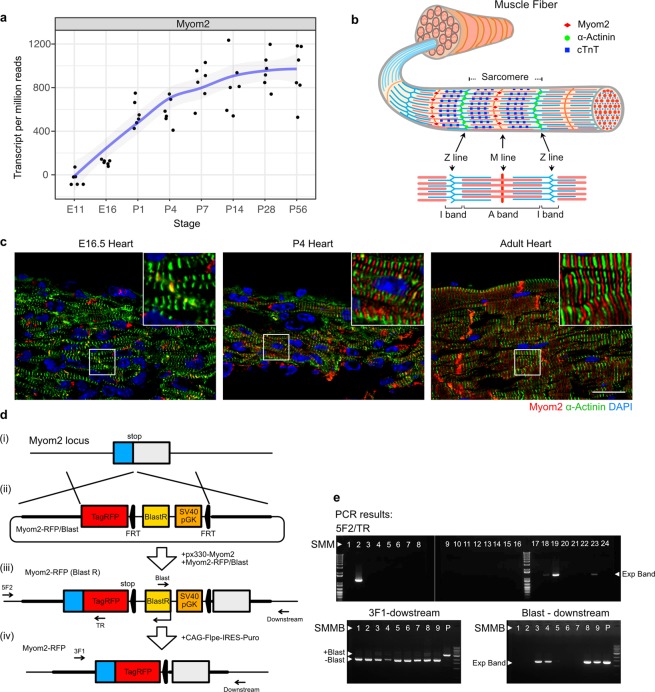
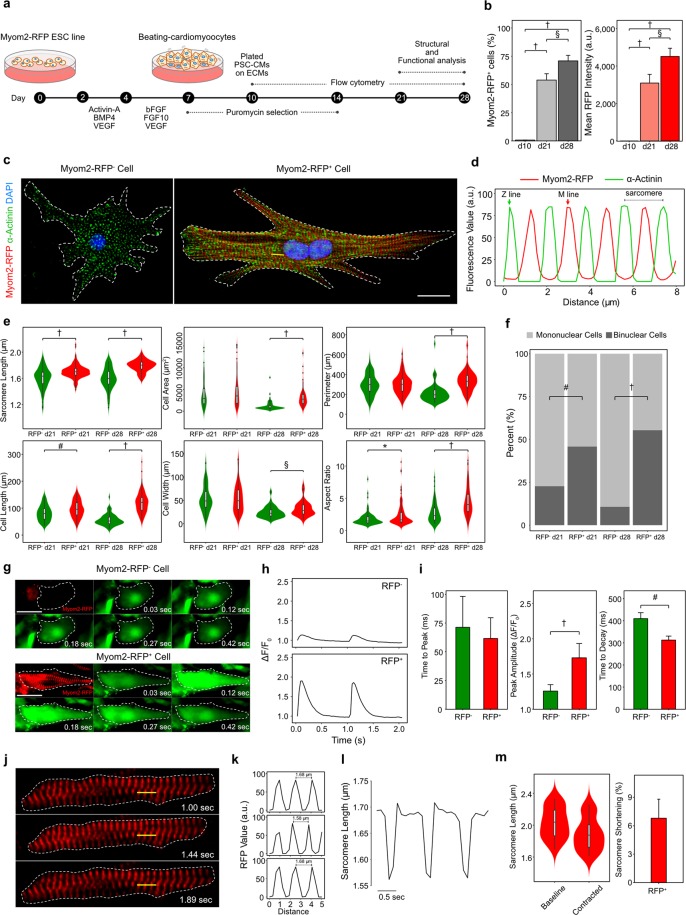
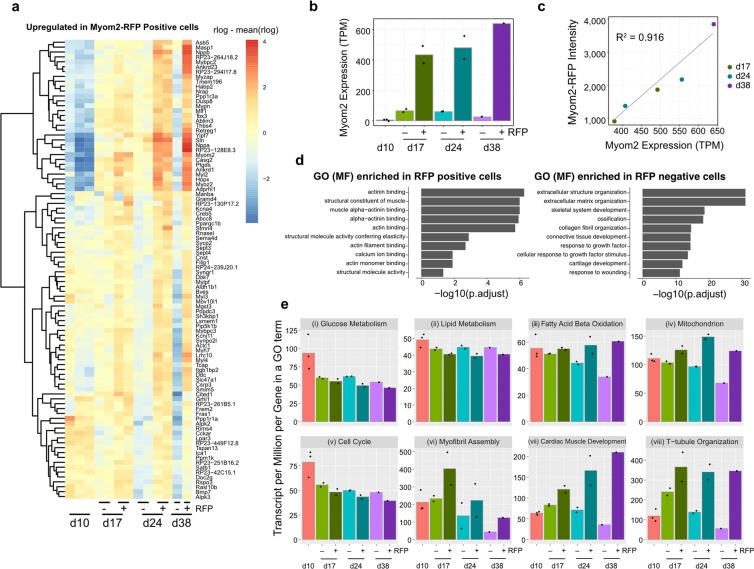
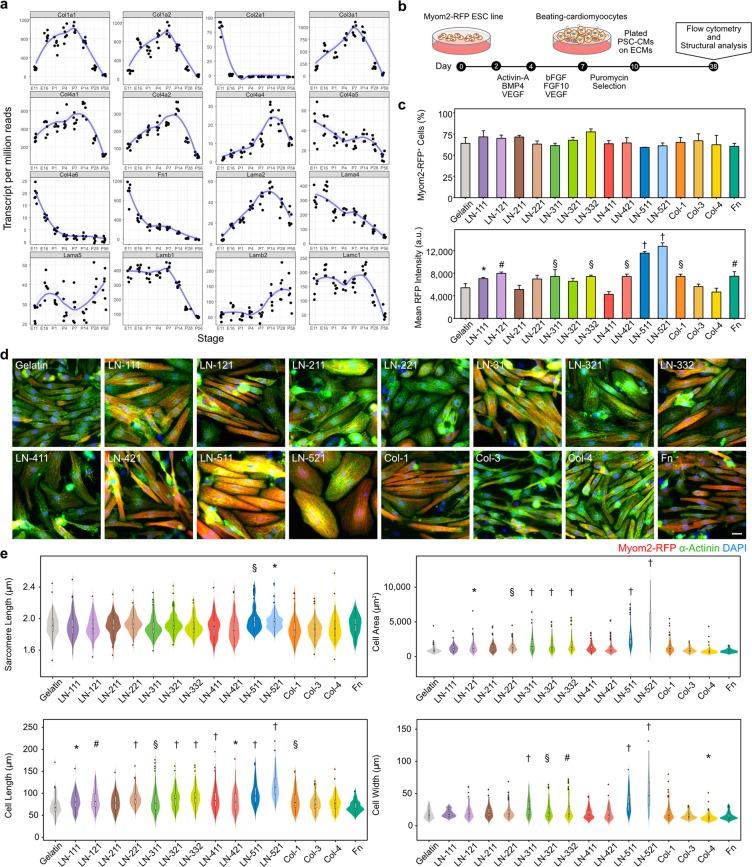
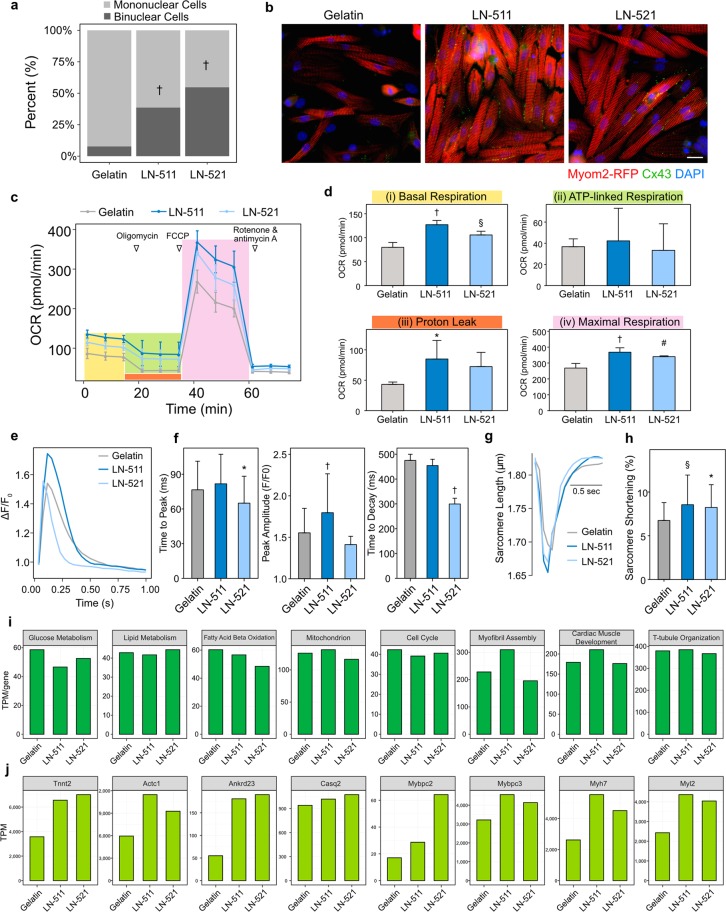
Pluripotent stem cell-derived cardiomyocytes (PSC-CMs) hold great promise for disease modeling and drug discovery. However, PSC-CMs exhibit immature phenotypes in culture, and the lack of maturity limits their broad applications. While physical and functional analyses are generally used to determine the status of cardiomyocyte maturation, they could be time-consuming and often present challenges in comparing maturation-enhancing strategies. Therefore, there is a demand for a method to assess cardiomyocyte maturation rapidly and reproducibly. In this study, we found that Myomesin-2 (Myom2), encoding M-protein, is upregulated postnatally, and based on this, we targeted TagRFP to the Myom2 locus in mouse embryonic stem cells. Myom2-RFP+ PSC-CMs exhibited more mature phenotypes than RFP- cells in morphology, function and transcriptionally, conductive to sarcomere shortening assays. Using this system, we screened extracellular matrices (ECMs) and identified laminin-511/521 as potent enhancers of cardiomyocyte maturation. Together, we developed and characterized a novel fluorescent reporter system for the assessment of cardiomyocyte maturation and identified potent maturation-enhancing ECMs through this simple and rapid assay. This system is expected to facilitate use of PSC-CMs in a variety of scientific and medical investigations.
Overview
The claims and statistics of this paper haven’t been checked yet.
Free: it reads the open-access text and checks the first 5 claims that cite a source we can check. Create a free account to check every claim.
Integrity signals
Registry
Cites
Statistics
Figures
Verification
Claims the paper makes
The claims and statistics of this paper haven’t been checked yet.
Free: it reads the open-access text and checks the first 5 claims that cite a source we can check. Create a free account to check every claim.
Claims other papers make about this one
Each is checked against this paper’s own text: does it say what the citing paper says it does?
The source backs part of the claim, not all of it — or backs it for a different population, condition or comparison.
In the citing paper
“laminin E8 511, which represents the minimal fragment size capable of integrin‐binding activity, has been recognized as a significant regulator of cardiomyocyte maturation for the differentiation of iPSCs.[ 35 ]”
From Engineered in vitro multi-cell type ventricle model generates long-term pulsatile flow and modulates cardiac output in response to cardioactive drugs (2025) · cites this paper as [35]
Experimental — accuracy not yet measured
Self-check
Percentages, sums and reported differences re-computed from the paper’s own numbers.
The self-check needs the paper’s full text.
Citations
Cites
Moderated estimation of fold change and dispersion for RNA-seq data with DESeq2
Love, M. I., Huber, W., & Anders, S. (2014) · Genome Biology · doi:10.1186/s13059-014-0550-8 · Cited by 95,106
STAR: ultrafast universal RNA-seq aligner
Dobin, A., Davis, C. A., Schlesinger, F., Drenkow, J., Zaleski, C., Jha, S., Batut, P., Chaisson, M., & Gingeras, T. R. (2013) · Bioinformatics · doi:10.1093/bioinformatics/bts635 · Cited by 51,709
clusterProfiler: an R Package for Comparing Biological Themes Among Gene Clusters
Yu, G., Wang, L.-G., Han, Y., & He, Q.-Y. (2012) · OMICS: A Journal of Integrative Biology · doi:10.1089/omi.2011.0118 · Cited by 36,259
featureCounts: an efficient general purpose program for assigning sequence reads to genomic features
Liao, Y., Smyth, G. K., & Shi, W. (2014) · Bioinformatics · doi:10.1093/bioinformatics/btt656 · Cited by 27,219
Genome engineering using the CRISPR-Cas9 system
Ran, F. A., Hsu, P. D., Wright, J., Agarwala, V., Scott, D. A., & Zhang, F. (2013) · Nature Protocols · doi:10.1038/nprot.2013.143 · Cited by 11,133
Integrins: A family of cell surface receptors
HYNES, R. (1987) · Cell · doi:10.1016/0092-8674(87)90233-9 · Cited by 4,249
Transient Regenerative Potential of the Neonatal Mouse Heart
Porrello, E. R., Mahmoud, A. I., Simpson, E., Hill, J. A., Richardson, J. A., Olson, E. N., & Sadek, H. A. (2011) · Science · doi:10.1126/science.1200708 · Cited by 2,545
Chemically defined generation of human cardiomyocytes
Burridge, P. W., Matsa, E., Shukla, P., Lin, Z. C., Churko, J. M., Ebert, A. D., Lan, F., Diecke, S., Huber, B., Mordwinkin, N. M., et al. (2014) · Nature Methods · doi:10.1038/nmeth.2999 · Cited by 1,606
Advanced maturation of human cardiac tissue grown from pluripotent stem cells
Ronaldson-Bouchard, K., Ma, S. P., Yeager, K., Chen, T., Song, L., Sirabella, D., Morikawa, K., Teles, D., Yazawa, M., & Vunjak-Novakovic, G. (2018) · Nature · doi:10.1038/s41586-018-0016-3 · Cited by 1,272
Takada, Y., Ye, X., & Simon, S. (2007) · Genome Biology · doi:10.1186/gb-2007-8-5-215 · Cited by 1,205
Cited by
Sarcomere maturation: function acquisition, molecular mechanism, and interplay with other organelles
Ahmed, R. E., Tokuyama, T., Anzai, T., Chanthra, N., & Uosaki, H. (2022) · Philosophical Transactions of the Royal Society B Biological Sciences · doi:10.1098/rstb.2021.0325 · Cited by 63
“With the isoform switch and increased M-band protein expression, M-bands become distinct [73].”
BackgroundSelf-citationBranco, M. A., Dias, T. P., Cabral, J. M. S., Pinto-do-Ó, P., & Diogo, M. M. (2022) · Nature Communications · doi:10.1038/s41467-022-34730-7 · Cited by 50
The role of basement membranes in cardiac biology and disease
Boland, E., Quondamatteo, F., & Agtmael, T. V. (2021) · Bioscience Reports · doi:10.1042/bsr20204185 · Cited by 50
Heart-derived collagen promotes maturation of engineered heart tissue
Tani, H., Kobayashi, E., Yagi, S., Tanaka, K., Haga, K., Shibata, S., Moritoki, N., Takatsuna, K., Moriwaki, T., Sekine, O., et al. (2023) · Biomaterials · doi:10.1016/j.biomaterials.2023.122174 · Cited by 48
de Almeida, H. V., Tenreiro, M. F., Louro, A. F., Abecasis, B., Santinha, D. R., Calmeiro, T., Fortunato, E. M. C., Ferreira, L., Alves, P. M., & Serra, M. (2021) · ACS Applied Bio Materials · doi:10.1021/acsabm.0c01490 · Cited by 35
Maturing heart muscle cells: Mechanisms and transcriptomic insights
Murphy, S. A., Chen, E. Z., Tung, L., Boheler, K. R., & Kwon, C. (2021) · Seminars in Cell and Developmental Biology · doi:10.1016/j.semcdb.2021.04.019 · Cited by 33
Self-citationComparative Transcriptome Landscape of Mouse and Human Hearts
Anzai, T., Yamagata, T., & Uosaki, H. (2020) · Frontiers in Cell and Developmental Biology · doi:10.3389/fcell.2020.00268 · Cited by 28
“There have been many attempts to achieve this goal with prolonged culture, electrical and mechanical stimulation, hormones and extracellular matrices (Kamakura et al., 2013; Lundy et al., 2013; Nunes et al., 2013; Yang et al., 2014b; Ronaldson-Bouchard et al., 2018; Chanthra et al., 2020), and some of them seemed more…”
BackgroundSelf-citationMorita, Y., & Tohyama, S. (2020) · JMA Journal · doi:10.31662/jmaj.2020-0036 · Cited by 29
“mESC-derived cardiomyocytes, cultured on laminin-511/521, showed structural maturation and increased mitochondrial respiration ((69)).”
Background3D-bioprinting of patient-derived cardiac tissue models for studying congenital heart disease
Wolfe, J. T., He, W., Kim, M.-S., Liang, H.-L., Shradhanjali, A., Jurkiewicz, H., Freudinger, B. P., Greene, A. S., LaDisa, J. F., Tayebi, L., et al. (2023) · Frontiers in Cardiovascular Medicine · doi:10.3389/fcvm.2023.1162731 · Cited by 25
Hamledari, H., Asghari, P., Jayousi, F., Aguirre, A., Maaref, Y., Barszczewski, T., Ser, T., Moore, E., Wasserman, W. W., Geltink, R. I. K., et al. (2022) · Frontiers in Cardiovascular Medicine · doi:10.3389/fcvm.2022.967659 · Cited by 22
“Laminin-511/521 was further detected to be the better ECM choice for improving mouse CM maturation as verified by different functional analyses (119).”
BackgroundImpaired Reorganization of Centrosome Structure Underlies Human Infantile Dilated Cardiomyopathy
Chun, Y. W., Miyamoto, M., Williams, C. H., Neitzel, L. R., Silver-Isenstadt, M., Cadar, A. G., Fuller, D. T., Fong, D. C., Liu, H., Lease, R., et al. (2023) · Circulation · doi:10.1161/circulationaha.122.060985 · Cited by 18
Self-citationHashemi, M., Finklea, F. B., Hammons, H., Tian, Y., Young, N., Kim, E., Halloin, C., Triebert, W., Zweigerdt, R., Mitra, A., et al. (2024) · Bioactive Materials · doi:10.1016/j.bioactmat.2024.08.043 · Cited by 19
Agrin-Mediated Cardiac Regeneration: Some Open Questions
Bigotti, M. G., Skeffington, K. L., Jones, F. P., Caputo, M., & Brancaccio, A. (2020) · Frontiers in Bioengineering and Biotechnology · doi:10.3389/fbioe.2020.00594 · Cited by 16
Barreto-Gamarra, C., & Domenech, M. (2025) · Journal of Molecular and Cellular Cardiology · doi:10.1016/j.yjmcc.2025.02.009 · Cited by 13
Human induced pluripotent stem cell-derived cardiomyocytes for disease modeling and drug discovery
Moriwaki, T., Tani, H., & Tohyama, S. (2025) · Frontiers in Bioengineering and Biotechnology · doi:10.3389/fbioe.2025.1687840 · Cited by 9
Cardiomyocyte-expressed TGFβ programs early heart maturation and adult myocyte identity
Minerath, R. A., Kasam, R. K., Swoboda, C. O., Prasad, V., Grimes, K. M., Blair, N. S., Khalil, H., Alfieri, C. M., Eads, L., Saviola, A. J., et al. (2026) · Nature Cardiovascular Research · doi:10.1038/s44161-026-00892-6 · Cited by 6
Semi-3D cultures using Laminin 221 as a coating material for human induced pluripotent stem cells
Nakashima, Y., Yoshida, S., & Tsukahara, M. (2022) · Regenerative Biomaterials · doi:10.1093/rb/rbac060 · Cited by 6
“It has also been reported that Laminin 511/521 coating promotes maturation of thicker myofibres in the myocardium [75]. hPSCs mainly express integrin a 6 b 1 [76, 77], which has a particularly high affinity for Laminin 511 but a low affinity for Laminin 211 [78, 79].”
York, N. S., Rivera, J. E., Manesh, M. R., Lynes‐Ford, K. W., Smith, R., Wicki‐Stordeur, L. E., Arbour, L. T., & Swayne, L. A. (2025) · Journal of Molecular and Cellular Cardiology Plus · doi:10.1016/j.jmccpl.2025.100486 · Cited by 5
Singh, V. M. (2021) · Molecular Biology Reports · doi:10.1007/s11033-021-06769-0 · Cited by 4
“The sole dependency of differentiation and proliferation of cardiomyocytes is not only dependent on intracellular metabolic processes but the extracellular components such as laminin-511/521send signals which strengthen the structural functionality, and enhancing the intracellular mitochondrial respiration [76].”
BackgroundGeneration of Efficient Knock-in Mouse and Human Pluripotent Stem Cells Using CRISPR-Cas9
Anzai, T., Hara, H., Chanthra, N., Sadahiro, T., Ieda, M., Hanazono, Y., & Uosaki, H. (2021) · Methods in molecular biology · doi:10.1007/978-1-0716-1484-6_22 · Cited by 5
Self-citationMultiplexed live visualization of cell fate dynamics in hPSCs at single-cell resolutionPreprint
Kim, S. M., Ren, E., Casanova, P. M., Piddini, E., & Salas, R. E. C. (2021) · bioRxiv (Cold Spring Harbor Laboratory) · doi:10.1101/2021.01.30.428961 · Cited by 4
Kuckelkorn, C., Aksoy, E., Stojanovic, N., Oulahyane, L., Ritter, M., Pfannkuche, K., & Fischer, H. (2025) · Advanced Healthcare Materials · doi:10.1002/adhm.202403897 · Cited by 3
Biosensing platforms with enhanced mechanical matching for cardiomyocyte contractility monitoring
Liang, Z., Xu, X., Liu, Q. Y., Wang, W., Han, J., Xu, Z., Li, X., Xie, X., Sun, Y., & Wang, L. (2025) · Biosensors and Bioelectronics · doi:10.1016/j.bios.2025.118173 · Cited by 5
Determination of Agrin and Related Proteins Levels as a Function of Age in Human Hearts
Skeffington, K. L., Jones, F. P., Suleiman, M. S., Caputo, M., Brancaccio, A., & Bigotti, M. G. (2022) · Frontiers in Cardiovascular Medicine · doi:10.3389/fcvm.2022.813904 · Cited by 3
“Laminin is known to play an important role in promoting cardiac muscle stability (22) as well as being crucial for cardiomyocyte differentiation (23, 24) and maturation (25).”
BackgroundProtocol for quantifying stem-cell-derived cardiomyocyte maturity using transcriptomic entropy score
Chen, E. Z., Kannan, S., Murphy, S. A., Farid, M., & Kwon, C. (2024) · STAR Protocols · doi:10.1016/j.xpro.2024.103083 · Cited by 2
Self-citationCardiac‐Derived ECM Microspheres for Enhanced hiPSC‐CMs Maturation
Xu, J., Aboagye, J., Edwards, M., Rogozinski, N., Wen, Y., Gomez, A. H., Pan, Z., Zhang, G., Yang, H., & Hong, Y. (2026) · Advanced Functional Materials · doi:10.1002/adfm.202524938 · Cited by 2
“…Matrigel-based ECM-mimetic matrices, have been used as culture substrates to enhance cardiomyocyte adhesion, sarcomere organization, and functional maturation; however, these approaches typically capture a subset of the biochemical and structural cues present in the native myocardium [38, 41–43].”
Ahmed, R. E., Chanthra, N., Anzai, T., Koiwai, K., Murakami, T., Suzuki, H., Hanazono, Y., & Uosaki, H. (2021) · Journal of Visualized Experiments · doi:10.3791/62129 · Cited by 2
Self-citationChanthra, N., & Uosaki, H. (2021) · Springer eBooks · doi:10.1007/978-3-030-77052-5_14 · Cited by 1
Self-citationTakahi, M., Hamazaki, Y., Ohnuma, K., & Imamura, M. (2024) · In Vitro Cellular & Developmental Biology - Animal · doi:10.1007/s11626-024-00914-2 · Cited by 1
“Differentiation induction of mouse pluripotent stem cells also demonstrated that laminin-511 and 521 E8 fragments enhance cardiomyocyte maturation (Chanthra et al. 2020).”
Stüdemann, T., & Weinberger, F. (2022) · Springer eBooks · doi:10.1007/978-3-030-86140-7_7
Chanthra, N., & Uosaki, H. (2023) · Springer eBooks · doi:10.1007/978-3-031-25378-2_14
Self-citationNon-obstructive Methods to Detect Sarcomere Remodeling of Live In Vitro Cardiomyocytes
Rogozinski, N., Velez, S., Hong, Y., & Yang, H. (2025) · Springer eBooks · doi:10.1007/978-3-031-81743-4_18
Hamledari, H., Jayousi, F., Shafaattalab, S., Dababneh, S., Geltink, R. I. K., Lange, P. F., Prondzynski, M., Tibbits, G. F., & Teves, S. S. (2025) · bioRxiv (Cold Spring Harbor Laboratory) · doi:10.1101/2025.09.14.676131
Chanthra, N., Murphy, S. A., Miyamoto, M., Masuyama, N., Yachie, N., Kwon, C., & Uosaki, H. (2026) · Frontiers in Bioengineering and Biotechnology · doi:10.3389/fbioe.2026.1717996
Self-citationChang, G., Torkamannejad, S., Muraoka, N., Murry, C. E., & Sun, B. (2026) · Journal of Proteome Research · doi:10.1021/acs.jproteome.5c01224
Suzuki, S., Tanaka, S., Wada, Y., Kametani, Y., Sakai, H., Nishinaka, K., Egawa, K., Okada, Y., Obana, M., & Fujio, Y. (2026) · Biochemical and Biophysical Research Communications · doi:10.1016/j.bbrc.2026.154068
Hara, H., Uosaki, H., Nakahara, F., Inoue, M., & Hanazono, Y. (2026) · Genes to Cells · doi:10.1111/gtc.70129
Self-citationCMAC: A deep learning framework for absolute cardiomyocyte transcriptional age estimationPreprint
Quansah, K. K., Zureick, N., Chen, E., Murphy, S., Anderson, E., Kwon, E., Suh, D., Stein-O’Brien, G., Cahan, P., & Kwon, C. (2026) · bioRxiv (Cold Spring Harbor Laboratory) · doi:10.64898/2026.09.19.752897
“10 Relative-expression-ordering approaches have scored PSC-derived cardiomyocytes according to the fraction of gene-pair relationships resembling adult myocardium, while other methods derive maturation scores from principal components of developmental cardiac transcriptomes.”
Self-citation
Metadata
- Authors
- Chanthra, N., Abe, T., Miyamoto, M., Sekiguchi, K., Kwon, C., Hanazono, Y., & Uosaki, H.
- Affiliations
- Jichi Medical University (JP)
- Johns Hopkins University (US)
- Institute for Protein Research, The University of Osaka (JP)
- Corresponding author
- Uosaki, Hideki
- ORCID
- Venue
- Scientific Reports
- Published
- 2020-03-06
- Volume
- 10
- Issue
- 1
- Pages
- 4249-4249
- ISSN
- 2045-2322 (ISSN-L)
- PMC
- PMC7060274
- OpenAlex
- W3010490804
- Semantic Scholar
- e82a20cd9e71fe2a5923180ce8deba1e25bbe952
- Cited by
- 36
- References
- 55
- Citations by year
- 2026: 4 · 2025: 8 · 2024: 3 · 2023: 4 · 2022: 6 · 2021: 8 · 2020: 3
- FWCI
- 1.70
- Type
- journal article
- Language
- en
- Open access
- gold
- doi.org
- Licence
- cc-by
- creativecommons.org/licenses/by/4.0 (tdm)
- creativecommons.org/licenses/by/4.0 (vor)
- Locations
- Scientific Reports (publishedVersion, cc-by)
- PubMed Central (publishedVersion, cc-by)
- PubMed (publishedVersion)
- Funders
- Jichi Medical University
- Japan Agency for Medical Research and Development (17bm0404005h0005, 18bm0704012h0003)
- Japan Society for the Promotion of Science (19K17613)
- Novartis Research Grant
- Japan Research Promotion Society for Cardiovascular Diseases
- Takeda Science Foundation
- The Uehara Memorial Foundation
- SENSHIN Medical Research Foundation
- the Japanese Circulation Society
- Topics
- Life Sciences › Biochemistry, Genetics and Molecular Biology › Molecular Biology › Pluripotent Stem Cells Research
- Life Sciences › Biochemistry, Genetics and Molecular Biology › Molecular Biology › Congenital heart defects research
- Health Sciences › Medicine › Surgery › Tissue Engineering and Regenerative Medicine
- Keywords
- cardiomyocyte maturation, fluorescent reporter system, TagRFP, pluripotent stem cell-derived cardiomyocytes, extracellular matrix, sarcomere shortening, mouse embryonic stem cells, disease modeling
- MeSH terms
- Calcium, Cell Differentiation, Extracellular Matrix, Laminin, Sarcomeres, Transcription, Genetic, Biomarkers, Gene Expression, Genes, Reporter, Computational Biology, Gene Expression Profiling, Myocytes, Cardiac, Pluripotent Stem Cells, Transcriptome
About these checks
Registry, retraction, Cites and statistics results are computed, not judged, with one exception: a printed reference that no index lists is read once by a model before it counts as a citation error. Claims are extracted by a model and kept only when their quote appears verbatim in the text; each cited source is then checked, with a model’s help, for whether it says what the claim relies on. Those verdicts can be wrong — read the claim’s quote and the cited source before relying on one.
Statistics and arithmetic are recomputed, not judged.
Confidence bands are shown only for fields calibrated on our annotated test set. None is calibrated yet, so no band is shown.
What counts as a claim ›How we measure confidence ›How we check this ›
Are you an author, or do you see a problem with this page? Request a review
Data sources
Bibliographic data: Semantic Scholar, OpenAlex, Crossref.
Contains information from the Semantic Scholar Academic Graph Datasets, made available under the ODC Attribution License (ODC-BY 1.0).
Semantic Scholar’s data is described in: Kinney, R., et al. (2023). The Semantic Scholar Open Data Platform. arXiv:2301.10140.
