

Fibroblast Growth Factor 9 is expressed by activated hepatic stellate cells and promotes progression of hepatocellular carcinoma
Open accessThe DOI matches its Crossref record; 38 of the 38 references it cites were found in a registry or an index.
Abstract
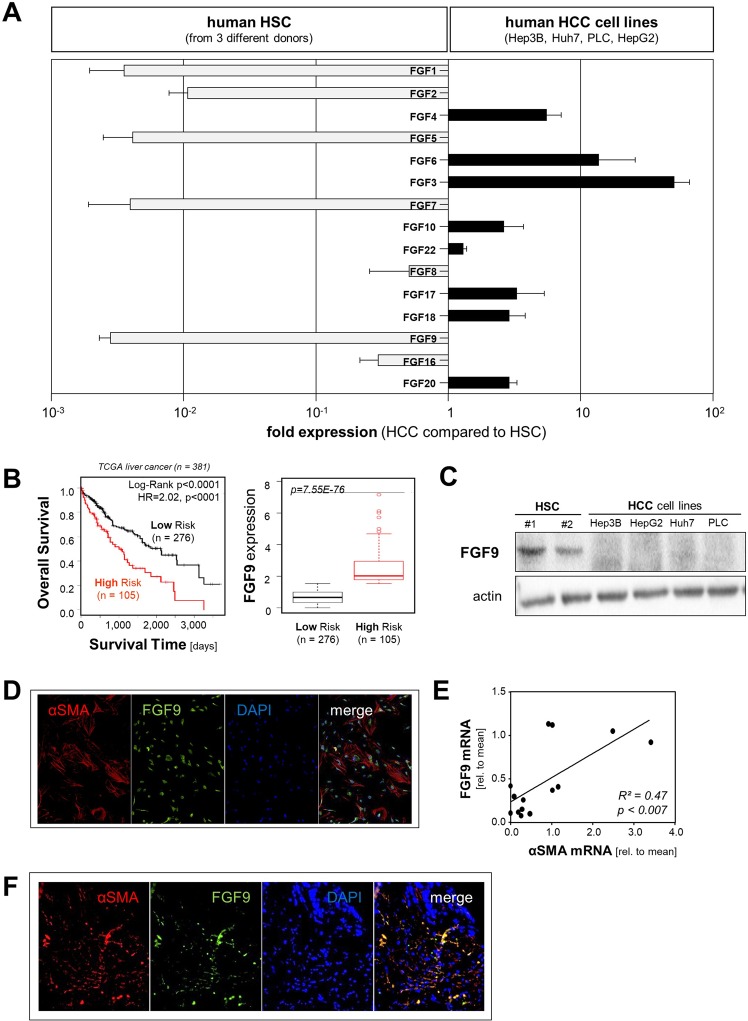
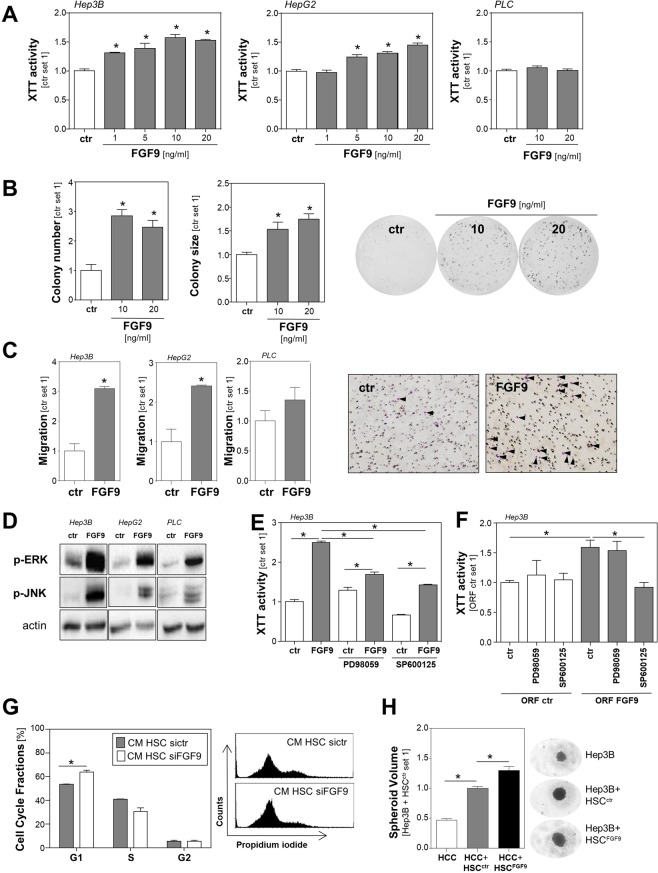
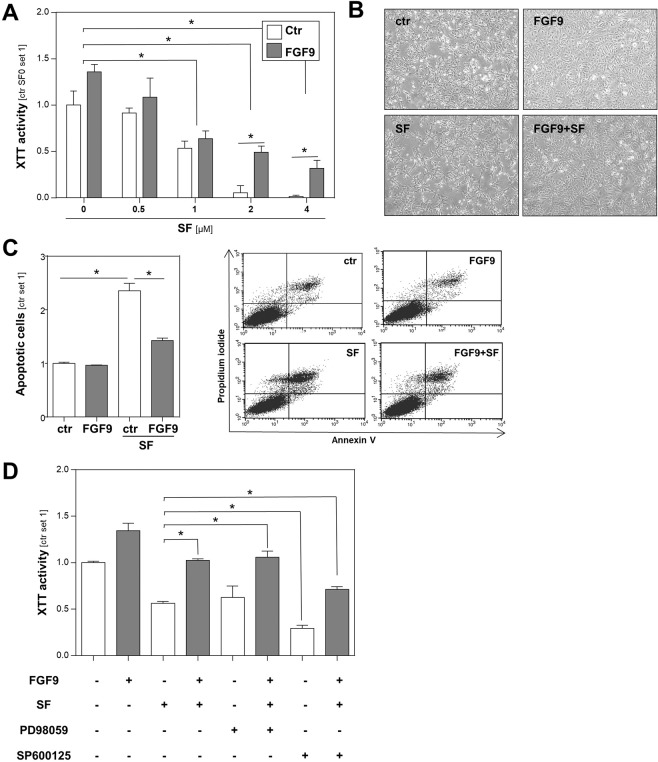
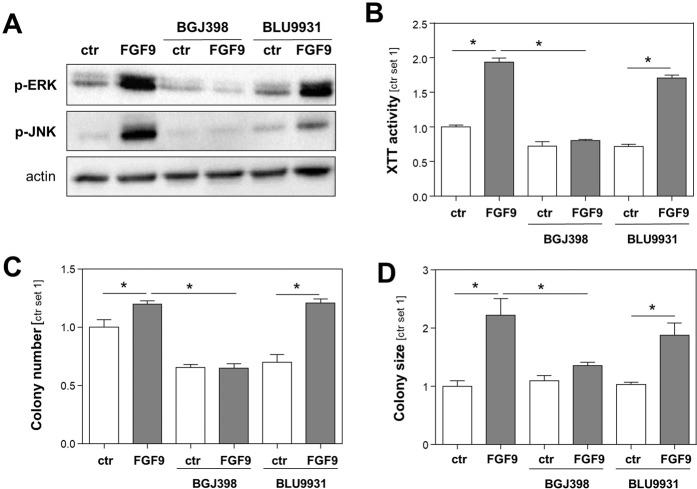
Hepatocellular carcinoma (HCC) is closely associated with liver fibrosis. Hepatic stellate cells (HSC) and cancer-associated myofibroblasts are key players in liver fibrogenesis and hepatocarcinogenesis. Overexpression of fibroblast growth factor (FGF) receptors contributes to HCC development and progression. This study aimed to elucidate the role of FGFs in the HSC-HCC crosstalk. Analysis of the expression of the fifteen paracrine FGF-members revealed that FGF9 was only expressed by HSC but not by HCC cells. Also in human HCC tissues, HSC/stromal myofibroblasts were identified as cellular source of FGF9. High expression levels of FGF9 significantly correlated with poor patient survival. Stimulation with recombinant FGF9 induced ERK- and JNK-activation combined with significantly enhanced proliferation, clonogenicity, and migration of HCC cells. Moreover, FGF9 significantly reduced the sensitivity of HCC cells against sorafenib. Protumorigenic effects of FGF9 on HCC cells were almost completely abrogated by the FGFR1/2/3 inhibitor BGJ398, while the selective FGFR4 inhibitor BLU9931 had no significant effect. In conclusion, these data indicate that stroma-derived FGF9 promotes tumorigenicity and sorafenib resistance of HCC cells and FGF9 overexpression correlates with poor prognosis in HCC patients. Herewith, FGF9 appears as potential prognostic marker and novel therapeutic target in HCC.
Overview
The claims and statistics of this paper haven’t been checked yet.
Free: it reads the open-access text and checks the first 5 claims that cite a source we can check. Create a free account to check every claim.
Integrity signals
Registry
Cites
Statistics
Figures
Verification
Claims the paper makes
The claims and statistics of this paper haven’t been checked yet.
Free: it reads the open-access text and checks the first 5 claims that cite a source we can check. Create a free account to check every claim.
Claims other papers make about this one
Each is checked against this paper’s own text: does it say what the citing paper says it does?
The source backs part of the claim, not all of it — or backs it for a different population, condition or comparison.
In the citing paper
“whereas HSC-to-macrophage communication involved fibroblast growth factor (FGF)9 (ref. 49) signaling (characteristic of activated HSCs) to promote the profibrotic macrophage phenotype (Fig. 8c).”
From Single-cell atlas of human liver and blood immune cells across fatty liver disease stages reveals distinct signatures linked to liver dysfunction and fibrogenesis (2025) · cites this paper as [49]
Experimental — accuracy not yet measured
Self-check
Percentages, sums and reported differences re-computed from the paper’s own numbers.
The self-check needs the paper’s full text.
Citations
Cites
Llovet, J. M., Kelley, R. K., Villanueva, A., Singal, A. G., Pikarsky, E., Roayaie, S., Lencioni, R., Koike, K., Zucman-Rossi, J., & Finn, R. S. (2021) · Nature Reviews Disease Primers · doi:10.1038/s41572-020-00240-3 · Cited by 7,055
Mechanisms of hepatic stellate cell activation
Tsuchida, T., & Friedman, S. L. (2017) · Nature Reviews Gastroenterology & Hepatology · doi:10.1038/nrgastro.2017.38 · Cited by 2,909
Llovet, J. M., Zucman-Rossi, J., Pikarsky, E., Sangro, B., Schwartz, M., Sherman, M., & Gores, G. (2016) · Nature Reviews Disease Primers · doi:10.1038/nrdp.2016.18 · Cited by 2,531
(1977) · Annals of Internal Medicine · doi:10.7326/0003-4819-87-5-642_1 · Cited by 2,081
The Fibroblast Growth Factor signaling pathway
Ornitz, D. M., & Itoh, N. (2015) · WIREs Developmental Biology · doi:10.1002/wdev.176 · Cited by 2,050
Aguirre-Gamboa, R., Gomez-Rueda, H., Martínez-Ledesma, E., Martínez-Torteya, A., Chacolla-Huaringa, R., Rodriguez-Barrientos, A., Tamez-Peña, J. G., & Treviño, V. (2013) · PLoS ONE · doi:10.1371/journal.pone.0074250 · Cited by 686
FGFR inhibitors: Effects on cancer cells, tumor microenvironment and whole-body homeostasis (Review)
KATOH, M. (2016) · International Journal of Molecular Medicine · doi:10.3892/ijmm.2016.2620 · Cited by 405
Baglieri, J., Brenner, D. A., & Kisseleva, T. (2019) · International Journal of Molecular Sciences · doi:10.3390/ijms20071723 · Cited by 341
Activated hepatic stellate cells promote tumorigenicity of hepatocellular carcinoma
Amann, T., Bataille, F., Spruss, T., Mühlbauer, M., Gäbele, E., Schölmerich, J., Kiefer, P., Bosserhoff, A., & Hellerbrand, C. (2009) · Cancer Science · doi:10.1111/j.1349-7006.2009.01087.x · Cited by 277
Self-citationHendrix, N. D., Wu, R., Kuick, R., Schwartz, D. R., Fearon, E. R., & Cho, K. R. (2006) · Cancer Research · doi:10.1158/0008-5472.can-05-3694 · Cited by 276
Cited by
New insights into antiangiogenic therapy resistance in cancer: Mechanisms and therapeutic aspects
Huang, M., Lin, Y., Wang, C., Deng, L., Chen, M., Assaraf, Y. G., Chen, Z.-S., Ye, W., & Zhang, D. (2022) · Drug Resistance Updates · doi:10.1016/j.drup.2022.100849 · Cited by 173
Hepatic Stellate Cells and Hepatocarcinogenesis
Barry, A. E., Baldeosingh, R., Lamm, R. J., Patel, K., Zhang, K., Dominguez, D. A., Kirton, K. J., Shah, A. P., & Dang, H. T. (2020) · Frontiers in Cell and Developmental Biology · doi:10.3389/fcell.2020.00709 · Cited by 169
“In HCC tissues, activated HSC overexpression of FGF9 reduced sensitivity to therapeutic agents and was associated with poor prognosis (Seitz et al., 2020), suggesting FGF9 as a potential therapeutic target and prognostic tool for HCC.”
BackgroundNew developments in the biology of fibroblast growth factors
Ornitz, D. M., & Itoh, N. (2022) · WIREs Mechanisms of Disease · doi:10.1002/wsbm.1549 · Cited by 144
Fibroblast Growth Factor Receptors (FGFRs) and Noncanonical Partners in Cancer Signaling
Ferguson, H. R., Smith, M. P., & Francavilla, C. (2021) · Cells · doi:10.3390/cells10051201 · Cited by 119
Lenvatinib in hepatocellular carcinoma: Resistance mechanisms and strategies for improved efficacy
Qin, Y., Han, S., Yu, Y., Ding, Q., Ran, M., Yang, M., Liu, Y., Li, Y., Lu, L., Liu, Y., et al. (2024) · Liver International · doi:10.1111/liv.15953 · Cited by 112
“38 Lenvatinib has stronger inhibitory effects on VEGF receptors and FGFR compared with sorafenib 42 ; the enhanced expression of FGFR1 and its downstream AKT signalling targets can result in acquired resistance to sorafenib.”
Henderson, J., Duffy, L., Stratton, R. J., Ford, D., & O’Reilly, S. (2020) · Journal of Cellular and Molecular Medicine · doi:10.1111/jcmm.16013 · Cited by 98
FGF/FGFR-Dependent Molecular Mechanisms Underlying Anti-Cancer Drug Resistance
Szymczyk, J., Służalska, K. D., Materla, I., Opaliński, Ł., Otlewski, J., & Zakrzewska, M. (2021) · Cancers · doi:10.3390/cancers13225796 · Cited by 97
The fibrotic and immune microenvironments as targetable drivers of metastasis
Boulter, L., Bullock, E., Mabruk, Z., & Brunton, V. G. (2020) · British Journal of Cancer · doi:10.1038/s41416-020-01172-1 · Cited by 82
“This stiffening of the liver is thought to make the tissue permissive to cancer cell proliferation and, in primary liver cancer, HSCs are a known source of many mitogens and cytokines that are required for cancer growth.(86,87) In metastatic disease too, HSCs appear to play a reiterative role in metastatic priming and…”
BackgroundHeparan Sulfate Proteoglycan Signaling in Tumor Microenvironment
Pasquale, V. D., & Pavone, L. M. (2020) · International Journal of Molecular Sciences · doi:10.3390/ijms21186588 · Cited by 81
Hepatocellular Carcinoma: Molecular Pathogenesis and Therapeutic Advances
Cucarull, B., Tutusaus, A., Rider, P., Hernáez-Alsina, T., Cuño-Gómiz, C., de Frutos, P. G., Colell, A., Marí, M., & Morales, A. (2022) · Cancers · doi:10.3390/cancers14030621 · Cited by 82
“In addition, FGF9, expressed only by HSCs, promoted the tumorigenic capacity of HCC cells and the resistance to sorafenib, and FGF9 overexpression was associated with poor prognosis in patients with HCC [74].”
BackgroundWang, Y., Liu, D., Zhang, T., & Xia, L. (2021) · Cancers · doi:10.3390/cancers13061360 · Cited by 80
“Pan-inhibitors of FGFR or siRNA targeting FGFR3 could block the oncogenic properties of FGF9 in HCC [33].”
BackgroundResultInfluentialKurniawan, D. W., Booijink, R., Pater, L., Wols, I., Vrynas, A., Storm, G., Prakash, J., & Bansal, R. (2020) · Journal of Controlled Release · doi:10.1016/j.jconrel.2020.09.041 · Cited by 66
“No significant differences in the mRNA expression for FGFR1b, FGFR2b, FGFR3b were observed in activated human HSCs [30].”
BackgroundResultRole of fibroblast growth factor signalling in hepatic fibrosis
Seitz, T., & Hellerbrand, C. (2021) · Liver International · doi:10.1111/liv.14863 · Cited by 64
Self-citationDecoding FGF/FGFR Signaling: Insights into Biological Functions and Disease Relevance
Edirisinghe, O., Ternier, G., Alraawi, Z., & Kumar, T. K. S. (2024) · Biomolecules · doi:10.3390/biom14121622 · Cited by 67
Zhang, L., Tao, H., Jiang, L., Zhang, E., Liang, H., & Zhang, B. (2021) · Aging · doi:10.18632/aging.203056 · Cited by 58
“sorafenib resistance of HCC cells, and the overexpression of FGF9 is related to the poor prognosis of HCC patients [31].”
BackgroundMartin, O. P., Wallace, M. S., Oetheimer, C., Patel, H. B., Butler, E. C., Wong, L. P., Huang, P., Elbaz, J., Costentin, C., Salloum, S., et al. (2025) · Nature Immunology · doi:10.1038/s41590-025-02255-y · Cited by 45
Impact of nitric oxide in liver cancer microenvironment
Barbeito, S. D., González, R., Cadenas, M., García, L. F., Víctor, V. M., Padillo, F. J., & Muntané, J. (2022) · Nitric Oxide · doi:10.1016/j.niox.2022.07.006 · Cited by 30
Zhang, K., Zhang, Q., Jia, R., Xiang, S., & Xu, L. (2023) · Frontiers in Cell and Developmental Biology · doi:10.3389/fcell.2023.1156383 · Cited by 31
“FGF9 extracted from activated HSCs has been found to enhance the tumorigenicity and drug resistance of HCC cells (Seitz et al., 2020).”
BackgroundFGF9 Recruits β‐Catenin to Increase Hepatic ECM Synthesis and Promote NASH‐Driven HCC
Zhang, L., Zhang, Q., Teng, D., Guo, M., Tang, K., Wang, Z., Wei, X., Li, L., Zhang, X., Wang, X., et al. (2023) · Advanced Science · doi:10.1002/advs.202301166 · Cited by 33
Sorafenib for hepatocellular carcinoma: potential molecular targets and resistance mechanisms
Dahiya, M., & Dureja, H. (2021) · Journal of Chemotherapy · doi:10.1080/1120009x.2021.1955202 · Cited by 26
“Thus, it may be used as a probable therapeutic target, and prognostic marker for HCC [18].”
BackgroundFeng, R., Cui, Z., Liu, Z., & Zhang, Y. (2020) · Scandinavian Journal of Immunology · doi:10.1111/sji.13007 · Cited by 23
Chu, Y., Yang, S., & Chen, X. (2025) · Pharmacology & Therapeutics · doi:10.1016/j.pharmthera.2025.108844 · Cited by 22
Glioma cell-derived FGF20 suppresses macrophage function by activating β-catenin
Cai, X., Tao, W., & Li, L. (2021) · Cellular Signalling · doi:10.1016/j.cellsig.2021.110181 · Cited by 18
Shen, X., Zhao, J., Wang, Q., Chen, P., Hong, Y., He, X., Chen, D., Liu, H., Wang, Y., & Cai, X. (2022) · Radiation Research · doi:10.1667/rade-21-00129.1 · Cited by 15
Fearon, A. E., Slabber, C. F., Kuklin, A., Bachofner, M., Tortola, L., Pohlmeier, L. M., Pantasis, S., Hornemann, T., Chen, L., Köpf, M., et al. (2021) · iScience · doi:10.1016/j.isci.2021.103143 · Cited by 14
Ye, S., Pan, X., Zou, L., Ni, S., Zhang, L., Hong, Y., & Hu, K. (2024) · Cancer Nanotechnology · doi:10.1186/s12645-024-00253-7 · Cited by 13
“Increasing evidence has demonstrated that the interaction between hepatoma cells and activated HSCs promotes the acquisition of drug resistance to sorafenib (Azzariti et al. 2016; Seitz et al. 2020; Ruan et al. 2020).”
BackgroundShin, J.-Y., & Ahn, S. (2021) · Journal of Translational Medicine · doi:10.1186/s12967-021-02807-4 · Cited by 13
Seitz, T., John, N., Sommer, J., Dietrich, P., Thasler, W. E., Hartmann, A., Evert, K., Lang, S. A., Bosserhoff, A., & Hellerbrand, C. (2022) · International Journal of Molecular Sciences · doi:10.3390/ijms231911524 · Cited by 12
“In the search for relevant factors mediating HSC-CM induced proliferation of UM cells, we focused on the fibroblast growth factor (FGF)/FGF receptor (FGFR) system, as we previously demonstrated that activated HSCs are the major cellular source of most paracrine FGFs in hepatocellular cancer [38], and the FGF/FGFR axis…”
BackgroundMethodSelf-citationFibroblast growth factors induce hepatic tumorigenesis post radiofrequency ablation
Markezana, A., Paldor, M., Liao, H., Ahmed, M., Zorde‐Khvalevsky, E., Rozenblum, N., Stechele, M., Salvermoser, L., Laville, F., Goldmann, S., et al. (2023) · Scientific Reports · doi:10.1038/s41598-023-42819-2 · Cited by 10
Xu, J., Sun, P., Zhu, W., Liu, X., & Ma, L. (2025) · Theranostics · doi:10.7150/thno.121601 · Cited by 9
Liver microenvironment and therapy resistance in hepatocellular carcinoma
Rahi, K., Hedayati, M., Hendi, Z., Najimi, M., & Vosough, M. (2025) · Critical Reviews in Oncology/Hematology · doi:10.1016/j.critrevonc.2025.104997 · Cited by 9
Das, J., Barman, B., Sarma, P., Das, B. K., Chetia, R., & Kalita, P. P. (2025) · Biochemistry and Biophysics Reports · doi:10.1016/j.bbrep.2025.102403 · Cited by 15
“Moreover, HSCs participate in chemo-resistance by means of laminin-332/ α 3 integrin, FAK ubiquitination, and FGF9 secretion [212,213].”
Pathology and Therapeutic Significance of Fibroblast Growth Factors
Edirisinghe, O., Ternier, G., & Kumar, T. K. S. (2025) · Targets · doi:10.3390/targets3010005 · Cited by 10
“Further, overexpression of FGF9 was observed in colorectal cancer [204], gastric cancer [205], gastric and bladder cancer [206], Leydig tumor cells [207,208], hepatocellular carcinoma [209,210], lung squamous cell carcinoma [211], and testicular cancer [212].”
Inhibition of FGFR2 Signaling by Cynaroside Attenuates Liver Fibrosis
Meng, Q., Luo, L., Lei, M., Chen, Z., Sun, Y., Xue, C., Zhai, Z., Zhang, Y., Cao, J., Su, Z., et al. (2023) · Pharmaceuticals · doi:10.3390/ph16040548 · Cited by 9
“The discovery of CYN offers a novel treatment approach that inhibits FGFR2 to desensitize HSCs and hepatocytes to TGF-β signaling, thereby reducing collagen expression.”
BackgroundInfluentialDeciphering the tumour immune microenvironment of hepatocellular carcinoma
Liu, S., Jia, M., & Dai, R. (2023) · Scandinavian Journal of Immunology · doi:10.1111/sji.13327 · Cited by 7
Lipid Accumulation in Host Cells Promotes SARS-CoV-2 Replication
Seitz, T., Setz, C., Rauch, P., Schubert, U., & Hellerbrand, C. (2023) · Viruses · doi:10.3390/v15041026 · Cited by 8
“Isolation of mRNA, reverse transcription, and quantitative real-time polymerase chain reaction (qRT-PCR) using specific sets of primers were performed as described [15].”
MethodSelf-citationShort histological kaleidoscope – recent findings in histology. Part I
Constantin, A.-M., Mihu, C. M., Boşca, A. B., Melincovici, C. S., Mărginean, M. V., Jianu, M. E., Lupean, R.-A., Alexandru, B.-C., Moldovan, I. M., Şovrea, A. S., et al. (2022) · Romanian Journal of Morphology and Embryology · doi:10.47162/rjme.63.1.01 · Cited by 6
“Therefore, HSCs and their cellular crosstalk mediators, such as fibroblast growth factor 9 (FGF9) [147, 148], SDF-1 protein [149], TGF-β [125], PDGF-α [150], microribonucleic acids (microRNAs)’ expression [151] and the extracellular vesicles [152], can be used as prognostic biomarkers in chronic fibrotic processes and…”
BackgroundShi, Q., Wei, S., Li, Z. C., Xu, J., Li, Y., Guo, C., Wu, X., Shi, C., & Di, G. (2022) · Journal of Biomaterials Applications · doi:10.1177/08853282221121861 · Cited by 4
KGF secreted from HSCs activates PAK4 / BMI1 , promotes HCC stemness through PI3K / AKT pathway
Li, Q., Chen, Q., Wang, W., Xie, R., Li, Z., & Chen, D. (2024) · IUBMB Life · doi:10.1002/iub.2929 · Cited by 3
One Size Does Not Fit All: Precision Combinations for FGFR4-driven Cancers
Fleuren, E. D. G. (2025) · Frontiers in Bioscience-Landmark · doi:10.31083/fbl43996 · Cited by 1
Pan, T., Li, T., Shi, L., Su, L., & Chen, Y. (2022) · Infectious Microbes & Diseases · doi:10.1097/im9.0000000000000083 · Cited by 1
Sweed, D., Kilany, S., Taha, M., Sweed, E. M., Abdelsattar, S., & Mosbeh, A. (2021) · International Journal of Cancer and Biomedical Research · doi:10.21608/jcbr.2021.73946.1206
Du, S., Xu, J., Shen, J., Zhang, X., Hu, H., & Huang, X. (2022) · Gastroenterology Research and Practice · doi:10.1155/2022/2746156
“FGF9 can enhance the tumor-forming ability and resistance to sorafenib in HCC cells, and forced expression of FGF9 is associated with dismal prognosis in HCC patients [28].”
Shin, J.-Y., & Ahn, S.-M. (2021) · Figshare · doi:10.6084/m9.figshare.14361633
Ye, S., Pan, X., Zou, L., Ni, S., Zhang, L., Hong, Y., & Hu, K. (2024) · Figshare · doi:10.6084/m9.figshare.26684202
Apilan, A. G. (2025) · TSpace (University of Toronto)
Tabanou, T. (2024) · theses.fr (ABES) · doi:10.70675/cccae35fz0b6fz472az9fcdza636abaf6c49
jin, Q., Liu, Y., & Jin, P. (2026) · Cancer Treatment and Research Communications · doi:10.1016/j.ctarc.2026.101337
Research Advances in the FGFR Signaling Axis in Hepatic Fibrosis
万, 良. (2026) · Advances in Clinical Medicine · doi:10.12677/acm.2026.16103343
Metadata
- Authors
- Seitz, T., Freese, K., Dietrich, P., Thasler, W. E., Bosserhoff, A., & Hellerbrand, C.
- Affiliations
- Friedrich-Alexander-Universität Erlangen-Nürnberg (DE)
- Corresponding author
- Hellerbrand, Claus
- Venue
- Scientific Reports
- Published
- 2020-03-11
- Volume
- 10
- Issue
- 1
- Pages
- 4546-4546
- ISSN
- 2045-2322 (ISSN-L)
- PMC
- PMC7066162
- OpenAlex
- W3010669019
- Cited by
- 47
- References
- 38
- Citations by year
- 2026: 2 · 2025: 6 · 2024: 5 · 2023: 6 · 2022: 11 · 2021: 11 · 2020: 6
- FWCI
- 2.76
- Type
- journal article
- Language
- en
- Open access
- gold
- doi.org
- Licence
- cc-by
- creativecommons.org/licenses/by/4.0 (tdm)
- creativecommons.org/licenses/by/4.0 (vor)
- Locations
- Scientific Reports (publishedVersion, cc-by)
- Europe PMC (PubMed Central) (publishedVersion, cc-by)
- PubMed Central (publishedVersion, cc-by)
- PubMed (publishedVersion)
- OPUS FAU (Kooperativer Bibliotheksverbund Berlin-Brandenburg (KOBV), on behalf of the Universitätsbibliothek Erlangen-Nürnberg) (submittedVersion, cc-by)
- Funders
- Deutsche Forschungsgemeinschaft (HE2458/18, HE2458/15, HE2458/15 and HE2458/18)
- Topics
- Life Sciences › Biochemistry, Genetics and Molecular Biology › Molecular Biology › Fibroblast Growth Factor Research
- Health Sciences › Medicine › Hepatology › Liver physiology and pathology
- Health Sciences › Medicine › Hepatology › Hepatocellular Carcinoma Treatment and Prognosis
- Keywords
- FGF9, hepatocellular carcinoma, hepatic stellate cells, liver fibrosis, cancer-associated myofibroblasts, tumor microenvironment, FGFR signaling, sorafenib resistance, BGJ398, FGFR4, ERK activation, JNK activation, tumor cell proliferation and migration, prognostic factors, therapeutic target
- MeSH terms
- Acrylamides, Cell Movement, Carcinoma, Hepatocellular, Humans, Liver Neoplasms, Prognosis, Quinazolines, Tumor Cells, Cultured, Biomarkers, Tumor, Gene Expression Regulation, Neoplastic, Survival Rate, Apoptosis, Cell Proliferation, Receptor, Fibroblast Growth Factor, Type 4, Fibroblast Growth Factor 9, Hepatic Stellate Cells
About these checks
Registry, retraction, Cites and statistics results are computed, not judged, with one exception: a printed reference that no index lists is read once by a model before it counts as a citation error. Claims are extracted by a model and kept only when their quote appears verbatim in the text; each cited source is then checked, with a model’s help, for whether it says what the claim relies on. Those verdicts can be wrong — read the claim’s quote and the cited source before relying on one.
Statistics and arithmetic are recomputed, not judged.
Confidence bands are shown only for fields calibrated on our annotated test set. None is calibrated yet, so no band is shown.
What counts as a claim ›How we measure confidence ›How we check this ›
Are you an author, or do you see a problem with this page? Request a review
Data sources
Bibliographic data: Semantic Scholar, OpenAlex, Crossref.
Contains information from the Semantic Scholar Academic Graph Datasets, made available under the ODC Attribution License (ODC-BY 1.0).
Semantic Scholar’s data is described in: Kinney, R., et al. (2023). The Semantic Scholar Open Data Platform. arXiv:2301.10140.
