

The DOI matches its Crossref record; 35 of the 37 references it cites were found in a registry or an index.
BEHRT: Transformer for Electronic Health Records
Open accessAbstract
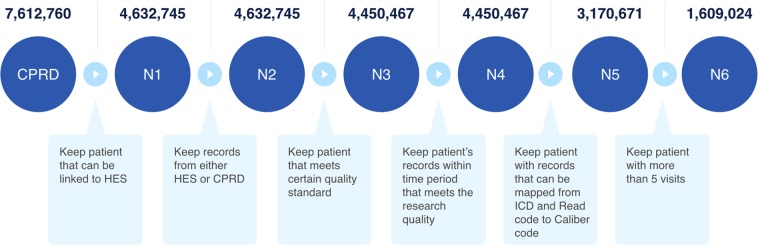
Today, despite decades of developments in medicine and the growing interest in precision healthcare, vast majority of diagnoses happen once patients begin to show noticeable signs of illness. Early indication and detection of diseases, however, can provide patients and carers with the chance of early intervention, better disease management, and efficient allocation of healthcare resources. The latest developments in machine learning (including deep learning) provides a great opportunity to address this unmet need. In this study, we introduce BEHRT: A deep neural sequence transduction model for electronic health records (EHR), capable of simultaneously predicting the likelihood of 301 conditions in one’s future visits. When trained and evaluated on the data from nearly 1.6 million individuals, BEHRT shows a striking improvement of 8.0–13.2% (in terms of average precision scores for different tasks), over the existing state-of-the-art deep EHR models. In addition to its scalability and superior accuracy, BEHRT enables personalised interpretation of its predictions; its flexible architecture enables it to incorporate multiple heterogeneous concepts (e.g., diagnosis, medication, measurements, and more) to further improve the accuracy of its predictions; its (pre-)training results in disease and patient representations can be useful for future studies (i.e., transfer learning).
Overview
The claims and statistics of this paper haven’t been checked yet.
Run the check — free, no account needed. It reads the open-access text and checks the sources it cites.
Integrity signals
Registry
Cites
Statistics
Figures
Verification
Claims the paper makes
The claims and statistics of this paper haven’t been checked yet.
Run the check — free, no account needed. It reads the open-access text and checks the sources it cites.
Claims other papers make about this one
Each is checked against this paper’s own text: does it say what the citing paper says it does?
The source backs part of the claim, not all of it — or backs it for a different population, condition or comparison.
In the citing paper
“BEHRT is limited to forecasts of disorders occurring in the next patient hospital visit or a specific predefined timeframe (eg, 6 or 12 months), consequently requiring that the information is grouped into patient visits.”
From Foresight-a generative pretrained transformer for modelling of patient timelines using electronic health records: a retrospective modelling study (2024) · cites this paper as [4]
Experimental — accuracy not yet measuredThe cited source says what the claim attributes to it.
In the citing paper
“One example is the BERT for EHRs (BEHRT) model, 4 which uses a small subset of disorders (301 in total) that were available in the structured portion of EHRs.”
From Foresight-a generative pretrained transformer for modelling of patient timelines using electronic health records: a retrospective modelling study (2024) · cites this paper as [4]
Self-check
Percentages, sums and reported differences re-computed from the paper’s own numbers.
The self-check needs the paper’s full text.
Citations
Cites
Vaswani, A., Shazeer, N., Parmar, N., Uszkoreit, J., Jones, L., Gomez, A. N., Kaiser, L., & Polosukhin, I. (2017) · arXiv · doi:10.48550/arxiv.1706.03762 · Cited by 120,404
BERT: Pre-training of Deep Bidirectional Transformers for Language Understanding
Devlin, J., Chang, M.-W., Lee, K., & Toutanova, K. (2019) · Proceedings of the 2019 Conference of the North American Chapter of the Association for Computational Linguistics: Human Language Technologies, Volume 1 (Long and Short Papers) · doi:10.18653/v1/n19-1423 · Cited by 54,325
(2008) · Journal of Machine Learning Research · Cited by 33,051
Learning Phrase Representations using RNN Encoder–Decoder for Statistical Machine Translation
Cho, K., van Merrienboer, B., Gulcehre, C., Bahdanau, D., Bougares, F., Schwenk, H., & Bengio, Y. (2014) · Proceedings of the 2014 Conference on Empirical Methods in Natural Language Processing (EMNLP) · doi:10.3115/v1/d14-1179 · Cited by 25,545
Advances in neural information processing systems 7
Cios, K. J., & Shields, M. E. (1997) · Neurocomputing · doi:10.1016/s0925-2312(97)90018-7 · Cited by 22,093
An introduction to ROC analysis
Fawcett, T. (2006) · Pattern Recognition Letters · doi:10.1016/j.patrec.2005.10.010 · Cited by 21,879
Sudlow, C., Gallacher, J., Allen, N., Beral, V., Burton, P., Danesh, J., Downey, P., Elliott, P., Green, J., Landray, M., et al. (2015) · PLOS Medicine · doi:10.1371/journal.pmed.1001779 · Cited by 12,728
High-performance medicine: the convergence of human and artificial intelligence
Topol, E. J. (2019) · Nature Medicine · doi:10.1038/s41591-018-0300-7 · Cited by 10,450
Practical Bayesian Optimization of Machine Learning Algorithms
Snoek, J., Larochelle, H., & Adams, R. P. (2012) · arXiv · doi:10.48550/arxiv.1206.2944 · Cited by 6,691
Evaluation: from precision, recall and F-measure to ROC, informedness, markedness and correlation
Powers, D. M. W. (2020) · arXiv · doi:10.48550/arxiv.2010.16061 · Cited by 5,440
Research works printed but not linked: 3
- Choi, E., Bahadori, M. T., Schuetz, A., Stewart, W. F. & Sun, J. Doctor AI: Predicting Clinical Events via Recurrent Neural Networks. In Machine Learning for Healthcare Conference, 301–318 (2016).
- Zhu, M. Recall, precision and average precision. Dep. Stat. Actuar. Sci. Univ. Waterloo, Waterloo 2, 30 (2004).
- Vig, J. Visualizing Attention in Transformer-Based Language Representation Models. arXiv preprint arXiv:1904.02679 (2019). · arXiv
Cited by
Sorted by citations
Items 401–500 of 616
Montgomery, M., Klein, K. V., Odgaard, M., Lorenzen, S. S., & Sobhaninia, Z. (2025) · The Journal of Open Source Software · doi:10.21105/joss.08869 · Cited by 1
Seidel, A., Steiger, E., von Samson‐Himmelstjerna, F. A., & Kroll, L. E. (2026) · BMC Medical Informatics and Decision Making · doi:10.1186/s12911-026-03733-5 · Cited by 1
Slipchenko, V. H., Полягушко, Л. Г., Волков, О. Є., & Shatylo, V. (2025) · Eastern-European Journal of Enterprise Technologies · doi:10.15587/1729-4061.2025.340325 · Cited by 1
Neural network-driven direct CBCT-based dose calculation for head-and-neck proton treatment planning
Li, M., Choulilitsa, E., Fankhauser, L., Albertini, F., Lomax, A., & Zhang, Y. (2025) · Physics in Medicine and Biology · doi:10.1088/1361-6560/ae222a · Cited by 2
Alamery, M. M., Alatawi, H. O. E., Alruwaili, I. D., Alanazi, H. D. S., Alsumairy, S. S. M., Gharawi, A. A. Y., .Aldossary, A. N. A., Alwayni, H. M. Y., Thiyabi, S. S. S. A., & alinazy, A. E. (2024) · Saudi Journal of Medicine and Public Health · doi:10.64483/202412443 · Cited by 1
Hill, E. D., Loh, D. R., Davis, N. O., Goldstein, B. A., Dawson, G., & Engelhard, M. (2026) · Nature Mental Health · doi:10.1038/s44220-026-00628-2 · Cited by 1
Time-Variant Transformer for Predicting Alzheimer's Disease Progression from Longitudinal Data
Sharaf, H. A., Kholief, M., & Said, H. H. M. (2025) · International Conference on Computer Theory and Applications (ICCTA) · doi:10.1109/iccta68914.2025.11519825 · Cited by 1
Liu, S., Zheng, W., Kang, J., Xu, T., Chen, S., Li, G., Li, J., Wong, H., Wang, M., Bai, X., et al. (2026) · Nature Medicine · doi:10.1038/s41591-026-04694-y · Cited by 1
Augmenting electronic health records for adverse event detection
Kaynar, G., You, Z., Boyce, R. D., Yakoh, T., & Kingsford, C. (2026) · Journal of Biomedical Informatics · doi:10.1016/j.jbi.2026.105112 · Cited by 1
Data Standards and Terminology Including Biomedical Ontologies
Denaxas, S., & Stoeckert, C. J. (2023) · Springer eBooks · doi:10.1007/978-3-031-36678-9_3 · Cited by 1
Foresight—generative pretrained transformer for the prediction of patient timelines
Hofmann‐Apitius, M., & Fröhlich, H. (2024) · The Lancet Digital Health · doi:10.1016/s2589-7500(24)00045-1 · Cited by 1
Bae, S. K., Kim, Y., Kim, H., & Park, B. (2024) · IEEE International Conference on Artificial Intelligence for Medicine, Health and Care (AIMHC) · doi:10.1109/aimhc59811.2024.00020 · Cited by 1
Xu, R., Lu, Y., Liu, C., Chen, Y., Sun, Y. V., Hu, X., Ho, J. C., & Yang, C. (2024) · PubMed · doi:10.48550/arxiv.2406.05682 · Cited by 1
Investigating the influencing factors of evidence-based healthcare practice adoption
Motsi, L. (2024) · Curationis · doi:10.4102/curationis.v47i1.2586 · Cited by 1
Guo, W., Kong, X., & Huang, H. (2024) · Neurocomputing · doi:10.1016/j.neucom.2024.129003 · Cited by 1
A Multi-task Learning Approach for Predicting Spatio-temporal Patient Variables
Madhobi, K. F., Lofgren, E., & Kalyanaraman, A. (2024) · ACM International Conference on Bioinformatics, Computational Biology, and Health Informatics (ACM-BCB) · doi:10.1145/3698587.3701340 · Cited by 1
Carrasco-Ribelles, L. A., Cabrera‐Bean, M., Llanes-Jurado, J., & Violán, C. (2024) · Applied Sciences · doi:10.3390/app15010146 · Cited by 1
PHeP: TrustAlert Open-Source Platform for Enhancing Predictive Healthcare with Deep Learning
Contaldo, S. G., Pietropaolo, E., Bosio, L., Pernice, S., Terrone, I., Baccega, D., Wang, Y., Sahoo, R. K., Rizzo, G. F., Visconti, A., et al. (2025) · Lecture notes in computer science · doi:10.1007/978-3-031-89704-7_16 · Cited by 1
Explaining alerts from a pediatric risk prediction model using clinical text
Nycklemoe, S., Devarapu, S., Gao, Y., Carey, K. A., Kuehnel, N., Munjal, N. K., Jani, P., Churpek, M. M., Dligach, D., Afshar, M., et al. (2025) · Journal of the American Medical Informatics Association · doi:10.1093/jamia/ocaf121 · Cited by 1
Azhir, A., Talebi, S., Merino, L.-H., Li, Y., Lukasiewicz, T., Argulian, E., Narula, J., & Mihaylova, B. (2022) · PubMed Central · Cited by 1
Self-citationPhenotyping with Positive Unlabelled Learning for Genome-Wide Association Studies
Vauvelle, A., Tomlinson, H., Sim, A., & Denaxas, S. (2022) · Studies in computational intelligence · doi:10.1007/978-3-031-14771-5_9 · Cited by 1
Evaluation of Sequential and Temporally Embedded Deep Learning Models for Health Outcome Prediction
Boursalie, O., Samavi, R., & Doyle, T. E. (2022) · Advances in intelligent systems and computing · doi:10.1007/978-981-19-6153-3_2 · Cited by 1
SM-DBERT: A Novel Symptom-based Technique for Chronic Disease Classification using DISTILBERT
Saigaonkar, S. (2023) · International Journal on Recent and Innovation Trends in Computing and Communication · doi:10.17762/ijritcc.v11i9.9275 · Cited by 1
Li, W., & Law, K. L. E. (2024) · Lecture notes in computer science · doi:10.1007/978-3-031-72353-7_7 · Cited by 1
Patient Embeddings in Healthcare and Insurance Applications.Preprint
Blinov, P. D., & Kokh, V. (2021) · arXiv (Cornell University) · Cited by 1
Wu, X., Liu, Z., Zhao, Y., Yang, Y., & Clifton, D. A. (2023) · SSRN Electronic Journal · doi:10.2139/ssrn.4583878 · Cited by 1
Combining Survival Analysis and Machine Learning for Mass Cancer Risk Prediction using EHR dataPreprint
Philonenko, P., Kokh, V., & Blinov, P. D. (2023) · Research Square · doi:10.21203/rs.3.rs-3611680/v1 · Cited by 1
Nguyen, P., Hungele, A., Holl, R. W., & Menden, M. P. (2025) · medRxiv · doi:10.1101/2025.02.04.24313200 · Cited by 1
Predicting 30 Days Hospital Readmission for Heart Failure patients using word embeddingsPreprint
Shakya, P. R., Khaneja, A., & Wagholikar, K. B. (2025) · medRxiv · doi:10.1101/2025.02.07.25321871 · Cited by 1
Dsouza, V., Pace, D. F., Azhir, A., Nargesi, A. A., Holbrook, E. B., He, W., Naumann, T., Friedman, S. F., Atlas, S. J., Anderson, C. D., et al. (2025) · medRxiv · doi:10.64898/2025.11.28.25341233 · Cited by 1
Life Trajectories as Symbolic Language
Savcisens, G. (2024) · doi:10.5281/zenodo.14706678 · Cited by 1
Tan, S., Liu, H., Tong, L., Zhao, X. P., Zhang, J. C., Shuai, L., Zhang, M., & Yang, X. (2026) · Research Square · doi:10.21203/rs.3.rs-9517695/v1 · Cited by 1
Continuous Value Tokenization Improves Medical Event Foundation ModelsPreprint
McCann, K. A., Shin, I., Li, H., White, D., Melnick, E. R., Iscoe, M. S., & Loza, A. J. (2026) · medRxiv · doi:10.64898/2026.08.04.26359713 · Cited by 1
Self-supervision for health insurance claims data: a Covid-19 use casePreprint
Apostolova, E., Karim, F., Muscioni, G., Rana, A., & Clyman, J. I. (2021) · arXiv (Cornell University) · doi:10.48550/arxiv.2107.14591
Unifying Heterogenous Electronic Health Records Systems via Text-Based Code EmbeddingPreprint
Hur, K., Lee, J., Oh, J., Price, W., Kim, Y., & Choi, E. (2021) · arXiv (Cornell University)
Application of transformers for predicting epilepsy treatment response (Withdrawal Notice)
Choong, J., Hakeem, H., Chen, Z. Z., Brodie, M. J., Lawn, N. D., Drummond, T. W., Kwan, P., & Ge, Z. (2021) · International Symposium on Artificial Intelligence and Robotics (ISAIR) · doi:10.1117/12.2601484
Zhang, J., Bolanos, L. D., Li, T., Tanwar, A., Freire, G., Yang, X., Ive, J., Gupta, V., & Guo, Y. (2021) · arXiv (Cornell University) · doi:10.48550/arxiv.2109.01935 · Cited by 2
MedMetrics: Biometrics Passports in Medical and Clinical Healthcare That Enable AI and Blockchain
Lu, H. Y. (2022) · IntechOpen eBooks · doi:10.5772/intechopen.104419
Adversarial Learning for Improved Patient Representations
Shankar, B., & Hargreaves, C. A. (2023) · Lecture notes in computer science · doi:10.1007/978-3-031-32883-1_42
Novel Representation Learning Improves Personalizing Blood Test Ranges and Disease Risk PredictionPreprint
Heydari, A. A., Prieto, J. L., Patel, S., & Rezaei, N. (2023) · Research Square · doi:10.21203/rs.3.rs-3054397/v1
Mutnuri, M. K., Stelfox, H. T., Forkert, N. D., & Lee, J. (2023) · Research Square · doi:10.21203/rs.3.rs-3100844/v1
SANSformers: Self-Supervised Forecasting in Electronic Health Records with Attention-Free ModelsPreprint
Kumar, Y., Ilin, A., Salo, H., Kulathinal, S., Leinonen, M. K., & Marttinen, P. (2023) · doi:10.36227/techrxiv.23911365.v1
SANSformers: Self-Supervised Forecasting in Electronic Health Records with Attention-Free ModelsPreprint
Kumar, Y., Ilin, A., Salo, H., Kulathinal, S., Leinonen, M. K., & Marttinen, P. (2023) · doi:10.36227/techrxiv.23911365
Representing Health Data and Medical Knowledge for Deep Learning
Hansen, E. R. (2023) · VBN Forskningsportal (Aalborg Universitet) · doi:10.54337/aau621651364
Data analytics framework for sparse longitudinal structured biomedical data
Sixtová, I., Skopal, T., & Uher, T. (2023) · IEEE International Conference on Bioinformatics and Biomedicine (BIBM) · doi:10.1109/bibm58861.2023.10385940
Amirahmadi, A., Etminani, F., Björk, J., Melander, O., & Ohlsson, M. (2024) · Research Square · doi:10.21203/rs.3.rs-3959125/v1 · Cited by 1
Gao, J., Yan, R., & Doryab, A. (2023) · International Conference on Machine Learning and Applications · doi:10.1109/icmla58977.2023.00045
Modular Quantitative Temporal Transformer for Biobank-Scale Unified Representations
Antal, M., Marosi, M., Nagy, T., Millinghoffer, A., Gézsi, A., Juhász, G., & Antal, P. (2024) · Lecture notes in computer science · doi:10.1007/978-3-031-66535-6_24
Representing Outcome-Driven Higher-Order Dependencies in Graphs of Disease Trajectories
Krieg, S. J., Chawla, N. V., & Feldman, K. (2024) · IEEE International Conference on Healthcare Informatics (ICHI) · doi:10.1109/ichi61247.2024.00010
Wang, H., Li, J., Liu, B., Li, J., & Long, J. (2024) · IEEE Annual International Computer Software and Applications Conference (COMPSAC) · doi:10.1109/compsac61105.2024.00345
BARToM: a Transformer-based approach for multimodal electronic health records transformation
Li, R., & Kawakami, E. (2024) · International Conference on Medical and Health Informatics (ICMHI) · doi:10.1145/3673971.3673999
Loss Function Role in Processing Sequences with Heavy-Tailed Distributions
Gritskikh, M., Isakov, A. O., Gusarova, N., Dobrenko, D., Tomilov, I., & Vatian, A. S. (2024) · Lecture notes in computer science · doi:10.1007/978-3-031-77731-8_33
A BERT base model for the analysis of Electronic Health Records from diabetic patients
Manzini, E., Vlacho, B., Franch‐Nadal, J., Escudero, J., Génova, A., Reixach, E., Andrés, E., Pizarro, I., Mauricio, D., & Perera-Lluna, A. (2024) · Annual International Conference of the IEEE Engineering in Medicine and Biology Society (EMBC) · doi:10.1109/embc53108.2024.10782488
Prediction of emergency admissions: trade-offs between model simplicity and performance
Rao, S., & Rahimi, K. (2025) · The Lancet Digital Health · doi:10.1016/j.landig.2024.12.008
Self-citationShakya, P., Khaneja, A., & Wagholikar, K. B. (2025) · doi:10.2196/preprints.73020
On the Maintenance Oversight of the Healthcare Sector Based on Artificial Intelligence
Bhattacharya, S., Sinha, D., Bandyopadhyay, C., Majumder, S., & Biswas, A. (2025) · Studies in systems, decision and control · doi:10.1007/978-981-96-0085-4_21
Kwarteng-Amaniampong, E. (2025) · World Journal of Advanced Research and Reviews · doi:10.30574/wjarr.2025.25.3.0515
Zhu, Z., Li, J., Xu, X., & Zhao, Q. Y. (2025) · ACM Transactions on Asian and Low-Resource Language Information Processing · doi:10.1145/3731757
Malik, S., Nafis, M. T., Ahad, M. A., Tanweer, S., & Tauhid, S. F. (2024) · ShodhKosh Journal of Visual and Performing Arts · doi:10.29121/shodhkosh.v5.i1.2024.5167
Olaimat, M. A. (2025) · University of North Texas Digital Library (University of North Texas) · doi:10.12794/metadc2443349
Deep Learning to Classify Exoplanet Light Curves in Kepler and TESS
Xie, D., Wang, Y., Liu, F., & Sun, W. (2025) · Research in Astronomy and Astrophysics · doi:10.1088/1674-4527/adf70e
Vurgun, U., Kaviyarasu, A., Hwang, S., Batugo, A., Thomas, S., Tang, B., Acevedo, A., Mitchell, O. J. L., & Mowery, D. L. (2025) · medRxiv · doi:10.1101/2025.08.04.25331524
Corpas, M., Blasco-Fontecilla, H., Gallego, L., Ramos, J. M., Moreno‐Torres, V., & Soriano, V. (2026) · The Journal of Precision Medicine Health and Disease · doi:10.1101/2025.08.06.25333108
Artificial Intelligence in Healthcare
Aknouch, A., Soussi, H., El-ouardi, Y., Belcadi, H., Aitouhanni, I., Dahbi, A., & Rachmoune, K. (2025) · IGI Global eBooks · doi:10.4018/979-8-3373-1992-6.ch008
Albashri, J. S., Albashri, A. S., Alamri, H. S., Alsurayhi, M. M., Alamri, L. M., Meftah, M. A., Abushal, S. O., Albukhari, A. F., & Morfeq, H. A. (2025) · Journal of Advanced Trends in Medical Research · doi:10.4103/atmr.atmr_68_25
Enhancing healthcare analytics with prompt based probabilistic graphical model
Zhuang, Y., Zhang, J., Liu, S., Wei, B., Zheng, L., Gao, J., Zeng, Z., Xu, J., & He, K. (2025) · iScience · doi:10.1016/j.isci.2025.113417
Knowledge-Aware Clinical Narrative Extraction Using Ontologies and Knowledge Graphs
Leite, M., Rb-Silva, R., Guimar�ães, N., Stork, L., & Jorge, A. (2025) · Lecture notes in computer science · doi:10.1007/978-3-032-05176-9_3
Elasri, C., Ouahbi, Y., Saoiabi, F., Harchane, H., Hagouch, M., Kharmoum, N., & Ziti, S. (2025) · Lecture notes in networks and systems · doi:10.1007/978-3-032-01967-7_34
PANCDetect: Early Detection of Pancreatic Cancer from Multimodal EHR data with LLM EmbeddingsPreprint
Jin, Z., Guo, X., Wang, Z., Yang, Q., Yang, X., Zhang, X., Yin, R., & Garmire, L. X. (2025) · medRxiv · doi:10.1101/2025.10.03.25337210
Epilepsy Prevention Using Enhanced Genetic Algorithm Tuned Multilayer Network
Kavitha, P., Behera, S., Rajalakshmi, K., & Aruna, D. (2025) · International Conference on Inventive Systems and Control (ICISC) · doi:10.1109/icisc65841.2025.11188141
The Rise of Digital Health Technology in the COVID-19 Pandemic
Anjali, Aggarwal, K., Mukul, & Deepanshu (2025) · Springer eBooks · doi:10.1007/978-981-95-1196-9_11
Kim, J., Kim, Y.-J., & Kim, K. (2025) · medRxiv · doi:10.1101/2025.11.10.25339886 · Cited by 1
Zamojski, D., Pudełko, A., Gajewska-Kucharek, A., & Marczyk, M. (2025) · Lecture notes in computer science · doi:10.1007/978-3-032-08455-2_21
Budiarto, A., & Shah, S. A. (2025) · International Conference on Information Management and Technology (ICIMTech) · doi:10.1109/icimtech67074.2025.11265119
Multimorbidity measurement strategies for predicting hospital visits
Neves, B. D., Moreira, J. M., Gonçalves, S., Cerejo, J., Mota, I., Silva, N. A., Leite, F., & Silva, M. J. (2025) · BMC Health Services Research · doi:10.1186/s12913-025-13817-z
Bai, Q., Liu, M., & Xu, T. (2025) · Elsevier eBooks · doi:10.1016/b978-0-44-332908-1.00020-9
Lalwani, S., & Gupta, H. (2025) · PromptAI Academy Journal · doi:10.37497/promptai.5.2026.93
HyDaST: Mortality risk prediction via EHR-hypergraph and dual-scale temporal pattern extraction
Li, W., & Law, K. L. E. (2026) · Information Sciences · doi:10.1016/j.ins.2026.123093
Development of a Transformer-Based Cardiac Arrest Prediction Model for General Ward PatientsPreprint
Hong, S., Mun, Y., Lee, K. H., Hahn, S., Jang, S., Kim, C., Chung, K. S., & Sim, T. Y. (2026) · medRxiv · doi:10.64898/2026.01.12.26343973
Personalized Disease Risk Prediction from Multimodal Health Data Using Large Language ModelsPreprint
Arjmand, H., & Tomberg, A. (2026) · Research Square · doi:10.21203/rs.3.rs-8139699/v1
Tanhaei, M. (2026) · Measurement Digitalization · doi:10.1016/j.meadig.2026.100023
Bae, S., Kim, Y., Park, S., Kim, H., & Park, B. (2026) · Frontiers in Digital Health · doi:10.3389/fdgth.2026.1722338
Near-instantaneous Cardiovascular Event Prediction Using Multimodal Deep Learning
Al-Hasooni, M., Abdzaid, A., Hadi, N., & Fakhruldeen, H. (2026) · Electronics ETF · doi:10.53314/els2630003a
Dhanalakshmi, T., Benasir Begam, F., Logu, K., Jegatheesan, A., Karpagam, V., & Appavu, N. (2025) · International Conference on Evolutionary Computing and Mobile Sustainable Networks (ICECMSN) · doi:10.1109/icecmsn68058.2025.11383411
Transcending the Annotation Bottleneck: AI-Powered Discovery in Biology and Medicine
Chatterjee, S. (2026) · Communications in computer and information science · doi:10.1007/978-3-032-17216-7_19
Di, Y., & Cai, N. (2026) · medRxiv · doi:10.64898/2026.02.15.26346336
PaReGTA: a temporally aware LLM-based patient representation framework for EHR analytics
Kihyuk, Y., Mao, L., Chong, C. D., Schwedt, T. J., Chiang, C., & Li, J. (2026) · IISE Transactions on Healthcare Systems Engineering · doi:10.1080/24725579.2026.2740600
HiCARE-EHR: Hierarchical Conditional AutoRegressive Events for High-Fidelity EHRs
Pamisetty, G., Batreddy, S., Verma, P., & Babu, C. S. (2025) · IEEE International Conference on Big Data (BigData) · doi:10.1109/bigdata66926.2025.11401871
EHR Can-Flow: Contrastively Aligned Normalizing Flows for Conditional EHR Generation
Batreddy, S., Pamisetty, G., Verma, P., & Babu, C. S. (2025) · IEEE International Conference on Big Data (BigData) · doi:10.1109/bigdata66926.2025.11402106
Liu, W., Wang, J., Ksibi, A., & Yin, N. (2026) · IEEE Transactions on Consumer Electronics · doi:10.1109/tce.2026.3672115
Zhao, Y., Madill, E. S., Kitessa, A., Castle, B., Katre, A. R., & Chitnis, T. (2025) · IEEE ... International Conference on Data Mining workshops · doi:10.1109/icdmw69685.2025.00095
Khokhar, P. B., Gravino, C., Palomba, F., Yayilgan, S. Y., & Shaikh, S. (2026) · International Conference on Advancements in Computational Sciences (ICACS) · doi:10.1109/icacs69208.2026.11433135
Karthikeyan, K., Flythe, J. E., Pun, P. H., Winkelmayer, W. C., & Carlson, D. (2025) · JAMIA Open · doi:10.1093/jamiaopen/ooaf152
Boyce, L., & Prybutok, V. R. (2026) · Healthcare · doi:10.3390/healthcare14060806
Rao, S., Walli-Attaei, M., Ahmed, N., Fan, Z., Petrazzini, B. O., Lian, J., Ghamari, S., Wamil, M., Lip, G. Y. H., Leal, J., et al. (2026) · medRxiv · doi:10.64898/2026.03.23.26349067
Self-citationHealthFormer: Dual-level time-aware Transformers for irregular electronic health record eventsPreprint
Kőrösi-Szabó, P., Kovács, G., Forrai, B., Laki, J., Kováts, T., Szócska, M., & Csiszárik, A. (2026) · medRxiv · doi:10.64898/2026.03.25.26349262
Learning Patient-Specific Event Sequence Representations for Clinical Process AnalysisPreprint
Sólyomvári, K., Antikainen, T., Moen, H., Marttinen, P., Renkonen, R., & Koskinen, M. (2026) · medRxiv · doi:10.64898/2026.03.25.26348333
Federated Transformer-Based Learning for Predicting ICU Events with Multi-hop XAI Explanation Models
Kumari, A., Lohar, S., Das, S., Das, S., Dutta, I., & Mukherjee, A. (2025) · International Conference on Data Science and Intelligent Network Computing (ICDSINC) · doi:10.1109/icdsinc66221.2025.11448143
Contextualized clinical anomaly detection with explainable AI and patient modeling
Elketroussi, A., Djebbar, B., & Bekkouche, I. (2026) · Indonesian Journal of Electrical Engineering and Computer Science · doi:10.11591/ijeecs.v41.i2.pp614-623
Stephen, M., & Mathew, T. M. (2026) · International Conference on Sentiment Analysis and Deep Learning (ICSADL) · doi:10.1109/icsadl67539.2026.11451897
Metadata
- Authors
- Li, Y., Rao, S., Solares, J. R. A., Hassaine, A., Ramakrishnan, R., Canoy, D., Zhu, Y., Rahimi, K., & Salimi-Khorshidi, G.
- Affiliations
- University of Oxford (GB)
- Corresponding author
- Rao, Shishir
- ORCID
- Venue
- Scientific Reports
- Published
- 2020-04-28
- Volume
- 10
- Issue
- 1
- Pages
- 7155-7155
- ISSN
- 2045-2322 (ISSN-L)
- PMC
- PMC7189231
- OpenAlex
- W3017637887
- Cited by
- 595
- References
- 37
- Citations by year
- 2026: 129 · 2025: 128 · 2024: 106 · 2023: 98 · 2022: 60 · 2021: 58 · 2020: 16
- FWCI
- 22.80
- Type
- journal article
- Language
- en
- Open access
- gold
- doi.org
- Locations
- Scientific Reports (publishedVersion, cc-by)
- PubMed Central (publishedVersion, cc-by)
- PubMed (publishedVersion)
- arXiv (Cornell University) (submittedVersion)
- UNSWorks (University of New South Wales, Sydney, Australia) (submittedVersion, cc-by)
- arXiv (Cornell University) (cc-by)
- Funders
- DH | National Institute for Health Research
- Oxford University | Oxford Martin School, University of Oxford
- Topics
- Physical Sciences › Computer Science › Artificial Intelligence › Machine Learning in Healthcare
- Health Sciences › Health Professions › Health Information Management › Artificial Intelligence in Healthcare
- Health Sciences › Health Professions › Health Information Management › Electronic Health Records Systems
- Keywords
- electronic health records, disease prediction, early disease detection, sequence-to-sequence models, transformer models, multi-task prediction, heterogeneous clinical data, interpretable prediction, patient representation learning, transfer learning
- MeSH terms
- Machine Learning, Algorithms, Humans, Electronic Health Records
About these checks
Registry, retraction, Cites and statistics results are computed, not judged, with one exception: a printed reference that no index lists is read once by a model before it counts as a citation error. Claims are extracted by a model and kept only when their quote appears verbatim in the text; each cited source is then checked, with a model’s help, for whether it says what the claim relies on. Those verdicts can be wrong — read the claim’s quote and the cited source before relying on one.
Statistics and arithmetic are recomputed, not judged.
Confidence bands are shown only for fields calibrated on our annotated test set. None is calibrated yet, so no band is shown.
What counts as a claim ›How we measure confidence ›How we check this ›
Are you an author, or do you see a problem with this page? Request a review
