

The DOI matches its Crossref record; 35 of the 37 references it cites were found in a registry or an index.
BEHRT: Transformer for Electronic Health Records
Open accessAbstract
Today, despite decades of developments in medicine and the growing interest in precision healthcare, vast majority of diagnoses happen once patients begin to show noticeable signs of illness. Early indication and detection of diseases, however, can provide patients and carers with the chance of early intervention, better disease management, and efficient allocation of healthcare resources. The latest developments in machine learning (including deep learning) provides a great opportunity to address this unmet need. In this study, we introduce BEHRT: A deep neural sequence transduction model for electronic health records (EHR), capable of simultaneously predicting the likelihood of 301 conditions in one’s future visits. When trained and evaluated on the data from nearly 1.6 million individuals, BEHRT shows a striking improvement of 8.0–13.2% (in terms of average precision scores for different tasks), over the existing state-of-the-art deep EHR models. In addition to its scalability and superior accuracy, BEHRT enables personalised interpretation of its predictions; its flexible architecture enables it to incorporate multiple heterogeneous concepts (e.g., diagnosis, medication, measurements, and more) to further improve the accuracy of its predictions; its (pre-)training results in disease and patient representations can be useful for future studies (i.e., transfer learning).
Overview
The claims and statistics of this paper haven’t been checked yet.
Run the check — free, no account needed. It reads the open-access text and checks the sources it cites.
Integrity signals
Registry
Cites
Statistics
Figures
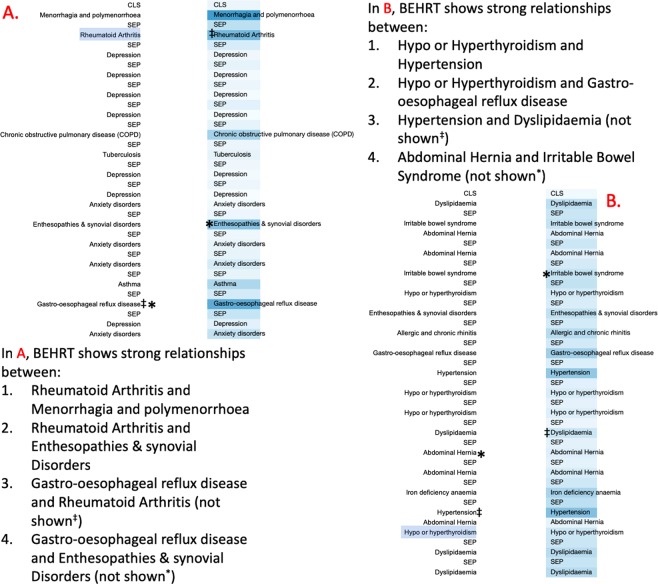
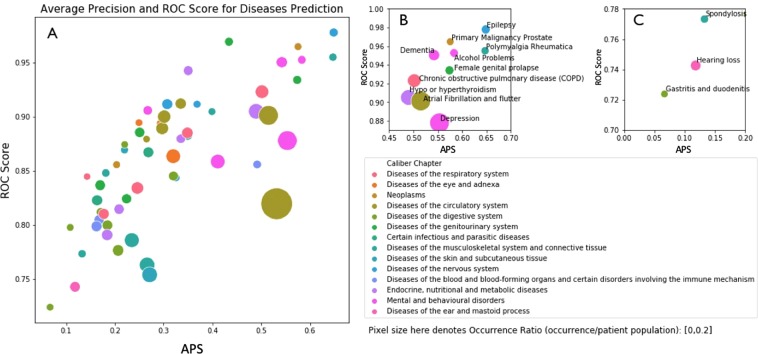
Verification
Claims the paper makes
The claims and statistics of this paper haven’t been checked yet.
Run the check — free, no account needed. It reads the open-access text and checks the sources it cites.
Claims other papers make about this one
Each is checked against this paper’s own text: does it say what the citing paper says it does?
The source backs part of the claim, not all of it — or backs it for a different population, condition or comparison.
In the citing paper
“BEHRT is limited to forecasts of disorders occurring in the next patient hospital visit or a specific predefined timeframe (eg, 6 or 12 months), consequently requiring that the information is grouped into patient visits.”
From Foresight-a generative pretrained transformer for modelling of patient timelines using electronic health records: a retrospective modelling study (2024) · cites this paper as [4]
Experimental — accuracy not yet measuredThe cited source says what the claim attributes to it.
In the citing paper
“One example is the BERT for EHRs (BEHRT) model, 4 which uses a small subset of disorders (301 in total) that were available in the structured portion of EHRs.”
From Foresight-a generative pretrained transformer for modelling of patient timelines using electronic health records: a retrospective modelling study (2024) · cites this paper as [4]
Self-check
Percentages, sums and reported differences re-computed from the paper’s own numbers.
The self-check needs the paper’s full text.
Citations
Cites
Vaswani, A., Shazeer, N., Parmar, N., Uszkoreit, J., Jones, L., Gomez, A. N., Kaiser, L., & Polosukhin, I. (2017) · arXiv · doi:10.48550/arxiv.1706.03762 · Cited by 120,404
BERT: Pre-training of Deep Bidirectional Transformers for Language Understanding
Devlin, J., Chang, M.-W., Lee, K., & Toutanova, K. (2019) · Proceedings of the 2019 Conference of the North American Chapter of the Association for Computational Linguistics: Human Language Technologies, Volume 1 (Long and Short Papers) · doi:10.18653/v1/n19-1423 · Cited by 54,325
(2008) · Journal of Machine Learning Research · Cited by 33,051
Learning Phrase Representations using RNN Encoder–Decoder for Statistical Machine Translation
Cho, K., van Merrienboer, B., Gulcehre, C., Bahdanau, D., Bougares, F., Schwenk, H., & Bengio, Y. (2014) · Proceedings of the 2014 Conference on Empirical Methods in Natural Language Processing (EMNLP) · doi:10.3115/v1/d14-1179 · Cited by 25,545
Advances in neural information processing systems 7
Cios, K. J., & Shields, M. E. (1997) · Neurocomputing · doi:10.1016/s0925-2312(97)90018-7 · Cited by 22,093
An introduction to ROC analysis
Fawcett, T. (2006) · Pattern Recognition Letters · doi:10.1016/j.patrec.2005.10.010 · Cited by 21,879
Sudlow, C., Gallacher, J., Allen, N., Beral, V., Burton, P., Danesh, J., Downey, P., Elliott, P., Green, J., Landray, M., et al. (2015) · PLOS Medicine · doi:10.1371/journal.pmed.1001779 · Cited by 12,728
High-performance medicine: the convergence of human and artificial intelligence
Topol, E. J. (2019) · Nature Medicine · doi:10.1038/s41591-018-0300-7 · Cited by 10,450
Practical Bayesian Optimization of Machine Learning Algorithms
Snoek, J., Larochelle, H., & Adams, R. P. (2012) · arXiv · doi:10.48550/arxiv.1206.2944 · Cited by 6,691
Evaluation: from precision, recall and F-measure to ROC, informedness, markedness and correlation
Powers, D. M. W. (2020) · arXiv · doi:10.48550/arxiv.2010.16061 · Cited by 5,440
Research works printed but not linked: 3
- Choi, E., Bahadori, M. T., Schuetz, A., Stewart, W. F. & Sun, J. Doctor AI: Predicting Clinical Events via Recurrent Neural Networks. In Machine Learning for Healthcare Conference, 301–318 (2016).
- Zhu, M. Recall, precision and average precision. Dep. Stat. Actuar. Sci. Univ. Waterloo, Waterloo 2, 30 (2004).
- Vig, J. Visualizing Attention in Transformer-Based Language Representation Models. arXiv preprint arXiv:1904.02679 (2019). · arXiv
Cited by
Sorted by citations
Items 501–600 of 616
Blockchain-Enabled Decentralised Architecture for Biomedical Data Governance
Singh, D. P., Dhondiyal, S. A., & Bisht, R. (2026) · International Conference on Intelligent Data Communication Technologies and Internet of Things (IDCIoT) · doi:10.1109/idciot67589.2026.11455808
Mittman, B. G., D’Aleo, G., Rothberg, M. B., Casacchia, N. J., & Albahra, S. (2026) · Journal of Imaging Informatics in Medicine · doi:10.1007/s10278-026-01932-0 · Cited by 1
Integrating Agentic AI Ethically Into Geriatric Healthcare
Azhar, M. H., Shabbir, I., Ali, M. S., Farid, G., Arif, H., & Fatima, R. (2026) · Advances in computational intelligence and robotics book series · doi:10.4018/979-8-3373-6038-6.ch009
Machine learning for large observational datasets in healthcare
Morel, M. (2021) · theses.fr (ABES) · doi:10.70675/4c309e60zdba1z4d73za007zbd512e238110
Research and Analysis of Heart Disease Risk Prediction Model Based on Machine Learning
Sun, J. (2026) · ITM Web of Conferences · doi:10.1051/itmconf/20268401021
Oktavian, D., & Putra, B. A. (2026) · JATI (Jurnal Mahasiswa Teknik Informatika) · doi:10.36040/jati.v10i2.17353
Multimodal learning to predict breast cancer prognosis
Mbaye, N. M. (2024) · theses.fr (ABES) · doi:10.70675/cdccc54az52f7z4e20za5a4z3ec09cd3a564
Transforming Healthcare with Electronic Health Records: AI Integration, Evolution, and Future
Chakraborty, P., & Kamila, S. (2026) · Springer optimization and its applications · doi:10.1007/978-3-032-15092-9_10
Jin, J., Li, T., Chen, J., Ba, H., Zhang, Y., Li, J., Yin, J., Liu, H., & Ma, K. (2026) · Frontiers in Immunology · doi:10.3389/fimmu.2026.1805202
SHARK: Modeling Semantic Hierarchy of Medical Code via Residual K-Means Quantization
Zhang, K., Lv, H., Tan, Y., Lin, Z., Zhang, H., Chen, X., & Yang, C. (2026) · IEEE International Conference on Acoustics Speech and Signal Processing · doi:10.1109/icassp55912.2026.11462768
Ahmad, I., Qu, J., Zhang, Q., Zhou, X., Qingyin, C., WenHao, R., & Xue, F. (2026) · Health Information Science and Systems · doi:10.1007/s13755-026-00452-z
Multimodal Fusion Architectures for Clinical Vision Language Models
Ghosh, S., & Raj, D. R. (2026) · Advances in computational intelligence and robotics book series · doi:10.4018/979-8-3373-7315-7.ch003
Ma, Y., Chinthala, L. K., Mohammed, A., Davis, R. L., & Colonna, V. (2026) · IEEE International Conference on Healthcare Informatics (ICHI) · doi:10.1109/ichi69079.2026.00253
A Comparative Study on the Responsible Use of Public LLMs for Self-diagnosis
Balasubramanian, N. S. P., & Dakshit, S. (2026) · Communications in computer and information science · doi:10.1007/978-3-032-19105-2_18
Rouhollahi, A., & Nezami, F. R. (2026) · bioRxiv (Cold Spring Harbor Laboratory) · doi:10.64898/2026.05.06.722409
Wang, Z., Lan, L., Wang, G., Zhang, H., Xu, M., Li, Q., He, T., Yang, M., Mao, W., Zhang, Y., et al. (2026) · Lecture notes in computer science · doi:10.1007/978-3-032-38172-9_28
Self-citationBenchmarking foundation models for improving confounding control in target trial emulationPreprint
Kleper, S., & Melamed, R. (2026) · medRxiv · doi:10.64898/2026.05.09.26352820
A physiology-guided temporal graph learning approach for intensive care mortality prediction
Joseph, J., & Judy, M. V. (2026) · Healthcare Analytics · doi:10.1016/j.health.2026.100467
He, T., Zheng, C., La, J., Pham, D., Jafari, O., Strampe, J., Dulberger, K., Ramos‐Cejudo, J., Gaziano, J. M., Do, N., et al. (2026) · npj Digital Medicine · doi:10.1038/s41746-026-02730-2
Yu, Y. (2026) · Research Square · doi:10.21203/rs.3.rs-9728440/v1
Xu, Z., Zhou, S., Song, J., Russell, D., Zolnoori, M., Shang, J., & Topaz, M. (2026) · International Journal of Medical Informatics · doi:10.1016/j.ijmedinf.2026.106485
Lu, Y., Li, T., Ge, L., Wei, Y., Li, Y., Huang, S., Jiang, T., Chen, Y., & Xiang, Z. (2026) · Frontiers in Public Health · doi:10.3389/fpubh.2026.1793361
Self-citationYoussef, Y. B., Amdouni, A., Chhabra, A., Manita, G., & Hassine, M. (2026) · International Journal of Machine Learning and Cybernetics · doi:10.1007/s13042-026-03159-5
Transformer-Based PK/PD Modeling for Monoclonal Antibody Dosing from Sparse Concentration Data
Nkosi, T., Molefe, L., Dlamini, S., Mokoena, A., & Ndlovu, K. (2026) · Pharmacophore · doi:10.51847/hftxxq9dlx
Milić, M. K., Sinanović, Š., Kostić, D., & Ralić, B. (2026) · Medicinski glasnik Specijalne bolnice za bolesti štitaste žlezde i bolesti metabolizma · doi:10.5937/mgiszm2600056k
Predictive Analytics for Proactive Patient Outcomes Prediction Using Multi-Modal Deep Learning
Asghar, M. N. (2026) · IEEE International Conference on Computing and Machine Intelligence (ICMI) · doi:10.1109/icmi68585.2026.11539900
Bhatawdekar, R. M. (2026) · Journal of Artificial Intelligence Machine Learning and Neural Network · doi:10.55529/jaimlnn.61.42.52
AI-assisted pregnancy episode identification from an all-payer claims database
Devkota, Y., Azar, S. E., Farivar, S., Ortega, J., Vanderlaan, J., Fonseca, J., & Taghva, K. (2026) · Advances in Computational Intelligence · doi:10.1007/s43674-026-00095-3
Early Sepsis Detection Using Heterogeneous Structured ICU Data with Explainable Deep Learning
Taparugssanagorn, A., Särestöniemi, M., Hämäläinen, M., & Iinatti, J. (2026) · Sensors · doi:10.3390/s26123648 · Cited by 1
Ahmed, M., Ahmed, F., Mow, S. M., Taha, P. A., Barua, S., Rahman, M. M., Rafy, A., Mondol, S. M., & Faisal, M. I. (2026) · medRxiv · doi:10.64898/2026.06.08.26355217
Mao, Y., Huang, L., Li, P., Qin, Z., Wang, L., & Yan, Y. (2026) · Frontiers in Medicine · doi:10.3389/fmed.2026.1836430
A Review on Deep State Space Models for Sequential Healthcare Data Prediction
Li, W., Xie, Y., & Dai, Y. (2026) · Mathematics · doi:10.3390/math14122210
Tanhaei, M. (2026) · Machine Learning with Applications · doi:10.1016/j.mlwa.2026.100935
On the Problem of Latent Temporal Modulation in Diagnostic Decision-Making
Mazurek, C. (2026) · Foundations of Computing and Decision Sciences · doi:10.2478/fcds-2026-0007
Intelligent Disease Prediction using Hybrid Deep Learning Models
Ramesh, A., & Babu, T. G. R. (2026) · International Conference on Integrated Circuits and Communication Systems (ICICACS) · doi:10.1109/icicacs68679.2026.11578866
CHaRT: An Autoregressive Transformer for Joint Forecasting of Clinical Events and Continuous Values
Walz, M., & Byrd, T. F. (2026) · Informatics · doi:10.3390/informatics13070099
Chahid, Y., Chahid, A., Chahid, I., & Elmiad, A. K. (2026) · International Journal of Advanced Computer Science and Applications · doi:10.14569/ijacsa.2026.0170604
Priyadharshini, U., & Vijayan, R. (2026) · Frontiers in Artificial Intelligence · doi:10.3389/frai.2026.1844707
Sona, K., Abileshwar, Rohan, A., Sharon Rose, P., C, J. K. V., & Kumar, K. J. P. (2026) · International Conference on System, Computation, Automation and Networking (ICSCAN) · doi:10.1109/icscan66520.2026.11588310
Sequential Counterfactual Inference for Temporal Clinical Data: Addressing the Time Traveler Dilemma
Cheng, J., Azhir, A., Tian, J., & Estiri, H. (2026) · Lecture notes in computer science · doi:10.1007/978-3-032-30813-9_77
Salama, W. M., Hussien, A., Fathy, N., & Magdy, S. (2026) · International Conference on Machine Intelligence and Smart Innovation (ICMISI) · doi:10.1109/icmisi69868.2026.11584040
Chung, P.-H., & Yoon, B.-J. (2026) · npj Health Systems · doi:10.1038/s44401-026-00119-7
Enhancing stratification for survival analyses across standardized data sources
Shubov, M., Beernink, M., Carus, J., Wiederhold, A. J., & Gundler, C. (2026) · BMC Medical Informatics and Decision Making · doi:10.1186/s12911-026-03666-z
Multimodal Routing for Interpretable, Robust, and Auditable Clinical Prediction
Hooman, N., Wu, Z., Larson, E. C., & Gupta, M. (2026) · IEEE/ACM Conference on Connected Health: Applications, Systems and Engineering Technologies · doi:10.1109/chase69719.2026.00010 · Cited by 1
Contrastive Learning and LLM Assisted Linkage to HIV Care for Emergency Department Patients
Delgado, J., Lingam, R., Boccio, E., Niu, J., Weiss, M. E., Eckardt, P., & Xingquan Zhu, A. (2026) · Lecture notes in computer science · doi:10.1007/978-981-92-2891-1_15
Zhang, Z., Xiao, C., Ma, J., Zhang, T., Gao, Y., & Qian, H. (2026) · Lecture notes in computer science · doi:10.1007/978-981-92-3485-1_25
Steijger, D. J. M., Scheper, M. C., van der Willigen, R. F., Christie, H. L., de Vugt, M. E., Verbeek, H., & Aarts, S. (2026) · Journal of Medical Internet Research · doi:10.2196/91968
Temporal Validation of a Structured Data Transformer Ensemble for 30-Day AMI Readmission PredictionPreprint
Serrano, X., Oberg, E., Pandit, J., Wu, Y., & Dua, A. (2026) · Research Square · doi:10.21203/rs.3.rs-10374411/v1
HiDiNet: High-Dimensional Interpretive Network for Modeling Aging Health and Survival
Guan, H., Dhanani, A., & Zhang, Y. (2026) · Digital Government Research and Practice · doi:10.1145/3833874
Transformer Models and their Cross-Domain Applications: A Systematic Review
Pathania, K., Singh, S., & Sharma, A. (2026) · Archives of Computational Methods in Engineering · doi:10.1007/s11831-026-10742-0
Keyl, P., Kiermeyer, N., Bosserhoff, J., Lenfers, T., Niederhauser, T., Fan, B., Schnake, T., Schallenberg, S., Aubele, F., Kuss, S., et al. (2026) · medRxiv · doi:10.64898/2026.07.24.26358838
Kuo, N. I.-H., Welberry, H., Lujic, S., Campain, A. E., Wilson, D., Harris, K., Kidd, M., Correll, P., Peiris, D., & Jorm, L. R. (2026) · BMJ Open · doi:10.1136/bmjopen-2026-122980
Liang, Q., & Zhao, B. (2024) · Journal of Business and Green Innovation · doi:10.63646/tdeo3402
Genetic decoding reveals druggable biology implicitly learned by a medical-history foundation modelPreprint
Zeng, W., Kohleick, L., Beuchel, C. F., Zoodsma, M., Koprulu, M., Carrasco-Zanini, J., Wild, B., Langenberg, C., & Pietzner, M. (2026) · medRxiv · doi:10.64898/2026.07.28.26359117
Sayeed, S., & Liang, G. (2026) · International Conference on Federated Learning and Intelligent Computing Systems (FLICS) · doi:10.1109/flics70075.2026.11621939
Musunuri, R. L., Parmar, D. M., & Oruganty, N. P. S. (2026) · Research Square · doi:10.21203/rs.3.rs-10157524/v1
AI-based multimodal integration of genomics and electronic health records
Venkatesh, R., & Ritchie, M. D. (2026) · Nature Reviews Genetics · doi:10.1038/s41576-026-00992-w
Kespechara, K., & Mingkhwan, A. (2026) · Lecture notes in computer science · doi:10.1007/978-3-032-35387-0_32
Liu, H., Zhang, Y., Abedin, N., Kidd, N., Porter, K., Chen, C., You, W., & Li, J. (2026) · IEEE International Conference on Healthcare Informatics (ICHI) · doi:10.1109/ichi69079.2026.00055
Liu, Y., Liu, Y., Zhao, Y., Luo, Y., & Hao, X. (2026) · Frontiers in Endocrinology · doi:10.3389/fendo.2026.1893963
Embedding clinical event sequences enhances infection risk prediction in asplenic patients
Cappuccio, T., Casale, M., Casalino, L., Vacca, M., Giordano, M., & Granata, I. (2026) · Scientific Reports · doi:10.1038/s41598-026-55082-y
Yuen, P. T.-Y., Hui, C. C.-Y., Ngan, O. M. Y., Saberi, D., Lau, K. K., & Chan, E. (2026) · doi:10.2196/preprints.109364
RevMed: A Two-Stage Reverse Dictionary Model for Medical Domain
Tian, S., Liu, B., Li, Y., Sun, J., & Xie, Y. (2026) · Information Processing & Management · doi:10.1016/j.ipm.2026.105081
Self-citationDlamini, N., Zulu, S., Nkosi, T., & Molefe, L. (2026) · International Journal Of Pharmaceutical Research And Allied Sciences · doi:10.51847/kowndomzzk
Structured prompting as reusable clinical tools
Husum, D., & Hügle, T. (2026) · EULAR Rheumatology Open · doi:10.1016/j.ero.2026.100230
Predicting Recurring Treatment Events Within Multiple Future Time Windows
Raymond, M. W., & D, Y. S. M. (2026) · Big Data and Cognitive Computing · doi:10.3390/bdcc10080281
Sahithi, G. S., & Rao, S. N. T. (2026) · International Conference on Smart Systems and Inventive Technology (ICSSIT) · doi:10.1109/icssit69151.2026.11656631
Self-citationLu, Q., Li, T., Chen, J., Ba, H., Zhang, Y., Li, J., Yin, J., Ma, K., Liu, H., & Jin, J. (2026) · Frontiers in Cellular and Infection Microbiology · doi:10.3389/fcimb.2026.1837493
Phiri, J., Zimba, A., Njovu, C., & Lumpa, M. (2026) · Discover Artificial Intelligence · doi:10.1007/s44163-026-01958-x
Garg, S., Kitchen, R., Gupta, R., Donnelly, L. A., & Pearson, E. R. (2026) · Diabetes Obesity and Metabolism · doi:10.1111/dom.71262
Gao, Y., Yu, S., Xia, Y., Ren, Y., Chen, S., 夏生龙, An, R., Zeng, J., Zhao, F., Ma, Y., et al. (2026) · SSRN Electronic Journal · doi:10.64898/2026.08.30.26361693
Dada, T. J., & Oine, A. A. (2024) · Journal of Frontiers in Multidisciplinary Research · doi:10.54660/.jfmr.2024.5.1.349-367
Tanaka, H., Sato, Y., Mori, K., Okabe, R., & Ito, T. (2021) · Journal of Health Informatics and Digital Systems · doi:10.68159/d049294389
O'Connor, P., & Murphy, S. (2025) · Journal of Artificial Intelligence for Healthcare Systems · doi:10.68159/g890210173
A Multimodal Foundation Model for Zero-Shot Rare Disease Diagnosis from Electronic Health Records
Youssef, A., Hassan, K., & Elamin, M. (2025) · Journal of Artificial Intelligence for Healthcare Systems · doi:10.68159/l150807572
Damptey, F., & Asomaning, B. O. (2026) · International Journal of Innovative Science and Research Technology (IJISRT) · doi:10.38124/ijisrt/26sep361
Perfalk, E., Damgaard, J. G., Danielsen, A. A., & Østergaard, S. D. (2026) · Schizophrenia Research · doi:10.1016/j.schres.2026.08.029
Shalmani, M. A., Khani, M., Harris, M. S., Lu, Q., & Luo, J. (2026) · Journal of Medical Systems · doi:10.1007/s10916-026-02460-8
Machine Learning Approaches for Healthcare Prediction and Diagnosis
Muthupandi, G., Nandhakumar, R., Karuppiah, S., Faaiz Ahamed, Z., & Dishanth, R. (2026) · doi:10.70593/978-81-69589-96-3_6
Bennett, O., Collins, H., Foster, J., & Wright, E. (2026) · Journal of Medical Sciences and Interdisciplinary Research · doi:10.51847/hu5vosiang
Kim, J. (2026) · Research Square · doi:10.21203/rs.3.rs-10625437/v1
He, Q., Liu, X., Liu, J., Liu, B., & Liu, W. (2026) · International Journal of Medical Informatics · doi:10.1016/j.ijmedinf.2026.106727
Enhancing Medical Image Classification with Noise-Injected Multi-Head Attention
Van, N. N. H., Hao, P., Hoang, V. N., Dinh, T. D., & Le, T. D. (2026) · Lecture notes in networks and systems · doi:10.1007/978-3-032-23396-7_1
ICD2Bert: ICD Bert Encodings for Clinical Outcome Prediction on Routine Health Insurance DataPreprint
Harriehausen, J., Mäurer, M., Metsch, J. M., Ritter, Z., Weller, L., Pollmann, T., Kretzler, M., Grobe, T., & Hauschild, A.-C. (2026) · Research Square · doi:10.21203/rs.3.rs-10725344/v1
Tarek, M. F. B., Carroll, R. M., Flores, C., Henderer, J. D., & Beheshti, R. (2026) · Ophthalmology Science · doi:10.1016/j.xops.2026.101417
Yamamoto, Y., & Ito, K. (2026) · Journal of Health Informatics and Digital Systems · doi:10.68159/b943680546
Dupont, C., & Martin, J. (2023) · Journal of Health Informatics and Digital Systems · doi:10.68159/e285585334
Kowalska, A., Nowak, P., Zielinski, T., & Mazur, K. (2024) · Journal of Health Informatics and Digital Systems · doi:10.68159/e263842856
Li, C., Yu, W., & Zhang, W. (2026) · Journal of Health Informatics and Digital Systems · doi:10.68159/k304401829
Martins, B., Pereira, L., Azevedo, R., & Costa, P. (2023) · Journal of Health Informatics and Digital Systems · doi:10.68159/f824310135
Khalid, O., Nadeem, S., Farooq, B., & Saeed, H. (2025) · Journal of Health Informatics and Digital Systems · doi:10.68159/q675497320
Silva, M., & Pereira, J. (2024) · Journal of Health Informatics and Digital Systems · doi:10.68159/f400994390
Tran, M., & Pham, D. (2026) · Journal of Health Informatics and Digital Systems · doi:10.68159/r230258736
Padmavathi, B., & Vempati, R. (2026) · International Conference on Secure Information Systems and Technologies (ICSIST) · doi:10.1109/icsist70215.2026.11706357
Li, O. M., Li, Y., & Li, S. X. T. (2026) · Cureus · doi:10.7759/cureus.117234
Self-citationChen, W., Zhou, B., Zeiger, R. S., Crawford, W., Schatz, M. X., Puttock, E. J., Xu, S., Slaughter, M. T., & Xie, F. (2026) · JAMIA Open · doi:10.1093/jamiaopen/ooag193
Bayesian Anchored Latent Learning for Estimating State TrajectoriesPreprint
Gibbons, J. B., Leenaerts, N., Mandavia, A. D., Jameson, J. C., Liang, A., Hathaway, D., Yang, J., Gu, B., Marx, B. P., Siddiqi, S., et al. (2026) · medRxiv · doi:10.64898/2026.09.30.26363325
A Knowledge Graph Framework for Longitudinal Congenital Heart Disease Modeling
Xu, H., Cunge, L., Ming, Z., Chen, S., Husain, M., Renella, P., Lluri, G., Finn, J. P., Hsu, W., & Nguyen, K. (2026) · JACC Advances · doi:10.1016/j.jacadv.2026.103291
Metadata
- Authors
- Li, Y., Rao, S., Solares, J. R. A., Hassaine, A., Ramakrishnan, R., Canoy, D., Zhu, Y., Rahimi, K., & Salimi-Khorshidi, G.
- Affiliations
- University of Oxford (GB)
- Corresponding author
- Rao, Shishir
- ORCID
- Venue
- Scientific Reports
- Published
- 2020-04-28
- Volume
- 10
- Issue
- 1
- Pages
- 7155-7155
- ISSN
- 2045-2322 (ISSN-L)
- PMC
- PMC7189231
- OpenAlex
- W3017637887
- Cited by
- 595
- References
- 37
- Citations by year
- 2026: 129 · 2025: 128 · 2024: 106 · 2023: 98 · 2022: 60 · 2021: 58 · 2020: 16
- FWCI
- 22.80
- Type
- journal article
- Language
- en
- Open access
- gold
- doi.org
- Locations
- Scientific Reports (publishedVersion, cc-by)
- PubMed Central (publishedVersion, cc-by)
- PubMed (publishedVersion)
- arXiv (Cornell University) (submittedVersion)
- UNSWorks (University of New South Wales, Sydney, Australia) (submittedVersion, cc-by)
- arXiv (Cornell University) (cc-by)
- Funders
- DH | National Institute for Health Research
- Oxford University | Oxford Martin School, University of Oxford
- Topics
- Physical Sciences › Computer Science › Artificial Intelligence › Machine Learning in Healthcare
- Health Sciences › Health Professions › Health Information Management › Artificial Intelligence in Healthcare
- Health Sciences › Health Professions › Health Information Management › Electronic Health Records Systems
- Keywords
- electronic health records, disease prediction, early disease detection, sequence-to-sequence models, transformer models, multi-task prediction, heterogeneous clinical data, interpretable prediction, patient representation learning, transfer learning
- MeSH terms
- Machine Learning, Algorithms, Humans, Electronic Health Records
About these checks
Registry, retraction, Cites and statistics results are computed, not judged, with one exception: a printed reference that no index lists is read once by a model before it counts as a citation error. Claims are extracted by a model and kept only when their quote appears verbatim in the text; each cited source is then checked, with a model’s help, for whether it says what the claim relies on. Those verdicts can be wrong — read the claim’s quote and the cited source before relying on one.
Statistics and arithmetic are recomputed, not judged.
Confidence bands are shown only for fields calibrated on our annotated test set. None is calibrated yet, so no band is shown.
What counts as a claim ›How we measure confidence ›How we check this ›
Are you an author, or do you see a problem with this page? Request a review
