

Sulfonamides-induced oxidative stress in freshwater microalga Chlorella vulgaris: Evaluation of growth, photosynthesis, antioxidants, ultrastructure, and nucleic acids
Open accessThe DOI matches its Crossref record; 68 of the 69 references it cites were found in a registry or an index.
Abstract
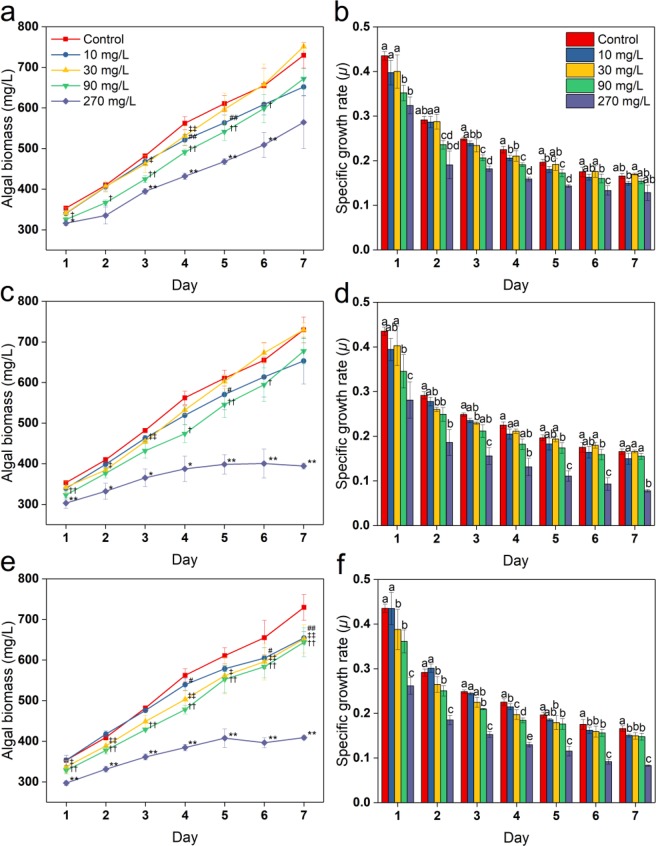
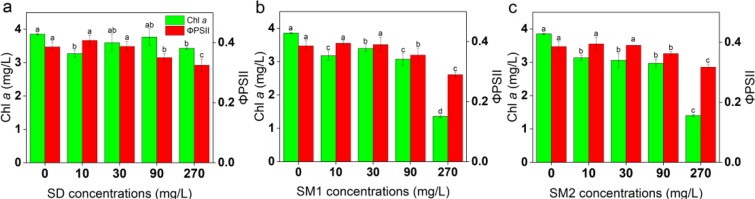
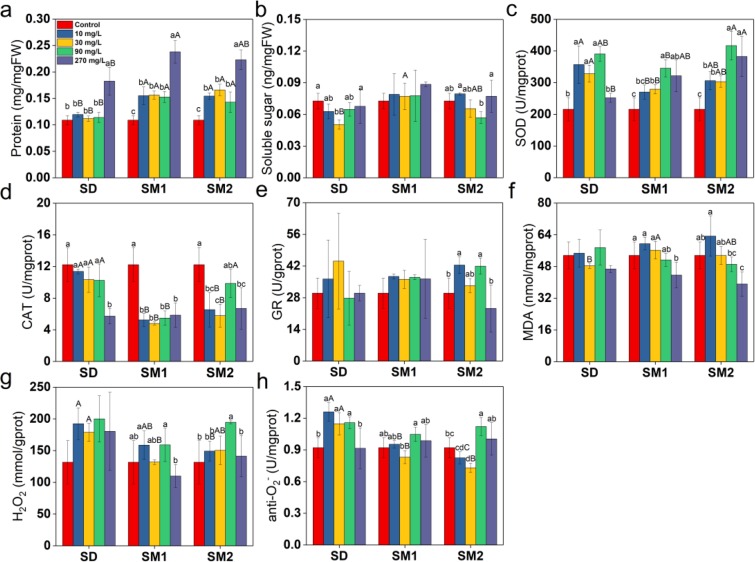
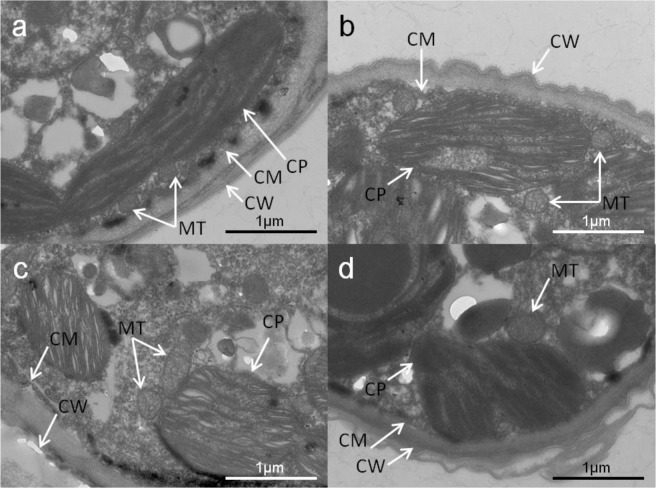
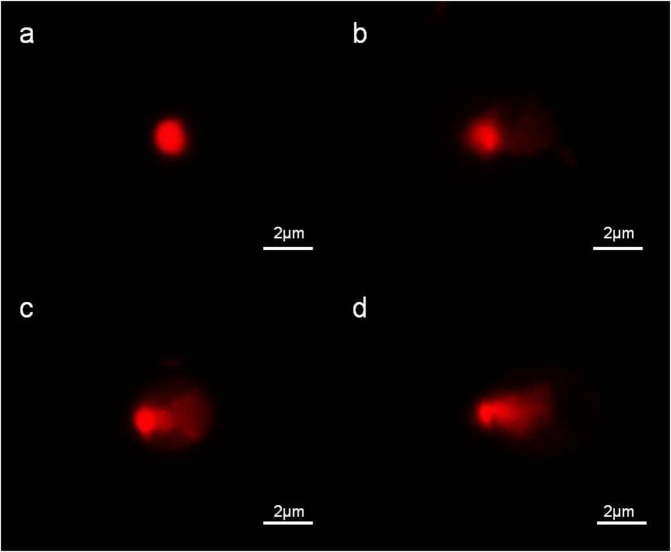
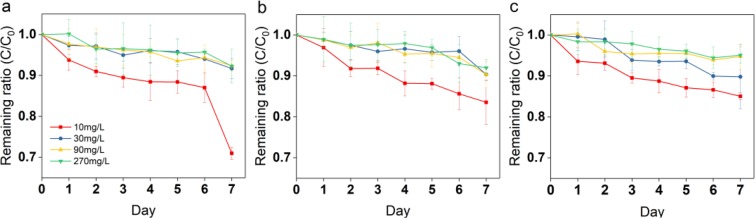
Sulfadiazine (SD), sulfamerazine (SM1), and sulfamethazine (SM2) are widely used and disorderly discharged into surface water, causing contamination of lakes and rivers. However, microalgae are regard as a potential resource to alleviate and degrade antibiotic pollution. The physiological changes of Chlorella vulgaris in the presence of three sulfonamides (SAs) with varying numbers of –CH 3 groups and its SA-removal efficiency were investigated following a 7-day exposure experiment. Our results showed that the growth inhibitory effect of SD (7.9–22.6%), SM1 (7.2–45.9%), and SM2 (10.3–44%) resulted in increased proteins and decreased soluble sugars. Oxidative stress caused an increase in superoxide dismutase and glutathione reductase levels but decreased catalase level. The antioxidant responses were insufficient to cope-up with reactive oxygen species (hydrogen peroxide and superoxide anion) levels and prevent oxidative damage (malondialdehyde level). The ultrastructure and DNA of SA-treated algal cells were affected, as evident from the considerable changes in the cell wall, chloroplast, and mitochondrion, and DNA migration. C. vulgaris-mediated was able to remove up to 29% of SD, 16% of SM1, and 15% of SM2. Our results suggest that certain concentrations of specific antibiotics may induce algal growth, and algal-mediated biodegradation process can accelerate the removal of antibiotic contamination.
Overview
The claims and statistics of this paper haven’t been checked yet.
Free: it reads the open-access text and checks the first 5 claims that cite a source we can check. Create a free account to check every claim.
Integrity signals
Registry
Cites
Statistics
Figures
Verification
Claims the paper makes
The claims and statistics of this paper haven’t been checked yet.
Free: it reads the open-access text and checks the first 5 claims that cite a source we can check. Create a free account to check every claim.
Claims other papers make about this one
Each is checked against this paper’s own text: does it say what the citing paper says it does?
The cited source doesn’t support the claim as written.
In the citing paper
“Indeed, Li et al. (2022) reported significant lipid peroxidation in the microalgae Chlorella pyrenoidosa exposed to ERY, and Chen et al. (2020) reported significant membrane lipid damage in the Chlorella exposed to sulfonamides.”
From Integrated morpho-physiological and biochemical description of the mechanisms leading stress responses in cyanobacteria (Arthrospira platensis) upon exposure to Erythromycin (2025) · cites this paper as Chen et al. (2020)
Checked by a reasoning model — may be wrong.
Experimental — accuracy not yet measuredThe cited source doesn’t support the claim as written.
In the citing paper
“ERY exposures caused a significant increase in MDA levels compared to the control group as shown in Fig. 4B, and the results are consistent with those of Li et al. (2022) and Chen et al. (2020).”
From Integrated morpho-physiological and biochemical description of the mechanisms leading stress responses in cyanobacteria (Arthrospira platensis) upon exposure to Erythromycin (2025) · cites this paper as Chen et al. (2020)
Checked by a reasoning model — may be wrong.
Experimental — accuracy not yet measured
Self-check
Percentages, sums and reported differences re-computed from the paper’s own numbers.
The self-check needs the paper’s full text.
Citations
Cites
Bradford, M. M. (1976) · Analytical Biochemistry · doi:10.1016/0003-2697(76)90527-3 · Cited by 255,302
Assay for lipid peroxides in animal tissues by thiobarbituric acid reaction
Ohkawa, H., Ohishi, N., & Yagi, K. (1979) · Analytical Biochemistry · doi:10.1016/0003-2697(79)90738-3 · Cited by 29,297
Superoxide dismutase: Improved assays and an assay applicable to acrylamide gels
Beauchamp, C., & Fridovich, I. (1971) · Analytical Biochemistry · doi:10.1016/0003-2697(71)90370-8 · Cited by 12,892
Reactive oxygen species: Metabolism, oxidative stress, and signal transduction
Apel, K., & Hirt, H. (2004) · Annual Review of Plant Biology · doi:10.1146/annurev.arplant.55.031903.141701 · Cited by 11,723
Generic Assignments, Strain Histories and Properties of Pure Cultures of Cyanobacteria
Rippka, R., Stanier, R. Y., Deruelles, J., Herdman, M., & Waterbury, J. B. (1979) · Microbiology · doi:10.1099/00221287-111-1-1 · Cited by 7,606
BIOVOLUME CALCULATION FOR PELAGIC AND BENTHIC MICROALGAE
Hillebrand, H., Dürselen, C., Kirschtel, D., Pollingher, U., & Zohary, T. (1999) · Journal of Phycology · doi:10.1046/j.1529-8817.1999.3520403.x · Cited by 3,635
Occurrence, fate and effects of pharmaceutical substances in the environment- A review
Halling-Sørensen, B., Nors Nielsen, S., Lanzky, P. F., Ingerslev, F., Holten Lützhøft, H. C., & Jørgensen, S. E. (1998) · Chemosphere · doi:10.1016/s0045-6535(97)00354-8 · Cited by 3,285
A simple method for determination of serum catalase activity and revision of reference range
Góth, L. (1991) · Clinica Chimica Acta · doi:10.1016/0009-8981(91)90067-m · Cited by 2,385
Determination of Starch and Amylose in Vegetables
McCready, R. M., Guggolz, J., Silviera, V., & Owens, H. S. (1950) · Analytical Chemistry · doi:10.1021/ac60045a016 · Cited by 1,679
Soluble sugars: Metabolism, sensing and abiotic stress: A complex network in the life of plants
Rosa, M., Prado, C., Podazza, G., Interdonato, R., González, J. A., Hilal, M., & Prado, F. E. (2009) · Plant Signaling & Behavior · doi:10.4161/psb.4.5.8294 · Cited by 934
Research works printed but not linked: 1
- 70. Chen, S., Xu, F., Zhang, W., Tang, W. Q. & Wang, L. Q. Research progress in pollution situation and environmental behavior of sulfonamides. Environ. Chem. 38, 38-37 (2019).
Cited by
Occurrence and ecotoxicity of sulfonamides in the aquatic environment: A review
Duan, W., Cui, H., Jia, X., & Huang, X. (2022) · Science of The Total Environment · doi:10.1016/j.scitotenv.2022.153178 · Cited by 315
Stapleton, M. J., Ansari, A. J., & Hai, F. I. (2023) · Water Research · doi:10.1016/j.watres.2023.119790 · Cited by 253
Yu, C. W., Pang, H., Wang, J., Chi, Z., Zhang, Q., Kong, F., Xu, Y., Li, S., & Che, J. (2021) · The Science of The Total Environment · doi:10.1016/j.scitotenv.2021.151891 · Cited by 128
Antibiotic removal by microalgae-bacteria consortium: Metabolic pathways and microbial responses
Eheneden, I., Wang, R., & Zhao, J. (2023) · The Science of The Total Environment · doi:10.1016/j.scitotenv.2023.164489 · Cited by 126
Mechanisms and application of microalgae on removing emerging contaminants from wastewater: A review
Zhou, J.-L., Yang, L., Huang, K.-X., Chen, D., & Gao, F. (2022) · Bioresource Technology · doi:10.1016/j.biortech.2022.128049 · Cited by 132
Sharma, L., Siedlewicz, G., & Pazdro, K. (2021) · Plants · doi:10.3390/plants10030591 · Cited by 127
“Previous research showed that some antibiotics inhibit chlorophyll synthesis by interfering with gene expression of the chloroplast, thus disrupting the physiological process of photochemical reactions [44].”
How do freshwater microalgae and cyanobacteria respond to antibiotics?
Le, V. V., Tran, Q., Ko, S.-R., Lee, S., Oh, H., Kim, H.-S., & Ahn, C. (2022) · Critical Reviews in Biotechnology · doi:10.1080/07388551.2022.2026870 · Cited by 84
Wang, Y., Li, J., Yao, L., Li, X., Nagarajan, D., Lee, D., & Chang, J. (2022) · Bioresource Technology · doi:10.1016/j.biortech.2022.126964 · Cited by 80
Self-citationWang, Y., Ma, J., Chu, H., Zhou, X., & Zhang, Y. (2024) · Chemical Engineering Journal · doi:10.1016/j.cej.2024.149222 · Cited by 62
The efficiency of microalgae biofilm in the phycoremediation of water from River Kaduna
Ugya, A. Y., Ajibade, F. O., & Hua, X. (2021) · Journal of Environmental Management · doi:10.1016/j.jenvman.2021.113109 · Cited by 62
Microalgal mediated antibiotic co-metabolism: Kinetics, transformation products and pathways
Kiki, C., Rashid, A., Zhang, Y., Li, X., Chen, T., Adeoye, A. B. E., Peter, P. O., & Sun, Q. (2021) · Chemosphere · doi:10.1016/j.chemosphere.2021.133438 · Cited by 56
Toxicological Effects of Microplastics and Sulfadiazine on the Microalgae Chlamydomonas reinhardtii
Li, Z., Dong, S., Huang, F., Lin, L., Hu, Z., & Zheng, Y. (2022) · Frontiers in Microbiology · doi:10.3389/fmicb.2022.865768 · Cited by 62
The Potential of Chaetoceros muelleri in Bioremediation of Antibiotics: Performance and Optimization
Mojiri, A., Baharlooeian, M., & Zahed, M. A. (2021) · International Journal of Environmental Research and Public Health · doi:10.3390/ijerph18030977 · Cited by 42
Chen, S., Li, J., Feng, W., Yuan, M., Zhang, W., Xu, H., Zheng, X., & Wang, L. (2020) · Journal of Environmental Sciences · doi:10.1016/j.jes.2020.05.018 · Cited by 38
Self-citationBiotransformation mechanism of Vibrio diabolicus to sulfamethoxazole at transcriptional level
Wang, Q., Wang, H., Jiang, Y., Lv, M., Wang, X., & Chen, L. (2021) · Journal of Hazardous Materials · doi:10.1016/j.jhazmat.2020.125023 · Cited by 38
Wang, Q., Geng, L., Gao, Z., Sun, Y., Li, X., Sun, S., & Luo, Y. (2024) · Environmental Science & Technology · doi:10.1021/acs.est.4c04925 · Cited by 35
Yang, H., Cao, X., He, Y., Zhang, X., Zhang, P., Wang, X., Liu, Y.-H., Xu, S., Fang, Y., & Gu, L. (2024) · Carbohydrate Polymers · doi:10.1016/j.carbpol.2024.123072 · Cited by 33
Cheng, S., Jessica, J., Yoshikawa, K., & Cross, J. S. (2023) · Environmental Technology & Innovation · doi:10.1016/j.eti.2023.103211 · Cited by 36
Wu, P., Hu, T., Sun, L., & Fan, J. (2023) · Chemical Engineering Journal · doi:10.1016/j.cej.2023.145974 · Cited by 29
Zheng, H., Zhu, Z., Li, S., Niu, J., Dong, X., Leong, Y. K., & Chang, J. (2024) · The Science of The Total Environment · doi:10.1016/j.scitotenv.2024.173678 · Cited by 30
Ge, J., Jin, P., Xie, S., Beardall, J., Yuan, F., Guo, C., Ma, Z., & Gao, G. (2023) · Environmental Pollution · doi:10.1016/j.envpol.2023.123127 · Cited by 29
Shi, J., Hu, M., Xia, Z., Zhang, J., Wang, Z., Li, L., & Zhao, Y. (2024) · Ecotoxicology and Environmental Safety · doi:10.1016/j.ecoenv.2024.117048 · Cited by 35
Parveen, S., & Patidar, S. K. (2023) · Chemical Engineering Journal · doi:10.1016/j.cej.2023.144757 · Cited by 25
Feng, P., Wu, J., Cui, H., Huang, X. F., Wang, C., Wang, C., Li, X., & Duan, W. (2024) · Ecotoxicology and Environmental Safety · doi:10.1016/j.ecoenv.2024.116851 · Cited by 24
Eheneden, I., Wang, R., Chen, G., Adesina, O. B., Ren, H., Bavumiragira, J. P., & Zhao, J. (2024) · The Science of The Total Environment · doi:10.1016/j.scitotenv.2024.176539 · Cited by 21
Krishnani, K. K., Boddu, V. M., Singh, R. D., Chakraborty, P., Verma, A. K., Brooks, L. R., & Pathak, H. K. (2023) · Environmental Science and Pollution Research · doi:10.1007/s11356-023-28261-x · Cited by 21
“2019); Chlorella vulgaris for sulfamerazine, methylparaben ( Chen et al. 2020; Vale et al. 2022); C.”
BackgroundKoletti, A., Skliros, D., Kalloniati, C., Marka, S., Zografaki, M.-E., Infante, C., Mantecón, L., & Flemetakis, E. (2024) · Applied Microbiology and Biotechnology · doi:10.1007/s00253-023-12936-z · Cited by 19
“In addition, the reprogramming of their metabolism towards ROS tolerance corroborated the previous studies (Chen et al. 2020).”
BackgroundResultEffects of two typical quinolone antibiotics in the marine environment on Skeletonema costatum
Lin, Y., Li, T., & Zhang, Y. (2024) · Frontiers in Marine Science · doi:10.3389/fmars.2024.1335582 · Cited by 15
Zhang, Y., Li, T., Lin, Y., Xu, D., & Jiao, H. (2025) · Ecotoxicology and Environmental Safety · doi:10.1016/j.ecoenv.2025.117881 · Cited by 14
The Piezocatalytic Degradation of Sulfadiazine by Lanthanum-Doped Barium Titanate
Meng, D., Xiang, Y., Yang, Z., Yuan, H., Tang, L., & Li, S. (2024) · Molecules · doi:10.3390/molecules29081719 · Cited by 14
“…in environments not only threatens aquatic life through its negative effects on the reproductive and growth rates of aquatic organisms [10,11] but also amplifies the public health challenge of fostered resistance genes, thereby diminishing the effectiveness of antibiotics in treating…”
BackgroundChang, F., Yi, M., Li, H., Wang, J., Zhao, X., Hu, X., & Qi, Q. (2022) · Toxics · doi:10.3390/toxics10120739 · Cited by 16
Review on Toxicity and Removal of Pharmaceutical Pollutants Using Immobilised Microalgae
Obaid, Z. H., Salman, J. M., & Kadhim, N. F. (2023) · Ecological Engineering & Environmental Technology · doi:10.12912/27197050/166013 · Cited by 21
“…Whereas B-lactam compounds like amoxicillin and penicillin G are oversensitive to hydrolysis, and subsequent biodegradation starts after the B-lactam ring hydrolyzes, sulphonamide compounds like sulfamerazine, sulfadiazine, and sulfamethoxazole are less likely to be hydrolyzed (Chen et al., 2020).”
BackgroundAlgae-based bioremediation bioproducts and biofuels for biobusiness
Kumar, R., Neha, Y., Ravishankar, G. A., & Srivatsan, V. (2024) · Elsevier eBooks · doi:10.1016/b978-0-443-16120-9.00022-4 · Cited by 19
Zhang, Y., Li, J., Si, L., Gao, M., Wang, S., & Wang, X. (2024) · Journal of Environmental Management · doi:10.1016/j.jenvman.2024.121714 · Cited by 11
Self-citationHan, M., Xie, P., Ren, N., & Ho, S. (2024) · Journal of Hazardous Materials · doi:10.1016/j.jhazmat.2024.133454 · Cited by 14
Feng, P., Cui, H., Wang, C., Li, X., & Duan, W. (2023) · Comparative Biochemistry and Physiology Part C Toxicology & Pharmacology · doi:10.1016/j.cbpc.2023.109788 · Cited by 12
Yuan, Y., Wang, Z., Hu, G. W., & Hong, Y. (2025) · Water Cycle · doi:10.1016/j.watcyc.2025.05.001 · Cited by 10
Bisht, B., Ahmad, W., Nanda, M., Hussain, A., Jaiswal, K. K., Vlaskin, M. S., Verma, M., Neves, F. D. F., & Kumar, V. (2024) · Journal of Water Process Engineering · doi:10.1016/j.jwpe.2024.106422 · Cited by 10
Amaneesh, C., Kim, H. S., & Ramanan, R. (2025) · Environmental Monitoring and Assessment · doi:10.1007/s10661-025-13737-9 · Cited by 10
“Phytoplankton mitigate these toxic impacts by scavenging the excess ROS by using antioxidant enzymes such as superoxide dismutase (SOD) and catalase (CAT), which quench ROS and delay toxic impacts on the cell (Chen et al., 2020; Liu et al., 2020; Ugya et al., 2020).”
Ainas, M., Touzout, N., Tahraoui, H., Mokeddem, H. E., Moussa, H., Kherbouche, S., Mebrouk, S., Zhang, J., & Amrane, A. (2025) · Ecotoxicology · doi:10.1007/s10646-025-02888-7 · Cited by 8
“Cellular carbohydrates were extracted from A. platensis cultures using the method described by Wang et al. (2020).”
InfluentialLi, D., Wang, P., Sun, M., Yin, J., Li, D., Ma, J., & Yang, S. (2024) · Aquatic Toxicology · doi:10.1016/j.aquatox.2024.106937 · Cited by 9
Hashem, H. M., El-Shaheny, R. N., & El‐Maghrabey, M. (2024) · Springer eBooks · doi:10.1007/978-3-031-54565-8_12 · Cited by 10
Rezaee, A., Kosari‐Nasab, M., & Movafeghi, A. (2025) · Algal Research · doi:10.1016/j.algal.2025.103980 · Cited by 8
Rayamajhi, V., Byeon, H., An, Y., Kim, T.-S., Lee, J., Lee, J., Lee, K., Kim, C., Shin, H., & Jung, S.-M. (2024) · Life · doi:10.3390/life14080977 · Cited by 11
“Sulfadiazine (30 mg/L) and sulfamerazine (90 mg/L) served as carbon sources for the promotion of growth in Chlorella vulgaris [50].”
BackgroundZhu, T., Jing, M., Zhang, J., Li, H., Zhou, M., & Li, G. (2025) · RSC Advances · doi:10.1039/d5ra02082d · Cited by 6
Sun, F., Jiao, Y., Liang, S., Zhuang, L.-L., & Zhang, J. (2025) · Environmental Research · doi:10.1016/j.envres.2025.121232 · Cited by 7
Wu, D., Yao, K.-S., Hermann, M., Chen, N., Huang, A., Ying, G., Smidt, H., & den Brink, P. J. V. (2026) · Journal of Hazardous Materials · doi:10.1016/j.jhazmat.2026.141237 · Cited by 5
Aderemi, A. O., Roberts, J., Hunter, C., & Pahl, O. (2021) · Journal of Environmental Protection · doi:10.4236/jep.2021.128032 · Cited by 5
Lin, S., Pan, M., Ma, Y., Chen, Z., Lyu, T., Dong, R., Ruan, R. R., & Liu, S. (2025) · Bioresource Technology · doi:10.1016/j.biortech.2025.133577 · Cited by 4
Zhang, W., Nomura, Y., Fukahori, S., Kiso, T., Myoujin, K., & Fujiwara, T. (2025) · Journal of Environmental Management · doi:10.1016/j.jenvman.2025.124621 · Cited by 4
Self-citationYang, H., Zhou, J., & Zhou, J. (2024) · The Science of The Total Environment · doi:10.1016/j.scitotenv.2024.174439 · Cited by 4
Zhang, H., Liu, B., Sun, F., Zhang, Z., Kong, Y., Liu, X., Cui, Y., Ma, Y., Wu, Y., Fan, J., et al. (2025) · Journal of Environmental Management · doi:10.1016/j.jenvman.2025.124434 · Cited by 4
Guo, P., Wu, L., Yin, S.-J., Wang, Y., Sheng, S., & Li, J. (2025) · Scientia Horticulturae · doi:10.1016/j.scienta.2025.114467 · Cited by 4
Self-citationEffects of enrofloxacin and sulfamethoxazole on Haematococcus lacustris
Rayamajhi, V., An, Y., Byeon, H., Lee, J., Kim, T.-S., Hussain, M., Choi, A., Lee, J., Lee, K., Kim, C., et al. (2025) · Bioprocess and Biosystems Engineering · doi:10.1007/s00449-025-03264-9 · Cited by 3
Wang, C., Zhang, Q., Gu, Z., Zhang, L., Lu, R., Liu, C., & Liu, Y. (2024) · Fermentation · doi:10.3390/fermentation10110577 · Cited by 4
Toxic effects of PFOA on Nitzschia palea and its apoptosis mechanism
Zhu, Q., Asimtul, P., Bai, J., Sui, F., Lu, X., Mei, X., Liu, Y., Jiang, C., Wang, X., Song, C., et al. (2025) · Algal Research · doi:10.1016/j.algal.2025.103892 · Cited by 4
Chen, J., Lin, S., Ruan, C., Liu, L., & Yang, S. (2025) · Chemical Engineering and Processing - Process Intensification · doi:10.1016/j.cep.2025.110196 · Cited by 3
Oxidative Damages of Two Neonicotinoid Pesticides to Arthrospira platensis (Gomont)
Tunca, H., KOCKAR, F. T., Doğru, A., Güzel, U., Dinç, T., & Sevi̇ndi̇k, T. O. (2023) · Journal of Limnology and Freshwater Fisheries Research · doi:10.17216/limnofish.1178160 · Cited by 3
Zhang, X., Yin, L.-J., Lang, X., He, Z., & Yang, G.-P. (2024) · Marine Environmental Research · doi:10.1016/j.marenvres.2024.106754 · Cited by 4
Carbajal-Hernández, A. L., Arzate-Cárdenas, M. A., Valerio-García, R. C., & Martínez-Jerónimo, F. (2022) · Ecotoxicology · doi:10.1007/s10646-022-02596-6 · Cited by 3
“Higher pigment contents have been associated with mechanisms activated to prevent stress related to ROS, which might interfere with photosynthesis and prevent these oxidant species from damaging thylakoids and chloroplasts (Chen et al. 2020).”
BackgroundYan, X., Xu, H., Yang, Z., Yin, Y., Fang, W., Wakisaka, M., & Zhu, J. (2025) · Foods · doi:10.3390/foods14142457 · Cited by 2
“…) triggered a burst of ROS and inhibition of enzyme activities (e.g., GA dehydrogenase) due to quinone over-accumulation, leading to lipid peroxidation and a collapse of energy metabolism, similar to the mechanism of oxidative stress in Chlorella vulgaris in response to antibiotic exposure [23,24].”
Self-citationIsrael, N. G., Grott, S. C., Rutkoski, C. F., Warsneski, A., Bitschinski, D., Pellis, B., & de Almeida, E. A. (2025) · Brazilian Archives of Biology and Technology · doi:10.1590/1678-4324-2025240671 · Cited by 2
Borrego, B. B., de Oliveira, F. L., Melo, L. B. U., Gracioso, L. H., Hentschke, G. S., Vasconcelos, V. M., Grandis, A., Buckeridge, M. S., Caetano, N. S., & Perpetuo, E. A. (2025) · Algal Research · doi:10.1016/j.algal.2025.104313 · Cited by 2
Wu, X., Chen, J., Du, H., Ye, Z., Zhang, S., Bao, R., Xu, Y., Meador, J. P., Zhang, Q., Wang, S., et al. (2026) · Bioresource Technology · doi:10.1016/j.biortech.2026.135381 · Cited by 3
Differences in phytoplankton population vulnerability in response to chemical activity of mixtures
dos Anjos, T. B. O., Nham, Q., Abel, S., Lindehoff, E., Bradshaw, C., & Sobek, A. (2024) · Environmental Science Processes & Impacts · doi:10.1039/d4em00249k · Cited by 7
Tan, X., Qu, B., Zhu, Y., & Zhao, H. (2025) · Environments · doi:10.3390/environments12020050 · Cited by 2
Michelon, W., Gressler, V., Vieira, M. C., Novello, M. G., Eising, R., Nunes, E. D. O., Matthiensen, A., & Viancelli, A. (2025) · Process Safety and Environmental Protection · doi:10.1016/j.psep.2025.107338 · Cited by 23
Rojo, E. M., Hurtado, M., Filipigh, Á. A., Ciardi, M., Acién, F. G., & Bolado, S. (2024) · Environmental Technology & Innovation · doi:10.1016/j.eti.2024.103632 · Cited by 1
Huo, Q., Chang, F., Jia, P., Fu, Z., Zhao, J., Gao, Y., Luan, H., Wang, Y., Dong, Q., Qi, G., et al. (2025) · Plants · doi:10.3390/plants14152388 · Cited by 2
“These reactive oxygen species (ROS) specifically degrade chlorophyll a and lower the chlorophyll a/b ratio [16].”
Li, Q., Yu, Y., Zheng, X., Fan, Z., Su, J., He, J., Li, Q., Lei, N., Zheng, Z., Li, G., et al. (2025) · Environmental Chemistry and Ecotoxicology · doi:10.1016/j.enceco.2025.09.016 · Cited by 4
Self-citationLian, B., Li, S., Zheng, X., Fan, Z., Cao, H., Peng, Y., Wang, B., Wang, M., & Wang, H. (2026) · Environmental Pollution · doi:10.1016/j.envpol.2026.127823 · Cited by 1
Self-citationZhao, B., Li, J., Zhang, Z., & Chen, S. (2026) · Algal Research · doi:10.1016/j.algal.2026.104779 · Cited by 1
Self-citationYusof, N., Zakaria, M. F., Jusoh, M., Sung, Y. Y., Wahid, M. E. A., Zakeri, H. A., & Yusuf, N. (2023) · Asia-Pacific Journal of Molecular Biology and Biotechnology · doi:10.35118/apjmbb.2023.031.4.05 · Cited by 1
Microalgas como aditivos de descontaminação de ambientes aquáticos: uma revisão
Rossato, A., Oliveira, P. S., & Sagrillo, M. R. (2021) · Disciplinarum Scientia | Naturais e Tecnológicas · doi:10.37779/nt.v22i2.3624 · Cited by 1
Eheneden, I., Wang, R., Chen, G., Adesina, O. B., Ren, H., Bavumiragira, J. P., & Zhao, J. (2024) · SSRN Electronic Journal · doi:10.2139/ssrn.4844617 · Cited by 1
Response of Marine Microalgae Tetraselmis chuii to 5 Groups of AntibioticsPreprint
Keipour, S., Mostafavi, P. G., Rafiei, F., & Fatemi, S. M. R. (2022) · Research Square · doi:10.21203/rs.3.rs-1995231/v1
Processes for the valorization of microalgal biomass cultivates in piggery wastewater
de Benito, E. M. R. (2024) · UVaDOC UVaDOC University of Valladolid Documentary Repository (University of Valladolid) · doi:10.35376/10324/67799
Shourie, A., Girdhar, A., Chapadgaonkar, S. S., Mazahar, S., & Singh, A. (2025) · Elsevier eBooks · doi:10.1016/b978-0-443-21887-3.00007-9
Zhang, Y., Gao, M., Zhang, X., Tang, A., Wang, S., & Wang, X. (2025) · Journal of Hazardous Materials · doi:10.1016/j.jhazmat.2025.140406 · Cited by 4
Huang, Y., Yi, M., Qiao, Y., & Xu, B. (2025) · Small Methods · doi:10.1002/smtd.202501904
Xia, W., Zhou, Y., Wang, R., Wang, S., Shi, A., Liu, X., Chu, J., & Yao, X. (2025) · Journal of environmental chemical engineering · doi:10.1016/j.jece.2025.119399
Huang, Z., Shen, J., Tian, C., Jiao, Y., & Wang, X. (2026) · Hydrobiologia · doi:10.1007/s10750-026-06233-9
“The oxidative stress induced by ABs leads to damage to the algal cell membrane and an increase in permeability (Chen et al., 2020), and disrupts the replication of algal cell DNA, altering the structure and composition of macromolecules such as carbohydrates, lipids, proteins, and nucleic acids in…”
Shao, X., Huang, Z., Shi, J., & Zhuang, H. (2026) · Journal of Environmental Management · doi:10.1016/j.jenvman.2026.129958
Qian, T., & Wang, L. F. (2026) · Water · doi:10.3390/w18111334 · Cited by 1
Self-citationGarcía-Hernandez, D. N., Grijalva-López, J. A., Trejo-Carrizalez, I., & Cervantes‐González, E. (2026) · Journal of Applied Electrochemistry · doi:10.1007/s10800-026-02527-x
Wang, L., Cui, K., Liu, Y., Chen, Y., Li, H., & Wu, W. (2026) · Environmental Research · doi:10.1016/j.envres.2026.125108
Self-citationLi, Y., Yu, C., Miao, S., Lan, H., An, X., Liu, H., & Qu, J. (2026) · Environmental Science & Technology · doi:10.1021/acs.est.6c00641
Ghadaki, M., Ahmadifard, N., Torbati, S., & Al-Hawash, A. B. (2026) · Algal Research · doi:10.1016/j.algal.2026.104836
Yan, Y., Gao, H., Chen, R., Wang, Z., Zeng, C., Yuan, J., Liu, J., & Chen, R. (2026) · Bioresource Technology · doi:10.1016/j.biortech.2026.135514
Zhao, Z., Han, Z., Xiang, Y., Cao, L., Ren, Y., & Ren, Z. (2026) · Journal of Water Process Engineering · doi:10.1016/j.jwpe.2026.110616
Fayaz, T., Goyal, E., Jangid, K., Ratha, S. K., Kumar, V., & Renuka, N. (2026) · Bioresource Technology · doi:10.1016/j.biortech.2026.135579
Wang, C., Tang, J., Liu, S., Duan, Y., Li, H., Li, S., & Duan, W. (2026) · Aquatic Toxicology · doi:10.1016/j.aquatox.2026.107999
Toxicological impacts of sulfamethoxazole on freshwater organisms – toxicity and oxidative stress
Gheorghe, Ş., Stoica, C., Feodorov, L., Iancu, V. I., Rudaru, D. G., Pătraşcu, A.-M., & Lazar, M. N. (2026) · Aquatic Toxicology · doi:10.1016/j.aquatox.2026.108046
Liu, J., Feng, T., & Haiying, D. (2026) · Colloids and Surfaces A Physicochemical and Engineering Aspects · doi:10.1016/j.colsurfa.2026.142136
Metadata
- Authors
- Chen, S., Wang, L., Feng, W., Yuan, M., Li, J., Xu, H., Zheng, X., & Zhang, W.
- Affiliations
- Shanghai Ocean University (CN)
- Shanghai Jiao Tong University (CN)
- Corresponding author
- Zhang, Wei
- Venue
- Scientific Reports
- Published
- 2020-05-19
- Volume
- 10
- Issue
- 1
- Pages
- 8243-8243
- ISSN
- 2045-2322 (ISSN-L)
- PMC
- PMC7237458
- OpenAlex
- W3026115751
- Cited by
- 95
- References
- 69
- Citations by year
- 2026: 17 · 2025: 26 · 2024: 24 · 2023: 11 · 2022: 8 · 2021: 8 · 2020: 1
- FWCI
- 1.73
- Type
- journal article
- Language
- en
- Open access
- gold
- doi.org
- Licence
- cc-by
- creativecommons.org/licenses/by/4.0 (tdm)
- creativecommons.org/licenses/by/4.0 (vor)
- Locations
- Scientific Reports (publishedVersion, cc-by)
- PubMed Central (publishedVersion, cc-by)
- PubMed (publishedVersion)
- Funders
- China Postdoctoral Science Foundation (2018M632099)
- Major Science and Technology Program for Water Pollution Control and Treatment (2017ZX07207002-03, 2017ZX07207002)
- Topics
- Physical Sciences › Environmental Science › Pollution › Pharmaceutical and Antibiotic Environmental Impacts
- Physical Sciences › Environmental Science › Health, Toxicology and Mutagenesis › Environmental Toxicology and Ecotoxicology
- Physical Sciences › Environmental Science › Environmental Chemistry › Aquatic Ecosystems and Phytoplankton Dynamics
- Keywords
- sulfonamides, sulfadiazine, sulfamerazine, sulfamethazine, Chlorella vulgaris, oxidative stress, antibiotic biodegradation, photosynthesis, antioxidant enzymes, reactive oxygen species, lipid peroxidation, ultrastructure, DNA damage, freshwater microalgae, antibiotic pollution
- MeSH terms
- Anti-Bacterial Agents, Catalase, Chlorophyll, Fresh Water, Glutathione Reductase, Malondialdehyde, Photosynthesis, Sulfonamides, Superoxide Dismutase, Water Pollutants, Reactive Oxygen Species, Oxidative Stress, Chlorella vulgaris, Microalgae
About these checks
Registry, retraction, Cites and statistics results are computed, not judged, with one exception: a printed reference that no index lists is read once by a model before it counts as a citation error. Claims are extracted by a model and kept only when their quote appears verbatim in the text; each cited source is then checked, with a model’s help, for whether it says what the claim relies on. Those verdicts can be wrong — read the claim’s quote and the cited source before relying on one.
Statistics and arithmetic are recomputed, not judged.
Confidence bands are shown only for fields calibrated on our annotated test set. None is calibrated yet, so no band is shown.
What counts as a claim ›How we measure confidence ›How we check this ›
Are you an author, or do you see a problem with this page? Request a review
Data sources
Bibliographic data: Semantic Scholar, OpenAlex, Crossref.
Contains information from the Semantic Scholar Academic Graph Datasets, made available under the ODC Attribution License (ODC-BY 1.0).
Semantic Scholar’s data is described in: Kinney, R., et al. (2023). The Semantic Scholar Open Data Platform. arXiv:2301.10140.
