

Comparison of three different bioleaching systems for Li recovery from lepidolite
Open accessThe DOI matches its Crossref record; 28 of the 28 references it cites were found in a registry or an index.
Abstract
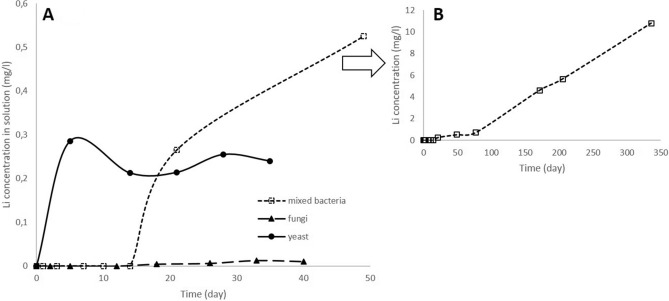
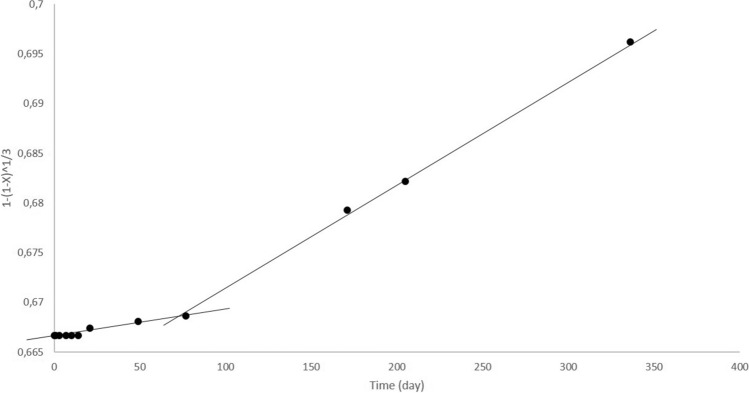
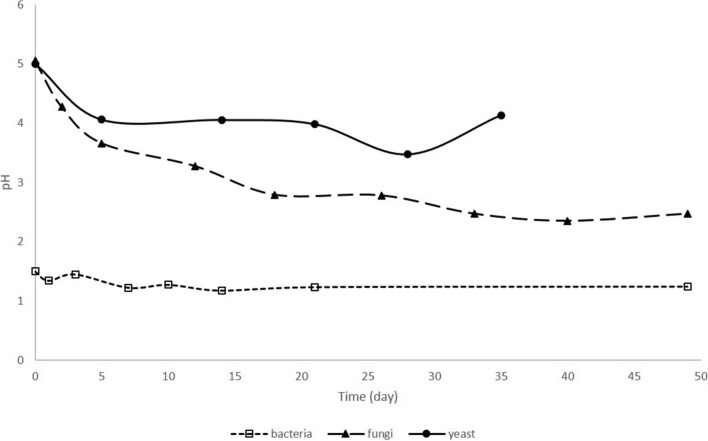
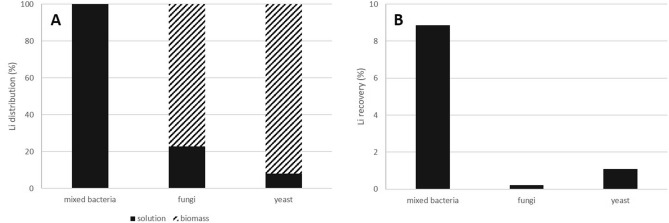
Three different biological systems, the consortium of autotrophic bacteria Acidithiobacillus ferrooxidans and Acidithiobacillus thiooxidans, heterotrophic fungus Aspergillus niger and heterotrophic yeast Rhodotorula mucilaginosa, were investigated for lithium extraction from lepidolite. The bacterial consortium was the most effective, 11 mg l−1 of Li was dissolved in the absence of nutrients within 336 days. Fungal and yeast bioleaching was faster (40 days), however, with lower extraction efficiency. Bioaccumulation represented a main process of Li extraction by R. mucilaginosa and A. niger, with 92 and 77% of total extracted Li accumulated in the biomass, respectively. The X-ray diffraction analysis for bioleaching residue indicated changes caused by microorganisms, however, with differences between bacterial leaching and bioleaching by fungi or yeasts. The final bioleaching yields for bacterial consortium, A. niger and R. mucilaginosa were 8.8%, 0.2% and 1.1%, respectively. Two-step bioleaching using heterotrophic organisms followed by autotrophic bioleaching could lead to the increase of the process kinetics and efficiency. Bioaccumulation of Li offers strong advantage in Li extraction from solution.
Overview
The claims and statistics of this paper haven’t been checked yet.
Free: it reads the open-access text and checks the first 5 claims that cite a source we can check. Create a free account to check every claim.
Integrity signals
Registry
Cites
Statistics
Figures
Verification
Claims the paper makes
The claims and statistics of this paper haven’t been checked yet.
Free: it reads the open-access text and checks the first 5 claims that cite a source we can check. Create a free account to check every claim.
Claims other papers make about this one
Each is checked against this paper’s own text: does it say what the citing paper says it does?
The source backs part of the claim, not all of it — or backs it for a different population, condition or comparison.
In the citing paper
“However, the longer extraction times and the challenges associated with controlling microbiological conditions present significant hurdles [241].”
From Pathways to Greener Primary Lithium Extraction for a Really Sustainable Energy Transition: Environmental Challenges and Pioneering Innovations (2024) · cites this paper as [241]
Experimental — accuracy not yet measuredThe cited source says what the claim attributes to it.
In the citing paper
“Other microorganisms, including the fungus Aspergillus niger and the yeast Rhodotorula mucilaginosa , achieved a faster extraction rate (40 days) but with lower efficiency [241].”
From Pathways to Greener Primary Lithium Extraction for a Really Sustainable Energy Transition: Environmental Challenges and Pioneering Innovations (2024) · cites this paper as [241]
The cited source says what the claim attributes to it.
In the citing paper
“An autotrophic bacterial consortium of Acidithiobacillus ferrooxidans and A. thiooxidans has shown some effectiveness, albeit with extended timescales (up to 336 days).”
From Pathways to Greener Primary Lithium Extraction for a Really Sustainable Energy Transition: Environmental Challenges and Pioneering Innovations (2024) · cites this paper as [241]
Experimental — accuracy not yet measured
Self-check
Percentages, sums and reported differences re-computed from the paper’s own numbers.
The self-check needs the paper’s full text.
Citations
Cites
Metals, minerals and microbes: geomicrobiology and bioremediation
Gadd, G. M. (2010) · Microbiology · doi:10.1099/mic.0.037143-0 · Cited by 2,013
Recovery and recycling of lithium: a review
Swain, B. (2017) · Separation and Purification Technology · doi:10.1016/j.seppur.2016.08.031 · Cited by 1,713
Meshram, P., Pandey, B. D., & Mankhand, T. R. (2014) · Hydrometallurgy · doi:10.1016/j.hydromet.2014.10.012 · Cited by 982
Flexer, V., Baspineiro, C. F., & Galli, C. I. (2018) · Science of the Total Environment · doi:10.1016/j.scitotenv.2018.05.223 · Cited by 768
Bioleaching of valuable metals from spent lithium-ion mobile phone batteries using Aspergillus niger
Horeh, N. B., Mousavi, S. M., & Shojaosadati, S. A. (2016) · Journal of Power Sources · doi:10.1016/j.jpowsour.2016.04.104 · Cited by 469
The beneficiation of lithium minerals from hard rock ores: a review
Tadesse, B., Makuei, F., Albijanic, B., & Dyer, L. (2019) · Minerals Engineering · doi:10.1016/j.mineng.2018.11.023 · Cited by 452
Oxalate production by fungi: significance in geomycology, biodeterioration and bioremediation
Gadd, G. M., Bahri-Esfahani, J., Li, Q., Rhee, Y. J., Wei, Z., Fomina, M., & Liang, X. (2014) · Fungal Biology Reviews · doi:10.1016/j.fbr.2014.05.001 · Cited by 399
Heydarian, A., Mousavi, S. M., Vakilchap, F., & Baniasadi, M. (2018) · Journal of Power Sources · doi:10.1016/j.jpowsour.2017.12.009 · Cited by 245
Bioleaching of spent fluid catalytic cracking catalyst using Aspergillus niger
Aung, K. M. M., & Ting, Y.-P. (2005) · Journal of Biotechnology · doi:10.1016/j.jbiotec.2004.10.008 · Cited by 209
Study on lithium extraction from brines based on LiMn2O4/Li1-xMn2O4 by electrochemical method
Zhao, M.-Y., Ji, Z.-Y., Zhang, Y.-G., Guo, Z.-Y., Zhao, Y.-Y., Liu, J., & Yuan, J.-S. (2017) · Electrochimica Acta · doi:10.1016/j.electacta.2017.08.178 · Cited by 188
Cited by
Neumann, J., Petranikova, M., Meeus, M., Gamarra, J. D., Younesi, R., Winter, M., & Nowak, S. (2022) · Advanced Energy Materials · doi:10.1002/aenm.202102917 · Cited by 805
Recycling of spent lithium-ion batteries for a sustainable future: recent advancements
Biswal, B. K., Zhang, B., Thi Minh Tran, P., Zhang, J., & Balasubramanian, R. (2024) · Chemical Society Reviews · doi:10.1039/d3cs00898c · Cited by 436
Recovery of strategically important critical minerals from mine tailings
Sarker, S. K., Haque, N., Bhuiyan, M., Bruckard, W., & Pramanik, B. K. (2022) · Journal of Environmental Chemical Engineering · doi:10.1016/j.jece.2022.107622 · Cited by 187
Priyadarsini, S., & Das, A. P. (2025) · Environmental Chemistry and Ecotoxicology · doi:10.1016/j.enceco.2024.12.004 · Cited by 166
Priyadarsini, S., & Das, A. P. (2025) · Journal of Water Process Engineering · doi:10.1016/j.jwpe.2024.106744 · Cited by 165
Overview of fungal bioleaching of metals
Dusengemungu, L., Kasali, G., Gwanama, C., & Mubemba, B. (2021) · Environmental Advances · doi:10.1016/j.envadv.2021.100083 · Cited by 161
Whitworth, A. J., Vaughan, J., Southam, G., van der Ent, A., Nkrumah, P. N., Ma, X., & Parbhakar-Fox, A. K. (2022) · Minerals Engineering · doi:10.1016/j.mineng.2022.107537 · Cited by 167
Biswal, B. K., & Balasubramanian, R. (2023) · Frontiers in Microbiology · doi:10.3389/fmicb.2023.1197081 · Cited by 150
Zhang, X., Chen, Z., Rohani, S., He, M., Tan, X., & Liu, W. (2022) · Hydrometallurgy · doi:10.1016/j.hydromet.2022.105820 · Cited by 93
Assessment of recycling methods and processes for lithium-ion batteries
Makwarimba, C. P., Tang, M., Peng, Y., Lu, S., Zheng, L., Zhao, Z., & Zhen, A. (2022) · iScience · doi:10.1016/j.isci.2022.104321 · Cited by 93
“Bioleaching Rhodotorula mucilaginosa; heterotrophic yeast: 40days 92% Li (Sedlakova-Kadukova et al., 2020)”
BackgroundMicrobial recovery of critical metals from secondary sources
Gavrilescu, M. C. (2021) · Bioresource Technology · doi:10.1016/j.biortech.2021.126208 · Cited by 91
Unveiling the Bioleaching Versatility of Acidithiobacillus ferrooxidans
Tonietti, L., Esposito, M., Cascone, M., Barosa, B., Fiscale, S., Tomajoli, M. T. M., Sbaffi, T., Santomartino, R., Covone, G., Cordone, A., et al. (2024) · Microorganisms · doi:10.3390/microorganisms12122407 · Cited by 81
“A bio-extraction approach utilizing a consortium of different bacterial strains—namely, A. ferrooxidans, A. thiooxidans , as well as the heterotrophic fungus Aspergillus niger and yeast Rhodotorula mucilaginosa —has been investigated (Sedlakova-Kadukova et al., 2020).”
BackgroundInfluentialEmerging green technologies for recovery and reuse of spent lithium-ion batteries – a review
Wang, R., Zhang, Y., Sun, K., Qian, C., & Bao, W. (2022) · Journal of Materials Chemistry A · doi:10.1039/d2ta03295c · Cited by 66
Green solvents in battery recycling: status and challenges
Qiao, W., Zhang, R., Wen, Y., Wang, X., Wang, Z., Tang, G., Liu, M., Kang, H., Said, Z., Hwang, J., et al. (2024) · Journal of Materials Chemistry A · doi:10.1039/d3ta07905h · Cited by 55
Guo, H. M., Lv, M., Kuang, G., Cao, Y., & Wang, H. (2020) · Separation and Purification Technology · doi:10.1016/j.seppur.2020.118194 · Cited by 49
Butt, F. S., Lewis, A., Chen, T., Mazlan, N. A., Wei, X., Hayer, J., Chen, S., Han, J., Yang, Y., Yang, S., et al. (2022) · Membranes · doi:10.3390/membranes12040373 · Cited by 50
Bio-Recovery of Metals through Biomining within Circularity-Based Solutions
Cozma, P., Bețianu, C., Hlihor, R. M., Simion, I. M., & Gavrilescu, M. C. (2024) · Processes · doi:10.3390/pr12091793 · Cited by 59
Asif, A. H., Li, C., Lim, H., & Sun, H. (2024) · Industrial & Engineering Chemistry Research · doi:10.1021/acs.iecr.3c04048 · Cited by 42
Hasan, M. A., Hossain, R., & Sahajwalla, V. (2023) · Process Safety and Environmental Protection · doi:10.1016/j.psep.2023.08.069 · Cited by 47
Lv, Y., Liu, Y., Ma, B., Wang, C., Qiu, Z., & Chen, Y. (2023) · Separation and Purification Technology · doi:10.1016/j.seppur.2023.123686 · Cited by 32
Recent advances in bioleaching and biosorption of metals from waste printed circuit boards: A review
Hu, S., Wang, H., Li, X., He, W., Ma, J., Xu, Y., Xu, Y., & Ming, W. (2024) · Journal of Environmental Management · doi:10.1016/j.jenvman.2024.123008 · Cited by 36
Chowdhury, M. O. S., & Talan, D. (2025) · Separations · doi:10.3390/separations12020052 · Cited by 43
Zhao, X., Zhou, Y., Ding, C., Wang, X., Zhang, X., Wang, R., & Lu, X. (2023) · Journal of Environmental Management · doi:10.1016/j.jenvman.2023.119082 · Cited by 30
Ruberti, M. (2024) · Sustainability · doi:10.3390/su17010160 · Cited by 35
Choi, J., & Choi, J.-W. (2025) · Journal of environmental chemical engineering · doi:10.1016/j.jece.2025.118861 · Cited by 27
Heydarian, A., Vakilchap, F., Mousavi, S. M., & Mousavi, S. M. (2025) · Scientific Reports · doi:10.1038/s41598-025-00660-9 · Cited by 22
Effective Leaching Strategies for a Closed-Loop Spent Lithium-Ion Battery Recycling Process
Ratnam, M. V., Kumar, K. S., Samraj, S., Abdulkadir, M., & Rao, K. N. (2021) · Journal of Hazardous Toxic and Radioactive Waste · doi:10.1061/(asce)hz.2153-5515.0000671 · Cited by 23
Ku, J., Shi, X., Wang, Q., Lin, H., Shang, H., & Shen, Z. (2025) · Separations · doi:10.3390/separations12050130 · Cited by 25
Xu, C., Zhao, X., Duan, H., Gu, W., Zhang, D., Wang, R., & Lu, X. (2024) · The Science of The Total Environment · doi:10.1016/j.scitotenv.2024.174711 · Cited by 20
Murali, A., Plummer, M. J., Shine, A. E., Free, M. L., & Sarswat, P. K. (2021) · Journal of Hazardous Materials Advances · doi:10.1016/j.hazadv.2021.100031 · Cited by 20
Rehman, H., Debik, E., Ulucan‐Altuntas, K., Demır, N. M., Canci, B., Iqbal, M., Barros, R., Rehman, W. U., Mohanty, S. K., & Khan, A. H. A. (2025) · Results in Engineering · doi:10.1016/j.rineng.2025.107720 · Cited by 17
Kirk, R. D., Newsome, L., Falagán, C., & Hudson-Edwards, K. A. (2024) · Frontiers in Microbiology · doi:10.3389/fmicb.2024.1467408 · Cited by 21
Fereydouni, H., Naseri, T., & Mousavi, S. M. (2025) · Scientific Reports · doi:10.1038/s41598-025-88594-0 · Cited by 16
Ahn, J.-W., & Cho, Y.-C. (2023) · Journal of the Korean Institute of Resources Recycling · doi:10.7844/kirr.2023.32.4.3 · Cited by 17
Sun, S., Wang, K., Yin, D., Wang, K., & Zhu, Y. (2025) · Journal of Hazardous Materials · doi:10.1016/j.jhazmat.2025.140605 · Cited by 15
Bio-Based Processes for Material and Energy Production from Waste Streams under Acidic Conditions
Çetecioğlu, Z., Atasoy, M., Cenian, A., Sołowski, G., Trček, J., Uğurlu, A., & Sedláková-Kaduková, J. (2022) · Fermentation · doi:10.3390/fermentation8030115 · Cited by 16
“This great advantage offers the recently understood possibility of metal bioaccumulation into the fungal biomass immediately after its dissolution reducing the necessity of metal extraction from acidic solutions [88,89].”
BackgroundDiep, P., Shen, H., Wiesner, J. A., Mykytczuk, N., Papangelakis, V. G., Yakunin, A. F., & Mahadevan, R. (2023) · Engineering in Life Sciences · doi:10.1002/elsc.202200133 · Cited by 15
Mechanism of surfactant effect on bacterial adsorption during bioleaching of lepidolite
Xu, C., Zhao, X., Duan, H., Gu, W., Zhang, D., Wang, R., & Lu, X. (2024) · Applied Clay Science · doi:10.1016/j.clay.2024.107646 · Cited by 13
Duan, H., Zhao, X., Xu, C., Zhang, D., Gu, W., Wang, R., & Lu, X. (2024) · Biochemical Engineering Journal · doi:10.1016/j.bej.2024.109564 · Cited by 13
Chung, A. P., Francisco, R., Morais, P. V., & Branco, R. (2022) · Frontiers in Microbiology · doi:10.3389/fmicb.2022.970147 · Cited by 11
“Biotechnology processes such as the bioleaching that take advantage of microbial activity or metabolites produced by them, to solubilize valuable metals from secondary sources have developed into a successful and expanding area (Olson et al., 2003; Sedlakova-Kadukova et al., 2020).”
BackgroundInfluence of organic acids on pentlandite bioleaching by Acidithiobacillus ferrooxidans LR
Giese, E. C. (2021) · 3 Biotech · doi:10.1007/s13205-021-02711-0 · Cited by 11
Molecular and mineral biomarker record of terrestrialization in the Rhynie Chert
Akinsanpe, O. T., Bowden, S. A., & Parnell, J. (2024) · Palaeogeography Palaeoclimatology Palaeoecology · doi:10.1016/j.palaeo.2024.112101 · Cited by 11
Galasso, C., Lekube, X., Cancio, I., Dell’Anno, A., Brunet, C., Sansone, C., & Tangherlini, M. (2021) · Waste and Biomass Valorization · doi:10.1007/s12649-021-01587-8 · Cited by 10
Microorganisms in metal recovery—Tools or teachers?
Sedláková-Kaduková, J. (2022) · Elsevier eBooks · doi:10.1016/b978-0-323-99900-7.00002-x · Cited by 13
Beneficiation of a Nigerian lepidolite ore by sulfuric acid leaching
Olaoluwa, D. T., Baba, A. A., & Oyewole, A. L. (2023) · Mineral Processing and Extractive Metallurgy Transactions of the Institutions of Mining and Metallurgy · doi:10.1080/25726641.2023.2216612 · Cited by 12
“The bioleaching procedure summarised by Sedlakova-Kadukova et al. (2020), Marcin č áková et al. (2015a, 2015b) and Rezza et al (1997) has little or no signi fi cant leaching e ffi ciency due to low sulphur a ffi nity in the ore.”
BackgroundMethodLepidolite characterization using a selection of techniques
Esparza-Ponce, H. E., Reyes-Rojas, A., Fuentes-Cobas, L., Sáenz, L. D. L. T., & Elguézabal, A. A. (2023) · MRS Advances · doi:10.1557/s43580-023-00705-z · Cited by 10
Duan, H., Zhang, X., Zhao, X., Xu, C., Zhang, D., Gu, W., Wang, R., & Lu, X. (2024) · Bioresource Technology · doi:10.1016/j.biortech.2024.131920 · Cited by 9
Enhanced Leaching of Lepidolite by Acidophilic Microorganisms Under Mechanical Activation
Li, J., Wang, M., Zhang, R., Liu, H., Huang, S., Liu, Y., Liao, R., Vardanyan, A. K., Xia, J., & Wang, J. (2025) · Microorganisms · doi:10.3390/microorganisms13020415 · Cited by 7
“The combined application of these two novel processes may hold great potential for extracting lithium from lithium silicate minerals [7].”
Bio-accelerated weathering of ultramafic minerals with Gluconobacter oxydans
Lee, J. J., Plante, L., Pian, B., Marecos, S., Medin, S. A., Klug, J. D., Reid, M. C., Gadikota, G., Gazel, E., & Barstow, B. (2025) · Scientific Reports · doi:10.1038/s41598-025-99655-9 · Cited by 15
The Role of Membrane Separation in Bioleaching Process
Lee, C., Lin, Y., Li, J., Valix, M., & Wang, D. K. (2025) · Separation and Purification Reviews · doi:10.1080/15422119.2025.2491085 · Cited by 6
Zhang, Q., Yan, X., & Peng, Y. (2025) · Journal of environmental chemical engineering · doi:10.1016/j.jece.2025.115964 · Cited by 8
How research & innovation ramp up Li-ion Battery recycling
Cattaneo, P., Vita, L. D., Zanoni, C., Ruzza, D., Colantuono, M., Cintio, D. D., Cavallo, C., Copley, M., & Quartarone, E. (2026) · Journal of Power Sources Advances · doi:10.1016/j.powera.2025.100198 · Cited by 5
Cross-species comparison of ultramafic rock bio-accelerated weathering performance
Plante, L., Klug, J. D., Lee, J. J., Hornby, A., Adair, J. L., Marecos, S., Reid, M. C., Gazel, E., & Barstow, B. (2025) · Scientific Reports · doi:10.1038/s41598-025-14369-2 · Cited by 7
“In fact, biomining already makes up 15% of copper production today 48,49 and 5% of gold production 48 , and efforts to commercialize lithium biomining are underway 50,51 .”
A microbial technology approach using bioleaching for low grade metals extraction - a review
Sani, S. A., & Haris, A. (2022) · IOP Conference Series Earth and Environmental Science · doi:10.1088/1755-1315/1103/1/012019 · Cited by 7
“Fungi and yeast have a high propensity to collect Li, which is an advantage of using these microorganisms to recover Li from leachate [45].”
BackgroundBioremediation of heavy metals using yeast
Perera, I. C., Mauran, S., & Wickramasinghe, P. M. (2023) · Elsevier eBooks · doi:10.1016/b978-0-323-95449-5.00004-7 · Cited by 6
Chaturvedi, K., Singhwane, A., Dhangar, M., Raghuwanshi, S., Tak, D., Srivastava, A. K., & Verma, S. (2024) · Environmental Technology Reviews · doi:10.1080/21622515.2023.2290601 · Cited by 5
“Three biological systems, Aspergillus niger, Rhodotorula mucilaginosa, and a group of autotrophic bacteria called Acidithio-bacillus ferrooxidans and thiooxidans, were investigated to extract lithium from lepidolite [50].”
Treatment of an Indigenous Lepidolite Ore for Sustainable Energy Considerations
Baba, A. A., Olaoluwa, D. T., Ayinla, K. I., Ibrahim, A. S., Balogun, A. F., Girigisu, S., Adebola, O. M., & Fasiku, J. (2022) · The minerals, metals & materials series · doi:10.1007/978-3-030-92559-8_8 · Cited by 5
Yao, J., Wang, M., Wang, L., Gou, M., Zeng, J., & Tang, Y. (2022) · Environmental Science and Pollution Research · doi:10.1007/s11356-022-19236-5 · Cited by 4
Fang, D., Lu, M., Wang, Y., Zhang, Q., Ma, L., Li, K., Liu, H., Zhang, H., Shi, G., Wu, Z., et al. (2023) · Chemistry Letters · doi:10.1246/cl.230226 · Cited by 3
Azizi, T., Araujo, L. C. D., Çetecioğlu, Z., Clancy, A. J., Feger, M.-L., Liran, O., O'Byrne, C. P., Sanka, I., Scheler, O., Sedláková-Kaduková, J., et al. (2022) · New Biotechnology · doi:10.1016/j.nbt.2022.09.002 · Cited by 3
“The ways in which these limitations can be overcome were discussed [14,15].”
BackgroundHariyadi, A., Masago, A. R., Febrianur, R., & Rahmawati, D. (2022) · Key engineering materials · doi:10.4028/p-lkr100 · Cited by 3
“This encourages the development of green technology with less energy requirements and minimal waste [3].”
BackgroundMartinez-Rodriguez, G. A., Rojas‐Contreras, J. A., Vázquez-Ortega, P. G., Reyes-Jáquez, D., Medrano-Roldán, H., Úrtiz-Estrada, N., Barraza-Salas, M., Fierros‐Romero, G., Rodríguez-Andrade, E., & Zazueta-Álvarez, D. E. (2025) · Recycling · doi:10.3390/recycling11010004 · Cited by 3
“Bioaccumulation by microorganisms has been reported in lithium bioleaching processes, as in the study by Sedlakova-Kadukova et al. [40], where lepidolite was bioleached using three microbial systems, observing lithium bioaccumulation in processes mediated by the fungi Aspergillus niger and…”
A review on bioprocesses for the recovery of rare earth elements and its challenges
Gijon, D. T., Gimenes, L. J., Tenório, J. A. S., & Baltazar, M. D. P. G. (2026) · World Journal of Microbiology and Biotechnology · doi:10.1007/s11274-025-04761-5 · Cited by 2
“Its maintenance may prove to be a complex task as it may vary drastically depending on the sample, microorganism used, desired leaching agent to be produced and the resulting mechanism (Sedlakova-Kadukova et al. 2020; García-Bal-boa et al. 2022 ).”
Yuan, M., Li, X.-W., Schwartz, J., Zhao, Z., Hao, Z.-G., Liu, J.-W., Alam, M., Dong, G., Yuan, W., & Wen, Z. (2024) · American Mineralogist · doi:10.2138/am-2024-9436 · Cited by 2
Hariyadi, A., Sholikah, U., Gotama, B., & Ghony, M. A. (2022) · CHEMICA Jurnal Teknik Kimia · doi:10.26555/chemica.v9i2.22328 · Cited by 1
MARCINČÁKOVÁ, R., Luptáková, A., Vojtko, M., Fujda, M., & Sedláková-Kaduková, J. (2020) · Nova Biotechnologica et Chimica · doi:10.36547/nbc.v19i2.771
Self-citationBiomining at the Nexus of Microbial Ecology, Genomic Innovation, and Sustainable Resource Recovery
Muniyandy, S., & Saravanan, S. (2026) · Journal of Mines Metals and Fuels · doi:10.18311/jmmf/2026/54245
Soto, J. I. M., Tapia, J. C. J., Cardona, F. P., Pérez, M. R., Guerrero, M. F., García, R. V., Sánchez, V. A., Cisneros-Flores, G., & Martínez, A. H. (2026) · The minerals, metals & materials series · doi:10.1007/978-3-032-13776-0_26
Microorganisms in recovery of precious metals
Kombe, S. V., Sinkar, S., Yerpude, S. T., Kanampalliwar, A. M., Karale, K., Kedar, A., Mondal, S., Nagmote, M. S., Ade, G., & Rai, A. R. (2026) · Elsevier eBooks · doi:10.1016/b978-0-443-36411-2.00009-6
Fungal Metabolites in Nanoparticle and Nanomineral Production
Easwaran, C., Moorthy, G. M., Govindan, M., Gajendiran, M., Dubey, M. K., & Christopher, S. R. (2026) · Springer eBooks · doi:10.1007/978-3-032-23507-7_14
Lithium Processing in the Past and for the Future
Ramírez-Ramírez, L. J., & Plascencia, G. (2026) · Crystals · doi:10.3390/cryst16060396
Quezada-Aldaco, M. G., Martinez-Rodriguez, G. A., Rojas‐Contreras, J. A., Vázquez-Ortega, P. G., Hiram, M.-R., Reyes-Jáquez, D., Úrtiz-Estrada, N., Torres-Fraga, K., Zazueta-Álvarez, D. E., Fierros‐Romero, G., et al. (2026) · Materials · doi:10.3390/ma19132855
Yang, D., Yuan, S., Liu, Q., Fan, Q., & Wen, G. (2026) · Applied Clay Science · doi:10.1016/j.clay.2026.108348
Saprotrophic soil fungus dissolves lithium lepidolite through inositol rescue metabolismPreprint
LaBonte, S. A., Perdue, C. S., Wietsma, T., Paurus, V., Kim, Y., Kao, H.-M., Zhu, Z., Nuccio, E., Pett‐Ridge, J., Lipton, M. S. W., et al. (2026) · bioRxiv (Cold Spring Harbor Laboratory) · doi:10.64898/2026.07.28.741394
“At the same time, progressive dissolution releases Li⁺, Al³⁺, and F⁻ — a combination of ionic stresses whose effects on fungal metabolism have not been examined (17, 24).”
Energy-field-assisted technologies for sustainable recycling of spent lithium-ion batteries
Ren, H., Zhao, Y., Ji, J., Cao, K., Tong, L., Qian, X., Wang, K., & Xu, S. (2026) · Green Chemistry · doi:10.1039/d6gc02489k
Zhang, D., Zhang, X., Zhao, X., Gu, W., Guo, Y., Liu, W., Deng, Y., & Lu, X. (2026) · Biochemical Engineering Journal · doi:10.1016/j.bej.2026.110390
Huang, J., Yin, Z., Huang, C.-M., & Yang, J.-Y. (2026) · Bioprocess and Biosystems Engineering · doi:10.1007/s00449-026-03449-w
Metadata
- Authors
- Sedlakova-Kadukova, J., Marcincakova, R., Luptakova, A., Vojtko, M., Fujda, M., & Pristas, P.
- Affiliations
- Slovak Academy of Sciences (SK)
- Technical University of Košice (SK)
- ORCID
- Fujda, M.
- Venue
- Scientific Reports
- Published
- 2020-09-03
- Volume
- 10
- Issue
- 1
- Pages
- 14594-14594
- ISSN
- 2045-2322 (ISSN-L)
- PMC
- PMC7471267
- OpenAlex
- W3082435069
- Cited by
- 77
- References
- 28
- Citations by year
- 2026: 13 · 2025: 13 · 2024: 17 · 2023: 10 · 2022: 16 · 2021: 6 · 2020: 2
- FWCI
- 2.67
- Type
- journal article
- Language
- en
- Open access
- gold
- doi.org
- Licence
- cc-by
- creativecommons.org/licenses/by/4.0 (tdm)
- creativecommons.org/licenses/by/4.0 (vor)
- Locations
- Scientific Reports (publishedVersion, cc-by)
- PubMed Central (publishedVersion, cc-by)
- PubMed (publishedVersion)
- Funders
- Agentúra Ministerstva Školstva, Vedy, Výskumu a Športu SR (1/0229/17)
- Agentúra na Podporu Výskumu a Vývoja (SK-PL-18-0012)
- Topics
- Physical Sciences › Materials Science › Metals and Alloys › Metal Extraction and Bioleaching
- Physical Sciences › Materials Science › Metals and Alloys › Extraction and Separation Processes
- Physical Sciences › Earth and Planetary Sciences › Geochemistry and Petrology › Geochemistry and Elemental Analysis
- Keywords
- lithium recovery, lepidolite, bioleaching, Acidithiobacillus ferrooxidans, Acidithiobacillus thiooxidans, Aspergillus niger, Rhodotorula mucilaginosa, bioaccumulation
- MeSH terms
- Aspergillus niger, Biodegradation, Environmental, Lithium, Rhodotorula, Acidithiobacillus thiooxidans, Triterpenes, Biomass
About these checks
Registry, retraction, Cites and statistics results are computed, not judged, with one exception: a printed reference that no index lists is read once by a model before it counts as a citation error. Claims are extracted by a model and kept only when their quote appears verbatim in the text; each cited source is then checked, with a model’s help, for whether it says what the claim relies on. Those verdicts can be wrong — read the claim’s quote and the cited source before relying on one.
Statistics and arithmetic are recomputed, not judged.
Confidence bands are shown only for fields calibrated on our annotated test set. None is calibrated yet, so no band is shown.
What counts as a claim ›How we measure confidence ›How we check this ›
Are you an author, or do you see a problem with this page? Request a review
Data sources
Bibliographic data: Semantic Scholar, OpenAlex, Crossref.
Contains information from the Semantic Scholar Academic Graph Datasets, made available under the ODC Attribution License (ODC-BY 1.0).
Semantic Scholar’s data is described in: Kinney, R., et al. (2023). The Semantic Scholar Open Data Platform. arXiv:2301.10140.
