

DeepLMS: a deep learning predictive model for supporting online learning in the Covid-19 era
Open accessThe DOI matches its Crossref record; 76 of the 76 references it cites were found in a registry or an index.
Abstract
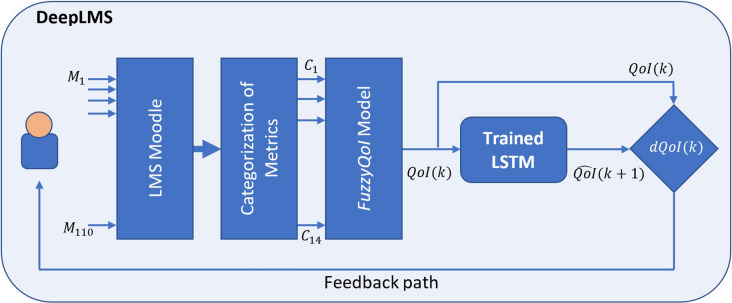
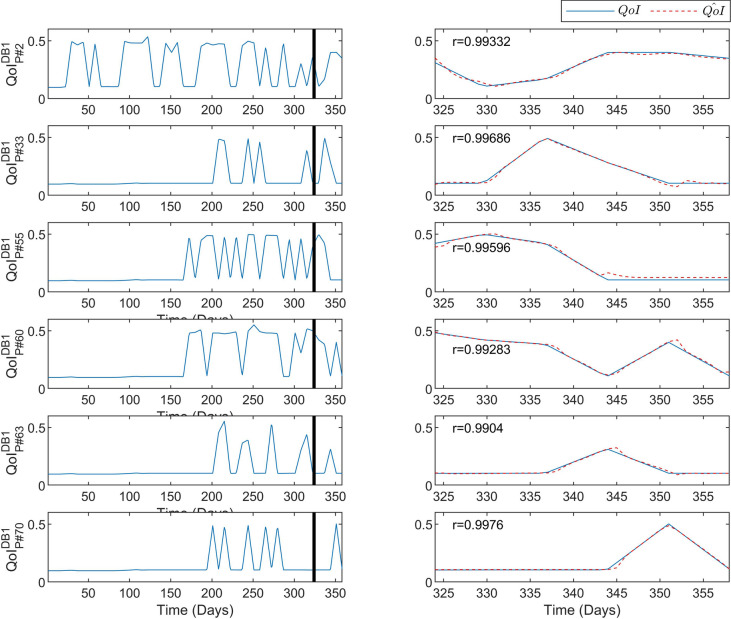
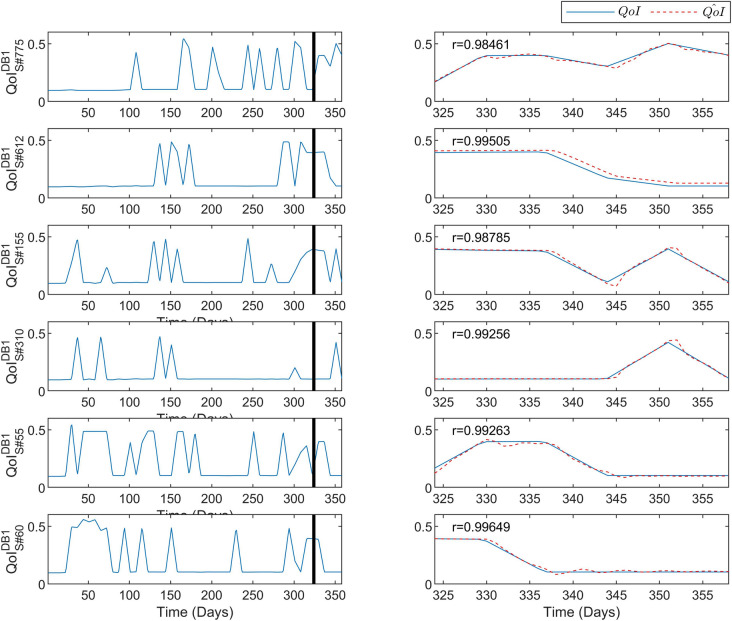
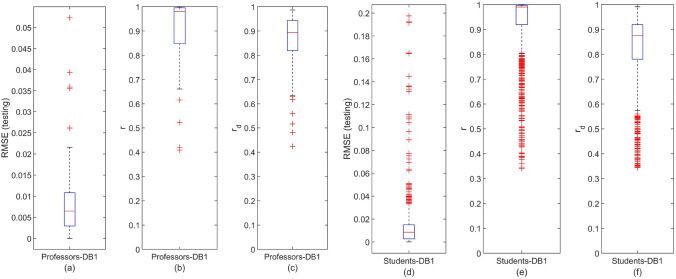
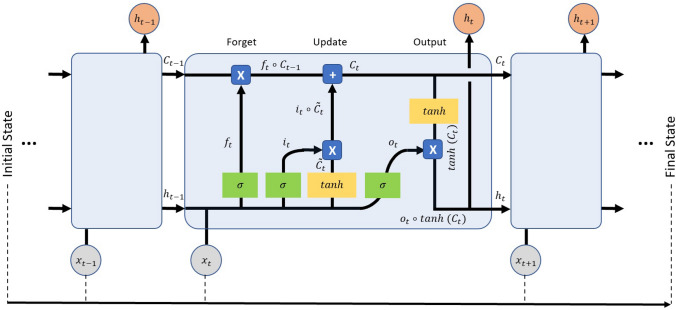
Coronavirus (Covid-19) pandemic has imposed a complete shut-down of face-to-face teaching to universities and schools, forcing a crash course for online learning plans and technology for students and faculty. In the midst of this unprecedented crisis, video conferencing platforms (e.g., Zoom, WebEx, MS Teams) and learning management systems (LMSs), like Moodle, Blackboard and Google Classroom, are being adopted and heavily used as online learning environments (OLEs). However, as such media solely provide the platform for e-interaction, effective methods that can be used to predict the learner’s behavior in the OLEs, which should be available as supportive tools to educators and metacognitive triggers to learners. Here we show, for the first time, that Deep Learning techniques can be used to handle LMS users’ interaction data and form a novel predictive model, namely DeepLMS, that can forecast the quality of interaction (QoI) with LMS. Using Long Short-Term Memory (LSTM) networks, DeepLMS results in average testing Root Mean Square Error (RMSE)$$<0.009$$<0.009, and average correlation coefficient between ground truth and predicted QoI values$$r\ge 0.97$$r≥0.97$$(p<0.05)$$(p<0.05), when tested on QoI data from one database pre- and two ones during-Covid-19 pandemic. DeepLMS personalized QoI forecasting scaffolds user’s online learning engagement and provides educators with an evaluation path, additionally to the content-related assessment, enriching the overall view on the learners’ motivation and participation in the learning process.
Overview
The claims and statistics of this paper haven’t been checked yet.
Free: it reads the open-access text and checks the first 5 claims that cite a source we can check. Create a free account to check every claim.
Integrity signals
Registry
Cites
Statistics
Figures
Verification
Claims the paper makes
The claims and statistics of this paper haven’t been checked yet.
Free: it reads the open-access text and checks the first 5 claims that cite a source we can check. Create a free account to check every claim.
Self-check
Percentages, sums and reported differences re-computed from the paper’s own numbers.
The self-check needs the paper’s full text.
Citations
Cites
Hochreiter, S., & Schmidhuber, J. (1997) · Neural Computation · doi:10.1162/neco.1997.9.8.1735 · Cited by 102,318
Adam: A Method for Stochastic Optimization
Kingma, D. P., & Ba, J. (2014) · arXiv · doi:10.48550/arxiv.1412.6980 · Cited by 98,946
Learning long-term dependencies with gradient descent is difficult
Bengio, Y., Simard, P., & Frasconi, P. (1994) · IEEE Transactions on Neural Networks · doi:10.1109/72.279181 · Cited by 8,542
Blended learning: Uncovering its transformative potential in higher education
Garrison, D. R., & Kanuka, H. (2004) · The Internet and Higher Education · doi:10.1016/j.iheduc.2004.02.001 · Cited by 4,849
The black swan: the impact of the highly improbable
(2007) · Choice Reviews Online · doi:10.5860/choice.45-1430 · Cited by 3,454
Gasque, G., Conway, S., Huang, J., Rao, Y., & Vosshall, L. B. (2013) · Scientific Reports · doi:10.1038/srep02120 · Cited by 2,292
ASSESSING TEACHING PRESENCE IN A COMPUTER CONFERENCING CONTEXT
Anderson, T., Rourke, L., Garrison, R., & Archer, W. (2001) · Online Learning · doi:10.24059/olj.v5i2.1875 · Cited by 1,885
The Theory and Practice of Online Learning
(2008) · Athabasca University Press eBooks · doi:10.15215/aupress/9781897425084.01 · Cited by 1,841
Unravelling the Role of O-glycans in Influenza A Virus Infection
Mayr, J., Lau, K., Lai, J. C. C., Gagarinov, I. A., Shi, Y., McAtamney, S., Chan, R. W. Y., Nicholls, J., von Itzstein, M., & Haselhorst, T. (2018) · Scientific Reports · doi:10.1038/s41598-018-34175-3 · Cited by 1,069
Kizilcec, R. F., Pérez-Sanagustín, M., & Maldonado, J. J. (2017) · Computers & Education · doi:10.1016/j.compedu.2016.10.001 · Cited by 1,003
Research works printed but not linked: 5
- Ponce OA Gómez J Pagán N Current scientific research in the humanities and social sciences: central issues in educational research Eur. J. Sci. Theol. 2019 15 81 95
- Chen, N.-S. & Lin, K.-M. Factors affecting e-learning for achievement. In IEEE International Conference on Advanced Learning Technologies, Kazan, Russia 200–205 (2002).
- Kickul, J. & Kickul, G. New pathways in e-learning: the role of student proactivity and technology utilization. In 45rd Annual Meeting of the Midwest Academy of Management Conference, Indiana, USA (2002).
- Laptev N Yosinski J Li LE Smyl S Time-series extreme event forecasting with neural networks at uber Int. Conf. Mach. Learn. 2017 34 1 5
- student models for interventions Mao, Y. Deep learning vs. Bayesian knowledge tracing J. Educ. Data Min. 2018 10 28 54
Cited by
A systematic review on trends in using Moodle for teaching and learning
Gamage, S. H. P. W., Ayres, J. R., & Behrend, M. B. (2022) · International Journal of STEM Education · doi:10.1186/s40594-021-00323-x · Cited by 360
Recent advances in Predictive Learning Analytics: A decade systematic review (2012–2022)
Sghir, N., Adadi, A., & Lahmer, M. (2023) · Education and Information Technologies · doi:10.1007/s10639-022-11536-0 · Cited by 232
Selim, T., Elkabani, I., & Abdou, M. A. (2022) · IEEE Access · doi:10.1109/access.2022.3206779 · Cited by 106
Mehta, N. K., Prasad, S. S., Saurav, S., Saini, R., & Singh, S. (2022) · Applied Intelligence · doi:10.1007/s10489-022-03200-4 · Cited by 97
“In such circumstances, students are heavily dependent on online learning environment to complete their courses through virtual mode platforms like Zoom, WebEx, and Google meet [2].”
BackgroundFadlelmula, F. K., & Qadhi, S. M. (2024) · Journal of University Teaching and Learning Practice · doi:10.53761/pswgbw82 · Cited by 75
Metadata
- Authors
- Dias, S. B., Hadjileontiadou, S. J., Diniz, J., & Hadjileontiadis, L. J.
- Affiliations
- University of Lisbon (PT)
- Democritus University of Thrace (GR)
- Khalifa University of Science and Technology (AE)
- Corresponding author
- Hadjileontiadis, Leontios J.
- Venue
- Scientific Reports
- Published
- 2020-11-16
- Volume
- 10
- Issue
- 1
- Pages
- 19888-19888
- ISSN
- 2045-2322 (ISSN-L)
- PMC
- PMC7669866
- OpenAlex
- W3103082384
- Semantic Scholar
- f7d7210316597dcd98cbda92d3363a88aae52da2
- Cited by
- 115
- References
- 75
- Citations by year
- 2026: 11 · 2025: 12 · 2024: 20 · 2023: 24 · 2022: 26 · 2021: 20 · 2020: 2
- FWCI
- 16.54
- Type
- journal article
- Language
- en
- Open access
- gold
- doi.org
- Licence
- cc-by
- creativecommons.org/licenses/by/4.0 (tdm)
- creativecommons.org/licenses/by/4.0 (vor)
- Locations
- Scientific Reports (publishedVersion, cc-by)
- PubMed Central (publishedVersion, cc-by)
- PubMed (publishedVersion)
- Informationszentrum Lebenswissenschaften (ZB MED) (submittedVersion, cc-by)
- Funders
- Universidade de Lisboa
- Research Committee, Aristotle University of Thessaloniki
- Topics
- Physical Sciences › Computer Science › Computer Science Applications › Online Learning and Analytics
- Physical Sciences › Computer Science › Artificial Intelligence › Intelligent Tutoring Systems and Adaptive Learning
- Social Sciences › Education › E-Learning and COVID-19
- Keywords
- online learning, virtual learning environments, interaction quality, COVID-19 pandemic, deep learning, long short-term memory networks, student engagement, student motivation
- MeSH terms
- Deep Learning, Teleworking, COVID-19, Adolescent, Adult, Computer-Assisted Instruction, Education, Professional, Humans, Middle Aged, Software, Universities
About these checks
Registry, retraction, Cites and statistics results are computed, not judged, with one exception: a printed reference that no index lists is read once by a model before it counts as a citation error. Claims are extracted by a model and kept only when their quote appears verbatim in the text; each cited source is then checked, with a model’s help, for whether it says what the claim relies on. Those verdicts can be wrong — read the claim’s quote and the cited source before relying on one.
Statistics and arithmetic are recomputed, not judged.
Confidence bands are shown only for fields calibrated on our annotated test set. None is calibrated yet, so no band is shown.
What counts as a claim ›How we measure confidence ›How we check this ›
Are you an author, or do you see a problem with this page? Request a review
Data sources
Bibliographic data: Semantic Scholar, OpenAlex, Crossref.
Contains information from the Semantic Scholar Academic Graph Datasets, made available under the ODC Attribution License (ODC-BY 1.0).
Semantic Scholar’s data is described in: Kinney, R., et al. (2023). The Semantic Scholar Open Data Platform. arXiv:2301.10140.
