

DeepLMS: a deep learning predictive model for supporting online learning in the Covid-19 era
Open accessThe DOI matches its Crossref record; 76 of the 76 references it cites were found in a registry or an index.
Abstract
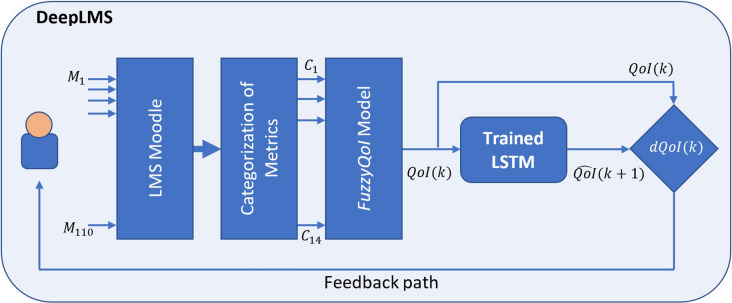
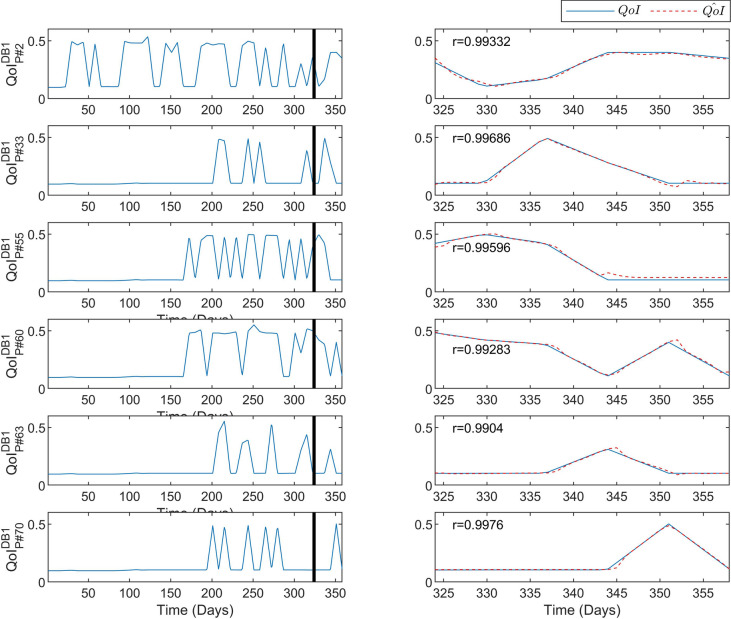
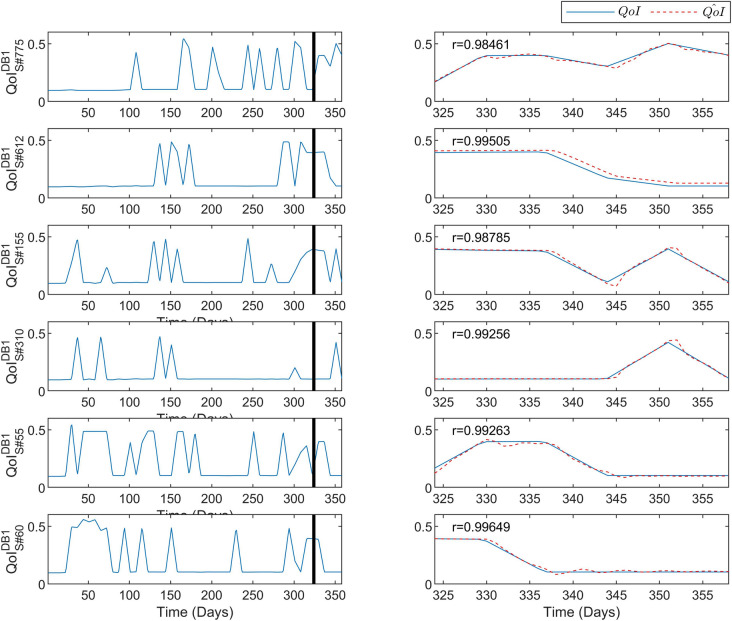
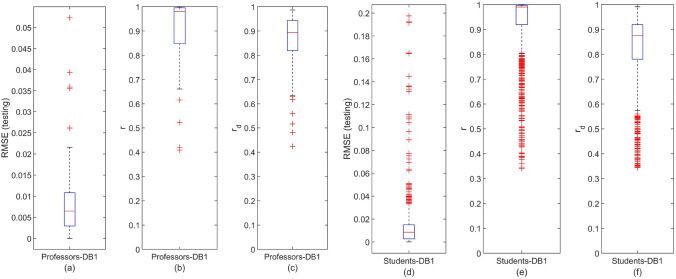
Coronavirus (Covid-19) pandemic has imposed a complete shut-down of face-to-face teaching to universities and schools, forcing a crash course for online learning plans and technology for students and faculty. In the midst of this unprecedented crisis, video conferencing platforms (e.g., Zoom, WebEx, MS Teams) and learning management systems (LMSs), like Moodle, Blackboard and Google Classroom, are being adopted and heavily used as online learning environments (OLEs). However, as such media solely provide the platform for e-interaction, effective methods that can be used to predict the learner’s behavior in the OLEs, which should be available as supportive tools to educators and metacognitive triggers to learners. Here we show, for the first time, that Deep Learning techniques can be used to handle LMS users’ interaction data and form a novel predictive model, namely DeepLMS, that can forecast the quality of interaction (QoI) with LMS. Using Long Short-Term Memory (LSTM) networks, DeepLMS results in average testing Root Mean Square Error (RMSE)$$<0.009$$<0.009, and average correlation coefficient between ground truth and predicted QoI values$$r\ge 0.97$$r≥0.97$$(p<0.05)$$(p<0.05), when tested on QoI data from one database pre- and two ones during-Covid-19 pandemic. DeepLMS personalized QoI forecasting scaffolds user’s online learning engagement and provides educators with an evaluation path, additionally to the content-related assessment, enriching the overall view on the learners’ motivation and participation in the learning process.
Overview
The claims and statistics of this paper haven’t been checked yet.
Free: it reads the open-access text and checks the first 5 claims that cite a source we can check. Create a free account to check every claim.
Integrity signals
Registry
Cites
Statistics
Figures
Verification
Claims the paper makes
The claims and statistics of this paper haven’t been checked yet.
Free: it reads the open-access text and checks the first 5 claims that cite a source we can check. Create a free account to check every claim.
Self-check
Percentages, sums and reported differences re-computed from the paper’s own numbers.
The self-check needs the paper’s full text.
Citations
Cites
Hochreiter, S., & Schmidhuber, J. (1997) · Neural Computation · doi:10.1162/neco.1997.9.8.1735 · Cited by 102,318
Adam: A Method for Stochastic Optimization
Kingma, D. P., & Ba, J. (2014) · arXiv · doi:10.48550/arxiv.1412.6980 · Cited by 98,946
Learning long-term dependencies with gradient descent is difficult
Bengio, Y., Simard, P., & Frasconi, P. (1994) · IEEE Transactions on Neural Networks · doi:10.1109/72.279181 · Cited by 8,542
Blended learning: Uncovering its transformative potential in higher education
Garrison, D. R., & Kanuka, H. (2004) · The Internet and Higher Education · doi:10.1016/j.iheduc.2004.02.001 · Cited by 4,849
The black swan: the impact of the highly improbable
(2007) · Choice Reviews Online · doi:10.5860/choice.45-1430 · Cited by 3,454
Gasque, G., Conway, S., Huang, J., Rao, Y., & Vosshall, L. B. (2013) · Scientific Reports · doi:10.1038/srep02120 · Cited by 2,292
ASSESSING TEACHING PRESENCE IN A COMPUTER CONFERENCING CONTEXT
Anderson, T., Rourke, L., Garrison, R., & Archer, W. (2001) · Online Learning · doi:10.24059/olj.v5i2.1875 · Cited by 1,885
The Theory and Practice of Online Learning
(2008) · Athabasca University Press eBooks · doi:10.15215/aupress/9781897425084.01 · Cited by 1,841
Unravelling the Role of O-glycans in Influenza A Virus Infection
Mayr, J., Lau, K., Lai, J. C. C., Gagarinov, I. A., Shi, Y., McAtamney, S., Chan, R. W. Y., Nicholls, J., von Itzstein, M., & Haselhorst, T. (2018) · Scientific Reports · doi:10.1038/s41598-018-34175-3 · Cited by 1,069
Kizilcec, R. F., Pérez-Sanagustín, M., & Maldonado, J. J. (2017) · Computers & Education · doi:10.1016/j.compedu.2016.10.001 · Cited by 1,003
Yorke, M. (2003) · Higher Education · doi:10.1023/a:1023967026413 · Cited by 973
The current landscape of learning analytics in higher education
Viberg, O., Hatakka, M., Bälter, O., & Mavroudi, A. (2018) · Computers in Human Behavior · doi:10.1016/j.chb.2018.07.027 · Cited by 766
Can ‘Blended Learning’ Be Redeemed?
Oliver, M., & Trigwell, K. (2005) · E-Learning and Digital Media · doi:10.2304/elea.2005.2.1.17 · Cited by 735
Regularizing and Optimizing LSTM Language Models
Merity, S., Keskar, N. S., & Socher, R. (2017) · arXiv · doi:10.48550/arxiv.1708.02182 · Cited by 697
Gašević, D., Dawson, S., Rogers, T., & Gasevic, D. (2016) · The Internet and Higher Education · doi:10.1016/j.iheduc.2015.10.002 · Cited by 683
Online Learning: Adoption, Continuance, and Learning Outcome—A Review of Literature
Panigrahi, R., Srivastava, P. R., & Sharma, D. (2018) · International Journal of Information Management · doi:10.1016/j.ijinfomgt.2018.05.005 · Cited by 607
Aldowah, H., Al-Samarraie, H., & Fauzy, W. M. (2019) · Telematics and Informatics · doi:10.1016/j.tele.2019.01.007 · Cited by 564
Learning and Teaching in Higher Education: The Reflective Professional
Light, G., Cox, R., & Calkins, S. (2009) · Cited by 542
Affective Learning — A Manifesto
Picard, R. W., Papert, S., Bender, W., Blumberg, B., Breazeal, C., Cavallo, D., Machover, T., Resnick, M., Roy, D., & Strohecker, C. (2004) · BT Technology Journal · doi:10.1023/b:bttj.0000047603.37042.33 · Cited by 504
Coronavirus pushes education online
Sun, L., Tang, Y., & Zuo, W. (2020) · Nature Materials · doi:10.1038/s41563-020-0678-8 · Cited by 475
Tempelaar, D. T., Rienties, B., & Giesbers, B. (2015) · Computers in Human Behavior · doi:10.1016/j.chb.2014.05.038 · Cited by 449
Conole, G., de Laat, M., Dillon, T., & Darby, J. (2008) · Computers & Education · doi:10.1016/j.compedu.2007.09.009 · Cited by 447
Predicting Student Performance from LMS Data: A Comparison of 17 Blended Courses Using Moodle LMS
Conijn, R., Snijders, C., Kleingeld, A., & Matzat, U. (2017) · IEEE Transactions on Learning Technologies · doi:10.1109/tlt.2016.2616312 · Cited by 371
Cerezo, R., Sánchez-Santillán, M., Paule-Ruiz, M. P., & Núñez, J. C. (2016) · Computers & Education · doi:10.1016/j.compedu.2016.02.006 · Cited by 321
EDUCAUSE Horizon Report: 2019 Higher Education Edition.
Alexander, B., Ashford-Rowe, K., Barajas-Murphy, N., Dobbin, G., Knott, J. L., McCormack, M., Pomerantz, J., Seilhamer, R. M., & Weber, N. L. (2019) · QUT ePrints (Queensland University of Technology) · Cited by 316
Kim, H. J., Hong, A. J., & Song, H.-D. (2019) · International Journal of Educational Technology in Higher Education · doi:10.1186/s41239-019-0152-3 · Cited by 312
The efficacy of learning analytics interventions in higher education: a systematic review.
Larrabee Sønderlund, A., Hughes, E., & Smith, J. (2019) · British Journal of Educational Technology · doi:10.1111/bjet.12720 · Cited by 265
Personalized learning full-path recommendation model based on LSTM neural networks
Zhou, Y., Huang, C., Hu, Q., Zhu, J., & Tang, Y. (2018) · Information Sciences · doi:10.1016/j.ins.2018.02.053 · Cited by 253
Redecker, C. (2009) · RePEc: Research Papers in Economics · Cited by 233
Pardo, A., Han, F., & Ellis, R. A. (2017) · IEEE Transactions on Learning Technologies · doi:10.1109/tlt.2016.2639508 · Cited by 216
Uncovering and Mitigating Algorithmic Bias through Learned Latent Structure
Amini, A., Soleimany, A. P., Schwarting, W., Bhatia, S. N., & Rus, D. (2019) · Proceedings of the 2019 AAAI/ACM Conference on AI, Ethics, and Society · doi:10.1145/3306618.3314243 · Cited by 206
Conscientious Classification: A Data Scientist's Guide to Discrimination-Aware Classification
d'Alessandro, B., O'Neil, C., & LaGatta, T. (2017) · Big Data · doi:10.1089/big.2016.0048 · Cited by 195
Predictive analytics in education: a comparison of deep learning frameworks
Doleck, T., Lemay, D. J., Basnet, R. B., & Bazelais, P. (2019) · Education and Information Technologies · doi:10.1007/s10639-019-10068-4 · Cited by 170
Immersive learning technologies: Realism and online authentic learning
Herrington, J., Reeves, T. C., & Oliver, R. (2007) · Journal of Computing in Higher Education · doi:10.1007/bf03033421 · Cited by 165
Using Data Mining for Predicting Relationships between Online Question Theme and Final Grade
Abdous, M., He, W., & Yen, C. (2012) · ODU Digital Commons (Old Dominion University) · Cited by 146
Predicting At-Risk Students Using Clickstream Data in the Virtual Learning Environment
Aljohani, N. R., Fayoumi, A. G., & Hassan, S. (2019) · Sustainability · doi:10.3390/su11247238 · Cited by 139
Herodotou, C., Rienties, B., Hlosta, M., Boroowa, A., Mangafa, C., & Zdrahal, Z. (2020) · The Internet and Higher Education · doi:10.1016/j.iheduc.2020.100725 · Cited by 120
Ramos, C., & Yudko, E. B. (2007) · Computers & Education · doi:10.1016/j.compedu.2006.11.003 · Cited by 110
Flexibly Fair Representation Learning by Disentanglement
Creager, E., Madras, D., Jacobsen, J.-H., Weis, M. A., Swersky, K., Pitassi, T., & Zemel, R. S. (2019) · arXiv (Cornell University) · doi:10.48550/arxiv.1906.02589 · Cited by 109
Using social network analysis to understand online Problem-Based Learning and predict performance
Saqr, M., Fors, U., & Nouri, J. (2018) · PLOS ONE · doi:10.1371/journal.pone.0203590 · Cited by 107
Improving Predictive Modeling for At-Risk Student Identification: A Multistage Approach
Hung, J.-L., Shelton, B. E., Yang, J., & Du, X. (2019) · IEEE Transactions on Learning Technologies · doi:10.1109/tlt.2019.2911072 · Cited by 97
Dias, S. B., Diniz, J. A., & Hadjileontiadis, L. J. (2013) · Intelligent systems reference library · doi:10.1007/978-3-319-02078-5 · Cited by 92
Self-citationOnline Learning Based on Essential Concepts and Formative Assessment
Lawton, D. T., Vye, N. J., Bransford, J. D., Sanders, E. A., Richey, M., French, D., & Stephens, R. (2012) · Journal of Engineering Education · doi:10.1002/j.2168-9830.2012.tb00050.x · Cited by 91
Delivering E-learning. A Complete Strategy for Design, Application and Assessment
Fee, K. (2012) · Development in Learning Organizations An International Journal · doi:10.1108/dlo.2013.08127aaa.013 · Cited by 90
Grant, M. R., & Thornton, H. R. (2007) · Cited by 90
The rich club phenomenon in the classroom
Vaquero, L. M., & Cebrián, M. (2013) · Scientific Reports · doi:10.1038/srep01174 · Cited by 86
Towards Actionable Learning Analytics Using Dispositions
Tempelaar, D. T., Rienties, B., & Nguyen, Q. (2017) · IEEE Transactions on Learning Technologies · doi:10.1109/tlt.2017.2662679 · Cited by 82
A Convolution-LSTM-Based Deep Neural Network for Cross-Domain MOOC Forum Post Classification
Wei, X., Lin, H., Yang, L., & Yu, Y. (2017) · Information · doi:10.3390/info8030092 · Cited by 81
Developing predictive models for early detection of at-risk students on distance learning modules.
Wolff, A., Zdráhal, Z., Herrmannová, D., Kužílek, J., & Hlosta, M. (2014) · Open Research Online (The Open University) · Cited by 77
E-learning in higher inclusive education: needs, opportunities and limitations
Meskhi, B., Ponomareva, S., & Ugnich, E. (2019) · International Journal of Educational Management · doi:10.1108/ijem-09-2018-0282 · Cited by 76
Dias, S. B., Hadjileontiadou, S. J., Hadjileontiadis, L. J., & Diniz, J. A. (2015) · Expert Systems with Applications · doi:10.1016/j.eswa.2015.05.048 · Cited by 73
Self-citationSmarr, B. L., & Schirmer, A. E. (2018) · Scientific Reports · doi:10.1038/s41598-018-23044-8 · Cited by 72
Dias, S. B., & Diniz, J. A. (2013) · Computers & Education · doi:10.1016/j.compedu.2013.06.016 · Cited by 67
Self-citationAhad, M. A., Tripathi, G., & Agarwal, P. (2018) · Smart Learning Environments · doi:10.1186/s40561-018-0057-y · Cited by 62
Multiview Learning for Early Prognosis of Academic Performance: A Case Study
Kostopoulos, G., Karlos, S., & Kotsiantis, S. B. (2019) · IEEE Transactions on Learning Technologies · doi:10.1109/tlt.2019.2911581 · Cited by 46
Predicting learning status in MOOCs using LSTM
Xiong, F., Zou, K., Liu, Z., & Wang, H. (2019) · ACM Turing Celebration Conference - China (ACM TURC) · doi:10.1145/3321408.3322855 · Cited by 39
Supporting actionable intelligence: reframing the analysis of observed study strategies
Jovanović, J., Dawson, S., Joksimovíc, S., & Siemens, G. (2020) · International Conference on Learning Analytics and Knowledge (LAK) · doi:10.1145/3375462.3375474 · Cited by 38
The Weakness of Weak Ties in the ClassroomPreprint
Vaquero, L. M., & Cebrián, M. (2012) · arXiv (Cornell University) · doi:10.48550/arxiv.1201.1589 · Cited by 38
Pedagogical Usability Checklist for ESL/EFL E-learning Websites
Lim, C. J., & Lee, S. (2007) · Cited by 35
Ding, M., Yang, K., Yeung, D., & Pong, T.-C. (2019) · International Conference on Learning Analytics and Knowledge (LAK) · doi:10.1145/3303772.3303795 · Cited by 31
Ping, T. A. (2011) · AAOU Journal/AAOU journal · doi:10.1108/aaouj-06-01-2011-b007 · Cited by 29
Delivering E‐learning. A Complete Strategy for Design, Application and Assessment
(2012) · European journal of training and development · doi:10.1108/03090591211263576 · Cited by 26
Communication at Scale in a MOOC Using Predictive Engagement Analytics
Le, C. V., Pardos, Z. A., Meyer, S. D., & Thorp, R. (2018) · Lecture notes in computer science · doi:10.1007/978-3-319-93843-1_18 · Cited by 26
Fuzzy Logic-Based Modeling in Collaborative and Blended Learning
Hadjileontiadou, S. J., Dias, S. B., Diniz, J. A., & Hadjileontiadis, L. J. (2015) · Advances in educational technologies and instructional design book series · doi:10.4018/978-1-4666-8705-9 · Cited by 23
Self-citationApplying Deep Learning and Wearable Devices for Educational Data Analytics
Zhou, Z., Tam, V. W. L., Lui, K., Lam, E. Y. M., Yuen, A. H. K., Hu, X., & Law, N. W. Y. (2019) · IEEE International Conference on Tools with Artificial Intelligence (ICTAI) · doi:10.1109/ictai.2019.00124 · Cited by 22
Distance Education and Technology: Issues and Practice
Keough, E. (2005) · The International Review of Research in Open and Distributed Learning · doi:10.19173/irrodl.v6i2.231 · Cited by 21
Dzandu, M. D., & Tang, Y. (2015) · Procedia Manufacturing · doi:10.1016/j.promfg.2015.07.239 · Cited by 18
Roy, R., Potter, S., & Yarrow, K. (2004) · Open Research Online - ORO (The Open University) · Cited by 15
ViSION: visualizing student interactions online
Sheard, J., Albrecht, D. W., & Butbul, E. (2005) · Cited by 13
Kidd, T. T., & Ba, P. L. P. (2007) · Digital Commons-TMC (Texas Medical Center) · Cited by 12
Providing feedback to online students: A new approach
Matas, C. F. P., & Allan, C. (2005) · Cited by 12
Hijón‐Neira, R., & Velázquez‐Iturbide, J. Á. (2010) · InTech eBooks · doi:10.5772/8802 · Cited by 9
Affective Learning Manifesto – 10 Years Later
Landowska, A. (2014) · Cited by 9
Towards an Intelligent Learning Management System: The A/B/C-TEACH Approach
Dias, S. B., Hadjileontiadou, S. J., Diniz, J. A., & Hadjileontiadis, L. J. (2019) · Communications in computer and information science · doi:10.1007/978-3-030-20954-4_30 · Cited by 4
Self-citationDias, S. B., Hadjileontiadou, S. J., Diniz, J. A., & Hadjileontiaids, L. J. (2015) · International Conference on Computer Supported Education · doi:10.5220/0005404901870195 · Cited by 3
Self-citationDias, S. B., Hadjileontiadou, S. J., Diniz, J. A., & Hadjileontiadis, L. J. (2021) · Communications in computer and information science · doi:10.1007/978-3-030-73988-1_19 · Cited by 2
Self-citation
Research works printed but not linked: 5
- Ponce OA Gómez J Pagán N Current scientific research in the humanities and social sciences: central issues in educational research Eur. J. Sci. Theol. 2019 15 81 95
- Chen, N.-S. & Lin, K.-M. Factors affecting e-learning for achievement. In IEEE International Conference on Advanced Learning Technologies, Kazan, Russia 200–205 (2002).
- Kickul, J. & Kickul, G. New pathways in e-learning: the role of student proactivity and technology utilization. In 45rd Annual Meeting of the Midwest Academy of Management Conference, Indiana, USA (2002).
- Laptev N Yosinski J Li LE Smyl S Time-series extreme event forecasting with neural networks at uber Int. Conf. Mach. Learn. 2017 34 1 5
- student models for interventions Mao, Y. Deep learning vs. Bayesian knowledge tracing J. Educ. Data Min. 2018 10 28 54
Cited by
A systematic review on trends in using Moodle for teaching and learning
Gamage, S. H. P. W., Ayres, J. R., & Behrend, M. B. (2022) · International Journal of STEM Education · doi:10.1186/s40594-021-00323-x · Cited by 360
Recent advances in Predictive Learning Analytics: A decade systematic review (2012–2022)
Sghir, N., Adadi, A., & Lahmer, M. (2023) · Education and Information Technologies · doi:10.1007/s10639-022-11536-0 · Cited by 232
Selim, T., Elkabani, I., & Abdou, M. A. (2022) · IEEE Access · doi:10.1109/access.2022.3206779 · Cited by 106
Mehta, N. K., Prasad, S. S., Saurav, S., Saini, R., & Singh, S. (2022) · Applied Intelligence · doi:10.1007/s10489-022-03200-4 · Cited by 97
“In such circumstances, students are heavily dependent on online learning environment to complete their courses through virtual mode platforms like Zoom, WebEx, and Google meet [2].”
BackgroundFadlelmula, F. K., & Qadhi, S. M. (2024) · Journal of University Teaching and Learning Practice · doi:10.53761/pswgbw82 · Cited by 75
Metadata
- Authors
- Dias, S. B., Hadjileontiadou, S. J., Diniz, J., & Hadjileontiadis, L. J.
- Affiliations
- University of Lisbon (PT)
- Democritus University of Thrace (GR)
- Khalifa University of Science and Technology (AE)
- Corresponding author
- Hadjileontiadis, Leontios J.
- Venue
- Scientific Reports
- Published
- 2020-11-16
- Volume
- 10
- Issue
- 1
- Pages
- 19888-19888
- ISSN
- 2045-2322 (ISSN-L)
- PMC
- PMC7669866
- OpenAlex
- W3103082384
- Semantic Scholar
- f7d7210316597dcd98cbda92d3363a88aae52da2
- Cited by
- 115
- References
- 75
- Citations by year
- 2026: 11 · 2025: 12 · 2024: 20 · 2023: 24 · 2022: 26 · 2021: 20 · 2020: 2
- FWCI
- 16.54
- Type
- journal article
- Language
- en
- Open access
- gold
- doi.org
- Licence
- cc-by
- creativecommons.org/licenses/by/4.0 (tdm)
- creativecommons.org/licenses/by/4.0 (vor)
- Locations
- Scientific Reports (publishedVersion, cc-by)
- PubMed Central (publishedVersion, cc-by)
- PubMed (publishedVersion)
- Informationszentrum Lebenswissenschaften (ZB MED) (submittedVersion, cc-by)
- Funders
- Universidade de Lisboa
- Research Committee, Aristotle University of Thessaloniki
- Topics
- Physical Sciences › Computer Science › Computer Science Applications › Online Learning and Analytics
- Physical Sciences › Computer Science › Artificial Intelligence › Intelligent Tutoring Systems and Adaptive Learning
- Social Sciences › Education › E-Learning and COVID-19
- Keywords
- online learning, virtual learning environments, interaction quality, COVID-19 pandemic, deep learning, long short-term memory networks, student engagement, student motivation
- MeSH terms
- Deep Learning, Teleworking, COVID-19, Adolescent, Adult, Computer-Assisted Instruction, Education, Professional, Humans, Middle Aged, Software, Universities
About these checks
Registry, retraction, Cites and statistics results are computed, not judged, with one exception: a printed reference that no index lists is read once by a model before it counts as a citation error. Claims are extracted by a model and kept only when their quote appears verbatim in the text; each cited source is then checked, with a model’s help, for whether it says what the claim relies on. Those verdicts can be wrong — read the claim’s quote and the cited source before relying on one.
Statistics and arithmetic are recomputed, not judged.
Confidence bands are shown only for fields calibrated on our annotated test set. None is calibrated yet, so no band is shown.
What counts as a claim ›How we measure confidence ›How we check this ›
Are you an author, or do you see a problem with this page? Request a review
Data sources
Bibliographic data: Semantic Scholar, OpenAlex, Crossref.
Contains information from the Semantic Scholar Academic Graph Datasets, made available under the ODC Attribution License (ODC-BY 1.0).
Semantic Scholar’s data is described in: Kinney, R., et al. (2023). The Semantic Scholar Open Data Platform. arXiv:2301.10140.
