

Effect of data leakage in brain MRI classification using 2D convolutional neural networks
Open accessPublished version of a preprint
The DOI matches its Crossref record; 80 of the 81 references it cites were found in a registry or an index.
Abstract
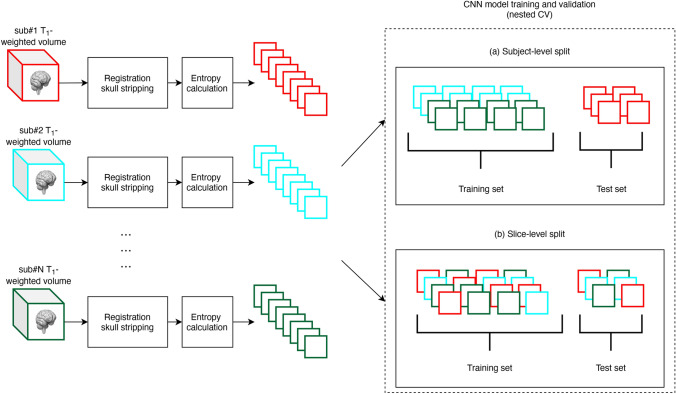
In recent years, 2D convolutional neural networks (CNNs) have been extensively used to diagnose neurological diseases from magnetic resonance imaging (MRI) data due to their potential to discern subtle and intricate patterns. Despite the high performances reported in numerous studies, developing CNN models with good generalization abilities is still a challenging task due to possible data leakage introduced during cross-validation (CV). In this study, we quantitatively assessed the effect of a data leakage caused by 3D MRI data splitting based on a 2D slice-level using three 2D CNN models to classify patients with Alzheimer’s disease (AD) and Parkinson’s disease (PD). Our experiments showed that slice-level CV erroneously boosted the average slice level accuracy on the test set by 30% on Open Access Series of Imaging Studies (OASIS), 29% on Alzheimer’s Disease Neuroimaging Initiative (ADNI), 48% on Parkinson’s Progression Markers Initiative (PPMI) and 55% on a local de-novo PD Versilia dataset. Further tests on a randomly labeled OASIS-derived dataset produced about 96% of (erroneous) accuracy (slice-level split) and 50% accuracy (subject-level split), as expected from a randomized experiment. Overall, the extent of the effect of an erroneous slice-based CV is severe, especially for small datasets.
Overview
The claims and statistics of this paper haven’t been checked yet.
Free: it reads the open-access text and checks the first 5 claims that cite a source we can check. Create a free account to check every claim.
Integrity signals
Registry
Cites
Statistics
Figures
Verification
Claims the paper makes
The claims and statistics of this paper haven’t been checked yet.
Free: it reads the open-access text and checks the first 5 claims that cite a source we can check. Create a free account to check every claim.
Claims other papers make about this one
Each is checked against this paper’s own text: does it say what the citing paper says it does?
The check wasn’t confident either way, so it gives no verdict — never disputed.
In the citing paper
“different types of blood-based -omics data have been combined with neuropathology and imaging data in a multi-modal AI model to identify subtypes of AD and co-pathology.136,137”
From Review of Artificial Intelligence for Clinical Use in Alzheimer's Disease and Related Dementias (2026) · cites this paper as [136]
Experimental — accuracy not yet measuredIn the citing paper
“Furthermore, the optimistic performance reported in research studies may at times reflect methodological issues, including data leakage and selection bias, explaining why many models fail when tested prospectively in real-world settings.148–150”
From Review of Artificial Intelligence for Clinical Use in Alzheimer's Disease and Related Dementias (2026) · cites this paper as [150]
Self-check
Percentages, sums and reported differences re-computed from the paper’s own numbers.
The self-check needs the paper’s full text.
Citations
Cites
1 retracted
Diagnosis of Alzheimer Disease Using 2D MRI Slices by Convolutional Neural Network
Al-Khuzaie, F. E. K., Bayat, O., & Duru, A. D. (2021) · Applied Bionics and Biomechanics · doi:10.1155/2021/6690539 · Cited by 89
RetractedAdam: A Method for Stochastic Optimization
Kingma, D. P., & Ba, J. (2014) · arXiv · doi:10.48550/arxiv.1412.6980 · Cited by 98,946
Scikit-learn: Machine Learning in Python
Pedregosa, F., Varoquaux, G., Gramfort, A., Michel, V., Thirion, B., Grisel, O., Blondel, M., Müller, A., Nothman, J., Louppe, G., et al. (2012) · arXiv · doi:10.48550/arxiv.1201.0490 · Cited by 71,016
Going deeper with convolutions
Szegedy, C., Liu, W., Jia, Y., Sermanet, P., Reed, S., Anguelov, D., Erhan, D., Vanhoucke, V., & Rabinovich, A. (2015) · 2015 IEEE Conference on Computer Vision and Pattern Recognition (CVPR) · doi:10.1109/cvpr.2015.7298594 · Cited by 48,562
The Elements of Statistical Learning
Hastie, T., Tibshirani, R., & Friedman, J. (2009) · Springer Series in Statistics · doi:10.1007/978-0-387-84858-7 · Cited by 25,970
Delving Deep into Rectifiers: Surpassing Human-Level Performance on ImageNet Classification
He, K., Zhang, X., Ren, S., & Sun, J. (2015) · 2015 IEEE International Conference on Computer Vision (ICCV) · doi:10.1109/iccv.2015.123 · Cited by 19,741 · cited 3×
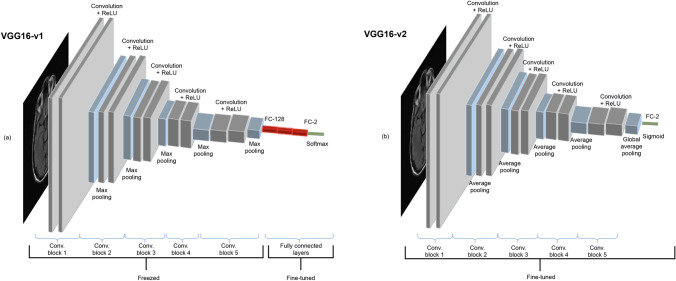
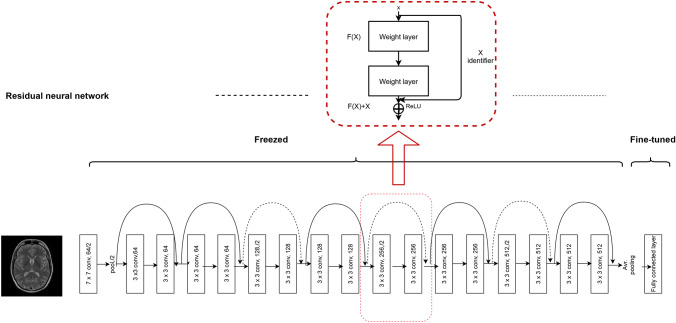
“Notably, we used pre-trained VGG16 67 and ResNet-18 68 models in this study, as detailed in the following sections.”
MethodInfluential(2010) · Cited by 14,134
Parkinsonism: onset, progression, and mortality
Hoehn, M. M., & Yahr, M. D. (1967) · Neurology · doi:10.1212/wnl.17.5.427 · Cited by 12,107
(2016) · Cited by 11,679
The Clinical Dementia Rating (CDR): Current version and scoring rules
Morris, J. C. (1993) · Neurology · doi:10.1212/wnl.43.11.2412-a · Cited by 9,882
Research works printed but not linked: 3
- 67. Simonyan, K. & Zisserman, A. Very deep convolutional networks for large-scale image recognition. Preprint at http:// arXiv. org/ 1409. 1556 (2015).
- 76. TensorFlow Developers. TensorFlow (2021).
- 79. Brett, M. et al. Nipy/nibabel: 2.3.3 (2019).
Cited by
Overview of leakage scenarios in supervised machine learning
Sasse, L., Nicolaisen‐Sobesky, E., Dukart, J., Eickhoff, S. B., GOETZ, M. A., Hamdan, S., Komeyer, V., Kulkarni, A. J., Lahnakoski, J. M., Love, B. C., et al. (2025) · Journal Of Big Data · doi:10.1186/s40537-025-01193-8 · Cited by 151
“…examples demonstrating such leakage include, existence of the same genomic loci in the training and test sets when performing cross-cell type predictions [62], and using 2D slices from the 3D brain images of the same individual for training and testing for predicting neurodegenerative disease [82].”
MethodTang, A. S., Rankin, K. P., Cerono, G., Miramontes, S., Mills, H., Roger, J., Zeng, B., Nelson, C., Soman, K., Woldemariam, S., et al. (2024) · Nature Aging · doi:10.1038/s43587-024-00573-8 · Cited by 86
“Cohort selection and data preprocessing is a crucial first step to identify available clinical measures and optimal ground truth that is close to biological AD and avoid overly optimistic model performance due to nonspecific AD or improper data preprocessing 36 .”
Marzi, C., Giannelli, M., Barucci, A., Tessa, C., Mascalchi, M., & Diciotti, S. (2024) · Scientific Data · doi:10.1038/s41597-023-02421-7 · Cited by 87
Self-citationApplying oversampling before cross-validation will lead to high bias in radiomics
Demircioğlu, A. (2024) · Scientific Reports · doi:10.1038/s41598-024-62585-z · Cited by 85
Machine and Deep Learning Prediction Of Prostate Cancer Aggressiveness Using Multiparametric MRI
Bertelli, E., Mercatelli, L., Marzi, C., Pachetti, E., Baccini, M., Barucci, A., Colantonio, S., Gherardini, L., Lattavo, L., Pascali, M. A., et al. (2022) · Frontiers in Oncology · doi:10.3389/fonc.2021.802964 · Cited by 77
“It is essential to underline that, unlike other works (74, 75), we performed a patient-based splitting, and thus avoiding results inflated by the phenomenon of data leakage (80).”
Self-citationCarcagnì, P., Leo, M., Coco, M. D., Distante, C., & Salve, A. D. (2023) · Sensors · doi:10.3390/s23031694 · Cited by 80
“Details on the CNN architectures can be found in the respective papers [22,50].”
BackgroundMethodInfluentialScheda, R., & Diciotti, S. (2022) · Applied Sciences · doi:10.3390/app12136681 · Cited by 70
Self-citationEffects of MRI scanner manufacturers in classification tasks with deep learning models
Kushol, R., Parnianpour, P., Wilman, A. H., Kalra, S., & Yang, Y.-H. (2023) · Scientific Reports · doi:10.1038/s41598-023-43715-5 · Cited by 54
ClinicaDL: An open-source deep learning software for reproducible neuroimaging processing
Thibeau–Sutre, E., Díaz, M., Hassanaly, R., Routier, A., Dormont, D., Colliot, O., & Burgos, N. (2022) · Computer Methods and Programs in Biomedicine · doi:10.1016/j.cmpb.2022.106818 · Cited by 56
Sikder, R., Zhang, T., & Ye, T. (2023) · ACS ES&T Water · doi:10.1021/acsestwater.3c00020 · Cited by 53
Qiang, Y.-R., Zhang, S., Li, J., Li, Y., & Zhou, Q.-Y. (2023) · Artificial Intelligence in Medicine · doi:10.1016/j.artmed.2023.102678 · Cited by 51
“…partition with different scales, existing CNN-based AD diagnosis methods for sMRI images can be roughly categorized into 2D slice-level methods [9,10], 3D patch-level methods [11–14], https://doi.org/10.1016/j.artmed.2023.102678 Received 16 November 2022; Received in revised form 12 July 2023;…”
InfluentialZhou, J., Wei, Y., Li, X., Zhou, W., Tao, R., Hua, Y., & Liu, H. (2025) · Scientific Reports · doi:10.1038/s41598-025-05568-y · Cited by 57
“Based on my extensive experimentation and literature review, as described by Ekin et al. 16 , utilizing 2D slice datasets for training resulted in an erroneous 29% increase in accuracy on the Alzheimer’s Disease Neuroimaging Initiative (ADNI).”
Gerraty, R. T., Provost, A. C., Li, L., Wagner, E. A., Haas, M., & Lancashire, L. (2023) · Frontiers in Aging Neuroscience · doi:10.3389/fnagi.2023.1076657 · Cited by 46
“…images require extensive processing and feature engineering before they can be incorporated into most machine learning models [convolution neural networks, which can work with raw or preprocessed images directly, are a notable exception and have been used in some PPMI studies (Yagis et al., 2021)].”
MethodXu, X., Lin, L., Sun, S., & Wu, S. (2023) · Reviews in the Neurosciences · doi:10.1515/revneuro-2022-0122 · Cited by 40
“Although data leakage is more widespread in 2D CNN architectures (Yagis et al. 2021), some forms of data leakage can also occur in 3D CNNs. Ansart et al. (2021) reviewed 172 articles on predicting the progression of MCI using machine learning and found that 26.5% of the articles had a data leakage…”
InfluentialCognitive Workload Estimation Using Variational Autoencoder and Attention-Based Deep Model
Chakladar, D. D., Datta, S., Roy, P. P., & Vinod, A. P. (2022) · IEEE Transactions on Cognitive and Developmental Systems · doi:10.1109/tcds.2022.3163020 · Cited by 46
“The subject-level splitting in the LSO experiment eliminates the data leakage issue [25].”
BackgroundInvestigating the Quality of DermaMNIST and Fitzpatrick17k Dermatological Image Datasets
Abhishek, K., Jain, A., & Hamarneh, G. (2025) · Scientific Data · doi:10.1038/s41597-025-04382-5 · Cited by 50
“Similar investigations have been conducted on the adverse effects of incorrect data partitioning on test performance in optical coherence tomography (OCT) image classification [31], brain magnetic resonance imaging (MRI) classification [32], and longitudinal brain MRI analysis [33].”
Zhang, Y., He, X., Liu, Y., Ong, C. Z. L., Liu, Y., & Teng, Q. (2023) · Knowledge-Based Systems · doi:10.1016/j.knosys.2023.111064 · Cited by 40
“Although some 2D CNN-based studies achieve the ideal diagnostic accuracy, many of the results are caused by the data leakage with dataset split strategy, with disparities of 10 % or even more than 20 % points in rigorous test evaluation [27].”
Starcke, J., Spadafora, J., Spadafora, J., Spadafora, P., & Toma, M. (2025) · Bioengineering · doi:10.3390/bioengineering12080845 · Cited by 38
Calle, P., Bates, A., Reynolds, J. C., Liu, Y., Cui, H., Ly, S., Wang, C., Zhang, Q., de Armendi, A. J., Shettar, S. S., et al. (2025) · Computer Methods and Programs in Biomedicine · doi:10.1016/j.cmpb.2025.109063 · Cited by 45
Young, V. M., Gates, S., Garcia, L. Y., & Salardini, A. (2025) · Diagnostics · doi:10.3390/diagnostics15182348 · Cited by 50
Inconsistent Partitioning and Unproductive Feature Associations Yield Idealized Radiomic Models
Gidwani, M., Chang, K., Patel, J., Hoebel, K., Ahmed, S. R., Singh, P., Fuller, C. D., & Kalpathy–Cramer, J. (2022) · Radiology · doi:10.1148/radiol.220715 · Cited by 38
Veetil, I. K., Chowdary, D. E., Chowdary, P. N., Sowmya, V., & Gopalakrishnan, E. A. (2024) · Digital Signal Processing · doi:10.1016/j.dsp.2024.104407 · Cited by 37
Pediatric brain tumor classification using deep learning on MR images with age fusion
Tampu, I. E., Bianchessi, T., Blystad, I., Lundberg, P., Nyman, P., Eklund, A., & Haj‐Hosseini, N. (2024) · Neuro-Oncology Advances · doi:10.1093/noajnl/vdae205 · Cited by 35
Eken, A., Nassehi, F., & Eroğul, O. (2024) · Reviews in the Neurosciences · doi:10.1515/revneuro-2023-0117 · Cited by 32
Artificial intelligence for automatic classification of needle EMG signals: A scoping review
de Jonge, S., Potters, W. V., & Verhamme, C. (2024) · Clinical Neurophysiology · doi:10.1016/j.clinph.2023.12.134 · Cited by 30
Dzialas, V., Doering, E., Eich, H., Strafella, A. P., Vaillancourt, D. E., Simonyan, K., van Eimeren, T., & International Parkinson Movement Disorders Society‐Neuroimaging Study Group (2024) · Movement Disorders · doi:10.1002/mds.30002 · Cited by 30
“15 16-18 Additionally, overly complex approaches that are trained on a relatively large number of features are prone to over fi tting as they are likely to fi t noise in the training data rather than disease-speci fi c patterns.”
InfluentialD’Andrea, C., Cazzaniga, F. A., Bistaffa, E., Barucci, A., de Angelis, M., Banchelli, M., Farnesi, E., Polykretis, P., Marzi, C., Indaco, A., et al. (2023) · Translational Neurodegeneration · doi:10.1186/s40035-023-00367-9 · Cited by 30
“Test set data were not used during the learning process, thus preventing any form of peeking effect [44, 45].”
MethodSelf-citationRumala, D. J. (2023) · Lecture notes in computer science · doi:10.1007/978-3-031-45249-9_23 · Cited by 39
“Meanwhile, late-wise splitting was also found to cause data leakage [19].”
BackgroundResultInfluentialFigueiredo, R. B. D., & Mendes, H. A. (2024) · IEEE Access · doi:10.1109/access.2024.3383047 · Cited by 25
“Two types of clustering are examined, (HDBSCAN) [12] and Gaussian Mixture Models (GMM) [13].”
MethodKushol, R., Luk, C., Dey, A., Benatar, M. G., Briemberg, H., Dionne, A., Dupré, N., Frayne, R., Genge, A. L., Gibson, S. B., et al. (2023) · Computerized Medical Imaging and Graphics · doi:10.1016/j.compmedimag.2023.102279 · Cited by 27
“Indeed, a recent study Yagis et al. (2021) found that many prior neurodegenerative disease classification approaches did not follow a proper division of slices in their training or testing data, and hence, their results convey incorrect and overly optimistic classification accuracies.”
BackgroundKahveci, S., Bathke, A. C., & Blechert, J. (2024) · Psychonomic Bulletin & Review · doi:10.3758/s13423-024-02597-y · Cited by 30
“…outlier exclusion should be applied after splitting the data, rather than before—doing so would prevent that information about the presplit data, such as its mean and SD , leaks into the split datasets and inflates the (see Yagis et al., 2021, for a discussion of data leakage in cross-validation).”
Cohen, S. E., Zantvoord, J. B., Wezenberg, B. N., Daams, J. G., Bockting, C., Denys, D. A. J. P., & van Wingen, G. A. (2022) · Journal of Affective Disorders · doi:10.1016/j.jad.2022.10.042 · Cited by 24
Zhang, Y., Teng, Q., He, X., Niu, T., Zhang, L., Liu, Y., & Ren, C. (2023) · Annual International Conference of the IEEE Engineering in Medicine and Biology Society (EMBC) · doi:10.1109/embc40787.2023.10340536 · Cited by 28
“All images in each modality are not from the same subject to avoid data leakage [5].”
BackgroundFrom segmentation to explanation: Generating textual reports from MRI with LLMs
Valerio, A. G., Trufanova, K., de Benedictis, S., Vessio, G., & Castellano, G. (2025) · Computer Methods and Programs in Biomedicine · doi:10.1016/j.cmpb.2025.108922 · Cited by 28
Predicting severely imbalanced data disk drive failures with machine learning models
Ahmed, J., & Green, R. (2022) · Machine Learning with Applications · doi:10.1016/j.mlwa.2022.100361 · Cited by 28
Khayretdinova, M., Zakharov, I., Pshonkovskaya, P., Adamovich, T., Kiryasov, A., Zhdanov, A. V., & Shovkun, A. (2023) · NeuroImage · doi:10.1016/j.neuroimage.2023.120495 · Cited by 24
“While a 10-fold cross-validation strategy is commonly employed in neuroscientific studies, it has been noted that this approach may be susceptible to certain limitations (Yagis et al., 2021).”
Qiang, Y.-R., Zhou, Q.-Y., Li, J.-N., Xie, M.-Y., Cui, X., & Zhang, S. (2025) · Expert Systems with Applications · doi:10.1016/j.eswa.2025.127720 · Cited by 20
Marzi, C., Scheda, R., Salvadori, E., Giorgio, A., Stefano, N. D., Poggesi, A., Inzitari, D., Pantoni, L., Mascalchi, M., & Diciotti, S. (2023) · Frontiers in Human Neuroscience · doi:10.3389/fnhum.2023.1231513 · Cited by 17
“The subject-level splitting ensures that the repetitions present in the outer training set are either in the inner training set or in the inner validation set, preventing data leakage (Yagis et al., 2021).”
Self-citationKamboj, P., Banerjee, A., & Gupta, S. K. S. (2024) · IEEE Transactions on Artificial Intelligence · doi:10.1109/tai.2024.3396421 · Cited by 15
“This occurs when information used in the model training is not expected to be available in test time [8].”
BackgroundBan, Y., Zhang, X., & Lao, H. (2022) · Medical Physics · doi:10.1002/mp.15888 · Cited by 14
Yoshizawa, R., Yamamoto, K., & Ohtsuki, T. O. (2023) · IEEE Sensors Journal · doi:10.1109/jsen.2023.3272921 · Cited by 14
“Yagis et al. [25] reported that many previous studies in brain MRI classification split the 2-”
ResultTian, R.-F., Li, J.-N., & Zhang, S. (2024) · Expert Systems with Applications · doi:10.1016/j.eswa.2024.124241 · Cited by 14
Massoud, M. A., El-Bouridy, M. E., & Ahmed, W. A. (2024) · Neural Computing and Applications · doi:10.1007/s00521-024-09859-9 · Cited by 12
Yoon, H., Kang, D., & Kim, S. (2024) · Scientific Reports · doi:10.1038/s41598-024-80938-6 · Cited by 12
Melshin, G., DiMaggio, A., Zeramdini, N., Mackinley, M., Palaniyappan, L. K., & Voppel, A. (2025) · NPP—Digital Psychiatry and Neuroscience · doi:10.1038/s44277-025-00040-1 · Cited by 13
Martin, S., Zhao, A., Qu, J., Imms, P. E., Irimia, A., Barkhof, F., Cole, J. H., & Initiative, A. D. N. (2026) · Human Brain Mapping · doi:10.1002/hbm.70456 · Cited by 18
“Models also generalised well in held-out samples from NACC and ADNI, addressing criticisms of existing studies that do not evaluate model transfer to external cohorts (Martin, Townend, et al. 2023; Borchert et al. 2023; Yagis et al. 2021).”
Ensemble deep learning architectures for detecting pulmonary tuberculosis in chest X-rays
de Herrera, A. G. S., Yağış, E., Pinpo, N., Abolghasemi, V., Andritsch, J., Chaichulee, S., Cid, Y. D., & Ingviya, T. (2026) · Scientific Reports · doi:10.1038/s41598-025-30792-x · Cited by 13
“To prevent data leakage, the data is initially separated, ensuring that augmentation is conducted exclusively on the training set for each training cycle 38 .”
Verma, V. K., & Lin, W. (2022) · Biosensors · doi:10.3390/bios12080605 · Cited by 12
Malu, G., Uday, N., Sherly, E., Abraham, A., & Bodhey, N. K. (2024) · IEEE Access · doi:10.1109/access.2024.3408311 · Cited by 11
“The models analyzed form 3D brain image data, so we performed a subject-level cross-validation to prevent data leakage [45].”
Ye, Q., Wang, Z.-L., Lou, Y., Yang, Y., Hou, J., Liu, Z., Liu, W., & Li, J. (2025) · Biomolecules and Biomedicine · doi:10.17305/bb.2024.11341 · Cited by 10
Focal cortical dysplasia (type II) detection with multi-modal MRI and a deep-learning framework
Shankar, A., Saikia, M. J., Dandapat, S., & Barma, S. (2024) · npj Imaging · doi:10.1038/s44303-024-00031-5 · Cited by 10
Bias in machine learning for computer-assisted surgery and medical image processing
Baxter, J. S. H., & Jannin, P. (2022) · Computer Assisted Surgery · doi:10.1080/24699322.2021.2013619 · Cited by 9
Jabason, E., Ahmad, M. O., & Swamy, M. N. S. (2024) · IEEE Journal of Biomedical and Health Informatics · doi:10.1109/jbhi.2024.3512417 · Cited by 11
“As explained in [28], this approach would lead to data leakage because slices from the same patient’s scan can end up being present simultaneously in more than one of the training, validation, and testing sets.”
Song, Y. W., Lee, H. S., Kim, S., Kim, K., Kim, B., & Kim, J. S. (2024) · Clinical Psychopharmacology and Neuroscience · doi:10.9758/cpn.24.1165 · Cited by 9
“Data leakage can occur in feature selection and stand-ardization from the performance validation [93,94].”
BackgroundConvolutional neural networks for traumatic brain injury classification and outcome prediction
Zinnel, L., & Bentil, S. A. (2023) · Health Sciences Review · doi:10.1016/j.hsr.2023.100126 · Cited by 8
Domain Adaptation of MRI Scanners as an Alternative to MRI Harmonization
Kushol, R., Frayne, R., Graham, S. J., Wilman, A. H., Kalra, S., & Yang, Y. (2023) · Lecture notes in computer science · doi:10.1007/978-3-031-45857-6_1 · Cited by 9
Deep-learning based morphological segmentation of canine diffuse large B-cell lymphoma
Ancheta, K., Psifidi, A., Yale, A. D., Calvez, S. L., & Williams, J. M. (2025) · Frontiers in Veterinary Science · doi:10.3389/fvets.2025.1656976 · Cited by 7
“Data leakage can lead to overly optimistic results in CNN models, which is the process referred to as the incidence in which information is used during model training that is not expected to be available until testing (30).”
AI for Radiology: A Primer Part I. From Idea to Algorithm
Tejani, A. S., Rauschecker, A. M., Kohli, M. D., & Mongan, J. (2025) · Radiology · doi:10.1148/radiol.250692 · Cited by 7
Bazine, O., Rai, O., Aiadi, O., Hedjam, R., Khaldi, B., & Zhong, G. (2024) · Cognitive Computation · doi:10.1007/s12559-024-10390-1 · Cited by 8
Asghar, S., Rashid, J., & Masood, A. (2025) · Multimedia Tools and Applications · doi:10.1007/s11042-025-21001-y · Cited by 7
Deep-learning-based detection of underwater fluids in multiple multibeam echosounder data
Perret, T., Chenadec, G. L., Gaillot, A., Ladroit, Y., & Dupré, S. (2025) · Frontiers in Remote Sensing · doi:10.3389/frsen.2025.1532714 · Cited by 8
Review of Artificial Intelligence for Clinical Use in Alzheimer's Disease and Related Dementias
Breithaupt, A. G., Tang, A., Paolillo, E. W., Bibars, M., Johnson, E. C. B., Saloner, R., Possin, K. L., Windon, C. C., Hill-Jarrett, T. G., Giorgio, J., et al. (2026) · Seminars in Neurology · doi:10.1055/a-2744-9871 · Cited by 6
Almuqhim, F., & Saeed, F. (2025) · Neuroinformatics · doi:10.1007/s12021-025-09746-1 · Cited by 7
“A methodological consideration, as highlighted in recent studies (Marzi et al., 2024; Yagis et al. (Yagis, and Atnafu, 2021)), is that ComBat is often misused by applying it to both training and testing data outside of proper cross-validation procedures.”
Using Graph Neural Networks to Predict the Permeability of Porous Media
I'Anson, J. M., Simmons, M. J. H., Stitt, E. H., & Gallen, R. W. (2025) · InterPore Journal · doi:10.69631/ipj.v2i3nr47 · Cited by 8
Atnafu, S. W., & Diciotti, S. (2023) · Green energy and technology · doi:10.1007/978-3-031-41173-1_2 · Cited by 6
Self-citationUsing Deep Learning to Simultaneously Reduce Noise and Motion Artifacts in Brain MR Imaging
Muro, I., Isoiwa, T., Shibukawa, S., Usui, K., & Otsuka, Y. (2025) · Magnetic Resonance in Medical Sciences · doi:10.2463/mrms.mp.2024-0098 · Cited by 5
Warren, S. L., & Moustafa, A. A. (2026) · Brain and Behavior · doi:10.1002/brb3.71240 · Cited by 5
Shatnawi, N. M., Nahar, K. M. O., Mamlook, R. E. A., Almuflih, A. S., Fatais, A. M. A., Alhatamleh, S., Alishwait, A., & Amin, M. (2026) · Frontiers in Neuroscience · doi:10.3389/fnins.2026.1778376 · Cited by 5
Jagadeesh, A. T., Aramrat, C., Rai, S., Maqsood, F. H., Madhukeshwar, A. K., Bhogadi, S., Lieber, J., Mahajan, H., Banjara, S. K., Lewin, A., et al. (2025) · The Lancet Regional Health - Southeast Asia · doi:10.1016/j.lansea.2025.100644 · Cited by 7
Hellström, T. A. E., Ewals, L. J. S., Nederend, J., Luyer, M. D. P., de With, P. H. N., & van der Sommen, F. (2025) · Computers in Biology and Medicine · doi:10.1016/j.compbiomed.2025.110780 · Cited by 5
Deep learning-based detection and identification of brain tumor biomarkers in quantitative MR-images
Tampu, I. E., Haj‐Hosseini, N., Blystad, I., & Eklund, A. (2023) · Machine Learning Science and Technology · doi:10.1088/2632-2153/acf095 · Cited by 6
“Given that the models were trained on 2D images obtained from volumetric data, a per-subject split strategy was used to avoid biasing the evaluation of model performance due to data leakage (Yagis et al 2021, Tampu et al 2022).”
Stable multivariate lesion symptom mapping
Teghipco, A., Newman‐Norlund, R., Gibson, M., Bonilha, L., Absher, J. R., Fridriksson, J., & Rorden, C. (2024) · Aperture Neuro · doi:10.52294/001c.117311 · Cited by 5
Eren, E., İlgün, M., Kurt, B. K., Okur, S., Arslan, T., Aktaş, M. S., & EROĞLU, M. S. (2025) · The Veterinary Journal · doi:10.1016/j.tvjl.2025.106476 · Cited by 5
Klaiber, M., & Rössle, M. (2026) · Journal Of Big Data · doi:10.1186/s40537-026-01369-w · Cited by 4
“However, we deliberately decided against this to avoid potential target leakage and overly optimistic performance estimates, as well as poor generalizability [55].”
Saifullah, S., & Dreżewski, R. (2026) · Machine Vision and Applications · doi:10.1007/s00138-026-01812-1 · Cited by 4
“Duplicate or near-duplicate samples were verified to ensure that no identical images were shared across subsets, preventing unintended information leakage [ 84].”
Yıldız, O., & Subaşı, A. (2026) · Applied Sciences · doi:10.3390/app16094338 · Cited by 5
Koh, R. G. L., Khan, M. A., Rashidiani, S., Hassan, S. I., Tucci, V., Liu, T., Nesovic, K., Kumbhare, D. A., & Doyle, T. E. (2023) · IEEE Access · doi:10.1109/access.2023.3316019 · Cited by 6
“Proper reporting is 232 crucial, as an incorrectly trained or improperly used algorithm 233 can lead to misrepresented results (e.g., higher accuracy due 234 to train-test contamination leading to data leakage) [65], [66], 235 [67], [68], [69].”
BackgroundWhat Basic Needs Are Met Through Outdoor Education
Hammerman, E., & Hammerman, D. R. (1985) · The Conservationist · Cited by 4
El-Tawil, M., Byham-Gray, L. D., Jia, Y., Mistry, N., Parrott, J. S., & Gohel, S. (2026) · Journal of Cardiovascular Development and Disease · doi:10.3390/jcdd13010046 · Cited by 4
“In neuroimaging analysis, Yagis et al. [7] demonstrated that using a flawed validation strategy can drastically inflate results: they found that splitting MRI scans on a per-image basis (rather than by unique patients) erroneously boosted diagnostic accuracy by 30–50%, because the same patient’s…”
Asher, G. L., Wang, S., Zaki, B. I., Russo, G. A., Gill, G. S., Thomas, C. R., Prioleau, T., Li, Y., Zhang, R., Yan, Y., et al. (2025) · Frontiers in Oncology · doi:10.3389/fonc.2025.1672778 · Cited by 4
Diffusion-Based Feature Denoising and Using NNMF for Robust Brain Tumor Classification
Al-kharsan, H. A., & Rajkó, R. (2026) · Machine Learning and Knowledge Extraction · doi:10.3390/make8040105 · Cited by 3
“See details on the risk of cut-level leakage in brain magnetic resonance imaging classification in [20].”
Erdoğan, H. M., & Koç, U. (2026) · Journal of Imaging Informatics in Medicine · doi:10.1007/s10278-026-02084-x · Cited by 3
Grid Synchronization using Machine Learning
Bhandare, R., Vaidya, K. P., & Suraparaju, K. R. (2022) · IEEE Mysore Sub Section International Conference (MysuruCon) · doi:10.1109/mysurucon55714.2022.9972611 · Cited by 4
“A training schedule is required to make sure there is no leakage of data when dealing with time-series data [34].”
BackgroundGray Matter-Guided Attention Network for AD Diagnosis Using Structural MRI
Zhang, Y., Cai, H., Du, Y., Xu, B., & Liu, Y. (2024) · IEEE International Symposium on Biomedical Imaging (ISBI) · doi:10.1109/isbi56570.2024.10635472 · Cited by 3
“The final brain images were acquired with a resolution of 121×145×121, all subjects in our study were not duplicated to avoid the problem of data leakage [11].”
BackgroundAttack-data independent defence mechanism against adversarial attacks on ECG signal
Rahman, S., Pal, S., Habib, A., Pan, L., & Karmakar, C. K. (2025) · Computer Networks · doi:10.1016/j.comnet.2024.111027 · Cited by 3
A joint CNN-GNN framework for early diagnosis of AD using multi-source multi-modal data
Zhang, Y., He, X., Zhang, L., Cai, Q., Ren, X., & Liu, Y. (2023) · IEEE International Conference on Bioinformatics and Biomedicine (BIBM) · doi:10.1109/bibm58861.2023.10385613 · Cited by 6
“In our study, none of the subjects are from the same person, which also avoided inaccurate test due to the data leakage [14].”
BackgroundAgafonova, Y. D., Gaidel, A., RAS, I. R. –. B. O. T. F. “. A. P., Zelter, P. M., Russia, F. H. S. M., Kapishnikov, А. V., Russia, F. H. S. M., Кузнецов, А. В., Sber, A. I., Surovcev, E. N., et al. (2023) · Computer Optics · doi:10.18287/2412-6179-co-1201 · Cited by 3
“В источнике [5] поднимается еще одна важная проблема – выбор конкретных двумерных срезов из всего множества изображений , которые появляются в результате проведения МРТ - диагностики .”
Guarnier, G., Reinelt, J. D., Molloy, E. N., Mihai, P. G., Einaliyan, P., Valk, S. L., Modestino, A. E., Ugolini, M., Mueller, K., Wu, Q., et al. (2024) · medRxiv · doi:10.1101/2024.09.23.24314186 · Cited by 4
“Leakage can bias evaluation of real-world model performance and recent literature suggests data leakage may explain why DL models achieve exceptional performance on one dataset but fail to replicate on another 89 .”
BackgroundWang, J., Chen, Y., Xiao, X., Wang, P., Hu, H., Hong-fang, H., Wang, L., & Zhang, L. (2025) · Frontiers in Aging Neuroscience · doi:10.3389/fnagi.2025.1687925 · Cited by 3
Sifat, M., Akter, S., Islam, A., Hamid, M. E., Miah, A. S. M., Hassan, N., Rahim, M. A., & Shin, J. (2026) · International Conference on Power, Electronics, Communications, Computing, and Intelligent Infrastructure (PECCII) · doi:10.1109/peccii70991.2026.11661973 · Cited by 2
“Other analyses have also emphasized the importance of carefully designing data partitioning strategies for volumetric medical imaging datasets [4], [5].”
Artificial Intelligence, Deep Learning, and Computer Vision in Hysteroscopy: A Systematic Review
Watrowski, R., Sardo, A. D. S., Török, P., Rosati, A., Kostov, S. G., Alkatout, İ., & Vitale, S. G. (2026) · Diagnostics · doi:10.3390/diagnostics16121899 · Cited by 3
An Epidemic of Neurodegenerative Disease Analysis Using Machine Learning Techniques
Menagadevi, M., Vivekitha, V., Thiyagarajan, D., & Dhivyasri, G. (2023) · Signals and communication technology · doi:10.1007/978-3-031-19752-9_17 · Cited by 2
Wei, J. W. T., Pheng, H. S., & Ong, K. H. (2024) · International Conference on Artificial Intelligence and Data Sciences (AiDAS) · doi:10.1109/aidas63860.2024.10730307 · Cited by 3
“Yagis et al. [23] also observed that improper data splitting methods in medical imaging, such as slice-level data splitting and late splitting, artificially boosted the model's average accuracy, particularly noticeable in small datasets.”
Raisi-Nafchi, M., Tajmirriahi, M., Rabbani, H., & Amini, Z. (2025) · Biomedical Signal Processing and Control · doi:10.1016/j.bspc.2025.108245 · Cited by 2
Giroux, J.-S., Breton, S., & Carreau, J. (2025) · Artificial Intelligence for the Earth Systems · doi:10.1175/aies-d-24-0097.1 · Cited by 5
Data Preparation for AI Analysis
Barucci, A., Diciotti, S., Giannelli, M., & Marzi, C. (2023) · Imaging informatics for healthcare professionals · doi:10.1007/978-3-031-25928-9_7 · Cited by 2
Self-citationInflation of test accuracy due to data leakage in deep learning-based classification of OCT images
Tampu, I. E., Eklund, A., & Haj-Hosseini, N. (2022) · Scientific Data · doi:10.1038/s41597-022-01618-6 · Cited by 1
CIPD-Net: A pod detection method based on cascade deep learning network
Zhuo, Z., Guan, H., Ma, X., & Zhang, X. (2025) · Optics & Laser Technology · doi:10.1016/j.optlastec.2025.113548 · Cited by 2
Lewallen, C. F., Ortolan, D., Reichert, D., Sharma, R., & Bharti, K. (2025) · Survey of Ophthalmology · doi:10.1016/j.survophthal.2025.09.014 · Cited by 1
Zhou, J. H., Wei, Y., Zhou, W., Tao, R., Li, X., Chen, X., & Chen, H. (2026) · Communications in computer and information science · doi:10.1007/978-981-95-3483-8_3 · Cited by 1
Metadata
- Authors
- Yagis, E., Atnafu, S. W., García Seco de Herrera, A., Marzi, C., Scheda, R., Giannelli, M., Tessa, C., Citi, L., & Diciotti, S.
- Affiliations
- University of Bologna (IT)
- Azienda Ospedaliera Universitaria Pisana (IT)
- Ospedale Versilia (IT)
- University of Essex (GB)
- Corresponding author
- Diciotti, Stefano
- ORCID
- Venue
- Scientific Reports
- Published
- 2021-11-19
- Volume
- 11
- Issue
- 1
- Pages
- 22544-22544
- ISSN
- 2045-2322 (ISSN-L)
- PMC
- PMC8604922
- OpenAlex
- W3214734349
- Semantic Scholar
- b9663073f33a5cff52e7d50b6e7a296cdb9d519c
- Cited by
- 161
- References
- 81
- Citations by year
- 2026: 61 · 2025: 32 · 2024: 26 · 2023: 25 · 2022: 16
- FWCI
- 12.02
- Type
- journal article
- Language
- en
- Open access
- gold
- doi.org
- Licence
- cc-by
- creativecommons.org/licenses/by/4.0 (tdm)
- creativecommons.org/licenses/by/4.0 (vor)
- Locations
- Scientific Reports (publishedVersion, cc-by)
- Research Square (acceptedVersion, cc-by)
- PubMed Central (publishedVersion, cc-by)
- PubMed (publishedVersion)
- UNED repository (publishedVersion, other-oa)
- Open Access at Essex (University of Essex) (acceptedVersion, other-oa)
- Archivio istituzionale della ricerca (Alma Mater Studiorum Università di Bologna) (submittedVersion, cc-by)
- DOAJ (DOAJ: Directory of Open Access Journals) (submittedVersion, cc-by-sa)
- Florence Research (University of Florence) (submittedVersion)
- Funders
- European Union's Horizon 2020 research and innovation programme (824153 “POTION”)
- NVIDIA Academic GPU Grant Program
- Topics
- Health Sciences › Medicine › Psychiatry and Mental health › Dementia and Cognitive Impairment Research
- Life Sciences › Neuroscience › Cognitive Neuroscience › Functional Brain Connectivity Studies
- Health Sciences › Health Professions › Health Information Management › Artificial Intelligence in Healthcare
- Keywords
- data leakage, cross-validation, 2D convolutional neural network, brain MRI classification, Alzheimer's disease, Parkinson's disease, model generalization, neurological disease diagnosis, small datasets
- MeSH terms
- Deep Learning, Aged, Aged, 80 and over, Alzheimer Disease, Brain, Cross-Sectional Studies, Female, Humans, Image Interpretation, Computer-Assisted, Magnetic Resonance Imaging, Male, Middle Aged, Parkinson Disease, Predictive Value of Tests, Reproducibility of Results, Case-Control Studies, Neural Networks, Computer, Neuroimaging
About these checks
Registry, retraction, Cites and statistics results are computed, not judged, with one exception: a printed reference that no index lists is read once by a model before it counts as a citation error. Claims are extracted by a model and kept only when their quote appears verbatim in the text; each cited source is then checked, with a model’s help, for whether it says what the claim relies on. Those verdicts can be wrong — read the claim’s quote and the cited source before relying on one.
Statistics and arithmetic are recomputed, not judged.
Confidence bands are shown only for fields calibrated on our annotated test set. None is calibrated yet, so no band is shown.
What counts as a claim ›How we measure confidence ›How we check this ›
Are you an author, or do you see a problem with this page? Request a review
Data sources
Bibliographic data: Semantic Scholar, OpenAlex, Crossref.
Contains information from the Semantic Scholar Academic Graph Datasets, made available under the ODC Attribution License (ODC-BY 1.0).
Semantic Scholar’s data is described in: Kinney, R., et al. (2023). The Semantic Scholar Open Data Platform. arXiv:2301.10140.
