

Integrated, automated maintenance, expansion and differentiation of 2D and 3D patient-derived cellular models for high throughput drug screening
Open accessThe DOI matches its Crossref record; 45 of the 45 references it cites were found in a registry or an index.
Abstract
Patient-derived cellular models become an increasingly powerful tool to model human diseases for precision medicine approaches. The identification of robust cellular disease phenotypes in these models paved the way towards high throughput screenings (HTS) including the implementation of laboratory advanced automation. However, maintenance and expansion of cells for HTS remains largely manual work. Here, we describe an integrated, complex automated platform for HTS in a translational research setting also designed for maintenance and expansion of different cell types. The comprehensive design allows automation of all cultivation steps and is flexible for development of methods for variable cell types. We demonstrate protocols for controlled cell seeding, splitting and expansion of human fibroblasts, induced pluripotent stem cells (iPSC), and neural progenitor cells (NPC) that allow for subsequent differentiation into different cell types and image-based multiparametric screening. Furthermore, we provide automated protocols for neuronal differentiation of NPC in 2D culture and 3D midbrain organoids for HTS. The flexibility of this multitask platform makes it an ideal solution for translational research settings involving experiments on different patient-derived cellular models for precision medicine.
Overview
The claims and statistics of this paper haven’t been checked yet.
Free: it reads the open-access text and checks the first 5 claims that cite a source we can check. Create a free account to check every claim.
Integrity signals
Registry
Cites
Statistics
Figures
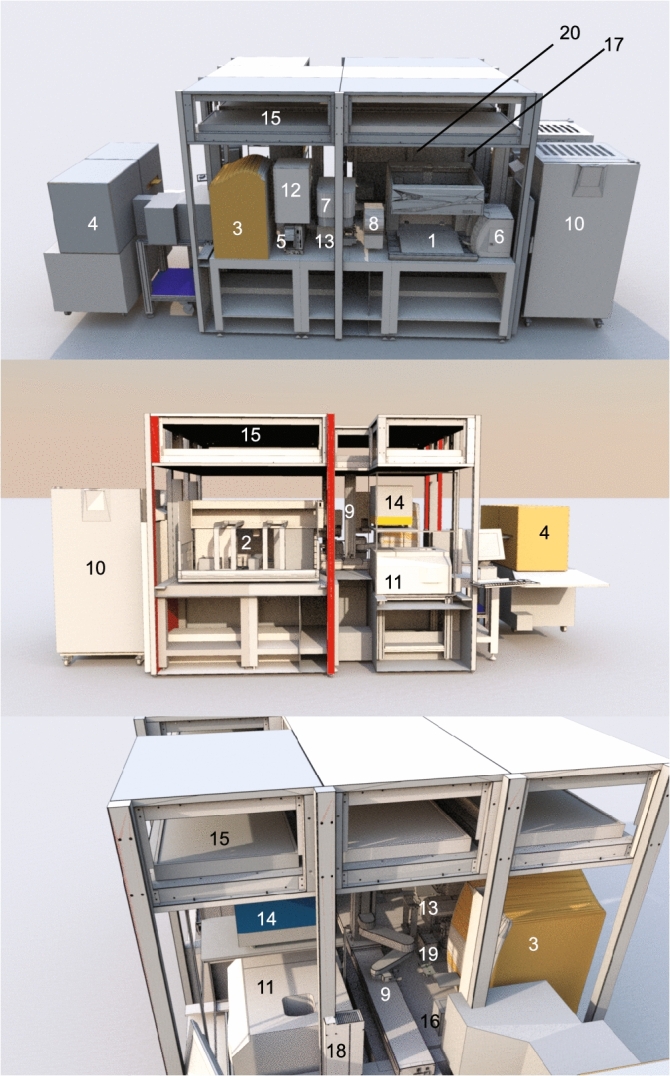
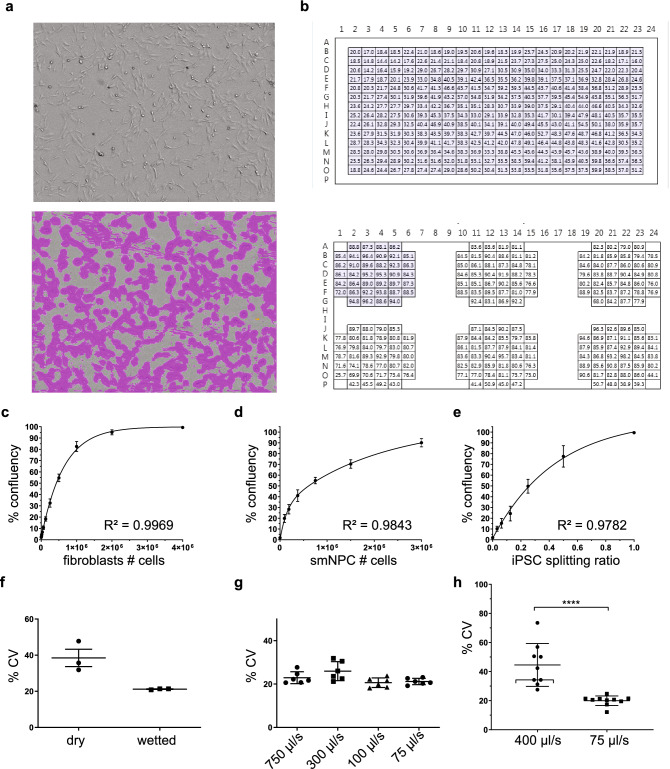
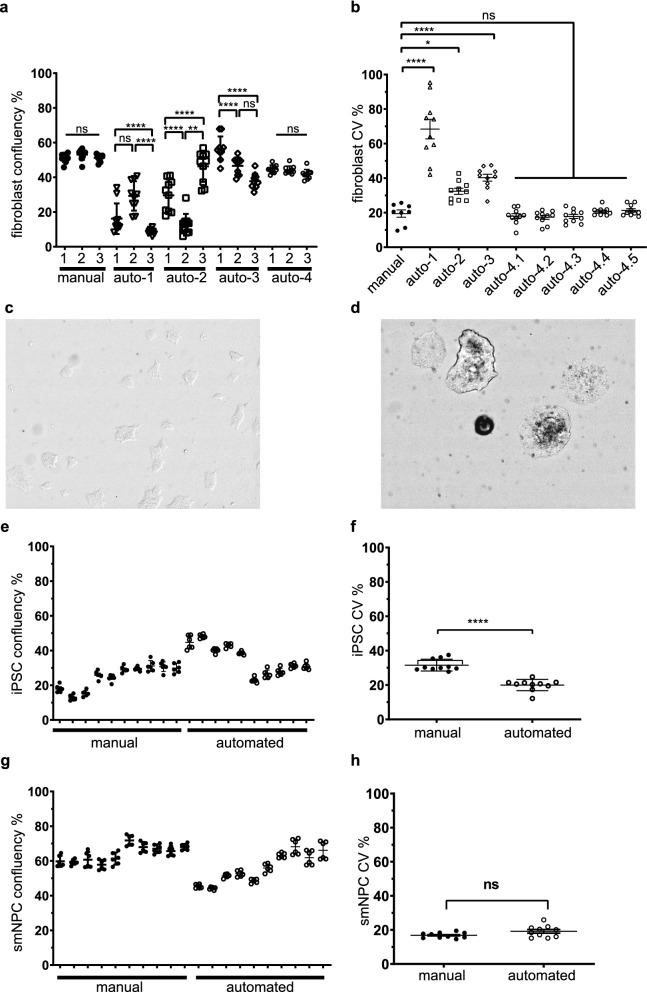
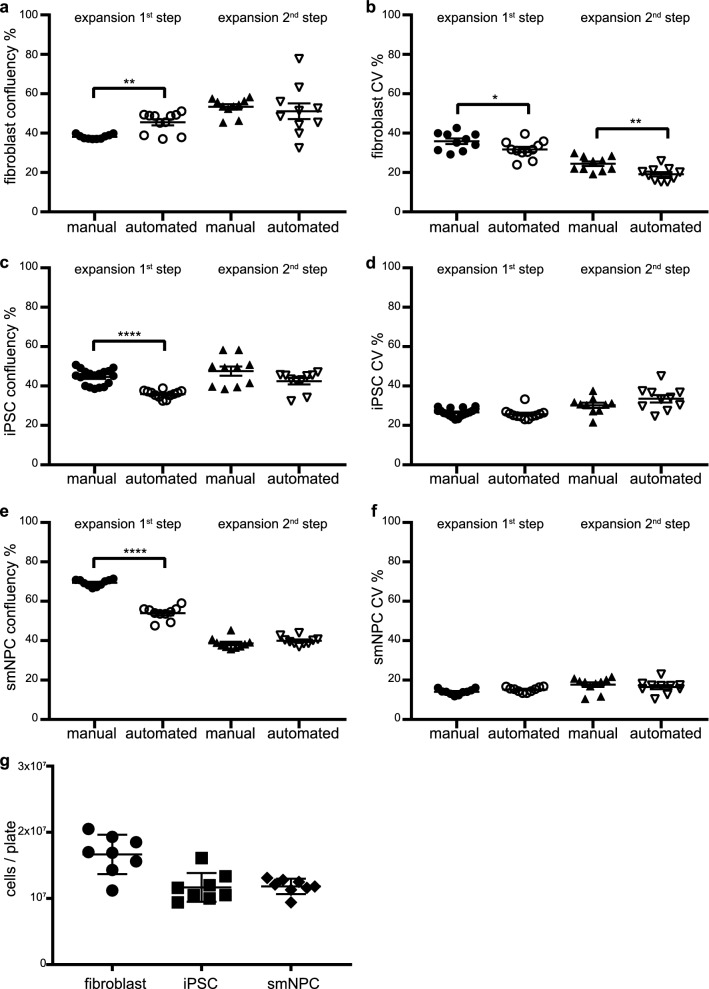
Verification
Claims the paper makes
The claims and statistics of this paper haven’t been checked yet.
Free: it reads the open-access text and checks the first 5 claims that cite a source we can check. Create a free account to check every claim.
Claims other papers make about this one
Each is checked against this paper’s own text: does it say what the citing paper says it does?
The cited source says what the claim attributes to it.
In the citing paper
“Several models of automation of iPSC generation, expansion, and differentiation have been demonstrated in recent years [70,71,72,73,74,75,76].”
From Overcoming the Variability of iPSCs in the Manufacturing of Cell-Based Therapies (2023) · cites this paper as [73]
Self-check
Percentages, sums and reported differences re-computed from the paper’s own numbers.
The self-check needs the paper’s full text.
Citations
Cites
How were new medicines discovered?
Swinney, D. C., & Anthony, J. (2011) · Nature Reviews Drug Discovery · doi:10.1038/nrd3480 · Cited by 1,812 · cited 1×
“(1) Liquid handler Biomek NX Span-8 including the plate shaker Shaking Peltier ALP and a tilting station Amplius (AIG) 3D Tilting ALP, (2) Liquid handler Biomek FXP (96- and 384-pipetting head including active wash-station and a BioShake 3000, (3) Acoustic droplet ejector Labcyte Echo550, (4) High content imager Yokog…”
MethodInduced pluripotent stem cell technology: a decade of progress.
Shi, Y., Inoue, H., Wu, J. C., & Yamanaka, S. (2017) · Nature Reviews Drug Discovery · doi:10.1038/nrd.2016.245 · Cited by 1,525
Chemically defined conditions for human iPSC derivation and culture
Chen, G., Gulbranson, D. R., Hou, Z., Bolin, J. M., Ruotti, V., Probasco, M. D., Smuga-Otto, K., Howden, S. E., Diol, N. R., Propson, N. E., et al. (2011) · Nature Methods · doi:10.1038/nmeth.1593 · Cited by 1,447 · cited 2×
“(1) Liquid handler Biomek NX Span-8 including the plate shaker Shaking Peltier ALP and a tilting station Amplius (AIG) 3D Tilting ALP, (2) Liquid handler Biomek FXP (96- and 384-pipetting head including active wash-station and a BioShake 3000, (3) Acoustic droplet ejector Labcyte Echo550, (4) High content imager Yokog…”
MethodThe discovery of first-in-class drugs: origins and evolution
Eder, J., Sedrani, R., & Wiesmann, C. (2014) · Nature Reviews Drug Discovery · doi:10.1038/nrd4336 · Cited by 514
Shahdadfar, A., Frønsdal, K., Haug, T., Reinholt, F. P., & Brinchmann, J. E. (2005) · STEM CELLS · doi:10.1634/stemcells.2005-0094 · Cited by 501
Reinhardt, P., Glatza, M., Hemmer, K., Tsytsyura, Y., Thiel, C. S., Höing, S., Moritz, S., Parga, J. A., Wagner, L., Bruder, J. M., et al. (2013) · PLoS ONE · doi:10.1371/journal.pone.0059252 · Cited by 442
Self-citationVolpato, V., & Webber, C. (2020) · Disease Models & Mechanisms · doi:10.1242/dmm.042317 · Cited by 379
Gribkoff, V. K., & Kaczmarek, L. K. (2017) · Neuropharmacology · doi:10.1016/j.neuropharm.2016.03.021 · Cited by 371
Modeling Parkinson’s disease in midbrain-like organoids
Smits, L. M., Reinhardt, L., Reinhardt, P., Glatza, M., Monzel, A. S., Stanslowsky, N., Rosato-Siri, M. D., Zanon, A., Antony, P. M., Bellmann, J., et al. (2019) · npj Parkinson's Disease · doi:10.1038/s41531-019-0078-4 · Cited by 356
Self-citationPhan, N., Hong, J. J., Tofig, B., Mapua, M., Elashoff, D., Moatamed, N. A., Huang, J., Memarzadeh, S., Damoiseaux, R., & Soragni, A. (2019) · Communications Biology · doi:10.1038/s42003-019-0305-x · Cited by 269
Cited by
Organoid intelligence (OI): the new frontier in biocomputing and intelligence-in-a-dish
Smirnova, L., Caffo, B. S., Gracias, D. H., Huang, Q., Morales Pantoja, I. E., Tang, B., Zack, D. J., Berlinicke, C. A., Boyd, J. L., Harris, T. D., et al. (2023) · Frontiers in Science · doi:10.3389/fsci.2023.1017235 · Cited by 276
“Existing differentiation protocols for scaling up the cultures, and starting 3D differentiation directly from iPSC (bypassing the intermediate generation of neuroprogenitor cells), are very promising (67, 68).”
BackgroundSelf-citation3D cell cultures toward quantitative high-throughput drug screening
Wang, Y., & Jeon, H. (2022) · Trends in Pharmacological Sciences · doi:10.1016/j.tips.2022.03.014 · Cited by 157
Tumor microenvironment: recent advances in understanding and its role in modulating cancer therapies
Shah, D. D., Chorawala, M. R., Raghani, N. R., Patel, R., Fareed, M., Kashid, V. A., & Prajapati, B. G. (2025) · Medical Oncology · doi:10.1007/s12032-025-02641-4 · Cited by 102
“These platforms enable the testing of large libraries of drugs or combinations of therapies, accelerating the discovery of new treatment options and facilitating precision medicine approaches [279].”
Patient-Derived Organoids as a Model for Cancer Drug Discovery
Rae, C., Amato, F., & Braconi, C. (2021) · International Journal of Molecular Sciences · doi:10.3390/ijms22073483 · Cited by 62
“An automated platform for the high-throughput screening of patient-derived 3D organoids has recently been described; however, this system was not able to use organoids embedded in the extracellular matrix [82].”
MethodGenome Editing in iPSC-Based Neural Systems: From Disease Models to Future Therapeutic Strategies
McTague, A., Rossignoli, G., Ferrini, A., Barral, S., & Kurian, M. A. (2021) · Frontiers in Genome Editing · doi:10.3389/fgeed.2021.630600 · Cited by 67
Engineering considerations of iPSC-based personalized medicine
Park, S., Gwon, Y., Khan, S. A., Jang, K., & Kim, J. (2023) · Biomaterials Research · doi:10.1186/s40824-023-00382-x · Cited by 61
Cui, X., Li, X., Zheng, H., Su, Y., Zhang, S., Li, M., Hao, X., Zhang, S., Hu, Z., Xia, Z., et al. (2024) · npj Parkinson's Disease · doi:10.1038/s41531-024-00799-8 · Cited by 41
“Recently, researchers describe an integrated, complex automated platform for HTS in translational research setting 168 .”
BackgroundOvercoming the Variability of iPSCs in the Manufacturing of Cell-Based Therapies
Nath, S. C., Menendez, L., & Friedrich Ben-Nun, I. (2023) · International Journal of Molecular Sciences · doi:10.3390/ijms242316929 · Cited by 35
Choi, Y., Na, D., Yoon, G., Kim, J., Min, S., Yi, H., Cho, S., Cho, J. H., Lee, C., & Jang, J. (2025) · Advanced Science · doi:10.1002/advs.202411769 · Cited by 36
Cancer organoid applications to investigate chemotherapy resistance
Harada, K., & Sakamoto, N. (2022) · Frontiers in Molecular Biosciences · doi:10.3389/fmolb.2022.1067207 · Cited by 27
“This platform can be applied to culture systems, including organoids (Boussaad et al., 2021).”
BackgroundZhou, Y., Yu, F., Guo, M., Tang, Y., & Xu, Q. (2025) · Frontiers in Bioengineering and Biotechnology · doi:10.3389/fbioe.2025.1498141 · Cited by 28
Iteration of Tumor Organoids in Drug Development: Simplification and Integration
Zhao, R., Feng, Q., Xia, Y., Liao, L., & Xie, S. (2025) · Pharmaceuticals · doi:10.3390/ph18101540 · Cited by 21
“However, challenges persist, including the replication of human dexterity in robotics [70], and the maintenance of stromal-immune interactions in long-term cultures [66].”
Yeap, Y. J., Tng, T. J. W., Lee, M. J., Goh, M., & Lim, K. (2023) · International Journal of Molecular Sciences · doi:10.3390/ijms24032523 · Cited by 23
Gerardo‐Nava, J., Jansen, J., Günther, D., Klasen, L., Thiebes, A. L., Nießing, B., Bergerbit, C., Meyer, A. A., Linkhorst, J., Barth, M., et al. (2023) · Advanced Healthcare Materials · doi:10.1002/adhm.202301030 · Cited by 20
Decoene, I., Nasello, G., da Costa, R. M., Hall, G. N., Pastore, A., Hoven, I. V., Viseu, S. R., Verfaillie, C. M., Geris, L., Luyten, F. P., et al. (2024) · Stem Cells Translational Medicine · doi:10.1093/stcltm/szad091 · Cited by 19
“For more complex 3D tissues, robotic culture either generates highly variable organoids 45 or a low quantity of controllable-size organoids.”
BackgroundCao, D., Ge, J.-Y., Wang, Y., Oda, T., & Zheng, Y. (2021) · World Journal of Gastroenterology · doi:10.3748/wjg.v27.i29.4784 · Cited by 19
Development of a novel high-throughput culture system for hypoxic 3D hydrogel cell culture
Egger, D., Baier, L., Moldaschl, J., Taschner, M., Lorber, V., & Kasper, C. (2024) · Scientific Reports · doi:10.1038/s41598-024-60822-z · Cited by 19
“Examples of platforms for the culture of spheroids or organoids have been described 16–18 .”
BackgroundNon-small cell lung cancer organoids: Advances and challenges in current applications
Wu, M., Liao, Y., & Tang, L. (2024) · Chinese Journal of Cancer Research · doi:10.21147/j.issn.1000-9604.2024.05.01 · Cited by 18
McComish, S. F., Copas, A. N. M., & Caldwell, M. A. (2022) · Frontiers in Neuroscience · doi:10.3389/fnins.2022.851058 · Cited by 18
Gene-corrected p.A30P SNCA patient-derived isogenic neurons rescue neuronal branching and function
Barbuti, P. A., Ohnmacht, J., Santos, B. F. R., Antony, P. M. A., Massart, F., Cruciani, G., Dording, C., Pavelka, L., Casadei, N., Kwon, Y., et al. (2021) · Scientific Reports · doi:10.1038/s41598-021-01505-x · Cited by 16
Self-citationJung, O., Song, M. J., & Ferrer, M. (2021) · SLAS DISCOVERY · doi:10.1177/24725552211030903 · Cited by 17
Benchoua, A., Lasbareilles, M., & Tournois, J. (2021) · Cells · doi:10.3390/cells10123290 · Cited by 15
“This technology can be beneficial for studying disorders in which developmental processes or multiple cell types within an organ are affected and for evaluating the potential of small molecules [98,202].”
BackgroundOhta, A., Kawai, S., Pretemer, Y., Nishio, M., Nagata, S., Fuse, H., Yamagishi, Y., & Toguchida, J. (2023) · SLAS TECHNOLOGY · doi:10.1016/j.slast.2023.08.002 · Cited by 13
Comparison of two protocols for the generation of iPSC-derived human astrocytes
Mulica, P., Venegas, C., Landoulsi, Z., Badanjak, K., Delcambre, S., Tziortziou, M., Hezzaz, S., Ghelfi, J., Smajić, S., Schwamborn, J. C., et al. (2023) · Biological Procedures Online · doi:10.1186/s12575-023-00218-x · Cited by 12
“This experimental challenge will likely hamper a potential automation of LSF cultures, whereas SSC astrocytes might be easily obtained using automated platforms [64].”
MethodSelf-citationAn integrated platform for liquid handling and cell imaging in life science applications
Avci, M. B., Kocer, F., Kurul, F., & Çetin, A. E. (2025) · Nature Communications · doi:10.1038/s41467-025-66269-8 · Cited by 10
“Moreover, automated imaging may accelerate work fl ows by enabling high-throughput monitoring of multiple samples, reducing the time needed for manual microscopy and increasing data reliability 20,21 .”
A modular platform for automated organoid culture and longitudinal imaging
Torres, S., Hernandez, S., Seiler, S. T., Schweiger, H., Vera-Choqqueccota, S., Kaurala, G. A., Sharf, T., Haussler, D. H., Mostajo-Radji, M. A., & Teodorescu, M. (2026) · Scientific Reports · doi:10.1038/s41598-026-40231-0 · Cited by 8
Nanofabricating neural networks: Strategies, advances, and challenges
Lüttge, R. (2022) · Journal of Vacuum Science & Technology B Nanotechnology and Microelectronics Materials Processing Measurement and Phenomena · doi:10.1116/6.0001649 · Cited by 8
van Karnebeek, C., Müller, A. R., Benkemoun, L., Boussaad, I., Cornel, M. C., IntHout, J., de Kort, M., Oliveira‐Martins, S., Prigione, A., Rigter, T., et al. (2025) · Molecular Genetics and Metabolism · doi:10.1016/j.ymgme.2025.109073 · Cited by 7
Self-citationHuman organoids: Fit for drug discovery?
Wittich, A., Krieg, K., Gribbon, P. M., Metzger, J. J., Prigione, A., & Pleß, O. (2026) · Stem Cell Reports · doi:10.1016/j.stemcr.2026.102898 · Cited by 7
Wu, W., Hsu, C.-F., Chen, M., Chen, S., Hung, Y., & Chiang, N. (2024) · Anticancer Research · doi:10.21873/anticanres.17168 · Cited by 5
“Boussaad et al. evaluated an integrated and comprehensive platform that automates all steps required for a three-dimensional midbrain organoid culture (28).”
Induced pluripotent stem cells from discovery to translation
Lee, J., Herron, T. J., Studer, L., Mummery, C. L., & Wu, J. C. (2026) · Nature Medicine · doi:10.1038/s41591-026-04584-3 · Cited by 3
“Automation then makes these standardized designs practical at scale by enabling consistent cell handling, differentiation and phenotyping across large experimental matrices 196–198 .”
High-Throughput Chemotherapeutic Drug Screening System for Gastric Cancer (Cure-GA)
Lee, J., Kim, I. H., Seol, D., Lee, S. J., Yoo, M., Lee, T., Yoon, S. H., Lee, E., Hwang, D., Kang, S. H., et al. (2025) · Annals of Surgical Oncology · doi:10.1245/s10434-024-16850-0 · Cited by 2
“14 Additionally, as an in vitro platform, 3D cell cultures can be integrated with imaging, 15 automation, 16 and computational tools, 17 making them a promising next-generation method for effective and precise drug discovery and development.”
Li, W., Liu, J., Li, W., Sun, L., Zhang, H., Gao, L., & Gao, C. (2025) · Acta Materia Medica · doi:10.15212/amm-2024-0077 · Cited by 2
“An automated platform combination with a liquid handler, acoustic droplet ejector, robotic arm, and cell counter devices was designed to culture midbrain-specific organoids for high-throughput drug screening [103].”
Trofimov, M. A., Bulatov, I. P., Lavrinenko, V., Popov, V. E., Petrova, V., Bukatin, A., & Tyazhelnikov, S. F. (2026) · Biomedicines · doi:10.3390/biomedicines14010108 · Cited by 1
“Such an approach allows not only to determine efficacy but also to suggest the mechanism of action of candidate cells [29].”
Automated stem cell-derived organoid platforms for disease modeling
Mou, X., Dale, N., Ramnarine, K., & Cipriani, F. (2026) · Trends in biotechnology · doi:10.1016/j.tibtech.2026.04.013 · Cited by 1
Yang, F., Wang, H., & Wang, Y. (2026) · Biochimica et Biophysica Acta (BBA) - Reviews on Cancer · doi:10.1016/j.bbcan.2026.189652 · Cited by 1
An open-source FACS automation system for high-throughput cell biology
Wiener, D. M., Huynh, E., Jeyakumar, I., Bax, S., Sama, S. S., Cabrera, J. P., Todorova, V., Vangipuram, M., Vaid, S., Otsuka, F., et al. (2024) · PLoS ONE · doi:10.1371/journal.pone.0299402 · Cited by 1
Evolution of Organoids in Oncology
Basanthakumar, A. T., Darlybai, J. C., & Ganesh, J. (2022) · Biomedical engineering · doi:10.5772/intechopen.104251
A Survey of AI Utilisation in High-Throughput Screening Systems Using Stem Cell Models
Cao, L., Schwach, V., & Verbeek, F. J. (2024) · Lecture notes in networks and systems · doi:10.1007/978-3-031-65522-7_51
Additional file 1 of Comparison of two protocols for the generation of iPSC-derived human astrocytes
Mulica, P., Venegas, C., Landoulsi, Z., Badanjak, K., Delcambre, S., Tziortziou, M., Hezzaz, S., Ghelfi, J., Smajić, S., Schwamborn, J. C., et al. (2023) · Figshare · doi:10.6084/m9.figshare.24172068
Self-citationDebasrita, B. (2026) · Biochemistry · doi:10.5772/intechopen.1014630 · Cited by 1
Research Automation in Healthcare: Scoping Review with ☸️SAIMSARA
SAIMSARA (2026) · SAIMSARA Journal · doi:10.62487/saimsaraed91d2be
Organoids as brain tumour models: bridging the translational gap
Willott, T., & Marino, S. (2026) · Disease Models & Mechanisms · doi:10.1242/dmm.052893
“Recent studies demonstrating the use of robotics and automated platforms for organoid handling (Boussaad et al., 2021), imaging and phenotypic analysis (Bozal et al., 2024) have shown that these methods can substantially increase throughput.”
Metadata
- Authors
- Boussaad, I., Cruciani, G., Bolognin, S., Antony, P., Dording, C. M., Kwon, Y.-J., Heutink, P., Fava, E., Schwamborn, J. C., & Krüger, R.
- Affiliations
- University of Luxembourg (LU)
- German Center for Neurodegenerative Diseases (DE)
- Centre Hospitalier de Luxembourg (LU)
- Corresponding author
- Krüger, Rejko
- ORCID
- Venue
- Scientific Reports
- Published
- 2021-01-14
- Volume
- 11
- Issue
- 1
- Pages
- 1439-1439
- ISSN
- 2045-2322 (ISSN-L)
- PMC
- PMC7809482
- OpenAlex
- W3120413946
- Cited by
- 42
- References
- 45
- Citations by year
- 2026: 9 · 2025: 8 · 2024: 5 · 2023: 9 · 2022: 5 · 2021: 6
- FWCI
- 1.96
- Type
- journal article
- Language
- en
- Open access
- gold
- doi.org
- Licence
- cc-by
- creativecommons.org/licenses/by/4.0 (tdm)
- creativecommons.org/licenses/by/4.0 (vor)
- Locations
- Scientific Reports (publishedVersion, cc-by)
- Europe PMC (PubMed Central) (publishedVersion, other-oa)
- PubMed Central (publishedVersion, cc-by)
- PubMed (publishedVersion)
- DOAJ (DOAJ: Directory of Open Access Journals) (submittedVersion, cc-by-sa)
- Open Repository and Bibliography (University of Luxembourg) (submittedVersion, cc-by-nc-sa)
- DZNE Pub (submittedVersion, cc-by)
- Funders
- Fonds National de la Recherche Luxembourg (FNR/P13/6682797, INTER/JPND/15/11092422)
- EU Joint Programme – Neurodegenerative Disease Research (INTER/JPND/15/11092422)
- Topics
- Life Sciences › Biochemistry, Genetics and Molecular Biology › Molecular Biology › Pluripotent Stem Cells Research
- Physical Sciences › Engineering › Biomedical Engineering › 3D Printing in Biomedical Research
- Life Sciences › Biochemistry, Genetics and Molecular Biology › Biophysics › Cell Image Analysis Techniques
- Keywords
- high-throughput drug screening, automated cell culture, induced pluripotent stem cells, neural progenitor cells, human fibroblasts, neuronal differentiation, midbrain organoids, 3D organoids, precision medicine, translational research
- MeSH terms
- Drug Evaluation, Preclinical, Humans, Models, Biological, Organoids, Cell Culture Techniques, Automation, Laboratory, Precision Medicine
About these checks
Registry, retraction, Cites and statistics results are computed, not judged, with one exception: a printed reference that no index lists is read once by a model before it counts as a citation error. Claims are extracted by a model and kept only when their quote appears verbatim in the text; each cited source is then checked, with a model’s help, for whether it says what the claim relies on. Those verdicts can be wrong — read the claim’s quote and the cited source before relying on one.
Statistics and arithmetic are recomputed, not judged.
Confidence bands are shown only for fields calibrated on our annotated test set. None is calibrated yet, so no band is shown.
What counts as a claim ›How we measure confidence ›How we check this ›
Are you an author, or do you see a problem with this page? Request a review
Data sources
Bibliographic data: Semantic Scholar, OpenAlex, Crossref.
Contains information from the Semantic Scholar Academic Graph Datasets, made available under the ODC Attribution License (ODC-BY 1.0).
Semantic Scholar’s data is described in: Kinney, R., et al. (2023). The Semantic Scholar Open Data Platform. arXiv:2301.10140.
