

Gibberellic acid and nitrogen efficiently protect early seedlings growth stage from salt stress damage in Sorghum
Open accessThe DOI matches its Crossref record; 55 of the 55 references it cites were found in a registry or an index.
Abstract
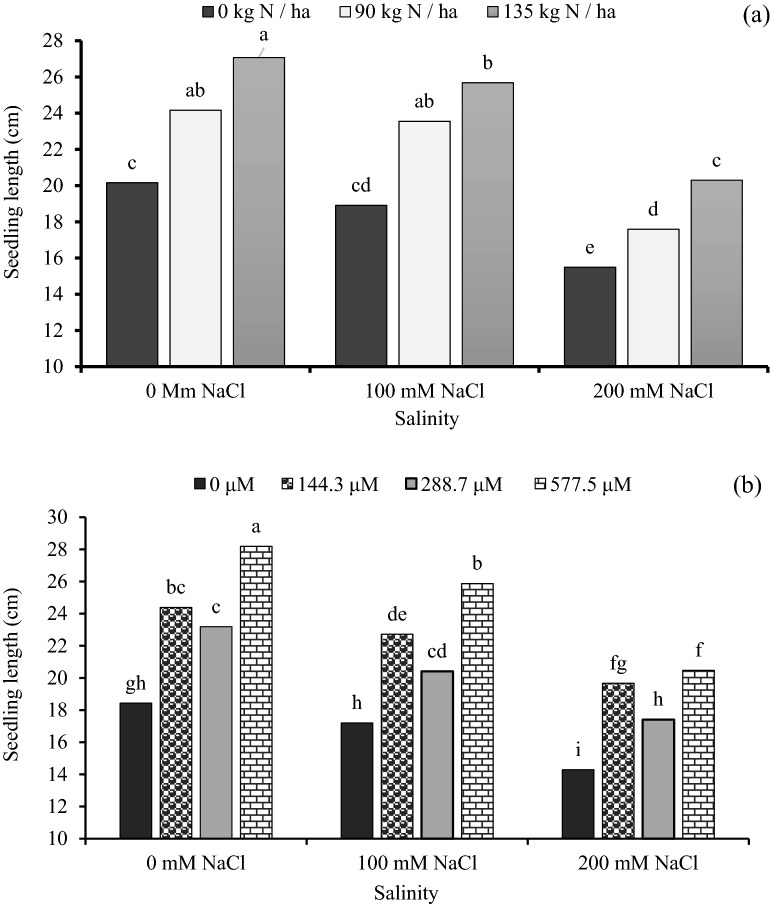
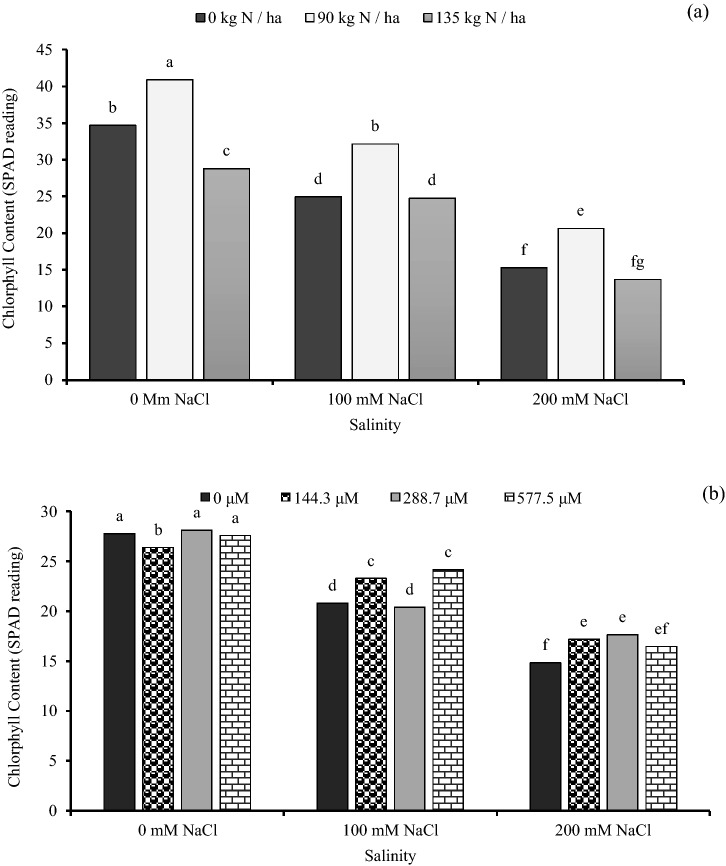
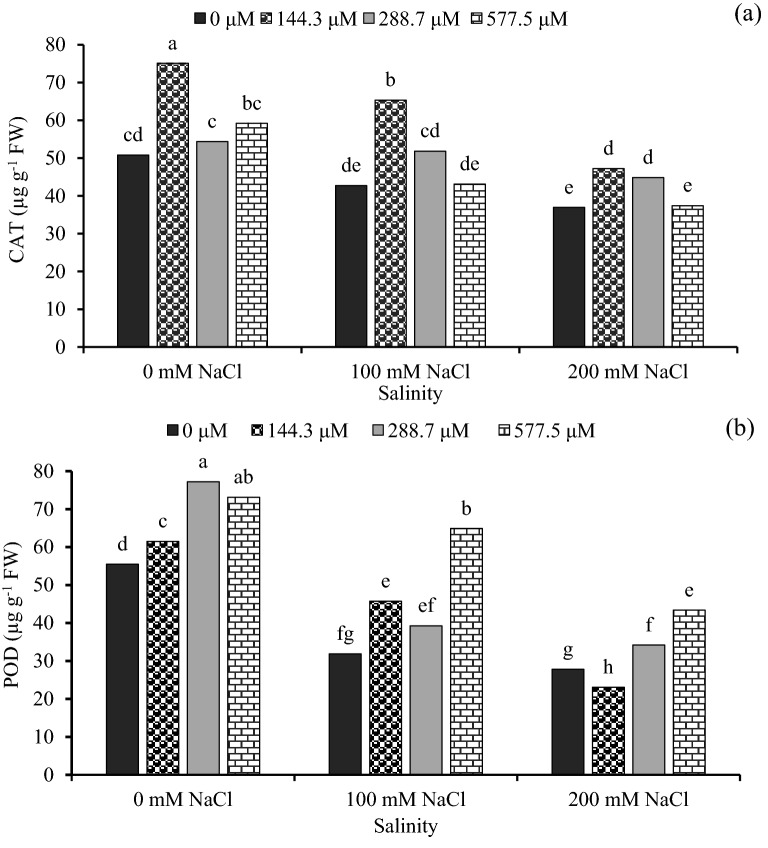
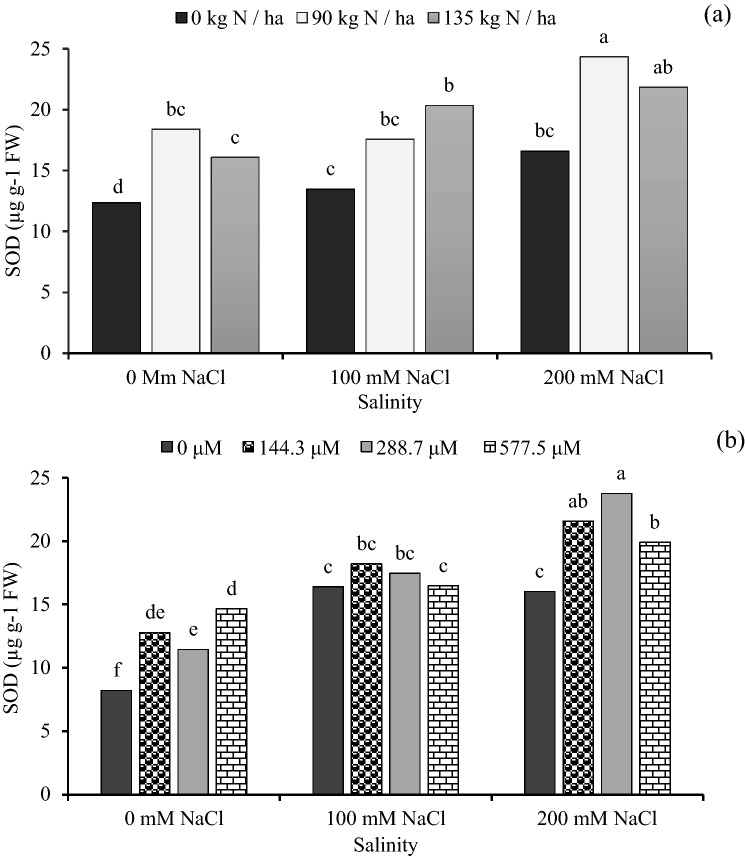
Salinity one of environmental factor that limits the growth and productivity of crops. This research was done to investigate whether GA 3(0, 144.3, 288.7 and 577.5 μM) and nitrogen fertilizer (0, 90 and 135 kg N ha−1) could mitigate the negative impacts of NaCl (0, 100, and 200 mM NaCl) on emergence percentage, seedling growth and some biochemical parameters. The results showed that high salinity level decreased emergence percentage, seedling growth, relative water content, chlorophyll content (SPAD reading), catalase (CAT) and peroxide (POD), but increased soluble protein content, superoxide dismutase (SOD) activity and malondialdehyde (MDA) content. The SOD activity was decreased by nitrogen. However, the other measurements were increased by nitrogen. The interactive impact between nitrogen and salinity was significant in most parameters except EP, CAT and POD. The seedling length, dry weight, fresh weight, emergence percentage, POD, soluble protein and chlorophyll content were significantly affected by the interaction between GA 3 and salinity. The GA 3 and nitrogen application was successful mitigating the adverse effects of salinity. The level of 144.3 and 288.7 μm GA 3 and the rate of 90 and 135 kg N ha−1 were most effective on many of the attributes studied. Our study suggested that GA 3 and nitrogen could efficiently protect early seedlings growth from salinity damage.
Overview
The claims and statistics of this paper haven’t been checked yet.
Free: it reads the open-access text and checks the first 5 claims that cite a source we can check. Create a free account to check every claim.
Integrity signals
Registry
Cites
Statistics
Figures
Verification
Claims the paper makes
The claims and statistics of this paper haven’t been checked yet.
Free: it reads the open-access text and checks the first 5 claims that cite a source we can check. Create a free account to check every claim.
Self-check
Percentages, sums and reported differences re-computed from the paper’s own numbers.
The self-check needs the paper’s full text.
Citations
Cites
Bradford, M. M. (1976) · Analytical Biochemistry · doi:10.1016/0003-2697(76)90527-3 · Cited by 255,302
Dhamu Kp Ramamoorthy, K. (2016) · Cited by 2,962
Machado, R., & Serralheiro, R. (2017) · Horticulturae · doi:10.3390/horticulturae3020030 · Cited by 1,431
Salt stress in maize: effects, resistance mechanisms, and management. A review
Farooq, M., Hussain, M., Wakeel, A., & Siddique, K. H. M. (2015) · Agronomy for Sustainable Development · doi:10.1007/s13593-015-0287-0 · Cited by 776
The Global Pattern of Urbanization and Economic Growth: Evidence from the Last Three Decades
Chen, M., Zhang, H., Liu, W., & Zhang, W. (2014) · PLoS ONE · doi:10.1371/journal.pone.0103799 · Cited by 542
Plant Response to Salt Stress and Role of Exogenous Protectants to Mitigate Salt-Induced Damages
Hasanuzzaman, M., Nahar, K., & Fujita, M. (2013) · Ecophysiology and Responses of Plants under Salt Stress · doi:10.1007/978-1-4614-4747-4_2 · Cited by 456
Exogenous jasmonic acid can enhance tolerance of wheat seedlings to salt stress
Qiu, Z., Guo, J., Zhu, A., Zhang, L., & Zhang, M. (2014) · Ecotoxicology and Environmental Safety · doi:10.1016/j.ecoenv.2014.03.014 · Cited by 432
Tuna, A. L., Kaya, C., Dikilitas, M., & Higgs, D. (2008) · Environmental and Experimental Botany · doi:10.1016/j.envexpbot.2007.06.007 · Cited by 388
Morris, T. F., Murrell, T. S., Beegle, D. B., Camberato, J. J., Ferguson, R. B., Grove, J., Ketterings, Q., Kyveryga, P. M., Laboski, C. A. M., McGrath, J. M., et al. (2018) · Agronomy Journal · doi:10.2134/agronj2017.02.0112 · Cited by 372
Huang, Z. A., Jiang, D. A., Yang, Y., Sun, J. W., & Jin, S. H. (2004) · Photosynthetica · doi:10.1023/b:phot.0000046153.08935.4c · Cited by 296
Research works printed but not linked: 4
- Ibrahim MEH Nitrogen fertilizer alleviated negative impacts of nacl on some physiological parameters of wheat Pak. J. Bot. 2018 50 2097 2104
- Zrig A Mohamed H Ben Tounekti T Ahmed SO Khemira H Differential responses of antioxidant enzymes in salt-stressed almond tree grown under sun and shade conditions J. Plant Sci. Res 2015 2 1 10
- Xu LL Ye MB A measurement of peroxidase activity using continuous recording method J. Nanjing Agric. Univ. 1989 12 82 83
- Freed R MSTAT-C: A microcomputer program for the design, management, and analysis of agronomic research experiments 1991 Michigan State University
Cited by
Raza, A., Salehi, H., Rahman, M. A., Zahid, Z., Madadkar Haghjou, M., Najafi-Kakavand, S., Charagh, S., Osman, H. S., Albaqami, M., Zhuang, Y., et al. (2022) · Frontiers in Plant Science · doi:10.3389/fpls.2022.961872 · Cited by 315
Gao, G., Yan, L., Tong, K., Yu, H., Lu, M., Wang, L., & Niu, Y. (2023) · The Science of The Total Environment · doi:10.1016/j.scitotenv.2023.169618 · Cited by 139
Exogenous Melatonin Improves Seed Germination of Wheat (Triticum aestivum L.) under Salt Stress
Wang, J., Lv, P., Yan, D., Zhang, Z., Xu, X., Wang, T., Wang, Y., Peng, Z., Yu, C., Gao, Y., et al. (2022) · International Journal of Molecular Sciences · doi:10.3390/ijms23158436 · Cited by 106
“Application of exogenous GA can protect plants from salt stress and improve the salt tolerance of plants [30,31].”
BackgroundLiu, J., Wu, Y., Dong, G., Zhu, G., & Zhou, G. (2023) · International Journal of Molecular Sciences · doi:10.3390/ijms24076777 · Cited by 85
“The mechanism behind this is that GA3, at suitable levels, can promote the water uptake of sorghum seeds, increase the synthesis and activities of a variety of enzymes associated with germination, and a GAs, however, inhibit sorghum germination, emergence, and seedling growth [23,24].”
BackgroundSelf-citationSorghum under saline conditions: responses, tolerance mechanisms, and management strategies
Mansour, M. M. F., Emam, M. M., Salama, K. H. A., & Morsy, A. A. (2021) · Planta · doi:10.1007/s00425-021-03671-8 · Cited by 78
Sustaining nitrogen dynamics: A critical aspect for improving salt tolerance in plants
Nazir, F., Mahajan, M., Khatoon, S., Albaqami, M., Ashfaque, F., Chhillar, H., Chopra, P., & Khan, M. I. R. (2023) · Frontiers in Plant Science · doi:10.3389/fpls.2023.1087946 · Cited by 68
Ahmad, I., Zhu, G., Zhou, G., Song, X., Ibrahim, M. E. H., Salih, E. G. I., Hussain, S., & Younas, M. U. (2022) · International Journal of Molecular Sciences · doi:10.3390/ijms23137339 · Cited by 75
Self-citationIntegrated approaches for increasing plant yield under salt stress
Ahmad, I., Zhu, G., Zhou, G., Younas, M. U., Suliman, M. S. E., Liu, J., Zhu, Y. M., & Salih, E. G. I. (2023) · Frontiers in Plant Science · doi:10.3389/fpls.2023.1215343 · Cited by 48
“Due to the imbalances of nutrient availability in soil, salt stress thus causes ion toxicity in different plants (Ali et al., 2021).”
BackgroundSelf-citationAmombo, E., Ashilenje, D. S., Hirich, A., Kouisni, L., Oukarroum, A., Ghoulam, C., Gharous, M. E., & Nilahyane, A. (2022) · Planta · doi:10.1007/s00425-022-03847-w · Cited by 53
Zhou, B., Jia, R., Chen, X., Yang, L., Duan, M., Fan, X., Liang, C., Zhou, D., Li, W., & Liu, C. (2023) · Agricultural Water Management · doi:10.1016/j.agwat.2023.108221 · Cited by 45
Didi, D. A., Su, S., Sam, F. E., Tiika, R. J., & Zhang, X. (2022) · Plants · doi:10.3390/plants11192559 · Cited by 45
“[100], who reported the increase in SOD and POD by GA3 application in sorghum seedlings.”
BackgroundAli, A. Y. A., Ibrahim, M. E. H., Zhou, G., Zhu, G., Elsiddig, A. M. I., Suliman, M. S. E., Elradi, S. B. M., & Salih, E. G. I. (2021) · South African Journal of Botany · doi:10.1016/j.sajb.2021.10.027 · Cited by 37
Self-citationDehnavi, A. R., Zahedi, M., Ludwiczak, A., & Piernik, A. (2022) · Plants · doi:10.3390/plants11030368 · Cited by 42
“In line with our results are other findings that salt stress reduces the chlorophyll content and inhibits chlorophyll biosynthesis in sorghum [55,56].”
ResultWang, L., Zheng, J., Zhou, G., Li, J., Chen, Q., Lin, G., Li, Y., & Zuo, Q. (2023) · Frontiers in Plant Science · doi:10.3389/fpls.2023.1196319 · Cited by 46
“Similar results were reported that N supply could increase the accumulation of osmotic substances to enhance the ability of water absorption and salt tolerance (Iqbal et al., 2015; Ali et al., 2021).”
ResultSelf-citationIqbal, H., Yaning, C., Waqas, M. A., Raza, S. T., Shareef, M., & Ahmad, Z. (2023) · Physiologia Plantarum · doi:10.1111/ppl.14057 · Cited by 39
Extrinsic role of gibberellin mitigating salinity effect in different rice genotypes
Farooq, M., Khan, M. A., Zhao, D.-D., Asif, S., Kim, E., Jang, Y., Park, J., Lee, I., & Kim, K. (2022) · Frontiers in Plant Science · doi:10.3389/fpls.2022.1041181 · Cited by 33
“Furthermore, it has been reported that an interaction effect of GA3 and salt, whereby high salt stress decreased germination percentage and seedling growth in sorghum by lowering GA3 levels (Ali et al., 2021).”
BackgroundSharma, M. K. (2024) · Current Agriculture Research Journal · doi:10.12944/carj.12.1.07 · Cited by 32
Role of growth elicitors and microbes in stress management and sustainable production of Sorghum
Lone, R., Hassan, N., Bashir, B., Rohela, G. K., & Malla, N. A. (2023) · Plant Stress · doi:10.1016/j.stress.2023.100179 · Cited by 27
Ramzan, M., Shah, A. A., Ahmed, M. Z., Bukhari, M. A., Ali, L., Casini, R., & Elansary, H. O. (2023) · South African Journal of Botany · doi:10.1016/j.sajb.2023.04.008 · Cited by 27
Prohexadione calcium enhances rice growth and tillering under NaCl stress
Zhang, R., Zheng, D., Feng, N., Qiu, Q., Zhou, H., Liu, M., Li, Y., Meng, F., Huang, X., Huang, A., et al. (2023) · PeerJ · doi:10.7717/peerj.14804 · Cited by 34
Amoruso, F., Signore, A., Gómez, P. A., Martínez‐Ballesta, M. D. C., Giménez, A., Franco, J. A., Fernández, J. A., & Egea‐Gilabert, C. (2022) · Horticulturae · doi:10.3390/horticulturae8020127 · Cited by 23
“This aspect would be crucial since soil salinity is currently the most important environmental stress limiting crop production in arid and semi-arid areas [20], and, in the near future this trend is expected to worsen [21].”
BackgroundGürsoy, M. (2024) · Journal of soil science and plant nutrition · doi:10.1007/s42729-024-01759-0 · Cited by 22
“Plants are affected by salt stress throughout their lives, but the first seedling stage is much more sensitive (Ali et al. 2021).”
Synergistic effects of phytohormones and membrane transporters in plant salt stress mitigation
Nidhi, N., Iqbal, N., & Khan, N. A. (2025) · Plant Physiology and Biochemistry · doi:10.1016/j.plaphy.2025.109685 · Cited by 26
Effect of exogenous ascorbic acid on two sorghum varieties under different types of salt stress
Elsiddig, A. M. I., Zhou, G., Nimir, N. E. A., & Ali, A. Y. A. (2022) · Chilean journal of agricultural research · doi:10.4067/s0718-58392022000100010 · Cited by 21
“The different results between these two studies probably lies in the difference in crop species (Ali et al., 2021).”
BackgroundResultInfluentialSelf-citationIntegrating ROS and plant hormone signaling in response to abiotic stress
Bali, A. S. (2025) · Discover Plants. · doi:10.1007/s44372-025-00440-9 · Cited by 23
Ali, A. Y. A., Ibrahim, M. E. H., Zhou, G., Elsiddig, A. M. I., Xiurong, 焦. J., Guanglong, Z., meng, T. Y., Ahmed, I., & Gabralla, E. (2022) · PeerJ · doi:10.7717/peerj.13793 · Cited by 21
“Ascorbate peroxidase activity Under salt stress, the APX plays an essential role in protecting plants by reducing H2O2 (Anjum et al., 2011). Our study showed that increasing salinity level reduced APX activity. Similar result was reported by Qiu et al. (2014), Ali et al.”
BackgroundResultSelf-citationKiremit, M. S., ÖZTÜRK, E., Arslan, H., Subrata, B. A. G., Akay, H., & Bakirova, A. (2024) · Plant Direct · doi:10.1002/pld3.574 · Cited by 18
“…irregular precipitation, high evapotranspiration, irrigation with high-saline water, irrational fertilizer use, ineffective drainage, and poor irrigation management, especially in regions affected by water scarcity (Ali et al., 2021; Corwin & Scudiero, 2019; Kiremit & Arslan, 2016; Singh, 2022).”
BackgroundThe critical role of nitrogen in plants facing the salinity stress: Review and future prospective
Aslam, M. T., Khan, İ., Chattha, M. U., Maqbool, R., Haq, M. Z. U., LIHONG, W., Usman, S., Rasheed, A., Hassan, M., Hashem, M., et al. (2023) · Notulae Botanicae Horti Agrobotanici Cluj-Napoca · doi:10.15835/nbha51313347 · Cited by 16
Janah, I., Ben-Laouane, R., Elhasnaoui, A., Anli, M., & Meddich, A. (2024) · International Journal of Plant Biology · doi:10.3390/ijpb15020038 · Cited by 16
“Likewise, in sorghum plants, Ali et al. [46] found that the application of GA3 in combination with a salt stress treatment resulted in higher values of chlorophyll content than those observed in the case of salt stress alone.”
BackgroundDinler, B. S., Çetinkaya, H., & Seçgin, Z. (2023) · Physiology and Molecular Biology of Plants · doi:10.1007/s12298-022-01269-2 · Cited by 14
Alam, P., Balawi, T. A., Qadir, S. U., & Ahmad, P. (2023) · Plants · doi:10.3390/plants12061210 · Cited by 14
“The decrease in chlorophyll content under NaCl may be because of the repressive effects of several salt ions on the biogenesis of diverse molecules of chlorophyll [3,55].”
BackgroundResultInfluentialXu, J., Cui, J., He, Q., Liu, Y., Lu, X., Jin, Q., Xiong, J., Yu, W., & Li, C. (2024) · Plant Physiology and Biochemistry · doi:10.1016/j.plaphy.2024.109220 · Cited by 14
Murad, M. A., & Muneer, S. (2023) · Agriculture · doi:10.3390/agriculture13081493 · Cited by 16
Tajdari, H. R., Soleymani, A., Montajabi, N., Darbaghshahi, M. R. N., & Javanmard, H. R. (2024) · Applied Water Science · doi:10.1007/s13201-024-02203-5 · Cited by 13
“Chauhan et al. (2019), Al-Harthi et al. (2021), Ali et al. (2021), and Attia et al. (2022) certified the alleviating effect of GA 3 on plant tolerance to salt stress.”
Elsiddig, A. M. I., Zhou, G., Zhu, G., Nimir, N. E. A., Suliman, M. S. E., Ibrahim, M. E. H., & Ali, A. Y. A. (2022) · Chilean journal of agricultural research · doi:10.4067/s0718-58392023000100003 · Cited by 13
Self-citationAnielak, A. M., Kłeczek, A., & Łuszczek, B. (2023) · Energies · doi:10.3390/en16031283 · Cited by 12
Shah, A., Sultan, H., Khan, M. N., Ali, W., Abbas, H. M. M., Khan, M. N., Tao, Y., & Nie, L. (2026) · Frontiers in Microbiology · doi:10.3389/fmicb.2025.1729271 · Cited by 14
Luo, Y., Wang, K., Yao, Y., & Nan, L. (2025) · Plants · doi:10.3390/plants14101464 · Cited by 10
“Most germination inhibitors are natural compounds produced by dormant seeds under natural conditions, such as ABA and 1,2,3-benzenetriol produced in Cercis chinensis seeds to regulate their dormancy [12].”
An overview and current progress of gibberellic acid-mediated abiotic stress alleviation in plants
Mahamud, M. A., Imran, S., Paul, N. C., Rabbi, R. H. M., Jahan, N., Sarker, P., Hoque, M. N., Sumi, M. J., Asaduzzaman, M., Rehman, S., et al. (2025) · Plant Soil and Environment · doi:10.17221/137/2025-pse · Cited by 16
Gibberellin Positively Regulates Tomato Resistance to Tomato Yellow Leaf Curl Virus (TYLCV)
Zhang, C., Wang, D., Li, Y., Wang, Z., Wu, Z., Zhang, Q., Jia, H., Dong, X., Qi, L., Shi, J., et al. (2024) · Plants · doi:10.3390/plants13091277 · Cited by 10
Harnessing Lignocellulosic Crops for Phytomanagement of Contaminated Soils: A Multi-Country Study
Testa, G., Ciaramella, B. R., Fernando, A. L., Kotoula, D., Scordia, D., Gomes, L. A., Cosentino, S. L., Alexopoulou, E., & Papazoglou, E. G. (2024) · Plants · doi:10.3390/plants13192671 · Cited by 9
Zuo, H., Yin, S., Wang, T., Xiong, X., Shi, M., & Guo, Q. (2022) · Agronomy · doi:10.3390/agronomy12112902 · Cited by 9
Phytochemicals and antioxidant activity of leaf extract and callus cultures of Cinnamomum camphora L
Rasool, S., Rasool, K., Khilji, S. A., & Sajid, Z. A. (2025) · PLoS ONE · doi:10.1371/journal.pone.0321155 · Cited by 7
Kaur, H., & Gupta, N. (2023) · Plant Physiology Reports · doi:10.1007/s40502-023-00759-z · Cited by 7
“Increased SOD activity has also been reported by Ali et al. (2021) in wheat under salt stress conditions.”
BackgroundGürsoy, M. (2023) · Notulae Botanicae Horti Agrobotanici Cluj-Napoca · doi:10.15835/nbha51313282 · Cited by 6
Al-Saif, A. M., Sas‐Paszt, L., & Mosa, W. F. A. (2024) · Horticulturae · doi:10.3390/horticulturae10030295 · Cited by 6
Luo, Y., Wang, K., Cheng, J., & Nan, L. (2025) · International Journal of Molecular Sciences · doi:10.3390/ijms26052335 · Cited by 5
“…germination, and exogenous application of GA 3 can signi fi - cantly promote the germination of wild Pistacia vera and Fraxinus hupehensis seeds [19,20]. hormones affect seed germination, and exogenous application of GA 3 can significantly promote the germination of wild Pistacia vera and Fraxinus…”
The effect of salinity stress on germination parameters in Satureja thymbra L. (Lamiaceae)
Öz, U. (2022) · International Journal of Secondary Metabolite · doi:10.21448/ijsm.1025295 · Cited by 4
O uso da irrigação com água salina pode reduzir o déficit de forragem no Semiárido brasileiro?
da Silva, J. O. N., Santos, J. P. A. D. S., Salvador, K. R. D. S., Leite, R. M. C., de Aviz, R. O., da Silva, N. S. G., Amaral, E. M., & Leite, M. L. D. M. V. (2022) · Research Society and Development · doi:10.33448/rsd-v11i5.28357 · Cited by 4
Seed Priming for Mitigating Salinity Stress Effects in Plants: A General Review
Gürsoy, M. (2024) · Agricultural Reviews · doi:10.18805/ag.rf-282 · Cited by 6
Jawaid, M. Z., Khalid, M. F., Elezz, A. A., & Ahmed, T. A.-F. (2025) · Phyton · doi:10.32604/phyton.2025.068303 · Cited by 3
Effects of ridge planting on crop seedlings under saline water drip irrigation
Han, X., Kang, Y., Wan, S., & Li, D. (2022) · Irrigation and Drainage · doi:10.1002/ird.2742 · Cited by 3
“The emergence rates (ER) and biomass of early seedlings growing under saline conditions are suggested to be good indicators of salinity responses and yield of adult plants (Ali et al., 2021; Allen, Dobrenz, & Bartels, 1986).”
BackgroundExogenous application of phytohormones to increase plant performance under stress
Tonelli, F. M. P., Tonelli, F. C. P., & Lemos, M. S. (2023) · Elsevier eBooks · doi:10.1016/b978-0-323-91883-1.00004-8 · Cited by 3
Lu, X., Zheng, D., Feng, N., Zhou, G., Khan, A., Zhao, H., Deng, P., Zhou, H., Lin, F., & Chen, Z. (2024) · Metabolites · doi:10.3390/metabo14010057 · Cited by 3
“Soluble proteins protect plant cell homeostasis under salt stress by balancing the cell solute and vacuole’s osmotic pressure with the external environment [15].”
BackgroundSelf-citationThakur, N., Thakur, P., Kumar, R., & Devi, S. (2024) · PLANT ARCHIVES · doi:10.51470/plantarchives.2024.v24.no.1.159 · Cited by 2
“These results conform with the findings of Ali et al. (2021) in Soghum and Paikra et al. (2021) in Papaya.”
ResultWang, H., Xie, S., He, H., Xu, Y., & Wu, F. (2025) · Plant Stress · doi:10.1016/j.stress.2025.100972 · Cited by 2
Adam, Y. A. A., Muhi, E. H. I., & Yagoub, S. O. (2023) · African Journal of Agricultural Research · doi:10.5897/ajar2021.15879 · Cited by 2
Chen, Y., Sun, L., Yang, A., Li, J., Nie, T., & Yin, Z. (2024) · Journal of Plant Growth Regulation · doi:10.1007/s00344-024-11576-5 · Cited by 2
“Likewise, the study on Sorghum bicolor showed the seeds pretreated with GA 3 exhibited higher seedling emergence rates than those seeds of control (Ali et al. 2021).”
Salih, E. G. I., Wu, Q., Zhou, G., Zhu, G., Zhou, C., Muddathir, A. M., Nimir, N. E. A., Ibrahim, M. E. H., Ali, A. Y. A., Meng, T., et al. (2022) · Chilean journal of agricultural research · doi:10.4067/s0718-58392022000400575 · Cited by 2
Self-citationThakur, Y., Lingwan, M., Pant, Y., & Masakapalli, S. K. (2025) · bioRxiv (Cold Spring Harbor Laboratory) · doi:10.64898/2025.12.03.692083 · Cited by 2
“Hence, this stage becomes crucial for plant survival and agricultural production (Ali et al., 2021).”
Ricinus communis: An Abiotic Stress-Tolerant Crop for Reclamation of Wasteland Reclamation
Singh, S., Srivastava, R., & Bauddh, K. (2025) · Springer eBooks · doi:10.1007/978-981-96-3224-4_8 · Cited by 1
Açıkbaş, S., & Bulut, A. T. (2025) · Sustainability · doi:10.3390/su17198917 · Cited by 1
Exogenous gibberellic acid (GA 3 ) alleviates Lead-Induced phytotoxicity in brinjal
Riaz, A., Javaid, A., Maqbool, N., Rafique, T., Zikrea, A., Sadiq, R., Maqsood, M. F., EL-BELTAGI, H. S., Alqahtani, M. D., & Zulfiqar, U. (2025) · International Journal of Phytoremediation · doi:10.1080/15226514.2025.2599414 · Cited by 1
“Similarly, the application of GA 3 and Pb applied was found to affect plant growth in sorghum (Ali et al .”
Li, G., Ren, X., Zhu, W., Li, Y., Liu, Z., Wang, X., Li, D., Shi, Y., Zhu, X., Wang, C., et al. (2026) · Plant Molecular Biology Reporter · doi:10.1007/s11105-025-01665-4 · Cited by 1
“Our findings are consistent with previous studies that observed a significant increase in SOD and POD activities in Neisseria downeri (Didi et al. 2022) and sorghum seedlings (Ali et al. 2021) following GA 3 application.”
Li, J., Shao, Y., Tian, L., Zhang, Z. Y., Guo, Y., Zhong, Z., Bai, R., Yang, P., Pan, F., & Fu, X. (2026) · Frontiers in Plant Science · doi:10.3389/fpls.2026.1761249 · Cited by 1
Melatonin and Gibberellic Acid Co-treatment Induce Salt and Drought Stress Tolerance in Wheat
Singh, R., Singh, P., Jha, A., Khusboo, Umar, S., & Iqbal, N. (2026) · Journal of Plant Growth Regulation · doi:10.1007/s00344-026-12090-6 · Cited by 3
Li, F., Shi, L., Zhang, J., Xiao, Y., Li, Y., Zhou, J., Liu, S., Liu, S., Li, R., Wei, S., et al. (2026) · Plants · doi:10.3390/plants15101445 · Cited by 1
“Low concentrations of GAs can inhibit tillering independently, whereas high concentrations promote stem elongation while simultaneously inhibiting tillering [122,128].”
Plant Hormones and Abiotic Stress Response
Samtani, H., Sharma, A., Kumar, M., Sandhya, S., Rawat, S. S., Saksena, H. B., Naaz, S., Pande, A., Aryaman, Awasthi, P., et al. (2026) · Sustainability Sciences in Asia and Africa · doi:10.1007/978-981-95-7844-3_9 · Cited by 1
Eficiência bioeconômica da adubação mineral na cultura do sorgo
Santos, J. P. A. D. S., da Silva, J. O. N., Salvador, K. R. D. S., Guerra, T. M., Jardim, A. M. D. R. F., da Silva, N. S. G., Amaral, E. M., Leite, R. M. C., de Aviz, R. O., & Leite, M. L. D. M. V. (2022) · Research Society and Development · doi:10.33448/rsd-v11i13.35912 · Cited by 1
Priming cycles with elicitors of salt stress tolerance in seeds of the cowpea
Pereira, K. T. O., Benedito, C. P., de Oliveira, C. E. A., de Albuquerque, C. C., Peixoto, T. D. C., Arruda, M. V. D. M., Torres, S. B., & Sá, F. V. D. S. (2024) · Ciência Agronômica/Revista ciência agronômica · doi:10.5935/1806-6690.20250019
Gammoudi, N., & Ferchichi, A. (2025) · Journal of Plant Growth Regulation · doi:10.1007/s00344-025-11679-7
“GA 3 could protect the early seedling growth stage from salt stress damage in sorghum via an increase in SOD, POD, and catalase (CAT; EC 1.11.1.6), soluble protein, and chlorophyll contents, giving rise to higher emergence percentage, seedling length, and fresh and dry weight (Ali et al. 2021).”
InfluentialInfluence of Cycocel foliar spray on the growth of oleander plants under salt stress
Hammoud, A.-Z. H. A., & Radhi, I. M. (2025) · Journal of Aridland Agriculture · doi:10.25081/jaa.2025.v11.9589
“Such salinity stress causes an imbalance in the nutrient and hormonal content in plant cells, influencing cell development and cell size in vascular tissues (Ali et al., 2021; Radhi & Alkarawia, 2021; dos Santos et al., 2022).”
da Rocha, D. F., Pereira, K. T. O., Arruda, M. V. D. M., Torres, S. B., Benedito, C. P., de Sousa, G. D., Moura, E. L., Paiva, I. D. A. M., Costa, J. C. D. D. O., da Silva, P. F., et al. (2026) · Plants · doi:10.3390/plants15192920
“Increased root biomass may represent a strategy for greater water exploration in the substrate, whereas the reduction in root biomass observed in cv. Adele may be associated with osmotic limitation and ionic toxicity [40,41].”
Abdullahi, U. A., Khandaker, M. M., Shaari, N. E. M., MAJRASHI, A., Alsufyani, S. J., Alenazi, M. M., Osman, N., Mahmud, K., & Alias, N. (2026) · International Journal of Environmental Science and Technology · doi:10.1007/s13762-026-07394-9
“Gibberellic acid regulates antioxidant enzymes, accelerates the initial phases of the development of plants and chlorophyll accumulation (Zhang et al. 2024; Adam et al. 2021).”
Nasreen, S., Mehmood, K., Mahmood, I., Irfan, M., Ali, H., & Yaseen, E. (2023) · Journal of Pure and Applied Agriculture
Ceylan, H. A. (2026) · Physiologia Plantarum · doi:10.1111/ppl.71155
Metadata
- Authors
- Ali, A. Y. A., Ibrahim, M. E. H., Zhou, G., Nimir, N. E. A., Elsiddig, A. M. I., Jiao, X., Zhu, G., Salih, E. G. I., Suliman, M. S. E. S., & Elradi, S. B. M.
- Affiliations
- Gadarif University (SD)
- Yangzhou University (CN)
- University of Khartoum (SD)
- Corresponding author
- Zhou, Guisheng
- ORCID
- Venue
- Scientific Reports
- Published
- 2021-03-23
- Volume
- 11
- Issue
- 1
- Pages
- 6672-6672
- ISSN
- 2045-2322 (ISSN-L)
- PMC
- PMC7988071
- OpenAlex
- W3138275983
- Cited by
- 72
- References
- 54
- Citations by year
- 2026: 8 · 2025: 13 · 2024: 12 · 2023: 19 · 2022: 17 · 2021: 3
- FWCI
- 7.67
- Type
- journal article
- Language
- en
- Open access
- gold
- doi.org
- Licence
- cc-by
- creativecommons.org/licenses/by/4.0 (tdm)
- creativecommons.org/licenses/by/4.0 (vor)
- Locations
- Scientific Reports (publishedVersion, cc-by)
- PubMed Central (publishedVersion, cc-by)
- PubMed (publishedVersion)
- DOAJ (DOAJ: Directory of Open Access Journals) (submittedVersion, cc-by-sa)
- Greater South Information System
- Funders
- Jiangsu Provincial Forestry Innovation and Extension Fund and National Key R & D Program of China (LYKJ[2019]47, 2018YFE0108100)
- Topics
- Life Sciences › Agricultural and Biological Sciences › Plant Science › Plant Stress Responses and Tolerance
- Life Sciences › Agricultural and Biological Sciences › Plant Science › Plant Growth Enhancement Techniques
- Life Sciences › Agricultural and Biological Sciences › Plant Science › Seed Germination and Physiology
- Keywords
- gibberellic acid, nitrogen fertilization, salt stress, salt tolerance, sorghum, seedling growth, sodium chloride, antioxidant enzymes, superoxide dismutase, malondialdehyde, chlorophyll content, relative water content, soluble protein, seedling emergence
About these checks
Registry, retraction, Cites and statistics results are computed, not judged, with one exception: a printed reference that no index lists is read once by a model before it counts as a citation error. Claims are extracted by a model and kept only when their quote appears verbatim in the text; each cited source is then checked, with a model’s help, for whether it says what the claim relies on. Those verdicts can be wrong — read the claim’s quote and the cited source before relying on one.
Statistics and arithmetic are recomputed, not judged.
Confidence bands are shown only for fields calibrated on our annotated test set. None is calibrated yet, so no band is shown.
What counts as a claim ›How we measure confidence ›How we check this ›
Are you an author, or do you see a problem with this page? Request a review
Data sources
Bibliographic data: Semantic Scholar, OpenAlex, Crossref.
Contains information from the Semantic Scholar Academic Graph Datasets, made available under the ODC Attribution License (ODC-BY 1.0).
Semantic Scholar’s data is described in: Kinney, R., et al. (2023). The Semantic Scholar Open Data Platform. arXiv:2301.10140.
