

The DOI matches its Crossref record; 6 of the 6 references it cites were found in a registry or an index.
Inactivation of genes in oxidative respiration and iron acquisition pathways in pediatric clinical isolates of Small colony variant Enterobacteriaceae
Open accessPublished version of a preprint
Abstract
Isolation of bacterial small colony variants (SCVs) from clinical specimens is not uncommon and can fundamentally change the outcome of the associated infections. Bacterial SCVs often emerge with their normal colony phenotype (NCV) co-isolates in the same sample. The basis of SCV emergence in vivo is not well understood in Gram-negative bacteria. In this study, we interrogated the causal genetic lesions of SCV growth in three pairs of NCV and SCV co-isolates of Escherichia coli , Citrobacter freundii , and Enterobacter hormaechei . We confirmed SCV emergence was attributed to limited genomic mutations: 4 single nucleotide variants in the E. coli SCV, 5 in C. freundii , and 8 in E. hormaechei . In addition, a 10.2 kb chromosomal segment containing 11 genes was deleted in the E. hormaechei SCV isolate. Each SCV had at least one coding change in a gene associated with bacterial oxidative respiration and another involved in iron capture. Chemical and genetic rescue confirmed defects in heme biosynthesis for E. coli and C. freundii and lipoic acid biosynthesis in E. hormaachei were responsible for the SCV phenotype. Prototrophic growth in all 3 SCV Enterobacteriaceae species was unaffected under anaerobic culture conditions in vitro, illustrating how SCVs may persist in vivo.
Overview
The claims and statistics of this paper haven’t been checked yet.
Run the check — free, no account needed. It reads the open-access text and checks the sources it cites.
Integrity signals
Registry
Cites
Statistics
Figures
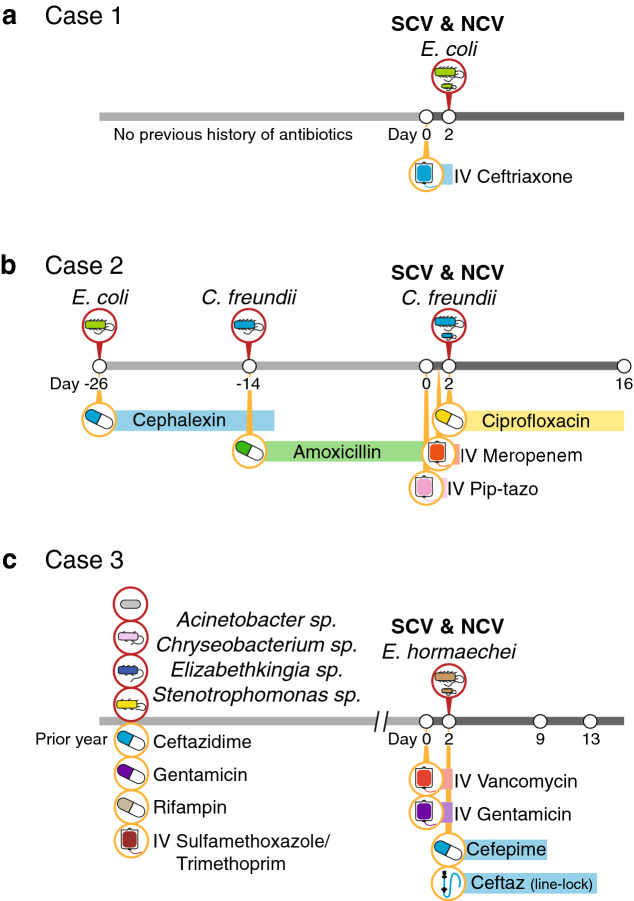
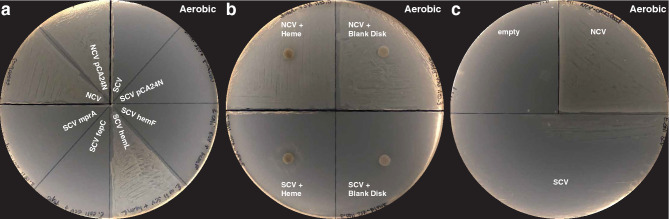
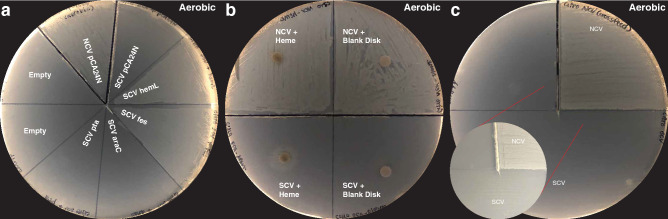
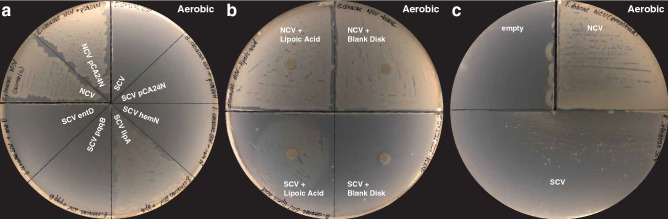
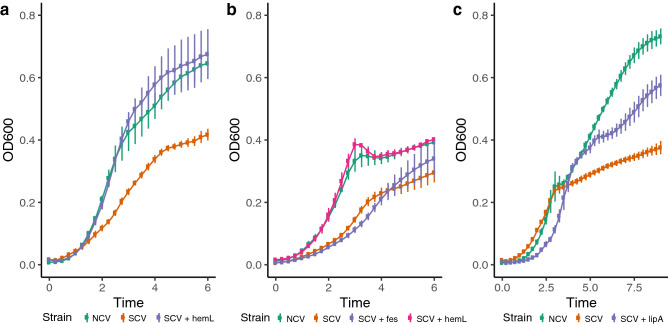
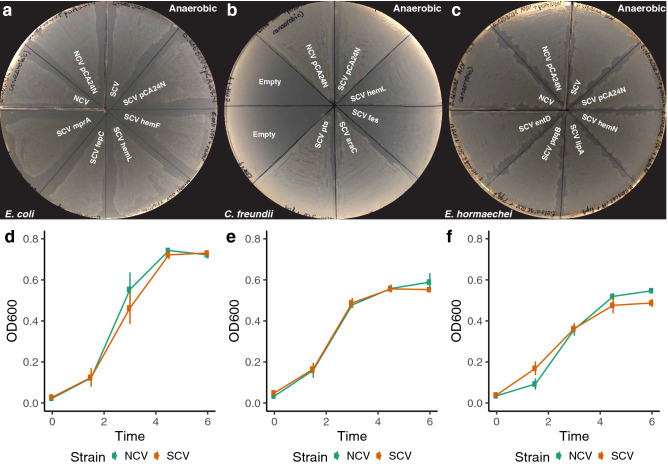
Verification
Claims the paper makes
The claims and statistics of this paper haven’t been checked yet.
Run the check — free, no account needed. It reads the open-access text and checks the sources it cites.
Self-check
Percentages, sums and reported differences re-computed from the paper’s own numbers.
The self-check needs the paper’s full text.
Citations
Cites
Iron in infection and immunity
Cassat, J. E., & Skaar, E. P. (2013) · Cell Host & Microbe · doi:10.1016/j.chom.2013.04.010 · Cited by 1,214
Proctor, R. A., von Eiff, C., Kahl, B. C., Becker, K., McNamara, P., Herrmann, M., & Peters, G. (2006) · Nature Reviews Microbiology · doi:10.1038/nrmicro1384 · Cited by 1,175
Lack of a role for iron in the Lyme disease pathogen
Posey, J. E., & Gherardini, F. C. (2000) · Science · doi:10.1126/science.288.5471.1651 · Cited by 538
Heme Synthesis and Acquisition in Bacterial Pathogens
Choby, J. E., & Skaar, E. P. (2016) · Journal of Molecular Biology · doi:10.1016/j.jmb.2016.03.018 · Cited by 343
von Eiff, C., Heilmann, C., Proctor, R. A., Woltz, C., Peters, G., & Götz, F. (1997) · Journal of Bacteriology · doi:10.1128/jb.179.15.4706-4712.1997 · Cited by 310
Garcia, L. G., Lemaire, S., Kahl, B. C., Becker, K., Proctor, R. A., Denis, O., Tulkens, P. M., & Van Bambeke, F. (2013) · Journal of Antimicrobial Chemotherapy · doi:10.1093/jac/dkt072 · Cited by 177
Research works printed but not linked: 42
- Skaar, E. P. The battle for iron between bacterial pathogens and their vertebrate hosts. PLoS Pathog. 6, e1000949 (2010). · DOI · Paper page
- Porcheron, G. & Dozois, C. M. Interplay between iron homeostasis and virulence: Fur and RyhB as major regulators of bacterial pathogenicity. Vet. Microbiol. 179, 2–14 (2015). · DOI
- Grant, S. S. & Hung, D. T. Persistent bacterial infections, antibiotic tolerance, and the oxidative stress response. Virulence 4, 273–283 (2013). · DOI
- Kahl, B. C., Becker, K. & Löffler, B. Clinical significance and pathogenesis of staphylococcal small colony variants in persistent infections. Clin. Microbiol. Rev. 29, 401–427 (2016). · DOI · Paper page
- Anderson, S. W., Stapp, J. R., Burns, J. L. & Qin, X. Characterization of small-colony-variant stenotrophomonas maltophilia isolated from the sputum specimens of five patients with cystic fibrosis. J. Clin. Microbiol. 45, 529–535 (2007). · DOI
- Wellinghausen, N. et al. Characterization of clinical Enterococcus faecalis small-colony variants. J. Clin. Microbiol. 47, 2802–2811 (2009). · DOI
- Roggenkamp, A. et al. Chronic prosthetic hip infection caused by a small-colony variant of Escherichia coli. J. Clin. Microbiol. 36, 2530–2534 (1998). · DOI
- Săsărman, A., Sanderson, K. E., Surdeanu, M. & Sonea, S. Hemin-deficient mutants of Salmonella typhimurium. J. Bacteriol. 102, 531–536 (1970). · DOI
- Morton, H. E. & Shoemaker, J. The Identification of Neisseria gonorrhoeae by means of bacterial variation and the detection of small colony forms in clinical material. J Bacteriol 50, 585–587 (1945). · DOI
- Kriegeskorte, A. et al. Inactivation of thyA in Staphylococcus aureus attenuates virulence and has a strong impact on metabolism and virulence gene expression. MBio 5, e01447-e11414 (2014). · DOI · Paper page
- Dean, M. A., Olsen, R. J., Long, S. W., Rosato, A. E. & Musser, J. M. Identification of point mutations in clinical Staphylococcus aureus strains that produce small-colony variants auxotrophic for menadione. Infect. Immun. 82, 1600–1605 (2014). · DOI · Paper page
- Lannergård, J. et al. Identification of the genetic basis for clinical menadione-auxotrophic small-colony variant isolates of Staphylococcus aureus. Antimicrob. Agents Chemother. 52, 4017–4022 (2008). · DOI · Paper page
- Clements, M. O., Watson, S. P., Poole, R. K. & Foster, S. J. CtaA of Staphylococcus aureus is required for starvation survival, recovery, and cytochrome biosynthesis. J. Bacteriol. 181, 501–507 (1999). · DOI
- Pränting, M. & Andersson, D. I. Escape from growth restriction in small colony variants of Salmonella typhimurium by gene amplification and mutation. Mol. Microbiol. 79, 305–315 (2011). · DOI
- Ramiro, R. S., Costa, H. & Gordo, I. Macrophage adaptation leads to parallel evolution of genetically diverse Escherichia coli small-colony variants with increased fitness in vivo and antibiotic collateral sensitivity. Evol. Appl. 9, 994–1004 (2016). · DOI
- Santos, V. & Hirshfield, I. The physiological and molecular characterization of a small colony variant of Escherichia coli and its phenotypic rescue. PLoS ONE 11, e0157578 (2016). · DOI
- Sifri, C. D., Baresch-Bernal, A., Calderwood, S. B. & von Eiff, C. Virulence of Staphylococcus aureus small colony variants in the Caenorhabditis elegans infection model. Infect. Immun. 74, 1091–1096 (2006). · DOI
- Painter, K. L. et al. Staphylococcus aureus adapts to oxidative stress by producing H2O2-resistant small-colony variants via the SOS response. Infect. Immun. 83, 1830–1844 (2015). · DOI · Paper page
- Tada, T. et al. A hemin auxotrophic Enterobacter cloacae clinical isolate with increased resistance to carbapenems and aminoglycosides. J. Med. Microbiol. 67, 29–32 (2018). · DOI
- Greninger, A. L. et al. Two rapidly growing mycobacterial species isolated from a brain abscess: First whole-genome sequences of mycobacterium immunogenum and mycobacterium llatzerense. J. Clin. Microbiol. 53, 2374–2377 (2015). · DOI
- Addetia, A. et al. A novel, widespread qacA allele results in reduced chlorhexidine susceptibility in Staphylococcus epidermidis. Antimicrob. Agents Chemother. 63, e02607–e02618 (2019). · DOI
- Greninger, A. L., Streithorst, J., Golden, J. A., Chiu, C. Y. & Miller, S. Complete genome sequence of sequential Pandoraea apista isolates from the same cystic fibrosis patient supports a model of chronic colonization with in vivo strain evolution over time. Diagn. Microbiol. Infect. Dis. 87, 1–6 (2017). · DOI
- Kitagawa, M. et al. Complete set of ORF clones of Escherichia coli ASKA library (a complete set of E. coli K-12 ORF archive): Unique resources for biological research. DNA Res. 12, 291–299 (2005). · DOI
- Melter, O. & Radojevič, B. Small colony variants of Staphylococcus aureus—Review. Folia Microbiol. (Praha) 55, 548–558 (2010). · DOI
- Gonzalez, J. E., Long, C. P. & Antoniewicz, M. R. Comprehensive analysis of glucose and xylose metabolism in Escherichia coli under aerobic and anaerobic conditions by 13C metabolic flux analysis. Metab. Eng. 39, 9–18 (2017). · DOI
- von Eiff, C., Peters, G. & Becker, K. The small colony variant (SCV) concept—The role of staphylococcal SCVs in persistent infections. Injury 37(Suppl 2), S26-33 (2006). · DOI
- Park, Y. J. et al. Urinary tract infection caused by a small colony variant form of capnophilic Escherichia coli leading to misidentification and non-reactions in antimicrobial susceptibility tests. Antimicrob. Resist. Infect. Control 7, 139 (2018). · DOI
- Beauchene, N. A. et al. Impact of anaerobiosis on expression of the iron-responsive fur and RyhB regulons. MBio 6, e01947-e11915 (2015). · DOI
- Imlay, J. A. Iron-sulphur clusters and the problem with oxygen. Mol. Microbiol. 59, 1073–1082 (2006). · DOI
- Qin, X. Chronic pulmonary pseudomonal infection in patients with cystic fibrosis: A model for early phase symbiotic evolution. Crit. Rev. Microbiol. 42, 144–157 (2016). · DOI
- Proctor, R. A. et al. Staphylococcus aureus small colony variants (SCVs): A road map for the metabolic pathways involved in persistent infections. Front. Cell Infect. Microbiol. 4, 99 (2014). · DOI
- Dukan, S. & Nyström, T. Oxidative stress defense and deterioration of growth-arrested Escherichia coli cells. J. Biol. Chem. 274, 26027–26032 (1999). · DOI
- Miller, H. K. & Auerbuch, V. Bacterial iron-sulfur cluster sensors in mammalian pathogens. Metallomics 7, 943–956 (2015). · DOI
- Peltier, F. et al. Characterization of a multidrug-resistant Klebsiella pneumoniae ST607-K25 clone responsible for a nosocomial outbreak in a neonatal intensive care unit. J. Med. Microbiol. 68, 67–76 (2019). · DOI
- Noman, M. Z. et al. Hypoxia: A key player in antitumor immune response. A review in the theme: Cellular responses to hypoxia. Am. J. Physiol. Cell Physiol. 309, C569-579 (2015). · DOI
- Cairo, G., Bernuzzi, F. & Recalcati, S. A precious metal: Iron, an essential nutrient for all cells. Genes Nutr. 1, 25–39 (2006). · DOI
- Fee, J. A. Regulation of sod genes in Escherichia coli: Relevance to superoxide dismutase function. Mol. Microbiol. 5, 2599–2610 (1991). · DOI
- Gil, R., Sabater-Muñoz, B., Latorre, A., Silva, F. J. & Moya, A. Extreme genome reduction in Buchnera spp.: Toward the minimal genome needed for symbiotic life. Proc. Natl. Acad. Sci. USA 99, 4454–4458 (2002). · DOI
- Burke, G. R. & Moran, N. A. Massive genomic decay in Serratia symbiotica, a recently evolved symbiont of aphids. Genome Biol. Evol. 3, 195–208 (2011). · DOI
- Manzano-Marín, A. & Latorre, A. Settling down: the genome of Serratia symbiotica from the aphid Cinara tujafilina zooms in on the process of accommodation to a cooperative intracellular life. Genome Biol. Evol. 6, 1683–1698 (2014). · DOI
- Franke, S., Grass, G., Rensing, C. & Nies, D. H. Molecular analysis of the copper-transporting efflux system CusCFBA of Escherichia coli. J. Bacteriol. 185, 3804–3812 (2003). · DOI · Paper page
- Broberg, C. A., Palacios, M. & Miller, V. L. Klebsiella: A long way to go towards understanding this enigmatic jet-setter. F1000Prime Rep. 6, 64 (2014). · DOI
Metadata
- Authors
- Greninger, A. L., Addetia, A., Tao, Y., Adler, A., & Qin, X.
- Affiliations
- Seattle Children's Hospital (US)
- Shanghai Jiao Tong University (CN)
- Corresponding author
- Qin, Xuan
- Venue
- Scientific Reports
- Published
- 2021-04-02
- Volume
- 11
- Issue
- 1
- Pages
- 7457-7457
- ISSN
- 2045-2322 (ISSN-L)
- PMC
- PMC8018945
- OpenAlex
- W3145054816
- Cited by
- 8
- References
- 6
- Citations by year
- 2026: 1 · 2025: 2 · 2023: 1 · 2022: 2 · 2021: 2
- FWCI
- 0.71
- Type
- journal article
- Language
- en
- Open access
- gold
- doi.org
- Locations
- Scientific Reports (publishedVersion, cc-by)
- bioRxiv (Cold Spring Harbor Laboratory) (acceptedVersion, cc-by)
- PubMed Central (publishedVersion, cc-by)
- PubMed (publishedVersion)
- DOAJ (DOAJ: Directory of Open Access Journals) (submittedVersion, cc-by-sa)
- Topics
- Life Sciences › Biochemistry, Genetics and Molecular Biology › Genetics › Bacterial Genetics and Biotechnology
- Life Sciences › Immunology and Microbiology › Microbiology › Escherichia coli research studies
- Health Sciences › Medicine › Microbiology (medical) › Antibiotic Resistance in Bacteria
- Keywords
- small colony variants, Enterobacteriaceae, Escherichia coli, Citrobacter freundii, Enterobacter hormaechei, oxidative respiration, iron acquisition, heme biosynthesis, lipoic acid biosynthesis, single nucleotide variants, chromosomal deletion, genetic rescue, anaerobic growth, Gram-negative bacteria
- MeSH terms
- Whole Genome Sequencing, Aerobiosis, Anaerobiosis, Child, Enterobacteriaceae, Female, Genes, Bacterial, Heme, Humans, Infant, Iron, Kinetics, Thioctic Acid, Male, Microbial Sensitivity Tests, Phenotype, Genetic Variation, Colony Count, Microbial, Gene Silencing, Drug Resistance, Bacterial, Biosynthetic Pathways
About these checks
Registry, retraction, Cites and statistics results are computed, not judged, with one exception: a printed reference that no index lists is read once by a model before it counts as a citation error. Claims are extracted by a model and kept only when their quote appears verbatim in the text; each cited source is then checked, with a model’s help, for whether it says what the claim relies on. Those verdicts can be wrong — read the claim’s quote and the cited source before relying on one.
Statistics and arithmetic are recomputed, not judged.
Confidence bands are shown only for fields calibrated on our annotated test set. None is calibrated yet, so no band is shown.
What counts as a claim ›How we measure confidence ›How we check this ›
Are you an author, or do you see a problem with this page? Request a review
