

Resting-state functional connectivity of salience network in schizophrenia and depression
Open accessThe DOI matches its Crossref record; 48 of the 48 references it cites were found in a registry or an index.
Abstract
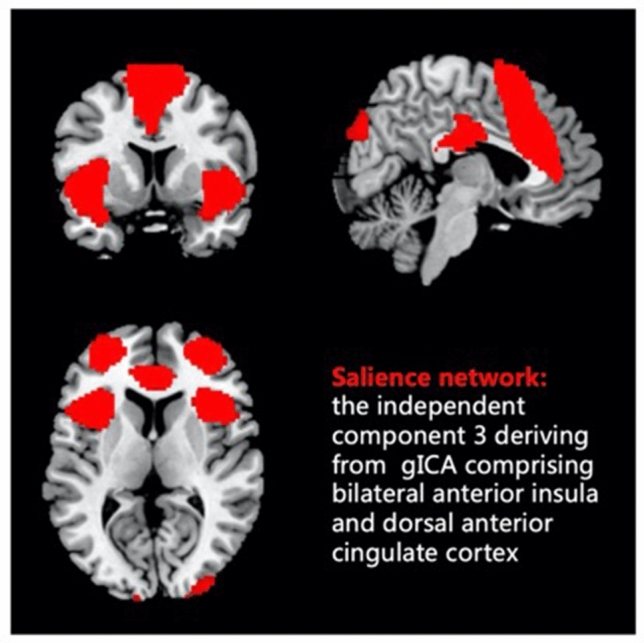
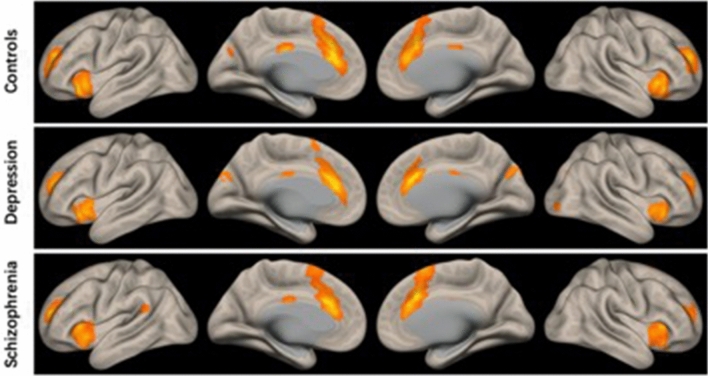
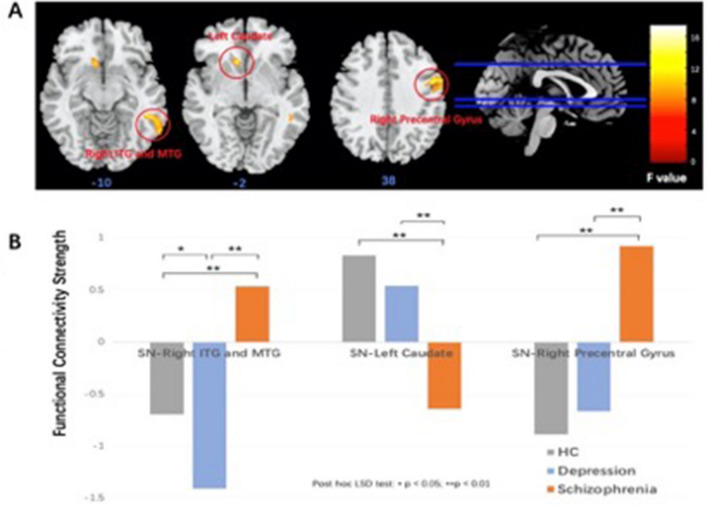
To explore the salience network (SN) functional alterations in schizophrenia and depression, resting-state functional magnetic resonance imaging (rs-fMRI) data from 29 patients with schizophrenia (SCH), 28 patients with depression (DEP) and 30 healthy controls (HC) were obtained. The SN was derived from data-driven group independent component analysis (gICA). ANCOVA and post hoc tests were performed to discover the FC differences of SN between groups. The ANCOVA demonstrated a significant group effect in FC with right inferior and middle temporal gyrus (ITG and MTG), left caudate, and right precentral gyrus. Post-hoc analyses revealed an opposite altered FC pattern between SN and right ITG and MTG for both patient groups. The DEP group showed a reduced FC between SN and right ITG and MTG compared with HC whereas the SCH group showed an increased FC. In addition, the SCH group showed decreased FC between SN and left caudate, and enhanced FC between SN and right precentral gyrus compared to the other two groups. Our findings suggest distinct FC of SN in schizophrenia and depression, supporting that the resting-state FC pattern of SN may be a transdiagnostic difference between depression and schizophrenia and may play a critical role in the pathogenesis of these two disorders.
Overview
The claims and statistics of this paper haven’t been checked yet.
Free: it reads the open-access text and checks the first 5 claims that cite a source we can check. Create a free account to check every claim.
Integrity signals
Registry
Cites
Statistics
Figures
Verification
Claims the paper makes
The claims and statistics of this paper haven’t been checked yet.
Free: it reads the open-access text and checks the first 5 claims that cite a source we can check. Create a free account to check every claim.
Claims other papers make about this one
Each is checked against this paper’s own text: does it say what the citing paper says it does?
The cited source says what the claim attributes to it.
In the citing paper
“Resting-state functional magnetic resonance imaging has demonstrated reduced functional connectivity between the salience network and right and middle inferior temporal gyrus in depressed patients compared to non-depressed patients.”
From Chronic stress, neuroinflammation, and depression: an overview of pathophysiological mechanisms and emerging anti-inflammatories (2023) · cites this paper as [150]
Self-check
Percentages, sums and reported differences re-computed from the paper’s own numbers.
The self-check needs the paper’s full text.
Citations
Cites
Home visits: a strategy to improve newborn survival - Authors' reply
(2008) · Americanae (AECID Library) · doi:10.1016/s0140 · Cited by 22,524
Dissociable intrinsic connectivity networks for salience processing and executive control
Seeley, W. W., Menon, V., Schatzberg, A. F., Keller, J., Glover, G. H., Kenna, H., Reiss, A. L., & Greicius, M. D. (2007) · The Journal of Neuroscience · doi:10.1523/jneurosci.5587-06.2007 · Cited by 7,426
Saliency, switching, attention and control: a network model of insula function
Menon, V., & Uddin, L. Q. (2010) · Brain Structure and Function · doi:10.1007/s00429-010-0262-0 · Cited by 5,592
Conn : A Functional Connectivity Toolbox for Correlated and Anticorrelated Brain Networks
Whitfield-Gabrieli, S., & Nieto-Castanon, A. (2012) · Brain Connectivity · doi:10.1089/brain.2012.0073 · Cited by 4,885
A component based noise correction method (CompCor) for BOLD and perfusion based fMRI
Behzadi, Y., Restom, K., Liau, J., & Liu, T. T. (2007) · NeuroImage · doi:10.1016/j.neuroimage.2007.04.042 · Cited by 4,502
Consistent resting-state networks across healthy subjects
Damoiseaux, J. S., Rombouts, S. A. R. B., Barkhof, F., Scheltens, P., Stam, C. J., Smith, S. M., & Beckmann, C. F. (2006) · Proceedings of the National Academy of Sciences · doi:10.1073/pnas.0601417103 · Cited by 4,326
Functional Network Organization of the Human Brain
Power, J. D., Cohen, A. L., Nelson, S. M., Wig, G. S., Barnes, K. A., Church, J. A., Vogel, A. C., Laumann, T. O., Miezin, F. M., Schlaggar, B. L., et al. (2011) · Neuron · doi:10.1016/j.neuron.2011.09.006 · Cited by 4,124
The brain's default mode network
Raichle, M. E. (2015) · Annual Review of Neuroscience · doi:10.1146/annurev-neuro-071013-014030 · Cited by 3,904
Methods to detect, characterize, and remove motion artifact in resting state fMRI
Power, J. D., Mitra, A., Laumann, T. O., Snyder, A. Z., Schlaggar, B. L., & Petersen, S. E. (2014) · NeuroImage · doi:10.1016/j.neuroimage.2013.08.048 · Cited by 3,748
Functional and Effective Connectivity: A Review
Friston, K. J. (2011) · Brain Connectivity · doi:10.1089/brain.2011.0008 · Cited by 3,415
Cited by
Hassamal, S. (2023) · Frontiers in Psychiatry · doi:10.3389/fpsyt.2023.1130989 · Cited by 578
“The salience network is important for regulating emotion and cognition, and functional deficits correlate with impairments of cognition and emotion regulation in depression (150).”
BackgroundRevisiting Functional Dysconnectivity: a Review of Three Model Frameworks in Schizophrenia
Harikumar, A., Solovyeva, K. P., Misiura, M. B., Iraji, A., Plis, S., Pearlson, G. D., Turner, J. A., & Calhoun, V. D. (2023) · Current Neurology and Neuroscience Reports · doi:10.1007/s11910-023-01325-8 · Cited by 57
“Decreased functional connectivity was also shown between SN and left caudate in schizophrenia patients [42].”
Post-COVID-19 conditions: a systematic review on advanced magnetic resonance neuroimaging findings
Mohammadi, S., & Ghaderi, S. (2024) · Neurological Sciences · doi:10.1007/s10072-024-07427-6 · Cited by 49
de Bartolomeis, A., Simone, G. D., Ciccarelli, M., Castiello, A., Mazza, B., Vellucci, L., & Barone, A. (2022) · Biomedicines · doi:10.3390/biomedicines10123183 · Cited by 26
Schmitz, C. N., Sammer, G., Neumann, E., Blecker, C. R., Gründer, G., Adolphi, H., Lamadé, E. K., & Petrozzi, B. P. (2025) · Scientific Reports · doi:10.1038/s41598-025-85514-0 · Cited by 29
Fractal dimension analysis of resting state functional networks in schizophrenia from EEG signals
de Miras, J. R., Ibáñez-Molina, A. J., Soriano, M. F., & Iglesias‐Parro, S. (2023) · Frontiers in Human Neuroscience · doi:10.3389/fnhum.2023.1236832 · Cited by 23
“Specifically, several authors have proposed that the pathophysiology of schizophrenia may be associated with changes of integration/segregation patterns in distributed neural networks, such as the default mode network (Wang et al., 2015) and the salience network (Huang et al., 2022).”
BackgroundTodeva-Radneva, A., Kandilarova, S., Paunova, R., Stoyanov, D., Zdravkova, T., & Sladky, R. (2023) · Biomedicines · doi:10.3390/biomedicines11061608 · Cited by 26
Silveira, A. C. C., Antunes, A. S. L. M., Athié, M. C. P., da Silva, B. F., dos Santos, J. V. R., Canateli, C., Fontoura, M. A., Pinto, A. D. S., Pimentel‐Silva, L. R., Avansini, S. H., et al. (2024) · Frontiers in Neuroscience · doi:10.3389/fnins.2024.1340345 · Cited by 25
“For an in-depth review of image denoising, the interested reader is referred to Kollem et al. (2019), Kaur et al. (2021), and Huang C. et al. (2022).”
BackgroundNhu, N. T., Chen, D. Y. T., Yang, Y. S. H., Lo, Y., & Kang, J. (2023) · Journal of Pain · doi:10.1016/j.jpain.2023.10.015 · Cited by 18
Brain Networks, Neurotransmitters and Psychedelics: Towards a Neurochemistry of Self-Awareness
Mograbi, D. C., Rodrigues, R. F. S., Bienemann, B., & Huntley, J. D. (2024) · Current Neurology and Neuroscience Reports · doi:10.1007/s11910-024-01353-y · Cited by 22
“Altered FC in schizophrenia, unlike in depression, also suggests a disconnection between SN and subcortical caudate [91].”
BackgroundDiscriminative analysis of schizophrenia and major depressive disorder using fNIRS
Diao, Y., Wang, H., Wang, X., Qiu, C., Wang, Z., Ji, Z., Wang, C., Gu, J., Liu, C., Wu, K., et al. (2024) · Journal of Affective Disorders · doi:10.1016/j.jad.2024.06.013 · Cited by 15
Self-citationYu, Z.-H., Yu, R., Wang, X., Ren, W.-Y., Zhang, X., Wu, W., Li, X., Dai, L., & Lv, Y.-L. (2024) · World Journal of Psychiatry · doi:10.5498/wjp.v14.i11.1696 · Cited by 12
Salience Network in Autism: preliminary results on functional connectivity analysis in resting state
Attanasio, M., Mazza, M., Donne, I. L., Nigri, A., & Valenti, M. (2024) · European Archives of Psychiatry and Clinical Neuroscience · doi:10.1007/s00406-024-01949-y · Cited by 18
Wang, Y., Huang, J., Zheng, H., Tao, L., Gu, K., Xie, C., Cha, L., Chen, H., & Hu, H. (2024) · Journal of Affective Disorders · doi:10.1016/j.jad.2024.02.076 · Cited by 9
Jiang, X., Zai, C. C. H., Sultan, A. A., Dimick, M. K., Nikolova, Y. S., Felsky, D., Young, L. T., MacIntosh, B. J., & Goldstein, B. I. (2023) · European Neuropsychopharmacology · doi:10.1016/j.euroneuro.2023.08.503 · Cited by 10
Exploring Cognitive Deficits and Neuromodulation in Schizophrenia: A Narrative Review
Hung, C. L., Lin, K.-H., & Chang, H. (2024) · Medicina · doi:10.3390/medicina60122060 · Cited by 12
Computer-aided diagnosis of schizophrenia based on node2vec and Transformer
Gan, A., Gong, A., Ding, P., Xue, Y., Chen, M., Fu, Y., & Cheng, Y. (2023) · Journal of Neuroscience Methods · doi:10.1016/j.jneumeth.2023.109824 · Cited by 9
Wei, B., Fu, W., Ji, Y., Cheng, Q., Shu, B.-L., Huang, Q.-Y., & Wu, X.-R. (2023) · Clinical Ophthalmology · doi:10.2147/opth.s434797 · Cited by 6
“25,26 According to the research carried out by Brueggen K, it was found that changes in tone result in increased stimulation of the temporal pole on the left side of the brain, suggesting its possible involvement in combining the melodic/harmonic background and emotional meaning of music.”
MethodDeficits in Key Brain Network for Social Interaction in Individuals with Schizophrenia
Wu, Y., Wang, H., Li, C., Zhang, C., Li, Q., Shao, Y., Yang, Z., Li, C., & Fan, Q. (2023) · Brain Sciences · doi:10.3390/brainsci13101403 · Cited by 9
“In the emotional salience network, recent studies revealed that individuals with SZ manifest aberrantly increased functional connectivity between the salience network and the right inferior and middle temporal gyrus in the resting-state [33].”
BackgroundSelf-citationLong, Z., Du, L., & Marino, M. (2023) · Psychiatry Research · doi:10.1016/j.psychres.2023.115616 · Cited by 7
FDI: A MATLAB tool for computing the fractal dimension index of sources reconstructed from EEG data
de Miras, J. R., Casali, A. G., Massimini, M., Ibáñez-Molina, A. J., Soriano, M. F., & Iglesias‐Parro, S. (2024) · Computers in Biology and Medicine · doi:10.1016/j.compbiomed.2024.108871 · Cited by 9
Orth, L., Meeh, J., Leiding, D. V., Habel, U., Neuner, I., & Sarkheil, P. (2024) · eNeuro · doi:10.1523/eneuro.0223-23.2024 · Cited by 7
Multi feature fusion network for schizophrenia classification and abnormal brain network recognition
Wang, C., Wang, C., Ren, Y., Zhang, R., Ai, L., Wu, Y., Ran, X., Wang, M., Hu, H., Shen, J., et al. (2023) · Brain Research Bulletin · doi:10.1016/j.brainresbull.2023.110848 · Cited by 6
“…schizophrenia patients have sensory processing dysfunction including visual impairment, dysfunction in the functional connectivity of the visual network itself, and abnormalities in the connectivity of networks related to other cognitive functions such as the salience network (Zhao et al., 2022).”
Sfera, A., Thomas, K. A., Ogunjale, I. A., Jafri, N., & Bota, P. G. (2024) · Journal of Clinical Medicine · doi:10.3390/jcm13061691 · Cited by 6
Khorev, V. S., Kurkin, S., Stoyanov, D., Paunova, R., Najar, D., Kandilarova, S., & Hramov, A. E. (2025) · Psychiatry Research Neuroimaging · doi:10.1016/j.pscychresns.2025.112078 · Cited by 6
Nhu, N. T., Wong, C.-Z., Chen, I. Y., Jan, Y.-W., & Kang, J. (2024) · Brain Imaging and Behavior · doi:10.1007/s11682-024-00925-3 · Cited by 21
“Recent evidence shows that the FCs of the salience network were also changed in insomnia and depression (Cheng et al., 2022; Huang et al., 2022).”
Najar, D., Dichev, J., & Stoyanov, D. (2024) · Journal of Clinical Medicine · doi:10.3390/jcm13154363 · Cited by 5
Fuchshuber, J., Koschutnig, K., Fink, A., Alexopoulos, J., Löffler‐Stastka, H., & Unterrainer, H. (2025) · PLoS ONE · doi:10.1371/journal.pone.0318505 · Cited by 5
“The salience network was shown to be functionally linked to the identification of homeostatically relevant internal and external stimuli and to be responsible for inter-network interactions, working as a “dynamic switch” between other networks [66].”
Altered Hemispheric Asymmetry of Functional Hierarchy in Schizophrenia
Zhen, Y., Zheng, H., Zheng, Y., Zheng, Z., Yang, Y., & Tang, S. (2025) · Brain Sciences · doi:10.3390/brainsci15030313 · Cited by 4
“The ventral attention network is responsible for detecting salient stimuli and recruiting relevant functional networks [78], and is considered to play a crucial role in the pathogenesis of SZ [79].”
High-resolution whole-brain magnetic resonance spectroscopic imaging in youth at risk for psychosis
Céléreau, E., Lucchetti, F., Alemán‐Gómez, Y., Dwir, D., Cleusix, M., Ledoux, J., Jenni, R., Conchon, C., Cuadra, M. B., Schilliger, Z., et al. (2026) · Imaging Neuroscience · doi:10.1162/imag.a.1276 · Cited by 6
Evolutionary Trajectories of Consciousness: From Biological Foundations to Technological Horizons
Gusev, E., Sarapultsev, A., & Komelkova, M. V. (2025) · Brain Sciences · doi:10.3390/brainsci15070734 · Cited by 6
“…system-forming factor of consciousness architectures—such as subcortical arbitration circuits—illuminate why default-mode network (DMN) disruptions in Alzheimer’s and salience-network imbalances in schizophrenia undermine the integration of memory, emotion, and executive control [326,327].”
Lee, J.-W., Kim, Y.-E., Votinov, M., Xu, M., Kim, S.-Y., Lee, M., Wagels, L., Habel, U., & Jo, H.-G. (2025) · Depression and Anxiety · doi:10.1155/da/9062022 · Cited by 4
“Dysfunction within this network likely disrupts the normal processes of salience attri-bution, leading to the misattribution of importance to irrelevant stimuli, a core feature of psychosis [17, 18].”
Ekpo, E. C., Beynel, L., Luber, B. M., Deng, Z., Strauman, T. J., & Lisanby, S. H. (2025) · Brain Sciences · doi:10.3390/brainsci15111133 · Cited by 4
“Furthermore, a recent RSFC study indicated decreased FC between the ITG and the SN in people with MDD, compared to HCs [65].”
Resting-state EEG markers associated with violence risk in patients with major depressive disorder
Xie, Y., Lu, W., Chen, J., Tan, S., Ma, T., Gu, Y., Li, Y., & Li, G. (2025) · Psychological Medicine · doi:10.1017/s0033291725102730 · Cited by 3
“Additionally, the PrcG is thought to play a key role in social cognition, including interpreting facial expressions, perceiving emotions, and recognizing desires (Huang et al., 2022).”
Self-citationHalász, P., Simor, P., & Szűcs, A. (2024) · Epilepsy & Behavior Reports · doi:10.1016/j.ebr.2024.100650 · Cited by 2
“…hypermotor seizures - the anterior cingulate cortex, the anterior upper insular -, and the pre-supplementary mesial frontal cortex – are deeply involved in fear, and emotion processing [47 – 50] and overlap with the hubs of the salience network, normally signalizing meaningful events [51 – 53] Fig.”
BackgroundEvans, I. D., Sharpley, C. F., Bitsika, V., Vessey, K. A., Williams, R. J., Jesulola, E., & Agnew, L. L. (2025) · Applied Sciences · doi:10.3390/app15031459 · Cited by 3
An Exploratory Comparison of Alpha and Beta Network Connectivity Across Four Depression Subtypes
Sharpley, C. F., Evans, I. D., Bitsika, V., Vessey, K. A., Odierna, G. L., Jesulola, E., & Agnew, L. L. (2025) · Journal of Clinical Medicine · doi:10.3390/jcm14155295 · Cited by 3
“Similarly, the Executive Control Network (ECN) has also been repeatedly described as interacting with depression severity [56,57], as has the Salience Network (SAL) [58,59].”
Age-Related Hearing Decline and Resting-State Networks
Ellsworth, C. T., Kortus, L. A., Vuong, J., Harvey, J. H., Pitt, K. M., Barlow, S. M., & Wang, Y. (2025) · American Journal of Audiology · doi:10.1044/2025_aja-25-00025 · Cited by 1
“The SN is critical in detecting and integrating salient stimuli and coordinating neural resources for cognitive control and attention (Huang et al., 2022; Xu et al., 2019).”
Zaykova, V., Popova, F., Kandilarova, S., & Stoyanov, D. (2025) · ALPHA PSYCHIATRY · doi:10.31083/ap45829 · Cited by 2
“[20], the detected increase in functional connectivity between the PCG and nodes of the SN in patients with schizophrenia may be interpreted as elevated information processing activity, which may result in emotional and motional processing disruptions in schizophrenia.”
Tian, S., Liang, Q., Zhou, W., Hu, X., Liu, Y., Tian, J., Luo, Y., Fang, H., & Wang, W. (2026) · Journal of Affective Disorders · doi:10.1016/j.jad.2026.121733 · Cited by 1
Physiological arousal as a predominant source of individual differences in functional brain networks
Hill, J., Zhai, T., Korponay, C. H., Welsh, J. C., Salmeron, B. J., Ross, T. J., Yang, Y., Frederick, B. B., & Janes, A. C. (2026) · Communications Biology · doi:10.1038/s42003-026-10624-y · Cited by 2
Le, G. H., Wong, S., Luch, S. D. D., Orsini, D. K., Vasudeva, S., Agarwal, S. M., Llach, C.-D., Rosenblat, J. D., & McIntyre, R. S. (2026) · Psychiatry and Clinical Neurosciences · doi:10.1111/pcn.70143 · Cited by 1
Functional Connectivity Changes Associated With Depression in Dementia With Lewy Bodies
Querry, M., Botzung, A., Sourty, M., Chabran, E., Sanna, L., de Sousa, P. L., Cretin, B., Demuynck, C., Muller, C., Ravier, A., et al. (2025) · International Journal of Geriatric Psychiatry · doi:10.1002/gps.70058 · Cited by 2
“The SN [22, 23], and particularly the external connectivity of the anterior cingulate [24, 25] and the insula [26–29], also seems to be involved in MDD symptomatology.”
Adamczyk, P., Domingos, C., Więcławski, W., Wójcik, M., Frycz, S., Panek, B., Jáni, M., Dudzińska, O., Ros, T., & Wyczesany, M. (2023) · Research Square · doi:10.21203/rs.3.rs-3416892/v1
Chun, J., Choi, J., Pyeon, A., Hu, M., Cho, H., Choi, J., Ahn, K. J., Nam, J.-H., Choi, I. Y., & Kim, D. (2025) · SSRN Electronic Journal · doi:10.2139/ssrn.5399032
Gao, Q., Wen, J., Lü, Y., Li, J., Hua, B., Mo, Y., Mao, Y., Xu, Y., Xia, P., Xie, K., et al. (2025) · Frontiers in Neurology · doi:10.3389/fneur.2025.1626961
“In contrast, the SN, particularly the SMG, functions as a dynamic hub for detecting salient stimuli (37) and coordinating inter-network switching (38).”
Exploring the quiet mind of former drug addicts using functional magnetic resonance imaging
Roslan, N., Othman, E. A., Nawawi, N. A. A. M., Nasir, F. M., Abdullah, K. A., Abdullah, M. F. I. L. B., Yusoff, A. N., Mohamad, M., Wahab, N. S. A., Hamid, H. A., et al. (2025) · The Egyptian Journal of Radiology and Nuclear Medicine · doi:10.1186/s43055-025-01625-8
Sleep-modulated disinhibition enables replay for memory consolidation, accelerated by ripplesPreprint
Dutta, S. (2025) · bioRxiv (Cold Spring Harbor Laboratory) · doi:10.64898/2025.12.09.693276
“…adjustment of CA1 afferent strength to normalize ripple dynamics in salience-impaired conditions: enhancing where ripples diminish, as in Alzheimer’s disease [110,111], epilepsy (physiological SWRs) [112,113], and aging [110,114]; attenuating where they surge, as in schizophrenia [122, 133, 171].”
Wang, L., Shen, L., Wu, F., Zhang, J., Wang, X., Wu, H., Grecucci, A., Yi, X., Xiao, Q., & Chen, B. T. (2026) · Behavioural Brain Research · doi:10.1016/j.bbr.2026.116119
Case Study 12: A 57-Year-Old Man With Seizures, Paranoid Psychosis, and Catatonia
Praschan, N. C., Lyndon, S., Gale, S. A., Silbersweig, D., Daffner, K. R., Schildkrout, B., & McGinnis, S. M. (2026) · Journal of Neuropsychiatry · doi:10.1176/appi.neuropsych.20250141
Wu, Y. H., Xu, J., Wang, H., Shen, Y., Zhai, Y., Lei, M., Zhang, Z., Wu, Q., An, Q., Cai, W., et al. (2026) · Psychological Medicine · doi:10.1017/s0033291726104711
“…relevant to myelin regulation and network maturation remain influential across the lifespan, potentially shaping vulnerability of fronto-limbic and cortico-striatal-thalamic systems implicated in affective and cognitive regulation (Huang et al., 2022; Kang et al., 2011; Kebets et al., 2021).”
Self-citationContribution of attentional mechanisms to verbal and nonverbal communication in boys with ASD
Minnigulova, A., Dragoy, O., & Arutiunian, V. (2026) · European Child & Adolescent Psychiatry · doi:10.1007/s00787-026-03089-1
Zhang, X., Wang, T., Liu, X., & Zhang, J. (2026) · NeuroImage · doi:10.1016/j.neuroimage.2026.122224
Metadata
- Authors
- Huang, H., Chen, C., Rong, B., Wan, Q., Chen, J., Liu, Z., Zhou, Y., Wang, G., & Wang, H.
- Affiliations
- Renmin Hospital of Wuhan University (CN)
- Chinese Academy of Sciences (CN)
- Corresponding author
- Wang, Huiling
- ORCID
- Venue
- Scientific Reports
- Published
- 2022-07-01
- Volume
- 12
- Issue
- 1
- Pages
- 11204-11204
- ISSN
- 2045-2322 (ISSN-L)
- PMC
- PMC9249853
- OpenAlex
- W4283782021
- Semantic Scholar
- 2624ce9cb922d3913fc3bf377cea23d6c31f3685
- Cited by
- 53
- References
- 48
- Citations by year
- 2026: 9 · 2025: 17 · 2024: 14 · 2023: 12 · 2022: 1
- FWCI
- 5.67
- Type
- journal article
- Language
- en
- Open access
- gold
- doi.org
- Licence
- cc-by
- creativecommons.org/licenses/by/4.0 (tdm)
- creativecommons.org/licenses/by/4.0 (vor)
- Locations
- Scientific Reports (publishedVersion, cc-by)
- Research Square (acceptedVersion, cc-by)
- PubMed Central (publishedVersion, cc-by)
- PubMed (publishedVersion)
- Institutional Repository of Institute of Psychology, Chinese Academy of Sciences (Institute of Psychology, Chinese Academy of Sciences) (submittedVersion)
- DOAJ (DOAJ: Directory of Open Access Journals) (submittedVersion)
- Funders
- Fundamental Research Funds for the Central Universities (2042020kf0128)
- Health Commission of Hubei Province scientific research project (WJ2021M142)
- Medical Science Advancement Program of Wuhan University (TFLC2018001)
- Topics
- Life Sciences › Neuroscience › Cognitive Neuroscience › Functional Brain Connectivity Studies
- Health Sciences › Medicine › Psychiatry and Mental health › Schizophrenia research and treatment
- Life Sciences › Neuroscience › Cognitive Neuroscience › Neural and Behavioral Psychology Studies
- Keywords
- salience network, resting-state functional connectivity, schizophrenia, depression, inferior temporal gyrus, middle temporal gyrus, caudate nucleus, precentral gyrus, group independent component analysis
- MeSH terms
- Correlation of Data, Depression, Humans, Schizophrenia, Temporal Lobe
About these checks
Registry, retraction, Cites and statistics results are computed, not judged, with one exception: a printed reference that no index lists is read once by a model before it counts as a citation error. Claims are extracted by a model and kept only when their quote appears verbatim in the text; each cited source is then checked, with a model’s help, for whether it says what the claim relies on. Those verdicts can be wrong — read the claim’s quote and the cited source before relying on one.
Statistics and arithmetic are recomputed, not judged.
Confidence bands are shown only for fields calibrated on our annotated test set. None is calibrated yet, so no band is shown.
What counts as a claim ›How we measure confidence ›How we check this ›
Are you an author, or do you see a problem with this page? Request a review
Data sources
Bibliographic data: Semantic Scholar, OpenAlex, Crossref.
Contains information from the Semantic Scholar Academic Graph Datasets, made available under the ODC Attribution License (ODC-BY 1.0).
Semantic Scholar’s data is described in: Kinney, R., et al. (2023). The Semantic Scholar Open Data Platform. arXiv:2301.10140.
