

The DOI matches its Crossref record; 34 of the 35 references it cites were found in a registry or an index.
Skin lesion classification of dermoscopic images using machine learning and convolutional neural network
Open accessAbstract
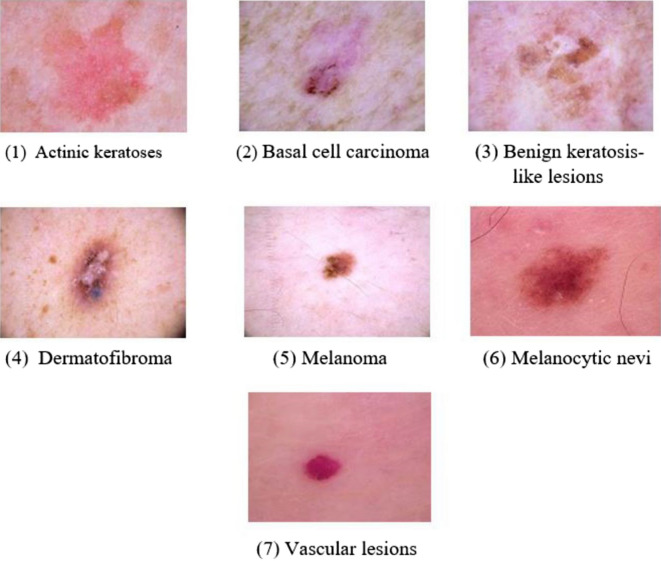
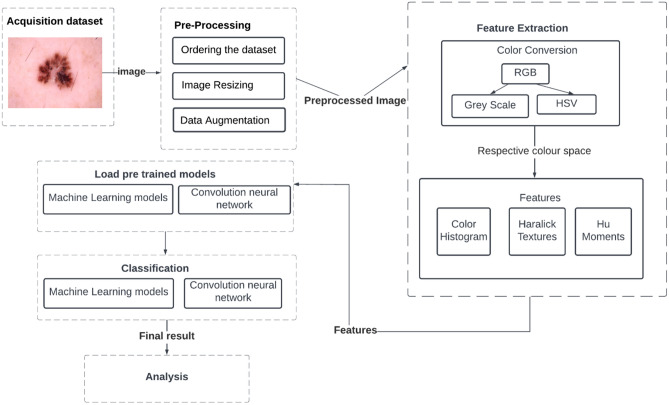
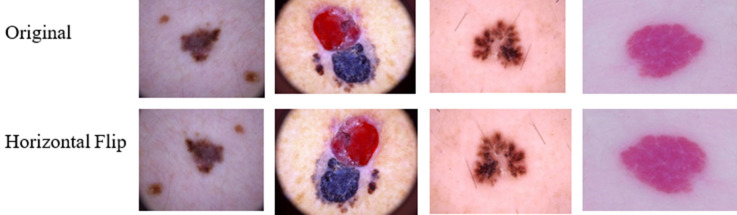
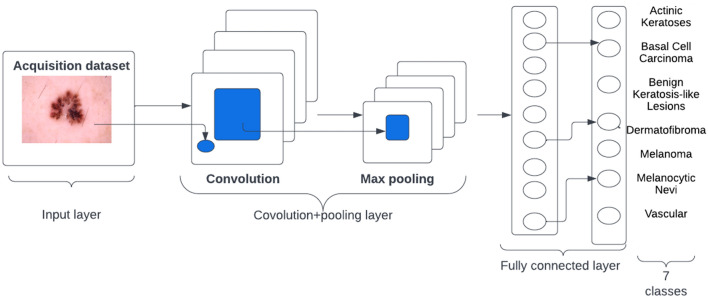
Detecting dangerous illnesses connected to the skin organ, particularly malignancy, requires the identification of pigmented skin lesions. Image detection techniques and computer classification capabilities can boost skin cancer detection accuracy. The dataset used for this research work is based on the HAM10000 dataset which consists of 10015 images. The proposed work has chosen a subset of the dataset and performed augmentation. A model with data augmentation tends to learn more distinguishing characteristics and features rather than a model without data augmentation. Involving data augmentation can improve the accuracy of the model. But that model cannot give significant results with the testing data until it is robust. The k-fold cross-validation technique makes the model robust which has been implemented in the proposed work. We have analyzed the classification accuracy of the Machine Learning algorithms and Convolutional Neural Network models. We have concluded that Convolutional Neural Network provides better accuracy compared to other machine learning algorithms implemented in the proposed work. In the proposed system, as the highest, we obtained an accuracy of 95.18% with the CNN model. The proposed work helps early identification of seven classes of skin disease and can be validated and treated appropriately by medical practitioners.
Overview
The claims and statistics of this paper haven’t been checked yet.
Run the check — free, no account needed. It reads the open-access text and checks the sources it cites.
Integrity signals
Registry
Cites
Statistics
Figures
Verification
Claims the paper makes
The claims and statistics of this paper haven’t been checked yet.
Run the check — free, no account needed. It reads the open-access text and checks the sources it cites.
Claims other papers make about this one
Each is checked against this paper’s own text: does it say what the citing paper says it does?
The source backs part of the claim, not all of it — or backs it for a different population, condition or comparison.
In the citing paper
“However, most prior studies primarily focused on improving classification accuracy through increasingly complex architectures without sufficient attention to explaining model decisions (14–22).”
From Interpretable multimodal fusion for skin lesion classification using dermoscopic images and patient metadata (2026) · cites this paper as [14]
Experimental — accuracy not yet measuredThe source backs part of the claim, not all of it — or backs it for a different population, condition or comparison.
In the citing paper
“Later, CNN-based automatic feature extraction (14) and transfer learning with pretrained models (15, 18) improved representation learning.”
From Interpretable multimodal fusion for skin lesion classification using dermoscopic images and patient metadata (2026) · cites this paper as [14]
Experimental — accuracy not yet measuredThe source backs part of the claim, not all of it — or backs it for a different population, condition or comparison.
In the citing paper
“Most prior studies address this issue through conventional image-level augmentation (7, 14, 15, 17, 18, 20, 21, 23), which increases data volume but does not introduce genuine semantic diversity.”
From Interpretable multimodal fusion for skin lesion classification using dermoscopic images and patient metadata (2026) · cites this paper as [14]
Experimental — accuracy not yet measuredThe cited source says what the claim attributes to it.
In the citing paper
“Class imbalance remains a central challenge in seven-class skin lesion classification using HAM10000.”
From Interpretable multimodal fusion for skin lesion classification using dermoscopic images and patient metadata (2026) · cites this paper as [14]
The check wasn’t confident either way, so it gives no verdict — never disputed.
In the citing paper
“In the classification stage, most prior studies relied primarily on the fully connected layer for final classification (7, 14, 16–18, 20).”
From Interpretable multimodal fusion for skin lesion classification using dermoscopic images and patient metadata (2026) · cites this paper as [14]
Experimental — accuracy not yet measured
Self-check
Percentages, sums and reported differences re-computed from the paper’s own numbers.
The self-check needs the paper’s full text.
Citations
Cites
2 retracted
RETRACTED ARTICLE: Hybrid genetic algorithm and a fuzzy logic classifier for heart disease diagnosis
Gadekallu, T. R., Maddikunta, P. K. R., Lakshmanna, K., Rajput, D. S., Kaluri, R., & Srivastava, G. (2019) · Evolutionary Intelligence · doi:10.1007/s12065-019-00327-1 · Cited by 407
Self-citationRetractedRETRACTED ARTICLE: Skin lesion classification using decision trees and random forest algorithms
Dhivyaa, C. R., Sangeetha, K., -, M. B., Amaran, S., Vetriselvi, T., & Johnpaul, P. (2020) · Journal of Ambient Intelligence and Humanized Computing · doi:10.1007/s12652-020-02675-8 · Cited by 90
RetractedTschandl, P., Rosendahl, C., & Kittler, H. (2018) · Scientific Data · doi:10.1038/sdata.2018.161 · Cited by 3,628
Classification of Skin Disease Using Deep Learning Neural Networks with MobileNet V2 and LSTM
Srinivasu, P. N., SivaSai, J. G., Ijaz, M. F., Bhoi, A. K., Kim, W., & Kang, J. J. (2021) · Sensors · doi:10.3390/s21082852 · Cited by 763
Transfer learning using a multi-scale and multi-network ensemble for skin lesion classification
Mahbod, A., Schaefer, G., Wang, C., Dorffner, G., Ecker, R., & Ellinger, I. (2020) · Computer Methods and Programs in Biomedicine · doi:10.1016/j.cmpb.2020.105475 · Cited by 326
Skin cancer diagnosis based on optimized convolutional neural network
Zhang, N., Cai, Y.-X., Wang, Y.-Y., Tian, Y., Wang, X., & Badami, B. (2019) · Artificial Intelligence in Medicine · doi:10.1016/j.artmed.2019.101756 · Cited by 325
A multi-class skin Cancer classification using deep convolutional neural networks
Chaturvedi, S. S., Tembhurne, J. V., & Diwan, T. (2020) · Multimedia Tools and Applications · doi:10.1007/s11042-020-09388-2 · Cited by 297
Melanoma Recognition in Dermoscopy Images via Aggregated Deep Convolutional Features
Yu, Z., Jiang, X., Zhou, F., Qin, J., Ni, D., Chen, S., Lei, B., & Wang, T. (2018) · IEEE Transactions on Biomedical Engineering · doi:10.1109/tbme.2018.2866166 · Cited by 253
Khan, M. A., Akram, T., Zhang, Y., & Sharif, M. I. (2021) · Pattern Recognition Letters · doi:10.1016/j.patrec.2020.12.015 · Cited by 247
Convolutional Neural Networks Using MobileNet for Skin Lesion Classification
Sae-Lim, W., Wettayaprasit, W., & Aiyarak, P. (2019) · International Joint Conference on Computer Science and Software Engineering · doi:10.1109/jcsse.2019.8864155 · Cited by 233
Research works printed but not linked: 1
- Zaqout, I. Diagnosis of skin lesions based on dermoscopic images using image processing techniques. J. Pattern Recogn. Sel. Methods Appl. 2019, 189–204 (2019).
Cited by
Sorted by citations
Items 201–300 of 314
A CDSS for Conducing Prediction and Prescription of Non-Cancerous Skin Disease
Sudham, K. M., Rehan, M., Havale, D., Nandan, K., & Divyashree, N. (2025) · International Conference on Smart Applications, Communications and Networking (SmartNets) · doi:10.1109/smartnets65254.2025.11106868 · Cited by 1
Skin Lesion Diagnosis with Deep Neural Networks and Wavelet-Based Feature Analysis
Pius, S., Rahamathulla, K., & Swaraj, K. (2025) · International Conference on Advances in Computing, Communication, Embedded and Secure Systems (ACCESS) · doi:10.1109/access65134.2025.11135546 · Cited by 1
Enhancing Skin Lesion Classification Generalization with Active Domain Adaptation
Ye, J. (2025) · Annual International Conference of the IEEE Engineering in Medicine and Biology Society (EMBC) · doi:10.1109/embc58623.2025.11253341 · Cited by 2
Sonuç, E., Saihood, Q., Yargı Baydilli, Y., & Özcan, E. (2026) · Frontiers in Medicine · doi:10.3389/fmed.2026.1871689
Editorial: Challenges, techniques and pitfalls in surgery: How far can we push the boundaries?
Cianci, S., Giovinazzo, F., Campagna, G., & Ercoli, A. (2022) · Frontiers in Oncology · doi:10.3389/fonc.2022.1088759
Recognition of Skin Lesions by Images
Ledovskikh, M. A., & Gorikhovskii, V. I. (2023) · Moscow University Physics Bulletin · doi:10.3103/s0027134923070202
Multidirectional Analysis of Curvelet Against Skin CancerPreprint
Kolekar, M. H., Lakshmi, V., V, Razak, M. S. A., & Theivanathan, G. (2024) · Research Square · doi:10.21203/rs.3.rs-3817570/v1
Computer-Assisted Diagnostic Tool Package for Real-Time Analysis of Skin Disorder
Thamizhvani, T. R., Prawin, M. N., & Narendra Kumar, S. (2023) · International Conference on Mobile Networks and Wireless Communications (ICMNWC) · doi:10.1109/icmnwc60182.2023.10435820
Chen, M., & Yang, N. (2024) · International Conference on Distributed Computing and Optimization Techniques (ICDCOT) · doi:10.1109/icdcot61034.2024.10516249 · Cited by 1
SKIN CANCER DETECTION: LEVERAGING CONVOLUTIONAL NEURAL NETWORKS FOR BINARY CLASSIFICATION
Swaroop, A., Kumari, A. C., & Srinivas, K. (2024) · Journal of Trends and Challenges in Artificial Intelligence · doi:10.61552/jai.2024.02.003
Skin Lesion Diagnosis Using Pretrained Models: A Study of Preprocessing and Feature Extraction
Aakaou, A., & Domínguez, E. (2024) · Lecture notes in networks and systems · doi:10.1007/978-3-031-64836-6_46
Jaén, E. S., Omiotek, Z., & Pinzón, C. I. (2024) · LACCEI International Multi-Conference for Engineering, Education and Technology (LACCEI) · doi:10.18687/laccei2024.1.1.940
Diagnosing Skin Cancer Using Shearlet Transform Multiresolution ComputationPreprint
Sikkander, A. R. M., Kolekar, M. H., Lakshmi, V., V, Theivanathan, G., & Radhakrishnan, K. (2024) · Research Square · doi:10.21203/rs.3.rs-4772856/v1
Enhancing Skin Disease Classification Using LIME and Weighted Average Ensemble Model
Ahmed, M. E., & Pinki, F. T. (2024) · IEEE International Conference on Computing, Applications and Systems (COMPAS) · doi:10.1109/compas60761.2024.10796691
Raspberry Pi Integrated CNN Method to Find the Skin Lesions from Photo Images
Jeba Singh, O., Lavanya, D. L., & Rajesh Sharma, R. (2024) · Odisha International Conference on Electrical Power Engineering, Communication and Computing Technology (ODICON) · doi:10.1109/odicon62106.2024.10797520
DermDetectNet: Identifying Skin Diseases with Advanced Computer Learning
Sonavane, S. M., Thosar, D. S., Wankar, B. R., Jadhav, K. R., More, P. A., & Kulkarni, A. (2024) · DMIHER International Conference on Artificial Intelligence in Healthcare, Education and Industry (IDICAIHEI) · doi:10.1109/idicaiei61867.2024.10842938
Raspberry Pi Integrated CNN Method to Find the Skin Lesions from Photo Images
Singh, O. J., Lavanya, D. L., Mahapatra, S., Rajesh Sharma, R., Sungheetha, A., & Niranjana, R. (2024) · IEEE Delhi Section Conference (DELCON) · doi:10.1109/delcon64804.2024.10867073
Development of Image Classification System to Detect Skin Lesion using Deep Learning Techniques
Hariprasath, V., Rangkeshwaran, R., Dhanush, K., & Prema, D. (2025) · International Conference on Intelligent Data Communication Technologies and Internet of Things (IDCIoT) · doi:10.1109/idciot64235.2025.10914991
Predictive Modeling of Dermatological Descriptors
Sunil, S., Bijlani, K., & Gupta, S. K. (2024) · IEEE Silchar Subsection Conference (SILCON) · doi:10.1109/silcon63976.2024.10910451
Deep Neural Network in Dermatology: Pioneering Skin Lesion Classification
Fuad, N. H. M., Rakib, A., Noman, A. A., Islam, M. R., Rahman, M. M., & Refat, M. A. R. (2024) · International Conference on Sustainable Technologies for Industry 5.0 (STI) · doi:10.1109/sti64222.2024.10951145
Leveraging Deep Learning for Accurate Classification of Skin Disease Images
Abdulrazzak, H. N., Ahmed, Aya, & Goh (2025) · Al-Noor Journal of Engineering Management and Computer Science · doi:10.71229/njemcs.v1i2.2
Efficient Combination of Deep Learning Models for Skin Disease Detection
Sene, M. M., Ngom, N. F., & Seck, M. (2025) · Lecture notes of the Institute for Computer Sciences, Social Informatics and Telecommunications Engineering · doi:10.1007/978-3-031-86493-3_23
Skin Allergy Detection Method using Computer Aided Design
Abdulameer, F. S. (2025) · Journal of Information Systems Engineering & Management · doi:10.52783/jisem.v10i41s.7753
A REVIEW OF DEEP LEARNING AND MACHINE LEARNING TECHNIQUES FOR CURABLE AND INCURABLE SKIN DISEASES
Sagar, T., & Jaffino, G. (2025) · Biomedical Engineering Applications Basis and Communications · doi:10.4015/s1016237225300020
Accurate Detection of Basal Cell Carcinoma Using Fuzzy U-Net and Deep Learning on Dermoscopic Images
Dhiyanesh, B., Kiruthiga, G., Shakkeera, L., Umar, S. A., & Anusuya, V. (2025) · International Journal of Computational and Experimental Science and Engineering · doi:10.22399/ijcesen.2475
Skin Disease Identification using CNN
Roy, A., Mariya, G., Jose, A., Anto, A. V. M., & Asha, S. (2025) · International Conference on Trends in Engineering Systems and Technologies (ICTEST) · doi:10.1109/ictest64710.2025.11042379
Application of Transfer Learning for Skin Lesion Classification on Balanced Data
Movahed, S., & Bilski, P. (2025) · IEEE EUROCON - International Conference on Computer as a Tool (EUROCON) · doi:10.1109/eurocon64445.2025.11073508
Mahajan, S. T., & Dashore, P. (2025) · AIP conference proceedings · doi:10.1063/5.0289494
Suganthi, I. S., & Babu, T. R. G. (2025) · Traitement du signal · doi:10.18280/ts.420440
DermaGAN: Enhancing Skin Lesion Classification with Generative Adversarial Networks
Ravindranath, R. C., R, V. K., Chandramma, R., Sheela, S. J., Dr. Ruhin Kouser, R., & Dhiraj, C. V. S. (2025) · International Conference on Emerging Technologies in Computing and Communication (ETCC) · doi:10.1109/etcc65847.2025.11108424
A Comparative Analysis of Pre-Trained CNN Models for Skin Cancer Classification
Bhatia, S., Sharma, S., Chaurasia, S., Bhadauria, R. V. S., & Aron, H. (2025) · International Conference on Computing Methodologies and Communication (ICCMC) · doi:10.1109/iccmc65190.2025.11140706
Tabassum, S., Eshika, I. J., & Tasnim, F. (2025) · IEEE International Conference on Quantum Photonics, Artificial Intelligence & Networking (QPAIN) · doi:10.1109/qpain66474.2025.11171741
Exploring Skin Lesion Classification Through Explainable AI—Leveraging Grad-CAM for Interpretability
Kumar, B. K., Vahini, G. S., Tanmayee, B. S. S. D., Chandana, M., Ashwini, M., Abheesta, P., & Chappidi, E. (2025) · Smart innovation, systems and technologies · doi:10.1007/978-981-96-4410-0_48
Entropy-based feature fusion via BlockNet for robust skin cancer classification
Nguyen, T. T., & Vu, V. H. (2025) · Iran Journal of Computer Science · doi:10.1007/s42044-025-00351-8
Skin Cancer Classification at Dermatologist Level Using Deep-Learning Concepts
Ramteke, V., & Senjaliya, J. (2025) · Lecture notes in networks and systems · doi:10.1007/978-981-96-8694-0_22
A review on skin cancer prediction and detection using machine learning
Naveena, A., Manasa, N., Sreshta, K. S., Pragna, N., Babu, B. S., Mohammad, A., & Salami, Z. A. (2025) · AIP conference proceedings · doi:10.1063/5.0298293
Comparative Study of Mobilenet and Densenet for Chest CT Scan-Based Lung Cancer Image Classification
Khultsum, U., Purnamawati, A., & Rahmawati, E. M. (2025) · International Conference on Information Technology Research and Innovation (ICITRI) · doi:10.1109/icitri67507.2025.11233105
Mahajan, S. T., & Dashore, P. (2025) · EPJ Web of Conferences · doi:10.1051/epjconf/202534101051
Multimodal Ensemble Deep Learning for Skin Cancer Detection
Madhuri, G., Jabbar, M. A., & Vijaylaxmi (2025) · International Conference on Intelligent Communication Networks and Computational Techniques (ICICNCT) · doi:10.1109/icicnct66124.2025.11232584
Deep Learning in Medical Image Analysis
Mo, M. (2025) · Applied and Computational Engineering · doi:10.54254/2755-2721/2025.ld30225
Longitudinal Skin Lesion Tracking for Total Body Photography
Bayram, A., & Koch, S. (2025) · IEEE International Conference on Bioinformatics and Bioengineering (BIBE) · doi:10.1109/bibe66822.2025.00102
A Smart Machine Learning Tool for the Pre-Diagnosis of Skin Conditions
Agrawal, P., Agrawal, R., Verma, R., Jain, R., & Saraf, K. (2025) · IEEE International Conference on Advances in Computing Research on Science Engineering and Technology (ACROSET) · doi:10.1109/acroset66531.2025.11280802
Das, S., Rahman, S. F. I., Hasan, M. R., & Ansari, M. A. S. (2025) · Pathfinder of Research · doi:10.69937/pf.por.3.3.85
Classification of Skin Lesion Images based on Attention Mechanism
Chelabi, H., Chikhaoui, B., Kermi, A., & Khadir, M. T. (2025) · IEEE/ACS International Conference on Computer Systems and Applications (AICCSA) · doi:10.1109/aiccsa66935.2025.11315191
Deep Learning in Dermatology: An Empirical Analysis of CNN Architectures and Diagnostic Accuracy
Aarti, & Dudeja, D. (2025) · International Conference on Computing, Communication and Automation · doi:10.1109/iccca66364.2025.11325484
Dermafusion-Net: A Hybrid Deep Learning Framework for Automated Skin Cancer Detection
Manikandan, J., Priyanka, M., & Sowmiya, J. (2025) · International Conference on Emerging Research in Electronics, Computer Science and Technology (ICERECT) · doi:10.1109/icerect65215.2025.11377186
Ziethmann, P., Stieler, F., Walter, S. K., Hartmann, D., Bauer, B., & Schlögl-Flierl, K. (2026) · AI & Society · doi:10.1007/s00146-026-02906-0
A Multi-Modal Entropy-Weighted Fusion Framework for Melanoma Detection
Vyas, S., Nayan, R., Khanal, S., & Ramesh, P. K. (2026) · International Conference on Intelligent and Innovative Technologies in Computing, Electrical and Electronics (IITCEE) · doi:10.1109/iitcee67948.2026.11394488
Ayyappan, G., & Senthil, K. (2026) · International Conference on Mobile Computing and Sustainable Informatics (ICMCSI) · doi:10.1109/icmcsi67283.2026.11412503
AI-Powered Web App for Oral Cancer Classification: Integrating CNN Features with LLM APIs
Ormeño-Arriagada, P., Taramasco, C., Herrera, B., & Vargas, S. (2025) · International Conference of the Chilean Computer Science Society (SCCC) · doi:10.1109/sccc67219.2025.11420292
Dual Encoder Segmentation and Ensemble Classification Framework for Skin Lesion
Ahmmed, S., Hossain, M. I., & Zunayed, M. K. M. K. (2026) · International Conference on Electrical, Computer & Telecommunication Engineering (ICECTE) · doi:10.1109/icecte69292.2026.11429395
Krishnan, A., Pulikkathodi, M. N., Mehra, I., Venkatesan, L., & Venkatasubbu, P. (2026) · PeerJ Computer Science · doi:10.7717/peerj-cs.3637
Shafeena, S., Kumar, R. S. V., Kumar, S. S., & Shahi, D. (2026) · Informatyka Automatyka Pomiary w Gospodarce i Ochronie Środowiska · doi:10.35784/iapgos.7427
Enhancing skin cancer detection systems through preprocessing techniques
Maher, R. S., Bawiskar, S., Tharewal, S., & Maher, S. K. (2026) · AIP conference proceedings · doi:10.1063/5.0324071
Automated Detection of Inflammatory Skin Disorders Through Image-Based Deep Learning
Pattnayak, P., Mohanty, A., Das, T., Patnaik, S., Sahu, S., & Mallick, N. (2025) · International Conference on Advancement in Futuristic Technologies (ICAFT) · doi:10.1109/icaft66710.2025.11453186
Reddad, H., Zemzami, M., Hami, N. E., Hmina, N., & Yalaoui, F. (2026) · International Journal of Advanced Computer Science and Applications · doi:10.14569/ijacsa.2026.0170386
Advancing Skin Cancer Detection Using DenseNet with Data Augmentation Strategies
Kalaivani, A., Shanmugapriya, A., Devi, A. S., & Jayapriya, P. (2026) · Information systems engineering and management · doi:10.1007/978-3-032-19196-0_4
MULTIMODAL CLASSIFICATION OF SKIN NEOPLASMS BY USING DEEP LEARNING
Sadvakassov, T., Soltan, G., Karibekov, T., & Abdrakhmanova, S. (2025) · Bulletin of D Serikbayev EKTU · doi:10.51885/3134-8025_jics_2026_1_7
Muthulakshmi, K., Maruthuperumal, S., & Kumari, G. R. N. (2026) · Sadhana · doi:10.1007/s12046-026-03069-w
Akter, S., Rahaman, A., Haque, R., Hassan, M. M., Ahmed, S., & Haque, P. (2025) · International Conference on Computer and Information Technology (ICCIT) · doi:10.1109/iccit68739.2025.11490111
A two-stage deep learning system for skin lesion classification
Nechiporenko, N. I., Khomenko, O. S., & Losikhin, D. A. (2026) · Reporter of the Priazovskyi State Technical University Section Technical sciences · doi:10.31498/2225-6733.53.2.2026.359935
Nguyen, Q. H., Nguyen, H. H., Thach, Q. H., Pham, T. D., Trong, T. P. V., & Tram, P. T. (2026) · Lecture notes in networks and systems · doi:10.1007/978-3-032-21013-5_31
Imtiaz, S., Hashi, E. K., Ashik, M. A., & Tasnim, Z. (2025) · IEEE International Conference on Signal Processing, Information, Communication and Systems (SPICSCON) · doi:10.1109/spicscon69221.2025.11504210
Optimized Recognition of Dermal Lesion Analysis Based on CNN and Vision Transformer
Arivubrakan, P., Kumar, C. S., & Prasad, P. V. N. D. (2026) · International Conference on Augmented Intelligence and Sustainable Systems (ICAISS) · doi:10.1109/icaiss68683.2026.11525769
Kanhegaonkar, P., & Prakash, S. (2026) · IEEE Transactions on Emerging Topics in Computational Intelligence · doi:10.1109/tetci.2026.3692607
Efat, A. H., Hasan, S. M. M., Zibran, M. F., & Eishita, F. Z. (2026) · Machine Learning with Applications · doi:10.1016/j.mlwa.2026.100928
The Power of Generative AI to Augment for Enhanced Skin Cancer Classification
Reddy, N. V., Sree, P. B., Enoch, M., & Prasanna, B. V. V. S. S. L. (2026) · International Conference on Trends in Electronics and Informatics (ICOEI) · doi:10.1109/icoei68323.2026.11542067
Junior, P. C. M. L., Qiu, J., Dang, K., Pybus, A. F., Narvaez-Bandera, I. Y., Singh, M. A., Gu, Q., Sargent, L., Creason, A., & Goecks, J. (2026) · bioRxiv (Cold Spring Harbor Laboratory) · doi:10.64898/2026.06.05.730487
Skin Cancer Classification Using Vision Transformers Based on Practical Optimizers
Norouzi, A., Ebrahimnezhad, H., & Yeganehmehr, A. (2025) · International Conference on Signal Processing and Intelligent Systems (ICSPIS) · doi:10.1109/icspis68676.2025.11551747
Advanced Convolutional Ensemble Learning for Classification of Skin Lesions
Chowdhury, S. J., Mashiat, L., Sultana, S., Shormi, F. A., & Mim, U. M. (2026) · IEEE International Conference on Quantum Photonics, Artificial Intelligence & Networking (QPAIN) · doi:10.1109/qpain69676.2026.11546254
Subha, S., & Paranthaman, M. (2026) · International Conference on Intelligent Communication Technologies and Virtual Mobile Networks (ICICV) · doi:10.1109/icicv68925.2026.11554847
Pineda-Ortelli, M. P., Escobedo-Alatorre, J., & Sandoval-Espino, J. A. (2026) · Programación matemática y software · doi:10.30973/progmat/2026.18.2/3
Buler, J., Buler, R., Brzozowski, K. P., Ferlin, M. A., Bobowicz, M., & Grochowski, M. (2026) · Journal of Artificial Intelligence and Soft Computing Research · doi:10.2478/jaiscr-2026-0016
Human Skin Disease Detection Using Deep Learning
El-Sayed, O. H., Zaky, J. I., El-Sayed, N. O., Ahmed, A. M., Soliman, M. E. E., Shedeed, H. A., Mohammed, H. E., & Abdel-Hamid, M. A. (2026) · International Conference on Machine Intelligence and Smart Innovation (ICMISI) · doi:10.1109/icmisi69868.2026.11584036
Shentu, J., Watson, M., & Moubayed, N. A. (2026) · Medical Image Analysis · doi:10.1016/j.media.2026.104191
Multimodal Machine Learning Method for Early Identification of Skin Diseases
Abdrakhmanova, S., Soltan, G., & Karibekov, T. (2026) · IEEE International Conference on Smart Information Systems and Technologies (SIST) · doi:10.1109/sist61674.2026.11596115
Mehboob, S., Bukhari, M., Shah, Y. A., Khan, S., & Sharif, M. (2025) · International Journal of Innovations in Science and Technology · doi:10.33411/ijist/1349
Larasati, D., & Sanjaya, U. P. (2026) · Journal of Applied Informatics and Computing · doi:10.30871/jaic.v10i3.13010
KindredHealth: An AI-Powered Multimodal Health Triage and Early Screening System
Hasim, H., Aryan Subbaiah, M. S., Zimad, M., Deepak, K. M., & Kavitha (2026) · International Journal of Innovative Research in Technology · doi:10.64643/ijirtv12i12-206587-459
A CNN-BiLSTM Hybrid Architecture for Binary Classification of Eczema from Skin Lesion Images
Chatterjee, S., & Saha, P. (2026) · Lecture notes in electrical engineering · doi:10.1007/978-3-032-25176-3_8
Karantina, E., Kantaros, A., Nikolaou, G., Laskaris, N., & Zacharia, P. T. (2026) · Algorithms · doi:10.3390/a19080638
Sanvordekar, M., Kuppili, V., Modi, C., & Krishna, B. V. V. (2026) · Intelligent Data Analysis · doi:10.1177/1088467x261474346
Abhishek, K., Shree, M. A., Balaji, V. K., & Rathna, R. (2026) · Frontiers in Artificial Intelligence · doi:10.3389/frai.2026.1867177
Mushtaq, G., & Veningston, K. (2026) · International Journal of Computers and Applications · doi:10.1080/1206212x.2026.2719005
Jiang, Y., & Xuewen, 丁. D. (2026) · Academic Journal of Science and Technology · doi:10.54097/vqk89w83
SkinEnsemNet: an ensemble deep learning-based framework for the classification of skin cancer
Lodh, E., Chowdhury, T., Majumder, S., De, M., & Singha, S. (2026) · Multimedia Tools and Applications · doi:10.1007/s11042-026-21892-5
A leakage-aware evaluation framework for reliable deep learning-based melanoma detection
Shaheen, A., Alzyadat, W., & Alhroob, A. (2026) · Review of Computer Engineering Research · doi:10.18488/76.v13i3.5143
MAGF-Net: A Multimodal Adversarial-augmented Gated Fusion Network for Skin Lesion Classification
Yang, B. (2026) · International Conference on Machine Learning and Neural Networks · doi:10.1145/3821725.3821741
PQSI-Driven Hybrid Machine Learning Framework for Skin Lesion Severity Assessment
Reddy, S. L., Salotagi, S., Sardar, T. H., Radhika, K., Kulkarni, P., & Naresh, P. (2026) · International Conference on Inventive Systems and Control (ICISC) · doi:10.1109/icisc69558.2026.11681161
Multi-Class Skin Disease Prediction Using Hybrid Deep Learning Models
Datar, A. A., Shinde, K. V., Kusam, M. M., Dolas, T. S., Hivre, S. R., & Jadhav, S. M. (2026) · International Conference on Connected Innovation and Technology (ICCITX) · doi:10.1109/iccitx70146.2026.11679950
Singh, A. R., Jain, S., Agrawal, D., Raj, P., Shikha, S., & Prusty, S. V. (2026) · Smart Health · doi:10.1016/j.smhl.2026.100720
Chen, Y. J., Hwang, K., Lin, S., Chen, C.-L., & Ho, W. (2026) · Sensors and Materials · doi:10.18494/sam6323
Cloud-Based Mobile Application for Skin Lesion Screening Using InceptionV3
Akbar, H., & Sandy, R. (2026) · Journal of Technology and Informatics (JoTI) · doi:10.37802/joti.v8i2.1346
SkinXViT: A Novel Explainable Hybrid ViT Approach for Skin Lesion Diagnosis
Hoang, M. A., Phan, H. L. M., Vo, N. N., & Nguyen, K. V. (2026) · IEEE Access · doi:10.1109/access.2026.3736047
Quantum-powered precision: revolutionizing skin lesion classification with deep spatial attention
Alharbi, M. (2026) · Neural Computing and Applications · doi:10.1007/s00521-026-12442-z
Song, E. G., Tang, E., Song, J., & de la Fuente‐Núñez, C. (2026) · doi:10.2196/preprints.112590
An attention-guided global and local fusion framework for lesion-focused image classification
Tasnima, M. S., Elaheea, M. S., Aurpa, T. T., & Anwar, M. (2026) · Healthcare Analytics · doi:10.1016/j.health.2026.100495
Attention-Enhanced Efficientnet for Multiclass Skin Lesion Classification
Gunaga, R. V., Sneha, D., Tanuja., H., Vismaya., Y., & Janardhana, D. R. (2026) · International Conference on Ambient Intelligence, Knowledge Informatics and Industrial Electronics (AIKIIE) · doi:10.1109/aikiie69997.2026.11708552
Harini Shree, R., M, S. A. R., Harshitha, K., Sreeja, M. S. S., Deepa, K., & Sireesha, K. (2026) · International Conference on Natural Language Processing and Computer Vision (ICNPCV) · doi:10.1109/icnpcv69434.2026.11708818
Lopes, T. M., Ferrante, G. S., Dias, G. S. M., Bugatti, P. H., Santos, C. A. N., & Saito, P. T. M. (2026) · Proceedings - IEEE Symposium on Computer-Based Medical Systems · doi:10.1109/cbms69103.2026.00072
Metadata
- Authors
- Shetty, B., Fernandes, R., Rodrigues, A. P., Chengoden, R., Bhattacharya, S., & Lakshmanna, K.
- Affiliations
- Nitte University (IN)
- Vellore Institute of Technology University (IN)
- Corresponding author
- Lakshmanna, Kuruva
- Venue
- Scientific Reports
- Published
- 2022-10-28
- Volume
- 12
- Issue
- 1
- Pages
- 18134-18134
- ISSN
- 2045-2322 (ISSN-L)
- PMC
- PMC9616944
- OpenAlex
- W4307511304
- Cited by
- 290
- References
- 35
- Citations by year
- 2026: 61 · 2025: 101 · 2024: 78 · 2023: 46 · 2022: 4
- FWCI
- 23.96
- Type
- journal article
- Language
- en
- Update notices
- correction (2022-12-19)
- Open access
- gold
- doi.org
- Locations
- Scientific Reports (publishedVersion, cc-by)
- Research Square (acceptedVersion, cc-by)
- PubMed Central (publishedVersion, cc-by)
- PubMed (publishedVersion)
- DOAJ (DOAJ: Directory of Open Access Journals) (submittedVersion, cc-by-sa)
- Funders
- VIT University (632014)
- Topics
- Health Sciences › Medicine › Oncology › Cutaneous Melanoma Detection and Management
- Physical Sciences › Computer Science › Artificial Intelligence › AI in cancer detection
- Physical Sciences › Computer Science › Computer Vision and Pattern Recognition › Advanced Neural Network Applications
- Keywords
- skin lesion classification, dermoscopic images, pigmented skin lesions, skin cancer detection, HAM10000 dataset, data augmentation, k-fold cross-validation, convolutional neural networks, machine learning classification
- MeSH terms
- Machine Learning, Algorithms, Humans, Skin Diseases, Skin Neoplasms, Neural Networks, Computer
About these checks
Registry, retraction, Cites and statistics results are computed, not judged, with one exception: a printed reference that no index lists is read once by a model before it counts as a citation error. Claims are extracted by a model and kept only when their quote appears verbatim in the text; each cited source is then checked, with a model’s help, for whether it says what the claim relies on. Those verdicts can be wrong — read the claim’s quote and the cited source before relying on one.
Statistics and arithmetic are recomputed, not judged.
Confidence bands are shown only for fields calibrated on our annotated test set. None is calibrated yet, so no band is shown.
What counts as a claim ›How we measure confidence ›How we check this ›
Are you an author, or do you see a problem with this page? Request a review
