

Quantifying mutant huntingtin protein in human cerebrospinal fluid to support the development of huntingtin-lowering therapies
Open accessThe DOI matches its Crossref record; 25 of the 26 references it cites were found in a registry or an index.
Abstract
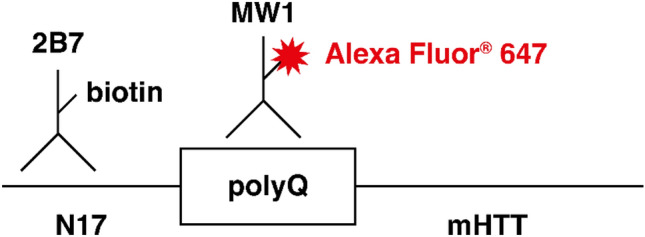
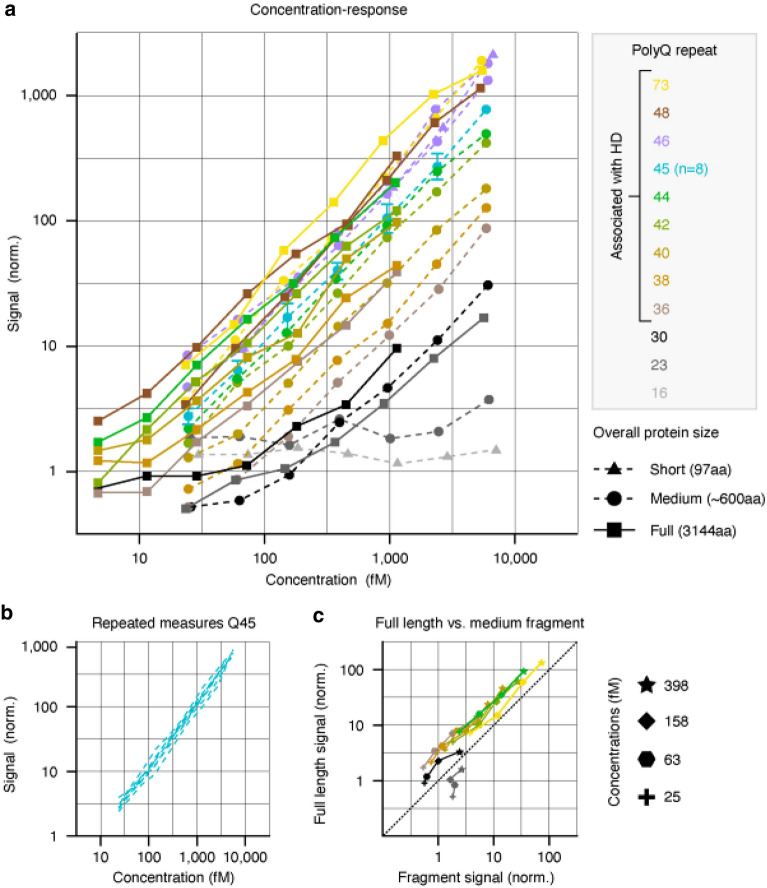
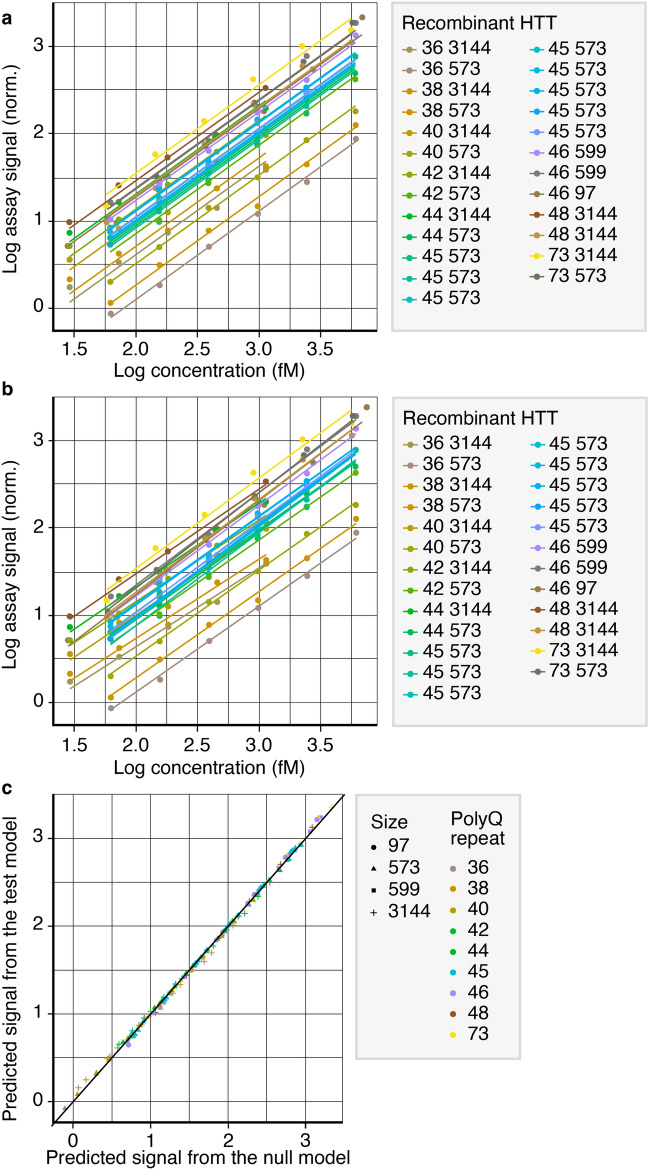
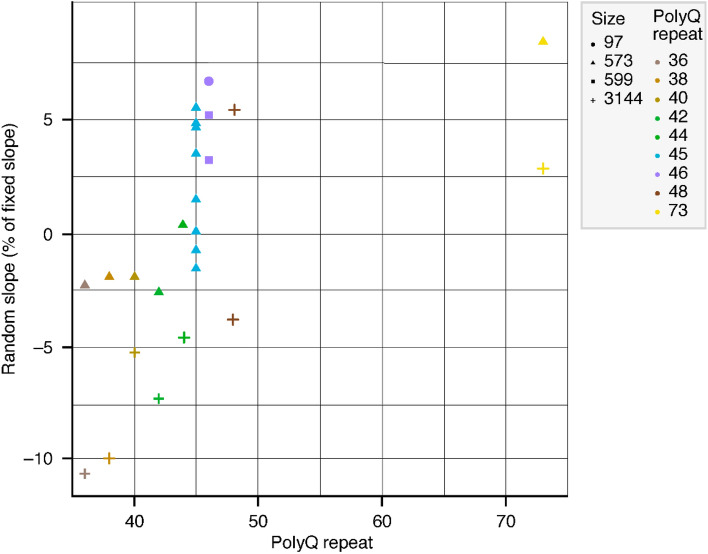
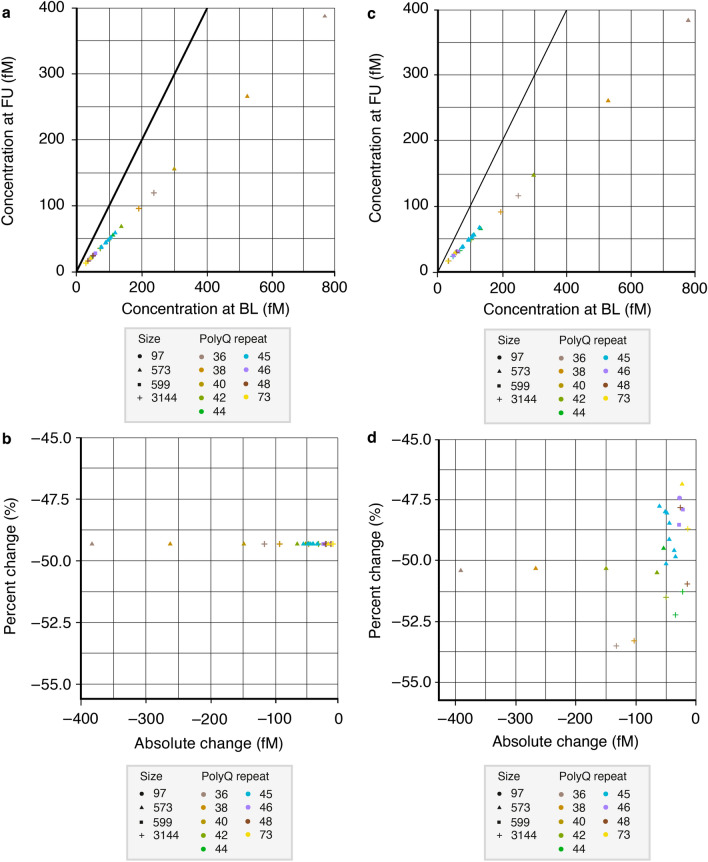
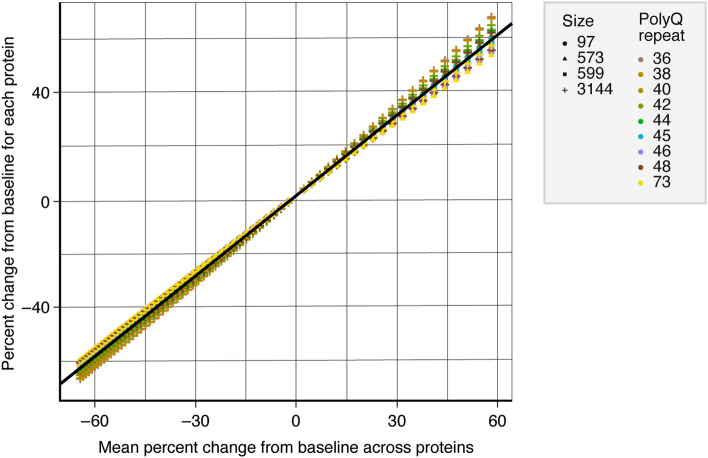
Huntington’s disease (HD) is caused by a cytosine adenine guanine-repeat expansion in the huntingtin gene. This results in the production of toxic mutant huntingtin protein (mHTT), which has an elongated polyglutamine (polyQ) stretch near the protein’s N-terminal end. The pharmacological lowering of mHTT expression in the brain targets the underlying driver of HD and is one of the principal therapeutic strategies being pursued to slow or stop disease progression. This report describes the characterisation and validation of an assay designed to quantify mHTT in the cerebrospinal fluid of individuals with HD, for use in registrational clinical trials. The assay was optimised, and its performance was characterised with recombinant huntingtin protein (HTT) varying in overall and polyQ-repeat length. The assay was successfully validated by two independent laboratories in regulated bioanalytical environments and showed a steep signal increase as the polyQ stretch of recombinant HTTs pivoted from wild-type to mutant protein forms. Linear mixed effects modelling confirmed highly parallel concentration–response curves for HTTs, with only a minor impact of individual slopes of the concentration–response for different HTTs (typically < 5% of the overall slope). This implies an equivalent quantitative signal behaviour for HTTs with differing polyQ-repeat lengths. The reported method may be a reliable biomarker tool with relevance across the spectrum of HD mutations, which can facilitate the clinical development of HTT-lowering therapies in HD.
Overview
The claims and statistics of this paper haven’t been checked yet.
Free: it reads the open-access text and checks the first 5 claims that cite a source we can check. Create a free account to check every claim.
Integrity signals
Registry
Cites
Statistics
Figures
Verification
Claims the paper makes
The claims and statistics of this paper haven’t been checked yet.
Free: it reads the open-access text and checks the first 5 claims that cite a source we can check. Create a free account to check every claim.
Claims other papers make about this one
Each is checked against this paper’s own text: does it say what the citing paper says it does?
The source backs part of the claim, not all of it — or backs it for a different population, condition or comparison.
In the citing paper
“Key biomarkers include polyQ-Htt and Tau, which are detected in the CSF, as well as BDNF, which is measurable in the blood [253,254,255,256].”
From The Impact of Neurotoxin Proteins Trafficked by Primary Cilia and Extracellular Vesicles in Neurodegenerative Diseases (2025) · cites this paper as [253]
Experimental — accuracy not yet measured
Self-check
Percentages, sums and reported differences re-computed from the paper’s own numbers.
The self-check needs the paper’s full text.
Citations
Cites
Huntington's disease: a clinical review
Roos, R. A. (2010) · Orphanet Journal of Rare Diseases · doi:10.1186/1750-1172-5-40 · Cited by 1,037
Huntington disease: natural history, biomarkers and prospects for therapeutics
Ross, C. A., Aylward, E. H., Wild, E. J., Langbehn, D. R., Long, J. D., Warner, J. H., Scahill, R. I., Leavitt, B. R., Stout, J. C., Paulsen, J. S., et al. (2014) · Nature Reviews Neurology · doi:10.1038/nrneurol.2014.24 · Cited by 1,016
Saudou, F., & Humbert, S. (2016) · Neuron · doi:10.1016/j.neuron.2016.02.003 · Cited by 951
Targeting Huntingtin Expression in Patients with Huntington’s Disease
Tabrizi, S. J., Leavitt, B. R., Landwehrmeyer, G. B., Wild, E. J., Saft, C., Barker, R. A., Blair, N. F., Craufurd, D., Priller, J., Rickards, H., et al. (2019) · New England Journal of Medicine · doi:10.1056/nejmoa1900907 · Cited by 708 · cited 3×
“A research-grade version of the assay has been used to analyse HD samples from the Phase I/IIa study of the antisense-oligonucleotide (ASO) tominersen (NCT02519036) (12).”
BackgroundMethodA biological classification of Huntington's disease: the Integrated Staging System
Tabrizi, S. J., Schobel, S., Gantman, E. C., Mansbach, A., Borowsky, B., Konstantinova, P., Mestre, T. A., Panagoulias, J., Ross, C. A., Zauderer, M., et al. (2022) · The Lancet Neurology · doi:10.1016/s1474-4422(22)00120-x · Cited by 342
Huntingtin Lowering Strategies for Disease Modification in Huntington’s Disease
Tabrizi, S. J., Ghosh, R., & Leavitt, B. R. (2019) · Neuron · doi:10.1016/j.neuron.2019.01.039 · Cited by 337
Tabrizi, S. J., Estevez-Fraga, C., van Roon-Mom, W. M. C., Flower, M. D., Scahill, R. I., Wild, E. J., Muñoz-Sanjuan, I., Sampaio, C., Rosser, A. E., & Leavitt, B. R. (2022) · The Lancet Neurology · doi:10.1016/s1474-4422(22)00121-1 · Cited by 331
Wild, E. J., Boggio, R., Langbehn, D., Robertson, N., Haider, S., Miller, J. R. C., Zetterberg, H., Leavitt, B. R., Kuhn, R., Tabrizi, S. J., et al. (2015) · Journal of Clinical Investigation · doi:10.1172/jci80743 · Cited by 268
Good Publication Practice (GPP) Guidelines for Company-Sponsored Biomedical Research: 2022 Update
DeTora, L. M., Toroser, D., Sykes, A., Vanderlinden, C., Plunkett, F. J., Lane, T., Hanekamp, E., Dormer, L., DiBiasi, F., Bridges, D., et al. (2022) · Annals of Internal Medicine · doi:10.7326/m22-1460 · Cited by 258
Aad, G., Abbott, B., Abdallah, J., Abdel Khalek, S., Abdinov, O., Aben, R., Abi, B., Abolins, M., AbouZeid, O. S., Abramowicz, H., et al. (2015) · Physical Review Letters · doi:10.1103/physrevlett.114.072302 · Cited by 207
Byrne, L. M., Rodrigues, F. B., Johnson, E. B., Wijeratne, P. A., De Vita, E., Alexander, D. C., Palermo, G., Czech, C., Schobel, S., Scahill, R. I., et al. (2018) · Science Translational Medicine · doi:10.1126/scitranslmed.aat7108 · Cited by 194
Ko, J., Ou, S., & Patterson, P. H. (2001) · Brain Research Bulletin · doi:10.1016/s0361-9230(01)00599-8 · Cited by 191
Studies of the ‘hook’ effect in the one-step sandwich immunoassay
Fernando, S. A., & Wilson, G. S. (1992) · Journal of Immunological Methods · doi:10.1016/0022-1759(92)90104-2 · Cited by 172
Laboratory Guidelines for Huntington Disease Genetic Testing
Nance, M. A., Seltzer, W., Ashizawa, T., Bennett, R., McIntosh, N., Myers, R. H., Potter, N. T., & Shea, D. K. (1998) · The American Journal of Human Genetics · doi:10.1086/301846 · Cited by 166
Nomenclature for automated and mechanised analysis (Recommendations 1989)
Guilbault, G. G., & Hjelm, M. (1989) · Pure and Applied Chemistry · doi:10.1351/pac198961091657 · Cited by 148
Southwell, A. L., Smith, S. E. P., Davis, T. R., Caron, N. S., Villanueva, E. B., Xie, Y., Collins, J. A., Li Ye, M., Sturrock, A., Leavitt, B. R., et al. (2015) · Scientific Reports · doi:10.1038/srep12166 · Cited by 112
Technical Standards and Guidelines for Huntington Disease Testing
Potter, N. T., Spector, E. B., & Prior, T. W. (2004) · Genetics in Medicine · doi:10.1097/01.gim.0000106165.74751.15 · Cited by 103
Propensity for somatic expansion increases over the course of life in Huntington disease
Kacher, R., Lejeune, F., Noël, S., Cazeneuve, C., Brice, A., Humbert, S., & Dürr, A. (2021) · eLife · doi:10.7554/elife.64674 · Cited by 91
The structure of a polyQ–anti-polyQ complex reveals binding according to a linear lattice model
Li, P., Huey‐Tubman, K. E., Gao, T., Li, X., West, A. P., Bennett, M. J., & Björkman, P. J. (2007) · Nature Structural & Molecular Biology · doi:10.1038/nsmb1234 · Cited by 87
Mutant Huntingtin Is Cleared from the Brain via Active Mechanisms in Huntington Disease
Caron, N. S., Banos, R., Yanick, C., Aly, A. E., Byrne, L. M., Smith, E. D., Xie, Y., Smith, S. E. P., Potluri, N., Findlay Black, H., et al. (2021) · The Journal of Neuroscience · doi:10.1523/jneurosci.1865-20.2020 · Cited by 66
Tu, J., & Bennett, P. K. (2017) · Bioanalysis · doi:10.4155/bio-2017-0084 · Cited by 60
Fodale, V., Boggio, R., Daldin, M., Cariulo, C., Spiezia, M. C., Byrne, L. M., Leavitt, B. R., Wild, E. J., Macdonald, D., Weiss, A., et al. (2017) · Journal of Huntington s Disease · doi:10.3233/jhd-170269 · Cited by 58
Stevenson, L. F., & Purushothama, S. (2014) · Bioanalysis · doi:10.4155/bio.13.292 · Cited by 52
Assessing average somatic CAG repeat instability at the protein level
Aviolat, H., Pinto, R. M., Godschall, E., Murtha, R., Richey, H. E., Sapp, E., Vodička, P., Wheeler, V. C., Kegel-Gleason, K. B., & DiFiglia, M. (2019) · Scientific Reports · doi:10.1038/s41598-019-55202-x · Cited by 24
Cited by
Harnessing BDNF Signaling to Promote Resilience in Aging
Faraji, J., & Metz, G. A. S. (2024) · Aging and Disease · doi:10.14336/ad.2024.0961 · Cited by 29
Aqel, S., Ahmad, J., Saleh, I., Fathima, A., Thani, A. A. A., Mohamed, W. M. Y., & Shaito, A. A. (2025) · Biology · doi:10.3390/biology14020129 · Cited by 23
Heavy Metal Interactions with Neuroglia and Gut Microbiota: Implications for Huntington’s Disease
Tizabi, Y., Bennani, S., Kouhen, N. E., Getachew, B., & Aschner, M. (2024) · Cells · doi:10.3390/cells13131144 · Cited by 19
Systematic Review with Meta‐Analysis of Biofluid Markers for Huntington's Disease
Paulsen, J. S., Bovin, N. A., Clemsen, J. D., Weiss, A., Key, A. M., Janz, M. L., Pinto, A. A., Burks, D. K., Zetterberg, H., & Shannon, K. M. (2025) · Movement Disorders · doi:10.1002/mds.70067 · Cited by 5
Harding, R., Xie, Y., Caron, N. S., Black, H. F., Lyu, C., Potluri, N., Chandrasekaran, R., Hayden, M. R., Leavitt, B. R., Langbehn, D. R., et al. (2025) · Biomarker Research · doi:10.1186/s40364-025-00772-4 · Cited by 4
Metadata
- Authors
- Vauleon, S., Schutz, K., Massonnet, B., Gruben, N., Manchester, M., Buehler, A., Schick, E., Boak, L., & Hawellek, D. J.
- Affiliations
- F. Hoffmann-La Roche AG (CH)
- Corresponding author
- Hawellek, David J.
- Venue
- Scientific Reports
- Published
- 2023-04-01
- Volume
- 13
- Issue
- 1
- Pages
- 5332-5332
- ISSN
- 2045-2322 (ISSN-L)
- PMC
- PMC10067853
- OpenAlex
- W4362520610
- Cited by
- 14
- References
- 26
- Citations by year
- 2026: 6 · 2025: 5 · 2024: 3
- FWCI
- 1.69
- Type
- journal article
- Language
- en
- Open access
- gold
- doi.org
- Licence
- cc-by
- creativecommons.org/licenses/by/4.0 (tdm)
- creativecommons.org/licenses/by/4.0 (vor)
- Locations
- Scientific Reports (publishedVersion, cc-by)
- medRxiv (acceptedVersion, cc-by)
- PubMed Central (publishedVersion, cc-by)
- PubMed (publishedVersion)
- DOAJ (DOAJ: Directory of Open Access Journals) (submittedVersion, cc-by-sa)
- Funders
- F. Hoffmann-La Roche Ltd
- Topics
- Life Sciences › Neuroscience › Cellular and Molecular Neuroscience › Genetic Neurodegenerative Diseases
- Health Sciences › Medicine › Genetics (clinical) › Lysosomal Storage Disorders Research
- Life Sciences › Neuroscience › Cellular and Molecular Neuroscience › Alzheimer's disease research and treatments
- Keywords
- Huntington's disease, mutant huntingtin, cerebrospinal fluid, polyglutamine expansion, biomarker quantification, assay validation, concentration-response curves, CAG repeat expansion
- MeSH terms
- Huntingtin Protein, Humans, Huntington Disease, Recombinant Proteins, Biomarkers, Mutant Proteins
About these checks
Registry, retraction, Cites and statistics results are computed, not judged, with one exception: a printed reference that no index lists is read once by a model before it counts as a citation error. Claims are extracted by a model and kept only when their quote appears verbatim in the text; each cited source is then checked, with a model’s help, for whether it says what the claim relies on. Those verdicts can be wrong — read the claim’s quote and the cited source before relying on one.
Statistics and arithmetic are recomputed, not judged.
Confidence bands are shown only for fields calibrated on our annotated test set. None is calibrated yet, so no band is shown.
What counts as a claim ›How we measure confidence ›How we check this ›
Are you an author, or do you see a problem with this page? Request a review
Data sources
Bibliographic data: Semantic Scholar, OpenAlex, Crossref.
Contains information from the Semantic Scholar Academic Graph Datasets, made available under the ODC Attribution License (ODC-BY 1.0).
Semantic Scholar’s data is described in: Kinney, R., et al. (2023). The Semantic Scholar Open Data Platform. arXiv:2301.10140.
