

The DOI matches its Crossref record; 2 of the 2 references it cites were found in a registry or an index.
Comparison of biomarkers of exposure among US adult smokers, users of electronic nicotine delivery systems, dual users and nonusers, 2018–2019
Abstract
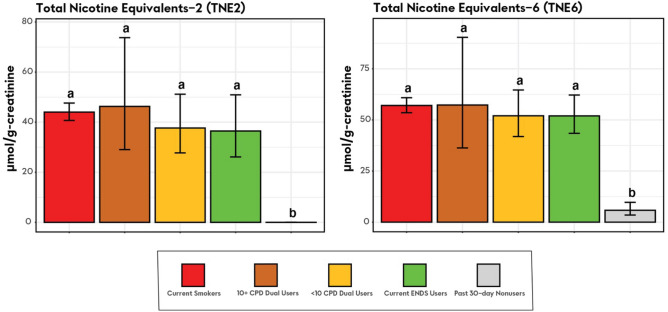
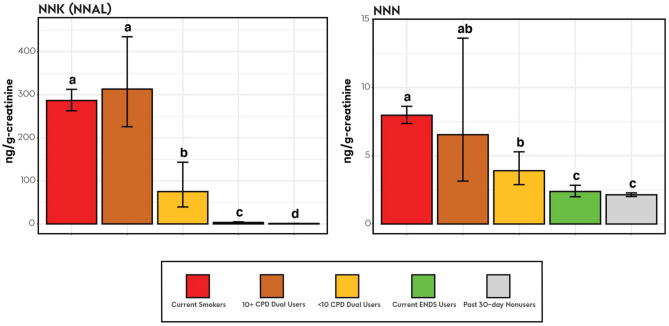
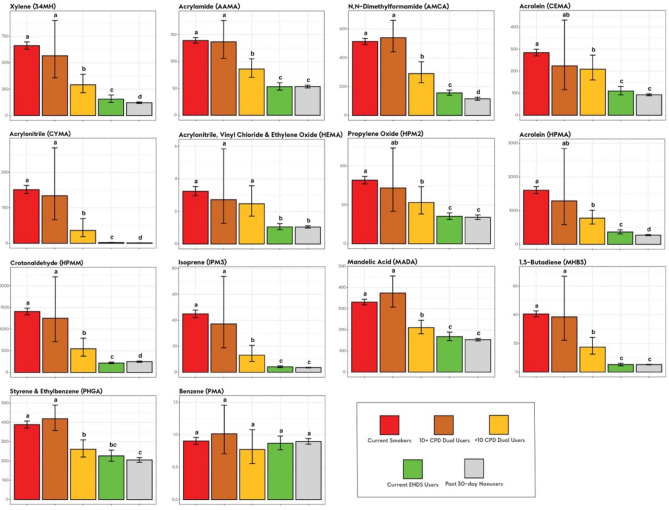
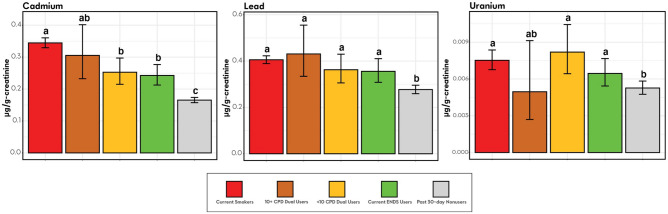
The harm caused by cigarette smoking is overwhelmingly due to byproducts of tobacco combustion. Electronic Nicotine Delivery Systems (ENDS) provide nicotine to users without combustion, and may support tobacco harm reduction among cigarette smokers who would not otherwise quit in the near term. Analyses of Wave 5 of the Population Assessment of Tobacco and Health (PATH) Study compared biomarkers of exposure (BOE) levels for nicotine, 3 metals, 2 tobacco-specific nitrosamines and 14 smoking-related volatile organic compounds in 151 exclusive ENDS users, 1341 exclusive cigarette smokers, 115 dual users (cigarettes and ENDS), and 1846 past 30-day nonusers of tobacco, adjusting for demographics. Nicotine exposure in ENDS users and dual users did not significantly differ from smokers. Among ENDS users, 16 of 18 other BOEs were significantly lower than smokers’; 9 BOEs were not significantly different from nonusers. Among dual users smoking < 10 cigarettes/day, 15 of 18 non-nicotine BOEs were significantly lower than smokers’, whereas in dual users smoking ≥ 10 cigarettes per day none of the BOEs significantly differed from smokers’. In this representative sample of US adults, exclusive use of ENDS (vs. cigarette smoking) was associated with much lower exposures to many harmful chemicals associated with smoking-related disease. BOE levels in dual users were directly related to their cigarette consumption. These BOE data provide further evidence that ENDS expose users to substantially lower levels of toxicants than combustible cigarettes, confirming their potential for harm reduction.
Overview
The claims and statistics of this paper haven’t been checked yet.
Run the check — free, no account needed. It reads the open-access text and checks the sources it cites.
Integrity signals
Registry
Cites
Statistics
Figures
Verification
Claims the paper makes
The claims and statistics of this paper haven’t been checked yet.
Run the check — free, no account needed. It reads the open-access text and checks the sources it cites.
Claims other papers make about this one
Each is checked against this paper’s own text: does it say what the citing paper says it does?
In the citing paper
“In addition, ENDS use also results in intrauterine exposure to several other ENDS vapor constituents, including heavy metals, formaldehydes, volatile organic compounds, and tobacco-specific nitrosamines,34 albeit typically to a lower degree than found in CCs.35-37”
From Birth outcomes following intrauterine exposure to electronic nicotine delivery systems: a systematic review and meta-analysis (2026) · cites this paper as [37]
Self-check
Percentages, sums and reported differences re-computed from the paper’s own numbers.
The self-check needs the paper’s full text.
Citations
Cites
Design and methods of the Population Assessment of Tobacco and Health (PATH) Study
Hyland, A., Ambrose, B. K., Conway, K. P., Borek, N., Lambert, E., Carusi, C., Taylor, K., Crosse, S., Fong, G. T., Cummings, K. M., et al. (2017) · Tobacco Control · doi:10.1136/tobaccocontrol-2016-052934 · Cited by 872
Avoidable global cancer deaths and total deaths from smoking
Jha, P. (2009) · Nature Reviews Cancer · doi:10.1038/nrc2703 · Cited by 522
Research works printed but not linked: 59
- World Health Organization. WHO Report on the Global Tobacco Epidemic, 2017: Monitoring Tobacco Use and Prevention Policies (World Health Organization, 2017).
- Jha, P. & Peto, R. Global effects of smoking, of quitting, and of taxing tobacco. N. Engl. J. Med. 370(1), 60–68 (2014). · DOI · Paper page
- USDHHS. Reports of the Surgeon General, in The Health Consequences of Smoking-50 Years of Progress: A Report of the Surgeon General (Centers for Disease Control and Prevention (US), 2014).
- USDHHS. Publications and Reports of the Surgeon General, in How Tobacco Smoke Causes Disease: The Biology and Behavioral Basis for Smoking-Attributable Disease: A Report of the Surgeon General (Centers for Disease Control and Prevention (US), 2010).
- US Food and Drug Administration. Harmful and potentially harmful constituents in tobacco products and tobacco smoke: Established list. Fed. Regist. 77(64), 20034–20037 (2012).
- Chang, C. et al. Biomarkers of tobacco exposure: Summary of an FDA-sponsored public workshop. Cancer Epidemiol. Biomark. Prev. 26(3), 291–302 (2017). · DOI
- Institute of Medicine. Scientific Standards for Studies on Modified Risk Tobacco Products (The National Academies Press, 2012).
- NASEM In Public Health Consequences of E-Cigarettes (eds Eaton, D. L. et al.) (National Academies Press, 2018). Copyright 2018 by the National Academy of Sciences. All rights reserved, Washington (DC).
- Akiyama, Y. & Sherwood, N. Systematic review of biomarker findings from clinical studies of electronic cigarettes and heated tobacco products. Toxicol. Rep. 8, 282–294 (2021). · DOI
- Hiler, M. et al. Systemic biomarkers of exposure associated with ENDS use: A scoping review. Tob. Control https://doi.org/10.1136/tobaccocontrol-2021-056896 (2021). · DOI
- Hartmann-Boyce, J. et al. Biomarkers of potential harm in people switching from smoking tobacco to exclusive e-cigarette use, dual use or abstinence: Secondary analysis of Cochrane systematic review of trials of e-cigarettes for smoking cessation. Addiction 118, 539–545 (2022). · DOI
- Ward, A. M., Yaman, R. & Ebbert, J. O. Electronic nicotine delivery system design and aerosol toxicants: A systematic review. PLoS One 15(6), e0234189 (2020). · DOI
- Henning, R. et al. Acrolein can cause cardiovascular disease: A review. Cardiovasc. Toxicol. 17(3), 227–236 (2017). · DOI
- Dean, W. L. et al. Effects of the butadiene metabolite diepoxybutane on endothelial cell and platelet function. FASEB J. 23, 739.7 (2009). · DOI
- Soeteman-Hernández, L. G., Bos, P. M. & Talhout, R. Tobacco smoke-related health effects induced by 1,3-butadiene and strategies for risk reduction. Toxicol. Sci. 136(2), 566–580 (2013). · DOI
- Olmedo, P. et al. Metal concentrations in e-cigarette liquid and aerosol samples: The contribution of metallic coils. Environ. Health Perspect. 126(2), 027010 (2018). · DOI
- Williams, M. et al. Metal and silicate particles including nanoparticles are present in electronic cigarette cartomizer fluid and aerosol. PLoS One 8(3), e57987 (2013). · DOI · Paper page
- Potter, N. A. et al. Particulate matter and associated metals: A link with neurotoxicity and mental health. Atmosphere 12(4), 425 (2021). · DOI
- Jaishankar, M. et al. Toxicity, mechanism and health effects of some heavy metals. Interdiscip. Toxicol. 7(2), 60–72 (2014). · DOI · Paper page
- Goniewicz, M. L. et al. Comparison of nicotine and toxicant exposure in users of electronic cigarettes and combustible cigarettes. JAMA Netw. Open 1(8), e185937 (2018). · DOI · Paper page
- De Jesús, V. R. et al. Urinary biomarkers of exposure to volatile organic compounds from the population assessment of tobacco and health study wave 1 (2013–2014). Int. J. Environ. Res. Public Health 17(15), 5408 (2020). · DOI
- Smith, D. M. et al. Exposure to nicotine and toxicants among dual users of tobacco cigarettes and e-cigarettes: Population Assessment of Tobacco and Health (PATH) Study, 2013–2014. Nicotine Tob. Res. 23(5), 790–797 (2021). · DOI
- Majeed, B. et al. Cluster analysis of urinary tobacco biomarkers among U.S. adults: Population Assessment of Tobacco and Health (PATH) biomarker study (2013–2014). Prev. Med. 140, 106218 (2020). · DOI
- Lizhnyak, P. N. et al. Understanding heterogeneity among individuals who smoke cigarettes and vape: Assessment of biomarkers of exposure and potential harm among subpopulations from the PATH Wave 1 Data. Harm. Reduct. J. 19(1), 90 (2022). · DOI
- Anic, G. M. et al. Changes in biomarkers of tobacco exposure among cigarette smokers transitioning to ENDS use: The population assessment of tobacco and health study, 2013–2015. Int. J. Environ. Res. Public Health 19(3), 1462 (2022). · DOI
- Dai, H. et al. Exposure to toxicants associated with use and transitions between cigarettes, e-cigarettes, and no tobacco. JAMA Netw. Open 5(2), e2147891 (2022). · DOI · Paper page
- Cantrell, J. et al. History and current trends in the electronic cigarette retail marketplace in the United States: 2010–2016. Nicotine Tob. Res. 22(5), 843–847 (2018). · DOI
- Coleman, B. et al. An Examination of device types and features used by adult electronic nicotine delivery system (ENDS) users in the PATH study, 2015–2016. Int. J. Environ. Res. Public Health 16(13), 2329 (2019). · DOI
- Ali, F. R. M. et al. E-cigarette unit sales, by product and flavor type—United States, 2014–2020. Morb. Mortal. Wkly. Rep. 69(37), 1313 (2020). · DOI
- Feng, J. et al. Urinary nicotine metabolites and self-reported tobacco use among adults in the population assessment of tobacco and health (PATH) study, 2013–2014. Nicotine Tob. Res. 24(5), 768–777 (2022). · DOI
- Romberg, A. R. et al. Patterns of nicotine concentrations in electronic cigarettes sold in the United States, 2013–2018. Drug Alcohol Depend. 203, 1–7 (2019). · DOI
- Talih, S. et al. Characteristics and toxicant emissions of JUUL electronic cigarettes. Tob. Control 28(6), 678–680 (2019). · DOI
- Baig, S. A. & Giovenco, D. P. Behavioral heterogeneity among cigarette and e-cigarette dual-users and associations with future tobacco use: Findings from the Population Assessment of Tobacco and Health Study. Addict. Behav. 104, 106263 (2020). · DOI
- Oliveri, D., Liang, Q. & Sarkar, M. Real-world evidence of differences in biomarkers of exposure to select harmful and potentially harmful constituents and biomarkers of potential harm between adult e-vapor users and adult cigarette smokers. Nicotine Tob. Res. 22(7), 1114–1122 (2020). · DOI
- Cohen, G. et al. Changes in biomarkers of cigarette smoke exposure after 6 days of switching exclusively or partially to use of the JUUL system with two nicotine concentrations: A randomized controlled confinement study in adult smokers. Nicotine Tob. Res. 23, 2153–2161 (2021). · DOI
- Jay, J. et al. Five-day changes in biomarkers of exposure among adult smokers after completely switching from combustible cigarettes to a nicotine-salt pod system. Nicotine Tob. Res. 22(8), 1285–1293 (2020). · DOI
- Shahab, L. et al. Nicotine, carcinogen, and toxin exposure in long-term e-cigarette and nicotine replacement therapy users: A cross-sectional study. Ann. Intern. Med. 166(6), 390–400 (2017). · DOI · Paper page
- Wang, J. B. et al. Cigarette and e-cigarette dual use and risk of cardiopulmonary symptoms in the Health eHeart Study. PLoS One 13(7), e0198681 (2018). · DOI
- Bhatta, D. N. & Glantz, S. A. Association of e-cigarette use with respiratory disease among adults: A longitudinal analysis. Am. J. Prev. Med. 58(2), 182–190 (2020). · DOI
- Rostron, B. L. et al. Associations of cigarettes smoked per day with biomarkers of exposure among U.S. adult cigarette smokers in the population assessment of tobacco and health (PATH) study wave 1 (2013–2014). Cancer Epidemiol. Biomark. Prev. 28(9), 1443–1453 (2019). · DOI
- Pulvers, K. et al. Effect of pod e-cigarettes vs cigarettes on carcinogen exposure among African American and Latinx smokers: A randomized clinical trial. JAMA Netw. Open 3(11), e2026324 (2020). · DOI
- Cobb, C. O. et al. Tobacco-use behavior and toxicant exposure among current dual users of electronic cigarettes and tobacco cigarettes. Exp. Clin. Psychopharmacol. 29, 625–635 (2021). · DOI
- Czoli, C. D. et al. Biomarkers of exposure among “dual users” of tobacco cigarettes and electronic cigarettes in Canada. Nicotine Tob. Res. 21(9), 1259–1266 (2019). · DOI
- D’Ruiz, C. D., Graff, D. W. & Robinson, E. Reductions in biomarkers of exposure, impacts on smoking urge and assessment of product use and tolerability in adult smokers following partial or complete substitution of cigarettes with electronic cigarettes. BMC Public Health 16(1), 543 (2016). · DOI
- O’Connell, G., Graff, D. W. & D’Ruiz, C. D. Reductions in biomarkers of exposure (BoE) to harmful or potentially harmful constituents (HPHCs) following partial or complete substitution of cigarettes with electronic cigarettes in adult smokers. Toxicol. Mech. Methods 26(6), 443–454 (2016).
- Jacob, P. et al. Biomarkers of exposure for dual use of electronic cigarettes and combustible cigarettes: Nicotelline, NNAL, and total nicotine equivalents. Nicotine Tob. Res. 22(7), 1107–1113 (2020). · DOI
- St Helen, G. et al. Comparison of systemic exposure to toxic and/or carcinogenic volatile organic compounds (VOC) during vaping, smoking, and abstention. Cancer Prev. Res. (Phila) 13(2), 153–162 (2020). · DOI
- Piper, M. E. et al. Dual users compared to smokers: Demographics, dependence, and biomarkers. Nicotine Tob. Res. 21(9), 1279–1284 (2019). · DOI
- Selya, A. S., Shiffman, S., Greenberg, M. & Augustson, E. M. Dual use of cigarettes and JUUL: Trajectory and cigarette consumption. Am. J. Health Behav. 45(3), 464–485 (2021). · DOI
- Zervas, E. et al. Transfer of metals in the liquids of electronic cigarettes. Inhal. Toxicol. 32(6), 240–248 (2020). · DOI
- Na, C. J. et al. The transfer characteristics of heavy metals in electronic cigarette liquid. Environ. Res. 174, 152–159 (2019). · DOI
- Soulet, S. & Sussman, R. A. A critical review of recent literature on metal contents in e-cigarette aerosol. Toxics 10(9), 510 (2022). · DOI
- Tareke, E. et al. Analysis of acrylamide, a carcinogen formed in heated foodstuffs. J. Agric. Food Chem. 50(17), 4998–5006 (2002). · DOI
- Jackson, L. S. & Al-Taher, F. Effects of consumer food preparation on acrylamide formation. Adv. Exp. Med. Biol. 561, 447–465 (2005). · DOI
- Abrams, D. B. et al. Harm minimization and tobacco control: Reframing societal views of nicotine use to rapidly save lives. Annu. Rev. Public Health 39, 193–213 (2018). · DOI
- Abrams, D. B. et al. Managing nicotine without smoke to save lives now: Evidence for harm minimization. Prev. Med. 117, 88–97 (2018). · DOI
- Goldenson, N. I. et al. Differences in switching away from smoking among adult smokers using JUUL products in regions with different maximum nicotine concentrations: North America and the United Kingdom. Nicotine Tob. Res. 23, 1821–1830 (2021). · DOI
- Cobb, C. O. et al. Effect of an electronic nicotine delivery system with 0, 8, or 36 mg/mL liquid nicotine versus a cigarette substitute on tobacco-related toxicant exposure: A four-arm, parallel-group, randomised, controlled trial. Lancet Respir. Med. 9, 840–850 (2021). · DOI
- Foulds, J. et al. Effect of electronic nicotine delivery systems on cigarette abstinence in smokers with no plans to quit: Exploratory analysis of a randomized placebo-controlled trial. Nicotine Tob. Res. 24(7), 955–961 (2021). · DOI
Cited by
Sorted by citations
Johnstone, S., Schenkel, A., Canazzi, S., Eiden, R. D., & Hawk, Jr. (2026) · Nicotine & Tobacco Research · doi:10.1093/ntr/ntag118 · Cited by 2
Metadata
- Authors
- Holt, N. M., Shiffman, S., Black, R. A., Goldenson, N. I., Sembower, M. A., & Oldham, M. J.
- Venue
- Scientific Reports
- Published
- 2023-05-05
- Volume
- 13
- Issue
- 1
- ISSN
- 2045-2322
- PMC
- PMC10163269
- Cited by
- 54
- References
- 2
- Language
- en
- Funders
- Juul Labs, Inc.
About these checks
Registry, retraction, Cites and statistics results are computed, not judged, with one exception: a printed reference that no index lists is read once by a model before it counts as a citation error. Claims are extracted by a model and kept only when their quote appears verbatim in the text; each cited source is then checked, with a model’s help, for whether it says what the claim relies on. Those verdicts can be wrong — read the claim’s quote and the cited source before relying on one.
Statistics and arithmetic are recomputed, not judged.
Confidence bands are shown only for fields calibrated on our annotated test set. None is calibrated yet, so no band is shown.
What counts as a claim ›How we measure confidence ›How we check this ›
Are you an author, or do you see a problem with this page? Request a review
How to cite
Cite CoChat for the checks on this page, and the paper for its own findings.
- This page
- CoChat. (2026). Citation check: Comparison of biomarkers of exposure among US adult smokers, users of electronic nicotine delivery systems, dual users and nonusers, 2018–2019. https://app.cochat.ai/papers/10.1038/s41598-023-34427-x
- The paper
- Holt, N. M., Shiffman, S., Black, R. A., Goldenson, N. I., Sembower, M. A., & Oldham, M. J. (2023). Comparison of biomarkers of exposure among US adult smokers, users of electronic nicotine delivery systems, dual users and nonusers, 2018–2019. Scientific Reports. https://doi.org/10.1038/s41598-023-34427-x
