

The DOI matches its Crossref record; 40 of the 42 references it cites were found in a registry or an index; 2 of the 9 sources its claims cite were checked for support.
Deep fake detection and classification using error-level analysis and deep learning
Open accessAbstract
Due to the wide availability of easy-to-access content on social media, along with the advanced tools and inexpensive computing infrastructure, has made it very easy for people to produce deep fakes that can cause to spread disinformation and hoaxes. This rapid advancement can cause panic and chaos as anyone can easily create propaganda using these technologies. Hence, a robust system to differentiate between real and fake content has become crucial in this age of social media. This paper proposes an automated method to classify deep fake images by employing Deep Learning and Machine Learning based methodologies. Traditional Machine Learning (ML) based systems employing handcrafted feature extraction fail to capture more complex patterns that are poorly understood or easily represented using simple features. These systems cannot generalize well to unseen data. Moreover, these systems are sensitive to noise or variations in the data, which can reduce their performance. Hence, these problems can limit their usefulness in real-world applications where the data constantly evolves. The proposed framework initially performs an Error Level Analysis of the image to determine if the image has been modified. This image is then supplied to Convolutional Neural Networks for deep feature extraction. The resultant feature vectors are then classified via Support Vector Machines and K-Nearest Neighbors by performing hyper-parameter optimization. The proposed method achieved the highest accuracy of 89.5% via Residual Network and K-Nearest Neighbor. The results prove the efficiency and robustness of the proposed technique; hence, it can be used to detect deep fake images and reduce the potential threat of slander and propaganda.
Overview
CoChat Summary
## TL;DR
The paper proposes a deepfake image detection pipeline that combines error level analysis (ELA), pretrained CNN feature extraction, and SVM/KNN classification. On the Yonsei University real/fake face dataset, it reports a best accuracy of 89.5%.
## Key findings
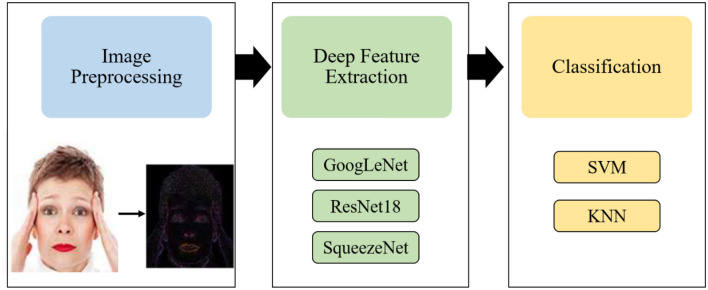
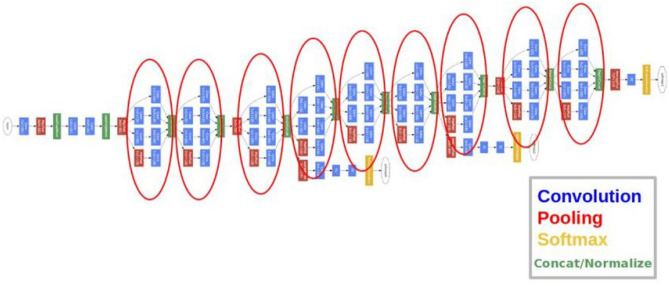
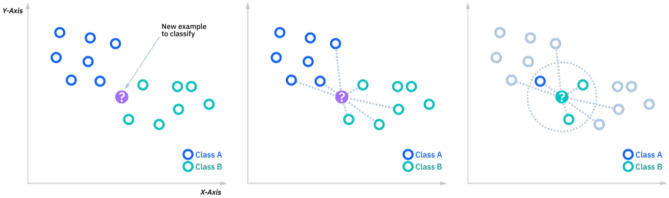
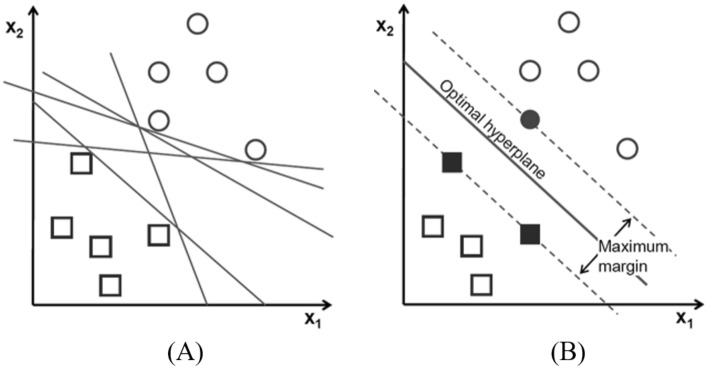
- The proposed framework preprocesses images with ELA, then extracts deep features using pretrained CNNs (GoogLeNet, ResNet18, SqueezeNet), and classifies them with SVM and KNN.
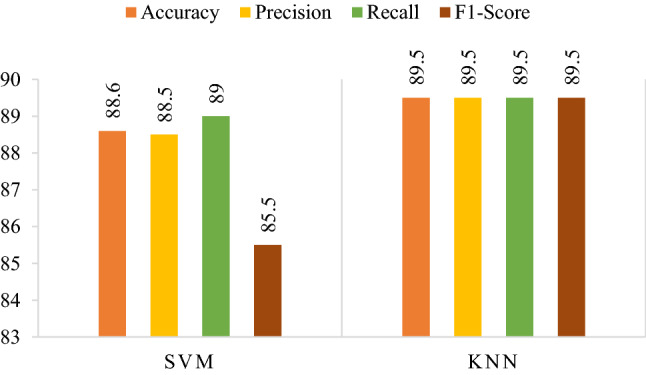
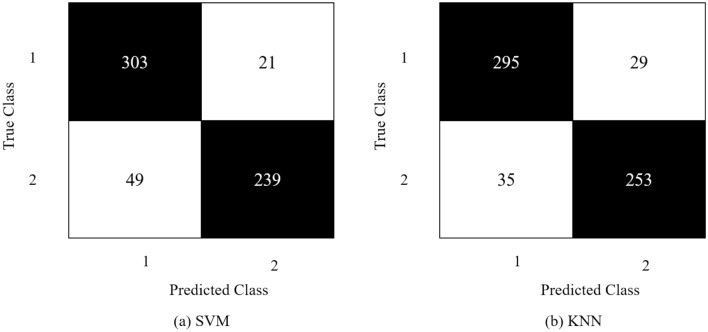
- The best reported performance was 89.5% accuracy using ResNet18 features with KNN in one place, and 89.5% accuracy using ResNet18’s feature vector with SVM in the conclusion; the paper is internally inconsistent about which classifier achieved the top score.
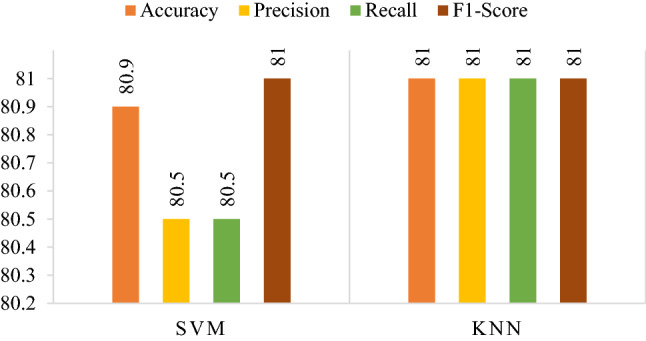
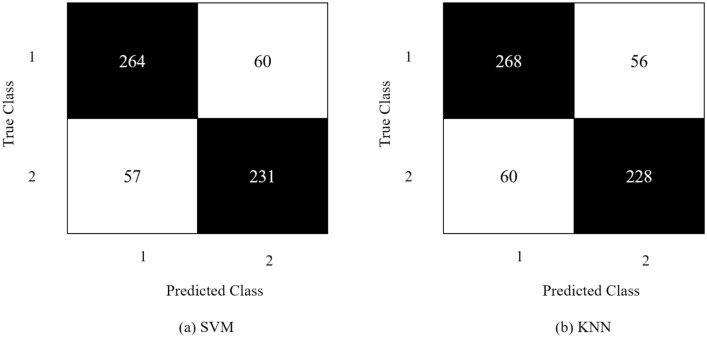
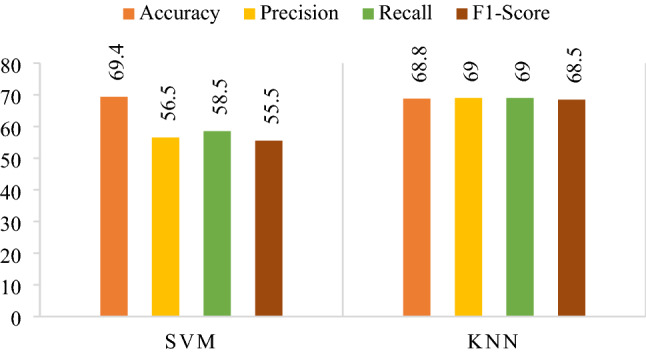
- For the other feature extractors, the paper reports 81% accuracy for GoogLeNet + KNN, 80.9% for GoogLeNet + SVM, 69.4% for SqueezeNet + SVM, and 68.8% for SqueezeNet + KNN.
- The authors say the method outperformed several prior deepfake detection approaches and claim it can detect deepfake images in real time.
## Methods
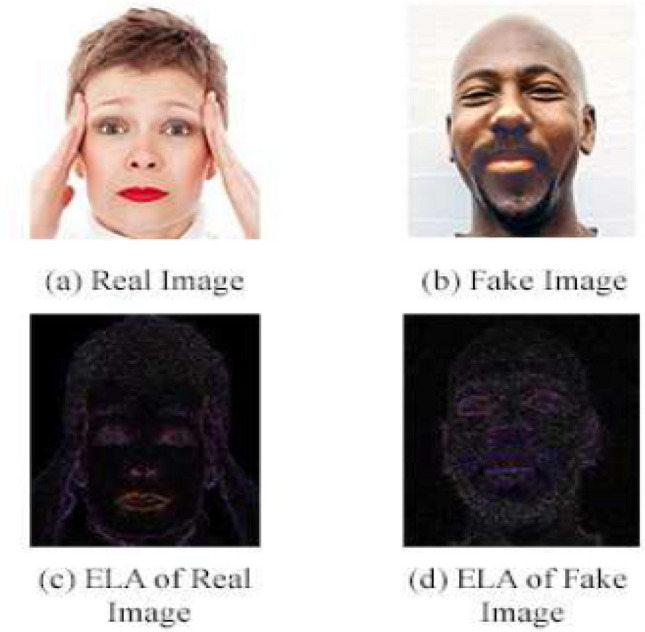
- The pipeline has three steps: (i) resize images and generate ELA to detect pixel-level alterations, (ii) extract deep features using pretrained CNNs, and (iii) classify features with SVM and KNN after hyperparameter optimization.
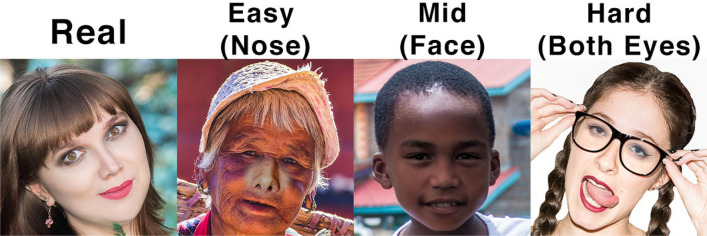
- The dataset is a publicly accessible Yonsei University Computational Intelligence and Photography Lab real/fake face database, containing labeled real and fake face images with metadata such as age, gender, ethnicity, and manipulation type; manipulated images are split into easy, mid, and hard categories.
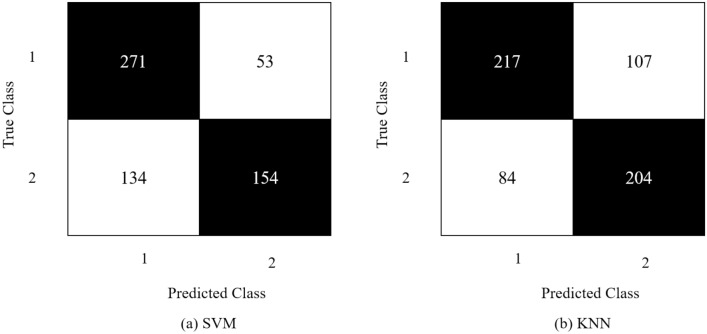
- Performance was evaluated with accuracy, precision, recall, and F1-score, using confusion matrices and parameter tuning for both classifiers.
## Limitations
- The paper explicitly says the proposed method is developed using image-based data and that future work should test video-based deepfake datasets.
- The text also notes that the authors aim to obtain a real-life deepfake dataset in future work, implying limited ecological coverage in the current study.
- Evident from the text: the reported results are somewhat hard to interpret because the paper gives inconsistent attributions of the top 89.5% result to different classifier pairings (ResNet18+KNN vs. ResNet18+SVM).
Model-written summary. Check it against the paper before relying on it.
Integrity signals
Registry
Cites
Statistics
Figures
Verification
Claims the paper makes
0 Valid · 2 Not valid · 4 Not checked · 13 Own results and interpretations
A result the paper reports from its own data — it cites no other source for it, so there is none to check. The quote shows it is in the paper.
In the paper
“Moreover, the feature vector obtained from GoogLeNet’s obtained the highest accuracy of 81% via KNN on Chebyshev as a distance metric with a total number of 154 neighbours.”
§ Deep fake detection and classification using error-level analysis and deep learning > Results and discussion > Proposed method results
plainstates an association- Asserted: passes — The authors put it forward as true.
- Checkable: passes — It can be checked against evidence.
- Load-bearing: passes — The paper’s conclusions depend on it.
- Based: passes — The paper gives a reason why it holds.
A result the paper states — it cites no source for it, so there is none to check. The quote shows it is in the paper.
In the paper
“The proposed technique achieved highest accuracy of 89.5% via ResNet18’s feature vector & SVM classifier.”
§ Deep fake detection and classification using error-level analysis and deep learning > Conclusion
plainstates a cause- Asserted: passes — The authors put it forward as true.
- Checkable: passes — It can be checked against evidence.
- Load-bearing: passes — The paper’s conclusions depend on it.
- Based: passes — The paper gives a reason why it holds.
A result the paper reports from its own data — it cites no other source for it, so there is none to check. The quote shows it is in the paper.
In the paper
“SVM and KNN classified the feature vector from SqueezeNet via 69.4% and 68.8%, respectively.”
§ Deep fake detection and classification using error-level analysis and deep learning > Results and discussion > Proposed method results
plain- Asserted: passes — The authors put it forward as true.
- Checkable: passes — It can be checked against evidence.
- Load-bearing: unclear — It is unclear whether the paper’s conclusions depend on it.
- Based: passes — The paper gives a reason why it holds.
A result the paper reports from its own data — it cites no other source for it, so there is none to check. The quote shows it is in the paper.
In the paper
“SVM achieved 88.6% accuracy on Gaussian Kernel with a 2.3 scale.”
§ Deep fake detection and classification using error-level analysis and deep learning > Results and discussion > Proposed method results
plain- Asserted: passes — The authors put it forward as true.
- Checkable: passes — It can be checked against evidence.
- Load-bearing: unclear — It is unclear whether the paper’s conclusions depend on it.
- Based: passes — The paper gives a reason why it holds.
A result the paper reports from its own data — it cites no other source for it, so there is none to check. The quote shows it is in the paper.
In the paper
“The SVM classified the feature vector with 80.9% accuracy on Gaussian kernel with a 0.41 kernel scale.”
§ Deep fake detection and classification using error-level analysis and deep learning > Results and discussion > Proposed method results
plain- Asserted: passes — The authors put it forward as true.
- Checkable: passes — It can be checked against evidence.
- Load-bearing: unclear — It is unclear whether the paper’s conclusions depend on it.
- Based: passes — The paper gives a reason why it holds.
6 more claims
Create a free account to see all 19 claims and to verify the 1 reference still open.
- Probably not a substantial claim. 4
- It may state two separate claims as one. 4
- The quote only partly states this claim. 1
Self-check
Percentages, sums and reported differences re-computed from the paper’s own numbers.
Each contradiction between two passages listed here was confirmed by an independent check.
Rated major: it would touch a result — a value a result rests on, reported and recomputed p-values on opposite sides of the significance level, two passages that conflict with no sign which is right, or a cited work retracted before this paper was published.
In the paper
§ Deep fake detection and classification using error-level analysis and deep learning > Results and discussion > Comparison with state-of-the-art methods
“The proposed method achieved highest accuracy of 89.5% via ResNet18 and KNN.”
§ Deep fake detection and classification using error-level analysis and deep learning > Conclusion
“The proposed technique achieved highest accuracy of 89.5% via ResNet18’s feature vector & SVM classifier.”
Rated major: it would touch a result — a value a result rests on, reported and recomputed p-values on opposite sides of the significance level, two passages that conflict with no sign which is right, or a cited work retracted before this paper was published.
In the paper
§ Deep fake detection and classification using error-level analysis and deep learning > Abstract
“The proposed method achieved the highest accuracy of 89.5% via Residual Network and K-Nearest Neighbor.”
§ Deep fake detection and classification using error-level analysis and deep learning > Conclusion
“The proposed technique achieved highest accuracy of 89.5% via ResNet18’s feature vector & SVM classifier.”
Cited works that were retracted
Works this paper cites that were later retracted, from the retraction notices publishers deposit. Major when the notice came out before this paper was published.
A note, not an issue: for example, a cited work that was retracted only after this paper was published, which its authors could not have known.
In the paper
“Shad, H.S. et al. Comparative Analysis of Deepfake Image Detection Method Using Convolutional Neural Network. Vol. 2021 (2021).”
Cited work 10.1155/2021/3111676 · retracted 2023-11-29 · notice 10.1155/2023/9767530 · this paper published 2023-05-08
Citations
Cites
1 retracted
Shad, H. S., Rizvee, M. M., Roza, N. T., Hoq, S. M. A., Khan, M. M., Singh, A., Zaguia, A., & Bourouis, S. (2021) · Computational Intelligence and Neuroscience · doi:10.1155/2021/3111676 · Cited by 117
RetractedDeep Residual Learning for Image Recognition
He, K., Zhang, X., Ren, S., & Sun, J. (2016) · 2016 IEEE Conference on Computer Vision and Pattern Recognition (CVPR) · doi:10.1109/cvpr.2016.90 · Cited by 235,474
LeCun, Y., Bengio, Y., & Hinton, G. (2015) · Nature · doi:10.1038/nature14539 · Cited by 84,126
Densely Connected Convolutional Networks
Huang, G., Liu, Z., Van Der Maaten, L., & Weinberger, K. Q. (2017) · 2017 IEEE Conference on Computer Vision and Pattern Recognition (CVPR) · doi:10.1109/cvpr.2017.243 · Cited by 48,566
Going deeper with convolutions
Szegedy, C., Liu, W., Jia, Y., Sermanet, P., Reed, S., Anguelov, D., Erhan, D., Vanhoucke, V., & Rabinovich, A. (2015) · 2015 IEEE Conference on Computer Vision and Pattern Recognition (CVPR) · doi:10.1109/cvpr.2015.7298594 · Cited by 48,562
Understanding of a convolutional neural network
Albawi, S., Mohammed, T. A., & Al-Zawi, S. (2017) · 2017 International Conference on Engineering and Technology (ICET) · doi:10.1109/icengtechnol.2017.8308186 · Cited by 3,986
FaceForensics++: Learning to Detect Manipulated Facial Images
Rossler, A., Cozzolino, D., Verdoliva, L., Riess, C., Thies, J., & Niessner, M. (2019) · 2019 IEEE/CVF International Conference on Computer Vision (ICCV) · doi:10.1109/iccv.2019.00009 · Cited by 3,314
MesoNet: a Compact Facial Video Forgery Detection Network
Afchar, D., Nozick, V., Yamagishi, J., & Echizen, I. (2018) · 2018 IEEE International Workshop on Information Forensics and Security (WIFS) · doi:10.1109/wifs.2018.8630761 · Cited by 1,872
Face2Face: Real-Time Face Capture and Reenactment of RGB Videos
Thies, J., Zollhofer, M., Stamminger, M., Theobalt, C., & Niessner, M. (2016) · 2016 IEEE Conference on Computer Vision and Pattern Recognition (CVPR) · doi:10.1109/cvpr.2016.262 · Cited by 1,747
Deepfake Video Detection Using Recurrent Neural Networks
Guera, D., & Delp, E. J. (2018) · 2018 15th IEEE International Conference on Advanced Video and Signal Based Surveillance (AVSS) · doi:10.1109/avss.2018.8639163 · Cited by 1,285
Research works printed but not linked: 6
- Boylan, J. F. Will Deep-Fake Technology Destroy Democracy (The New York Times, 2018).
- Harwell, D. Scarlett Johansson on fake AI-generated sex videos:‘Nothing can stop someone from cutting and pasting my image’. J. Washigton Post 31, 12 (2018).
- Schroepfer, M. J. F. Creating a data set and a challenge for deepfakes. Artif. Intell. 5, 263 (2019).
- Agarwal, S., Farid, H., Gu, Y., He, M., Nagano, K. & Li, H. Protecting world leaders against deep fakes. in CVPR Workshops. Vol. 1. 38 (2019).
- Salman, F. M. & Abu-Naser, S. S. Classification of real and fake human faces using deep learning. IJAER 6(3), 1–14 (2022).
- He, K., Zhang, X., Ren, S. & Sun, J. Deep residual learning for image recognition. in Proceedings of the IEEE Conference on Computer Vision and Pattern Recognition, Las Vegas, USA. 770–778 (2016). · DOI · Paper page
Cited by
Deepfake detection using convolutional vision transformers and convolutional neural networks
Soudy, A. H., Sayed, O., Tag-Elser, H., Ragab, R., Mohsen, S., Mostafa, T., Abohany, A. A., & Slim, S. O. (2024) · Neural Computing and Applications · doi:10.1007/s00521-024-10181-7 · Cited by 129
Time series forecasting and anomaly detection using deep learning
Iqbal, A., & Amin, R. (2023) · Computers & Chemical Engineering · doi:10.1016/j.compchemeng.2023.108560 · Cited by 87
Self-citationMulticlass AI-Generated Deepfake Face Detection Using Patch-Wise Deep Learning Model
Arshed, M. A., Mumtaz, S., Ibrahim, M., Dewi, C., Tanveer, M., & Ahmad, S. (2024) · Computers · doi:10.3390/computers13010031 · Cited by 98
Enhanced deepfake detection with densenet and cross-vit
Siddiqui, F., Yang, J., Xiao, S., & Fahad, M. (2025) · Expert Systems with Applications · doi:10.1016/j.eswa.2024.126150 · Cited by 62
A Review of Deepfake Techniques: Architecture, Detection and Datasets
Edwards, P., Nebel, J.-C., Greenhill, D., & Liang, X. (2024) · IEEE Access · doi:10.1109/access.2024.3477257 · Cited by 50
Metadata
- Authors
- Rafique, R., Gantassi, R., Amin, R., Frnda, J., Mustapha, A., & Alshehri, A. H.
- Affiliations
- University of Engineering and Technology Taxila (PK)
- Chonnam National University (KR)
- VSB - Technical University of Ostrava (CZ)
- Tun Hussein Onn University of Malaysia (MY)
- Shaqra University (SA)
- Corresponding author
- Amin, Rashid
- Venue
- Scientific Reports
- Published
- 2023-05-08
- Volume
- 13
- Issue
- 1
- Pages
- 7422-7422
- ISSN
- 2045-2322 (ISSN-L)
- PMC
- PMC10167215
- OpenAlex
- W4375955734
- Cited by
- 155
- References
- 42
- Citations by year
- 2026: 31 · 2025: 68 · 2024: 49 · 2023: 7
- FWCI
- 14.04
- Type
- journal article
- Language
- en
- Open access
- gold
- doi.org
- Licence
- cc-by
- creativecommons.org/licenses/by/4.0 (tdm)
- creativecommons.org/licenses/by/4.0 (vor)
- Locations
- Scientific Reports (publishedVersion, cc-by)
- PubMed Central (publishedVersion, cc-by)
- PubMed (publishedVersion)
- DOAJ (DOAJ: Directory of Open Access Journals) (submittedVersion, cc-by-sa)
- DSpace VŠB-TUO (VŠB-TUO) (submittedVersion, cc-by)
- Greater South Information System
- Funders
- Ministerstvo Školství, Mládeže a Tělovýchovy
- Ostravská Univerzita v Ostravě
- Topics
- Physical Sciences › Computer Science › Computer Vision and Pattern Recognition › Digital Media Forensic Detection
- Social Sciences › Sociology and Political Science › Misinformation and Its Impacts
- Physical Sciences › Computer Science › Computer Vision and Pattern Recognition › Advanced Steganography and Watermarking Techniques
- Keywords
- deepfake detection, error level analysis, image modification detection, convolutional neural networks, ResNet, support vector machine, k-nearest neighbors, disinformation, social media hoaxes, hyperparameter optimization
About these checks
Registry, retraction, Cites and statistics results are computed, not judged, with one exception: a printed reference that no index lists is read once by a model before it counts as a citation error. Claims are extracted by a model and kept only when their quote appears verbatim in the text; each cited source is then checked, with a model’s help, for whether it says what the claim relies on. Those verdicts can be wrong — read the claim’s quote and the cited source before relying on one.
The claim verdicts this report counts are experimental: their accuracy is not yet measured.
A language model drew the claims from the paper on 2026-10-10, under version 3 of the claim definition (model deepseek-v4.1-flash, prompt extract-v3).
A second model labelled each claim on 2026-10-10 (model jev-1.13-20260917, definition revision gold-guideline-v0.2).
Statistics and arithmetic are recomputed, not judged.
Confidence bands are shown only for fields calibrated on our annotated test set. None is calibrated yet, so no band is shown.
What counts as a claim ›How we measure confidence ›How we check this ›
Are you an author, or do you see a problem with this page? Request a review
How to cite
Cite CoChat for the checks on this page, and the paper for its own findings.
- This page
- CoChat. (2026). Citation check: Deep fake detection and classification using error-level analysis and deep learning. https://app.cochat.ai/papers/10.1038/s41598-023-34629-3
- The paper
- Rafique, R., Gantassi, R., Amin, R., Frnda, J., Mustapha, A., & Alshehri, A. H. (2023). Deep fake detection and classification using error-level analysis and deep learning. Scientific Reports. https://doi.org/10.1038/s41598-023-34629-3
Data sources
Bibliographic data: Semantic Scholar, OpenAlex, Crossref.
Contains information from the Semantic Scholar Academic Graph Datasets, made available under the ODC Attribution License (ODC-BY 1.0).
Semantic Scholar’s data is described in: Kinney, R., et al. (2023). The Semantic Scholar Open Data Platform. arXiv:2301.10140.
