

Machine learning predictive model for aspiration screening in hospitalized patients with acute stroke
Open accessThe DOI matches its Crossref record; 76 of the 76 references it cites were found in a registry or an index.
Abstract
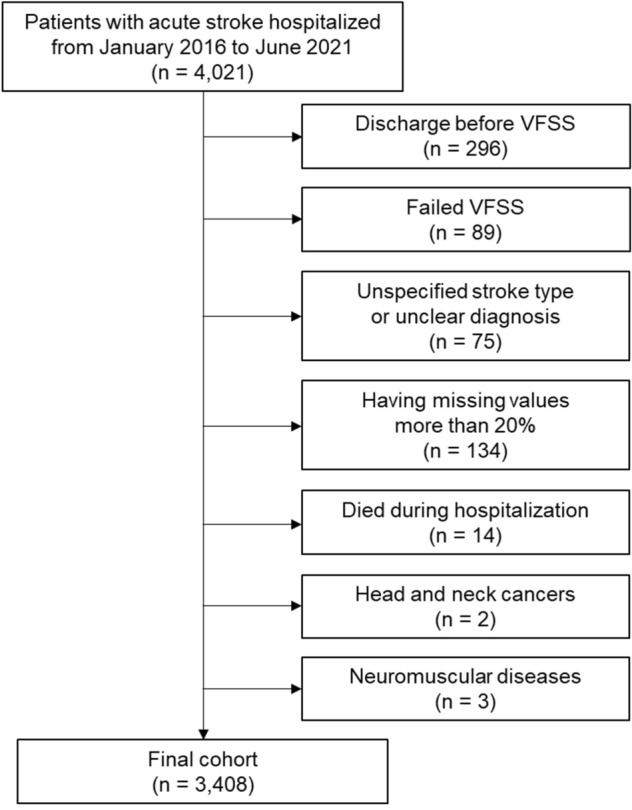
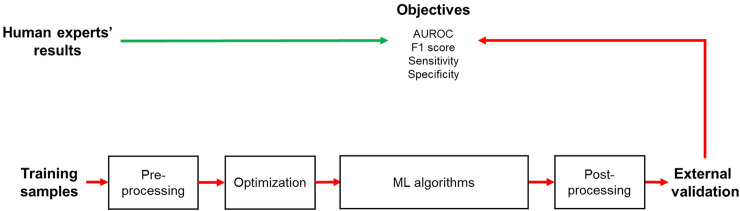
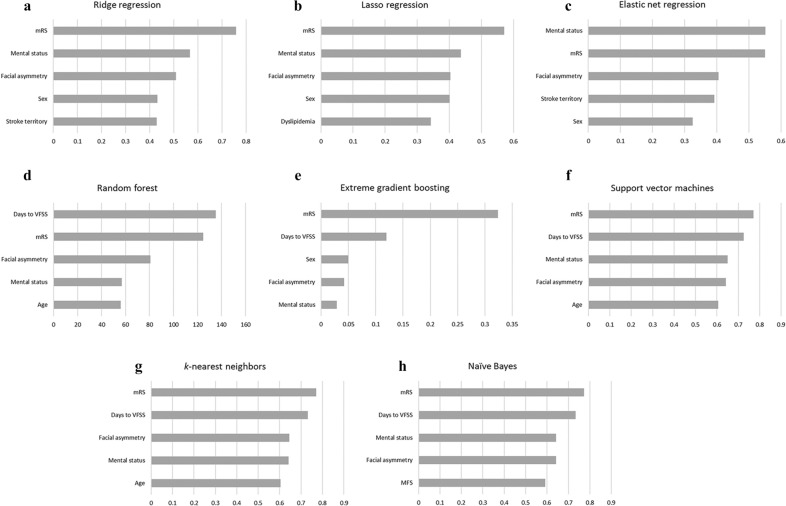
Dysphagia is a fatal condition after acute stroke. We established machine learning (ML) models for screening aspiration in patients with acute stroke. This retrospective study enrolled patients with acute stroke admitted to a cerebrovascular specialty hospital between January 2016 and June 2022. A videofluoroscopic swallowing study (VFSS) confirmed aspiration. We evaluated the Gugging Swallowing Screen (GUSS), an early assessment tool for dysphagia, in all patients and compared its predictive value with ML models. Following ML algorithms were applied: regularized logistic regressions (ridge, lasso, and elastic net), random forest, extreme gradient boosting, support vector machines,k-nearest neighbors, and naïve Bayes. We finally analyzed data from 3408 patients, and 448 of them had aspiration on VFSS. The GUSS showed an area under the receiver operating characteristics curve (AUROC) of 0.79 (0.77–0.81). The ridge regression model was the best model among all ML models, with an AUROC of 0.81 (0.76–0.86), an F1 measure of 0.45. Regularized logistic regression models exhibited higher sensitivity (0.66–0.72) than the GUSS (0.64). Feature importance analyses revealed that the modified Rankin scale was the most important feature of ML performance. The proposed ML prediction models are valid and practical for screening aspiration in patients with acute stroke.
Overview
The claims and statistics of this paper haven’t been checked yet.
Free: it reads the open-access text and checks the first 5 claims that cite a source we can check. Create a free account to check every claim.
Integrity signals
Registry
Cites
Statistics
Figures
Verification
Claims the paper makes
The claims and statistics of this paper haven’t been checked yet.
Free: it reads the open-access text and checks the first 5 claims that cite a source we can check. Create a free account to check every claim.
Claims other papers make about this one
Each is checked against this paper’s own text: does it say what the citing paper says it does?
The source backs part of the claim, not all of it — or backs it for a different population, condition or comparison.
In the citing paper
“Videofluoroscopy of swallowing was used as the reference examination in most studies.”
From Artificial intelligence in the diagnosis and management of dysphagia: a scoping review (2025) · cites this paper as [16]
Experimental — accuracy not yet measuredThe source backs part of the claim, not all of it — or backs it for a different population, condition or comparison.
In the citing paper
“Studies on AI in dysphagia primarily rely on imaging resources such as VFSS for comparative analysis due to its high reliability(16,23-28).”
From Artificial intelligence in the diagnosis and management of dysphagia: a scoping review (2025) · cites this paper as [16]
Experimental — accuracy not yet measuredThe cited source says what the claim attributes to it.
In the citing paper
“with stroke being the most cited in 12 studies(16,18,21,22,27,32,36,40,46,48-51)”
From Artificial intelligence in the diagnosis and management of dysphagia: a scoping review (2025) · cites this paper as [16]
The cited source says what the claim attributes to it.
In the citing paper
“In research, the most addressed pathologies in adults were predominantly related to the neurological area, with stroke being highlighted in several studies(16,21,22,24,27,36,40,46,48-51).”
From Artificial intelligence in the diagnosis and management of dysphagia: a scoping review (2025) · cites this paper as [16]
Self-check
Percentages, sums and reported differences re-computed from the paper’s own numbers.
The self-check needs the paper’s full text.
Citations
Cites
XGBoost: A Scalable Tree Boosting System
Chen, T., & Guestrin, C. (2016) · Proceedings of the 22nd ACM SIGKDD International Conference on Knowledge Discovery and Data Mining · doi:10.1145/2939672.2939785 · Cited by 54,569
Rosuvastatin to Prevent Vascular Events in Men and Women with Elevated C-Reactive Protein
Ridker, P. M., Danielson, E., Fonseca, F. A. H., Genest, J., Gotto, A. M., Kastelein, J. J. P., Koenig, W., Libby, P., Lorenzatti, A. J., MacFadyen, J. G., et al. (2008) · New England Journal of Medicine · doi:10.1056/nejmoa0807646 · Cited by 6,674 · cited 1×
“In a previous study, Scheitz et al. 69 reported that statin users’ risk of post-stroke pneumonia was reduced; the results of this study supported their findings, which might be related to the intravascular anti-inflammatory effect of statin 70 .”
What is a support vector machine?
Noble, W. S. (2006) · Nature Biotechnology · doi:10.1038/nbt1206-1565 · Cited by 4,301
A penetration-aspiration scale
Rosenbek, J. C., Robbins, J. A., Roecker, E. B., Coyle, J. L., & Wood, J. L. (1996) · Dysphagia · doi:10.1007/bf00417897 · Cited by 2,803 · cited 1×
“We defined aspiration, the target outcome of this study, as the detection of one or more swallowing with a Penetration-Aspiration scale score of 6–8 on the VFSS during hospitalization 39 .”
Dysphagia After Stroke: Incidence, Diagnosis, and Pulmonary Complications
Martino, R., Foley, N., Bhogal, S., Diamant, N., Speechley, M., & Teasell, R. (2005) · Stroke · doi:10.1161/01.str.0000190056.76543.eb · Cited by 1,973
Dong, X., Yu, Z., Cao, W., Shi, Y., & Ma, Q. (2020) · Frontiers of Computer Science · doi:10.1007/s11704-019-8208-z · Cited by 1,928 · cited 1×
“This method helps more accurate prediction by combining several weaker models instead of one robust model, and bagging and boosting types are the most representative 47,48 .”
Validity and Reliability of the Eating Assessment Tool (EAT-10)
Belafsky, P. C., Mouadeb, D. A., Rees, C. J., Pryor, J. C., Postma, G. N., Allen, J., & Leonard, R. J. (2008) · Annals of Otology, Rhinology & Laryngology · doi:10.1177/000348940811701210 · Cited by 1,751 · cited 1×
“In particular, questionnaires such as the dysphagia handicap index and eating assessment tool-10 are relatively more restricted by the limitations mentioned above, although they have the advantage of being non-invasive, unlike the GUSS 16,17 .”
Stroke-Associated Pneumonia: Major Advances and Obstacles
Hannawi, Y., Hannawi, B., Rao, C. P. V., Suarez, J. I., & Bershad, E. M. (2013) · Cerebrovascular Diseases · doi:10.1159/000350199 · Cited by 1,656
Introduction to machine learning: k-nearest neighbors
Zhang, Z. (2016) · Annals of Translational Medicine · doi:10.21037/atm.2016.03.37 · Cited by 1,294 · cited 1×
“KNN works by finding the nearest neighbors based on the distance between data points and predicting the label of new data by referring to the labels of those neighbors 58 .”
Machine learning in medicine: a practical introduction
Sidey-Gibbons, J. A. M., & Sidey-Gibbons, C. J. (2019) · BMC Medical Research Methodology · doi:10.1186/s12874-019-0681-4 · Cited by 1,271
eD octor: machine learning and the future of medicine
Handelman, G. S., Kok, H. K., Chandra, R. V., Razavi, A. H., Lee, M. J., & Asadi, H. (2018) · Journal of Internal Medicine · doi:10.1111/joim.12822 · Cited by 956
A User’s Guide to Support Vector Machines
Ben-Hur, A., & Weston, J. (2010) · Methods in Molecular Biology · doi:10.1007/978-1-60327-241-4_13 · Cited by 822 · cited 1×
“SVM performs the classification task by maximizing the distance between the margins that classify the two groups 56 .”
Evolution of the Modified Rankin Scale and Its Use in Future Stroke Trials
Broderick, J. P., Adeoye, O., & Elm, J. (2017) · Stroke · doi:10.1161/strokeaha.117.017866 · Cited by 807 · cited 1×
“The modified Rankin scale provides a functional evaluation of stroke severity 65 .”
An Introduction to Machine Learning
Badillo, S., Banfai, B., Birzele, F., Davydov, I. I., Hutchinson, L., Kam‐Thong, T., Siebourg‐Polster, J., Steiert, B., & Zhang, J. D. (2020) · Clinical Pharmacology & Therapeutics · doi:10.1002/cpt.1796 · Cited by 799
Multiple imputation with multivariate imputation by chained equation (MICE) package.
Zhang, Z. (2016) · PubMed · doi:10.3978/j.issn.2305-5839.2015.12.63 · Cited by 740
Uddin, S., Haque, I., Lu, H., Moni, M. A., & Gide, E. (2022) · Scientific Reports · doi:10.1038/s41598-022-10358-x · Cited by 725 · cited 1×
“However, it has the advantage of obtaining simple and good classification performance when the data is relatively small 59 .”
Dysphagia Bedside Screening for Acute-Stroke Patients: The Gugging Swallowing Screen
Trapl, M., Enderle, P., Nowotny, M., Teuschl, Y., Matz, K., Dachenhausen, A., & Brainin, M. (2007) · Stroke · doi:10.1161/strokeaha.107.483933 · Cited by 595 · cited 1×
“In particular, questionnaires such as the dysphagia handicap index and eating assessment tool-10 are relatively more restricted by the limitations mentioned above, although they have the advantage of being non-invasive, unlike the GUSS 16,17 .”
Benign overfitting in linear regression
Bartlett, P. L., Long, P. M., Lugosi, G., & Tsigler, A. (2020) · Proceedings of the National Academy of Sciences · doi:10.1073/pnas.1907378117 · Cited by 547 · cited 1×
“However, it fails to generalize the validation data, a common problem when doing ML modeling 44 .”
The effect of pneumonia on mortality among patients hospitalized for acute stroke
Katzan, I. L., Cebul, R. D., Husak, S. H., Dawson, N. V., & Baker, D. W. (2003) · Neurology · doi:10.1212/01.wnl.0000046586.38284.60 · Cited by 544
Extreme Gradient Boosting as a Method for Quantitative Structure–Activity Relationships
Sheridan, R. P., Wang, W. M., Liaw, A., Ma, J., & Gifford, E. M. (2016) · Journal of Chemical Information and Modeling · doi:10.1021/acs.jcim.6b00591 · Cited by 544 · cited 1×
“RLR proceeds in a way that minimizes overfitting through regularization; it overcomes overfitting with a non-sparse solution (L2 regularization, Ridge) or sparse solution method (L1 regularization, Lasso) for high-order variables in a linear equation while maximizing predictive power 45 .”
Appelros, P., Nydevik, I., & Viitanen, M. (2003) · Stroke · doi:10.1161/01.str.0000047852.05842.3c · Cited by 438 · cited 1×
“They were associated with a significantly high aspiration risk in this study, consistent with previous studies’ results 72,73 .”
An optimized XGBoost based diagnostic system for effective prediction of heart disease
Budholiya, K., Shrivastava, S. K., & Sharma, V. (2022) · Journal of King Saud University - Computer and Information Sciences · doi:10.1016/j.jksuci.2020.10.013 · Cited by 376 · cited 1×
“Therefore, it solves the problem of slow process and overfitting of the boosting method with sequential features in general and shows high predictability simultaneously 54 .”
Study of cardiovascular disease prediction model based on random forest in eastern China
Yang, L., Wu, H., Jin, X., Zheng, P., Hu, S., Xu, X., Yu, W., & Yan, J. (2020) · Scientific Reports · doi:10.1038/s41598-020-62133-5 · Cited by 353 · cited 1×
“It is an algorithm that improves predictive power while solving the overfitting problem that inevitably occurs as the number of branches in the decision tree increases 50 .”
Ensemble methods: bagging and random forests
Altman, N., & Krzywinski, M. (2017) · Nature Methods · doi:10.1038/nmeth.4438 · Cited by 324 · cited 1×
“This algorithm allows duplication of data division during the bagging process, and through this, a unique dataset can be continuously formed 51 .”
The Dysphagia Handicap Index: Development and Validation
Silbergleit, A. K., Schultz, L., Jacobson, B. H., Beardsley, T., & Johnson, A. F. (2012) · Dysphagia · doi:10.1007/s00455-011-9336-2 · Cited by 290 · cited 1×
“In particular, questionnaires such as the dysphagia handicap index and eating assessment tool-10 are relatively more restricted by the limitations mentioned above, although they have the advantage of being non-invasive, unlike the GUSS 16,17 .”
Long-term outcome after stroke: does dysphagia matter?
Smithard, D. G., Smeeton, N. C., & Wolfe, C. D. A. (2006) · Age and Ageing · doi:10.1093/ageing/afl149 · Cited by 269
Videofluoroscopic Studies of Swallowing Dysfunction and the Relative Risk of Pneumonia
Pikus, L., Levine, M. S., Yang, Y.-X., Rubesin, S. E., Katzka, D. A., Laufer, I., & Gefter, W. B. (2003) · American Journal of Roentgenology · doi:10.2214/ajr.180.6.1801613 · Cited by 255
Dysphagia after stroke: an overview
González-Fernández, M., Ottenstein, L., Atanelov, L., & Christian, A. B. (2013) · Current Physical Medicine and Rehabilitation Reports · doi:10.1007/s40141-013-0017-y · Cited by 251
Leder, S. B., & Espinosa, J. F. (2002) · Dysphagia · doi:10.1007/s00455-002-0054-7 · Cited by 233 · cited 1×
“Leder et al. 64 reported clinical predictors such as dysphonia, dysarthria, abnormal gag reflex, abnormal volitional cough, cough after swallowing, and voice change after swallowing for post-stroke aspiration.”
Malnutrition in Stroke Patients: Risk Factors, Assessment, and Management
Sabbouh, T., & Torbey, M. T. (2018) · Neurocritical Care · doi:10.1007/s12028-017-0436-1 · Cited by 213
Accuracy of endoscopic and videofluoroscopic evaluations of swallowing for oropharyngeal dysphagia
Giraldo‐Cadavid, L. F., Leal‐Leaño, L. R., Leon‐Basantes, G. A., Bastidas, A. R., Garcia, R., Ovalle, S., & Abondano‐Garavito, J. E. (2017) · The Laryngoscope · doi:10.1002/lary.26419 · Cited by 212
A protocol for the videofluorographic swallowing study
Palmer, J. B., Kuhlemeier, K. V., Tippett, D. C., & Lynch, C. (1993) · Dysphagia · doi:10.1007/bf01354540 · Cited by 206
Carpenter, K. A., & Huang, X. (2018) · Current Pharmaceutical Design · doi:10.2174/1381612824666180607124038 · Cited by 197
Jafarzadeh, H., Mahdianpari, M., Gill, E., Mohammadimanesh, F., & Homayouni, S. (2021) · Remote Sensing · doi:10.3390/rs13214405 · Cited by 193 · cited 1×
“This method helps more accurate prediction by combining several weaker models instead of one robust model, and bagging and boosting types are the most representative 47,48 .”
How Is Pneumonia Diagnosed in Clinical Stroke Research?: A Systematic Review and Meta-Analysis
Kishore, A. K., Vail, A., Chamorro, A., Garau, J., Hopkins, S. J., Di Napoli, M., Kalra, L., Langhorne, P., Montaner, J., Roffe, C., et al. (2015) · Stroke · doi:10.1161/strokeaha.114.007843 · Cited by 170
Screening for aspiration risk associated with dysphagia in acute stroke
Boaden, E., Burnell, J., Hives, L., Dey, P., Clegg, A., Lyons, M. W., Lightbody, C. E., Hurley, M. A., Roddam, H., McInnes, E., et al. (2021) · Cochrane Database of Systematic Reviews · doi:10.1002/14651858.cd012679.pub2 · Cited by 159
Predictors of Severe Stroke: Influence of Preexisting Dementia and Cardiac Disorders
Appelros, P., Nydevik, I., Seiger, A., & Terént, A. (2002) · Stroke · doi:10.1161/01.str.0000030318.99727.fa · Cited by 142 · cited 1×
“They were associated with a significantly high aspiration risk in this study, consistent with previous studies’ results 72,73 .”
Nwanosike, E. M., Conway, B. R., Merchant, H. A., & Hasan, S. S. (2022) · International Journal of Medical Informatics · doi:10.1016/j.ijmedinf.2021.104679 · Cited by 136
Aspiration and dysphagia screening in acute stroke – the Gugging Swallowing Screen revisited
Warnecke, T., Im, S., Kaiser, C. A., Hamacher, C., Oelenberg, S., & Dziewas, R. (2017) · European Journal of Neurology · doi:10.1111/ene.13251 · Cited by 128 · cited 1×
“Warnecke et al. 11 conducted a study to predict aspiration using the GUSS in 100 patients with acute stroke, with an AUROC confirmed as 0.76.”
InfluentialKersting, K. (2018) · Frontiers in Big Data · doi:10.3389/fdata.2018.00006 · Cited by 121
Edmiaston, J., Connor, L. T., Steger-May, K., & Ford, A. L. (2013) · Journal of Stroke and Cerebrovascular Diseases · doi:10.1016/j.jstrokecerebrovasdis.2013.06.030 · Cited by 118 · cited 1×
“Meanwhile, Edmiaston et al. 14 introduced a bedside stroke dysphagia screen named Barnes-Jewish Hospital-Stroke Dysphagia Screen.”
Screening tools for dysphagia: a systematic review
Etges, C. L., Scheeren, B., Gomes, E., & Barbosa, L. D. R. (2014) · CoDAS · doi:10.1590/2317-1782/20142014057 · Cited by 114
Aspiration: Cause and Implications
Lundy, D. S., Smith, C., Colangelo, L. A., Sullivan, P. A., Logemann, J. A., Lazarus, C. L., Newman, L. A., Murry, T., Lombard, L. E., & Gaziano, J. E. (1999) · Otolaryngology · doi:10.1053/hn.1999.v120.a91765 · Cited by 113
The application of naive Bayes model averaging to predict Alzheimer's disease from genome-wide data
Wei, W., Visweswaran, S., & Cooper, G. F. (2011) · Journal of the American Medical Informatics Association · doi:10.1136/amiajnl-2011-000101 · Cited by 108 · cited 1×
“Therefore, accuracy may be low if some features’ independence assumption is unsuitable 62 .”
Dysphagia, an unrecognized handicap
Gustafsson, B., & Tibbling, L. (1991) · Dysphagia · doi:10.1007/bf02493525 · Cited by 95
Recovery of Swallowing after Dysphagic Stroke: An Analysis of Prognostic Factors
Kumar, S., Doughty, C. T., Doros, G. D., Selim, M. H., Lahoti, S. A., Gokhale, S., & Schlaug, G. (2012) · Journal of Stroke and Cerebrovascular Diseases · doi:10.1016/j.jstrokecerebrovasdis.2012.09.005 · Cited by 90 · cited 1×
“Among stroke-related factors, it has been known that the higher frequency of dysphagia was associated with brain stem lesions, hemorrhagic stroke, and stroke severity 37 .”
The Gugging Swallowing Screen in dysphagia screening for patients with stroke: A systematic review
Park, K. D., Kim, T. H., & Lee, S. H. (2020) · International Journal of Nursing Studies · doi:10.1016/j.ijnurstu.2020.103588 · Cited by 89
Self-citationHands-on training about overfitting
Demšar, J., & Zupan, B. (2021) · PLoS Computational Biology · doi:10.1371/journal.pcbi.1008671 · Cited by 82 · cited 1×
“Some classical algorithms have the advantage of being fast and easy to apply, but the biggest problem is the possibility of overfitting 43 .”
Stroke and Pneumonia: Mechanisms, Risk Factors, Management, and Prevention
Grossmann, I., Rodriguez, K., Soni, M., Joshi, P. K., Patel, S. C., Shreya, D., Zamora, D. I., Patel, G. S., & Sange, I. (2021) · Cureus · doi:10.7759/cureus.19912 · Cited by 82 · cited 1×
“Meanwhile, smoking, obesity, and comorbidities such as hypertension, diabetes, dyslipidemia, and previous cerebrovascular lesions, which act as vascular risk factors, are also significant variables that increase the risk of aspiration after stroke 34,35 .”
XG-PseU: an eXtreme Gradient Boosting based method for identifying pseudouridine sites
Liu, K., Chen, W., & Lin, H. (2019) · Molecular Genetics and Genomics · doi:10.1007/s00438-019-01600-9 · Cited by 77 · cited 1×
“One representative boosting module is XGB, which provides optimized custom options by providing parallel processing techniques and various hyperparameter settings 53 .”
Early Screening Parameters for Dysphagia in Acute Ischemic Stroke
Henke, C., Foerch, C., & Lapa, S. (2017) · Cerebrovascular Diseases · doi:10.1159/000480123 · Cited by 69 · cited 1×
“In a previous study, Henke et al. 66 demonstrated stroke severity as a reliable and straightforward predictor, consistent with our findings.”
Risk factors of stroke-associated pneumonia in Chinese patients
Sui, R., & Zhang, L. (2011) · Neurological Research · doi:10.1179/016164111x13007856084205 · Cited by 62 · cited 1×
“Age and sex have been known risk factors for stroke and stroke-related pneumonia 33 .”
Screening for aspiration risk associated with dysphagia in acute stroke
Boaden, E., Doran, D., Burnell, J., Clegg, A. J., Dey, P., Hurley, M. A., Alexandrov, A. W., McInnes, E., & Watkins, C. L. (2017) · Cochrane Database of Systematic Reviews · doi:10.1002/14651858.cd012679 · Cited by 58
Can machine learning be useful as a screening tool for depression in primary care?
Souza Filho, E. M. D., Veiga Rey, H. C., Frajtag, R. M., Arrowsmith Cook, D. M., Dalbonio de Carvalho, L. N., Pinho Ribeiro, A. L., & Amaral, J. (2021) · Journal of Psychiatric Research · doi:10.1016/j.jpsychires.2020.09.025 · Cited by 55
CROification: Accurate Kernel Classification with the Efficiency of Sparse Linear SVM
Kafai, M., & Eshghi, K. (2017) · IEEE Transactions on Pattern Analysis and Machine Intelligence · doi:10.1109/tpami.2017.2785313 · Cited by 53 · cited 1×
“On the other hand, SVM is not suited for datasets with a lot of noise 57 .”
Benfield, J. K., Everton, L. F., Bath, P. M., & England, T. J. (2020) · Journal of Clinical Nursing · doi:10.1111/jocn.15192 · Cited by 52 · cited 1×
“These screening tools have been found to reduce the rate of aspiration pneumonia and unnecessary tube feeding or nil per os period in patients with acute stroke 12 .”
Zhang, J., Zhu, H., Chen, Y., Yang, C., Cheng, H., Li, Y., Zhong, W., & Wang, F. (2021) · BMC Medical Informatics and Decision Making · doi:10.1186/s12911-021-01535-5 · Cited by 52
Dysarthria as a predictor of dysphagia following stroke
Bahia, M. M., Mourão, L. F., & Chun, R. Y. S. (2016) · Neurorehabilitation · doi:10.3233/nre-161305 · Cited by 50 · cited 1×
“As reported in previous studies, facial asymmetry was also a significant predictor of aspiration 67,68 .”
Bayes' formula: a powerful but counterintuitive tool for medical decision-making
Webb, M. P., & Sidebotham, D. A. (2020) · BJA Education · doi:10.1016/j.bjae.2020.03.002 · Cited by 50 · cited 1×
“Bayes’ theorem is a formula that calculates conditional probability, which is the probability of an event occurring, given that another event has already happened 60 .”
Poorjavad, M., & Jalaie, S. (2014) · PubMed Central · Cited by 49
Maarseveen, T., Meinderink, T., Reinders, M., Knitza, J., Huizinga, T., Kleyer, A., Simon, D., van den Akker, E. B., & Knevel, R. (2020) · JMIR Medical Informatics · doi:10.2196/23930 · Cited by 49
Applications of Machine Learning Using Electronic Medical Records in Spine Surgery
Schwartz, J., Gao, M. C., Geng, E. A., Mody, K. S., Mikhail, C., & Cho, S. K.-W. (2019) · Neurospine · doi:10.14245/ns.1938386.193 · Cited by 48
Oliveira, A. R. D. S., Costa, A. G. D. S., Morais, H. C. C., Cavalcante, T. F., Lopes, M. V. D. O., & de Araújo, T. L. (2015) · Revista Latino-Americana de Enfermagem · doi:10.1590/0104-1169.0197.2545 · Cited by 44 · cited 1×
“Symptoms related to motor impairment, such as impaired physical morbidity and dysarthria, are also known to increase the risk of stroke-related aspiration 36 .”
An elastic-net penalized expectile regression with applications
Xu, Q., Ding, X., Jiang, C., Yu, K., & Ши, Л. (2020) · Journal of Applied Statistics · doi:10.1080/02664763.2020.1787355 · Cited by 44 · cited 1×
“Meanwhile, the elastic net regression method, which combines ridge and lasso regularization for the linear model 74 , showed the highest sensitivity among other ML models.”
Reduced Risk of Poststroke Pneumonia in Thrombolyzed Stroke Patients with Continued Statin Treatment
Scheitz, J. F., Endres, M., Heuschmann, P. U., Audebert, H. J., & Nolte, C. H. (2012) · International Journal of Stroke · doi:10.1111/j.1747-4949.2012.00864.x · Cited by 43 · cited 1×
“In a previous study, Scheitz et al. 69 reported that statin users’ risk of post-stroke pneumonia was reduced; the results of this study supported their findings, which might be related to the intravascular anti-inflammatory effect of statin 70 .”
Relationship between Dysarthria and Oral-Oropharyngeal Dysphagia: The present evidence
Wang, B. J., Carter, F. L., & Altman, K. W. (2020) · Ear Nose & Throat Journal · doi:10.1177/0145561320951647 · Cited by 40 · cited 1×
“As reported in previous studies, facial asymmetry was also a significant predictor of aspiration 67,68 .”
Adaptive group-regularized logistic elastic net regression
Münch, M., Peeters, C. F. W., van der Vaart, A., & van de Wiel, M. A. (2019) · Biostatistics · doi:10.1093/biostatistics/kxz062 · Cited by 39 · cited 2×
“Meanwhile, the elastic net method performs regularization by the hybrid method of Ridge and Lasso 46 .”
Association of severe hypertension with pneumonia in elderly patients with acute ischemic stroke
Ishigami, K., Okuro, M., Koizumi, Y., Satoh, K., Iritani, O., Yano, H., Higashikawa, T., Iwai, K., & Morimoto, S. (2012) · Hypertension Research · doi:10.1038/hr.2012.7 · Cited by 37
Park, D., & Kim, I. (2022) · Applied Sciences · doi:10.3390/app12157943 · Cited by 34
Self-citationRisk factors for the onset of aspiration pneumonia among stroke patients in the recovery stage
Matsumura, T., Mitani, Y., Oki, Y., Fujimoto, Y., & Ishikawa, A. (2014) · Nippon Ronen Igakkai Zasshi Japanese Journal of Geriatrics · doi:10.3143/geriatrics.51.364 · Cited by 28 · cited 1×
“Additionally, malnutrition is a complication of dysphagia and increases the risk of stroke-related aspiration 38 .”
Ahmed, M. S., Shahjaman, M., Rana, M. M., & Mollah, M. N. H. (2017) · BioMed Research International · doi:10.1155/2017/3020627 · Cited by 28 · cited 1×
“Like other classic classifiers, NB has the advantage of fast model learning and efficient data processing 61 .”
Stacking Bagged and Boosted Forests for Effective Automated Classification
Campos, R. R., Canuto, S., Salles, T., de Sá, C. C. A., & Gonçalves, M. A. (2017) · International ACM SIGIR Conference on Research and Development in Information Retrieval (SIGIR) · doi:10.1145/3077136.3080815 · Cited by 26
the Stroke Registry in Chang Gung Healthcare System (SRICHS) Investigators, Liu, C., Wei, Y., Lin, J., Chang, C.-H., Chang, T., Huang, K., Chang, Y.-J., Ryu, S., Lin, L.-C., et al. (2016) · BMC Neurology · doi:10.1186/s12883-016-0546-y · Cited by 25 · cited 1×
“These results were inferred because extraordinarily high or low blood pressure on admission was associated with worse stroke severity 71 .”
Jauk, S., Kramer, D., Veeranki, S. P. K., Siml-Fraissler, A., Lenz-Waldbauer, A., Tax, E., Leodolter, W., & Gugatschka, M. (2023) · Dysphagia · doi:10.1007/s00455-022-10548-9 · Cited by 25
An early aortic dissection screening model and applied research based on ensemble learning
Liu, L., Tan, S., Li, Y., Luo, J., Zhang, W. Y., & Li, S. (2020) · Annals of Translational Medicine · doi:10.21037/atm-20-1475 · Cited by 12
A Linkage Representation of the Human Hand Skeletal System Using CT Hand Scan Images
Cao, Y., Yang, X., Lim, Z., Jung, H., Park, D., & You, H. (2021) · Applied Sciences · doi:10.3390/app11135857 · Cited by 3 · cited 1×
“Kim et al. 13 identified the predictive values for aspiration on the GUSS and dysphagia handicap index in a single-center prospective study, with AUROCs of 0.77 and 0.79, respectively; our ML models’ prediction performances were not inferior to their screening tools.”
InfluentialSelf-citation
Cited by
Lai, D. K.-H., Cheng, E. S.-W., Lim, H.-J., So, B. P.-H., Lam, W., Cheung, D. S. K., Wong, D. W., & Cheung, J. C. (2023) · Frontiers in Bioengineering and Biotechnology · doi:10.3389/fbioe.2023.1205009 · Cited by 22
Artificial intelligence in the diagnosis and management of dysphagia: a scoping review
Silva, R. D. D., Almeida, S. B., Gonçalves, F. M., Zeigelboim, B. S., Stechman-Neto, J., Schroder, A. G. D., Nascimento, W. V., Santos, R. S., & Araujo, C. M. D. (2025) · CoDAS · doi:10.1590/2317-1782/e20240305en · Cited by 6
“Videofluoroscopy swallowing study (VFSS) was utilized in studies (16,23-28) , with four of them concurrently using high-resolution manometry (27,29-31) , only two studies (32,33) used fiberoptic endoscopic evaluation of swallowing (FEES), and 2 studies reported electromyography use (3,17) .”
InfluentialDigital health technologies in swallowing care from screening to rehabilitation: A narrative review
Alter, I. L., Dias, C. G., Briano, J. A., & Rameau, A. (2025) · Auris Nasus Larynx · doi:10.1016/j.anl.2025.05.002 · Cited by 6
Predicting Long-Term Prognosis of Poststroke Dysphagia with Machine Learning
Seo, M., Lee, C., Nam, K., Kwon, B. S., Kim, B. H., & Park, J. (2025) · Journal of Clinical Medicine · doi:10.3390/jcm14145025 · Cited by 5
“Furthermore, Park et al. [17] developed an aspiration screening tool using machine learning algorithms trained on large-scale hospital datasets.”
InfluentialMachine learning for dysphagia risk prediction in older adults after acute ischemic stroke
Zhang, J., & Zhao, C. (2026) · BMC Medical Informatics and Decision Making · doi:10.1186/s12911-026-03365-9 · Cited by 4
“ML algorithms have demonstrated enhanced predictive accuracy for diverse stroke-related outcomes, including dysphagia severity and aspiration risk stratification [16, 17].”
Metadata
- Authors
- Park, D., Son, S. I., Kim, M. S., Kim, T. Y., Choi, J. H., Lee, S.-E., Hong, D., & Kim, M.-C.
- Affiliations
- Pohang University of Science and Technology (KR)
- Pohang Medical Center (KR)
- Corresponding author
- Park, Dougho
- Venue
- Scientific Reports
- Published
- 2023-05-15
- Volume
- 13
- Issue
- 1
- Pages
- 7835-7835
- ISSN
- 2045-2322 (ISSN-L)
- PMC
- PMC10185509
- OpenAlex
- W4376642969
- Semantic Scholar
- a1c1c8049d6eed37f7ff836a155d8f0da8c4eec9
- Cited by
- 17
- References
- 76
- Citations by year
- 2026: 9 · 2025: 5 · 2024: 2 · 2023: 1
- FWCI
- 6.23
- Type
- journal article
- Language
- en
- Open access
- gold
- doi.org
- Licence
- cc-by
- creativecommons.org/licenses/by/4.0 (tdm)
- creativecommons.org/licenses/by/4.0 (vor)
- Locations
- Scientific Reports (publishedVersion, cc-by)
- PubMed Central (publishedVersion, cc-by)
- PubMed (publishedVersion)
- DOAJ (DOAJ: Directory of Open Access Journals) (submittedVersion, cc-by-sa)
- Topics
- Health Sciences › Health Professions › Speech and Hearing › Dysphagia Assessment and Management
- Health Sciences › Health Professions › Health Information Management › Artificial Intelligence in Healthcare
- Physical Sciences › Computer Science › Artificial Intelligence › Machine Learning in Healthcare
- Keywords
- acute stroke, dysphagia, machine learning prediction models, Gugging Swallowing Screen, videofluoroscopic swallowing study, hospitalized patients, modified Rankin Scale, feature importance, ridge regression, random forest, extreme gradient boosting
- MeSH terms
- Machine Learning, Bayes Theorem, Deglutition Disorders, Humans, Retrospective Studies, Stroke
About these checks
Registry, retraction, Cites and statistics results are computed, not judged, with one exception: a printed reference that no index lists is read once by a model before it counts as a citation error. Claims are extracted by a model and kept only when their quote appears verbatim in the text; each cited source is then checked, with a model’s help, for whether it says what the claim relies on. Those verdicts can be wrong — read the claim’s quote and the cited source before relying on one.
Statistics and arithmetic are recomputed, not judged.
Confidence bands are shown only for fields calibrated on our annotated test set. None is calibrated yet, so no band is shown.
What counts as a claim ›How we measure confidence ›How we check this ›
Are you an author, or do you see a problem with this page? Request a review
Data sources
Bibliographic data: Semantic Scholar, OpenAlex, Crossref.
Contains information from the Semantic Scholar Academic Graph Datasets, made available under the ODC Attribution License (ODC-BY 1.0).
Semantic Scholar’s data is described in: Kinney, R., et al. (2023). The Semantic Scholar Open Data Platform. arXiv:2301.10140.
