

3-Hydroxy coumarin demonstrates anti-biofilm and anti-hyphal efficacy against Candida albicans via inhibition of cell-adhesion, morphogenesis, and virulent genes regulation
Open accessThe DOI matches its Crossref record; 74 of the 74 references it cites were found in a registry or an index.
Abstract
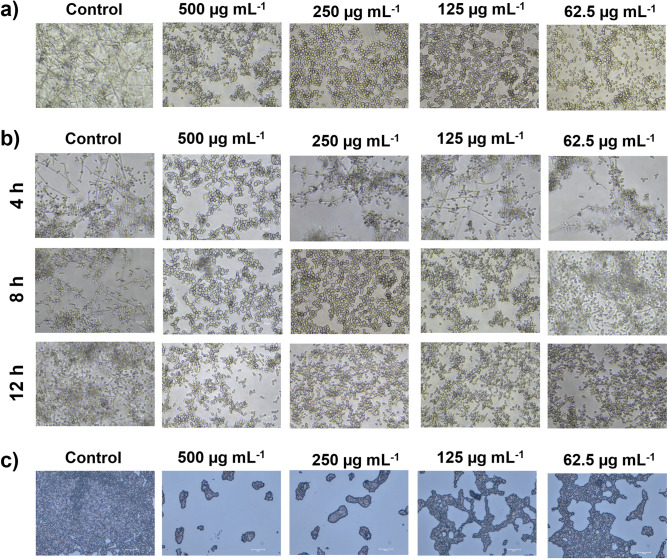
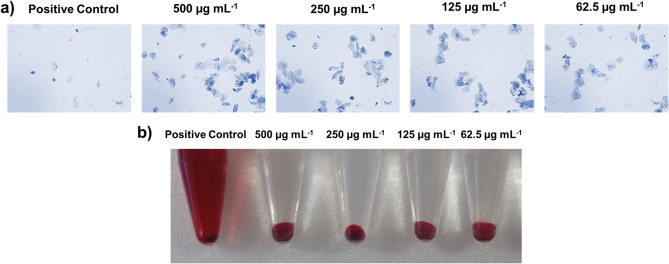
Candida albicans, a common fungus of human flora, can become an opportunistic pathogen and causes invasive candidiasis in immunocompromised individuals. Biofilm formation is the prime cause of antibiotic resistance during C. albicans infections and treating biofilm-forming cells is challenging due to their intractable and persistent nature. The study intends to explore the therapeutic potential of naturally produced compounds by competitive marine bacteria residing in marine biofilms against C. albicans biofilm. To this end, 3-hydroxy coumarin (3HC), a compound identified from the cell-free culture supernatant of the marine bacterium Brevundimonas abyssalis, was found to exhibit anti-biofilm and anti-hyphal activity against both reference and clinical isolates of C. albicans. The compound demonstrated significant inhibitory effects on biofilms and impaired the yeast-to-hyphal transition, wrinkle, and filament morphology at the minimal biofilm inhibitory concentration (MBIC) of 250 µg mL−1. Intriguingly, quantitative PCR analysis of 3HC-treated C. albicans biofilm revealed significant downregulation of virulence genes (hst7, ume6, efg1, cph1, ras1, als1) associated with adhesion and morphogenesis. Moreover, 3HC displayed non-fungicidal and non-toxic characteristics against human erythrocytes and buccal cells. In conclusion, this study showed that marine biofilms are a hidden source of diverse therapeutic drugs, and 3HC could be a potent drug to treat C. albicans infections.
Overview
The claims and statistics of this paper haven’t been checked yet.
Free: it reads the open-access text and checks the first 5 claims that cite a source we can check. Create a free account to check every claim.
Integrity signals
Registry
Cites
Statistics
Figures
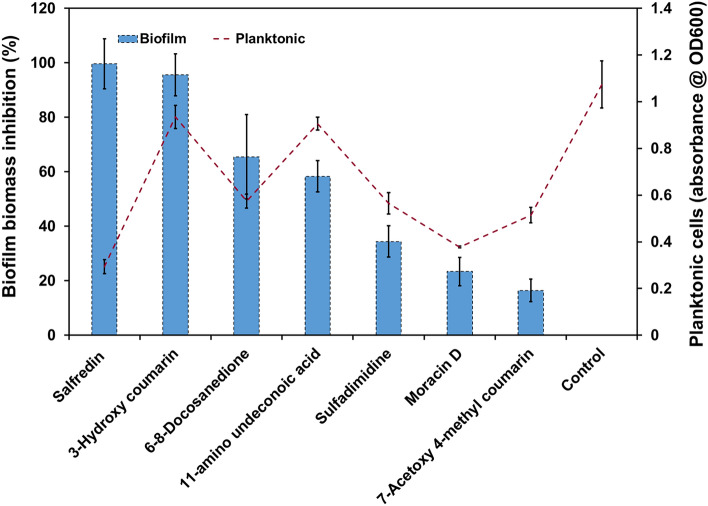
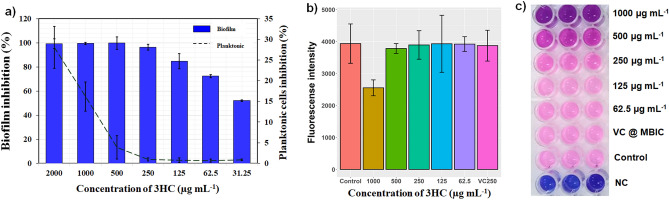
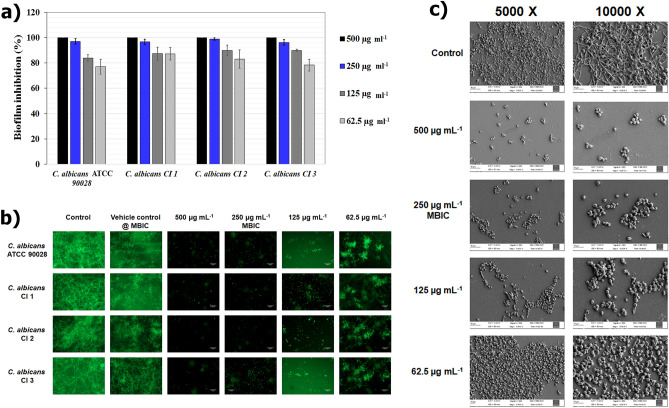
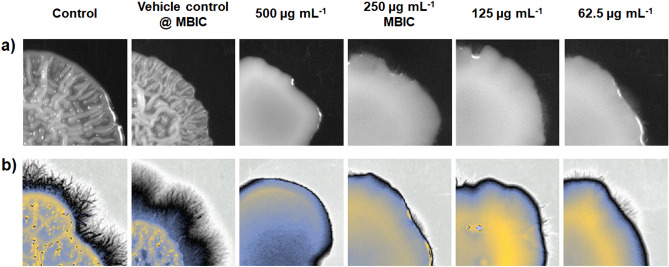
Verification
Claims the paper makes
The claims and statistics of this paper haven’t been checked yet.
Free: it reads the open-access text and checks the first 5 claims that cite a source we can check. Create a free account to check every claim.
Self-check
Percentages, sums and reported differences re-computed from the paper’s own numbers.
The self-check needs the paper’s full text.
Citations
Cites
Basic local alignment search tool
Altschul, S. F., Gish, W., Miller, W., Myers, E. W., & Lipman, D. J. (1990) · Journal of Molecular Biology · doi:10.1006/jmbi.1990.9999 · Cited by 98,669
MEGA6: Molecular Evolutionary Genetics Analysis Version 6.0
Tamura, K., Stecher, G., Peterson, D., Filipski, A., & Kumar, S. (2013) · Molecular Biology and Evolution · doi:10.1093/molbev/mst197 · Cited by 47,205
A new mathematical model for relative quantification in real-time RT-PCR
Pfaffl, M. W. (2001) · Nucleic Acids Research · doi:10.1093/nar/29.9.e45 · Cited by 34,610
MEGA11: Molecular Evolutionary Genetics Analysis Version 11
Tamura, K., Stecher, G., & Kumar, S. (2021) · Molecular Biology and Evolution · doi:10.1093/molbev/msab120 · Cited by 22,403
Hidden Killers: Human Fungal Infections
Brown, G. D., Denning, D. W., Gow, N. A. R., Levitz, S. M., Netea, M. G., & White, T. C. (2012) · Science Translational Medicine · doi:10.1126/scitranslmed.3004404 · Cited by 4,284
Candida albicans pathogenicity mechanisms
Mayer, F. L., Wilson, D., & Hube, B. (2013) · Virulence · doi:10.4161/viru.22913 · Cited by 1,848
Pappas, P. G., Lionakis, M. S., Arendrup, M. C., Ostrosky-Zeichner, L., & Kullberg, B. J. (2018) · Nature Reviews Disease Primers · doi:10.1038/nrdp.2018.26 · Cited by 1,636 · cited 1×
“Studies have recorded nearly 50,000 deaths annually due to invasive candidiasis, with C. albicans being the most reported species, accounting for 40–50% of the cases 3,4 .”
Comparison of multiple methods for quantification of microbial biofilms grown in microtiter plates
Peeters, E., Nelis, H. J., & Coenye, T. (2008) · Journal of Microbiological Methods · doi:10.1016/j.mimet.2007.11.010 · Cited by 1,143
Natural and Synthetic Coumarin Derivatives with Anti-Inflammatory / Antioxidant Activities
Fylaktakidou, K., Hadjipavlou-Litina, D., Litinas, K., & Nicolaides, D. (2004) · Current Pharmaceutical Design · doi:10.2174/1381612043382710 · Cited by 970
Saville, S. P., Lazzell, A. L., Monteagudo, C., & Lopez-Ribot, J. L. (2003) · Eukaryotic Cell · doi:10.1128/ec.2.5.1053-1060.2003 · Cited by 655 · cited 1×
“This was discovered in a study by Saville et al. 61 , where a group of mice was injected with a modified C. albicans strain that could be externally modulated for yeast-to-hyphal morphology transition.”
Critical Role of Bcr1-Dependent Adhesins in C. albicans Biofilm Formation In Vitro and In Vivo
Nobile, C. J., Andes, D. R., Nett, J. E., Smith, F. J., Yue, F., Phan, Q.-T., Edwards, J. E., Filler, S. G., & Mitchell, A. P. (2006) · PLoS Pathogens · doi:10.1371/journal.ppat.0020063 · Cited by 507 · cited 2×
“Other transcriptional factors such as efg1 and cph1 are the first identified regulators of hyphal development and synergistically regulate virulence genes 66 .”
Coumarins and Coumarin-Related Compounds in Pharmacotherapy of Cancer
Küpeli Akkol, E., Genç, Y., Karpuz, B., Sobarzo-Sánchez, E., & Capasso, R. (2020) · Cancers · doi:10.3390/cancers12071959 · Cited by 493
Kumamoto, C. A., & Vinces, M. D. (2005) · Cellular Microbiology · doi:10.1111/j.1462-5822.2005.00616.x · Cited by 389
Antibiotic Discovery: Combatting Bacterial Resistance in Cells and in Biofilm Communities
Penesyan, A., Gillings, M., & Paulsen, I. (2015) · Molecules · doi:10.3390/molecules20045286 · Cited by 363
Karthikeyan, A., Joseph, A., & Nair, B. G. (2022) · Journal of Genetic Engineering and Biotechnology · doi:10.1186/s43141-021-00290-4 · Cited by 336
Köhler, J. R., & Fink, G. R. (1996) · Proceedings of the National Academy of Sciences · doi:10.1073/pnas.93.23.13223 · Cited by 283
Azole antifungals: 35 years of invasive fungal infection management
Allen, D., Wilson, D., Drew, R., & Perfect, J. (2015) · Expert Review of Anti-infective Therapy · doi:10.1586/14787210.2015.1032939 · Cited by 255 · cited 1×
“The combat against the virulence traits of C. albicans involves four major classes of antifungal drugs, including polyenes, echinocandins, nucleoside analogues, and azoles 6,7 .”
Lane, S., Birse, C., Zhou, S., Matson, R., & Liu, H. (2001) · Journal of Biological Chemistry · doi:10.1074/jbc.m104484200 · Cited by 220 · cited 1×
“Similarly, after cell adhesion and growth, the colony’s surface wrinkles increase its surface area to acquire both nutrients and for further hyphal development and adhesin production 65 .”
Elevated Chitin Content Reduces the Susceptibility of Candida Species to Caspofungin
Walker, L. A., Gow, N. A. R., & Munro, C. A. (2013) · Antimicrobial Agents and Chemotherapy · doi:10.1128/aac.01486-12 · Cited by 214 · cited 1×
“Compared to their planktonic counterparts, C. albicans cells in biofilm are less responsive to commonly used antifungal drugs such as azoles and conventional amphotericin B 44,45 .”
A marine microbiome antifungal targets urgent-threat drug-resistant fungi
Zhang, F., Zhao, M., Braun, D. R., Ericksen, S. S., Piotrowski, J. S., Nelson, J., Peng, J., Ananiev, G. E., Chanana, S., Barns, K., et al. (2020) · Science · doi:10.1126/science.abd6919 · Cited by 177
Thenmozhi, R., Nithyanand, P., Rathna, J., & Karutha Pandian, S. (2009) · FEMS Immunology & Medical Microbiology · doi:10.1111/j.1574-695x.2009.00613.x · Cited by 173
Self-citationPurpurin Suppresses Candida albicans Biofilm Formation and Hyphal Development
Tsang, P. W., Bandara, N., & Fong, W. (2012) · PLoS ONE · doi:10.1371/journal.pone.0050866 · Cited by 163
Anti-Biofilm Compounds Derived from Marine Sponges
Stowe, S. D., Richards, J. J., Tucker, A. T., Thompson, R. J., Melander, C., & Cavanagh, J. (2011) · Marine Drugs · doi:10.3390/md9102010 · Cited by 162
Adherence mechanisms in human pathogenic fungi
Tronchin, G., Pihet, M., Lopes-Bezerra, L. M., & Bouchara, J.-P. (2008) · Medical Mycology · doi:10.1080/13693780802206435 · Cited by 139
Candida and its dual lifestyle as a commensal and a pathogen
Cauchie, M., Desmet, S., & Lagrou, K. (2017) · Research in Microbiology · doi:10.1016/j.resmic.2017.02.005 · Cited by 118
Fazly, A., Jain, C., Dehner, A. C., Issi, L., Lilly, E. A., Ali, A., Cao, H., Fidel, P. L., P. Rao, R., & Kaufman, P. D. (2013) · Proceedings of the National Academy of Sciences · doi:10.1073/pnas.1305982110 · Cited by 112
Piperine Impedes Biofilm Formation and Hyphal Morphogenesis of Candida albicans
Priya, A., & Pandian, S. K. (2020) · Frontiers in Microbiology · doi:10.3389/fmicb.2020.00756 · Cited by 111
Self-citationHoehamer, C. F., Cummings, E. D., Hilliard, G. M., & Rogers, P. D. (2010) · Antimicrobial Agents and Chemotherapy · doi:10.1128/aac.00756-09 · Cited by 100
Gymnemic Acids Inhibit Hyphal Growth and Virulence in Candida albicans
Vediyappan, G., Dumontet, V., Pélissier, F., & d’Enfert, C. (2013) · PLoS ONE · doi:10.1371/journal.pone.0074189 · Cited by 96
Inhibition of Streptococcus pyogenes Biofilm Formation by Coral-Associated Actinomycetes
Nithyanand, P., Thenmozhi, R., Rathna, J., & Pandian, S. K. (2009) · Current Microbiology · doi:10.1007/s00284-009-9564-y · Cited by 96
Self-citationMuthamil, S., Balasubramaniam, B., Balamurugan, K., & Pandian, S. K. (2018) · Frontiers in Microbiology · doi:10.3389/fmicb.2018.02835 · Cited by 93
Self-citationBanerjee, M., Uppuluri, P., Zhao, X. R., Carlisle, P. L., Vipulanandan, G., Villar, C. C., López-Ribot, J. L., & Kadosh, D. (2013) · Eukaryotic Cell · doi:10.1128/ec.00163-12 · Cited by 88 · cited 1×
“The downregulation of genes such as ume6 and ras1 , which are responsible for morphological switching (yeast-to-hyphal) and polarized filaments, respectively, upon 3HC treatment confirms its anti-biofilm potential 68 .”
Viszwapriya, D., Prithika, U., Deebika, S., Balamurugan, K., & Pandian, S. K. (2016) · Microbiological Research · doi:10.1016/j.micres.2016.05.010 · Cited by 87
Self-citationPlasticity of Candida albicans Biofilms
Soll, D. R., & Daniels, K. J. (2016) · Microbiology and Molecular Biology Reviews · doi:10.1128/mmbr.00068-15 · Cited by 78
Fiori, B., Posteraro, B., Torelli, R., Tumbarello, M., Perlin, D. S., Fadda, G., & Sanguinetti, M. (2011) · Antimicrobial Agents and Chemotherapy · doi:10.1128/aac.01569-10 · Cited by 73
Fuochi, V., Volti, G. L., Camiolo, G., Tiralongo, F., Giallongo, C., Distefano, A., Petronio, G. P., Barbagallo, I. A., Viola, M., Furneri, P. M., et al. (2017) · Marine Drugs · doi:10.3390/md15110342 · Cited by 72
Ras Signaling Gets Fine-Tuned: Regulation of Multiple Pathogenic Traits of Candida albicans
Inglis, D. O., & Sherlock, G. (2013) · Eukaryotic Cell · doi:10.1128/ec.00094-13 · Cited by 66
Rajeev, M., Sushmitha, T. J., Rao, T. S., & Pandian, S. K. (2019) · The Science of The Total Environment · doi:10.1016/j.scitotenv.2019.02.171 · Cited by 65
Self-citationLindsay, A. K., Morales, D. K., Liu, Z., Grahl, N., Zhang, A., Willger, S. D., Myers, L. C., & Hogan, D. A. (2014) · PLoS Genetics · doi:10.1371/journal.pgen.1004567 · Cited by 58
Diagnosis of Invasive Candidiasis: From Gold Standard Methods to Promising Leading-edge Technologies
Pitarch, A., Nombela, C., & Gil, C. (2018) · Current Topics in Medicinal Chemistry · doi:10.2174/1568026618666181025093146 · Cited by 56
Różalska, B., Sadowska, B., Budzyńska, A., Bernat, P., & Różalska, S. (2018) · PLoS ONE · doi:10.1371/journal.pone.0194254 · Cited by 55
Potential Targets for Antifungal Drug Discovery Based on Growth and Virulence in Candida albicans
Li, X., Hou, Y., Yue, L., Liu, S., Du, J., & Sun, S. (2015) · Antimicrobial Agents and Chemotherapy · doi:10.1128/aac.00726-15 · Cited by 54
A genome-wide transcriptional analysis of morphology determination in Candida albicans
Carlisle, P. L., & Kadosh, D. (2013) · Molecular Biology of the Cell · doi:10.1091/mbc.e12-01-0065 · Cited by 49
Beauvericin counteracted multi-drug resistant Candida albicans by blocking ABC transporters
Tong, Y., Liu, M., Zhang, Y., Liu, X., Huang, R., Song, F., Dai, H., Ren, B., Sun, N., Pei, G., et al. (2016) · Synthetic and Systems Biotechnology · doi:10.1016/j.synbio.2016.10.001 · Cited by 49
Cooke, D., & O’Kennedy, R. J. (1999) · Analytical Biochemistry · doi:10.1006/abio.1999.4274 · Cited by 44
Guedes, É. A. C., Araújo, M. A. D. S., Souza, A. K. P., de Souza, L. I. O., de Barros, L. D., Maranhão, F. C. D. A., & Santana, A. E. G. (2012) · Mycopathologia · doi:10.1007/s11046-012-9541-z · Cited by 44
Inhibition of Candida albicans biofilm formation and yeast-hyphal transition by 4-hydroxycordoin
Messier, C., Epifano, F., Genovese, S., & Grenier, D. (2011) · Phytomedicine · doi:10.1016/j.phymed.2011.01.013 · Cited by 43
Microplate Alamar blue assay for susceptibility testing of Candida albicans biofilms
Repp, K. K., Menor, S. A., & Pettit, R. K. (2007) · Medical Mycology · doi:10.1080/13693780701581458 · Cited by 43
Brunetti, G., Navazio, A. S., Giuliani, A., Giordano, A., Proli, E. M., Antonelli, G., & Raponi, G. (2019) · PLoS ONE · doi:10.1371/journal.pone.0224678 · Cited by 43
Ahmadi, M. S., Lee, H. H., Sanchez, D. A., Friedman, A. J., Tar, M. T., Davies, K. P., Nosanchuk, J. D., & Martinez, L. R. (2016) · Antimicrobial Agents and Chemotherapy · doi:10.1128/aac.02659-15 · Cited by 41
Effect of Nicotinamide Against Candida albicans
Xing, X., Liao, Z., Tan, F., Zhu, Z., Jiang, Y., & Cao, Y. (2019) · Frontiers in Microbiology · doi:10.3389/fmicb.2019.00595 · Cited by 40
Sushmitha, T. J., Rajeev, M., Murthy, P. S., Ganesh, S., Rao, T. S., & Pandian, S. K. (2021) · PLoS ONE · doi:10.1371/journal.pone.0257961 · Cited by 40
Self-citationRodrigues, L. S., Motta, F. D. A., Picharski, G. L., Vasconcelos, T. M., Ricieri, M. C., & Dalla-Costa, L. M. (2019) · Medicine · doi:10.1097/md.0000000000015933 · Cited by 38
Mao, F., Bao, Y., Wong, N.-K., Huang, M., Liu, K., Zhang, X., Yang, Z. H., Yi, W., Shu, X., Xiang, Z., et al. (2021) · Marine Drugs · doi:10.3390/md19080420 · Cited by 31
Priya, A., Nivetha, S., & Pandian, S. K. (2022) · Frontiers in Cellular and Infection Microbiology · doi:10.3389/fcimb.2021.780545 · Cited by 30
Self-citationFox, S., Shelton, B. T., & Kruppa, M. (2013) · PLoS ONE · doi:10.1371/journal.pone.0071939 · Cited by 29
Green, C. B., Marretta, S. M., Cheng, G., Faddoul, F. F., Ehrhart, E. J., & Hoyer, L. L. (2006) · Medical Mycology · doi:10.1080/13693780500086527 · Cited by 29
Novel Antifungal Activity of Q-Griffithsin, a Broad-Spectrum Antiviral Lectin
Nabeta, H. W., Kouokam, J. C., Lasnik, A. B., Fuqua, J. L., & Palmer, K. E. (2021) · Microbiology Spectrum · doi:10.1128/spectrum.00957-21 · Cited by 28
Jinal, H. N., Sakthivel, K., & Amaresan, N. (2020) · Antonie van Leeuwenhoek · doi:10.1007/s10482-020-01423-4 · Cited by 26
Zhu, W., Wang, S., Gao, H., Ge, Y., Dai, J., Zhang, X., & Yang, Q. (2021) · Marine Drugs · doi:10.3390/md20010034 · Cited by 25
Zhu, B., Li, Z., Yin, H., Hu, J., Xue, Y., Zhang, G., Zheng, X., Chen, W., & Hu, X. (2022) · Microbiology Spectrum · doi:10.1128/spectrum.01478-21 · Cited by 25
Dhandapani, R., Thangavelu, S., Ragunathan, L., Paramasivam, R., Velmurugan, P., & Saravanan, M. (2022) · Applied Biochemistry and Biotechnology · doi:10.1007/s12010-022-04072-7 · Cited by 25
Schlich, M., Fornasier, M., Nieddu, M., Sinico, C., Murgia, S., & Rescigno, A. (2018) · Colloids and Surfaces B Biointerfaces · doi:10.1016/j.colsurfb.2018.08.008 · Cited by 24
Dahiya, R., Kumar, S., Khokra, S. L., Gupta, S. V., Sutariya, V. B., Bhatia, D., Sharma, A., Singh, S., & Maharaj, S. B. (2018) · Marine Drugs · doi:10.3390/md16090305 · Cited by 22
Hibiscus sabdariffa Extract Inhibits Adhesion, Biofilm Initiation and Formation in Candida albicans
Dwivedi, M., Muralidhar, S., & Saluja, D. (2019) · Indian Journal of Microbiology · doi:10.1007/s12088-019-00835-9 · Cited by 21
D’Angelo, C., Casillo, A., Melchiorre, C., Lauro, C., Corsaro, M. M., Carpentieri, A., Tutino, M. L., & Parrilli, E. (2022) · Marine Drugs · doi:10.3390/md20120747 · Cited by 21
Chalcomycins from Marine-Derived Streptomyces sp. and Their Antimicrobial Activities
Jiang, S.-T., Zhang, L., Pei, X., Deng, F., Hu, D., Chen, G., Wang, C., Hong, K., Yao, X., & Gao, A. H. (2017) · Marine Drugs · doi:10.3390/md15060153 · Cited by 20
Seo, J.-K., Kim, D., Lee, J., Park, K.-S., Lee, I., Lee, K., Kim, Y., & Nam, B. (2021) · Marine Drugs · doi:10.3390/md19080451 · Cited by 18
Ashraf, H., Gul, H., Jamil, B., Saeed, A., Pasha, M., Kaleem, M., & Khan, A. S. (2022) · PLoS ONE · doi:10.1371/journal.pone.0273079 · Cited by 14
Lee, C., Chen, Y., Chen, I., Chen, F., & Chien, C. (2020) · Mycoses · doi:10.1111/myc.13179 · Cited by 13
Makarieva, T. N., Ivanchina, N. V., Dmitrenok, P. S., Guzii, A. G., Stonik, V. A., Dalisay, D. S., & Molinski, T. F. (2021) · Marine Drugs · doi:10.3390/md19110635 · Cited by 12
Swetha, T. K., Ganapathy, A. S., Kasthuri, T., Sharumathi, R., & Pandian, S. K. (2021) · Microbial Pathogenesis · doi:10.1016/j.micpath.2021.104990 · Cited by 8
Self-citationSushmitha, T. J., Rajeev, M., Rao, T. S., & Pandian, S. K. (2021) · Marine Genomics · doi:10.1016/j.margen.2021.100890 · Cited by 8
Self-citationMarine biofilms: Bacterial diversity and dynamics
Sushmitha, T. J., Rajeev, M., & Pandian, S. K. (2023) · Elsevier eBooks · doi:10.1016/b978-0-323-99977-9.00032-6 · Cited by 4
Self-citation
Cited by
Ahmed, G. E., Elshahid, Z. A., El-Sawy, E. R., Abdel-aziz, M. S., & Abdel‐Aziem, A. (2024) · Scientific Reports · doi:10.1038/s41598-024-59072-w · Cited by 44
Coumarins: Quorum Sensing and Biofilm Formation Inhibition
El-Sawy, E. R., Abdel-aziz, M. S., Abdelmegeed, H., & Kirsch, G. (2024) · Molecules · doi:10.3390/molecules29194534 · Cited by 38
Dalabehera, M., Rathore, C., Rathee, A., & Lal, U. R. (2024) · Therapeutic Delivery · doi:10.4155/tde-2023-0133 · Cited by 12
PlzD modifies Vibrio vulnificus foraging behavior and virulence in response to elevated c-di-GMP
Chen, T., Pu, M., Subramanian, S., Kearns, D. B., & Rowe‐Magnus, D. A. (2023) · mBio · doi:10.1128/mbio.01536-23 · Cited by 11
Li, R., Yang, X., Dan, W., & Dai, J. (2025) · Bioorganic & Medicinal Chemistry · doi:10.1016/j.bmc.2025.118435 · Cited by 9
Metadata
- Authors
- Sushmitha, T. J., Rajeev, M., Kathirkaman, V., Shivam, S., Rao, T. S., & Pandian, S. K.
- Affiliations
- Alagappa University (IN)
- Sai University (IN)
- Corresponding author
- Pandian, Shunmugiah Karutha
- Venue
- Scientific Reports
- Published
- 2023-07-19
- Volume
- 13
- Issue
- 1
- Pages
- 11687-11687
- ISSN
- 2045-2322 (ISSN-L)
- PMC
- PMC10356798
- OpenAlex
- W4384818215
- Semantic Scholar
- d2c4f814b7c38d1b6c9d95d3dcdd81d0d70f8e09
- Cited by
- 30
- References
- 74
- Citations by year
- 2026: 11 · 2025: 12 · 2024: 6 · 2023: 1
- FWCI
- 6.17
- Type
- journal article
- Language
- en
- Open access
- gold
- doi.org
- Licence
- cc-by
- creativecommons.org/licenses/by/4.0 (tdm)
- creativecommons.org/licenses/by/4.0 (vor)
- Locations
- Scientific Reports (publishedVersion, cc-by)
- PubMed Central (publishedVersion, cc-by)
- PubMed (publishedVersion)
- DOAJ (DOAJ: Directory of Open Access Journals) (submittedVersion, cc-by-sa)
- Funders
- Board of Research in Nuclear Sciences (51/14/06/2019-BRNS)
- Topics
- Health Sciences › Medicine › Infectious Diseases › Antifungal resistance and susceptibility
- Life Sciences › Biochemistry, Genetics and Molecular Biology › Molecular Biology › Bacterial biofilms and quorum sensing
- Life Sciences › Immunology and Microbiology › Applied Microbiology and Biotechnology › Microbial Natural Products and Biosynthesis
- Keywords
- Candida albicans, antifungal activity, biofilm inhibition, yeast-to-hypha transition, cell adhesion, morphogenesis, virulence gene regulation, marine bacteria, marine biofilms, cell-free supernatant, invasive candidiasis, natural products
- MeSH terms
- Antifungal Agents, Candida albicans, Coumarins, Fungal Proteins, Humans, Morphogenesis, Mouth Mucosa, Gene Expression Regulation, Fungal, Biofilms, Hyphae
About these checks
Registry, retraction, Cites and statistics results are computed, not judged, with one exception: a printed reference that no index lists is read once by a model before it counts as a citation error. Claims are extracted by a model and kept only when their quote appears verbatim in the text; each cited source is then checked, with a model’s help, for whether it says what the claim relies on. Those verdicts can be wrong — read the claim’s quote and the cited source before relying on one.
Statistics and arithmetic are recomputed, not judged.
Confidence bands are shown only for fields calibrated on our annotated test set. None is calibrated yet, so no band is shown.
What counts as a claim ›How we measure confidence ›How we check this ›
Are you an author, or do you see a problem with this page? Request a review
Data sources
Bibliographic data: Semantic Scholar, OpenAlex, Crossref.
Contains information from the Semantic Scholar Academic Graph Datasets, made available under the ODC Attribution License (ODC-BY 1.0).
Semantic Scholar’s data is described in: Kinney, R., et al. (2023). The Semantic Scholar Open Data Platform. arXiv:2301.10140.
