

A novel hybrid model integrating MFCC and acoustic parameters for voice disorder detection
Open accessThe DOI matches its Crossref record; 61 of the 61 references it cites were found in a registry or an index.
Abstract
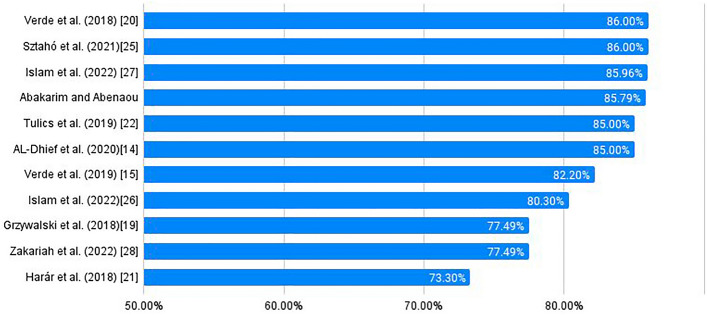
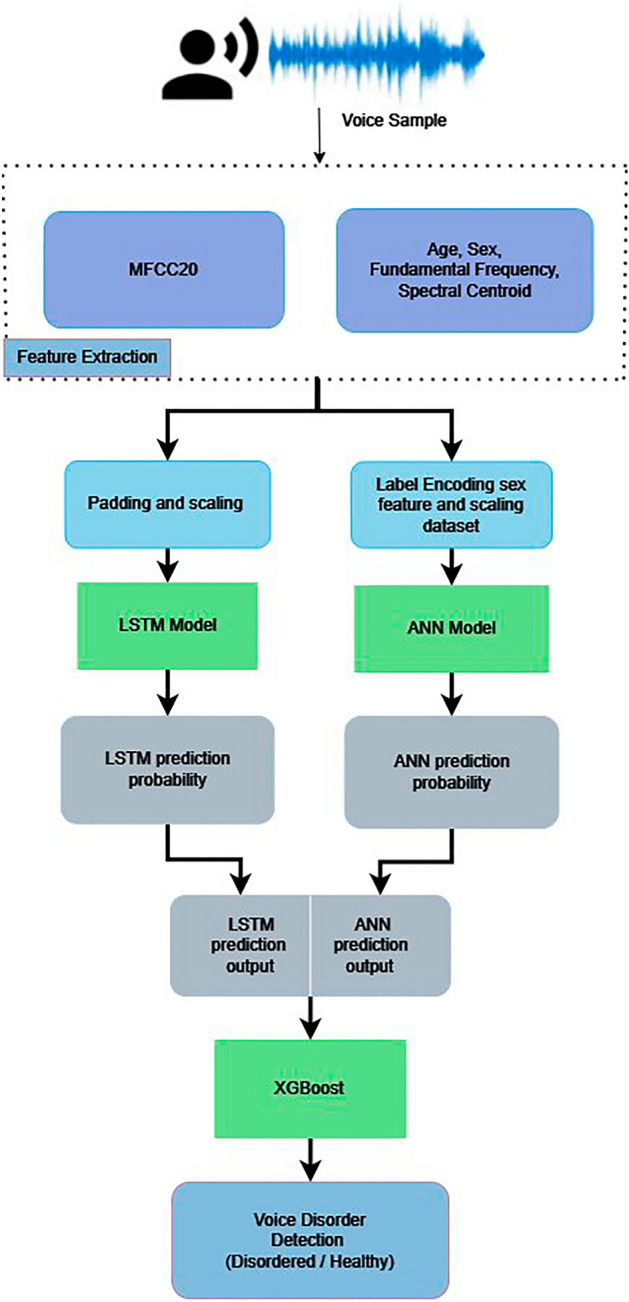
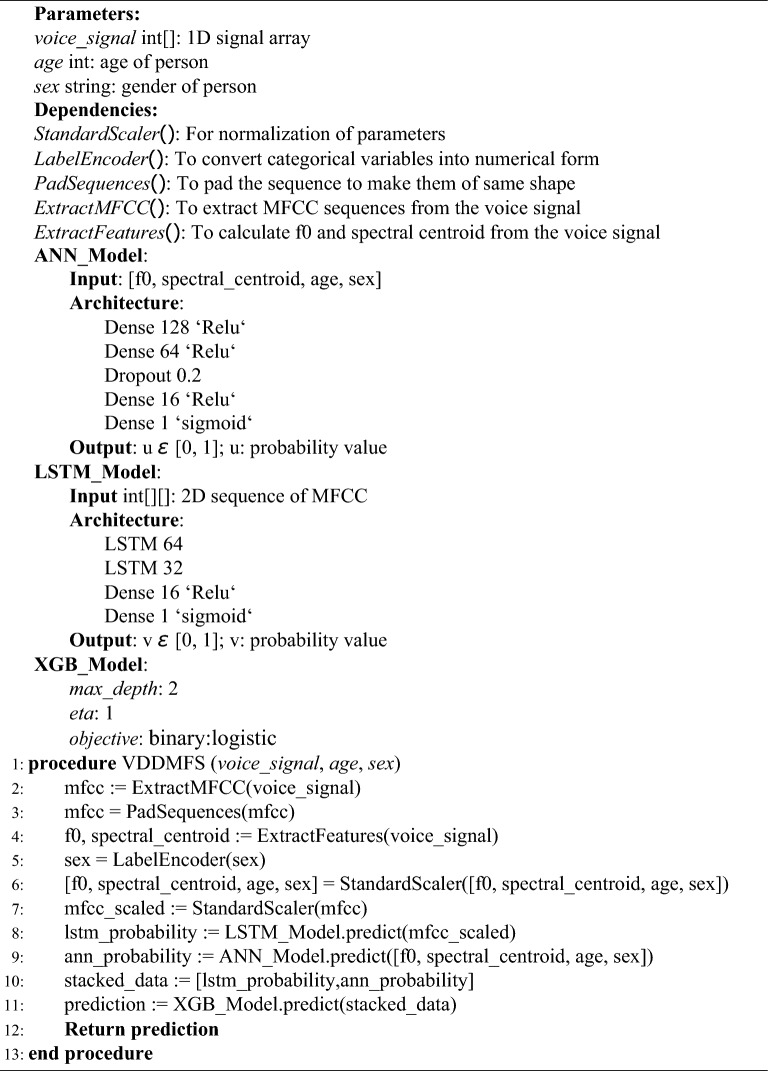
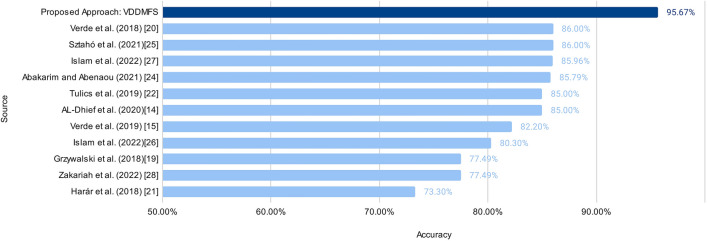
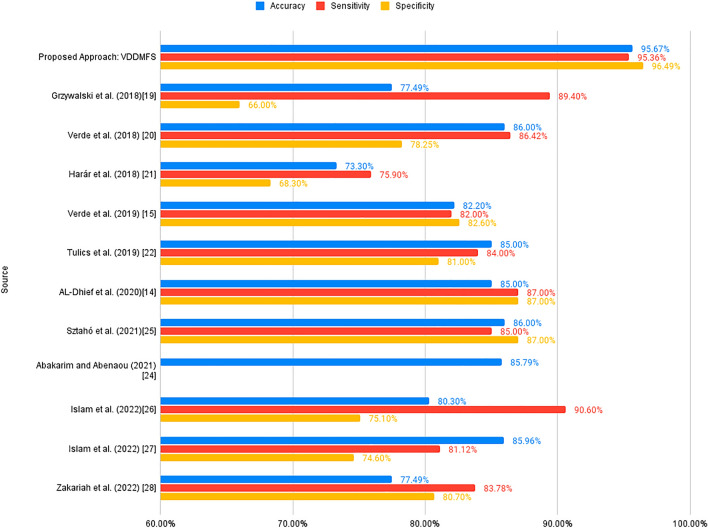
Voice is an essential component of human communication, serving as a fundamental medium for expressing thoughts, emotions, and ideas. Disruptions in vocal fold vibratory patterns can lead to voice disorders, which can have a profound impact on interpersonal interactions. Early detection of voice disorders is crucial for improving voice health and quality of life. This research proposes a novel methodology called VDDMFS [voice disorder detection using MFCC (Mel-frequency cepstral coefficients), fundamental frequency and spectral centroid] which combines an artificial neural network (ANN) trained on acoustic attributes and a long short-term memory (LSTM) model trained on MFCC attributes. Subsequently, the probabilities generated by both the ANN and LSTM models are stacked and used as input for XGBoost, which detects whether a voice is disordered or not, resulting in more accurate voice disorder detection. This approach achieved promising results, with an accuracy of 95.67%, sensitivity of 95.36%, specificity of 96.49% and f1 score of 96.9%, outperforming existing techniques.
Overview
The claims and statistics of this paper haven’t been checked yet.
Free: it reads the open-access text and checks the first 5 claims that cite a source we can check. Create a free account to check every claim.
Integrity signals
Registry
Cites
Statistics
Figures

Verification
Claims the paper makes
The claims and statistics of this paper haven’t been checked yet.
Free: it reads the open-access text and checks the first 5 claims that cite a source we can check. Create a free account to check every claim.
Claims other papers make about this one
Each is checked against this paper’s own text: does it say what the citing paper says it does?
The source backs part of the claim, not all of it — or backs it for a different population, condition or comparison.
In the citing paper
“Similar benefits arise from biologically inspired transforms, including scalograms and gammatonegrams [29,59,60].”
From Diagnostic Accuracy of Artificial Intelligence in Laryngeal Disorders: An Integrative Review (2026) · cites this paper as [60]
Experimental — accuracy not yet measured
Self-check
Percentages, sums and reported differences re-computed from the paper’s own numbers.
The self-check needs the paper’s full text.
Citations
Cites
1 retracted
An Analytical Study of Speech Pathology Detection Based on MFCC and Deep Neural Networks
Zakariah, M., B, R., Ajmi Alotaibi, Y., Guo, Y., Tran-Trung, K., & Elahi, M. M. (2022) · Computational and Mathematical Methods in Medicine · doi:10.1155/2022/7814952 · Cited by 32 · cited 1×
“Zakariah et al. 34 presented a framework that integrated three essential voice characteristics: chroma, mel spectrogram, and mel frequency cepstral coefficient (MFCC).”
BackgroundRetractedDavis, S., & Mermelstein, P. (1980) · IEEE Transactions on Acoustics, Speech, and Signal Processing · doi:10.1109/tassp.1980.1163420 · Cited by 5,465
librosa: Audio and Music Signal Analysis in Python
McFee, B., Raffel, C., Liang, D., Ellis, D., McVicar, M., Battenberg, E., & Nieto, O. (2015) · Proceedings of the Python in Science Conference · doi:10.25080/majora-7b98e3ed-003 · Cited by 3,033 · cited 1×
“Several Python libraries, including TensorFlow, NumPy, scikit-learn, XGBoost, Librosa 65 , Pandas, Matplotlib, WFDB 49,66 and Seaborn, were utilized for various tasks.”
MethodYIN, a fundamental frequency estimator for speech and music
de Cheveigné, A., & Kawahara, H. (2002) · The Journal of the Acoustical Society of America · doi:10.1121/1.1458024 · Cited by 1,920
Acoustic correlates of breathy vocal quality: dysphonic voices and continuous speech.
Hillenbrand, J., & Houde, R. A. (1996) · Journal of Speech, Language, and Hearing Research · doi:10.1044/jshr.3902.311 · Cited by 631
Introducing Parselmouth: A Python interface to Praat
Jadoul, Y., Thompson, B., & de Boer, B. (2018) · Journal of Phonetics · doi:10.1016/j.wocn.2018.07.001 · Cited by 506 · cited 2×
“Additionally, feature extraction is extended to encompass the fundamental frequency (f0) 46 and spectral centroid, which further contribute to understanding voice data 47–49 .”
BackgroundMethodThe prevalence of voice problems among adults in the United States
Bhattacharyya, N. (2014) · The Laryngoscope · doi:10.1002/lary.24740 · Cited by 318
Deepfake Audio Detection via MFCC features using Machine Learning
Hamza, A., Javed, A. R. R., Iqbal, F., Kryvinska, N., Almadhor, A. S., Jalil, Z., & Borghol, R. (2022) · IEEE Access · doi:10.1109/access.2022.3231480 · Cited by 264 · cited 1×
“VOICED used a built-in microphone of a mobile device 39 and an applicable m-health system, Vox4Health 40,41 , to collect a speech signal of vowel ‘a’ in real time.”
MethodFeatures of Mild-to-Moderate COVID-19 Patients With Dysphonia
Lechien, J. R., Chiesa-Estomba, C. M., Cabaraux, P., Mat, Q., Huet, K., Harmegnies, B., Horoi, M., Le Bon, S. D., Rodriguez, A., Dequanter, D., et al. (2022) · Journal of Voice · doi:10.1016/j.jvoice.2020.05.012 · Cited by 173
Objective Voice Analysis for Dysphonic Patients
Yu, P., Ouaknine, M., Revis, J., & Giovanni, A. (2001) · Journal of Voice · doi:10.1016/s0892-1997(01)00053-4 · Cited by 162
Research works printed but not linked: 8
- 5. Wang, J. & Jo, C. Performance of gaussian mixture models as a classifier for pathological voice. In Proceedings of the 11th Australian International Conference on Speech Science and Technology, Vol. 107, 122-131 (2006).
- 17. Deveci, M., Pamucar, D., Gokasar, I., Köppen, M. & Gupta, B. B. Personal mobility in metaverse with autonomous vehicles using Q-rung orthopair fuzzy sets based OPA-RAFSI model. IEEE Trans. Intell. Transport. Syst. 20, 20 (2022).
- 22. Ling, Z. & Hao, Z. J. An intrusion detection system based on normalized mutual information antibodies feature selection and adaptive quantum artificial immune system. Int. J. Semant. Web Inf. Syst. 18(1), 1-25 (2022).
- 31. Tulics, M. G., Szaszak, G., Meszaros, K. & Vicsi, K. Artificial neural network and SVM based voice disorder classification. In 2019 10th IEEE International Conference on Cognitive Infocommunications (CogInfoCom). https:// doi. org/ 10. 3390/ app10 134571 (IEEE, 2019). · DOI
- 48. Affeich, A. & Hilal, H. A feminist voice re/written in translation: A case study of the Arabic version of Joumana Haddad's I Killed Scheherazade. New Voices Transl. Stud. 23(1), 60-85 (2020).
- 56. Anil, B. C., Dayananda, P., Nethravathi, B. & Raisinghani, M. S. Efficient local cloud-based solution for liver cancer detection using deep learning. Int. J. Cloud Appl. Comput. 12(1), 1-13 (2022).
- 66. Edition, T. & Moody, G. B. Wfdb applications guide. https:// archi ve. physi onet. org/ physi otools/ wfdb. shtml.
- 69. Dwivedi, R. K. Density-based machine learning scheme for outlier detection in smart forest fire monitoring sensor cloud. Int. J. Cloud Appl. Comput. 12(1), 1-16 (2022).
Cited by
MFCC in audio signal processing for voice disorder: a review
Sidhu, M. S., Latib, N. A. A., & Sidhu, K. K. (2024) · Multimedia Tools and Applications · doi:10.1007/s11042-024-19253-1 · Cited by 54
“Long short sequences (LSTMs) are particularly useful for managing variable-length sequences because they can comprehend and adaptively learn to comprehend input sequences of different lengths [58].”
Rahmatallah, Y., Kemp, A. S., Iyer, A., Pillai, L., Larson‐Prior, L. J., Virmani, T., & Prior, F. (2025) · Scientific Reports · doi:10.1038/s41598-025-92105-6 · Cited by 38
“…been applied to classic voice feature vectors such as cepstral coefficients to generate mel-frequency cepstral coefficients and has shown good performance in speech applications, including the ability to detect voice disorders 28 , depression 29 , amyotrophic lateral sclerosis 30 , and PD 31–35 .”
Next Gen Security With Quantum-Safe Cryptography
Singh, N., Singh, S., Kumar, S., Rawat, Y., Arya, V., Bansal, R., & Chui, K. T. (2024) · Advances in information security, privacy, and ethics book series · doi:10.4018/979-8-3693-5330-1.ch006 · Cited by 21
Self-citationSankaran, A., & Kumar, L. S. (2024) · IEEE Access · doi:10.1109/access.2024.3508884 · Cited by 27
Voice pathology detection on spontaneous speech data using deep learning models
Farazi, S., & Shekofteh, Y. (2024) · International Journal of Speech Technology · doi:10.1007/s10772-024-10134-4 · Cited by 20
“In (Verma et al., 2023), the vowel /a/ sound from the VOICED dataset was used.”
Homomorphic Encryption in Smart City Applications for Balancing Privacy and Utility
Kumar, S., Singh, S., Gupta, B. B., Psannis, K. E., & Wu, J. (2024) · Advances in information security, privacy, and ethics book series · doi:10.4018/979-8-3693-5330-1.ch010 · Cited by 15
Self-citationYun, E., & Jeong, M. (2024) · IEEE Access · doi:10.1109/access.2024.3471169 · Cited by 15
“The core of the feature extraction process centers around the extraction of 20 MFCCs, a widely used representation for characterizing the spectral content of voice signals [44].”
MethodWind Turbine Blade Fault Detection Method Based on TROA-SVM
Lei, Z., Lin, H., Tang, X., Xiong, Y., & Wen, H. (2025) · Sensors · doi:10.3390/s25030720 · Cited by 11
Applying Visual Cryptography to Decrypt Data Using Human Senses
Rajput, D., Singh, S., Kumar, S., Manro, D., Bansal, S., Arya, V., & Chui, K. T. (2024) · Advances in information security, privacy, and ethics book series · doi:10.4018/979-8-3693-5330-1.ch016 · Cited by 9
Self-citationImproved Laryngeal Pathology Detection Based on Bottleneck Convolutional Networks and MFCC
Korba, M. C. A., Doghmane, H., Khelil, K., & Messaoudi, K. (2024) · IEEE Access · doi:10.1109/access.2024.3454825 · Cited by 9
“We also find eXtreme Gradient Boosting (XGBoost) [29], [30], [31], applied in several recent studies, as well as the random forest algorithm [32], [33] and the decision tree (DT) algorithm [34], [35].”
MethodThe Influence of AI on Social Interactions and Community Dynamics
Singh, J., Singh, S., Kumar, S., Singh, S. P., Kumar, R., Bansal, S., & Chui, K. T. (2025) · IGI Global eBooks · doi:10.4018/979-8-3693-8628-6.ch010 · Cited by 8
Self-citationNudelman, C. J., Tardini, V., & Bottalico, P. (2025) · Journal of Voice · doi:10.1016/j.jvoice.2025.09.021 · Cited by 17
Exploring Novel Objective Voice Assessment Parameters: A Pilot Study
Li, Z., Zhou, L., Liu, M., & Huang, Z. (2025) · Journal of Voice · doi:10.1016/j.jvoice.2025.05.020 · Cited by 6
Secure and cost-effective key management scheme for the Internet of Things-supported WSN
Kumar, R., Singh, S. K., Lobiyal, D. K., & Kumar, S. (2024) · Elsevier eBooks · doi:10.1016/b978-0-443-21475-2.00012-6 · Cited by 7
Self-citationDuan, M., Zhang, Q., Zhang, Y., & Zhang, C. (2025) · Information & Management · doi:10.1016/j.im.2025.104222 · Cited by 7
Hajihashemi, V., Gharahbagh, A. A., Machado, J. J. M., & Tavares, J. M. R. S. (2024) · Multimedia Tools and Applications · doi:10.1007/s11042-024-19557-2 · Cited by 7
Developing a multi-variate prediction model for COVID-19 from crowd-sourced respiratory voice data
Yan, Y., Aljbawi, W., Simons, S. O., & Urovi, V. (2024) · Exploration of Digital Health Technologies · doi:10.37349/edht.2024.00022 · Cited by 6
CNN-RNN Hybrid Model to Classify a Local Language Slangs using Spectral features
Ramkumar, R., & Anne, K. R. (2024) · International Conference on Inventive Computation Technologies (ICICT) · doi:10.1109/icict60155.2024.10544381 · Cited by 5
Jiang, Y., Li, Z., Hu, W., Kong, Y., Wang, X., Zhan, X., Lu, Y., Ye, P., Du, J., He, W., et al. (2025) · Journal of Voice · doi:10.1016/j.jvoice.2025.06.017 · Cited by 4
Vizza, P., Ponio, A. D., Timpano, G., Bossio, R. B., Tradigo, G., Pozzi, G., Guzzi, P. H., & Veltri, P. (2025) · Journal of Healthcare Informatics Research · doi:10.1007/s41666-025-00213-9 · Cited by 6
“For example, logistic regression (LR) [21, 22], Extreme Gradient Boosting (XGBoost) [23, 24], random forest (RF) [25, 26], support vector machines (SVMs) [27, 28], convolutional neural networks (CNNs) [29, 30], and k -nearest neighbors (kNN) [31, 32] have been used to analyze clinical data to…”
Idrisoglu, A., Dallora, A. L., Cheddad, A., Anderberg, P., Jakobsson, A., & Berglund, J. S. (2025) · Scientific Reports · doi:10.1038/s41598-025-95320-3 · Cited by 6
Lima-Filho, L. M. A., Lopes, L. W., & Filho, T. D. M. E. S. (2024) · Journal of Voice · doi:10.1016/j.jvoice.2024.11.002 · Cited by 3
TS-Resformer: a model based on multimodal fusion for the classification of music signals
Zhang, Y. (2025) · Frontiers in Neurorobotics · doi:10.3389/fnbot.2025.1568811 · Cited by 3
Advances in Speech and Text Processing for Dravidian Language: A Comprehensive Review
Ramkumar., R., & Nagarajan, S. (2024) · International Conference on Communication and Electronics Systems (ICCES) · doi:10.1109/icces63552.2024.10860095 · Cited by 3
“The center of mass of a spectrum is represented by the spectral centroid [12] and [18], a signal processing metric that is frequently connected to the apparent brightness of a sound.”
InfluentialReducing the Carbon Footprint in Machine Learning With Eco-Friendly AI Training
Aggarwal, T., Kumar, S., Singh, S., Subba, C. K., Upadhyaya, B., Arya, V., Ratnaparkhi, A., & Sharma, S. K. (2025) · Advances in computational intelligence and robotics book series · doi:10.4018/979-8-3693-8034-5.ch010 · Cited by 2
Self-citationDiagnostic Accuracy of Artificial Intelligence in Laryngeal Disorders: An Integrative Review
Mairesse, S., Maniaci, A., Briganti, G., & Lechien, J. R. (2026) · Journal of Personalized Medicine · doi:10.3390/jpm16060301 · Cited by 1
“Similar benefits arise from biologically inspired transforms, including scalograms and gammatonegrams [29,59,60].”
Post-Stroke Dysarthria Voice Recognition based on Fusion Feature MSA and 1D
Wujian, Y., Yingcong, Z., Yuehai, C., Liu, Y., & Mou, Z. (2024) · Computer Methods in Biomechanics & Biomedical Engineering · doi:10.1080/10255842.2024.2410228 · Cited by 2
“Verma et al. proposed the use of a combination of MFCC, fundamental frequency, and spectral centroid features of speech signals for classification (Verma et al. 2023).”
Pathological Voice Detection Based Deep Learning Techniques
Haddou, N., Idrissi, N., & Chakib, H. (2025) · Lecture notes on data engineering and communications technologies · doi:10.1007/978-3-031-91351-8_19 · Cited by 1
Towards Smarter Healthcare: AI-Enhanced Voice Disorder Detection Leveraging LSTM-DANN
Gowsic, K., Shanmugapriyaa, K. R., Eswaramoorthy, V., & Priyadharshini, S. P. (2025) · Journal of Electrical Engineering and Technology · doi:10.1007/s42835-025-02433-w · Cited by 2
“The vocal health and life quality are improved by the, Verma et al. [ 17 ] by focusing the early detection of voice abnormalities.”
InfluentialA Machine Learning Dyslalia Mispronunciation Detection Framework for Interactive Speech Therapy
Elrakaybi, H., Elshalakany, N., Hassan, Y. M. I., & Haweel, R. T. (2025) · International Mobile, Intelligent, and Ubiquitous Computing Conference (MIUCC) · doi:10.1109/miucc66482.2025.11196801 · Cited by 3
MFCC-Based Machine Learning for Noninvasive Detection of Vocal Fold Nodules in Children
Hu, W., Jiang, Y., Li, Z., Kong, Y., Wang, X., Zhan, X., Lu, Y., & Tai, J. (2025) · Journal of Voice · doi:10.1016/j.jvoice.2025.10.045 · Cited by 2
Research on Speech Playback Spoof Detection Based on ASV Spoof 2021
Dang, X., Zhao, Z., & Wu, N. (2024) · International Conference on New Trends in Computational Intelligence (NTCI) · doi:10.1109/ntci64025.2024.10776128 · Cited by 2
“The specific process is to extract the corresponding MFCC[5] features and network features after preprocessing the training audio and fusing them to generate a new feature matrix, and then train the model composed of multiple GRU[6] networks and LSTM[7] networks to get the generative model, and…”
Harish, V., Joshi, P., Muruganandam, N. S., Das, S., Rao, A., & Mukhopadhyay, A. (2024) · International Conference on Computing, Communication and Networking Technologies (ICCCNT) · doi:10.1109/icccnt61001.2024.10724665
“Verma et al. [27]introduce a novel methodology, VDDMFS, for early detection of voice disorders by combining artificial neural network (ANN) and long short-term memory (LSTM) models trained on acoustic and Mel-frequency cepstral coefficients (MFCC) attributes, respectively.”
MethodLee, S., Hsieh, L., Shyu, J. L., Hung, L., & Lee, G. (2024) · Journal of Voice · doi:10.1016/j.jvoice.2024.10.004
An Ensemble Approach to Multi-Class Classification of Vocal Disorders: Laryngocele and Vox Senilis
Bawa, P., Kadyan, V., Mantri, A., & Sethi, M. (2024) · IEEE International Conference on Intelligent Signal Processing and Effective Communication Technologies (INSPECT) · doi:10.1109/inspect63485.2024.10896176
“Additionally, Verma et al. [12] introduced a method combining ANN and LSTM using Mel-frequency cepstral coefficients and spectral features with an objective for classifying the disorder using speech.”
Erlangga, M. D., Faisal, M. R., Muliadi, M., Indriani, F., Kartini, D., & Satou, K. (2025) · International Conference on Computer Sciences, Engineering, and Technology Innovation (ICoCSETI) · doi:10.1109/icocseti63724.2025.11019398
“Additionally, standardization is applied to ensure that all features fall within comparable ranges [10], [14].”
Wang, Q. (2025) · International Conference on Distributed Computing and Electrical Circuits and Electronics (ICDCECE) · doi:10.1109/icdcece65353.2025.11034854
“Recent innovations in deep learning (DL) have demonstrated remarkable capability in improving voice disorder detection [14-17].”
Liu, D. (2025) · Journal of Computational Methods in Sciences and Engineering · doi:10.1177/14727978251362632
Acoustic Leak Signal Recognition Based on Convolutional Neural Network Model
Li, C., Li, X., Zhang, H., Xiao, Z., Xing, J., Yuan, X., Zhang, Y., & Wang, Q. (2025) · Communications in computer and information science · doi:10.1007/978-981-95-1334-5_13
Divya Lakshmi., S., & Kumar, N. S. (2025) · International Conference on Advancements in Power, Communication and Intelligent Systems (APCI) · doi:10.1109/apci65531.2025.11137267
“CNNs have been shown effective in extracting spatial information in spectrograms or MFCCs, and RNNs in representing sequential structures in audio[4].”
Vrba, J., Steinbach, J., Jirsa, T., & Urbaniova, Z. (2025) · Procedia Computer Science · doi:10.1016/j.procs.2025.09.625
Data Augmentation and Feature Selection Approaches for Detecting Pathological Voices
Haddou, N., & Idrissi, N. (2025) · Lecture notes in networks and systems · doi:10.1007/978-3-032-02312-4_35
KanVD: Creation of Speech Corpus for Identifying Voice Disorders
Coelho, S., Shashirekha, H. L., & Prabhu, S. (2025) · IEEE International Conference on Distributed Computing, VLSI, Electrical Circuits and Robotics (DISCOVER) · doi:10.1109/discover66922.2025.11258989
“Verma et al. [23] used VOICED dataset to propose VDDMFS (Voice Disorder Detection us-ing MFCC, Fundamental Frequency, and Spectral Centroid).”
Jiang, Y., Wang, X., Hu, W., Zou, S., Peng, L., Wang, Z., Hou, S., Li, J., & Tai, J. (2026) · Frontiers in Bioengineering and Biotechnology · doi:10.3389/fbioe.2026.1740863
Real-Time Edge Analytics for Smart Cities
Aggarwal, T., Aggarwal, T., Aggarwal, J., & Chhabra, A. (2026) · Advances in computational intelligence and robotics book series · doi:10.4018/979-8-2600-0547-7.ch007
Self-citationVrba, J., Steinbach, J., Jirsa, T., & Homma, N. (2026) · Applied Soft Computing · doi:10.1016/j.asoc.2026.115349
Detection Of Voice Disorders Using Machine Learning with Data Augmentation
Murthy, G. L. N., Priya, Y. L., Kumar, G. V., & Kumar, K. S. (2026) · International Conference on Devices, Circuits and Systems (ICDCS) · doi:10.1109/icdcs68853.2026.11510720
“VDDMFS [11] was proposed that combines the fundamental artificial neural networks with LSTM which is properly trained on MFCC.”
Progressive Acoustic Stacking–Based Speaker Level System for Pathological Voice Disorder Detection
Koiri, B. S., & Srivastava, S. (2026) · International Conference on Emerging Trends in Advancements and Applications of Computational Intelligence Techniques (ETAACT) · doi:10.1109/etaact69135.2026.11541368
Toma, T. A., Turaba, M. Y., Hassan, M. K., Biswas, S., & Islam, R. (2026) · IEEE International Conference on Quantum Photonics, Artificial Intelligence & Networking (QPAIN) · doi:10.1109/qpain69676.2026.11546492
“On the other hand, Vyom et al. [4] have come up with a hybrid machine learning model named VDDMFS (Voice Disorder Detection using MFCC, Fundamental Frequency, and Spectral Centroid) to enhance detection accuracy by integrating complementary acoustic and demographic features.”
Analyzing Regional Variations in Bangla Speech: A Voice Classification Approach Using MFCCs
Arman, M. A. A., Khan, S. S., Haque, A., Hasan, A. S. M. M., Uddin, A. K. M. R., & Karim, M. R. A. (2026) · International Conference on Artificial Intelligence for Sustainable Engineering and Innovation (AISEI) · doi:10.1109/aisei68628.2026.11572962
Singh, M. K., Kumar, S., Ranjan, R., & Nandan, D. (2026) · Multimedia Tools and Applications · doi:10.1007/s11042-026-21793-7
Self-citationRou, H. Y., & Nugroho, H. (2026) · Discover Electronics · doi:10.1007/s44291-026-00252-5
“Audio feature-extraction techniques such as MFCC and acoustic-parameter fusion are widely used for speech-related classification tasks [42]; here a Log-Mel spectrogram is preferred over MFCC because it preserves the spectral-envelope detail needed for short keyword discrimination while remaining…”
Wiśniewska, E., & Azierski, M. (2026) · Polish Journal of Public Health · doi:10.12923/2083-4829/2026-0015
A Comparative Study of Acoustic Speech Feature Performance in Vocal Fold Pathology Detection
Silva, V., Marques, G., & Meneses, C. (2026) · International Young Engineers Forum (YEF-ECE) · doi:10.1109/yef-ece70590.2026.11614660
“In [8], a system integrating MFCCs and acoustic parameters achieves an accuracy of 95.6%.”
InfluentialEfficient acoustic detection of dental food impaction: An interpretable fusion framework
Hu, S., Wang, H., Jiang, L., Fiorenza, L., 魏占起, Xu, M., Qin, J., Ding, W., Tian, S., & Sun, Y. (2026) · Engineering Applications of Artificial Intelligence · doi:10.1016/j.engappai.2026.116442
Metadata
- Authors
- Verma, V., Benjwal, A., Chhabra, A., Singh, S. K., Kumar, S., Gupta, B. B., Arya, V., & Chui, K. T.
- Affiliations
- Asia University (TW)
- Hong Kong Metropolitan University (HK)
- Corresponding author
- Kumar, Sudhakar
- Gupta, Brij B.
- Venue
- Scientific Reports
- Published
- 2023-12-20
- Volume
- 13
- Issue
- 1
- Pages
- 22719-22719
- ISSN
- 2045-2322 (ISSN-L)
- PMC
- PMC10733415
- OpenAlex
- W4390007540
- Semantic Scholar
- 38fe8fb539c3109e82474975ebbdf2fca4a3b2aa
- Cited by
- 55
- References
- 61
- Citations by year
- 2026: 13 · 2025: 23 · 2024: 19
- FWCI
- 9.72
- Type
- journal article
- Language
- en
- Open access
- gold
- doi.org
- Licence
- cc-by
- creativecommons.org/licenses/by/4.0 (tdm)
- creativecommons.org/licenses/by/4.0 (vor)
- Locations
- Scientific Reports (publishedVersion, cc-by)
- PubMed Central (publishedVersion, cc-by)
- PubMed (publishedVersion)
- DOAJ (DOAJ: Directory of Open Access Journals) (submittedVersion, cc-by-sa)
- Funders
- Kwok Tai Chui
- Topics
- Health Sciences › Health Professions › Speech and Hearing › Voice and Speech Disorders
- Physical Sciences › Computer Science › Artificial Intelligence › Speech Recognition and Synthesis
- Physical Sciences › Computer Science › Signal Processing › Speech and Audio Processing
- Keywords
- voice disorder detection, Mel-frequency cepstral coefficients, fundamental frequency, spectral centroid, acoustic features, hybrid deep learning model, long short-term memory, XGBoost, vocal fold vibration
- MeSH terms
- Acoustics, Humans, Quality of Life, Speech Acoustics, Voice, Voice Disorders, Voice Quality
About these checks
Registry, retraction, Cites and statistics results are computed, not judged, with one exception: a printed reference that no index lists is read once by a model before it counts as a citation error. Claims are extracted by a model and kept only when their quote appears verbatim in the text; each cited source is then checked, with a model’s help, for whether it says what the claim relies on. Those verdicts can be wrong — read the claim’s quote and the cited source before relying on one.
Statistics and arithmetic are recomputed, not judged.
Confidence bands are shown only for fields calibrated on our annotated test set. None is calibrated yet, so no band is shown.
What counts as a claim ›How we measure confidence ›How we check this ›
Are you an author, or do you see a problem with this page? Request a review
Data sources
Bibliographic data: Semantic Scholar, OpenAlex, Crossref.
Contains information from the Semantic Scholar Academic Graph Datasets, made available under the ODC Attribution License (ODC-BY 1.0).
Semantic Scholar’s data is described in: Kinney, R., et al. (2023). The Semantic Scholar Open Data Platform. arXiv:2301.10140.
