

Temporal and spatial trend analysis of all-cause depression burden based on Global Burden of Disease (GBD) 2019 study
Open accessThe DOI matches its Crossref record; 50 of the 52 references it cites were found in a registry or an index, and 2 are not checked yet; 8 of the 29 sources its claims cite were checked for support.
Abstract
Depression has been reported as one of the most prevalent psychiatric illnesses globally. This study aimed to obtain information on the global burden of depression and its associated spatiotemporal variation, by exploring the correlation between the global burden of depression and the social development index (SDI) and associated risk factors. Using data from the Global Burden of Disease study from 1990 to 2019, we described the prevalence and burden of disease in 204 countries across 21 regions, including sex and age differences and the relationship between the global disease burden and SDI. The age-standardized rate and estimated annual percentage change were used to assess the global burden of depression. Individuals with documented depression globally ranged from 182,183,358 in 1990 to 290,185,742 in 2019, representing an increase of 0.59%. More patients experienced major depressive disorder than dysthymia. The incidence and disability-adjusted life years of depression were the highest in the 60–64 age group and much higher in females than in males, with this trend occurring across all ages. The age-standardized incidence and adjusted life-years-disability rates varied with different SDI levels. Relevant risk factors for depression were identified. National governments must support research to improve prevention and treatment interventions.
Verified 2026-10-05 · 2 references not checked yet
Overview
CoChat Summary
TL;DR
This GBD 2019 analysis describes the global burden of depressive disorders from 1990 to 2019 across 204 countries and 21 regions, with attention to age, sex, SDI, HDI, and selected risk factors. It reports rising absolute case numbers and DALYs, higher burden in females, and substantial regional variation.
Key findings
- Global depressive disorder cases rose from 182,183,358 in 1990 to 290,185,742 in 2019, an increase of 0.59%; DALYs reached 46,863,642 in 2019, a 0.61% increase since 1990.
- Major depressive disorder was far more common than dysthymia in 2019: incidence was 274,803,790 vs 15,381,951, and DALYs were 37,202,742 vs 9,660,901.
- Females had higher burden than males: 180,062,320 vs 110,123,422 incident cases and 28,680,540 vs 18,183,102 DALYs; ASDR was 702.08 in females vs 452.17 in males. ASIR peaked at ages 60–64 for females and 80–84 for males, while ASDR peaked at 55–59 for females and 60–64 for males.
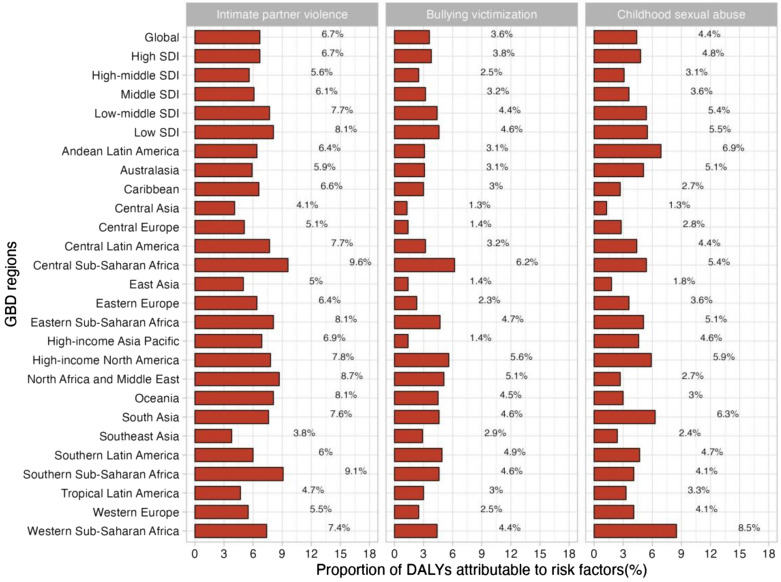
- ASIR decreased in high-middle, middle, low-middle, and low SDI regions but increased only in high SDI regions (EAPC = 0.31%, 95% UI 0.18–0.44). The highest 2019 ASIR was in Uganda (8062.76), Palestine (7864.2), and Central African Republic (7230.55); the lowest was in Myanmar (1393.92). Globally, 6.7% of DALYs were attributable to intimate partner violence, 3.6% to bullying victimization, and 4.4% to childhood sexual abuse.
Methods
- Used Global Burden of Disease 2019 data from 1990 to 2019 for 204 countries and territories across 21 regions, extracting incidence and DALYs for depressive disorders, including MDD and dysthymia, by age and sex.
- Calculated age-standardized rates (ASR) and estimated annual percentage change (EAPC) using a log-linear regression model: y = ln(ASR), EAPC = 100 × (exp(β) − 1), with 95% uncertainty intervals from GBD’s DisMod-MR 2.1; analyses used R version 4.2.3 and two-sided P < 0.05.
- Assessed burden by age, sex, country, region, SDI, HDI, and GBD-available risk factors: intimate partner violence, bullying victimization, and childhood sexual abuse.
Limitations
- The paper states that GBD data were integrated from many epidemiological surveys, and the lack of original data in many countries and regions may bias differences in disease burden; comorbidity of MDD and dysthymia was excluded.
- The paper also states that only three GBD risk factors for depressive disorders were available, and their attributable DALY fractions were small, requiring further study of key influences.
- Evident from the text: the analysis relies on modeled GBD estimates and uncertainty intervals, and the SDI/HDI analyses are ecological associations that cannot establish causality; the text also reports conflicting EAPC directions for ASDR/DALYs (e.g., text states ASDR increased with EAPC = 0.61%, while Table 1 reports DALYs EAPC = −0.24%).
Model-written summary. Check it against the paper before relying on it.
Integrity signals
Registry
Cites
Statistics
Figures
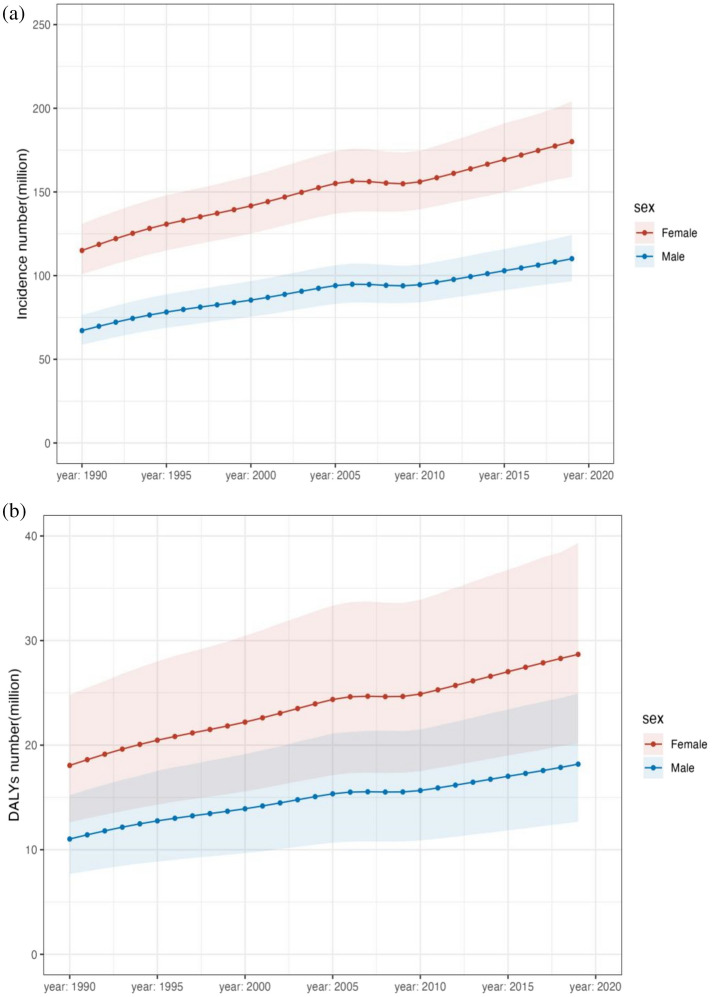
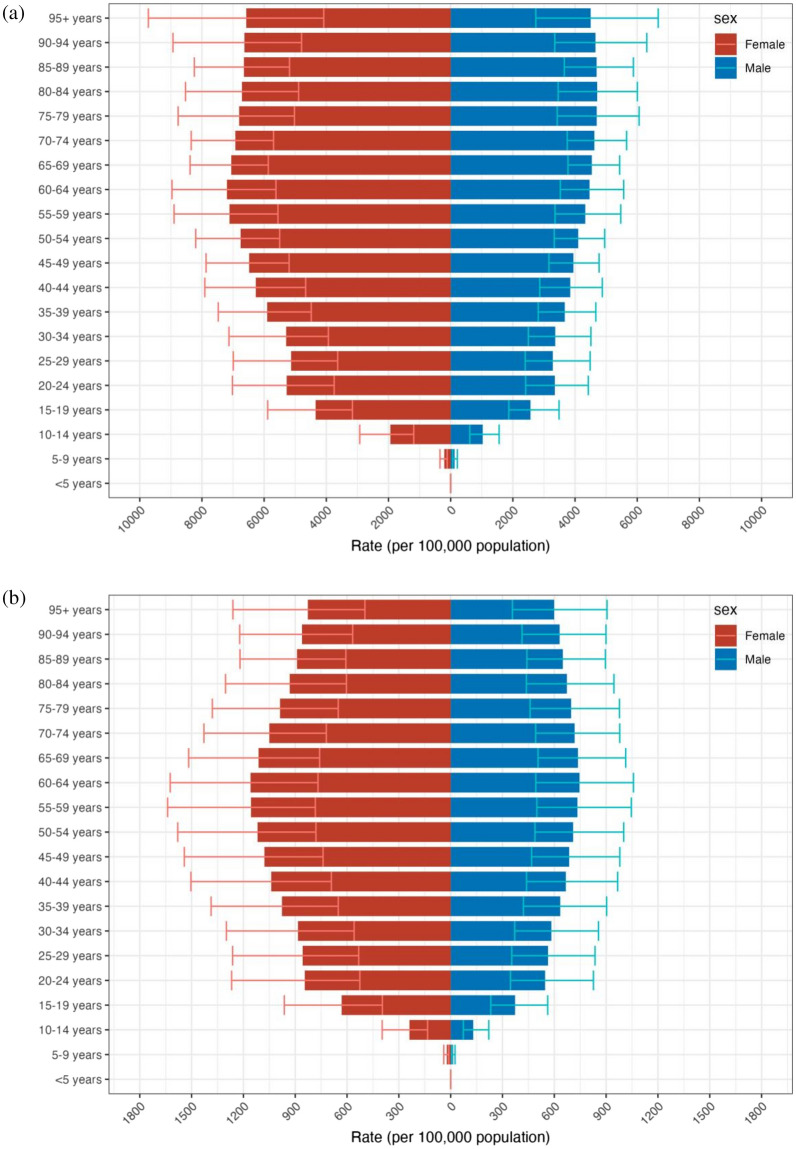
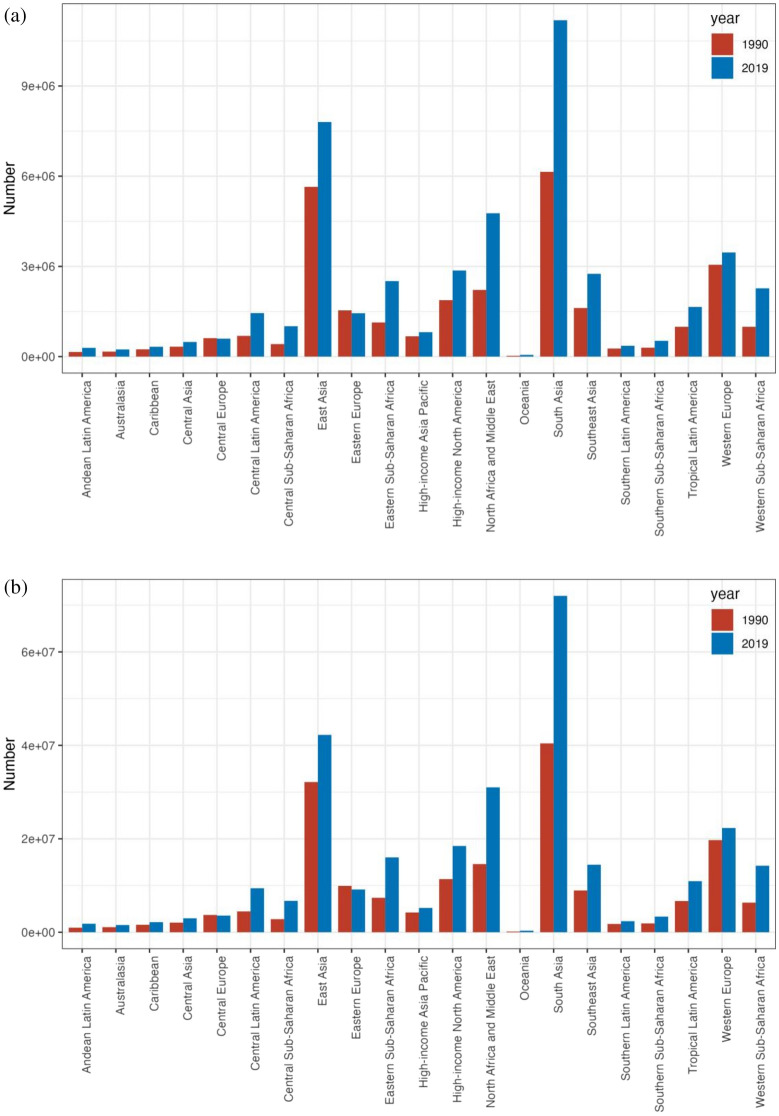
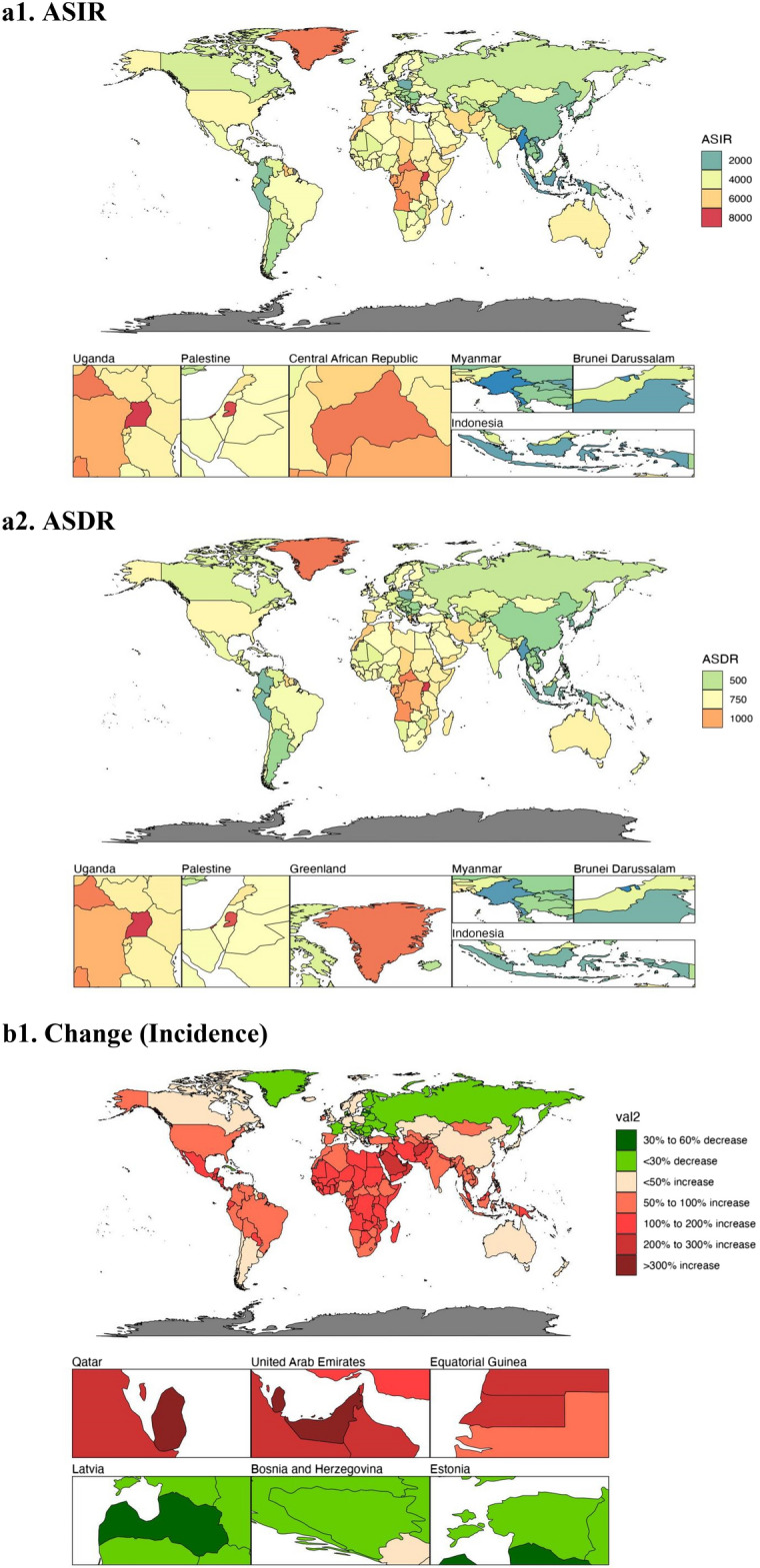
Verification
Claims the paper makes
3 Valid · 2 Not valid · 17 Not checked · 88 Own results and interpretations
The cited sources support only part of this claim — read each source’s verdict below.
In the paper
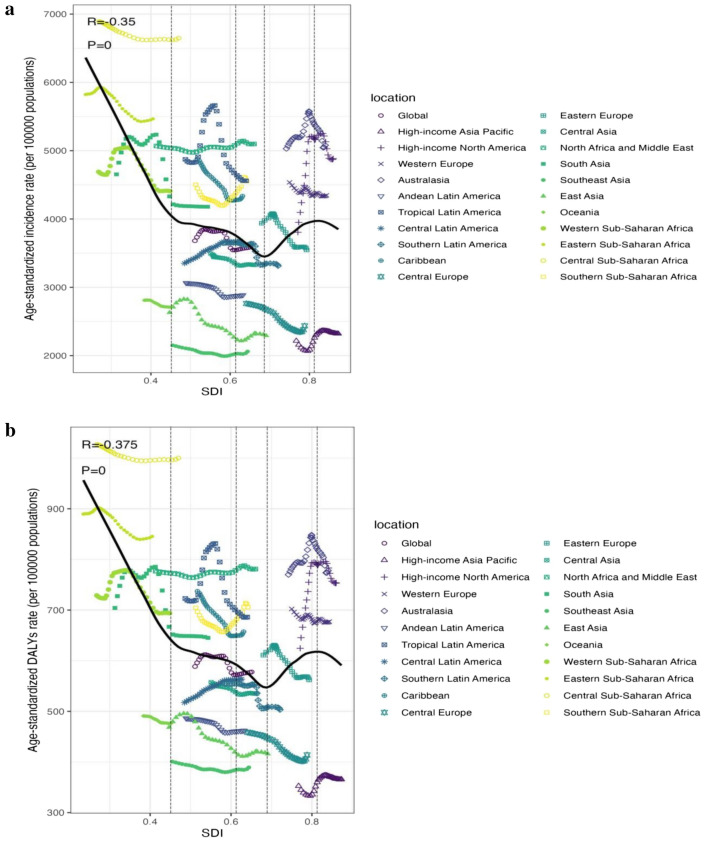
“At the country level during 2019, following a similar pattern to the association of morbidity and SDI, there was a marked adverse correlation between DALYs and SDI, with a few exceptions (R = − 0.375, p < 0.001) (see Fig. 5d)28.”
§ Temporal and spatial trend analysis of all-cause depression burden based on Global Burden of Disease (GBD) 2019 study > Results > The correlation of SDI with the global burden of depressive disorders
What the sources say
- Partly supportedcites [28] Yue T Zhang Q Li G Qin H Global burden of nutritional deficiencies among children under 5 years of age from 2010 to 2019 Nutrients 2022 14 2685 10.3390/nu14132685 35807863 PMC9268233 sourceExperimental — accuracy not yet measured
Section 3.3 (Correlation between SDI and Incidence or DALY Rate) supports the qualitative part of the claim: in 2019, at the national level, 'similar to the correlation between incidence and SDI, a significant negative association (ρ = −0.70, p < 0.001) was found between DALY rates and SDI ... with some exceptions (Figure 4d)'. However, the magnitude attributed is not the source's: our copy reports ρ = −0.70, not R = −0.375, and no passage in our copy contains −0.375 (searched '0.375 correlation coefficient DALY SDI national level'). Also, the source's own Figure 5d depicts DALY rate against HDI in 2019 with a positive correlation (ρ = 0.60, Section 3.4), not DALYs versus SDI, and the source analyses DALY rates rather than absolute DALYs. (LLM, conf=0.80)
plainstates an association- Asserted: passes — The authors put it forward as true.
- Checkable: passes — It can be checked against evidence.
- Load-bearing: unclear — It is unclear whether the paper’s conclusions depend on it.
- Based: passes — The paper gives a reason why it holds.
- Partly supported
The cited sources that could be checked couldn’t confirm or dispute this claim.
In the paper
“However, the GBD data show that the implication of these three risk factors on depression is small; that is, these three risk factors are not likely to be key risk factors for depression, indicating that this requires further investigation47.”
§ Temporal and spatial trend analysis of all-cause depression burden based on Global Burden of Disease (GBD) 2019 study > Discussion
What the sources say
- Could not verifycites [47] Perez MI Obsessive-compulsive disorder misdiagnosis among mental healthcare providers in Latin America J. Obsessive Compuls. Relat. Disord. 2022 32 100693 10.1016/j.jocrd.2021.100693 34840937 PMC8612600 sourceExperimental — accuracy not yet measured
Our copy of Perez et al. (2022) is entirely a vignette study of OCD misidentification among 83 Latin American mental healthcare providers (Abstract; Results, 'OCD misidentification by vignette type' and 'Factors associated with OCD identification'); it contains no Global Burden of Disease analysis and no examination of domestic violence, bullying victimisation, or childhood sexual abuse as risk factors for depression. Searched: 'GBD risk factors depression', 'depression risk factor prevalence', 'bullying victimization childhood sexual abuse domestic violence', 'Global Burden of Disease attributable burden' — the closest hits are only the depression case vignette used to test diagnostic specificity (MDD misidentification rate of 9%, Results) and reference-list entries. Nothing in our copy supports or contradicts the claim, so the attribution cannot be judged from this source. (LLM, conf=0.75)
hedged- Asserted: passes — The authors put it forward as true.
- Checkable: passes — It can be checked against evidence.
- Load-bearing: unclear — It is unclear whether the paper’s conclusions depend on it.
- Based: passes — The paper gives a reason why it holds.
- Could not verify
A result the paper reports from its own data — it cites no other source for it, so there is none to check. The quote shows it is in the paper.
In the paper
“During the period 1990–2019, the global depression ASIR has decreased significantly (EAPC = − 0.29%, 95% UI − 0.38 to − 0.21)”
§ Temporal and spatial trend analysis of all-cause depression burden based on Global Burden of Disease (GBD) 2019 study > Results
plainstates an association- Asserted: passes — The authors put it forward as true.
- Checkable: passes — It can be checked against evidence.
- Load-bearing: passes — The paper’s conclusions depend on it.
- Based: passes — The paper gives a reason why it holds.
- Rests on an assumption not shown here.
A result the paper reports from its own data — it cites no other source for it, so there is none to check. The quote shows it is in the paper.
In the paper
“and a marked drop in South Asia (EAPC = − 0.85, 95% UI − 1.1 to − 0.6)”
§ Temporal and spatial trend analysis of all-cause depression burden based on Global Burden of Disease (GBD) 2019 study > Results > Global burden and EAPC of depressive disorders by 21 GBD regions
plain- Asserted: passes — The authors put it forward as true.
- Checkable: passes — It can be checked against evidence.
- Load-bearing: unclear — It is unclear whether the paper’s conclusions depend on it.
- Based: passes — The paper gives a reason why it holds.
- Rests on an assumption not shown here.
A result the paper reports from its own data — it cites no other source for it, so there is none to check. The quote shows it is in the paper.
In the paper
“There was a marked rise in ASR in Central Sub-Saharan Africa (EAPC = 1.43, 95% UI 1.33–1.54)”
§ Temporal and spatial trend analysis of all-cause depression burden based on Global Burden of Disease (GBD) 2019 study > Results > Global burden and EAPC of depressive disorders by 21 GBD regions
plainstates a cause- Asserted: passes — The authors put it forward as true.
- Checkable: passes — It can be checked against evidence.
- Load-bearing: unclear — It is unclear whether the paper’s conclusions depend on it.
- Based: passes — The paper gives a reason why it holds.
- Rests on an assumption not shown here.
38 more claims
Create a free account to see all 110 claims and to verify the 21 references still open.
- Probably not a substantial claim. 30
- It may state two separate claims as one. 52
- The quote only partly states this claim. 4
Claims other papers make about this one
Each is checked against this paper’s own text: does it say what the citing paper says it does?
In the citing paper
“In general, depression was more prevalent in high-income and high-SDI regions, whereas the burden was notable in low-income and low-SDI regions [15].”
Self-check
Percentages, sums and reported differences re-computed from the paper’s own numbers.
Each contradiction between two passages listed here was confirmed by an independent check.
Rated major: it would touch a result — a value a result rests on, reported and recomputed p-values on opposite sides of the significance level, two passages that conflict with no sign which is right, or a cited work retracted before this paper was published.
In the paper
§ Temporal and spatial trend analysis of all-cause depression burden based on Global Burden of Disease (GBD) 2019 study > Results
“the ASDR has markedly increased (EAPC = 0.61%, 95% UI 0.57–0.65) (see Table 1).”
§ Temporal and spatial trend analysis of all-cause depression burden based on Global Burden of Disease (GBD) 2019 study > Results
“| Global | 290,185,742 (256,024,052–328,260,553) | 3588.25 (3152.71–4060.42) | − 0.29% (− 0.38 to − 0.21) | 46,863,642 (32,929,363–63,797,315) | 577.75 (405.79–788.88) | − 0.24% (− 0.31 to − 0.16) |”
Rated major: it would touch a result — a value a result rests on, reported and recomputed p-values on opposite sides of the significance level, two passages that conflict with no sign which is right, or a cited work retracted before this paper was published.
In the paper
§ Temporal and spatial trend analysis of all-cause depression burden based on Global Burden of Disease (GBD) 2019 study > Results > Global burden and EAPC of depressive disorders by 21 GBD regions
“There was a marked rise in ASR in Central Sub-Saharan Africa (EAPC = 1.43, 95% UI 1.33–1.54)”
§ Temporal and spatial trend analysis of all-cause depression burden based on Global Burden of Disease (GBD) 2019 study > Results
“| Central Sub-Saharan Africa | 6,714,339 (5,590,521–8,062,124) | 6646.94 (5680.5–7819.84) | − 0.17% (− 0.18 to − 0.15) | 1,010,267 (681,633–1,430,655) | 1000.16 (682.15–1397.69) | − 0.12% (− 0.14 to − 0.11) |”
Rated minor: it would not touch a result — a value no result rests on, a p-value that stays on the same side of the significance level, or a conflict that is clerical, resolved elsewhere in the paper, or outside its own findings.
In the paper
§ Temporal and spatial trend analysis of all-cause depression burden based on Global Burden of Disease (GBD) 2019 study > Results
“the incidence of MDD was much more prevalent than dysthymia at 2,784,803,790 (95% UI 241,280,545–312,774,423) and 15,381,951(95% UI 12,782,128–18,474,451) respectively in 2019.”
§ Temporal and spatial trend analysis of all-cause depression burden based on Global Burden of Disease (GBD) 2019 study > Results
“| Major depressive disorder | 274,803,790 (241,280,545–312,774,423) | 3397.48 (2978.66–3866.97)”
Citations
Cites
Vos, T., Lim, S. S., Abbafati, C., Abbas, K. M., Abbasi, M., Abbasifard, M., Abbasi-Kangevari, M., Abbastabar, H., Abd-Allah, F., Abdelalim, A., et al. (2020) · The Lancet · doi:10.1016/s0140-6736(20)30925-9 · Cited by 19,358
Murray, C. J. L., Aravkin, A. Y., Zheng, P., Abbafati, C., Abbas, K. M., Abbasi-Kangevari, M., Abd-Allah, F., Abdelalim, A., Abdollahi, M., Abdollahpour, I., et al. (2020) · The Lancet · doi:10.1016/s0140-6736(20)30752-2 · Cited by 9,854
Kessler, R. C., Berglund, P., Demler, O., Jin, R., Koretz, D., Merikangas, K. R., Rush, A. J., Walters, E. E., & Wang, P. S. (2003) · JAMA · doi:10.1001/jama.289.23.3095 · Cited by 7,988 · cited 1×
“MDD not only seriously affects the psychological condition and quality of life of patients, but also imposes tremendous mental and economic burdens to families and society 38 .”
BackgroundMalhi, G. S., & Mann, J. J. (2018) · The Lancet · doi:10.1016/s0140-6736(18)31948-2 · Cited by 4,099
Ferrari, A. J., Charlson, F. J., Norman, R. E., Patten, S. B., Freedman, G., Murray, C. J. L., Vos, T., & Whiteford, H. A. (2013) · PLoS Medicine · doi:10.1371/journal.pmed.1001547 · Cited by 3,115
Cross-national epidemiology of DSM-IV major depressive episode
Bromet, E., Andrade, L. H., Hwang, I., Sampson, N. A., Alonso, J., de Girolamo, G., de Graaf, R., Demyttenaere, K., Hu, C., Iwata, N., et al. (2011) · BMC Medicine · doi:10.1186/1741-7015-9-90 · Cited by 2,221
AGE STANDARDIZATION OF RATES: A NEW WHO STANDARD
Ahmad, O. B., Boschi-Pinto, C., López, A. D., Murray, C. J. L., Lozano, R., & Inoue, M. (2000) · Cited by 1,962
The global burden of mental disorders: An update from the WHO World Mental Health (WMH) surveys
Kessler, R. C., Aguilar-Gaxiola, S., Alonso, J., Chatterji, S., Lee, S., Ormel, J., Üstün, T. B., & Wang, P. S. (2009) · Epidemiologia e Psichiatria Sociale · doi:10.1017/s1121189x00001421 · Cited by 1,895
Wang, P. S., Aguilar-Gaxiola, S., Alonso, J., Angermeyer, M. C., Borges, G., Bromet, E. J., Bruffaerts, R., de Girolamo, G., de Graaf, R., Gureje, O., et al. (2007) · The Lancet · doi:10.1016/s0140-6736(07)61414-7 · Cited by 1,655
Research works printed but not linked: 3
- Piao J Alarming changes in the global burden of mental disorders in children and adolescents from 1990 to 2019: A systematic analysis for the Global Burden of Disease study Eur. Child Adolesc. Psychiatry 2022 31 1827 1845 10.1007/s00787-022-02040-4.[Epub2022July14] 35831670 · doi:10.1007/s00787-022-02040-4.[epub2022july14]
- Liu Q Changes in the global burden of depression from 1990 to 2017: Findings from the Global Burden of Disease study J. Psychiatr Res. 2019 126 134 140 10.1016/j.jpsychires.2019.08.002 31439359 · DOI · Paper page
- Hong C Liu Z Gao L Jin Y Shi J Liang R Maimaitiming M Ning X Luo Y Global trends and regional differences in the burden of anxiety disorders and major depressive disorder attributed to bullying victimisation in 204 countries and territories, 1999–2019: An analysis of the Global Burden of Disease Study Epidemiol. Psychiatr. Sci. 2022 28 31 e85 10.1017/S2045796022000683 PMC9714217 36440549 · DOI · Paper page
Cited by
Items 101–200 of 218
Bhattacharya, S., Mukherjee, S., Kayal, R., & Saha, J. (2025) · International Journal of Pharmacy and Pharmaceutical Science · doi:10.33545/26647222.2025.v7.i2h.265 · Cited by 1
Yang, Y., Zhang, J., Na, X., Tan, Y., Wu, C., Shi, X. Q., & Zhao, A. (2025) · Journal of Affective Disorders · doi:10.1016/j.jad.2025.120987 · Cited by 1
Chen, Y., Ye, W., Wang, W., Miao, N., Sha, Y., & Sun, T. (2025) · Pharmacology Biochemistry and Behavior · doi:10.1016/j.pbb.2025.174145 · Cited by 1
Kim, Y.-C., Kang, S.-G., Kim, J.-W., Kang, H.-J., Jhon, M., Lee, J.-Y., Kim, S.-W., Shin, I.-S., & Kim, J. (2026) · Scientific Reports · doi:10.1038/s41598-026-35097-1 · Cited by 1
Guan, D., Wang, J., Yang, Q., & Qiao, Z. (2026) · Mental health and physical activity · doi:10.1016/j.mhpa.2026.100766 · Cited by 1
Liang, J., Lu, C., Chen, L., Fan, Y., Huang, F., Wei, W., Kang, H., Huang, S., Lu, H., Pan, M., et al. (2026) · Molecular Neurobiology · doi:10.1007/s12035-026-05755-6 · Cited by 1
Saini, S., Pathak, T., Medda, N., Rani, S., Chaudhary, P., Singh, K., Ghosh, C., Prasad, R., Gupta, S., & Roy, P. (2026) · Journal of Drug Delivery Science and Technology · doi:10.1016/j.jddst.2026.108242 · Cited by 1
Yueju pill regulates the mechanism of SIRT1/FoxO3a-mediated autophagy pathway against depression
Gao, L.-L., Huang, A.-W., He, D., Tong, J.-Z., Hong, W.-F., Zhuang, X.-J., Wu, X.-M., Zhou, Y.-H., & Lin, M. (2026) · World Journal of Psychiatry · doi:10.5498/wjp.v16.i4.115960 · Cited by 1
Meza, A. D. V., Nocek, M. J., Lugo, B. M., Mitchell, B. C., & Philippon, M. J. (2026) · The American Journal of Sports Medicine · doi:10.1177/03635465261433996 · Cited by 1
Zhang, J., Liang, J., Xu, Y., Sun, J., Zhang, M., Yang, Z., Jin, L., Chen, S. H., Zhao, Y., & Hu, C. (2026) · Frontiers in Nutrition · doi:10.3389/fnut.2026.1806547 · Cited by 1
On the importance of including both sexes in animal studies – insights from home‐cage monitoring
Čater, M., Dušek, A., Bartelik, A., Mandillo, S., Golini, E., Rigamonti, M., Bains, R. S., Forrest, H., Rivalan, M., Long, M., et al. (2026) · Biological reviews/Biological reviews of the Cambridge Philosophical Society · doi:10.1002/brv.70184 · Cited by 1
Idaiani, S., Fajri, M., Irmansyah, I., Gibson, J., Wilkinson, J., Susanti, H., Brooks, H. L., Bee, P., & Maharani, A. (2026) · PLoS ONE · doi:10.1371/journal.pone.0348726 · Cited by 1
Mitochondrial dynamics in depression: friend or foe?
Adu, O. M., Edem, E. E., Emereonye, C. F., Areloegbe, S. E. J., Oguntola, B. O., Obisesan, A. O., & Olaniyi, K. S. (2026) · Metabolic Brain Disease · doi:10.1007/s11011-026-01876-y · Cited by 1
Deng, H.-X., Liu, Y.-Z., Yang, L., Liu, J.-J., Jia, F.-N., Zhao, X.-L., Xia, X.-Z., Zhang, X.-Y., & Du, X.-D. (2026) · World Journal of Psychiatry · doi:10.5498/wjp.v16.i6.116435 · Cited by 1
Self-citationNgo, V. K., Vu, T. T., Sobowale, K., Lam, T. T., Nguyen, T., Linnemayr, S., & Huang, W. (2026) · JMIR Research Protocols · doi:10.2196/80546 · Cited by 1
Li, R., Huo, J., Ping, J., Wan, J., Ren, X., Zhu, S., Luo, A., & Jiang, T. (2026) · ALPHA PSYCHIATRY · doi:10.31083/ap48228 · Cited by 1
Gorczynski, P. F., Bilgoe, S. C., Gouttebarge, V., Hitchcock, M., & Currie, A. (2026) · British Journal of Sports Medicine · doi:10.1136/bjsports-2025-111429 · Cited by 1
Thematic and sentiment analysis of replies to depression help seeking related posts on Sina Weibo
Chen, Z. (2024) · Applied and Computational Engineering · doi:10.54254/2755-2721/88/20241649 · Cited by 1
Onubi, J., Adeola, O. A., Eseigbe, P., Elisha, A., Sheyin, G. O., & Chima, A. A. G. (2024) · Exploratory Research and Hypothesis in Medicine · doi:10.14218/erhm.2024.00018 · Cited by 1
The effect of cumulative trauma and polarised thinking on severity of depressive disorder
Salla, M., Aguilera, M., Paz, C., Moya-Higueras, J., & Feixas, G. (2025) · Psychology and Psychotherapy Theory Research and Practice · doi:10.1111/papt.12602 · Cited by 1
Yao, F., Zhang, J., & Wang, H. (2025) · medRxiv · doi:10.1101/2025.06.05.25329093 · Cited by 1
Silva, D. F. M. D. [. (2025) · LA Referencia (Red Federada de Repositorios Institucionales de Publicaciones Científicas) · Cited by 1
Synaptic Plasticity—Intrinsic Excitability and Antidepressant Discovery
Tanaka, M. (2026) · Biomedicines · doi:10.3390/biomedicines14061265
Estimating Optimal Treatment Rule for Major Depressive Disorder Using Penalized Regression Method
Ghorbani, N., Roshanaei, G., Ramezani‐Doroh, V., Soltanian, A. R., Arayeshgari, M., & Tapak, L. (2024) · Oman Medical Journal · doi:10.5001/omj.2024.95
Conceptualization of Depression among Medical Students and Its Differences during Medical Education
Arana-Ballestar, S., Ródenas, R. C., Olaya, B., & Santabárbara, J. (2024) · Epidemiologia · doi:10.3390/epidemiologia5030042
Cultural Contours of Depression: A Socio-political and Ethnographic Analysis
Fan, X. (2024) · Advances in Social Science, Education and Humanities Research/Advances in social science, education and humanities research · doi:10.2991/978-2-38476-319-1_53
Ansiedad y Depresión: el impacto de la microbiota intestinal
Alvarez, M. F. O. (2024) · Religación Press eBooks · doi:10.46652/religacionpress.219.c344
Shi, L., Jia, F., Liu, J., Deng, H., Yang, L., Ren, W., Zhang, X., Du, X., & Zhang, X. (2025) · Research Square · doi:10.21203/rs.3.rs-6106188/v1
Self-citationKureshi, N., Clarke, D. B., Nunes, A., Feng, C. X., & Abidi, S. S. R. (2026) · International Journal of Mental Health and Addiction · doi:10.1007/s11469-026-01668-6
Zhao, L., Zhao, Y., & Kang, H. (2025) · Healthcare · doi:10.3390/healthcare13111287
Antidepressant use and all-cause mortality in depressed individuals: A real-world cohort study
Zhou, S., Wang, C., & Zhang, Y. (2025) · PLoS ONE · doi:10.1371/journal.pone.0327844
Szerocki, J., Milewska-Plis, K., Winkowska, A., Grudina, A., Kłak, I., Grodzicka, J., Bartnik, K., Herian, M., Karalus, M., & Curyło, W. (2025) · Quality in Sport · doi:10.12775/qs.2025.43.61331
Koloi, A., Dobretz, K., Damman, D., Quax, R., Zaridis, D. I., Papaloukas, C. L., Fotiadis, D. I., & Bosch, J. A. (2025) · Research Square · doi:10.21203/rs.3.rs-6422455/v1
Yao, Y., Li, Y., Zhou, T., Li, L., Han, S., Sun, J. J., Zhao, C., Wu, F., & Liu, G. (2025) · SSRN Electronic Journal · doi:10.2139/ssrn.5375770
Balakrishnan, S., Ronald, B., Andreanto, G. H., Goh, W., & Nagentrau, M. (2025) · Algorithms for intelligent systems · doi:10.1007/978-981-96-5210-5_48
Saif, M. G. M. (2025) · Research Square · doi:10.21203/rs.3.rs-7278463/v1
Adikari, C., Talagatoti, D. R. P., Barari, N., & Redappa, S. K. (2025) · Perinatal Journal · doi:10.57239/prn.25.03310040
Adikari, C., Talagatoti, D. R. P., Barari, N., & Redappa, S. K. (2025) · Perinatal Journal · doi:10.57239/prn.25.0332005
He, R., Lan, X., Chen, J., Hu, S., Zeng, Z., & Xie, X. (2025) · Journal of Multidisciplinary Healthcare · doi:10.2147/jmdh.s534823
Kim, J.-M., Kang, H., Kim, J.-W., Kim, H., Jhon, M., Lee, J. Y., Kim, S., & Shin, I. (2025) · Psychoneuroendocrinology · doi:10.1016/j.psyneuen.2025.107609
Association of miR-17-92 rs9588884 gene polymorphism with cognitive impairment in depression
Tan, W., Wang, X., Zhang, C., Deng, K., & Chen, M. (2025) · Molecular Biology Reports · doi:10.1007/s11033-025-11008-x
The Role of Iron Deficiency as Trigger for Depression: A Biochemical and Psychological Perspective
Al-Showaily, J. S., Razzaq, M. K., Hassan, H. F., & Obaid, Q. A. (2025) · Medical Forum Monthly · doi:10.60110/medforum.360910
梁, 科. (2025) · Hans Journal of Biomedicine · doi:10.12677/hjbm.2025.154076
Approach to the increase of depression and its treatment. Role of primary care. An opinion article
Campos, R. C., Villullas, S., de Andoin, S. G., Pérez, I., Ampudia, C. B., & de Abechuco, E. L. (2025) · Frontiers in Health Services · doi:10.3389/frhs.2025.1715754
Zhao, Z., Liu, J., & Liu, R. (2025) · Research Square · doi:10.21203/rs.3.rs-7640588/v1
Self-citationGao, Y., Guo, J., Yang, X., Xu, S., & Li, D. (2025) · Research Square · doi:10.21203/rs.3.rs-8102198/v1
Impact of childhood household support on depression and self-reported mental and physical health
Akinyemi, O. A., Fasokun, M., Ogunyankin, F., Salami, R. A., Osondu, I. S., Eze, A., Hughes, K., Michael, M. B., & Ogundare, T. (2025) · PLoS ONE · doi:10.1371/journal.pone.0328431
The EXPERIENCE project: The Use of Virtual Reality as a Diagnostic Tool for Depression
Mura, F. (n.d.) · Padua Research Archive (University of Padova)
Hu, S. (2025) · eScholarship@McGill (McGill) · doi:10.82308/49966
UK Medical Cannabis Registry: A two-year case series of clinical outcomes in depression
Lillywhite, E., Erridge, S., Clarke, E., McLachlan, K., Coomber, R., Asghar, M., Bhoskar, U., Crews, M., Angelis, A. D., Imran, M., et al. (2026) · Journal of Affective Disorders · doi:10.1016/j.jad.2025.121130
Enhanced antidepressant effects of fluoxetine combined with quercetin: studies in vitro and in vivo
Yang, R., Mao, Y. V., Yang, J., Ma, H., & Shen, J. (2026) · Neuroscience Letters · doi:10.1016/j.neulet.2026.138507
Sasaki, T., & Hirano, Y. (2026) · Neuroscience Informatics · doi:10.1016/j.neuri.2026.100258
Dahrendorff, J. (2025) · Digital Commons - University of South Florida (University of South Florida)
Lee, T., Ha, S., Kang, K., Kim, J., Jhon, M., & Lee�, H. (2025) · IEEE International Conference on Bioinformatics and Biomedicine (BIBM) · doi:10.1109/bibm66473.2025.11356566
Análisis de la depresión en El Salvador mediante modelos de aprendizaje automático
López, X. S., Alam, K., de Mata, Z. I. Á., & Tejada, D. A. (2026) · ALERTA Revista Científica del Instituto Nacional de Salud · doi:10.5377/alerta.v9i1.21956
Akaki, Y., Nakamura, Y., Nakanishi, Y., Okuyama, Y., & Fujita, K. (2026) · Psychiatry and Clinical Neurosciences Reports · doi:10.1002/pcn5.70289
The combination of exercise and psychedelics for the treatment of major depressive disorder
Fabiano, N., Stubbs, B., Lawrence, D. W., Rosenblat, J. D., Teixeira, P. J., Wong, S., Zhou, C., & Carhart-Harris, R. L. (2026) · Discover Mental Health · doi:10.1007/s44192-026-00408-5
Deep Learning NLP Technique for Automated Depression Identification from Social Media Text
Dixit, P., Garg, A., & Srivastav, S. (2025) · International Conference on IoT, Communication and Automation Technology (ICICAT) · doi:10.1109/icicat68430.2025.11414747
Liu, B., Mu, M., Dong, H., Wu, H., Su, X., Zhang, P., Li, C., & Li, X. (2025) · International Conference on Public Health and Data Science (ICPHDS) · doi:10.1145/3789537.3789576
Si, C., Ren, N., Song, Y., Zhang, Y., & Li, B. (2026) · BMC Public Health · doi:10.1186/s12889-026-26863-x
Zeng, W., Ma, H., Wei, S., Li, H., Jin, Z., Zhou, L., Chai, S., Tan, Y., Tang, G., & Wei, H. (2026) · Medicine · doi:10.1097/md.0000000000048023
Association between cardiovascular health measured by Life’s Essential 8 and depressive symptoms
Ahn, J. H., Kim, H., Kim, H. C., Lee, H., Lee, Y. H., Lloyd‐Jones, D. M., & Jung, S. J. (2026) · Epidemiology and Health · doi:10.4178/epih.e2026013
Zhang, J., Yi, L., Yu, H., & Yang, Y. (2026) · Scientific Reports · doi:10.1038/s41598-026-44220-1
Nakimuli‐Mpungu, E., Zeng, C., Babirye, S., Huang, R., Kemigisha, B., Kwesiga, J. M., Wamala, K., Kasujja, R., Kalani, K., & Martinez, R. A. (2026) · Wellcome Open Research · doi:10.12688/wellcomeopenres.25753.1
Pan, R., Feng, S., Sun, Y., Xu, J., Zhai, T., Wu, X., Tan, L., Yuan, Y., Cao, H., Maimaitimin, M., et al. (2026) · IEEE Journal of Biomedical and Health Informatics · doi:10.1109/jbhi.2026.3677472
Song, G., Zhou, Q., Abbas, M., Baba, N., Ibrahim, Y., & Ugwah-Oguejiofor, C. J. (2026) · Natural Product Communications · doi:10.1177/1934578x261441317
Zhou, Z., Wang, S., Yin, J., Guo, Z., Yang, L., Gao, X., Xia, Y., Yang, Y., Shan, Z., & Tian, L. (2026) · Depression and Anxiety · doi:10.1155/da/6688695
Cheng, Z., Fu, F., Lin, H., Han, Z., & Xu, T. (2026) · Maturitas · doi:10.1016/j.maturitas.2026.108953
Shan, S., Wu, J., Zhou, J., ZHANG, C., Xu, C., Zha, J., Ying, J., Zhu, Y., Hu, S., Song, P., et al. (2026) · Diabetology & Metabolic Syndrome · doi:10.1186/s13098-026-02167-3
Likindikoki, S., Kagaruki, G. B., Mayige, M. T., Hassan, F. E., Ku, C., Millinga, V., Mtei, G. T., Salum, B., Suleiman, O. M., Amour, Z. S., et al. (2026) · Tanzania journal of health research/Tanzania Journal of Health Research · doi:10.4314/thrb.v27i2.12
liu, S., jia, G., guo, C., & zhang, S. (2026) · Research Square · doi:10.21203/rs.3.rs-9405307/v1
Lv, Q., Dong, D., Fang, S., Xuanyi, W., Lin, P., Feng, J., Luo, Q., & Wang, X. (2026) · Translational Psychiatry · doi:10.1038/s41398-026-04100-8
Liu, G., Li, Y., Liu, A., Yao, L., Wang, C., Zhou, T., Wang, S., Qin, Y., Fan, C., Fu, Y., et al. (2026) · Spectrochimica Acta Part A Molecular and Biomolecular Spectroscopy · doi:10.1016/j.saa.2026.128071
Use of Clinically Important Differences in Randomized Controlled Trials for DepressionPreprint
Xiong, R., Wu, J., Wang, Z., Shi, D., & Qin, Z. (2026) · Research Square · doi:10.21203/rs.3.rs-9676507/v1
Chalupczak, N. V., Mense, S. A., Hopkins, T., & Chovatiya, R. (2026) · International Journal of Dermatology · doi:10.1111/ijd.70721
Clemente, W. S., Bezerra, K. S., Matias, E. G. C., de Oliveira, J. J., & Fulco, U. L. (2026) · Physical Chemistry Chemical Physics · doi:10.1039/d6cp00943c
García-Campanario, I., Viñolo-Gil, M. J., Utrera, R. C. D., & Franco, C. L. (2026) · Atención Primaria · doi:10.1016/j.aprim.2026.103477
Niu, B., Zhang, Y., & Liu, J. (2026) · Journal of Asian Economics · doi:10.1016/j.asieco.2026.102214
Self-citationSocial network structure and depression by gender in rural Honduras: a cross-sectional study
Lee, S. T., Papamichalis, M., Raygoza-Cortez, K., Christakis, N. A., & Rodríguez, A. L. (2026) · BMJ Open · doi:10.1136/bmjopen-2025-108285
Argungu, Z. M., Alhaiti, A. H., & Jibreel, E. A. (2026) · European Archives of Psychiatry and Clinical Neuroscience · doi:10.1007/s00406-026-02288-w
Firdous, S., & Kiran, B. K. (2026) · International Journal for Research in Applied Science and Engineering Technology · doi:10.22214/ijraset.2026.83659
Divergent effects of interleukin-6 and ghrelin on remission and relapse in depression treatment
Kim, J., Kang, H., Kim, J., Jhon, M., Lee, J.-Y., Kim, S., & Shin, I. (2026) · The International Journal of Neuropsychopharmacology · doi:10.1093/ijnp/pyag032
Suryani, V., & Herdayati, M. (2026) · Jurnal Ners · doi:10.31004/jn.v10i2.55832
Lu, Y.-M., He, Y., Wang, Y., Wd, M., & Ma, Y. (2026) · BMJ Nutrition Prevention & Health · doi:10.1136/bmjnph-2025-001469
Nurwati, N. Y. T., Indriani, F., Abadi, F., Nugrahadi, D. T., & Herteno, R. (2026) · Indonesian Journal of Electronics Electromedical Engineering and Medical Informatics · doi:10.35882/ijeeemi.v8i3.356
Huber, R. L., & Scherf‐Clavel, O. (2026) · Clinical Pharmacokinetics · doi:10.1007/s40262-026-01668-8
Benefit packages design based on the optimization of depression burden: Evidence from urban China
Niu, B., Zhang, Y., Chen, Y., 刘婷婷, & Liu, J. (2026) · Journal of Management Science and Engineering · doi:10.1016/j.jmse.2026.06.003
Self-citationPada, R. M. S., Rolle, M. G. N., Bondoc, C. E. D., & Hinay, A. A. (2026) · Acta Psychologica · doi:10.1016/j.actpsy.2026.107485
Kim, L., Noh, J., Park, E. J., Hwang, C., Lee, W., Yang, J. S., Kim, H., & Jung, S. J. (2026) · Psychiatry Research · doi:10.1016/j.psychres.2026.117336
Enyeji, A. M., Roland, A., Forbes, J., & Wetzell, D. L. (2026) · AJPM Focus · doi:10.1016/j.focus.2026.100537
Du, W., Jia, Y., & Hu, C. (2026) · Annals of Clinical Psychiatry · doi:10.1177/10401237261473586
Satrya, A., Fajri, M., Susanti, H., Aini, K., Brooks, H. L., Bee, P., & Maharani, A. (2026) · Frontiers in Public Health · doi:10.3389/fpubh.2026.1839549
Xu, D., Jiang, L., & Yang, Q. (2026) · Nutrición Hospitalaria · doi:10.20960/nh.06815
Yuan, M., Liang, X., Jin, W., Zheng, M., Feng, S., Zhao, J., Li, S., Zhu, L., Tan, L., Zeng, Y., et al. (2026) · Frontiers in Public Health · doi:10.3389/fpubh.2026.1916777
Xu, H., Hu, D., Li, X., Yang, J., Rui, D., Liu, N., Wu, H., Yang, J., Chang, L., & Jiao, F. (2026) · Nutrients · doi:10.3390/nu18162636
Zhu, X., Shu, Y., Zhang, M., & Zhang, J. (2026) · Journal of Affective Disorders Reports · doi:10.1016/j.jadr.2026.101157
Xu, D., Niu, J., Yang, T., Qiao, W., Wang, L., & Hou, D. (2026) · Research Square · doi:10.21203/rs.3.rs-9398721/v1
Gregoratto, F. (2025) · Parallax · doi:10.1080/13534645.2025.2657712
Reinhard, A.-K., Hauck, S., Lehnert, K., Lehnert, B., Brakemeier, E., & Wurm, S. (2026) · BMJ Open · doi:10.1136/bmjopen-2026-120224
Kim, N. M., & Kim, G.-H. J. (2026) · Journal of Psychosomatic Research · doi:10.1016/j.jpsychores.2026.112994
Metadata
- Authors
- Liu, J., Liu, Y., Ma, W., Tong, Y., & Zheng, J.
- Affiliations
- Shanxi Medical University (CN)
- Nanchang University (CN)
- Corresponding author
- Tong, Yan
- Zheng, Jianzhong
- Venue
- Scientific Reports
- Published
- 2024-05-29
- Volume
- 14
- Issue
- 1
- Pages
- 12346-12346
- ISSN
- 2045-2322 (ISSN-L)
- PMC
- PMC11137143
- OpenAlex
- W4399140177
- Cited by
- 160
- References
- 52
- Citations by year
- 2026: 56 · 2025: 98 · 2024: 6
- FWCI
- 75.71
- Type
- journal article
- Language
- en
- Open access
- gold
- doi.org
- Licence
- cc-by
- creativecommons.org/licenses/by/4.0 (tdm)
- creativecommons.org/licenses/by/4.0 (vor)
- Locations
- Scientific Reports (publishedVersion, cc-by)
- PubMed Central (publishedVersion, cc-by)
- PubMed (publishedVersion)
- DOAJ (DOAJ: Directory of Open Access Journals) (submittedVersion)
- Topics
- Health Sciences › Medicine › Psychiatry and Mental health › Mental Health Treatment and Access
- Health Sciences › Medicine › Pharmacology (medical) › Treatment of Major Depression
- Health Sciences › Medicine › Public Health, Environmental and Occupational Health › Global Health and Epidemiology
- Keywords
- depression, global burden of disease, spatiotemporal trends, social development index, disability-adjusted life years, major depressive disorder, dysthymia, sex differences, age differences, risk factors, depression prevalence, depression incidence
- MeSH terms
- Global Burden of Disease, Disability-Adjusted Life Years, Adolescent, Adult, Aged, Child, Depression, Major Depressive Disorder, Female, Humans, Male, Middle Aged, Risk Factors, Global Health, Incidence, Prevalence, Cost of Illness, Young Adult, Spatio-Temporal Analysis
About these checks
Registry, retraction, Cites and statistics results are computed, not judged, with one exception: a printed reference that no index lists is read once by a model before it counts as a citation error. Claims are extracted by a model and kept only when their quote appears verbatim in the text; each cited source is then checked, with a model’s help, for whether it says what the claim relies on. Those verdicts can be wrong — read the claim’s quote and the cited source before relying on one.
The claim verdicts this report counts are experimental: their accuracy is not yet measured.
A language model drew the claims from the paper on 2026-10-05, under version 3 of the claim definition (model deepseek-v4.1-flash, prompt extract-v3).
A second model labelled each claim on 2026-10-05 (model jev-1.13-20260917, definition revision gold-guideline-v0.2).
Cited sources are checked with a language model’s help (qwen3.8-omni-flash).
Statistics and arithmetic are recomputed, not judged.
Confidence bands are shown only for fields calibrated on our annotated test set. None is calibrated yet, so no band is shown.
What counts as a claim ›How we measure confidence ›How we check this ›
Are you an author, or do you see a problem with this page? Request a review
Data sources
Bibliographic data: Semantic Scholar, OpenAlex, Crossref.
Contains information from the Semantic Scholar Academic Graph Datasets, made available under the ODC Attribution License (ODC-BY 1.0).
Semantic Scholar’s data is described in: Kinney, R., et al. (2023). The Semantic Scholar Open Data Platform. arXiv:2301.10140.
