

Elevated fecal calprotectin is associated with gut microbial dysbiosis, altered serum markers and clinical outcomes in older individuals
Open accessPublished version of a preprint
The DOI matches its Crossref record; 65 of the 65 references it cites were found in a registry or an index.
Abstract
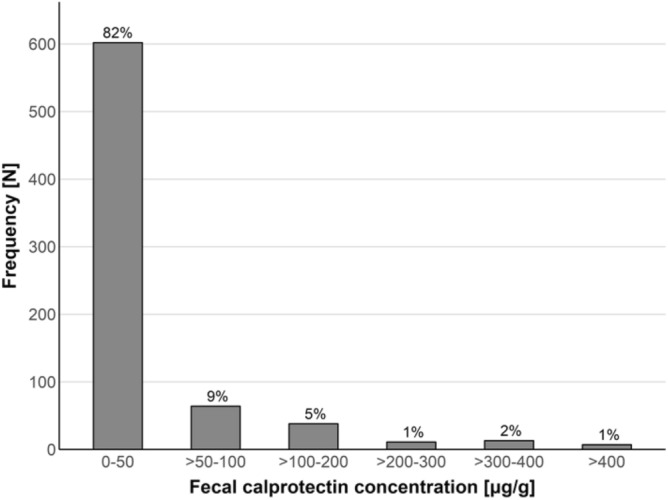
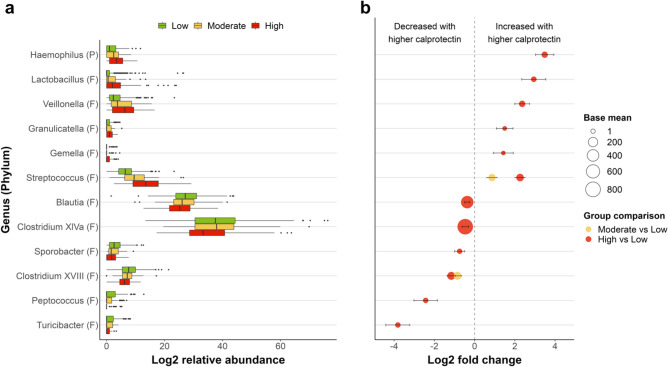
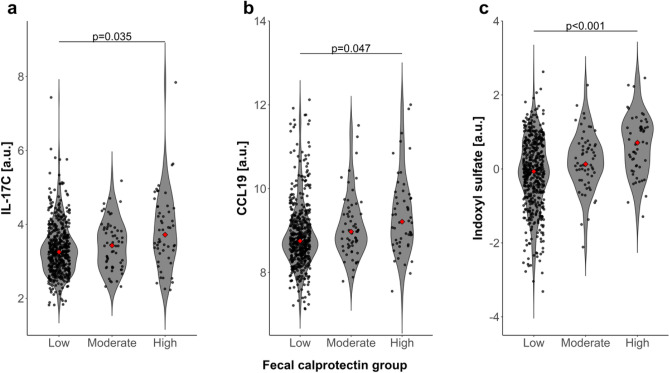
Fecal calprotectin is an established marker of gut inflammation in inflammatory bowel disease (IBD). Elevated levels of fecal calprotectin as well as gut microbial dysbiosis have also been observed in other clinical conditions. However, systemic and multi-omics alterations linked to elevated fecal calprotectin in older individuals remain unclear. This study comprehensively investigated the relationship between fecal calprotectin levels, gut microbiome composition, serum inflammation and targeted metabolomics markers, and relevant lifestyle and medical data in a large sample of older individuals (n = 735; mean age ± SD: 68.7 ± 6.3) from the TREND cohort study. Low (0–50 μg/g; n = 602), moderate (> 50–100 μg/g; n = 64) and high (> 100 μg/g; n = 62) fecal calprotectin groups were stratified. Several pro-inflammatory gut microbial genera were significantly increased and short-chain fatty acid producing genera were decreased in high vs. low calprotectin groups. In serum, IL-17C, CCL19 and the toxic metabolite indoxyl sulfate were increased in high vs. low fecal calprotectin groups. These changes were partially mediated by the gut microbiota. Moreover, the high fecal calprotectin group showed increased BMI and a higher disease prevalence of heart attack and obesity. Our findings contribute to the understanding of fecal calprotectin as a marker of gut dysbiosis and its broader systemic and clinical implications in older individuals.
Overview
The claims and statistics of this paper haven’t been checked yet.
Free: it reads the open-access text and checks the first 5 claims that cite a source we can check. Create a free account to check every claim.
Integrity signals
Registry
Cites
Statistics
Figures
Verification
Claims the paper makes
The claims and statistics of this paper haven’t been checked yet.
Free: it reads the open-access text and checks the first 5 claims that cite a source we can check. Create a free account to check every claim.
Claims other papers make about this one
Each is checked against this paper’s own text: does it say what the citing paper says it does?
In the citing paper
“It is an established, sensitive marker used to monitor IBD activity and, by extension, reflects microbiota-driven mucosal inflammation.119,121,122”
From Gut dysbiosis in oncology: a risk factor for immunoresistance (2026) · doi:10.1038/s41422-025-01212-6 · cites this paper as [122]
Self-check
Percentages, sums and reported differences re-computed from the paper’s own numbers.
The self-check needs the paper’s full text.
Citations
Cites
1 retracted
Retracted: Gut Microbiome Signatures of Risk and Prodromal Markers of Parkinson Disease
Heinzel, S., Aho, V. T. E., Suenkel, U., von Thaler, A., Schulte, C., Deuschle, C., Paulin, L., Hantunen, S., Brockmann, K., Eschweiler, G. W., et al. (2020) · Annals of Neurology · doi:10.1002/ana.25788 · Cited by 95
Self-citationRetractedphyloseq: An R Package for Reproducible Interactive Analysis and Graphics of Microbiome Census Data
McMurdie, P. J., & Holmes, S. (2013) · PLoS ONE · doi:10.1371/journal.pone.0061217 · Cited by 21,322
Schloss, P. D., Westcott, S. L., Ryabin, T., Hall, J. R., Hartmann, M., Hollister, E. B., Lesniewski, R. A., Oakley, B. B., Parks, D. H., Robinson, C. J., et al. (2009) · Applied and Environmental Microbiology · doi:10.1128/aem.01541-09 · Cited by 19,549
Kozich, J. J., Westcott, S. L., Baxter, N. T., Highlander, S. K., & Schloss, P. D. (2013) · Applied and Environmental Microbiology · doi:10.1128/aem.01043-13 · Cited by 7,112
PICRUSt2 for prediction of metagenome functions
Douglas, G. M., Maffei, V. J., Zaneveld, J. R., Yurgel, S. N., Brown, J. R., Taylor, C. M., Huttenhower, C., & Langille, M. G. I. (2020) · Nature Biotechnology · doi:10.1038/s41587-020-0548-6 · Cited by 6,709 · cited 1×
“5.2) 62 .”
InfluentialInflammaging: a new immune–metabolic viewpoint for age-related diseases
Franceschi, C., Garagnani, P., Parini, P., Giuliani, C., & Santoro, A. (2018) · Nature Reviews Endocrinology · doi:10.1038/s41574-018-0059-4 · Cited by 3,586 · cited 1×
“Gut inflammation, even at moderate yet chronic levels, may be involved in various disease processes affecting the central nervous system via the gut-brain axis 4 and inflammaging 5 .”
BackgroundThe Role of Short-Chain Fatty Acids From Gut Microbiota in Gut-Brain Communication
Silva, Y. P., Bernardi, A., & Frozza, R. L. (2020) · Frontiers in Endocrinology · doi:10.3389/fendo.2020.00025 · Cited by 3,043
The gut-liver axis in liver disease: Pathophysiological basis for therapy
Albillos, A., de Gottardi, A., & Rescigno, M. (2020) · Journal of Hepatology · doi:10.1016/j.jhep.2019.10.003 · Cited by 2,166 · cited 1×
“Thereby, gut microbiota (and gut inflammation) play a systemic role of multidirectional communication and signaling of inflammation beyond the gastrointestinal tract along several proposed axes involving the gut, liver, heart and brain 4,34,35 .”
BackgroundGut microbiome alterations in Alzheimer’s disease
Vogt, N. M., Kerby, R. L., Dill-McFarland, K. A., Harding, S. J., Merluzzi, A. P., Johnson, S. C., Carlsson, C. M., Asthana, S., Zetterberg, H., Blennow, K., et al. (2017) · Scientific Reports · doi:10.1038/s41598-017-13601-y · Cited by 2,137 · cited 1×
“Local and systemic pro-inflammatory effects have been partly linked to gut microbial dysbiosis not only in IBD 10 but also other inflammatory diseases 11 as well as numerous neurodegenerative 12,13 , metabolic 14 and cardiovascular diseases (CVD) 15 .”
BackgroundGut microbiome structure and metabolic activity in inflammatory bowel disease
Franzosa, E. A., Sirota-Madi, A., Avila-Pacheco, J., Fornelos, N., Haiser, H. J., Reinker, S., Vatanen, T., Hall, A. B., Mallick, H., McIver, L. J., et al. (2018) · Nature Microbiology · doi:10.1038/s41564-018-0306-4 · Cited by 1,995 · cited 1×
“Local and systemic pro-inflammatory effects have been partly linked to gut microbial dysbiosis not only in IBD 10 but also other inflammatory diseases 11 as well as numerous neurodegenerative 12,13 , metabolic 14 and cardiovascular diseases (CVD) 15 .”
Background
Cited by
Role of Gut Microbiota in Modulating Oxidative Stress Induced by Environmental Factors
Kurhaluk, N., Kamiński, P., & Tkaczenko, H. (2025) · Cellular Physiology and Biochemistry · doi:10.33594/000000799 · Cited by 39
Zheng, J., & Lin, T. (2025) · Frontiers in Immunology · doi:10.3389/fimmu.2025.1629944 · Cited by 27
Gut dysbiosis in oncology: a risk factor for immunoresistance
(2026) · doi:10.1038/s41422-025-01212-6 · Cited by 24
“119,121,122 Elevated fecal calprotectin has been correlated with dysbiotic alterations in microbiota composition among IBD patients, 123 highlighting that shifts in commensal populations can incite neutrophilic in fl ammation.”
Deza, D. C., García‐López, S., Monterde, V. B., Cuadro, C. P., Caballero, C. Y., & Arbonés-Mainar, J. M. (2025) · Biomolecules · doi:10.3390/biom15081185 · Cited by 24
“The abundance of Proteobacteria in the mesenteric fat correlates with markers of active inflammation, including elevated fecal calprotectin and serum C-reactive protein levels [86].”
Šantić, R., Pavlović, N., Kumrić, M., Vilović, M., & Božić, J. (2025) · Biomedicines · doi:10.3390/biomedicines13081864 · Cited by 19
“Moreover, calprotectin binding to RAGE receptors on cardiomyocytes impairs calcium flux, ultimately reducing cardiomyocyte contractility [177].”
Faradilah, A., Bukhari, A., Aminuddin, A., & Syauki, A. Y. (2025) · Clinical Nutrition Open Science · doi:10.1016/j.nutos.2025.01.011 · Cited by 15
Pyroptosis in ulcerative colitis: biomarkers and therapeutic targets
Cruz, H., Shah, P., Wohlgemuth, N., Ketchum, R., Nassif, I. I., & Hu, C.-A. A. (2025) · Journal of Biomedical Science · doi:10.1186/s12929-025-01206-x · Cited by 15
“Heinzel et al. [45] showed that while FCP exhibits high sensitivity in identifying UC disease, its specificity is low, as levels can be significantly elevated during infections unrelated to IBD.”
Mitrović, M., Popović, V. S., Erceg, S., Mitrović, M., Dobrosavljević, A., Stupar, A., Vuković, P., Zlatković, D., & Svorcan, P. (2025) · International Journal of Molecular Sciences · doi:10.3390/ijms26125561 · Cited by 13
Microbiome: A Key Regulator of Body-Brain Interactions
O’Riordan, K. J., Aburto, M. R., Nagpal, J. K., Clarke, G. A., & Cryan, J. F. (2025) · Advances in experimental medicine and biology · doi:10.1007/978-3-031-89525-8_6 · Cited by 10
Microbiota-derived metabolites and cardiovascular implications in Inflammatory Bowel Disease (IBD)
Olic, I. A., Pavlović, N., Kumrić, M., Šantić, R., Bratanić, A., & Božić, J. (2026) · Molecular Medicine · doi:10.1186/s10020-026-01493-6 · Cited by 8
“In fact, children with CD, when compared with age-matched UC patients, exhibit increased urinary excretion of indoxyl sulfate and its oxidized derivative, hydroxyindoxyl sulfate, alongside reduced kynurenine levels (Heinzel et al. 2024).”
The role of calprotectin in vascular calcification
Amaya-Garrido, A., & Klein, J. (2025) · Current Opinion in Nephrology & Hypertension · doi:10.1097/mnh.0000000000001075 · Cited by 5
Biomarker Quantification of Gut Dysbiosis-Derived Inflammation: A Review
Lin, L., George, J., & Liu, G. (2025) · Journal of Inflammation Research · doi:10.2147/jir.s539155 · Cited by 5
“62”
Modulatory activity of N-palmitoyl-D-glucosamine in bridging gut dysbiosis and pain mechanisms
Ricciardi, F., Morace, A. M., Fusco, A., Perrone, M., Limongelli, R., Lucà, S., Montella, M., Pane, K., Franzese, M., Luongo, L., et al. (2025) · Pain · doi:10.1097/j.pain.0000000000003759 · Cited by 4
“9,30,43 In the colon, BDNF and TNF-a levels were increased.”
Blecksmith, S. E., Oliver, A. S., Alkan, Z., & Lemay, D. G. (2025) · Journal of Nutrition · doi:10.1016/j.tjnut.2025.08.027 · Cited by 4
Chisoi, A., Dobrin, N., Cozaru, G. C., Ionescu, A.-C., Aşchie, M., Kajanto, L. A., Vlad, S. E., Enciu, M., Popovici, I. A., & Cîmpineanu, B. (2025) · Biomedicines · doi:10.3390/biomedicines13102411 · Cited by 4
“Comparing the findings of this study with the report by Sebastian Heinzel and colleagues [33], it is observed that fecal calprotectin levels in our analyzed PD patients exceed, in most cases, the values reported by Heinzel.”
Isusi, S., Usero-Alonso, G., Murillo, J. A., Gonzalez-Guijarro, A. B., Muñoz, A., & Ramis, G. (2025) · Animals · doi:10.3390/ani15233422 · Cited by 4
“Thus, the nutritional approach tested here appears to offer a biologically robust alternative to pharmacological ZnO, supporting intestinal health, maintaining growth, and contributing to more sustainable pig production.”
Zeilstra, D., Velde, A. A. T., Remmers, G., der Vaart, I. B.-V., Brummer, R. J., & Kraneveld, A. D. (2026) · Beneficial Microbes · doi:10.1163/18762891-bja00110 · Cited by 4
Wang, X., Bo, S., Li, Q., Li, W., Xu, L., Hu, D., & Yang, S. (2025) · RSC Advances · doi:10.1039/d5ra05241f · Cited by 3
Jastrząb, R., Małecki, A., Kmiecik-Małecka, E., Gorzkowska, A., Krzystyniak, B., Kubas, K., Widłak-Kargul, J., Wolman, D., Matkiewicz, K., Nowacka-Chmielewska, M. M., et al. (2026) · npj Aging · doi:10.1038/s41514-026-00338-0 · Cited by 3
“Bycontrast,participants in the L. plantarum OL3246 group exhibited markedly lower mean and median values compared with Placebo, with the median falling well within the generally accepted normal range ( 50 µg/g) 111 – 113 .”
Sun, L., Sun, X., Qiao, C., Lu, Y., Li, Q., Wang, Q., & Gao, H. (2026) · Saudi Journal of Gastroenterology · doi:10.4103/sjg.sjg_384_25 · Cited by 2
Psoriatic Arthritis: Developments in 2025
Spanopoulou, C., & Katsimbri, P. (2026) · Mediterranean Journal of Rheumatology · doi:10.31138/mjr.200925.per · Cited by 2
“25 These insights are promising therapeutically.”
Wang, R., Wu, Y., Xu, D., Yang, Y., Qian, K., Kuang, J., Wang, X., 林朝毅, Liu, X., Wu, G., et al. (2026) · Alimentary Pharmacology & Therapeutics · doi:10.1111/apt.70600 · Cited by 2
“Concurrent intestinal inflammation and microbial variation may obscure perianal-specific signals [31, 32], whereas local abscess formation or fibrosis may further reduce bio-marker sensitivity [33].”
InfluentialLapauw, L., Vermeiren, L., Vercauteren, L., Amini, N., Peeters, L., Dalle, S., Koppo, K., Derrien, M., Dupont, J., Raes, J., et al. (2026) · Aging Clinical and Experimental Research · doi:10.1007/s40520-026-03368-6 · Cited by 2
“Consistent with this approach, population data in older adults show that higher fCPT associates with gut dysbiosis outside the IBD context [ 57 ].”
Desita, S. R., & Tsania, N. M. (2025) · Formosa Journal of Science and Technology · doi:10.55927/fjst.v4i2.2 · Cited by 1
“(Heinzel et al., 2024) Dysfunction of intestinal integrity leads to malabsorption and bacterial translocation, which contribute to malnutrition and infection.”
Reddy, V. L., Chen, Z., Dewain, S., Joo, M., Bellomo, M., Renkl, E., Sapna Patel, M. C., Rivera, E., Weisbein, L., Ali, A. M., et al. (2025) · npj Parkinson's Disease · doi:10.1038/s41531-025-01051-7 · Cited by 1
“This gut – brain crosstalk occurs under normal circumstances, but is pathologically altered in individuals with IBD, exposing the brain to toxic metabolites, predisposing to neurodegeneration 21 .”
Vižlin, A., Claesson, H., Björkman, Y. A., Gillstedt, M., Klingberg, E., Micu, E., & Osmančević, A. (2026) · JEADV Clinical Practice · doi:10.1002/jvc2.70258 · Cited by 1
Repurposing anti-inflammatory therapeutics for disorders of the microbiome-gut-brain axis
Habib, Y. H., Gwaily, N. A., Ali, M. Y., Fawzy, M. A., Zakaria, M. A., & Ali, M. A. (2026) · Journal of Neuroimmunology · doi:10.1016/j.jneuroim.2026.579000 · Cited by 1
Cardiovascular risk in inflammatory bowel disease: focus on lipids and visceral adipose tissue
Karásková, E., Friedecký, D., Klepárník, D., Palkovska, A., Brumarová, R., & KARASEK, D. (2026) · Frontiers in Endocrinology · doi:10.3389/fendo.2026.1860937 · Cited by 1
Host-microbiota interactions in the infant gut revealed by daily faecal sample time series
van Beek, N., Katavisto, I., Lehto, M. J., Kolho, K., de Vos, W. M., Salonen, A., & Korpela, K. (2024) · Microbiome Research Reports · doi:10.20517/mrr.2024.45 · Cited by 1
Fatemi, A., Mofidi, H. H., Abdolahi, N., Gharib, M. H., Livani, S., & Aghaie, M. (2025) · European Journal of Inflammation · doi:10.1177/1721727x251327887
“This aligns with the fi ndings of Heinzel et al., 19 who demonstrated that elevated FC levels were linked to gut microbial dysbiosis, systemic in fl ammation, and metabolic alterations, further supporting the role of FC as an in fl ammatory marker rather than a direct indicator of structural GI…”
Lee, S. H., Choi, S.-P., Lim, S. K., Kim, N., Jang, Y. S., Mun, D., Chung, M. G., Kim, K. S., Lee, N., Paik, H., et al. (2025) · Journal of Functional Foods · doi:10.1016/j.jff.2025.107117
Management of refractory ulcerative proctitis
Acosta, M. B., Mesonero, F., Ferreiro‐Iglesias, R., García‐López, S., Peris, M. A., Ausín, M. S., Cano-Sanz, N., Martínez, A. V., Cábez, A., Ramírez, S., et al. (2025) · Gastroenterología y Hepatología (English Edition) · doi:10.1016/j.gastre.2026.502646
Bektaş, A., Ulusoy, M., & Özel, A. M. (2026) · Gastroenterología y Hepatología (English Edition) · doi:10.1016/j.gastre.2026.502711
Elevated fecal calprotectin values appear more common following esophagogastric than colon surgery
Schnedl, W. J., Michaelis, S., Schrittwieser, R., Enko, D., & Holasek, S. J. (2026) · Journal of Surgical Case Reports · doi:10.1093/jscr/rjag188
Makus, B., Schulze, D., Lehnerer, S., Gerischer, L. M., Stein, M., Doksani, P., Dusemund, C., Hoffmann, S., Meisel, A., & Stascheit, F. (2026) · Journal of Autoimmunity · doi:10.1016/j.jaut.2026.103562
Terveysteknologian hyödyntäminen IBD:n omahoidossa
Tirronen, E. (2026) · Theseus (Ammattikorkeakoulujen)
Dzvonkovska, V. V., Neiko, V., Salyzhyn, T., & Feshovets, N. (2026) · ScienceRise Medical Science · doi:10.15587/2519-4798.2026.361768
KALVA, P. R., MARA, H., GUNNAM, P. R., Dyavannavar, P. M., & SAGAR, S. (2026) · Asian Journal of Pharmaceutical and Clinical Research · doi:10.22159/ajpcr.2026v19i6.58876
“Clinically, FCP values of 0–50 µ g/g generally indicate minimal or no inflammation, 50–120 µ g/g suggest mild gut inflammation or dysbiosis, 121–250 µ g/g µ suggest moderate inflammation, and values >250 g/g indicate significant intestinal inflammation, such as in IBD or infectious conditions [21].”
A polymer that reinforces luminal barrier function and attenuates inflammation in murine colitisPreprint
Roesch, L. F. W., Xhumari, J., Tamura, A. M., Ojeda, A. E., Akinsuyi, O., Pedro, D. I., Jobin, C., Yang, Y., Boeno, F. P., Laitano, O., et al. (2026) · Research Square · doi:10.21203/rs.3.rs-8290892/v1
“For this reason, calprotectin is also a robust marker for colitis 55,56 .”
Fecal calprotectin and gut microbiome in a cohort without intestinal pathologies from northern Italy
Taurino, G., Mancabelli, L., Milani, C., Longhi, G., Lugli, G. A., Ughini, C., Bianchi, M. G., Chiu, M., Kayali, S., Gaiani, F., et al. (2026) · iScience · doi:10.1016/j.isci.2026.116578
“13 Also, an additional analysis using a more stringent FC threshold of 150 μ g/g”
Effect of mageu consumption on systemic inflammation and nutrition in breastfeeding mothers
Fredericks, J. A. (2026) · Open University of Cape Town (University of Cape Town)
Yuan, C., Tong, J., Qian, W., & He, Q. (2026) · Experimental and Therapeutic Medicine · doi:10.3892/etm.2026.13282
“Regardless of whether the pathogen causing diarrhea is a bacterium, virus or parasite, the intestinal microecosystem exhibits some consistent signs of acute dysbiosis during acute infection (29,30).”
Jung, S., Kim, K.-M., Lee, K. W., Lee, S. H., Jung, S., Kim, K.-N., & Lee, J. (2026) · Diagnostics · doi:10.3390/diagnostics16183012
“Fecal calprotectin (FC) has emerged as a reliable, noninvasive surrogate marker of neutrophil-mediated intestinal inflammation [12].”
Marsak, M., Şener, S., Güner, M. E., Türkmen, D., Altunışık, N., Kanat, Z., & Duman, Y. (2026) · Cutaneous and Ocular Toxicology · doi:10.1080/15569527.2026.2740523
Dim, C. E. (2026) · IntechOpen eBooks · doi:10.5772/intechopen.1015988
Krečak, I., Mrkela, I. S., Škugor, Z., Budimir, J., Čubrić, E., Lucijanić, M., Perić, Z., Hauser, G., & Skelin, M. (2026) · Scandinavian Journal of Clinical and Laboratory Investigation · doi:10.1080/00365513.2026.2759000
Chaudhary, J., Vaze, S., Kale, S., Raote, S., Mote, S., Dhamne, A., & Bangar, K. (2026) · Journal of Functional Foods · doi:10.1016/j.jff.2026.107575
Kamm, A., do Prado, S. B. R., Dannenberg, K., Repsilber, D., Marques, T. M., & Brummer, R. J. (2026) · European Journal of Nutrition · doi:10.1007/s00394-026-04143-z
Metadata
- Authors
- Heinzel, S., Jureczek, J., Kainulainen, V., Nieminen, A. I., Suenkel, U., von Thaler, A.-K., Kaleta, C., Eschweiler, G. W., Brockmann, K., Aho, V. T. E., Auvinen, P., Maetzler, W., Berg, D., & Scheperjans, F.
- Affiliations
- Christian-Albrechts-Universität zu Kiel (DE)
- University Hospital Schleswig-Holstein (DE)
- University of Helsinki (FI)
- Universitätsklinikum Tübingen (DE)
- German Center for Neurodegenerative Diseases (DE)
- Corresponding author
- Heinzel, Sebastian
- ORCID
- Venue
- Scientific Reports
- Published
- 2024-06-12
- Volume
- 14
- Issue
- 1
- Pages
- 13513-13513
- ISSN
- 2045-2322 (ISSN-L)
- PMC
- PMC11169261
- OpenAlex
- W4399576367
- Cited by
- 36
- References
- 65
- Citations by year
- 2026: 17 · 2025: 18 · 2024: 1
- FWCI
- 4.89
- Type
- journal article
- Language
- en
- Open access
- gold
- doi.org
- Licence
- cc-by
- creativecommons.org/licenses/by/4.0 (tdm)
- creativecommons.org/licenses/by/4.0 (vor)
- Locations
- Scientific Reports (publishedVersion, cc-by)
- Research Square (acceptedVersion, cc-by)
- PubMed Central (publishedVersion, cc-by)
- PubMed (publishedVersion)
- Multimedialen Archiv und Publikationsserver der Christian-Albrechts-Universität zu Kiel (Christian-Albrechts-Universität zu Kiel) (submittedVersion, cc-by)
- DZNE Pub (submittedVersion, cc-by)
- DOAJ (DOAJ: Directory of Open Access Journals) (submittedVersion, cc-by-sa)
- Työväentutkimus Vuosikirja (submittedVersion)
- Funders
- Germany Research Society (675915)
- Research Council of Finland (310835)
- Universitätsklinikum Schleswig-Holstein - Campus Kiel
- Topics
- Life Sciences › Biochemistry, Genetics and Molecular Biology › Molecular Biology › Gut microbiota and health
- Health Sciences › Medicine › Gastroenterology › Inflammatory Bowel Disease
- Health Sciences › Medicine › Gastroenterology › Gastrointestinal motility and disorders
- Keywords
- fecal calprotectin, gut dysbiosis, gut microbiota, older adults, IL-17C, CCL19, indoxyl sulfate, short-chain fatty acids, metabolomics, obesity, myocardial infarction
- MeSH terms
- Gastrointestinal Microbiome, Aged, Feces, Female, Humans, Male, Middle Aged, Inflammatory Bowel Diseases, Cohort Studies, Biomarkers, Leukocyte L1 Antigen Complex, Dysbiosis
About these checks
Registry, retraction, Cites and statistics results are computed, not judged, with one exception: a printed reference that no index lists is read once by a model before it counts as a citation error. Claims are extracted by a model and kept only when their quote appears verbatim in the text; each cited source is then checked, with a model’s help, for whether it says what the claim relies on. Those verdicts can be wrong — read the claim’s quote and the cited source before relying on one.
Statistics and arithmetic are recomputed, not judged.
Confidence bands are shown only for fields calibrated on our annotated test set. None is calibrated yet, so no band is shown.
What counts as a claim ›How we measure confidence ›How we check this ›
Are you an author, or do you see a problem with this page? Request a review
Data sources
Bibliographic data: Semantic Scholar, OpenAlex, Crossref.
Contains information from the Semantic Scholar Academic Graph Datasets, made available under the ODC Attribution License (ODC-BY 1.0).
Semantic Scholar’s data is described in: Kinney, R., et al. (2023). The Semantic Scholar Open Data Platform. arXiv:2301.10140.
