

Elevated fecal calprotectin is associated with gut microbial dysbiosis, altered serum markers and clinical outcomes in older individuals
Open accessPublished version of a preprint
The DOI matches its Crossref record; 65 of the 65 references it cites were found in a registry or an index.
Abstract
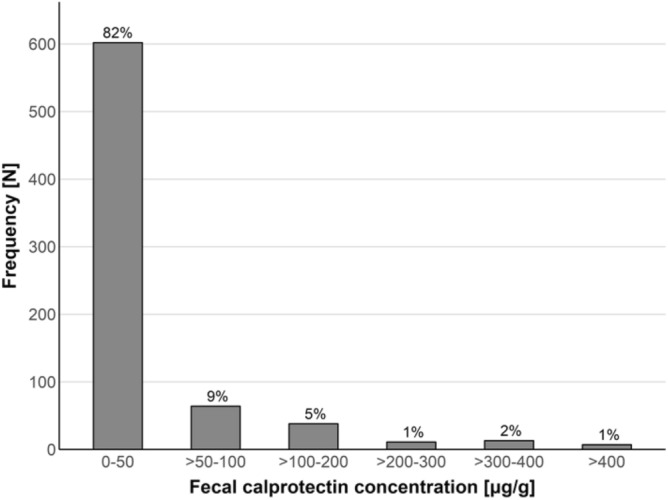
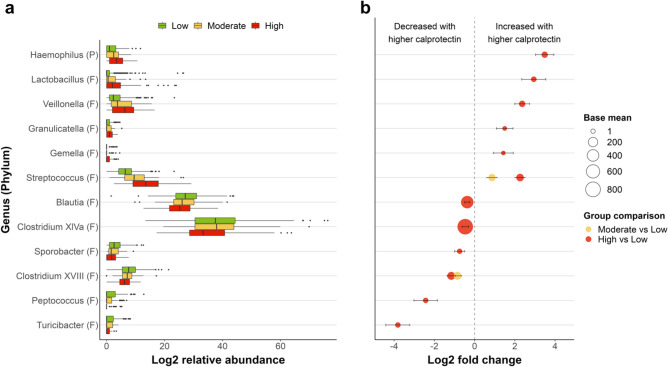
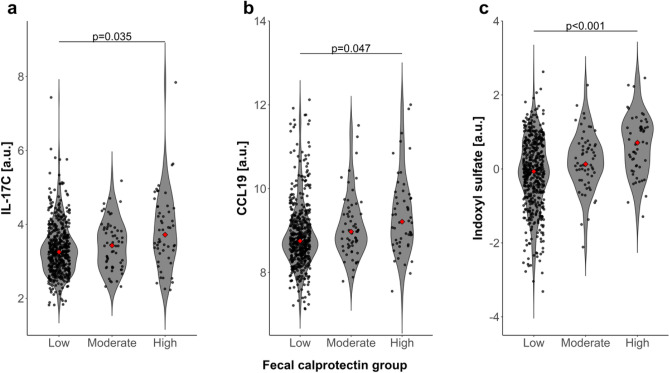
Fecal calprotectin is an established marker of gut inflammation in inflammatory bowel disease (IBD). Elevated levels of fecal calprotectin as well as gut microbial dysbiosis have also been observed in other clinical conditions. However, systemic and multi-omics alterations linked to elevated fecal calprotectin in older individuals remain unclear. This study comprehensively investigated the relationship between fecal calprotectin levels, gut microbiome composition, serum inflammation and targeted metabolomics markers, and relevant lifestyle and medical data in a large sample of older individuals (n = 735; mean age ± SD: 68.7 ± 6.3) from the TREND cohort study. Low (0–50 μg/g; n = 602), moderate (> 50–100 μg/g; n = 64) and high (> 100 μg/g; n = 62) fecal calprotectin groups were stratified. Several pro-inflammatory gut microbial genera were significantly increased and short-chain fatty acid producing genera were decreased in high vs. low calprotectin groups. In serum, IL-17C, CCL19 and the toxic metabolite indoxyl sulfate were increased in high vs. low fecal calprotectin groups. These changes were partially mediated by the gut microbiota. Moreover, the high fecal calprotectin group showed increased BMI and a higher disease prevalence of heart attack and obesity. Our findings contribute to the understanding of fecal calprotectin as a marker of gut dysbiosis and its broader systemic and clinical implications in older individuals.
Overview
The claims and statistics of this paper haven’t been checked yet.
Free: it reads the open-access text and checks the first 5 claims that cite a source we can check. Create a free account to check every claim.
Integrity signals
Registry
Cites
Statistics
Figures
Verification
Claims the paper makes
The claims and statistics of this paper haven’t been checked yet.
Free: it reads the open-access text and checks the first 5 claims that cite a source we can check. Create a free account to check every claim.
Claims other papers make about this one
Each is checked against this paper’s own text: does it say what the citing paper says it does?
In the citing paper
“It is an established, sensitive marker used to monitor IBD activity and, by extension, reflects microbiota-driven mucosal inflammation.119,121,122”
From Gut dysbiosis in oncology: a risk factor for immunoresistance (2026) · doi:10.1038/s41422-025-01212-6 · cites this paper as [122]
Self-check
Percentages, sums and reported differences re-computed from the paper’s own numbers.
The self-check needs the paper’s full text.
Citations
Cites
1 retracted
Retracted: Gut Microbiome Signatures of Risk and Prodromal Markers of Parkinson Disease
Heinzel, S., Aho, V. T. E., Suenkel, U., von Thaler, A., Schulte, C., Deuschle, C., Paulin, L., Hantunen, S., Brockmann, K., Eschweiler, G. W., et al. (2020) · Annals of Neurology · doi:10.1002/ana.25788 · Cited by 95
Self-citationRetractedphyloseq: An R Package for Reproducible Interactive Analysis and Graphics of Microbiome Census Data
McMurdie, P. J., & Holmes, S. (2013) · PLoS ONE · doi:10.1371/journal.pone.0061217 · Cited by 21,322
Schloss, P. D., Westcott, S. L., Ryabin, T., Hall, J. R., Hartmann, M., Hollister, E. B., Lesniewski, R. A., Oakley, B. B., Parks, D. H., Robinson, C. J., et al. (2009) · Applied and Environmental Microbiology · doi:10.1128/aem.01541-09 · Cited by 19,549
Kozich, J. J., Westcott, S. L., Baxter, N. T., Highlander, S. K., & Schloss, P. D. (2013) · Applied and Environmental Microbiology · doi:10.1128/aem.01043-13 · Cited by 7,112
PICRUSt2 for prediction of metagenome functions
Douglas, G. M., Maffei, V. J., Zaneveld, J. R., Yurgel, S. N., Brown, J. R., Taylor, C. M., Huttenhower, C., & Langille, M. G. I. (2020) · Nature Biotechnology · doi:10.1038/s41587-020-0548-6 · Cited by 6,709 · cited 1×
“5.2) 62 .”
InfluentialInflammaging: a new immune–metabolic viewpoint for age-related diseases
Franceschi, C., Garagnani, P., Parini, P., Giuliani, C., & Santoro, A. (2018) · Nature Reviews Endocrinology · doi:10.1038/s41574-018-0059-4 · Cited by 3,586 · cited 1×
“Gut inflammation, even at moderate yet chronic levels, may be involved in various disease processes affecting the central nervous system via the gut-brain axis 4 and inflammaging 5 .”
BackgroundThe Role of Short-Chain Fatty Acids From Gut Microbiota in Gut-Brain Communication
Silva, Y. P., Bernardi, A., & Frozza, R. L. (2020) · Frontiers in Endocrinology · doi:10.3389/fendo.2020.00025 · Cited by 3,043
The gut-liver axis in liver disease: Pathophysiological basis for therapy
Albillos, A., de Gottardi, A., & Rescigno, M. (2020) · Journal of Hepatology · doi:10.1016/j.jhep.2019.10.003 · Cited by 2,166 · cited 1×
“Thereby, gut microbiota (and gut inflammation) play a systemic role of multidirectional communication and signaling of inflammation beyond the gastrointestinal tract along several proposed axes involving the gut, liver, heart and brain 4,34,35 .”
BackgroundGut microbiome alterations in Alzheimer’s disease
Vogt, N. M., Kerby, R. L., Dill-McFarland, K. A., Harding, S. J., Merluzzi, A. P., Johnson, S. C., Carlsson, C. M., Asthana, S., Zetterberg, H., Blennow, K., et al. (2017) · Scientific Reports · doi:10.1038/s41598-017-13601-y · Cited by 2,137 · cited 1×
“Local and systemic pro-inflammatory effects have been partly linked to gut microbial dysbiosis not only in IBD 10 but also other inflammatory diseases 11 as well as numerous neurodegenerative 12,13 , metabolic 14 and cardiovascular diseases (CVD) 15 .”
BackgroundGut microbiome structure and metabolic activity in inflammatory bowel disease
Franzosa, E. A., Sirota-Madi, A., Avila-Pacheco, J., Fornelos, N., Haiser, H. J., Reinker, S., Vatanen, T., Hall, A. B., Mallick, H., McIver, L. J., et al. (2018) · Nature Microbiology · doi:10.1038/s41564-018-0306-4 · Cited by 1,995 · cited 1×
“Local and systemic pro-inflammatory effects have been partly linked to gut microbial dysbiosis not only in IBD 10 but also other inflammatory diseases 11 as well as numerous neurodegenerative 12,13 , metabolic 14 and cardiovascular diseases (CVD) 15 .”
BackgroundThe gut microbiome in atherosclerotic cardiovascular disease
Jie, Z., Xia, H., Zhong, S.-L., Feng, Q., Li, S., Liang, S., Zhong, H., Liu, Z., Gao, Y., Zhao, H., et al. (2017) · Nature Communications · doi:10.1038/s41467-017-00900-1 · Cited by 1,638 · cited 8×
“It has also been linked to the production of inflammatory cytokines, resulting in cardiac fibrosis and hypertrophy in a rat model 46 , as well as increased CVD events in humans 42 .”
BackgroundInfluentialThe IL-17 Family of Cytokines in Health and Disease
McGeachy, M. J., Cua, D. J., & Gaffen, S. L. (2019) · Immunity · doi:10.1016/j.immuni.2019.03.021 · Cited by 1,443
Short-Chain Fatty-Acid-Producing Bacteria: Key Components of the Human Gut Microbiota
Fusco, W., Lorenzo, M. B., Cintoni, M., Porcari, S., Rinninella, E., Kaitsas, F., Lener, E., Mele, M. C., Gasbarrini, A., Collado, M. C., et al. (2023) · Nutrients · doi:10.3390/nu15092211 · Cited by 1,243 · cited 1×
“In contrast, reduced bacterial abundance in the Lactobacillaceae , Lachnospiraceae and Ruminococcaceae families, which produce short-chain fatty acids (SCFAs) with known anti-inflammatory properties 17,18 , are frequently observed in these diseases.”
BackgroundGut microbiota and cardiovascular disease.
Witkowski, M., Weeks, T. L., & Hazen, S. L. (2020) · Circulation Research · doi:10.1161/circresaha.120.316242 · Cited by 1,051 · cited 2×
“Thereby, gut microbiota (and gut inflammation) play a systemic role of multidirectional communication and signaling of inflammation beyond the gastrointestinal tract along several proposed axes involving the gut, liver, heart and brain 4,34,35 .”
BackgroundGut Microbiota and Short Chain Fatty Acids: Implications in Glucose Homeostasis
Portincasa, P., Bonfrate, L., Vacca, M., De Angelis, M., Farella, I., Lanza, E., Khalil, M., Wang, D. Q.-H., Sperandio, M., & Di Ciaula, A. (2022) · International Journal of Molecular Sciences · doi:10.3390/ijms23031105 · Cited by 969 · cited 1×
“Possibly, this association involves anti-inflammatory SCFAs made from fermentation of dietary fiber and resistant starch by gut bacteria 54 .”
BackgroundInteraction between drugs and the gut microbiome
Weersma, R. K., Zhernakova, A., & Fu, J. (2020) · Gut · doi:10.1136/gutjnl-2019-320204 · Cited by 961 · cited 1×
“…in several of these taxa, and while the intake of a wide range of specific medications was accounted for as covariates in the analyses of fecal calprotectin group comparisons, it is possible that our findings of differential microbial abundance might in part still be related to medication 33 .”
BackgroundMechanisms of inflammation-driven bacterial dysbiosis in the gut
Zeng, M. Y., Inohara, N., & Nuñez, G. (2017) · Mucosal Immunology · doi:10.1038/mi.2016.75 · Cited by 877 · cited 3×
“Changes in microbial composition associated with elevated fecal calprotectin levels could be attributed to various lifestyle, aging, disease and physiological gut-related and/or systemic factors with partly complex, direct and indirect interrelations 21 .”
BackgroundInfluentialSignaling inflammation across the gut-brain axis
Agirman, G., Yu, K. B., & Hsiao, E. Y. (2021) · Science · doi:10.1126/science.abi6087 · Cited by 832
A microbial signature for Crohn's disease
Pascal, V., Pozuelo, M., Borruel, N., Casellas, F., Campos, D., Santiago, A., Martinez, X., Varela, E., Sarrabayrouse, G., Machiels, K., et al. (2017) · Gut · doi:10.1136/gutjnl-2016-313235 · Cited by 822 · cited 4×
“Streptococcus has also been shown to be increased in abundance in IBD 11 and as a risk factor for post-operative IBD relapse 16 .”
BackgroundInfluentialShort-Chain Fatty Acid Propionate Protects From Hypertensive Cardiovascular Damage
Bartolomaeus, H., Balogh, A., Yakoub, M., Homann, S., Markó, L., Höges, S., Tsvetkov, D., Krannich, A., Wundersitz, S., Avery, E. G., et al. (2019) · Circulation · doi:10.1161/circulationaha.118.036652 · Cited by 815 · cited 1×
“Propionate has been shown to mitigate the effects of LPS on the blood–brain barrier and has also been associated with a protective effect against cardiovascular diseases 37,38 .”
BackgroundUpdate of the MDS research criteria for prodromal Parkinson's disease
Heinzel, S., Berg, D., Gasser, T., Chen, H., Yao, C., Postuma, R. B., & the MDS Task Force on the Definition of Parkinson's Disease (2019) · Movement Disorders · doi:10.1002/mds.27802 · Cited by 768
Self-citationEPA-ng: Massively Parallel Evolutionary Placement of Genetic Sequences
Barbera, P., Kozlov, A. M., Czech, L., Morel, B., Darriba, D., Flouri, T., & Stamatakis, A. (2019) · Systematic Biology · doi:10.1093/sysbio/syy054 · Cited by 687 · cited 1×
“Briefly, first OTU sequences were aligned to a reference 63 and to pathway classifications using the MetaCyc database.”
MethodThe Uremic Toxicity of Indoxyl Sulfate and p-Cresyl Sulfate: A Systematic Review
Vanholder, R., Schepers, E., Pletinck, A., Nagler, E. V., & Glorieux, G. (2014) · Journal of the American Society of Nephrology · doi:10.1681/asn.2013101062 · Cited by 683 · cited 1×
“Tryptophan is converted to indole by resident gut microbes and further metabolized by the liver to produce indoxyl sulfate 42 , which is considered a cardiotoxin 43 and uremic toxin 44 .”
BackgroundMicrobiome–host systems interactions: protective effects of propionate upon the blood–brain barrier
Hoyles, L., Snelling, T., Umlai, U.-K., Nicholson, J. K., Carding, S. R., Glen, R. C., & McArthur, S. (2018) · Microbiome · doi:10.1186/s40168-018-0439-y · Cited by 591 · cited 1×
“Propionate has been shown to mitigate the effects of LPS on the blood–brain barrier and has also been associated with a protective effect against cardiovascular diseases 37,38 .”
Mouton, A. J., Li, X., Hall, M. E., & Hall, J. E. (2020) · Circulation Research · doi:10.1161/circresaha.119.312321 · Cited by 546
Calprotectin: from biomarker to biological function
Jukic, A., Bakiri, L., Wagner, E. F., Tilg, H., & Adolph, T. E. (2021) · Gut · doi:10.1136/gutjnl-2021-324855 · Cited by 500
Microbiota-Derived Lactate Accelerates Intestinal Stem-Cell-Mediated Epithelial Development
Lee, Y.-S., Kim, T.-Y., Kim, Y., Lee, S.-H., Kim, S., Kang, S. W., Yang, J.-Y., Baek, I.-J., Sung, Y. H., Park, Y.-Y., et al. (2018) · Cell Host & Microbe · doi:10.1016/j.chom.2018.11.002 · Cited by 459 · cited 1×
“Lactate can also be fermented to butyrate but has also been shown to accelerate epithelial development 36 , which could be relatively reduced in the high calprotectin group.”
BackgroundForbes, J. D., Chen, C.-Y., Knox, N. C., Marrie, R.-A., El-Gabalawy, H., de Kievit, T., Alfa, M., Bernstein, C. N., & Van Domselaar, G. (2018) · Microbiome · doi:10.1186/s40168-018-0603-4 · Cited by 450 · cited 2×
“Streptococcus has also been shown to be increased in abundance in IBD 11 and as a risk factor for post-operative IBD relapse 16 .”
BackgroundAho, V. T. E., Houser, M. C., Pereira, P. A. B., Chang, J., Rudi, K., Paulin, L., Hertzberg, V., Auvinen, P., Tansey, M. G., & Scheperjans, F. (2021) · Molecular Neurodegeneration · doi:10.1186/s13024-021-00427-6 · Cited by 435 · cited 1×
“Supporting the systemic relevance of gut inflammation, fecal calprotectin has been shown to be moderately increased to levels between about 50 and 100 μg/g in patients with Parkinson’s disease (PD) 6,7 and Alzheimer’s disease (AD) 8,9 compared to controls.”
BackgroundSelf-citationGut Microbiome Composition in Obese and Non-Obese Persons: A Systematic Review and Meta-Analysis
Pinart, M., Dötsch, A., Schlicht, K., Laudes, M., Bouwman, J., Forslund, S. K., Pischon, T., & Nimptsch, K. (2021) · Nutrients · doi:10.3390/nu14010012 · Cited by 398 · cited 2×
“Furthermore, Streptococcus has been reported to be increased in abundance in (sub)clinical atherosclerotic cardiovascular disease 15,25 , AD 12 , PD 13 , and obesity 14 .”
BackgroundMetagenomics of Parkinson’s disease implicates the gut microbiome in multiple disease mechanisms
Wallen, Z. D., Demirkan, A., Twa, G., Cohen, G., Dean, M. N., Standaert, D. G., Sampson, T. R., & Payami, H. (2022) · Nature Communications · doi:10.1038/s41467-022-34667-x · Cited by 346 · cited 1×
“Local and systemic pro-inflammatory effects have been partly linked to gut microbial dysbiosis not only in IBD 10 but also other inflammatory diseases 11 as well as numerous neurodegenerative 12,13 , metabolic 14 and cardiovascular diseases (CVD) 15 .”
BackgroundRastogi, S., & Singh, A. (2022) · Frontiers in Pharmacology · doi:10.3389/fphar.2022.1042189 · Cited by 326 · cited 1×
“While some species of Lactobacillus are considered as probiotics that promote anti-inflammatory responses and gut barrier maintenance 26 , Lactobacillus has also been shown to be increased in abundance in atherosclerotic cardiovascular disease 15 as well as in AD 27 and PD 13 , yet little evidence…”
BackgroundSchirmer, M., Denson, L., Vlamakis, H., Franzosa, E. A., Thomas, S., Gotman, N. M., Rufo, P., Baker, S. S., Sauer, C., Markowitz, J., et al. (2018) · Cell Host & Microbe · doi:10.1016/j.chom.2018.09.009 · Cited by 293 · cited 1×
“These bacteria have been reported to be increased in IBD patients, in particular during inflammatory flares 23 , and have been associated with more severe disease progression in pediatric ulcerative colitis patients 24 .”
BackgroundIndoxyl Sulfate—Review of Toxicity and Therapeutic Strategies
Leong, S., & Sirich, T. (2016) · Toxins · doi:10.3390/toxins8120358 · Cited by 272 · cited 3×
“Tryptophan is converted to indole by resident gut microbes and further metabolized by the liver to produce indoxyl sulfate 42 , which is considered a cardiotoxin 43 and uremic toxin 44 .”
BackgroundThe role of Lactobacillus in inflammatory bowel disease: from actualities to prospects
Li, C., Peng, K., Xiao, S., Long, Y., & Yu, Q. (2023) · Cell Death Discovery · doi:10.1038/s41420-023-01666-w · Cited by 207 · cited 1×
“The genus does comprise both species with beneficial probiotic effects 28 as well as opportunistic pathogens associated with, e.g. endocarditis, bacteremia and pleuropneumonia 29 , which complicates the interpretation of the role of Lactobacillus for (gut) health .”
BackgroundAldars-García, L., Chaparro, M., & Gisbert, J. P. (2021) · Microorganisms · doi:10.3390/microorganisms9050977 · Cited by 178
Microbiota-derived tryptophan metabolites in vascular inflammation and cardiovascular disease
Paeslack, N., Mimmler, M., Becker, S., Gao, Z., Khuu, M. P., Mann, A., Malinarich, F., Regen, T., & Reinhardt, C. (2022) · Amino Acids · doi:10.1007/s00726-022-03161-5 · Cited by 155
Lipopolysaccharide and the gut microbiota: considering structural variation
Mohr, A. E., Crawford, M., Jasbi, P., Fessler, S., & Sweazea, K. L. (2022) · FEBS Letters · doi:10.1002/1873-3468.14328 · Cited by 154 · cited 1×
“Additionally, inflammation and elevated fecal calprotectin levels might, through interaction with fat-rich Western diets, be triggered by gram-negative bacteria containing pro-inflammatory lipopolysaccharides as membrane components 22 .”
BackgroundSayols-Baixeras, S., Dekkers, K. F., Baldanzi, G., Jönsson, D., Hammar, U., Lin, Y., Ahmad, S., Nguyen, D. T., Varotsis, G., Pita, S., et al. (2023) · Circulation · doi:10.1161/circulationaha.123.063914 · Cited by 154 · cited 1×
“Furthermore, Streptococcus has been reported to be increased in abundance in (sub)clinical atherosclerotic cardiovascular disease 15,25 , AD 12 , PD 13 , and obesity 14 .”
BackgroundJemimah, S., Chabib, C., Hadjileontiadis, L. J., & Shehhi, A. A. (2023) · PLoS ONE · doi:10.1371/journal.pone.0285346 · Cited by 149
Huang, Y., Zhou, J., Wang, S., Xiong, J., Chen, Y., Liu, Y., Xiao, T., Li, Y., He, T., Li, Y., et al. (2020) · Theranostics · doi:10.7150/thno.45455 · Cited by 141
Elevated fecal calprotectin in patients with Alzheimer’s dementia indicates leaky gut
Leblhuber, F., Geisler, S., Steiner, K., Fuchs, D., & Schütz, B. (2015) · Journal of Neural Transmission · doi:10.1007/s00702-015-1381-9 · Cited by 119 · cited 1×
“Supporting the systemic relevance of gut inflammation, fecal calprotectin has been shown to be moderately increased to levels between about 50 and 100 μg/g in patients with Parkinson’s disease (PD) 6,7 and Alzheimer’s disease (AD) 8,9 compared to controls.”
BackgroundBacterial neurotoxic metabolites in multiple sclerosis cerebrospinal fluid and plasma
Ntranos, A., Park, H.-J., Wentling, M., Tolstikov, V., Amatruda, M., Inbar, B., Kim‐Schulze, S., Frazier, C., Button, J., Kiebish, M. A., et al. (2021) · Brain · doi:10.1093/brain/awab320 · Cited by 112 · cited 1×
“Moreover, indoxyl sulfate in cerebrospinal fluid has been shown to be elevated in patients with multiple sclerosis, to positively correlate with markers of neurodegeneration, and to be reduced after disease-modifying (dimethyl fumarate) therapy 47 .”
BackgroundMulak, A., Koszewicz, M., Panek-Jeziorna, M., Koziorowska-Gawron, E., & Budrewicz, S. (2019) · Frontiers in Neuroscience · doi:10.3389/fnins.2019.00992 · Cited by 110 · cited 1×
“Supporting the systemic relevance of gut inflammation, fecal calprotectin has been shown to be moderately increased to levels between about 50 and 100 μg/g in patients with Parkinson’s disease (PD) 6,7 and Alzheimer’s disease (AD) 8,9 compared to controls.”
BackgroundMembers of the Lactobacillus Genus Complex (LGC) as Opportunistic Pathogens: A Review
Rossi, F., Amadoro, C., & Colavita, G. (2019) · Microorganisms · doi:10.3390/microorganisms7050126 · Cited by 97 · cited 1×
“The genus does comprise both species with beneficial probiotic effects 28 as well as opportunistic pathogens associated with, e.g. endocarditis, bacteremia and pleuropneumonia 29 , which complicates the interpretation of the role of Lactobacillus for (gut) health .”
BackgroundVeillonella parvula Meningitis: Case Report and Review of Veillonella Infections
Bhatti, M. A., & Frank, M. O. (2000) · Clinical Infectious Diseases · doi:10.1086/314046 · Cited by 92 · cited 1×
“…the increased abundance in the high vs. low calprotectin groups, Veillonella ( parvula ) has been shown to be enriched in Crohn’s disease 30 , and is considered a commensal found in the oral and intestinal tract, previously found also as pathogen in cases of meningitis 31 and periodontitis 32 .”
BackgroundFriedrich, M., Diegelmann, J., Schauber, J., Auernhammer, C. J., & Brand, S. (2014) · Mucosal Immunology · doi:10.1038/mi.2014.124 · Cited by 91 · cited 1×
“Furthermore, increases in IL-17C serum levels, IL-17C mRNA in inflamed colonic lesions, and heightened IL-17C staining in active IBD colonic sections in IBD patients suggest a pathological involvement of the IL-17C pathway in IBD 40 .”
BackgroundChan, S. S. M., Chen, Y., Casey, K. J., Olén, O., Ludvigsson, J. F., Carbonnel, F., Oldenburg, B., Gunter, M. J., Tjønneland, A. M., Grip, O., et al. (2021) · Clinical Gastroenterology and Hepatology · doi:10.1016/j.cgh.2021.06.049 · Cited by 88 · cited 1×
“Our findings of strongly increased BMI and obesity with higher fecal calprotectin levels are both consistent with the correlation of serum calprotectin and BMI in healthy children 50 , as well as obesity as a risk factor of Crohn’s disease (but not ulcerative colitis) 51,52 .”
BackgroundGut Microbiota in NSAID Enteropathy: New Insights From Inside
Wang, X., Tang, Q., Hou, H., Zhang, W., Li, M., Chen, D., Gu, Y., Wang, B., Hou, J., Liu, Y., et al. (2021) · Frontiers in Cellular and Infection Microbiology · doi:10.3389/fcimb.2021.679396 · Cited by 86 · cited 1×
“NSAIDs can cause mucosal bleeding 3 and impair the intestinal barrier 49 , and might thereby contribute to gut inflammation and elevated fecal calprotectin levels.”
BackgroundSerrano-Gómez, G., Mayorga, L., Oyarzun, I., Roca, J., Borruel, N., Casellas, F., Varela, E., Pozuelo, M., Machiels, K., Guarner, F., et al. (2021) · Computational and Structural Biotechnology Journal · doi:10.1016/j.csbj.2021.11.037 · Cited by 83 · cited 1×
“…with the increased abundance in the high vs. low calprotectin groups, Veillonella ( parvula ) has been shown to be enriched in Crohn’s disease 30 , and is considered a commensal found in the oral and intestinal tract, previously found also as pathogen in cases of meningitis 31 and…”
BackgroundGut inflammation associated with age and Alzheimer’s disease pathology: a human cohort study
Heston, M. B., Hanslik, K. L., Zarbock, K. R., Harding, S. J., Davenport‐Sis, N. J., Kerby, R. L., Chin, N. A., Sun, Y., Hoeft, A., Deming, Y. K., et al. (2023) · Scientific Reports · doi:10.1038/s41598-023-45929-z · Cited by 73 · cited 2×
“Supporting the systemic relevance of gut inflammation, fecal calprotectin has been shown to be moderately increased to levels between about 50 and 100 μg/g in patients with Parkinson’s disease (PD) 6,7 and Alzheimer’s disease (AD) 8,9 compared to controls.”
BackgroundMethodGut Microbiome Signatures of Risk and Prodromal Markers of Parkinson Disease
Heinzel, S., Aho, V. T. E., Suenkel, U., von Thaler, A., Schulte, C., Deuschle, C., Paulin, L., Hantunen, S., Brockmann, K., Eschweiler, G. W., et al. (2021) · Annals of Neurology · doi:10.1002/ana.26128 · Cited by 68
Self-citationLundgren, D., Eklöf, V., Palmqvist, R., Hultdin, J., & Karling, P. (2019) · Scandinavian Journal of Gastroenterology · doi:10.1080/00365521.2019.1566493 · Cited by 63
Hoare, A., Wang, H., Meethil, A., Abusleme, L., Hong, B., Moutsopoulos, N. M., Marsh, P. D., Hajishengallis, G., & Diaz, P. I. (2020) · The ISME Journal · doi:10.1038/s41396-020-00865-y · Cited by 60 · cited 1×
“…the increased abundance in the high vs. low calprotectin groups, Veillonella ( parvula ) has been shown to be enriched in Crohn’s disease 30 , and is considered a commensal found in the oral and intestinal tract, previously found also as pathogen in cases of meningitis 31 and periodontitis 32 .”
BackgroundGeneral population normative data for the EQ-5D-3L in the five largest European economies
Janssen, M. F., Pickard, A. S., & Shaw, J. W. (2021) · The European Journal of Health Economics · doi:10.1007/s10198-021-01326-9 · Cited by 55 · cited 1×
“The current subjective health status was self-rated using a horizontal visual analog self-report scale (as part of the EQ-5D-5L) from 0 to 100, where 0 is worst imaginable health and 100 is best imaginable health 61”
MethodKunutsor, S. K., Flores-Guerrero, J. L., Kieneker, L. M., Nilsen, T. I. L., Hidden, C., Sundrehagen, E., Seidu, S., Dullaart, R. P. F., & Bakker, S. J. L. (2018) · Atherosclerosis · doi:10.1016/j.atherosclerosis.2018.06.817 · Cited by 52
Yamaguchi, K., Yisireyili, M., Goto, S., Cheng, X. W., Nakayama, T., Matsushita, T., Niwa, T., Murohara, T., & Takeshita, K. (2022) · Cardiovascular Toxicology · doi:10.1007/s12012-021-09718-2 · Cited by 47 · cited 1×
“It has also been linked to the production of inflammatory cytokines, resulting in cardiac fibrosis and hypertrophy in a rat model 46 , as well as increased CVD events in humans 42 .”
BackgroundWestermann, J., Nguyen-Hoai, T., Baldenhofer, G., Höpken, U. E., Lipp, M., Dörken, B., & Pezzutto, A. (2007) · Cancer Gene Therapy · doi:10.1038/sj.cgt.7701042 · Cited by 39 · cited 1×
“CCL19 is a chemokine which has a crucial role in regulating the recruitment and enhancing the response of inflammatory T-cells as well as guiding immune cells including lymphocytes and dendritic cells to sites of inflammation 41 .”
BackgroundHeidarian, F., Alebouyeh, M., Shahrokh, S., Balaii, H., & Zali, M. R. (2019) · Current Research in Translational Medicine · doi:10.1016/j.retram.2019.01.002 · Cited by 39 · cited 1×
“These bacteria have been reported to be increased in IBD patients, in particular during inflammatory flares 23 , and have been associated with more severe disease progression in pediatric ulcerative colitis patients 24 .”
BackgroundMendall, M. A., Chan, D., Patel, R., & Kumar, D. (2016) · BMC Gastroenterology · doi:10.1186/s12876-016-0535-z · Cited by 38
Mendall, M. A., Harpsøe, M. C., Kumar, D., Andersson, M., & Jess, T. (2018) · PLoS ONE · doi:10.1371/journal.pone.0190600 · Cited by 32 · cited 1×
“Our findings of strongly increased BMI and obesity with higher fecal calprotectin levels are both consistent with the correlation of serum calprotectin and BMI in healthy children 50 , as well as obesity as a risk factor of Crohn’s disease (but not ulcerative colitis) 51,52 .”
BackgroundYue, Y., & Hu, Y. (2022) · Bioinformatics · doi:10.1093/bioinformatics/btac310 · Cited by 23
Grand, A., Rochette, E., Dutheil, F., Gozal, D., Calcaterra, V., Canani, R. B., Çobanoğlu, N., Derikx, J. P. M., Terrin, G., Pereira, B., et al. (2020) · Journal of Clinical Medicine · doi:10.3390/jcm9030857 · Cited by 21
Multi-omics Quality Assessment in Personalized Medicine through EATRISPreprint
EATRIS Plus Multi-omics working group and stakeholders (in alphabetical order by last name), Alonso-Andrés, P., Baldazzi, D., Chen, Q., Conde, E., Crespo-Toro, L., Donner, K. M., Džubák, P., Ekberg, S., García‐Bermejo, L., et al. (2023) · bioRxiv (Cold Spring Harbor Laboratory) · doi:10.1101/2023.10.25.563912 · Cited by 6
Self-citationOptimal Cutoff Level of Fecal Calprotectin for Detecting Small Bowel Inflammation in Crohn's Disease
Kim, E. S. (2021) · Gut and Liver · doi:10.5009/gnl210393 · Cited by 4
Cited by
Role of Gut Microbiota in Modulating Oxidative Stress Induced by Environmental Factors
Kurhaluk, N., Kamiński, P., & Tkaczenko, H. (2025) · Cellular Physiology and Biochemistry · doi:10.33594/000000799 · Cited by 39
Zheng, J., & Lin, T. (2025) · Frontiers in Immunology · doi:10.3389/fimmu.2025.1629944 · Cited by 27
Gut dysbiosis in oncology: a risk factor for immunoresistance
(2026) · doi:10.1038/s41422-025-01212-6 · Cited by 24
“119,121,122 Elevated fecal calprotectin has been correlated with dysbiotic alterations in microbiota composition among IBD patients, 123 highlighting that shifts in commensal populations can incite neutrophilic in fl ammation.”
Deza, D. C., García‐López, S., Monterde, V. B., Cuadro, C. P., Caballero, C. Y., & Arbonés-Mainar, J. M. (2025) · Biomolecules · doi:10.3390/biom15081185 · Cited by 24
“The abundance of Proteobacteria in the mesenteric fat correlates with markers of active inflammation, including elevated fecal calprotectin and serum C-reactive protein levels [86].”
Šantić, R., Pavlović, N., Kumrić, M., Vilović, M., & Božić, J. (2025) · Biomedicines · doi:10.3390/biomedicines13081864 · Cited by 19
“Moreover, calprotectin binding to RAGE receptors on cardiomyocytes impairs calcium flux, ultimately reducing cardiomyocyte contractility [177].”
Metadata
- Authors
- Heinzel, S., Jureczek, J., Kainulainen, V., Nieminen, A. I., Suenkel, U., von Thaler, A.-K., Kaleta, C., Eschweiler, G. W., Brockmann, K., Aho, V. T. E., Auvinen, P., Maetzler, W., Berg, D., & Scheperjans, F.
- Affiliations
- Christian-Albrechts-Universität zu Kiel (DE)
- University Hospital Schleswig-Holstein (DE)
- University of Helsinki (FI)
- Universitätsklinikum Tübingen (DE)
- German Center for Neurodegenerative Diseases (DE)
- Corresponding author
- Heinzel, Sebastian
- ORCID
- Venue
- Scientific Reports
- Published
- 2024-06-12
- Volume
- 14
- Issue
- 1
- Pages
- 13513-13513
- ISSN
- 2045-2322 (ISSN-L)
- PMC
- PMC11169261
- OpenAlex
- W4399576367
- Cited by
- 36
- References
- 65
- Citations by year
- 2026: 17 · 2025: 18 · 2024: 1
- FWCI
- 4.89
- Type
- journal article
- Language
- en
- Open access
- gold
- doi.org
- Licence
- cc-by
- creativecommons.org/licenses/by/4.0 (tdm)
- creativecommons.org/licenses/by/4.0 (vor)
- Locations
- Scientific Reports (publishedVersion, cc-by)
- Research Square (acceptedVersion, cc-by)
- PubMed Central (publishedVersion, cc-by)
- PubMed (publishedVersion)
- Multimedialen Archiv und Publikationsserver der Christian-Albrechts-Universität zu Kiel (Christian-Albrechts-Universität zu Kiel) (submittedVersion, cc-by)
- DZNE Pub (submittedVersion, cc-by)
- DOAJ (DOAJ: Directory of Open Access Journals) (submittedVersion, cc-by-sa)
- Työväentutkimus Vuosikirja (submittedVersion)
- Funders
- Germany Research Society (675915)
- Research Council of Finland (310835)
- Universitätsklinikum Schleswig-Holstein - Campus Kiel
- Topics
- Life Sciences › Biochemistry, Genetics and Molecular Biology › Molecular Biology › Gut microbiota and health
- Health Sciences › Medicine › Gastroenterology › Inflammatory Bowel Disease
- Health Sciences › Medicine › Gastroenterology › Gastrointestinal motility and disorders
- Keywords
- fecal calprotectin, gut dysbiosis, gut microbiota, older adults, IL-17C, CCL19, indoxyl sulfate, short-chain fatty acids, metabolomics, obesity, myocardial infarction
- MeSH terms
- Gastrointestinal Microbiome, Aged, Feces, Female, Humans, Male, Middle Aged, Inflammatory Bowel Diseases, Cohort Studies, Biomarkers, Leukocyte L1 Antigen Complex, Dysbiosis
About these checks
Registry, retraction, Cites and statistics results are computed, not judged, with one exception: a printed reference that no index lists is read once by a model before it counts as a citation error. Claims are extracted by a model and kept only when their quote appears verbatim in the text; each cited source is then checked, with a model’s help, for whether it says what the claim relies on. Those verdicts can be wrong — read the claim’s quote and the cited source before relying on one.
Statistics and arithmetic are recomputed, not judged.
Confidence bands are shown only for fields calibrated on our annotated test set. None is calibrated yet, so no band is shown.
What counts as a claim ›How we measure confidence ›How we check this ›
Are you an author, or do you see a problem with this page? Request a review
Data sources
Bibliographic data: Semantic Scholar, OpenAlex, Crossref.
Contains information from the Semantic Scholar Academic Graph Datasets, made available under the ODC Attribution License (ODC-BY 1.0).
Semantic Scholar’s data is described in: Kinney, R., et al. (2023). The Semantic Scholar Open Data Platform. arXiv:2301.10140.
