

The molecular basis of the anticancer effect of statins
Open accessPublished version of a preprint
The DOI matches its Crossref record; 59 of the 59 references it cites were found in a registry or an index.
Abstract
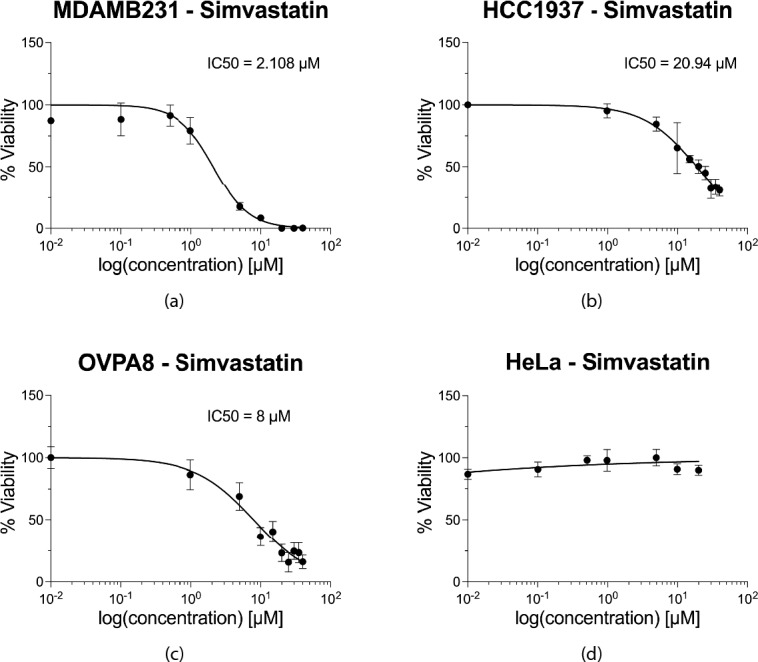
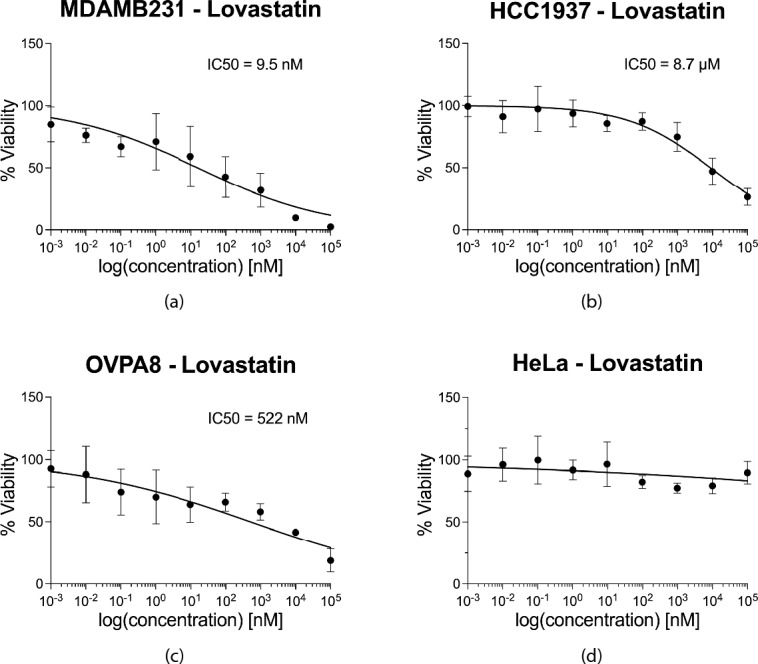
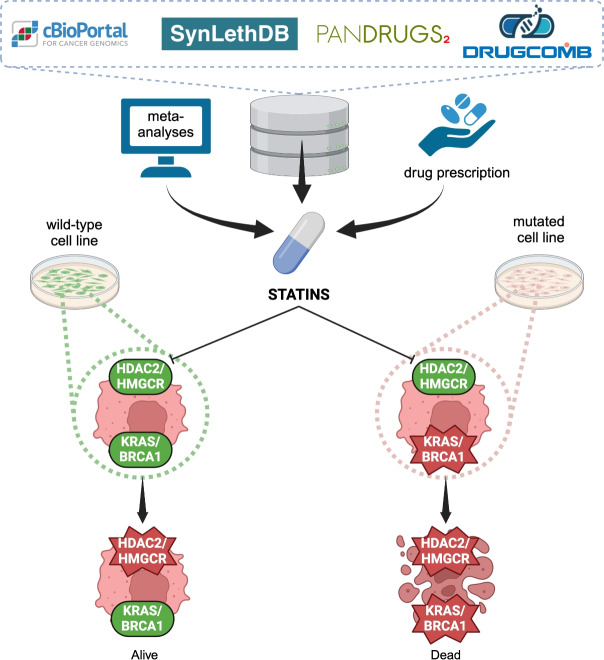
Statins, widely used cardiovascular drugs that lower cholesterol by inhibiting HMG-CoA reductase, have been increasingly recognized for their potential anticancer properties. This study elucidates the underlying mechanism, revealing that statins exploit Synthetic Lethality, a principle where the co-occurrence of two non-lethal events leads to cell death. Our computational analysis of approximately 37,000 SL pairs identified statins as potential drugs targeting genes involved in SL pairs with metastatic genes. In vitro validation on various cancer cell lines confirmed the anticancer efficacy of statins. This data-driven drug repurposing strategy provides a molecular basis for the anticancer effects of statins, offering translational opportunities in oncology.
Overview
The claims and statistics of this paper haven’t been checked yet.
Free: it reads the open-access text and checks the first 5 claims that cite a source we can check. Create a free account to check every claim.
Integrity signals
Registry
Cites
Statistics
Figures
Verification
Claims the paper makes
The claims and statistics of this paper haven’t been checked yet.
Free: it reads the open-access text and checks the first 5 claims that cite a source we can check. Create a free account to check every claim.
Claims other papers make about this one
Each is checked against this paper’s own text: does it say what the citing paper says it does?
The source backs part of the claim, not all of it — or backs it for a different population, condition or comparison.
In the citing paper
“the IC50 of statins for their primary target, HMGCR, is in the low nanomolar range”
From The antitumoral effect of statins in pancreatic ductal adenocarcinoma: a scoping review (2026) · cites this paper as Buccioli et al., 2024
Experimental — accuracy not yet measured
Self-check
Percentages, sums and reported differences re-computed from the paper’s own numbers.
The self-check needs the paper’s full text.
Citations
Cites
Cerami, E., Gao, J., Dogrusoz, U., Gross, B. E., Sumer, S. O., Aksoy, B. A., Jacobsen, A., Byrne, C. J., Heuer, M. L., Larsson, E., et al. (2012) · Cancer Discovery · doi:10.1158/2159-8290.cd-12-0095 · Cited by 17,455
Siegel, R. L., Miller, K. D., Fuchs, H. E., & Jemal, A. (2022) · CA: A Cancer Journal for Clinicians · doi:10.3322/caac.21708 · Cited by 17,196
Regulation of the mevalonate pathway
Goldstein, J. L., & Brown, M. S. (1990) · Nature · doi:10.1038/343425a0 · Cited by 5,394 · cited 1×
“One of the genes targeted by statins is HMGCR, responsible for the inhibition of mevalonate pathway and prenylation 45 .”
BackgroundOncoKB: A Precision Oncology Knowledge Base
Chakravarty, D., Gao, J., Phillips, S., Kundra, R., Zhang, H., Wang, J., Rudolph, J. E., Yaeger, R., Soumerai, T., Nissan, M. H., et al. (2017) · JCO Precision Oncology · doi:10.1200/po.17.00011 · Cited by 2,589
Integrative clinical genomics of metastatic cancer
Robinson, D. R., Wu, Y.-M., Lonigro, R. J., Vats, P., Cobain, E., Everett, J., Cao, X., Rabban, E., Kumar-Sinha, C., Raymond, V., et al. (2017) · Nature · doi:10.1038/nature23306 · Cited by 863 · cited 1×
“Specifically, it has been done within the context of a pan-cancer metastatic solid tumor study 27 .”
Synthetic lethality and cancer
O'Neil, N. J., Bailey, M. L., & Hieter, P. (2017) · Nature Reviews Genetics · doi:10.1038/nrg.2017.47 · Cited by 658
Nguyen, B., Fong, C., Luthra, A., Smith, S. A., DiNatale, R. G., Nandakumar, S., Walch, H., Chatila, W. K., Madupuri, R., Kundra, R., et al. (2022) · Cell · doi:10.1016/j.cell.2022.01.003 · Cited by 623
Maalej, K. M., Merhi, M., Inchakalody, V. P., Mestiri, S., Alam, M., Maccalli, C., Cherif, H., Uddin, S., Steinhoff, M., Marincola, F. M., et al. (2023) · Molecular Cancer · doi:10.1186/s12943-023-01723-z · Cited by 618
A short guide to histone deacetylases including recent progress on class II enzymes
Park, S.-Y., & Kim, J.-S. (2020) · Experimental & Molecular Medicine · doi:10.1038/s12276-020-0382-4 · Cited by 509
Exploiting the critical perioperative period to improve long-term cancer outcomes
Horowitz, M., Neeman, E., Sharon, E., & Ben-Eliyahu, S. (2015) · Nature Reviews Clinical Oncology · doi:10.1038/nrclinonc.2014.224 · Cited by 487
Role of oncogenic KRAS in the prognosis, diagnosis and treatment of colorectal cancer
Zhu, G., Pei, L., Xia, H., Tang, Q., & Bi, F. (2021) · Molecular Cancer · doi:10.1186/s12943-021-01441-4 · Cited by 482
Deconstructing the Drug Development Process: The New Face of Innovation
Kaitin, K. I. (2010) · Clinical Pharmacology & Therapeutics · doi:10.1038/clpt.2009.293 · Cited by 418
Frequency and type of KRAS mutations in routine diagnostic analysis of metastatic colorectal cancer.
Neumann, J., Zeindl-Eberhart, E., Kirchner, T., & Jung, A. (2009) · Pathology - Research and Practice · doi:10.1016/j.prp.2009.07.010 · Cited by 361 · cited 2×
“In colon cancer, for instance, the mutation frequency averages at 39.3%, with a pronounced escalation to 76.6% in the case of metastatic solid tumors 51 .”
BackgroundInfluentialPersonalized Medicine: Recent Progress in Cancer Therapy
Gambardella, V., Tarazona, N., Cejalvo, J. M., Lombardi, P., Huerta, M., Roselló, S., Fleitas, T., Roda, D., & Cervantes, A. (2020) · Cancers · doi:10.3390/cancers12041009 · Cited by 282
T cell lymphoma and secondary primary malignancy risk after commercial CAR T cell therapy
Ghilardi, G., Fraietta, J. A., Gerson, J. N., Van Deerlin, V. M., Morrissette, J. J. D., Caponetti, G. C., Paruzzo, L., Harris, J. C., Chong, E. A., Susanibar Adaniya, S. P., et al. (2024) · Nature Medicine · doi:10.1038/s41591-024-02826-w · Cited by 270
DrugComb: an integrative cancer drug combination data portal
Zagidullin, B., Aldahdooh, J., Zheng, S., Wang, W., Wang, Y., Saad, J., Malyutina, A., Jafari, M., Tanoli, Z., Pessia, A., et al. (2019) · Nucleic Acids Research · doi:10.1093/nar/gkz337 · Cited by 263
A systematic review of the international prevalence of BRCA mutation in breast cancer
Armstrong, N., Ryder, S., Forbes, C., Ross, J., & Quek, R. G. (2019) · Clinical Epidemiology · doi:10.2147/clep.s206949 · Cited by 259
Statins activate the mitochondrial pathway of apoptosis in human lymphoblasts and myeloma cells
Cafforio, P., Dammacco, F., Gernone, A., & Silvestris, F. (2005) · Carcinogenesis · doi:10.1093/carcin/bgi036 · Cited by 250
Drug repositioning: Progress and challenges in drug discovery for various diseases
Hua, Y., Dai, X., Xu, Y., Xing, G., Liu, H., Lu, T., Chen, Y., & Zhang, Y. (2022) · European Journal of Medicinal Chemistry · doi:10.1016/j.ejmech.2022.114239 · Cited by 232 · cited 1×
“Furthermore, repurposed drugs offer potential savings in terms of time and money, and they have a higher likelihood of obtaining regulatory approval 17 .”
BackgroundCytotoxic chemotherapy: clinical aspects
Corrie, P. G. (2008) · Medicine · doi:10.1016/j.mpmed.2007.10.012 · Cited by 227
Jin, H., He, Y., Zhao, P., Hu, Y., Tao, J., Chen, J., & Huang, Y. (2019) · Theranostics · doi:10.7150/thno.27246 · Cited by 218
What is a relevant statin concentration in cell experiments claiming pleiotropic effects?
Björkhem‐Bergman, L., Lindh, J. D., & Bergman, P. (2011) · British Journal of Clinical Pharmacology · doi:10.1111/j.1365-2125.2011.03907.x · Cited by 207 · cited 1×
“In a correspondence to the editors of the British Journal of Clinical Pharmacology, Björkhem-Bergman et al. 53 expressed concerns regarding the high concentrations of statins observed in vitro for cancer treatment, arguing that these levels are not negligible in a clinical setting.”
BackgroundUnanswered questions following reports of secondary malignancies after CAR-T cell therapy
Levine, B. L., Pasquini, M. C., Connolly, J. E., Porter, D. L., Gustafson, M. P., Boelens, J. J., Horwitz, E. M., Grupp, S. A., Maus, M. V., Locke, F. L., et al. (2024) · Nature Medicine · doi:10.1038/s41591-023-02767-w · Cited by 201
In vitro and in vivo anticancer effects of mevalonate pathway modulation on human cancer cells
Jiang, P., Mukthavaram, R., Chao, Y., Nomura, N., Bharati, I. S., Fogal, V, Pastorino, S., Teng, D., Cong, X., Pingle, S. C., et al. (2014) · British Journal of Cancer · doi:10.1038/bjc.2014.431 · Cited by 194
Advances in synthetic lethality for cancer therapy: cellular mechanism and clinical translation
Topatana, W., Juengpanich, S., Li, S., Cao, J., Hu, J., Lee, J., Suliyanto, K., Ma, D., Zhang, B., Chen, M., et al. (2020) · Journal of Hematology & Oncology · doi:10.1186/s13045-020-00956-5 · Cited by 177
Roles of BRCA1 in DNA damage repair: a link between development and cancer
Deng, C.-X. (2003) · Human Molecular Genetics · doi:10.1093/hmg/ddg082 · Cited by 168
BRCA1 and Breast Cancer: Molecular Mechanisms and Therapeutic Strategies
Fu, X., Tan, W., Song, Q., Pei, H., & Li, J. (2022) · Frontiers in Cell and Developmental Biology · doi:10.3389/fcell.2022.813457 · Cited by 153
Pedersen, T. R., & Tobert, J. A. (2004) · Expert Opinion on Pharmacotherapy · doi:10.1517/14656566.5.12.2583 · Cited by 140
Olivier, T., Haslam, A., & Prasad, V. K. (2021) · JAMA Network Open · doi:10.1001/jamanetworkopen.2021.38793 · Cited by 131
Piñeiro-Yáñez, E., Reboiro‐Jato, M., Goméz-López, G., Perales-Patón, J., Troulé, K., Rodríguez, J. M., Tejero, H., Shimamura, T., Lopez-Casas, P. P., Carretero, J., et al. (2018) · Genome Medicine · doi:10.1186/s13073-018-0546-1 · Cited by 123
Guerrab, A. E., Bamdad, M., Kwiatkowski, F., Bignon, Y.-J., Penault-Llorca, F., & Aubel, C. (2016) · Oncotarget · doi:10.18632/oncotarget.12037 · Cited by 119
CAR-NKT cell therapy: a new promising paradigm of cancer immunotherapy
Hadiloo, K., Tahmasebi, S., & Esmaeilzadeh, A. (2023) · Cancer Cell International · doi:10.1186/s12935-023-02923-9 · Cited by 105
Repurposing drugs to treat cardiovascular disease in the era of precision medicine
Abdelsayed, M., Kort, E. J., Jovinge, S., & Mercola, M. (2022) · Nature Reviews Cardiology · doi:10.1038/s41569-022-00717-6 · Cited by 93
Top drugs and companies by sales in 2018
Urquhart, L. (2019) · Nature Reviews Drug Discovery · doi:10.1038/d41573-019-00049-0 · Cited by 92
Wang, J., Wu, M., Huang, X., Wang, L., Zhang, S., Liu, H., & Zheng, J. (2022) · Database · doi:10.1093/database/baac030 · Cited by 91
Repurposing approved drugs for cancer therapy
Schein, C. H. (2021) · British Medical Bulletin · doi:10.1093/bmb/ldaa045 · Cited by 78
Kilmister, E. J., Koh, S. P., Weth, F. R., Gray, C., & Tan, S. T. (2022) · Biomedicines · doi:10.3390/biomedicines10112988 · Cited by 75
Statin use and breast cancer survival – a Swedish nationwide study
Borgquist, S., Broberg, P., Tojjar, J., & Olsson, H. (2019) · BMC Cancer · doi:10.1186/s12885-018-5263-z · Cited by 74
The tumor therapy landscape of synthetic lethality
Zhang, B., Tang, C., Yao, Y., Chen, X., Zhou, C., Wei, Z., Xing, F., Chen, L., Cai, X., Zhang, Z., et al. (2021) · Nature Communications · doi:10.1038/s41467-021-21544-2 · Cited by 69
Couttenier, A., Lacroix, O., Vaes, E., Cardwell, C. R., De Schutter, H., & Robert, A. (2017) · PLOS ONE · doi:10.1371/journal.pone.0189233 · Cited by 60
Jabbour, S. K., Kim, S., Haider, S. A., Xu, X., Wu, A., Surakanti, S. G., Aisner, J., Langenfeld, J. E., Yue, N. J., Haffty, B. G., et al. (2015) · International Journal of Radiation Oncology*Biology*Physics · doi:10.1016/j.ijrobp.2015.02.017 · Cited by 60
Statin use and survival following a diagnosis of ovarian cancer: A prospective observational study
Majidi, A., Na, R., Jordan, S. J., de Fazio, A., Webb, P. M., & OPAL Study Group (2020) · International Journal of Cancer · doi:10.1002/ijc.33333 · Cited by 50
A systematic analysis of the landscape of synthetic lethality-driven precision oncology
Schäffer, A. A., Chung, Y., Kammula, A. V., Ruppin, E., & Lee, J. S. (2024) · Med · doi:10.1016/j.medj.2023.12.009 · Cited by 40
Erridge, P. L. (2006) · BDJ · doi:10.1038/sj.bdj.4814131 · Cited by 40
Bu, H., Chen, J., Li, Q., Hou, J., Wei, Y., Yang, X., Ma, Y., He, H., Zhang, Y., & Kong, B. (2019) · Journal of obstetrics and gynaecology research · doi:10.1111/jog.14090 · Cited by 32
A data-driven methodology towards evaluating the potential of drug repurposing hypotheses
Santamaría, L. P., Carro, E. U., Uzquiano, M. D., Menasalvas, E., Gallardo, Y. P., & Rodríguez‐González, A. (2021) · Computational and Structural Biotechnology Journal · doi:10.1016/j.csbj.2021.08.003 · Cited by 30
Statins and angiogenesis in non-cardiovascular diseases
Zahedipour, F., Butler, A. E., Rizzo, M., & Sahebkar, A. (2022) · Drug Discovery Today · doi:10.1016/j.drudis.2022.07.005 · Cited by 27
Targeting prenylation inhibition through the mevalonate pathway
Manaswiyoungkul, P., de Araujo, E. D., & Gunning, P. T. (2020) · RSC Medicinal Chemistry · doi:10.1039/c9md00442d · Cited by 25
Rewiring lipid metabolism by targeting PCSK9 and HMGCR to treat liver cancer
Alannan, M., Trézéguet, V., Amoêdo, N. D., Rossignol, R., Mahfouf, W., Rezvani, H. R., Dittrich-Domergue, F., Moreau, P., Lacomme, S., Gontier, E., et al. (2022) · Cancers · doi:10.3390/cancers15010003 · Cited by 25
Koval, L. A., Proshkina, E., Shaposhnikov, M. V., & Moskalev, A. (2019) · Biogerontology · doi:10.1007/s10522-019-09842-1 · Cited by 24
Statin use and patterns of breast cancer recurrence in the Malmö Diet and Cancer Study
Inasu, M., Feldt, M., Jernström, H., Borgquist, S., & Harborg, S. (2022) · The Breast · doi:10.1016/j.breast.2022.01.003 · Cited by 23
FDA new drug approvals in Q3 2019
Urquhart, L. (2019) · Nature Reviews Drug Discovery · doi:10.1038/d41573-019-00177-7 · Cited by 22
Statin use improves the prognosis of ovarian cancer: An updated and comprehensive meta‑analysis
Wang, Q., Zheng, Z. P., Han, H., Zhao, Q., Wang, X., Cao, S., & Zhao, J. (2022) · Oncology Letters · doi:10.3892/ol.2022.13648 · Cited by 14
Zhong, L., Zhao, Z., & Zhang, X. (2023) · Signal Transduction and Targeted Therapy · doi:10.1038/s41392-023-01596-0 · Cited by 14
Computational Advancements in Cancer Combination Therapy Prediction
Flanary, V. L., Fisher, J. L., Wilk, E. J., Howton, T. C., & Lasseigne, B. N. (2023) · JCO Precision Oncology · doi:10.1200/po.23.00261 · Cited by 12
Computation and biology: a partnership
(2021) · Nature Methods · doi:10.1038/s41592-021-01215-2 · Cited by 10
Proceedings of the 2020 12th International Conference on Bioinformatics and Biomedical Technology
China, I. 2. 2. 1. I. C. O. B. A. B. T. 2. X., & Association for Computing Machinery-Digital Library (2020) · doi:10.1145/3405758 · Cited by 6
Detection of KRAS Mutations in Triple-negative Breast Cancers by Polymerase Chain Reaction
Vodithala, S., & Bhake, A. S. (2024) · Journal of Datta Meghe Institute of Medical Sciences University · doi:10.4103/jdmimsu.jdmimsu_703_23 · Cited by 3
Testa, C., Pidò, S., Jacchetti, E., Raimondi, M. T., Ceri, S., & Pinoli, P. (2023) · International Conference on Bioinformatics and Biomedical Technology (ICBBT) · doi:10.1145/3608164.3608171 · Cited by 3
Self-citation
Cited by
Pharmacological prevention in cardio-oncology: from bench-to-bedside
Арманович, А. А., Вачиковна, П. Н., Fogacci, F., Urazova, O. I., Jndoyan, Z., Mirzoyan, L. R., Avetisyan, G., Bernardi, M., Spadafora, L., Shafie, D., et al. (2025) · Heart Failure Reviews · doi:10.1007/s10741-025-10575-2 · Cited by 16
Gallucci, G., Larocca, M., Navazio, A., Turazza, F. M., Inno, A., Canale, M. L., Oliva, S., Besutti, G., Tedeschi, A., Aschieri, D., et al. (2025) · International Journal of Molecular Sciences · doi:10.3390/ijms26010334 · Cited by 9
Impact of Statin Use on Immunotherapy Outcomes and Efficacy in Non-Small Cell Lung Cancer Patients
Yakobson, A., Agbarya, A., Dudnik, Y., Gothelf, I., Miari, A., Brenner, R. M., Jama, A. A., Yasin, N. A., Dabah, A. E. N., Meirovitz, A., et al. (2026) · International Journal of Molecular Sciences · doi:10.3390/ijms27031541 · Cited by 4
Modified Lipid Particle Recognition: A Link Between Atherosclerosis and Cancer?
Hall, A. E., Jade, D., Shaik, F., Homer‐Vanniasinkam, S., Muench, S. P., Harrison, M. A., & Ponnambalam, S. (2025) · Biology · doi:10.3390/biology14060675 · Cited by 3
Alshaikh, A. B. A., Al-Kuraishy, H. M., Kafy, S. M., Abdelaziz, A. M., & Batiha, G. E. (2026) · Clinical & Experimental Metastasis · doi:10.1007/s10585-026-10395-0 · Cited by 3
Metadata
- Authors
- Buccioli, G., Testa, C., Jacchetti, E., Pinoli, P., Carelli, S., Ceri, S., & Raimondi, M. T.
- Affiliations
- Politecnico di Milano (IT)
- Fondazione Politecnico di Milano (IT)
- Ospedale dei Bambini Vittore Buzzi (IT)
- Corresponding author
- Ceri, Stefano
- Raimondi, Manuela T.
- ORCID
- Venue
- Scientific Reports
- Published
- 2024-08-31
- Volume
- 14
- Issue
- 1
- Pages
- 20298-20298
- ISSN
- 2045-2322 (ISSN-L)
- PMC
- PMC11365972
- OpenAlex
- W4402087495
- Cited by
- 13
- References
- 59
- Citations by year
- 2026: 5 · 2025: 8
- FWCI
- 2.59
- Type
- journal article
- Language
- en
- Open access
- gold
- doi.org
- Licence
- cc-by
- creativecommons.org/licenses/by/4.0 (tdm)
- creativecommons.org/licenses/by/4.0 (vor)
- Locations
- Scientific Reports (publishedVersion, cc-by)
- bioRxiv (Cold Spring Harbor Laboratory) (acceptedVersion, other-oa)
- PubMed Central (publishedVersion, cc-by)
- PubMed (publishedVersion)
- Virtual Community of Pathological Anatomy (University of Castilla La Mancha) (submittedVersion, other-oa)
- DOAJ (DOAJ: Directory of Open Access Journals) (submittedVersion, cc-by-sa)
- Funders
- HORIZON EUROPE European Research Council (101053122)
- Topics
- Life Sciences › Biochemistry, Genetics and Molecular Biology › Cancer Research › Cancer, Lipids, and Metabolism
- Life Sciences › Biochemistry, Genetics and Molecular Biology › Molecular Biology › Metabolism, Diabetes, and Cancer
- Life Sciences › Biochemistry, Genetics and Molecular Biology › Molecular Biology › PI3K/AKT/mTOR signaling in cancer
- Keywords
- statins, anticancer effects, synthetic lethality, HMG-CoA reductase inhibition, drug repurposing, metastasis-associated genes, cancer cell lines, cholesterol-lowering drugs
- MeSH terms
- Antineoplastic Agents, Cell Survival, Computer Simulation, HeLa Cells, Humans, Neoplasms, Hydroxymethylglutaryl-CoA Reductase Inhibitors, Cell Line, Tumor, Drug Repositioning
About these checks
Registry, retraction, Cites and statistics results are computed, not judged, with one exception: a printed reference that no index lists is read once by a model before it counts as a citation error. Claims are extracted by a model and kept only when their quote appears verbatim in the text; each cited source is then checked, with a model’s help, for whether it says what the claim relies on. Those verdicts can be wrong — read the claim’s quote and the cited source before relying on one.
Statistics and arithmetic are recomputed, not judged.
Confidence bands are shown only for fields calibrated on our annotated test set. None is calibrated yet, so no band is shown.
What counts as a claim ›How we measure confidence ›How we check this ›
Are you an author, or do you see a problem with this page? Request a review
Data sources
Bibliographic data: Semantic Scholar, OpenAlex, Crossref.
Contains information from the Semantic Scholar Academic Graph Datasets, made available under the ODC Attribution License (ODC-BY 1.0).
Semantic Scholar’s data is described in: Kinney, R., et al. (2023). The Semantic Scholar Open Data Platform. arXiv:2301.10140.
