

Multimodal data-based human motion intention prediction using adaptive hybrid deep learning network for movement challenged person
Open accessThe DOI matches its Crossref record; 54 of the 54 references it cites were found in a registry or an index.
Abstract
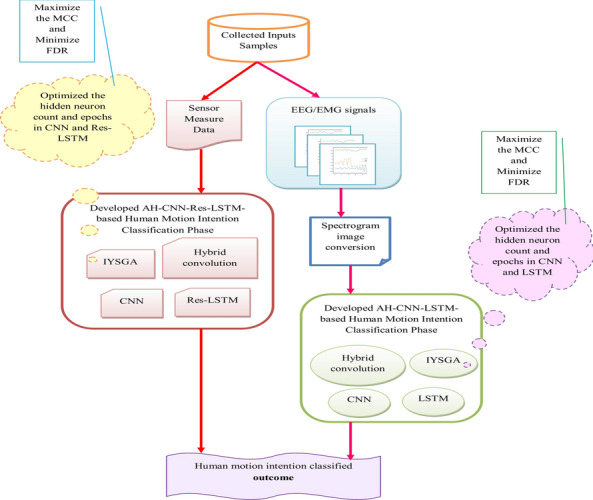
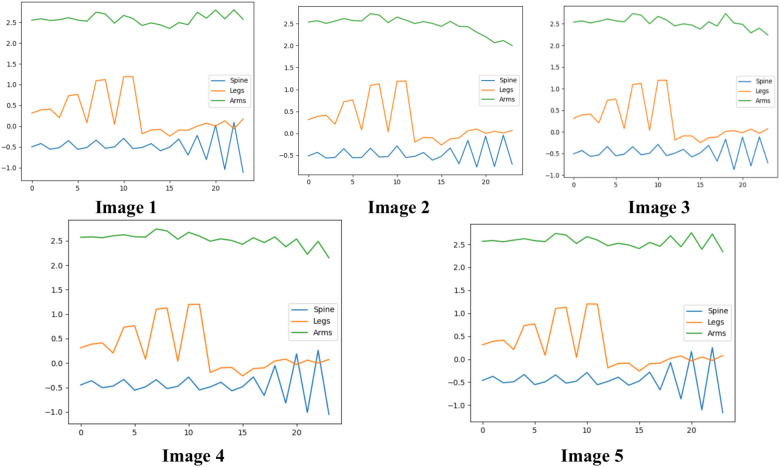
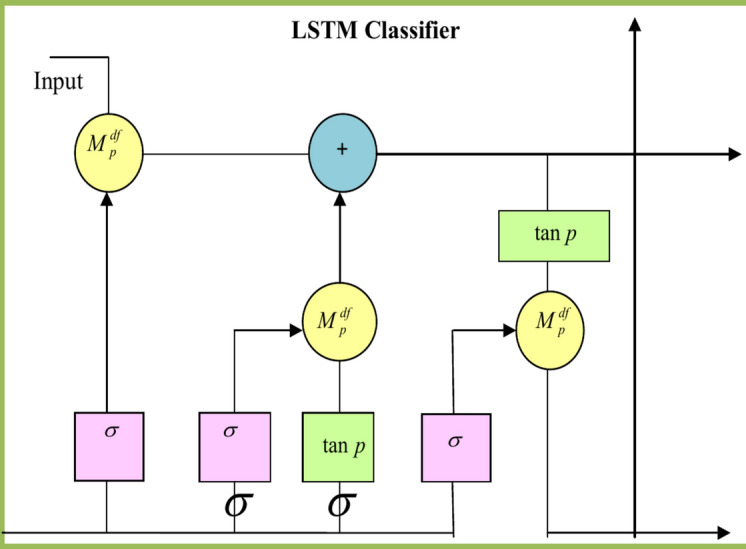
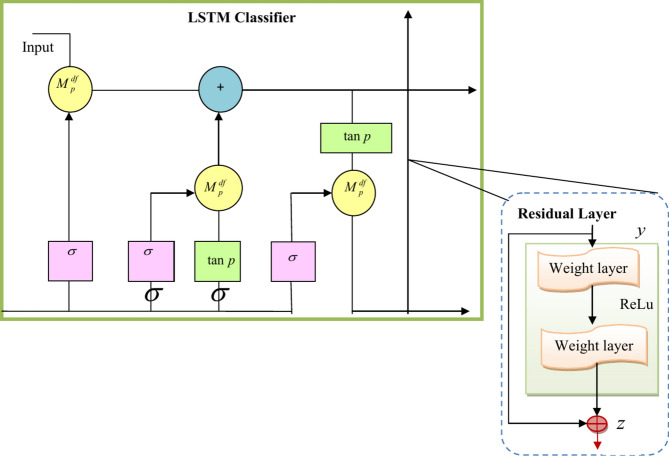
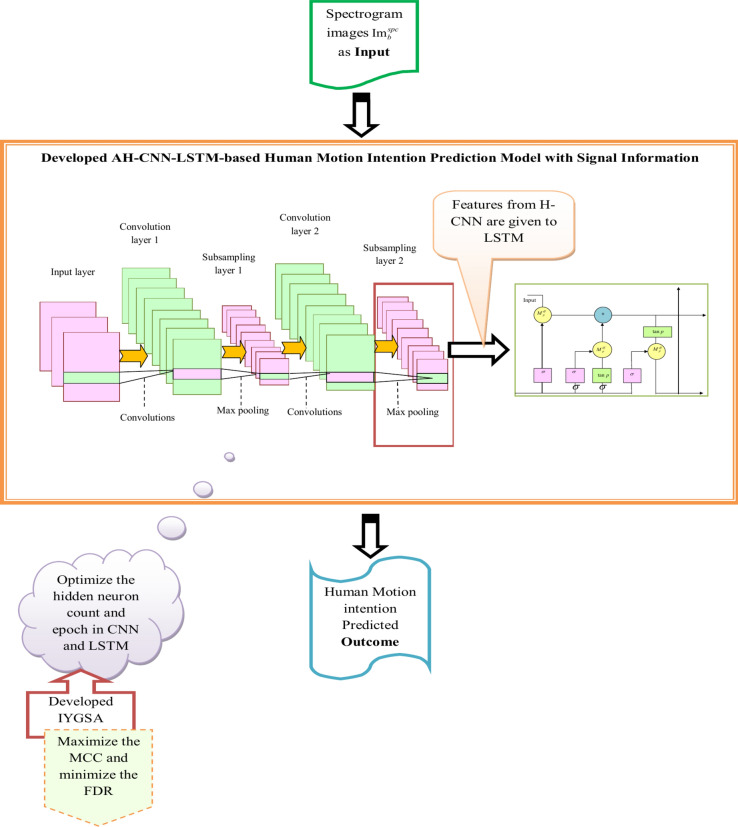
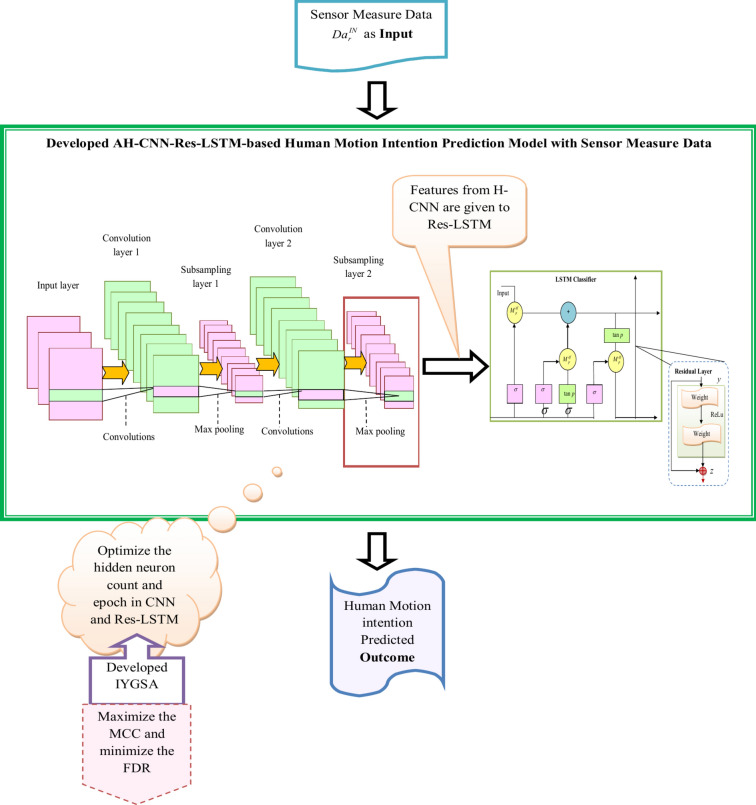
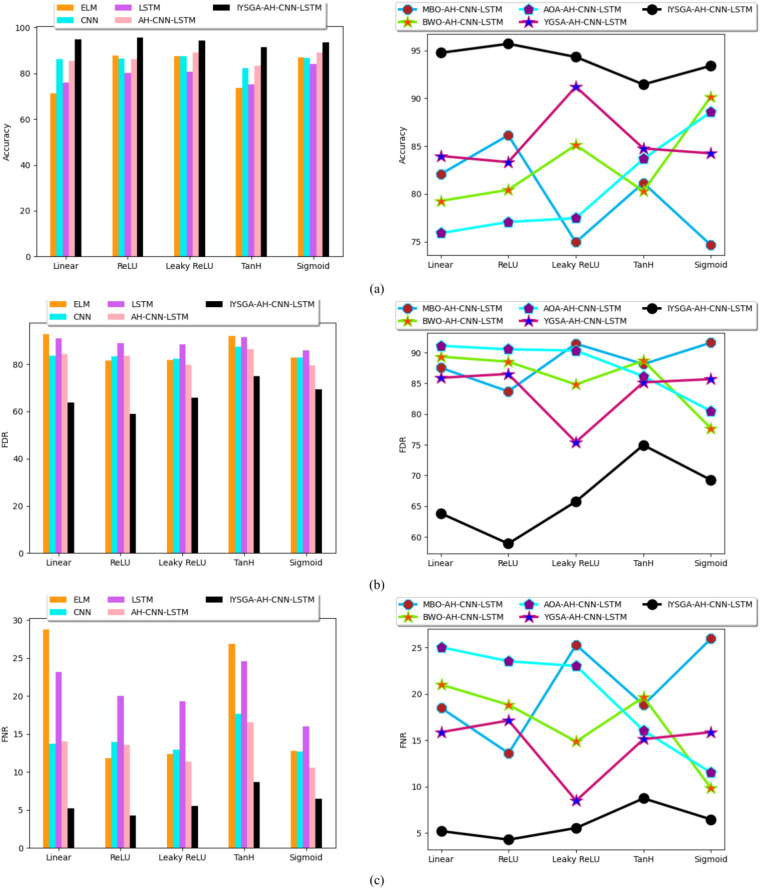
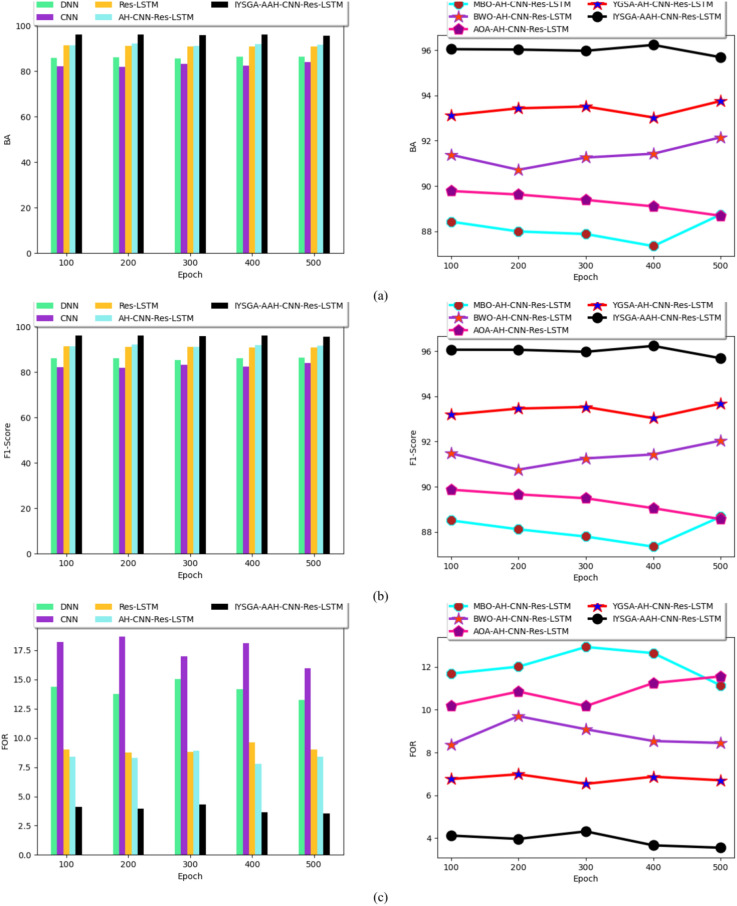
Recently, social demands for a good quality of life have increased among the elderly and disabled people. So, biomedical engineers and robotic researchers aimed to fuse these techniques in a novel rehabilitation system. Moreover, these models utilized the biomedical signals acquired from the human body's particular organ, cells, or tissues. The human motion intention prediction mechanism plays an essential role in various applications, such as assistive and rehabilitation robots, that execute specific tasks among elders and physically impaired individuals. However, more complications are increased in the human-machine-based interaction techniques, creating more scope for personalized assistance for the human motion intention prediction system. Therefore, in this paper, an Adaptive Hybrid Network (AHN) is implemented for effective human motion intention prediction. Initially, multimodal data like electroencephalogram (EEG)/Electromyography (EMG) signals and sensor measures data are collected from the available data resource. The gathered EEG/EMG signals are then converted into spectrogram images and sent to AH-CNN-LSTM, which is the integration of an Adaptive Hybrid Convolution Neural Network (AH-CNN) with a Long Short-Term Memory (LSTM) network. Similarly, the data details of sensor measures are directly subjected to AH-CNN-Res-LSTM, which is the combination of Adaptive Hybrid CNN with Residual Network and LSTM (Res-LSTM) to get the predictive result. Further, to enhance the prediction, the parameters in both the AH-CNN-LSTM and AH-CNN-Res-LSTM techniques are optimized using the Improved Yellow Saddle Goatfish Algorithm (IYSGA). The efficiency of the implemented model is computed by conducting the comparison experiment of the proposed technique with other standard models. The performance outcome of the developed method outperformed the other traditional methods.
Overview
The claims and statistics of this paper haven’t been checked yet.
Free: it reads the open-access text and checks the first 5 claims that cite a source we can check. Create a free account to check every claim.
Integrity signals
Registry
Cites
Statistics
Figures



Verification
Claims the paper makes
The claims and statistics of this paper haven’t been checked yet.
Free: it reads the open-access text and checks the first 5 claims that cite a source we can check. Create a free account to check every claim.
Self-check
Percentages, sums and reported differences re-computed from the paper’s own numbers.
The self-check needs the paper’s full text.
Citations
Cites
1 retracted
Bu, S., Zheng, H., Chen, S., Wu, Y., He, C., Yang, D., Wu, C., & Zhou, Y. (2023) · Computers in Biology and Medicine · doi:10.1016/j.compbiomed.2023.107410 · Cited by 9
RetractedVenkata Rao, R. (2016) · International Journal of Industrial Engineering Computations · doi:10.5267/j.ijiec.2015.8.004 · Cited by 2,071
Pelican Optimization Algorithm: A Novel Nature-Inspired Algorithm for Engineering Applications
Trojovský, P., & Dehghani, M. (2022) · Sensors · doi:10.3390/s22030855 · Cited by 895
Hayyolalam, V., & Pourhaji Kazem, A. A. (2020) · Engineering Applications of Artificial Intelligence · doi:10.1016/j.engappai.2019.103249 · Cited by 813
Deep Learning for EMG-based Human-Machine Interaction: A Review
Xiong, D., Zhang, D., Zhao, X., & Zhao, Y. (2021) · IEEE/CAA Journal of Automatica Sinica · doi:10.1109/jas.2021.1003865 · Cited by 395
Past, Present, and Future of EEG-Based BCI Applications
Värbu, K., Muhammad, N., & Muhammad, Y. (2022) · Sensors · doi:10.3390/s22093331 · Cited by 321
Porciuncula, F., Roto, A. V., Kumar, D., Davis, I., Roy, S., Walsh, C. J., & Awad, L. N. (2018) · PM&R · doi:10.1016/j.pmrj.2018.06.013 · Cited by 300
Jiang, H., Diao, Z., Shi, T., Zhou, Y., Wang, F., Hu, W., Zhu, X., Luo, S., Tong, G., & Yao, Y.-D. (2023) · Computers in Biology and Medicine · doi:10.1016/j.compbiomed.2023.106726 · Cited by 241
A review of the key technologies for sEMG-based human-robot interaction systems
Li, K., Zhang, J., Wang, L., Zhang, M., Li, J., & Bao, S. (2020) · Biomedical Signal Processing and Control · doi:10.1016/j.bspc.2020.102074 · Cited by 233
Fleming, A., Stafford, N., Huang, S., Hu, X., Ferris, D. P., & Huang, H. (. (2021) · Journal of Neural Engineering · doi:10.1088/1741-2552/ac1176 · Cited by 216
Cited by
Flexible Sensor‐Based Human–Machine Interfaces with AI Integration for Medical Robotics
Wang, Y., Jiang, Z., Kwon, S. H., Ibrahim, M., Dang, A., & Dong, L. (2025) · Advanced Robotics Research · doi:10.1002/adrr.202500027 · Cited by 41
Liu, H., & Xie, Q. (2025) · SLAS TECHNOLOGY · doi:10.1016/j.slast.2025.100360 · Cited by 26
Chen, S., Peng, C., Yang, B., Lin, J., Zhou, L., Jiang, Z., Liu, Z., Liu, Y., & Tang, L. (2026) · npj Artificial Intelligence · doi:10.1038/s44387-026-00083-5 · Cited by 9
Multimodal deep learning for art behavior analysis and personalized teaching path generation
Li, Y., & Shi, J. (2025) · Discover Artificial Intelligence · doi:10.1007/s44163-025-00480-w · Cited by 9
“Multi-modal data collection and analysis techniques have matured, enabling the acquisition of behavioral data from multiple dimensions during the art learning process [3].”
Fu, Z., Lin, Y., Xu, G., & Zhang, M. (2025) · IEEE Journal of Biomedical and Health Informatics · doi:10.1109/jbhi.2025.3623132 · Cited by 5
Metadata
- Authors
- Abidi, M. H.
- Affiliations
- King Saud University (SA)
- Corresponding author
- Abidi, Mustufa Haider
- Venue
- Scientific Reports
- Published
- 2024-12-24
- Volume
- 14
- Issue
- 1
- Pages
- 30633-30633
- ISSN
- 2045-2322 (ISSN-L)
- PMC
- PMC11668826
- OpenAlex
- W4405731932
- Cited by
- 20
- References
- 54
- Citations by year
- 2026: 10 · 2025: 10
- FWCI
- 4.86
- Type
- journal article
- Language
- en
- Open access
- gold
- doi.org
- Licence
- cc-by-nc-nd
- creativecommons.org/licenses/by-nc-nd/4.0 (tdm)
- creativecommons.org/licenses/by-nc-nd/4.0 (vor)
- Locations
- Scientific Reports (publishedVersion, cc-by-nc-nd)
- PubMed Central (publishedVersion, cc-by-nc-nd)
- PubMed (publishedVersion)
- DOAJ (DOAJ: Directory of Open Access Journals) (submittedVersion, cc-by-sa)
- Funders
- King Salman Center for Disability Research (KSRG-2023-451)
- Topics
- Life Sciences › Neuroscience › Cognitive Neuroscience › EEG and Brain-Computer Interfaces
- Physical Sciences › Engineering › Biomedical Engineering › Muscle activation and electromyography studies
- Physical Sciences › Engineering › Biomedical Engineering › Prosthetics and Rehabilitation Robotics
- Keywords
- multimodal fusion, EEG, electromyography, assistive robots, rehabilitation robots, CNN-LSTM, parameter optimization, motor impairment
- MeSH terms
- Deep Learning, Algorithms, Electroencephalography, Electromyography, Humans, Movement, Neural Networks, Computer, Intention
About these checks
Registry, retraction, Cites and statistics results are computed, not judged, with one exception: a printed reference that no index lists is read once by a model before it counts as a citation error. Claims are extracted by a model and kept only when their quote appears verbatim in the text; each cited source is then checked, with a model’s help, for whether it says what the claim relies on. Those verdicts can be wrong — read the claim’s quote and the cited source before relying on one.
Statistics and arithmetic are recomputed, not judged.
Confidence bands are shown only for fields calibrated on our annotated test set. None is calibrated yet, so no band is shown.
What counts as a claim ›How we measure confidence ›How we check this ›
Are you an author, or do you see a problem with this page? Request a review
How to cite
Cite CoChat for the checks on this page, and the paper for its own findings.
- This page
- CoChat. (2026). Citation check: Multimodal data-based human motion intention prediction using adaptive hybrid deep learning network for movement challenged person. https://app.cochat.ai/papers/10.1038/s41598-024-82624-z
- The paper
- Abidi, M. H. (2024). Multimodal data-based human motion intention prediction using adaptive hybrid deep learning network for movement challenged person. Scientific Reports. https://doi.org/10.1038/s41598-024-82624-z
Data sources
Bibliographic data: Semantic Scholar, OpenAlex, Crossref.
Contains information from the Semantic Scholar Academic Graph Datasets, made available under the ODC Attribution License (ODC-BY 1.0).
Semantic Scholar’s data is described in: Kinney, R., et al. (2023). The Semantic Scholar Open Data Platform. arXiv:2301.10140.
