

Fast and accurate view classification of echocardiograms using deep learning
Open accessThe DOI matches its Crossref record; 15 of the 15 references it cites were found in a registry or an index.
Abstract
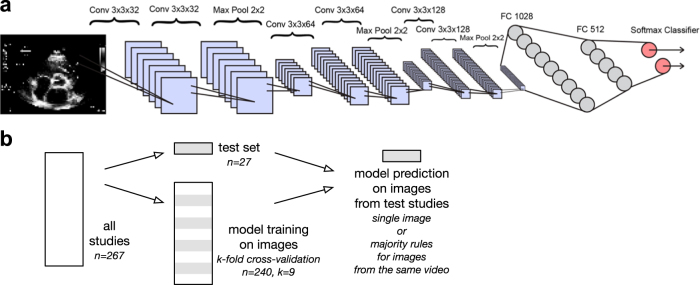
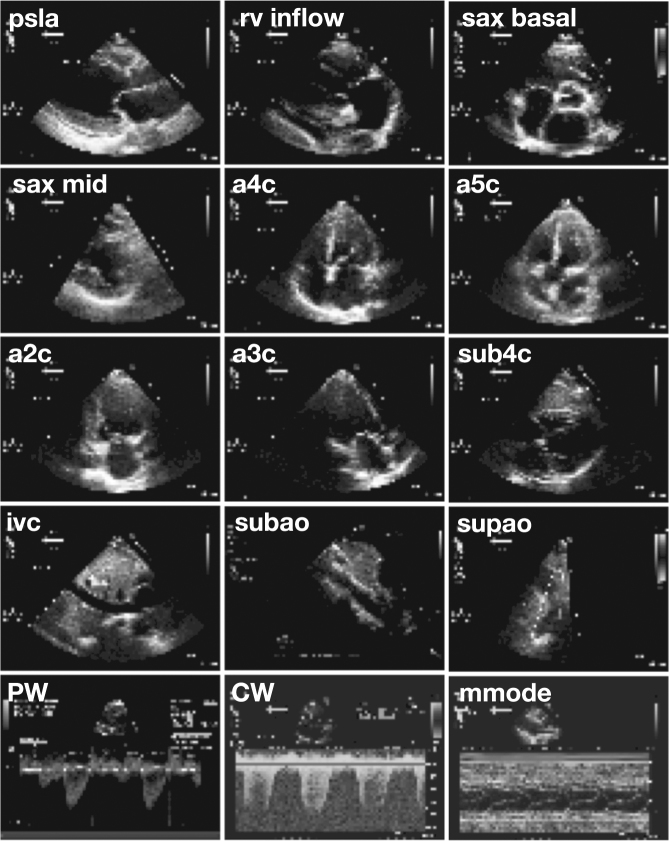
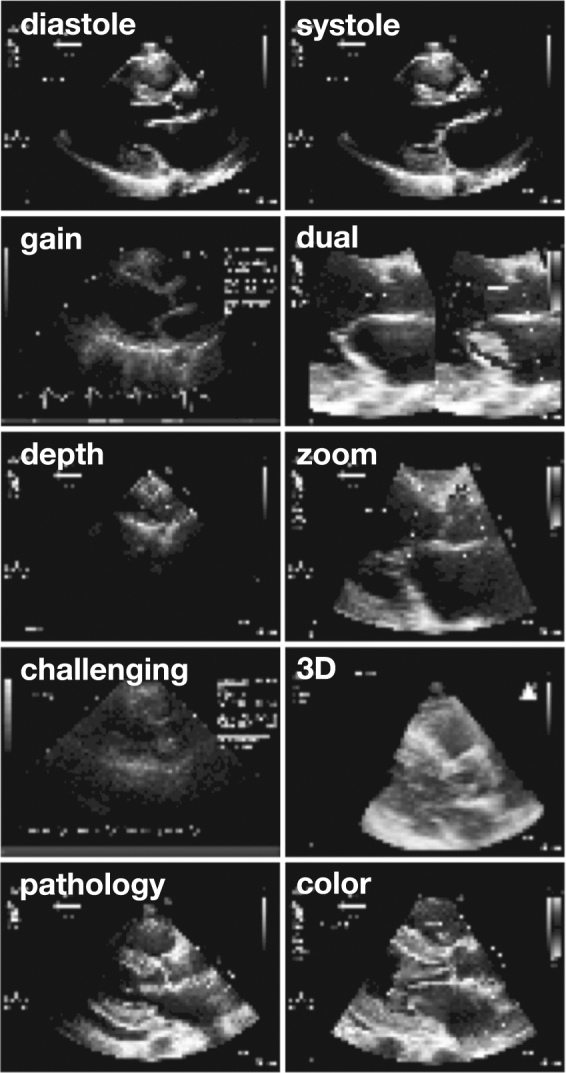
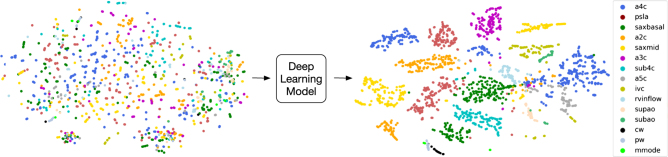
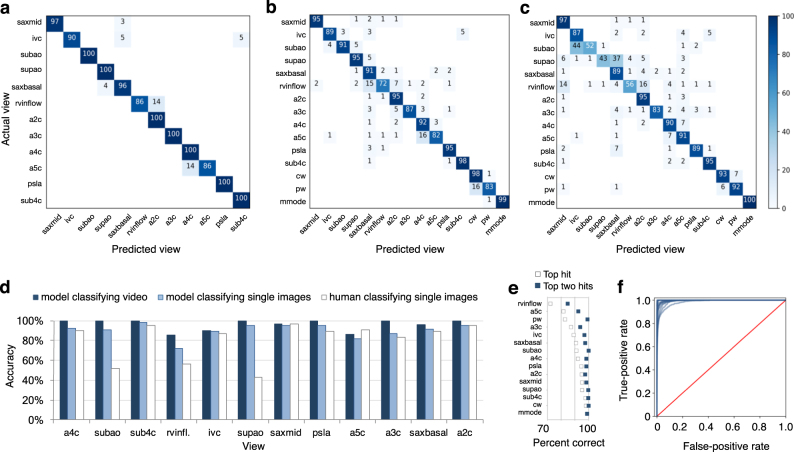
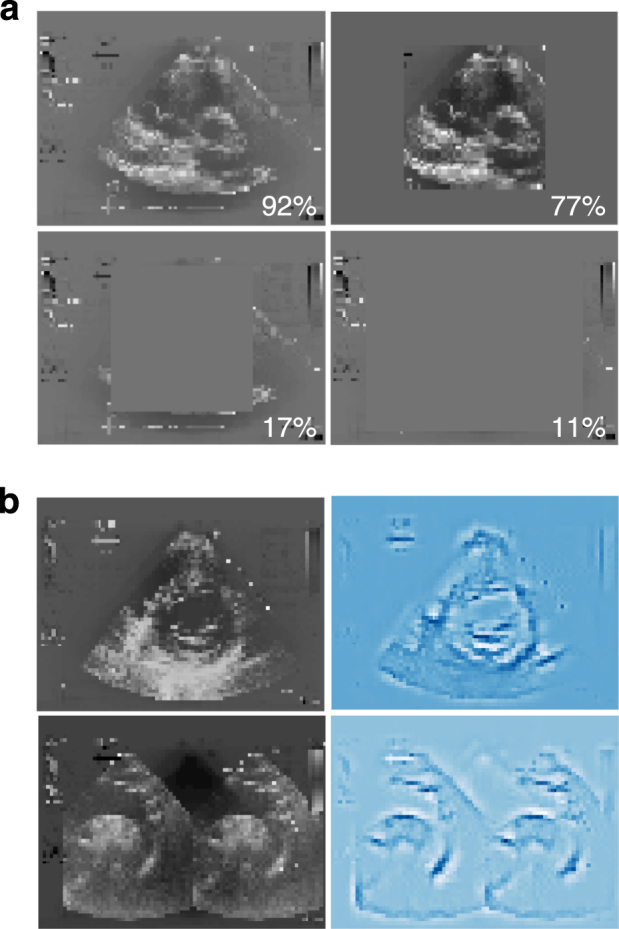
Echocardiography is essential to cardiology. However, the need for human interpretation has limited echocardiography’s full potential for precision medicine. Deep learning is an emerging tool for analyzing images but has not yet been widely applied to echocardiograms, partly due to their complex multi-view format. The essential first step toward comprehensive computer-assisted echocardiographic interpretation is determining whether computers can learn to recognize these views. We trained a convolutional neural network to simultaneously classify 15 standard views (12 video, 3 still), based on labeled still images and videos from 267 transthoracic echocardiograms that captured a range of real-world clinical variation. Our model classified among 12 video views with 97.8% overall test accuracy without overfitting. Even on single low-resolution images, accuracy among 15 views was 91.7% vs. 70.2–84.0% for board-certified echocardiographers. Data visualization experiments showed that the model recognizes similarities among related views and classifies using clinically relevant image features. Our results provide a foundation for artificial intelligence-assisted echocardiographic interpretation.
Overview
The claims and statistics of this paper haven’t been checked yet.
Free: it reads the open-access text and checks the first 5 claims that cite a source we can check. Create a free account to check every claim.
Integrity signals
Registry
Cites
Statistics
Figures
Verification
Claims the paper makes
The claims and statistics of this paper haven’t been checked yet.
Free: it reads the open-access text and checks the first 5 claims that cite a source we can check. Create a free account to check every claim.
Claims other papers make about this one
Each is checked against this paper’s own text: does it say what the citing paper says it does?
In the citing paper
“DL can be trained on a large database of echocardiographic studies and surpass the performance of board-certified echocardiographers in view classification 67 .”
From Deep learning-enabled medical computer vision (2021) · cites this paper as [67]
Self-check
Percentages, sums and reported differences re-computed from the paper’s own numbers.
The self-check needs the paper’s full text.
Citations
Cites
ImageNet Large Scale Visual Recognition Challenge
Russakovsky, O., Deng, J., Su, H., Krause, J., Satheesh, S., Ma, S., Huang, Z., Karpathy, A., Khosla, A., Bernstein, M., et al. (2015) · International Journal of Computer Vision · doi:10.1007/s11263-015-0816-y · Cited by 39,380
(2008) · Journal of Machine Learning Research · Cited by 33,051
A survey on deep learning in medical image analysis
Litjens, G., Kooi, T., Bejnordi, B. E., Setio, A. A. A., Ciompi, F., Ghafoorian, M., van der Laak, J. A. W. M., van Ginneken, B., & Sánchez, C. I. (2017) · Medical Image Analysis · doi:10.1016/j.media.2017.07.005 · Cited by 15,332
Dermatologist-level classification of skin cancer with deep neural networks
Esteva, A., Kuprel, B., Novoa, R. A., Ko, J., Swetter, S. M., Blau, H. M., & Thrun, S. (2017) · Nature · doi:10.1038/nature21056 · Cited by 14,362
Gulshan, V., Peng, L., Coram, M., Stumpe, M. C., Wu, D., Narayanaswamy, A., Venugopalan, S., Widner, K., Madams, T., Cuadros, J., et al. (2016) · JAMA · doi:10.1001/jama.2016.17216 · Cited by 7,697
ACCF/ASE/AHA/ASNC/HFSA/HRS/SCAI/SCCM/SCCT/SCMR 2011 Appropriate Use Criteria for Echocardiography
Douglas, P. S., Garcia, M. J., Haines, D. E., Lai, W. W., Manning, W. J., Patel, A. R., Picard, M. H., Polk, D. M., Ragosta, M., Ward, R. P., et al. (2011) · Journal of the American College of Cardiology · doi:10.1016/j.jacc.2010.11.002 · Cited by 673
Narula, S., Shameer, K., Salem Omar, A. M., Dudley, J. T., & Sengupta, P. P. (2016) · Journal of the American College of Cardiology · doi:10.1016/j.jacc.2016.08.062 · Cited by 410
Knackstedt, C., Bekkers, S. C. A. M., Schummers, G., Schreckenberg, M., Muraru, D., Badano, L. P., Franke, A., Bavishi, C., Omar, A. M. S., & Sengupta, P. P. (2015) · Journal of the American College of Cardiology · doi:10.1016/j.jacc.2015.07.052 · Cited by 262
Sengupta, P. P., Huang, Y.-M., Bansal, M., Ashrafi, A., Fisher, M., Shameer, K., Gall, W., & Dudley, J. T. (2016) · Circulation: Cardiovascular Imaging · doi:10.1161/circimaging.115.004330 · Cited by 203
Wharton, G., Steeds, R., Allen, J., Phillips, H., Jones, R., Kanagala, P., Lloyd, G., Masani, N., Mathew, T., Oxborough, D., et al. (2015) · Echo Research & Practice · doi:10.1530/erp-14-0079 · Cited by 183 · cited 1×
“Determining the view is the essential first step in interpreting an echocardiogram.(6) This step is non-trivial, not least because several views differ only subtly from each other.”
BackgroundA fused deep learning architecture for viewpoint classification of echocardiography
Gao, X. W., Li, W., Loomes, M. J., & Wang, L. (2016) · Information Fusion · doi:10.1016/j.inffus.2016.11.007 · Cited by 144
Automatic apical view classification of echocardiograms using a discriminative learning dictionary
Khamis, H., Zurakhov, G., Azar, V., Raz, A., Friedman, Z., & Adam, D. (2016) · Medical Image Analysis · doi:10.1016/j.media.2016.10.007 · Cited by 104
Appropriate Use Criteria for Echocardiography
Almaraz, K., Yatskowitz, J. P., Huang, A., & Vold, A. (2019) · UNM’s Digital Repository (University of New Mexico) · Cited by 25
Mid-level image representations for real-time heart view plane classification of echocardiograms
Penatti, O. A. B., Werneck, R. D. O., de Almeida, W. R., Stein, B. V., Pazinato, D. V., Júnior, P. R. M., Torres, R. D. S., & Rocha, A. D. R. (2015) · Computers in Biology and Medicine · doi:10.1016/j.compbiomed.2015.08.004 · Cited by 20
AutoGate: Fast and Automatic Doppler Gate Localization in B-Mode Echocardiogram
Park, J., Zhou, S. K., Simopoulos, C., & Comaniciu, D. (2008) · Lecture notes in computer science · doi:10.1007/978-3-540-85990-1_28 · Cited by 8
Cited by
High-performance medicine: the convergence of human and artificial intelligence
Topol, E. J. (2019) · Nature Medicine · doi:10.1038/s41591-018-0300-7 · Cited by 10,450
“The overall accuracy for single still images was 92% for the algorithm and 79% for four board-certified echocardiographers, but this does not reflect the real-world reading of studies, which are in-motion video loops 23 .”
BackgroundMachine learning and deep learning
Janiesch, C., Zschech, P., & Heinrich, K. (2021) · Electronic Markets · doi:10.1007/s12525-021-00475-2 · Cited by 2,959
“For specific applications in closed environments, DL already shows superhuman performance by excelling human capabilities (Madani et al. 2018; Silver et al. 2018).”
BackgroundAttention gated networks: learning to leverage salient regions in medical images
Schlemper, J., Oktay, O., Schaap, M., Heinrich, M., Kainz, B., Glocker, B., & Rueckert, D. (2019) · Medical Image Analysis · doi:10.1016/j.media.2019.01.012 · Cited by 2,014
“…classification of Alzheimer’s disease (Sarraf et al., 2017), skin lesions (Esteva et al., 2017; Kawahara and Hamarneh, 2016) and echo-cardiogram views (Madani et al., 2018), lung nodule detection in CT/X-ray (Liao et al., 2017; Zhu et al., 2018) and cardiac MR segmentation (Bai et al., 2017).”
Deep learning-enabled medical computer vision
Esteva, A., Chou, K., Yeung, S., Naik, N., Madani, A., Mottaghi, A., Liu, Y., Topol, E., Dean, J., & Socher, R. (2021) · npj Digital Medicine · doi:10.1038/s41746-020-00376-2 · Cited by 1,406
Self-citationVideo-based AI for beat-to-beat assessment of cardiac function
Ouyang, D., He, B., Ghorbani, A., Yuan, N., Ebinger, J., Langlotz, C. P., Heidenreich, P. A., Harrington, R. A., Liang, D. H., Ashley, E. A., et al. (2020) · Nature · doi:10.1038/s41586-020-2145-8 · Cited by 1,153
Metadata
- Authors
- Madani, A., Arnaout, R., Mofrad, M., & Arnaout, R.
- Affiliations
- QB3 (US)
- Beth Israel Deaconess Medical Center (US)
- Corresponding author
- Arnaout, Ramy
- Mofrad, Mohammad
- Arnaout, Rima
- Venue
- npj Digital Medicine
- Published
- 2018-03-21
- Volume
- 1
- Issue
- 1
- ISSN
- 2398-6352 (ISSN-L)
- PMC
- PMC6395045
- OpenAlex
- W2963428668
- Cited by
- 585
- References
- 15
- Citations by year
- 2026: 51 · 2025: 82 · 2024: 84 · 2023: 81 · 2022: 78 · 2021: 81 · 2020: 68 · 2019: 40 · 2018: 19
- FWCI
- 14.17
- Type
- journal article
- Language
- en
- Open access
- gold
- doi.org
- Licence
- cc-by
- creativecommons.org/licenses/by/4.0 (tdm)
- creativecommons.org/licenses/by/4.0 (vor)
- Locations
- npj Digital Medicine (publishedVersion, cc-by)
- Europe PMC (PubMed Central) (publishedVersion, other-oa)
- PubMed Central (publishedVersion, cc-by)
- PubMed (publishedVersion)
- OSTI OAI (U.S. Department of Energy Office of Scientific and Technical Information) (submittedVersion)
- DOAJ (DOAJ: Directory of Open Access Journals) (submittedVersion)
- eScholarship (California Digital Library) (submittedVersion)
- eScholarship (California Digital Library) (submittedVersion, cc-by)
- Funders
- American Heart Association (16IRG27630014, 17IGMV33870001, 15GPSPG23830004)
- National Institutes of Health
- National Heart, Lung, and Blood Institute (K08HL125945)
- National Institute of Allergy and Infectious Diseases (K08AI114958)
- Topics
- Health Sciences › Medicine › Health Informatics › Artificial Intelligence in Healthcare and Education
- Health Sciences › Health Professions › Health Information Management › Artificial Intelligence in Healthcare
- Health Sciences › Medicine › Critical Care and Intensive Care Medicine › Ultrasound in Clinical Applications
- Keywords
- transthoracic echocardiography, convolutional neural networks, artificial intelligence in cardiology
About these checks
Registry, retraction, Cites and statistics results are computed, not judged, with one exception: a printed reference that no index lists is read once by a model before it counts as a citation error. Claims are extracted by a model and kept only when their quote appears verbatim in the text; each cited source is then checked, with a model’s help, for whether it says what the claim relies on. Those verdicts can be wrong — read the claim’s quote and the cited source before relying on one.
Statistics and arithmetic are recomputed, not judged.
Confidence bands are shown only for fields calibrated on our annotated test set. None is calibrated yet, so no band is shown.
What counts as a claim ›How we measure confidence ›How we check this ›
Are you an author, or do you see a problem with this page? Request a review
Data sources
Bibliographic data: Semantic Scholar, OpenAlex, Crossref.
Contains information from the Semantic Scholar Academic Graph Datasets, made available under the ODC Attribution License (ODC-BY 1.0).
Semantic Scholar’s data is described in: Kinney, R., et al. (2023). The Semantic Scholar Open Data Platform. arXiv:2301.10140.
