

Best practices for analyzing large-scale health data from wearables and smartphone apps
Open accessThe DOI matches its Crossref record; 62 of the 62 references it cites were found in a registry or an index.
Abstract
Smartphone apps and wearable devices for tracking physical activity and other health behaviors have become popular in recent years and provide a largely untapped source of data about health behaviors in the free-living environment. The data are large in scale, collected at low cost in the “wild”, and often recorded in an automatic fashion, providing a powerful complement to traditional surveillance studies and controlled trials. These data are helping to reveal, for example, new insights about environmental and social influences on physical activity. The observational nature of the datasets and collection via commercial devices and apps pose challenges, however, including the potential for measurement, population, and/or selection bias, as well as missing data. In this article, we review insights gleaned from these datasets and propose best practices for addressing the limitations of large-scale data from apps and wearables. Our goal is to enable researchers to effectively harness the data from smartphone apps and wearable devices to better understand what drives physical activity and other health behaviors.
Overview
The claims and statistics of this paper haven’t been checked yet.
Free: it reads the open-access text and checks the first 5 claims that cite a source we can check. Create a free account to check every claim.
Integrity signals
Registry
Cites
Statistics
Figures
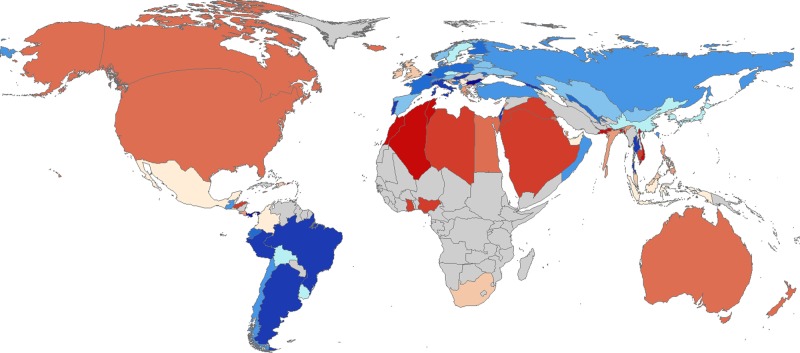
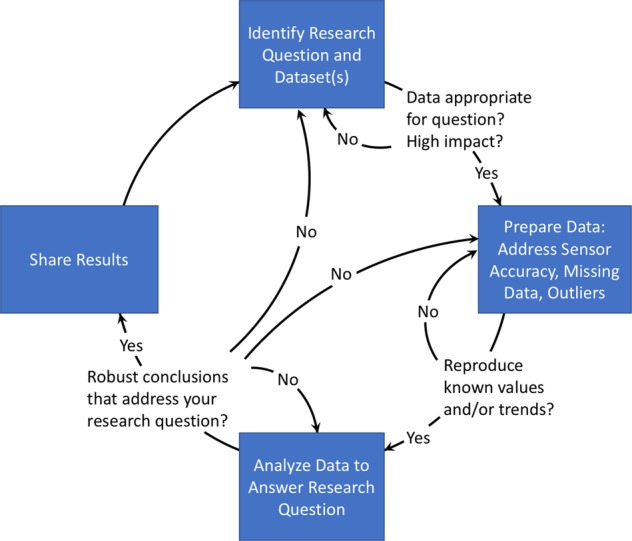
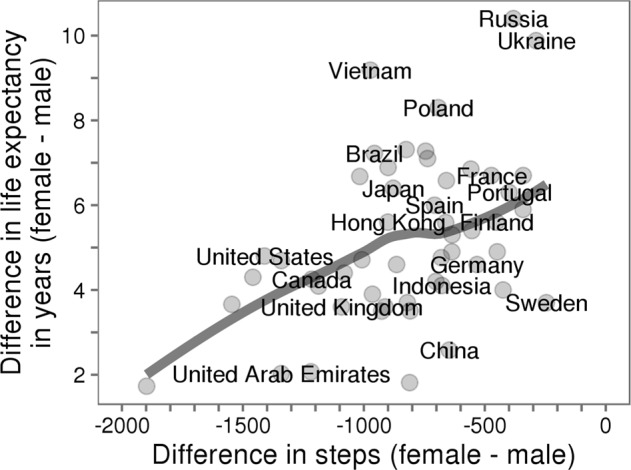
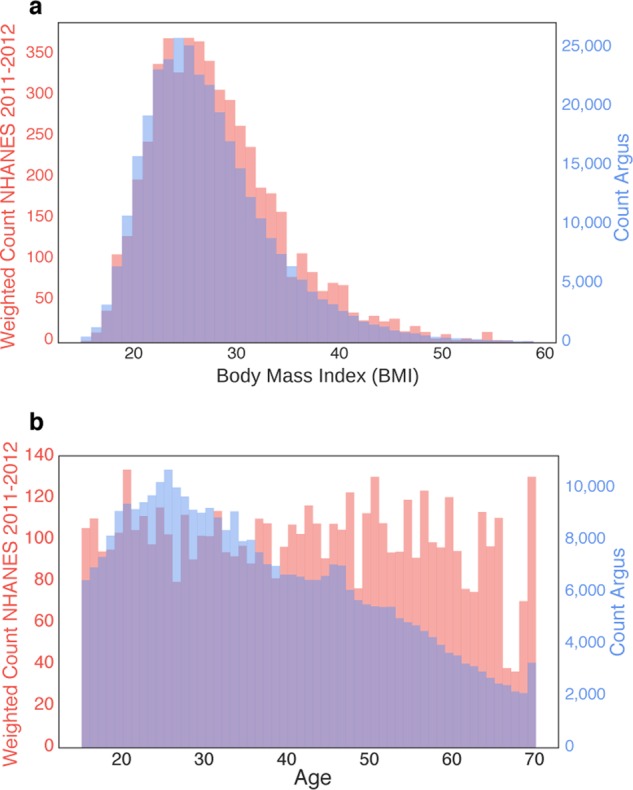
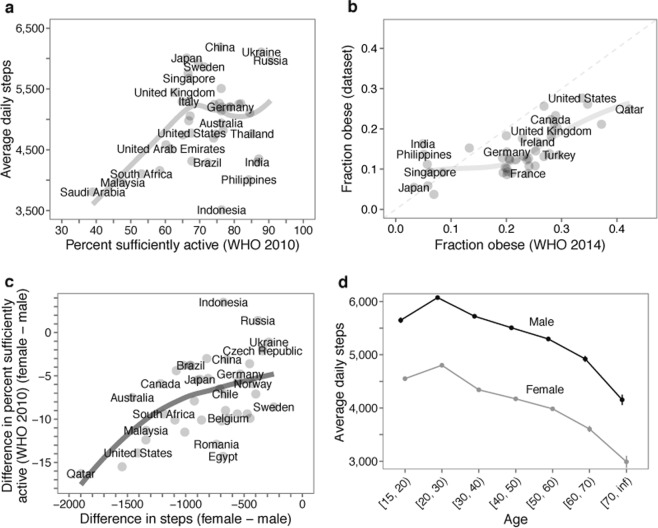
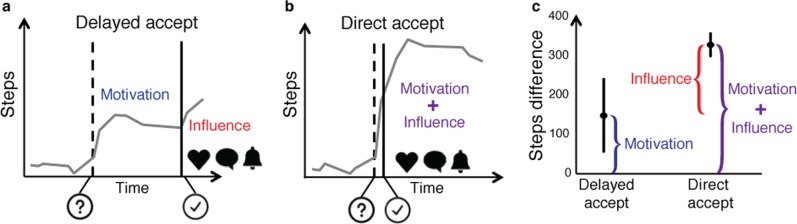
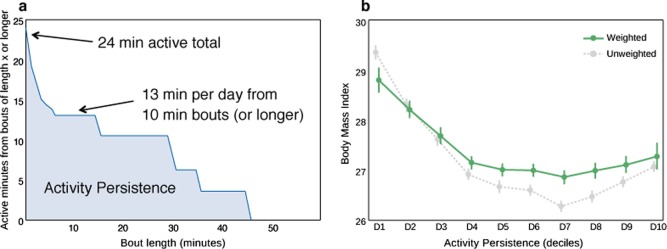
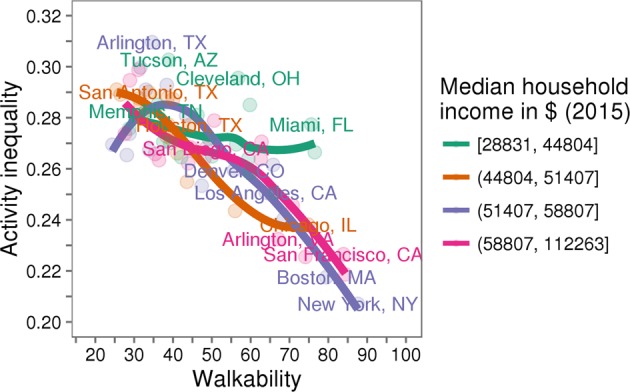
Verification
Claims the paper makes
The claims and statistics of this paper haven’t been checked yet.
Free: it reads the open-access text and checks the first 5 claims that cite a source we can check. Create a free account to check every claim.
Claims other papers make about this one
Each is checked against this paper’s own text: does it say what the citing paper says it does?
The source backs part of the claim, not all of it — or backs it for a different population, condition or comparison.
In the citing paper
“The literature underlines the potential for wearable-based research in low-resource settings to generate data and improve health care [9], based on their low cost and ease of use (data acquisition, hardware, and software handling) [233].”
From The impact of wearable technologies in health research: scoping review (2022) · cites this paper as [233]
Experimental — accuracy not yet measured
Self-check
Percentages, sums and reported differences re-computed from the paper’s own numbers.
The self-check needs the paper’s full text.
Citations
Cites
Controlling the False Discovery Rate: A Practical and Powerful Approach to Multiple Testing
Benjamini, Y., & Hochberg, Y. (1995) · Journal of the Royal Statistical Society Series B: Statistical Methodology · doi:10.1111/j.2517-6161.1995.tb02031.x · Cited by 109,482
The central role of the propensity score in observational studies for causal effects
ROSENBAUM, P. R., & RUBIN, D. B. (1983) · Biometrika · doi:10.1093/biomet/70.1.41 · Cited by 31,241
Multiple Imputation for Nonresponse in Surveys
Rubin, D. B. (1987) · Wiley Series in Probability and Statistics · doi:10.1002/9780470316696 · Cited by 20,701
Writing Group for the Women's Health Initiative Investigators (2002) · JAMA: The Journal of the American Medical Association · doi:10.1001/jama.288.3.321 · Cited by 15,889
Finding and evaluating community structure in networks
Newman, M. E. J., & Girvan, M. (2004) · Physical Review E · doi:10.1103/physreve.69.026113 · Cited by 13,931
Sudlow, C., Gallacher, J., Allen, N., Beral, V., Burton, P., Danesh, J., Downey, P., Elliott, P., Green, J., Landray, M., et al. (2015) · PLOS Medicine · doi:10.1371/journal.pmed.1001779 · Cited by 12,728
Austin, P. C. (2011) · Multivariate Behavioral Research · doi:10.1080/00273171.2011.568786 · Cited by 12,242
‘Small Changes' to Diet and Physical Activity Behaviors for Weight Management
Hills, A. P., Byrne, N. M., Lindstrom, R., & Hill, J. O. (2013) · Obesity Facts · doi:10.1159/000345030 · Cited by 9,493
Physical Activity in the United States Measured by Accelerometer
TROIANO, R. P., BERRIGAN, D., DODD, K. W., MÂSSE, L. C., TILERT, T., & MCDOWELL, M. (2008) · Medicine & Science in Sports & Exercise · doi:10.1249/mss.0b013e31815a51b3 · Cited by 7,638
Sterne, J. A. C., White, I. R., Carlin, J. B., Spratt, M., Royston, P., Kenward, M. G., Wood, A. M., & Carpenter, J. R. (2009) · BMJ · doi:10.1136/bmj.b2393 · Cited by 7,299
Research works printed but not linked: 1
- World Health Organization. Global recommendations on physical activity for health. (WHO, 2010). 26180873
Cited by
Items 101–180 of 180
Poulsen, A., Hickie, I. B., Chong, M. K., LaMonica, H. M., Turner, A., & Iorfino, F. (2025) · Ethics and Information Technology · doi:10.1007/s10676-025-09866-x · Cited by 8
“…(e.g., when seeking information), and acknowledging young peoples’ perspectives (e.g., ● Employing easy-to-access, commonplace wearables (e.g., Fitbit or Apple watch) fits another design norm, Account for wider socioeconomic and social factors affecting use and access (Norm 8) (Hicks et al., 2019).”
AccEmo: Accelerometer Based Human Emotion Recognition for Eyewear Devices
Zhuang, H., Zhang, Y., Yang, Y., Zhang, G., Chen, Z., Spolaor, R., Cheng, X., Mohapatra, P., & Hu, P. (2025) · IEEE Transactions on Mobile Computing · doi:10.1109/tmc.2025.3529662 · Cited by 7
Ding, Y., Song, Y. H., & Xu, Z. (2025) · Journal of Outdoor Recreation and Tourism · doi:10.1016/j.jort.2025.100877 · Cited by 7
Leveraging mHealth Technologies for Public Health
Velmovitsky, P. E., Kirolos, M., Alencar, P., Leatherdale, S. T., Cowan, D., & Morita, P. P. (2024) · JMIR Public Health and Surveillance · doi:10.2196/49719 · Cited by 9
“Hicks et al [27] described several large-scale observational studies that use commercial mobile and wearable devices, including a study by the authors themselves which used data from >700,000 activity-tracking app users in 100 countries.”
BackgroundCrowdsensing under recent mobile platform background service restrictions
Petter, O., Hirsch, M., Mushtaq, E., Hevesi, P., & Lukowicz, P. (2019) · ACM International Joint Conference on Pervasive and Ubiquitous Computing (UbiComp) · doi:10.1145/3341162.3344867 · Cited by 5
Christensen, J. H. (2020) · doi:10.17605/osf.io/rc37z · Cited by 5
Dear Watch, Should I get a COVID Test? Designing deployable machine learning for wearablesPreprint
Goldenberg, A., Nestor, B., Hunter, J., Kainkaryam, R., Drysdale, E., Inglis, J. B., Shapiro, A. D., Nagaraj, S., Ghassemi, M., & Foschini, L. (2021) · Research Square · doi:10.21203/rs.3.rs-505984/v1 · Cited by 5
“There are numerous examples in the literature outlining the prerequisites needed to build diagnostic models for wearable data [18] and yet the recently published papers [35; 38; 43] lack in one or another aspect as elaborated below.”
BackgroundAmbulatory assessment to predict problem anger in trauma-affected adults: Study protocol
Metcalf, O., Finlayson-Short, L., Lamb, K. E., Zaloumis, S. G., O'Donnell, M. L., Qian, T., Varker, T., Cowlishaw, S., Brotman, M. A., & Forbes, D. (2022) · PLoS ONE · doi:10.1371/journal.pone.0278926 · Cited by 6
Photoplethysmogram (PPG) Signal Analysis for the Heart Rate Estimation Using Shannon Entropy
Suman, Suguna, M., Kumar, R., & Gupta, S. (2025) · IEEE International Colloquium on Signal Processing & Its Applications (CSPA) · doi:10.1109/cspa64953.2025.10933069 · Cited by 4
“Analysis is challenging because to a lack of user experience and feedback, poor user involvement, privacy concerns, and data security challenges, among other things [24].”
Crowdsourcing smartphone data for biomedical research: Ethical and legal questions
Lang, M., McKibbin, K., Shabani, M., Borry, P., Gautrais, V., Verbeke, K., & Zawati, M. H. (2023) · Digital Health · doi:10.1177/20552076231204428 · Cited by 6
“App-facilitated data collection is often enabled by wearables and smart devices, such as smart watches, smart speakers, and mobile sensors installed in the home or workplace.(3) These devices, which are also increasing rapidly in popularity, are often powered by or connected to a smartphone application.”
BackgroundVelmovitsky, P. E., Alencar, P., Leatherdale, S. T., Cowan, D., & Morita, P. P. (2024) · Digital Health · doi:10.1177/20552076241249931 · Cited by 4
2SpamH: A Two-Stage Pre-Processing Algorithm for Passively Sensed mHealth Data
Zhang, H., Diaz, J. L., Kim, S., Yu, Z., Wu, Y., Carter, E., & Banerjee, S. (2024) · Sensors · doi:10.3390/s24217053 · Cited by 4
“…been studied outside of the field of mobile Previous data validation methods include simple numerical checks to examine minimum and maximum values [1] and physical and logical data ranges [5]. health Previous data validation methods include simple numerical checks to examine minimum and maximum…”
BackgroundMethodInfluentialUnderstanding Human Daily Experience Through Continuous Sensing: ETRI Lifelog Dataset 2024
Oh, S. W., Jeong, H., Chung, S., Lim, J., Noh, K. J., Lee, S., & Jung, G. (2025) · International Conference on Information and Communication Technology Convergence (ICTC) · doi:10.1109/ictc66702.2025.11388616 · Cited by 4
“However, despite these advances, capturing continuous and naturalistic daily experiences in real-world settings without disrupting individuals’ routines remains challenging [7], [8].”
Digital Global Recruitment for Women’s Health Research: Cross-sectional Study
Rodriguez, E., Peer, K., Fruh, V., James, K. E., Williams, A., Veiga, A. D. F., Winter, M. R., Shea, A. A., Aschengrau, A., Lane, K., et al. (2022) · JMIR Formative Research · doi:10.2196/39046 · Cited by 3
“Recruitment via mobile menstrual tracking apps presents unique opportunities to advance epidemiological research on menstruation [5,6].”
BackgroundRomero, J., & Lv, Q. (2022) · International Journal of Environmental Research and Public Health · doi:10.3390/ijerph191912933 · Cited by 3
“This large-scale digital data on exercise habits holds potential to elucidate the policy, environmental, and personal influences that drive healthy lifestyle choices [3,4].”
BackgroundPrecision (personalized) medicine
Walton, N. (2023) · Elsevier eBooks · doi:10.1016/b978-0-323-95274-3.00002-6 · Cited by 3
Lykov, Y. A., Александровна, К. А., Marchenkova, L., Korolev, Y. N., Rozhkova, E. A., & Zubareva, N. N. (2026) · Bulletin of Rehabilitation Medicine · doi:10.38025/2078-1962-2026-25-2-63-76 · Cited by 5
Mobile Healthcare Application for Virtual Patient Monitoring System
Raykar, S. S., & Shet, V. N. (2022) · Lecture notes in computational vision and biomechanics · doi:10.1007/978-981-19-0151-5_27 · Cited by 2
Song, S., Ashton, M., Yoo, R. H., Lkhagvajav, Z., Wright, R. A., Mathews, D., & Taylor, C. O. (2025) · Journal of Medical Internet Research · doi:10.2196/51955 · Cited by 3
“Previous research findings [154] have also raised concerns that wearables may be less sustainable than smartphones for remote monitoring over long periods [155].”
Sedláková, J., Stanikić, M., Gille, F., Bernard, J., Horn, A. B., Wolf, M., Haag, C., Floris, J., Morgenshtern, G., Schneider, G., et al. (2024) · JMIR Medical Education · doi:10.2196/56369 · Cited by 4
“The reuse of existing, digital unstructured data and the need for extensive preprocessing may obfuscate or compound issues of external and internal validity [14].”
InfluentialAlexander, J. D., Duffy, K. A., Freis, S. M., Chow, S., Friedman, N. P., & Vrieze, S. I. (2025) · Journal of Medical Internet Research · doi:10.2196/64965 · Cited by 1
“To help account for any systematic missingness in either the affect or mobility measures, a common challenge in intensive longitudinal research [44], we included the proportion of missing days of location data and the proportion of missed PANAS responses as model covariates.”
Zhu, Y., Zhu, Z., He, W., Wang, M., & Yang, W. (2025) · Medicine · doi:10.1097/md.0000000000045639 · Cited by 1
“[11] 2”
The undue burdens of clinical trial participation: implications for equity, diversity, and inclusion
Law, E., & Chatfield, K. (2026) · Trials · doi:10.1186/s13063-026-09540-7 · Cited by 5
Mobley, K., Gittner, K. B., Nielsen, K. E., Matheny, L. M., Taasoobshirazi, G., Natuhamya, C., & Swahn, M. H. (2026) · JMIR mhealth and uhealth · doi:10.2196/81123 · Cited by 2
“A comprehensive review of wearable studies in biomedical research confirms that data missingness remains among the most significant obstacles researchers face [26, 27].”
Lin, H.-C., Ometov, A., Arponen, O., Nikunen, K., & Nurmi, J. (2026) · Social Sciences & Humanities Open · doi:10.1016/j.ssaho.2026.102948 · Cited by 1
Sherwani, S. I., & Bates, B. R. (2020) · Advances in information security, privacy, and ethics book series · doi:10.4018/978-1-7998-3487-8.ch002 · Cited by 2
Another step (count) towards leveraging mobile health data for clinical prediction
Murphy, A., & Low, C. A. (2021) · The Lancet Digital Health · doi:10.1016/s2589-7500(21)00212-0 · Cited by 1
Verbeke, K., Jain, C., Shpendi, A., & Borry, P. (2023) · Accountability in Research · doi:10.1080/08989621.2023.2281548 · Cited by 1
“Collecting data through consumer MHAs can come with important methodological benefits, such as having access to large sample sizes or collecting data in the app user’s own context (Hicks et al. 2019).”
Mobile applications in radiology: own study based on polish data
Kufel, J., Bargieł-Łączek, K., Koźlik, M., Bartnikowska, W., Janik, M., Czogalik, Ł., Dudek, P., Krawczyk, D., Magiera, M., Cebula, M., et al. (2023) · Scientific Reports · doi:10.1038/s41598-023-46272-z · Cited by 4
“Simultaneously, the number of medical applications is growing, which has been especially noticeable over the last few years 2–4 .”
BackgroundDharangutte, P., Xie, Z., Gao, J., Schoenfeld, E. R., Hua, Y., & Ye, F. (2023) · IEEE International Conference on Bioinformatics and Biomedicine (BIBM) · doi:10.1109/bibm58861.2023.10385567 · Cited by 1
“With the prevalence of wearable devices, longitudinal wearable data has become widely available for analyzing health-related factors [32], [10].”
BackgroundNaef, A., Coduti, E., & Windisch, P. Y. (2024) · Cureus · doi:10.7759/cureus.57519 · Cited by 1
“As more people use wearables and the digital health space keeps growing, so does the desire to leverage the collected data to advance research [3].”
BackgroundSiebra, C., & Wac, K. (2024) · Biomedical Signal Processing and Control · doi:10.1016/j.bspc.2024.106858 · Cited by 2
Christensen, J. H., Saunders, G. H., Porsbo, M., & Pontoppidan, N. H. (2020) · bioRxiv (Cold Spring Harbor Laboratory) · doi:10.1101/2020.07.08.180869 · Cited by 3
A Template and Tutorial for Preregistering Studies Using Passive Smartphone MeasuresPreprint
Langener, A. M., Siepe, B. S., Elsherif, M. M., Niemeijer, K., Andresen, P. K., Akre, S., Bringmann, L. F., Cohen, Z. D., Choukas, N. R., Drexl, K., et al. (2024) · doi:10.31234/osf.io/p4xf8 · Cited by 1
A hand biomechanics dataset of kinematics, kinetics, electromyography, and imaging in healthy adults
Diaz, M. T., Benoit, A. R., Kearney, K. M., Kelly, T. F., Lindbeck, E. M., Tappan, I., Bowers, W. S., Durai, L., Nunag, J. B., Officer, M. B., et al. (2026) · Scientific Data · doi:10.1038/s41597-026-06939-4 · Cited by 3
“Even when biomechanics studies can recruit very large samples (n > 100), the collected data does not always generalize to the population, as traditional recruitment methods in biomechanics are prone to selection bias 23,24 .”
Robust feature collection and classification of network culture
Gao, Y. (2021) · Journal of Intelligent & Fuzzy Systems · doi:10.3233/jifs-219077
Monarca, I., Cibrian, F. L., & Tentori, M. E. (2021) · Avances en Interacción Humano-Computadora · doi:10.47756/aihc.y6i1.104
Human Factors and Artificial Intelligence – How can we achieve AI for social good (Preprint)Preprint
Oetomo, A., Salim, S., Bevilacqua, T., Sahu, K. S., Velmovitsky, P. E., Jalali, N., Bublitz, F. M., & Morita, P. P. (2020) · doi:10.2196/preprints.21803
Dhaliwal, H., Nagani, U., Mukaj, S., Vo, T., Berry, J., Shu, S., Buyuktepe, T., & Xu, J. H. (2021) · PsyArXiv (OSF Preprints) · doi:10.31234/osf.io/byh79
da Costa, B. O. I., Dantas, A. M. X., Machado, L. D. S., da Silva, H. J., Pernambuco, L. D. A., & Lopes, L. W. (2022) · CoDAS · doi:10.1590/2317-1782/20212021278en · Cited by 2
“Em síntese, o uso de sistemas vestíveis tem a vantagem de monitorar o comportamento do indivíduo no ambiente natural, gerando dados em larga escala que permitem a construção de modelos preditivos de saúde e comportamento(9).”
Backgroundda Costa, B. O. I., Dantas, A. M. X., Machado, L. D. S., da Silva, H. J., Pernambuco, L. D. A., & Lopes, L. W. (2022) · CoDAS · doi:10.1590/2317-1782/20212021278pt · Cited by 1
Sherwani, S. I., & Bates, B. R. (2022) · IGI Global eBooks · doi:10.4018/978-1-6684-6311-6.ch018
Effects of Diabetes Quality Assessment on Diabetes Management Behaviors Based on a Nationwide Survey
Choi, C. K., Yang, J.-H., Jeong, J.-A., & Shin, M. (2022) · International Journal of Environmental Research and Public Health · doi:10.3390/ijerph192315781
“Two RCTs found that while glycemic and weight control improved during a short intervention, the difference between the intervention group and the control group for the corresponding intermediate phenotypes decreased in the follow-up period after the intervention was terminated [18,19], While individual physical activi…”
BackgroundTechnology-driven Solutions in Mental Health and Physical Well-being
AlGurg, R., Nawaz, F. A., & Albanna, A. (2023) · Health informatics · doi:10.1007/978-3-031-17666-1_5 · Cited by 1
Big Data and Internet Research
Schaefer, G. O. (2023) · Oxford University Press eBooks · doi:10.1093/oxfordhb/9780190947750.013.25
Perspectives of Soft Computing in Multiscale Modeling for Fluid Flow Systems
Datta, D., & Pal, T. K. (2023) · Forum for interdisciplinary mathematics · doi:10.1007/978-981-19-8566-9_7
Verbeke, K., Jain, C., Shpendi, A., & Borry, P. (2024) · Neuroethics · doi:10.1007/s12152-024-09543-8 · Cited by 2
Revealing semantic mappings across HAR datasets
Alevizaki, A., Pham, N., & Trigoni, N. (2024) · International Conference on Distributed Computing in Smart Systems and the Internet of Things (DCOSS-IoT) · doi:10.1109/dcoss-iot61029.2024.00023
“The substantial growth and widespread availability of smart and wearable devices in the last few years has revealed a unique opportunity to collect extensive and continuous amounts of activity data [1].”
BackgroundLangener, A. M. (2024) · University of Groningen research database (University of Groningen / Centre for Information Technology) · doi:10.33612/diss.1069770227 · Cited by 1
Dhir, M. (2024) · International Journal of Innovative Science and Research Technology (IJISRT) · doi:10.38124/ijisrt/ijisrt24aug317
A Template and Tutorial for Preregistering Studies Using Passive Smartphone MeasuresPreprint
Langener, A. M., Siepe, B. S., Elsherif, M. M., Niemeijer, K., Andresen, P. K., Akre, S., Bringmann, L. F., Cohen, Z. D., Choukas, N. R., Drexl, K., et al. (2024) · PsyArXiv (OSF Preprints) · doi:10.31234/osf.io/p4xf8_v1
He, Z. (2025) · bioRxiv (Cold Spring Harbor Laboratory) · doi:10.1101/2025.05.01.651597
A Co‐Segmentation Algorithm to Predict Emotional Stress From Passively Sensed mHealth Data
Kim, Y., Basu, S., & Banerjee, S. (2025) · Statistics in Medicine · doi:10.1002/sim.70099 · Cited by 2
“Since data collection occurs in real-world environments without direct observation, it is difficult to determine whether participants are accurately wearing the devices [44].”
Mukund, A. V. V. (2025) · IGI Global eBooks · doi:10.4018/979-8-3373-0194-5.ch010 · Cited by 3
Bridging gaps, wearable tech, apps and physical activity in older adults
Caytap, C. (2025) · Scientific Journal of Sport and Performance · doi:10.55860/wxfv1725
“…in the app and through integrated sensors (e.g. accelerometers) or by integrating with other devices like digital scales and blood pressure cuffs (Hicks et al., 2019; Trumpf, et al., 2020; Štajer et al., 2022; Kapoor et al., 2022; Vijayan et al., 2021; Ng et al., 2021; Ravalli et al., 2022; Low,…”
Personalisierte Ernährungsstrategien der Zukunft
Friedrichs, K., & Portius, D. (2025) · Ernährung & Medizin · doi:10.1055/a-2600-7925
“Ein weiterer Vorteil: Es handelt sich um „Real-Life-Data“, die eine gewisse Unvor - eingenommenheit garantieren, da die Daten nicht in einem Forschungs-oder Studienumfeld, sondern im Alltag erho - ben werden [44].”
Dhaliwal, H., Nagani, U., Mukaj, S., Vo, T., Berry, J., Shu, S., Buyuktepe, T., Doshi, A., Salazar, S., & Xu, J. H. (2025) · doi:10.2196/preprints.79804
Koval, P., Wadley, G., Tag, B., & Lowe-Brown, X. (2023) · The Conversation · doi:10.64628/aa.97qp5y49e
KI-Brückenschlag zwischen Wearables und Elektronischen Gesundheitsakten
Pferzinger, M., & Dhungana, D. (2025) · Springer eBooks · doi:10.1007/978-3-658-48573-3_33 · Cited by 1
Graña, C., Ravaud, P., Ghosn, L., & Tran, V.-T. (2020) · Figshare · doi:10.6084/m9.figshare.13199052
Pontin, F. L., Jenneson, V. L., Morris, M., Clarke, G., & Lomax, N. (2022) · Figshare · doi:10.6084/m9.figshare.21113982
Pontin, F. L., Jenneson, V. L., Morris, M., Clarke, G., & Lomax, N. (2022) · Figshare · doi:10.6084/m9.figshare.21113985
Pontin, F. L., Jenneson, V. L., Morris, M., Clarke, G., & Lomax, N. (2022) · Figshare · doi:10.6084/m9.figshare.21113979
Data Assessments and Interpretations in Sports Science
Singh, H., Yu, D., & Taberner, M. (2026) · Studies in big data · doi:10.1007/978-981-95-5132-3_3
Wearables in Personalized and Precision Medicine
Almukhtar, Z., & Eappen, P. (2026) · Health informatics · doi:10.1007/978-3-032-23933-4_12
Smartphone-based detection of neurodegenerative disease
Boswell, M. A. (2026) · Elsevier eBooks · doi:10.1016/b978-0-443-13545-3.00201-2
Winbush, A., McDuff, D., Jiang, A., Barakat, A., Nelson, B., Heneghan, C., Hernandez, J., & Allen, N. B. (2026) · BMC Digital Health · doi:10.1186/s44247-026-00263-y
“This enables large-scale data collection that can provide critical insights into population health and wellness [3, 4].”
Socioeconomic and Demographic Disparities in Fitness Center Visits
Ioannou, G., Pallis, G., Dikaiakos, M., & Nicolaides, C. (2025) · IEEE/WIC/ACM International Conference on Web Intelligence and Intelligent Agent Technology (WI-IAT) · doi:10.1109/wi-iat67162.2025.00077
“However, these methods are subject to recall and social desirability biases [11], and are generally limited to a small number of participants [12], hindering population-level assessments.”
Weight Loss Outcomes Among MyFitnessPal Users: Behavioral and Dietary Predictors of Success
Wang, B., Chen, L., Cho, H., Yang, J., Tseng, C.-H., & Li, Z. (2026) · Nutrients · doi:10.3390/nu18111766
Rahadiantino, L., Windiani, ., Mustofa, M. U. A., & Attala, D. F. (2026) · KnE Social Sciences · doi:10.18502/kss.v11i4.21248
Invited Commentary: Transforming Occupational Therapy Research With Artificial Intelligence
Wolpert, R., Liew, S., Pickett, K. A., & Wu, C.-Y. (2026) · OTJR Occupational Therapy Journal of Research · doi:10.1177/15394492261464096
Zaghloul, H. B., Arabi, B., Al-Ani, M., Abdullah, A., El-Masri, R., AboMuslim, O., Ahdab, F., Rizwan, M. R. M., Tag, Z. M., Zaghlool, S. B., et al. (2026) · medRxiv · doi:10.64898/2026.07.17.26358328
WEARABLE HEALTH TECHNOLOGIES AND THE MEDICALIZATION OF EVERYDAY LIFE: A SOCIO-MEDICAL REVIEW
Sierant, M., Kwaśniewska, M., Zmysłowska, K., Hajdaniak, A., Kiersztyn, J. M., Grabowska, A., Seńcio, N., Szatkowska, A., & Stadnik, K. A. (2026) · International Journal of Innovative Technologies in Social Science · doi:10.31435/ijitss.3(51).2026.6462
Master, H., Perry, A., Annis, J. S., Nayor, M. G., Murthy, V. L., Shah, R. V., & Brittain, E. L. (2026) · doi:10.2196/preprints.110326
Hyvinvoinnin kansalaistiede: Monitieteinen katsaus kansalaistieteen käyttömahdollisuuksiin
Kähkönen, E., Pesola, E., Perttuli, E., Luoma, J., Auvinen, S., Eloranta, V., Kainulainen, V., Luomi, V., & Tran, V. (2026) · JYU Reports · doi:10.17011/jyureports/108
Bryant, N., Getgood, A. M. J., Ma, J., Willits, K. R., Litchfield, R. B., Giffin, J. R., Degen, R. M., Birmingham, T. B., & Bryant, D. (2026) · Orthopaedic Journal of Sports Medicine · doi:10.1177/23259671261466479
“8,10,18 These devices also enable continuous data collection, automatically logging activity without requiring manual uploads.”
Fan, Y., Chai, Y., Duarte, F., Jegelka, S., & Zheng, S. (2026) · BMJ Public Health · doi:10.1136/bmjph-2025-003670
“30 We combined these publicly shared digital exercise records with statistical and machine learning approaches to pursue two aims.”
Aguiar, E. J., Thomas, G., Sherrington, C., Ding, D., Schipperijn, J., Bauman, A. E., Compernolle, S., Mwase‐Vuma, T., Herring, L. Y., Mielke, G. I., et al. (2026) · Journal of Physical Activity and Health · doi:10.1123/jpah.2026-0656
Real-time wearable detection of respiratory infections in pediatric transplant householdsPreprint
Mayer, C., Hurwitz, E. G., Bhatia, T., Chung, A., Gandla, D., Domenick, B. N., Räsänen, E., Nair, N., Rangan, E. S., Ahmed, H., et al. (2026) · medRxiv · doi:10.64898/2026.10.09.26365132
Metadata
- Authors
- Hicks, J. L., Althoff, T., Sosic, R., Kuhar, P., Bostjancic, B., King, A. C., Leskovec, J., & Delp, S. L.
- Affiliations
- Stanford University (US)
- University of Washington (US)
- Stanford Medicine (US)
- Chan Zuckerberg Biohub San Francisco (US)
- Corresponding author
- Hicks, Jennifer L.
- Venue
- npj Digital Medicine
- Published
- 2019-06-03
- Volume
- 2
- Issue
- 1
- Pages
- 45-45
- ISSN
- 2398-6352 (ISSN-L)
- PMC
- PMC6550237
- OpenAlex
- W2948756736
- Cited by
- 183
- References
- 62
- Citations by year
- 2026: 22 · 2025: 19 · 2024: 27 · 2023: 17 · 2022: 36 · 2021: 35 · 2020: 22 · 2019: 5
- FWCI
- 4.58
- Type
- journal article
- Language
- en
- Open access
- gold
- doi.org
- Licence
- cc-by
- creativecommons.org/licenses/by/4.0 (tdm)
- creativecommons.org/licenses/by/4.0 (vor)
- Locations
- npj Digital Medicine (publishedVersion, cc-by)
- Europe PMC (PubMed Central) (publishedVersion, cc-by)
- PubMed Central (publishedVersion, cc-by)
- PubMed (publishedVersion)
- DOAJ (DOAJ: Directory of Open Access Journals) (submittedVersion)
- Funders
- Robert Wood Johnson Foundation (ID#7334, #7334)
- Silicon Valley Community Foundation (101518)
- National Institutes of Health
- National Cancer Institute (P20CA217199, R01CA211048, 5R01CA211048 and P20CA217199)
- National Institute of Diabetes and Digestive and Kidney Diseases (R01DK102016)
- National Institute of Biomedical Imaging and Bioengineering (U54EB020405)
- National Institute on Minority Health and Health Disparities (U54MD010724)
- Eunice Kennedy Shriver National Institute of Child Health and Human Development (P2CHD065690)
- Topics
- Health Sciences › Health Professions › General Health Professions › Mobile Health and mHealth Applications
- Health Sciences › Medicine › Public Health, Environmental and Occupational Health › Physical Activity and Health
- Social Sciences › Transportation › Human Mobility and Location-Based Analysis
- Keywords
- wearable devices, mobile application, physical activity, health behavior, measurement bias, selection bias, missing data, data quality
About these checks
Registry, retraction, Cites and statistics results are computed, not judged, with one exception: a printed reference that no index lists is read once by a model before it counts as a citation error. Claims are extracted by a model and kept only when their quote appears verbatim in the text; each cited source is then checked, with a model’s help, for whether it says what the claim relies on. Those verdicts can be wrong — read the claim’s quote and the cited source before relying on one.
Statistics and arithmetic are recomputed, not judged.
Confidence bands are shown only for fields calibrated on our annotated test set. None is calibrated yet, so no band is shown.
What counts as a claim ›How we measure confidence ›How we check this ›
Are you an author, or do you see a problem with this page? Request a review
Data sources
Bibliographic data: Semantic Scholar, OpenAlex, Crossref.
Contains information from the Semantic Scholar Academic Graph Datasets, made available under the ODC Attribution License (ODC-BY 1.0).
Semantic Scholar’s data is described in: Kinney, R., et al. (2023). The Semantic Scholar Open Data Platform. arXiv:2301.10140.
