

Digital oximetry biomarkers for assessing respiratory function: standards of measurement, physiological interpretation, and clinical use
Open accessThe DOI matches its Crossref record; 63 of the 63 references it cites were found in a registry or an index.
Abstract
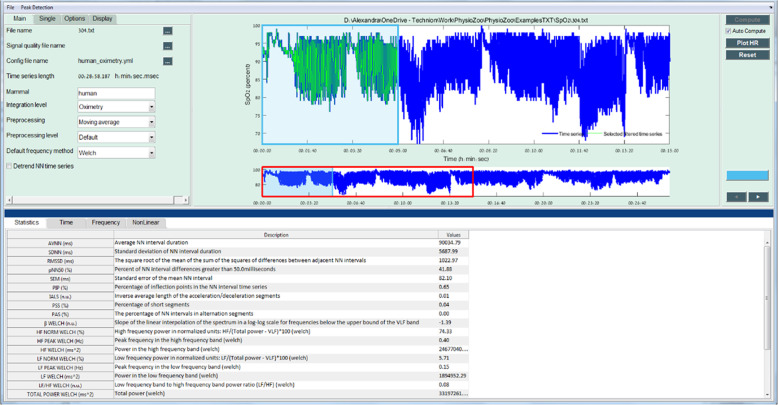
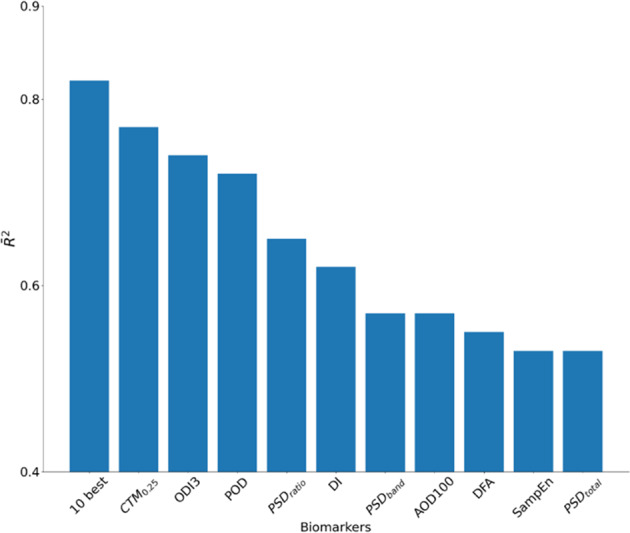
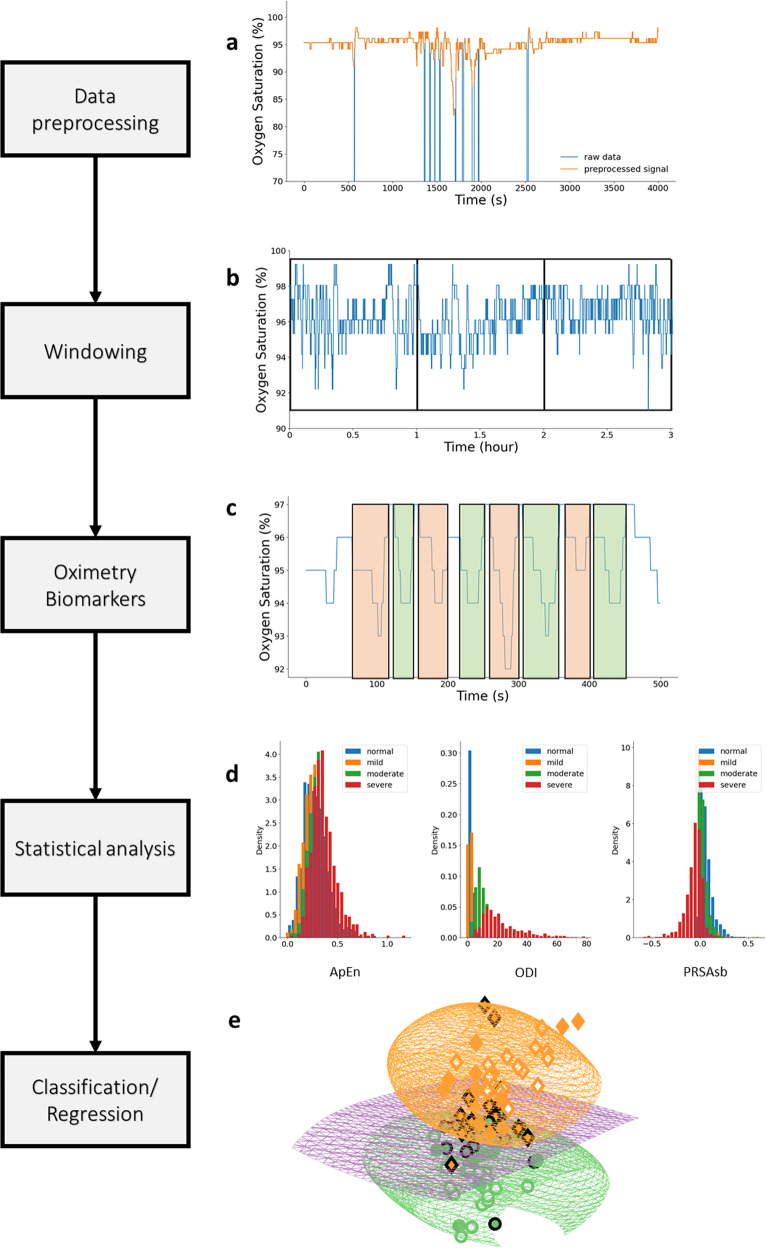
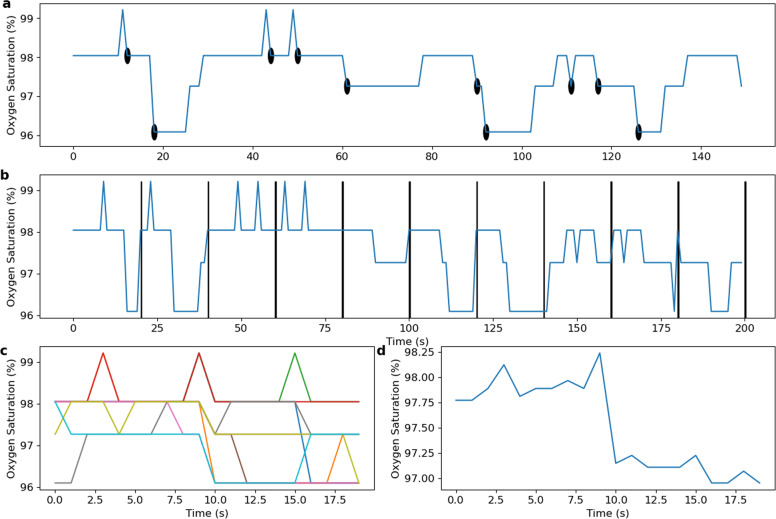
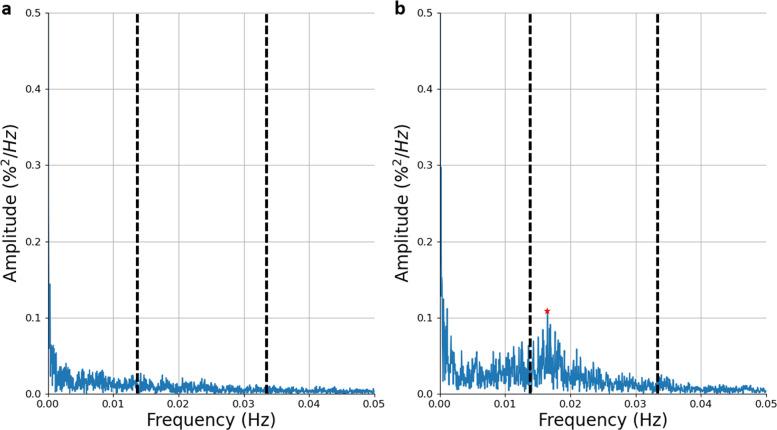
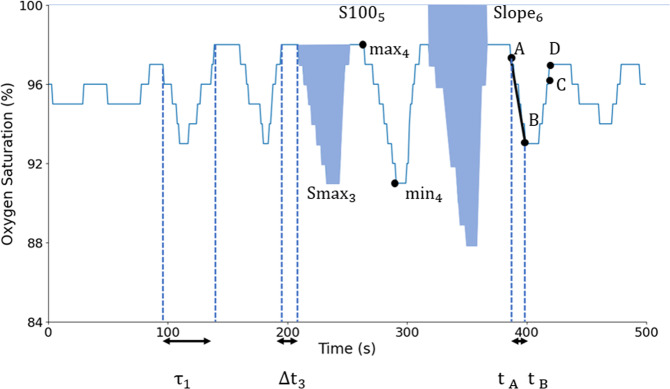
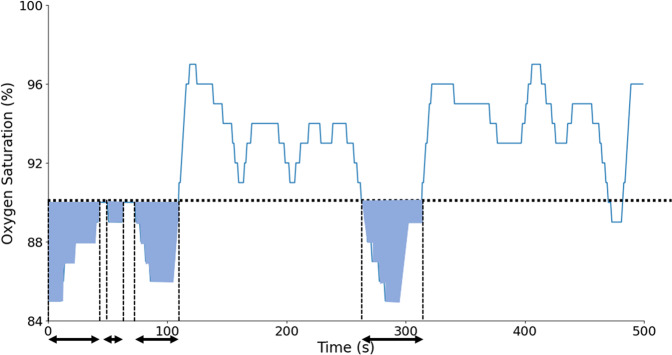
Pulse oximetry is routinely used to non-invasively monitor oxygen saturation levels. A low oxygen level in the blood means low oxygen in the tissues, which can ultimately lead to organ failure. Yet, contrary to heart rate variability measures, a field which has seen the development of stable standards and advanced toolboxes and software, no such standards and open tools exist for continuous oxygen saturation time series variability analysis. The primary objective of this research was to identify, implement and validate key digital oximetry biomarkers (OBMs) for the purpose of creating a standard and associated reference toolbox for continuous oximetry time series analysis. We review the sleep medicine literature to identify clinically relevant OBMs. We implement these biomarkers and demonstrate their clinical value within the context of obstructive sleep apnea (OSA) diagnosis on a total of n = 3806 individual polysomnography recordings totaling 26,686 h of continuous data. A total of 44 digital oximetry biomarkers were implemented. Reference ranges for each biomarker are provided for individuals with mild, moderate, and severe OSA and for non-OSA recordings. Linear regression analysis between biomarkers and the apnea hypopnea index (AHI) showed a high correlation, which reached $$\overline R ^2 = 0.82$$ R ¯ 2 = 0.82 . The resulting python OBM toolbox, denoted “pobm”, was contributed to the open software PhysioZoo ( physiozoo.org ). Studying the variability of the continuous oxygen saturation time series using pbom may provide information on the underlying physiological control systems and enhance our understanding of the manifestations and etiology of diseases, with emphasis on respiratory diseases.
Overview
The claims and statistics of this paper haven’t been checked yet.
Free: it reads the open-access text and checks the first 5 claims that cite a source we can check. Create a free account to check every claim.
Integrity signals
Registry
Cites
Statistics
Figures
Verification
Claims the paper makes
The claims and statistics of this paper haven’t been checked yet.
Free: it reads the open-access text and checks the first 5 claims that cite a source we can check. Create a free account to check every claim.
Claims other papers make about this one
Each is checked against this paper’s own text: does it say what the citing paper says it does?
The check wasn’t confident either way, so it gives no verdict — never disputed.
In the citing paper
“In the healthcare industry, bias in AI-based prediction models can be introduced due to incorrect data assessment, model limitations, small training size, less community participation, and other unseen factors [39].”
From Artificial intelligence bias in medical system designs: a systematic review (2023) · cites this paper as [39]
Experimental — accuracy not yet measured
Self-check
Percentages, sums and reported differences re-computed from the paper’s own numbers.
The self-check needs the paper’s full text.
Citations
Cites
Heart Rate Variability: Standards of Measurement, Physiological Interpretation, and Clinical Use
Electrophysiology, T. F. O. T. E. S. O. C. T. N. A. (1996) · Circulation · doi:10.1161/01.cir.93.5.1043 · Cited by 17,159
Heart rate variability: Standards of measurement, physiological interpretation, and clinical use
Malik, M., Bigger, J. T., Camm, A. J., Kleiger, R. E., Malliani, A., Moss, A. J., & Schwartz, P. J. (1996) · European Heart Journal · doi:10.1093/oxfordjournals.eurheartj.a014868 · Cited by 15,289
Goldberger, A. L., Amaral, L. A. N., Glass, L., Hausdorff, J. M., Ivanov, P. C., Mark, R. G., Mietus, J. E., Moody, G. B., Peng, C.-K., & Stanley, H. E. (2000) · Circulation · doi:10.1161/01.cir.101.23.e215 · Cited by 14,809
Welch, P. (1967) · IEEE Transactions on Audio and Electroacoustics · doi:10.1109/tau.1967.1161901 · Cited by 12,277
Physiological time-series analysis using approximate entropy and sample entropy
Richman, J. S., & Moorman, J. R. (2000) · American Journal of Physiology-Heart and Circulatory Physiology · doi:10.1152/ajpheart.2000.278.6.h2039 · Cited by 7,880
Approximate entropy as a measure of system complexity.
Pincus, S. M. (1991) · Proceedings of the National Academy of Sciences · doi:10.1073/pnas.88.6.2297 · Cited by 5,811 · cited 2×
“ApEn is a biomarker introduced in Pincus et al.(28), which aims to capture the irregularity in the signal, with higher values indicating higher irregularity.”
BackgroundBerry, R. B., Budhiraja, R., Gottlieb, D. J., Gozal, D., Iber, C., Kapur, V. K., Marcus, C. L., Mehra, R., Parthasarathy, S., Quan, S. F., et al. (2012) · Journal of Clinical Sleep Medicine · doi:10.5664/jcsm.2172 · Cited by 5,302
Quantification of scaling exponents and crossover phenomena in nonstationary heartbeat time series
Peng, C.-K., Havlin, S., Stanley, H. E., & Goldberger, A. L. (1995) · Chaos: An Interdisciplinary Journal of Nonlinear Science · doi:10.1063/1.166141 · Cited by 3,855 · cited 2×
“This biomarker was introduced by Peng et al.36 to identify crossover behavior in signals.”
MethodThe Triad of Sleep Apnea, Hypertension, and Chronic Kidney Disease: A Spectrum of Common Pathology
Aziz, F., & Chaudhary, K. (2017) · Cardiorenal Medicine · doi:10.1159/000450796 · Cited by 3,267
Kubios HRV–heart rate variability analysis software.
Tarvainen, M. P., Niskanen, J.-P., Lipponen, J. A., Ranta-aho, P. O., & Karjalainen, P. A. (2014) · Computer Methods and Programs in Biomedicine · doi:10.1016/j.cmpb.2013.07.024 · Cited by 2,720
Cited by
Items 101–127 of 127
Garg, V., Sahoo, A., & Saxena, V. (2021) · Soft Computing · doi:10.1007/s00500-021-06474-x · Cited by 1
RetractedCorona Virus and Entropy of Shannon at the Cardiac Cycle: A Mathematical Model
Nieto–Chaupis, H. (2022) · Lecture notes in networks and systems · doi:10.1007/978-3-031-10467-1_9 · Cited by 1
COVID-19 Predictive Models Based on Grammatical Evolution
Tsoulos, I. G., Stylios, C. D., & Charalampous, V. (2023) · SN Computer Science · doi:10.1007/s42979-022-01632-w · Cited by 2
Foundation Models Reveal Untapped Health Information in Human Polysomnographic Sleep DataPreprint
Coon, W. G., & Ogg, M. (2025) · medRxiv · doi:10.1101/2025.07.15.25331562 · Cited by 2
Amirghasemi, M., Arin, E., Frisk, R., & Perez, P. (2022) · Green energy and technology · doi:10.1007/978-3-030-96429-0_18
Surveying Search Terms for COVID-19 Disease Surveillance
Galido, A. P., & Ecleo, J. J. (2022) · Lecture notes in networks and systems · doi:10.1007/978-3-031-17601-2_31
Significance of Artificial Intelligence in COVID-19 Detection and Control
Shrivastava, A., & Dalla, V. K. (2022) · Algorithms for intelligent systems · doi:10.1007/978-981-19-2126-1_17
Introduction: Artificial Intelligence (AI) Systems for Oncology
Santinha, J., Verde, A. S. C., & Papanikolaou, N. K. (2022) · Springer eBooks · doi:10.1007/978-3-031-10090-1_1
The Clinical Research Environment
Payne, P. (2023) · Health informatics · doi:10.1007/978-3-031-27173-1_4
Super-Resolution Reconstruction Based on Adaptive Weight Adjustment
Zhao, X., & Cheng, W. (2023) · International Journal of Pattern Recognition and Artificial Intelligence · doi:10.1142/s0218001423340017
A machine learning approach to predict critical illness in Covid-19 patients
Ghumann, A., Sidhu, B. K., Gupta, G., & Bhathal, G. S. (2023) · AIP conference proceedings · doi:10.1063/5.0177536
Radical-attended and Pinyin-attended malicious long-tail keywords detection
Sun, G., & Zhang, Z. (2024) · Neural Computing and Applications · doi:10.1007/s00521-024-09871-z
Time will heal: a case of resolved central sleep apnea
Tu, X., Caples, S. M., & Gay, P. C. (2024) · Journal of Clinical Sleep Medicine · doi:10.5664/jcsm.11284
“5 Overnight oximetry used discriminately is useful to investigate sleep-disordered breathing in patients with heart failure.”
Predicting Mental and Psychomotor Delay in Very Pre-term Infants using Large Language ModelsPreprint
Huang, Z., Flory, M. J., Kittler, P. M., Phan, H. T. T., Demirci, G. M., Gordon, A. D., Parab, S. M., & Tsai, C.-L. (2025) · medRxiv · doi:10.1101/2025.07.31.25332524
Vurgun, U., Kaviyarasu, A., Hwang, S., Batugo, A., Thomas, S., Tang, B., Acevedo, A., Mitchell, O. J. L., & Mowery, D. L. (2025) · medRxiv · doi:10.1101/2025.08.04.25331524
Constructing multicancer risk cohorts using national data from medical helplines and secondary care
Modarres, H., Pipinis, D., Balasubramanian, D., Chaplin, R., Kynoch, S., Manandhar, A., Thandi, G., Cavilla, R., & Hirst-Williams, E. (2025) · npj Digital Medicine · doi:10.1038/s41746-025-01855-0
Nunes, T., Silva, H., & Gamboa, H. F. S. (2025) · Communications in computer and information science · doi:10.1007/978-3-031-96899-0_7
Artificial Intelligence and Deep Learning in Healthcare
Taneja, H., Arora, G., Agarwal, R., & Chatterjee, J. M. (2025) · Medical virology · doi:10.1007/978-981-96-8919-4_1
Multiple Diseases Prediction Using Machine Learning
Kaushik, S., Chandel, R. S., Gupta, I., & Sharma, K. (2025) · Lecture notes in networks and systems · doi:10.1007/978-3-032-03740-4_42
Anik, M. S. H., Rabi, N., Eliza, I. J., Hisham, M. H. H., Akil, A., Turza, A. M., Feroz, F., Morshed, F., Sakib, N., Noor, J., et al. (2025) · Scientific Reports · doi:10.1038/s41598-025-98700-x
Raza, S., Schwartz, B., & Rosella, L. C. (2022) · Figshare · doi:10.6084/m9.figshare.19976930
Sari, L. S., Karuniawaty, T. P., Wiguna, P. A., & Parwata, W. S. S. (2025) · Jurnal Penelitian Pendidikan IPA · doi:10.29303/jppipa.v11i9.12299
“This wide variance means one device could measure a normal saturation value for a given patient while the other indicates hypoxemia according to standard clinical definitions (Al Rajeh et al., 2021; Levy et al., 2021; Wong et al., 2021).”
Lee, S.-K., Maryani, D., Lee, Y. Z., Phuna, Z. X., Ng, E. S. C., Bustami, N. A., Thiagarajah, S., Tan, C. K., & Tan, E. S. S. (2026) · Discover Public Health · doi:10.1186/s12982-026-01901-6
Mamandipoor, B., Shen, I., Hsu, C.-N., & Gabriel, R. A. (2026) · Journal of the American Medical Informatics Association · doi:10.1093/jamia/ocag066
Pescada, S. S. P. V., & Teixeira, F. J. C. E. S. N. (2026) · Journal of Modelling in Management · doi:10.1108/jm2-06-2025-0320
Predicting Blood Oxygenation Using Diverse Data Sources
Zovko, K., Šerić, L., Perković, T., Dodig, I. P., Pecotić, R., Đogaš, Z., & Šolić, P. (2026) · International Conference on Smart and Sustainable Technologies (SpliTech) · doi:10.23919/splitech70133.2026.11685640
“Short horizon forecasting of SpO 2 could provide early warning of upcoming hypoxic events, enabling timely intervention before patients enter critically low desaturation ranges and supporting more personalized disease management [10]–[13].”
Abbott, H. E., Cutts, L., Stanley, B., Kansakar, S., Broughton, S. E., Scott, T., Davis, S., Clarke, S., Clark, T., Simpkins, C., et al. (2026) · Frontiers in Physiology · doi:10.3389/fphys.2026.1939874
Metadata
- Authors
- Levy, J., Álvarez, D., Rosenberg, A. A., Alexandrovich, A., del Campo, F., & Behar, J. A.
- Affiliations
- Technion – Israel Institute of Technology (IL)
- Universidad de Valladolid (ES)
- Corresponding author
- Behar, Joachim A.
- Venue
- npj Digital Medicine
- Published
- 2021-01-04
- Volume
- 4
- Issue
- 1
- Pages
- 1-1
- ISSN
- 2398-6352 (ISSN-L)
- PMC
- PMC7782845
- OpenAlex
- W3119755710
- Semantic Scholar
- 74a8fc043fe7a9a68428c874cb8210c4d7bb1d4f
- Cited by
- 125
- References
- 62
- Citations by year
- 2026: 9 · 2025: 24 · 2024: 11 · 2023: 33 · 2022: 35 · 2021: 13
- FWCI
- 14.45
- Type
- journal article
- Language
- en
- Open access
- gold
- doi.org
- Licence
- cc-by
- creativecommons.org/licenses/by/4.0 (tdm)
- creativecommons.org/licenses/by/4.0 (vor)
- Locations
- npj Digital Medicine (publishedVersion, cc-by)
- PubMed Central (publishedVersion, cc-by)
- PubMed (publishedVersion)
- Hispana (publishedVersion, cc-by-nc-nd)
- University of Valladolid Documentary Repository (University of Valladolid) (publishedVersion, cc-by-nc-nd)
- DOAJ (DOAJ: Directory of Open Access Journals) (submittedVersion, cc-by-sa)
- Funders
- Centro de Investigación Biomédica en Red en Bioingeniería, Biomateriales y Nanomedicina
- Intelligent Systems Center
- Instituto de Salud Carlos III
- Topics
- Health Sciences › Medicine › Physiology (medical) › Obstructive Sleep Apnea Research
- Physical Sciences › Engineering › Biomedical Engineering › Non-Invasive Vital Sign Monitoring
- Health Sciences › Medicine › Cardiology and Cardiovascular Medicine › Heart Rate Variability and Autonomic Control
- Keywords
- pulse oximetry, oxygen saturation, obstructive sleep apnea, respiratory function, apnea-hypopnea index, polysomnography, reference values, open-source software toolkit, sleep medicine
About these checks
Registry, retraction, Cites and statistics results are computed, not judged, with one exception: a printed reference that no index lists is read once by a model before it counts as a citation error. Claims are extracted by a model and kept only when their quote appears verbatim in the text; each cited source is then checked, with a model’s help, for whether it says what the claim relies on. Those verdicts can be wrong — read the claim’s quote and the cited source before relying on one.
Statistics and arithmetic are recomputed, not judged.
Confidence bands are shown only for fields calibrated on our annotated test set. None is calibrated yet, so no band is shown.
What counts as a claim ›How we measure confidence ›How we check this ›
Are you an author, or do you see a problem with this page? Request a review
Data sources
Bibliographic data: Semantic Scholar, OpenAlex, Crossref.
Contains information from the Semantic Scholar Academic Graph Datasets, made available under the ODC Attribution License (ODC-BY 1.0).
Semantic Scholar’s data is described in: Kinney, R., et al. (2023). The Semantic Scholar Open Data Platform. arXiv:2301.10140.
