

Digital oximetry biomarkers for assessing respiratory function: standards of measurement, physiological interpretation, and clinical use
Open accessThe DOI matches its Crossref record; 63 of the 63 references it cites were found in a registry or an index.
Abstract
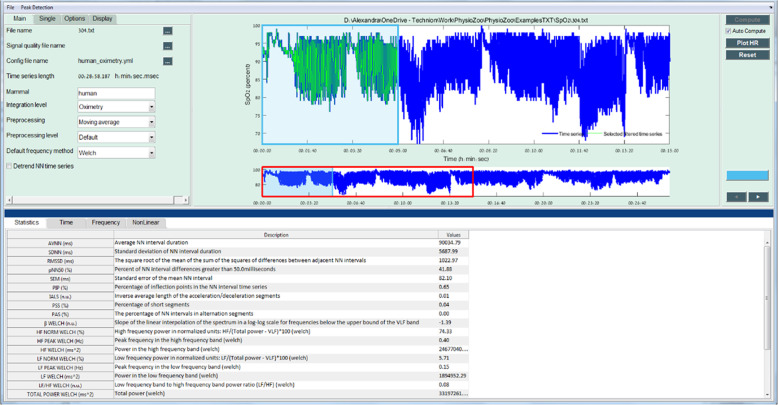
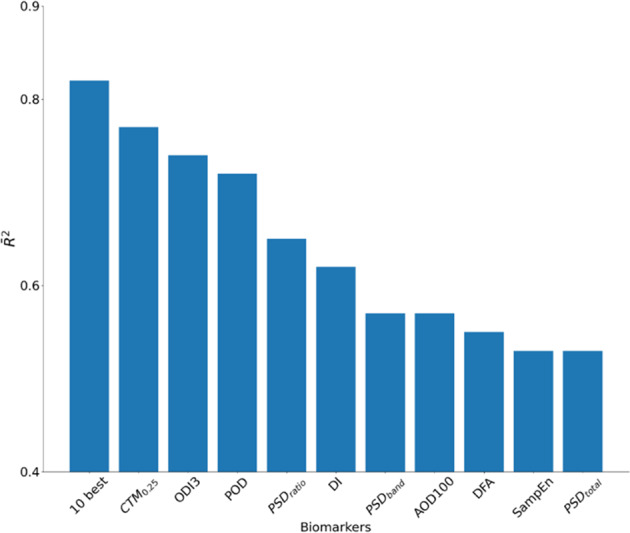
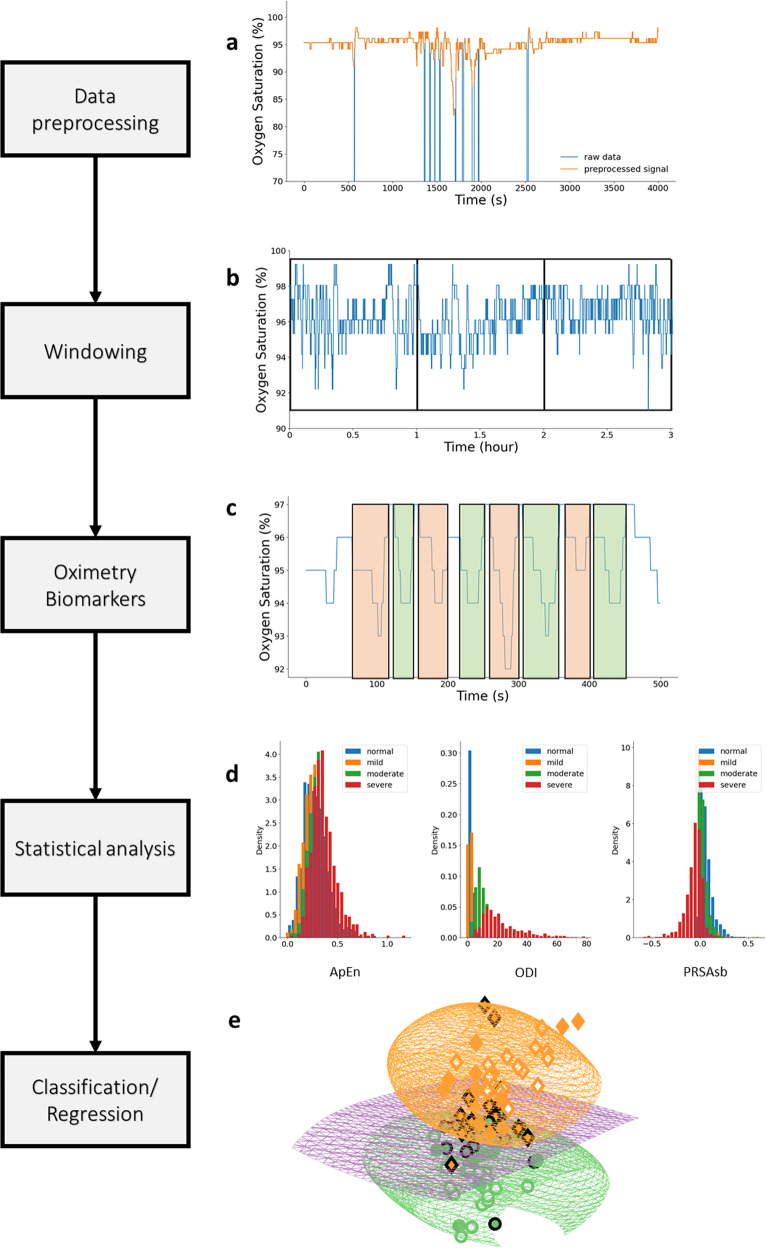
Pulse oximetry is routinely used to non-invasively monitor oxygen saturation levels. A low oxygen level in the blood means low oxygen in the tissues, which can ultimately lead to organ failure. Yet, contrary to heart rate variability measures, a field which has seen the development of stable standards and advanced toolboxes and software, no such standards and open tools exist for continuous oxygen saturation time series variability analysis. The primary objective of this research was to identify, implement and validate key digital oximetry biomarkers (OBMs) for the purpose of creating a standard and associated reference toolbox for continuous oximetry time series analysis. We review the sleep medicine literature to identify clinically relevant OBMs. We implement these biomarkers and demonstrate their clinical value within the context of obstructive sleep apnea (OSA) diagnosis on a total of n = 3806 individual polysomnography recordings totaling 26,686 h of continuous data. A total of 44 digital oximetry biomarkers were implemented. Reference ranges for each biomarker are provided for individuals with mild, moderate, and severe OSA and for non-OSA recordings. Linear regression analysis between biomarkers and the apnea hypopnea index (AHI) showed a high correlation, which reached $$\overline R ^2 = 0.82$$ R ¯ 2 = 0.82 . The resulting python OBM toolbox, denoted “pobm”, was contributed to the open software PhysioZoo ( physiozoo.org ). Studying the variability of the continuous oxygen saturation time series using pbom may provide information on the underlying physiological control systems and enhance our understanding of the manifestations and etiology of diseases, with emphasis on respiratory diseases.
Overview
The claims and statistics of this paper haven’t been checked yet.
Free: it reads the open-access text and checks the first 5 claims that cite a source we can check. Create a free account to check every claim.
Integrity signals
Registry
Cites
Statistics
Figures
Verification
Claims the paper makes
The claims and statistics of this paper haven’t been checked yet.
Free: it reads the open-access text and checks the first 5 claims that cite a source we can check. Create a free account to check every claim.
Claims other papers make about this one
Each is checked against this paper’s own text: does it say what the citing paper says it does?
The check wasn’t confident either way, so it gives no verdict — never disputed.
In the citing paper
“In the healthcare industry, bias in AI-based prediction models can be introduced due to incorrect data assessment, model limitations, small training size, less community participation, and other unseen factors [39].”
From Artificial intelligence bias in medical system designs: a systematic review (2023) · cites this paper as [39]
Experimental — accuracy not yet measured
Self-check
Percentages, sums and reported differences re-computed from the paper’s own numbers.
The self-check needs the paper’s full text.
Citations
Cites
Heart Rate Variability: Standards of Measurement, Physiological Interpretation, and Clinical Use
Electrophysiology, T. F. O. T. E. S. O. C. T. N. A. (1996) · Circulation · doi:10.1161/01.cir.93.5.1043 · Cited by 17,159
Heart rate variability: Standards of measurement, physiological interpretation, and clinical use
Malik, M., Bigger, J. T., Camm, A. J., Kleiger, R. E., Malliani, A., Moss, A. J., & Schwartz, P. J. (1996) · European Heart Journal · doi:10.1093/oxfordjournals.eurheartj.a014868 · Cited by 15,289
Goldberger, A. L., Amaral, L. A. N., Glass, L., Hausdorff, J. M., Ivanov, P. C., Mark, R. G., Mietus, J. E., Moody, G. B., Peng, C.-K., & Stanley, H. E. (2000) · Circulation · doi:10.1161/01.cir.101.23.e215 · Cited by 14,809
Welch, P. (1967) · IEEE Transactions on Audio and Electroacoustics · doi:10.1109/tau.1967.1161901 · Cited by 12,277
Physiological time-series analysis using approximate entropy and sample entropy
Richman, J. S., & Moorman, J. R. (2000) · American Journal of Physiology-Heart and Circulatory Physiology · doi:10.1152/ajpheart.2000.278.6.h2039 · Cited by 7,880
Approximate entropy as a measure of system complexity.
Pincus, S. M. (1991) · Proceedings of the National Academy of Sciences · doi:10.1073/pnas.88.6.2297 · Cited by 5,811 · cited 2×
“ApEn is a biomarker introduced in Pincus et al.(28), which aims to capture the irregularity in the signal, with higher values indicating higher irregularity.”
BackgroundBerry, R. B., Budhiraja, R., Gottlieb, D. J., Gozal, D., Iber, C., Kapur, V. K., Marcus, C. L., Mehra, R., Parthasarathy, S., Quan, S. F., et al. (2012) · Journal of Clinical Sleep Medicine · doi:10.5664/jcsm.2172 · Cited by 5,302
Quantification of scaling exponents and crossover phenomena in nonstationary heartbeat time series
Peng, C.-K., Havlin, S., Stanley, H. E., & Goldberger, A. L. (1995) · Chaos: An Interdisciplinary Journal of Nonlinear Science · doi:10.1063/1.166141 · Cited by 3,855 · cited 2×
“This biomarker was introduced by Peng et al.36 to identify crossover behavior in signals.”
MethodThe Triad of Sleep Apnea, Hypertension, and Chronic Kidney Disease: A Spectrum of Common Pathology
Aziz, F., & Chaudhary, K. (2017) · Cardiorenal Medicine · doi:10.1159/000450796 · Cited by 3,267
Kubios HRV–heart rate variability analysis software.
Tarvainen, M. P., Niskanen, J.-P., Lipponen, J. A., Ranta-aho, P. O., & Karjalainen, P. A. (2014) · Computer Methods and Programs in Biomedicine · doi:10.1016/j.cmpb.2013.07.024 · Cited by 2,720
On the Complexity of Finite Sequences
Lempel, A., & Ziv, J. (1976) · IEEE Transactions on Information Theory · doi:10.1109/tit.1976.1055501 · Cited by 2,717
The Sleep Heart Health Study: Design, Rationale, and Methods
(1997) · Sleep · doi:10.1093/sleep/20.12.1077 · Cited by 1,331
Obstructive sleep apnoea syndrome – an oxidative stress disorder
Lavie, L. (2003) · Sleep Medicine Reviews · doi:10.1053/smrv.2002.0261 · Cited by 993
The National Sleep Research Resource: towards a sleep data commons
Zhang, G.-Q., Cui, L., Mueller, R., Tao, S., Kim, M., Rueschman, M., Mariani, S., Mobley, D., & Redline, S. (2018) · Journal of the American Medical Informatics Association · doi:10.1093/jamia/ocy064 · Cited by 917
Azarbarzin, A., Sands, S. A., Stone, K. L., Taranto-Montemurro, L., Messineo, L., Terrill, P. I., Ancoli-Israel, S., Ensrud, K., Purcell, S., White, D. P., et al. (2019) · European Heart Journal · doi:10.1093/eurheartj/ehy624 · Cited by 893
What is physiologic complexity and how does it change with aging and disease?
Goldberger, A. L., Peng, C.-K., & Lipsitz, L. A. (2002) · Neurobiology of Aging · doi:10.1016/s0197-4580(01)00266-4 · Cited by 871
Science in Pictures: Chaos and Fractals in Human Physiology
Goldberger, A. L., Rigney, D. R., & West, B. J. (1990) · Scientific American · doi:10.1038/scientificamerican0290-42 · Cited by 803
Intermittent Hypoxemia and OSA
Dewan, N. A., Nieto, F. J., & Somers, V. K. (2015) · Chest · doi:10.1378/chest.14-0500 · Cited by 641
Methods for Obtaining and Analyzing Unattended Polysomnography Data for a Multicenter Study
Sleep Heart Health Research Group, Redline, S., Sanders, M. H., Lind, B. K., Quan, S. F., Iber, C., Gottlieb, D. J., Bonekat, W. H., Rapoport, D. M., Smith, P. L., et al. (1998) · Sleep · doi:10.1093/sleep/21.7.759 · Cited by 531
Penzel, T., Moody, G. B., Mark, R. G., Goldberger, A. L., & Peter, J. H. (2002) · Computers in Cardiology 2000. Vol.27 (Cat. 00CH37163) · doi:10.1109/cic.2000.898505 · Cited by 446
Corrigendum: Much More than a Cardiotonic Steroid: Modulation of Inflammation by Ouabain
Cavalcante-Silva, L. H. A., Lima, É. D. A., Carvalho, D. C. M., de Sales-Neto, J. M., Alves, A. K. D. A., Galvão, J. G. F. M., Silva, J. S. D. F. D., & Rodrigues-Mascarenhas, S. (2018) · Frontiers in Physiology · doi:10.3389/fphys.2018.00001 · Cited by 433
Scaling Up Scientific Discovery in Sleep Medicine: The National Sleep Research Resource
Dean, D. A., Goldberger, A. L., Mueller, R., Kim, M., Rueschman, M., Mobley, D., Sahoo, S. S., Jayapandian, C. P., Cui, L., Morrical, M. G., et al. (2016) · Sleep · doi:10.5665/sleep.5774 · Cited by 309
Real-time sleep apnea detection by classifier combination
Xie, B., & Minn, H. (2012) · IEEE Transactions on Information Technology in Biomedicine · doi:10.1109/titb.2012.2188299 · Cited by 294 · cited 2×
“ZeroCrossing (ZCx) is the number of zero-crossing points, used by Xie et al.(25), using the x% SpO2 level as baseline.”
MethodApnea Duration and Hypoxemia During REM Sleep in Patients with Obstructive Sleep Apnea
Findley, L. J., Wilhoit, S. C., & Suratt, P. M. (1985) · Chest · doi:10.1378/chest.87.4.432 · Cited by 258
Phase-rectified signal averaging detects quasi-periodicities in non-stationary data
Bauer, A., Kantelhardt, J. W., Bunde, A., Barthel, P., Schneider, R., Malik, M., & Schmidt, G. (2006) · Physica A: Statistical Mechanics and its Applications · doi:10.1016/j.physa.2005.08.080 · Cited by 235 · cited 2×
“PRSA is a signal processing technique introduced by Bauer et al.(38) to detect and quantify quasi-periodic oscillations in a noisy non-stationary signal.”
MethodA Review of Obstructive Sleep Apnea Detection Approaches
Mendonca, F., Mostafa, S. S., Ravelo-Garcia, A. G., Morgado-Dias, F., & Penzel, T. (2019) · IEEE Journal of Biomedical and Health Informatics · doi:10.1109/jbhi.2018.2823265 · Cited by 216
Sleep Disorders in Chronic Obstructive Pulmonary Disease: Etiology, Impact, and Management
Budhiraja, R., Siddiqi, T. A., & Quan, S. F. (2015) · Journal of Clinical Sleep Medicine · doi:10.5664/jcsm.4540 · Cited by 208
Nocturnal Oxyhemoglobin Desaturation in COPD Patients with Arterial Oxygen Tensions Above 60 mm Hg
Fletcher, E. C., Miller, J., Divine, G. W., Fletcher, J. G., & Miller, T. (1987) · Chest · doi:10.1378/chest.92.4.604 · Cited by 204
Prediction of the Apnea-Hypopnea Index From Overnight Pulse Oximetry *
Magalang, U. J., Dmochowski, J., Veeramachaneni, S., Draw, A., Mador, M. J., El-Solh, A., & Grant, B. J. B. (2003) · Chest · doi:10.1378/chest.124.5.1694 · Cited by 189 · cited 2×
“In Magalang et al.(27), the ΔI was the best predictor (r(2)= 0.”
BackgroundInfluentialApplying continuous chaotic modeling to cardiac signal analysis
Cohen, M. E., Hudson, D. L., & Deedwania, P. C. (1996) · IEEE Engineering in Medicine and Biology Magazine · doi:10.1109/51.537065 · Cited by 181 · cited 2×
“CTMρ is a non-linear method first proposed by Cohen et al.37, with the goal of assessing the degree of variability in cardiac physiological data.”
MethodOrrù, G., Storari, M., Scano, A., Piras, V., Taibi, R., & Viscuso, D. (2020) · PubMed · doi:10.26355/eurrev_202006_21685 · Cited by 167
Estimating the Entropy Rate of Spike Trains via Lempel-Ziv Complexity
Amigó, J. M., Szczepański, J., Wajnryb, E., & Sanchez-Vives, M. V. (2004) · Neural Computation · doi:10.1162/089976604322860677 · Cited by 160 · cited 2×
“It has been largely used in the domain of medicine, especially in the domain of biomedical signal analysis, such as in the work of Amigó et al.(34), who used it on electroencephalogram time series, or by Álvarez et al.”
MethodKulkas, A., Tiihonen, P., Julkunen, P., Mervaala, E., & Töyräs, J. (2013) · Medical & Biological Engineering & Computing · doi:10.1007/s11517-013-1039-4 · Cited by 154 · cited 4×
“In the work of Kulkas et al.(18), this biomarker appeared to have moderate correlation with AHI: r(2)∈ [0.”
MethodResultInfluentialBehar, J. A., Rosenberg, A. A., Weiser-Bitoun, I., Shemla, O., Alexandrovich, A., Konyukhov, E., & Yaniv, Y. (2018) · Frontiers in Physiology · doi:10.3389/fphys.2018.01390 · Cited by 118
Self-citationThe Value of Oxygen Desaturation Index for Diagnosing Obstructive Sleep Apnea: A Systematic Review
Rashid, N. H., Zaghi, S., Scapuccin, M., Camacho, M., Certal, V., & Capasso, R. (2021) · The Laryngoscope · doi:10.1002/lary.28663 · Cited by 115
Buekers, J., Theunis, J., De Boever, P., Vaes, A. W., Koopman, M., Janssen, E. V., Wouters, E. F., Spruit, M. A., & Aerts, J.-M. (2019) · JMIR mHealth and uHealth · doi:10.2196/12866 · Cited by 112
Hornero, R., Alvarez, D., Abasolo, D., del Campo, F., & Zamarron, C. (2007) · IEEE Transactions on Biomedical Engineering · doi:10.1109/tbme.2006.883821 · Cited by 111 · cited 2×
“This biomarker was first used in the context of OSA diagnosis from oximetry data, in a study by Hornero et al.(33), with m= 1, r= 0.”
MethodInfluentialSelf-citationZamarrón, C., Gudé, F., González‐Barcala, F. J., Rodriguez, J. R., & Romero, P. V. (2003) · CHEST Journal · doi:10.1378/chest.123.5.1567 · Cited by 107
Álvarez, D., Hornero, R., Abásolo, D., Campo, F. D., & Zamarrón, C. (2006) · Physiological Measurement · doi:10.1088/0967-3334/27/4/006 · Cited by 105 · cited 3×
“This biomarker was used in the study of Álvarez et al. 35 on a dataset composed of n= 187 patients, with ρ= 0.25 for the purpose of OSA diagnosis.”
MethodInfluentialSelf-citationPrediction of sleep‐disordered breathing by unattended overnight oximetry
OLSON, L. G., AMBROGETTI, A., & GYULAY, S. G. (1999) · Journal of Sleep Research · doi:10.1046/j.1365-2869.1999.00134.x · Cited by 76
Uddin, M. B., Chow, C. M., & Su, S. W. (2018) · Physiological Measurement · doi:10.1088/1361-6579/aaafb8 · Cited by 76
Automatic Screening of Sleep Apnea Patients Based on the SpO2 Signal
Deviaene, M., Testelmans, D., Buyse, B., Borzee, P., Van Huffel, S., & Varon, C. (2019) · IEEE Journal of Biomedical and Health Informatics · doi:10.1109/jbhi.2018.2817368 · Cited by 75 · cited 3×
“7 Mx Percentage of the signal at least x% below median oxygen saturation, by default x= 2, used by Deviaene et al.(22) %”
MethodInfluentialTerrill, P. I. (2020) · Respirology · doi:10.1111/resp.13635 · Cited by 75
Sleep Study and Oximetry Parameters for Predicting Postoperative Complications in Patients With OSA
Suen, C. M., Ryan, C. M., Mubashir, T., Ayas, N. T., Abrahamyan, L., Wong, J., Mokhlesi, B., & Chung, F. F. (2018) · CHEST Journal · doi:10.1016/j.chest.2018.09.030 · Cited by 70
Taha, B. H., Dempsey, J. A., Weber, S. M., Badr, M. S., Skatrud, J. B., Young, T. B., Jacques, A. J., & Seow, K. C. (1997) · Sleep · doi:10.1093/sleep/20.11.991 · Cited by 68
Does Oximetry Contribute to the Detection of Apneic Events?
Pépin, J., Levy, P. A., Lepaulle, B., Brambilla, C., & Guilleminault, C. (1991) · CHEST Journal · doi:10.1378/chest.99.5.1151 · Cited by 62 · cited 4×
“In their original work, Pepin et al.(26) used x= 12 s.”
MethodInfluentialOximetry spectral analysis in the diagnosis of obstructive sleep apnoea
ZAMARRÓN, C., ROMERO, P. V., RODRIGUEZ, J. R., & GUDE, F. (1999) · Clinical Science · doi:10.1042/cs0970467 · Cited by 61 · cited 3×
“Zamarrón et al.(45) assessed PSD biomarkers on a total of 250 subjects between the ages of 21 and 82 years and obtained a sensitivity of 78.”
BackgroundInfluentialReal-Time Automatic Apneic Event Detection Using Nocturnal Pulse Oximetry
Jung, D. W., Hwang, S. H., Cho, J. G., Choi, B. H., Baek, H. J., Lee, Y. J., Jeong, D.-U., & Park, K. S. (2018) · IEEE Transactions on Biomedical Engineering · doi:10.1109/tbme.2017.2715405 · Cited by 61 · cited 4×
“, building on the parent model and desaturation definition of Jung et al.(51).”
MethodInfluentialOximetry use in obstructive sleep apnea
del Campo, F., Crespo, A., Cerezo-Hernández, A., Gutiérrez-Tobal, G. C., Hornero, R., & Álvarez, D. (2018) · Expert Review of Respiratory Medicine · doi:10.1080/17476348.2018.1495563 · Cited by 49
Self-citationMaski, K. P., Pizza, F., Liu, S., Steinhart, E., Little, E., Colclasure, A., Behn, C. D., Vandi, S., Antelmi, E., Weller, E. A., et al. (2020) · SLEEP · doi:10.1093/sleep/zsaa066 · Cited by 49
Linz, D., Colling, S., Nußstein, W., Debl, K., Hohl, M., Fellner, C., Böhm, M., Maier, L. S., Hamer, O. W., Büchner, S., et al. (2018) · Sleep And Breathing · doi:10.1007/s11325-017-1616-0 · Cited by 40
Feasibility of Single Channel Oximetry for Mass Screening of Obstructive Sleep Apnea
Behar, J. A., Palmius, N., Li, Q., Garbuio, S., Rizzatti, F. P. G., Bittencourt, L., Tufik, S., & Clifford, G. D. (2019) · EClinicalMedicine · doi:10.1016/j.eclinm.2019.05.015 · Cited by 37
Self-citationWatanabe, E., Kiyono, K., Matsui, S., Somers, V. K., Sano, K., Hayano, J., Ichikawa, T., Kawai, M., Harada, M., & Ozaki, Y. (2017) · Journal of Cardiac Failure · doi:10.1016/j.cardfail.2016.09.004 · Cited by 34 · cited 8×
“It was used in the work of Watanabe et al.(54), along with the POD biomarker.”
BackgroundMethodInfluentialOximetry spectral analysis in the diagnosis of obstructive sleep apnoea
Zamarrón, C., Romero, P. V., RODRIGUEZ, J. R., et al. (1999) · Clinical Science · doi:10.1042/cs19980367 · Cited by 33
COVID-19: efficacy of prehospital pulse oximetry for early detection of silent hypoxemia
Quaresima, V., & Ferrari, M. (2020) · Critical Care · doi:10.1186/s13054-020-03185-x · Cited by 31
Kulkas, A., Duce, B., Leppänen, T., Hukins, C., & Töyräs, J. (2017) · Physiological Measurement · doi:10.1088/1361-6579/aa7b6f · Cited by 29 · cited 7×
“This has been suggested, for example, in the work of Kulkas et al.18, who showed, albeit on a very small population sample (n= 19), that additional oximetry biomarkers, i.e., duration and morphology related, enhance OSA phenotyping.”
InfluentialBücker, L., Schnakenberg, P., Karyotaki, E., Moritz, S., & Westermann, S. (2019) · Journal of Medical Internet Research · doi:10.2196/14240 · Cited by 27
Terrill, P. I., Dakin, C., Edwards, B. A., Wilson, S. J., & MacLean, J. E. (2018) · Pediatric Pulmonology · doi:10.1002/ppul.23987 · Cited by 20
Behar, J. A., Palmius, N., Zacharie, S., Chocron, A., Penzel, T., Bittencourt, L., & Tufik, S. (2020) · Physiological Measurement · doi:10.1088/1361-6579/ab8856 · Cited by 20
Self-citationPulse Oximetry Markers for Cardiovascular Disease in Sleep Apnea
Deviaene, M., Borzée, P., Buyse, B., Testelmans, D., Huffel, S. V., & Varon, C. (2019) · Computing in cardiology · doi:10.22489/cinc.2019.205 · Cited by 13
Benchmarking heart rate variability toolboxes
Vest, A. N., Li, Q., Liu, C., Nemati, S., Shah, A. J., & Clifford, G. D. (2017) · Journal of Electrocardiology · doi:10.1016/j.jelectrocard.2017.08.006 · Cited by 10
From sleep medicine to medicine during sleep: a new paradigm
Behar, J. A. (2019) · SLEEP · doi:10.1093/sleep/zsz279 · Cited by 7
Self-citationSleep related O2 desaturation in COPD patients with normoxaemia and mild hypoxyaemia.
Resta, O., Foschino-Barbaro, M. P., Talamo, S., Nocerino, M. C., Stefano, A. D., & Corvaglia, G. (1998) · PubMed · Cited by 4
Cited by
Federated Learning and Differential Privacy for Medical Image Analysis
Adnan, M., Kalra, S., Cresswell, J. C., Taylor, G. W., & Tizhoosh, H. (2021) · doi:10.21203/rs.3.rs-1005694/v1 · Cited by 464
The 2023 wearable photoplethysmography roadmap
Charlton, P. H., Allen, J., Bailón, R., Baker, S., Behar, J. A., Chen, F., Clifford, G. D., Clifton, D. A., Davies, H. J., Ding, C., et al. (2023) · Physiological Measurement · doi:10.1088/1361-6579/acead2 · Cited by 187
Self-citationZhang, H., & Shafiq, M. O. (2024) · Journal Of Big Data · doi:10.1186/s40537-023-00842-0 · Cited by 219
Multilevel Determinants of Digital Health Equity: A Literature Synthesis to Advance the Field
Lyles, C. R., Nguyen, O. K., Khoong, E. C., Aguilera, A., & Sarkar, U. (2023) · Annual Review of Public Health · doi:10.1146/annurev-publhealth-071521-023913 · Cited by 137
Vishwakarma, L. P., Singh, R. K., Mishra, R., & Kumari, A. (2023) · International Journal of Production Research · doi:10.1080/00207543.2023.2188101 · Cited by 143
Metadata
- Authors
- Levy, J., Álvarez, D., Rosenberg, A. A., Alexandrovich, A., del Campo, F., & Behar, J. A.
- Affiliations
- Technion – Israel Institute of Technology (IL)
- Universidad de Valladolid (ES)
- Corresponding author
- Behar, Joachim A.
- Venue
- npj Digital Medicine
- Published
- 2021-01-04
- Volume
- 4
- Issue
- 1
- Pages
- 1-1
- ISSN
- 2398-6352 (ISSN-L)
- PMC
- PMC7782845
- OpenAlex
- W3119755710
- Cited by
- 125
- References
- 62
- Citations by year
- 2026: 9 · 2025: 24 · 2024: 11 · 2023: 33 · 2022: 35 · 2021: 13
- FWCI
- 14.45
- Type
- journal article
- Language
- en
- Open access
- gold
- doi.org
- Licence
- cc-by
- creativecommons.org/licenses/by/4.0 (tdm)
- creativecommons.org/licenses/by/4.0 (vor)
- Locations
- npj Digital Medicine (publishedVersion, cc-by)
- PubMed Central (publishedVersion, cc-by)
- PubMed (publishedVersion)
- Hispana (publishedVersion, cc-by-nc-nd)
- University of Valladolid Documentary Repository (University of Valladolid) (publishedVersion, cc-by-nc-nd)
- DOAJ (DOAJ: Directory of Open Access Journals) (submittedVersion, cc-by-sa)
- Funders
- Centro de Investigación Biomédica en Red en Bioingeniería, Biomateriales y Nanomedicina
- Intelligent Systems Center
- Instituto de Salud Carlos III
- Topics
- Health Sciences › Medicine › Physiology (medical) › Obstructive Sleep Apnea Research
- Physical Sciences › Engineering › Biomedical Engineering › Non-Invasive Vital Sign Monitoring
- Health Sciences › Medicine › Cardiology and Cardiovascular Medicine › Heart Rate Variability and Autonomic Control
- Keywords
- pulse oximetry, oxygen saturation, obstructive sleep apnea, respiratory function, apnea-hypopnea index, polysomnography, reference values, open-source software toolkit, sleep medicine
About these checks
Registry, retraction, Cites and statistics results are computed, not judged, with one exception: a printed reference that no index lists is read once by a model before it counts as a citation error. Claims are extracted by a model and kept only when their quote appears verbatim in the text; each cited source is then checked, with a model’s help, for whether it says what the claim relies on. Those verdicts can be wrong — read the claim’s quote and the cited source before relying on one.
Statistics and arithmetic are recomputed, not judged.
Confidence bands are shown only for fields calibrated on our annotated test set. None is calibrated yet, so no band is shown.
What counts as a claim ›How we measure confidence ›How we check this ›
Are you an author, or do you see a problem with this page? Request a review
Data sources
Bibliographic data: Semantic Scholar, OpenAlex, Crossref.
Contains information from the Semantic Scholar Academic Graph Datasets, made available under the ODC Attribution License (ODC-BY 1.0).
Semantic Scholar’s data is described in: Kinney, R., et al. (2023). The Semantic Scholar Open Data Platform. arXiv:2301.10140.
