

Impact of a deep learning assistant on the histopathologic classification of liver cancer
Open accessThe DOI matches its Crossref record; 35 of the 35 references it cites were found in a registry or an index.
Abstract
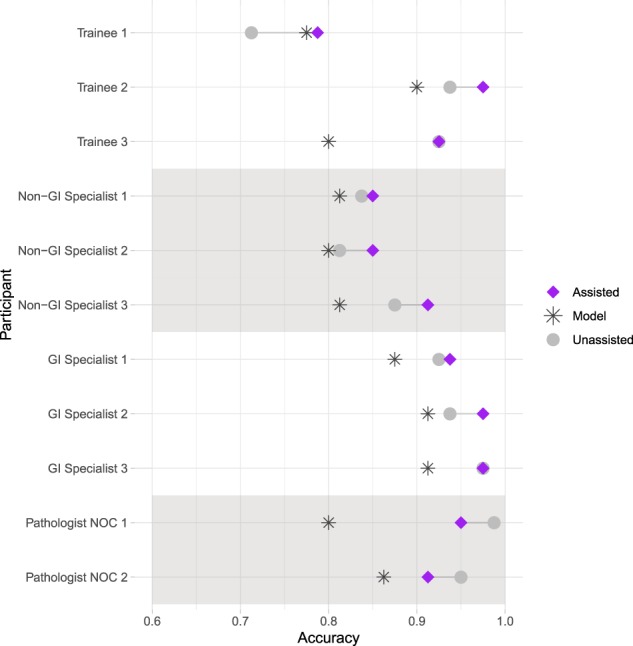
Artificial intelligence (AI) algorithms continue to rival human performance on a variety of clinical tasks, while their actual impact on human diagnosticians, when incorporated into clinical workflows, remains relatively unexplored. In this study, we developed a deep learning-based assistant to help pathologists differentiate between two subtypes of primary liver cancer, hepatocellular carcinoma and cholangiocarcinoma, on hematoxylin and eosin-stained whole-slide images (WSI), and evaluated its effect on the diagnostic performance of 11 pathologists with varying levels of expertise. Our model achieved accuracies of 0.885 on a validation set of 26 WSI, and 0.842 on an independent test set of 80 WSI. Although use of the assistant did not change the mean accuracy of the 11 pathologists (p = 0.184, OR = 1.281), it significantly improved the accuracy (p = 0.045, OR = 1.499) of a subset of nine pathologists who fell within well-defined experience levels (GI subspecialists, non-GI subspecialists, and trainees). In the assisted state, model accuracy significantly impacted the diagnostic decisions of all 11 pathologists. As expected, when the model’s prediction was correct, assistance significantly improved accuracy (p = 0.000, OR = 4.289), whereas when the model’s prediction was incorrect, assistance significantly decreased accuracy (p = 0.000, OR = 0.253), with both effects holding across all pathologist experience levels and case difficulty levels. Our results highlight the challenges of translating AI models into the clinical setting, and emphasize the importance of taking into account potential unintended negative consequences of model assistance when designing and testing medical AI-assistance tools.
Overview
The claims and statistics of this paper haven’t been checked yet.
Free: it reads the open-access text and checks the first 5 claims that cite a source we can check. Create a free account to check every claim.
Integrity signals
Registry
Cites
Statistics
Figures
Verification
Claims the paper makes
The claims and statistics of this paper haven’t been checked yet.
Free: it reads the open-access text and checks the first 5 claims that cite a source we can check. Create a free account to check every claim.
Claims other papers make about this one
Each is checked against this paper’s own text: does it say what the citing paper says it does?
The source backs part of the claim, not all of it — or backs it for a different population, condition or comparison.
In the citing paper
“An interesting observation is that the type of explanation matters when it comes to biasing the end user.”
From AI pitfalls and what not to do: mitigating bias in AI (2023) · cites this paper as [62]
Experimental — accuracy not yet measuredThe source backs part of the claim, not all of it — or backs it for a different population, condition or comparison.
In the citing paper
“Bias mitigation is especially important as we understand human–machine partnership, with early findings showing worsening performance for experts when presented with biased model outputs.”
From AI pitfalls and what not to do: mitigating bias in AI (2023) · cites this paper as [62]
Experimental — accuracy not yet measuredThe source backs part of the claim, not all of it — or backs it for a different population, condition or comparison.
In the citing paper
“If physicians do not trust the technology, they will not use it, but blind trust in the technology can lead to medical errors8–11.”
From Do as AI say: susceptibility in deployment of clinical decision-aids (2021) · cites this paper as [10]
Experimental — accuracy not yet measuredThe cited source says what the claim attributes to it.
In the citing paper
“Using the XAI techniques to assist the clinician can help to produce better diagnosis than the model or clinician alone [204,212,233,234].”
From Survey of explainable artificial intelligence techniques for biomedical imaging with deep neural networks (2023) · cites this paper as [233]
In the citing paper
“For example, the use of a machine learning algorithm by pathologists to differentiate different liver cancer types found that the pathologist accuracy did not improve when the model’s prediction was correct; however, the pathologist performance worsened when the model’s prediction was incorrect. 62”
From AI pitfalls and what not to do: mitigating bias in AI (2023) · cites this paper as [62]
Self-check
Percentages, sums and reported differences re-computed from the paper’s own numbers.
The self-check needs the paper’s full text.
Citations
Cites
Fitting Linear Mixed-Effects Models Using lme4
Bates, D., Mächler, M., Bolker, B., & Walker, S. (2015) · Journal of Statistical Software · doi:10.18637/jss.v067.i01 · Cited by 86,835
LeCun, Y., Bengio, Y., & Hinton, G. (2015) · Nature · doi:10.1038/nature14539 · Cited by 84,126
Densely Connected Convolutional Networks
Huang, G., Liu, Z., Van Der Maaten, L., & Weinberger, K. Q. (2017) · 2017 IEEE Conference on Computer Vision and Pattern Recognition (CVPR) · doi:10.1109/cvpr.2017.243 · Cited by 48,566
Dermatologist-level classification of skin cancer with deep neural networks
Esteva, A., Kuprel, B., Novoa, R. A., Ko, J., Swetter, S. M., Blau, H. M., & Thrun, S. (2017) · Nature · doi:10.1038/nature21056 · Cited by 14,362
Learning Deep Features for Discriminative Localization
Zhou, B., Khosla, A., Lapedriza, A., Oliva, A., & Torralba, A. (2016) · 2016 IEEE Conference on Computer Vision and Pattern Recognition (CVPR) · doi:10.1109/cvpr.2016.319 · Cited by 11,428 · cited 1×
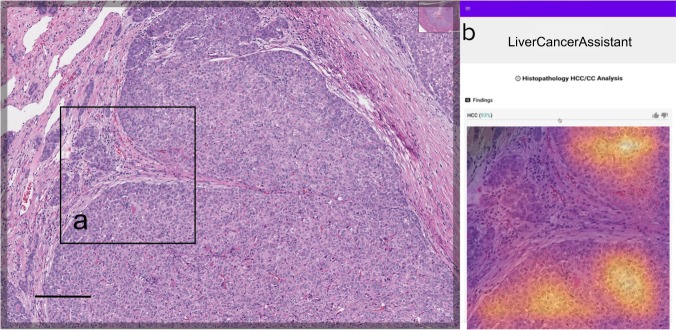
“…on image classi fi cation tasks, 26 was incorporated into a simple prototype diagnostic support tool (see Methods) consisting of a web interface where pathologists could upload H&E image patches and receive the model ’ s predictions and explanatory class activation maps 27 (CAMs) in real time (Fig.”
MethodBuilding Predictive Models in R Using the caret Package
Kuhn, M. (2008) · Journal of Statistical Software · doi:10.18637/jss.v028.i05 · Cited by 8,863
Probable Inference, the Law of Succession, and Statistical Inference
Wilson, E. B. (1927) · Journal of the American Statistical Association · doi:10.1080/01621459.1927.10502953 · Cited by 4,476 · cited 1×
“Confidence intervals were calculated using the Wilson score method.(32) Sensitivity and specificity for each pathologist was generated using the caret package in R.”
MethodEhteshami Bejnordi, B., Veta, M., Johannes van Diest, P., van Ginneken, B., Karssemeijer, N., Litjens, G., van der Laak, J. A. W. M., and the CAMELYON16 Consortium, Hermsen, M., Manson, Q. F., et al. (2017) · JAMA · doi:10.1001/jama.2017.14585 · Cited by 3,293
Hannun, A. Y., Rajpurkar, P., Haghpanahi, M., Tison, G. H., Bourn, C., Turakhia, M. P., & Ng, A. Y. (2019) · Nature Medicine · doi:10.1038/s41591-018-0268-3 · Cited by 3,148
Self-citationCoudray, N., Ocampo, P. S., Sakellaropoulos, T., Narula, N., Snuderl, M., Fenyö, D., Moreira, A. L., Razavian, N., & Tsirigos, A. (2018) · Nature Medicine · doi:10.1038/s41591-018-0177-5 · Cited by 2,930 · cited 1×
“To date, AI algorithms have achieved high accuracy on some tumor classification tasks.(17,18) However, much of the work in this area has focused on the retrospective evaluation of model performance on groundtruth-labeled validation datasets.”
MethodToward a Shared Vision for Cancer Genomic Data
Grossman, R. L., Heath, A. P., Ferretti, V., Varmus, H. E., Lowy, D. R., Kibbe, W. A., & Staudt, L. M. (2016) · New England Journal of Medicine · doi:10.1056/nejmp1607591 · Cited by 1,680 · cited 1×
“24 The WSI were randomly partitioned into training (20,000 patches from 20 WSI), tuning (2400 patches from 24 WSI) and validation (2600 patches from 26 WSI) datasets, maintaining a 50:50 distribution of HCC and CC examples within each dataset.”
MethodRajpurkar, P., Irvin, J., Ball, R. L., Zhu, K., Yang, B., Mehta, H., Duan, T., Ding, D., Bagul, A., Langlotz, C. P., et al. (2018) · PLOS Medicine · doi:10.1371/journal.pmed.1002686 · Cited by 1,449
Self-citationAmin, M. B., Edge, S. B., Greene, F. L., & American Joint Committee on Cancer (n.d.) · Cited by 1,365
Does automation bias decision-making?
SKITKA, L. J., MOSIER, K. L., & BURDICK, M. (1999) · International Journal of Human-Computer Studies · doi:10.1006/ijhc.1999.0252 · Cited by 694 · cited 1×
“29 As pathology specimen volumes continue to increase world-wide due to population growth, population aging, and the increasing prevalence and incidence of cancer and other diseases, 30,31 there will be a greater need for novel tools to mitigate the adverse effects of a relative pathologist…”
BackgroundPantanowitz, L., Sinard, J. H., Henricks, W. H., Fatheree, L. A., Carter, A. B., Contis, L., Beckwith, B. A., Evans, A. J., Lal, A., & Parwani, A. V. (2013) · Archives of Pathology and Laboratory Medicine · doi:10.5858/arpa.2013-0093-cp · Cited by 620 · cited 1×
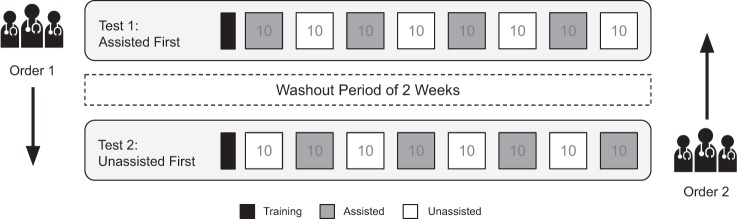
“…consensus recommendations from the College of American Pathologists for avoiding short-term memory bias in digital pathologic validation studies, 28 the pathologists interpreted the same set of 80 WSI with the assistance status reversed; the WSI that were reviewed with assistance during the fi…”
BackgroundSteiner, D. F., MacDonald, R., Liu, Y., Truszkowski, P., Hipp, J. D., Gammage, C., Thng, F., Peng, L., & Stumpe, M. C. (2018) · American Journal of Surgical Pathology · doi:10.1097/pas.0000000000001151 · Cited by 489 · cited 2×
“19 Furthermore, most recent applications of AI assistance to pathology have focused on models which run on whole-slide images (WSI) in a completely automated fashion, independent of human input, prior to the post-analytical stage.”
BackgroundMethodAccess to pathology and laboratory medicine services: a crucial gap
Wilson, M. L., Fleming, K. A., Kuti, M. A., Looi, L. M., Lago, N., & Ru, K. (2018) · The Lancet · doi:10.1016/s0140-6736(18)30458-6 · Cited by 444
Alom, M. Z., Yakopcic, C., Nasrin, M. S., Taha, T. M., & Asari, V. K. (2019) · Journal of Digital Imaging · doi:10.1007/s10278-019-00182-7 · Cited by 350 · cited 1×
“To date, AI algorithms have achieved high accuracy on some tumor classification tasks.(17,18) However, much of the work in this area has focused on the retrospective evaluation of model performance on groundtruth-labeled validation datasets.”
MethodLau, S. K., Prakash, S., Geller, S. A., & Alsabeh, R. (2002) · Human Pathology · doi:10.1053/hupa.2002.130104 · Cited by 288 · cited 1×
“16 To date, AI algorithms have achieved high accuracy on some tumor classi fi cation tasks.”
MethodThunnissen, E., Beasley, M. B., Borczuk, A. C., Brambilla, E., Chirieac, L. R., Dacic, S., Flieder, D., Gazdar, A., Geisinger, K., Hasleton, P., et al. (2012) · Modern Pathology · doi:10.1038/modpathol.2012.106 · Cited by 237
Robboy, S. J., Weintraub, S., Horvath, A. E., Jensen, B. W., Alexander, C. B., Fody, E. P., Crawford, J. M., Clark, J. R., Cantor-Weinberg, J., Joshi, M. G., et al. (2013) · Archives of Pathology & Laboratory Medicine · doi:10.5858/arpa.2013-0200-oa · Cited by 219
Histological classification of liver and intrahepatic bile duct cancers in SEER registries.
Altekruse, S. F., Devesa, S. S., Dickie, L. A., McGlynn, K. A., & Kleiner, D. E. (2011) · PubMed · Cited by 141
Improving the management of soft tissue sarcoma
Rydholm, A. (1998) · BMJ · doi:10.1136/bmj.317.7151.93 · Cited by 85 · cited 1×
“7,8 Such situations are commonly encountered, for example, during after-hours intraoperative consultations, when pathologists are confronted with a diverse set of cases across a range of specimen subtypes.”
BackgroundReproducibility and reliability of tumor grading in urological neoplasms
Engers, R. (2007) · World Journal of Urology · doi:10.1007/s00345-007-0209-0 · Cited by 65
Lei, J.-Y., Bourne, P. A., diSant’Agnese, P. A., & Huang, J. (2006) · American Journal of Clinical Pathology · doi:10.1309/59tn-efal-ul5w-j94m · Cited by 57
Lei, J.-Y., Bourne, P. A., diSant’Agnese, P. A., et al. (2006) · American Journal of Clinical Pathology · doi:10.1309/59tnefalul5wj94m · Cited by 38
Subspecialization in Community Pathology Practice
Sarewitz, S. J. (2014) · Archives of Pathology & Laboratory Medicine · doi:10.5858/arpa.2014-0084-ed · Cited by 19
The pathologist in the 21st century—generalist or specialist?
Kirkham, N. (2000) · Journal of Clinical Pathology · doi:10.1136/jcp.53.1.7 · Cited by 17
Transition to Subspecialty Sign-Out at an Academic Institution and Its Advantages
Conant, J. L., Gibson, P. C., Bunn, J. Y., & Ambaye, A. B. (2017) · Academic Pathology · doi:10.1177/2374289517714767 · Cited by 17
The need for specialist review of pathology in paediatric cancer
Parkes, S. E., Muir, K. R., Cameron, A., Raafat, F., Stevens, M., Morland, B., Barber, P. C., Carey, M., Fox, H., Jones, E., et al. (1997) · British Journal of Cancer · doi:10.1038/bjc.1997.199 · Cited by 16 · cited 1×
“7,8 Such situations are commonly encountered, for example, during after-hours intraoperative consultations, when pathologists are confronted with a diverse set of cases across a range of specimen subtypes.”
BackgroundSelf-citationLiu, Y., Kessler, M., Zander, D. S., & Karamchandani, D. M. (2016) · Annals of Diagnostic Pathology · doi:10.1016/j.anndiagpath.2016.07.007 · Cited by 14
Is there still a need for the general surgical pathologist?
Watts, J. C. (1996) · PubMed · Cited by 12
Subspecialisation and despecialisation in anatomical pathology
Heatley, M. K. (2010) · Journal of Clinical Pathology · doi:10.1136/jcp.2010.079640 · Cited by 11
Hass, H. G., Vogel, U. F., Scheurlen, M., & Jobst, J. (2017) · Gut and Liver · doi:10.5009/gnl17277 · Cited by 7 · cited 6×
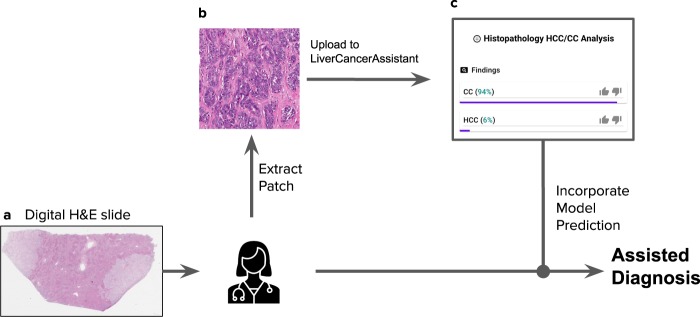
“…example, orthotopic liver transplantation is a widely accepted treatment for patients with HCC, but is often contraindicated in patients with CC. 23 The diagnostic assistant presented in this work consists of a cloud-deployed AI model and a browser-based interface, where pathologists can…”
BackgroundInfluentialInterobserver variation in classifying lymphomas among hematopathologists
Pongpruttipan, T., Sukpanichnant, S., Assanasen, T., Bhoopat, L., Kayasut, K., Kanoksil, W., & Wannakrairot, P. (2014) · Diagnostic Pathology · doi:10.1186/s13000-014-0162-3 · Cited by 6
Cited by
Rajpurkar, P., Chen, E., Banerjee, O., & Topol, E. J. (2022) · Nature Medicine · doi:10.1038/s41591-021-01614-0 · Cited by 3,212
“For instance, AI assistance has some-times been shown to improve clinical experts’ sensitivity while lowering their specificity 8,86 , and some studies, both prospective and retrospective, have found that combined AI–human performance could not surpass the performance of AI alone 90,91 .”
BackgroundSelf-citationLiu, X., Cruz Rivera, S., Moher, D., Calvert, M. J., Denniston, A. K., The SPIRIT-AI and CONSORT-AI Working Group, SPIRIT-AI and CONSORT-AI Steering Group, Chan, A.-W., Darzi, A., Holmes, C., et al. (2020) · Nature Medicine · doi:10.1038/s41591-020-1034-x · Cited by 1,421
Explainable artificial intelligence (XAI) in deep learning-based medical image analysis
van der Velden, B. H. M., Kuijf, H. J., Gilhuijs, K. G. A., & Viergever, M. A. (2022) · Medical Image Analysis · doi:10.1016/j.media.2022.102470 · Cited by 1,328
Deep learning in histopathology: the path to the clinic
van der Laak, J., Litjens, G., & Ciompi, F. (2021) · Nature Medicine · doi:10.1038/s41591-021-01343-4 · Cited by 902
Evaluation and mitigation of the limitations of large language models in clinical decision-making
Hager, P., Jungmann, F., Holland, R., Bhagat, K., Hubrecht, I., Knauer, M., Vielhauer, J., Makowski, M., Braren, R., Kaissis, G., et al. (2024) · Nature Medicine · doi:10.1038/s41591-024-03097-1 · Cited by 798
Metadata
- Authors
- Kiani, A., Uyumazturk, B., Rajpurkar, P., Wang, A., Gao, R., Jones, E., Yu, Y., Langlotz, C. P., Ball, R. L., Montine, T. J., Martin, B. A., Berry, G. J., Ozawa, M. G., Hazard, F. K., Brown, R. A., Chen, S. B., Wood, M., Allard, L. S., Ylagan, L., Ng, A. Y., & Shen, J.
- Affiliations
- Stanford University (US)
- Stanford Medicine (US)
- Corresponding author
- Ng, Andrew Y.
- Shen, Jeanne
- ORCID
- Venue
- npj Digital Medicine
- Published
- 2020-02-26
- Volume
- 3
- Issue
- 1
- Pages
- 23-23
- ISSN
- 2398-6352 (ISSN-L)
- PMC
- PMC7044422
- OpenAlex
- W3007464329
- Cited by
- 325
- References
- 34
- Citations by year
- 2026: 41 · 2025: 64 · 2024: 62 · 2023: 55 · 2022: 40 · 2021: 38 · 2020: 25
- FWCI
- 15.53
- Type
- journal article
- Language
- en
- Open access
- gold
- doi.org
- Licence
- cc-by
- creativecommons.org/licenses/by/4.0 (tdm)
- creativecommons.org/licenses/by/4.0 (vor)
- Locations
- npj Digital Medicine (publishedVersion, cc-by)
- Europe PMC (PubMed Central) (publishedVersion, cc-by)
- PubMed Central (publishedVersion, cc-by)
- PubMed (publishedVersion)
- DOAJ (DOAJ: Directory of Open Access Journals) (submittedVersion, cc-by-sa)
- Topics
- Physical Sciences › Computer Science › Artificial Intelligence › AI in cancer detection
- Health Sciences › Medicine › Health Informatics › Artificial Intelligence in Healthcare and Education
- Health Sciences › Medicine › Radiology, Nuclear Medicine and Imaging › Radiomics and Machine Learning in Medical Imaging
- Keywords
- liver cancer, hepatocellular carcinoma, cholangiocarcinoma, histological classification, whole slide images, clinical implementation of AI, H&E staining
About these checks
Registry, retraction, Cites and statistics results are computed, not judged, with one exception: a printed reference that no index lists is read once by a model before it counts as a citation error. Claims are extracted by a model and kept only when their quote appears verbatim in the text; each cited source is then checked, with a model’s help, for whether it says what the claim relies on. Those verdicts can be wrong — read the claim’s quote and the cited source before relying on one.
Statistics and arithmetic are recomputed, not judged.
Confidence bands are shown only for fields calibrated on our annotated test set. None is calibrated yet, so no band is shown.
What counts as a claim ›How we measure confidence ›How we check this ›
Are you an author, or do you see a problem with this page? Request a review
Data sources
Bibliographic data: Semantic Scholar, OpenAlex, Crossref.
Contains information from the Semantic Scholar Academic Graph Datasets, made available under the ODC Attribution License (ODC-BY 1.0).
Semantic Scholar’s data is described in: Kinney, R., et al. (2023). The Semantic Scholar Open Data Platform. arXiv:2301.10140.
