

The DOI matches its Crossref record; 178 of the 178 references it cites were found in a registry or an index.
Cultural adaptation of internet- and mobile-based interventions for mental disorders: a systematic review
Open accessAbstract
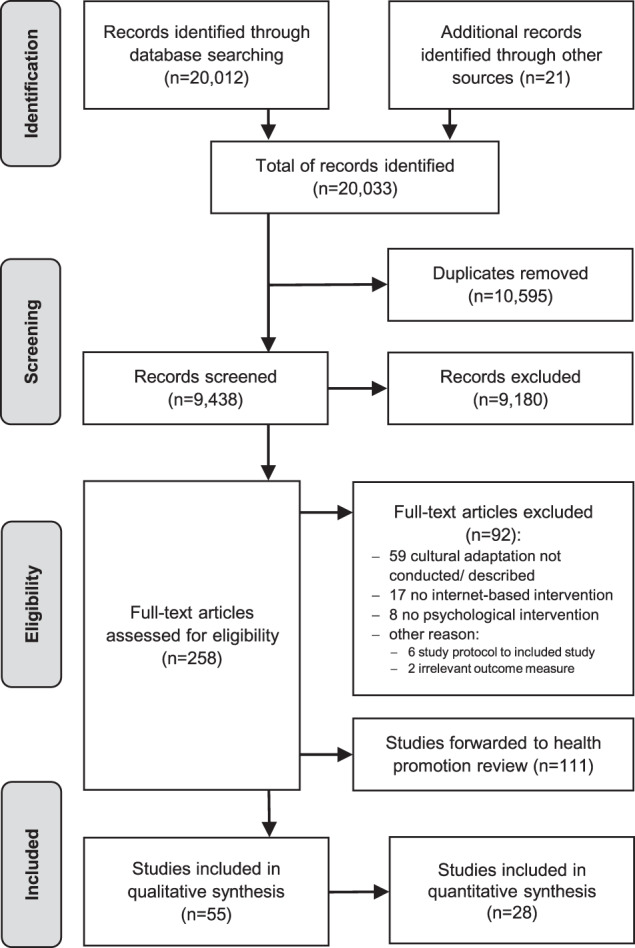
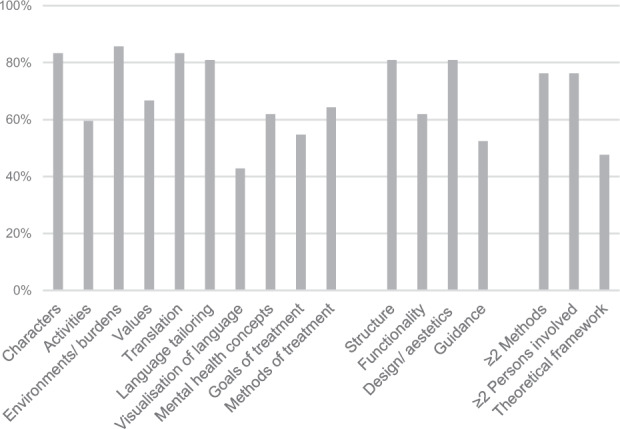
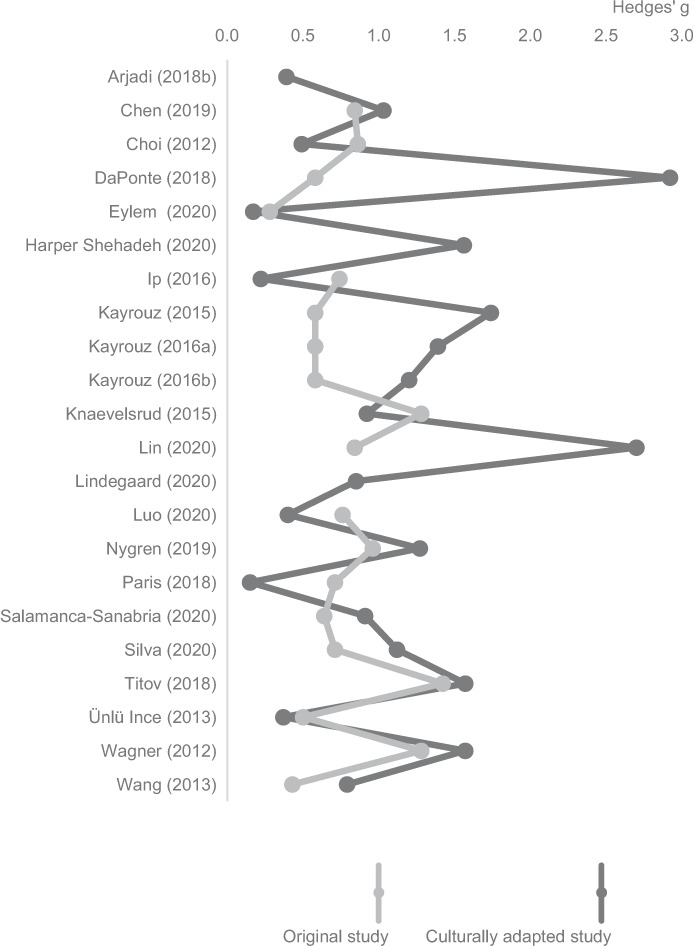
Providing accessible and effective healthcare solutions for people living in low- and middle-income countries, migrants, and indigenous people is central to reduce the global mental health treatment gap. Internet- and mobile-based interventions (IMI) are considered scalable psychological interventions to reduce the burden of mental disorders and are culturally adapted for implementation in these target groups. In October 2020, the databases PsycInfo, MEDLINE, Embase, Cochrane Central Register of Controlled Trials, and Web of Science were systematically searched for studies that culturally adapted IMI for mental disorders. Among 9438 screened records, we identified 55 eligible articles. We extracted 17 content, methodological, and procedural components of culturally adapting IMI, aiming to consider specific situations and perspectives of the target populations. Adherence and effectiveness of the adapted IMI seemed similar to the original IMI; yet, no included study conducted a direct comparison. The presented taxonomy of cultural adaptation of IMI for mental disorders provides a basis for future studies investigating the relevance and necessity of their cultural adaptation.PROSPERO registration number: CRD42019142320.
Overview
The claims and statistics of this paper haven’t been checked yet.
Run the check — free, no account needed. It reads the open-access text and checks the sources it cites.
Integrity signals
Registry
Cites
Statistics
Figures
Verification
Claims the paper makes
The claims and statistics of this paper haven’t been checked yet.
Run the check — free, no account needed. It reads the open-access text and checks the sources it cites.
Claims other papers make about this one
Each is checked against this paper’s own text: does it say what the citing paper says it does?
The source backs part of the claim, not all of it — or backs it for a different population, condition or comparison.
In the citing paper
“Currently available smartphone-delivered interventions differ widely in their cultural and contextual adaptations (Spanhel et al., 2021) and in their treatment approach and range of indications (e.g., targeting one specific problem vs. a transdiagnostic approach).”
From Smartphone-delivered mental health care interventions for refugees: A systematic review of the literature (2023) · cites this paper as Spanhel et al., 2021
Experimental — accuracy not yet measuredThe source backs part of the claim, not all of it — or backs it for a different population, condition or comparison.
In the citing paper
“Previous culturally adapted ICBT trials targeting adult non-western immigrant and refugee participants have overall demonstrated treatment effects, and adherence similar to standard ICBT interventions (Spanhel et al., 2021)”
From Investigating the potential of a novel internet-based cognitive behavioural intervention for Dari and Farsi speaking refugee youth: A feasibility study (2022) · cites this paper as Spanhel et al., 2021
Experimental — accuracy not yet measuredThe cited source says what the claim attributes to it.
In the citing paper
“The participation of the seven countries has led to cultural adaptations in language and materials, following the recommendations of the literature on this topic (Spanhel et al., 2021).”
From Internet-based self-administered intervention to reduce anxiety and depression symptomatology and improve well-being in 7 countries: protocol of a randomized control trial (2024) · cites this paper as Spanhel et al., 2021
The cited source says what the claim attributes to it.
In the citing paper
“Spanhel et al. (2021) conducted a systematic review on cultural adaptation of internet-based interventions for marginalized groups worldwide, and identified 17 components regarding content, methods, and procedural components eligible for cultural adaptation in the context of internet- and mobile-based mental health interventions.”
From Smartphone-delivered mental health care interventions for refugees: A systematic review of the literature (2023) · cites this paper as Spanhel et al., 2021
The cited source says what the claim attributes to it.
In the citing paper
“These interventions offer several advantages over traditional formats of assistance, including greater temporal and local independency, anonymity, accessibility, and flexible delivery [6]”
From The Efficacy of Be a Mom, a Web-Based Intervention to Prevent Postpartum Depression: Examining Mechanisms of Change in a Randomized Controlled Trial (2023) · cites this paper as [6]
The cited source says what the claim attributes to it.
In the citing paper
“A recent review of cultural adaptation of internet-based interventions found no significant associations between the extent of adaptation and the efficacy or adherence to the intervention (Spanhel et al., 2021).”
From Investigating the potential of a novel internet-based cognitive behavioural intervention for Dari and Farsi speaking refugee youth: A feasibility study (2022) · cites this paper as Spanhel et al., 2021
Self-check
Percentages, sums and reported differences re-computed from the paper’s own numbers.
The self-check needs the paper’s full text.
Citations
Cites
The Measurement of Observer Agreement for Categorical Data
Landis, J. R., & Koch, G. G. (1977) · Biometrics · doi:10.2307/2529310 · Cited by 81,148
The CES-D Scale: A Self-Report Depression Scale for Research in the General Population
Radloff, L. S. (1977) · Applied Psychological Measurement · doi:10.1177/014662167700100306 · Cited by 53,267
A Coefficient of Agreement for Nominal Scales
Cohen, J. (1960) · Educational and Psychological Measurement · doi:10.1177/001316446002000104 · Cited by 42,398
An inventory for measuring depression
BECK, A. T. (1961) · Archives of General Psychiatry · doi:10.1001/archpsyc.1961.01710120031004 · Cited by 38,032
The Pittsburgh Sleep Quality Index: a new instrument for psychiatric practice and research
Buysse, D. J., Reynolds, C. F., Monk, T. H., Berman, S. R., & Kupfer, D. J. (1989) · Psychiatry Research · doi:10.1016/0165-1781(89)90047-4 · Cited by 35,234
A Brief Measure for Assessing Generalized Anxiety Disorder: The GAD-7
Spitzer, R. L., Kroenke, K., Williams, J. B. W., & Löwe, B. (2006) · Archives of Internal Medicine · doi:10.1001/archinte.166.10.1092 · Cited by 31,765
Liberati, A., Altman, D. G., Tetzlaff, J., Mulrow, C., Gøtzsche, P. C., Ioannidis, J. P. A., Clarke, M., Devereaux, P. J., Kleijnen, J., & Moher, D. (2009) · PLoS Medicine · doi:10.1371/journal.pmed.1000100 · Cited by 28,164
Dermyshi, E., Wang, Y., Yan, C., Hong, W., Qiu, G., Gong, X., & Zhang, T. (2017) · Neonatology · doi:10.1159/000454668 · Cited by 24,586
Liberati, A., Altman, D. G., Tetzlaff, J., Mulrow, C., Gøtzsche, P. C., Ioannidis, J. P. A., Clarke, M., Devereaux, P. J., Kleijnen, J., & Moher, D. (2009) · Journal of Clinical Epidemiology · doi:10.1016/j.jclinepi.2009.06.006 · Cited by 10,578
KESSLER, R. C., ANDREWS, G., COLPE, L. J., HIRIPI, E., MROCZEK, D. K., NORMAND, S.-L. T., WALTERS, E. E., & ZASLAVSKY, A. M. (2002) · Psychological Medicine · doi:10.1017/s0033291702006074 · Cited by 10,327
Research works printed but not linked: 2
- Covidence. Covidence systematic review software, Veritas Health Innovation, Melbourne, Australia. Available at www.covidence.org.
- Hedges, L. & Olkin, I. Statistical Methods for Meta-analysis (Academic Press, 1985).
Cited by
Sorted by citations
Items 101–178 of 178
Ferreira, M. G., Caetano Vieira de Faria, R., Kishita, N., & Caramelli, P. (2026) · Clinical Gerontologist · doi:10.1080/07317115.2026.2615707 · Cited by 2
Jiménez-Molina, Á., Franco, P., Mac‐Ginty, S., & Martínez, V. (2022) · Depression and personality · doi:10.1007/978-3-031-13029-8_6 · Cited by 1
Vivas, A. B., Estévez, A. F., Khan, I., Roldán-Tapia, L., Markelius, A., Nielsen, S., & Lowe, R. (2024) · Neuroscience & Biobehavioral Reviews · doi:10.1016/j.neubiorev.2024.105838 · Cited by 1
“This also includes addressing varying levels of digital health literacy among older adults (Ehrari et al., 2022) as well as introducing digital interventions in a way that aligns with the values and communication styles of different cultural and social groups (Spanhel et al., 2021).”
Listiyandini, R. A., Andriani, A., Afsari, N., Marfu’atun, E., Hafizah, N., Sholeh, A., Nirbayaningtyas, R. B., Moulds, M. L., Mahoney, A., & Newby, J. M. (2025) · Behaviour Research and Therapy · doi:10.1016/j.brat.2025.104827 · Cited by 1
Suen, Y. N., Chan, K. T., Wan, Y. S., So, M. M., Lee, E. H. M., Wong, S. M. Y., Chan, S. K. W., Hui, C. L. M., Wong, M. T. H., & Chen, E. Y. H. (2025) · BMJ Public Health · doi:10.1136/bmjph-2025-002692 · Cited by 1
Riyadi, R., Fatimah, J. M., & Hasrulah, H. (2025) · Frontiers in Human Dynamics · doi:10.3389/fhumd.2025.1658154 · Cited by 1
Dooley, J., Alsaadi, N., & Watkins, E. M. (2026) · Journal of Participatory Medicine · doi:10.2196/80776 · Cited by 1
“One reason researchers repeat these elements of codevelopment is that while the overarching advice from young people may be the same, for example, ease of use or age-appropriate language, the specifics of this may vary according to context, be it geographical or cultural [37].”
Yu, T., Zhang, X., Yang, Z., Wang, L., & Hui, W. (2026) · Psycho-Oncologie · doi:10.18282/po4564 · Cited by 1
Hapon, N., Chudzicka-Czupała, A. E., Dubniak, Z. O., Żywiołek‐Szeja, M., Czupała, M., Yen, C., & Ho, R. (2026) · Mindfulness · doi:10.1007/s12671-026-02768-z · Cited by 2
Hernández, R., Solai, K., Kwon, S., Venkatesan, P., Fast, D., Lara-Cinisomo, S., & Nisar, H. (2026) · Frontiers in Digital Health · doi:10.3389/fdgth.2026.1766741 · Cited by 1
“These platforms also permit the seamless integration of multilingual features within the interface, narration, and avatar interaction (15, 16).”
Heidari, S., Alimoradi, Z., & Bahrami, N. (2026) · Journal of Sex & Marital Therapy · doi:10.1080/0092623x.2026.2699265 · Cited by 1
“Nevertheless, the shortage of scalable, targeted, and culturally appropriate interventions, particularly those that incorporate modern technologies, continues to limit progress in this area (Ellis et al., 2022; Shakibi et al., 2024; Spanhel et al., 2021).”
Culturally Adapted CBT for Psychosis
Naeem, F., Naz, S., & Phiri, P. (2023) · Springer eBooks · doi:10.1007/978-3-031-27003-1_7 · Cited by 1
Luo, Y., Ebina, Y., & Sato, Y. (2024) · SSM - Population Health · doi:10.1016/j.ssmph.2024.101686 · Cited by 2
“Several Internet-and mobile-based interventions have been implemented to reduce the burden of mental disorders among immigrant populations in various countries (Spanhel et al., 2021).”
BackgroundElliott, S. A., Kreutz, J., Wright, K. S., Lallo, S. D., Scott, S. D., & Hartling, L. (2022) · doi:10.2196/preprints.36353 · Cited by 1
Internet-based treatment of depression and anxiety among migrants and refugees in Sweden
Lindegaard, T. (2022) · Linköping studies in behavioural science · doi:10.3384/9789179291402
El-Haj-Mohamad, R., Nohr, L., Niemeyer, H., et al. (2022) · Cambridge Prisms Global Mental Health · doi:10.1017/gmh.2022.61.pr8
El-Haj-Mohamad, R., Nohr, L., Niemeyer, H., et al. (2022) · Cambridge Prisms Global Mental Health · doi:10.1017/gmh.2022.61.pr4
El-Haj-Mohamad, R., Nohr, L., Niemeyer, H., et al. (2022) · Cambridge Prisms Global Mental Health · doi:10.1017/gmh.2022.61.pr5
El-Haj-Mohamad, R., Nohr, L., Niemeyer, H., et al. (2022) · Cambridge Prisms Global Mental Health · doi:10.1017/gmh.2022.61.pr9
El-Haj-Mohamad, R., Nohr, L., Niemeyer, H., et al. (2022) · Cambridge Prisms Global Mental Health · doi:10.1017/gmh.2022.61.pr10
El-Haj-Mohamad, R., Nohr, L., Niemeyer, H., et al. (2022) · Cambridge Prisms Global Mental Health · doi:10.1017/gmh.2022.61.pr6
El-Haj-Mohamad, R., Nohr, L., Niemeyer, H., et al. (2022) · Cambridge Prisms Global Mental Health · doi:10.1017/gmh.2022.61.pr2
Nohr, L. (2022) · Cambridge Prisms Global Mental Health · doi:10.1017/gmh.2022.61.pr1
Nohr, L. (2022) · Cambridge Prisms Global Mental Health · doi:10.1017/gmh.2022.61.pr7
El-Haj-Mohamad, R., Nohr, L., Niemeyer, H., et al. (2022) · Cambridge Prisms Global Mental Health · doi:10.1017/gmh.2022.61.pr3
Ethno-cognitive behavioral therapy and ethnopsychotherapy: A new narrative
Naeem, F. (2023) · Elsevier eBooks · doi:10.1016/b978-0-323-85726-0.00018-1
Gueta, K., Harel‐Fisch, Y., & Walsh, S. D. (2023) · Frontiers in Psychology · doi:10.3389/fpsyg.2023.1063200
“A recent review identified four distinct types of adaptations for culturally adapted internetbased interventions for mental disorders (Spanhel et al., 2021): alterations to an intervention’s structure (e.”
BackgroundSilverman, A. L., Evia, Á. F. V. D. L. G., Larrazabal, M. A., Khutsisvili, L., Boukhechba, M., Barnes, L. E., & Teachman, B. A. (2023) · doi:10.31234/osf.io/3ck26
Malischnig, D. (2023) · Springer eBooks · doi:10.1007/978-3-662-67489-5_4
Behavioral Technology Acceptance Model In Health Care Industry: Systematic Literature Review
Agustini, K. (2024) · Indonesian Journal of Pharmaceutical Science and Technology · doi:10.24198/ijpst.v0i0.50591
Spanhel, K., & Heim, E. (2024) · PPmP - Psychotherapie · Psychosomatik · Medizinische Psychologie · doi:10.1055/a-2305-8780
González-Cantero, J. O., Torres, L. P. L., Alvarado-Avalos, I. R., López-Alcaraz, F., Suarez, E. G., Hernández, A. A. C., Jiménez, A. V., Macías-Espinoza, F., & Rodríguez, A. D. (2024) · Frontiers in Nutrition · doi:10.3389/fnut.2024.1325528 · Cited by 1
The future of digital mental health care: challenges and opportunities for practice
Jesto, S., & Kunnumpurath, B. (2024) · Elsevier eBooks · doi:10.1016/b978-0-443-22270-2.00006-x
Media and Mental Health Interventions Among Migrants
Ahmed, R., & Park, S. (2024) · Oxford University Press eBooks · doi:10.1093/oxfordhb/9780197744345.013.23
Lin, X., & Pachana, N. A. (2025) · doi:10.1093/med/9780198874799.003.0018
Adapting MODIA, a digital therapeutics tool for opioid use disorders (OUD) in India
Verma, A., Chand, P., Odlander, M., Rajasekar, K., & Murthy, P. (2025) · Asian Journal of Psychiatry · doi:10.1016/j.ajp.2025.104461
Alcántara, C., Cosenzo, L. G., Diaz, S. V., Arias, D., Schwartz, J. E., Kronish, I. M., & Moise, N. (2025) · The Lancet Regional Health - Americas · doi:10.1016/j.lana.2025.101158 · Cited by 1
Dsouza, V. F., Reardon, B., & Giscombé, C. L. W. (2025) · Geriatric Nursing · doi:10.1016/j.gerinurse.2025.103438
Alshabani, N., Price, K., Kennedy, H., Haws, J. K., & Kimball, S. (2025) · Journal of Immigrant and Minority Health · doi:10.1007/s10903-025-01746-2
Pan, X. (2025) · Proceedings of the ALISE Annual Conference · doi:10.21900/j.alise.2025.2030
Multidisciplinary perspectives on personalised prevention in youth mental health
Löchner, J., Bolivar, M., Booth, L., Canella, S., Calobro, M., Firth, J., García‐Palacios, A., Kyritsaka, A., Sander, L., Seiferth, C., et al. (2025) · Frontiers in Digital Health · doi:10.3389/fdgth.2025.1568472 · Cited by 1
Kip, E., Hosseinipour, M. C., Kulisewa, K., Pence, B. W., Udedi, M. M., Gaynes, B. N., & Go, V. F.-L. (2025) · PLoS ONE · doi:10.1371/journal.pone.0318738
Wirawan, M. W. D., Barri, M. H., Arliandi, M. F., & Hilman Fauzi, T. S. P. (2025) · doi:10.1109/iceeie66203.2025.11254672
“(2) 100 adaptation emphasize aligning recommendations with local dietary patterns [14].”
Tandon, T., Berger, T., Meyer, B., Khaled, O. A., Gupta, R., & Martin-Söelch, C. (2025) · Trials · doi:10.1186/s13063-025-09377-6
You, J. H. S., Luk, S. W. C., Chow, D. Y.-W., Mak, A. D. P., & Mak, W. W. S. (2025) · JMIR Human Factors · doi:10.2196/68167
“…demonstrated in the present study to university students in Hong Kong, cultural adaptation of the internet-based CBT is essential to address differences (that may influence the effectiveness and acceptability) in communication styles, stigma, and social values in the context of locality [37].”
Luo, M., Yue, Y., Du, N., Xiao, Y., Chen, C., & Huan, Z. (2024) · Figshare · doi:10.6084/m9.figshare.26661233
Additional file 1 of Digital tools to support mental health: a survey study in psychosis
Eisner, E., Berry, N., & Bucci, S. (2024) · Figshare · doi:10.6084/m9.figshare.26624164
Luo, M., Yue, Y., Du, N., Xiao, Y., Chen, C., & Huan, Z. (2024) · Figshare · doi:10.6084/m9.figshare.26661239
Luo, M., Yue, Y., Du, N., Xiao, Y., Chen, C., & Huan, Z. (2024) · Figshare · doi:10.6084/m9.figshare.26661236
Luo, M., Yue, Y., Du, N., Xiao, Y., Chen, C., & Huan, Z. (2024) · Figshare · doi:10.6084/m9.figshare.26661230
Luo, M., Yue, Y., Du, N., Xiao, Y., Chen, C., & Huan, Z. (2024) · Figshare · doi:10.6084/m9.figshare.26661227
Luo, M., Yue, Y., Du, N., Xiao, Y., Chen, C., & Huan, Z. (2024) · Figshare · doi:10.6084/m9.figshare.26661242
Xie, S. J., Paullada, A., Wang, Y., Louden, D., Ramirez, M., Cohen, T., & Yuwen, W. (2025) · doi:10.2196/preprints.85646
Shaff, J., Qureshi, N., Matthews, S., Eberhart, N. K., & Lawson, E. K. (2025) · Mental Health & Prevention · doi:10.1016/j.mhp.2025.200473
Alzuair, B. S., Mufarrih, W. A. A., ALzahrani, A., & Almasri, M. S. (2025) · Cureus · doi:10.7759/cureus.100041
“[21,33,46-48].”
InfluentialKarl, J. A., & Fischer, R. (2024) · OSF Preprints (OSF Preprints)
Cultural Adaptation in Telepsychotherapy
Balci, S., & Aydin, A. (2026) · Springer eBooks · doi:10.1007/978-3-032-08980-9_9
Online Transdiagnostic Self-Help Interventions
Klimczak, K. S., Donahue, M. L., & Bowers, E. M. (2026) · Springer eBooks · doi:10.1007/978-3-032-08980-9_12 · Cited by 2
Kabbani, A., Passler, M., Park, K., Lee, E. Y., Lee, Y., Jansen, M., & Moon, D. U. (2026) · Internet Interventions · doi:10.1016/j.invent.2026.100933
“…intervention, differences between groups may reflect the specific CBT-I components, the structured therapeutic format, or differences in treat-ment credibility and expectancy, rather than cultural adaptation alone (Harper Shehadeh et al., 2016; Fu et al., 2020; Spanhel et al., 2021).”
Anvari, S. S., Ppali, S., Hernandez, D. X. G., & Wehbe, R. R. (2026) · CHI Conference on Human Factors in Computing Systems · doi:10.1145/3772318.3791326 · Cited by 1
“Privacy anxieties are widespread, as users fear misuse of sensitive data [98, 105], and cultural adaptability is limited, with many apps reflecting western models [67, 103].”
Guenier, A. W., & Mao, Y. (2026) · doi:10.2196/preprints.96062
Choi, I., Mahoney, A., & Shiner, C. T. (2026) · Australian Psychologist · doi:10.1080/00050067.2026.2666418
“…2019; Karyotaki et al., 2017, 2021) and in routine care (Duffy et al., 2025; Etzelmueller et al., 2020; Hobbs et al., 2018; Lee et al., 2024; Palacios et al., 2023), as well as among CALD groups when translated into other languages or culturally adapted (Ellis et al., 2022; Spanhel et al., 2021).”
Introduction to Telehealth in Psychological Services
Bouchard, L., Nungester, A., Zafreen, F., & Chahin, S. S. (2026) · Springer eBooks · doi:10.1007/978-3-032-19116-8_19
Digital Mental Health in Trauma and Migration: Opportunities and Challenges
Orsolini, L., Nuzzo, G. L., Pompili, S., Longo, G., & Volpe, U. (2026) · Springer eBooks · doi:10.1007/978-3-032-21028-9_16
Ning, X., Wang, Y., & Pan, S. (2026) · Multilingual education yearbook · doi:10.1007/978-3-032-20155-3_10
Altun, A., Reupert, A., Oxlad, M., Hine, R. H., D’Souza, L., Kadwadkar, M., & Boyle, J. A. (2026) · Archives of Public Health · doi:10.1186/s13690-026-01989-x
“Consistent with broader literature, many digital resources were perceived as culturally misaligned and did not fully resonate with women’s lived and living experiences or cultural frameworks [14, 61, 62].”
Marier-Deschênes, P., Duclos, C., Scelleur, H. L., & Bergeron, A. (2026) · Journal of Military Veteran and Family Health · doi:10.3138/jmvfh-2025-0102
Exploring Prolonged Grief Experiences of Ethnoracial Minoritized Caregivers: An Emic Perspective
Dsouza, V. F., Reardon, B., & Giscombé, C. L. W. (2026) · Research in Nursing & Health · doi:10.1002/nur.70092
Sörman, K., Jayaram‐Lindström, N., Pontén, M., Bragesjö, M., Kolaas, K., Kraepelien, M., Alaoui, S. E., Särnholm, J., & Molander, O. (2026) · BMJ Public Health · doi:10.1136/bmjph-2025-003156
Upadhyay, L., Kale, A., Mishra, A., & Shukla, A. K. (2026) · Complex & Intelligent Systems · doi:10.1007/s40747-026-02390-5
“Multilingual interfaces, culturally appropriate avatars, and localized clinical scenarios must be co-designed with local stakeholders to ensure acceptance and effectiveness [114].”
InfluentialVillena-Esponera, M. P., Aguilar, H., Jerves-Córdova, C., Molina‐Recio, G., & Caballero, M. (2026) · Digital Health · doi:10.1177/20552076261460352
“19,46 This adds a new dimension to the literature on digital health equity, proving that even in areas with significant structural barriers, a user-centered approach can transform a mobile device into a powerful tool for health education.”
Buhari, T., Baguda, A., Aiyenuro, M., Ahmad, J. I., Galadanchi, J., Oluyori, A., Abdullahi, R. M., Iliyasu, Z., Akhigbe, O., Fawaz, A., et al. (2026) · medRxiv · doi:10.64898/2026.09.03.26362181
App-Based Behavioral Interventions
Mallick, M. K. (2026) · IGI Global eBooks · doi:10.4018/979-8-3373-8444-3.ch002
Fola-Bolumole, O., Bella-Awusah, T. T., & Omigbodun, O. O. (2026) · doi:10.2196/preprints.110540
van Lotringen, C. M., Kelders, S. M., Westerhof, G. J., & Noordzij, M. L. (2026) · Digital Health · doi:10.1177/20552076261483463
Rethinking accuracy in Ai-assisted mental health research: The role of cultural validity in Asia
Halida, A. N. (2026) · Asian Journal of Psychiatry · doi:10.1016/j.ajp.2026.105184
Gant, T., Taylor, K. M., Ward, T., Garety, P., & Hardy, A. (2026) · Internet Interventions · doi:10.1016/j.invent.2026.101013
Metadata
- Authors
- Spanhel, K., Balci, S., Feldhahn, F., Bengel, J., Baumeister, H., & Sander, L. B.
- Affiliations
- University of Freiburg (DE)
- Universität Ulm (DE)
- Corresponding author
- Spanhel, Kerstin
- Venue
- npj Digital Medicine
- Published
- 2021-08-25
- Volume
- 4
- Issue
- 1
- Pages
- 128-128
- ISSN
- 2398-6352 (ISSN-L)
- PMC
- PMC8387403
- OpenAlex
- W3196086198
- Cited by
- 178
- References
- 178
- Citations by year
- 2026: 32 · 2025: 37 · 2024: 46 · 2023: 34 · 2022: 27 · 2021: 2
- FWCI
- 4.38
- Type
- journal article
- Language
- en
- Open access
- gold
- doi.org
- Locations
- npj Digital Medicine (publishedVersion, cc-by)
- Europe PMC (PubMed Central) (publishedVersion, other-oa)
- PubMed Central (publishedVersion, cc-by)
- PubMed (publishedVersion)
- Informationszentrum Lebenswissenschaften (ZB MED) (submittedVersion, cc-by)
- DOAJ (DOAJ: Directory of Open Access Journals) (submittedVersion, cc-by-sa)
- Funders
- German Academic Scholarship Foundation
- Scholarship granted by the Ministry of Education, Turkey
- Topics
- Social Sciences › Psychology › Applied Psychology › Digital Mental Health Interventions
- Health Sciences › Medicine › Psychiatry and Mental health › Mental Health Treatment and Access
- Health Sciences › Health Professions › General Health Professions › Mobile Health and mHealth Applications
- Keywords
- cultural adaptation, online intervention, mobile-based interventions, mental illness, low- and middle-income countries, migrants, indigenous peoples, adherence, intervention effectiveness
About these checks
Registry, retraction, Cites and statistics results are computed, not judged, with one exception: a printed reference that no index lists is read once by a model before it counts as a citation error. Claims are extracted by a model and kept only when their quote appears verbatim in the text; each cited source is then checked, with a model’s help, for whether it says what the claim relies on. Those verdicts can be wrong — read the claim’s quote and the cited source before relying on one.
Statistics and arithmetic are recomputed, not judged.
Confidence bands are shown only for fields calibrated on our annotated test set. None is calibrated yet, so no band is shown.
What counts as a claim ›How we measure confidence ›How we check this ›
Are you an author, or do you see a problem with this page? Request a review
