

The DOI matches its Crossref record; 178 of the 178 references it cites were found in a registry or an index.
Cultural adaptation of internet- and mobile-based interventions for mental disorders: a systematic review
Open accessAbstract
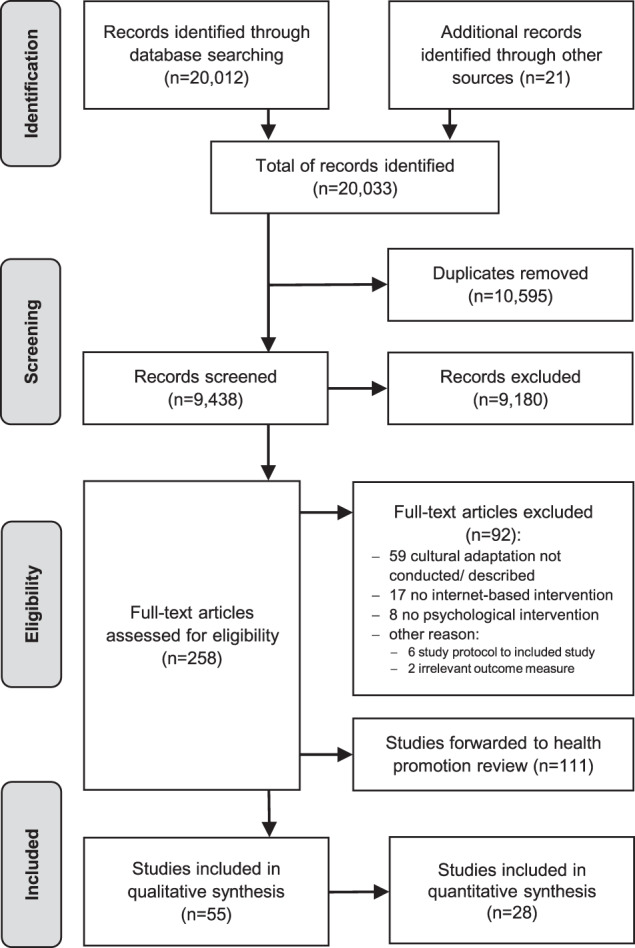
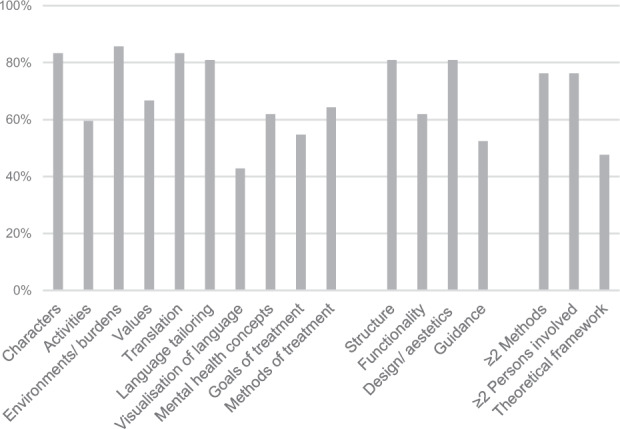
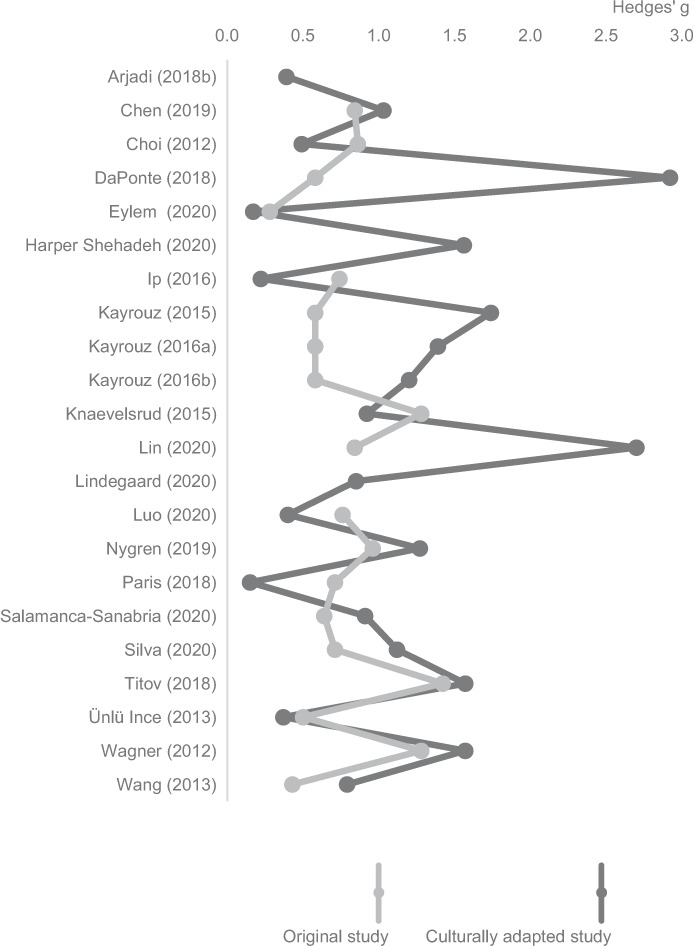
Providing accessible and effective healthcare solutions for people living in low- and middle-income countries, migrants, and indigenous people is central to reduce the global mental health treatment gap. Internet- and mobile-based interventions (IMI) are considered scalable psychological interventions to reduce the burden of mental disorders and are culturally adapted for implementation in these target groups. In October 2020, the databases PsycInfo, MEDLINE, Embase, Cochrane Central Register of Controlled Trials, and Web of Science were systematically searched for studies that culturally adapted IMI for mental disorders. Among 9438 screened records, we identified 55 eligible articles. We extracted 17 content, methodological, and procedural components of culturally adapting IMI, aiming to consider specific situations and perspectives of the target populations. Adherence and effectiveness of the adapted IMI seemed similar to the original IMI; yet, no included study conducted a direct comparison. The presented taxonomy of cultural adaptation of IMI for mental disorders provides a basis for future studies investigating the relevance and necessity of their cultural adaptation.PROSPERO registration number: CRD42019142320.
Overview
The claims and statistics of this paper haven’t been checked yet.
Run the check — free, no account needed. It reads the open-access text and checks the sources it cites.
Integrity signals
Registry
Cites
Statistics
Figures
Verification
Claims the paper makes
The claims and statistics of this paper haven’t been checked yet.
Run the check — free, no account needed. It reads the open-access text and checks the sources it cites.
Claims other papers make about this one
Each is checked against this paper’s own text: does it say what the citing paper says it does?
The source backs part of the claim, not all of it — or backs it for a different population, condition or comparison.
In the citing paper
“Currently available smartphone-delivered interventions differ widely in their cultural and contextual adaptations (Spanhel et al., 2021) and in their treatment approach and range of indications (e.g., targeting one specific problem vs. a transdiagnostic approach).”
From Smartphone-delivered mental health care interventions for refugees: A systematic review of the literature (2023) · cites this paper as Spanhel et al., 2021
Experimental — accuracy not yet measuredThe source backs part of the claim, not all of it — or backs it for a different population, condition or comparison.
In the citing paper
“Previous culturally adapted ICBT trials targeting adult non-western immigrant and refugee participants have overall demonstrated treatment effects, and adherence similar to standard ICBT interventions (Spanhel et al., 2021)”
From Investigating the potential of a novel internet-based cognitive behavioural intervention for Dari and Farsi speaking refugee youth: A feasibility study (2022) · cites this paper as Spanhel et al., 2021
Experimental — accuracy not yet measuredThe cited source says what the claim attributes to it.
In the citing paper
“The participation of the seven countries has led to cultural adaptations in language and materials, following the recommendations of the literature on this topic (Spanhel et al., 2021).”
From Internet-based self-administered intervention to reduce anxiety and depression symptomatology and improve well-being in 7 countries: protocol of a randomized control trial (2024) · cites this paper as Spanhel et al., 2021
The cited source says what the claim attributes to it.
In the citing paper
“Spanhel et al. (2021) conducted a systematic review on cultural adaptation of internet-based interventions for marginalized groups worldwide, and identified 17 components regarding content, methods, and procedural components eligible for cultural adaptation in the context of internet- and mobile-based mental health interventions.”
From Smartphone-delivered mental health care interventions for refugees: A systematic review of the literature (2023) · cites this paper as Spanhel et al., 2021
The cited source says what the claim attributes to it.
In the citing paper
“These interventions offer several advantages over traditional formats of assistance, including greater temporal and local independency, anonymity, accessibility, and flexible delivery [6]”
From The Efficacy of Be a Mom, a Web-Based Intervention to Prevent Postpartum Depression: Examining Mechanisms of Change in a Randomized Controlled Trial (2023) · cites this paper as [6]
The cited source says what the claim attributes to it.
In the citing paper
“A recent review of cultural adaptation of internet-based interventions found no significant associations between the extent of adaptation and the efficacy or adherence to the intervention (Spanhel et al., 2021).”
From Investigating the potential of a novel internet-based cognitive behavioural intervention for Dari and Farsi speaking refugee youth: A feasibility study (2022) · cites this paper as Spanhel et al., 2021
Self-check
Percentages, sums and reported differences re-computed from the paper’s own numbers.
The self-check needs the paper’s full text.
Citations
Cites
The Measurement of Observer Agreement for Categorical Data
Landis, J. R., & Koch, G. G. (1977) · Biometrics · doi:10.2307/2529310 · Cited by 81,148
The CES-D Scale: A Self-Report Depression Scale for Research in the General Population
Radloff, L. S. (1977) · Applied Psychological Measurement · doi:10.1177/014662167700100306 · Cited by 53,267
A Coefficient of Agreement for Nominal Scales
Cohen, J. (1960) · Educational and Psychological Measurement · doi:10.1177/001316446002000104 · Cited by 42,398
An inventory for measuring depression
BECK, A. T. (1961) · Archives of General Psychiatry · doi:10.1001/archpsyc.1961.01710120031004 · Cited by 38,032
The Pittsburgh Sleep Quality Index: a new instrument for psychiatric practice and research
Buysse, D. J., Reynolds, C. F., Monk, T. H., Berman, S. R., & Kupfer, D. J. (1989) · Psychiatry Research · doi:10.1016/0165-1781(89)90047-4 · Cited by 35,234
A Brief Measure for Assessing Generalized Anxiety Disorder: The GAD-7
Spitzer, R. L., Kroenke, K., Williams, J. B. W., & Löwe, B. (2006) · Archives of Internal Medicine · doi:10.1001/archinte.166.10.1092 · Cited by 31,765
Liberati, A., Altman, D. G., Tetzlaff, J., Mulrow, C., Gøtzsche, P. C., Ioannidis, J. P. A., Clarke, M., Devereaux, P. J., Kleijnen, J., & Moher, D. (2009) · PLoS Medicine · doi:10.1371/journal.pmed.1000100 · Cited by 28,164
Dermyshi, E., Wang, Y., Yan, C., Hong, W., Qiu, G., Gong, X., & Zhang, T. (2017) · Neonatology · doi:10.1159/000454668 · Cited by 24,586
Liberati, A., Altman, D. G., Tetzlaff, J., Mulrow, C., Gøtzsche, P. C., Ioannidis, J. P. A., Clarke, M., Devereaux, P. J., Kleijnen, J., & Moher, D. (2009) · Journal of Clinical Epidemiology · doi:10.1016/j.jclinepi.2009.06.006 · Cited by 10,578
KESSLER, R. C., ANDREWS, G., COLPE, L. J., HIRIPI, E., MROCZEK, D. K., NORMAND, S.-L. T., WALTERS, E. E., & ZASLAVSKY, A. M. (2002) · Psychological Medicine · doi:10.1017/s0033291702006074 · Cited by 10,327
Research works printed but not linked: 2
- Covidence. Covidence systematic review software, Veritas Health Innovation, Melbourne, Australia. Available at www.covidence.org.
- Hedges, L. & Olkin, I. Statistical Methods for Meta-analysis (Academic Press, 1985).
Cited by
Sorted by citations
Torous, J., Linardon, J., Goldberg, S. B., Sun, S., Bell, I., Nicholas, J., Hassan, L., Hua, Y., Milton, A., & Firth, J. (2025) · World Psychiatry · doi:10.1002/wps.21299 · Cited by 323
Cultural and Contextual Adaptation of Digital Health Interventions: Narrative Review
Naderbagi, A., Loblay, V., Zahed, I. U. M., Ekambareshwar, M., Poulsen, A., Song, Y. J. C., Ospina‐Pinillos, L., Krausz, M. R., Kamel, M. M., Hickie, I. B., et al. (2024) · Journal of Medical Internet Research · doi:10.2196/55130 · Cited by 160
Digital interventions in mental health: An overview and future perspectives
Löchner, J., Carlbring, P., Schuller, B. W., Torous, J. B., & Sander, L. (2025) · Internet Interventions · doi:10.1016/j.invent.2025.100824 · Cited by 182
Hornstein, S., Zantvoort, K., Lueken, U., Funk, B., & Hilbert, K. (2023) · Frontiers in Digital Health · doi:10.3389/fdgth.2023.1170002 · Cited by 134
Yeo, G., Reich, S. M., Liaw, N. A., & Chia, E. Y. M. (2023) · Journal of Medical Internet Research · doi:10.2196/51268 · Cited by 143
Liu, W., Zheng, W., Li, Z., Wu, S., Gan, L., & Lu, B. (2022) · Journal of Neural Engineering · doi:10.1088/1741-2552/ac5c8d · Cited by 102
Artificial Intelligence-Enabled Chatbots in Mental Health: A Systematic Review
Omarov, B. S., Narynov, S., & Zhumanov, Z. (2022) · Computers, materials & continua/Computers, materials & continua (Print) · doi:10.32604/cmc.2023.034655 · Cited by 84
Bear, H. A., Ayala‐Nunes, L., Ramos, G., Manchanda, T., Fernandes, B., Chabursky, S., Walper, S., Watkins, E. R., & Fazel, M. S. (2024) · Journal of Medical Internet Research · doi:10.2196/48964 · Cited by 70
“However, there is no evidence that these culturally adapted interventions outperform the original programs [79,80].”
Wani, C., McCann, L., Lennon, M., & Radu, C. (2024) · Journal of Medical Internet Research · doi:10.2196/51376 · Cited by 81
Shroff, A., Roulston, C. A., Fassler, J., Dierschke, N. A., Todd, J. S. P., Ríos-Herrera, Á., Plastino, K. A., & Schleider, J. L. (2023) · JMIR Mental Health · doi:10.2196/43062 · Cited by 60
“Past studies have reported the acceptability and utility of culturally adapted internet-based interventions for mental disorders [51].”
Balci, S., Spanhel, K., Sander, L., & Baumeister, H. (2022) · npj Digital Medicine · doi:10.1038/s41746-022-00569-x · Cited by 52
Digital tools to support mental health: a survey study in psychosis
Eisner, E., Berry, N., & Bucci, S. (2023) · BMC Psychiatry · doi:10.1186/s12888-023-05114-y · Cited by 47
El-Haj-Mohamad, R., Nohr, L., Niemeyer, H., Böttche, M., & Knaevelsrud, C. (2023) · Cambridge Prisms Global Mental Health · doi:10.1017/gmh.2022.61 · Cited by 40
Marwaha, J. S., & Kvedar, J. C. (2021) · npj Digital Medicine · doi:10.1038/s41746-021-00516-2 · Cited by 42
Xiao, L. D., Ye, M., Zhou, Y., Chang, H., Brodaty, H., Ratcliffe, J., Brijnath, B., & Ullah, S. (2022) · Dementia · doi:10.1177/14713012221110003 · Cited by 43
Culturally adapted CBT – the evolution of psychotherapy adaptation frameworks and evidence
Naeem, F., Sajid, S., Naz, S., & Phiri, P. (2023) · The Cognitive Behaviour Therapist · doi:10.1017/s1754470x2300003x · Cited by 52
“Outcomes: unique and common outcomes The authors advise that stakeholder involvement, in the form of case studies and pilot studies, should be used at the stage of preliminary tests for an adapted framework This framework was intended to be used by all therapists and therapy-types with all populations This has been im…”
Spanhel, K., Hovestadt, E., Lehr, D., Spiegelhalder, K., Baumeister, H., Bengel, J., & Sander, L. B. (2022) · Frontiers in Psychiatry · doi:10.3389/fpsyt.2022.832196 · Cited by 37
“Information on components to culturally adapt were gained in a literature review on culturally adapting digital interventions for mental disorders (64), and in a user experience study in which suggestions of inadequate intervention components were gathered in interviews with refugees and healthcare providers working w…”
BackgroundLindegaard, T., Wasteson, E., Demetry, Y., Andersson, G., Richards, D., & Shahnavaz, S. (2022) · Internet Interventions · doi:10.1016/j.invent.2022.100533 · Cited by 30
“A recent review of cultural adaptation of internet-based interventions found no significant associations between the extent of adaptation and the efficacy or adherence to the intervention (Spanhel et al., 2021).”
BackgroundInfluentialCulturally sensitive grief treatment and support: A scoping review
Aeschlimann, A., Heim, E., Killikelly, C., Arafa, M., & Maercker, A. R. A. (2024) · SSM - Mental Health · doi:10.1016/j.ssmmh.2024.100325 · Cited by 44
Buragohain, D., Khichar, S., Deng, C., Meng, Y., & Chaudhary, S. (2025) · Scientific Reports · doi:10.1038/s41598-025-00916-4 · Cited by 44
Atem, J., Gümüşkaya, O., & Wilson, R. L. (2024) · International Journal of Mental Health Nursing · doi:10.1111/inm.13283 · Cited by 49
Willis, H. A., González, J. C., Call, C. C., Quezada, D., Diversity, S. F. E. E. A., & Galán, C. A. (2022) · Journal of Clinical Child & Adolescent Psychology · doi:10.1080/15374416.2022.2124516 · Cited by 40
“sponding un-adapted versions of the interventions (Spanhel et al., 2021).”
BackgroundResultInfluentialFischer, R. D., Bailey, Y., Shankar, M., Safaeinili, N., Karl, J. A., Daly, A., Johnson, F. N., Winter, T. J., Arahanga‐Doyle, H., Fox, R., et al. (2024) · Clinical Psychology Review · doi:10.1016/j.cpr.2024.102425 · Cited by 43
Carona, C., Pereira, M., Araújo-Pedrosa, A., Canavarro, M. C., & Fonseca, A. (2023) · JMIR Mental Health · doi:10.2196/39253 · Cited by 33
“These interventions offer several advantages over traditional formats of assistance, including greater temporal and local independency, anonymity, accessibility, and flexible delivery [6], making them particularly recommended for perinatal women.”
Access to Virtual Mental Healthcare and Support for Refugee and Immigrant Groups: A Scoping Review
Hynie, M., Oda, A., Calaresu, M., Kuo, B. C. H., Ives, N. G., Jaimes, A., Bokore, N., Beukeboom, C., Ahmad, F., Arya, N., et al. (2023) · Journal of Immigrant and Minority Health · doi:10.1007/s10903-023-01521-1 · Cited by 31
Heterogeneity of Treatment Effects in Internet- and Mobile-Based Interventions for Depression
Terhorst, Y., Kaiser, T., Brakemeier, E., Moshe, I., Philippi, P., Cuijpers, P. J., Baumeister, H., & Sander, L. (2024) · JAMA Network Open · doi:10.1001/jamanetworkopen.2024.23241 · Cited by 35
Benjet, C. L., Albor, Y., Alvis–Barranco, L., Contreras‐Ibáñez, C. C., Montoya, G. P. C., Cudris–Torres, L., González, N., Morelos, J. C., Gutiérrez–García, R. A., Medina‐Mora, M. E., et al. (2023) · Journal of Consulting and Clinical Psychology · doi:10.1037/ccp0000846 · Cited by 37
Interdisciplinary perspectives on digital technologies for global mental health
Kuhn, E. M., Saleem, M., Klein, T., Köhler, C., Fuhr, D. C., Lahutina, S., Minarik, A., Musesengwa, R., Neubauer, K., Olisaeloka, L., et al. (2024) · PLOS Global Public Health · doi:10.1371/journal.pgph.0002867 · Cited by 37
Egan, S. J., Johnson, C., Wade, T. D., Carlbring, P., Raghav, S., & Shafran, R. (2024) · Internet Interventions · doi:10.1016/j.invent.2024.100711 · Cited by 32
“Further research is also required on the degree and nature of cultural adaptation of internet interventions (Shehadeh et al., 2016; Spanhel et al., 2021), including AI-ICBT-P.”
BackgroundSituating Meditation Apps Within the Ecosystem of Meditation Practice: Population-Based Survey Study
Lam, S. U., Xie, Q., & Goldberg, S. B. (2023) · JMIR Mental Health · doi:10.2196/43565 · Cited by 25
“The intriguing finding that racial and ethnic minority meditators may be more likely to use apps more actively than non-Latinx White participants supports ongoing efforts to develop culturally congruent digital tools [68].”
BackgroundHall, C. L., Bergin, A., & Rennick‐Egglestone, S. (2024) · Journal of Medical Internet Research · doi:10.2196/58939 · Cited by 35
“The majority of research on DMHI is delivered in Westernized countries with relatively high incomes; studies have suggested that the effectiveness of these interventions may not directly translate to different cultures [47,48].”
Examining equity in access and utilization of a freely available meditation app
Jiwani, Z., Tatar, R., Dahl, C. J., Wilson‐Mendenhall, C. D., Hirshberg, M. J., Davidson, R. J., & Goldberg, S. B. (2023) · npj Mental Health Research · doi:10.1038/s44184-023-00025-y · Cited by 23
“Factors such as technological access and technological literacy as well as culturally appropriate content may be important to consider in the app design and marketing processes to achieve greater access and utilization of evidence-based mobile interventions 24,25,63 .”
BackgroundMethodSpanhel, K., Burdach, D., Pfeiffer, T., Lehr, D., Spiegelhalder, K., Ebert, D. D., Baumeister, H., Bengel, J., & Sander, L. (2021) · Journal of Sleep Research · doi:10.1111/jsr.13493 · Cited by 27
“Such direct comparison trials are lacking, but are essential for further conclusions on the necessity of cultural adaptation in specific target groups (Harper Shehadeh et al., 2016; Heim & Kohrt, 2019; Ramos & Chavira, 2019; Spanhel et al., 2021).”
BackgroundHosseini, Z., Syed, H., Raza, Z., Mansouri, M., Magan, I. M., & Awaad, R. Y. (2023) · Journal of Cross-Cultural Psychology · doi:10.1177/00220221231213884 · Cited by 26
“Some programs focus on the nuances of adapting specific treatment components (Bernal et al., 1995; Chu & Leino, 2017) while others capture the logistical processes through which the adaptations must occur (Spanhel et al., 2021).”
BackgroundResultAdapting and Implementing Apps for Mental Healthcare
Zielasek, J., Reinhardt, I., Schmidt, L., & Gouzoulis‐Mayfrank, E. (2022) · Current Psychiatry Reports · doi:10.1007/s11920-022-01350-3 · Cited by 23
Listiyandini, R. A., Andriani, A., Kusristanti, C., Moulds, M. L., Mahoney, A., & Newby, J. M. (2023) · JMIR Formative Research · doi:10.2196/47126 · Cited by 33
“The details of cultural adaptation of internet-delivered programs have typically been underreported [47], and this study highlights the importance of creating programs, particularly mindfulness programs, that are relevant to a targeted population.”
BackgroundResultSextl-Plötz, T., Steinhoff, M., Baumeister, H., Cuijpers, P. J., Ebert, D. D., & Zarski, A. (2024) · Internet Interventions · doi:10.1016/j.invent.2024.100760 · Cited by 26
“Further, knowledge on significant predictors and moderators of treatment outcomes could help to reveal promising adaptions of existing interventions, e.g., by cultural adjustments (Spanhel et al., 2021), in order to improve treatment outcomes for specific subgroups.”
Balci, S., Küchler, A., Ebert, D. D., & Baumeister, H. (2023) · Clinical Psychology in Europe · doi:10.32872/cpe.9341 · Cited by 24
Yim, S. H., & Schmidt, U. H. (2023) · International Journal of Eating Disorders · doi:10.1002/eat.24061 · Cited by 18
Xiao, L. D., Wang, J., Ratcliffe, J., Ullah, S., Brodaty, H., Brijnath, B., Chang, H., Wang, H., Chang, C., Kwok, T. C. Y., et al. (2022) · Journal of Advanced Nursing · doi:10.1111/jan.15216 · Cited by 16
Lopes, R. D. C. T., da Rocha, G. C., Svacina, M. A., Meyer, B., Šipka, D., & Berger, T. (2023) · JMIR Formative Research · doi:10.2196/46326 · Cited by 14
“…are accessible at a lower threshold [11]; (3) they can be used more flexibly, independent of time and place [11]; (4) they are more anonymous and private, which is attractive for individuals with fear of stigmatization [12]; and (5) they are easily translatable and adaptable to other cultures [13].”
Design and development of a digital intervention for workplace stress and mental health (EMPOWER)
Feltz-Cornelis, C. M. V. D., Shepherd, J., Gevaert, J., Aerden, K. V., Vanroelen, C., Borrega, O., Recio, L. G., Bernard, R. M., Vorstenbosch, E., Cristóbal-Narváez, P., et al. (2023) · Internet Interventions · doi:10.1016/j.invent.2023.100689 · Cited by 16
“There is plenty of evidence showing these methodologies to be commonly applied in the process of cultural adaptation (Beck et al., 2003; Castro et al., 2010; McGreevy et al., 2014; Spanhel et al., 2021; Escoffery et al., 2019; Barrera and Castro, 2006).”
Eisner, E., Richardson, C., Thomas, N., Rus‐Calafell, M., Syrett, S., Firth, J., Gumley, A. I., Hardy, A., Allan, S., Kabir, T., et al. (2024) · Schizophrenia Bulletin · doi:10.1093/schbul/sbae048 · Cited by 15
Extreme Weather, Vulnerable Populations, and Mental Health: The Timely Role of AI Interventions
Batra, M., & Erbas, B. (2025) · International Journal of Environmental Research and Public Health · doi:10.3390/ijerph22040602 · Cited by 15
“An innovative tool that can adapt language, context, and other user-enabled facets is the Ecological Validity Model (EVM), which offers a culturally responsive framework for shaping mental health interventions [44].”
Dinesh, D., Rao, M. N., & Sinha, C. (2024) · Digital Health · doi:10.1177/20552076241255616 · Cited by 15
“18 In the past, non-English populations have shown openness toward DMHIs.”
BackgroundZhang, Y., Xiao, L. D., & Wang, J. (2023) · Dementia · doi:10.1177/14713012231169830 · Cited by 13
“Therefore, viewing migrants as one group when conducting dementia research may prevent policy makers and service providers from developing acceptable and effective culturally adapted interventions (Hall et al., 2016; Spanhel et al., 2021).”
BackgroundSilva, M., Anez, L. M., Carroll, K. M., Jaramillo, Y., Kiluk, B. D., Frankforter, T. L., Ball, S. A., Gordon, M. A., & Paris, M. (2022) · Journal of Ethnicity in Substance Abuse · doi:10.1080/15332640.2022.2086194 · Cited by 13
“However, there is also a need for examples of culturally modified digital health interventions that will contribute to the existing knowledge base in efforts to strengthen the relationship between adaptation and effectiveness (Spanhel et al., 2021).”
BackgroundNittas, V., Chavez, S. J., & Daniore, P. (2025) · JMIR mhealth and uhealth · doi:10.2196/59965 · Cited by 15
“That includes, as also identified by Spanhel et al [27], habits, gender norms, religious beliefs, values and traditions, stressors, and socioeconomic factors (eg, education and political context) [27].”
InfluentialA guide for self-help guides: best practice implementation
Shafran, R., Egan, S. J., de Valle, M. K., Davey, E., Carlbring, P., Creswell, C., & Wade, T. D. (2024) · Cognitive Behaviour Therapy · doi:10.1080/16506073.2024.2369637 · Cited by 12
“…shown to be effective for a range of mental health difficulties including depression, anxiety, eating disorders, perfectionism, pain, and psychosis (Cuijpers et al., 2020; Davey et al., 2023; Galloway et al., 2022; Liegl et al., 2016; Pauley et al., 2021; Scott et al., 2015; Spanhel et al., 2021).”
BackgroundSapkota, R. P., Valli, E., Wilhelms, A., Adlam, K., Bourgeault, L., Heron, V., Dickerson, K. C., Nugent, M., & Hadjistavropoulos, H. D. (2023) · Healthcare · doi:10.3390/healthcare11152135 · Cited by 11
Technology-based cognitive behavioral therapy interventions
Newby, J. M., Upton, E., Mason, E., & Black, M. (2024) · Psychiatric Clinics of North America · doi:10.1016/j.psc.2024.02.004 · Cited by 11
Sapkota, R. P., Valli, E., Dear, B. F., Titov, N., & Hadjistavropoulos, H. D. (2024) · Frontiers in Psychiatry · doi:10.3389/fpsyt.2024.1270543 · Cited by 10
Balci, S., Küchler, A., Ebert, D. D., & Baumeister, H. (2024) · BMC Digital Health · doi:10.1186/s44247-024-00074-z · Cited by 11
“All the modifications done for the cultural adaptation are presented in Table 2 in accordance with Spanhel’s taxonomy [53].”
MethodDardas, L. A., Al-leimon, O., Gladstone, T. R. G., Dabbas, A. A., Alammouri, I., & Voorhees, B. W. V. (2025) · Frontiers in Psychiatry · doi:10.3389/fpsyt.2025.1529006 · Cited by 10
Innovating CBT and Answering New Questions: the Role of Internet-Delivered CBT
Andersson, G. (2023) · International Journal of Cognitive Therapy · doi:10.1007/s41811-023-00199-5 · Cited by 9
“Not only has it been around now for at least 25 years, but has also spread to different cultures and languages than just Western (Spanhel et al., 2021), adapted and developed for different populations (see below), and finally been implemented on a large scale in some places in the world (Titov et al., 2018).”
InfluentialDeveloping a Guided Web App for Postpartum Depression Symptoms: User-Centered Design Approach
Franco, P., Olhaberry, M., Muzard, A., Harismendy, Á., & Kelders, S. M. (2024) · JMIR Formative Research · doi:10.2196/56319 · Cited by 11
“The literature scan showed some characteristics that might enhance the effectiveness of an IBI: providing some form of human support [3,40,41], ensuring cultural sensitivity [42], incorporating persuasive technology features [4,43,44], and having a 7-module length [3].”
BackgroundScoping Review for the Adaptation of Cognitive Behavioral Therapy to the Arab Culture
Nasif, J., Din, N. C., AL-Khawaja, M., Alawi, A. F., Al-Khatib, N., Ayash, A., Abu-Alrub, N., & Chong, A. S. S. (2024) · International Journal of Cognitive Therapy · doi:10.1007/s41811-024-00227-y · Cited by 13
“Effective psychological intervention needs to be sensitive culturally, but there is a lack of research that illustrates the requirements of psychological intervention modifications (Heim & Kohrt, 2019; Spanhel et al., 2021).”
Naeim, M., & Narimani, M. (2026) · Asian Journal of Psychiatry · doi:10.1016/j.ajp.2026.104841 · Cited by 9
Internet-Delivered Psychological Treatments for Tinnitus: A Brief Historical Review
Andersson, G. (2022) · American Journal of Audiology · doi:10.1044/2022_aja-21-00245 · Cited by 9
Young, K., Xiong, T., Lee, R., Banerjee, A., Leslie, M., Ko, W. F. Y., Guo, J. Y. J., & Phạm, Q. (2023) · Journal of Medical Internet Research · doi:10.2196/49349 · Cited by 10
“For example, digitizing health services can prevent these services from being accessed by those without regular internet availability, which can be the result of financial or geographic constraints (an SDOH) [15].”
InfluentialMinja, L., Knettel, B. A., Pan, W., Madundo, K., Amiri, I., Joel, L., Knippler, E. T., Relf, M. V., Vissoci, J. R. N., Staton, C. A., et al. (2023) · Cambridge Prisms Global Mental Health · doi:10.1017/gmh.2023.59 · Cited by 7
Monteiro, F., Carona, C., Antunes, P., Canavarro, M. C., & Fonseca, A. (2024) · Journal of Affective Disorders · doi:10.1016/j.jad.2024.05.013 · Cited by 8
Molander, O., Särnholm, J., Hollander, A., & Jayaram‐Lindström, N. (2024) · BMC Global and Public Health · doi:10.1186/s44263-024-00092-z · Cited by 8
“Yet, I-CBT is primarily adopted by the majority population in society [3] and is currently underutilized by minority groups who could benefit from such interventions, such as migrant youth populations with severe distress [6].”
InfluentialRossi, S., Maercker, A. R. A., & Heim, E. (2023) · Metaphor and Symbol · doi:10.1080/10926488.2022.2091446 · Cited by 10
“Metaphors are also often used in cultural adaptation of mental health interventions (e.g., Bernal, Bonilla, & Bellido, 1995; Heim & Kohrt, 2019; Hinton & Patel, 2017; Smith, Rodríguez, & Bernal, 2011; Spanhel et al., 2021).”
BackgroundCaloudas, A. B., Frosio, K. E., Torous, J. B., Goss, C. W., Novins, D. K., Lindsay, J. A., & Shore, J. H. (2023) · Journal of Technology in Behavioral Science · doi:10.1007/s41347-023-00348-9 · Cited by 7
McCarthy, K., & Horwitz, A. G. (2025) · Journal of American College Health · doi:10.1080/07448481.2025.2458085 · Cited by 7
“21 With the ubiquity of smartphones in the US across socioeconomic statuses 22 and mental health patients, 23 mobile interventions offer an accessible modality to deliver care.”
Hildebrand, A. S., Planert, J., Machulska, A., Margraf, L. M., Roesmann, K., & Klucken, T. (2024) · JMIR Formative Research · doi:10.2196/51832 · Cited by 7
“The main goal behind the development of IMIs is to overcome barriers to mental health care access (eg, the global treatment gap [14]).”
Zhang, Z., Sun, S., Moradbakhti, L., Hall, A., Mougenot, C., Chen, J., & Calvo, R. A. (2025) · JMIR Mental Health · doi:10.2196/67190 · Cited by 6
“More efforts are strongly needed to develop tailored interventions [42] and conduct cultural adaptation on existing DMHIs for underre-presented populations [25,43,44] to overcome this inequality and facilitate engagement among underrepresented groups.”
InfluentialJoseph, A. P. (2025) · Frontiers in Psychiatry · doi:10.3389/fpsyt.2025.1611988 · Cited by 6
“…models represent more than just context-speci fi c interventions — they constitute coherent, scalable, and empirically substantiated epistemological alternatives that rede fi ne the very contours of what DMHL can and should encompass when informed by equity, inclusion, and cultural legitimacy (18).”
Demetry, Y., Wasteson, E., Lindegaard, T., Abuleil, A., Geranmayeh, A., Andersson, G., & Shahnavaz, S. (2023) · JMIR Formative Research · doi:10.2196/46253 · Cited by 8
“The acceptability, feasibility, and efficacy of iCBT for refugees and migrants have been investigated previously, but mainly for adults [35,36].”
BackgroundKornfield, R., Popowski, S. A., Tack, E. B., Svoboda, J., Herrera, M. A., Nguyen, T., Knapp, A. A., Mohr, D. C., & Meyerhoff, J. (2025) · JMIR Formative Research · doi:10.2196/68950 · Cited by 8
“…in the United States across demographic groups, many DMHIs are designed to be suitable across various individuals in need [39-41]; however, it is increasingly recognized that programs may be more appealing and potentially more effective when designed for narrower segments of the population [60,61].”
Bhatia, R. K., Bhardwaj, P., Chaudhry, A., Ghosh, A., Parmar, A., Ahluwalia, Y., Singh, G., Prasad, D., Verma, P., Dahiya, N., et al. (2025) · Digital Health · doi:10.1177/20552076251387056 · Cited by 8
“14 There has been a growing emphasis on the cultural adaptation of mobile and internet-based interventions crucial for their success in diverse LMIC settings.”
Cooney, E., Toomey, E. C., Ryan, K., Meade, O., & McSharry, J. (2024) · British Journal of Health Psychology · doi:10.1111/bjhp.12741 · Cited by 7
Dominguez-Rodriguez, A., Herdoiza-Arroyo, P. E., González-Ramírez, L. P., Martínez-Arriaga, R. J., Villarreal-Zegarra, D., Santos da Silva, A. C., González-Cantero, J. O., Vargas Salinas, V. S., S. Mensorio, M., Cisneros Hernández, A. A., et al. (2024) · Frontiers in Psychology · doi:10.3389/fpsyg.2024.1279847 · Cited by 3
“The participation of the seven countries has led to cultural adaptations in language and materials, following the recommendations of the literature on this topic (Spanhel et al., 2021).”
BackgroundMethodCarona, C., Pereira, M., Araújo-Pedrosa, A., Monteiro, F., Canavarro, M. C., & Fonseca, A. (2023) · Behavior Therapy · doi:10.1016/j.beth.2023.11.001 · Cited by 5
Elliott, S. A., Kreutz, J., Wright, K. S., Lallo, S. D., Scott, S. D., & Hartling, L. (2022) · JMIR Formative Research · doi:10.2196/36353 · Cited by 5
“This could involve having characters in a visual KT tool that have a similar skin complexion to that of the target audience and similar clothing items based on cultural or environmental factors or integrating customs and practices specific to that group [40,41].”
Young, K., Xiong, T., Lee, R., Banerjee, A., Leslie, M., Ko, W. F. Y., & Phạm, Q. (2023) · JMIR Human Factors · doi:10.2196/49353 · Cited by 10
“Culturally adapted DHIs appear to have been most widely reported in the field of mental health; in contrast, cultural adaptations of cancer survivorship apps have not been published, likely owing to the few interventions in this area [2,14].”
BackgroundMethodLuo, M., Yue, Y., Du, N., Xiao, Y., Chen, C., & Huan, Z. (2024) · BMC Psychiatry · doi:10.1186/s12888-023-05477-2 · Cited by 4
“Participants identified technical accessibility and availability as two major factors that hindered their use of the software or had a negative impact on their experience (findings 42 and 49).”
BackgroundVeerhuis, N., Merizzi, A., Papoulias, S., Bradbury, C., Sheret, K., & Traynor, V. (2024) · Health Expectations · doi:10.1111/hex.14006 · Cited by 4
“29 , p.1 Similarities can be found in the components of adaption across various contexts including health interventions more generally, 30 health behavioural interventions, 31 digital mental health tools, 32 health communication resources 33 and decision aids.”
BackgroundKishita, N., Czyznikowska, B., Riggey, M., Hout, E. V., Richmond, E. K., Gould, R. L., McCracken, L. M., & Farquhar, M. C. (2024) · The Cognitive Behaviour Therapist · doi:10.1017/s1754470x24000102 · Cited by 4
“Results in the current study are consistent with the findings of a recent systematic review on cultural adaptation of internet-and mobile-delivered interventions for mental disorders (Spanhel et al ., 2021).”
ResultHow to Consider Health Literacy in Digital Health Interventions?
Denecke, K., Kaufmann, B., Reichenpfader, D., & Petersen, C. C. (2024) · Communications in computer and information science · doi:10.1007/978-3-031-61966-3_29 · Cited by 4
Stoeckli, R. T., Berger, T., Aebersold, M., Zoellner, V., Haji, F., Hunziker, M., Ferreira, B. J., Hosmann, M., Burchert, S., Wabiszczewicz, J., et al. (2025) · JMIR Formative Research · doi:10.2196/59905 · Cited by 6
“Various classification systems for reporting cultural adaptation to compare interventions have been developed for research [69-71 , 73].”
Gkintoni, E., & Nikolaou, G. (2025) · European Journal of Investigation in Health Psychology and Education · doi:10.3390/ejihpe16010002 · Cited by 5
Advances in implementation strategies for treatment adherence in schizophrenia: a narrative review
Shen, Y., & Wu, X. (2026) · Frontiers in Psychiatry · doi:10.3389/fpsyt.2026.1752130 · Cited by 4
“For example, direct translation of CBT content without cultural adaptation (e.g., modifying metaphors or examples to fi t local contexts) has been shown to reduce user engagement and therapeutic alliance in non-Western populations (67).”
Demetry, Y., Lindegaard, T., Geranmayeh, A., Amiri, M. A., Wasteson, E., Andersson, G., & Shahnavaz, S. (2026) · Journal of Behavioral and Cognitive Therapy · doi:10.1016/j.jbct.2026.100576 · Cited by 3
“The effect sizes found in the current study are comparable to the mid-to-upper range of previously reported effect sizes in a meta -analysis, with Hedges ’ g ranging from 0.15 to 2.70 (Spanhel et al., 2021).”
InfluentialInternet-Delivered Cognitive Behavioral Therapy for Anxiety
Onyeka, O. “., Riddle, D., Bivins, E. J., Armstrong, G. M., Upshaw, B. M., Rast, C. E., & Silva, T. (2024) · Advances in Psychiatry and Behavioral Health · doi:10.1016/j.ypsc.2024.05.003 · Cited by 8
Milbourn, B. T., Johannes, A., Moreton, A., Thomas, L., Clarke, N., Zimmermann, F., Kacic, V., Girdler, S. J., McGarry, S., & Black, M. H. (2023) · Mental Health Science · doi:10.1002/mhs2.33 · Cited by 3
Abdalrahim, A., Suliman, M., ALBashtawy, M., Alkhawaldeh, A., & Ta’an, W. (2023) · Working with Older People · doi:10.1108/wwop-07-2023-0031 · Cited by 3
González-Spinoglio, L., Monistrol-Mula, A., Vindrola‐Padros, C., Aguilar-Ortiz, S., Carreras, B., Haro, J. M., & Félez-Nóbrega, M. (2024) · Journal of Medical Internet Research · doi:10.2196/47546 · Cited by 2
“…who are homeless, and people with a diagnosis of mental disorders), and it is well recognized that understanding the settings and population’s needs (eg, COVID-19 pandemic and long-term care facility characteristics) is a key factor for user engagement and intervention implementation success [14].”
Digital Mental Health Toward Cross-cultural Populations Worldwide
Mucić, D., Hilty, D. M., & Yellowlees, P. (2024) · Springer eBooks · doi:10.1007/978-3-031-59936-1_8 · Cited by 2
IRT analysis of the BDI-II for early online depression detection: validation in a Mexican population
Salcedo-Callado, T., Hernández-Llanes, N. F., Sánchez-Domínguez, R., Saracco-Álvarez, R. A., & Marín-Navarrete, R. (2025) · Frontiers in Psychology · doi:10.3389/fpsyg.2025.1562016 · Cited by 2
“…health services has demonstrated the potential to alleviate service demand and enhance healthcare accessibility for populations historically marginalized due to mobility limitations or disabilities (Freeman, 2022; Jacobson et al., 2022; Jonsson et al., 2023; Sin et al., 2020; Spanhel et al., 2021).”
Molander, O., Kolaas, K., Jayaram‐Lindström, N., Pontén, M., Särnholm, J., & Bragesjö, M. (2025) · European Journal of Psychotraumatology · doi:10.1080/20008066.2025.2520637 · Cited by 2
“Three items – developed by the research team – were designed to elicit feedback on the clarity of language, the relevance of vignettes and case examples, and the perceived cultural fit of the programme, guided by the taxonomy proposed by Spanhel et al. (2021).”
InfluentialZakaria, M. Z., Hui, K. O., Subramaniam, H., Rosly, M. M., Gill, J. S., En, L. Y., Sheng, Y. Z., Ip, J. W. J., Shanmugam, H., Ken, C. S., et al. (2025) · Medicina · doi:10.3390/medicina61081404 · Cited by 2
“However, this will only occur if the tools are culturally appropriate, clinically grounded, and delivered with care [32,33].”
Tian, Y., Ma, R., Cui, N., Wang, J., Huang, Y., Guo, K., Liu, X., Fang, H., Dong, M., Wan, C., et al. (2025) · Journal of Medical Internet Research · doi:10.2196/77260 · Cited by 2
A Global Gerontechnology Center for Nursing Science for improving aging-in-place technologies
Fritz, R., Dermody, G., Masaki, H., Greiner, C., Atakro, C. A., Mohammadi, M., & Son, C. R. V. (2025) · Nursing Outlook · doi:10.1016/j.outlook.2025.102590 · Cited by 2
An open pilot trial of digital single-session interventions for healthcare workers and trainees
Sotomayor, I., Szkody, E. M., Schleider, J. L., & Pati, S. (2025) · Journal of Workplace Behavioral Health · doi:10.1080/15555240.2025.2587074 · Cited by 2
“Studies examined in a systematic review on contextually adapted, internet-based interventions for mental disorders also confirmed that mental health support delivered online was efficacious, though internet-based interventions typically had low adherence (Spanhel et al., 2021).”
An Ubuntu-guided large language model framework for cognitive behavioral mental health dialogue
Forane, S. G., Ezugwu, A., Igwe, K., & van den Berg, K. S. (2026) · Frontiers in Digital Health · doi:10.3389/fdgth.2026.1903421 · Cited by 2
“Spanhel et al. (34) proposed a taxonomy of cultural adaptation, categorizing strategies into different levels based on the extent of modification.”
InfluentialChen, L. Q., Zhao, G., & Shi, X. (2026) · Journal of School Health · doi:10.1111/josh.70144 · Cited by 2
Franco, P., Olhaberry, M., Muzard, A., Lara, M. A., & Cuijpers, P. J. (2022) · Depression and personality · doi:10.1007/978-3-031-13029-8_8 · Cited by 2
Blomenkamp, M., Kiesel, A., Baumeister, H., Lehr, D., Unterrainer, J. M., Sander, L., & Spanhel, K. (2025) · JMIR Formative Research · doi:10.2196/65412 · Cited by 2
“Adaptations were conducted based on feedback from health care professionals working with refugees as well as refugees from Algeria, Eritrea, Iran, Iraq, and Syria [24], complemented by previously conducted cultural adaptations of digital interventions [35].”
Metadata
- Authors
- Spanhel, K., Balci, S., Feldhahn, F., Bengel, J., Baumeister, H., & Sander, L. B.
- Affiliations
- University of Freiburg (DE)
- Universität Ulm (DE)
- Corresponding author
- Spanhel, Kerstin
- Venue
- npj Digital Medicine
- Published
- 2021-08-25
- Volume
- 4
- Issue
- 1
- Pages
- 128-128
- ISSN
- 2398-6352 (ISSN-L)
- PMC
- PMC8387403
- OpenAlex
- W3196086198
- Cited by
- 178
- References
- 178
- Citations by year
- 2026: 32 · 2025: 37 · 2024: 46 · 2023: 34 · 2022: 27 · 2021: 2
- FWCI
- 4.38
- Type
- journal article
- Language
- en
- Open access
- gold
- doi.org
- Locations
- npj Digital Medicine (publishedVersion, cc-by)
- Europe PMC (PubMed Central) (publishedVersion, other-oa)
- PubMed Central (publishedVersion, cc-by)
- PubMed (publishedVersion)
- Informationszentrum Lebenswissenschaften (ZB MED) (submittedVersion, cc-by)
- DOAJ (DOAJ: Directory of Open Access Journals) (submittedVersion, cc-by-sa)
- Funders
- German Academic Scholarship Foundation
- Scholarship granted by the Ministry of Education, Turkey
- Topics
- Social Sciences › Psychology › Applied Psychology › Digital Mental Health Interventions
- Health Sciences › Medicine › Psychiatry and Mental health › Mental Health Treatment and Access
- Health Sciences › Health Professions › General Health Professions › Mobile Health and mHealth Applications
- Keywords
- cultural adaptation, online intervention, mobile-based interventions, mental illness, low- and middle-income countries, migrants, indigenous peoples, adherence, intervention effectiveness
About these checks
Registry, retraction, Cites and statistics results are computed, not judged, with one exception: a printed reference that no index lists is read once by a model before it counts as a citation error. Claims are extracted by a model and kept only when their quote appears verbatim in the text; each cited source is then checked, with a model’s help, for whether it says what the claim relies on. Those verdicts can be wrong — read the claim’s quote and the cited source before relying on one.
Statistics and arithmetic are recomputed, not judged.
Confidence bands are shown only for fields calibrated on our annotated test set. None is calibrated yet, so no band is shown.
What counts as a claim ›How we measure confidence ›How we check this ›
Are you an author, or do you see a problem with this page? Request a review
