

Mobile devices and wearable technology for measuring patient outcomes after surgery: a systematic review
Open accessThe DOI matches its Crossref record; 110 of the 112 references it cites were found in a registry or an index.
Abstract
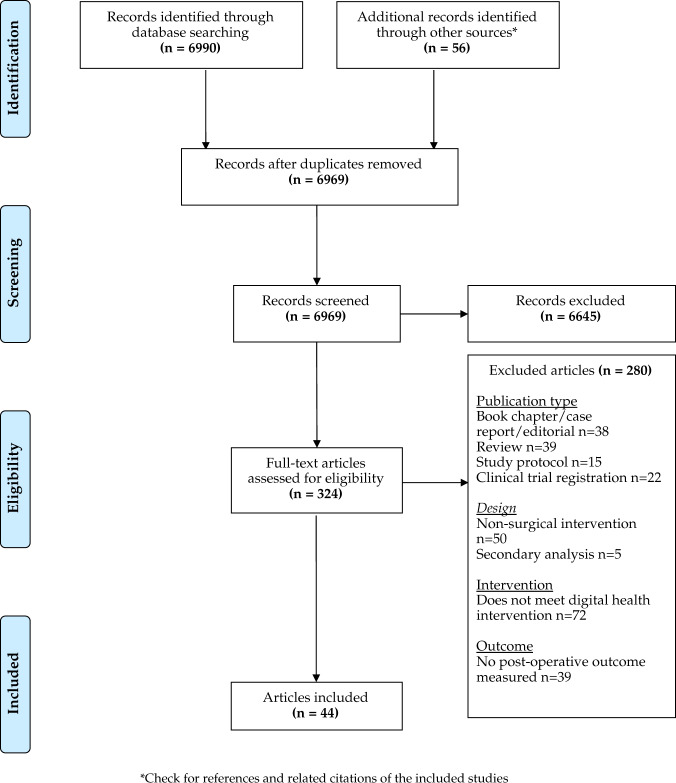
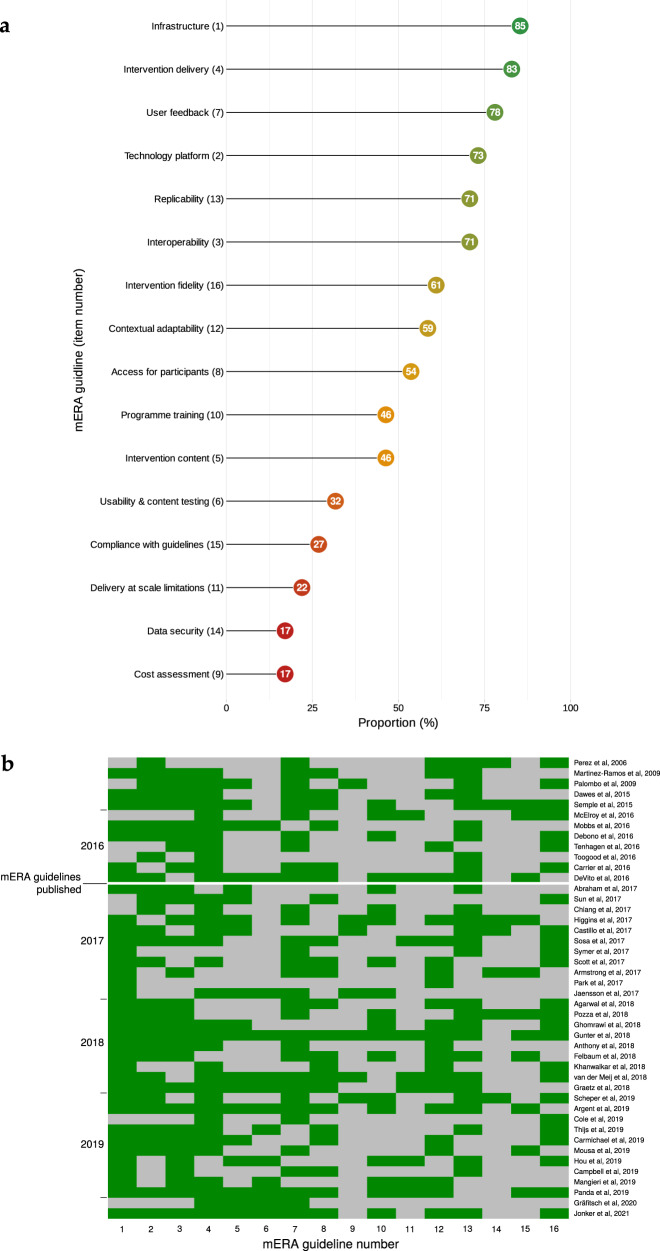
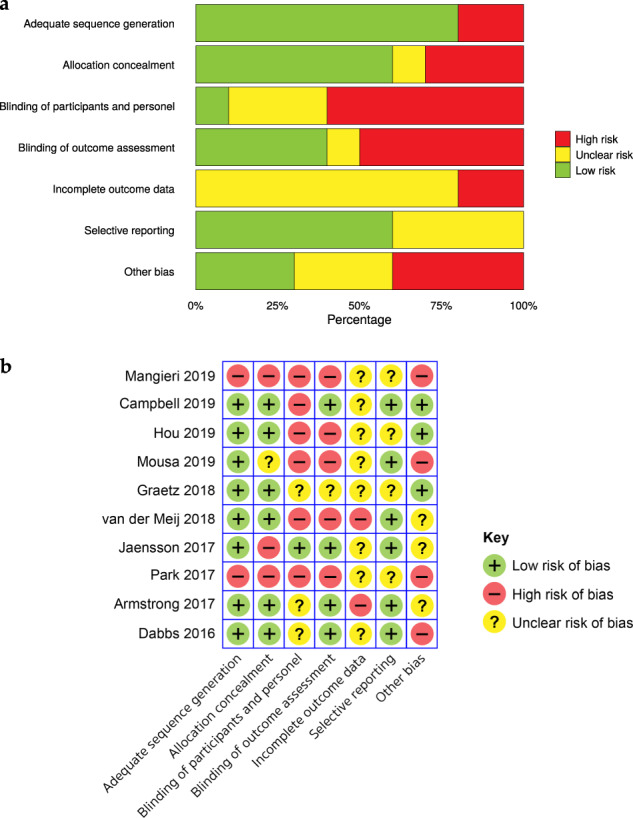
Complications following surgery are common and frequently occur the following discharge. Mobile and wearable digital health interventions (DHI) provide an opportunity to monitor and support patients during their postoperative recovery. Lack of high-quality evidence is often cited as a barrier to DHI implementation. This review captures and appraises the current use, evidence base and reporting quality of mobile and wearable DHI following surgery. Keyword searches were performed within Embase, Cochrane Library, Web of Science and WHO Global Index Medicus databases, together with clinical trial registries and Google scholar. Studies involving patients undergoing any surgery requiring skin incision where postoperative outcomes were measured using a DHI following hospital discharge were included, with DHI defined as mobile and wireless technologies for health to improve health system efficiency and health outcomes. Methodological reporting quality was determined using the validated mobile health evidence reporting and assessment (mERA) guidelines. Bias was assessed using the Cochrane Collaboration tool for randomised studies or MINORS depending on study type. Overall, 6969 articles were screened, with 44 articles included. The majority (n = 34) described small prospective study designs, with a high risk of bias demonstrated. Reporting standards were suboptimal across all domains, particularly in relation to data security, prior patient engagement and cost analysis. Despite the potential of DHI to improve postoperative patient care, current progress is severely restricted by limitations in methodological reporting. There is an urgent need to improve reporting for DHI following surgery to identify patient benefit, promote reproducibility and encourage sustainability.
Overview
The claims and statistics of this paper haven’t been checked yet.
Free: it reads the open-access text and checks the first 5 claims that cite a source we can check. Create a free account to check every claim.
Integrity signals
Registry
Cites
Statistics
Figures
Verification
Claims the paper makes
The claims and statistics of this paper haven’t been checked yet.
Free: it reads the open-access text and checks the first 5 claims that cite a source we can check. Create a free account to check every claim.
Claims other papers make about this one
Each is checked against this paper’s own text: does it say what the citing paper says it does?
The source backs part of the claim, not all of it — or backs it for a different population, condition or comparison.
In the citing paper
“Although digital self-help interventions can have positive effects, to optimise their benefits it is thus vital that they are systematically developed in a process of co-creation with stakeholders and patients (Klein et al., 2014; Scott et al., 2017; Knight et al., 2021).”
From Strength Back – A qualitative study on the co-creation of a positive psychology digital health intervention for spinal surgery patients (2023) · cites this paper as Knight et al., 2021
Experimental — accuracy not yet measuredThe source backs part of the claim, not all of it — or backs it for a different population, condition or comparison.
In the citing paper
“Their results indicate that digital health interventions have the potential to reduce complication rates, facilitate patient recovery, reduce inappropriate service use and improve longer-term outcomes after surgery.”
From Strength Back – A qualitative study on the co-creation of a positive psychology digital health intervention for spinal surgery patients (2023) · cites this paper as Knight et al., 2021
Experimental — accuracy not yet measuredThe cited source says what the claim attributes to it.
In the citing paper
“Interestingly, they also state that the studies in their review made little reference to engaging patients in the development of the digital health interventions.”
From Strength Back – A qualitative study on the co-creation of a positive psychology digital health intervention for spinal surgery patients (2023) · cites this paper as Knight et al., 2021
Self-check
Percentages, sums and reported differences re-computed from the paper’s own numbers.
The self-check needs the paper’s full text.
Citations
Cites
Preferred Reporting Items for Systematic Reviews and Meta-Analyses: the PRISMA statement
Moher, D., Liberati, A., Tetzlaff, J., Altman, D. G., & for the PRISMA Group (2009) · BMJ · doi:10.1136/bmj.b2535 · Cited by 83,823
Preferred Reporting Items for Systematic Reviews and Meta-Analyses: The PRISMA Statement
Moher, D., Liberati, A., Tetzlaff, J., Altman, D. G., & The PRISMA Group (2009) · PLoS Medicine · doi:10.1371/journal.pmed.1000097 · Cited by 64,042
Preferred reporting items for systematic reviews and meta-analyses: the PRISMA Statement.
(2009) · PubMed Central · Cited by 44,859
The Cochrane Collaboration's tool for assessing risk of bias in randomised trials
Higgins, J. P. T., Altman, D. G., Gotzsche, P. C., Juni, P., Moher, D., Oxman, A. D., Savovic, J., Schulz, K. F., Weeks, L., Sterne, J. A. C., et al. (2011) · BMJ · doi:10.1136/bmj.d5928 · Cited by 33,817
Dermyshi, E., Wang, Y., Yan, C., Hong, W., Qiu, G., Gong, X., & Zhang, T. (2017) · Neonatology · doi:10.1159/000454668 · Cited by 24,451
von Elm, E., Altman, D. G., Egger, M., Pocock, S. J., Gøtzsche, P. C., Vandenbroucke, J. P., & Initiative, F. T. S. (2007) · PLoS Medicine · doi:10.1371/journal.pmed.0040296 · Cited by 23,020
Wang, G., Ma, R., Qiao, G., Wada, K., Aizawa, Y., & Satoh, T. (2015) · Integrative Medicine International · doi:10.1159/000368408 · Cited by 18,657
von Elm, E., Altman, D. G., Egger, M., Pocock, S. J., Gøtzsche, P. C., & Vandenbroucke, J. P. (2008) · Journal of Clinical Epidemiology · doi:10.1016/j.jclinepi.2007.11.008 · Cited by 17,893
von Elm, E., Altman, D. G., Egger, M., Pocock, S. J., Gøtzsche, P. C., Vandenbroucke, J. P., & Initiative, F. T. S. (2007) · Annals of Internal Medicine · doi:10.7326/0003-4819-147-8-200710160-00010 · Cited by 17,796
CONSORT 2010 Statement: updated guidelines for reporting parallel group randomised trials
the CONSORT Group, Schulz, K. F., Altman, D. G., & Moher, D. (2010) · BMC Medicine · doi:10.1186/1741-7015-8-18 · Cited by 13,371
Research works printed but not linked: 1
- Altmetric. Guidelines for reporting of health interventions using mobile phones: mobile health (mHealth) evidence reporting and assessment (mERA) checklist: overview of attention for article published in British Medical Journal. https://www.altmetric.com/details/6208109. 26988021
Cited by
Artificial intelligence in surgery
Varghese, C., Harrison, E. M., O’Grady, G., & Topol, E. J. (2024) · Nature Medicine · doi:10.1038/s41591-024-02970-3 · Cited by 287
“One systematic review highlights 31 different wearable devices capable of monitoring vital signs, physiological parameters and physical activity 23 , but further work is required to realize the potential of these data, including improving the quality of research and reporting 126,127 .”
Self-citationDeniz-Garcia, A., Fabelo, H., Rodriguez-Almeida, A. J., Zamora-Zamorano, G., Castro-Fernandez, M., Alberiche Ruano, M. D. P., Solvoll, T., Granja, C., Schopf, T. R., Callico, G. M., et al. (2023) · Journal of Medical Internet Research · doi:10.2196/44030 · Cited by 268
“Other uses of AI-based mHealth apps have also been assessed, such as measuring patient outcomes after surgery [95] or managing public health challenges such as COVID-19 [96].”
On-Field Deployment and Validation for Wearable Devices
Kuo, C., Patton, D. A., Rooks, T. F., Tierney, G. J., McIntosh, A. S., Lynall, R. C., Esquivel, A. O., Daniel, R., Kaminski, T. W., Mihalik, J. P., et al. (2022) · Annals of Biomedical Engineering · doi:10.1007/s10439-022-03001-3 · Cited by 94
Wearable devices to monitor recovery after abdominal surgery: scoping review
Wells, C. I., Xu, W., Penfold, J. A., Keane, C., Gharibans, A. A., Bissett, I. P., & O’Grady, G. (2022) · BJS Open · doi:10.1093/bjsopen/zrac031 · Cited by 85
Prasanthi, S., Kumarachari, R. K., Bukke, S. P. N., Rajasekhar, E. S. K., Ashokkumar, J. A., & Eftekhari, Z. (2025) · Discover Oncology · doi:10.1007/s12672-025-02469-4 · Cited by 100
“This continuous monitoring allows for timely interventions, improving post-operative treatment strategies and reducing hospital readmissions [214].”
Evaluation of remote digital postoperative wound monitoring in routine surgical practice
McLean, K. A., Sgrò, A., Brown, L. R., Buijs, L. F., Daines, L., Potter, M. A., Bouamrane, M.-M., & Harrison, E. M. (2023) · npj Digital Medicine · doi:10.1038/s41746-023-00824-9 · Cited by 59
Surgical health policy 2025–35: strengthening essential services for tomorrow's needs
Nepogodiev, D., Picciochi, M., Ademuyiwa, A. O., Adisa, A., Agbeko, A. E., Aguilera, M. L., Agyei, F., Alexander, P. V., Henry, J. C. A., Anyomih, T. T. K., et al. (2025) · The Lancet · doi:10.1016/s0140-6736(25)00985-7 · Cited by 81
Recent progress of Ti3C2Tx-based MXenes for fabrication of multifunctional smart textiles
Meena, J. S., Choi, S. B., Jung, S., & Kim, J. (2022) · Applied Materials Today · doi:10.1016/j.apmt.2022.101612 · Cited by 53
The digital transformation of surgery
Marwaha, J. S., Raza, M. M., & Kvedar, J. C. (2023) · npj Digital Medicine · doi:10.1038/s41746-023-00846-3 · Cited by 47
McLean, K. A., Knight, S. R., Diehl, T. M., Varghese, C., Ng, N., Potter, M. A., Zafar, S. N., Bouamrane, M.-M., & Harrison, E. M. (2023) · The Lancet Digital Health · doi:10.1016/s2589-7500(23)00026-2 · Cited by 58
Mammen, J. R., Speck, R. M., Stebbins, G. M., Müller, M. L. T. M., Yang, P. T., Campbell, M., Cosman, J., Crawford, J. E., Dam, T., Hellsten, J., et al. (2023) · Journal of Parkinson’s Disease · doi:10.3233/jpd-225122 · Cited by 38
Preoperative Mobile Health Data Improve Predictions of Recovery From Lumbar Spine Surgery
Greenberg, J. K., Frumkin, M. R., Xu, Z., Zhang, J., Javeed, S., Zhang, J. K., Benedict, B. C., Botterbush, K. S., Yakdan, S. M., Molina, C. A., et al. (2024) · Neurosurgery · doi:10.1227/neu.0000000000002911 · Cited by 38
“As other studies have done, 26,27 the 30-day period was meant to capture early recovery relevant to setting patient expectations rather than long-term outcome or ultimate surgical bene fi t.”
Helmer, P., Hottenrott, S., Rodemers, P., Leppich, R., Helwich, M., Pryss, R. C., Kranke, P., Meybohm, P., Winkler, B. E., & Sammeth, M. (2022) · Journal of Medical Internet Research · doi:10.2196/42359 · Cited by 40
“Studies on the use of fitness trackers in a perioperative setting or among patients with multiple pre-existing diseases are rare [12] and, according to systematic reviews, also hampered by a high risk of bias [13] and suffer from low quality [14].”
Rossi, S. M. P., Panzera, R. M., Sangaletti, R., Andriollo, L., Giudice, L., Lecci, F., & Benazzo, F. (2024) · Healthcare · doi:10.3390/healthcare12020153 · Cited by 29
Getachew, E., Woldeamanuel, Y., & Manyazewal, T. (2022) · Frontiers in Digital Health · doi:10.3389/fdgth.2022.821390 · Cited by 35
Characterising nationwide reasons for unplanned hospital readmission after colorectal cancer surgery
Xu, W., Wells, C. I., McGuinness, M. J., Varghese, C., Keane, C., Liu, C., O’Grady, G., Bissett, I. P., & Harmston, C. (2023) · Colorectal Disease · doi:10.1111/codi.16467 · Cited by 15
“Wearable devices may allow for more rigorous monitoring of patient mobilisation and vital signs post- discharge, but first need to overcome technical and accuracy limitations [43, 44].”
BackgroundKamarajah, S. K., Lawani, I., Ademuyiwa, A. O., Adisa, A., Biccard, B. M., Ghosh, D., Galley, F., Haque, P. D., Harrison, E. M., Ingabire, J. A., et al. (2024) · The Lancet Global Health · doi:10.1016/s2214-109x(24)00318-8 · Cited by 19
Wang, P., Leong, Q. Y., Lau, N. Y., Ng, W. Y., Kwek, S. P., Tan, L. W. J., Song, S.-W., You, K., Chong, L. M., Zhuang, I., et al. (2024) · Singapore Medical Journal · doi:10.4103/singaporemedj.smj-2023-243 · Cited by 16
Lonner, J. H., Anderson, M. B., Redfern, R. E., Andel, D. V., Ballard, J. C., & Parratte, S. (2022) · International Orthopaedics · doi:10.1007/s00264-022-05651-3 · Cited by 15
Portable droplet-based real-time monitoring of pancreatic α-amylase in postoperative patients
Zhao, X., Kolbinger, F. R., Distler, M., Weitz, J., Makarov, D., Bachmann, M. P., & Baraban, L. (2024) · Biosensors and Bioelectronics · doi:10.1016/j.bios.2024.116034 · Cited by 14
Digital health interventions for postoperative recovery in children: a systematic review
Plummer, K., Adina, J., Mitchell, A. E., Lee‐Archer, P. F., Clark, J. M., Keyser, J., Kotzur, C., Qayum, A., & Griffin, B. R. (2024) · British Journal of Anaesthesia · doi:10.1016/j.bja.2024.01.014 · Cited by 13
Huelster, H. L., Zemp, L. W., Turner, K. L., Gonzalez, B. D., Jim, H., Gore, L. R., & Gilbert, S. M. (2022) · The Journal of Urology · doi:10.1097/ju.0000000000003048 · Cited by 14
Preventing Surgical Site Infections: Implementing Strategies Throughout the Perioperative Continuum
Rosa, R. M., Sposato, K. A., & Abbo, L. M. (2023) · AORN Journal · doi:10.1002/aorn.13913 · Cited by 23
Xu, W., Wells, C. I., Seo, S. H., Sebaratnam, G., Calder, S. S., Gharibans, A. A., Bissett, I. P., & O’Grady, G. (2024) · Journal of Surgical Research · doi:10.1016/j.jss.2024.06.038 · Cited by 13
Finding Meaningful Bayesian Confirmation Measures
Greco, S., Słowiński, R., & Szczęch, I. (2013) · Fundamenta Informaticae · doi:10.3233/fi-2013-902 · Cited by 12
Adopting wearables to customize health insurance contributions: a ranking-type Delphi
Neumann, D., Tiberius, V., & Biendarra, F. (2022) · BMC Medical Informatics and Decision Making · doi:10.1186/s12911-022-01851-4 · Cited by 10
“For example, current research exists on chronic obstructive pulmonary disease (COPD) [61], depression [62], distress [63], multiple sclerosis [64], Parkinson’s disease [65], post-surgery complications [66], and sleep apnea [67].”
BackgroundTemperature Monitoring for Early Detection of Postoperative Wound Infections: A Narrative Review
Fajferek, T., Joniec, A., Kaczara, S., Kulesza, E. M., Mikolajczyk, J., & Pietrzyk, B. (2025) · Applied Sciences · doi:10.3390/app152412856 · Cited by 11
Batool, Z., Wu, Q., Li, J., Weng, G., & Shen, B. (2026) · International Journal of Surgery · doi:10.1097/js9.0000000000004921 · Cited by 11
Farinella, E., Koliakos, N. N., Papakonstantinou, D., Breuer, N., Pau, L., Poras, M., Maréchal, M.-T., & Briganti, G. (2024) · Obesity Surgery · doi:10.1007/s11695-023-07000-8 · Cited by 12
“More than 10% of patients aged 45 and above encounter major postoperative complications [4], often occurring after discharge, necessitating readmission and associated with increased postoperative mortality across a range of surgical populations [5].”
Khetrapal, P., Bains, P. S., Jubber, I., Ambler, G., Williams, N. R., Brew‐Graves, C., Sridhar, A. N., Ta, A. D., Kelly, J. D., & Catto, J. W. F. (2023) · European Urology Oncology · doi:10.1016/j.euo.2023.09.021 · Cited by 8
Wearable Devices in Colorectal Surgery: A Scoping Review
Kavallieros, K., Karakozis, L., Hayward, R. K., Giannas, E., Selvaggi, L., & Kontovounisios, C. (2024) · Cancers · doi:10.3390/cancers16132303 · Cited by 9
“Our findings add to those of recent systematic reviews [8,32] assessing patient outcomes post-surgery, with a specific focus on colorectal surgery.”
BackgroundResultGeorgescu, I., Dricu, A., Artene, S.-A., Vrăjitoru, N.-R., Barcan, E., Tache, D. E., Giubelan, L.-I., Staicu, G.-A., Manea (Carneluti), E.-V., Pană, C., et al. (2024) · Applied Sciences · doi:10.3390/app14188097 · Cited by 6
Preventing alcohol use post-bariatric surgery: patient perspectives on a technology-based approach
Braciszewski, J. M., Hecht, L. M., Barnett, N. P., Moore, R. S., Carlin, A. M., Haley, E. N., & Miller-Matero, L. R. (2023) · Surgical Endoscopy · doi:10.1007/s00464-023-10407-0 · Cited by 7
“The use of technology-based interventions for mental and physical health issues continues to grow, becoming even more applicable in the COVID-19 era [9–11].”
BackgroundNatural product-based interventions for thyroid disorders: mechanisms and applications
El‐Akad, R. H., Elosaily, A. H., Gamil, N. M., Merghany, R. M., El‐Shiekh, R. A., Almagharbeh, W. T., & Eitah, H. E. (2025) · Naunyn-Schmiedeberg s Archives of Pharmacology · doi:10.1007/s00210-025-04604-y · Cited by 8
“It is only by this approach that clinicians may remain in the position of trying to afford their optimum available best quality service for improving life with high quality for patients with disorders of the thyroid gland (Knight et al. 2021).”
Kwasnicki, R. M., Giannas, E., Rizk, C., Kungwengwe, G., Dutta, T., Dunne, J. A., Dex, E., Gokani, V. J., Henry, F. P., Hunter, J. E., et al. (2024) · Journal of Plastic Reconstructive & Aesthetic Surgery · doi:10.1016/j.bjps.2024.04.048 · Cited by 7
“13 Using this technology in com - bination with PROMs and traditional surgical outcomes may allow for a more holistic understanding of postoperative out - comes following abdominal wall surgery.”
The use of wearable sensors in perioperative surgical care
Knight, S. R., McLean, K. A., & Harrison, E. M. (2024) · Nature Electronics · doi:10.1038/s41928-024-01313-x · Cited by 5
Digital health interventions for spinal surgery patients: A systematic scoping review
van der Horst, A., Kelders, S. M., Bohlmeijer, E. T., Schreurs, K. M. G., & Jukema, J. (2025) · Digital Health · doi:10.1177/20552076251328549 · Cited by 6
Advancing public health through artificial intelligence in physiotherapy: a bibliometric analysis
Hanafi, B., Hasan, A., Ahmad, A., & Ali, M. (2025) · Informatics and Health · doi:10.1016/j.infoh.2025.05.001 · Cited by 15
Extension of patient safety initiatives to perioperative care
Velasco, D. A., & Martín, D. P. (2022) · Current Opinion in Anaesthesiology · doi:10.1097/aco.0000000000001195 · Cited by 6
A vital sign signal noise suppression method for wearable piezoelectric devices
Xin, Y., Liu, H., Hou, T., Song, X., Tong, J., Cui, M., Li, M., & Zhai, J. (2023) · Review of Scientific Instruments · doi:10.1063/5.0155762 · Cited by 5
Van Der Horst, A. Y., Bohlmeijer, E. T., Schreurs, K. M. G., & Kelders, S. M. (2023) · Frontiers in Psychology · doi:10.3389/fpsyg.2023.1117357 · Cited by 4
“They see this as a missed opportunity and encourage future patient-centred research and interventions as this might also mitigate the problem of patient attrition from digital health interventions (Knight et al., 2021).”
BackgroundDigital health interventions for perioperative patient-reported outcomes: a network meta-analysis
Luo, Z., Zhou, R., Wei, J., Nong, K., Peng, X., Chen, L., Li, P., Deng, S., Ou, M., Ye, L., et al. (2026) · npj Digital Medicine · doi:10.1038/s41746-026-02398-8 · Cited by 6
“Ourresultswereconsistentwithprevioussystematicreviewsandmeta-analysis studies on DHIs, which have also identi fi ed improvements in chronic pain, functioning, and quality of life, although these studies did not speci fi callyfocusontheperioperativepopulation 32 – 35 .”
Skov, C. D., Holsgaard‐Larsen, A., Wiil, U. K., Lindberg‐Larsen, M., Varnum, C., & Jensen, C. M. (2024) · International Journal of Medical Informatics · doi:10.1016/j.ijmedinf.2024.105624 · Cited by 5
Post discharge digital health technology interventions in ambulatory surgery
Bentsen, S. B., Stjernberg, M., Raeder, J. C., Eide, G. E., Tvedt, M. N., & Hegland, P. A. (2025) · European Journal of Anaesthesiology · doi:10.1097/eja.0000000000002233 · Cited by 4
Wearable Technology in Orthopaedic Surgery: Applications and Future Directions
Iwasyk, A. W., Gaur, S. S., Federico, A. A., Holash, R. J., Nicholls, F. H., Monument, M. J., & Kendal, J. K. (2025) · JBJS Reviews · doi:10.2106/jbjs.rvw.25.00067 · Cited by 5
Patient Reported Outcomes and Measures in Children with Rhabdomyosarcoma
van Gorp, M., Grootenhuis, M. A., Darlington, A., Wakeling, S., Jenney, M. E. M., Merks, J. H. M., Hjalgrim, L. L., & Adams, M. K. M. (2023) · Cancers · doi:10.3390/cancers15020420 · Cited by 5
Yocum, D. S., Redfern, R. E., & Yergler, J. D. (2023) · Arthroplasty Today · doi:10.1016/j.artd.2023.101188 · Cited by 4
“Remote patient monitoring, particularly following total joint arthroplasty, has gained popularity with the increased adoption of technology over the past several years [2,3].”
BackgroundInfluentialTsanas, A. (2025) · IEEE Access · doi:10.1109/access.2025.3539278 · Cited by 4
Santos, B., Barboza, M., Leão, T., Santos, D. M. P. O., Andrade, A., & Bock, E. (2023) · International Journal of Advances in Medical Biotechnology - IJAMB · doi:10.52466/ijamb.v5i2.112 · Cited by 3
“Nonetheless, an exigency is perceived to enhance DHI reporting mechanisms, aimed at substantiating patient benefit, encouraging reproducibility, and advancing sustainability [24] .”
BackgroundRen, T., & Yu, J. (2025) · Acta Psychologica · doi:10.1016/j.actpsy.2025.105634 · Cited by 4
Mascagni, P., Alapatt, D., Sestini, L., Yu, T., Alfieri, S., Morales‐Conde, S., Padoy, N., & Perretta, S. (2024) · Cirugía Española · doi:10.1016/j.ciresp.2024.04.006 · Cited by 5
Evaluating Digitally Enabled Health Services
Gray, C. S., Shen, N., Phạm, Q., & Wiljer, D. (2025) · Springer eBooks · doi:10.1007/978-3-031-87869-5_17 · Cited by 3
Sripadrao, S., Carr, C., Quraishi, M., Abes, J., Mehra, M., James, K., Vale, F. Ĺ., & Pare, M. (2025) · The Spine Journal · doi:10.1016/j.spinee.2025.10.012 · Cited by 2
Ueter, S., Taebi, N., Weiß, C., Hetjens, M., Reißfelder, C., Blank, S., Otto, M., & Yang, C. (2024) · Contemporary Clinical Trials · doi:10.1016/j.cct.2024.107615 · Cited by 2
Artificial Intelligence in Sports Medicine
Fares, M. Y., Boufadel, P., Vadhera, A. S., & Abboud, J. A. (2024) · Springer eBooks · doi:10.1007/978-3-031-70310-2_12 · Cited by 3
What defines success after major surgery?
Wijeysundera, D. N. (2022) · Canadian Journal of Anesthesia/Journal canadien d anesthésie · doi:10.1007/s12630-022-02248-7 · Cited by 2
“portables pourraient constituer une alternative plus réalisable, mais des recherches supplémentaires sont nécessaires afin de déterminer si cette technologie peut fournir des données supplémentaires sur la récupération fonctionnelle postopératoire.(17) Si une nouvelle incapacité postopératoire importante est un résult…”
BackgroundMascagni, P., Alapatt, D., Sestini, L., Yu, T., Alfieri, S., Morales‐Conde, S., Padoy, N., & Perretta, S. (2024) · Cirugía Española (English Edition) · doi:10.1016/j.cireng.2024.04.009 · Cited by 3
Hu, Y., Wu, M., Zhang, Y., & Xie, L. (2025) · Healthcare · doi:10.3390/healthcare13060676 · Cited by 1
Artificial Intelligence in Healthcare: Navigating Security and Privacy Challenges
Çela, E., Fonkam, M. M., Vedishchev, A., & Vajjhala, N. R. (2025) · Information systems engineering and management · doi:10.1007/978-3-031-84404-1_1 · Cited by 3
Photonic crystal-based smart skin for monitoring joint mobility after total knee arthroplasty
You, Z., Wu, K., Fu, J., Chen, J., & Wan, G. (2025) · Materials Letters · doi:10.1016/j.matlet.2025.139253 · Cited by 1
Bulstrode, N., & Jovic, T. H. (2025) · Journal of Craniofacial Surgery · doi:10.1097/scs.0000000000011990 · Cited by 1
Evaluation of ECG Waveform Accuracy in the CardioBAN Wearable Device: An Initial Analysis
Escrivães, I., Lopes, D., Vilaça, J. L., Varela‐Lema, L., & Morais, P. (2025) · Applied Sciences · doi:10.3390/app152413143 · Cited by 2
Validating a digital recovery tool for autologous breast reconstruction
Kwasnicki, R. M., de Galbert, L., Poon, K., Giannas, E., Graham, J., Dunne, J. A., Gokani, V. J., Henry, F. P., Hunter, J. E., Williams, G. J., et al. (2026) · Journal of Plastic Reconstructive & Aesthetic Surgery · doi:10.1016/j.bjps.2026.02.016 · Cited by 1
Park, S.-R., Lee, J., Kwon, S., Kim, N., Kim, D. W., Yoon, D., Kim, K. M., & Lee, B. I. (2026) · Neurospine · doi:10.14245/ns.26520018.0009 · Cited by 1
Al-Smadi, F., Lin, Z., Li, N., Liao, J., Al-Smadi, S., Abudourusuli, X., Xie, X., Yu, C., Li, Y., Liu, M., et al. (2026) · Journal of Orthopaedic Translation · doi:10.1016/j.jot.2026.101172 · Cited by 1
“Wearable devices must be comfortable, low-burden, and easy to use to ensure patient adherence over months of recovery [23].”
InfluentialSakti, Y. M., Lanodiyu, Z. A., Baskara, A. A. N. N., Samyudia, E. R., Wijaya, W. W., & Emiri, D. M. (2026) · Journal of Minimally Invasive Spine Surgery and Technique · doi:10.21182/jmisst.2025.03041 · Cited by 1
Soley, N., Song, S., Flaks‐Manov, N., & Taylor, C. O. (2022) · Pacific Symposium on Biocomputing (PSB) · doi:10.1142/9789811270611_0004 · Cited by 1
“More than 10% of patients over the age of 45 encounter a significant postoperative complication, which is apparent in a variety of surgical groups [1].”
BackgroundHirai, K., Fujimoto, Y., Bamba, Y., Kageyama, Y., Hiroyuki, I. M. A., Ichise, A., Sasaki, H., & Nakagawa, R. (2023) · Neurologia medico-chirurgica · doi:10.2176/jns-nmc.2023-0093 · Cited by 1
“1,2,6) Although previ-Wearable Neurol Med Chir (Tokyo) 63, November, 2023 ous studies have shown that the absolute value of HR measured by wrist-worn devices is frequently underestimated, 3,19) the accuracy of built-in photoplethysmography in these devices is consistent with that of ECG,…”
Mi, Q., & Huang, C. (2025) · Obesity Surgery · doi:10.1007/s11695-025-07745-4 · Cited by 1
Portable Droplet-based Real-time Monitoring of Pancreatic α-amylase in Postoperative PatientsPreprint
Baraban, L., Zhao, X., Kolbinger, F. R., Distler, M., Weitz, J., Makarov, D., & Bachmann, M. P. (2023) · Research Square · doi:10.21203/rs.3.rs-2800086/v1 · Cited by 1
Furtado, G. E., Caldo‐Silva, A., Direito, F., Esteves, P., Costa-Brito, S., Moura, C. S., Teixeira, A. M., Abreu, C., & Rodrigues, R. N. (2023) · Lecture notes in bioengineering · doi:10.1007/978-3-031-47790-4_47
Septoplasty with or without Inferior Turbinectomy: A Declaration of Clinical Consensus
Musleh, A. (2023) · The International Tinnitus Journal · doi:10.5935/0946-5448.20230031
“On the other hand 39 , patient outcomes following septoplasty are essential for determining the efficacy of the procedure.”
BackgroundNichols, J. H., Assad, R. S., Becker, J., Dabla, P. K., Gammie, A. J., Gouget, B., Heydlauf, M., Homšak, E., Korita, I., Kotani, K., et al. (2024) · PubMed Central · Cited by 5
How long has the patient been like this?
Kapsetaki, M. E. (2025) · Health Policy and Technology · doi:10.1016/j.hlpt.2025.100983
Health Risk Management Using Persuasive Technology: A Scoping Review
Abhadiomhen, S. E., Nzeakor, E. O., & Oyibo, K. (2025) · Lecture notes in computer science · doi:10.1007/978-3-031-94959-3_15
Frumkin, M. R., Messner, G. R., Holzer, K. J., Xu, Z., Rodebaugh, T. L., Bernstein, H. W., Frey, K., Ahuja, S., Hanson, J., Lu, C., et al. (2025) · medRxiv · doi:10.1101/2025.07.27.25332242
“Digital technologies are increasingly used for remote monitoring of surgical patients [11,20].”
Optimizing Chronic Kidney Disease Self-management for Digital Health Interventions
Chai, C. W. E., Lau, B. T., & Tsun, M. T. K. (2025) · Lecture notes in networks and systems · doi:10.1007/978-981-96-5217-4_6
Zhang, W., Ross, M. K., & Frumkin, M. R. (2025) · medRxiv · doi:10.1101/2025.09.23.25336489
“In the surgical domain, wearables have primarily been applied to monitoring postoperative recovery via physical activity 26,27 .”
Multimorbidity measurement strategies for predicting hospital visits
Neves, B. D., Moreira, J. M., Gonçalves, S., Cerejo, J., Mota, I., Silva, N. A., Leite, F., & Silva, M. J. (2025) · BMC Health Services Research · doi:10.1186/s12913-025-13817-z
Wearable Technologies in Postoperative Nursing Care: Innovative Approaches in the Digital Health Age
ÇOBAN, N. (2025) · Fenerbahçe Üniversitesi Sağlık Bilimleri Dergisi · doi:10.56061/fbujohs.1794299 · Cited by 1
Lee, Y., Son, H. G., & Byun, J. (2026) · JMIR Formative Research · doi:10.2196/87928
Freires, R. A., de Aguiar, G. B., Dutra, J. L., Tannus, L. D. O., de Sousa, L. G., Cantão, B. D. C. G., Júnior, F. A. L., & de Lima, A. B. (2026) · Pará Research Medical Journal · doi:10.5327/prmj.969
Freires, R. A., de Sousa, L. G., Paulo, T. D. S., de Brito, M. F., Brito, M. V. H., & Sabbá, A. D. C. S. (2026) · Pará Research Medical Journal · doi:10.5327/prmj.991
Salib, J., Salib, M., & Tiesenga, F. M. (2026) · Cureus · doi:10.7759/cureus.111037
Cao, C., Shan, H., Jie, X., Lou, Y., Hou, Y., & Zhang, Y. (2026) · Lecture notes on data engineering and communications technologies · doi:10.1007/978-981-95-8876-3_38
Kolosovskaia, D., Strumegger, E.-M., Haag, D., Hutt, H., Kienel, A. S., Löb, S., Schmutzhart, C., Sturm, J., Zuckermann, A. O., Smeddinck, J. D., et al. (2026) · ACM Interactive Health Conference · doi:10.1145/3786579.3804956
“These technologies can support prehabilitation [37], postoperative recovery [28], and medication management [41], while motivating behavioral change and providing psychological support that can positively influence surgical outcomes [38].”
Tsai, Z.-R., Zheng, Y., Kuo, C.-H., Huang, Y.-M., Lin, W.-J., Suen, M., & Lin, C.-L. (2026) · Chinese Journal of Physics · doi:10.1016/j.cjph.2026.07.008
Computer Vision Approach to Triaging Patient-Submitted Photos of Intestinal Ostomies
Varghese, C., Choudhary, A., Larson, E. W., Lee, F., Baier, M., Glabe, C. L., Just, J. N., Friedrich, S., Merchea, A., Brady, J. T., et al. (2026) · Diseases of the Colon & Rectum · doi:10.1097/dcr.0000000000004366
Kwasnicki, R. M., Tupper, L., Hon, J., Zaidi, H., Graham, J., Dunne, J. A., Gokani, V. J., Jallali, N., Henry, F. P., Hunter, J. E., et al. (2026) · Plastic & Reconstructive Surgery Global Open · doi:10.1097/gox.0000000000007952
“Use of mobile phones has been explored, 22,23 largely by offering virtual appointments, photographic wound review, and integrated recovery questionnaires.”
Pagano, S., Dendorfer, S., & Renkawitz, T. F. (2026) · Journal of Personalized Medicine · doi:10.3390/jpm16070393
“Although the evidence base is now broad, it still includes many small observational and feasibility studies, especially in the gait-biomechanics literature [49,67].”
Tsanas, A., Steffan, B., Dixon, B., Hay, K., Pschetz, L., Jandrić, J., & Loretto, W. (2026) · Scientific Reports · doi:10.1038/s41598-026-58229-z
“Digital technologies have considerable potential towards providing continuous insights into both physical and mental wellbeing over and above PROMs, via passively collected information from different types of sensors 11,16–18 .”
Lenga, P., Fleige, R., Blumenstock, M. C., Ganzinger, M., Ille, S., Krieg, S. M., & Dugas, M. (2026) · European Spine Journal · doi:10.1007/s00586-026-10322-7
Fuschi, A., Sequi, M. B., Nacchia, A., Salhi, Y. A., Valenzi, F. M., Suraci, P. P., Corsini, A., Graziani, D., Lombardo, R., Carbone, F., et al. (2026) · Journal of Robotic Surgery · doi:10.1007/s11701-026-03696-9
“Many interventions rely on small, single-center studies and often exclude patients without smart-phones, limiting applicability beyond the selected cohort [37].”
Sekhon, H., Lajoie, A., Aly, S., Elbaz, S., Sekhon, K., Sidlofsky, R., Paquin, V., Forester, B. P., Chabot, J. ‐., Honvo, G., et al. (2026) · The Lancet Healthy Longevity · doi:10.1016/j.lanhl.2026.100885 · Cited by 1
Yadav, R., & Sharma, N. (2026) · Springer eBooks · doi:10.1007/978-981-92-3294-9_15
Terrapon, A. P. R., Schulz, E. R., Firtinidou, A., Heinig, S., Bertulli, L., Corr, F., Gönel, M., Nikolaeva, M., Petutschnigg, T., Sivanrupan, S., et al. (2026) · Journal of Medical Internet Research · doi:10.2196/100934
“Digital health tracking devices, including wearables and smartphone-based sensors, have been shown to detect complications earlier and improve postoperative care in general surgery [16,27] and are increasingly applied in neurosurgical patients as well [28].”
Suarez, P. A., Krothapalli, S., Leng, L., Maluf, F. C., Velasquez, M. C., Sui, W., Yang, H., Ahn, J. S., & Chi, T. (2026) · Urology · doi:10.1016/j.urology.2026.09.052
de Simone, B. D., Ferraro, A., Ascolese, J., & Catena, F. (2026) · Updates in surgery/Updates in surgery series · doi:10.1007/978-3-032-24281-5_5
Özel, A., Ugras, U. A., ÇEVİK, Ç., Sheikha, M. E., Jonnavithula, N., Lynch, B., Nazar, M. R., & Yakşi, O. (2026) · Digital Health · doi:10.1177/20552076261498087
Liu, X., Meng, J., Dai, X., Liu, P., Yin, H., Wang, S., & Gao, S. (2026) · Current Problems in Surgery · doi:10.1016/j.cpsurg.2026.102201
Metadata
- Authors
- Knight, S. R., Ng, N., Tsanas, A., Mclean, K., Pagliari, C., & Harrison, E. M.
- Affiliations
- University of Edinburgh (GB)
- Corresponding author
- Knight, Stephen R.
- ORCID
- Venue
- npj Digital Medicine
- Published
- 2021-11-12
- Volume
- 4
- Issue
- 1
- Pages
- 157-157
- ISSN
- 2398-6352 (ISSN-L)
- PMC
- PMC8590052
- OpenAlex
- W3213965463
- Cited by
- 104
- References
- 112
- Citations by year
- 2026: 30 · 2025: 25 · 2024: 19 · 2023: 18 · 2022: 11
- FWCI
- 2.49
- Type
- journal article
- Language
- en
- Open access
- gold
- doi.org
- Licence
- cc-by
- creativecommons.org/licenses/by/4.0 (tdm)
- creativecommons.org/licenses/by/4.0 (vor)
- Locations
- npj Digital Medicine (publishedVersion, cc-by)
- PubMed Central (publishedVersion, cc-by)
- PubMed (publishedVersion)
- DOAJ (DOAJ: Directory of Open Access Journals) (submittedVersion, cc-by-sa)
- Edinburgh Research Explorer (University of Edinburgh) (submittedVersion, cc-by)
- Funders
- DH | National Institute for Health Research (NIHR 17-0799)
- Topics
- Health Sciences › Health Professions › General Health Professions › Mobile Health and mHealth Applications
- Social Sciences › Psychology › Applied Psychology › Digital Mental Health Interventions
- Physical Sciences › Computer Science › Information Systems › Mobile Learning in Education
- Keywords
- mobile health, wearable devices, digital health interventions, postoperative recovery, postoperative complications, postoperative monitoring, patient outcomes, reporting quality, risk of bias, data security, patient engagement, cost analysis
About these checks
Registry, retraction, Cites and statistics results are computed, not judged, with one exception: a printed reference that no index lists is read once by a model before it counts as a citation error. Claims are extracted by a model and kept only when their quote appears verbatim in the text; each cited source is then checked, with a model’s help, for whether it says what the claim relies on. Those verdicts can be wrong — read the claim’s quote and the cited source before relying on one.
Statistics and arithmetic are recomputed, not judged.
Confidence bands are shown only for fields calibrated on our annotated test set. None is calibrated yet, so no band is shown.
What counts as a claim ›How we measure confidence ›How we check this ›
Are you an author, or do you see a problem with this page? Request a review
Data sources
Bibliographic data: Semantic Scholar, OpenAlex, Crossref.
Contains information from the Semantic Scholar Academic Graph Datasets, made available under the ODC Attribution License (ODC-BY 1.0).
Semantic Scholar’s data is described in: Kinney, R., et al. (2023). The Semantic Scholar Open Data Platform. arXiv:2301.10140.
