

The DOI matches its Crossref record; 44 of the 44 references it cites were found in a registry or an index.
An adversarial training framework for mitigating algorithmic biases in clinical machine learning
Open accessAbstract
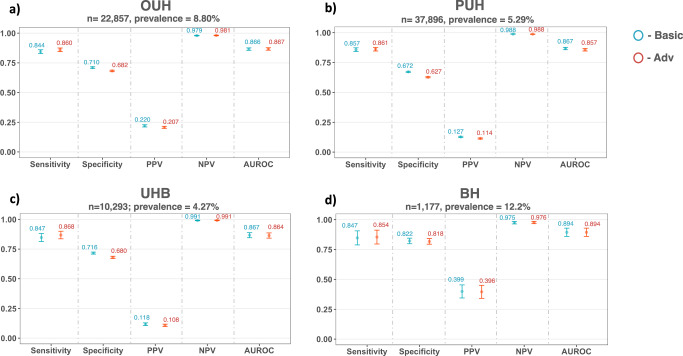
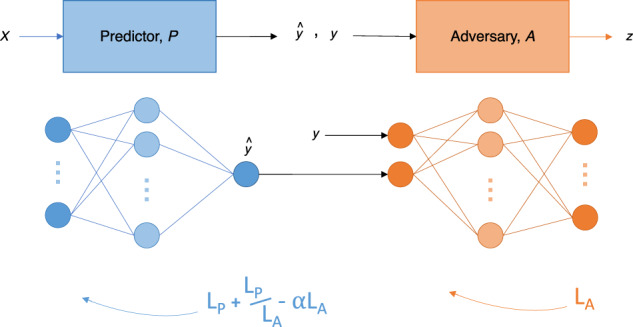
Machine learning is becoming increasingly prominent in healthcare. Although its benefits are clear, growing attention is being given to how these tools may exacerbate existing biases and disparities. In this study, we introduce an adversarial training framework that is capable of mitigating biases that may have been acquired through data collection. We demonstrate this proposed framework on the real-world task of rapidly predicting COVID-19, and focus on mitigating site-specific (hospital) and demographic (ethnicity) biases. Using the statistical definition of equalized odds, we show that adversarial training improves outcome fairness, while still achieving clinically-effective screening performances (negative predictive values >0.98). We compare our method to previous benchmarks, and perform prospective and external validation across four independent hospital cohorts. Our method can be generalized to any outcomes, models, and definitions of fairness.
Overview
The claims and statistics of this paper haven’t been checked yet.
Run the check — free, no account needed. It reads the open-access text and checks the sources it cites.
Integrity signals
Registry
Cites
Statistics
Figures
Verification
Claims the paper makes
The claims and statistics of this paper haven’t been checked yet.
Run the check — free, no account needed. It reads the open-access text and checks the sources it cites.
Claims other papers make about this one
Each is checked against this paper’s own text: does it say what the citing paper says it does?
In the citing paper
“On the other hand, AI systems can also suffer from bias, compounding existing inequities in socioeconomic status, race, ethnicity, religion, gender, disability, or sexual orientation.”
From Bias in AI-based models for medical applications: challenges and mitigation strategies (2023) · cites this paper as [7]
In the citing paper
“Bias particularly impacts disadvantaged populations, which can be subject to algorithmic predictions that are less accurate or underestimate the need for care.”
From Bias in AI-based models for medical applications: challenges and mitigation strategies (2023) · cites this paper as [7]
Self-check
Percentages, sums and reported differences re-computed from the paper’s own numbers.
The self-check needs the paper’s full text.
Citations
Cites
SMOTE synthetic minority over-sampling technique
Chawla, N. V., Bowyer, K. W., Hall, L. O., & Kegelmeyer, W. P. (2002) · Journal of Artificial Intelligence Research · doi:10.1613/jair.953 · Cited by 32,865
The meaning and use of the area under a receiver operating characteristic (ROC) curve.
Hanley, J. A., & McNeil, B. J. (1982) · Radiology · doi:10.1148/radiology.143.1.7063747 · Cited by 21,856
A Survey on Bias and Fairness in Machine Learning
Mehrabi, N., Morstatter, F., Saxena, N., Lerman, K., & Galstyan, A. (2022) · ACM Computing Surveys · doi:10.1145/3457607 · Cited by 5,812
Dwork, C., Hardt, M., Pitassi, T., Reingold, O., & Zemel, R. (2012) · Proceedings of the 3rd Innovations in Theoretical Computer Science Conference · doi:10.1145/2090236.2090255 · Cited by 3,501
Mitigating Unwanted Biases with Adversarial Learning
Zhang, B. H., Lemoine, B., & Mitchell, M. (2018) · Proceedings of the 2018 AAAI/ACM Conference on AI, Ethics, and Society · doi:10.1145/3278721.3278779 · Cited by 1,387
Seyyed-Kalantari, L., Zhang, H., McDermott, M. B. A., Chen, I. Y., & Ghassemi, M. (2021) · Nature Medicine · doi:10.1038/s41591-021-01595-0 · Cited by 928
Federated learning for predicting clinical outcomes in patients with COVID-19
Dayan, I., Roth, H. R., Zhong, A., Harouni, A., Gentili, A., Abidin, A. Z., Liu, A., Costa, A. B., Wood, B. J., Tsai, C.-S., et al. (2021) · Nature Medicine · doi:10.1038/s41591-021-01506-3 · Cited by 842 · cited 1×
“Recently, researchers have shown that federated learning (FL) could effectively predict clinical outcomes of COVID-19, using combined data from multiple sites 20 .”
BackgroundGenetic Misdiagnoses and the Potential for Health Disparities
Manrai, A. K., Funke, B. H., Rehm, H. L., Olesen, M. S., Maron, B. A., Szolovits, P., Margulies, D. M., Loscalzo, J., & Kohane, I. S. (2016) · New England Journal of Medicine · doi:10.1056/nejmsa1507092 · Cited by 808
Three naive Bayes approaches for discrimination-free classification.
Calders, T., & Verwer, S. (2010) · Data Mining and Knowledge Discovery · doi:10.1007/s10618-010-0190-x · Cited by 764
Synthetic data in machine learning for medicine and healthcare
Chen, R. J., Lu, M. Y., Chen, T. Y., Williamson, D. F. K., & Mahmood, F. (2021) · Nature Biomedical Engineering · doi:10.1038/s41551-021-00751-8 · Cited by 728
Research works printed but not linked: 8
- Hardt, M., Price, E. & Srebro, N. Equality of opportunity in supervised learning. Adv. Neural Inf. Process. Syst. 29, 3315–3323 (2016).
- Iosifidis, V. & Ntoutsi, E. Dealing with bias via data augmentation in supervised learning scenarios. Jo Bates Paul D. Clough Robert Jäschke 24, 11 (2018).
- Wang, H., Ustun, B., Calmon, F. P. & Harvard, S. E. A. S. Avoiding disparate impact with counterfactual distributions. In NeurIPS Workshop on Ethical, Social and Governance Issues in AI. (2018).
- Pleiss, G., Raghavan, M., Wu, F., Kleinberg, J. & Weinberger, K. Q. On fairness and calibration. Adv. Neural Inf. Process. Syst. 30, 5680–5689 (2017).
- Menon, A. K. & Williamson, R. C. The cost of fairness in binary classification. In Conference on Fairness, Accountability and Transparency (pp. 107–118) PMLR. (2018).
- Jung, C. et al. An algorithmic framework for fairness elicitation. arXiv. https://arxiv.org/abs/1905.10660 (2019). · arXiv
- Kim, M., Reingold, O. & Rothblum, G. Fairness through computationally-bounded awareness. Adv. Neural Inf. Process. Syst. 31, 4842–4852 (2018).
- Blazer, D. G. & Hernandez, L. M. (Eds.). Genes, behavior, and the social environment: Moving beyond the nature/nurture debate. (2006).
Cited by
Sorted by citations
Items 101–167 of 167
TransFair: Transferring fairness from ocular disease classification to progression prediction
Shi, M., Gheisi, L., Chu, C. H., Gottumukkala, R. N., Luo, Y., Wang, M., & Xingquan Zhu, A. (2025) · Artificial Intelligence in Medicine · doi:10.1016/j.artmed.2025.103331 · Cited by 1
Li, P., Zhang, X., Hu, X., Lin, Z., & Zhou, D. (2026) · Bioinformatics · doi:10.1093/bioinformatics/btag317 · Cited by 1
Yata, V. K., Jena, S., Indracanti, M., Chitta, S., & Kolliputi, N. (2026) · Frontiers in Digital Health · doi:10.3389/fdgth.2026.1816806 · Cited by 1
Application of a data stratification approach in computer medical monitoring systems
Donets, V., Shevchenko, D., Holikov, M., Strilets, V., & Shmatkov, S. (2024) · Eastern-European Journal of Enterprise Technologies · doi:10.15587/1729-4061.2024.298805 · Cited by 1
Assessing the Role of Sensitive Attributes in Adversarial Debiasing
Minatel, D., Parmezan, A. R. S., Souza, V. M. A., & Rezende, S. O. (2025) · doi:10.5753/eniac.2025.12452 · Cited by 1
Reducing Social Biases in Language Models: A Comparative Evaluation of Debiasing Strategies
Kamboj, P., Kumar, S., & Goyal, V. (2025) · International Conference on Advanced Computing and Emerging Technologies (ACET) · doi:10.1109/acet67282.2025.11430255 · Cited by 1
Fairness at Risk: Where Bias Emerges in Machine Learning
Albuquerque, O. D. P., Fantinato, M., & Peres, S. M. (2026) · Expert Systems · doi:10.1111/exsy.70265 · Cited by 1
Kindt, R. M. B., dos Reis, T. S., da Silva, L. D., Duarte, R. C., Cassiolato, H. M. P., Carneiro, V., da Costa, J. C. T., Pinheiro, F. D. S., Simas, L., de Oliveira, Y. T. F. H., et al. (2026) · Derecho y cambio social. · doi:10.54899/dcs.v23i90.5717 · Cited by 1
Naeem, M. (2026) · Applied Soft Computing · doi:10.1016/j.asoc.2026.115935 · Cited by 1
Mitigating Bias in Image Classification - Pretraining on Diverse Data for Improved Generalization
Shirvalkar, R., & Geetha, M. K. (2023) · International Conference on Electronics, Materials Engineering & Nano-Technology (IEMENTech) · doi:10.1109/iementech60402.2023.10423435 · Cited by 1
Navigating Bias and Ensuring Fairness in Federated Learning
Vajrobol, V., Aggarwal, N., Baranwal, P., Saxena, G. J., Pundir, A., & Singh, S. (2025) · Wiley eBooks · doi:10.1002/9781394271382.ch11 · Cited by 1
Fair Latent Representation Learning with Adaptive Reweighing
Majumdar, P., Sharma, R. S., Bhattacharya, R., & Prajesh, B. (2024) · Lecture notes in computer science · doi:10.1007/978-3-031-78110-0_5
Exploring Score-Based Ranking Fairness in Marketplace Environments Through Simulation
Silva, L. C., & Lucrédio, D. (2025) · Lecture notes in computer science · doi:10.1007/978-3-031-79035-5_19
AI to the Rescue: Revolutionizing Early Melanoma Detection with Machine Learning
Herrick, G., Susla, L., Frasier, K. M., Hassan, H., Salisbury, S., Esquivel, E., Jani, Y., & Grand, Z. (2025) · ARC Journal of Dermatology · doi:10.20431/2456-0022.0801005
Balancing Innovation and Safety in Digital Healthcare
Sharma, S., Singh, M. P., & Pradhan, K. B. (2025) · Global Clinical Engineering Journal · doi:10.31354/globalce.v7i1.262
Innovative AI Approaches in Oral Proficiency Testing: Ethical Implications of ASR Systems
Periyasamy, A., Manoharan, G., Alazzam, M. B., Mythili, M., Giftsy Dorcas, E., & Prema, S. (2025) · IEEE International Conference on Industrial Electronics: Developments & Applications (ICIDeA) · doi:10.1109/icidea64800.2025.10963053
Digital Health Technology and Advanced Analytics in Lifestyle Medicine
Thomas, J. G., Panza, E. A., Perski, O., & Goldstein, S. P. (2025) · Springer eBooks · doi:10.1007/978-3-031-82888-1_31
Huang, Y., Alvernaz, S. A., Kim, S. J., Maki, P. M., Boyd, A. D., Dai, Y. D., & Bernabé, B. P. (2025) · medRxiv · doi:10.1101/2025.05.12.25327329
Frugal AI: The New Era of Sustainable Deep LearningPreprint
Bouali, Y. L., Ahmed, O. B., Bradai, A., & Mazouzi, S. (2025) · SSRN Electronic Journal · doi:10.2139/ssrn.5334656
Yu, Q., Zhou, S., Liu, H., & Qin, L. (2025) · International Symposium on Computer Technology and Information Science (ISCTIS) · doi:10.1109/isctis65944.2025.11065985
Fair Summarization in the Age of Large Language Models: A Comprehensive Survey
Mittal, S., Das, V., Yadav, V. H., & Singh, K. (2025) · International Conference on Intelligent Communication Technologies and Virtual Mobile Networks (ICICV) · doi:10.1109/icicv64824.2025.11086003
Adversarial Debiasing for Equitable and Fair Detection of Acute Coronary Syndrome Using 12-Lead ECG
Ji, R. Q., Riek, N. T., Bouzid, Z., Kraevsky-Phillips, K., Gokhale, T., Zègre‐Hemsey, J. K., Clermont, G., Saba, S., Martin‐Gill, C., Callaway, C. W., et al. (2025) · IEEE Transactions on Biomedical Engineering · doi:10.1109/tbme.2025.3597527
THE “THREE-SYSTEM VIEW” MODEL. A POSSIBLE SOLUTION SOURCED IN “PRE-JUDICATIVE HERMENEUTICS”
CREŢU, S. (2025) · The Annals of the University of Bucharest Philosophy Series · doi:10.62229/aubpslxxiii/2_24/5
Predicting Patient Self-reported Race From Skin Histological Images with Deep Learning
Chen, S., Verma, R., Clare, K., Jegminat, J., Alleva, E., Huang, K., Veremis, B. M., Fuchs, T. J., & Campanella, G. S. V. (2025) · Lecture notes in computer science · doi:10.1007/978-3-032-05870-6_11
Bias and Justice in Neurological AI
Rudroff, T. (2025) · Neurocultural health and wellbeing · doi:10.1007/978-3-032-11596-6_7
EndoCompass Project: Artificial Intelligence in Endocrinology
Assié, G., Carneiro, G., Davies, E., Šojat, A. S., & Mertens, J. (2025) · Hormone Research in Paediatrics · doi:10.1159/000549153
Trustworthy assessment of 2D model for lung CT scans
Favali, M., Miskovic, V., Eusebio, A., Trovò, F., Provenzano, L., Guirges, B., Ruggirello, M., Garassino, M. C., Proto, C., Russo, G. L., et al. (2025) · Annual International Conference of the IEEE Engineering in Medicine and Biology Society (EMBC) · doi:10.1109/embc58623.2025.11254399
Yang, J., Triendl, H., Soltan, A. A. S., Prakash, M., & Clifton, D. A. (2024) · Figshare · doi:10.6084/m9.figshare.26122686
Self-citationHaque, S., Sufyan, M., Mathkor, D. M., Wahid, M., MANDAL, R. K., & Ahmad, F. (2026) · Journal of King Saud University - Science · doi:10.25259/jksus_69_2025
Shah, S. (2025) · International Journal of Social Science and Economic Research · doi:10.46609/ijsser.2025.v10i11.011
Do, H., Ranganath, R., Murray, K. S., & Nayan, M. (2026) · Cancer Medicine · doi:10.1002/cam4.71544
The subtleties of abolishing “race correction” in clinical artificial intelligence
Abdalla, M., James, L., Jones, D. S., & Abdalla, M. (2026) · Journal of the American Medical Informatics Association · doi:10.1093/jamia/ocag012
AI-Augmented Cytogenetics in Hematologic Malignancies: A Diagnostic Paradigm Shift
Kang, J. (2026) · Current pharmacogenomics and personalized medicine (Online)/Current pharmacogenomics and personalized medicine · doi:10.2174/0118756921438543251212114619
Allam, O., Ajjawi, I., Salib, A., Rancu, A. L., Perez, P. F., Kauke‐Navarro, M., Diatta, F., Pršić, A., Butler, P. D., & Alperovich, M. A. (2026) · Plastic & Reconstructive Surgery Global Open · doi:10.1097/gox.0000000000007544
Unified Adversarial Training for Bias Mitigation and Privacy Preservation
Vuagniaux, R., Dia, M., Saeedi, S., Narduzzi, S., Türetken, E., & Maamari, N. (2026) · Lecture notes in networks and systems · doi:10.1007/978-3-032-05748-8_39
Koo, H., Toikkanen, M., Kim, Y. T., Kim, S. Y., & Kim, J.-W. (2026) · IEEE International Conference on Acoustics Speech and Signal Processing · doi:10.1109/icassp55912.2026.11462615
Emerging artificial intelligence in thyroid cancer intervention: an overview
Omenka, O. S., Suardi, N., Mustafa, I. S., & Oke, A. O. (2026) · Neural Computing and Applications · doi:10.1007/s00521-026-11986-4
Mørch-Pedersen, M., Nørregaard, M., Graff, C., Vad, O. B., Lundegaard, P. R., Svendsen, J. H., Hansen, T. F., Linneberg, A. R., Jørgensen, P. G., Jensen, M. T., et al. (2026) · Biomedical Signal Processing and Control · doi:10.1016/j.bspc.2026.110424
AI–driven models for early detection and prevention of cardiovascular diseases
Chugh, B., Abbot, V., Chakraborthy, G. S., Tripathi, A. K., Vishwakarma, D. K., Lamba, M., & Lamba, J. (2026) · Elsevier eBooks · doi:10.1016/b978-0-443-44025-0.00017-6
Centering the marginalized: AI-driven strategies for advancing health equity in rare disease care
Lei, C., Zuo, Y., Lopes, C. A., Stuart, J., Xu, B., Liu, T. Y. A., Ploug, T., Wang, Z., Dang, K., Jin, K., et al. (2026) · Patterns · doi:10.1016/j.patter.2026.101535
Adaptive Fairness Penalty Evolutionary Optimization with Entropy-Guided Constraint Control
Saker, L. (2026) · Eng—Advances in Engineering · doi:10.3390/eng7050230
Abhivardhan (2026) · Springer eBooks · doi:10.1007/978-981-95-3658-0_62
Won, Y. J., Park, C. Y., Kim, J. H., Chang, H., Heo, S., Cha, W. C., Kim, M., Shin, Y., Xiao, K., & Kim, T. (2026) · doi:10.2196/preprints.100713
Kim, E., Long, X., & Tong, J. D. (2026) · Manufacturing & Service Operations Management · doi:10.1287/msom.2025.0053
Task-Tailored Pre-Processing: Fair Downstream Supervised Learning
Sohn, J., Song, Q., & Lin, G. (2026) · IEEE Transactions on Pattern Analysis and Machine Intelligence · doi:10.1109/tpami.2026.3697632
Bhuvaneswari, U. (2026) · International Conference on Trends in Electronics and Informatics (ICOEI) · doi:10.1109/icoei68323.2026.11541925
A Dual-Level Data-Driven Framework for Reducing Financial Fraud in Banking
Jahan, N., Sultana, S. R., Sayeema, A., Firdaus, S., Maua, J., & Shoaib, H. A. (2026) · International Conference on Pervasive Computing and Social Networking (ICPCSN) · doi:10.1109/icpcsn68523.2026.11543716
Mao, Y., Mao, Z., Dai, L., & Han, J. (2026) · Results in Engineering · doi:10.1016/j.rineng.2026.111549
Big Data Credit Scoring and MSME Credit Access: Evidence from Fintech Lending in Indonesia
PURWANTO, S., Wuryandari, N. E. R., Perkasa, D. H., & Kurniawan, A. (2026) · Financial Engineering · doi:10.37394/232032.2026.4.6
Model-Specific Disruption of Demographic Prediction in Retinal Fundus ImagesPreprint
Majid, I., & Wang, M. (2026) · medRxiv · doi:10.64898/2026.06.23.26356379
Test-fairness deep learning with influence score
Wu, J. C., Shih, C.-Y., Wu, N.-C., Chen, W.-W., Lu, H. H., & Lo, S. (2026) · PLOS Digital Health · doi:10.1371/journal.pdig.0001513
Organ Perfusion: Time As a Therapeutic Ally
(2026) · Frontiers Media SA eBooks · doi:10.3389/978-2-8325-8109-4
Adversarial Multimodal Fusion for Demographically Fair Virtual Interview Assessment
D, M. G. (2026) · Journal of Intelligent Decision Making and Information Science · doi:10.59543/jidmis.v3.804
Lee, Y.-C., Li, J., Zhang, R., & Liu, N. (2026) · Cambridge University Press eBooks · doi:10.1017/9781009625180.002
Data Stewardship Barriers to Building Digital Twin Technology for Precision Medicine
Silva, P. J., Tao, J., Rogers, S. L., He, Q., Robert, J. D., Black, L., Bruce, S. A., Shireman, P. K., & Ramos, K. S. (2026) · AI in Medicine · doi:10.3390/aimed1030020
Bias Detection and Fairness Optimization in Algorithmic Systems
Josylin, T. M., Gupta, T., Prabhakar, B., Goswami, S., Sivasankari, V., Gayathri, M., Santhanalakshmi, S. T., & A., P. M. (2026) · International Journal of Artificial Intelligence and Machine Learning · doi:10.51483/ijaiml.6.5s.2026.263-271
Zablah, I., Hernandez, E., Garcia, F., Zuniga, A., & Loureiro, A. G. (2026) · LACCEI International Multi-Conference for Engineering, Education and Technology (LACCEI) · doi:10.18687/laccei2026.1.1.1229
Ethics in AI-driven safety culture
Pathirathna, A. K., Arunthavanathan, R., & Don, M. G. (2026) · Methods in chemical process safety · doi:10.1016/bs.mcps.2026.07.006
Dean, G., & Ruddle, R. A. (2026) · BMJ Open · doi:10.1136/bmjopen-2026-118200
Large Language Models for Optimizing Patient Recruitment Decisions in Voice Data Generation Projects
Anibal, J., Nama, G. K. C., Ganesh, S., Nafii, Y., Cruz, S. S., Daoud, V., Zanin, M., Le, T., Khorrami, P., Wood, B. J., et al. (2026) · Laryngoscope Investigative Otolaryngology · doi:10.1002/lio2.70519
Self-citationAhouz, F., Kafaee, M., Deldar, K., & Golabpour, A. (2026) · Scientific Reports · doi:10.1038/s41598-026-67844-9
Sultan, M. (2026) · The Paris Conference on Education, official conference proceedings · doi:10.22492/issn.2758-0962.2026.42
Sun, X., Zou, X., Wu, Y., Zhang, S., & Wang, G. (2026) · Pattern Recognition · doi:10.1016/j.patcog.2026.114701
A Large Language Model Integration Architecture for Clinical Decision Infrastructure
Turner, M., Nguyen, S., Clark, D., & Wilson, E. (2025) · Journal of Artificial Intelligence for Healthcare Systems · doi:10.68159/c376023636
Mahfouz, K., Abdelaziz, R., Adel, S., Mostafa, D., Nabil, T., & Saad, R. (2025) · Journal of Health Informatics and Digital Systems · doi:10.68159/y292926779
Karalunas, S. L., Faraone, S. V., Mooney, M. A., Weiskopf, N. G., Doyle, A. E., Kurtz‐Nelson, E. C., Keehn, R. M., Sibley, M. H., Wozniak, J. R., Zaback, T., et al. (2026) · Biological Psychiatry Cognitive Neuroscience and Neuroimaging · doi:10.1016/j.bpsc.2026.10.006
Metadata
- Authors
- Yang, J., Soltan, A. A. S., Eyre, D. W., Yang, Y., & Clifton, D. A.
- Affiliations
- University of Oxford (GB)
- John Radcliffe Hospital (GB)
- Shanghai Jiao Tong University (CN)
- Corresponding author
- Yang, Jenny
- Venue
- npj Digital Medicine
- Published
- 2023-03-29
- Volume
- 6
- Issue
- 1
- Pages
- 55-55
- ISSN
- 2398-6352 (ISSN-L)
- PMC
- PMC10050816
- OpenAlex
- W4361285150
- Cited by
- 159
- References
- 40
- Citations by year
- 2026: 44 · 2025: 66 · 2024: 38 · 2023: 11
- FWCI
- 39.78
- Type
- journal article
- Language
- en
- Open access
- gold
- doi.org
- Locations
- npj Digital Medicine (publishedVersion, cc-by)
- PubMed Central (publishedVersion, cc-by)
- PubMed (publishedVersion)
- DOAJ (DOAJ: Directory of Open Access Journals) (submittedVersion, cc-by-sa)
- Funders
- Wellcome Trust (0009350)
- Robertson Foundation
- University Hospitals Birmingham NHS Foundation Trust
- National Institute for Health Research Health Protection Research Unit
- National Institute for Health and Care Research (ACF-2020-13-015)
- Royal Academy of Engineering
- University of Oxford
- European Commission (HORIZON2020, 955681)
- Shanghai Jiao Tong University
- Oxford University Hospitals NHS Foundation Trust
- Medical Research Council (MC_PC_19049)
- Topics
- Physical Sciences › Computer Science › Artificial Intelligence › Ethics and Social Impacts of AI
- Physical Sciences › Computer Science › Artificial Intelligence › Machine Learning in Healthcare
- Health Sciences › Medicine › Health Informatics › Artificial Intelligence in Healthcare and Education
- Keywords
- adversarial training, algorithmic bias, machine learning in healthcare, fairness, equalized odds, COVID-19 prediction, ethnic prejudice, health disparities, external validation
About these checks
Registry, retraction, Cites and statistics results are computed, not judged, with one exception: a printed reference that no index lists is read once by a model before it counts as a citation error. Claims are extracted by a model and kept only when their quote appears verbatim in the text; each cited source is then checked, with a model’s help, for whether it says what the claim relies on. Those verdicts can be wrong — read the claim’s quote and the cited source before relying on one.
Statistics and arithmetic are recomputed, not judged.
Confidence bands are shown only for fields calibrated on our annotated test set. None is calibrated yet, so no band is shown.
What counts as a claim ›How we measure confidence ›How we check this ›
Are you an author, or do you see a problem with this page? Request a review
