

Evaluating large language models on medical evidence summarization
Open accessPublished version of a preprint
The DOI matches its Crossref record; 30 of the 30 references it cites were found in a registry or an index.
Abstract
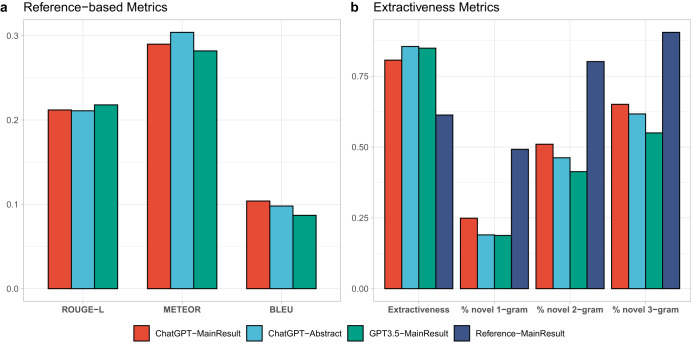
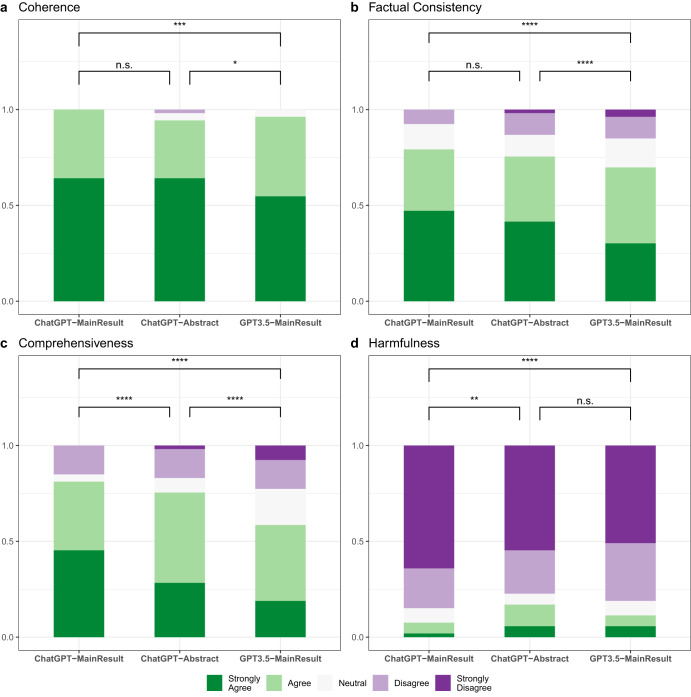
Recent advances in large language models (LLMs) have demonstrated remarkable successes in zero- and few-shot performance on various downstream tasks, paving the way for applications in high-stakes domains. In this study, we systematically examine the capabilities and limitations of LLMs, specifically GPT-3.5 and ChatGPT, in performing zero-shot medical evidence summarization across six clinical domains. We conduct both automatic and human evaluations, covering several dimensions of summary quality. Our study demonstrates that automatic metrics often do not strongly correlate with the quality of summaries. Furthermore, informed by our human evaluations, we define a terminology of error types for medical evidence summarization. Our findings reveal that LLMs could be susceptible to generating factually inconsistent summaries and making overly convincing or uncertain statements, leading to potential harm due to misinformation. Moreover, we find that models struggle to identify the salient information and are more error-prone when summarizing over longer textual contexts.
Overview
The claims and statistics of this paper haven’t been checked yet.
Free: it reads the open-access text and checks the first 5 claims that cite a source we can check. Create a free account to check every claim.
Integrity signals
Registry
Cites
Statistics
Figures
Verification
Claims the paper makes
The claims and statistics of this paper haven’t been checked yet.
Free: it reads the open-access text and checks the first 5 claims that cite a source we can check. Create a free account to check every claim.
Claims other papers make about this one
Each is checked against this paper’s own text: does it say what the citing paper says it does?
The source backs part of the claim, not all of it — or backs it for a different population, condition or comparison.
In the citing paper
“Automated metrics do not correlate with quality and human input to score coherence, inconsistencies, comprehensiveness and harmfulness are semi-quantitative and will differ based on the use care in which LLM are applied [5, 13].”
From A pilot feasibility study comparing large language models in extracting key information from ICU patient text records from an Irish population (2024) · cites this paper as [13]
Experimental — accuracy not yet measuredThe source backs part of the claim, not all of it — or backs it for a different population, condition or comparison.
In the citing paper
“Most LLM studies have depended on human lead semi-quantitative assessment of coherence, comprehensiveness, harmfulness and factual inconsistencies as well as comparing LLM with human based summaries [5, 13, 14].”
From A pilot feasibility study comparing large language models in extracting key information from ICU patient text records from an Irish population (2024) · cites this paper as [13]
Experimental — accuracy not yet measuredThe cited source says what the claim attributes to it.
In the citing paper
“Other studies employ human experts to evaluate synthesized abstracts, demonstrating that NLP metrics are not sufficient to measure summary quality56.”
From Adapted large language models can outperform medical experts in clinical text summarization (2024) · cites this paper as [56]
The cited source says what the claim attributes to it.
In the citing paper
“this is consistent with other studies that found that error rates increased with greater length of texts [13].”
From A pilot feasibility study comparing large language models in extracting key information from ICU patient text records from an Irish population (2024) · cites this paper as [13]
The cited source says what the claim attributes to it.
In the citing paper
“Overall, we found that while summaries had reasonable score for readability, their ability to list all clinically relevant events was only moderate and this is consistent with other studies that found that error rates increased with greater length of texts [13].”
From A pilot feasibility study comparing large language models in extracting key information from ICU patient text records from an Irish population (2024) · cites this paper as [13]
2 more claims about this paper
Create a free account to see every claim other papers make about this one.
Self-check
Percentages, sums and reported differences re-computed from the paper’s own numbers.
The self-check needs the paper’s full text.
Citations
Cites
Language Models are Few-Shot Learners
Brown, T. B., Mann, B., Ryder, N., Subbiah, M., Kaplan, J., Dhariwal, P., Neelakantan, A., Shyam, P., Sastry, G., Askell, A., et al. (2020) · arXiv · doi:10.48550/arxiv.2005.14165 · Cited by 23,372
BLEU: a method for automatic evaluation of machine translation
Papineni, K., Roukos, S., Ward, T., & Zhu, W.-J. (2001) · Proceedings of the 40th Annual Meeting on Association for Computational Linguistics - ACL '02 · doi:10.3115/1073083.1073135 · Cited by 21,344
Chain-Of-Thought Prompting Elicits Reasoning in Large Language Models
Wei, J., Wang, X., Schuurmans, D., Bosma, M., Ichter, B., Xia, F., Chi, E., Le, Q. V., & Zhou, D. (2022) · Advances in Neural Information Processing Systems 35 · doi:10.52202/068431-1800 · Cited by 4,505
Chain-of-Thought Prompting Elicits Reasoning in Large Language Models
Wei, J., Wang, X., Schuurmans, D., Bosma, M., Ichter, B., Xia, F., Chi, E., Le, Q., & Zhou, D. (2022) · arXiv · doi:10.48550/arxiv.2201.11903 · Cited by 4,263
Training language models to follow instructions with human feedback
Ouyang, L., Wu, J., Jiang, X., Almeida, D., Wainwright, C. L., Mishkin, P., Zhang, C., Agarwal, S., Slama, K., Ray, A., et al. (2022) · arXiv · doi:10.48550/arxiv.2203.02155 · Cited by 4,208
Large language models encode clinical knowledge
Singhal, K., Azizi, S., Tu, T., Mahdavi, S. S., Wei, J., Chung, H. W., Scales, N., Tanwani, A., Cole-Lewis, H., Pfohl, S., et al. (2023) · Nature · doi:10.1038/s41586-023-06291-2 · Cited by 4,083
Large Language Models Encode Clinical Knowledge
Singhal, K., Azizi, S., Tu, T., Mahdavi, S. S., Wei, J., Chung, H. W., Scales, N., Tanwani, A., Cole-Lewis, H., Pfohl, S., et al. (2022) · arXiv · doi:10.48550/arxiv.2212.13138 · Cited by 4,083
PaLM: Scaling Language Modeling with Pathways
Chowdhery, A., Narang, S., Devlin, J., Bosma, M., Mishra, G., Roberts, A., Barham, P., Chung, H. W., Sutton, C., Gehrmann, S., et al. (2022) · arXiv · doi:10.48550/arxiv.2204.02311 · Cited by 2,590
Large language models are zero-shot reasoners
Kojima, T., Gu, S. (., Reid, M., Matsuo, Y., & Iwasawa, Y. (2022) · Advances in Neural Information Processing Systems 35 · doi:10.52202/068431-1613 · Cited by 2,013
Large Language Models are Zero-Shot Reasoners
Kojima, T., Gu, S. S., Reid, M., Matsuo, Y., & Iwasawa, Y. (2022) · arXiv · doi:10.48550/arxiv.2205.11916 · Cited by 2,013
Research works printed but not linked: 2
- Lin, C.-Y. ROUGE: a package for automatic evaluation of summaries. In Text Summarization Branches Out.8 74–81, Barcelona, Spain (Association for Computational Linguistics, 2004).
- Banerjee, S. & Lavie, A. METEOR: an automatic metric for MT evaluation with improved correlation with human judgments. In Proc. ACL Workshop on Intrinsic and Extrinsic Evaluation Measures for Machine Translation and/or Summarization 65–72, Ann Arbor, Michigan (Association for Computational Linguistics, 2005).
Cited by
Items 201–300 of 494
Matalon, J., Spurzem, A., Ahsan, S., White, E., Kothari, R., & Varma, M. (2024) · Frontiers in Artificial Intelligence · doi:10.3389/frai.2024.1477535 · Cited by 6
Research trends and the impact of ChatGPT on educational environments
Firdaus, T., Mufidah, R., Hamida, R. N., Febrianti, R. I., & Guivara, A. E. R. (2025) · International Journal of Social Sciences and Education Research · doi:10.24289/ijsser.1609741 · Cited by 6
Chiu, E. K.-Y., Sridhar, S., Wong, S. S. Y., Tam, A. R., Choi, M.-H., Lau, A. W.-T., Wong, W.-C., Chiu, K. H., Ng, Y.-Z., Yuen, K., et al. (2025) · Healthcare · doi:10.3390/healthcare13070744 · Cited by 9
Hairston, J., Ranjan, R., Lakamana, S., Spadaro, A., Bozkurt, S., Perrone, J., & Sarker, A. (2025) · JAMIA Open · doi:10.1093/jamiaopen/ooaf102 · Cited by 6
Assessing Human Viewpoints in Theory of Mind for Large Language Models in Open-Ended Questioning
Amirizaniani, M. (2024) · ACM International Conference on Information and Knowledge Management (CIKM) · doi:10.1145/3627673.3680273 · Cited by 6
Cross sectional pilot study on clinical review generation using large language models
Luo, Z., Qiao, Y., Xu, X., Li, X., Xiao, M., Aijia, K., Wang, D., Pang, Y., Xie, X., Xie, S., et al. (2025) · npj Digital Medicine · doi:10.1038/s41746-025-01535-z · Cited by 7
Stawicki, S. P., Martinez-Baladejo, M. T., & Ng-Pellegrino, A. (2023) · International Journal of Academic Medicine · doi:10.4103/ijam.ijam_63_23 · Cited by 6
Zürrer, W. E., Cannon, A. E., Ewing, E., Brüschweiler, D., Bugajska, J., Hild, B. F., Rosso, M., Reich, D. S., & Ineichen, B. V. (2024) · PLoS ONE · doi:10.1371/journal.pone.0311358 · Cited by 7
Shah-Mohammadi, F., & Finkelstein, J. (2025) · Studies in health technology and informatics · doi:10.3233/shti250054 · Cited by 6
Üşen, A., & Küçülmez, Ö. (2025) · Diagnostics · doi:10.3390/diagnostics15121455 · Cited by 5
Walking Backward to Ensure Risk Management of Large Language Models in Medicine
Onitiu, D., Wachter, S., & Mittelstadt, B. (2025) · The Journal of Law Medicine & Ethics · doi:10.1017/jme.2025.10132 · Cited by 7
AI ‐powered nursing handoffs: Introducing and evaluating the patient report template
Vald, G., Sermet, Y., Chi, N., & Demir, İ. (2025) · Learning Health Systems · doi:10.1002/lrh2.70026 · Cited by 5
Kunuku, M. T., & Dehbozorgi, N. (2025) · Communications in computer and information science · doi:10.1007/978-3-031-99261-2_49 · Cited by 6
Artificial intelligence: Revolutionizing pediatric emergency care - A narrative review
Saha, A., Shukla, A., & Bhaskar, V. (2025) · International Journal of Critical Illness and Injury Science · doi:10.4103/ijciis.ijciis_24_25 · Cited by 6
Asif, S., Hadi, F., Ain, Q. U., Yan, Y., Wang, V. Y., & Xu, D. (2025) · Computer Science Review · doi:10.1016/j.cosrev.2025.100847 · Cited by 6
Evolving Consultation: Enhancing Ophthalmic Diagnostic Performance Using Large Language Model
Inooka, T., Ota, H., Taki, Y., Yasuda, S., Sajiki, A. F., Suzumura, A., Shimizu, H., Takeuchi, J., Tomita, R., Kominami, T., et al. (2025) · Ophthalmology Science · doi:10.1016/j.xops.2025.101004 · Cited by 5
Mugu, V. K., Sorin, V., Chan, A., Briggs, C., Carr, B. M., Olson, M., Schupbach, J. C., Zietlow, J. M., Saddoughi, S. A., Schmitz, J., et al. (2025) · Journal of Thoracic Disease · doi:10.21037/jtd-2025-1318 · Cited by 5
García-Montero, P. S., Vizcaíno-Imacaña, P., Reyes-Chacón, I. G., & Morocho-Cayamcela, M. E. (2025) · IEEE Access · doi:10.1109/access.2025.3622138 · Cited by 6
More, V., Lu, L., Ding, Z., Ding, Z., Xi, Z., Mizia, S., & Guo, N. (2026) · npj Precision Oncology · doi:10.1038/s41698-025-01265-1 · Cited by 14
Paci, S. (2026) · Chinese Political Science Review · doi:10.1007/s41111-026-00335-4 · Cited by 6
Zong, C., Wan, J., Tang, S.-L., & Zhang, L. (2025) · Artif. Intell. Medicine · doi:10.1016/j.artmed.2025.103246 · Cited by 5
Large language models as partners in medical literature
Pérez-Guerrero, E. J., Mehrotra, I., Jain, S. S., & Perez, M. V. (2024) · Heart Rhythm · doi:10.1016/j.hrthm.2024.07.097 · Cited by 6
TacTalk: Personalizing Haptics Through Conversation
Mishra, A., & Schneider, O. (2025) · ACM Conference on Conversational User Interfaces (CUI) · doi:10.1145/3719160.3736638 · Cited by 5
Gül, M. C. (2025) · BMC Medical Education · doi:10.1186/s12909-025-07856-7 · Cited by 4
Küçülmez, Ö., Üşen, A., & Ahi, E. D. (2025) · Rheumatology International · doi:10.1007/s00296-025-05996-z · Cited by 5
Should we be wary of using artificial intelligence-based big data management in social research?
Ejdys, J., Garwolińska, M., Lăzăroiu, G., Nica, E., di Pietro, F., Poskrobko, T., & Szpilko, D. (2025) · Journal of Business Economics and Management · doi:10.3846/jbem.2025.24792 · Cited by 4
Vasilev, Y. A., Vladzymyrskyy, A. V., Omelyanskaya, O. V., Alymova, Y. A., Альфредовна, А. Д., Федоровна, Ш. Ю., Kodenko, M. R., Blokhin, I. A., & Reshetnikov, R. V. (2025) · AI · doi:10.3390/ai6110287 · Cited by 4
Development and Evaluation of an Augmented Artificial Intelligence Model for Urogynecology Queries
Moureau, M. K., Davis, B., & Hong, C. X. (2025) · International Urogynecology Journal · doi:10.1007/s00192-025-06446-x · Cited by 4
Physicians Outperform Large Language Models in Pediatric Discharge Summary Generation
Bain, A. P., Wilson, A. E., Webb, J. W., Ngai, D., Martinez, K., Twumasi, A., Vallala, S., Cullinan, K., Blazek, M., Singh, G., et al. (2026) · Hospital Pediatrics · doi:10.1542/hpeds.2025-008569 · Cited by 5
Promises and challenges of applying large language models in the healthcare domain
Wang, Q., Gong, Z., Lai, Z., Bu, L., Dahlweid, F.-M., & Sun, H. (2026) · Frontiers in Digital Health · doi:10.3389/fdgth.2026.1772274 · Cited by 4
From Transformers Come Themes: Evaluating BERTopic for Qualitative Analysis of Social Media Data
Kaur, A., & Wallace, J. (2025) · International Conference on Human-Engaged Computing (ICHEC) · doi:10.1145/3786995.3786997 · Cited by 4
Zhan, Z.-F., Zhou, S., & Zhang, R. (2026) · J. Am. Medical Informatics Assoc. · doi:10.1093/jamia/ocag042 · Cited by 1
Natural Language Processing in Gastroenterology
Parasa, S., & Sridhar, A. R. M. (2025) · Gastrointestinal Endoscopy Clinics of North America · doi:10.1016/j.giec.2024.09.005 · Cited by 4
Hurwitz, E. G., Meltzer-Brody, S. E., Butzin-Dozier, Z., Patel, R. C., Elhadad, N., & Haendel, M. A. (2025) · JMIR Formative Research · doi:10.2196/67585 · Cited by 8
Assessing risk of bias of cohort studies with large language models
Xia, D., Lai, H., Zhao, W., Huang, J., Liu, J., Ye, Z., Liu, J., Sun, M., Hou, L., Pan, B., et al. (2025) · Research Synthesis Methods · doi:10.1017/rsm.2025.10028 · Cited by 5
„Creating God“: Religiöse Metaphorik in KI- und Technikdiskursen
Rothenhäusler, A. (2024) · De Gruyter eBooks · doi:10.1515/9783111351490-013 · Cited by 4
Tessler, I., Yamin, T., Peeri, H., Alon, E. E., Zimlichman, E., Glicksberg, B. S., & Klang, E. (2024) · Future Medicine AI · doi:10.2217/fmai-2024-0001 · Cited by 4
Lokker, C., McKibbon, K. A., Afzal, M., Navarro, T., Linkins, L., Haynes, R. B., & Iorio, A. (2024) · Journal of Medical Internet Research · doi:10.2196/58764 · Cited by 8
Ding, X., Gopannagari, M., Sun, K., Tao, A., Zhao, D., Varadhan, S., Hardy, B., Dalpiaz, D., Vogiatzis, C., Angrave, L., et al. (2024) · ASEE Annual Conference & Exposition · doi:10.18260/1-2--47360 · Cited by 6
Salimi, Y., Adams, T., Ay, M. C., Balabin, H., Jacobs, M. D., & Hofmann‐Apitius, M. (2025) · Scientific Reports · doi:10.1038/s41598-025-06447-2 · Cited by 4
Bao, X., Zhu, X., Yang, D., Lou, H., Wang, R., Wu, Y., Li, W., Xia, Y., Zeng, L., Pan, Y., et al. (2025) · Journal of Translational Medicine · doi:10.1186/s12967-025-06871-y · Cited by 4
Mensah, P. B., Quao, N. S. A., & Dagadu, S. (2024) · medRxiv · doi:10.1101/2024.04.17.24305971 · Cited by 6
Assessing The Potential Of Mid-Sized Language Models For Clinical QAPreprint
Bolton, E., Xiong, B., Muralidharan, V., Schamroth, J., Muralidharan, V., Manning, C. D., & Daneshjou, R. (2024) · arXiv (Cornell University) · doi:10.48550/arxiv.2404.15894 · Cited by 9
AI Managed Emergency Documentation with a Pretrained ModelPreprint
Menzies, D., Kirwan, S., & AlBarqawi, A. (2024) · arXiv (Cornell University) · doi:10.48550/arxiv.2408.09193 · Cited by 5
Evaluating Large Reasoning Model Performance on Complex Medical Scenarios In The MMLU-Pro BenchmarkPreprint
Hoyt, R. E., Knight, D. R. T., Haider, M., & Bajwa, M. (2025) · medRxiv · doi:10.1101/2025.04.07.25325385 · Cited by 4
Svoboda, I., & Lande, D. (2024) · arXiv · doi:10.48550/arxiv.2402.07404 · Cited by 4
Ma, M., Wang, M., Wei, L., Fei, X., & Chen, H. (2025) · Journal of Biomedical Informatics · doi:10.1016/j.jbi.2025.104823 · Cited by 4
Improving Discharge Summary Generation through Clinical Text Summarization with QLoRA and LLMs
Kumar, A. R., Abraham, A., Niranjan, P., Soman, S., & Varghese, A. (2025) · International Conference on Control, Communication and Computing (ICCC) · doi:10.1109/iccc64910.2025.11077215 · Cited by 3
Scalable scientific interest profiling using large language models
Liang, Y., Zhang, G., Sun, E., Idnay, B., Fang, Y., Chen, F.-Y., Ta, C., Peng, Y., & Weng, C. (2025) · Journal of Biomedical Informatics · doi:10.1016/j.jbi.2025.104949 · Cited by 4
Self-citationMushtaq, S., & Veningston, K. (2026) · International Journal of Data Science and Analytics · doi:10.1007/s41060-025-00956-z · Cited by 7
Han, T., Hyun, J., Jeong, W. K., Shin, J., Roh, Y. H., & Kim, M. J. (2026) · European Journal of Radiology · doi:10.1016/j.ejrad.2026.112677 · Cited by 3
Machine Learning-Empowered Depression Detection With Wearable Skin Electronics: A Review
Xu, Y., Zhao, Z., Zhu, H., Lai, S., Jia, Y., & Liu, G. (2026) · IEEE Sensors Journal · doi:10.1109/jsen.2026.3660322 · Cited by 3
The role of large language models in emergency care: a comprehensive benchmarking study
Naderi, B., Liu, L., Ghandehari, A., Khoshons, D., Taylor, R. A., Bhavsar, N., Balasubramanian, S., Tanouye, R., Creech, N., Davidson, C., et al. (2026) · npj Artificial Intelligence · doi:10.1038/s44387-026-00078-2 · Cited by 4
Pont, T. R. D., Billi, M., Sabo, I. C., Lagioia, F., Hübner, J. F., Sartor, G., & Rover, A. J. (2026) · Computer law & security review · doi:10.1016/j.clsr.2026.106280 · Cited by 6
Liu, Y., John, J., Sarkar, S., Zakkar, A., Kinkopf, P., Teo, P. T., & Abazeed, M. E. (2026) · JCO Clinical Cancer Informatics · doi:10.1200/cci-25-00284 · Cited by 4
LLM or Human? Perceptions of Trust and Quality in Research Summaries
Akpinar, N.-J., Avula, S., Lee, C., Dang, B., Razat, K., & Murdock, V. (2026) · CHI Conference on Human Factors in Computing Systems · doi:10.1145/3772318.3793386 · Cited by 8
Fleurence, R., Qureshi, R., Aggarwal, R., Bian, J., Cheyne, S., Dawoud, D., Faden, R., & Chhatwal, J. (2026) · Value in Health · doi:10.1016/j.jval.2026.06.012 · Cited by 8
Evaluating Vision-Language Models in Visual Comprehension for Autonomous Driving
Zhou, S., Li, J., Yamauchi, T., Cai, J., & Tei, K. (2024) · IEEE International Conference on Software Engineering and Artificial Intelligence (SEAI) · doi:10.1109/seai62072.2024.10674252 · Cited by 7
Wahab, M. H. H., Hamid, N. A. W. A., Subramaniam, S. K., Latip, R. B., & Othman, М. (2024) · Expert Systems with Applications · doi:10.1016/j.eswa.2024.125951 · Cited by 3
Balancing Efficiency and Quality in LLM-Based Entity Resolution on Structured Data
Nananukul, N., & Kekriwal, M. (2025) · Lecture notes in computer science · doi:10.1007/978-3-031-78548-1_21 · Cited by 5
Chen, M., Zhang, Z., Chen, J., Rebibo, D., Wu, H., Fung, S.-H., Cheng, A. S., Tsui, S. K., Sinha, S., Cao, Q., et al. (2025) · Computational and Structural Biotechnology Journal · doi:10.1016/j.csbj.2025.07.042 · Cited by 4
Singh, N., Neubronner, S., Kanayan, S., Illanes, S. E., Choolani, M. A., & Kemp, M. W. (2025) · Singapore Medical Journal · doi:10.4103/singaporemedj.smj-2024-173 · Cited by 3
Aspect-Oriented Summarization for Psychiatric Short-Term Readmission Prediction
Yoon, W., Ren, B., Thomas, S., Kim, C., Savova, G., Hall, M., & Miller, T. A. (2025) · Conference on Empirical Methods in Natural Language Processing (EMNLP) · doi:10.18653/v1/2025.emnlp-main.1423 · Cited by 5
Shankar, B. S., & Mohan, S. (2025) · Cureus · doi:10.7759/cureus.79556 · Cited by 3
Chen, Y., Yang, J., Lee, H. K., Tribby, C. P., Benmarhnia, T., Jankowska, M., & Gel, Y. R. (2025) · IEEE International Conference on Acoustics Speech and Signal Processing · doi:10.1109/icassp49660.2025.10889624 · Cited by 5
LevelEval: Adaptive Pipeline for Evaluating LLM as a Judge - Analysis on Open LLMs as Judges
Boyapati, M., Meesala, L., Aygün, R. S., Franks, B., Choi, H., Riordan, S., & Modgil, G. (2024) · International Conference on AI x Data and Knowledge Engineering (AIxDKE) · doi:10.1109/aixdke63520.2024.00020 · Cited by 4
Terminators: Terms of Service Parsing and Auditing Agents
Mridul, M. A., Kang, I., & Seneviratne, O. W. (2025) · ACM Web Science Conference (WebSci) · doi:10.1145/3720554.3736183 · Cited by 4
Are Clinical T5 Models Better for Clinical Text?Preprint
Li, Y., Harrigian, K., Zirikly, A., & Dredze, M. H. (2024) · arXiv (Cornell University) · doi:10.48550/arxiv.2412.05845 · Cited by 6
SCOPE: A Self-supervised Framework for Improving Faithfulness in Conditional Text Generation
Duong, S., Bronnec, F. L., Allauzen, A., Guigue, V., Lumbreras, A., Soulier, L., & Gallinari, P. (2025) · International Conference on Learning Representations · doi:10.48550/arxiv.2502.13674 · Cited by 8
From Queries to Criteria: Understanding How Astronomers Evaluate LLMsPreprint
Hyk, A., McCormick, K., Zhong, M., Ciucă, I., Sharma, S., Wu, J. F., Peek, J., Iyer, K. G., Xiao, Z., & Field, A. (2025) · arXiv (Cornell University) · doi:10.48550/arxiv.2507.15715 · Cited by 6
Liang, P., Chen, J., Gong, X., Huang, H., & Pu, B. (2025) · SSRN Electronic Journal · doi:10.2139/ssrn.5394129 · Cited by 5
Osama, M., Amjad, M., Mustansar, Z., Shaukat, A., & Khan, M. (2026) · arXiv (Cornell University) · doi:10.48550/arxiv.2606.14149 · Cited by 3
AI-driven abstract generating: evaluating LLMs with a tailored prompt under the PRISMA-A framework
Demi̇r, G. B., Gökmen, Ş., Süküt, Y., Topsakal, K. G., & Görgülü, S. (2025) · BMC Oral Health · doi:10.1186/s12903-025-06982-4 · Cited by 2
Khurana, J., Zaki, H. A., Pavlick, E., Turbitt, J., McGee, H. A., Gupta, S., Datla, S. S. P., Eldeeb, S., Salazar‐Mather, T. P., Warrier, S. S., et al. (2026) · BMC Medical Education · doi:10.1186/s12909-026-09975-1 · Cited by 2
Language models in digital psychiatry: challenges with simplification of healthcare materials
Aich, A., Liu, T., Giorgi, S., Isman, K., Bobojonova, R., Ungar, L., & Curtis, B. (2025) · NPP—Digital Psychiatry and Neuroscience · doi:10.1038/s44277-025-00029-w · Cited by 4
Greenberg, S. E., Reys, B. D., Fisher, H., & Basit, M. A. (2025) · Journal of Genetic Counseling · doi:10.1002/jgc4.70058 · Cited by 2
Koulouris, D., Kalathas, D., Menychtas, A., Pasias, A., Athanasiou, V., Tsanakas, P. D., & Maglogiannis, I. G. (2025) · IFIP advances in information and communication technology · doi:10.1007/978-3-031-96231-8_25 · Cited by 3
Automated Feedback Loops to Protect Text Simplification with Generative AI from Information Loss
Nandiraju, A. K. S. K., Gondy Leroy, A., Kauchak, D., & Ahmed, A. (2025) · Lecture notes in networks and systems · doi:10.1007/978-3-032-00071-2_31 · Cited by 3
MediFusion AI: An Integrated System for Multimodal Disease Diagnosis and Patient-Doctor Interaction
Nassir, H. A., Hassan, S. Z., Vinoy, A. C., Saktheeswaran, D., & Konikkara, D. (2025) · International Conference on Advances in Computing, Communication, Embedded and Secure Systems (ACCESS) · doi:10.1109/access65134.2025.11135715 · Cited by 2
HEAL-Summ: a lightweight and ethical framework for accessible summarization of health information
Fisher, A., Srinivasan, K. K., Hillier, S. A., & Mago, V. (2025) · Frontiers in Public Health · doi:10.3389/fpubh.2025.1619274 · Cited by 2
Extracting TNFi switching reasons and trajectories from real-world data using large language models
Miao, B. Y., Binvignat, M., García-Agúndez, A., Bravo, M., Williams, C. Y. K., Miao, C. Q., Alaa, A. M., Rudrapatna, V. A., Butte, A. J., Schmajuk, G., et al. (2025) · JAMIA Open · doi:10.1093/jamiaopen/ooaf132 · Cited by 3
Talukdar, N., Zhang, X., Paithankar, S., Wang, H., & Chen, B. (2025) · Drug Discovery Today · doi:10.1016/j.drudis.2025.104552 · Cited by 5
Husseini, A. A. A., Al-Asadi, A. J. M., Alsadi, A. M., Hasan, M. H., Jehad, M. T., Hussein, A. M., & Muhamad, M. N. (2025) · International Conference on Cyber Resilience (ICCR) · doi:10.1109/iccr67387.2025.11292063 · Cited by 2
Carras, M. C., Qureshi, R., Naaman, K., Aldayel, F., Date, M., Aljuboori, D., & Thrul, J. (2026) · JMIR Formative Research · doi:10.2196/69707 · Cited by 2
Yogo, T. (2025) · Frontiers in Veterinary Science · doi:10.3389/fvets.2025.1690085 · Cited by 2
Zhu, J., Li, J., Zhao, S., Deng, Y., Miao, Y., & Xu, J. (2026) · The Journal of Supercomputing · doi:10.1007/s11227-025-08182-x · Cited by 3
Advancing medical AI through benchmarking and competition for specialty triage
Ding, C., Bian, M., Yuan, M., Jiang, L., Luo, K., Chen, P., JIANG, Y., & Xu, J. (2026) · npj Digital Medicine · doi:10.1038/s41746-026-02433-8 · Cited by 2
Khoruzhaya, A. N., Varyukhina, M. D., Erizhokov, R. A., Blokhin, I. A., Reshetnikov, R. V., Kodenko, M. R., Pamova, A. P., Burtsev, T., Arzamasov, K. M., Omelyanskaya, O. V., et al. (2026) · Frontiers in Digital Health · doi:10.3389/fdgth.2026.1761601 · Cited by 4
AI on Trial: LLM-as-a-Judge for Private and Reliable Clinical Decision-Making
Khan, T. A., Rafiq, M., & Michalas, A. (2025) · Annual Computer Security Applications Conference Workshops (ACSAC Workshops) · doi:10.1109/acsacw69556.2025.00033 · Cited by 2
Language Models and Food–Health Evidence: Challenges, Opportunities, and Implications
Jackson, D., Gousiopoulos, A., & Soldatos, T. G. (2026) · BioMedInformatics · doi:10.3390/biomedinformatics6020013 · Cited by 3
Salahi‐Niri, A., Safavi‐Naini, S. A. A., Devi, J., Naderi, N., Sebastian, S., Adamina, M., Nadkarni, G. N., Soroush, A., & El‐Hussuna, A. (2026) · Colorectal Disease · doi:10.1111/codi.70436 · Cited by 2
Self-citationHan, R., An, L., Zhou, W., Chen, M., & Li, G. (2026) · Information Processing & Management · doi:10.1016/j.ipm.2026.104808 · Cited by 2
Metzger, A., Patil, S., Sugarmann, L., Karabacak, M., & Margetis, K. D. (2026) · JMIR AI · doi:10.2196/81134 · Cited by 2
Ozbek, I. C. (2026) · European Spine Journal · doi:10.1007/s00586-026-10069-1 · Cited by 2
Wu, Y.-L., Fu, D. J., Zhou, Y., Wagner, S. K., & Keane, P. A. (2026) · Journal of Medical Internet Research · doi:10.2196/99597 · Cited by 2
Ito, G., Yada, S., Wakamiya, S., & Aramaki, E. (2024) · JMIR Formative Research · doi:10.2196/54044 · Cited by 2
Theodoropoulos, C., Coman, A. C., Henderson, J., & Moens, M. (2024) · IEEE Access · doi:10.1109/access.2024.3509714 · Cited by 2
Programming Chatbots Using Natural Language: Generating Cervical Spine MRI Impressions
Javan, R., Kim, T., Abdelmonem, A. M., Ismail, A. S., Jaamour, F., Melnyk, O., & Heekin, M. (2024) · Cureus · doi:10.7759/cureus.69410 · Cited by 4
Comparison of automatic summarization of texts in Russian
Дагаев, А. Е., & Popov, D. I. (2024) · Программные системы и вычислительные методы · doi:10.7256/2454-0714.2024.4.69474 · Cited by 4
Wang, Q.-Y., Wu, L.-I., & Li, G. (2024) · 2024 IEEE International Conference on Medical Artificial Intelligence (MedAI) · doi:10.1109/medai62885.2024.00051 · Cited by 1
Metadata
- Authors
- Tang, L., Sun, Z., Idnay, B., Nestor, J. G., Soroush, A., Elias, P. A., Xu, Z., Ding, Y., Durrett, G., Rousseau, J. F., Weng, C., & Peng, Y.
- Affiliations
- The University of Texas at Austin (US)
- Weill Cornell Medicine (US)
- Columbia University (US)
- Massachusetts General Hospital (US)
- Corresponding author
- Rousseau, Justin F.
- Weng, Chunhua
- Peng, Yifan
- ORCID
- Venue
- npj Digital Medicine
- Published
- 2023-08-24
- Volume
- 6
- Issue
- 1
- Pages
- 158-158
- ISSN
- 2398-6352 (ISSN-L)
- PMC
- PMC10449915
- OpenAlex
- W4386120650
- Cited by
- 423
- References
- 27
- Citations by year
- 2026: 112 · 2025: 167 · 2024: 122 · 2023: 22
- FWCI
- 16.89
- Type
- journal article
- Language
- en
- Open access
- gold
- doi.org
- Licence
- cc-by
- creativecommons.org/licenses/by/4.0 (tdm)
- creativecommons.org/licenses/by/4.0 (vor)
- Locations
- npj Digital Medicine (publishedVersion, cc-by)
- medRxiv (acceptedVersion, cc-by-nc-nd)
- PubMed Central (publishedVersion, cc-by)
- PubMed (publishedVersion)
- PubMed Central (submittedVersion, cc-by-nc-nd)
- DOAJ (DOAJ: Directory of Open Access Journals) (submittedVersion, cc-by-sa)
- Funders
- U.S. Department of Health & Human Services | NIH | U.S. National Library of Medicine (4R00LM013001, 5R01LM009886)
- National Science Foundation (2145640, 2019844)
- Topics
- Health Sciences › Medicine › Health Informatics › Artificial Intelligence in Healthcare and Education
- Physical Sciences › Computer Science › Artificial Intelligence › Topic Modeling
- Health Sciences › Medicine › Health Informatics › Biomedical Text Mining and Ontologies
- Keywords
- large language models, zero-shot learning, GPT-3.5, ChatGPT, automatic evaluation metrics, human evaluation, error types, misinformation, clinical domains
About these checks
Registry, retraction, Cites and statistics results are computed, not judged, with one exception: a printed reference that no index lists is read once by a model before it counts as a citation error. Claims are extracted by a model and kept only when their quote appears verbatim in the text; each cited source is then checked, with a model’s help, for whether it says what the claim relies on. Those verdicts can be wrong — read the claim’s quote and the cited source before relying on one.
Statistics and arithmetic are recomputed, not judged.
Confidence bands are shown only for fields calibrated on our annotated test set. None is calibrated yet, so no band is shown.
What counts as a claim ›How we measure confidence ›How we check this ›
Are you an author, or do you see a problem with this page? Request a review
Data sources
Bibliographic data: Semantic Scholar, OpenAlex, Crossref.
Contains information from the Semantic Scholar Academic Graph Datasets, made available under the ODC Attribution License (ODC-BY 1.0).
Semantic Scholar’s data is described in: Kinney, R., et al. (2023). The Semantic Scholar Open Data Platform. arXiv:2301.10140.
