

Evaluating large language models on medical evidence summarization
Open accessPublished version of a preprint
The DOI matches its Crossref record; 30 of the 30 references it cites were found in a registry or an index.
Abstract
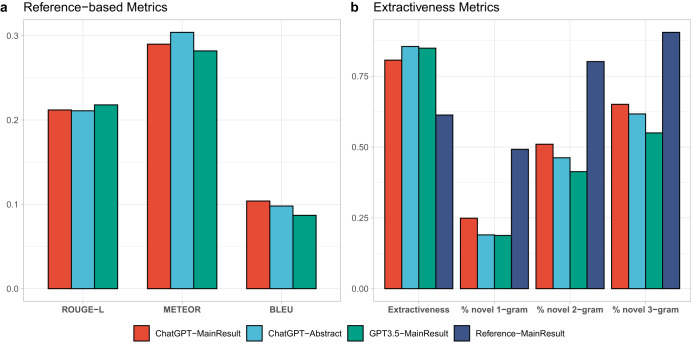
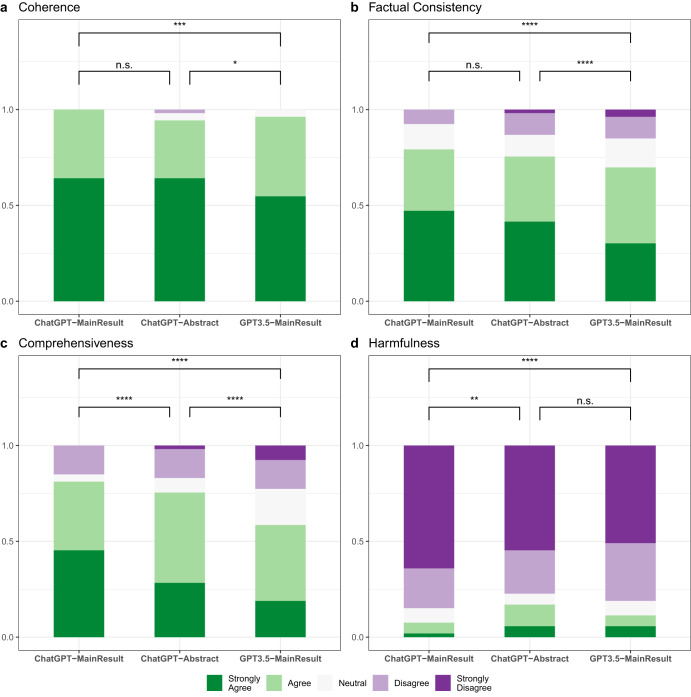
Recent advances in large language models (LLMs) have demonstrated remarkable successes in zero- and few-shot performance on various downstream tasks, paving the way for applications in high-stakes domains. In this study, we systematically examine the capabilities and limitations of LLMs, specifically GPT-3.5 and ChatGPT, in performing zero-shot medical evidence summarization across six clinical domains. We conduct both automatic and human evaluations, covering several dimensions of summary quality. Our study demonstrates that automatic metrics often do not strongly correlate with the quality of summaries. Furthermore, informed by our human evaluations, we define a terminology of error types for medical evidence summarization. Our findings reveal that LLMs could be susceptible to generating factually inconsistent summaries and making overly convincing or uncertain statements, leading to potential harm due to misinformation. Moreover, we find that models struggle to identify the salient information and are more error-prone when summarizing over longer textual contexts.
Overview
The claims and statistics of this paper haven’t been checked yet.
Free: it reads the open-access text and checks the first 5 claims that cite a source we can check. Create a free account to check every claim.
Integrity signals
Registry
Cites
Statistics
Figures
Verification
Claims the paper makes
The claims and statistics of this paper haven’t been checked yet.
Free: it reads the open-access text and checks the first 5 claims that cite a source we can check. Create a free account to check every claim.
Claims other papers make about this one
Each is checked against this paper’s own text: does it say what the citing paper says it does?
The source backs part of the claim, not all of it — or backs it for a different population, condition or comparison.
In the citing paper
“Automated metrics do not correlate with quality and human input to score coherence, inconsistencies, comprehensiveness and harmfulness are semi-quantitative and will differ based on the use care in which LLM are applied [5, 13].”
From A pilot feasibility study comparing large language models in extracting key information from ICU patient text records from an Irish population (2024) · cites this paper as [13]
Experimental — accuracy not yet measuredThe source backs part of the claim, not all of it — or backs it for a different population, condition or comparison.
In the citing paper
“Most LLM studies have depended on human lead semi-quantitative assessment of coherence, comprehensiveness, harmfulness and factual inconsistencies as well as comparing LLM with human based summaries [5, 13, 14].”
From A pilot feasibility study comparing large language models in extracting key information from ICU patient text records from an Irish population (2024) · cites this paper as [13]
Experimental — accuracy not yet measuredThe cited source says what the claim attributes to it.
In the citing paper
“Other studies employ human experts to evaluate synthesized abstracts, demonstrating that NLP metrics are not sufficient to measure summary quality56.”
From Adapted large language models can outperform medical experts in clinical text summarization (2024) · cites this paper as [56]
The cited source says what the claim attributes to it.
In the citing paper
“this is consistent with other studies that found that error rates increased with greater length of texts [13].”
From A pilot feasibility study comparing large language models in extracting key information from ICU patient text records from an Irish population (2024) · cites this paper as [13]
The cited source says what the claim attributes to it.
In the citing paper
“Overall, we found that while summaries had reasonable score for readability, their ability to list all clinically relevant events was only moderate and this is consistent with other studies that found that error rates increased with greater length of texts [13].”
From A pilot feasibility study comparing large language models in extracting key information from ICU patient text records from an Irish population (2024) · cites this paper as [13]
2 more claims about this paper
Create a free account to see every claim other papers make about this one.
Self-check
Percentages, sums and reported differences re-computed from the paper’s own numbers.
The self-check needs the paper’s full text.
Citations
Cites
Language Models are Few-Shot Learners
Brown, T. B., Mann, B., Ryder, N., Subbiah, M., Kaplan, J., Dhariwal, P., Neelakantan, A., Shyam, P., Sastry, G., Askell, A., et al. (2020) · arXiv · doi:10.48550/arxiv.2005.14165 · Cited by 23,372
BLEU: a method for automatic evaluation of machine translation
Papineni, K., Roukos, S., Ward, T., & Zhu, W.-J. (2001) · Proceedings of the 40th Annual Meeting on Association for Computational Linguistics - ACL '02 · doi:10.3115/1073083.1073135 · Cited by 21,344
Chain-Of-Thought Prompting Elicits Reasoning in Large Language Models
Wei, J., Wang, X., Schuurmans, D., Bosma, M., Ichter, B., Xia, F., Chi, E., Le, Q. V., & Zhou, D. (2022) · Advances in Neural Information Processing Systems 35 · doi:10.52202/068431-1800 · Cited by 4,505
Chain-of-Thought Prompting Elicits Reasoning in Large Language Models
Wei, J., Wang, X., Schuurmans, D., Bosma, M., Ichter, B., Xia, F., Chi, E., Le, Q., & Zhou, D. (2022) · arXiv · doi:10.48550/arxiv.2201.11903 · Cited by 4,263
Training language models to follow instructions with human feedback
Ouyang, L., Wu, J., Jiang, X., Almeida, D., Wainwright, C. L., Mishkin, P., Zhang, C., Agarwal, S., Slama, K., Ray, A., et al. (2022) · arXiv · doi:10.48550/arxiv.2203.02155 · Cited by 4,208
Large language models encode clinical knowledge
Singhal, K., Azizi, S., Tu, T., Mahdavi, S. S., Wei, J., Chung, H. W., Scales, N., Tanwani, A., Cole-Lewis, H., Pfohl, S., et al. (2023) · Nature · doi:10.1038/s41586-023-06291-2 · Cited by 4,083
Large Language Models Encode Clinical Knowledge
Singhal, K., Azizi, S., Tu, T., Mahdavi, S. S., Wei, J., Chung, H. W., Scales, N., Tanwani, A., Cole-Lewis, H., Pfohl, S., et al. (2022) · arXiv · doi:10.48550/arxiv.2212.13138 · Cited by 4,083
PaLM: Scaling Language Modeling with Pathways
Chowdhery, A., Narang, S., Devlin, J., Bosma, M., Mishra, G., Roberts, A., Barham, P., Chung, H. W., Sutton, C., Gehrmann, S., et al. (2022) · arXiv · doi:10.48550/arxiv.2204.02311 · Cited by 2,590
Large language models are zero-shot reasoners
Kojima, T., Gu, S. (., Reid, M., Matsuo, Y., & Iwasawa, Y. (2022) · Advances in Neural Information Processing Systems 35 · doi:10.52202/068431-1613 · Cited by 2,013
Large Language Models are Zero-Shot Reasoners
Kojima, T., Gu, S. S., Reid, M., Matsuo, Y., & Iwasawa, Y. (2022) · arXiv · doi:10.48550/arxiv.2205.11916 · Cited by 2,013
Research works printed but not linked: 2
- Lin, C.-Y. ROUGE: a package for automatic evaluation of summaries. In Text Summarization Branches Out.8 74–81, Barcelona, Spain (Association for Computational Linguistics, 2004).
- Banerjee, S. & Lavie, A. METEOR: an automatic metric for MT evaluation with improved correlation with human judgments. In Proc. ACL Workshop on Intrinsic and Extrinsic Evaluation Measures for Machine Translation and/or Summarization 65–72, Ann Arbor, Michigan (Association for Computational Linguistics, 2005).
Cited by
Items 301–400 of 494
Enhancing Medical Summarization with Parameter Efficient Fine Tuning on Local CPUs
Yang, S. S. Z., Fye, G. M., Yap, W. C., & Yu, D. (2024) · International Conference on Electrical, Communication, and Computer Engineering (ICECCE) · doi:10.1109/icecce63537.2024.10823619 · Cited by 2
Chiu, Y., Chuang, C.-C., & Hwa, K. (2024) · International Conference on Biomedical and Bioinformatics Engineering (ICBBE) · doi:10.1145/3707127.3707138 · Cited by 2
Leveraging Large Language Models for Departmental Classification of Medical Records
Ihnaini, B., Zeng, X., Yan, H., Fang, F., & Sangi, A. R. (2025) · Applied Sciences · doi:10.3390/app15126525 · Cited by 3
Are LLMs Ready to Shoulder Biomedical Trust?
Khosravy, M., Gupta, N., Dey, N., & Witkowski, O. (2025) · Lecture notes in computational vision and biomechanics · doi:10.1007/978-981-96-6103-9_9 · Cited by 2
Reddy, M. S. (2025) · Indian Journal of Language and Linguistics · doi:10.54392/ijll2541 · Cited by 2
Jha, A., Chen, W., Eckmann, M. S., Stockwell, I., Wang, J., & Sun, K. (2025) · IEEE ... International Conference on Data Mining workshops · doi:10.1109/icdmw69685.2025.00068 · Cited by 2
Medical Reports Simplification Using Large Language Models
Almezhghwi, K., Hassan, M. A., Ghadedo, A., Belhaj, F., & Shwehdi, R. (2024) · Lecture notes in networks and systems · doi:10.1007/978-3-031-64813-7_6 · Cited by 2
Zhou, W., Bitterman, D. S., Afshar, M., & Miller, T. A. (2023) · arXiv (Cornell University) · doi:10.48550/arxiv.2309.12339 · Cited by 3
Garber, M., Feng, H., Ronzano, F., LaFleur, J., de Oliveira, R., Rough, K., Roth, K., Nanavati, J., Abidine, K. Z. E., & Mack, C. D. (2024) · doi:10.2196/preprints.66348 · Cited by 2
Federated Large Language Models in Healthcare: A Systematic Review, Opportunities and ChallengesPreprint
Nascimento, L. D. F., Awaysheh, F. M., Alawadi, S., Zomaya, A. Y., & Guizani, M. (2025) · Research Square · doi:10.21203/rs.3.rs-7841356/v1 · Cited by 4
Can we generate portable representations for clinical time series data using LLMs?
Ji, Z., Sun, Y., Amaral, A. C. K.-B., Goldenberg, A., & Krishnan, R. G. (2026) · International Conference on Learning Representations · doi:10.48550/arxiv.2603.23987 · Cited by 3
Kulkarni Kale, U., & Vemulapalli, G. (2025) · The Cancer Journal · doi:10.1097/ppo.0000000000000799 · Cited by 1
An experiment on an automated literature survey of data-driven speech enhancement methods
dos Santos, A., Pereira, J., Nogueira, R. F., Masiero, B. S., Sander-Tavallaey, S., & Zea, E. (2024) · Acta Acustica · doi:10.1051/aacus/2023067 · Cited by 1
Intelligent Summarization of Aviation Data for Maintenance
Spexet, A., Breen, N. P., Satish, A., & Alvord, D. A. (2024) · IEEE Aerospace Conference (AERO) · doi:10.1109/aero58975.2024.10521297 · Cited by 1
Gould, J. A., Stawicki, S. P., Lee, R. Y., & Ng-Pellegrino, A. (2024) · Artificial intelligence · doi:10.5772/intechopen.115397 · Cited by 3
Point‐counterpoint: What is the best strategy for developing generative AI for hospital medicine?
Kerman, H. M., Kumar, A. D., Crowe, B., & Collins, W. J. (2025) · Journal of Hospital Medicine · doi:10.1002/jhm.70070 · Cited by 1
Medical Diagnosis Coding Automation: Similarity Search vs. Generative Ai
Klotzman, V. (2024) · Clinical and Medical Engineering Live · doi:10.64030/2997-612x.02.02.01 · Cited by 1
Patil, S. S., Ramteke, M., Verma, M., Chandra, T., & Rathore, A. S. (2025) · Neural Computing and Applications · doi:10.1007/s00521-025-11600-z · Cited by 2
Gazzo, A. M., Berardelli, S., Biancospino, M., Cuollo, L., Zotti, F. D., Ferraro, E., Marra, A., Tartarotti, E., & Magni, P. (2026) · Genome biology · doi:10.1186/s13059-026-04237-1 · Cited by 2
Bains, B., Rapuri, S., Robitaille, E., Wang, J., Khera, A., Gómez, C., Reyes, E., Perry, C., Wilson, J., & Tracey, E. (2026) · JMIR Medical Informatics · doi:10.2196/80205 · Cited by 2
CS-Agent: LLM-based Community Search via Dual-agent Collaboration
Hua, J., Yuan, L., Feng, Q., Fan, Q., & Huang, S. (2025) · ACM International Conference on Information and Knowledge Management (CIKM) · doi:10.1145/3746252.3761335 · Cited by 1
MulMed: Addressing Multiple Medical Tasks Utilizing LLMS
Cheng, N., Li, F., & Huang, L. (2025) · Academic Journal of Computing & Information Science · doi:10.25236/ajcis.2025.080904 · Cited by 1
Automating Cybersecurity Decision‑Making with AI and the Analytic Hierarchy Process
Svoboda, I. (2025) · Theoretical and Applied Cybersecurity · doi:10.20535/tacs.2664-29132025.2.338865 · Cited by 1
Vogel, C., Baur, D., Künzel, M., Pagano, S., Youssef, Y., Osterhoff, G., & Unfallchirurgie, A. K. I. D. A. D. D. D. G. F. O. U. (2025) · Die Orthopädie · doi:10.1007/s00132-025-04749-x · Cited by 1
Makino, M., She, W. J., Siriaraya, P., Matoba, S., & Senoo, K. (2025) · Scientific Reports · doi:10.1038/s41598-025-34079-z · Cited by 2
Mandapati, S. V., Kummetha, V. C., Concas, S., & Staes, L. (2025) · Electronics · doi:10.3390/electronics15010152 · Cited by 1
A Context Adaptive Instruction Tuning Framework for Diverse Clinical NLP Tasks
Mukalazi, S. H., Ouyang, J., & Katende, J. (2025) · IEEE International Conference on Bioinformatics and Biomedicine (BIBM) · doi:10.1109/bibm66473.2025.11356497 · Cited by 1
Integration of AI-generated clinic letters in complex paediatric neurosurgery outpatient settings
Elmolla, M., Khanom, A. A., Ali, A. M. S., Duncan, C. A., Hennedige, A. A., & Vakharia, V. N. (2026) · Child s Nervous System · doi:10.1007/s00381-026-07171-6 · Cited by 1
Krithika, S., & Mohan, G. B. (2026) · SN Computer Science · doi:10.1007/s42979-026-04852-6 · Cited by 1
Knowledge-enhanced AI models for domain-specific application: a survey
Li, X.-Y., Wang, Y., Liang, J., Wang, X., Zhou, P., Zhao, Q., Zhang, Y., & Song, Q. (2026) · Science China Information Sciences · doi:10.1007/s11432-025-4635-0 · Cited by 1
Türe, Z., Maraş, G., Çetinkaya, F. İ., Tarkan, M., Eren, E. E., & Kılıç, A. U. (2026) · American Journal of Infection Control · doi:10.1016/j.ajic.2026.03.004 · Cited by 2
Dominić, I., S, M. K. H., Nandakumar, R. G., & Regunathan, R. (2025) · International Conference on Signal Processing, Computation, Electronics, Power and Telecommunication (IConSCEPT) · doi:10.1109/iconscept66142.2025.11436852 · Cited by 1
Klein, A., Song, J., Chim, J., Keren, L., Triantafyllopoulos, A., Schuller, B. W., Liakata, M., & Atzil–Slonim, D. (2026) · JMIR Formative Research · doi:10.2196/71230 · Cited by 1
Prajapati, D. H. (2026) · Medical Journal Armed Forces India · doi:10.1016/j.mjafi.2026.02.011 · Cited by 1
Pioneering AI in Dermatology Education: Recognizing the Initial Milestone
Karampinis, E., Zoumpourli, C.-M., & Apalla, Z. (2026) · Springer eBooks · doi:10.1007/978-3-032-15614-3_3 · Cited by 1
Zero-shot interpretable biomedical literature appraisal with generative large language models
Zhou, F., Afzal, M., Saha, A., Parrish, R., Haynes, R. B., Iorio, A., & Lokker, C. (2026) · JAMIA Open · doi:10.1093/jamiaopen/ooag043 · Cited by 1
Meyer, T., Schlosser, T., Moniri, S., Kumar, A. S., Friedrich, M., & Kowerko, D. (2026) · Engineering Applications of Artificial Intelligence · doi:10.1016/j.engappai.2026.114962 · Cited by 1
Beyond language: generative artificial intelligence as a general computing model for medicine
Sitek, A., & Bates, D. W. (2026) · The Lancet Digital Health · doi:10.1016/j.landig.2026.101011 · Cited by 1
Natural language processing models for patient-centered summaries of prostatectomy pathology reports
Iranmahboub, P., Dave, P., Hung, M., Pelt, J., Ali, H. O., Blum, K., Ramaswamy, A., Wahba, B. M., Korniyenko, A., Huang, A., et al. (2026) · Scientific Reports · doi:10.1038/s41598-026-55613-7 · Cited by 1
Karataş, S. Ş., & Öner, S. F. (2026) · Health Policy and Technology · doi:10.1016/j.hlpt.2026.101281 · Cited by 1
Fast information and slow evidence in the large language models era
Wu, Y., Ong, A. Y., Hu, K., Wong, T. Y., & Keane, P. A. (2026) · npj Digital Medicine · doi:10.1038/s41746-026-02909-7 · Cited by 1
Park, K. U., Sather, B. K., Shah, A., Minami, C. A., Butler, M., Butler, L. N., Love, J. A., McLean, K., Dunn, A., Mittendorf, E. A., et al. (2026) · Annals of Surgical Oncology · doi:10.1245/s10434-026-20170-w · Cited by 1
Heilmeyer, F., Lyssenko, L., Reinhard, T., Haverkamp, C., & Böhringer, D. (2026) · PLOS Digital Health · doi:10.1371/journal.pdig.0001461 · Cited by 1
Ma, Y., Zhao, X., Li, G., Liu, S., Liu, T., Zhao, Q., Xiao, M., & Wang, J. (2026) · International Journal of Nursing Studies · doi:10.1016/j.ijnurstu.2026.105659 · Cited by 1
Evaluating large language model performance in US FDA regulatory science
Bukhari, K., Rodríguez-Monguió, R., Lopez-Bermudez, B., Yamaki, J., Brown, L. M., Beuttler, R., Ong, J. C. L., & Seoane-Vazquez, E. (2026) · Discover Artificial Intelligence · doi:10.1007/s44163-026-01918-5 · Cited by 1
A Real-World Evaluation of Large Language Model–Generated Hospital Courses in Pediatrics
Kim, J. E., Hron, J. D., Kats, D. J., Wong, K., Kutz, L., & Parsons, C. R. (2026) · Hospital Pediatrics · doi:10.1542/hpeds.2026-009216 · Cited by 1
Performance of large language models in prescription review: a comparative study
Huang, C., Sun, Y., & Liu, W. (2026) · Frontiers in Medicine · doi:10.3389/fmed.2026.1939786 · Cited by 1
Agentic T-STROBE: a front-shifted STROBE paradigm for observational research
Bo, C., Li, R., 赵敬华, Feng, S., Ji, X., & Xue, F. (2026) · Statistics Innovation · doi:10.48130/stati-0026-0014 · Cited by 1
Cornelisse, E., Kousa, D., Menz, B. D., Murphy-Reuter, B., Shahnam, A., Chin-Yee, B. H., Calabro, R., Li, L. X., Ramsey, I., Abuhelwa, A. Y., et al. (2026) · Journal of Medical Internet Research · doi:10.2196/100531 · Cited by 1
An, R., Batcheller, Q., Wang, J., & Yang, Y. (2023) · Journal of Data and Information Science · doi:10.2478/jdis-2023-0014 · Cited by 1
From ChatGPT to GutGPT: Enhancing AI for Personalized Health Care
Kong, Q., Li, Y., & Li, Y. (2024) · Clinical Gastroenterology and Hepatology · doi:10.1016/j.cgh.2024.01.035 · Cited by 1
Gai, S., Huang, F., Liu, X., Benton, R., Borchert, G. M., Huang, J., & Leng, X. (2025) · PLoS ONE · doi:10.1371/journal.pone.0305442 · Cited by 1
Wieczorek, O., Steinhardt, I., Schneijderberg, C., Schmidt, R., & Mauermeister, S. (2023) · SocArXiv (OSF Preprints) · doi:10.31235/osf.io/493qg · Cited by 1
Evaluating large language models for quality control in research ethics review
Maghsoudlou, P., Fennelly-Barnwell, J., Abraham, A., Kapacee, Z., Allen, C., Totenhofer, A., Mamtora, S., Keane, P. A., Denniston, A. K., Liu, X., et al. (2026) · Scientific Reports · doi:10.21203/rs.3.rs-6417944/v1 · Cited by 2
Dsouza, V., Pace, D. F., Azhir, A., Nargesi, A. A., Holbrook, E. B., He, W., Naumann, T., Friedman, S. F., Atlas, S. J., Anderson, C. D., et al. (2025) · medRxiv · doi:10.64898/2025.11.28.25341233 · Cited by 2
Large Language Model-Based Generation of Discharge SummariesPreprint
Rodrigues, T., & Lopes, C. T. (2025) · arXiv (Cornell University) · doi:10.48550/arxiv.2512.06812 · Cited by 2
Yan, J., Zhang, J. G., & Tian, T. (2025) · medRxiv · doi:10.64898/2025.12.24.25342988 · Cited by 1
Lin, X., Dai, G., Zhong, Y., Li, X., Xiao, X., Liu, J., Zhang, Y., Hu, L., Wu, Z., Zheng, Y., et al. (2026) · arXiv (Cornell University) · doi:10.48550/arxiv.2602.06449 · Cited by 1
Hou, Y., Zhan, Z., Zeng, M., Wu, Y., Zhou, S., Chen, X., Zhou, H., Song, M., & Zhang, R. (2026) · Research Square · doi:10.21203/rs.3.rs-8605899/v1 · Cited by 1
Creeden, J., Olivecrona, M., & Soriano, A. (2026) · medRxiv · doi:10.64898/2026.06.11.26355467 · Cited by 1
Preferred, Not Safer: Pairwise Preference Is a Poor Proxy for Clinical SafetyPreprint
Elhassan, F., Sasu, D., Kulinkina, A., Klein, L., & Hartley, M. (2026) · arXiv (Cornell University) · doi:10.48550/arxiv.2608.02617 · Cited by 1
Hallucination Detection-Guided Preference Optimization for Clinical Summarization
Seethakantha, S. K., Thai, D. N., Gudi, V. P., Tiwari, S., Matar, R., Mitra, A., Zhao, W., McCallum, A., & Salloum, W. (2026) · arXiv · doi:10.48550/arxiv.2605.28910
Ridha, A., Ahmed, I., Raj, S., Syed, F., Wasim, A. S., Smith, T. O., & Khatri, C. (2023) · Research Square · doi:10.21203/rs.3.rs-3339904/v1
User Stories Extraction from Natural Language: Assessing and Improving Llm's Results AccuracyPreprint
Khalil, A., Ettifouri, E. H., Saber, M., & Belkasmi, M. G. (2024) · SSRN Electronic Journal · doi:10.2139/ssrn.4830008
Aggregating embeddings from image and radiology reports for multimodal Chest-CT retrieval
Silva-Leite, J., Fontes, C. A. P., Santos, A. S., Corrêa, D. G., Santos, M. K., de Azevedo‐Marques, P. M., de Oliveira, D., Paes, A., & Bedo, M. V. N. (2024) · Proceedings - IEEE Symposium on Computer-Based Medical Systems · doi:10.1109/cbms61543.2024.00058
Singh, A., Kohli, A., Ali, M. M., Saiyyad, A., Pandey, A. K., Pal, A., & Raj, M. (2024) · Lecture notes in networks and systems · doi:10.1007/978-981-97-3817-5_38
Gender Fairness Analysis in LLMs using Zero-Shot and Few-Shot Experiments
Gupta, K., Jain, K., & Solanki, L. (2024) · International Conference on Smart Technologies and Systems for Next Generation Computing (ICSTSN) · doi:10.1109/icstsn61422.2024.10671001
Liang, X., Wang, X., Li, Y., Liao, W., Zhang, Z., Zhu, G., & Wei, X. (2024) · Research Square · doi:10.21203/rs.3.rs-4885411/v1
Шабалин, В. Н., Александрович, Л. Н., Pavlova, O. N., Supilnikov, A. A., Samsonova, E. A., Anosova, Е. Y., & Yaremin, B. I. (2024) · Bulletin of the Medical Institute REAVIZ (REHABILITATION DOCTOR AND HEALTH) · doi:10.20340/vmi-rvz.2024.3.edt.1
Automated Insights: LLMs in Neurodegenerative Disease Research and Comparison
Torres, C., & González, C. I. (2025) · Lecture notes in computer science · doi:10.1007/978-3-031-83879-8_9 · Cited by 1
Zeyad, A. M. A. (2025) · Journal of Information Systems Engineering & Management · doi:10.52783/jisem.v10i33s.5469
Mettildha, M. I., Preethi, M., Prabhu, T. N., Priyadharsini, M., & Sugantha, M. S. S. (2025) · IGI Global eBooks · doi:10.4018/979-8-3693-6864-0.ch003
Procedural Guideline Execution Training Improves LLM Performance in Rule-Based Clinical TasksPreprint
Boonmee, P. (2025) · Engineering Archive (engrXiv) · doi:10.31224/4544
PTC: Prefix Tuning CodeT5 for High-Quality Secure Network Measurement Script Generation
Wang, Y., & Han, X. (2025) · International Conference on Dependable Systems & Networks/Proceedings · doi:10.1109/dsn64029.2025.00024 · Cited by 1
Improving Summarization Quality with Citation Networks in Scientific Documents
Nguyen, Q.-A., Doan, T.-T., Ha, Q.-T., & Tran, M.-V. (2024) · International Conference on Knowledge and Systems Engineering/Proceedings · doi:10.1109/kse63888.2024.11063598
Facilitating critical appraisal of evidence using automation tools
Bannach‐Brown, A., Hijlkema, N., van Beuningen, N., Alkema, W. B. L., Hooijmans, C. R., Wever, K. E., Macleod, M. R., Maksym, O., Novotny, T., Niccolai, L., et al. (2025) · EFSA Supporting Publications · doi:10.2903/sp.efsa.2025.en-9515
A Multi-Document Summarization Method for Customer Feedback Based on Large Language Models
Bao, S., Guan, X., Cao, B., & Yang, C. (2025) · Lecture notes of the Institute for Computer Sciences, Social Informatics and Telecommunications Engineering · doi:10.1007/978-3-031-93251-9_15
Ke, W., He, R., Jensen, M. A., & Dobrovolskaia, M. A. (2025) · Wiley Interdisciplinary Reviews Nanomedicine and Nanobiotechnology · doi:10.1002/wnan.70029
Üçdal, M. T. (2025) · Experimental Gerontology · doi:10.1016/j.exger.2025.112905
Rule-augmented LLM framework for detecting unreasonableness in ICU
Du, S., Huang, Y. C., Yuan, Q., Dai, Y., Shi, Z., & Hu, M. (2025) · Displays · doi:10.1016/j.displa.2025.103196
Beyond the List: A Framework for the Design of Next-Generation MEDLINE Search Tools
Zhurov, V., Sedig, K., & Milani, M. (2025) · Data · doi:10.3390/data10100167
Evaluating Generative AI and Human Performance in Question-Answer Validation Tasks
Opaiţ, E.-E., Duca, A., & Olariu, M.-E. (2025) · Procedia Computer Science · doi:10.1016/j.procs.2025.09.522
Yu, L., Kim, D. J., Cao, Y., Shu, M. W. S., Shen, M., Liang, X., Gu, J., Jayakumar, R., Ding, W., Yang, F., et al. (2026) · npj Systems Biology and Applications · doi:10.1101/2025.11.09.687479
Shang, L., Chen, Y., Li, R., Zhang, X., Gao, M., Hou, Y., & Zhang, G. K. (2025) · International Journal of Surgery · doi:10.1097/js9.0000000000004062 · Cited by 1
Ethical and Regulatory Considerations in AI Diagnostics
Hirosawa, T. (2025) · Springer eBooks · doi:10.1007/978-981-95-4338-0_11
Artificial minds and real beliefs : perceiving mental states in AI
Jacobs, O. L. E. (2025) · cIRcle (University of British Columbia) · doi:10.14288/1.0448298 · Cited by 1
Urquhart, E., Ryan, J., Hartigan, S. D., Niță, C., Hanley, C., Moran, P., Bates, J. J., Jooste, R., Judge, C. S., Laffey, J. G., et al. (2024) · Figshare · doi:10.6084/m9.figshare.26777725
Zhang, G., Jin, Q., Zhou, Y., Wang, S., Idnay, B., Luo, Y., Park, E., Nestor, J. G., Spotnitz, M. E., Soroush, A., et al. (2024) · PubMed Central · Cited by 2
Self-citationBöke, S. (2025) · Lund University Publications Student Papers (Lund University)
ANALYZING STANCE AND ENGAGEMENT MARKERS IN RESEARCHER PAPERS AND THEIR ONE-PAGE SUMMARIES IN OASIS
Heyratangiz Charandabi, S. (2024) · HARVEST (University of Saskatchewan)
Automated Analysis of Textual Comments in Patient Reported Outcome Measures
Linton, A.-G. S. (2025) · White Rose eTheses Online (University of Leeds, The University of Sheffield, University of York) · Cited by 1
Hazmi Wahab, M. H. (2024) · Universiti Putra Malaysia Institutional Repository (Universiti Putra Malaysia)
GENERATIVE LARGE LANGUAGE MODELS FOR TRANSPARENT ARTIFICIAL INTELLIGENCE IN CLINICAL RESEARCH
Zhou, F. (2025) · MacSphere (McMaster University) · doi:10.71548/13232
Murali, L., Thankachan, A., & Viswanathan, D. M. (2025) · International Conference on Power, Instrumentation, Control and Computing (PICC) · doi:10.1109/picc67314.2025.11291240
Information Reasoning and Question Answering in Healthcare: A PubMedQA Benchmark Study
Sayed, D., & Schuldt, H. (2025) · IEEE/ACS International Conference on Computer Systems and Applications (AICCSA) · doi:10.1109/aiccsa66935.2025.11315481
Lee, F. G., Larson, E. L., Vermunt, J. V., Thiels, C. A., Christensen, P., Collinson, R. J., Cornish, J. A., D’Hoore, A. J. L., Gurland, B., Mellgren, A. F., et al. (2026) · Diseases of the Colon & Rectum · doi:10.1097/dcr.0000000000004058
Loaiza‐Bonilla, A., Thaker, N. G., Tuysuz, E., Yerdan, S., & Kurnaz, S. (2026) · AI in Precision Oncology · doi:10.1177/2993091x251409792
MediSum: A NLP Framework for Automatic Summarization of Medical Reports
Shrivastava, T., Patel, V., THAKUR, Y. S., & Butani, V. (2026) · International Journal of Advancement and Innovation in Technology and Research · doi:10.63844/ijaitr.v3.i1.2026.198-200
Hagler, S., Adibuzzaman, M., McWeeney, S. K., & Cohen, A. M. (2026) · medRxiv · doi:10.64898/2026.01.09.26343792 · Cited by 1
Multimodal Quiz Generation via RAG with LLM-as-Judge Evaluation
Kunuku, M. T., & Dehbozorgi, N. (2025) · IEEE Frontiers in Education Conference (FIE) · doi:10.1109/fie63693.2025.11328244
Metadata
- Authors
- Tang, L., Sun, Z., Idnay, B., Nestor, J. G., Soroush, A., Elias, P. A., Xu, Z., Ding, Y., Durrett, G., Rousseau, J. F., Weng, C., & Peng, Y.
- Affiliations
- The University of Texas at Austin (US)
- Weill Cornell Medicine (US)
- Columbia University (US)
- Massachusetts General Hospital (US)
- Corresponding author
- Rousseau, Justin F.
- Weng, Chunhua
- Peng, Yifan
- ORCID
- Venue
- npj Digital Medicine
- Published
- 2023-08-24
- Volume
- 6
- Issue
- 1
- Pages
- 158-158
- ISSN
- 2398-6352 (ISSN-L)
- PMC
- PMC10449915
- OpenAlex
- W4386120650
- Cited by
- 423
- References
- 27
- Citations by year
- 2026: 112 · 2025: 167 · 2024: 122 · 2023: 22
- FWCI
- 16.89
- Type
- journal article
- Language
- en
- Open access
- gold
- doi.org
- Licence
- cc-by
- creativecommons.org/licenses/by/4.0 (tdm)
- creativecommons.org/licenses/by/4.0 (vor)
- Locations
- npj Digital Medicine (publishedVersion, cc-by)
- medRxiv (acceptedVersion, cc-by-nc-nd)
- PubMed Central (publishedVersion, cc-by)
- PubMed (publishedVersion)
- PubMed Central (submittedVersion, cc-by-nc-nd)
- DOAJ (DOAJ: Directory of Open Access Journals) (submittedVersion, cc-by-sa)
- Funders
- U.S. Department of Health & Human Services | NIH | U.S. National Library of Medicine (4R00LM013001, 5R01LM009886)
- National Science Foundation (2145640, 2019844)
- Topics
- Health Sciences › Medicine › Health Informatics › Artificial Intelligence in Healthcare and Education
- Physical Sciences › Computer Science › Artificial Intelligence › Topic Modeling
- Health Sciences › Medicine › Health Informatics › Biomedical Text Mining and Ontologies
- Keywords
- large language models, zero-shot learning, GPT-3.5, ChatGPT, automatic evaluation metrics, human evaluation, error types, misinformation, clinical domains
About these checks
Registry, retraction, Cites and statistics results are computed, not judged, with one exception: a printed reference that no index lists is read once by a model before it counts as a citation error. Claims are extracted by a model and kept only when their quote appears verbatim in the text; each cited source is then checked, with a model’s help, for whether it says what the claim relies on. Those verdicts can be wrong — read the claim’s quote and the cited source before relying on one.
Statistics and arithmetic are recomputed, not judged.
Confidence bands are shown only for fields calibrated on our annotated test set. None is calibrated yet, so no band is shown.
What counts as a claim ›How we measure confidence ›How we check this ›
Are you an author, or do you see a problem with this page? Request a review
Data sources
Bibliographic data: Semantic Scholar, OpenAlex, Crossref.
Contains information from the Semantic Scholar Academic Graph Datasets, made available under the ODC Attribution License (ODC-BY 1.0).
Semantic Scholar’s data is described in: Kinney, R., et al. (2023). The Semantic Scholar Open Data Platform. arXiv:2301.10140.
