

Evaluating large language models on medical evidence summarization
Open accessPublished version of a preprint
The DOI matches its Crossref record; 30 of the 30 references it cites were found in a registry or an index.
Abstract
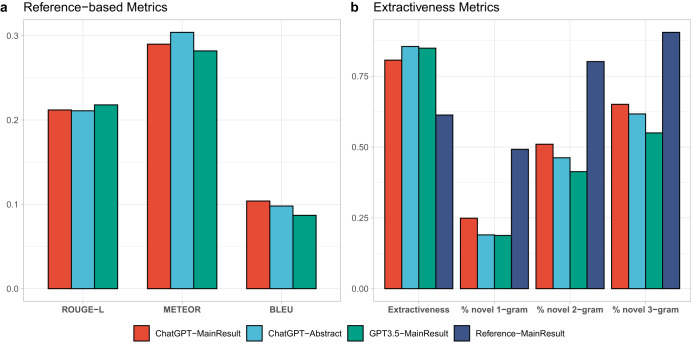
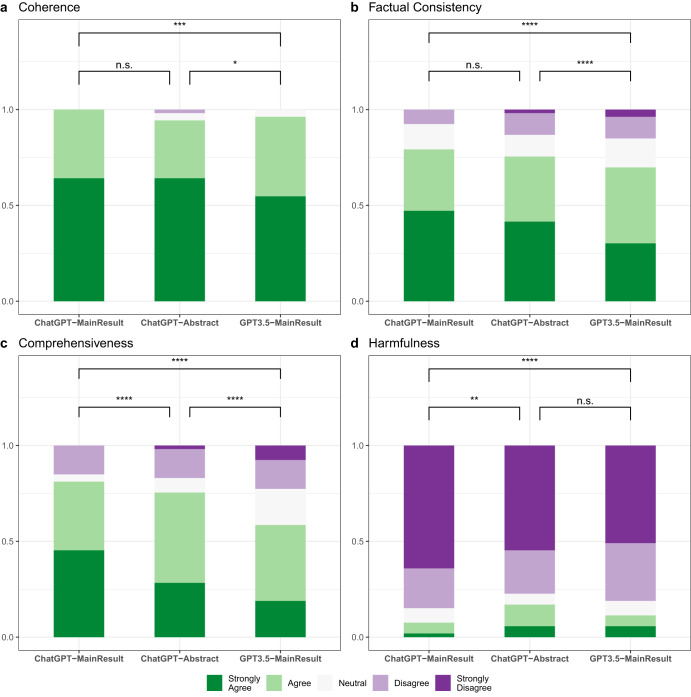
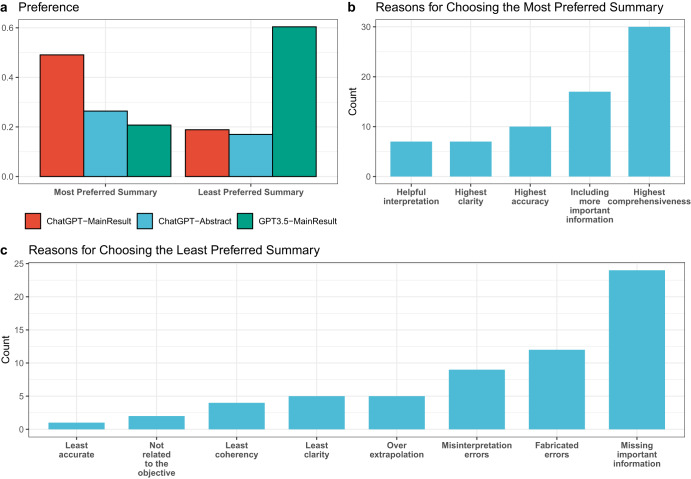
Recent advances in large language models (LLMs) have demonstrated remarkable successes in zero- and few-shot performance on various downstream tasks, paving the way for applications in high-stakes domains. In this study, we systematically examine the capabilities and limitations of LLMs, specifically GPT-3.5 and ChatGPT, in performing zero-shot medical evidence summarization across six clinical domains. We conduct both automatic and human evaluations, covering several dimensions of summary quality. Our study demonstrates that automatic metrics often do not strongly correlate with the quality of summaries. Furthermore, informed by our human evaluations, we define a terminology of error types for medical evidence summarization. Our findings reveal that LLMs could be susceptible to generating factually inconsistent summaries and making overly convincing or uncertain statements, leading to potential harm due to misinformation. Moreover, we find that models struggle to identify the salient information and are more error-prone when summarizing over longer textual contexts.
Overview
The claims and statistics of this paper haven’t been checked yet.
Free: it reads the open-access text and checks the first 5 claims that cite a source we can check. Create a free account to check every claim.
Integrity signals
Registry
Cites
Statistics
Figures
Verification
Claims the paper makes
The claims and statistics of this paper haven’t been checked yet.
Free: it reads the open-access text and checks the first 5 claims that cite a source we can check. Create a free account to check every claim.
Claims other papers make about this one
Each is checked against this paper’s own text: does it say what the citing paper says it does?
The source backs part of the claim, not all of it — or backs it for a different population, condition or comparison.
In the citing paper
“Automated metrics do not correlate with quality and human input to score coherence, inconsistencies, comprehensiveness and harmfulness are semi-quantitative and will differ based on the use care in which LLM are applied [5, 13].”
From A pilot feasibility study comparing large language models in extracting key information from ICU patient text records from an Irish population (2024) · cites this paper as [13]
Experimental — accuracy not yet measuredThe source backs part of the claim, not all of it — or backs it for a different population, condition or comparison.
In the citing paper
“Most LLM studies have depended on human lead semi-quantitative assessment of coherence, comprehensiveness, harmfulness and factual inconsistencies as well as comparing LLM with human based summaries [5, 13, 14].”
From A pilot feasibility study comparing large language models in extracting key information from ICU patient text records from an Irish population (2024) · cites this paper as [13]
Experimental — accuracy not yet measuredThe cited source says what the claim attributes to it.
In the citing paper
“Other studies employ human experts to evaluate synthesized abstracts, demonstrating that NLP metrics are not sufficient to measure summary quality56.”
From Adapted large language models can outperform medical experts in clinical text summarization (2024) · cites this paper as [56]
The cited source says what the claim attributes to it.
In the citing paper
“this is consistent with other studies that found that error rates increased with greater length of texts [13].”
From A pilot feasibility study comparing large language models in extracting key information from ICU patient text records from an Irish population (2024) · cites this paper as [13]
The cited source says what the claim attributes to it.
In the citing paper
“Overall, we found that while summaries had reasonable score for readability, their ability to list all clinically relevant events was only moderate and this is consistent with other studies that found that error rates increased with greater length of texts [13].”
From A pilot feasibility study comparing large language models in extracting key information from ICU patient text records from an Irish population (2024) · cites this paper as [13]
2 more claims about this paper
Create a free account to see every claim other papers make about this one.
Self-check
Percentages, sums and reported differences re-computed from the paper’s own numbers.
The self-check needs the paper’s full text.
Citations
Cites
Language Models are Few-Shot Learners
Brown, T. B., Mann, B., Ryder, N., Subbiah, M., Kaplan, J., Dhariwal, P., Neelakantan, A., Shyam, P., Sastry, G., Askell, A., et al. (2020) · arXiv · doi:10.48550/arxiv.2005.14165 · Cited by 23,372
BLEU: a method for automatic evaluation of machine translation
Papineni, K., Roukos, S., Ward, T., & Zhu, W.-J. (2001) · Proceedings of the 40th Annual Meeting on Association for Computational Linguistics - ACL '02 · doi:10.3115/1073083.1073135 · Cited by 21,344
Chain-Of-Thought Prompting Elicits Reasoning in Large Language Models
Wei, J., Wang, X., Schuurmans, D., Bosma, M., Ichter, B., Xia, F., Chi, E., Le, Q. V., & Zhou, D. (2022) · Advances in Neural Information Processing Systems 35 · doi:10.52202/068431-1800 · Cited by 4,505
Chain-of-Thought Prompting Elicits Reasoning in Large Language Models
Wei, J., Wang, X., Schuurmans, D., Bosma, M., Ichter, B., Xia, F., Chi, E., Le, Q., & Zhou, D. (2022) · arXiv · doi:10.48550/arxiv.2201.11903 · Cited by 4,263
Training language models to follow instructions with human feedback
Ouyang, L., Wu, J., Jiang, X., Almeida, D., Wainwright, C. L., Mishkin, P., Zhang, C., Agarwal, S., Slama, K., Ray, A., et al. (2022) · arXiv · doi:10.48550/arxiv.2203.02155 · Cited by 4,208
Large language models encode clinical knowledge
Singhal, K., Azizi, S., Tu, T., Mahdavi, S. S., Wei, J., Chung, H. W., Scales, N., Tanwani, A., Cole-Lewis, H., Pfohl, S., et al. (2023) · Nature · doi:10.1038/s41586-023-06291-2 · Cited by 4,083
Large Language Models Encode Clinical Knowledge
Singhal, K., Azizi, S., Tu, T., Mahdavi, S. S., Wei, J., Chung, H. W., Scales, N., Tanwani, A., Cole-Lewis, H., Pfohl, S., et al. (2022) · arXiv · doi:10.48550/arxiv.2212.13138 · Cited by 4,083
PaLM: Scaling Language Modeling with Pathways
Chowdhery, A., Narang, S., Devlin, J., Bosma, M., Mishra, G., Roberts, A., Barham, P., Chung, H. W., Sutton, C., Gehrmann, S., et al. (2022) · arXiv · doi:10.48550/arxiv.2204.02311 · Cited by 2,590
Large language models are zero-shot reasoners
Kojima, T., Gu, S. (., Reid, M., Matsuo, Y., & Iwasawa, Y. (2022) · Advances in Neural Information Processing Systems 35 · doi:10.52202/068431-1613 · Cited by 2,013
Large Language Models are Zero-Shot Reasoners
Kojima, T., Gu, S. S., Reid, M., Matsuo, Y., & Iwasawa, Y. (2022) · arXiv · doi:10.48550/arxiv.2205.11916 · Cited by 2,013
Research works printed but not linked: 2
- Lin, C.-Y. ROUGE: a package for automatic evaluation of summaries. In Text Summarization Branches Out.8 74–81, Barcelona, Spain (Association for Computational Linguistics, 2004).
- Banerjee, S. & Lavie, A. METEOR: an automatic metric for MT evaluation with improved correlation with human judgments. In Proc. ACL Workshop on Intrinsic and Extrinsic Evaluation Measures for Machine Translation and/or Summarization 65–72, Ann Arbor, Michigan (Association for Computational Linguistics, 2005).
Cited by
Items 101–200 of 494
Roshani, M. A., Zhou, X., Qiang, Y., Suresh, S., Hicks, S. D., Sethuraman, U., & Zhu, D. (2025) · JMIR AI · doi:10.2196/67363 · Cited by 28
A survey on biomedical automatic text summarization with large language models
Huang, Z., Chen, X., Wang, Y., Huang, J., & Zhao, X. (2025) · Information Processing & Management · doi:10.1016/j.ipm.2025.104216 · Cited by 27
Awasthi, R., Bhattad, A., Ramachandran, S. P., Mishra, S. V., Khanna, A. K., Cywiński, J. B., Maheshwari, K. K., Mahapatra, D., DiRosa, I., Cohen, A., et al. (2025) · npj Health Systems · doi:10.1038/s44401-025-00043-2 · Cited by 32
Quantitative evaluation of ChatGPT versus Bard responses to anaesthesia-related queries
Patnaik, S. S., & Hoffmann, U. (2023) · British Journal of Anaesthesia · doi:10.1016/j.bja.2023.09.030 · Cited by 27
HUMANELY: HUMAN EVALUATION OF LLM YIELD, USING A NOVEL WEB BASED EVALUATION TOOLPreprint
Awasthi, R., Mishra, S., Mahapatra, D., Khanna, A., Maheshwari, K., Cywinski, J., Papay, F., & Mathur, P. (2023) · medRxiv · doi:10.1101/2023.12.22.23300458 · Cited by 32
Foundation models for radiology—the position of the AI for Health Imaging (AI4HI) network
de Almeida, J. G., Alberich, L. C., Tsakou, G., Marias, K., Tsiknakis, M., Lekadir, K., Martí‐Bonmatí, L., & Papanikolaou, N. K. (2025) · Insights into Imaging · doi:10.1186/s13244-025-02056-9 · Cited by 27
Ahn, S., Zhou, J., Jiang, D., Kerr, S., Zhu, Y., Song, P., Rudan, I., & WHO TCI medicine CHNRI group (2025) · Journal of Global Health · doi:10.7189/jogh.15.04336 · Cited by 23
SummQA at MEDIQA-Chat 2023: In-Context Learning with GPT-4 for Medical Summarization
Mathur, Y., Rangreji, S., Kapoor, R., Palavalli, M., Bertsch, A., & Gormley, M. R. (2023) · Clinical Natural Language Processing Workshop (ClinicalNLP) · doi:10.18653/v1/2023.clinicalnlp-1.51 · Cited by 36
Exploring the role of large language models in radiation emergency response
Chandra, A., & Chakraborty, A. (2024) · Journal of Radiological Protection · doi:10.1088/1361-6498/ad270c · Cited by 27
GPT-4 Performance for Neurologic Localization
Lee, J.-H., Choi, E., McDougal, R. A., & Lytton, W. W. (2024) · Neurology Clinical Practice · doi:10.1212/cpj.0000000000200293 · Cited by 25
Xie, S., Zhao, W., Deng, G., He, G., He, N., Lü, Z., Hu, W., Zhao, M., & Du, J. (2024) · Journal of the American Medical Informatics Association · doi:10.1093/jamia/ocae100 · Cited by 23
Sun, Z., Yim, W.-W., Uzuner, Ö., Xia, F., & Yetişgen, M. (2025) · Journal of Biomedical Informatics · doi:10.1016/j.jbi.2025.104866 · Cited by 26
Self-citationGoridkov, N., Wang, Y., & Goucher-Lambert, K. (2024) · Procedia CIRP · doi:10.1016/j.procir.2024.01.131 · Cited by 26
Tang, Y., Xiao, Z., Li, X., Fang, Q., Zhang, Q., Fong, D. Y. T., Lai, F. T. T., Chui, C. S. L., Chan, E. W., & Wong, I. C. K. (2024) · medRxiv · doi:10.1101/2024.03.20.24304572 · Cited by 26
Evaluating large language models in medical applications: a surveyPreprint
Chen, X., Xiang, J., Lu, S., Liu, Y., He, M., & Shi, D. (2024) · arXiv (Cornell University) · doi:10.48550/arxiv.2405.07468 · Cited by 30
Explainable differential diagnosis with dual-inference large language models
Zhou, S., Lin, M., Ding, S., Wang, J., Chen, C., Melton, G. B., Zou, J., & Zhang, R. (2025) · npj Health Systems · doi:10.1038/s44401-025-00015-6 · Cited by 20
Han, T., Jeong, W. K., & Shin, J. (2025) · ULTRASONOGRAPHY · doi:10.14366/usg.25012 · Cited by 22
Text summarization with ChatGPT for drug labeling documents
Ying, L., Liu, Z., Fang, H., Kusko, R. L., Wu, L., Harris, S., & Tong, W. (2024) · Drug Discovery Today · doi:10.1016/j.drudis.2024.104018 · Cited by 23
Nassr, R. M., Alkhnbashi, O. S., & Hammoudeh, M. A. A. (2024) · Big Data and Cognitive Computing · doi:10.3390/bdcc8110157 · Cited by 23
Applications and Future Prospects of Medical LLMs: A Survey Based on the M-KAT Conceptual Framework
Chang, Y., Yin, J., Li, J., Liu, C., Cao, L., & Lin, S. (2024) · Journal of Medical Systems · doi:10.1007/s10916-024-02132-5 · Cited by 23
LLM Reading Tea Leaves: Automatically Evaluating Topic Models with Large Language Models
Yang, X., Zhao, H., Phung, D., Buntine, W., & Du, L. (2025) · Transactions of the Association for Computational Linguistics · doi:10.1162/tacl_a_00744 · Cited by 30
Your Fix Is My Exploit: Enabling Comprehensive DL Library API Fuzzing with Large Language Models
Zhang, K., Wang, S., Han, J., Zhu, X., Li, X., Wang, S., & Wen, S. (2025) · ACM/IEEE International Conference on Software Engineering: Companion Proceedings (ICSE-Companion) · doi:10.1109/icse55347.2025.00041 · Cited by 26
Svoboda, I., & Lande, D. V. (2024) · arXiv (Cornell University) · doi:10.13140/rg.2.2.31671.09126 · Cited by 19
Urquhart, E., Ryan, J., Hartigan, S., Nita, C., Hanley, C., Moran, P., Bates, J., Jooste, R., Judge, C., Laffey, J. G., et al. (2024) · Intensive Care Medicine Experimental · doi:10.1186/s40635-024-00656-1 · Cited by 18
SummQA at MEDIQA-Chat 2023:In-Context Learning with GPT-4 for Medical Summarization
Mathur, Y., Rangreji, S., Kapoor, R., Palavalli, M., Bertsch, A., & Gormley, M. R. (2023) · arXiv · doi:10.48550/arxiv.2306.17384 · Cited by 18
Scott, I. A., Reddy, S., Kelly, T., Miller, T., & van der Vegt, A. H. (2025) · The Medical Journal of Australia · doi:10.5694/mja2.70057 · Cited by 20
Future Perspective of Risk Prediction in Aesthetic Surgery: Is Artificial Intelligence Reliable?
Duran, A., Çörtük, O., & Ok, B. (2024) · Aesthetic Surgery Journal · doi:10.1093/asj/sjae140 · Cited by 18
Liu, Y., Li, X., Luo, Y., Du, J., Zhang, Y., Lv, T., Yin, H., Tang, X., & Liu, H. (2025) · Engineering · doi:10.1016/j.eng.2025.02.010 · Cited by 22
FactPICO: Factuality Evaluation for Plain Language Summarization of Medical Evidence
Joseph, S., Chen, L., Trienes, J., Göke, H., Coers, M., Xu, W., Wallace, B., & Li, J. J. (2024) · Proceedings of the 62nd Annual Meeting of the Association for Computational Linguistics (Volume 1: Long Papers) · doi:10.18653/v1/2024.acl-long.459 · Cited by 17
Ethical Issues in AI-Generated Texts: A Systematic Review and Analysis
Zhang, Y., Zhou, T., Qiao, H., & Li, T. X. (2025) · International Journal of Human-Computer Interaction · doi:10.1080/10447318.2025.2530071 · Cited by 24
Kim, H., Lee, S., You, S. C., Huh, S., Kim, J.-E., Kim, S.-T., Ko, D.-R., Kim, J. H., Lee, J. H., Lim, J. S., et al. (2025) · JMIR Medical Informatics · doi:10.2196/76848 · Cited by 20
Large Language Model Architectures in Health Care: Scoping Review of Research Perspectives
Leiser, F., Guse, R., & Sunyaev, A. (2025) · Journal of Medical Internet Research · doi:10.2196/70315 · Cited by 17
Peng, Z., Wu, X., Qin, Z., Doi, S. A. R., Furuya‐Kanamori, L., Hong, Y., Lin, L., Chu, H., Xu, C., & Liu, M. (2025) · Sleep Medicine Reviews · doi:10.1016/j.smrv.2025.102192 · Cited by 16
SmartSearch: Process Reward-Guided Query Refinement for Search Agents
Wen, T., Dong, G., & Dou, Z. (2026) · International ACM SIGIR Conference on Research and Development in Information Retrieval (SIGIR) · doi:10.1145/3805712.3809700 · Cited by 18
Using large language model (LLM) to identify high-burden informal caregivers in long-term care
Chien, S.-C., Yen, C.-M., Chang, Y.-H., Chen, Y., Liu, C.-C., Hsiao, Y.-P., Yang, P.-Y., Lin, H.-M., Yang, T.-E., Lu, X., et al. (2024) · Computer Methods and Programs in Biomedicine · doi:10.1016/j.cmpb.2024.108329 · Cited by 17
A Review on Optimization-Based Automatic Text Summarization Approach
Wahab, M. H. H., Ali, N. H., Hamid, N. A. W. A., Subramaniam, S. K., Latip, R. B., & Othman, М. (2023) · IEEE Access · doi:10.1109/access.2023.3348075 · Cited by 19
Zhu, L., Rong, Y., McGee, L. A., Rwigema, J. M., & Patel, S. H. (2024) · Cancers · doi:10.3390/cancers16132311 · Cited by 17
Fuellen, G., Kulaga, A. Y., Lobentanzer, S., Unfried, M., Avelar, R. A., Palmer, D. H., & Kennedy, B. K. (2024) · Ageing Research Reviews · doi:10.1016/j.arr.2024.102617 · Cited by 16
Using large language models as decision support tools in emergency ophthalmology
Krešo, A., Boban, Z., Kabić, Š., Rada, F., Batistic, D., Barun, I., Znaor, L., Kumrić, M., Božić, J., & Vrdoljak, J. (2025) · International Journal of Medical Informatics · doi:10.1016/j.ijmedinf.2025.105886 · Cited by 16
Tutorial: guidance on the use of large language models for medical research
Jin, Q., Wan, N., Leaman, R., Tian, S., Wang, Z., Yang, Y., Wang, Z., Xiong, G., Lai, P.-T., Zhu, Q. L., et al. (2026) · Nature Protocols · doi:10.1038/s41596-026-01408-z · Cited by 16
Self-citationAssessing the Capability of Large Language Model Chatbots in Generating Plain Language Summaries
Mondal, H., Gupta, G., Sarangi, P. K., Sharma, S., Choudhary, P. K., Juhi, A., Kumari, A., & Mondal, S. (2025) · Cureus · doi:10.7759/cureus.80976 · Cited by 14
Vithanage, D., Yu, P., Xie, Q., Xu, H., Wang, L., & Deng, C. (2025) · Computers in Biology and Medicine · doi:10.1016/j.compbiomed.2025.111013 · Cited by 18
Blockchain-Based Evidence Trustworthiness System in Certification
Regueiro, C., & Urquizu, B. (2024) · Journal of Cybersecurity and Privacy · doi:10.3390/jcp5010001 · Cited by 15
Chiu, E. K.-Y., & Chung, T. W. (2025) · PLoS ONE · doi:10.1371/journal.pone.0300487 · Cited by 15
Automated survey collection with LLM-based conversational agents
Kaiyrbekov, K., Dobbins, N. J., & Mooney, S. D. (2025) · JAMIA Open · doi:10.1093/jamiaopen/ooaf103 · Cited by 17
Reviewing clinical knowledge in medical large language models: Training and beyond
Li, Q. Y., Liu, H., Guo, C., Gao, C., Chen, D., Wang, M., Gao, F., van Harmelen, F., & Gu, J. (2025) · Knowledge-Based Systems · doi:10.1016/j.knosys.2025.114215 · Cited by 20
Tang, X., Tran, A., Tan, J. T. C., & Gerstein, M. (2023) · Clinical Natural Language Processing Workshop (ClinicalNLP) · doi:10.18653/v1/2023.clinicalnlp-1.58 · Cited by 19
Adaptation with Self-Evaluation to Improve Selective Prediction in LLMs
Chen, J., Yoon, J., Ebrahimi, S., Arik, S., Pfister, T., & Jha, S. (2023) · Findings of the Association for Computational Linguistics: EMNLP 2023 · doi:10.18653/v1/2023.findings-emnlp.345 · Cited by 13
Wafaie, K., Basyouni, M. E., Bhattacharjee, T., Prasad, S., Daraqel, B., & Mohammed, H. (2025) · BMC Oral Health · doi:10.1186/s12903-025-06960-w · Cited by 15
Sousa, M. S. A., Peiris, S., Figueiró, M. F., Haby, M. M., Baraldi, A. C., Revéiz, L., & Souza, J. P. (2026) · Systematic Reviews · doi:10.1186/s13643-025-02842-y · Cited by 14
ChatGPT for Addressing Patient-centered Frequently Asked Questions in Glaucoma Clinical Practice
Wang, H., Masselos, K., Tong, J., Connor, H. R. M., Scully, J., Zhang, S., Rafla, D., Posarelli, M., Tan, J. C. K., Agar, A., et al. (2024) · Ophthalmology Glaucoma · doi:10.1016/j.ogla.2024.10.005 · Cited by 14
Evaluating a large language model’s ability to answer clinicians’ requests for evidence summaries
Blasingame, M. N., Koonce, T. Y., Williams, A. M., Giuse, D. A., Su, J., Krump, P. A., & Giuse, N. B. (2025) · Journal of the Medical Library Association JMLA · doi:10.5195/jmla.2025.1985 · Cited by 16
Which social media platforms facilitate monitoring the opioid crisis?
Carpenter, K. A., Nguyen, A., Smith, D. A., Samori, I. A., Humphreys, K. N., Lembke, A., Kiang, M. V., Eichstaedt, J. C., & Altman, R. B. (2025) · PLOS Digital Health · doi:10.1371/journal.pdig.0000842 · Cited by 15
Hier, D. B., Carrithers, M. D., Platt, S. K., Nguyen, A. Q., Giannopoulos, I., & Obafemi-Ajayi, T. (2025) · Information · doi:10.3390/info16060446 · Cited by 15
Das, A. B., Ahmed, S., & Sakib, S. K. (2025) · IEEE-EMBS International Conference on Biomedical and Health Informatics (BHI ...) · doi:10.1109/bhi67747.2025.11269492 · Cited by 16
Multi role ChatGPT framework for transforming medical data analysis
Chen, H., Zhang, S., Zhang, L., Geng, J., Lu, J., Hou, C., He, P. F., & Lu, X. (2024) · Scientific Reports · doi:10.1038/s41598-024-64585-5 · Cited by 16
From Single to Multi: How LLMs Hallucinate in Multi-Document Summarization
Belem, C. G., Pezeshkpour, P., Iso, H., Maekawa, S., Bhutani, N., & Hruschka, E. (2024) · arXiv · doi:10.48550/arxiv.2410.13961 · Cited by 13
Sprint, G., Schmitter‐Edgecombe, M., & Cook, D. J. (2024) · JMIR Formative Research · doi:10.2196/63866 · Cited by 20
Agaronnik, N. D., Davis, J., Manz, C. R., Tulsky, J. A., & Lindvall, C. J. (2025) · JCO Oncology Practice · doi:10.1200/op-24-00992 · Cited by 13
Traceable Texts and Their Effects: A Study of Summary-Source Links in AI-Generated Summaries
Kambhamettu, H., Flores, J., & Head, A. (2025) · CHI Conference Extended Abstracts on Human Factors in Computing Systems (CHI EA) · doi:10.1145/3706599.3719830 · Cited by 16
Rubinstein, S. M., Mohsin, A., Banerjee, R., Ma, W., Mishra, S., Kwok, M., Yang, P. C., Warner, J. L., & Cowan, A. J. (2025) · Frontiers in Digital Health · doi:10.3389/fdgth.2025.1569554 · Cited by 12
Risk of Bias Assessment of Diagnostic Accuracy Studies Using QUADAS 2 by Large Language Models
Leucuta, D., Urdă-Cîmpean, A. E., Istrate, D., & Drugan, T. (2025) · Diagnostics · doi:10.3390/diagnostics15121451 · Cited by 13
Pharmacometrics in the Age of Large Language Models: A Vision of the Future
Tosca, E. M., Aiello, L., Carlo, A. D., & Magni, P. (2025) · Pharmaceutics · doi:10.3390/pharmaceutics17101274 · Cited by 13
Zhou, H., Chow, L. S., Harnack, L., Panda, S., Manoogian, E. N. C., Li, M., Xiao, Y., & Zhang, R. (2026) · Journal of the American Medical Informatics Association · doi:10.1093/jamia/ocag003 · Cited by 14
Large Language Models are Catalyzing Chemistry EducationPreprint
Du, Y., Duan, C., Bran, A. M., Sotnikova, A., Qu, Y., Kulik, H. J., Bosselut, A., Xu, J., & Schwaller, P. (2024) · ChemRxiv · doi:10.26434/chemrxiv-2024-h722v · Cited by 14
Verma, R., Alsentzer, E., Strasser, Z. H., Chang, L., Roman, K., Gershanik, E., Hernandez, C., Linares, M. A., Rodriguez, J. A., Thakral, D., et al. (2026) · Journal of the American Medical Informatics Association · doi:10.1101/2025.06.02.25328807 · Cited by 16
Novel AI applications in systematic review: gPT-4 assisted data extraction, analysis, review of bias
Kim, J. K., Chua, M. E., Li, T. G., Rickard, M., & Lorenzo, A. J. (2025) · BMJ Evidence-Based Medicine · doi:10.1136/bmjebm-2024-113066 · Cited by 11
Rough, K., Rashidi, E., Tai, C. G.-L., Lucia, R. M., Mack, C. D., & Largent, J. A. (2024) · Pharmacoepidemiology and Drug Safety · doi:10.1002/pds.70041 · Cited by 12
Schiller, C. A. (2024) · arXiv (Cornell University) · doi:10.48550/arxiv.2403.09743 · Cited by 17
Evaluating Emotional Detection & Classification Capabilities of GPT-2 & GPT-Neo Using Textual Data
Jain, B., Goyal, G., & Sharma, M. (2024) · International Conference on Cloud Computing, Data Science & Engineering (Confluence) · doi:10.1109/confluence60223.2024.10463396 · Cited by 17
PALLM: Evaluating and Enhancing Palliative Care Conversations with Large Language Models
Wang, Z., Yuan, F., LeBaron, V. T., Flickinger, T., & Barnes, L. E. (2026) · ACM Transactions on Computing for Healthcare · doi:10.1145/3712300 · Cited by 16
Vasilev, Y., Raznitsyna, I., Pamova, A., Burtsev, T., Bobrovskaya, T., Kosov, P., Vladzymyrskyy, A., Omelyanskaya, O., & Arzamasov, K. (2025) · Diagnostics · doi:10.3390/diagnostics16010003 · Cited by 10
Wang, H., Ie, A., Chan, T., Yates, W. B., Kalloniatis, M., Tong, J., Zhang, S., Phan, T., Go, C., & Phu, J. (2025) · Eye · doi:10.1038/s41433-025-03788-0 · Cited by 10
Lorge, I., Joyce, D. W., Taylor, N., Nevado‐Holgado, A. J., Cipriani, A., & Kormilitzin, A. (2025) · Computers in Biology and Medicine · doi:10.1016/j.compbiomed.2025.110246 · Cited by 12
Chain-of-event prompting for multi-document summarization by large language models
Bao, S., Li, T., & Cao, B. (2024) · International Journal of Web Information Systems · doi:10.1108/ijwis-12-2023-0249 · Cited by 17
Chen, X., Zhou, W., Hoda, R., Li, A., Bain, C., & Poon, P. (2024) · Digital Health · doi:10.1177/20552076241293932 · Cited by 12
Li, A., Shrestha, R., Jegatheeswaran, T., Chan, H. O., Hong, C., & Joshi, R. (2024) · medRxiv · doi:10.1101/2024.09.27.24314506 · Cited by 15
Graph-based Confidence Calibration for Large Language Models
Li, Y., Wang, S., Huang, L., & Liu, L. (2025) · Transactions on machine learning research · doi:10.48550/arxiv.2411.02454 · Cited by 16
Feng, H., Ronzano, F., LaFleur, J., Garber, M., de Oliveira, R., Rough, K., Roth, K., Nanavati, J., El Abidine, K. Z., & Mack, C. (2024) · doi:10.1101/2024.05.17.24307411 · Cited by 9
Xie, Y., Hu, Z., Tao, H., Hu, Y., Liang, H., Lu, X., Wang, L., Li, X., & Chen, S. (2025) · Insights into Imaging · doi:10.1186/s13244-025-01976-w · Cited by 9
Leveraging ChatGPT and explainable AI for enhancing clinical decision support
Shawi, R. E., & Jamel, L. (2025) · Scientific Reports · doi:10.1038/s41598-025-22784-8 · Cited by 13
Oliveira, L. L., Jiang, X., Babu, A. N., Karajagi, P., & Daneshkhah, A. (2024) · Forecasting · doi:10.3390/forecast6010013 · Cited by 10
Lai, X., Lai, Y., Chen, J., Huang, S., Gao, Q., & Huang, C. (2025) · International Journal of Medical Informatics · doi:10.1016/j.ijmedinf.2025.106202 · Cited by 8
Zeba, M., Mamun, A. A., Tithee, K. J., Sutradhar, D., Raiaan, M. A. K., Mukta, S. H., Mohamed, R. E., Islam, M. R., Sebastian, Y., Hussain, M., et al. (2026) · Expert Systems with Applications · doi:10.1016/j.eswa.2026.132966 · Cited by 10
Qi, W., & Longfei, P. A. N. (2026) · Frontiers in Digital Health · doi:10.3389/fdgth.2025.1706383 · Cited by 9
Sanchan, N. (2024) · Journal of Current Science and Technology · doi:10.59796/jcst.v14n2.2024.26 · Cited by 12
Wieczorek, O., Steinhardt, I., Schmidt, R., Mauermeister, S., & Schneijderberg, C. (2024) · Futures · doi:10.1016/j.futures.2024.103537 · Cited by 10
Evaluating Top-k RAG-based approach for Game Review Generation
Chauhan, P., Sahani, R. K., Datta, S., Qadir, A., Raj, M., & Ali, M. M. (2024) · IEEE International Conference on Computing, Power and Communication Technologies (IC2PCT) · doi:10.1109/ic2pct60090.2024.10486273 · Cited by 13
Generative Artificial Intelligence Summaries to Facilitate Emergency Department Handoff
Genes, N. G., Simon, G. E., Koziatek, C. A., Kim, J. G., Woo, K.-M. C., Dahn, C., Chan, L., & Wiesenfeld, B. M. (2025) · Applied Clinical Informatics · doi:10.1055/a-2681-5008 · Cited by 7
Auditing the Shadows: A Review of Methods to Detect Shared Training Data in Large Language Models
Naser, M. Z. (2025) · ACM Computing Surveys · doi:10.1145/3774897 · Cited by 9
Evaluating LLMs for Diagnosis Summarization
Santos, J., dos Santos, H. D. P., Ulbrich, A. H. D. P. S., Faccio, D., Tabalipa, F. D. O., Nogueira, R. F., & Costa, M. M. (2024) · Annual International Conference of the IEEE Engineering in Medicine and Biology Society (EMBC) · doi:10.1109/embc53108.2024.10782231 · Cited by 7
Nadkarni, G. N., Sakhuja, A., Klang, E., Gill, J., Sharma, A., Leibner, E. S., Sabounchi, M., Freeman, R., Kohli-Seth, R. D., Kovatch, P., et al. (2025) · Applied Clinical Informatics · doi:10.1055/a-2617-6572 · Cited by 7
Detrois, K. E., Hartonen, T., Teder‐Laving, M., Jermy, B. S., Läll, K., Yang, Z., FinnGen, Mägi, R., Ripatti, S., & Ganna, A. (2025) · Nature Genetics · doi:10.1038/s41588-025-02298-9 · Cited by 7
Large Language Models for Few-Shot Automatic Term Extraction
Banerjee, S., Chakravarthi, B. R., & McCrae, J. P. (2024) · Lecture notes in computer science · doi:10.1007/978-3-031-70239-6_10 · Cited by 13
GPT-4o in radiology: In-context learning based automatic generation of radiology impressions
Mahyoub, M. A., Wang, Y., & Khasawneh, M. T. (2025) · Natural Language Processing Journal · doi:10.1016/j.nlp.2025.100145 · Cited by 8
Nair, R. A. S., Härtung, M., Heinisch, P., Jaskolski, J., Starke-Knäusel, C., Veríssimo, S., Schmidt, D. M., & Cimiano, P. (2025) · JMIR Medical Informatics · doi:10.2196/62909 · Cited by 7
Application of Large Language Models in Automated Interpretation of Urodynamic Parameters
Wang, Z., Xu, Z., Shi, Y., Xi, J., & Zhang, Y. (2025) · Neurourology and Urodynamics · doi:10.1002/nau.70160 · Cited by 6
Self-citationXinming, X. U., Haoxuan, L. I., Guan, Z., Dian, Z. E. N. G., ZHENG, Q., Qin, Y., Yang, W. E. N., Li, H., Lim, C. T., Wong, T. Y., et al. (2025) · Virtual Reality & Intelligent Hardware · doi:10.1016/j.vrih.2025.08.001 · Cited by 7
Grolleau, F., Alsentzer, E., Keyes, T., Chung, P., Swaminathan, A., Aali, A., Hom, J., Huynh, T., Lew, T., Liang, A. S., et al. (2025) · Pacific Symposium on Biocomputing (PSB) · doi:10.1142/9789819824755_0027 · Cited by 9
May, P., Nokodian, S., Nuernbergk, C., Knauer, M., Hefter, M., von Rose, A. B., Bassermann, F., & Jung, J. (2026) · JCO Clinical Cancer Informatics · doi:10.1200/cci-25-00194 · Cited by 7
Metadata
- Authors
- Tang, L., Sun, Z., Idnay, B., Nestor, J. G., Soroush, A., Elias, P. A., Xu, Z., Ding, Y., Durrett, G., Rousseau, J. F., Weng, C., & Peng, Y.
- Affiliations
- The University of Texas at Austin (US)
- Weill Cornell Medicine (US)
- Columbia University (US)
- Massachusetts General Hospital (US)
- Corresponding author
- Rousseau, Justin F.
- Weng, Chunhua
- Peng, Yifan
- ORCID
- Venue
- npj Digital Medicine
- Published
- 2023-08-24
- Volume
- 6
- Issue
- 1
- Pages
- 158-158
- ISSN
- 2398-6352 (ISSN-L)
- PMC
- PMC10449915
- OpenAlex
- W4386120650
- Cited by
- 423
- References
- 27
- Citations by year
- 2026: 112 · 2025: 167 · 2024: 122 · 2023: 22
- FWCI
- 16.89
- Type
- journal article
- Language
- en
- Open access
- gold
- doi.org
- Licence
- cc-by
- creativecommons.org/licenses/by/4.0 (tdm)
- creativecommons.org/licenses/by/4.0 (vor)
- Locations
- npj Digital Medicine (publishedVersion, cc-by)
- medRxiv (acceptedVersion, cc-by-nc-nd)
- PubMed Central (publishedVersion, cc-by)
- PubMed (publishedVersion)
- PubMed Central (submittedVersion, cc-by-nc-nd)
- DOAJ (DOAJ: Directory of Open Access Journals) (submittedVersion, cc-by-sa)
- Funders
- U.S. Department of Health & Human Services | NIH | U.S. National Library of Medicine (4R00LM013001, 5R01LM009886)
- National Science Foundation (2145640, 2019844)
- Topics
- Health Sciences › Medicine › Health Informatics › Artificial Intelligence in Healthcare and Education
- Physical Sciences › Computer Science › Artificial Intelligence › Topic Modeling
- Health Sciences › Medicine › Health Informatics › Biomedical Text Mining and Ontologies
- Keywords
- large language models, zero-shot learning, GPT-3.5, ChatGPT, automatic evaluation metrics, human evaluation, error types, misinformation, clinical domains
About these checks
Registry, retraction, Cites and statistics results are computed, not judged, with one exception: a printed reference that no index lists is read once by a model before it counts as a citation error. Claims are extracted by a model and kept only when their quote appears verbatim in the text; each cited source is then checked, with a model’s help, for whether it says what the claim relies on. Those verdicts can be wrong — read the claim’s quote and the cited source before relying on one.
Statistics and arithmetic are recomputed, not judged.
Confidence bands are shown only for fields calibrated on our annotated test set. None is calibrated yet, so no band is shown.
What counts as a claim ›How we measure confidence ›How we check this ›
Are you an author, or do you see a problem with this page? Request a review
Data sources
Bibliographic data: Semantic Scholar, OpenAlex, Crossref.
Contains information from the Semantic Scholar Academic Graph Datasets, made available under the ODC Attribution License (ODC-BY 1.0).
Semantic Scholar’s data is described in: Kinney, R., et al. (2023). The Semantic Scholar Open Data Platform. arXiv:2301.10140.
