

Diagnostic reasoning prompts reveal the potential for large language model interpretability in medicine
Open accessThe DOI matches its Crossref record; 29 of the 29 references it cites were found in a registry or an index.
Abstract
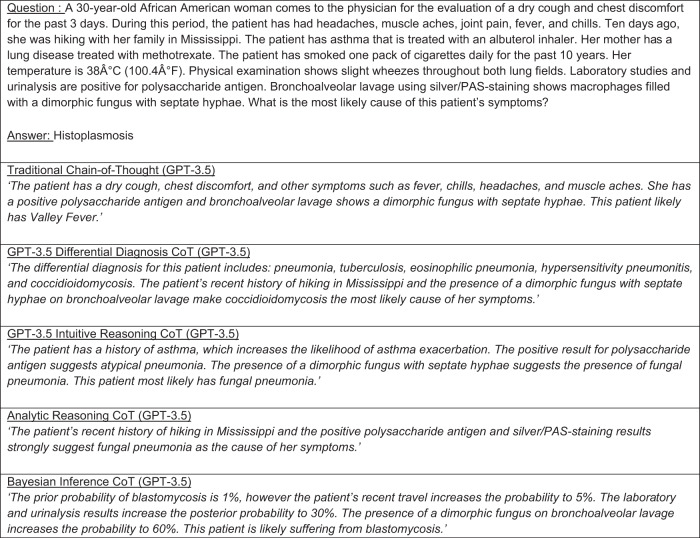
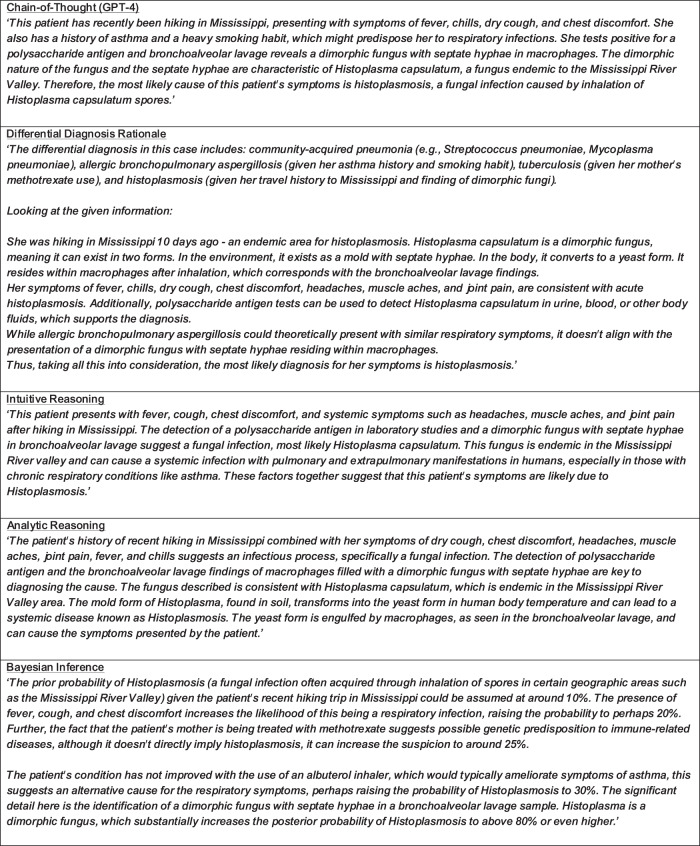
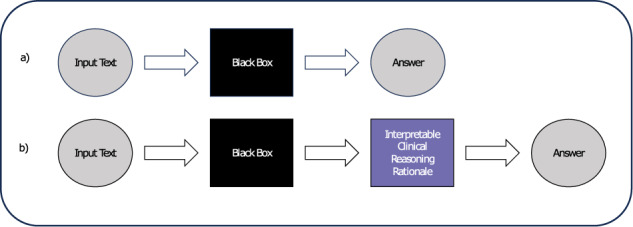
One of the major barriers to using large language models (LLMs) in medicine is the perception they use uninterpretable methods to make clinical decisions that are inherently different from the cognitive processes of clinicians. In this manuscript we develop diagnostic reasoning prompts to study whether LLMs can imitate clinical reasoning while accurately forming a diagnosis. We find that GPT-4 can be prompted to mimic the common clinical reasoning processes of clinicians without sacrificing diagnostic accuracy. This is significant because an LLM that can imitate clinical reasoning to provide an interpretable rationale offers physicians a means to evaluate whether an LLMs response is likely correct and can be trusted for patient care. Prompting methods that use diagnostic reasoning have the potential to mitigate the “black box” limitations of LLMs, bringing them one step closer to safe and effective use in medicine.
Overview
The claims and statistics of this paper haven’t been checked yet.
Free: it reads the open-access text and checks the first 5 claims that cite a source we can check. Create a free account to check every claim.
Integrity signals
Registry
Cites
Statistics
Figures
Verification
Claims the paper makes
The claims and statistics of this paper haven’t been checked yet.
Free: it reads the open-access text and checks the first 5 claims that cite a source we can check. Create a free account to check every claim.
Claims other papers make about this one
Each is checked against this paper’s own text: does it say what the citing paper says it does?
The source backs part of the claim, not all of it — or backs it for a different population, condition or comparison.
In the citing paper
“Most have been tested only with text-based, low-stakes interactions,33–38”
From Review of Artificial Intelligence for Clinical Use in Alzheimer's Disease and Related Dementias (2026) · cites this paper as [38]
Experimental — accuracy not yet measuredThe source backs part of the claim, not all of it — or backs it for a different population, condition or comparison.
In the citing paper
“Large language models (LLMs) have been shown to interpret complex clinical situations and offer recommendations, from differential diagnoses to care management, leading to growing interest in their application in the medical field [13-16].”
From Identifying Deprescribing Opportunities With Large Language Models in Older Adults: Retrospective Cohort Study (2025) · cites this paper as [16]
Experimental — accuracy not yet measuredThe source backs part of the claim, not all of it — or backs it for a different population, condition or comparison.
In the citing paper
“the majority of reviewed studies leverage the inherent text generation capabilities of LLMs to produce explanations as a natural by-product of inference [62,71,72,78,97,112].”
From Explainability of decoder-only clinical large language models: A scoping review (2026) · cites this paper as [62]
Experimental — accuracy not yet measuredThe cited source says what the claim attributes to it.
In the citing paper
“In our review, twenty studies relied exclusively on closed-source models [62,63,79,89,105,118]”
From Explainability of decoder-only clinical large language models: A scoping review (2026) · cites this paper as [62]
The cited source says what the claim attributes to it.
In the citing paper
“Chain-of-Thought prompting [62,64,78] and natural language explanation generation [72,74,75] produce outputs that align with clinical reasoning conventions, mimicking the differential diagnosis process familiar to practitioners.”
From Explainability of decoder-only clinical large language models: A scoping review (2026) · cites this paper as [62]
1 more claim about this paper
Create a free account to see every claim other papers make about this one.
Self-check
Percentages, sums and reported differences re-computed from the paper’s own numbers.
The self-check needs the paper’s full text.
Citations
Cites
Language Models are Few-Shot Learners
Brown, T. B., Mann, B., Ryder, N., Subbiah, M., Kaplan, J., Dhariwal, P., Neelakantan, A., Shyam, P., Sastry, G., Askell, A., et al. (2020) · arXiv · doi:10.48550/arxiv.2005.14165 · Cited by 23,372 · cited 2×
“Prompt engineering is emerging as a discipline in response to the phenomena that LLMs can perform substantially differently depending on how questions and prompts are posed to them 14,15 .”
BackgroundMethodChain-Of-Thought Prompting Elicits Reasoning in Large Language Models
Wei, J., Wang, X., Schuurmans, D., Bosma, M., Ichter, B., Xia, F., Chi, E., Le, Q. V., & Zhou, D. (2022) · Advances in Neural Information Processing Systems 35 · doi:10.52202/068431-1800 · Cited by 4,505
Chain-of-Thought Prompting Elicits Reasoning in Large Language Models
Wei, J., Wang, X., Schuurmans, D., Bosma, M., Ichter, B., Xia, F., Chi, E., Le, Q., & Zhou, D. (2022) · arXiv · doi:10.48550/arxiv.2201.11903 · Cited by 4,263 · cited 2×
“A notable example is Chain-of-thought (CoT) prompting, which involves instructing the LLM to divide its task into smaller reasoning steps and then complete the task step-by-step 17 .”
BackgroundKung, T. H., Cheatham, M., Medenilla, A., Sillos, C., De Leon, L., Elepaño, C., Madriaga, M., Aggabao, R., Diaz-Candido, G., Maningo, J., et al. (2023) · PLOS Digital Health · doi:10.1371/journal.pdig.0000198 · Cited by 4,115 · cited 1×
“Within medicine, initial efforts have demonstrated that LLMs can write clinical notes 3 , pass standardized medical exams 4 , and draft responses to patient questions 5,6 .”
BackgroundKung, T. H., Cheatham, M., ChatGPT, Medenilla, A., Sillos, C., De Leon, L., Elepaño, C., Madriaga, M., Aggabao, R., Diaz-Candido, G., et al. (2022) · doi:10.1101/2022.12.19.22283643 · Cited by 4,115
Large language models encode clinical knowledge
Singhal, K., Azizi, S., Tu, T., Mahdavi, S. S., Wei, J., Chung, H. W., Scales, N., Tanwani, A., Cole-Lewis, H., Pfohl, S., et al. (2023) · Nature · doi:10.1038/s41586-023-06291-2 · Cited by 4,083
Large Language Models Encode Clinical Knowledge
Singhal, K., Azizi, S., Tu, T., Mahdavi, S. S., Wei, J., Chung, H. W., Scales, N., Tanwani, A., Cole-Lewis, H., Pfohl, S., et al. (2022) · arXiv · doi:10.48550/arxiv.2212.13138 · Cited by 4,083
Large language models in medicine
Thirunavukarasu, A. J., Ting, D. S. J., Elangovan, K., Gutierrez, L., Tan, T. F., & Ting, D. S. W. (2023) · Nature Medicine · doi:10.1038/s41591-023-02448-8 · Cited by 3,944 · cited 8×
“5 accuracy on the MEDQA training set (Supplementary Data 3).”
BackgroundInfluentialAyers, J. W., Poliak, A., Dredze, M., Leas, E. C., Zhu, Z., Kelley, J. B., Faix, D. J., Goodman, A. M., Longhurst, C. A., Hogarth, M., et al. (2023) · JAMA Internal Medicine · doi:10.1001/jamainternmed.2023.1838 · Cited by 2,613 · cited 10×
“5 accuracy on the MEDQA training set (Supplementary Data 3).”
BackgroundInfluentialBenefits, Limits, and Risks of GPT-4 as an AI Chatbot for Medicine
Lee, P., Bubeck, S., & Petro, J. (2023) · New England Journal of Medicine · doi:10.1056/nejmsr2214184 · Cited by 1,738 · cited 3×
“Note that the full text of the example questions has been omitted for readability. rationale compared to correct answers.”
MethodInfluential
Research works printed but not linked: 2
- Case records of the Massachusetts General Hospital articles. 2020-2023. N. Engl. J. Med. Accessed: May 2023. https://www.nejm.org/medical-articles/case-records-of-the-massachusetts-general-hospital.
- UpToDate: industry-leading clinical decision support. Wolters Kluwer. Accessed: June 2023. https://www.wolterskluwer.com/en/solutions/uptodate.
Cited by
Items 101–200 of 268
BRIDGE: benchmarking large language models for understanding real-world clinical practice texts
Wu, J., Gu, B., Zhou, R., Xie, K., Snyder, D., Jiang, Y., Carducci, V., Wyss, R., Desai, R. J., Alsentzer, E., et al. (2026) · Nature Biomedical Engineering · doi:10.1038/s41551-026-01719-2 · Cited by 51
Self-citationReview of Artificial Intelligence for Clinical Use in Alzheimer's Disease and Related Dementias
Breithaupt, A. G., Tang, A., Paolillo, E. W., Bibars, M., Johnson, E. C. B., Saloner, R., Possin, K. L., Windon, C. C., Hill-Jarrett, T. G., Giorgio, J., et al. (2026) · Seminars in Neurology · doi:10.1055/a-2744-9871 · Cited by 6
Cyber Threat Intelligence meets the Analytic Tradecraft
Bjurling, B., & Raza, S. (2024) · ACM Transactions on Privacy and Security · doi:10.1145/3701299 · Cited by 8
“However, although LLMs have been applied for reasoning in domains such as medical diagnosis [ 62 ] and in general problem solving as well as in complex reasoning tasks [ 3 , 38 ], they perform poorly on these complex reasoning tasks.”
Habibi, G., Firouzabadi, S. R., Mohammadi, I., & Gargari, O. K. (2025) · PLoS ONE · doi:10.1371/journal.pone.0332196 · Cited by 6
“One explanation could be that prompting the model to provide explanations for the diagnoses may increase its accuracy [26].”
Clinical pathway-aware large language models for reliable and transparent medical dialogue
Wu, J., Wu, X., Zheng, Y., & Yang, J. (2025) · Journal of Biomedical Informatics · doi:10.1016/j.jbi.2025.104942 · Cited by 14
Benchmarking vision-language models for brain cancer diagnosis using multisequence MRI
Elboardy, A. T., Khoriba, G. A., Al-Shatouri, M. A., Mousa, M., & Rashed, E. A. (2025) · Informatics in Medicine Unlocked · doi:10.1016/j.imu.2025.101692 · Cited by 9
Large Language Models Driven Health Text Information Analysis in Consumer Electronics
Wang, C., Pan, D., Kumari, S., Wu, M., & Jiang, H. (2024) · IEEE Transactions on Consumer Electronics · doi:10.1109/tce.2024.3516006 · Cited by 7
Prompting Large Language Models for Supporting the Differential Diagnosis of Anemia
Castagnari, E., Muyama, L., & Coulet, A. (2024) · International Conference on Foundation and Large Language Models (FLLM) · doi:10.1109/fllm63129.2024.10852485 · Cited by 9
“We note that while Mistral and LLaMA are open-source, GPT is not.”
Tassone, D., Hitchcock, M. M., Rossier, C., Fletcher, D., Ye, J., Langford, I., Boatman, J., & Markley, J. D. (2025) · Antimicrobial Stewardship & Healthcare Epidemiology · doi:10.1017/ash.2025.10059 · Cited by 5
Yao, M. S., Chae, A., Saraiya, P. V., Kahn, C. E., Witschey, W. R. T., Gee, J. C., Sagreiya, H., & Bastani, O. (2025) · Communications Medicine · doi:10.1038/s43856-025-01061-9 · Cited by 10
“In COT prompting, we explore four different reasoning strategies identical to those employed by Savage et al. 22 : (1) Default reasoning, which does not specify any particular reasoning strategy for the LLM to use; Supplementary Fig.”
InfluentialExplainable Surgical Procedures Recommender System Leveraging Large Language Models
Solomon, A., Glebov, M., & Lazebnik, T. (2026) · ACM Transactions on Recommender Systems · doi:10.1145/3767326 · Cited by 8
“Savage et al. [72] propose diagnostic reasoning prompts to enhance interpretability in diagnoses.”
Advancing Healthcare with Large Language Models: Techniques and Application
Hu, Z., Peng, Z., Bi, Z., Shen, Q., Liu, Z., Lou, J., & Luo, X. (2025) · IEEE/CAA Journal of Automatica Sinica · doi:10.1109/jas.2025.125540 · Cited by 12
Yang, J. J., & Hwang, S. (2025) · Blood Research · doi:10.1007/s44313-025-00062-w · Cited by 11
“By breaking down complex tasks into modular prompt blocks and incrementally building COT reasoning, researchers can achieve more precise and targeted results [31] (Fig.”
Wang, T.-H., Jheng, J.-C., Tseng, Y.-T., Chen, L., & Chen, Y. (2025) · Journal of the Chinese Medical Association · doi:10.1097/jcma.0000000000001273 · Cited by 6
“29,30 Advanced models like ReAct, which deconstruct complex tasks and use external tools, have shown promise in enhancing reasoning and reducing hallucinations; that is, plausible yet factually incorrect responses.”
Leveraging Datathons to Teach AI in Undergraduate Medical Education: Case Study
Yao, M. S., Huang, L., Leventhal, E. L., Sun, C., Stephen, S. J., & Liou, L. (2025) · JMIR Medical Education · doi:10.2196/63602 · Cited by 6
“Generative AI is an area of ML that uses technologies such as large language models (LLMs) to create new content by learning patterns from existing human-generated examples [18-20].”
Evaluating multimodal ChatGPT for emergency decision-making of ocular trauma cases
Xue, J., Wang, Z., Chen, N., Wu, Y., Shen, Z., Shao, Y., Zhou, H., & Li, Z. (2025) · Frontiers in Cell and Developmental Biology · doi:10.3389/fcell.2025.1564054 · Cited by 5
Large language models in neuropsychology: Emerging applications and ethical considerations
Kronenberger, O. R., Gottlieb, M. C., & Cullum, C. M. (2025) · The Clinical Neuropsychologist · doi:10.1080/13854046.2025.2604094 · Cited by 5
“Emerging approaches such as use of chain-of-thought reasoning that requires models to show their step-by-step “thought” process may, in part, alleviate these concerns (Savage et al., 2024), but these are not yet standard and do not fully elucidate internal computational mechanisms.”
Chen, Z., Gao, Y., Gu, S., Yong, Z., Li, L., Wang, R., Lei, Q., & Zeng, S. (2026) · Anesthesiology and Perioperative Science · doi:10.1007/s44254-025-00140-3 · Cited by 6
“The models were evaluated using both simple querying (SQ) and advanced PE approaches [12, 13], which employed techniques like CoT reasoning and self-consistency to enhance logical output and stability [14, 15].”
Vision-Language Models for Ultrasound Assessment of Suspicious Axillary Lymph Nodes in Breast Cancer
He, P., Chen, C., Dong, H.-D., Chen, M. I., Lin, Z., Wu, S.-L., Cai, W.-F., Lin, X., Yi-qi, D., Wang, C., et al. (2026) · American Journal of Roentgenology · doi:10.2214/ajr.26.35227 · Cited by 4
Park, J.-H., Cheong, C., Kang, S., Lee, I., Lee, S., Yoon, K. S., & Lee�, H. (2024) · IEEE-EMBS International Conference on Biomedical and Health Informatics (BHI ...) · doi:10.1109/bhi62660.2024.10913702 · Cited by 9
Park, S., Wee, C. W., Choi, S. H., Kim, K. H., Chang, J. S., Yoon, H. I., Lee, I. J., Kim, Y. B., Cho, J., Keum, K. C., et al. (2025) · Radiotherapy and Oncology · doi:10.1016/j.radonc.2025.111052 · Cited by 7
ChatGPT in Oral Pathology: Bright Promise or Diagnostic Mirage
Suárez, A., Freire, Y., García, V. D., Santamaría-Laorden, A., Pérez, J. O., Ajuria, M. S., Algar, J., & Carreras‐Presas, C. M. (2025) · Medicina · doi:10.3390/medicina61101744 · Cited by 7
“They can interpret clinical information, generate diagnostic hypotheses, and provide reasoned justifications for their responses [3,4].”
Reichenpfader, D., Knupp, J., von Däniken, S. U., Gaio, R., Dennstädt, F., Cereghetti, G. M., Sander, A., Hiltbrunner, H., Nairz, K., & Denecke, K. (2025) · Journal of Medical Internet Research · doi:10.2196/68427 · Cited by 4
“However, recent research shows that including diagnostic reasoning in generative models might improve the assessment of outcomes for clinicians [59].”
Qazi, I. A., Ali, A., Khawaja, A. U., Akhtar, M. J., Sheikh, A. Z., & Alizai, M. H. (2025) · medRxiv · doi:10.1101/2025.06.06.25329104 · Cited by 8
Wu, K., Wang, H., Feng, F., Liu, T., & Sun, Y. (2025) · Neural Networks · doi:10.1016/j.neunet.2025.107203 · Cited by 6
Cha, S., Park, J., Choi, H., Ryu, H., & Seo, K. (2025) · Proceedings of the Extended Abstracts of the CHI Conference on Human Factors in Computing Systems · doi:10.1145/3706599.3720111 · Cited by 3
Walking Backward to Ensure Risk Management of Large Language Models in Medicine
Onitiu, D., Wachter, S., & Mittelstadt, B. (2025) · The Journal of Law Medicine & Ethics · doi:10.1017/jme.2025.10132 · Cited by 7
“52 The provider now wants to evaluate the device ’ s risks to produce factually incorrect output and fabricate responses.”
In the search for the perfect prompt in medical AI queries
Berghea, F., Berghea, E. C., Daia, C. O., Ciuc, D. M., & Dincă, G. V. (2025) · Frontiers in Artificial Intelligence · doi:10.3389/frai.2025.1689178 · Cited by 7
“Traditional CoT guides responses step by step (Wei et al., 2023; Savage et al., 2024).”
Yum, J.-E. I., Naqvi, S. A. A., Zhou, B., & Riaz, I. B. (2025) · JCO Clinical Cancer Informatics · doi:10.1200/cci-25-00134 · Cited by 5
Yap, W., Cheng, S.-C., Lin, C.-H., Hsiao, I., Tsai, T., Yap, W.-L., Chen, W. P.-Y., Lin, C., & Huang, S.-M. (2025) · Bioengineering · doi:10.3390/bioengineering12121345 · Cited by 5
Sun, M., Yu, J., Long, Z., Yang, Y., Xiao, T., Liang, J., Feng, J., Deng, H., & Huang, G. (2026) · JMIR Medical Informatics · doi:10.2196/77699 · Cited by 8
“For example, Savage et al [32] reported that diagnostic reasoning prompts enhance LLMs’ ability to emulate stepwise clinical reasoning compared with standard prompts.”
Sahoo, H. S., Kumar, A. R. P., Durvasulu, A., & Ravichandran, A. (2025) · Journal of Dentistry · doi:10.1016/j.jdent.2025.106309 · Cited by 6
Large Language Models for Maternal and Neonatal Health Care in Low- and Middle-Income Countries
Yu, L., Darmstadt, G. L., Ward, V. C., Wong, R. J., Stevenson, D. K., & Marić, I. (2026) · The Journal of Pediatrics · doi:10.1016/j.jpeds.2026.115037 · Cited by 5
Tang, W., Chen, R., Long, X., Yu, D., Zhao, S., & Chen, B. (2026) · Journal of Orthopaedic Translation · doi:10.1016/j.jot.2026.101050 · Cited by 10
“Therefore, future research must invest heavily in Explainable AI (XAI) to develop more transparent, traceable AI systems that can provide reasonable explanations for their conclusions [103].”
Dani, M., Prakash, M. J., Rosa, F., Akata, Z., & Liebe, S. (2026) · Communications Medicine · doi:10.1038/s43856-026-01653-z · Cited by 6
“However, it is an open and largely unexplored question of how well LLMs can extract and interpret clinically meaningful information from unstructured clinical narratives to support real-world diagnostic reasoning.”
Huh, K. Y., Song, I., Kim, Y., Park, J., Ryu, H., Koh, J., Yu, K., Kim, K. H., & Lee, S. (2025) · Clinical and Translational Science · doi:10.1111/cts.70183 · Cited by 3
“As LLMs are typically trained on various sources of literature, adapting them to perform well in a specific domain is required, typically through a process called ‘fine-tuning’ [9, 10].”
A Bibliometric Analysis of Trust in Conversational Agents over the Past Fifteen Years
Aksoy, M., & Bush, A. (2025) · International Conference on Computing and Artificial Intelligence (ICCAI) · doi:10.1109/iccai66501.2025.00076 · Cited by 7
“Savage et al. [53] propose diagnostic reasoning prompts to align LLMs outputs with clinicians’ cognitive processes, addressing trust issues in medical contexts.”
Structured reasoning failures compromise LLM interpretation of clinical oncology notes
Kenaston, M. W., Ayub, U., Parmar, M., Kumar, P., Anjum, M. U., Naqvi, S. A. A., Chaudhuri, A. A., Zakharia, Y., Heath, E. I., Bekaii-Saab, T. S., et al. (2026) · npj Digital Medicine · doi:10.1038/s41746-026-02951-5 · Cited by 2
“Clinician responses contained fewer errors than GPT-5 (6.6% [4/61] vs. 16.4% [10/61]), though this difference was not statistically signi fi cant (McNemar p = 0.077; Supplementary Fig.”
InfluentialSkittle, C., Bonifacino, E., & McQuade, C. N. (2024) · Diagnosis · doi:10.1515/dx-2024-0167 · Cited by 3
Exploring the value of ChatGPT in selecting antidiabetic agents for type 2 diabetes
Jang, S. A., Kwon, S., Kim, C. S., Park, S. W., & Kim, K. M. (2025) · Diabetes Obesity and Metabolism · doi:10.1111/dom.16630 · Cited by 5
“13,14 For instance, T A B L E 2 ( C o n t i nu e d ) N o t e : C a t e g o r i c a l v a r i a b l e s a r e p r e s e n t e d a s nu m b e r s ( p e r c e n t a g e s ) , a nd c o n t i nu o u s v a r i a b l e s a r e p r e s e n t e d a s m e a n s ± s t a nd a r d d e v i a t i o n s o r m e d…”
MedM-VL: What Makes a Good Medical LVLM?
Shi, Y., Yang, S., Zhu, X., Wang, H., Fu, X., Li, M., & Wu, J. (2025) · Lecture notes in computer science · doi:10.1007/978-3-032-06004-4_29 · Cited by 11
Understanding Formal Reasoning Failures in LLMs as Abstract Interpreters
Mitchell, J., Kim, B. H., Zhou, C., & Wang, C. (2025) · ACM SIGPLAN International Workshop on Language Models and Programming Languages (LMPL) · doi:10.1145/3759425.3763389 · Cited by 5
“2 Background and Related Work”
Evaluating AI chatbots in neurological function test interpretation for brain tumor surgery
Lee, J., Lee, E. J., Kim, Y. I., Lim, S. W., & Ahn, S. (2026) · Neurosurgical Review · doi:10.1007/s10143-025-03995-z · Cited by 2
Evaluating reasoning large language models with human-like thinking in ophthalmic question answering
Wang, Z., Xu, C., Wang, L., Qiang, W., Li, Y., Li, D., Xu, F., Zhang, Y., Jiang, J., & Li, Z. (2026) · BMJ Open Ophthalmology · doi:10.1136/bmjophth-2025-002615 · Cited by 2
“…logical inference capabilities and refining uncertainty metrics as guardrails for clinical AI, ultimately working toward reasoning LLMs that can serve as reliable, transparent assistants in ophthalmic care while maintaining the human-like thinking processes essential to medical decision-making.”
Satisficing vs. Maximizing in Prompt Writing: Trait and Task Effects in Human–AI Interaction
Wyszynski, M., Weber, S., Fritzsche, R., Hofgesang, M., & Niehaves, B. (2026) · CHI Conference on Human Factors in Computing Systems · doi:10.1145/3772318.3790693 · Cited by 2
Ethical Considerations in Personal Health Large Language Models
Liu, J., & Liu, S. (2026) · Journal of Medical Internet Research · doi:10.2196/92240 · Cited by 2
“For LLMs, direct interpretability of internal mechanisms remains limited [46], and post hoc explanations may appear plausible without faithfully reflecting how outputs were generated [47].”
Kaplan, A., Kaplan, B. A., Aydilek, A., Ege, T., Şentürk, S., & Solmaz, İ. (2026) · European Spine Journal · doi:10.1007/s00586-026-10094-0 · Cited by 2
Generative Artificial Intelligence and Large Language Models in Clinical Oncology
Yu, Y., Zhao, Z., Wang, Z., Lin, R., Tan, Y., Chen, Y., Li, T., Baptista‐Hon, D. T., Zhang, X., Wu, C., et al. (2026) · MedComm · doi:10.1002/mco2.70833 · Cited by 4
“While LLMs often achieve high predictive performance, their “black-box” nature can limit trust and usability among healthcare professionals [ 108 ].”
“Explainable AI” Disease Detection with Reasoning
Kumar, M., Ramrakhiyani, K., & Garg, H. (2024) · International Conference on Applied Artificial Intelligence and Computing (ICAAIC) · doi:10.1109/icaaic60222.2024.10575153 · Cited by 3
Lamaudière, M. T. F., & Sergaki, C. (2024) · Food Science and Nutrition Cases · doi:10.1079/fsncases.2024.0004 · Cited by 2
Human-in-the-Loop Chest X-Ray Diagnosis: Enhancing Large Multimodal Models with Eye Fixation Inputs
Kim, Y., Wu, J., Abdulle, Y., Gao, Y., & Wu, H. (2024) · Lecture notes in computer science · doi:10.1007/978-3-031-67751-9_6 · Cited by 3
Yao, J., Perova, Z., Mandloi, T., Lewis, E., Parkinson, H., & Savova, G. (2025) · JMIR Bioinformatics and Biotechnology · doi:10.2196/70706 · Cited by 3
“Researchers have studied the use of LLMs in addressing various tasks related to health care such as diagnosing conditions [9,10], clinical decision support [11], answering patient questions [12], and medical education [13,14].”
Enhancing Medical Diagnostic Reasoning with Chain-of-Thought in Large Language Models
Dai, G., Li, X., Fan, L., & Ma, X. (2025) · International Conference on Mechatronics, Robotics, and Artificial Intelligence (MRAI) · doi:10.1109/mrai65197.2025.11135834 · Cited by 4
“The paper is based on the publicly available medical question-answer dataset MedQA-USMLE [26], and designs a systematic data screening and modeling process to improve the performance of LLMs in complex clinical reasoning tasks.”
Gao, Y., Myers, S., Chen, S., Dligach, D., Miller, T. A., Bitterman, D. S., Chen, G., Mayampurath, A. M., Churpek, M. M., & Afshar, M. (2024) · medRxiv · doi:10.1101/2024.11.06.24316848 · Cited by 2
“Recent advancements, particularly with models like GPT-4, have demonstrated that LLMs can rival clinicians in generating differential diagnoses (Kanjee et al., 2023; Savage et al., 2024).”
BackgroundLLM Reasoning Does Not Protect Against Clinical Cognitive Biases - An Evaluation Using BiasMedQAPreprint
Kim, S. H., Ziegelmayer, S., Busch, F., Mertens, C. J., Keicher, M., Adams, L. C., Bressem, K. K., Braren, R., Makowski, M. R., Kirschke, J. S., et al. (2025) · medRxiv · doi:10.1101/2025.06.22.25330078 · Cited by 2
“This finding undermines the transparency and explainability that these systems are meant to provide [16].”
STRICTA: Structured Reasoning in Critical Text Assessment for Peer Review and Beyond
Dycke, N., Zečević, M., Kuznetsov, I., Suess, B., Kersting, K., & Gurevych, I. (2025) · Proceedings of the 63rd Annual Meeting of the Association for Computational Linguistics (Volume 1: Long Papers) · doi:10.18653/v1/2025.acl-long.1107 · Cited by 1
“Savage et al. (2024) use LLMs in a zero-shot setting, designing prompts to mimic medical expert reasoning during diagnosis.”
Ding, Z., Wei, R., Xia, J., Mu, Y., Wang, J., & Lin, Y. (2024) · Briefings in Bioinformatics · doi:10.1093/bib/bbae641 · Cited by 3
“Besides, the black-box nature of LLMs poses challenges for interpreting their predictions and understanding the underlying mechanisms driving Ribo-seq data analysis [128–130].”
Chen, Z., Kudus, K., Ketabi, S., Namdar, K., Wagner, M. W., Ertl-Wagner, B. B., & Khalvati, F. (2024) · IEEE-EMBS International Conference on Biomedical and Health Informatics (BHI ...) · doi:10.1109/bhi62660.2024.10913641 · Cited by 1
“For example, Thomas et al. [8] showed that GPT-4 can be instructed to replicate the clinical reasoning patterns used by doctors when making a diagnosis.”
Kim, M. S., Lee, J. S., & Bae, H. (2025) · Healthcare Informatics Research · doi:10.4258/hir.2025.31.2.200 · Cited by 4
“The CoT methodology was implemented to decompose the counseling task into intermediate subtasks [15,16].”
Liu, Y., Zhiliang, S., Xiao, C., & Wang, B. (2025) · Computerized Medical Imaging and Graphics · doi:10.1016/j.compmedimag.2025.102602 · Cited by 2
Dong, W., Wang, W., Han, X., Huang, J., Li, L., & Huang, Y. (2025) · Computers in Biology and Medicine · doi:10.1016/j.compbiomed.2025.110789 · Cited by 5
Tonkaz, D. E., Tonkaz, M., Bekçi, T., & Tonkaz, G. (2025) · Seminars in Ultrasound CT and MRI · doi:10.1053/j.sult.2025.10.002 · Cited by 3
Navarro, S. M., Atkinson, A. G., Donagay, E., Jabaay, M. J., Lund, S. B., Park, M. S., Loomis, E. A., Zietlow, J. M., Vu, T. N. D., Rivera, M., et al. (2025) · Healthcare · doi:10.3390/healthcare13243184 · Cited by 2
“LLM usage for the development of complex outputs in medicine has been increasingly explored in surgery [21].”
DiaShift: An Explainable System for Temporal Diagnostic Shift Detection in Clinical Notes
Bakagianni, J., Dalakleidi, K. V., Stamatis, K. V., & Pavlopoulos, J. (2025) · IEEE International Conference on Bioinformatics and Bioengineering (BIBE) · doi:10.1109/bibe66822.2025.00063 · Cited by 1
“Recent studies enhance transparency in clinical NLI and diagnostic QA through rationale generation using span highlighting, chain-of-thought prompting, and faithfulness evaluations [15], [16].”
Performance of Physicians and AI Systems on Pulmonary Thromboembolism Questions
Ekingen, E., & Üçdal, M. T. (2025) · Cureus · doi:10.7759/cureus.100476 · Cited by 1
“Research across diverse clinical areas is needed to characterize AI capabilities broadly and determine whether patterns observed in pulmonary thromboembolism generalize to other medical domains [28, 29, 30].”
Hierarchical agent reflection for aligning LLM reasoning with clinical diagnostic processes
Wang, X., Li, X., Zhao, D., Feng, K., Liang, L., Zhang, Z., Ding, K., Chen, H., Wan, B., & Zhang, Q. (2026) · Health Information Science and Systems · doi:10.1007/s13755-025-00410-1 · Cited by 2
“To bridge this gap and harness the full potential of LLMs, it is essential to align their diagnostic reasoning with clinical reasoning [19, 20].”
Small, W. R., Crowley, R. J., Pariente, C. S., Zhang, J., Eaton, K. P., Jiang, L. Y., Oermann, E. K., & Aphinyanaphongs, Y. (2026) · npj Health Systems · doi:10.1038/s44401-025-00059-8 · Cited by 2
MAPPING RESEARCH ON GENERATIVE AI AND CRITICAL THINKING IN EDUCATION
Idrus, N. M., Ghani, N. A. A., & Rahman, H. A. (2025) · International Journal of Education Psychology and Counseling · doi:10.35631/ijepc.1061067 · Cited by 1
Yin, C., Sun, X., Dai, A., Ye, X., Lu, Y., Wang, W., Chen, Y., Jiang, H., Yu, J., Chong, S., et al. (2026) · APL Bioengineering · doi:10.1063/5.0299327 · Cited by 2
Karakoyun, Z. N., Yörük, M. D., Özdemir, M. E., & Koşar, M. İ. (2026) · BMC Medical Education · doi:10.1186/s12909-026-09173-z · Cited by 2
“Techniques such as role-based prompting or chain-of-thought prompting have been shown to improve the explanatory quality of LLM responses in medical contexts and may influence performance in anatomy-related reasoning tasks [5, 62–64].”
Context-Guided Mixture-of-Experts with Multimodal LLMs for Lesion Detection in Buccal Mucosa Images
Nayak, A., Diddigi, R. B., Kestur, R., Kumar, P. M., Ranganathan, K., Lavanya, C., Rajeshwari, S., & Behera, S. S. (2026) · International Dental Journal · doi:10.1016/j.identj.2026.109575 · Cited by 2
Self-citationYu, C., Li, F., Zhang, N., Hu, H., Huang, H., Wang, J., Tao, Y., & Wu, Y. (2026) · JMIR Medical Education · doi:10.2196/87959 · Cited by 2
“AI tools have also shown promise in generating clinical reasoning prompts and modeling systematic diagnostic approaches [17,18].”
Thawinwisan, N., Liu, C., Yamamoto, G., Kishimoto, K., Mori, Y., & Kuroda, T. (2026) · JMIR Medical Informatics · doi:10.2196/94614 · Cited by 2
LLMs as Clinical Instruments—Toward Verifiable Reasoning
Paulus, M. P., & Torous, J. B. (2026) · JAMA Psychiatry · doi:10.1001/jamapsychiatry.2026.2211 · Cited by 2
Mwangi, B., Hamoudi, H. J. A. S., Sanches, M., Doğan, N., Chaudhary, P., Wu, M., Zunta‐Soares, G. B., Soares, J. C., Martin, A., & Soutullo, C. A. (2026) · npj Mental Health Research · doi:10.1038/s44184-026-00245-y · Cited by 2
Malek, M. A., du Fossé, N. A., & Boon, M. (2025) · British Journal of Anaesthesia · doi:10.1016/j.bja.2024.12.034 · Cited by 1
RETRACTED ARTICLE: GPT-4 as a Board-Certified Surgeon: A Pilot Study
Roshal, J. A., Silvestri, C. J., Sathe, T. S., Townsend, C. M., Klimberg, V. S., & Perez, A. (2025) · Medical Science Educator · doi:10.1007/s40670-025-02352-5 · Cited by 1
“More recent work has highlighted GPT-4’s clinical reasoning abilities, which offers promising implications for the integration of LLMs into clinical workflows [20].”
RetractedSundaram, S., Adarsh, R., & Thapa, S. (2025) · medRxiv · doi:10.1101/2025.06.27.25330316 · Cited by 2
Widmer, J. F., Silva, L. C., Grahofer, A., Zanolari, P., Unger, L., Lutz, B., Schüpbach, G., & Nathues, H. (2026) · doi:10.2196/preprints.102422 · Cited by 1
Explainability of decoder-only clinical large language models: A scoping review
Mishra, N., Abu-Hanna, A., & Calixto, I. (2026) · Artificial Intelligence in Medicine · doi:10.1016/j.artmed.2026.103501
Diagnostic accuracy and citation integrity of four large language models on otolaryngology vignettes
Pennington-FitzGerald, W., Warrier, A., Durant, S., Sharaf, I., Carlino, F., Pamula, S. D., Eloy, J. A., & Levi, J. (2026) · European Archives of Oto-Rhino-Laryngology · doi:10.1007/s00405-026-10253-5
“The impressive diagnostic accuracy demonstrated by the four models in this study aligns with previous work evaluat - ing LLM performance in otolaryngology and other medi - cal specialties [2, 3, 22, 23].”
WITHDRAWN: ChatGPT-4 as a Board-Certified Surgeon: A Pilot StudyPreprint
Roshal, J. A., Silvestri, C. J., Sathe, T. S., Townsend, C. M., Klimberg, V. S., & Perez, A. (2024) · medRxiv · doi:10.1101/2024.05.31.24307894
Letter: Shifting focus—From ChatGPT to specialised medical LLMs : Authors' reply
Giuffrè, M., Kresevic, S., You, K., Dupont, J., Huebner, J., Grimshaw, A. A., & Shung, D. L. (2024) · Alimentary Pharmacology & Therapeutics · doi:10.1111/apt.18125
“8,9 Clinical reasoning involves complex decision-making processes that may not be fully captured by existing model training paradigms.”
Kim, R., Barile, J. G., & Milanaik, R. L. (2024) · Journal of Developmental & Behavioral Pediatrics · doi:10.1097/dbp.0000000000001270
Me-LLaMA: Medical Foundation Large Language Models for Comprehensive Text Analysis and BeyondPreprint
Xie, Q., Chen, Q., Chen, A., Cheng, P., Hu, Y., Lin, F., Peng, X., Huang, J., Zhang, J., Keloth, V. K., et al. (2024) · SSRN Electronic Journal · doi:10.2139/ssrn.4943761 · Cited by 8
Cera, R. (2025) · EDUCATION SCIENCES AND SOCIETY · doi:10.3280/ess2-2024oa18396
Unifying Large Language Models and Knowledge Graphs for Poultry Diseases Diagnosis
Shengxiang, X., Yao, L., Huang, C., Jiang, G., & Liu, F. (2025) · Lecture notes in computer science · doi:10.1007/978-981-96-1071-6_25 · Cited by 2
Prompt Engineering in Clinical Practice: A Comprehensive Guide for Clinicians (Preprint)Preprint
Liu, J., Wang, C., & Liu, S. (2025) · doi:10.2196/preprints.72644
Wang, B., Li, W., Bradlow, A., Watt, A., Chan, A. T. Y., & Bazuaye, E. (2025) · Information Fusion · doi:10.1016/j.inffus.2025.103068 · Cited by 1
“…shown promising performance in disease diagnosis by mimicking common clinical reasoning processes of physicians, they were only applicable with predesigned and structured symptom checkers [26] and question-and-answer datasets rather than real-world clinical data in heterogenous formats [27,28].”
Hunton, R. W. (2025) · The Journal of Physician Assistant Education · doi:10.1097/jpa.0000000000000664
Lee, J.-G., Kim, G. H., Chae, J., Lee, J. S., & Shin, H. (2025) · doi:10.2196/preprints.75032
Implementing Large Language Models in Critical Care
Gharib, K. E. (2025) · CHEST Critical Care · doi:10.1016/j.chstcc.2025.100180 · Cited by 1
Pareto-Optimized Open-Source LLMs for Healthcare via Context Retrieval
Bayarri-Planas, J., Gururajan, A. K., & García-Gasulla, D. (2025) · IFIP advances in information and communication technology · doi:10.1007/978-3-031-96235-6_27 · Cited by 6
“In healthcare, RAG-based approaches, often combined with prompting techniques, have shown considerable promise in improving accuracy on medical benchmarks [12,18,20,22].”
Tóth, T., Reiniger, L., Migh, E., Bauer, D. P., Moldvay, J., Szállási, Z., & Horváth, P. (2025) · bioRxiv (Cold Spring Harbor Laboratory) · doi:10.1101/2025.07.09.663829
Hunton, R. W., & Potter, D. J. (2025) · doi:10.2196/preprints.80150
Rubinstein, B., & Matos, S. (2025) · Lecture notes in computer science · doi:10.1007/978-3-032-05176-9_24
“3) [12,16].”
All the Right Words, But Did They Think It? Reassessing Clinical Reasoning in the Age of AI
Choi, J. J. (2025) · Journal of General Internal Medicine · doi:10.1007/s11606-025-09844-5 · Cited by 3
Reasoning Models and Decision-Making in Medicine—Are we Finally There?
Júnior, G. H. Y., Moreira, A. L. C. D. S., Yoshinari, S. T. V., & Vitorino, L. M. (2025) · Lecture notes in computer science · doi:10.1007/978-3-031-97781-7_25
Liao, J., Huang, J., He, W., Pan, H., Zhang, L., Li, X., Liu, Z., Ke, X., Li, J., Li, X., et al. (2026) · BMC Infectious Diseases · doi:10.2196/preprints.85613
Evaluating Generative AI and Human Performance in Question-Answer Validation Tasks
Opaiţ, E.-E., Duca, A., & Olariu, M.-E. (2025) · Procedia Computer Science · doi:10.1016/j.procs.2025.09.522
Metadata
- Authors
- Savage, T., Nayak, A., Gallo, R., Rangan, E., & Chen, J. H.
- Affiliations
- Stanford Medicine (US)
- Stanford University (US)
- Corresponding author
- Savage, Thomas
- Venue
- npj Digital Medicine
- Published
- 2024-01-24
- Volume
- 7
- Issue
- 1
- Pages
- 20-20
- ISSN
- 2398-6352 (ISSN-L)
- PMC
- PMC10808088
- OpenAlex
- W4391170193
- Cited by
- 265
- References
- 22
- Citations by year
- 2026: 90 · 2025: 123 · 2024: 52
- FWCI
- 24.77
- Type
- journal article
- Language
- en
- Open access
- gold
- doi.org
- Licence
- cc-by
- creativecommons.org/licenses/by/4.0 (tdm)
- creativecommons.org/licenses/by/4.0 (vor)
- Locations
- npj Digital Medicine (publishedVersion, cc-by)
- PubMed Central (publishedVersion, cc-by)
- PubMed (publishedVersion)
- arXiv (Cornell University) (submittedVersion, cc-by)
- DOAJ (DOAJ: Directory of Open Access Journals) (submittedVersion, cc-by-sa)
- arXiv (Cornell University) (cc-by)
- Funders
- U.S. Department of Veterans Affairs
- Gordon and Betty Moore Foundation (#12409)
- American Heart Association
- Georgia Clinical and Translational Science Alliance (UL1TR003142)
- National Institutes of Health (UL1TR003142)
- National Institute on Drug Abuse (UG1DA015815)
- National Institute of Allergy and Infectious Diseases (R01AI178121)
- National Center for Advancing Translational Sciences
- Topics
- Health Sciences › Medicine › Health Informatics › Artificial Intelligence in Healthcare and Education
- Physical Sciences › Computer Science › Artificial Intelligence › Explainable Artificial Intelligence (XAI)
- Physical Sciences › Computer Science › Artificial Intelligence › Machine Learning in Healthcare
- Keywords
- large language models, interpretability, clinical reasoning, GPT-4, diagnostic accuracy, black box problem, trust in AI, prompting, clinical decision support
About these checks
Registry, retraction, Cites and statistics results are computed, not judged, with one exception: a printed reference that no index lists is read once by a model before it counts as a citation error. Claims are extracted by a model and kept only when their quote appears verbatim in the text; each cited source is then checked, with a model’s help, for whether it says what the claim relies on. Those verdicts can be wrong — read the claim’s quote and the cited source before relying on one.
Statistics and arithmetic are recomputed, not judged.
Confidence bands are shown only for fields calibrated on our annotated test set. None is calibrated yet, so no band is shown.
What counts as a claim ›How we measure confidence ›How we check this ›
Are you an author, or do you see a problem with this page? Request a review
Data sources
Bibliographic data: Semantic Scholar, OpenAlex, Crossref.
Contains information from the Semantic Scholar Academic Graph Datasets, made available under the ODC Attribution License (ODC-BY 1.0).
Semantic Scholar’s data is described in: Kinney, R., et al. (2023). The Semantic Scholar Open Data Platform. arXiv:2301.10140.
