

Diagnostic reasoning prompts reveal the potential for large language model interpretability in medicine
Open accessThe DOI matches its Crossref record; 29 of the 29 references it cites were found in a registry or an index.
Abstract
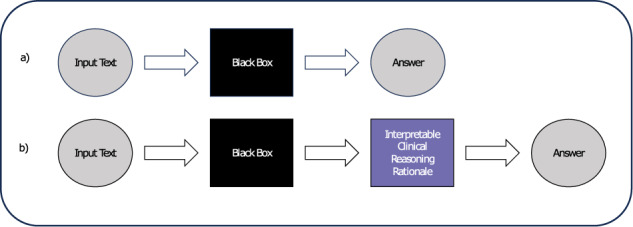
One of the major barriers to using large language models (LLMs) in medicine is the perception they use uninterpretable methods to make clinical decisions that are inherently different from the cognitive processes of clinicians. In this manuscript we develop diagnostic reasoning prompts to study whether LLMs can imitate clinical reasoning while accurately forming a diagnosis. We find that GPT-4 can be prompted to mimic the common clinical reasoning processes of clinicians without sacrificing diagnostic accuracy. This is significant because an LLM that can imitate clinical reasoning to provide an interpretable rationale offers physicians a means to evaluate whether an LLMs response is likely correct and can be trusted for patient care. Prompting methods that use diagnostic reasoning have the potential to mitigate the “black box” limitations of LLMs, bringing them one step closer to safe and effective use in medicine.
Overview
The claims and statistics of this paper haven’t been checked yet.
Free: it reads the open-access text and checks the first 5 claims that cite a source we can check. Create a free account to check every claim.
Integrity signals
Registry
Cites
Statistics
Figures
Verification
Claims the paper makes
The claims and statistics of this paper haven’t been checked yet.
Free: it reads the open-access text and checks the first 5 claims that cite a source we can check. Create a free account to check every claim.
Claims other papers make about this one
Each is checked against this paper’s own text: does it say what the citing paper says it does?
The source backs part of the claim, not all of it — or backs it for a different population, condition or comparison.
In the citing paper
“Most have been tested only with text-based, low-stakes interactions,33–38”
From Review of Artificial Intelligence for Clinical Use in Alzheimer's Disease and Related Dementias (2026) · cites this paper as [38]
Experimental — accuracy not yet measuredThe source backs part of the claim, not all of it — or backs it for a different population, condition or comparison.
In the citing paper
“Large language models (LLMs) have been shown to interpret complex clinical situations and offer recommendations, from differential diagnoses to care management, leading to growing interest in their application in the medical field [13-16].”
From Identifying Deprescribing Opportunities With Large Language Models in Older Adults: Retrospective Cohort Study (2025) · cites this paper as [16]
Experimental — accuracy not yet measuredThe source backs part of the claim, not all of it — or backs it for a different population, condition or comparison.
In the citing paper
“the majority of reviewed studies leverage the inherent text generation capabilities of LLMs to produce explanations as a natural by-product of inference [62,71,72,78,97,112].”
From Explainability of decoder-only clinical large language models: A scoping review (2026) · cites this paper as [62]
Experimental — accuracy not yet measuredThe cited source says what the claim attributes to it.
In the citing paper
“In our review, twenty studies relied exclusively on closed-source models [62,63,79,89,105,118]”
From Explainability of decoder-only clinical large language models: A scoping review (2026) · cites this paper as [62]
The cited source says what the claim attributes to it.
In the citing paper
“Chain-of-Thought prompting [62,64,78] and natural language explanation generation [72,74,75] produce outputs that align with clinical reasoning conventions, mimicking the differential diagnosis process familiar to practitioners.”
From Explainability of decoder-only clinical large language models: A scoping review (2026) · cites this paper as [62]
1 more claim about this paper
Create a free account to see every claim other papers make about this one.
Self-check
Percentages, sums and reported differences re-computed from the paper’s own numbers.
The self-check needs the paper’s full text.
Citations
Cites
Language Models are Few-Shot Learners
Brown, T. B., Mann, B., Ryder, N., Subbiah, M., Kaplan, J., Dhariwal, P., Neelakantan, A., Shyam, P., Sastry, G., Askell, A., et al. (2020) · arXiv · doi:10.48550/arxiv.2005.14165 · Cited by 23,372 · cited 2×
“Prompt engineering is emerging as a discipline in response to the phenomena that LLMs can perform substantially differently depending on how questions and prompts are posed to them 14,15 .”
BackgroundMethodChain-Of-Thought Prompting Elicits Reasoning in Large Language Models
Wei, J., Wang, X., Schuurmans, D., Bosma, M., Ichter, B., Xia, F., Chi, E., Le, Q. V., & Zhou, D. (2022) · Advances in Neural Information Processing Systems 35 · doi:10.52202/068431-1800 · Cited by 4,505
Chain-of-Thought Prompting Elicits Reasoning in Large Language Models
Wei, J., Wang, X., Schuurmans, D., Bosma, M., Ichter, B., Xia, F., Chi, E., Le, Q., & Zhou, D. (2022) · arXiv · doi:10.48550/arxiv.2201.11903 · Cited by 4,263 · cited 2×
“A notable example is Chain-of-thought (CoT) prompting, which involves instructing the LLM to divide its task into smaller reasoning steps and then complete the task step-by-step 17 .”
BackgroundKung, T. H., Cheatham, M., Medenilla, A., Sillos, C., De Leon, L., Elepaño, C., Madriaga, M., Aggabao, R., Diaz-Candido, G., Maningo, J., et al. (2023) · PLOS Digital Health · doi:10.1371/journal.pdig.0000198 · Cited by 4,115 · cited 1×
“Within medicine, initial efforts have demonstrated that LLMs can write clinical notes 3 , pass standardized medical exams 4 , and draft responses to patient questions 5,6 .”
BackgroundKung, T. H., Cheatham, M., ChatGPT, Medenilla, A., Sillos, C., De Leon, L., Elepaño, C., Madriaga, M., Aggabao, R., Diaz-Candido, G., et al. (2022) · doi:10.1101/2022.12.19.22283643 · Cited by 4,115
Large language models encode clinical knowledge
Singhal, K., Azizi, S., Tu, T., Mahdavi, S. S., Wei, J., Chung, H. W., Scales, N., Tanwani, A., Cole-Lewis, H., Pfohl, S., et al. (2023) · Nature · doi:10.1038/s41586-023-06291-2 · Cited by 4,083
Large Language Models Encode Clinical Knowledge
Singhal, K., Azizi, S., Tu, T., Mahdavi, S. S., Wei, J., Chung, H. W., Scales, N., Tanwani, A., Cole-Lewis, H., Pfohl, S., et al. (2022) · arXiv · doi:10.48550/arxiv.2212.13138 · Cited by 4,083
Large language models in medicine
Thirunavukarasu, A. J., Ting, D. S. J., Elangovan, K., Gutierrez, L., Tan, T. F., & Ting, D. S. W. (2023) · Nature Medicine · doi:10.1038/s41591-023-02448-8 · Cited by 3,944 · cited 8×
“5 accuracy on the MEDQA training set (Supplementary Data 3).”
BackgroundInfluentialAyers, J. W., Poliak, A., Dredze, M., Leas, E. C., Zhu, Z., Kelley, J. B., Faix, D. J., Goodman, A. M., Longhurst, C. A., Hogarth, M., et al. (2023) · JAMA Internal Medicine · doi:10.1001/jamainternmed.2023.1838 · Cited by 2,613 · cited 10×
“5 accuracy on the MEDQA training set (Supplementary Data 3).”
BackgroundInfluentialBenefits, Limits, and Risks of GPT-4 as an AI Chatbot for Medicine
Lee, P., Bubeck, S., & Petro, J. (2023) · New England Journal of Medicine · doi:10.1056/nejmsr2214184 · Cited by 1,738 · cited 3×
“Note that the full text of the example questions has been omitted for readability. rationale compared to correct answers.”
MethodInfluential
Research works printed but not linked: 2
- Case records of the Massachusetts General Hospital articles. 2020-2023. N. Engl. J. Med. Accessed: May 2023. https://www.nejm.org/medical-articles/case-records-of-the-massachusetts-general-hospital.
- UpToDate: industry-leading clinical decision support. Wolters Kluwer. Accessed: June 2023. https://www.wolterskluwer.com/en/solutions/uptodate.
Cited by
Large Language Model Influence on Diagnostic Reasoning: A Randomized Clinical Trial
Goh, E., Gallo, R., Hom, J., Strong, E., Weng, Y., Kerman, H., Cool, J. A., Kanjee, Z., Parsons, A. S., Ahuja, N., et al. (2024) · JAMA Network Open · doi:10.1001/jamanetworkopen.2024.40969 · Cited by 724
Self-citationLarge language models in healthcare and medical domain: A review
Nazi, Z. A., & Peng, W. (2024) · Informatics · doi:10.3390/informatics11030057 · Cited by 415
Invasion and metastasis in cancer: molecular insights and therapeutic targets
Li, Y., Liu, F., Cai, Q., Deng, L., Ouyang, Q., Zhang, X. H.-F., & Zheng, J. (2025) · Signal Transduction and Targeted Therapy · doi:10.1038/s41392-025-02148-4 · Cited by 244
“538,539 546 The advent of large language models, such as ChatGPT, is anticipated to facilitate the application of generative AI (GAI) in several critical areas, including clinical document writing and data management, 547 – 550 as well as clinical decision assistance 551,552 and personal healthcare.”
Takita, H., Kabata, D., Walston, S. L., Tatekawa, H., Saito, K., Tsujimoto, Y., Miki, Y., & Ueda, D. (2025) · npj Digital Medicine · doi:10.1038/s41746-025-01543-z · Cited by 203
Gaber, F., Shaik, M., Allega, F., Bilecz, A. J., Busch, F., Goon, K., Franke, V., & Akalin, A. (2025) · npj Digital Medicine · doi:10.1038/s41746-025-01684-1 · Cited by 165
“While we observed promising outcomes, it is clear that a more focused approach to prompt engineering would be highly bene fi cial 36 – 40 , particularly when combined with the context of external sources provided by the RAG work fl ow.”
Prompt Engineering Paradigms for Medical Applications: Scoping Review
Zaghir, J., Naguib, M., Bjelogrlic, M., Névéol, A., Tannier, X., & Lovis, C. (2024) · Journal of Medical Internet Research · doi:10.2196/60501 · Cited by 143
Large language models for disease diagnosis: a scoping review
Zhou, S., Xu, Z., Zhang, M., Xu, C., Guo, Y., Zhan, Z., Fang, Y., Ding, S., Wang, J., Xu, K., et al. (2025) · npj Artificial Intelligence · doi:10.1038/s44387-025-00011-z · Cited by 122
ChatGPT-4 Omni Performance in USMLE Disciplines and Clinical Skills: Comparative Analysis
Bicknell, B. T., Butler, D., Whalen, S., Ricks, J., Dixon, C. J., Clark, A. B., Spaedy, O., Skelton, A., Edupuganti, N., Dzubinski, L., et al. (2024) · JMIR Medical Education · doi:10.2196/63430 · Cited by 107
“This dependency on AI tools may lead to a decline in critical thinking and problem-solving abilities, particularly in situations where AI support is unavailable [39,40].”
The generative era of medical AI
Fahrner, J., Chen, E., Topol, E. J., & Rajpurkar, P. (2025) · Cell · doi:10.1016/j.cell.2025.05.018 · Cited by 145
Savage, T., Wang, J., Gallo, R., Boukil, A., Patel, V., Safavi-Naini, S. A. A., Soroush, A., & Chen, J. H. (2025) · Journal of the American Medical Informatics Association · doi:10.1093/jamia/ocae254 · Cited by 92
Self-citationTriola, M. M., & Rodman, A. (2025) · Academic Medicine · doi:10.1097/acm.0000000000005963 · Cited by 92
Prompt Engineering in Clinical Practice: Tutorial for Clinicians
Liu, J., Liu, F., Wang, C., & Liu, S. (2025) · Journal of Medical Internet Research · doi:10.2196/72644 · Cited by 76
Medical foundation large language models for comprehensive text analysis and beyond
Xie, Q., Chen, Q., Chen, A., Peng, C., Hu, Y., Lin, F., Peng, X., Huang, J., Zhang, J., Keloth, V., et al. (2025) · npj Digital Medicine · doi:10.1038/s41746-025-01533-1 · Cited by 74
“Existing studies have demonstrated GPT-4 is arguably one of the strongest LLMs in this task 16 .”
A multimodal visual–language foundation model for computational ophthalmology
Shi, D., Zhang, W., Yang, J., Huang, S., Chen, X., Xu, P., Jin, K., Lin, S. C., Wei, J., Yusufu, M., et al. (2025) · npj Digital Medicine · doi:10.1038/s41746-025-01772-2 · Cited by 163
“However, to establish explicit causal links between these multimodal interactions and modelperformance,futurestudiesincorporatingspecializedinterpretability frameworksareneeded 35 .”
Kim, J., Leonte, K. G., Chen, M. L., Torous, J. B., Linos, E., Pinto, A., & Rodriguez, C. I. (2024) · npj Digital Medicine · doi:10.1038/s41746-024-01181-x · Cited by 60
Taylor, R. A., Sangal, R. B., Smith, M. E., Haimovich, A. D., Rodman, A., Iscoe, M. S., Pavuluri, S. K., Rose, C., Janke, A. T., Wright, D. S., et al. (2025) · Academic Emergency Medicine · doi:10.1111/acem.15066 · Cited by 62
Unregulated large language models produce medical device-like output
Weissman, G. E., Mankowitz, T., & Kanter, G. P. (2025) · npj Digital Medicine · doi:10.1038/s41746-025-01544-y · Cited by 80
Large Language Models in Medical Diagnostics: Scoping Review With Bibliometric Analysis
Su, H., Sun, Y., Li, R., Zhang, A., Yang, Y., Xiao, F., Duan, Z., Chen, J., Hu, Q., Yang, T., et al. (2025) · Journal of Medical Internet Research · doi:10.2196/72062 · Cited by 81
“In addition, through natural language generation technology, LLMs can also provide patients with understandable diagnostic reports and health guidance, which would aid the diagnostic process [150].”
Self-citationLarge Language Models in Biomedical and Health Informatics: A Review with Bibliometric Analysis
Yu, H., Fan, L., Li, L., Zhou, J., Ma, Z., Xian, L., Hua, W., He, S., Jin, M., Zhang, Y., et al. (2024) · Journal of Healthcare Informatics Research · doi:10.1007/s41666-024-00171-8 · Cited by 101
Liu, Y., Zhou, Y. J., Liu, Y., Xu, Z., & He, Y. (2025) · Engineering · doi:10.1016/j.eng.2025.04.003 · Cited by 95
Moura, L., Jones, D. T., Sheikh, I. S., Murphy, S., Kalfin, M., Kummer, B., Weathers, A. L., Grinspan, Z., Silsbee, H. M., Jones, L. K., et al. (2024) · Neurology · doi:10.1212/wnl.0000000000209497 · Cited by 43
Performance of multimodal artificial intelligence chatbots evaluated on clinical oncology cases
Chen, D., Huang, R. S., Jomy, J., Wong, P., Yan, M., Croke, J., Tong, D., Hope, A., Eng, L., & Raman, S. (2024) · JAMA Network Open · doi:10.1001/jamanetworkopen.2024.37711 · Cited by 49
Large language model agents can use tools to perform clinical calculations
Goodell, A. J., Chu, S. N., Rouholiman, D., & Chu, L. F. (2025) · npj Digital Medicine · doi:10.1038/s41746-025-01475-8 · Cited by 48
Cheah, B. C. J., Vicente, C. R., & Chan, K. R. (2025) · Viruses · doi:10.3390/v17070882 · Cited by 64
“…poses a challenge to the implementation of LLMs, which is crucial to clinician understanding of infectious diseases and diseases in general [132], a study by Savage et al. reveals the potential for interpretability in LLMs for diagnostic applications by mimicking the chain of thoughts…”
Cognitive Biases and Artificial Intelligence
Wang, J., & Redelmeier, D. A. (2024) · NEJM AI · doi:10.1056/aics2400639 · Cited by 56
Best Practices for Large Language Models in Radiology
Blüthgen, C., Veen, D. V., Zakka, C., Link, K. E., Fanous, A. H., Daneshjou, R., Frauenfelder, T., Langlotz, C. P., Gatidis, S., & Chaudhari, A. S. (2025) · Radiology · doi:10.1148/radiol.240528 · Cited by 56
“44 Recommendation: Be aware that reproducibility can be limited in LLMs.”
Zeng, J., Qi, W., Shen, S., Liu, X., Li, S., Wang, B., Dong, C., Zhu, X., Shi, Y., Lou, X., et al. (2025) · Journal of Medical Internet Research · doi:10.2196/79091 · Cited by 78
Workum, J. D., Volkers, B. W. S., van de Sande, D., Arora, S., Goeijenbier, M., Gommers, D., & van Genderen, M. E. (2025) · Critical Care · doi:10.1186/s13054-025-05302-0 · Cited by 43
Dinc, M. T., Bardak, A. E., Bahar, F., & Noronha, C. F. (2025) · JAMIA Open · doi:10.1093/jamiaopen/ooaf055 · Cited by 64
A large language model digital patient system enhances ophthalmology history taking skills
Luo, M.-J., Bi, S., Pang, J., Liu, L., Tsui, C.-K., Lai, Y., Chen, W., Yang, Y., Xu, K., Zhao, L., et al. (2025) · npj Digital Medicine · doi:10.1038/s41746-025-01841-6 · Cited by 39
Self-citationAdvancing Chinese biomedical text mining with community challenges
Zong, H., Wu, R., Cha, J., Feng, W., Wu, E., Li, J., Shao, A., Tao, L., Li, Z., Tang, B., et al. (2024) · Journal of Biomedical Informatics · doi:10.1016/j.jbi.2024.104716 · Cited by 44
“Interpreting and understanding the predictions of models is crucial in clinical practice [107 – 109].”
BackgroundInfluence of a Large Language Model on Diagnostic Reasoning: A Randomized Clinical Vignette Study
Goh, E., Gallo, R., Hom, J., Strong, E., Weng, Y., Kerman, H., Cool, J., Kanjee, Z., Parsons, A. S., Ahuja, N., et al. (2024) · doi:10.1101/2024.03.12.24303785 · Cited by 38
“…improvements in large language models (LLMs) – machine learning systems that produce human-like responses from free text prompts – have shown the ability to solve complex cases, display human-like clinical reasoning, take patient histories, and communicate empathetically 9,10,11,12,13,14 .”
BackgroundSelf-citationLarge language models in critical care
Biesheuvel, L. A., Workum, J. D., Reuland, M., van Genderen, M. E., Thoral, P., Dongelmans, D., & Elbers, P. (2025) · Journal of Intensive Medicine · doi:10.1016/j.jointm.2024.12.001 · Cited by 36
“[ 19 ] However, LLMs can be prompted to provide reasoning to make the output interpretable, [ 20 ] which may reduce these concerns by enhancing transparency in the model’s responses.”
Ho, C., Tian, T., Ayers, A. T., Aaron, R. E., Phillips, V., Wolf, R. M., Mathioudakis, N. N., Dai, T., & Klonoff, D. C. (2024) · BMC Medical Informatics and Decision Making · doi:10.1186/s12911-024-02757-z · Cited by 42
“5 [7, 8, 10, 11, 13–20, 22–25, 27, 29–33, 36–38, 40, 41, 44, 45, 47 [24, 36, 39, 46, 57, 65, 75, 78, 81, 85, 86] 11 (10.2”
InfluentialSonoda, Y., Kurokawa, R., Hagiwara, A., Asari, Y., Fukushima, T., Kanzawa, J., Gonoi, W., & Abe, O. (2024) · Japanese Journal of Radiology · doi:10.1007/s11604-024-01712-2 · Cited by 32
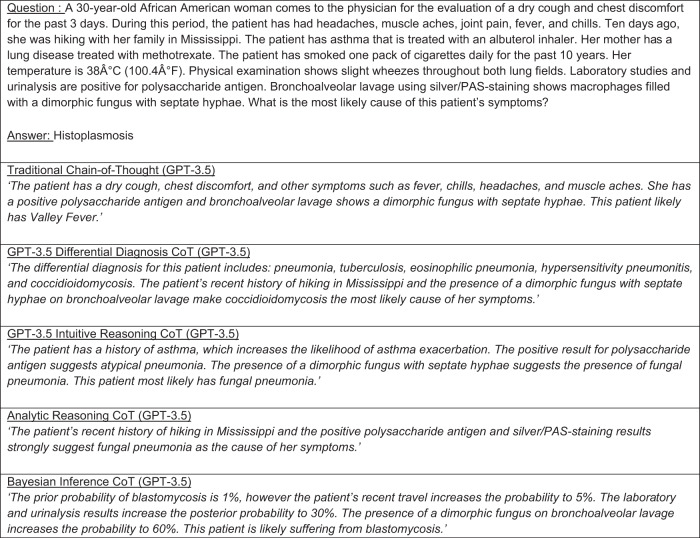
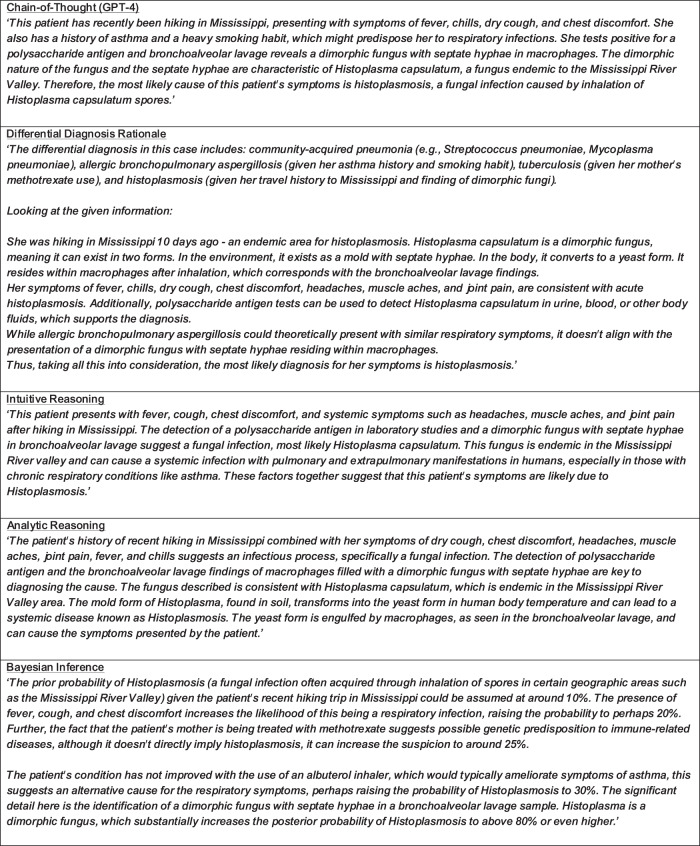
“Savage et al. [5] compared traditional CoT prompting with four clinical reasoning strategies: differential diagnosis, intuitive reasoning, analytical reasoning, and Bayesian inference.”
The potential of large language models to advance precision oncology
Liang, S., Zhang, J., Liu, X., Huang, Y., Shao, J., Liu, X., Li, W., Wang, G., & Wang, C. (2025) · EBioMedicine · doi:10.1016/j.ebiom.2025.105695 · Cited by 39
“65 Nevertheless, how to depict fl owcharts that are more concise and understandable for visualizing the logics of LLMs is undetermined.”
Jeon, S., & Kim, H. (2025) · Computers in Biology and Medicine · doi:10.1016/j.compbiomed.2025.110614 · Cited by 56
Liu, Y., Yuan, Y., Yan, K., Li, Y., Saccà, V., Hodges, S., Cannistra, M., Jeong, P., Wu, J., & Kong, J. (2025) · npj Digital Medicine · doi:10.1038/s41746-025-01845-2 · Cited by 41
Large language models for clinical decision support in gastroenterology and hepatology
Wiest, I. C., Bhat, M., Clusmann, J., Schneider, C. V., Jiang, X., & Kather, J. N. (2025) · Nature Reviews Gastroenterology & Hepatology · doi:10.1038/s41575-025-01108-1 · Cited by 50
“A crucial aspect for these supervising clinicians is explainability; models should provide intermediate reasoning, which might involve indexing external knowledge bases or detailing the steps that lead to a recommendation 187 .”
Automating expert-level medical reasoning evaluation of large language models
Zhou, S., Xie, W., Li, J., Zhan, Z., Song, M., Yang, H., Espinoza, C., Welton, L., Mai, X., Jin, Y., et al. (2025) · npj Digital Medicine · doi:10.1038/s41746-025-02208-7 · Cited by 30
“Therefore, deploying LLMs in clinical practice requires not only high prediction accuracy but also transparent and explainable reasoning processes 15 .”
Uncertainty-aware large language models for explainable disease diagnosis
Zhou, S., Wang, J., Xu, Z., Wang, S., Brauer, D., Welton, L., Cogan, J., Chung, Y.-H., Tian, L., Zhan, Z., et al. (2025) · npj Digital Medicine · doi:10.1038/s41746-025-02071-6 · Cited by 27
“We selected models with 70 billion parameters to balance computational ef fi ciency and predictive performance, as clinicians often favor larger models for their reliability and trustworthy predictions in complex diagnostic scenarios 1,52,60 .”
InfluentialFlaharty, K. A., Hu, P., Hanchard, S. L., Ripper, M. E., Duong, D., Waikel, R. L., & Solomon, B. D. (2024) · The American Journal of Human Genetics · doi:10.1016/j.ajhg.2024.07.011 · Cited by 26
Large language models in neurosurgery: a systematic review and meta-analysis
Patil, A., Serrato, P., Chisvo, N. S., Arnaout, O. M., See, P. A., & Huang, K. T. (2024) · Acta Neurochirurgica · doi:10.1007/s00701-024-06372-9 · Cited by 32
The effects of generative AI’s human-like competencies on clinical decision-making
Spatscheck, N., Schaschek, M., & Winkelmann, A. (2024) · Journal of Decision System · doi:10.1080/12460125.2024.2430731 · Cited by 37
Wada, A., Akashi, T., Shih, G., Hagiwara, A., Nishizawa, M., Hayakawa, Y., Kikuta, J., Shimoji, K., Sano, K., Kamagata, K., et al. (2024) · Diagnostics · doi:10.3390/diagnostics14141541 · Cited by 25
“This approach makes it easier for physicians to review the LLM diagnostic process, improving diagnostic accuracy and gaining greater trust in the LLM [31].”
BackgroundAccuracy of LLMs in medical education: evidence from a concordance test with medical teacher
Mishra, V., Lurie, Y., & Mark, S. (2025) · BMC Medical Education · doi:10.1186/s12909-025-07009-w · Cited by 30
“Additionally, the lack of transparency in LLM decision-making processes complicates the evaluation of their outputs, making it challenging for healthcare professionals to trust these systems [29].”
Prompt Engineering for Large Language Models in Interventional Radiology
Dietrich, N. T., Bradbury, N., & Loh, C. (2025) · American Journal of Roentgenology · doi:10.2214/ajr.25.32956 · Cited by 29
Integrating large language models in care, research, and education in multiple sclerosis management
Inojosa, H., Voigt, I., Wenk, J., Ferber, D., Wiest, I. C., Antweiler, D., Weicken, E., Gilbert, S., Kather, J. N., Akgün, K., et al. (2024) · Multiple Sclerosis Journal · doi:10.1177/13524585241277376 · Cited by 29
“21–23 Presenting information in a user-friendly manner, such as through a chatbot interface, is particularly promising for MS specialists in routine care, where current evidence is updating practically on daily basis.”
BackgroundCritique of impure reason: Unveiling the reasoning behaviour of medical large language models
Sim, S. Z. Y., & Chen, T. (2025) · eLife · doi:10.7554/elife.106187 · Cited by 34
“In this review, we focus specifically on transformer-based large language models (LLMs) , which are built on the transformer architecture, an attention-based mechanism capable of capturing complex dependencies in sequential data [1].”
Artificial intelligence agents in cancer research and oncology
Truhn, D., Azizi, S., Zou, J., Cerdá-Alberich, L., Mahmood, F., & Kather, J. N. (2026) · Nature reviews. Cancer · doi:10.1038/s41568-025-00900-0 · Cited by 46
Shyr, C., Ren, B., Hsu, C.-Y., Nguyen, M.-H., Enger, M., Yan, C., Tinker, R. J., Cassini, T. A., Hamid, R., Wright, A. T., et al. (2026) · Journal of the American Medical Informatics Association · doi:10.1101/2025.08.06.25333170 · Cited by 44
“We evaluated LLM repeatability and reproducibility across five chain-of-thought (CoT) diagnostic reasoning prompts developed and validated by Savage et al. [3].”
InfluentialArgMed-Agents: Explainable Clinical Decision Reasoning with LLM Disscusion via Argumentation Schemes
Hong, S., Xiao, L., Zhang, X., & Chen, J. (2024) · 2024 IEEE International Conference on Bioinformatics and Biomedicine (BIBM) · doi:10.1109/bibm62325.2024.10822109 · Cited by 21
“Another approach, proposed by [38], leverages diagnostic reasoning prompts to enhance clinical reasoning and inter-pretability in LLMs.”
Self-citationComparing ChatGPT's and Surgeon's Responses to Thyroid-related Questions From Patients
Guo, S., Li, R., Li, G., Chen, W., Huang, J., He, L., Ma, Y., Wang, L., Zheng, H., Tian, C., et al. (2024) · The Journal of Clinical Endocrinology & Metabolism · doi:10.1210/clinem/dgae235 · Cited by 24
A Brief Review on Benchmarking for Large Language Models Evaluation in Healthcare
Cilar, L., Chen, H., Chen, A., Topaz, M., Tam, W., Bian, J., & Štiglic, G. (2025) · Wiley Interdisciplinary Reviews Data Mining and Knowledge Discovery · doi:10.1002/widm.70010 · Cited by 40
“Understanding the rationale behind the decisions made by these models is crucial for health-care professionals, as it directly impacts their ability to trust and utilize these tools in patient care (Wornow et al. 2023; Savage 2024).”
Chung, P., Swaminathan, A., Goodell, A. J., Kim, Y., Reincke, S. M., Han, L., Deverett, B., Sadeghi, M. A., Ariss, A.-B., Ghanem, M., et al. (2025) · NEJM AI · doi:10.1056/aidbp2500418 · Cited by 80
Transforming clinical reasoning—the role of AI in supporting human cognitive limitations
Greengrass, C. J. (2026) · Frontiers in Digital Health · doi:10.3389/fdgth.2025.1715440 · Cited by 31
Qazi, I. A., Ali, A., Khawaja, A. U., Akhtar, M. J., Sheikh, A. Z., & Alizai, M. H. (2026) · Nature Health · doi:10.1038/s44360-025-00007-8 · Cited by 36
Explainable differential diagnosis with dual-inference large language models
Zhou, S., Lin, M., Ding, S., Wang, J., Chen, C., Melton, G. B., Zou, J., & Zhang, R. (2025) · npj Health Systems · doi:10.1038/s44401-025-00015-6 · Cited by 20
“2) of Diagnosis-CoT and SC-CoT was 0.305 and 0.334, surpassing CoT by 0.011 (95% CI 0.004 – 0.019, p = 0.012) and 0.04 (95% CI 0.038 – 0.043, p 0.001), respectively.”
InfluentialVij, O., Calver, H., Myall, N., Dey, M., & Kouranloo, K. (2024) · PLoS ONE · doi:10.1371/journal.pone.0307372 · Cited by 25
Chua, C. E., Clara, N. L. Y., Furqan, M. S., Lee, J. W. K., Makmur, A., Tham, Y. C., Santosa, A., & Ngiam, K. Y. (2024) · The Lancet Regional Health - Western Pacific · doi:10.1016/j.lanwpc.2024.101211 · Cited by 27
Evaluation of performance of generative large language models for stroke care
Lee, J. T., Li, V. C.-S., Wu, J.-J., Chen, H.-H., Su, S. S.-Y., Chang, B. P.-H., Lai, R. L., Liu, C.-H., Chen, C.-T., Tanapima, V., et al. (2025) · npj Digital Medicine · doi:10.1038/s41746-025-01830-9 · Cited by 25
“In high-risk fi elds like healthcare, it is essential to ensure that AI systems are transparent, reliable, and guided by human oversight to provide safe, accurate, and context-appropriate patient support 21 .”
Graph retrieval augmented large language models for facial phenotype associated rare genetic disease
Song, J., Xu, Z., He, M., Feng, J., & Shen, B. (2025) · npj Digital Medicine · doi:10.1038/s41746-025-01955-x · Cited by 35
“…due to their impressive comprehension, inference, and generative capabilities, and have begun to show great potential in the fi eld of biomedical, particularly in the areas of medical diagnostics 10 , mental health 11 , biological materials 12 , hospital management 13 , and medical education 14 .”
Integrating AI in Lipedema Management: Assessing the Efficacy of GPT-4 as a Consultation Assistant
Leypold, T., Lingens, L. F., Beier, J. P., & Boos, A. M. (2024) · Life · doi:10.3390/life14050646 · Cited by 23
“More and more studies are showing an increase in performance through prompt engineering [15–17].”
BackgroundAccuracy Evaluation of GPT-Assisted Differential Diagnosis in Emergency Department
Shah-Mohammadi, F., & Finkelstein, J. (2024) · Diagnostics · doi:10.3390/diagnostics14161779 · Cited by 33
Kıyak, Y. S. (2024) · Medical Science Educator · doi:10.1007/s40670-024-02146-1 · Cited by 28
“It has been demonstrated that this technique enhances the LLM’s clinical reasoning skills and makes its thought process more transparent and logical [6].”
Savage, T., Ma, S. P., Boukil, A., Rangan, E. S., Patel, V., López, I., & Chen, J. H. (2025) · Journal of Medical Internet Research · doi:10.2196/76048 · Cited by 33
“Clinical reasoning tasks require the model to interpret clinical information—such as patient histories or provider notes— and generate diagnostic assessments or treatment recommendations [14-16].”
Self-citationBeyond Accuracy: Investigating Error Types in GPT-4 Responses to USMLE Questions
Roy, S., Khatua, A., Ghoochani, F., Hadler, U., Nejdl, W., & Ganguly, N. (2024) · Proceedings of the 47th International ACM SIGIR Conference on Research and Development in Information Retrieval · doi:10.1145/3626772.3657882 · Cited by 17
Socrates, V., Wright, D. S., Huang, T., Fereydooni, S., Dien, C., Chi, L., Albano, J., Patterson, B., Sasidhar Kanaparthy, N., Wright, C. X., et al. (2025) · JMIR Aging · doi:10.2196/69504 · Cited by 17
“Large language models (LLMs) have been shown to interpret complex clinical situations and offer recommendations, from differential diagnoses to care management, leading to growing interest in their application in the medical field [13-16].”
Rothfarb, S., Friday, M., Wang, X., Zaghi, A. E., & Li, B. (2025) · Environmental Research · doi:10.1016/j.envres.2025.121401 · Cited by 20
Leveraging large language models for word sense disambiguation
Yae, J. H., Skelly, N. C., Ranly, N. C., & LaCasse, P. M. (2024) · Neural Computing and Applications · doi:10.1007/s00521-024-10747-5 · Cited by 42
Establishing best practices in large language model research: an application to repeat prompting
Gallo, R. J., Baiocchi, M., Savage, T., & Chen, J. H. (2024) · Journal of the American Medical Informatics Association · doi:10.1093/jamia/ocae294 · Cited by 24
“13 That previously published study compared diagnostic accuracy across prompting strategies, but for this purpose we compare the correlation of outputs from the variations in prompting.”
Self-citationMedical multimodal large language models: A systematic review
Hu, Y., Xu, C., Lin, B., Yang, W., & Tang, Y. Y. (2025) · Intelligent Oncology · doi:10.1016/j.intonc.2025.09.005 · Cited by 14
Ayoub, M., Zhao, H., Li, L., Yang, D., Hussain, S., & Wahid, J. A. (2026) · Communications Medicine · doi:10.1038/s43856-025-01348-x · Cited by 29
“The dataset was created by Savage et al. 16 , who compiled diagnostic reasoning prompts and answers from the NEJM case records to support research on clinical reasoning and LLM interpretability.”
The use of artificial intelligence for graduate nursing education: An educational evaluation
Bumbach, M. D., Carrington, J. M., Love, R., Bjarnadottir, R., Cho, H., & Keenan, G. (2024) · Journal of the American Association of Nurse Practitioners · doi:10.1097/jxx.0000000000001059 · Cited by 14
Dobbins, N. J. (2025) · Research Synthesis Methods · doi:10.1017/rsm.2025.9 · Cited by 24
V2T-CoT: From Vision to Text Chain-of-Thought for Medical Reasoning and Diagnosis
Wang, Y., Liu, J., Gao, S., Feng, B., Tang, Z., Gai, X., Wu, J., & Liu, Z. (2025) · Lecture notes in computer science · doi:10.1007/978-3-032-04971-1_62 · Cited by 29
Gao, Y., Myers, S., Chen, S., Dligach, D., Miller, T. A., Bitterman, D. S., Chen, G., Mayampurath, A. M., Churpek, M. M., & Afshar, M. (2024) · JAMIA Open · doi:10.1093/jamiaopen/ooae154 · Cited by 36
“7,8 In particular, Savage et al. 2024 investigates methods of verbalized confidence, sample consistency to assess LLM uncertainty in clinical reasoning tasks using question-answering datasets with open-ended questions.”
NGUYEN, D. L., Kim, G. H. J., & Bedayat, A. (2025) · Clinical Imaging · doi:10.1016/j.clinimag.2025.110551 · Cited by 16
Large Language Model Uncertainty Measurement and Calibration for Medical Diagnosis and Treatment
Savage, T., Wang, J., Gallo, R., Boukil, A., Patel, V., Ahmad Safavi-Naini, S. A., Soroush, A., & Chen, J. H. (2024) · doi:10.1101/2024.06.06.24308399 · Cited by 11
Self-citationJafer, M. A., Ibraheem, W., Dawood, T., Abbas, A., Hakami, K., Khurayzi, T. A., Hakami, A. J., Alqahtani, S., Aldosari, M., Ageely, K., et al. (2025) · Diagnostics · doi:10.3390/diagnostics15243247 · Cited by 13
“Reports in medical imaging have already shown that multimodal models can describe findings, summarize charts, and explain clinical impressions in a way that resembles human reasoning [67].”
Automated computation of the HEART score with the GPT-4 large language model
Wright, D. S., Socrates, V., Huang, T. Y., Safranek, C. W., Sangal, R. B., Dilip, M., Boivin, Z., Srica, N., Wright, C. X., Feher, A., et al. (2025) · The American Journal of Emergency Medicine · doi:10.1016/j.ajem.2025.03.065 · Cited by 12
Szabó, A., & Laein, G. D. (2025) · Scientific Reports · doi:10.1038/s41598-025-17571-4 · Cited by 17
Clinical competencies for using generative AI in patient care
Lewis, M., Navarro, D. F., Blease, C., Shah, R., Riggare, S. S., Delacroix, S., & Lehman, R. (2025) · BMJ · doi:10.1136/bmj-2025-085324 · Cited by 18
Lim, B., Seth, I., Maxwell, M., Cuomo, R., Ross, R. J., & Rozen, W. M. (2025) · Aesthetic Plastic Surgery · doi:10.1007/s00266-025-04842-8 · Cited by 17
Large Language Models for Transforming Healthcare: A Perspective on DeepSeek‐R1
Zhou, J., Cheng, Y., He, S., Chen, Y.-C., & Chen, H. (2025) · MedComm – Future Medicine · doi:10.1002/mef2.70021 · Cited by 16
Garín, D., Cook, S., Ferry, C., Bennar, W., Togni, M., Meier, P., Wenaweser, P., Puricel, S., & Arroyo, D. (2025) · European Heart Journal - Digital Health · doi:10.1093/ehjdh/ztaf068 · Cited by 11
Comparing the accuracy of large language models and prompt engineering in diagnosing realworld cases
Yao, G., Zhang, W. D., Zhu, Y., Wong, U.-K., Zhang, Y., Cui, Y., Shen, G., Li, Z., & Gao, H. Y. (2025) · International Journal of Medical Informatics · doi:10.1016/j.ijmedinf.2025.106026 · Cited by 17
Verification is All You Need: Prompting Large Language Models for Zero-Shot Clinical Coding
Li, S., Zheng, C., Wu, J., Xu, Q., Xu, X., Wang, H., Sun, Y., Bai, Z., Xu, Y., Zhu, L., et al. (2025) · IEEE Journal of Biomedical and Health Informatics · doi:10.1109/jbhi.2025.3593028 · Cited by 13
“It is inspired by the progress of the clinic in the real world and has been shown to be effective [30].”
Reviewing clinical knowledge in medical large language models: Training and beyond
Li, Q. Y., Liu, H., Guo, C., Gao, C., Chen, D., Wang, M., Gao, F., van Harmelen, F., & Gu, J. (2025) · Knowledge-Based Systems · doi:10.1016/j.knosys.2025.114215 · Cited by 20
Holistic AI in medicine; improved performance and explainability
Petridis, P., Margaritis, G., Stoumpou, V., & Bertsimas, D. (2026) · npj Digital Medicine · doi:10.1038/s41746-025-02298-3 · Cited by 17
“They have also been investigated for generating clinical predictions with justi fi cations 28,29 , but such approaches often underperform compared to traditional, albeit black-box, ML models 23,30 .”
A community-codesigned LLM-powered chatbot for primary care: a randomized controlled trial
Li, S., Li, Y., Zhou, S., Tao, X., Yu, C., Shen, M., Chen, W., Meng, E., Wu, B., Huang, Q., et al. (2026) · Nature Health · doi:10.1038/s44360-025-00021-w · Cited by 18
“Large language models (LLMs) that generate human-like text in response to user inquiries demonstrate emergent capabilities in clinical reasoning and empathetic communication 13–16 , offering a potential pathway to bridge this gap by empowering patient self-care.”
Evaluation of a novel large language model (LLM)-powered chatbot for oral boards scenarios
Silvestri, C. J., Roshal, J. A., Shah, M. M., Widmann, W. D., Townsend, C. M., Brian, R., L’Huillier, J. C., Navarro, S. M., Lund, S. B., & Sathe, T. S. (2024) · Global Surgical Education - Journal of the Association for Surgical Education · doi:10.1007/s44186-024-00303-z · Cited by 16
“More recently, the studies have begun to look into the models’ complex reasoning abilities via free response questions [29–31].”
Chen, H., Alfred, M. C., & Cohen, E. (2025) · JMIR Medical Informatics · doi:10.2196/68955 · Cited by 19
“While many advanced LLMs are trained using debiasing techniques to reduce the risk of overtly harmful or abusive type of stigmatizing language (ie, junkie) [93], these methods are not explicitly designed to detect subtler forms of stigmatization commonly found in clinical narratives.”
Liu, T., Gu, Y., Chen, H., Zhang, Y., Zheng, L., Huang, X., Xu, Y., Wen, C., Chen, M.-S., Lin, J., et al. (2025) · Communications Medicine · doi:10.1038/s43856-025-01052-w · Cited by 21
“Prompt learning has achieved great success in NLP, and many researchers have applied it to the fi eld of medicine 36,37 .”
Mudrik, A., Tsur, A., Nadkarni, G. N., Efros, O., Glicksberg, B. S., Soffer, S., & Klang, E. (2024) · medRxiv · doi:10.1101/2024.08.08.24311699 · Cited by 11
“25 Furthermore, LLMs can automate administrative tasks, such as creation of medical notes.”
BackgroundZayed, A. M., Frans, G., & Delvaux, N. (2025) · Clinical Chemistry and Laboratory Medicine (CCLM) · doi:10.1515/cclm-2025-0647 · Cited by 8
Flathers, M., Dwyer, B., Rozenblit, E., & Torous, J. B. (2025) · Journal of Psychiatric Practice · doi:10.1097/pra.0000000000000892 · Cited by 10
Zhu, Y., Shu, X., Liu, X., Li, Y., Yi, B., & Ma, D. (2025) · Anesthesiology and Perioperative Science · doi:10.1007/s44254-025-00156-9 · Cited by 9
“For example, Sav-age et al. [29] demonstrated the potential of LLMs to mimic clinical reasoning and provided interpretable diagnoses by developing diagnostic reasoning prompts.”
Dundas, N. E., Law, T. J., Brender, T. D., Mills, H., Espejo, E., Heintz, T. A., Wallace, A. W., & Cobert, J. M. (2025) · Anesthesiology · doi:10.1097/aln.0000000000005795 · Cited by 8
Artificial intelligence in emergency medicine: a narrative review
Rego, A., Arango-Ibañez, J. P., Taylor, R. A., Smith, M. E., Jones, D. D., Pelletier, J., Colletti, J. E., Gottlieb, M. A., & Long, B. (2026) · The American Journal of Emergency Medicine · doi:10.1016/j.ajem.2026.01.028 · Cited by 9
Metadata
- Authors
- Savage, T., Nayak, A., Gallo, R., Rangan, E., & Chen, J. H.
- Affiliations
- Stanford Medicine (US)
- Stanford University (US)
- Corresponding author
- Savage, Thomas
- Venue
- npj Digital Medicine
- Published
- 2024-01-24
- Volume
- 7
- Issue
- 1
- Pages
- 20-20
- ISSN
- 2398-6352 (ISSN-L)
- PMC
- PMC10808088
- OpenAlex
- W4391170193
- Cited by
- 265
- References
- 22
- Citations by year
- 2026: 90 · 2025: 123 · 2024: 52
- FWCI
- 24.77
- Type
- journal article
- Language
- en
- Open access
- gold
- doi.org
- Licence
- cc-by
- creativecommons.org/licenses/by/4.0 (tdm)
- creativecommons.org/licenses/by/4.0 (vor)
- Locations
- npj Digital Medicine (publishedVersion, cc-by)
- PubMed Central (publishedVersion, cc-by)
- PubMed (publishedVersion)
- arXiv (Cornell University) (submittedVersion, cc-by)
- DOAJ (DOAJ: Directory of Open Access Journals) (submittedVersion, cc-by-sa)
- arXiv (Cornell University) (cc-by)
- Funders
- U.S. Department of Veterans Affairs
- Gordon and Betty Moore Foundation (#12409)
- American Heart Association
- Georgia Clinical and Translational Science Alliance (UL1TR003142)
- National Institutes of Health (UL1TR003142)
- National Institute on Drug Abuse (UG1DA015815)
- National Institute of Allergy and Infectious Diseases (R01AI178121)
- National Center for Advancing Translational Sciences
- Topics
- Health Sciences › Medicine › Health Informatics › Artificial Intelligence in Healthcare and Education
- Physical Sciences › Computer Science › Artificial Intelligence › Explainable Artificial Intelligence (XAI)
- Physical Sciences › Computer Science › Artificial Intelligence › Machine Learning in Healthcare
- Keywords
- large language models, interpretability, clinical reasoning, GPT-4, diagnostic accuracy, black box problem, trust in AI, prompting, clinical decision support
About these checks
Registry, retraction, Cites and statistics results are computed, not judged, with one exception: a printed reference that no index lists is read once by a model before it counts as a citation error. Claims are extracted by a model and kept only when their quote appears verbatim in the text; each cited source is then checked, with a model’s help, for whether it says what the claim relies on. Those verdicts can be wrong — read the claim’s quote and the cited source before relying on one.
Statistics and arithmetic are recomputed, not judged.
Confidence bands are shown only for fields calibrated on our annotated test set. None is calibrated yet, so no band is shown.
What counts as a claim ›How we measure confidence ›How we check this ›
Are you an author, or do you see a problem with this page? Request a review
Data sources
Bibliographic data: Semantic Scholar, OpenAlex, Crossref.
Contains information from the Semantic Scholar Academic Graph Datasets, made available under the ODC Attribution License (ODC-BY 1.0).
Semantic Scholar’s data is described in: Kinney, R., et al. (2023). The Semantic Scholar Open Data Platform. arXiv:2301.10140.
