

Leveraging generative AI to prioritize drug repurposing candidates for Alzheimer's disease with real-world clinical validation
Open accessPublished version of a preprint
The DOI matches its Crossref record; 44 of the 45 references it cites were found in a registry or an index.
Abstract
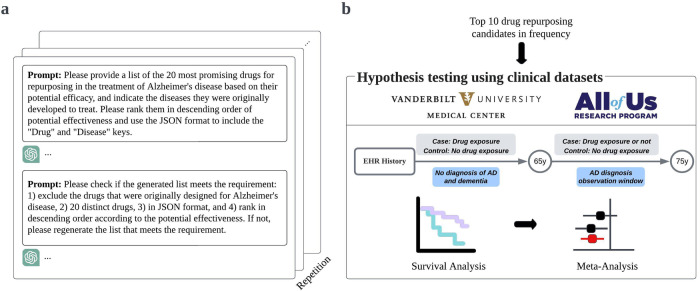
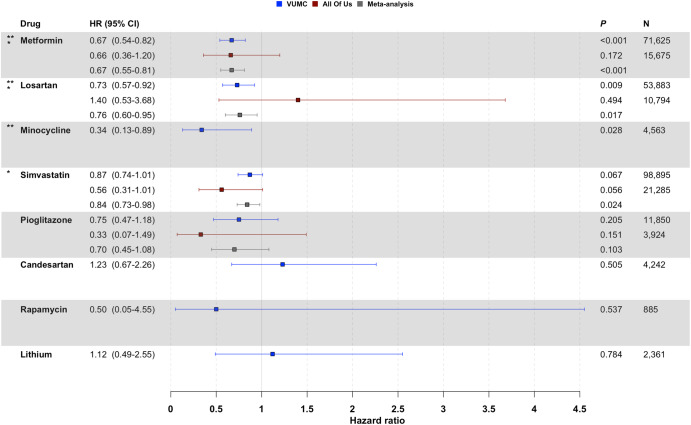
Drug repurposing represents an attractive alternative to the costly and time-consuming process of new drug development, particularly for serious, widespread conditions with limited effective treatments, such as Alzheimer’s disease (AD). Emerging generative artificial intelligence (GAI) technologies like ChatGPT offer the promise of expediting the review and summary of scientific knowledge. To examine the feasibility of using GAI for identifying drug repurposing candidates, we iteratively tasked ChatGPT with proposing the twenty most promising drugs for repurposing in AD, and tested the top ten for risk of incident AD in exposed and unexposed individuals over age 65 in two large clinical datasets: (1) Vanderbilt University Medical Center and (2) the All of Us Research Program. Among the candidates suggested by ChatGPT, metformin, simvastatin, and losartan were associated with lower AD risk in meta-analysis. These findings suggest GAI technologies can assimilate scientific insights from an extensive Internet-based search space, helping to prioritize drug repurposing candidates and facilitate the treatment of diseases.
Overview
The claims and statistics of this paper haven’t been checked yet.
Free: it reads the open-access text and checks the first 5 claims that cite a source we can check. Create a free account to check every claim.
Integrity signals
Registry
Cites
Statistics
Figures
Verification
Claims the paper makes
The claims and statistics of this paper haven’t been checked yet.
Free: it reads the open-access text and checks the first 5 claims that cite a source we can check. Create a free account to check every claim.
Claims other papers make about this one
Each is checked against this paper’s own text: does it say what the citing paper says it does?
The cited source says what the claim attributes to it.
In the citing paper
“A recent study employed GPT-4 to generate and prioritize potential AD therapeutics, followed by retrospective validation in two large-scale electronic health record cohorts from Vanderbilt University and the All of Us Research Program. Metformin, simvastatin, and losartan were each associated with reduced AD incidence after adjusting for confounders, highlighting the utility of generative models”
From Artificial intelligence-driven multi-omics approaches in Alzheimer's disease: Progress, challenges, and future directions (2025) · cites this paper as [360]
Self-check
Percentages, sums and reported differences re-computed from the paper’s own numbers.
The self-check needs the paper’s full text.
Citations
Cites
Drug repurposing: progress, challenges and recommendations
Pushpakom, S., Iorio, F., Eyers, P. A., Escott, K. J., Hopper, S., Wells, A., Doig, A., Guilliams, T., Latimer, J., McNamee, C., et al. (2019) · Nature Reviews Drug Discovery · doi:10.1038/nrd.2018.168 · Cited by 4,718
MatchIt : Nonparametric Preprocessing for Parametric Causal Inference
Ho, D. E., Imai, K., King, G., & Stuart, E. A. (2011) · Journal of Statistical Software · doi:10.18637/jss.v042.i08 · Cited by 4,385 · cited 1×
“PS matching was performed using the MatchIt R package 36 .”
Kung, T. H., Cheatham, M., Medenilla, A., Sillos, C., De Leon, L., Elepaño, C., Madriaga, M., Aggabao, R., Diaz-Candido, G., Maningo, J., et al. (2023) · PLOS Digital Health · doi:10.1371/journal.pdig.0000198 · Cited by 4,115
Kung, T. H., Cheatham, M., ChatGPT, Medenilla, A., Sillos, C., De Leon, L., Elepaño, C., Madriaga, M., Aggabao, R., Diaz-Candido, G., et al. (2022) · doi:10.1101/2022.12.19.22283643 · Cited by 4,115
Large language models encode clinical knowledge
Singhal, K., Azizi, S., Tu, T., Mahdavi, S. S., Wei, J., Chung, H. W., Scales, N., Tanwani, A., Cole-Lewis, H., Pfohl, S., et al. (2023) · Nature · doi:10.1038/s41586-023-06291-2 · Cited by 4,083 · cited 1×
“subsequent optimization of responses that display reasoning processes 4,5 .”
Large Language Models Encode Clinical Knowledge
Singhal, K., Azizi, S., Tu, T., Mahdavi, S. S., Wei, J., Chung, H. W., Scales, N., Tanwani, A., Cole-Lewis, H., Pfohl, S., et al. (2022) · arXiv · doi:10.48550/arxiv.2212.13138 · Cited by 4,083 · cited 1×
“subsequent optimization of responses that display reasoning processes 4,5 .”
Ayers, J. W., Poliak, A., Dredze, M., Leas, E. C., Zhu, Z., Kelley, J. B., Faix, D. J., Goodman, A. M., Longhurst, C. A., Hogarth, M., et al. (2023) · JAMA Internal Medicine · doi:10.1001/jamainternmed.2023.1838 · Cited by 2,613
The “All of Us” Research Program
The All of Us Research Program Investigators (2019) · New England Journal of Medicine · doi:10.1056/nejmsr1809937 · Cited by 2,440
Benefits, Limits, and Risks of GPT-4 as an AI Chatbot for Medicine
Lee, P., Bubeck, S., & Petro, J. (2023) · New England Journal of Medicine · doi:10.1056/nejmsr2214184 · Cited by 1,738 · cited 1×
“Beyondansweringgeneralquestions,GAIhasdemonstratedeffectivenessin specializedmedicalcontexts 6 , including answering U.S. Medical Licensing Examination questions 7 , clinical decision-making consultations 8 , and drug discovery 9 .”
MatchIt: Nonparametric Preprocessing for Parametric Causal Inference
Ho, D., Imai, K., King, G., Stuart, E., & Greifer, N. (2005) · CRAN: Contributed Packages · doi:10.32614/cran.package.matchit · Cited by 1,206
Cited by
Alzheimer’s Disease: Exploring the Landscape of Cognitive Decline
Tenchov, R., Sasso, J. M., & Zhou, Q. A. (2024) · ACS Chemical Neuroscience · doi:10.1021/acschemneuro.4c00339 · Cited by 170
Scherbakov, D., Hubig, N., Jansari, V., Bakumenko, A., & Lenert, L. A. (2024) · arXiv · doi:10.48550/arxiv.2409.04600 · Cited by 156
Scherbakov, D., Hubig, N., Jansari, V., Bakumenko, A., & Lenert, L. A. (2025) · Journal of the American Medical Informatics Association · doi:10.1093/jamia/ocaf063 · Cited by 154
Applications of Artificial Intelligence in Drug Repurposing
Wan, Z., Sun, X., Li, Y., Chu, T., Hao, X., Cao, Y., & Zhang, P. (2025) · Advanced Science · doi:10.1002/advs.202411325 · Cited by 129
Ng, K. K. Y., Matsuba, I., & Zhang, P. C. (2025) · NEJM AI · doi:10.1056/aira2400380 · Cited by 107
Ren, F., Wei, J., Chen, Q., Hu, M., Yu, L., Mi, J., Zhou, X., Qin, D., Wu, J., & Wu, A. (2025) · Acta Pharmaceutica Sinica B · doi:10.1016/j.apsb.2025.07.030 · Cited by 97
Li, D., Yang, S., Tan, Z., Baik, J. Y., Yun, S., Lee, J., Chacko, A., Hou, B., Duong-Tran, D. A., Ding, Y., et al. (2024) · Findings of the Association for Computational Linguistics: EMNLP (Findings of EMNLP) · doi:10.18653/v1/2024.findings-emnlp.119 · Cited by 116
Artificial intelligence for medicine 2025: Navigating the endless frontier
Dai, J., Xu, H., Chen, T., Huang, T., Liang, W., Zhang, R., Xu, G.-X., Zhang, Z., Xue, L., Gao, Y. Q., et al. (2025) · The Innovation Medicine · doi:10.59717/j.xinn-med.2025.100120 · Cited by 64
Li, J., Yang, Y., Mao, C., Pang, P. C., Zhu, Q., Xu, D., & Wang, Y. (2025) · Journal of Medical Internet Research · doi:10.2196/66344 · Cited by 26
“Finally, management can provide systematic training to doctors and organize professional meetings to address departments with a high percentage of negative comments in the “physician skills and efficiency” category (eg, ICD-11 Chapters 9, 17, and 23).”
InfluentialAI-Driven De Novo Design and Development of Nontoxic DYRK1A Inhibitors
González, E., Varas, P., González-Naranjo, P., Ulzurrun, E., Marcos-Ayuso, G., Pérez, C., Paez, J. A., Insua, D. R., Santana, S. R., & Campillo, N. E. (2025) · Journal of Medicinal Chemistry · doi:10.1021/acs.jmedchem.5c00512 · Cited by 21
Yang, J., Walker, K. C., Bekar-Cesaretli, A. A., Hao, B., Bhadelia, N., Joseph‐McCarthy, D., & Paschalidis, I. C. (2024) · International Journal of Medical Informatics · doi:10.1016/j.ijmedinf.2024.105500 · Cited by 23
From Lab to Clinic: Success Stories of Repurposed Drugs in Treating Major Diseases
Hussain, M. S., Mir, P. A., Kumar, N., Mohi-ud-din, R., Wali, A. F., Mir, R. H., Talath, S., Sridhar, S. B., Shareef, J., Goud, M., et al. (2025) · Advances in Pharmacological and Pharmaceutical Sciences · doi:10.1155/adpp/1070716 · Cited by 23
Based on Medicine, The Now and Future of Large Language Models
Su, Z., Tang, G., Huang, R., Yang, Q. W., Zhang, Z., & Dai, X. (2024) · Cellular and Molecular Bioengineering · doi:10.1007/s12195-024-00820-3 · Cited by 20
“A recent study explored the application of ChatGPT in the field of drug repurposing, demonstrating its effective support in drug screening, mechanism analysis, and clinical trial design [48].”
InfluentialThe physics-AI dialogue in drug design
Vargas-Rosales, P. A., & Caflisch, A. (2025) · RSC Medicinal Chemistry · doi:10.1039/d4md00869c · Cited by 18
Tarek, M. T., El-Gogary, R. I., & Kamel, A. O. (2025) · International Journal of Pharmaceutics · doi:10.1016/j.ijpharm.2025.125385 · Cited by 15
Mumtaz, Unnithan, D., Bano, A., Chauhan, A. P. S., Ali, J., & Khan, M. A. (2025) · Expert Opinion on Drug Delivery · doi:10.1080/17425247.2025.2513440 · Cited by 14
Akgüller, Ö., Balcı, M. A., & Cioca, G. (2025) · International Journal of Molecular Sciences · doi:10.3390/ijms262010003 · Cited by 16
Large language models in drug development: Current progress and future directions
Lin, A., Fang, X., Jiang, A., Qi, C., Gan, W., Zhu, L., Mou, W., Zeng, D., Xiao, M., Chu, G., et al. (2025) · Current Molecular Pharmacology · doi:10.1016/j.cmp.2025.06.003 · Cited by 13
Cheng, H., Wong, J. L. Y., Quek, C. W. N., Goldberg, J. L., Mahajan, V. B., Wong, T. Y., Mehta, J. S., Ting, D. S. W., & Ting, D. S. J. (2025) · npj Digital Medicine · doi:10.1038/s41746-025-01954-y · Cited by 13
“Despite its recent emergence, researchers have already applied GenAI to identify potential drug-repurposing candidates for Alzheimer ’ s disease 118 .”
Artificial intelligence in drug development for delirium and Alzheimer’s disease
Ai, R., Xiao, X., Deng, S., Yang, N., Xing, X., Watne, L. O., Selbæk, G., Wedatilake, Y., Xie, C., Rubinsztein, D. C., et al. (2025) · Acta Pharmaceutica Sinica B · doi:10.1016/j.apsb.2025.04.026 · Cited by 13
Yang, Y., Diao, Y., Jiang, L., Li, F., Chen, L., Ni, M., Wang, Z., & Fang, H. (2025) · Acta Pharmaceutica Sinica B · doi:10.1016/j.apsb.2025.07.018 · Cited by 11
Wong, J. H., Lai, K. O., & Barron, A. M. (2025) · Current Opinion in Physiology · doi:10.1016/j.cophys.2025.100874 · Cited by 14
Navigating the Computational Landscape for Drug Repurposing
Álvarez‐Pérez, A., Prieto-Santamaría, L., Casas, A. I., Loscalzo, J., & Rodríguez‐González, A. (2026) · The Annual Review of Pharmacology and Toxicology · doi:10.1146/annurev-pharmtox-121924-042636 · Cited by 11
Gangwal, A., & Lavecchia, A. (2026) · Wiley Interdisciplinary Reviews Computational Molecular Science · doi:10.1002/wcms.70072 · Cited by 13
“AI accelerates repurposing by analyzing large biomedical and clinical datasets to uncover new indications and reduce cost and timelines [54, 55].”
Large language models for Alzheimer's disease drug discovery
Alkam, T., Tarshizi, E., & Benschoten, A. H. V. (2025) · Journal of Alzheimer s Disease · doi:10.1177/13872877251346890 · Cited by 11
Chen, Y., Yang, M., & Hua, Q. (2025) · Pharmacological Research · doi:10.1016/j.phrs.2025.107734 · Cited by 9
Mou, F. S., Ahmed, T., Huda, M. N., & Nandi, A. K. (2026) · Artificial Intelligence Review · doi:10.1007/s10462-025-11484-4 · Cited by 9
Generative AI in Drug Designing: Current State-of-the-Art and Perspectives
Ahmad, S., Bano, N., Sharma, S., Sakina, S., Ahmad, N., & Raza, K. (2024) · Studies in computational intelligence · doi:10.1007/978-981-97-8460-8_20 · Cited by 15
Lee, S., Liu, R., Cheng, F., & Zhang, P. (2025) · ACM SIGKDD Conference on Knowledge Discovery and Data Mining (KDD) · doi:10.1145/3690624.3709418 · Cited by 8
Wang, Z. P., Li, X., Matsumoto, N., Venkatesan, M., Chang, J.-H., Moran, J., Choi, H., Li, B., Meng, Y., Hernandez, M. E., et al. (2025) · BioData Mining · doi:10.1186/s13040-025-00466-5 · Cited by 13
“For instance, one article [44] summarized the potential of AI and LLMs in drug discovery, while another [67] investigated DR for AD using ChatGPT.”
InfluentialSelf-citationDrug repurposing in status epilepticus
Walker, M. C. (2024) · Epilepsy & Behavior · doi:10.1016/j.yebeh.2024.110109 · Cited by 7
“With these limitations in mind, I modified a published approach to interrogate ChatGPT for drug repur-posing [21] and undertook the following strategy.”
MethodFlash optimization of drug combinations for Acinetobacter baumannii with IDentif.AI-AMR
You, K., Yazid, N. B. M., Chong, L. M., Hooi, L., Wang, P., Zhuang, I., Chua, S. J., Lim, E., Kok, A. Z. X., Marimuthu, K., et al. (2025) · npj Antimicrobials and Resistance · doi:10.1038/s44259-025-00079-2 · Cited by 7
“The application of GAI in medicine may be further expanded to many other areas, such as drug discovery, drug development, and treatment strategies 62 – 66 , and may integrate with existing clinical work-fl ow to make healthcare more ef fi cient and accessible 67 .”
Functional Genomics in Psoriasis
Rossi, S., Richards, E., Orozco, G., & Eyre, S. (2024) · International Journal of Molecular Sciences · doi:10.3390/ijms25137349 · Cited by 6
“Several recent studies have used AI programs such as ChatGPT [112], deep learning method Knowledge Graph [113] and virtual screening network ChemAI [114] to identify and validate potentially repurposable drugs.”
MethodArtificial intelligence accelerates drug discovery and enhances commercialization efficiency
Pipada, V. S., Bikkina, D. J. B., Joshi, S. K., Tharigoppala, N. R., Zade, S., & Vooturi, R. (2026) · Discover Artificial Intelligence · doi:10.1007/s44163-026-00859-3 · Cited by 4
“…candidates for Alzheimer’s disease, where they subjected 20 different drug molecules for highest risk ranking among all metformin, simvastatin, and losartan were associated with lower AD risk in meta-analysis, this study suggest that AI can be used in prioritizing drug for specific treatment [23].”
Artificial intelligence for autoimmune diseases
Mahajan, A., LaChance, A., Rodman, A. M., Chung, L. S., & Powell, D. (2025) · npj Digital Medicine · doi:10.1038/s41746-025-02015-0 · Cited by 5
Vu, T.-D., Luong, D. T., Ho, T.-T., Thi, T. M. N., Singh, V., & Chu, D. (2024) · Progress in molecular biology and translational science · doi:10.1016/bs.pmbts.2024.02.005 · Cited by 3
Roney, M., Ahmad, I., Imran, M., Mahmood, A. A. R., & Aluwi, M. F. F. M. (2026) · Future Journal of Pharmaceutical Sciences · doi:10.1186/s43094-026-00963-2 · Cited by 3
Yan, C., Grabowska, M. E., Thakkar, R., Dickson, A. L., Embí, P. J., Feng, Q., Denny, J. C., Kerchberger, V. E., Malin, B., & Wei, W. (2025) · Journal of the American Medical Informatics Association · doi:10.1093/jamia/ocaf055 · Cited by 3
Self-citationCase Studies and Real-World Application of Deep Generative Models in Alzheimer's Research
Pandey, M. K., Pal, T. L., & Gupta, P. (2024) · Advances in bioinformatics and biomedical engineering book series · doi:10.4018/979-8-3693-6442-0.ch014 · Cited by 3
An Innovative Approach for Treating Chronic Vaginitis Based on AI-Driven Drug Repurposing
Daungsupawong, H., & Wiwanitkit, V. (2024) · Khazanah Informatika Jurnal Ilmu Komputer dan Informatika · doi:10.23917/khif.v10i1.3201 · Cited by 3
Application of Generative AI to Enhance Obstetrics and Gynecology Research
Kawakita, T., Wong, M. S., Gibson, K. S., Gupta, M., Gimovsky, A. C., Moussa, H. N., Heo, H. J., & for the Society of Maternal-Fetal Medicine Clinical Informatics Committee (2025) · American Journal of Perinatology · doi:10.1055/a-2616-4182 · Cited by 10
“3 In fi nancial research, researchers examined whether generative AI could help them with four research stages (hypothesis generation, literature review, data analysis, and analytic design).”
Li, V. O., Han, Y., Lam, J. C., & Downey, J. (2025) · doi:10.1101/2025.05.13.25327570 · Cited by 2
Bhimavarapu, U. (2025) · Neural Computing and Applications · doi:10.1007/s00521-025-11249-8 · Cited by 2
Recent Advances in the Application of Artificial Intelligence in Alzheimer's Disease
Yao, L., Ni, J., Wei, M., Li, T., Li, F., Wang, T., Xiao, W., Shi, J., & Tian, J. (2025) · Current Alzheimer Research · doi:10.2174/0115672050410489250930175402 · Cited by 2
Talukdar, N., Zhang, X., Paithankar, S., Wang, H., & Chen, B. (2025) · Drug Discovery Today · doi:10.1016/j.drudis.2025.104552 · Cited by 5
Li, M., Niu, S., Xu, Y., Li, J., Hu, X., Liu, D., Atık, M., Xu, X., Wang, L., Ertekin-Taner, N., et al. (2026) · npj Health Systems · doi:10.1038/s44401-026-00074-3 · Cited by 2
“In recent years, advances in Arti fi cial Intelligence (AI) and big data have reshaped the landscape of drug repurposing 6 – 9 .”
Perspective Chapter: Application of Artificial Intelligence in Pharmacovigilance Practices
Gamaleldin, M. M. A., Abdelhalim, S. M. N. S., & Abraham, I. (2024) · Pharmaceutical science. · doi:10.5772/intechopen.1006062 · Cited by 2
Magee, D. A., Kicker, S., & Thomas, A. (2024) · Journal of the American Medical Informatics Association · doi:10.1093/jamia/ocae241 · Cited by 3
Application of Machine Learning and Deep Learning Approaches Cheminformatic for Drug Discovery
Jabeen, F. (2024) · Carleton University's Institutional Repository (MacOdrum Library, Carleton University) · doi:10.22215/etd/2024-16292 · Cited by 9
Alzheimer’s Disease Pharmacotherapy: The Potential for Drug Repurposing
Niha, A., & Loewy, Z. G. (2025) · Neuroscience & Medicine · doi:10.4236/nm.2025.164024 · Cited by 2
Mechanisms to medicines: navigating drug repurposing strategies in Alzheimer’s disease
Khan, S. A., Raza, K., Tiwari, P., El‐Tanani, M., Rabbani, S. A., & Parvez, S. (2026) · Frontiers in Aging Neuroscience · doi:10.3389/fnagi.2025.1676065 · Cited by 4
Liu, K., Zhang, X., Wang, Y.-T., Wang, R., Jin, R.-H., & Bing, Y.-H. (2026) · Molecular Neurobiology · doi:10.1007/s12035-026-05803-1 · Cited by 1
Ashique, S., Das, J., Bhui, U., Islam, A., Taj, T., Ansari, M. Y., Kalra, J. M., & Hussain, M. S. (2026) · Inflammopharmacology · doi:10.1007/s10787-026-02193-7 · Cited by 1
Mou, Z., Tian, Z., Jin, J., Yu, H., & Huang, Y. (2026) · Biomolecules · doi:10.3390/biom16060830 · Cited by 1
“Medical specialized large language models, fine-tuned or pre-trained on large-scale biomedical corpora such as PubMed papers and clinical guidelines, are better suited for understanding biomedical terminology and complex relationships [67] (Preprint) and [68].”
He, Y., Wei, Y., Zhi, J., Huang, C. J., Han, L., Liu, S., & Wang, L. (2026) · GigaScience · doi:10.1093/gigascience/giag075 · Cited by 1
“LLM-driven drug repurposing analyses, validated on real-world data from the Vanderbilt and All of Us cohorts, have identified metformin, simvastatin, and losartan as associated with reduced AD risk [ 222 ].”
Hazra, M., & Anandaram, H. (2026) · Frontiers in Pharmacology · doi:10.3389/fphar.2026.1915973 · Cited by 1
“The ten most common candidates were also examined in two different clinical data environments in the context of propensity score matched cohorts and time-to-event analysis in Step 6 (real-world validation) (Yan et al., 2024).”
Influentialcirc2LO: Identification of CircRNA Based on the LucaOne Large Model
Yu, H., Yu, Y., & Xia, Y. (2025) · Genes · doi:10.3390/genes16040413 · Cited by 1
“…have shown good potential for applications in bioinformatics because of their powerful feature extraction and generalization capabilities; they have been employed in various fields, including drug–target prediction [21,23–25], drug interaction prediction [26–28], and drug repositioning [29–31].”
Mechanistic Understanding of the Anti-Alzheimer’s Agents with Computational Studies
Joshi, N., Chobe, S., G., S. N. K. R., & Alavala, R. R. (2025) · Springer eBooks · doi:10.1007/978-981-96-4154-3_20
Ahmad, H. F., Sajid, J., Rasool, R. U., & Malik, A. W. (2025) · Cluster Computing · doi:10.1007/s10586-025-05793-0 · Cited by 1
“Generative AI applied to prioritize repurposing candidates for Alzheimer’s showcases real-world clinical impact [151].”
Alqadri, A., Moshfeghi, Y., & Beaton, F. (2025) · doi:10.2196/preprints.85428
Innovations in Healthcare: Unveiling the Potential of Generative AI
Pandey, S., Bhushan, B., & Wajid, M. S. (2025) · Studies in computational intelligence · doi:10.1007/978-981-95-2129-6_7
Drug-repositioning strategies of antidiabetic drugs for Alzheimer's disease
Balaji, B., & Skariyachan, S. (2025) · Elsevier eBooks · doi:10.1016/b978-0-443-40559-4.00010-6
Machine Learning in Computational Drug Repurposing
Gnanasekar, P., Singh, B., Singh, S., & Bhardwaj, A. (2025) · Springer handbooks · doi:10.1007/978-3-031-81728-1_33
Accelerating Drug Repurposing with AI: A Case Study of Existing Drugs
Saini, A. K., Bandil, D. K., Dave, R., Dubey, K., & Vats, P. (2025) · International Conference on Artificial Intelligence for Innovations in Healthcare Industries (ICAIIHI) · doi:10.1109/icaiihi67124.2025.11403270
“Generative models and real-world pipelines of data have been used to rank candidates for incapacitating disorders such as Alzheimer's disease, while combined ML pipelines and translational frameworks trace paths from in-silico hits to the clinic [20][21].”
InfluentialShao, S., Ribeiro, P. H., Orlenko, A., Cardone, K. M., Ramirez, C. M., Shen, L., Ritchie, M. D., & Moore, J. H. (2026) · BioData Mining · doi:10.1186/s13040-026-00550-4
Alqadri, A., Beaton, F., & Moshfeghi, Y. (2026) · JMIR Aging · doi:10.2196/preprints.94726
DrugPlayGround: Benchmarking Large Language Models and Embeddings for Drug DiscoveryPreprint
Liu, T., Jiang, S., Zhang, F., Sun, K., Head-Gordon, T. L., & Zhao, H. (2026) · arXiv (Cornell University) · doi:10.48550/arxiv.2604.02346
“Recently, Large Language Models (LLMs) have emerged as transformative tools in biology and medicine [5–7], enabling a wide range of applications in drug discovery[8], drug development and optimization[9], and therapeutic repurposing of existing drugs[10, 11].”
Jiang, J., Hu, D., Zhang, Q., & Lin, Z. (2026) · British Journal of Clinical Pharmacology · doi:10.1002/bcp.70537 · Cited by 1
DrugPlayGround: Benchmarking Large Language Models and Embeddings for Drug DiscoveryPreprint
Liu, T., Jiang, S., Zhang, F., Sun, K., Head-Gordon, T. L., & Zhao, H. (2026) · bioRxiv (Cold Spring Harbor Laboratory) · doi:10.64898/2026.04.04.716470
“Recently, Large Language Models (LLMs) have emerged as transformative tools in biology and medicine [5–7], enabling a wide range of applications in drug discovery[8], drug development and optimization[9], and therapeutic repurposing of existing drugs[10, 11].”
The Role of Artificial Intelligence for Drug Repurposing in Alzheimer’s Disease
Guntupalli, S., Bykova, M., Martin, W., & Cheng, F. (2026) · Topics in medicinal chemistry · doi:10.1007/7355_2026_191
AI in Health Care and Health Disparities
Ji, M., Xu, S., Yang, F., & Bachman, S. S. (2026) · Springer eBooks · doi:10.1007/978-3-032-18443-6_5
Wen, W., Li, Q., Lv, C., Wen, J., ZHANG, Y., Yi, Y., Li, T., Wang, F., Luo, Y., & Qin, S. (2026) · Food Frontiers · doi:10.1002/fft2.70324
Zhang, P., Nie, X., Mao, H., Zhang, Y., Wang, J., Wang, L., Qin, R., Yang, X., Huang, W., Gao, X., et al. (2026) · Journal of Nanobiotechnology · doi:10.1186/s12951-026-04804-5
“We improved the method of Yan, et al. [15] by interacting with Chat-GPT (GPT-4o), KIMI, and DeepSeek (DeepSeek-R1 and DeepSeek-V3) to generate promising EVs cryopro-tectants.”
InfluentialBotha, P., Wyk, A. V., & Marais, J. (2026) · International Journal of Pharmaceutical and Phytopharmacological Research · doi:10.51847/mvlzkjgrlu
AI-driven drug design: a comprehensive review
Dong, Z., Shou, B., Chen, J., Fang, H., Wu, S., Zhang, Y., Wang, C., Sun, G., & Wan, Y. (2026) · Journal of Computer-Aided Molecular Design · doi:10.1007/s10822-026-00923-1
“The generative pre-trained trans-former (GPT) model [145] has inspired researchers to use the Transformer-decoder framework for inverse molecular design using SMILES notation and target-awarede novo drug design [103, 111, 146, 147], showing potential in drug repurposing [148, 149].”
The global research of artificial intelligence on Alzheimer disease: A 25-year bibliometric analysis
Wu, H., Wang, X.-S., Yang, M., & Cai, J. (2026) · Medicine · doi:10.1097/md.0000000000050370
“[29,61,66] DL frameworks have improved the precision of hippocampal segmentation and the accuracy of AD classification.”
Grabowska, M. E., Chen, R., Zhou, Y., Vaidya, A. U., Zhong, X., Guardo, C., Dickson, A. L., Babanejad, M., Yan, C., Xin, Y., et al. (2026) · Alzheimer s Research & Therapy · doi:10.1186/s13195-026-02215-0 · Cited by 1
Self-citationOmidi, M., Bacsu, J.-D., Absher, J. R., Babaieasl, F., Kooshiar, H., Imani, S. M., Ebrahimi, N., Smith, M. L., & Rahemi, Z. (2026) · Bioengineering · doi:10.3390/bioengineering13101225
“A substantial shift is occurring with the emergence of generative AI and LLMs. Unlike discriminative models, generative models, including LLMs, diffusion models, VAEs, and GANs, produce synthetic data, support natural language interaction, and facilitate biomedical knowledge generation [27,28].”
BindingDB Entry 50023271: AI-Driven De Novo Design and Development of Nontoxic DYRK1A Inhibitors.
BindingDB (2026) · UC San Diego · doi:10.7270/q20r9v90
Li, X., & Gozes, I. (2026) · Frontiers in Pharmacology · doi:10.3389/fphar.2026.1999276
He, X., Guo, X., Ye, C., Nursal, B., & Mitchell, C. S. (2026) · Pharmaceuticals · doi:10.3390/ph19111726
Metadata
- Authors
- Yan, C., Grabowska, M. E., Dickson, A. L., Li, B., Wen, Z., Roden, D. M., Michael Stein, C., Embí, P. J., Peterson, J. F., Feng, Q., Malin, B. A., & Wei, W.-Q.
- Affiliations
- Vanderbilt University Medical Center (US)
- Vanderbilt University (US)
- Emory University (US)
- Corresponding author
- Wei, Wei-Qi
- ORCID
- Venue
- npj Digital Medicine
- Published
- 2024-02-26
- Volume
- 7
- Issue
- 1
- Pages
- 46-46
- ISSN
- 2398-6352 (ISSN-L)
- PMC
- PMC10897392
- OpenAlex
- W4392162026
- Cited by
- 73
- References
- 40
- Citations by year
- 2026: 23 · 2025: 37 · 2024: 13
- FWCI
- 20.78
- Type
- journal article
- Language
- en
- Open access
- gold
- doi.org
- Licence
- cc-by
- creativecommons.org/licenses/by/4.0 (tdm)
- creativecommons.org/licenses/by/4.0 (vor)
- Locations
- npj Digital Medicine (publishedVersion, cc-by)
- Research Square (acceptedVersion, cc-by)
- PubMed Central (publishedVersion, cc-by)
- PubMed (publishedVersion)
- PubMed Central (submittedVersion, cc-by)
- DOAJ (DOAJ: Directory of Open Access Journals) (submittedVersion, cc-by-sa)
- Funders
- U.S. Department of Health & Human Services | NIH | National Institute on Aging (R01AG069900, F30AG080885)
- U.S. Department of Health & Human Services | NIH | National Institute of General Medical Sciences (R01GM139891, R35GM131770)
- Topics
- Life Sciences › Neuroscience › Cellular and Molecular Neuroscience › Alzheimer's disease research and treatments
- Life Sciences › Pharmacology, Toxicology and Pharmaceutics › Drug Discovery › Computational Drug Discovery Methods
- Health Sciences › Medicine › Psychiatry and Mental health › Dementia and Cognitive Impairment Research
- Keywords
- drug repurposing, Alzheimer's disease, generative AI, ChatGPT, candidate prioritization, metformin, simvastatin, losartan, older adults, real-world clinical data, All of Us
About these checks
Registry, retraction, Cites and statistics results are computed, not judged, with one exception: a printed reference that no index lists is read once by a model before it counts as a citation error. Claims are extracted by a model and kept only when their quote appears verbatim in the text; each cited source is then checked, with a model’s help, for whether it says what the claim relies on. Those verdicts can be wrong — read the claim’s quote and the cited source before relying on one.
Statistics and arithmetic are recomputed, not judged.
Confidence bands are shown only for fields calibrated on our annotated test set. None is calibrated yet, so no band is shown.
What counts as a claim ›How we measure confidence ›How we check this ›
Are you an author, or do you see a problem with this page? Request a review
Data sources
Bibliographic data: Semantic Scholar, OpenAlex, Crossref.
Contains information from the Semantic Scholar Academic Graph Datasets, made available under the ODC Attribution License (ODC-BY 1.0).
Semantic Scholar’s data is described in: Kinney, R., et al. (2023). The Semantic Scholar Open Data Platform. arXiv:2301.10140.
