

Recommendations to advance digital health equity: a systematic review of qualitative studies
Open accessThe DOI matches its Crossref record; 54 of the 54 references it cites were found in a registry or an index.
Abstract
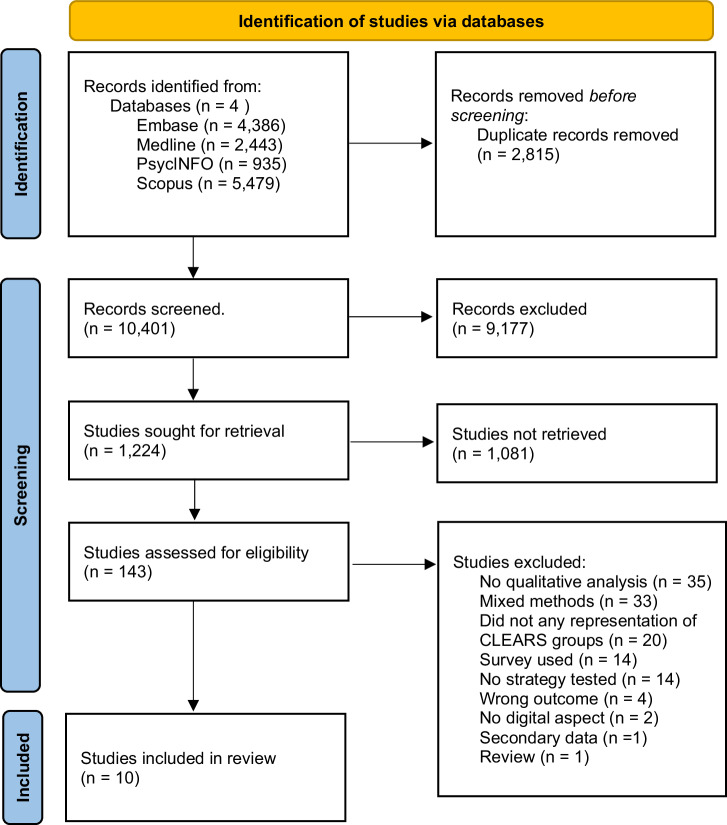
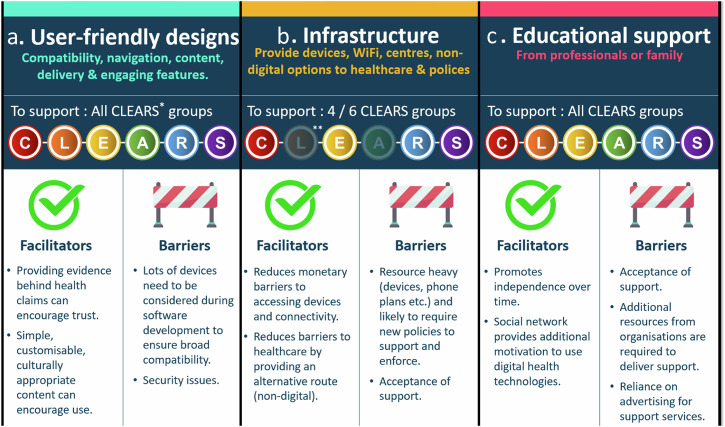
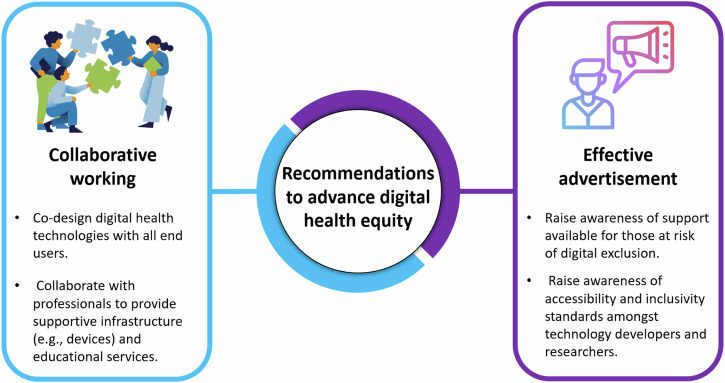
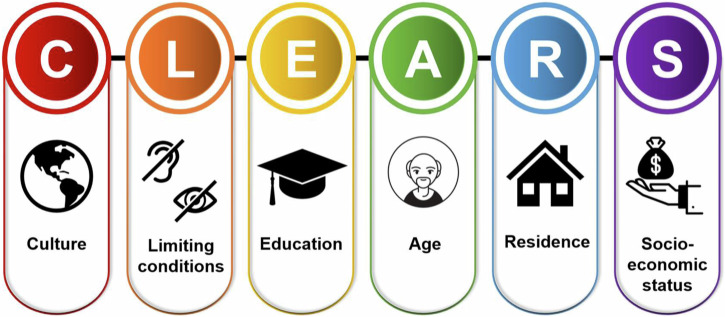
The World Health Organisation advocates Digital Health Technologies (DHTs) for advancing population health, yet concerns about inequitable outcomes persist. Differences in access and use of DHTs across different demographic groups can contribute to inequities. Academics and policy makers have acknowledged this issue and called for inclusive digital health strategies. This systematic review synthesizes literature on these strategies and assesses facilitators and barriers to their implementation. We searched four large databases for qualitative studies using terms relevant to digital technology, health inequities, and socio-demographic factors associated with digital exclusion summarised by the CLEARS framework (Culture, Limiting conditions, Education, Age, Residence, Socioeconomic status). Following the PRISMA guidelines, 10,401 articles were screened independently by two reviewers, with ten articles meeting our inclusion criteria. Strategies were grouped into either outreach programmes or co-design approaches. Narrative synthesis of these strategies highlighted three key themes: firstly, using user-friendly designs, which included software and website interfaces that were easy to navigate and compatible with existing devices, culturally appropriate content, and engaging features. Secondly, providing supportive infrastructure to users, which included devices, free connectivity, and non-digital options to help access healthcare. Thirdly, providing educational support from family, friends, or professionals to help individuals develop their digital literacy skills to support the use of DHTs. Recommendations for advancing digital health equity include adopting a collaborative working approach to meet users’ needs, and using effective advertising to raise awareness of the available support. Further research is needed to assess the feasibility and impact of these recommendations in practice.
Overview
The claims and statistics of this paper haven’t been checked yet.
Free: it reads the open-access text and checks the first 5 claims that cite a source we can check. Create a free account to check every claim.
Integrity signals
Registry
Cites
Statistics
Figures
Verification
Claims the paper makes
The claims and statistics of this paper haven’t been checked yet.
Free: it reads the open-access text and checks the first 5 claims that cite a source we can check. Create a free account to check every claim.
Self-check
Percentages, sums and reported differences re-computed from the paper’s own numbers.
The self-check needs the paper’s full text.
Citations
Cites
The PRISMA 2020 Statement: An Updated Guideline for Reporting Systematic Reviews
Page, M. J., McKenzie, J. E., Bossuyt, P. M., Boutron, I., Hoffmann, T. C., Mulrow, C. D., Shamseer, L., Tetzlaff, J. M., Akl, E. A., Brennan, S. E., et al. (2021) · International Journal of Surgery · doi:10.1016/j.ijsu.2021.105906 · Cited by 11,748
The Triple Aim: Care, Health, And Cost
Berwick, D. M., Nolan, T. W., & Whittington, J. (2008) · Health Affairs · doi:10.1377/hlthaff.27.3.759 · Cited by 5,136 · cited 2×
“TheInterventioncriteriafocusedoninclusivedigitalhealthstrategies,which wede fi ned as an action designed to alleviate the digital exclusion of individuals by promoting access, motivation, and/or use of information and communication technologies 2 – 5 .”
BackgroundMethodSystematic reviews: CRD's guidance for undertaking reviews in health care
Tacconelli, E. (2010) · The Lancet Infectious Diseases · doi:10.1016/s1473-3099(10)70065-7 · Cited by 3,245 · cited 1×
“The eligibility criteria followed the Population, Intervention, Comparison, Outcomes and Study design (PICOS) framework, recommended by the Cochrane Handbook for Systematic Reviews 69 , and provided an organising framework to list the main concepts in the search.”
MethodPope, C., & Mays, N. (1995) · BMJ · doi:10.1136/bmj.311.6996.42 · Cited by 2,336
Quick Assessment of Literacy in Primary Care: The Newest Vital Sign
Weiss, B. D. (2005) · The Annals of Family Medicine · doi:10.1370/afm.405 · Cited by 2,215 · cited 2×
“Futureresearchshouldincorporateastandardised healthliteracymeasure,suchastheNewestVitalSign(NVS) 44 ortheHealth Literacy Questionnaire (HLQ) 45 , into their methodology to provide greater detail on the participants in their study.”
BackgroundMethodQualitative methods: what are they and why use them?
Sofaer, S. (1999) · PubMed Central · Cited by 1,542
National Institute for Health Research
Evans, R. (2014) · Nursing Standard · doi:10.7748/ns.28.49.32.s37 · Cited by 1,350
Osborne, R. H., Batterham, R. W., Elsworth, G. R., Hawkins, M., & Buchbinder, R. (2013) · BMC Public Health · doi:10.1186/1471-2458-13-658 · Cited by 1,334 · cited 2×
“Futureresearchshouldincorporateastandardised healthliteracymeasure,suchastheNewestVitalSign(NVS) 44 ortheHealth Literacy Questionnaire (HLQ) 45 , into their methodology to provide greater detail on the participants in their study.”
BackgroundMethodResearch co-design in health: a rapid overview of reviews
Slattery, P., Saeri, A. K., & Bragge, P. (2020) · Health Research Policy and Systems · doi:10.1186/s12961-020-0528-9 · Cited by 1,313 · cited 2×
“The wider literature also suggests co-designing DHTs with underserved groups at the earlieststagesto helpensurethattheymeettheneedsofall end-users 30 .”
BackgroundCan Cultural Competency Reduce Racial and Ethnic Health Disparities? A Review and Conceptual Model
Brach, C., & Fraserirector, I. (2000) · Medical Care Research and Review · doi:10.1177/1077558700057001s09 · Cited by 1,160
Research works printed but not linked: 4
- 8. Honeyman, M., Maguire, D., Evans, H. & Davies, A. Digital technology and health inequalities: a scoping review (Public Health Wales NHS Trust, 2020).
- 59. Holgersson, J. & Söderström, E. Bridging the gap: Exploring elderly citizens' perceptions of digital exclusion. In 27th European Conference on Information Systems (ECIS) (Association for Information Systems, 2019).
- 66. Ofcom. Digital exclusion: A review of Ofcom's research on digital exclusion among adults in the UK. URL: https://www.ofcom.org.uk/__ data/assets/pdf_file/0022/234364/digital-exclusion-review-2022. pdf (2022).
- 74. Wertz, F. J. Five ways of doing qualitative analysis: Phenomenological psychology, grounded theory, discourse analysis, narrative research, and intuitive inquiry, 228 (Guilford Press, 2011).
Cited by
Abbas, S. R., Abbas, Z., Zahir, A., & Lee, S. W. (2024) · Healthcare · doi:10.3390/healthcare12242587 · Cited by 228
Hassan, N., Slight, R. D., Bimpong, K. A. A., Bates, D. W., Weiand, D., Vellinga, A., Morgan, G., & Slight, S. P. (2024) · npj Digital Medicine · doi:10.1038/s41746-024-01326-y · Cited by 75
Self-citationAI-assisted facial analysis in healthcare: From disease detection to comprehensive management
Lei, C., Dang, K., Song, S., Wang, Z., Chew, S. P., Bian, R., Yang, X., Guan, Z., Lopes, C. I. M. D. A., Wang, M. H., et al. (2025) · Patterns · doi:10.1016/j.patter.2025.101175 · Cited by 49
“40 137 These partnerships are crucial not only for ensuring the technology’s acceptance and effectiveness but also for building local capacities for its maintenance and advancement, ensuring its sustainable integration into health-care systems.”
Chen, Z., Hao, J., Sun, H., Li, M., Zhang, Y., & Qian, Q. (2025) · BMC Medical Informatics and Decision Making · doi:10.1186/s12911-025-02870-7 · Cited by 43
König, L. M., Western, M. J., Denton, A. H., & Krukowski, R. A. (2025) · npj Digital Medicine · doi:10.1038/s41746-024-01405-0 · Cited by 34
From Innovation to Inclusion—Tackling Digital Equity Needs in Health Care
Shah, S. D. (2024) · JAMA Network Open · doi:10.1001/jamanetworkopen.2024.45334 · Cited by 17
Artificial intelligence in primary care: innovation at a crossroads
Laranjo, L., Car, L. T., Payne, R. E., Neves, A. L., Kidd, M. R., & Miranda, J. J. (2025) · The Lancet Primary Care · doi:10.1016/j.lanprc.2025.100078 · Cited by 36
Eiselt, A.-K., Kirkendall, S., Xiong, E., Langner, D., & Goldfarb, M. B. (2026) · Frontiers in Digital Health · doi:10.3389/fdgth.2025.1713334 · Cited by 21
Philpot, L. M., Ramar, P., Roellinger, D. L., McIntee, M. A., & Ebbert, J. O. (2024) · Frontiers in Public Health · doi:10.3389/fpubh.2024.1455395 · Cited by 20
Lewerenz, S., Moen, A., & Martins, H. (2025) · International Journal of Medical Informatics · doi:10.1016/j.ijmedinf.2025.105794 · Cited by 16
Zhou, C., Xiao, Y., Wang, M., Wang, Y., & Yue, X. (2025) · Journal of Clinical Nursing · doi:10.1111/jocn.70004 · Cited by 17
Optimizing cardiac telerehabilitation programs: psychological, social, and implementation factors
Micheluzzi, V., Merella, P., Burrai, F., Canu, A., Sircana, A., Marongiu, B., Soro, G., & Casu, G. (2026) · Current Problems in Cardiology · doi:10.1016/j.cpcardiol.2026.103290 · Cited by 11
Poduval, S., Arnold, L., Carta, E., Nimmons, D., STRATTON, I. M., Shaw, M., Bradbury, K. J., & Stevenson, F. A. (2025) · BMC Public Health · doi:10.1186/s12889-025-21418-y · Cited by 18
Nasri, S. A. E. M., Kavakli, M., Hassan-Smith, Z. K., Salt, A., & Hassan‐Smith, G. (2025) · F1000Research · doi:10.12688/f1000research.172599.1 · Cited by 9
Digital health equity: Crafting sustainable pathways
Pierce, R. L. (2025) · PLOS Digital Health · doi:10.1371/journal.pdig.0000703 · Cited by 10
Leveraging digital pathology and AI to transform clinical diagnosis in developing countries
del Valle, A. C. (2025) · Frontiers in Medicine · doi:10.3389/fmed.2025.1657679 · Cited by 11
Towett, G., Snead, R. S., Marczika, J., Ambalavanan, R., Mbogori-Kairichi, M., & Malioukis, A. (2025) · Digital Health · doi:10.1177/20552076251406654 · Cited by 13
“111”
Wilson, S., Beswick, E., Morrell, R., Bhogal, S., Tolley, C. L., Whitfield, T. J., Wing, K., Ardle, R. M., Hassan, N., Walker, Z., et al. (2025) · BMC Digital Health · doi:10.1186/s44247-025-00191-3 · Cited by 9
“Furthermore, this study excluded those who could not speak English, did not have a smartphone or internet access and lacked representation of underserved groups who are known to be at risk of digital exclusion, such as individuals without a fixed address or from ethnic minority groups [72].”
Self-citationTao, W., Tang, X., Jiao, X., Sayani, A., Zhao, J., Li, W., & Wei, X. (2025) · Preventive Medicine · doi:10.1016/j.ypmed.2025.108489 · Cited by 8
Saxena, A., Sharma, S., Johari, P. K., Pandey, A., & Kumar, S. (2025) · Discover Artificial Intelligence · doi:10.1007/s44163-025-00425-3 · Cited by 8
“This work uses advanced predictive modeling techniques to demonstrate that healthcare disparities can be complex and presents the data-driven evidence necessary for targeted emergency department interventions [13, 14].”
Health Disparities: The Emerging Trends and Pressing Challenges
Dopelt, K. (2025) · European Journal of Investigation in Health Psychology and Education · doi:10.3390/ejihpe15010007 · Cited by 13
Optimizing Antibiotic Use in Older Adults Through Digital Health Initiatives
Bear, M., Aungst, T. D., Herren, J., Mosaffa, S., Liu, S., & Riley, S. (2025) · Current Infectious Disease Reports · doi:10.1007/s11908-025-00858-y · Cited by 6
“Many tools do not have accessibility features like voice commands to accommodate physical impairments such as low vision or limited dexterity [54].”
Büyük, D. Ş., Çetinkaya, A., & Bılgın, N. (2025) · Public Health Nursing · doi:10.1111/phn.70005 · Cited by 6
“…screens, complex user interfaces, and insufficient usage instructions, further contribute to the difficulties experienced by older adults when using digital health services (Barnard et al. 2013; Ilgar and Bilgili 2023; Kırca et al. 2021; Money et al. 2024; Raihan et al. 2025; Wilson et al. 2024).”
Im, H., Li, F., Stover, S., Abel, C., Farmer, J., García, C. M., Lee, J.-A., & Wyczalkowski, C. K. (2025) · Healthcare · doi:10.3390/healthcare13222869 · Cited by 10
“Meanwhile, maintaining flexible care delivery options that provide both digital and in-person access remains essential for individuals who cannot reliably use digital tools or who are dissatisfied with telemedicine alternatives [60].”
Wanless, B., Hassan, N., McClellan, C. M., Sothinathan, C., Lastoria, D. A. A., Herweijer, T., Thorpe, J., Noblet, T., & Berry, A. (2024) · Musculoskeletal Care · doi:10.1002/msc.1925 · Cited by 5
Self-citationAldakhil, R., Greenfield, G., Lammila-Escalera, E., Laranjo, L., Hayhoe, B. W. J., Majeed, A., & Neves, A. L. (2025) · Journal of Diabetes Science and Technology · doi:10.1177/19322968251316585 · Cited by 8
“76,77 The findings of this review align with those reported by the systematic review on barriers and facilitators influencing remote consultations 68 which highlighted that younger and individuals with higher digital literacy are more likely to engage with and benefit from remote consultations.”
Increasing the inclusivity of digital health co-production: an integrative review
Litchfield, I. J., Delanerolle, G., Juffs, H., Bloxham, S., Dunning, S., & Harper, L. (2025) · Frontiers in Digital Health · doi:10.3389/fdgth.2025.1636469 · Cited by 8
Romanelli, M., Vélez‐Grau, C., Rouvere, J., & Porter, S. F. (2025) · Journal of Medical Internet Research · doi:10.2196/77062 · Cited by 4
“Yet, structural and cultural barriers (eg, trust, relevance, and representation) remain and may limit engagement even when accounting for access to infrastructure factors (eg, internet or device availability) [51-53].”
Gupta, P. K., Jogdand, K. S., Yerpude, P. N., Haqqani, M. H., Suheb, M. A., & Sen, N. (2025) · Cureus · doi:10.7759/cureus.94276 · Cited by 8
Shin, H. D., Kemp, J., Kassam, I., Pape, C., Goonasekera, S., Modha, V., Rodak, T., Torous, J. B., Kidd, S. A., & Strudwick, G. (2026) · npj Digital Medicine · doi:10.1038/s41746-026-02647-w · Cited by 5
“Any strategies or considerations intentionally made by authors for achieving equity were mapped onto the CLEARS framework based on the target audience characteristics of digital navigators 22 .”
InfluentialDevelopment of a Hospital-at-Home Digital Twin for Patients With Frailty: Scoping Review
Yahya, F., Cooper, M., Saif, W., Kassem, M., & Nazar, H. (2025) · Journal of Medical Internet Research · doi:10.2196/81510 · Cited by 7
“Furthermore, improving awareness and understanding of the DT system to be deployed would be needed by factoring in training [129], funding, and workforce capacity.”
Dong, J., Jiang, M., Xing, Y., Zhang, D., Kong, J., & Wang, H. (2025) · International Journal for Equity in Health · doi:10.1186/s12939-025-02720-y · Cited by 5
Scherenberg, V. (2026) · Frontiers in Public Health · doi:10.3389/fpubh.2026.1891658 · Cited by 7
“Citizens should be able to benefit from AI-supported explanation, (32, 33).”
Rocque, G. B., Henderson, N. L., Hildreth, K., Eltoum, N., Whitlow, O., Herring, L., Ingram, S. A., Chu, D. I., Shao, C. C., Hardy, C. M., et al. (2025) · Digital Health · doi:10.1177/20552076251325581 · Cited by 7
“21 Higher education levels are known to correlate higher health literacy, digital literacy, and digital health literacy.”
Ardle, R. M., Poole, M., Horrocks, S., King‐Robson, J., Schott, J. M., Sharp, D., Harrison, M., & Robinson, L. A. (2025) · JMIR Aging · doi:10.2196/74307 · Cited by 3
“This should include tailored support for individuals most at risk of digital exclusion, to reduce further exacerbation of health inequities in these groups [30,51-53].”
Altun, A., Oxlad, M., Hine, R. H., Reupert, A. E., Slewa‐Younan, S., Ansari, D., D’Souza, L., Syed, S., Kadwadkar, M., Skouteris, H., et al. (2025) · International Journal for Equity in Health · doi:10.1186/s12939-025-02715-9 · Cited by 4
“Digital health can be defined as the use of information and communication technologies within healthcare to provide users with services relating to the prevention, detection, diagnosis and management of diseases and other health conditions [20].”
Julie, L., Mengarduque, M., Coelho, J., Geoffroy, P. A., Denechere, E., Aouizerate, B., Jaafari, N., Philip, P., Taillard, J., Dubois, O., et al. (2026) · Journal of Clinical Medicine · doi:10.3390/jcm15062176 · Cited by 4
Smith, T. O., Khoury, R., Welsh, A., Crowther, C., Hanson, S., Grant, K., Clark, A., Ashford, P., Hammond, M., Pond, M., et al. (2025) · BMJ Open · doi:10.1136/bmjopen-2024-095069 · Cited by 2
Okumu, M., Logie, C. H., Koomson, I., Nyoni, T., Muzei, J., Sharma, B. B., Cohen, F., Byansi, W., Thompson, M. G., Wabwire, J. C., et al. (2025) · Journal of Medical Internet Research · doi:10.2196/78343 · Cited by 4
Development of an evidence-based evaluation framework for digital health software products
Goldsack, J. C., Holliday, C., Sharma, Y., Mirsky, D., Zanetti, C., & Vandendriessche, B. (2025) · Scientific Reports · doi:10.1038/s41598-025-21996-2 · Cited by 3
“This is consistent with research showing large inequities in access to and uptake in DHTs 32,33 .”
Malik, T., Ong, S. C., & Butt, M. D. (2025) · BMC Health Services Research · doi:10.1186/s12913-025-13820-4 · Cited by 9
Health literacy and attitudes toward clinical AI: a cross-sectional study in Istanbul
SÖNMEZ, K. (2026) · Frontiers in Digital Health · doi:10.3389/fdgth.2026.1771286 · Cited by 3
“The various processes for accessing and evaluating information in digital environments emerge as a significant factor determining the quality of users’ relationship with digital health services (11).”
Implementing Digital Respiratory Technologies for People With Respiratory Conditions: Scoping Review
Hui, C. Y., Condon, K., Kolekar, S., Roberts, N., Sreter, K. B., Simons, S. O., Figueiredo, C. L., McKeough, Z. J., Salim, H. S., Gawlik‐Lipinski, A., et al. (2026) · Journal of Medical Internet Research · doi:10.2196/88325 · Cited by 2
Burns, K., van Rensburg, C., Bloom, S., Villanueva, C., Ikihele, A., Blow, N., Vogranic, A., Crone, E. M., du Toit, C., Panisset, M. G., et al. (2026) · Journal of Medical Internet Research · doi:10.2196/89596 · Cited by 2
“…interpersonal, and societal levels without considering technology codevelopment [8-10]; others have generated schemas to address the digital determinants of equity alongside the social determinants of health [11,12] or cataloged barriers and facilitators to advancing digital health equity [13,14].”
Saeedi, S., Hirjikaka, D., Clausen, M., Luca, S., Reble, E., Kodida, R., Assamad, D., Chad, L., Costain, G., Faghfoury, H., et al. (2025) · European Journal of Human Genetics · doi:10.1038/s41431-025-01871-4 · Cited by 2
Patterns of online consultation use in Great Britain, 2019–2023: an observational analysis
Kerr, G. K., Greenfield, G., Bottle, A., Hosford, A., Qiu, C. S., Neves, A. L., Majeed, A., & Hayhoe, B. W. J. (2025) · BMJ Digital Health & AI · doi:10.1136/bmjdhai-2025-000032 · Cited by 3
Bridging the Digital Divide: Why Inclusive Technology Is a Market Necessity and Opportunity
van Doorn, J., Holthöwer, J., & Metting, E. (2026) · Journal of Public Policy & Marketing · doi:10.1177/07439156261437694 · Cited by 3
“Regional language support, for example, by voice assistants in India, illustrates how cultural sensitivity can substantially widen reach (Srivastava et al. 2021; Wilson et al. 2024).”
InfluentialPatterson, M., Sermin‐Reed, L., Prentis, J. M., Radhakrishnan, A., Kaner, E., Nandhra, S., Rowland, M. K., Cucato, G. G., & Fong, M. (2024) · JVS-Vascular Insights · doi:10.1016/j.jvsvi.2024.100175 · Cited by 1
Roy, C. F., Turkdogan, S., Nguyen, L. H. P., McHugh, T., Daniel, S. J., & Yeung, J. C. (2025) · Otolaryngology · doi:10.1002/ohn.1126 · Cited by 3
Litchfield, I. J., Lewis, R., Delanerolle, G., Melyda, M., & Harper, L. (2025) · Journal of Medical Internet Research · doi:10.2196/75406 · Cited by 3
“…end user in digital health technologies can be overcome by using the lived experiences of a diverse range of patients in digital co-design to ensure the solution is directly compatible with diverse lifestyles and cultures, and existing devices, connectivity, and health and digital literacies [47].”
Higashi, R. T., Repasky, E. C., Gupta, A., Lee, M., DesRoches, C. M., Israel, A. D., & Pruitt, S. L. (2025) · JMIR Formative Research · doi:10.2196/70146 · Cited by 2
“…in addressing digital health equity have emphasized user design (eg, compatibility with existing devices and culturally appropriate content), supportive infrastructure (eg, assistance with devices and connectivity), and educational support (ie, from professionals, family, or friends) [46].”
Wach, A. C., Joshi, K., Seo, C., & Wegier, P. (2025) · Frontiers in Digital Health · doi:10.3389/fdgth.2025.1507936 · Cited by 1
Zhao, J., Su, C., Zhu, X., Cai, C., Liu, W., & Ma, X. (2025) · Journal of Medical Internet Research · doi:10.2196/79587 · Cited by 3
“…transformation in health care may exacerbate existing health inequities, creating new barriers for marginalized populations including persons with disabilities, patients of racial or ethnic minority groups, those with limited language proficiency, and people with low socioeconomic status [13-15].”
Schaarup, J. R., Isaksen, A. A., Norman, K., Bjerg, L., & Hulmán, Á. (2025) · BMJ Digital Health & AI · doi:10.1136/bmjdhai-2025-000090 · Cited by 3
“31 Ignoring user characteristics could lead to digital exclusion, which risks differential uptake of chatbot-based solutions and potentially leads to inequalities in access to these healthcare solutions.”
Understanding digital navigators in health care: a scoping review protocol
Strudwick, G., Shin, H. D., Kassam, I., Pape, C., Rodak, T., Torous, J. B., Bhat, V., Kemp, J., Rosen, B., & Kidd, S. A. (2026) · JBI Evidence Synthesis · doi:10.11124/jbies-25-00167 · Cited by 2
Leveraging AI and technology for holistic asthma management in the Pasifika community
Mirza, F., Jayamini, W. K. D., Lutui, R., Pole, K., Ikihele, A., Mu’aulama, A. F., & Chan, A. H. Y. (2026) · Telematics and Informatics Reports · doi:10.1016/j.teler.2026.100302 · Cited by 1
Mechanisms, Effectiveness, and Evolution of Technology-based Interventions in Addiction Treatment
Wehbe, M., Ali, B. A., Antoun, C., Shehab, S., Semaani, J.-M. A., Mhasseb, C., Karam, D., Alhussein, A., Mechref, Y. S., Kobeissy, F. H., et al. (2026) · Current Addiction Reports · doi:10.1007/s40429-026-00737-z · Cited by 2
Digital health in allergy care: current practices, evidence, and future prospects
Lourenço, O. M., & Raposo, A. N. (2026) · Frontiers in Allergy · doi:10.3389/falgy.2026.1760856 · Cited by 1
“Importantly, telemedicine can advance equity by improving access for rural and underserved populations, provided that broadband connectivity and device availability are addressed (2, 3).”
Service Users’ Views on Digital Remote Monitoring for Psychosis: Survey Study
Zhang, X., Eisner, E., Basilio, D. D., Richardson, C., Firth, J., & Bucci, S. (2026) · JMIR Human Factors · doi:10.2196/86152 · Cited by 4
“A recent systematic review indicated that providing supportive infrastructure to users, including devices and free internet access, is a potential solution for advancing digital health equity [59].”
Chung, J., Mansion, N., Gendron, T. L., Wood, R. E., & Demiris, G. (2026) · JMIR Aging · doi:10.2196/90053 · Cited by 1
“Such populations are often excluded from design and testing processes for new technologies conceptualized to improve quality of life and health [47], probably due to concerns about their ability to engage meaningfully and provide valuable input.”
Targeted Poverty Alleviation and Multidimensional Child Poverty Dynamics: Evidence from China
Chen, D., Chen, M., & Zheng, X. (2026) · The Journal of Development Studies · doi:10.1080/00220388.2026.2679269 · Cited by 1
Salgado, J., Gomes, M., Csabai, M., Daele, T. V., Doyle, F., Eimontas, J., Elster, R. N., Gosar, D., Haddouk, L., Karekla, M., et al. (2026) · European Psychologist · doi:10.1027/1016-9040/a000588 · Cited by 1
Centering disability in digital health: perspectives and actionable approaches to accessibility
Touchett, H. N., Arredondo, K., Day, S. C., Salgado, B., Bay, K. G., Lindsay, J., & Skelton, F. (2026) · Frontiers in Digital Health · doi:10.3389/fdgth.2026.1923565 · Cited by 1
“Often, digital health design teams address accessibility as a matter of compliance for WCAG at the end of development, rather than centering accessibility from initial conceptualization throughout development (3, 21).”
Keast, J., Smith, L., Ghannam, S., & Dambha‐Miller, H. (2025) · Research Square · doi:10.21203/rs.3.rs-7500570/v1 · Cited by 1
Deep learning models for digital medical imaging: a survey
Liu, B., Wang, X. S., Cong, Y., Cong, L., Cong, X., Tang, S., & Chen, H. (2026) · Applied Intelligence · doi:10.1007/s10489-026-07211-3
Patterns of Online Consultation Use in Great Britain 2019 to 2023: An Observational AnalysisPreprint
Kerr, G. K., Greenfield, G., Bottle, A., Hosford, A., Neves, A. L., Qiu, C. S., Majeed, A., & Hayhoe, B. W. J. (2025) · SSRN Electronic Journal · doi:10.2139/ssrn.5114599
Digital exclusion and people experiencing homelessness: implications for opioid use disorder care
Teck, J. T. W., Tan, H. S., & Baldacchino, A. (2025) · Current Opinion in Psychiatry · doi:10.1097/yco.0000000000001012 · Cited by 1
“inequities that occur when individuals or communities lack the means and skills to use digital technology effectively to meet their needs or fully participate in society [1 ].”
Transparenz als Transformationsstrategie im Gesundheitswesen
Hradecky, D. M. (2025) · Springer eBooks · doi:10.1007/978-3-658-48125-4_3
Wright, C., Kelly, J. T., Dawson, D., Campbell, K. L., Diversi, T., & Hamilton, K. (2025) · Health Marketing Quarterly · doi:10.1080/07359683.2025.2504824 · Cited by 1
“…community experiences in content); considering digital literacy (designing user interfaces to accommodate varying levels of technological comfort); and developing alternative access pathways (creating nontraditional distribution channels to reach underserved populations) (Wilson et al., 2024).”
Web surveys during the COVID-19 pandemic: a critical look for collective learning
Moreira, M. C. N., Abramov, D. M., Camacho, K. G., Junqueira-Marinho, M. D. F., Reis, A. T., Gomes, S. C., & Moore, D. C. B. C. (2025) · Cadernos de Saúde Pública · doi:10.1590/0102-311xen174523
“Wilson et al. 5 found that investment in user-friendly designs, software interfaces and websites with culturally appropriate navigability and content, along with the provision of support infrastructure for users, including devices, free connectivity and non-digital options, can help increase participation.”
Web surveys na pandemia de COVID-19: um olhar crítico para aprendizados coletivos
Moreira, M. C. N., Abramov, D. M., Camacho, K. G., Junqueira-Marinho, M. D. F., Reis, A. T., Gomes, S. C., & Moore, D. C. B. C. (2025) · Cadernos de Saúde Pública · doi:10.1590/0102-311xpt174523
Building Future-Ready Healthcare Systems Through Digital Literacy Training
Firmansyah, F., Ashari, M. R., & Syam, S. (2025) · Medicor Journal of Health Informatics and Health Policy · doi:10.61978/medicor.v3i1.1081
Smart Skin and Beyond: Unlocking the Full Potential of Wearable Health Sensors
Chaiya, N., Tangkuaram, T., & Moonla, C. (2025) · Springer eBooks · doi:10.1007/978-981-95-2117-3_11 · Cited by 1
Dahlberg, A., Kaartinen, T., Jukarainen, S., & Orre, P. (2025) · medRxiv · doi:10.1101/2025.11.06.25339651
Brooks, R. L., Hoevenaar‐Blom, M. P., Coley, N., van Charante, E. P. M., Barnes, L., Richard, E., & Brayne, C. (2025) · BMJ Digital Health & AI · doi:10.1136/bmjdhai-2025-000069
“24 To improve engagement with underserved populations, it is crucial to develop novel methods for capturing reasons for non-participation among individuals from low-SEP backgrounds such as qualitative approaches, where there are community champions who might be able to help understand what the…”
Shaw, J., Tait, C. L., Ogbogu, U., Hardcastle, L. E., Affleck, E., Mendez, I. M., Sayani, A., Spithoff, S. M., Shahid, S., Mehelay, S., et al. (2025) · SSM - Health Systems · doi:10.1016/j.ssmhs.2025.100164
The Second-Level Digital Divide in Healthcare
Ogbo, E. (2025) · Journal of Information Policy · doi:10.5325/jinfopoli.15.2025.0014
Chung, J., Mansion, N., Gendron, T. L., Wood, R. E., & Demiris, G. (2025) · doi:10.2196/preprints.90053
Adebayo, U. O., Okesanya, O. J., Obadeyi, K. B., Ayelaagbe, O. B., Ahmed, M. M., & Lucero-Prisno, T. A. O. A. D. E., III (2026) · IntechOpen eBooks · doi:10.5772/intechopen.1014204
Digital Health Equity and Telemedicine: Bridging Innovation and Access (Preprint)Preprint
Goeschl, S., Harris, B. H. L., & Koizia, L. J. (2026) · doi:10.2196/preprints.91970
Equidad en el acceso y uso de la informática aplicada en contextos educativos rurales y vulnerables
Mitre, M. G., Consuegra, D., Santos, N., & Díaz, D. (2026) · Pedagogical Constellation · doi:10.69821/constellations.v5i1.158 · Cited by 2
Detection of Type 2 Diabetes from 20-second Speech Recordings: A Large-Scale Validation StudyPreprint
Brann, E., Polle, R., Čepukaitytė, G., Georgescu, A. L., Parsons, O., de Courten, B. V., Molimpakis, E., & Goria, S. (2026) · medRxiv · doi:10.64898/2026.03.16.26348468 · Cited by 1
Creaser, A. V., King, N. V., Apel, B., Lawal, L., Shah, T., Walabyeki, J., Saxton, J., Beeken, R. J., & Kennedy, F. (2026) · Research Square · doi:10.21203/rs.3.rs-9198035/v1
From hype to reality: where did the digital health promises go?
Mubarak, F. (2026) · International Journal of Health Care Quality Assurance · doi:10.1108/ijhcqa-09-2025-0134
“This finding, reinforced by WHO (2025), Wilson et al. (2024), Palumbo et al. (2022), and Fellner et al. (2025), underscores that digital health adoption requires integration into national digital transformation agendas and cross-sectoral investment in skills, connectivity, governance, and…”
Snögren, M., Åberg, C., Gillsjö, C., Aslan, A. K. D., Berglund, M. M. U., Ahlander, M., Beslic, S. H., Ek, K., Ridelberg, M., Stjernetun, B. B., et al. (2026) · doi:10.2196/preprints.97434
Litchfield, I. J., Shukla, D., & Greenfield, S. (2026) · BMJ Digital Health & AI · doi:10.1136/bmjdh-2026-000051
From neuroinflammation to neural inference: computational psychiatry meets precision medicine
Mansour, G. K., & Hajjar, A. W. (2026) · Schizophrenia · doi:10.1038/s41537-026-00757-8
Goel, A., Frauwirth, M., & Hund, W. (2026) · JMIR Dermatology · doi:10.2196/97889
Bridging the grey divide: Inclusive digital transformation in healthcare in ageing populations
Aymerich, M., Barbiero, A., Yuguero, O., & Carrión, C. (2026) · Mètode: Revista de difusió de la investigació de la Universitat de Valencia · doi:10.7203/metode.16.31240
Haddiya, I., & Ramdani, S. (2026) · Green energy and technology · doi:10.1007/978-3-031-99001-4_32
Shin, H. D., Payne, K., Haskell, H. W., Wade, C. G., Glatard, T., Bates, D. W., Dykes, P. C., & Syrowatka, A. (2016) · JBI Evidence Synthesis · doi:10.11124/jbies-25-00463
Yang, H., Wang, H. T., He, M., Zhang, B., & Ma, X. (2026) · AIP Advances · doi:10.1063/5.0331970
Strekalova, Y. A., Liu-Galvin, R. E., Khan, M., Lee, E., Alema‐Mensah, E., & Ofili, E. (2026) · Frontiers in Public Health · doi:10.3389/fpubh.2026.1868973
“These findings reinforce the growing recognition that computational proficiency is a core competency for modern public health professionals (7, 29).”
Tolley, C. L., de Nazelle, A. J., Wilson, S., Hassan, N., Slight, R. D., & Slight, S. P. (2026) · Frontiers in Public Health · doi:10.3389/fpubh.2026.1763393
Self-citationBobkov, A., Tatiana, B., Wang, L., Sokolov, N. O., Xu, J., Deng, F., Royuk, V. V., & Kang, Z. (2026) · Frontiers in Digital Health · doi:10.3389/fdgth.2026.1856577
Medical AI across Data Regimes to Promote Proactive Health
Li, P., Wu, J., Zuo, Q., Zhang, L., & Zhan, Q. (2026) · Health Data Science · doi:10.34133/hds.0495
“This digital exclusion can amplify disparities in who benefits from AI-driven innovations [ 91 , 93 ].”
Equity-by-design for socially assistive robots as digital health tools
Kachouie, R., & Barton, B. (2026) · Journal of the American Medical Informatics Association · doi:10.1093/jamia/ocag105
Cindy, Y. T., Yang, X., Wang, K., Cheung, A. W.-L., Ma, J. C.-H., Lu, C., Yu, J. C.-Y., Chan, C. Y., Chen, J., Ouyang, K., et al. (2026) · Journal of Medical Internet Research · doi:10.2196/89011
“This gap is particularly important for older adults, for whom encouragement, trust, and support from clinicians, caregivers, and social networks can shape whether digital tools are perceived as usable, relevant, and safe [8,37].”
Shin, H. D., Ronquillo, C., Lee, J., Lokmic‐Tomkins, Z., Reid, L., You, S. B., Davies, S., Block, L. J., Özbay, İ., Lukitasari, M., et al. (2026) · International Journal of Medical Informatics · doi:10.1016/j.ijmedinf.2026.106582
Wilson, S., Tolley, C. L., Ardle, R. M., Hassan, N., Slight, R., & Slight, S. P. (2026) · npj Digital Public Health · doi:10.1038/s44482-026-00022-w
“We developed and published the CLEARS framework 21,39 , which encompasses these socio-demographic factors ( C ultural factors: ethnicity, languageandreligion, L imitingconditions:visualandhearingimpairments, low E ducational attainment: government mandated level or below, older A ge: over 65 years…”
InfluentialSelf-citation
Metadata
- Authors
- Wilson, S., Tolley, C., Mc Ardle, R., Lawson, L., Beswick, E., Hassan, N., Slight, R., & Slight, S.
- Affiliations
- Newcastle University (GB)
- Trinity College Dublin (IE)
- Newcastle upon Tyne Hospitals NHS Foundation Trust (GB)
- Corresponding author
- Slight, Sarah
- Venue
- npj Digital Medicine
- Published
- 2024-06-29
- Volume
- 7
- Issue
- 1
- Pages
- 173-173
- ISSN
- 2398-6352 (ISSN-L)
- PMC
- PMC11217442
- OpenAlex
- W4400198733
- Cited by
- 139
- References
- 54
- Citations by year
- 2026: 80 · 2025: 53 · 2024: 6
- FWCI
- 14.40
- Type
- journal article
- Language
- en
- Open access
- gold
- doi.org
- Licence
- cc-by
- creativecommons.org/licenses/by/4.0 (tdm)
- creativecommons.org/licenses/by/4.0 (vor)
- Locations
- npj Digital Medicine (publishedVersion, cc-by)
- PubMed Central (publishedVersion, cc-by)
- PubMed (publishedVersion)
- DOAJ (DOAJ: Directory of Open Access Journals) (submittedVersion, cc-by-sa)
- Newcastle University ePrints (Newcastle Univesity) (cc-by)
- Funders
- Alzheimer’s Research UK
- DH | National Institute for Health Research (NIHR205190, NIHR 301677)
- Topics
- Health Sciences › Medicine › Geriatrics and Gerontology › Technology Use by Older Adults
- Health Sciences › Health Professions › General Health Professions › Health Literacy and Information Accessibility
- Physical Sciences › Computer Science › Information Systems › ICT in Developing Communities
- Keywords
- digital health equity, digital divide, digital exclusion, health disparities, co-design, user-friendly design, digital literacy, outreach programmes, socioeconomic status, barriers to digital health adoption, free internet access
About these checks
Registry, retraction, Cites and statistics results are computed, not judged, with one exception: a printed reference that no index lists is read once by a model before it counts as a citation error. Claims are extracted by a model and kept only when their quote appears verbatim in the text; each cited source is then checked, with a model’s help, for whether it says what the claim relies on. Those verdicts can be wrong — read the claim’s quote and the cited source before relying on one.
Statistics and arithmetic are recomputed, not judged.
Confidence bands are shown only for fields calibrated on our annotated test set. None is calibrated yet, so no band is shown.
What counts as a claim ›How we measure confidence ›How we check this ›
Are you an author, or do you see a problem with this page? Request a review
Data sources
Bibliographic data: Semantic Scholar, OpenAlex, Crossref.
Contains information from the Semantic Scholar Academic Graph Datasets, made available under the ODC Attribution License (ODC-BY 1.0).
Semantic Scholar’s data is described in: Kinney, R., et al. (2023). The Semantic Scholar Open Data Platform. arXiv:2301.10140.
