

Recommendations to advance digital health equity: a systematic review of qualitative studies
Open accessThe DOI matches its Crossref record; 54 of the 54 references it cites were found in a registry or an index.
Abstract
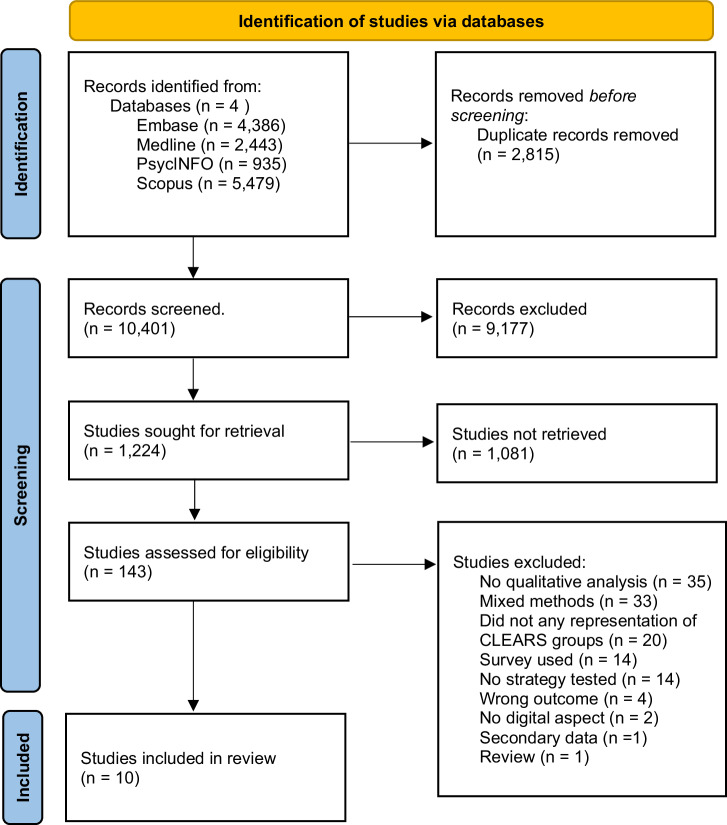
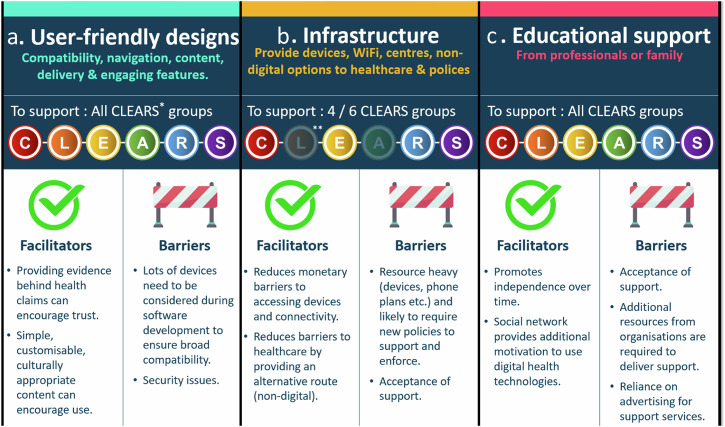
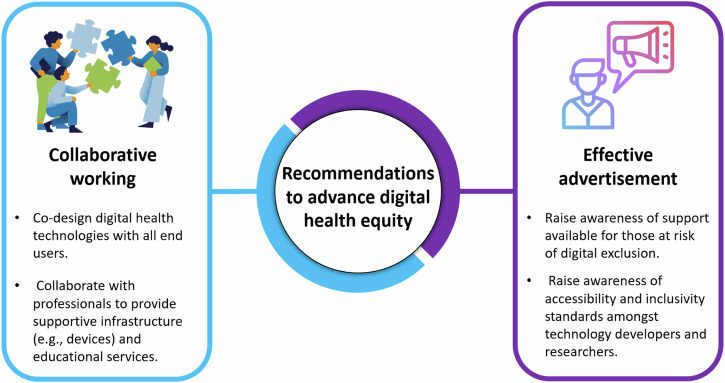
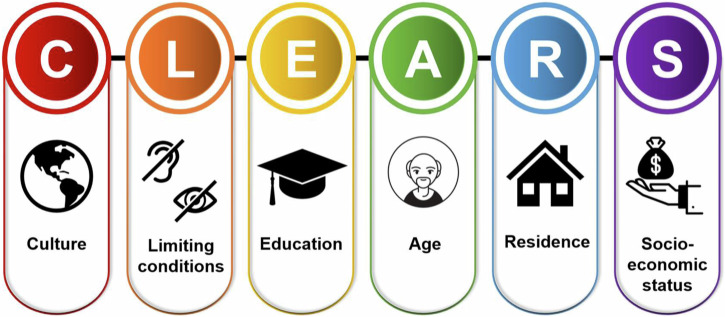
The World Health Organisation advocates Digital Health Technologies (DHTs) for advancing population health, yet concerns about inequitable outcomes persist. Differences in access and use of DHTs across different demographic groups can contribute to inequities. Academics and policy makers have acknowledged this issue and called for inclusive digital health strategies. This systematic review synthesizes literature on these strategies and assesses facilitators and barriers to their implementation. We searched four large databases for qualitative studies using terms relevant to digital technology, health inequities, and socio-demographic factors associated with digital exclusion summarised by the CLEARS framework (Culture, Limiting conditions, Education, Age, Residence, Socioeconomic status). Following the PRISMA guidelines, 10,401 articles were screened independently by two reviewers, with ten articles meeting our inclusion criteria. Strategies were grouped into either outreach programmes or co-design approaches. Narrative synthesis of these strategies highlighted three key themes: firstly, using user-friendly designs, which included software and website interfaces that were easy to navigate and compatible with existing devices, culturally appropriate content, and engaging features. Secondly, providing supportive infrastructure to users, which included devices, free connectivity, and non-digital options to help access healthcare. Thirdly, providing educational support from family, friends, or professionals to help individuals develop their digital literacy skills to support the use of DHTs. Recommendations for advancing digital health equity include adopting a collaborative working approach to meet users’ needs, and using effective advertising to raise awareness of the available support. Further research is needed to assess the feasibility and impact of these recommendations in practice.
Overview
The claims and statistics of this paper haven’t been checked yet.
Free: it reads the open-access text and checks the first 5 claims that cite a source we can check. Create a free account to check every claim.
Integrity signals
Registry
Cites
Statistics
Figures
Verification
Claims the paper makes
The claims and statistics of this paper haven’t been checked yet.
Free: it reads the open-access text and checks the first 5 claims that cite a source we can check. Create a free account to check every claim.
Self-check
Percentages, sums and reported differences re-computed from the paper’s own numbers.
The self-check needs the paper’s full text.
Citations
Cites
The PRISMA 2020 Statement: An Updated Guideline for Reporting Systematic Reviews
Page, M. J., McKenzie, J. E., Bossuyt, P. M., Boutron, I., Hoffmann, T. C., Mulrow, C. D., Shamseer, L., Tetzlaff, J. M., Akl, E. A., Brennan, S. E., et al. (2021) · International Journal of Surgery · doi:10.1016/j.ijsu.2021.105906 · Cited by 11,748
The Triple Aim: Care, Health, And Cost
Berwick, D. M., Nolan, T. W., & Whittington, J. (2008) · Health Affairs · doi:10.1377/hlthaff.27.3.759 · Cited by 5,136 · cited 2×
“TheInterventioncriteriafocusedoninclusivedigitalhealthstrategies,which wede fi ned as an action designed to alleviate the digital exclusion of individuals by promoting access, motivation, and/or use of information and communication technologies 2 – 5 .”
BackgroundMethodSystematic reviews: CRD's guidance for undertaking reviews in health care
Tacconelli, E. (2010) · The Lancet Infectious Diseases · doi:10.1016/s1473-3099(10)70065-7 · Cited by 3,245 · cited 1×
“The eligibility criteria followed the Population, Intervention, Comparison, Outcomes and Study design (PICOS) framework, recommended by the Cochrane Handbook for Systematic Reviews 69 , and provided an organising framework to list the main concepts in the search.”
MethodPope, C., & Mays, N. (1995) · BMJ · doi:10.1136/bmj.311.6996.42 · Cited by 2,336
Quick Assessment of Literacy in Primary Care: The Newest Vital Sign
Weiss, B. D. (2005) · The Annals of Family Medicine · doi:10.1370/afm.405 · Cited by 2,215 · cited 2×
“Futureresearchshouldincorporateastandardised healthliteracymeasure,suchastheNewestVitalSign(NVS) 44 ortheHealth Literacy Questionnaire (HLQ) 45 , into their methodology to provide greater detail on the participants in their study.”
BackgroundMethodQualitative methods: what are they and why use them?
Sofaer, S. (1999) · PubMed Central · Cited by 1,542
National Institute for Health Research
Evans, R. (2014) · Nursing Standard · doi:10.7748/ns.28.49.32.s37 · Cited by 1,350
Osborne, R. H., Batterham, R. W., Elsworth, G. R., Hawkins, M., & Buchbinder, R. (2013) · BMC Public Health · doi:10.1186/1471-2458-13-658 · Cited by 1,334 · cited 2×
“Futureresearchshouldincorporateastandardised healthliteracymeasure,suchastheNewestVitalSign(NVS) 44 ortheHealth Literacy Questionnaire (HLQ) 45 , into their methodology to provide greater detail on the participants in their study.”
BackgroundMethodResearch co-design in health: a rapid overview of reviews
Slattery, P., Saeri, A. K., & Bragge, P. (2020) · Health Research Policy and Systems · doi:10.1186/s12961-020-0528-9 · Cited by 1,313 · cited 2×
“The wider literature also suggests co-designing DHTs with underserved groups at the earlieststagesto helpensurethattheymeettheneedsofall end-users 30 .”
BackgroundCan Cultural Competency Reduce Racial and Ethnic Health Disparities? A Review and Conceptual Model
Brach, C., & Fraserirector, I. (2000) · Medical Care Research and Review · doi:10.1177/1077558700057001s09 · Cited by 1,160
Popay, J., Rogers, A., & Williams, G. (1998) · Qualitative Health Research · doi:10.1177/104973239800800305 · Cited by 987 · cited 1×
“This involved exploring the directly reported verbatim quotations obtained from particular CLEARS groups and seeking to draw descriptive and explanatory conclusions around key themes 72,73 .”
MethodAlmathami, H. K. Y., Win, K. T., & Vlahu-Gjorgievska, E. (2020) · Journal of Medical Internet Research · doi:10.2196/16407 · Cited by 791
Technology in Parkinson’s disease: challenges and opportunities
Espay, A. J., Bonato, P., Nahab, F. B., Maetzler, W., Dean, J. M., Klucken, J., Eskofier, B. M., Merola, A., Horak, F., Lang, A. E., et al. (2016) · Movement Disorders · doi:10.1002/mds.26642 · Cited by 654 · cited 1×
“The lead author (SW) developed a data-extraction sheet with the research team to extract and record speci fi c study details, including participant (SupplementaryTables5and6).”
MethodA framework for digital health equity
Richardson, S., Lawrence, K., Schoenthaler, A. M., & Mann, D. (2022) · npj Digital Medicine · doi:10.1038/s41746-022-00663-0 · Cited by 607 · cited 1×
“…inform recommendations to promote digital health equity, such as providing devices (individual level support), educational support (relationship/interpersonal level support), access to connectivity infrastructure (community level support) and implementing policies (societal level support) 41,42 .”
BackgroundDisparities in Health Care and the Digital Divide
Saeed, S. A., & Masters, R. M. (2021) · Current Psychiatry Reports · doi:10.1007/s11920-021-01274-4 · Cited by 578 · cited 1×
“Based on the fi ndings published in peer-reviewed articles 24,47 – 60 , systematic reviews 61 – 64 , government reports 8,65 , and regulatory organisation documents 66 , we identi fi ed a number of sociodemographic factors that we complied into six groups, relating to Culture (ethnicity, language,…”
Lucas, P. J., Baird, J., Arai, L., Law, C., & Roberts, H. M. (2007) · BMC Medical Research Methodology · doi:10.1186/1471-2288-7-4 · Cited by 553
Yao, R., Zhang, W., Evans, R., Cao, G., Rui, T., & Shen, L. (2022) · Journal of Medical Internet Research · doi:10.2196/34144 · Cited by 451
Detecting and monitoring the symptoms of Parkinson's disease using smartphones: A pilot study
Arora, S., Venkataraman, V., Zhan, A., Donohue, S., Biglan, K. M., Dorsey, E. R., & Little, M. A. (2015) · Parkinsonism & Related Disorders · doi:10.1016/j.parkreldis.2015.02.026 · Cited by 387
The Digital Divide in Health-Related Technology Use: The Significance of Race/Ethnicity
Mitchell, U. A., Chebli, P. G., Ruggiero, L., & Muramatsu, N. (2019) · The Gerontologist · doi:10.1093/geront/gny138 · Cited by 315
Estacio, E. V., Whittle, R., & Protheroe, J. (2019) · Journal of Health Psychology · doi:10.1177/1359105317695429 · Cited by 303
Kaihlanen, A.-M., Virtanen, L., Buchert, U., Safarov, N., Valkonen, P., Hietapakka, L., Hörhammer, I., Kujala, S., Kouvonen, A., & Heponiemi, T. (2022) · BMC Health Services Research · doi:10.1186/s12913-022-07584-4 · Cited by 298
Elena-Bucea, A., Cruz-Jesus, F., Oliveira, T., & Coelho, P. S. (2021) · Information Systems Frontiers · doi:10.1007/s10796-020-10012-9 · Cited by 274
Sociodemographic Factors Influencing the Use of eHealth in People with Chronic Diseases
Reiners, F., Sturm, J., Bouw, L. J. W., & Wouters, E. J. M. (2019) · International Journal of Environmental Research and Public Health · doi:10.3390/ijerph16040645 · Cited by 257
Kidney Disease, Race, and GFR Estimation
Levey, A. S., Titan, S. M., Powe, N. R., Coresh, J., & Inker, L. A. (2020) · Clinical Journal of the American Society of Nephrology · doi:10.2215/cjn.12791019 · Cited by 252
From digital divide to digital inclusion: Challenges for wide-ranging digitalization in Pakistan
Jamil, S. (2021) · Telecommunications Policy · doi:10.1016/j.telpol.2021.102206 · Cited by 225
Reducing social isolation and loneliness in older people: a systematic review protocol
Landeiro, F., Barrows, P., Nuttall Musson, E., Gray, A. M., & Leal, J. (2017) · BMJ Open · doi:10.1136/bmjopen-2016-013778 · Cited by 222
No digital divide? Technology use among homeless adults
Rhoades, H., Wenzel, S. L., Rice, E., Winetrobe, H., & Henwood, B. (2017) · Journal of Social Distress and the Homeless · doi:10.1080/10530789.2017.1305140 · Cited by 148
Alkureishi, M. A., Choo, Z.-Y., Rahman, A., Ho, K., Benning-Shorb, J., Lenti, G., Velázquez Sánchez, I., Zhu, M., Shah, S. D., & Lee, W. W. (2021) · JMIR Human Factors · doi:10.2196/33364 · Cited by 143
Clinical Implications of Removing Race From Estimates of Kidney Function
Diao, J. A., Wu, G. J., Taylor, H. A., Tucker, J. K., Powe, N. R., Kohane, I. S., & Manrai, A. K. (2020) · JAMA · doi:10.1001/jama.2020.22124 · Cited by 125
Husain, L., Greenhalgh, T., Hughes, G., Finlay, T. M. D., & Wherton, J. P. (2022) · Journal of Medical Internet Research · doi:10.2196/42358 · Cited by 105 · cited 1×
“Based on the fi ndings published in peer-reviewed articles 24,47 – 60 , systematic reviews 61 – 64 , government reports 8,65 , and regulatory organisation documents 66 , we identi fi ed a number of sociodemographic factors that we complied into six groups, relating to Culture (ethnicity, language,…”
Digital Health and the State of Interoperable Electronic Health Records
Shull, J. G. (2019) · JMIR Medical Informatics · doi:10.2196/12712 · Cited by 96 · cited 1×
“Researchers need to consider whether a new DHT will provide an equitable solution to the healthcare problem and whether other means of accessing healthcare should also be provided within healthcare systems 37 .”
BackgroundÁlvarez‐Gálvez, J., Salinas-Pérez, J. A., Montagni, I., & Salvador‐Carulla, L. (2020) · International Journal of Public Health · doi:10.1007/s00038-020-01363-w · Cited by 93
Evaluating the accessibility of public health websites: An exploratory cross-country study
Alajarmeh, N. (2022) · Universal Access in the Information Society · doi:10.1007/s10209-020-00788-7 · Cited by 89
Ajmal, Boonya-Ananta, T., Rodriguez, A. J., Du Le, V. N., & Ramella-Roman, J. C. (2021) · Biomedical Optics Express · doi:10.1364/boe.439893 · Cited by 79
McCall, T., Asuzu, K., Oladele, C. R., Leung, T. I., & Wang, K. H. (2022) · Frontiers in Digital Health · doi:10.3389/fdgth.2022.897250 · Cited by 74
Bridging the digital divide between old and young people in China: challenges and opportunities
Yao, Y., Zhang, H., Liu, X., Liu, X., Chu, T., & Zeng, Y. (2021) · The Lancet Healthy Longevity · doi:10.1016/s2666-7568(21)00032-5 · Cited by 73
Removing Race From Kidney Function Estimates—Reply
Diao, J. A., Powe, N. R., & Manrai, A. K. (2021) · JAMA · doi:10.1001/jama.2021.3461 · Cited by 69
Budhwani, S., Fujioka, J. K., Thomas-Jacques, T., Vera, K. D., Challa, P., de Silva, R., Fuller, K., Shahid, S., Hogeveen, S. E., Chandra, S., et al. (2022) · Journal of the American Medical Informatics Association · doi:10.1093/jamia/ocac022 · Cited by 68
Advancing digital health equity: Directions for behavioral and social science research
Jaworski, B. K., Hooper, M. W., Aklin, W. M., Jean‐Francois, B., Elwood, W. N., Belis, D., Riley, W. T., & Hunter, C. M. (2022) · Translational Behavioral Medicine · doi:10.1093/tbm/ibac088 · Cited by 67 · cited 1×
“Previous recommendations to promote digital health equity have centredaroundguidanceforbehaviouralandsocialscienceresearcherswith limitedinsighttothefacilitatorsandbarrierstoimplementingstrategiesinto society and appear limited to research settings 40 .”
BackgroundTelehealth and the Digital Divide: Identifying Potential Care Gaps in Video Visit Use
Choxi, H., VanDerSchaaf, H., Li, Y., & Morgan, E. A. (2022) · Journal of Medical Systems · doi:10.1007/s10916-022-01843-x · Cited by 54
Verhagen, L. M., Groot, R. D., Lawrence, C., Taljaard, J., Cotton, M. F., & Rabie, H. (2020) · International Journal of Infectious Diseases · doi:10.1016/j.ijid.2020.07.069 · Cited by 52 · cited 1×
“However, implementing supportive infrastructuremightnotbeviableforlowtomiddleincomecountriesastheymayhavelesssuitablecentrestoprovidedevicesandfreepublicWi-Fispots, whichhighincomecountriesalreadyhaveaccessto 34 .”
Asgary, R. G., Sckell, B. M., Alcabes, A., Naderi, R., Adongo, P. B., & Ogedegbe, G. G. (2015) · Journal of Health Communication · doi:10.1080/10810730.2015.1033117 · Cited by 51 · cited 9×
“It was felt that the overall user friendliness and engagement of health related software could be improved with the addition of engaging features 15,18,20,22,24 .”
BackgroundMethodInfluentialWarm Technology: A Novel Perspective on Design for and with People Living with Dementia
IJsselsteijn, W. A., Tummers-Heemels, A., & Brankaert, R. (2020) · Human-computer interaction series · doi:10.1007/978-3-030-32835-1_3 · Cited by 51 · cited 1×
“Some underserved groups would like the option of accessing healthcare via non digital means, thus questioning the temptation to always use technology to potentially address healthcare challenges 36 .”
BackgroundIge, J., Gibbons, L., Bray, I., & Gray, S. F. (2019) · BMC Medical Research Methodology · doi:10.1186/s12874-019-0825-6 · Cited by 48 · cited 3×
“…review conducted by Ige et al. 39 suggested using a combination of two or more strategies to reach socially isolated individuals, including referrals from relevant agencies (e.g., GPs, pharmacists etc), as this might be a more effective approach than relying solely on public facing methods 39 .”
MethodInfluentialMizrachi, Y., Shahrabani, S., Nachmani, M., & Hornik, A. (2020) · Israel Journal of Health Policy Research · doi:10.1186/s13584-020-00398-x · Cited by 47 · cited 13×
“It was felt that the overall user friendliness and engagement of health related software could be improved with the addition of engaging features 15,18,20,22,24 .”
BackgroundMethodInfluentialUnderserved Deep End populations: a critical analysis addressing the power imbalance in research
Mitchell, C. A., Fryer, K., Guess, N. D., Aminu, H., Jackson, B., Gordon, A. C. T., Reynolds, J., Huang, Q., Jayasooriya, S., Mawson, R. L., et al. (2023) · British Journal of General Practice · doi:10.3399/bjgp23x733461 · Cited by 36 · cited 1×
“Digital exclusion can potentially create a barrier for variousunderservedgroups, suchasthosewho are ona low income, are not fl uent in English, or homeless, thus exacerbating health inequities for these groups 9 .”
BackgroundHowells, K., Amp, M., Burrows, M., Brown, J., Brennan, R., Dickinson, J., Jackson, S., Yeung, W.-L., Ashcroft, D. M., Campbell, S., et al. (2022) · British Journal of General Practice · doi:10.3399/bjgp.2021.0596 · Cited by 35
Maidment, D. W., Heyes, R., Gomez, R., Coulson, N., Wharrad, H. J., & Ferguson, M. (2020) · JMIR mhealth and uhealth · doi:10.2196/17193 · Cited by 31 · cited 1×
“Maidment et al. 20 Specially designed smartphone app to aid those with hearing impairment use hearing aids.”
BackgroundHealth information seeking of low socioeconomic status Hispanic adults using smartphones
Kim, H., & Zhang, Y. (2015) · Aslib Journal of Information Management · doi:10.1108/ajim-12-2014-0181 · Cited by 26 · cited 4×
“Asgary et al. 24 Kim et al. 17 Experiences of homeless individuals 24 and linguistically ethnically diverse individuals with low educational attainment and low income 17 using mHealth (the use of mobile or smartphone devices for health purposes).”
BackgroundMethodInfluentialReligiosity and the digital divide in Canada
Dilmaghani, M. (2018) · The Communication Review · doi:10.1080/10714421.2018.1468184 · Cited by 14
Reducing healthcare inequities for Māori using Telehealth during COVID-19.
Wikaire, E., Harwood, M. L. N., Wikaire-Mackey, K., Crengle, S. M., Brown, R. C., Anderson, A., Jansen, R. M., & Keenan, R. (2022) · PubMed · Cited by 13
Yeong, J. L., Thomas, P., Buller, J., & Moosajee, M. (2021) · Journal of Medical Internet Research · doi:10.2196/19151 · Cited by 9 · cited 1×
“Yeong et al. 21 Speci fi cally designed health website to improve accessibility for those with visual impairments.”
BackgroundKramer, J., Yinusa-Nyahkoon, L. S., Ólafsson, S., Penti, B., Woodhams, E. J., Bickmore, T., & Jack, B. W. (2021) · Qualitative Health Research · doi:10.1177/10497323211013323 · Cited by 9
Bix, A. S. (2020) · History and Technology · doi:10.1080/07341512.2020.1816339 · Cited by 7 · cited 1×
“…articles 24,47 – 60 , systematic reviews 61 – 64 , government reports 8,65 , and regulatory organisation documents 66 , we identi fi ed a number of sociodemographic factors that we complied into six groups, relating to Culture (ethnicity, language, and religion) 8,47 – 53,62 , Limiting conditions”
Background
Research works printed but not linked: 4
- 8. Honeyman, M., Maguire, D., Evans, H. & Davies, A. Digital technology and health inequalities: a scoping review (Public Health Wales NHS Trust, 2020).
- 59. Holgersson, J. & Söderström, E. Bridging the gap: Exploring elderly citizens' perceptions of digital exclusion. In 27th European Conference on Information Systems (ECIS) (Association for Information Systems, 2019).
- 66. Ofcom. Digital exclusion: A review of Ofcom's research on digital exclusion among adults in the UK. URL: https://www.ofcom.org.uk/__ data/assets/pdf_file/0022/234364/digital-exclusion-review-2022. pdf (2022).
- 74. Wertz, F. J. Five ways of doing qualitative analysis: Phenomenological psychology, grounded theory, discourse analysis, narrative research, and intuitive inquiry, 228 (Guilford Press, 2011).
Cited by
Abbas, S. R., Abbas, Z., Zahir, A., & Lee, S. W. (2024) · Healthcare · doi:10.3390/healthcare12242587 · Cited by 228
Hassan, N., Slight, R. D., Bimpong, K. A. A., Bates, D. W., Weiand, D., Vellinga, A., Morgan, G., & Slight, S. P. (2024) · npj Digital Medicine · doi:10.1038/s41746-024-01326-y · Cited by 75
Self-citationAI-assisted facial analysis in healthcare: From disease detection to comprehensive management
Lei, C., Dang, K., Song, S., Wang, Z., Chew, S. P., Bian, R., Yang, X., Guan, Z., Lopes, C. I. M. D. A., Wang, M. H., et al. (2025) · Patterns · doi:10.1016/j.patter.2025.101175 · Cited by 48
“40 137 These partnerships are crucial not only for ensuring the technology’s acceptance and effectiveness but also for building local capacities for its maintenance and advancement, ensuring its sustainable integration into health-care systems.”
Chen, Z., Hao, J., Sun, H., Li, M., Zhang, Y., & Qian, Q. (2025) · BMC Medical Informatics and Decision Making · doi:10.1186/s12911-025-02870-7 · Cited by 43
König, L. M., Western, M. J., Denton, A. H., & Krukowski, R. A. (2025) · npj Digital Medicine · doi:10.1038/s41746-024-01405-0 · Cited by 34
Metadata
- Authors
- Wilson, S., Tolley, C., Mc Ardle, R., Lawson, L., Beswick, E., Hassan, N., Slight, R., & Slight, S.
- Affiliations
- Newcastle University (GB)
- Trinity College Dublin (IE)
- Newcastle upon Tyne Hospitals NHS Foundation Trust (GB)
- Corresponding author
- Slight, Sarah
- Venue
- npj Digital Medicine
- Published
- 2024-06-29
- Volume
- 7
- Issue
- 1
- Pages
- 173-173
- ISSN
- 2398-6352 (ISSN-L)
- PMC
- PMC11217442
- OpenAlex
- W4400198733
- Cited by
- 139
- References
- 54
- Citations by year
- 2026: 80 · 2025: 53 · 2024: 6
- FWCI
- 14.40
- Type
- journal article
- Language
- en
- Open access
- gold
- doi.org
- Licence
- cc-by
- creativecommons.org/licenses/by/4.0 (tdm)
- creativecommons.org/licenses/by/4.0 (vor)
- Locations
- npj Digital Medicine (publishedVersion, cc-by)
- PubMed Central (publishedVersion, cc-by)
- PubMed (publishedVersion)
- DOAJ (DOAJ: Directory of Open Access Journals) (submittedVersion, cc-by-sa)
- Newcastle University ePrints (Newcastle Univesity) (cc-by)
- Funders
- Alzheimer’s Research UK
- DH | National Institute for Health Research (NIHR205190, NIHR 301677)
- Topics
- Health Sciences › Medicine › Geriatrics and Gerontology › Technology Use by Older Adults
- Health Sciences › Health Professions › General Health Professions › Health Literacy and Information Accessibility
- Physical Sciences › Computer Science › Information Systems › ICT in Developing Communities
- Keywords
- digital health equity, digital divide, digital exclusion, health disparities, co-design, user-friendly design, digital literacy, outreach programmes, socioeconomic status, barriers to digital health adoption, free internet access
About these checks
Registry, retraction, Cites and statistics results are computed, not judged, with one exception: a printed reference that no index lists is read once by a model before it counts as a citation error. Claims are extracted by a model and kept only when their quote appears verbatim in the text; each cited source is then checked, with a model’s help, for whether it says what the claim relies on. Those verdicts can be wrong — read the claim’s quote and the cited source before relying on one.
Statistics and arithmetic are recomputed, not judged.
Confidence bands are shown only for fields calibrated on our annotated test set. None is calibrated yet, so no band is shown.
What counts as a claim ›How we measure confidence ›How we check this ›
Are you an author, or do you see a problem with this page? Request a review
Data sources
Bibliographic data: Semantic Scholar, OpenAlex, Crossref.
Contains information from the Semantic Scholar Academic Graph Datasets, made available under the ODC Attribution License (ODC-BY 1.0).
Semantic Scholar’s data is described in: Kinney, R., et al. (2023). The Semantic Scholar Open Data Platform. arXiv:2301.10140.
