

Recommendations to advance digital health equity: a systematic review of qualitative studies
Open accessThe DOI matches its Crossref record; 54 of the 54 references it cites were found in a registry or an index.
Abstract
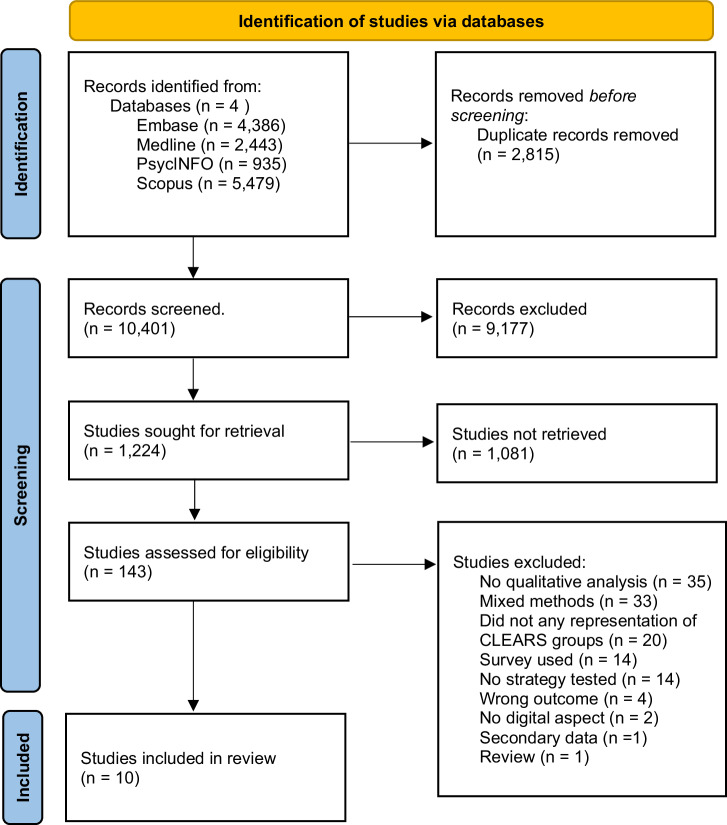
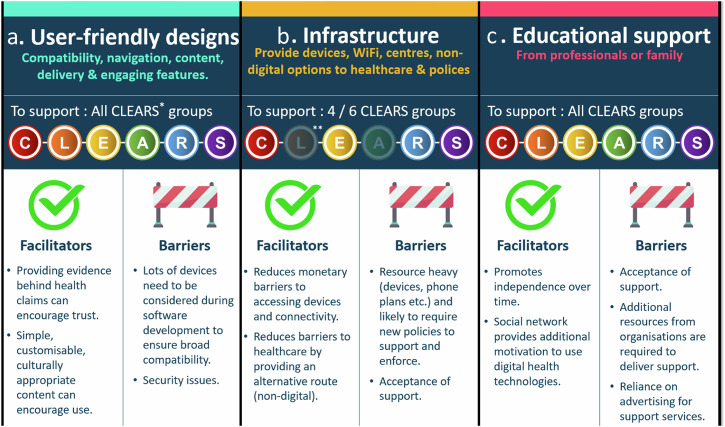
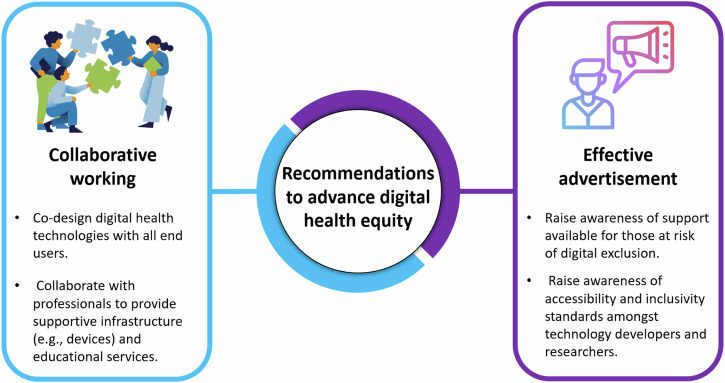
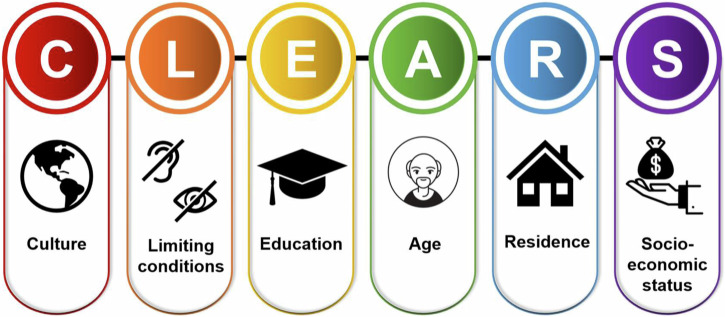
The World Health Organisation advocates Digital Health Technologies (DHTs) for advancing population health, yet concerns about inequitable outcomes persist. Differences in access and use of DHTs across different demographic groups can contribute to inequities. Academics and policy makers have acknowledged this issue and called for inclusive digital health strategies. This systematic review synthesizes literature on these strategies and assesses facilitators and barriers to their implementation. We searched four large databases for qualitative studies using terms relevant to digital technology, health inequities, and socio-demographic factors associated with digital exclusion summarised by the CLEARS framework (Culture, Limiting conditions, Education, Age, Residence, Socioeconomic status). Following the PRISMA guidelines, 10,401 articles were screened independently by two reviewers, with ten articles meeting our inclusion criteria. Strategies were grouped into either outreach programmes or co-design approaches. Narrative synthesis of these strategies highlighted three key themes: firstly, using user-friendly designs, which included software and website interfaces that were easy to navigate and compatible with existing devices, culturally appropriate content, and engaging features. Secondly, providing supportive infrastructure to users, which included devices, free connectivity, and non-digital options to help access healthcare. Thirdly, providing educational support from family, friends, or professionals to help individuals develop their digital literacy skills to support the use of DHTs. Recommendations for advancing digital health equity include adopting a collaborative working approach to meet users’ needs, and using effective advertising to raise awareness of the available support. Further research is needed to assess the feasibility and impact of these recommendations in practice.
Overview
The claims and statistics of this paper haven’t been checked yet.
Free: it reads the open-access text and checks the first 5 claims that cite a source we can check. Create a free account to check every claim.
Integrity signals
Registry
Cites
Statistics
Figures
Verification
Claims the paper makes
The claims and statistics of this paper haven’t been checked yet.
Free: it reads the open-access text and checks the first 5 claims that cite a source we can check. Create a free account to check every claim.
Self-check
Percentages, sums and reported differences re-computed from the paper’s own numbers.
The self-check needs the paper’s full text.
Citations
Cites
The PRISMA 2020 Statement: An Updated Guideline for Reporting Systematic Reviews
Page, M. J., McKenzie, J. E., Bossuyt, P. M., Boutron, I., Hoffmann, T. C., Mulrow, C. D., Shamseer, L., Tetzlaff, J. M., Akl, E. A., Brennan, S. E., et al. (2021) · International Journal of Surgery · doi:10.1016/j.ijsu.2021.105906 · Cited by 11,748
The Triple Aim: Care, Health, And Cost
Berwick, D. M., Nolan, T. W., & Whittington, J. (2008) · Health Affairs · doi:10.1377/hlthaff.27.3.759 · Cited by 5,136 · cited 2×
“TheInterventioncriteriafocusedoninclusivedigitalhealthstrategies,which wede fi ned as an action designed to alleviate the digital exclusion of individuals by promoting access, motivation, and/or use of information and communication technologies 2 – 5 .”
BackgroundMethodSystematic reviews: CRD's guidance for undertaking reviews in health care
Tacconelli, E. (2010) · The Lancet Infectious Diseases · doi:10.1016/s1473-3099(10)70065-7 · Cited by 3,245 · cited 1×
“The eligibility criteria followed the Population, Intervention, Comparison, Outcomes and Study design (PICOS) framework, recommended by the Cochrane Handbook for Systematic Reviews 69 , and provided an organising framework to list the main concepts in the search.”
MethodPope, C., & Mays, N. (1995) · BMJ · doi:10.1136/bmj.311.6996.42 · Cited by 2,336
Quick Assessment of Literacy in Primary Care: The Newest Vital Sign
Weiss, B. D. (2005) · The Annals of Family Medicine · doi:10.1370/afm.405 · Cited by 2,215 · cited 2×
“Futureresearchshouldincorporateastandardised healthliteracymeasure,suchastheNewestVitalSign(NVS) 44 ortheHealth Literacy Questionnaire (HLQ) 45 , into their methodology to provide greater detail on the participants in their study.”
BackgroundMethodQualitative methods: what are they and why use them?
Sofaer, S. (1999) · PubMed Central · Cited by 1,542
National Institute for Health Research
Evans, R. (2014) · Nursing Standard · doi:10.7748/ns.28.49.32.s37 · Cited by 1,350
Osborne, R. H., Batterham, R. W., Elsworth, G. R., Hawkins, M., & Buchbinder, R. (2013) · BMC Public Health · doi:10.1186/1471-2458-13-658 · Cited by 1,334 · cited 2×
“Futureresearchshouldincorporateastandardised healthliteracymeasure,suchastheNewestVitalSign(NVS) 44 ortheHealth Literacy Questionnaire (HLQ) 45 , into their methodology to provide greater detail on the participants in their study.”
BackgroundMethodResearch co-design in health: a rapid overview of reviews
Slattery, P., Saeri, A. K., & Bragge, P. (2020) · Health Research Policy and Systems · doi:10.1186/s12961-020-0528-9 · Cited by 1,313 · cited 2×
“The wider literature also suggests co-designing DHTs with underserved groups at the earlieststagesto helpensurethattheymeettheneedsofall end-users 30 .”
BackgroundCan Cultural Competency Reduce Racial and Ethnic Health Disparities? A Review and Conceptual Model
Brach, C., & Fraserirector, I. (2000) · Medical Care Research and Review · doi:10.1177/1077558700057001s09 · Cited by 1,160
Research works printed but not linked: 4
- 8. Honeyman, M., Maguire, D., Evans, H. & Davies, A. Digital technology and health inequalities: a scoping review (Public Health Wales NHS Trust, 2020).
- 59. Holgersson, J. & Söderström, E. Bridging the gap: Exploring elderly citizens' perceptions of digital exclusion. In 27th European Conference on Information Systems (ECIS) (Association for Information Systems, 2019).
- 66. Ofcom. Digital exclusion: A review of Ofcom's research on digital exclusion among adults in the UK. URL: https://www.ofcom.org.uk/__ data/assets/pdf_file/0022/234364/digital-exclusion-review-2022. pdf (2022).
- 74. Wertz, F. J. Five ways of doing qualitative analysis: Phenomenological psychology, grounded theory, discourse analysis, narrative research, and intuitive inquiry, 228 (Guilford Press, 2011).
Cited by
Items 101–141 of 141
Digital health equity among older adult(s): a conceptual analysis
Guo, X., Cao, J., Huang, M., Tongyu, T., Haishan, Q. U. A. N., Li, C., & Shen, X. (2026) · Frontiers in Public Health · doi:10.3389/fpubh.2026.1891578 · Cited by 1
Sul, A.-R., Lee, E. S., Ju, J., Seo, S., Jo, M., & Oh, I. (2026) · Digital Health · doi:10.1177/20552076261467833
Wang, F., Zhu, R., Sui, X., Jiang, J., Zhang, T., Xu, Z., & Iqbal, G. (2026) · Frontiers in Public Health · doi:10.3389/fpubh.2026.1842444 · Cited by 1
“The existing health disparities will expand because the most vulnerable groups cannot access essential benefits due to their lack of broadband access, electronic skills and ability to use technology (82, 85, 88, 89).”
InfluentialBodger, K., Taylor, F., Rai, P., Dobson, L., Bunn, J., Grainger, S. L., Cummings, F. J. R., Bloom, S. L., & Kennedy, N. A. (2026) · European Journal of Gastroenterology & Hepatology · doi:10.1097/meg.0000000000003220
“Digital exclusion is reported to be associated with lower socioeconomic status [25], but our online survey included 592 people (10”
Queirós, C., & Neves, H. L. (2026) · International Journal of Orthopaedic and Trauma Nursing · doi:10.1016/j.ijotn.2026.101302
Marchal, T., Rousseau, C. F., Lesage, R., Frangi, A. F., & Geris, L. (2026) · Springer eBooks · doi:10.1007/978-3-032-09180-2_7 · Cited by 1
A Systematic Literature Review on Digital Financial Literacy amongst Women in IndiaPreprint
Yu, Z. (2026) · SSRN Electronic Journal · doi:10.2139/ssrn.7208573
Diagnosing at a distance: How telemedicine impacts the diagnostic process
Giardina, T. D., Shahid, U., Cholankeril, R. T., Lindsay, J. A., Singh, H., & Murphy, D. R. (2026) · Journal of Telemedicine and Telecare · doi:10.1177/1357633x261466000
Reytor-González, C., Román-Galeano, N. M., Jimenez, J. C. C., Oentiono, O. Y., Yoong, W. A., Montalván, M., & Simancas‐Racines, D. (2026) · Frontiers in Nutrition · doi:10.3389/fnut.2026.1844337 · Cited by 1
Spiller, M., Dassen, L., Mesken, T., Pinnock, H., Balzer, F., Piper, S. K., & Metting, E. (2026) · doi:10.2196/preprints.108854
Hari, H. M., Robinson, A., & Husband, A. (2026) · PLOS Global Public Health · doi:10.1371/journal.pgph.0006809
“The identified challenge of digital illiteracy [57] was also paired with a practical solution involving a family member to assist elderly or illiterate patients, providing a clear implementation pathway for addressing systemic barriers in a scalable manner.”
Rehman, K., & Akash, M. S. H. (2026) · Elsevier eBooks · doi:10.1016/b978-0-443-45911-5.00005-2
Mili, S., Ennouri, R., Agrebi, S., Romdhane, N., & Laouar, H. (2026) · CABI One Health · doi:10.1079/cabionehealth.2026.0024
Chen, S., Lian, J., Hu, W., Wang, T., & Cao, Y. (2026) · Frontiers in Public Health · doi:10.3389/fpubh.2026.1922940
“Consequently, it is generally regarded as a dynamic process involving both individual decision-making and social interaction (19, 20).”
Shen, X., Luo, Y., Yang, C., Xu, O., Wei, Y., Ma, Q., & Cao, J. (2026) · Frontiers in Public Health · doi:10.3389/fpubh.2026.1883493 · Cited by 1
Li, S., Li, Z., Chen, C., Chen, W., Du, W., & Yao, X. (2026) · Frontiers in Digital Health · doi:10.3389/fdgth.2026.1883026
“This “equity as an afterthought” pattern reflects a deeper epistemological bias: the field treats equity as a moderating variable to be checked post-hoc, rather than a core analytical lens from the outset (82, 93).”
InfluentialBarak, M., Biezen, R., & Lau, A. Y. (2026) · Applied Clinical Informatics · doi:10.1055/a-2950-6345
“22 , 45 From a theoretical perspective, this reflects the importance of compatibility within DOI theory, as digital systems must align with existing clinical workflows and organizational processes.”
Wang, X., & Lu, J. (2026) · Frontiers in Public Health · doi:10.3389/fpubh.2026.1937335
“…people with low digital literacy, rural residents, people with disabilities, low-income groups, and linguistic minorities may face barriers related to device and network access, identity authentication, platform complexity, language accessibility, and health information comprehension (1–3, 12, 13).”
Al-Fahd, S., Al-Khalifa, N., & Al-Turki, O. (2026) · International Journal of Social and Psychological Aspects of Healthcare · doi:10.51847/jo05xcgg7j
Boxall, C., Bishop, F. L., Alwan, N. A., Treweek, S., Griffiths, G. O., McGavin, J., Thorp, J., Mateen, N., & Bradbury, K. J. (2026) · Research Square · doi:10.21203/rs.3.rs-10974675/v1
Youssef, S. B., Trabelsi, A., Boudiaf, K., & Jebali, N. (2026) · International Journal of Social and Psychological Aspects of Healthcare · doi:10.51847/rbtnl43pfm
Smet, W. D., Dam, L. V., & Janssens, P. (2026) · International Journal of Social and Psychological Aspects of Healthcare · doi:10.51847/rypziper4h
Ferraro, L., Ricci, M., (1560388), G. M., & Greco, P. (2026) · International Journal of Social and Psychological Aspects of Healthcare · doi:10.51847/y6k4voyzee
Wang, M., Chen, L., Yin, M., Zhang, B., Wu, J., Sun, H., Yan, L., Wei, B., Zhang, F., Bi, C., et al. (2026) · Frontiers in Physiology · doi:10.3389/fphys.2026.1883295
“…and end users should also participate in needs de fi nition and implementation evaluation to ensure that the system is not merely technically feasible, but can be genuinely embedded within the real-world work fl ows of different regions and populations (Lekadir et al., 2024; Wilson et al., 2024).”
InfluentialYang, Y., Wu, Y., Wu, Z., Wu, Y., Zhang, Z., & Li, Y. (2026) · Journal of Medical Internet Research · doi:10.2196/95921
“…a higher risk of digital exclusion, alternative pathways, including professional guidance, digital navigation support, in-person assistance, or other nondigital service options, should be considered to avoid making family support an implicit prerequisite for accessing digital health services [72].”
Mannheim, I., Urbaniak, A., White, E. B., Karadkar, U. P., Klincewicz, K., Kucharski, A. B., Reuter, A., Ribeiro, R. T., van Staalduinen, W. H., White, P. J., et al. (2026) · The Gerontologist · doi:10.1093/geront/gnag229
“Where gender was discussed, the information was sometimes relegated to Supplementary Material (e.g., Fischer et al., 2020; Wilson et al., 2024), limiting accessibility and interpretability.”
InfluentialEl-Gamal, S. A. M., Alalawi, R., Hantira, N. Y., Alsulami, R., Abdulsubhan, S., Abutaleb, D., Althobaiti, B., Binzagr, R., Almehmadi, S., & Alqhtani, D. (2026) · Frontiers in Digital Health · doi:10.3389/fdgth.2026.1887874
Le, J., Li, X.-X., & Qin, S.-L. (2026) · Digital Health · doi:10.1177/20552076261494727
Weber, T., Rossi, E., Boateng, K., & Chen, L. (2026) · Asian Journal of Ethics in Health and Medicine · doi:10.51847/ronmpcdzoy
Ren, K., Li, S., Li, L., Xiang, Y., Yang, X., Zhao, Q., & Huanhuan, H. (2026) · Frontiers in Public Health · doi:10.3389/fpubh.2026.1912591
“In the context of digital health, health equity concerns not only equitable access to conventional healthcare resources but also whether different populations are able to access, use, and benefit from digital resources according to their health needs (20–22).”
Akıncı, H., & DALKILIÇ, S. (2026) · Frontiers in Public Health · doi:10.3389/fpubh.2026.1958637
“This is also consistent with recent literature emphasising that achieving equity in digital health requires not only user-friendly design but also supportive infrastructures, non-digital alternatives, and human assistance (31).”
Lumsdon, J., Ardle, R. M., Hanrahan, M., Keogh, A., Wilson, C. J. G., Arieh, T. G., Noyce, A. J., Bhadra, E., Graeber, J., Hulst, L., et al. (2026) · Journal of Parkinson s Disease · doi:10.1177/1877718x261494917
“33 37”
Berg, J., Tan, M., Kim, H., & Weber, T. (2026) · Annals of Pharmacy Education Safety and Public Health Advocacy · doi:10.51847/vu3hpxf8ne
Fan, Q., Li, Z., Sun, Y., Liu, Y., & Chen, H. (2026) · Frontiers in Bioengineering and Biotechnology · doi:10.3389/fbioe.2026.1964825
“Fairness is relevant because advanced imaging and connected-device data may be less accessible to underserved populations (Wilson et al., 2024).”
Wang, F., Qiao, H., Wu, Y., He, X., & Ying, L. (2026) · Frontiers in Public Health · doi:10.3389/fpubh.2026.1883085
Peng, M., & Feng, L. (2026) · Frontiers in Public Health · doi:10.3389/fpubh.2026.1986759
Dahiya, R., & Patel, B. (2026) · Newborn · doi:10.5005/jp-journals-11002-0172
Liu, L., Onega, T., Moen, E. L., Tosteson, A. N. A., Smith, R. E., Wang, Q., Cowan, L., & Wang, F. (2026) · JMIR Medical Informatics · doi:10.2196/95370
Luo, X., Qiu, X., Shi, Y., & Guan, H. (2026) · Healthcare · doi:10.3390/healthcare14213644
Ying, L. (2026) · Frontiers in Public Health · doi:10.3389/fpubh.2026.1978109
Hanrahan, M., Lumsdon, J., Wilson, C., Bhadra, E., Keogh, A., Arieh, T. G., Noyce, A. J., Yarnall, A. J., Rochester, L. S., Ardle, R. M., et al. (2026) · Journal of Medical Internet Research · doi:10.2196/98987
“…exclusion in health care, as guided by the culture, limiting conditions, education, age, residence, and socioeconomic status (CLEARS) framework [28]: people from rural or socioeconomically deprived areas, those with lower levels of formal education, ethnic minority communities, and those with…”
Influential
Metadata
- Authors
- Wilson, S., Tolley, C., Mc Ardle, R., Lawson, L., Beswick, E., Hassan, N., Slight, R., & Slight, S.
- Affiliations
- Newcastle University (GB)
- Trinity College Dublin (IE)
- Newcastle upon Tyne Hospitals NHS Foundation Trust (GB)
- Corresponding author
- Slight, Sarah
- Venue
- npj Digital Medicine
- Published
- 2024-06-29
- Volume
- 7
- Issue
- 1
- Pages
- 173-173
- ISSN
- 2398-6352 (ISSN-L)
- PMC
- PMC11217442
- OpenAlex
- W4400198733
- Cited by
- 139
- References
- 54
- Citations by year
- 2026: 80 · 2025: 53 · 2024: 6
- FWCI
- 14.40
- Type
- journal article
- Language
- en
- Open access
- gold
- doi.org
- Licence
- cc-by
- creativecommons.org/licenses/by/4.0 (tdm)
- creativecommons.org/licenses/by/4.0 (vor)
- Locations
- npj Digital Medicine (publishedVersion, cc-by)
- PubMed Central (publishedVersion, cc-by)
- PubMed (publishedVersion)
- DOAJ (DOAJ: Directory of Open Access Journals) (submittedVersion, cc-by-sa)
- Newcastle University ePrints (Newcastle Univesity) (cc-by)
- Funders
- Alzheimer’s Research UK
- DH | National Institute for Health Research (NIHR205190, NIHR 301677)
- Topics
- Health Sciences › Medicine › Geriatrics and Gerontology › Technology Use by Older Adults
- Health Sciences › Health Professions › General Health Professions › Health Literacy and Information Accessibility
- Physical Sciences › Computer Science › Information Systems › ICT in Developing Communities
- Keywords
- digital health equity, digital divide, digital exclusion, health disparities, co-design, user-friendly design, digital literacy, outreach programmes, socioeconomic status, barriers to digital health adoption, free internet access
About these checks
Registry, retraction, Cites and statistics results are computed, not judged, with one exception: a printed reference that no index lists is read once by a model before it counts as a citation error. Claims are extracted by a model and kept only when their quote appears verbatim in the text; each cited source is then checked, with a model’s help, for whether it says what the claim relies on. Those verdicts can be wrong — read the claim’s quote and the cited source before relying on one.
Statistics and arithmetic are recomputed, not judged.
Confidence bands are shown only for fields calibrated on our annotated test set. None is calibrated yet, so no band is shown.
What counts as a claim ›How we measure confidence ›How we check this ›
Are you an author, or do you see a problem with this page? Request a review
Data sources
Bibliographic data: Semantic Scholar, OpenAlex, Crossref.
Contains information from the Semantic Scholar Academic Graph Datasets, made available under the ODC Attribution License (ODC-BY 1.0).
Semantic Scholar’s data is described in: Kinney, R., et al. (2023). The Semantic Scholar Open Data Platform. arXiv:2301.10140.
