

Hidden flaws behind expert-level accuracy of multimodal GPT-4 vision in medicine
Open accessThe DOI matches its Crossref record; 23 of the 23 references it cites were found in a registry or an index.
Abstract
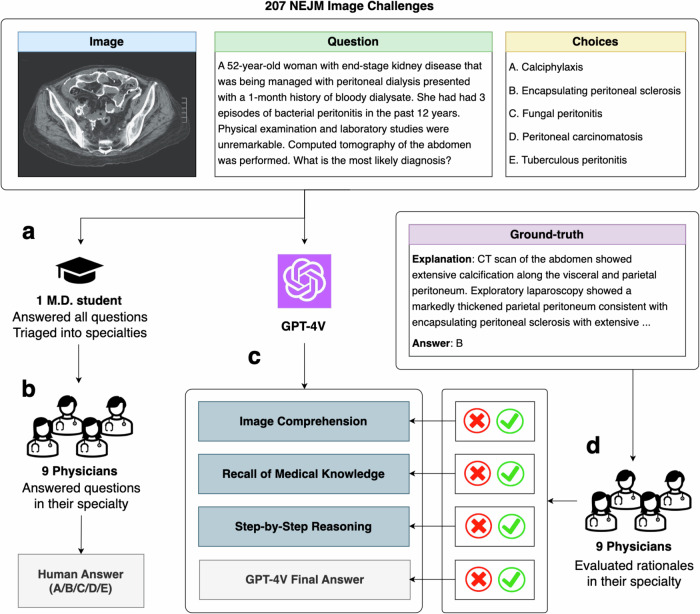
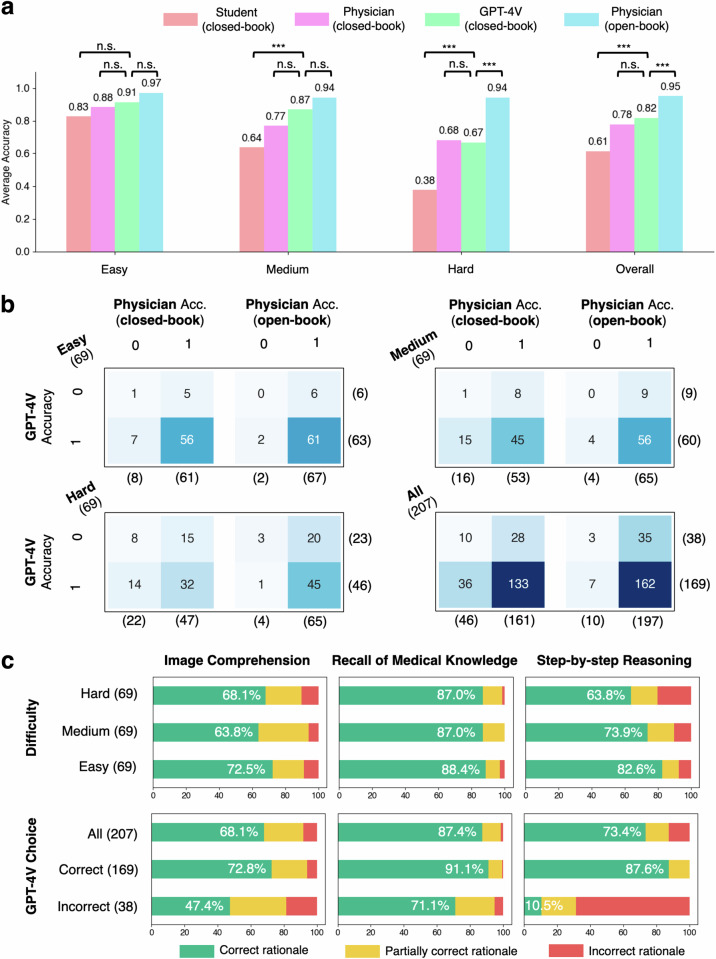
Recent studies indicate that Generative Pre-trained Transformer 4 with Vision (GPT-4V) outperforms human physicians in medical challenge tasks. However, these evaluations primarily focused on the accuracy of multi-choice questions alone. Our study extends the current scope by conducting a comprehensive analysis of GPT-4V’s rationales of image comprehension, recall of medical knowledge, and step-by-step multimodal reasoning when solving New England Journal of Medicine (NEJM) Image Challenges—an imaging quiz designed to test the knowledge and diagnostic capabilities of medical professionals. Evaluation results confirmed that GPT-4V performs comparatively to human physicians regarding multi-choice accuracy (81.6% vs. 77.8%). GPT-4V also performs well in cases where physicians incorrectly answer, with over 78% accuracy. However, we discovered that GPT-4V frequently presents flawed rationales in cases where it makes the correct final choices (35.5%), most prominent in image comprehension (27.2%). Regardless of GPT-4V’s high accuracy in multi-choice questions, our findings emphasize the necessity for further in-depth evaluations of its rationales before integrating such multimodal AI models into clinical workflows.
Overview
The claims and statistics of this paper haven’t been checked yet.
Free: it reads the open-access text and checks the first 5 claims that cite a source we can check. Create a free account to check every claim.
Integrity signals
Registry
Cites
Statistics
Figures
Verification
Claims the paper makes
The claims and statistics of this paper haven’t been checked yet.
Free: it reads the open-access text and checks the first 5 claims that cite a source we can check. Create a free account to check every claim.
Claims other papers make about this one
Each is checked against this paper’s own text: does it say what the citing paper says it does?
The cited source says what the claim attributes to it.
In the citing paper
“Recent studies on GPT-4V’s performance on medical multiple-choice questions demonstrated that despite the impressive results of models on multiple-choice questions, the rationale behind correct answers is flawed in a significant percentage of cases39.”
From Large Language Models lack essential metacognition for reliable medical reasoning (2025) · cites this paper as [39]
The cited source says what the claim attributes to it.
In the citing paper
“However, the current capabilities of LLMs, including advanced models like GPT-4V, remain limited in their understanding and processing of medical images56,57”
From A large language model digital patient system enhances ophthalmology history taking skills (2025) · cites this paper as [56]
The cited source says what the claim attributes to it.
In the citing paper
“AI-powered diagnoses33 are not yet perfected,34 and there is an ongoing discussion as to their use.35–39”
From Clinical AI Scribes in primary care: accuracy, error severity and implications for clinical practice (2025) · cites this paper as [34]
Self-check
Percentages, sums and reported differences re-computed from the paper’s own numbers.
The self-check needs the paper’s full text.
Citations
Cites
Large language models encode clinical knowledge
Singhal, K., Azizi, S., Tu, T., Mahdavi, S. S., Wei, J., Chung, H. W., Scales, N., Tanwani, A., Cole-Lewis, H., Pfohl, S., et al. (2023) · Nature · doi:10.1038/s41586-023-06291-2 · Cited by 4,083 · cited 4×
“These re fl ect the multimodal nature of the task as well as the commonly evaluated capabilities for text-only LLMs 6,8 .”
BackgroundInfluentialLarge Language Models Encode Clinical Knowledge
Singhal, K., Azizi, S., Tu, T., Mahdavi, S. S., Wei, J., Chung, H. W., Scales, N., Tanwani, A., Cole-Lewis, H., Pfohl, S., et al. (2022) · arXiv · doi:10.48550/arxiv.2212.13138 · Cited by 4,083 · cited 4×
“These re fl ect the multimodal nature of the task as well as the commonly evaluated capabilities for text-only LLMs 6,8 .”
BackgroundInfluentialAcosta, J. N., Falcone, G. J., Rajpurkar, P., & Topol, E. J. (2022) · Nature Medicine · doi:10.1038/s41591-022-01981-2 · Cited by 1,365
Capabilities of GPT-4 on Medical Challenge Problems
Nori, H., King, N., McKinney, S. M., Carignan, D., & Horvitz, E. (2023) · arXiv · doi:10.48550/arxiv.2303.13375 · Cited by 509 · cited 1×
“…fi ed by generative pre-trained transformer 4 (GPT-4) 1 have achieved remarkable performance on various biomedical tasks 2 , including summarizing medical evidence 3 , assisting in literature search 4,5 , answering medical examination questions 6 – 9 , andmatchingpatientstoclinicaltrials 10 .”
BackgroundEvaluating large language models on medical evidence summarization
Tang, L., Sun, Z., Idnay, B., Nestor, J. G., Soroush, A., Elias, P. A., Xu, Z., Ding, Y., Durrett, G., Rousseau, J. F., et al. (2023) · npj Digital Medicine · doi:10.1038/s41746-023-00896-7 · Cited by 423
Self-citationEvaluating Large Language Models on Medical Evidence Summarization
Tang, L., Sun, Z., Idnay, B., Nestor, J. G., Soroush, A., Elias, P. A., Xu, Z., Ding, Y., Durrett, G., Rousseau, J., et al. (2023) · doi:10.1101/2023.04.22.23288967 · Cited by 423
Self-citationOpportunities and Challenges for ChatGPT and Large Language Models in Biomedicine and Health
Tian, S., Jin, Q., Yeganova, L., Lai, P.-T., Zhu, Q., Chen, X., Yang, Y., Chen, Q., Kim, W., Comeau, D. C., et al. (2023) · Briefings in Bioinformatics · doi:10.1093/bib/bbad493 · Cited by 359
Self-citationCan large language models reason about medical questions?
Liévin, V., Hother, C. E., Motzfeldt, A. G., & Winther, O. (2024) · Patterns · doi:10.1016/j.patter.2024.100943 · Cited by 343 · cited 1×
“These re fl ect the multimodal nature of the task as well as the commonly evaluated capabilities for text-only LLMs 6,8 .”
BackgroundCan large language models reason about medical questions?
Liévin, V., Hother, C. E., Motzfeldt, A. G., & Winther, O. (2022) · arXiv · doi:10.48550/arxiv.2207.08143 · Cited by 343 · cited 1×
“These re fl ect the multimodal nature of the task as well as the commonly evaluated capabilities for text-only LLMs 6,8 .”
BackgroundMatching Patients to Clinical Trials with Large Language Models
Jin, Q., Wang, Z., Floudas, C. S., Chen, F., Gong, C., Bracken-Clarke, D., Xue, E., Yang, Y., Sun, J., & Lu, Z. (2023) · arXiv · doi:10.48550/arxiv.2307.15051 · Cited by 287 · cited 1×
“…fi ed by generative pre-trained transformer 4 (GPT-4) 1 have achieved remarkable performance on various biomedical tasks 2 , including summarizing medical evidence 3 , assisting in literature search 4,5 , answering medical examination questions 6 – 9 , andmatchingpatientstoclinicaltrials 10 .”
BackgroundSelf-citation
Cited by
Performance of a large language model on the reasoning tasks of a physician
Brodeur, P. G., Buckley, T. A., Kanjee, Z., Goh, E., Ling, E., Jain, P., Cabral, S., Abdulnour, R.-E. E., Haimovich, A. D., Freed, J. A., et al. (2026) · Science · doi:10.1126/science.adz4433 · Cited by 231
Large Language Models lack essential metacognition for reliable medical reasoning
Griot, M., Hemptinne, C., Vanderdonckt, J., & Yuksel, D. (2025) · Nature Communications · doi:10.1038/s41467-024-55628-6 · Cited by 172
“Recent studies on GPT-4V ’ s performance on medical multiple-choice questions demonstrated that despite the impressive results of models on multiple-choice questions, the rationale behind correctanswersis fl awedinasigni fi cantpercentageofcases 39 .”
Towards Injecting Medical Visual Knowledge into Multimodal LLMs at Scale
Chen, J., Gui, C., Ouyang, R., Gao, A., Chen, S., Chen, G. H., Wang, X., Cai, Z., Ji, K., Wan, X., et al. (2024) · Proceedings of the 2024 Conference on Empirical Methods in Natural Language Processing · doi:10.18653/v1/2024.emnlp-main.418 · Cited by 74
Small language models learn enhanced reasoning skills from medical textbooks
Kim, H., Hwang, H., Lee, J., Park, S., Kim, D., Lee, T., Yoon, C., Sohn, J., Park, J., Reykhart, O., et al. (2025) · npj Digital Medicine · doi:10.1038/s41746-025-01653-8 · Cited by 59
The evaluation illusion of large language models in medicine
Agrawal, M., Chen, I. Y., Gulamali, F., & Joshi, S. D. (2025) · npj Digital Medicine · doi:10.1038/s41746-025-01963-x · Cited by 115
Liu, M., Okuhara, T., Dai, Z., Huang, W., Gu, L., Okada, H., Furukawa, E., & Kiuchi, T. (2025) · International Journal of Medical Informatics · doi:10.1016/j.ijmedinf.2024.105673 · Cited by 73
Huppertz, M., Siepmann, R. M., Topp, D., Nikoubashman, O., Yüksel, C., Kuhl, C. K., Truhn, D., & Nebelung, S. (2024) · European Radiology · doi:10.1007/s00330-024-11115-6 · Cited by 78
Suh, P. S., Shim, W. H., Suh, C. H., Heo, H., Park, K. J., Kim, P. H., Choi, S. J., Ahn, Y., Park, S., Park, H. Y., et al. (2024) · Radiology · doi:10.1148/radiol.241668 · Cited by 62
Artificial intelligence-driven transformative applications in disease diagnosis technology
Zhou, J., Park, S., Dong, S., Tang, X., & Wei, X. (2025) · Medical Review · doi:10.1515/mr-2024-0097 · Cited by 56
Ahn, S. (2024) · The Korean Journal of Physiology & Pharmacology · doi:10.4196/kjpp.2024.28.5.393 · Cited by 51
Schramm, S., Preis, S., Metz, M., Jung, K., Schmitz‐Koep, B., Zimmer, C., Wiestler, B., Hedderich, D. M., & Kim, S. H. (2025) · Radiology · doi:10.1148/radiol.240689 · Cited by 57
Chen, Y., Huang, X., Yang, F., Lin, H., Lin, H., Zheng, Z., Liang, Q., Zhang, J., & Li, X. (2024) · BMC Medical Education · doi:10.1186/s12909-024-06309-x · Cited by 50
Evaluating the robustness and readiness of large frontier models in health AI applications
池谷, 裕., Fu, J., Liu, X., Valanarasu, J. M. J., Codella, N., Tan, R., Liu, Q., Jin, Y., Zhang, S., Wang, J., et al. (2026) · Nature Medicine · doi:10.1038/s41591-026-04501-8 · Cited by 60
Multimodal foundation models exploit text to make medical image predictions
Buckley, T. A., Diao, J. A., Srivastava, C. N., Brodeur, P. G., Rajpurkar, P., Rodman, A. M., & Manrai, A. K. (2026) · Nature Communications · doi:10.1038/s41467-026-74207-5 · Cited by 17
ClinicalBench: Can LLMs Beat Traditional ML Models in Clinical Prediction?
Chen, C., Yu, J., Chen, S., Liu, C., Wan, Z., Zhou, S., Luo, Y., Zhang, R., Bitterman, D., Wang, F., et al. (2026) · ACM SIGKDD Conference on Knowledge Discovery and Data Mining (KDD) · doi:10.1145/3770855.3818831 · Cited by 54
Liu, S., Wright, A. P., McCoy, A. B., Huang, S. S., Steitz, B., & Wright, A. (2025) · Journal of the American Medical Informatics Association · doi:10.1093/jamia/ocaf059 · Cited by 44
“44 Moreover, LLMs may occasionally produce correct answers while relying on flawed reasoning processes.”
Unveiling GPT-4V's hidden challenges behind high accuracy on USMLE questions: Observational Study
Yang, Z., Yao, Z., Tasmin, M., Vashisht, P., Jang, W. S., Ouyang, F., Wang, B., McManus, D. D., Berlowitz, D. R., & Yu, H. Q. (2025) · Journal of Medical Internet Research · doi:10.2196/65146 · Cited by 51
“For GPT-4V to be useful to medical professionals, it should not only provide correct responses but also offer accurate explanations for its reasoning, especially in complex multimodal clinical scenarios [28].”
Hassanein, F. E. A., Ahmed, Y., Maher, S., Barbary, A. E., & Abou‐Bakr, A. (2025) · Scientific Reports · doi:10.1038/s41598-025-22979-z · Cited by 44
A review of ophthalmology education in the era of generative artificial intelligence
Heinke, A., Radgoudarzi, N., Huang, B. B., & Baxter, S. L. (2024) · Asia-Pacific Journal of Ophthalmology · doi:10.1016/j.apjo.2024.100089 · Cited by 49
Self-citationA large language model digital patient system enhances ophthalmology history taking skills
Luo, M.-J., Bi, S., Pang, J., Liu, L., Tsui, C.-K., Lai, Y., Chen, W., Yang, Y., Xu, K., Zhao, L., et al. (2025) · npj Digital Medicine · doi:10.1038/s41746-025-01841-6 · Cited by 39
“However,thecurrentcapabilitiesofLLMs,includingadvancedmodelslikeGPT-4V,remainlimitedintheirunderstandingandprocessingofmedical images 56,57 ,makingithardforcurrentLLMstomimichumanphysicianwho is capable of simultaneously good at verbal communication and guiding medical students in disease image…”
Self-citationBioinformatics and biomedical informatics with ChatGPT: Year one review
Wang, J., Cheng, Z., Yao, Q., Liu, L., Xu, D. H., & Hu, G. (2024) · Quantitative Biology · doi:10.1002/qub2.67 · Cited by 42
Multi-modal large language models in radiology: principles, applications, and potential
Shen, Y.-Q., Xu, Y.-Q., Ma, J.-J., Rui, W.-S., Zhao, C., Heacock, L., & Huang, C.-C. (2024) · Abdominal Radiology · doi:10.1007/s00261-024-04708-8 · Cited by 34
“MLLMs, such as Med-PaLM2, have shown capabilities on par with medical experts in USMLE-style medical Q&A, offering insightful explanations [43, 101].”
A large language model for complex cardiology care
O’Sullivan, J. W., Palepu, A. K., Saab, K. K., Weng, W., Amponsah, D., Cheng, E., Cheng, Y., Chu, E. L., Desai, Y. B., Elezaby, A., et al. (2026) · Nature Medicine · doi:10.1038/s41591-025-04190-9 · Cited by 52
A perspective for adapting generalist AI to specialized medical AI applications and their challenges
Wang, Z., Wang, H., Danek, B. P., Li, Y., Mack, C. D., Arbuckle, L., Biswal, D., Poon, H., Wang, Y., Rajpurkar, P., et al. (2025) · npj Digital Medicine · doi:10.1038/s41746-025-01789-7 · Cited by 51
Self-citationEvaluation of GPT Large Language Model Performance on RSNA 2023 Case of the Day Questions
Mukherjee, P., Hou, B., Suri, A., Zhuang, Y., Parnell, C., Lee, N., Stroie, O. M., Jain, R. K., Wang, K. C., Sharma, K. K., et al. (2024) · Radiology · doi:10.1148/radiol.240609 · Cited by 33
Self-citationSiam, K., Varela, A., Faruk, M. J. H., Cheng, J. Q., Gu, H., Maruf, A. A., & Aung, Z. (2025) · Scientific Reports · doi:10.1038/s41598-025-31010-4 · Cited by 40
“More rigorous benchmarks have also emerged, including retrieval-augmented frameworks like MIRAGE 21 , contextual adaptation pipelines such as BriefContext 22 , analyses of visual-textual reasoning failures in GPT-4V 23 , and robustness evaluations such as VLDBench 24 .”
Sammour, F., Xu, J., Wang, X., Hu, M., & Zhang, Z. (2025) · Journal of Construction Engineering and Management · doi:10.1061/jcemd4.coeng-16639 · Cited by 41
Benchmarking Large Language Models on Answering and Explaining Challenging Medical Questions
Chen, H., Fang, Z., Singla, Y., & Dredze, M. (2025) · Proceedings of the 2025 Conference of the Nations of the Americas Chapter of the Association for Computational Linguistics: Human Language Technologies (Volume 1: Long Papers) · doi:10.18653/v1/2025.naacl-long.182 · Cited by 31
Automating expert-level medical reasoning evaluation of large language models
Zhou, S., Xie, W., Li, J., Zhan, Z., Song, M., Yang, H., Espinoza, C., Welton, L., Mai, X., Jin, Y., et al. (2025) · npj Digital Medicine · doi:10.1038/s41746-025-02208-7 · Cited by 30
“While this method aligns with the prevailing approaches to evaluating LLMs ’ medical capabilities and offers a coarse measurement 22,23 , it fails to capture the depth and validity of the reasoning process that underpins clinical decisions and cannot identify fl awed reasoning 24,25 .”
Self-citationGuellec, B. L., Bruge, C., Chalhoub, N., Chaton, V., Sousa, E. D., Gaillandre, Y., Hanafi, R., Masy, M., Vannod‐Michel, Q., Hamroun, A., et al. (2025) · Diagnostic and Interventional Imaging · doi:10.1016/j.diii.2025.04.006 · Cited by 31
Generative artificial intelligence: implications for biomedical and health professions education
Hersh, W. (2025) · Annual Review of Biomedical Data Science · doi:10.1146/annurev-biodatasci-103123-094756 · Cited by 28
Lyo, S. K., Mohan, S., Hassankhani, A., Noor, A., Dako, F., & Cook, T. S. (2024) · Journal of Imaging Informatics in Medicine · doi:10.1007/s10278-024-01233-4 · Cited by 26
Hou, B., Mukherjee, P., Batheja, V., Wang, K. C., Summers, R. M., & Lu, Z. (2025) · Radiology · doi:10.1148/radiol.250617 · Cited by 32
Self-citationYang, Y., Jin, Q., Zhu, Q., Wang, Z., Álvarez, F. E., Wan, N., Hou, B., & Lu, Z. (2025) · Annual Review of Biomedical Data Science · doi:10.1146/annurev-biodatasci-103123-094851 · Cited by 25
Self-citationZhu, Q., Chen, X., Jin, Q., Hou, B., Mathai, T. S., Mukherjee, P., Gao, X., Summers, R. M., & Lu, Z. (2024) · IEEE International Conference on Healthcare Informatics (ICHI) · doi:10.1109/ichi61247.2024.00058 · Cited by 28
Self-citationMultimodal Wearable Biosensing Meets Multidomain AI: A Pathway to Decentralized Healthcare
Liu, C., Fan, H., Kim, M., Zhou, T., Yang, P., Zhao, L., Wang, Y., Che, Z., Liu, C., Li, B., et al. (2026) · Advanced Science · doi:10.1002/advs.202522900 · Cited by 32
“Patients may still prefer human clinicians over AI advice, and acceptance may decline when algorithms influence treatment selection [ 208– 211 ].”
Benchmarking vision-language models for diagnostics in emergency and critical care settings
Kurz, C., Merzhevich, T., Eskofier, B. M., Kather, J. N., & Gmeiner, B. (2025) · npj Digital Medicine · doi:10.1038/s41746-025-01837-2 · Cited by 27
“Following Jin et al. 16 we categorized the challenges into three dif fi culty levels: “ easy ” for a 56 – 100% correctanswerrate, “ medium ” for45 – 55%, and “ hard ” for0 – 44%,basedon theproportionofcorrectanswersfromNEJMusers.”
Beyond Accuracy: Investigating Error Types in GPT-4 Responses to USMLE Questions
Roy, S., Khatua, A., Ghoochani, F., Hadler, U., Nejdl, W., & Ganguly, N. (2024) · Proceedings of the 47th International ACM SIGIR Conference on Research and Development in Information Retrieval · doi:10.1145/3626772.3657882 · Cited by 17
Auditing medical multi-agent AI reveals risks of false consensus
Zhu, Y., Gu, L., Wang, Z., Sang, H., Sui, D., Tang, W., Mi, L., Wang, Y., Gao, J., Yao, L., et al. (2025) · arXiv · doi:10.48550/arxiv.2510.10185 · Cited by 17
Unveiling the power of language models in chemical research question answering
Chen, X., Wang, T., Guo, T., Guo, K., Zhou, J., Li, H., Song, Z., Gao, X., & Zhang, X. (2025) · Communications Chemistry · doi:10.1038/s42004-024-01394-x · Cited by 36
Wan, Z., Guo, Y., Bao, S., Wang, Q., & Malin, B. (2025) · Health Data Science · doi:10.34133/hds.0256 · Cited by 19
Ethical and Regulatory Perspectives on Generative Artificial Intelligence in Pathology
Jackson, B. R., Rashidi, H. H., Lennerz, J. K., & de Baca, M. E. (2024) · Archives of Pathology & Laboratory Medicine · doi:10.5858/arpa.2024-0205-ra · Cited by 17
Gong, E. J., Bang, C. S., & Shin, Y. S. (2026) · Bioengineering · doi:10.3390/bioengineering13030365 · Cited by 19
“While multimodal vision-language models can process documents without separate optical character recognition (OCR) steps, current models still exhibit notable limitations requiring careful validation [45–47].”
The effect of medical explanations from large language models on diagnostic accuracy in radiology
Spitzer, P., Hendriks, D., Rudolph, J., Schlaeger, S., Ricke, J., Kühl, N., Hoppe, B. F., & Feuerriegel, S. (2026) · npj Digital Medicine · doi:10.1038/s41746-026-02619-0 · Cited by 21
Tutorial: guidance on the use of large language models for medical research
Jin, Q., Wan, N., Leaman, R., Tian, S., Wang, Z., Yang, Y., Wang, Z., Xiong, G., Lai, P.-T., Zhu, Q. L., et al. (2026) · Nature Protocols · doi:10.1038/s41596-026-01408-z · Cited by 16
Self-citationGPT-4 Vision: Multi-Modal Evolution of ChatGPT and Potential Role in Radiology
Javan, R., Kim, T., & Mostaghni, N. (2024) · Cureus · doi:10.7759/cureus.68298 · Cited by 26
“Similarly, a separate study found that GPT-4V scored similarly to physicians but was found to have a faulty rationale reaching the final answer in 35% of the questions it answered correctly [16].”
ResultPattern Recognition or Medical Knowledge? The Problem with Multiple-Choice Questions in Medicine
Griot, M., Vanderdonckt, J., Yuksel, D., & Hemptinne, C. (2024) · arXiv · doi:10.48550/arxiv.2406.02394 · Cited by 13
“This finding aligns with research demonstrating that models become less reliable as they scale up (Zhou et al., 2024).”
Demrozi, F., Farmanbar, M., & Engan, K. (2025) · Current Opinion in Biomedical Engineering · doi:10.1016/j.cobme.2025.100632 · Cited by 21
Ethical considerations for large language models in ophthalmology
Kalaw, F. G. P., & Baxter, S. L. (2024) · Current Opinion in Ophthalmology · doi:10.1097/icu.0000000000001083 · Cited by 15
“For example, GPT 4.0 has demonstrated including ophthalmology [52].”
InfluentialSelf-citationPattern Recognition or Medical Knowledge? The Problem with Multiple-Choice Questions in Medicine
Griot, M., Vanderdonckt, J., Yuksel, D., & Hemptinne, C. (2025) · Proceedings of the 63rd Annual Meeting of the Association for Computational Linguistics (Volume 1: Long Papers) · doi:10.18653/v1/2025.acl-long.266 · Cited by 13
“This finding aligns with research demonstrating that models become less reliable as they scale up (Zhou et al., 2024).”
Benchmarking Vision Capabilities of Large Language Models in Surgical Examination Questions
Bereuter, J., Geissler, M. E., Klimová, A., Steiner, R.-P., Pfeiffer, K., Kolbinger, F. R., Wiest, I. C., Muti, H. S., & Kather, J. N. (2025) · Journal of surgical education · doi:10.1016/j.jsurg.2025.103442 · Cited by 12
Utilizing GPT-4 to interpret oral mucosal disease photographs for structured report generation
Zhan, Z., Xiong, Y., Wang, C., Zhang, B., Lian, W., Zeng, Y.-M., Liu, W., Tang, W. D., & Liu, C. (2025) · Scientific Reports · doi:10.1038/s41598-025-89328-y · Cited by 12
“However, when tasked with interpreting images, GPT-4 encounters significant challenges, with its accuracy dropping to 27.2% 18 .”
InfluentialLi, L., Ma, J., Zou, B., Xu, H., Liao, S., Xiong, W., & Zhi, L. (2026) · Information Fusion · doi:10.1016/j.inffus.2026.104145 · Cited by 11
Towards Democratization of Subspeciality Medical ExpertisePreprint
O’Sullivan, J. W., Palepu, A. K., Saab, K. K., Weng, W., Cheng, Y., Chu, E. Y., Desai, Y. B., Elezaby, A., Kim, D. S., Lan, R., et al. (2024) · arXiv (Cornell University) · doi:10.48550/arxiv.2410.03741 · Cited by 13
Clinical AI Scribes in primary care: accuracy, error severity and implications for clinical practice
Draper, T. C., Cox, T., Lamb-Riddell, K., Moretti, L. A., McCormick, J., Trowell, S., Kiely, J., & Luxton, R. (2025) · BMJ Digital Health & AI · doi:10.1136/bmjdhai-2025-000092 · Cited by 10
HuatuoGPT-Vision, Towards Injecting Medical Visual Knowledge into Multimodal LLMs at Scale
Chen, J., Gui, C., Ouyang, R., Gao, A., Chen, S., Chen, G. H., Wang, X., Zhang, R., Cai, Z., Ji, K., et al. (2024) · arXiv · doi:10.48550/arxiv.2406.19280 · Cited by 10
How well do multimodal LLMs interpret CT scans? An auto-evaluation framework for analyses
Zhu, Q., Hou, B., Mathai, T. S., Mukherjee, P., Jin, Q., Chen, X., Wang, Z., Cheng, R., Summers, R. M., & Lu, Z. (2025) · Journal of Biomedical Informatics · doi:10.1016/j.jbi.2025.104864 · Cited by 14
Self-citationWang, B., Xia, I., Zhang, Y., Wang, J., Ouyang, F., Han, S., Cohan, A., Yu, H., & Yao, Z. (2025) · Conference on Empirical Methods in Natural Language Processing (EMNLP) · doi:10.18653/v1/2025.emnlp-main.548 · Cited by 24
RiskPath: Explainable deep learning for multistep biomedical prediction in longitudinal data
de Lacy, N., Ramshaw, M. J., & Lam, W. Y. (2025) · Patterns · doi:10.1016/j.patter.2025.101240 · Cited by 12
Xiong, Y., Lian, W., Sun, Y., Liu, W., Guo, J., Tang, W., & Liu, C. (2025) · Clinical Oral Investigations · doi:10.1007/s00784-025-06498-9 · Cited by 9
“A series of other studies have also indicated that GPT-4 demonstrates the ability to comprehend common medical images (such as chest radiographs, natural photographs, or pathological images) under zero-shot conditions, with accuracy rates ranging from 61.7–81.6% [ 23, 27, 28 ].”
InfluentialMeddeb, A., Rangus, I., Pagano, P., Dkhil, I., Jelassi, S., Bressem, K. K., Scheel, M., Wattjes, M. P., Nagi, S., Pierot, L., et al. (2025) · npj Digital Medicine · doi:10.1038/s41746-025-02047-6 · Cited by 12
“While initial studies have primarily assessed the diagnostic performance of VLMsinclosed medical visual question-answering tasks 17 , critical aspects such as the quality of generated differential diagnoses and the underlying reasoning remain underexplored 18 .”
Suh, P. S., Ko, J. S., Shim, W. H., Heo, H., Woo, C.-Y., Park, H., & Suh, C. H. (2026) · Korean Journal of Radiology · doi:10.3348/kjr.2025.1045 · Cited by 9
“These studies demonstrated that LLMs often fail to identify or describe key abnormalities in images when using publicly available open-source or real-world clinical data [8,15,16].”
SLaVA-CXR: Small Language and Vision Assistant for Chest X-ray Report AutomationPreprint
Wu, J., Kim, Y., Shi, D., Cliffton, D., Liu, F., & Wu, H. (2024) · arXiv (Cornell University) · doi:10.48550/arxiv.2409.13321 · Cited by 9
An Open-Source Clinical Case Dataset for Medical Image Classification and Multimodal AI Applications
Offidani, M. A. N., Roffet, F., Galtier, M. C. G., Massiris, M., & Delrieux, C. A. (2025) · Data · doi:10.3390/data10080123 · Cited by 12
Your other Left! Vision-Language Models Fail to Identify Relative Positions in Medical Images
Wolf, D., Hillenhagen, H., Taskin, B., Bäuerle, A., Beer, M., GOETZ, M. A., & Ropinski, T. (2025) · Lecture notes in computer science · doi:10.1007/978-3-032-04971-1_65 · Cited by 17
ChatGPT in Oral Pathology: Bright Promise or Diagnostic Mirage
Suárez, A., Freire, Y., García, V. D., Santamaría-Laorden, A., Pérez, J. O., Ajuria, M. S., Algar, J., & Carreras‐Presas, C. M. (2025) · Medicina · doi:10.3390/medicina61101744 · Cited by 7
“The discrepancy between specificity and sensitivity observed here is consistent with what has been seen in the broader field of multimodal diagnosis [37].”
Hassanein, F. E. A., Ibrahim, S. S. A., Tomo, S., Alsahhaf, A., & Abou‐Bakr, A. (2026) · Odontology · doi:10.1007/s10266-026-01380-w · Cited by 9
Bridging BioSciences and technology: The impact of AI & GenAI in life sciences and agribusiness
da Cunha, N. B., Fernandes, F. C., Gil-Ley, A., Franco, O. L., Timakondu, N., & Costa, F. F. (2025) · Gene · doi:10.1016/j.gene.2025.149623 · Cited by 8
Garcia, M. B., de Almeida, R. S., Acut, D. P., Almeida, R., Garcia, P. S., & Stefani, E. (2025) · IGI Global eBooks · doi:10.4018/979-8-3373-1519-5.ch005 · Cited by 9
Ren, B., Cheon, E., & Li, J. (2025) · Proceedings of the ACM on Human-Computer Interaction · doi:10.1145/3757641 · Cited by 7
Buitrago, J., & Franco-Rico, J. A. (2025) · INTERdisciplina · doi:10.22201/ceiich.24485705e.2025.36.90833 · Cited by 8
Khalafi, M. A., Safavi‐Naini, S. A. A., Salehi, A., Naderi, N., Alijanzadeh, D., Moghadam, P. K., Kavousi, K., Golestani, N., Shahrokh, S., Fallah, S., et al. (2025) · Scientific Reports · doi:10.1038/s41598-025-29566-2 · Cited by 8
“…we provide a systematic head-to-head evaluation of eleven distinct computational approaches for colonoscopy polyp image analysis, including traditional machine learning with the principles outlined in the Helsinki Declaration, patient confidentiality and welfare was maintained throughout the study.”
MultiViewDx: Evidence-Linked Multi-View Clinical Diagnosis
Wang, J., Yao, Z., Ting, Y., Chen, E. Z., Tran, H., Yu, H., Huang, W., & Chen, T. (2026) · Transactions of the Association for Computational Linguistics · doi:10.1162/tacl.a.814 · Cited by 6
Traini, D. O., Palmisano, G., & Peris, K. (2024) · Journal of the European Academy of Dermatology and Venereology · doi:10.1111/jdv.20333 · Cited by 6
Do General-Purpose Multimodal Large Language Models Really See Radiologic Images or Rely on Text?
Suh, P. S., & Suh, C. H. (2026) · Korean Journal of Radiology · doi:10.3348/kjr.2025.1805 · Cited by 7
“LLMs have shown notable limitations in image understanding, including difficulty in identifying key elements on medical images, particularly in incorrect answers [14,15].”
Yuan, Y., Chen, K., Zhu, Y., Yu, Y., Hu, M., Chu, Y., Hsu, Y., Hu, J., Yue, Q., & Liu, M. (2024) · iRadiology · doi:10.1002/ird3.102 · Cited by 5
Ferretti, R., Rizzi, J. S., Requena, L. S., Bicudo, A. M., & Filho, P. T. H. (2025) · Medical Science Educator · doi:10.1007/s40670-025-02426-4 · Cited by 5
Wang, E., Smith, J. D., Katz, S. J., Bishay, M., Dissanayake, T., Jones, N., Reddy, S., SHOLTER, D. E., Soo, J., & Ye, C. (2025) · Rheumatology Advances in Practice · doi:10.1093/rap/rkaf083 · Cited by 6
Uncertainty-Driven Expert Control: Enhancing the Reliability of Medical Vision-Language Models
Liang, X., Wang, D., Jiao, Z., Li, R., Yang, P., Wang, Q., & Chua, T. (2025) · IEEE/CVF International Conference on Computer Vision (ICCV) · doi:10.1109/iccv51701.2025.01964 · Cited by 9
“Except for this watermark, it is identical to the accepted version; the final published version of the proceedings is available on IEEE Xplore. visual and language tasks.”
Chen, H., Zhao, Z., Zhou, S., Hu, S., Wang, J., Jin, Y., Jin, X., Tham, Y. C., Wang, X., Ma, W., et al. (2026) · The Lancet Digital Health · doi:10.1016/j.landig.2025.100953 · Cited by 23
Explainable, Multimodal Wound Infection Classification from Images Augmented with Generated Captions
Busaranuvong, P., Agu, E., Fard, R. S., Kumar, D., Gautam, S., Tulu, B., Strong, D. M., & Loretz, L. (2026) · ACM Transactions on Computing for Healthcare · doi:10.1145/3793535 · Cited by 7
Esteitieh, Y., Mandal, S., & Laliotis, G. (2025) · medRxiv · doi:10.1101/2025.01.28.25321282 · Cited by 10
The effect of medical explanations from large language models on diagnostic decisions in radiologyPreprint
Spitzer, P., Hendriks, D., Rudolph, J., Schlaeger, S., Ricke, J., Kühl, N., Hoppe, B. F., & Feuerriegel, S. (2025) · medRxiv · doi:10.1101/2025.03.04.25323357 · Cited by 10
Chatbot To Help Patients Understand Their Health
Jang, W. S., Tran, H., Mistry, M. A., Gandluri, S., Zhang, Y., Sultana, S., Kwon, S., Zhang, Y., Yao, Z., & Yu, H. Z. (2025) · Findings of the Association for Computational Linguistics: EMNLP (Findings of EMNLP) · doi:10.18653/v1/2025.findings-emnlp.351 · Cited by 11
Zhou, Y., Wang, W., Wang, P., & Hu, K. (2026) · Frontiers in Medicine · doi:10.3389/fmed.2025.1709413 · Cited by 4
Self-citationXu, Y., Zhu, Y., Wang, H., Wu, Y. G., Ouyang, Y., Li, H., Zhou, W., Liu, X., Jiang, C., & Li, Q. (2026) · CHI Conference on Human Factors in Computing Systems · doi:10.1145/3772318.3790835 · Cited by 5
“As a result, research has primarily framed AI as an augmentation tool, with a focus on AI-assisted decision-making within human–AI collaboration.”
Vision-Language Models for Ultrasound Assessment of Suspicious Axillary Lymph Nodes in Breast Cancer
He, P., Chen, C., Dong, H.-D., Chen, M. I., Lin, Z., Wu, S.-L., Cai, W.-F., Lin, X., Yi-qi, D., Wang, C., et al. (2026) · American Journal of Roentgenology · doi:10.2214/ajr.26.35227 · Cited by 4
A Visual Analytics Framework for Assessing Interactive AI for Clinical Decision Support
Prince, E. W., Hankinson, T. C., & Görg, C. (2024) · Pacific Symposium on Biocomputing (PSB) · doi:10.1142/9789819807024_0004 · Cited by 8
“5 Such evaluation techniques are still a bottleneck in the translational pipeline from a prototype tool to clinical deployment.”
Liu, M., Ke, Y., Zhu, W., Mertens, M., Ning, Y., Liao, J., Hong, C., Ting, D. S. W., Peng, Y., Bitterman, D. S., et al. (2025) · arXiv (Cornell University) · doi:10.48550/arxiv.2510.08614 · Cited by 4
Self-citationSun, X., Hong, Q., Zhang, M., Li, Y., Chen, T., Huang, Z., Liang, G., Tang, W., Xu, S., Ni, X., et al. (2026) · Cell Reports Medicine · doi:10.1016/j.xcrm.2025.102547 · Cited by 3
Self-citationMehta, N. N., Walker, E., Flester, E., Folk, G. A., Agnihotri, A. P., Nagel, I. D., Tran, M. D., Goldbaum, M. H., Borooah, S., & Scott, N. L. (2025) · Translational Vision Science & Technology · doi:10.1167/tvst.14.10.13 · Cited by 4
“21,23 Furthermore, the consistently poor sensitivity for COMS-based decisions (prompt 4) across all models suggests that AI systems may not yet be reliable in applying strict, specialized diagnostic guidelines or standards used by clinicians in their field.”
Hunt, M. S., Dai, T., & Abràmoff, M. D. (2025) · npj Digital Medicine · doi:10.1038/s41746-025-02216-7 · Cited by 3
Pate, J. W., Fechner, R., Tagliaferri, S. D., Schneider, E., & Saragiotto, B. T. (2026) · Paediatric and Neonatal Pain · doi:10.1002/pne2.70023 · Cited by 3
The Right to Understand in Health Care AI
Ankolekar, A. (2026) · Journal of Medical Internet Research · doi:10.2196/95090 · Cited by 4
Byun, H., Lee, D., Jung, M., & Jang, B. (2026) · Journal of Medical Systems · doi:10.1007/s10916-026-02440-y · Cited by 3
Large language medicine: defining a new paradigm in human health
Guni, A., Hu, W., Morley, J., Cohen, I. G., Barnaghi, P. M., & Ashrafian, H. (2026) · Frontiers in Science · doi:10.3389/fsci.2026.1810095 · Cited by 3
“Generalist multimodal models such as GPT-4 Vision and Claude 3 have demonstrated varying accuracy in clinical tasks (85, 86), so interest has turned toward specialized and fi ne-tuned medical models (26).”
Cohen, L., Gupta, A. R., Patel, P., Gill, G. S., Bains, H. K., & Gupta, S. K. (2025) · Cureus · doi:10.7759/cureus.97374 · Cited by 5
“Explainability modules (heatmaps, textual rationales) enhance clinician trust but cannot fully prevent hallucinations; several reports describe correct answers accompanied by flawed reasoning [43,44].”
InfluentialLimitations of ChatGPT in Dermatologic Image Analysis: Toward Broader and Deeper Evaluation
Keplinger, L. E., & Hu, G. (2025) · Journal of Investigative Dermatology · doi:10.1016/j.jid.2025.05.015 · Cited by 3
GRAID: Enhancing Spatial Reasoning of VLMs Through High-Fidelity Data GenerationPreprint
Elmaaroufi, K., Lai, L., Svegliato, J., Bai, Y., Seshia, S. A., & Zaharia, M. (2025) · arXiv (Cornell University) · doi:10.48550/arxiv.2510.22118 · Cited by 3
“Vision Language Models (VLMs) have already shown promise in a wide variety of applications, such as medical diagnosis Jin et al. (2024), biology (Maruf et al., 2025), and engineering design (Pi-card et al., 2025).”
Medical thinking with multiple images
Yao, Z., Wang, B., Zhang, Y., Wang, J., Xia, I., Tang, Z., Han, S., Ouyang, F., Yang, Z., Cohan, A., et al. (2026) · International Conference on Learning Representations · doi:10.48550/arxiv.2604.16506 · Cited by 10
Metadata
- Authors
- Jin, Q., Chen, F., Zhou, Y., Xu, Z., Cheung, J. M., Chen, R., Summers, R. M., Rousseau, J. F., Ni, P., Landsman, M. J., Baxter, S. L., Al’Aref, S. J., Li, Y., Chen, A., Brejt, J. A., Chiang, M. F., Peng, Y., & Lu, Z.
- Affiliations
- National Institutes of Health (US)
- University of Pittsburgh (US)
- Weill Cornell Medicine (US)
- New York University (US)
- Harvard University (US)
- The University of Texas Southwestern Medical Center (US)
- MetroHealth Medical Center (US)
- University of California San Diego (US)
- University of Pittsburgh Medical Center (US)
- Corresponding author
- Peng, Yifan
- Lu, Zhiyong
- ORCID
- Venue
- npj Digital Medicine
- Published
- 2024-07-23
- Volume
- 7
- Issue
- 1
- Pages
- 190-190
- ISSN
- 2398-6352 (ISSN-L)
- PMC
- PMC11266508
- OpenAlex
- W4400921803
- Cited by
- 146
- References
- 18
- Citations by year
- 2026: 67 · 2025: 60 · 2024: 19
- FWCI
- 13.65
- Type
- journal article
- Language
- en
- Open access
- gold
- doi.org
- Licence
- cc-by
- creativecommons.org/licenses/by/4.0 (tdm)
- creativecommons.org/licenses/by/4.0 (vor)
- Locations
- npj Digital Medicine (publishedVersion, cc-by)
- PubMed Central (publishedVersion, cc-by)
- PubMed (publishedVersion)
- arXiv (Cornell University) (submittedVersion, cc-by)
- eScholarship (California Digital Library) (submittedVersion, cc-by)
- PubMed Central (submittedVersion, cc-by)
- DOAJ (DOAJ: Directory of Open Access Journals) (submittedVersion)
- arXiv (Cornell University) (cc-by)
- Funders
- U.S. Department of Health & Human Services | National Institutes of Health
- Topics
- Health Sciences › Medicine › Health Informatics › Artificial Intelligence in Healthcare and Education
- Physical Sciences › Computer Science › Computer Vision and Pattern Recognition › Multimodal Machine Learning Applications
- Physical Sciences › Computer Science › Artificial Intelligence › Explainable Artificial Intelligence (XAI)
- Keywords
- GPT-4V, multimodal large language models, medical image interpretation, diagnostic accuracy, multimodal reasoning, clinical implementation of AI
About these checks
Registry, retraction, Cites and statistics results are computed, not judged, with one exception: a printed reference that no index lists is read once by a model before it counts as a citation error. Claims are extracted by a model and kept only when their quote appears verbatim in the text; each cited source is then checked, with a model’s help, for whether it says what the claim relies on. Those verdicts can be wrong — read the claim’s quote and the cited source before relying on one.
Statistics and arithmetic are recomputed, not judged.
Confidence bands are shown only for fields calibrated on our annotated test set. None is calibrated yet, so no band is shown.
What counts as a claim ›How we measure confidence ›How we check this ›
Are you an author, or do you see a problem with this page? Request a review
Data sources
Bibliographic data: Semantic Scholar, OpenAlex, Crossref.
Contains information from the Semantic Scholar Academic Graph Datasets, made available under the ODC Attribution License (ODC-BY 1.0).
Semantic Scholar’s data is described in: Kinney, R., et al. (2023). The Semantic Scholar Open Data Platform. arXiv:2301.10140.
