

The METRIC-framework for assessing data quality for trustworthy AI in medicine: a systematic review
Open accessThe DOI matches its Crossref record; 209 of the 211 references it cites were found in a registry or an index; 44 of the 77 sources its claims cite were checked for support.
Abstract
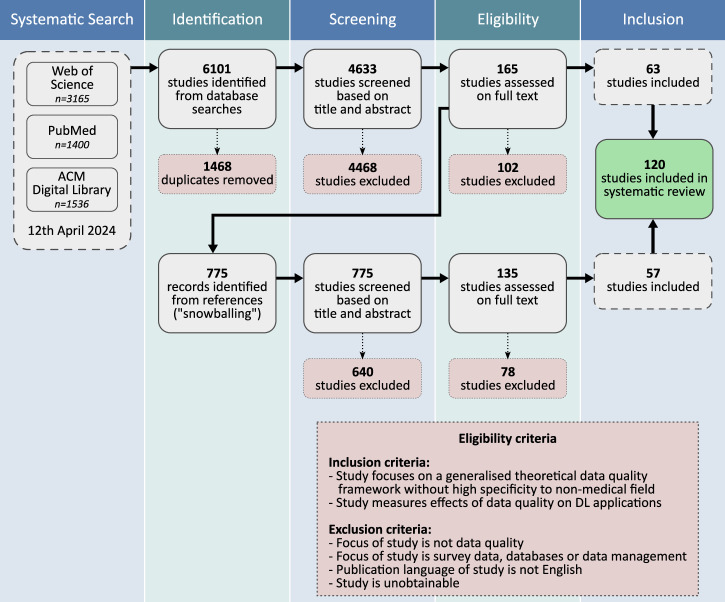
The adoption of machine learning (ML) and, more specifically, deep learning (DL) applications into all major areas of our lives is underway. The development of trustworthy AI is especially important in medicine due to the large implications for patients’ lives. While trustworthiness concerns various aspects including ethical, transparency and safety requirements, we focus on the importance of data quality (training/test) in DL. Since data quality dictates the behaviour of ML products, evaluating data quality will play a key part in the regulatory approval of medical ML products. We perform a systematic review following PRISMA guidelines using the databases Web of Science, PubMed and ACM Digital Library. We identify 5408 studies, out of which 120 records fulfil our eligibility criteria. From this literature, we synthesise the existing knowledge on data quality frameworks and combine it with the perspective of ML applications in medicine. As a result, we propose the METRIC-framework, a specialised data quality framework for medical training data comprising 15 awareness dimensions, along which developers of medical ML applications should investigate the content of a dataset. This knowledge helps to reduce biases as a major source of unfairness, increase robustness, facilitate interpretability and thus lays the foundation for trustworthy AI in medicine. The METRIC-framework may serve as a base for systematically assessing training datasets, establishing reference datasets, and designing test datasets which has the potential to accelerate the approval of medical ML products.
Overview
CoChat Summary
TL;DR
This systematic review synthesizes data quality literature and proposes the METRIC-framework, a set of 15 awareness dimensions for assessing medical training data quality for trustworthy AI. It is intended to help evaluate whether a dataset’s content is appropriate for a specific medical ML use case.
Key findings
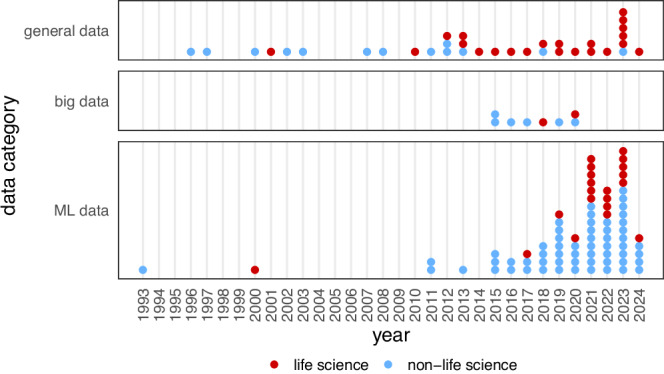
- From 5408 identified studies (4633 from database search, 775 from snowballing), 120 records met eligibility criteria; the corpus comprised 35 general data, 8 big data, and 77 ML data entries, with 76 non-life science and 44 life science studies.
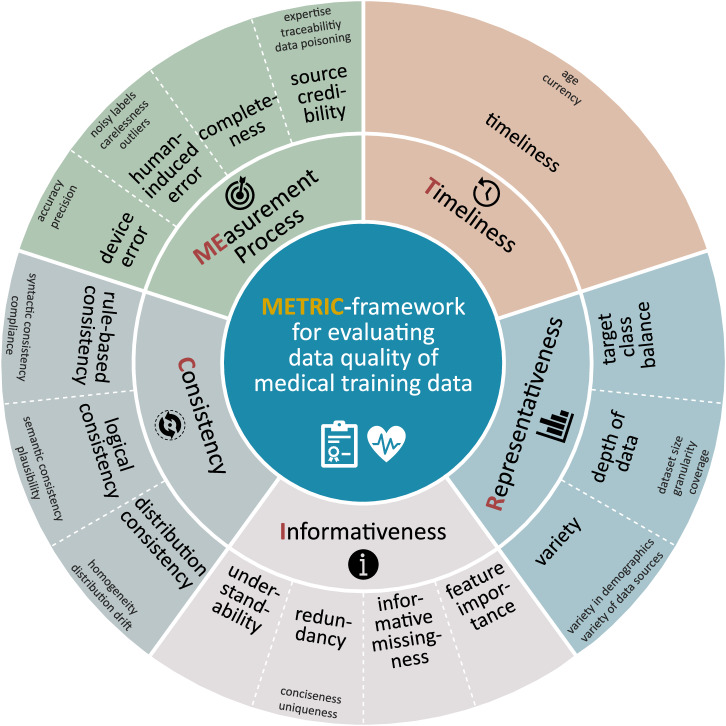
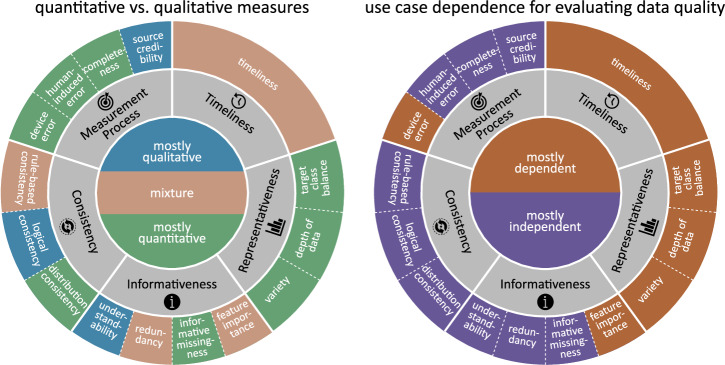
- The authors extracted 461 different data quality terms with 991 mentions and hierarchically clustered them into 38 relevant dimensions/subdimensions, organized into 15 awareness dimensions across five clusters: measurement process, timeliness, representativeness, informativeness, and consistency.
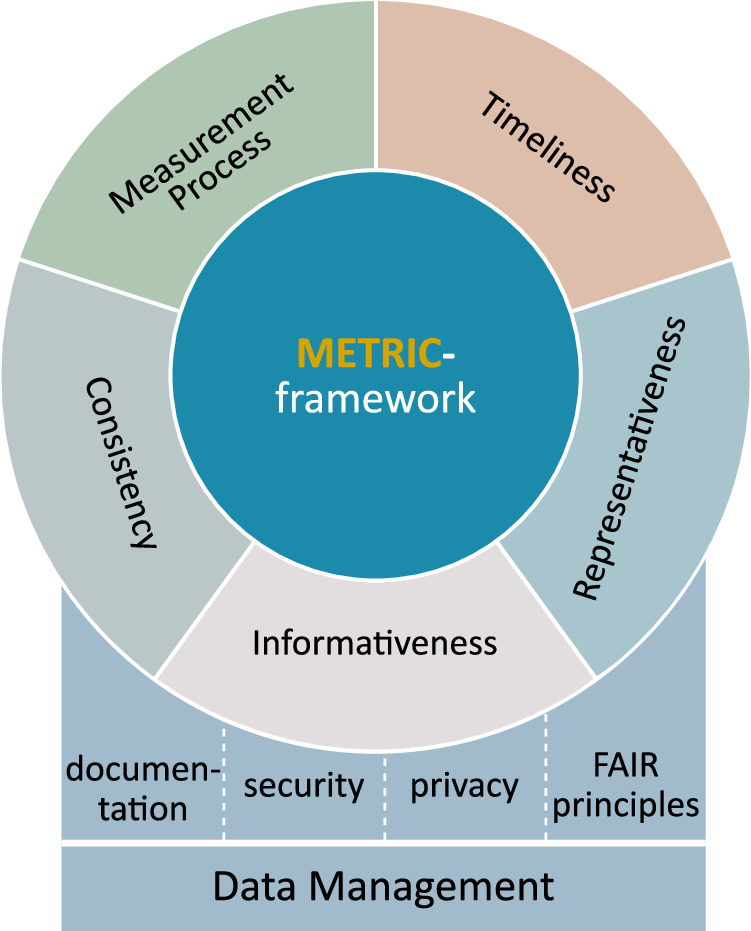
- The METRIC-framework separates data management (documentation, security, privacy, FAIR principles) as a prerequisite rather than part of content quality; the dimensions are not yet ranked or equipped with measures.
- The review recommends prioritizing six dimensions for assessment/improvement: the representativeness cluster plus feature importance, distribution consistency, and human-induced error; ML papers were skewed toward robustness, amount of data, missing data, and label noise, with fairness and explainability underrepresented.
Methods
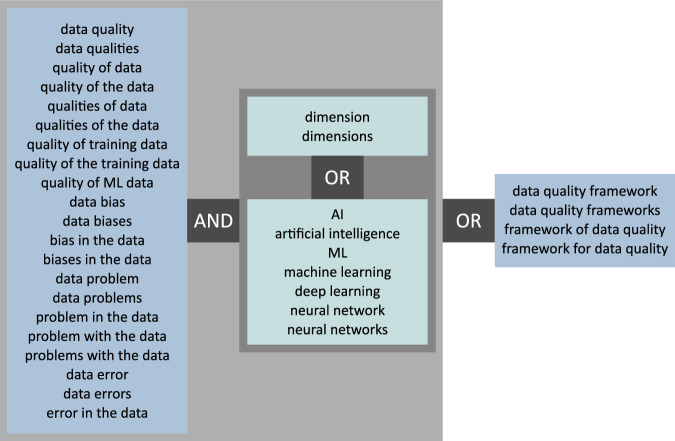
- Unregistered systematic review following PRISMA guidelines; searched Web of Science, PubMed, and ACM Digital Library on 12 April 2024 using a predefined string combining data quality terms with framework/dimensions or ML/AI/DL terms.
- Title/abstract screening was done by two authors independently, with consensus discussion and a third author if needed; snowballing added 775 records; full-text assessment yielded 120 included records.
- Data extraction: 120 records were read by two authors, relevant terms extracted, and related concepts clustered into subdimensions requiring at least three references; definitions were adopted from Black and van Nederpelt, Wang and Strong, or derived from the corpus.
Limitations
- The paper states the review was unregistered; database choice may skew interpretations somewhat, mitigated by snowballing; results are limited to ML approaches despite using “AI” terminology; the framework does not yet include assessment/measurement guidelines, dimensions are not ranked, and literature may be skewed toward dimensions with larger reported effects.
- Evident from the text: the framework is conceptual and not empirically validated, and the authors note that quantification of data quality dimension effects on ML applications is future work.
- Evident from the text: no inter-rater reliability statistics are reported for screening or extraction, although the process used independent reviewers and consensus.
Model-written summary. Check it against the paper before relying on it.
Integrity signals
Registry
Cites
Statistics
Figures
Verification
Claims the paper makes
23 Valid · 2 Not valid · 7 Not checked · 70 Own results and interpretations
The cited sources support only part of this claim — read each source’s verdict below.
In the paper
“Another dominant topic is completeness to which the ML community almost exclusively refers to as missing data119,125–128,133–135,182.”
§ The METRIC-framework for assessing data quality for trustworthy AI in medicine: a systematic review > Results > ML data quality
What the sources say
- Partly supportedcites [119] Jouseau, R., Salva, S. & Samir, C. On studying the effect of data quality on classification performances. Intelligent Data Engineering and Automated Learning – IDEAL. 82–93 (Springer Cham, 2022). sourceExperimental — accuracy not yet measured
The Introduction (p. 3) identifies “missing values” as a data-quality error studied in machine-learning classification, so this paper exemplifies that terminology. It does not call the topic “completeness” or establish that the ML community uses “missing data” almost exclusively; nor does it establish the topic’s dominance in DL papers. (LLM, conf=0.83)
- Not checked — no full text of the sourcecites [125] Michel, E., Zernikow, B. & Wichert, S. A. Use of an artificial neural network (ANN) for classifying nursing care needed, using incomplete input data. Med. Inform. Internet Med. 25, 147–158 (2000). 10901277 10.1080/14639230050058329 source
- Supportedcites [126] Barakat, M. S. et al. The effect of imputing missing clinical attribute values on training lung cancer survival prediction model performance. Health Inf. Sci. Syst.5, 16 (2017). PMC5718991 29255599 source
The Introduction discusses missing data in machine-learning datasets and contrasts records with missing data against complete sets. The Conclusion likewise contrasts a complete dataset with levels of missing data. This supports the terminology for which this paper is cited; whether completeness is a dominant topic is the citing authors’ own framing. (LLM, conf=0.86)
- Supportedcites [127] Radliński, Ł. The impact of data quality on software testing effort prediction. Electronics12, 1656 (2023). source
The Introduction (page unavailable) frames missing values as a data-quality problem for machine-learning models and discusses ways to handle them. The paper therefore supports its use as an example of ML work on missing data; the broader characterization of the literature is the citing authors’ synthesis. (LLM, conf=0.87)
- Not checked — no full text of the sourcecites [128] Ghotra, B., McIntosh, S. & Hassan, A. E. Revisiting the impact of classification techniques on the performance of defect prediction models. In Proc. IEEE/ACM 37th IEEE International Conference on Software Engineering (2015). source
- Not checked — no full text of the sourcecites [133] Blake, R. & Mangiameli, P. The effects and interactions of data quality and problem complexity on classification. J. Data Inf. Qual. 2, 1–28 (2011). 10.1145/1891879.1891881 source
- Partly supportedcites [134] Benedick, P.-L., Robert, J. & Traon, Y. L. A systematic approach for evaluating artificial intelligence models in industrial settings. Sensors 21, 6195 (2021). 34577398 10.3390/s21186195 PMC8469892 sourceExperimental — accuracy not yet measured
Section 3 describes missing time-series data points as a “dropping perturbation” and discusses filling missing values. The paper does not say that completeness is a dominant topic in deep-learning papers or that the ML community almost exclusively calls it “missing data”; its literature review in Section 2 instead focuses on robustness under perturbations. (LLM, conf=0.82)
- Supportedcites [135] Che, Z., Purushotham, S., Cho, K., Sontag, D. & Liu, Y. Recurrent neural networks for multivariate time series with missing values. Sci. Rep. 8, 6085 (2018). 29666385 10.1038/s41598-018-24271-9 PMC5904216 source
The Introduction describes a deep-learning framework for time series with missing data, and the Summary describes handling missing values with recurrent neural networks. This paper therefore serves as an example of the deep-learning literature using “missing data” and “missing values” for the issue the citing sentence calls completeness. (LLM, conf=0.85)
- Partly supportedcites [182] Whang, S. E., Roh, Y., Song, H. & Lee, J.-G. Data collection and quality challenges in deep learning: a data-centric AI perspective. VLDB J. 32, 791–813 (2023). 10.1007/s00778-022-00775-9 sourceExperimental — accuracy not yet measured
Section 4.2 (p. 10) says missing-data imputation is an active research topic in statistics and machine learning, supporting the claim that missing data is a significant topic. The paper does not establish that completeness is a dominant topic in deep-learning papers or that the ML community almost exclusively uses “missing data” to refer to completeness. (LLM, conf=0.78)
plain- Asserted: passes — The authors put it forward as true.
- Checkable: passes — It can be checked against evidence.
- Load-bearing: unclear — It is unclear whether the paper’s conclusions depend on it.
- Based: passes — The paper gives a reason why it holds.
- Partly supported
Every source the paper cites for this claim was checked and supports it.
In the paper
“If the data used for training a model is bad, the resulting AI will be bad as well (‘garbage in, garbage out’49).”
§ The METRIC-framework for assessing data quality for trustworthy AI in medicine: a systematic review > Introduction
What the sources say
- Supportedcites [49] Geiger, R. S. et al. Garbage in, garbage out? Do machine learning application papers in social computing report where human-labeled training data comes from? In Proc. Conference on Fairness, Accountability, and Transparency, 325–336 (2020). source
The Introduction (p. 1) says supervised machine learning requires high-quality training data to produce high-quality classifiers. It also explicitly explains ‘Garbage In, Garbage Out’ as the principle that flawed inputs produce flawed outputs, supporting the citing sentence’s paraphrase. (LLM, conf=0.94)
plainstates a cause- Asserted: passes — The authors put it forward as true.
- Checkable: passes — It can be checked against evidence.
- Load-bearing: passes — The paper’s conclusions depend on it.
- Based: passes — The paper gives a reason why it holds.
- Supported
The cited sources support only part of this claim — read each source’s verdict below.
In the paper
“Neural networks are prone to learning biases from training data and amplifying them at test time50, giving rise to a much discussed aspect of AI behaviour: fairness51.”
§ The METRIC-framework for assessing data quality for trustworthy AI in medicine: a systematic review > Introduction
What the sources say
- Partly supportedcites [50] Zhao, J., Wang, T., Yatskar, M., Ordonez, V. & Chang, K.-W. Men also like shopping: Reducing gender bias amplification using corpus-level constraints. In Proc. Conference on Empirical Methods in Natural Language Processing, 2979–2989 (Association for Computational Linguistics, Copenhagen, Denmark, 2017). sourceExperimental — accuracy not yet measured
Section 6.3 reports that models trained on two gender-biased image datasets amplified those biases on development data. The Model and §5.2 passages show that these were structured prediction models using convolutional neural-network features. This supports the claimed phenomenon in those systems, but not the broader assertion that neural networks generally are prone to it. (LLM, conf=0.85)
plainstates a cause- Asserted: passes — The authors put it forward as true.
- Checkable: passes — It can be checked against evidence.
- Load-bearing: passes — The paper’s conclusions depend on it.
- Based: passes — The paper gives a reason why it holds.
- Partly supported
The cited sources support only part of this claim — read each source’s verdict below.
In the paper
“Yet, one of the main causes of undesirable learned patterns lies in biased training data55,56.”
§ The METRIC-framework for assessing data quality for trustworthy AI in medicine: a systematic review > Introduction
What the sources say
- Partly supportedcites [55] Suresh, H. & Guttag, J. A framework for understanding sources of harm throughout the machine learning life cycle. In Equity and Access in Algorithms, Mechanisms, and Optimization (EAAMO ’21), October 5–9, 2021, NY, USA. ACM, New York, NY, USA. 10.1145/3465416.3483305 (2021). sourceExperimental — accuracy not yet measured
The Introduction (page unavailable) acknowledges that biased data can contribute to undesirable ML behavior, and §3.2 describes how an unrepresentative development sample can impair a model. The paper does not rank biased training data as a main cause; it also identifies sources of harm in modeling, evaluation, and deployment. (LLM, conf=0.85)
- Supportedcites [56] Mehrabi, N., Morstatter, F., Saxena, N., Lerman, K. & Galstyan, A. A survey on bias and fairness in machine learning. ACM Comput. Surv. 54, 1–35 (2021). 10.1145/3457607 source
Section 3, “Bias in Data, Algorithms, and User Experiences,” says that algorithms trained on biased data learn those biases and reflect them in their predictions. It also recognizes other causes of bias, which is consistent with describing biased training data as one cause rather than the only cause. (LLM, conf=0.91)
plainstates a cause- Asserted: passes — The authors put it forward as true.
- Checkable: passes — It can be checked against evidence.
- Load-bearing: passes — The paper’s conclusions depend on it.
- Based: passes — The paper gives a reason why it holds.
- Partly supported
The sources with a verdict support this claim; the rest weren’t checked yet, have no full text we could read, or their verdicts aren’t rated yet.
In the paper
“In particular, representativeness is often not a factor86,87 while it is a crucial property for secondary use of data in clinical studies88 or when reusing medical data as training data for ML applications.”
§ The METRIC-framework for assessing data quality for trustworthy AI in medicine: a systematic review > Results > General data quality
What the sources say
- Not checked — no full text of the sourcecites [86] Chan, K. S., Fowles, J. B. & Weiner, J. P. Electronic health records and the reliability and validity of quality measures: a review of the literature. Med. Care Res. Rev. 67, 503–527 (2010). 20150441 10.1177/1077558709359007 source
- Supportedcites [87] Weiskopf, N. G. & Weng, C. Methods and dimensions of electronic health record data quality assessment: enabling reuse for clinical research. J. Am. Med. Inform. Assoc. 20, 144–151 (2013). 22733976 10.1136/amiajnl-2011-000681 PMC3555312 source
The Results section identifies five dimensions of EHR data quality derived from the reviewed literature: completeness, correctness, concordance, plausibility, and currency. Representativeness is not among them, supporting the claim that it is often absent as a data-quality factor. The indexed copy provides no page number for this passage. (LLM, conf=0.86)
plain- Asserted: passes — The authors put it forward as true.
- Checkable: passes — It can be checked against evidence.
- Load-bearing: passes — The paper’s conclusions depend on it.
- Based: passes — The paper gives a reason why it holds.
22 more claims · 4 with their cited sources checked
Create a free account to see all 102 claims and to verify the 4 references still open.
- It may state two separate claims as one. 31
- Probably not a substantial claim. 61
Citations
Cites
Deep Residual Learning for Image Recognition
He, K., Zhang, X., Ren, S., & Sun, J. (2016) · 2016 IEEE Conference on Computer Vision and Pattern Recognition (CVPR) · doi:10.1109/cvpr.2016.90 · Cited by 235,474
Vaswani, A., Shazeer, N., Parmar, N., Uszkoreit, J., Jones, L., Gomez, A. N., Kaiser, L., & Polosukhin, I. (2017) · arXiv · doi:10.48550/arxiv.1706.03762 · Cited by 120,404 · cited 1×
“During the last decade, the fi eld of arti fi cial intelligence (AI) and in particular machine learning (ML) has experienced unprecedented advances, largely due to breakthroughs in deep learning (DL) 1 – 5 and increased computational power.”
BackgroundU-Net: Convolutional Networks for Biomedical Image Segmentation
Ronneberger, O., Fischer, P., & Brox, T. (2015) · Lecture notes in computer science · doi:10.1007/978-3-319-24574-4_28 · Cited by 99,404
You Only Look Once: Unified, Real-Time Object Detection
Redmon, J., Divvala, S., Girshick, R., & Farhadi, A. (2016) · 2016 IEEE Conference on Computer Vision and Pattern Recognition (CVPR) · doi:10.1109/cvpr.2016.91 · Cited by 53,803 · cited 1×
“During the last decade, the fi eld of arti fi cial intelligence (AI) and in particular machine learning (ML) has experienced unprecedented advances, largely due to breakthroughs in deep learning (DL) 1 – 5 and increased computational power.”
BackgroundHighly accurate protein structure prediction with AlphaFold
Jumper, J., Evans, R., Pritzel, A., Green, T., Figurnov, M., Ronneberger, O., Tunyasuvunakool, K., Bates, R., Žídek, A., Potapenko, A., et al. (2021) · Nature · doi:10.1038/s41586-021-03819-2 · Cited by 43,764
SMOTE synthetic minority over-sampling technique
Chawla, N. V., Bowyer, K. W., Hall, L. O., & Kegelmeyer, W. P. (2002) · Journal of Artificial Intelligence Research · doi:10.1613/jair.953 · Cited by 32,865
High-Resolution Image Synthesis with Latent Diffusion Models
Rombach, R., Blattmann, A., Lorenz, D., Esser, P., & Ommer, B. (2022) · 2022 IEEE/CVF Conference on Computer Vision and Pattern Recognition (CVPR) · doi:10.1109/cvpr52688.2022.01042 · Cited by 20,302 · cited 1×
“Recently, the introduction of easy-to-use yet still extremely capable models such as GPT-4 6 and Stable Diffusion 7 has further expanded the technology to an even broader audience.”
MethodThe FAIR Guiding Principles for scientific data management and stewardship
Wilkinson, M. D., Dumontier, M., Aalbersberg, I. J., Appleton, G., Axton, M., Baak, A., Blomberg, N., Boiten, J.-W., da Silva Santos, L. B., Bourne, P. E., et al. (2016) · Scientific Data · doi:10.1038/sdata.2016.18 · Cited by 18,423
Dermatologist-level classification of skin cancer with deep neural networks
Esteva, A., Kuprel, B., Novoa, R. A., Ko, J., Swetter, S. M., Blau, H. M., & Thrun, S. (2017) · Nature · doi:10.1038/nature21056 · Cited by 14,362 · cited 2×
“However, theracefor implementation and utilisation is currently outpacing comprehension of the technology.”
BackgroundA survey on Image Data Augmentation for Deep Learning
Shorten, C., & Khoshgoftaar, T. M. (2019) · Journal of Big Data · doi:10.1186/s40537-019-0197-0 · Cited by 13,203
Research works printed but not linked: 8
- Zemel, R., Wu, Y., Swersky, K., Pitassi, T. & Dwork, C. Learning fair representations. In Proc. 30th International Conference on Machine Learning, vol. 28, 325–333 (PMLR, Atlanta, Georgia, USA, 2013).
- Long, J., Richards, J. & Seko, C. The Canadian Institute for Health Information Data Quality Framework, version 1: a meta-evaluation and future directions. In Proc. Sixth International Conference on Information Quality, 370–383 (2001).
- Almutiry, O., Wills, G., Alwabel, A., Crowder, R. & Walters, R. Toward a framework for data quality in cloud-based health information system. In Proc. International Conference on Information Society (i-Society 2013), 153–157 (IEEE, 2013).
- Gudivada, V., Apon, A. & Ding, J. Data quality considerations for big data and machine learning: Going beyond data cleaning and transformations. Int. J. Adv. Softw. 10, 1–20 (2017).
- Zhang, H., Singh, H., Ghassemi, M. & Joshi, S. ‘Why did the model fail?’ Attributing model performance changes to distribution shifts. In Proc. 40th International Conference on Machine Learning, Vol. 202, 41550–41578 (2023).
- Hong, S. & Shen, J. Impact of training size on deep learning performance in in vivo 1H MRS. In Proc.ISMRM & SMRT Annual Meeting & Exhibition (2021).
- Thaler, R. H. & Sunstein, C. R. Nudge: Improving Decisions About Health, Wealth, and Happiness (Yale University Press, 2009).
- He, H., Bai, Y., Garcia, E. A. & Li, S. Adasyn: adaptive synthetic sampling approach for imbalanced learning. In Proc. IEEE International Joint Conference on Neural Networks (IEEE World Congress on Computational Intelligence) (IEEE, Hong Kong, 2008).
Cited by
Evaluating transparency in AI/ML model characteristics for FDA-reviewed medical devices
Mehta, V., Komanduri, A., Bhadouriya, R. S., Mehta, V., Johnson, M. D., Shrestha, P., Nikolov, M. C., Jain, B., Shah, N. H., & Schulman, K. A. (2025) · npj Digital Medicine · doi:10.1038/s41746-025-02052-9 · Cited by 61
“…development, including dataset sources, size, geography, population demographics, disease prevalence, training – test split strategy, evaluation metrics, external validation sites (if any), subgroup results (if any), planned update pathways, and relevant model architecture information 42,43 .”
Gebler, R., Reinecke, I., Sedlmayr, M., & Goldammer, M. (2025) · Journal of Medical Internet Research · doi:10.2196/74976 · Cited by 37
“…out” and provide reliable outputs [5] • Transparency through provenance, versioning, and integrity to ensure reproducible and auditable results [5] • Standards-based interoperability to ensure data content and exchange [6] • Ability to handle large sized, multimodal datasets [5] These…”
InfluentialYang, L., Allen, G., Zhang, Z., & Zhao, Y. (2024) · Buildings · doi:10.3390/buildings15010021 · Cited by 35
A review of recent artificial intelligence for traditional medicine
Hou, C., Gao, Y., Lin, X., Wu, J., Li, N., Lv, H., & Chu, W. C. (2025) · Journal of Traditional and Complementary Medicine · doi:10.1016/j.jtcme.2025.02.009 · Cited by 30
Dwyer, B., Flathers, M., Sano, A., Dempsey, A. G., Cipriani, A., Gazi, A. H., Hill, B., Gorban, C., Rodríguez, C. I., Stromeyer, C., et al. (2025) · NPP—Digital Psychiatry and Neuroscience · doi:10.1038/s44277-025-00049-6 · Cited by 41
Mao, K., Thu, K. M., Hung, K. F., Yu, O. Y., Hsung, T.-C., & Lam, W. Y. H. (2025) · International Dental Journal · doi:10.1016/j.identj.2025.100883 · Cited by 25
A Survey on Data Quality Dimensions and Tools for Machine Learning Invited Paper
Zhou, Y., Tu, F., Sha, K., Ding, J., & Chen, H. (2024) · IEEE International Conference on Artificial Intelligence Testing (AITest) · doi:10.1109/aitest62860.2024.00023 · Cited by 44
“Schwabe et al. clustered the dimensions into measurement process, timeliness, representativeness, in-formativeness, and consistency [45].”
BackgroundHusain, A. N., Knake, L. A., Sullivan, B. A., Barry, J. S., Beam, K., Holmes, E., Hooven, T. A., McAdams, R. M., Moreira, A. G., Shalish, W., et al. (2024) · Pediatric Research · doi:10.1038/s41390-024-03774-4 · Cited by 24
“58 62 Additionally, while AI has demonstrated remarkable success in risk prediction and early diagnosis, there remains a gap in its application for guiding therapeutic interventions, particularly in developing personalized treatment plans for infants across different stages of BPD. 63 Addressing…”
Zhang, F., Han, H., Li, M., Tian, T., Zhang, G., Yang, Z., Guo, F., Li, M., Wang, Y., Wang, J., et al. (2025) · Frontiers in Microbiology · doi:10.3389/fmicb.2024.1510026 · Cited by 20
Bridging modalities with AI: a review of AI advances in multimodal biomedical imaging
Doan, L. M. T., Shahhosseini, K., Verma, S., Marefat, A., Locicero, G., Verma, S., Angione, C., & Occhipinti, A. (2026) · Communications Engineering · doi:10.1038/s44172-026-00602-x · Cited by 32
“For example, data curation and harmoni-sation, involving standardised protocols for image acquisition, annotation, and data management, can help minimise variability and improve data quality in medical AI applications 147 .”
A Comprehensive Review of ChatGPT in Teaching and Learning Within Higher Education
Phokoye, S. P., Dlamini, S., Mthalane, P. P., Luthuli, M., & Moyane, S. P. (2025) · Informatics · doi:10.3390/informatics12030074 · Cited by 19
“The authors of [36] argued that while AI technologies like ChatGPT offer significant advantages, they should be integrated with caution and always complemented by human expertise and oversight to ensure a balanced and effective educational approach.”
Zubair, M., Khan, A. H., Bilal, S. F., & Li, J. (2025) · Briefings in Bioinformatics · doi:10.1093/bib/bbaf541 · Cited by 19
“Sequencing errors, noise, a nd biases can adversely affect the gener alizability and performance of models [63, 64].”
Ahmad, O. F., Mori, Y., Bretthauer, M., Dourado, D. D. A., Hassan, C., Bisschops, R., Bhandari, P., Byrne, M. F., Dekker, E., Mahadevan, U., et al. (2025) · Annals of Internal Medicine · doi:10.7326/annals-25-03415 · Cited by 24
AML diagnostics in the 21st century: Use of AI
Haferlach, T., Eckardt, J., Walter, W., Maschek, S., Kather, J. N., Pohlkamp, C., & Middeke, J. M. (2025) · Seminars in Hematology · doi:10.1053/j.seminhematol.2025.06.002 · Cited by 19
Hao, J., Nalley, A., Yeung, A. W. K., Tanaka, R., Ai, Q. Y. H., Lam, W. Y. H., Shan, Z., Leung, Y. Y., AlHadidi, A., Bornstein, M. M., et al. (2025) · npj Digital Medicine · doi:10.1038/s41746-025-01818-5 · Cited by 26
Torous, J. B., Ledley, K. T., Gorban, C., Strudwick, G., Schwarz, J., Choudhary, S., Emerson, M. R., Patriquin, M. A., Dempsey, A. G., Bantjes, J. R., et al. (2025) · JMIR Mental Health · doi:10.2196/84501 · Cited by 22
Research progress of MRI-based radiomics in hepatocellular carcinoma
Xie, X., & Chen, R. (2025) · Frontiers in Oncology · doi:10.3389/fonc.2025.1420599 · Cited by 29
“The intention of the METRIC framework is to assess the appropriateness of a dataset with respect to a speci fi c use case (69).”
Fu, A., Shen, T., Roberts, S. B., Liu, W., Vaidyanathan, S., Marchena-Romero, K.-J., Lam, Y. Y. P., Shah, K., Mak, D. Y. F., GEMINI Investigators, et al. (2025) · Journal of the American Medical Informatics Association · doi:10.1093/jamia/ocaf042 · Cited by 14
Martinho, D., Sobreiro, P., Domingues, A., Martinho, F. I. F., & Nogueira, N. F. R. (2026) · Healthcare · doi:10.3390/healthcare14030287 · Cited by 23
“This pluralistic integration enables a more comprehensive understanding of how algorithms-mediated moral reasoning manifests itself in decisions, bringing normative ethics closer to clinical practice [9,45,60,63].”
MLRan: A behavioural dataset for ransomware analysis and detection
Onwuegbuche, F. C., Olaoluwa, A., Jurcut, A. D., & Pasquale, L. (2026) · Journal of Network and Computer Applications · doi:10.1016/j.jnca.2026.104475 · Cited by 17
AI in Medical Questionnaires: Scoping Review
Luo, X., Li, Y. L., Xu, J., Zheng, Z., Ying, F., & Huang, G. (2025) · Journal of Medical Internet Research · doi:10.2196/72398 · Cited by 18
“Future research could use standardized methods such as the integration of the WHO’s Data Quality Review framework and the Metric framework designed specifically for health care AI to systematically validate the quality of training datasets [155,156].”
Lafon, T., Weingart, M., Vaidie, J., Calfee, C. S., Jacob, S. T., Freund, Y., Shapiro, N. I., Barraud, O., Monneret, G., van der Poll, T., et al. (2026) · EClinicalMedicine · doi:10.1016/j.eclinm.2026.103864 · Cited by 18
“91 This limitation also applies to the definition of the outcomes to be predicted, which are frequently derived from claims-based or International Classification of Diseases-coded definitions that represent imperfect surrogates of the underlying clinical reality.”
Nie, Y., He, S., Bie, Y., Wang, Y., Chen, Z., Yang, S., Cai, Z., Wu, L., Wang, H., Wang, X., et al. (2026) · Nature Biomedical Engineering · doi:10.1038/s41551-026-01764-x · Cited by 28
Abbott, E. E., Rehman, T., Rosania, A. R., Lum, D. L., Taylor, T. B., Kirk, A., Taylor, R. A., Baker, E. F., Rabin, E., Padela, A. I., et al. (2025) · Journal of the American College of Emergency Physicians Open · doi:10.1016/j.acepjo.2025.100311 · Cited by 17
“53 Integrating these frameworks and principles fosters a culture of critical appraisal essential for responsible AI adoption.”
Medical laboratory data-based models: opportunities, obstacles, and solutions
Meng, J., Wu, M., Shi, F., Xie, Y., Wang, H., & Guo, Y. (2025) · Journal of Translational Medicine · doi:10.1186/s12967-025-06802-x · Cited by 15
“For example, uneven data quality (variations in accuracy and completeness) can be addressed through data cleaning and preprocessing [67– 69].”
Farias, A. B., Martinez, G. S., Galán-Vásquez, E., Nicolás, M., & Pérez‐Rueda, E. (2024) · Briefings in Bioinformatics · doi:10.1093/bib/bbae581 · Cited by 11
“…enhances the model’s ability to generalize across diverse TFBS. Recent work has evaluated the impact of data quantity on the behavior of ML models [45–47], highlighting how the size and quality of training datasets can significantly influence the predictability and generalization capabilities of…”
Stvilia, B., Pang, Y., Lee, D. J., & Gunaydin, F. (2024) · Journal of the Association for Information Science and Technology · doi:10.1002/asi.24948 · Cited by 16
“…managers, data cleaning by researchers and students for academic projects or in DQA hackathons, assessing dataset quality for AI training or the credibility of AI applications, or in policy and business strategizing (Gururangan et al., 2022; Scheuerman et al., 2021; Schwabe et al., 2024).”
Nazar, W., Nazar, G., Kamińska, A., & Daniłowicz‐Szymanowicz, L. (2025) · Journal of Medical Internet Research · doi:10.2196/70481 · Cited by 20
“Reliable data enable AI algorithms to assist medical professionals in making evidence-based decisions, reducing the likelihood of errors and improving patient outcomes [1-5].”
Albu, E., Gao, S., Stijnen, P., Rademakers, F. E., van Bussel, B. C. T., Collyer, T. A., Hernandez‐Boussard, T., Wynants, L., & CALSTER, B. V. (2025) · Journal of Medical Internet Research · doi:10.2196/73987 · Cited by 19
“We provide mapping of the items to both the Weiskopf and Weng framework [23] and the METRIC framework [24], whenever applicable.”
Mishra, V., Saxena, D., Gupta, K., Patni, S., & Singh, A. K. (2025) · Scientific Reports · doi:10.1038/s41598-025-17937-8 · Cited by 14
“This finding concurs with a recent article published in Nature 30 .”
Data Governance in Healthcare AI: Navigating the EU AI Act’s Requirements
Kalodanis, K., Feretzakis, G., Rizomiliotis, P., Verykios, V. S., Papapavlou, C., Koutsikos, I., & Anagnostopoulos, D. (2025) · Studies in health technology and informatics · doi:10.3233/shti250050 · Cited by 18
Artificial intelligence methods and approaches to improve data quality in healthcare data
Agate, J. (2025) · Artificial Intelligence in the Life Sciences · doi:10.1016/j.ailsci.2025.100135 · Cited by 15
Deep learning algorithm for identifying osteopenia/osteoporosis using cervical radiography
Tamai, K., Imanishi, K., Terakawa, M., Uematsu, M., Kato, M., Toyoda, H., Suzuki, A., Takahashi, S., Yabu, A., Sawada, Y., et al. (2025) · Scientific Reports · doi:10.1038/s41598-025-11285-3 · Cited by 9
“Data were extracted from multiple institutions, the ground truth (T-scores from femur or lumbar spine DXA scans) was clear and objective, and the selection criteria were consistent 19 .”
“Artificial histology” in colonic Neoplasia: A critical approach
Faa, G., Fraschini, M., Didaci, L., Saba, L., Scartozzi, M., Orvieto, E., & Rugge, M. (2024) · Digestive and Liver Disease · doi:10.1016/j.dld.2024.11.001 · Cited by 8
Comparative evaluation of LLMs in orthopedic surgery
Chundi, G., Dawar, A., Sarwar, S., Prasad, S., Vosbikian, M. M., & Ahmed, I. H. (2025) · Journal of Orthopaedic Reports · doi:10.1016/j.jorep.2025.100728 · Cited by 8
Evaluation of large language model-generated medical information on idiopathic pulmonary fibrosis
Chérrez-Ojeda, I., Frye, B. C., Hoheisel, A., Cortés-Telles, A., Robles‐Velasco, K., Mateos‐Toledo, H., Figueiredo, R. G., Ryerson, C. J., Rodas‐Valero, G., & Calderón, J. C. (2025) · Frontiers in Artificial Intelligence · doi:10.3389/frai.2025.1618378 · Cited by 6
“Despite the growing number of tools for evaluating the quality of AI-generated information, including the QAMAI methodology (Vaira et al., 2024), the METRIC-framework (Schwabe et al., 2024), and similar, there remains insufficient amount of standardized data on the validation of AI-generated responses, which raises co…”
Abubakar, M. U., Abdullahi, S. H., Xiong, M., & He, B. (2025) · Microchimica Acta · doi:10.1007/s00604-025-07662-4 · Cited by 6
Fu, X., & Razmjooy, N. (2025) · Scientific Reports · doi:10.1038/s41598-025-26564-2 · Cited by 6
Zuluaga, M. A., Išgum, I., & Cuadra, M. B. (2026) · Current Opinion in Biomedical Engineering · doi:10.1016/j.cobme.2026.100649 · Cited by 9
“An AI system’s generalization and reliable performance rely on high-quality, diverse, and representative training data [57].”
Robles‐Medranda, C., Verpalen, I. M., Schulz, D., & Spadaccini, M. (2025) · Gastroenterology · doi:10.1053/j.gastro.2025.04.011 · Cited by 7
New approach methodologies for risk assessment of urinary occurring toxicants
Jobst, M., Guerreiro, I., Payros, D., Oswald, I. P., Fernandes, A. S., Warth, B., & Favero, G. D. (2025) · Ecotoxicology and Environmental Safety · doi:10.1016/j.ecoenv.2025.118649 · Cited by 7
Data quality for safer and more personalized perioperative care: a scoping review
Greco, M., Bose, I., Pasinetti, B. L., & Cecconi, M. (2025) · Artificial Intelligence Surgery · doi:10.20517/ais.2024.100 · Cited by 6
Data-driven medical devices and the EU MDR: mapping gaps in standards for regulatory compliance
Atmaca, U. I., Islam, S. U., Epiphaniou, G., Khadka, A., Harrison, S., Matragkas, N., Hansen, S., DeLong, R., & Maple, C. (2026) · npj Health Systems · doi:10.1038/s44401-026-00075-2 · Cited by 6
“It includes comparisons and regulatory evaluations for algorithmictransparency,accuracy,andreliability inclinicalconditions 15,41 .”
InfluentialBashir, S., Salad, H. A., Abdullahi, Y. B., Abdi, Y. H., Abdi, M. S., Ahmed, N., & Musa, S. S. (2026) · Frontiers in Digital Health · doi:10.3389/fdgth.2026.1769337 · Cited by 8
“( 96) This accuracy-interpretability tradeoff fundamentally constrains clinical implementation, as healthcare systems must balance superior discrimination, potentially enabling better patient identification against the transparency required for provider trust and accountability (96, 100).”
Bamgboye, O., Liu, X., Cruickshank, P., & Liu, Q. (2025) · Big Data and Cognitive Computing · doi:10.3390/bdcc9040108 · Cited by 4
Research Issues and Challenges in the Computational Development of Trustworthy AI
Begum, S., Ahmed, M. U., Barua, S., Kabir, M. A., & Masud, A. N. (2024) · IEEE International Conference on Artificial Intelligence in Engineering and Technology (IICAIET) · doi:10.1109/iicaiet62352.2024.10730209 · Cited by 5
“…systems [10], enhanced reliability for metaverses [11], distributed systems with considerations of robustness, privacy, and governance [12], autonomous driving with an emphasis on five paradigms of explainable AI using SafeX technique [5], and applications in medicine assessing data quality [13].”
MethodQin, Q., & Wang, C. (2025) · The Electronic Library · doi:10.1108/el-09-2024-0286 · Cited by 4
Current Perspectives on the Artificial Intelligence in Critical Care Medicine
Lee, J., & Yoon, J. H. (2025) · Anesthesiology Clinics · doi:10.1016/j.anclin.2025.05.005 · Cited by 5
Panagiotopoulos, K. N., Tsiknakis, N., Zaridis, D. I., Tzioufas, A. G., Fotiadis, D. I., & Goules, A. V. (2025) · Autoimmunity Reviews · doi:10.1016/j.autrev.2025.103916 · Cited by 5
Colston, K. J., Monsalve, S. C., & Schneebeli, S. T. (2025) · Molecular Pharmaceutics · doi:10.1021/acs.molpharmaceut.5c00348 · Cited by 8
Kourounis, G., Gilbert, S., Knight, S. R., Leal, A., Scully, J. L., Loupy, A., Martin, D., Preka, E., Primc, N., Seoane, F., et al. (2026) · Transplant International · doi:10.3389/ti.2026.16316 · Cited by 4
“Although advanced algorithms can identify complex patterns within large datasets, they cannot compensate for poor data quality, inconsistency, or systematic bias [29].”
Ellouze, M., Rekik, S., & Belguith, L. H. (2025) · Online Social Networks and Media · doi:10.1016/j.osnem.2025.100308 · Cited by 3
Faviez, C., Wang, X., Vincent, M., Garcelon, N., Saunier, S., Cormier‐Daire, V., Chen, X., & Burgun, A. (2025) · International Journal of Medical Informatics · doi:10.1016/j.ijmedinf.2025.106021 · Cited by 7
Rizzo, A., Mensa, E., Squarzon, L., Clerici, P., & Lucis, R. (2025) · European Journal of Clinical Microbiology & Infectious Diseases · doi:10.1007/s10096-025-05317-z · Cited by 5
Umri, N. A., Karnyoto, A. S., & Pardamean, B. B. (2025) · International Conference on Information Technology, Information Systems and Electrical Engineering (ICITISEE) · doi:10.1109/icitisee68184.2025.11355145 · Cited by 3
“Ethical discussions focus on the erosion of academic trust and overreliance on opaque models [38], [39], [40], [41], [24].”
Wang, Z., Ma, Z., Song, W., Jiang, G., Jiang, B., Jiang, M., Shu, W., Wang, B., Wan, Z., Geng, S., et al. (2026) · Advanced Science · doi:10.1002/advs.74293 · Cited by 4
Stranger, N., Scherkl, M., Stutz, D., Janisch, M., Singer, G., Hankel, S., Till, H., Sackl, M., Hržić, F., Herzog, S., et al. (2026) · Radiology · doi:10.1148/radiol.250540 · Cited by 4
Alhaskir, M., Kutafina, E. V., Linke, F., Fischer, F. P., Schriewer, E., Lauxmann, S., Klett, K., Hofmeister, J., Lutz, F., Burow, L., et al. (2026) · Computer Methods and Programs in Biomedicine · doi:10.1016/j.cmpb.2026.109295 · Cited by 4
AI-based augmentation of oncology clinical trials
Villa, A., Eadie, A. L., Synnott, D., Romanò, R., Piffoux, M., Wong, E. Y. T., Scheinerman, N., Tan, D. S. W., de Braud, F., Koopman, M., et al. (2026) · Nature Reviews Clinical Oncology · doi:10.1038/s41571-026-01189-0 · Cited by 3
“The METRIC framework consists of 15 ‘awareness’ questions that flag issues that are likely to undermine model performance or stability 164 .”
Large language medicine: defining a new paradigm in human health
Guni, A., Hu, W., Morley, J., Cohen, I. G., Barnaghi, P. M., & Ashrafian, H. (2026) · Frontiers in Science · doi:10.3389/fsci.2026.1810095 · Cited by 3
“…from those used in training; model drift, in which performance gradually degrades over time as patient populations or clinical practices evolve; the risk of data poisoning, whether accidental or adversarial; and the need for robust governance frameworks to oversee continuous deployment (166).”
Aydin, O. U., Koch, A., Hilbert, A., Rieger, J., Lohrke, F., Ishida, F., Tanioka, S., & Frey, D. (2025) · Neuroinformatics · doi:10.1007/s12021-025-09745-2 · Cited by 3
“One of the key requirements for developing robust and generalizable deep learning models is access to large, diverse and high-quality training and validation datasets (Schwabe et al., 2024).”
Transparency Metrics for Artificial Intelligence-Driven Applications in Healthcare
Nicolae, I.-E., Danciu, G. M., Nanou, C., Koulierakis, N., & Danilatou, V. (2024) · Hellenic Conference on Artificial Intelligence · doi:10.1145/3688671.3688782 · Cited by 6
Antweiler, D., & Fuchs, G. (2025) · Computers & Graphics · doi:10.1016/j.cag.2025.104212 · Cited by 3
“It is well established that data quality has a larger impact on the resulting model than model tweaking or even model choice [39].”
A simple and effective approach for body part recognition on CT scans based on projection estimation
Hržić, F., Movahhedi, M., Lavoie-Gagne, O. Z., & Kiapour, A. M. (2025) · Scientific Reports · doi:10.1038/s41598-025-17174-z · Cited by 4
“Ensuring data accuracy and high quality is essential to obtain high model performance [6].”
Manière, C. (2026) · Journal of the European Ceramic Society · doi:10.1016/j.jeurceramsoc.2026.118158 · Cited by 2
WHOOP, There It Is: Lessons From WHOOP’s FDA Warning Letter
Karow, B. (2026) · Journal of Medical Internet Research · doi:10.2196/90882 · Cited by 2
Wang, N., & Leem, S.-G. (2026) · IntechOpen eBooks · doi:10.5772/intechopen.1013232 · Cited by 4
Data Quality Taxonomy for Data Monetisation
Vyhmeister, E., Pietropoli, B., & Visentin, A. (2026) · IntechOpen eBooks · doi:10.5772/intechopen.1013240 · Cited by 4
An, S., Zhang, K., Su, Y. S., Song, D., & Zheng, W. (2026) · Omega · doi:10.1016/j.omega.2026.103561 · Cited by 2
Smallwood, E., Burke, R. D., Barnes, A. P., & Ivarson, M. (2026) · International Journal of Information Management Data Insights · doi:10.1016/j.jjimei.2026.100407 · Cited by 3
Mirahadi, S. S., Rostami, M. T., Taherkhani, S., & Mostofi, S. (2026) · Bratislavské lekárske listy/Bratislava medical journal · doi:10.1007/s44411-026-00545-x · Cited by 2
“Finally, long-term progress depends on sustainable interdisciplinary ecosystems—innovation hubs, shared governance structures, and partnerships across academia, industry, and healthcare—that support continuous refinement and responsible clinical integration of generative AI [151–154].”
Rüther, F. D., Guedes, M. N. P., Presterl, E., Suetens, C., Plachouras, D., van Mourik, M. S. M., van Rooden, S. M., & ECDC PPS study group on automated surveillance of HAIs (2026) · Eurosurveillance · doi:10.2807/1560-7917.es.2026.31.19.2500736 · Cited by 2
“Since data availability does not directly imply ‘good quality’ data, clear specifications, validation and monitoring must be part of these protocols [30,33].”
Zhou, Z., & Zhou, J. (2026) · Frontiers in Immunology · doi:10.3389/fimmu.2026.1746927 · Cited by 2
Sherif, M., Elsayed, E. K., & Deif, M. A. (2026) · Scientific Reports · doi:10.1038/s41598-026-61342-8 · Cited by 4
Corso, F., Zec, A., Favali, M., Ligero, M., Hilgers, L., Invernizzi, L. M., Mazzeo, L., Morales, A. M., Müller‐Franzes, G. A., Machado, I. P., et al. (2026) · Cell Reports Medicine · doi:10.1016/j.xcrm.2026.102966 · Cited by 3
xFAIR: A Multi-Layer Approach to Data FAIRness Assessment and Data FAIRification
Longo, A., Zappatore, M. S., Colella, D. D., Zampino, F., & Calò, A. (2025) · Journal of Data and Information Quality · doi:10.1145/3769113 · Cited by 2
Xiong, H., Ledwidge, M. T., Fadahunsi, K. P., Lee, H.-Y., Wu, T.-S. J., Morrow, S., Nisar, Y. B., Mbakaya, B. C., O’Donoghue, J., & Gallagher, J. (2025) · doi:10.12688/verixiv.1380.1 · Cited by 5
Importance of integrating biological sex and age analyses in health research
Fairweather, D., & Kararigas, G. (2026) · Biology of Sex Differences · doi:10.1186/s13293-026-00900-1 · Cited by 2
Data Quality Assessment Framework for Predictive Maintenance (PdM) in Industrial AI: Review
AlKalbani, W., AlAzri, A., & Ahmad, M. N. (2025) · Lecture notes in computer science · doi:10.1007/978-981-95-3808-9_3 · Cited by 1
Datenmodellierung in der Gefäßchirurgie – zwischen Anforderung und Wirklichkeit
Hatzl, J., Bartos, O., Behrendt, C., Dorweiler, B., Heckenkamp, J., Hoffmann, G., Reutersberg, B., Uhl, C., & Gefäßmedizin, K. K. I. U. D. T. D. D. G. F. G. U. (2025) · Gefässchirurgie · doi:10.1007/s00772-025-01290-1 · Cited by 1
Amankwaa, S., Prokofiev, J., Belikov, J., Srivastava, V., Ivask, A., Nefedova, A., Zhou, B., Liu, M., & Polivtseva, S. (2026) · Environmental Science Water Research & Technology · doi:10.1039/d6ew00223d · Cited by 1
U-TraCE: a conformal prediction approach to uncertainty quantification in black-box models
Marchi, E., & Liebl, M. (2026) · Machine Learning Science and Technology · doi:10.1088/2632-2153/ae35ce · Cited by 2
Fromage, Y., Padilla, A. C. H., Vaidie, J., Sayadi, H., Barac, A., Cremer, O. L., Garot, D., Rouzé, A., Daix, T., Vintcent, L. E. M., et al. (2026) · CHEST Critical Care · doi:10.1016/j.chstcc.2026.100283 · Cited by 1
Enhancing AI Classification Performance: A Framework for Textual Data Quality Assessment
Bibulewela, B. S. M. N., Wickramaarachchi, D., & Asanka, D. (2025) · International Conference on Advanced Research in Computing (ICARC) · doi:10.1109/icarc64760.2025.10962863 · Cited by 1
“Poor-quality data can result in biased, inaccurate, and unreliable AI models, potentially leading to severe consequences, especially in critical domains like healthcare, finance, and law enforcement [1].”
AI Systems Quality: A Data-Centric Perspective
Belghiti, A. E., Sbaï, H., & Asri, H. (2025) · Lecture notes in networks and systems · doi:10.1007/978-3-031-95326-2_8 · Cited by 3
A Framework for Evaluating the Use of Surveillance Systems for Short‐Term Influenza Forecasting
Maroufi, N., Telfar-Barnard, L., Huang, Q. S., Dobbie, G., Aminisani, N., Albrecht, S., Nghiem, N., & Baker, M. G. (2025) · Influenza and Other Respiratory Viruses · doi:10.1111/irv.70144 · Cited by 1
“While systematic reviews have looked at general data quality, to our knowledge, this is the first study looking at which surveillance system attributes matter for AI/ML applications, bringing together both public health and data science perspectives [42].”
A Multi-Dimensional Framework for Data Quality Assurance in Cancer Imaging Repositories
Tsave, O., Kosvyra, A., Filos, D., Fotopoulos, D. T., & Chouvarda, I. (2025) · Cancers · doi:10.3390/cancers17193213 · Cited by 1
Governance-by-Design as an Enabler of AI in Digital Health in Sub-Saharan Africa
Townsend, B. (2025) · Law Technology and Humans · doi:10.5204/lthj.3975 · Cited by 3
An AI Implementation Science Study to Improve Trustworthy Data in a Large Healthcare System
Marteau, B. L., Hornback, A. M., Tan, S. M., Lowson, C., Woloff, J., & Wang, M. D. (2025) · IEEE-EMBS International Conference on Biomedical and Health Informatics (BHI ...) · doi:10.1109/bhi67747.2025.11269482 · Cited by 2
“…Data Quality Dashboard (DQD) support structured evaluations within OMOP CDM, broader frameworks such as Measurement Process, Timeliness, Representative-ness, Informativeness, Consistency (METRIC) offer more comprehensive but abstract guidance, leaving implementation details to users [12, 13].”
A practical guide to the implementation of AI in orthopaedic research—Part 5: Data management
Zsidai, B., Oettl, F. C., Pruneski, J. A., Pánics, G., Winkler, P. W., Senorski, E. H., Hirschmann, M. T., Yu, Y., FELDT, R. H., Samuelsson, K., et al. (2025) · Journal of Experimental Orthopaedics · doi:10.1002/jeo2.70581 · Cited by 1
“Additionally, the recently published METRIC framework [36] proposes fi ve key data quality dimensions to improve the robustness, interpretability and trustworthiness of AI models developed with data trained on a speci fi c dataset.”
InfluentialLuo, Z., Lei, Y., & Zhang, Q. (2026) · Journal of Applied Clinical Medical Physics · doi:10.1002/acm2.70555 · Cited by 1
“44 By quantitatively ranking feature importance,SHAP values provide actionable insights into which variables drive risk prediction.”
Demir, A., Aydın, F., & Demirel, G. Y. (2026) · Frontiers in Immunology · doi:10.3389/fimmu.2026.1778853 · Cited by 2
Ulbig, M. B., Hutzschenreuter, D., Gasca-Aragon, H., & Kurrat, M. (2026) · Journal of Smart Cities and Society · doi:10.1177/27723577261459877 · Cited by 1
“It is noteworthy that in certain frameworks, validity is subsumed under alternative terms such as credibility (Marev et al., 2018) or rule-based consistency (Schwabe et al., 2024).”
Donmez, T. B., & Mansour, M. (2026) · Acadlore Transactions on AI and Machine Learning · doi:10.56578/ataiml050301 · Cited by 1
A systematic review of standards on bias and data quality from horizontal and vertical perspectives
Schmitz, A., & Poretschkin, M. (2026) · Journal of Data and Information Quality · doi:10.1145/3832313 · Cited by 1
Zhao, K., Wang, N., & Xie, Z. (2026) · Frontiers in Public Health · doi:10.3389/fpubh.2026.1915158 · Cited by 1
Hopkins, H. S., Bianchi, J., Cevidanes, L., Puntillo, A. M., Tai, M., Goy, R., Hemm, F., Relic, Z., Alvetro, L., Brothers, M., et al. (2026) · American Journal of Orthodontics and Dentofacial Orthopedics · doi:10.1016/j.ajodo.2026.04.008 · Cited by 1
Cornelisse, E., Kousa, D., Menz, B. D., Murphy-Reuter, B., Shahnam, A., Chin-Yee, B. H., Calabro, R., Li, L. X., Ramsey, I., Abuhelwa, A. Y., et al. (2026) · Journal of Medical Internet Research · doi:10.2196/100531 · Cited by 1
A Multi-Layer Framework for AI-Driven Quality Control in Large-Scale Data Production
Banitalebi, B., & Dwivedula, S. V. A. (2025) · IEEE International Conference on Artificial Intelligence Testing (AITest) · doi:10.1109/aitest66680.2025.00026 · Cited by 1
A Framework for AI-Powered Neutralization of Environmental Interferences in Measurement Processes
Mijač, M., Oreški, D., & Posarić, L. (2025) · International Convention on Information and Communication Technology, Electronics and Microelectronics · doi:10.1109/mipro65660.2025.11131896 · Cited by 1
“These frameworks assess data quality and calibration performance, which are crucial for deploying AI in measurement applications [4].”
Metadata
- Authors
- Schwabe, D., Becker, K., Seyferth, M., Klaß, A., & Schaeffter, T.
- Affiliations
- Physikalisch-Technische Bundesanstalt (DE)
- Corresponding author
- Schwabe, Daniel
- Venue
- npj Digital Medicine
- Published
- 2024-08-03
- Volume
- 7
- Issue
- 1
- Pages
- 203-203
- ISSN
- 2398-6352 (ISSN-L)
- PMC
- PMC11297942
- OpenAlex
- W4401283978
- Cited by
- 169
- References
- 194
- Citations by year
- 2026: 92 · 2025: 69 · 2024: 8
- FWCI
- 3.85
- Type
- journal article
- Language
- en
- Open access
- gold
- doi.org
- Licence
- cc-by
- creativecommons.org/licenses/by/4.0 (tdm)
- creativecommons.org/licenses/by/4.0 (vor)
- Locations
- npj Digital Medicine (publishedVersion, cc-by)
- PubMed Central (publishedVersion, cc-by)
- PubMed (publishedVersion)
- Informationszentrum Lebenswissenschaften (ZB MED) (submittedVersion, cc-by)
- DOAJ (DOAJ: Directory of Open Access Journals) (submittedVersion)
- Funders
- European Commission (101100700)
- Topics
- Health Sciences › Medicine › Health Informatics › Artificial Intelligence in Healthcare and Education
- Physical Sciences › Computer Science › Artificial Intelligence › Ethics and Social Impacts of AI
- Physical Sciences › Computer Science › Artificial Intelligence › Explainable Artificial Intelligence (XAI)
- Keywords
- data quality assessment, trustworthy AI, machine learning in medicine, deep learning, training data bias, robustness, interpretability, reference dataset
About these checks
Registry, retraction, Cites and statistics results are computed, not judged, with one exception: a printed reference that no index lists is read once by a model before it counts as a citation error. Claims are extracted by a model and kept only when their quote appears verbatim in the text; each cited source is then checked, with a model’s help, for whether it says what the claim relies on. Those verdicts can be wrong — read the claim’s quote and the cited source before relying on one.
The claim verdicts this report counts are experimental: their accuracy is not yet measured.
A language model drew the claims from the paper on 2026-10-28, under version 3 of the claim definition (model deepseek-v4.1-flash, prompt extract-v3).
A second model labelled each claim on 2026-10-28 (model jev-1.13-20260917, definition revision gold-guideline-v0.2).
Cited sources are checked with a language model’s help (gpt-6-sol).
Statistics and arithmetic are recomputed, not judged.
Confidence bands are shown only for fields calibrated on our annotated test set. None is calibrated yet, so no band is shown.
What counts as a claim ›How we measure confidence ›How we check this ›
Are you an author, or do you see a problem with this page? Request a review
Data sources
Bibliographic data: Semantic Scholar, OpenAlex, Crossref.
Contains information from the Semantic Scholar Academic Graph Datasets, made available under the ODC Attribution License (ODC-BY 1.0).
Semantic Scholar’s data is described in: Kinney, R., et al. (2023). The Semantic Scholar Open Data Platform. arXiv:2301.10140.
