

Language models for data extraction and risk of bias assessment in complementary medicine
Open accessThe DOI matches its Crossref record; 36 of the 36 references it cites were found in a registry or an index.
Abstract
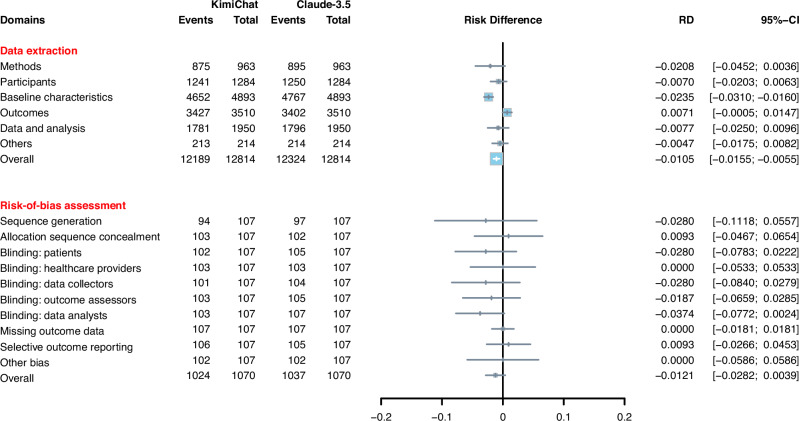
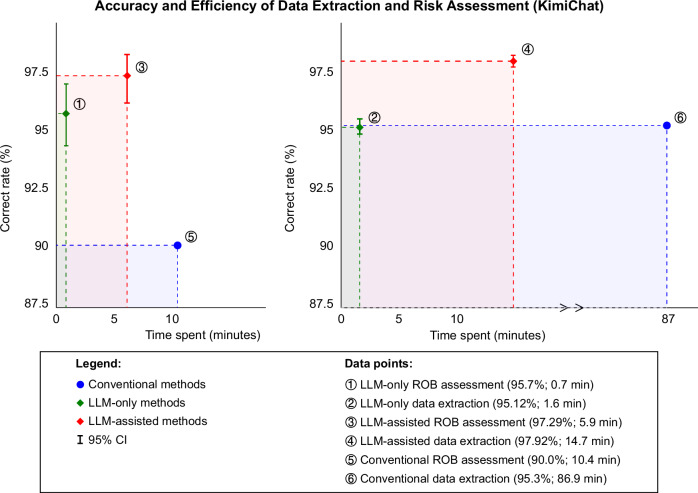
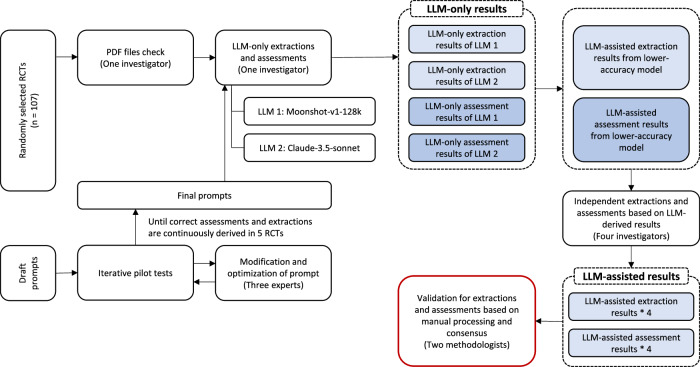
Large language models (LLMs) have the potential to enhance evidence synthesis efficiency and accuracy. This study assessed LLM-only and LLM-assisted methods in data extraction and risk of bias assessment for 107 trials on complementary medicine. Moonshot-v1-128k and Claude-3.5-sonnet achieved high accuracy (≥95%), with LLM-assisted methods performing better (≥97%). LLM-assisted methods significantly reduced processing time (14.7 and 5.9 min vs. 86.9 and 10.4 min for conventional methods). These findings highlight LLMs' potential when integrated with human expertise.
Overview
The claims and statistics of this paper haven’t been checked yet.
Free: it reads the open-access text and checks the first 5 claims that cite a source we can check. Create a free account to check every claim.
Integrity signals
Registry
Cites
Statistics
Figures
Verification
Claims the paper makes
The claims and statistics of this paper haven’t been checked yet.
Free: it reads the open-access text and checks the first 5 claims that cite a source we can check. Create a free account to check every claim.
Claims other papers make about this one
Each is checked against this paper’s own text: does it say what the citing paper says it does?
The source backs part of the claim, not all of it — or backs it for a different population, condition or comparison.
In the citing paper
“Although these proof-of-concept studies have reported encouraging results and the potential to substantially reduce manual workload and human error, most evaluations have been limited to single models, small or restricted datasets, or single extraction runs (15–20).”
From Performance of large language models and prompt engineering strategies for data extraction in systematic reviews (2026) · cites this paper as [16]
Experimental — accuracy not yet measuredThe cited source says what the claim attributes to it.
In the citing paper
“background characteristics were extracted with high accuracy by recent LLMs (12, 14–16)”
From Performance of large language models and prompt engineering strategies for data extraction in systematic reviews (2026) · cites this paper as [16]
The cited source says what the claim attributes to it.
In the citing paper
“For example, Lai et al [18,27] demonstrated that LLMs can perform RoB assessments at a level comparable to trained reviewers in structured appraisal tasks, and Rose et al [25,26] found moderate to substantial interrater agreement between ChatGPT-4o and human reviewers across Cochrane RoB review domains.”
From Retrieve-Then-Verify for Evaluating Evidence Support and Hallucination in Large Language Model–Generated Medical Information: Empirical Study (2026) · cites this paper as [27]
The cited source says what the claim attributes to it.
In the citing paper
“Recent studies have examined the ability of LLMs to assist with RoB assessment and have reported promising agreement with human reviewers [18,24-27].”
From Retrieve-Then-Verify for Evaluating Evidence Support and Hallucination in Large Language Model–Generated Medical Information: Empirical Study (2026) · cites this paper as [27]
Self-check
Percentages, sums and reported differences re-computed from the paper’s own numbers.
The self-check needs the paper’s full text.
Citations
Cites
The PRISMA 2020 statement: An updated guideline for reporting systematic reviews
Page, M. J., McKenzie, J. E., Bossuyt, P. M., Boutron, I., Hoffmann, T. C., Mulrow, C. D., Shamseer, L., Tetzlaff, J. M., Akl, E. A., Brennan, S. E., et al. (2021) · BMJ · doi:10.1136/bmj.n71 · Cited by 108,283
Single data extraction generated more errors than double data extraction in systematic reviews
Buscemi, N., Hartling, L., Vandermeer, B., Tjosvold, L., & Klassen, T. P. (2006) · Journal of Clinical Epidemiology · doi:10.1016/j.jclinepi.2005.11.010 · Cited by 464
Large language models (LLMs): survey, technical frameworks, and future challenges
Kumar, P. (2024) · Artificial Intelligence Review · doi:10.1007/s10462-024-10888-y · Cited by 395
Tangkiatkumjai, M., Boardman, H., & Walker, D.-M. (2020) · BMC Complementary Medicine and Therapies · doi:10.1186/s12906-020-03157-2 · Cited by 326
Khraisha, Q., Put, S., Kappenberg, J., Warraitch, A., & Hadfield, K. (2024) · Research Synthesis Methods · doi:10.1002/jrsm.1715 · Cited by 269
Khraisha, Q., Put, S., Kappenberg, J., Warraitch, A., & Hadfield, K. (2023) · arXiv · doi:10.48550/arxiv.2310.17526 · Cited by 268
Neimann Rasmussen, L., & Montgomery, P. (2018) · Systematic Reviews · doi:10.1186/s13643-018-0786-6 · Cited by 204
Acupuncture for chronic nonspecific low back pain
Mu, J., Furlan, A. D., Lam, W. Y., Hsu, M. Y., Ning, Z., & Lao, L. (2020) · Cochrane Database of Systematic Reviews · doi:10.1002/14651858.cd013814 · Cited by 169
Data extraction for evidence synthesis using a large language model: A proof-of-concept study
Gartlehner, G., Kahwati, L., Hilscher, R., Thomas, I., Kugley, S., Crotty, K., Viswanathan, M., Nussbaumer‐Streit, B., Booth, G., Erskine, N., et al. (2024) · Research Synthesis Methods · doi:10.1002/jrsm.1710 · Cited by 164
Fischer, F. H., Lewith, G., Witt, C. M., Linde, K., von Ammon, K., Cardini, F., Falkenberg, T., Fønnebø, V., Johannessen, H., Reiter, B., et al. (2014) · BMC Complementary and Alternative Medicine · doi:10.1186/1472-6882-14-46 · Cited by 162
Research works printed but not linked: 3
- Lim, C. E. D., Ng, R. W. C., Cheng, N. C. L., Zhang, G. S. & Chen, H. Acupuncture for polycystic ovarian syndrome. Cochrane Database Syst. Rev. 2019, CD007689 (2019). PMC6603768 31264709
- Lai, H. et al. Assessing the Risk of Bias in Randomized Clinical Trials With Large Language Models. JAMA Netw. Open 7, e2412687 (2024). 38776081 PMC11112444 · DOI · Paper page
- Chapter 5: Collecting data. https://training.cochrane.org/handbook/current/chapter-05.
Cited by
Artificial intelligence across the cancer care continuum
Riaz, I. B., Khan, M. A., & Osterman, T. J. (2025) · Cancer · doi:10.1002/cncr.70050 · Cited by 40
Automation of Systematic Reviews with Large Language Models
Cao, C., Arora, R., Cento, P., Budak, A., Manta, K., Farahani, E., Cecere, M., Selemon, A., Sang, J., Gong, L. X., et al. (2025) · medRxiv · doi:10.1101/2025.06.13.25329541 · Cited by 33
A survey on biomedical automatic text summarization with large language models
Huang, Z., Chen, X., Wang, Y., Huang, J., & Zhao, X. (2025) · Information Processing & Management · doi:10.1016/j.ipm.2025.104216 · Cited by 27
Self-citationRashid, M., Yi, C. S., Sathapanasiri, T., Udayachalerm, S., Boonpattharatthiti, K., Insuk, S., Veettil, S. K., Lai, N. M., Chaiyakunapruk, N., Dhippayom, T., et al. (2025) · Value in Health · doi:10.1016/j.jval.2025.07.001 · Cited by 26
Ahn, S., Zhou, J., Jiang, D., Kerr, S., Zhu, Y., Song, P., Rudan, I., & WHO TCI medicine CHNRI group (2025) · Journal of Global Health · doi:10.7189/jogh.15.04336 · Cited by 23
“While their application in health research is still emerging, early studies suggest that LLMs may offer complementary insights alongside expert-driven approaches in setting research priorities [ 12 , 16 , 17 ].”
Huang, J., Lai, H., Zhao, W., Xia, D., Bai, C., Sun, M., Liu, J., Liu, J., Pan, B., Tian, J., et al. (2025) · Journal of Medical Internet Research · doi:10.2196/70450 · Cited by 20
“Existing studies have confirmed that with specially designed prompting techniques, LLMs can successfully perform a modified version of the Cochrane ROB tool assessment, significantly reducing the human resources and time costs associated with traditional assessment methods [9,10].”
Self-citationEmbracing large language model (LLM) technologies in hydrology research
Ma, Z., Peng, B., Yue, Z., Zeng, H., Pan, M., Wu, X., Yang, J., Mai, L., & Guan, K. (2025) · Environmental Research Water · doi:10.1088/3033-4942/addd43 · Cited by 18
Large language models in peer review: challenges and opportunities
Sun, Z. (2025) · Scientometrics · doi:10.1007/s11192-025-05440-w · Cited by 15
“Another promising direction is role-specific prompt design , where prompts are tailored to specific peer review tasks, such as detailed reviews, editorial summaries, or risk of bias assessment in systematic reviews (Eisele-Metzger et al., 2024; Lai et al., 2024, 2025).”
Beyond Outcome Verification: Verifiable Process Reward Models for Structured Reasoning
Pronesti, M., Belz, A., & Hou, Y. (2026) · Findings of the Association for Computational Linguistics: ACL (Findings of ACL) · doi:10.18653/v1/2026.findings-acl.1611 · Cited by 14
Risk of Bias Assessment of Diagnostic Accuracy Studies Using QUADAS 2 by Large Language Models
Leucuta, D., Urdă-Cîmpean, A. E., Istrate, D., & Drugan, T. (2025) · Diagnostics · doi:10.3390/diagnostics15121451 · Cited by 13
“A more recent study by the same first author, Lai et al. [34], assessed LLMs (Claude and Moonshot-v1-128k [34]) for data extraction and RoB assessment in alternative medicine trials reporting even higher accuracy (96.9% and 95.7%, respectively).”
InfluentialForero, D. A., Abreu, S. E., Riveros, B. E. T., & Oermann, M. H. (2025) · Journal of the American Medical Informatics Association · doi:10.1093/jamia/ocaf117 · Cited by 13
Young, R., Matthews, A. M., & Poston, B. (2025) · Algorithms · doi:10.3390/a18050296 · Cited by 11
Wang, Z., Zhang, R., Ji, C., Zhang, J., Yue, B., & Wang, F. (2025) · World Journal of Gastrointestinal Oncology · doi:10.4251/wjgo.v17.i10.111339 · Cited by 8
“5-sonnet achieved accuracies of ≥ 95% in data extraction and bias scoring, which further improved to ≥ 97% with minimal human assistance, while significantly reducing processing time[37].”
Self-citationFleurence, R., Qureshi, R., Aggarwal, R., Bian, J., Cheyne, S., Dawoud, D., Faden, R., & Chhatwal, J. (2026) · Value in Health · doi:10.1016/j.jval.2026.06.012 · Cited by 8
Performance of large language models in data extraction for evidence synthesis: A systematic review
Shankar, R., Lim, A., & Qian, X. (2026) · Journal of Biomedical Informatics · doi:10.1016/j.jbi.2026.105086 · Cited by 7
Venerito, V., Lopalco, G., Iannone, F., & Gupta, L. (2026) · The Lancet Rheumatology · doi:10.1016/s2665-9913(26)00076-7 · Cited by 6
Liu, J., Ding, X., & Gan, Y. (2026) · Clinical Psychology Review · doi:10.1016/j.cpr.2026.102728 · Cited by 3
Self-citationLai, H., Sousa‐Pinto, B., Cao, C., Moher, D., Estill, J., Liu, J., Zhao, W., Wang, Y., Ye, Z., Tong, B., et al. (2026) · Journal of Clinical Epidemiology · doi:10.1016/j.jclinepi.2026.112383 · Cited by 5
Self-citationCompiling Prompts, Not Crafting Them: A Reproducible Workflow for AI-Assisted Evidence SynthesisPreprint
Sušnjak, T. (2025) · arXiv (Cornell University) · doi:10.48550/arxiv.2509.00038 · Cited by 5
Oami, T., Okada, Y., Maeda, K., & Nakada, T.-A. (2026) · Frontiers in Digital Health · doi:10.3389/fdgth.2026.1799623 · Cited by 4
“CoT: chain-of-thought; SR: self-reflection. reports, background characteristics were extracted with high accuracy by recent LLMs (12, 14–16), likely reflecting the standardized and explicitly reported nature of these items.”
Human-AI collaboration enhances the performance of large language models in risk of bias assessment
Li, Y., Yang, F., Wu, M., & Li, J. (2026) · BMC Medical Research Methodology · doi:10.1186/s12874-025-02763-3 · Cited by 5
“Lai et al. [21] evaluated multiple LLMs across 107 RCTs(Randomized Controlled Trials) and incorporated a human review step to revise model-generated outputs.”
Self-citationLi, L., Mathrani, A., & Sušnjak, T. (2025) · arXiv (Cornell University) · doi:10.48550/arxiv.2512.01452 · Cited by 4
“We also compared the proposed framework’s performance against three manually crafted RoB assessment prompt sets from prior literature [22, 24, 23] (denoted as A [23], B [22], and C [24]).”
InfluentialZhang, H., Wang, A., He, C., Qiu, S., & An, Z. (2026) · Journal of the American Pharmacists Association · doi:10.1016/j.japh.2026.103077 · Cited by 3
Self-citationOami, T., Okada, Y., & Nakada, T. (2026) · Hong Kong Journal of Emergency Medicine · doi:10.1002/hkj2.70085 · Cited by 3
Park, Y., Zhang, H.-S., & Bai, S. W. (2026) · npj Digital Medicine · doi:10.1038/s41746-026-02431-w · Cited by 3
Self-citationCorso, F., Peppoloni, V., Mazzeo, L., Leone, G., Passos, L., Miskovic, V., Armanini, J., Ferrarin, A., Wiest, I. C., Wolf, F., et al. (2026) · Communications Medicine · doi:10.1038/s43856-026-01790-5 · Cited by 4
Pronesti, M., Lorandi, M., Flanagan, P., Redmond, O., Belz, A., & Hou, Y. (2025) · Conference on Empirical Methods in Natural Language Processing (EMNLP) · doi:10.18653/v1/2025.emnlp-main.1544 · Cited by 3
Lai, H., Ma, N., Liu, J., Weilong, Z. H. A. O., Pan, B., & Ge, L. (2025) · World Journal of Integrated traditional and western Medicine(WJIM) · doi:10.70976/j.2096-0964.wjim-2025-0022 · Cited by 2
“…randomization methods, allocation concealment, and blinding implementation, while providing quality assessment frameworks for methodological challenges unique to Chinese-Western medicine synergy, including individualized treatments, complex interventions, and multiple outcome measurements [60,61] .”
Self-citationLai, H., Ma, N., Zhao, W., Liu, J., Pan, B., Tian, J., Chen, Y., Ma, B., Shang, H., Liu, J., et al. (2025) · Chinese Science Bulletin (Chinese Version) · doi:10.1360/csb-2025-5395 · Cited by 2
Self-citationChen, J., Luo, M., Chen, J., Luo, G., Li, H., Lei, C., Chen, D., Yu, J., & Gu, K. (2026) · Frontiers in Medicine · doi:10.3389/fmed.2026.1755583 · Cited by 2
Self-citationVivekanantha, P., Kahlon, H., Balogun, O. T., Bouchard, M. D., Sa, D., Ayeni, O. R., & Kay, J. (2026) · Knee Surgery Sports Traumatology Arthroscopy · doi:10.1002/ksa.70412 · Cited by 2
“Speci fi cally, recent studies have investigated the role of LLMs for extraction, suggesting that these models can expedite this task with a moderate to strong performance [16, 17, 24].”
Yang, M., Jing, J., Liu, Y., Zhao, L., Chen, H., Hao, W.-A., Ao, X.-Y., Ran, Z.-L., Li, Z., & Zhou, X. (2026) · Medicine · doi:10.1097/md.0000000000048468 · Cited by 2
Self-citationDescamps, J., Bouguennec, N., Porcher, R., Resche‐Rigon, M., & Bouché, P.-A. (2026) · Orthopaedics & Traumatology Surgery & Research · doi:10.1016/j.otsr.2026.104793 · Cited by 2
Wu, Y., Song, W., Fang, L., & Yazdani-Asrami, M. (2026) · Superconductor Science and Technology · doi:10.1088/1361-6668/ae9df9 · Cited by 2
“Trained on massive corpora of text, code, and structured data, LLMs demonstrate powerful capabilities in cross-domain inference, contextual understanding, and knowledge synthesis [10, 11].”
Samaan, S., Devi, J., Vincent, M. L., Coombs, S. S., Sehgal, P., Mohamed, M. F. H., Rai, V., Johnson, A. M., Yarur, A. J., Barnes, E. L., et al. (2026) · medRxiv · doi:10.64898/2026.06.16.26355773 · Cited by 2
How large language models can help us write a systematic review
Zahavi, I., & Einav, S. (2025) · Intensive Care Medicine · doi:10.1007/s00134-025-08226-z · Cited by 1
Aldalou, M., Brooks, W. S., Rush, E., Landry-Wegener, B., Bills, C. B., Cook, D. A., Swope, J., & Wilson, A. B. (2026) · AEM Education and Training · doi:10.1002/aet2.70189 · Cited by 1
“While not ideal, this division of labor reduces the overall cost and time required to complete quality appraisals [35–37].”
Yang, N., Li, K., Liu, B., Chen, X., Jiang, A., Chang, Q., Gan, W., Zhu, L., Mou, W., Zeng, D., et al. (2026) · Intelligent Oncology · doi:10.1016/j.intonc.2026.100039 · Cited by 1
Self-citationWhat will be the next step of LLMs in TCM? A narrative review
Chen, S., Zhong, R., Zhang, W., Li, Z., Su, Y., Gao, L., & Hu, K. (2026) · Science of Traditional Chinese Medicine · doi:10.1097/st9.0000000000000109 · Cited by 1
Self-citationIntegration of large language models and evidence-based Chinese medicine: A scoping review
Yao, Y., Liu, H., Yang, D., Luo, X. F., Lai, H., Wang, Z., Chen, Y., & Bian, Z. (2026) · Integrative Medicine Research · doi:10.1016/j.imr.2026.101349 · Cited by 1
Self-citationCases, M., Imre, A., Giles, R., Puga, L., Piggin, M., Geißler, J., Racoviță, M., di Priolo, S. L., Wogu, L. R., Hyseni-Bocolli, A., et al. (2026) · Blood Global Hematology · doi:10.1016/j.bglo.2026.100107 · Cited by 1
Clinical evidence on integrated Chinese-Western medicine for primary dysmenorrhea
Yu, X., Wang, Z., Ma, Y., Wu, S., Liu, H., Xu, K., Zhang, J., Zhang, H., Chen, Y., & Bian, Z. (2026) · Integrative Medicine Research · doi:10.1016/j.imr.2026.101356 · Cited by 1
“Methodological appraisal was conducted with the Appraisal of Guidelines for Research and Evaluation II (AGREE II) 20 for CPGs/CSs, A Measurement Tool to Assess Systematic Reviews 2 (AMSTAR 2) 21 for SRs, and the Risk Of Bias instrument for Use in SysTematic reviews for Randomized Controlled Trials (ROBUST-RCT) 22 for…”
InfluentialSelf-citationPronesti, M., Miculescu, A., Kapdi, M., Flanagan, P., Redmond, O., Bettencourt‐Silva, J. H., Mannu, G., Denaxas, S., Providencia, R. A., Belz, A., et al. (2026) · Proceedings of the conference - Association for Computational Linguistics. Meeting · doi:10.18653/v1/2026.acl-demo.13 · Cited by 1
“For example, large language models have been used to extract numerical results from clinical trial reports (Yun et al., 2024; Sun et al., 2024; Lai et al., 2025), and to support reasoning about study-level effects (Pronesti et al., 2025b) and risk of bias assessment (Ji et al., 2025; Wang et al.,…”
Gandhi, S., Shokravi, A., Chelliahpillai, Y., & Balas, M. (2026) · PLoS ONE · doi:10.1371/journal.pone.0353155 · Cited by 1
“Ultimately, early research suggests that these models can achieve good agreement with expert assessments, indicating their promise for enhancing efficiency and consistency in systematic reviews [9,12,14,15].”
Liu, Y., Wang, X., Zhou, Z., He, Y., Li, Y., Liu, C., & Zhou, D. (2026) · Journal of Evaluation in Clinical Practice · doi:10.1111/jep.70596 · Cited by 1
Self-citationFranco, J. G., Jr., Petersen, C. G., Vagnini, L. D., Massaro, F. C., Petersen, B., Nicoletti, A., Ricci, J., Zamara, C., Pouza, R. A., Matuella, B. C., et al. (2026) · JBRA · doi:10.5935/1518-0557.20260148 · Cited by 1
Yisha, Z., Sun, J., Yang, K., Liu, Z., Zeng, B., 刘凤琪, Yang, S., Deng, H., Ma, Z., Yan, C., et al. (2026) · AI Evidence-Based Medicine · doi:10.1097/ai9.0000000000000016 · Cited by 1
Self-citationPham, H., & Cui, Y. (2025) · Journal of Agriculture Food Systems and Community Development · doi:10.5304/jafscd.2025.144.025 · Cited by 1
Turki, H., Pasha, N. A., Altammami, A., & Alzahrani, A. (2025) · Research Square · doi:10.21203/rs.3.rs-7660197/v1 · Cited by 1
Lee, D. C. W., O’Brien, K. M., Presseau, J., Yoong, S., Lecathelinais, C., Wolfenden, L., Thomas, J., Arno, A., Hutton, B., & Hodder, R. K. (2026) · medRxiv · doi:10.64898/2026.02.25.26347053 · Cited by 1
Samaan, S., Devi, J., Vincent, M. L., Coombs, S. S., Sehgal, P., Mohamed, M. F. H., Rai, V., Johnson, A. M., Yarur, A. J., Barnes, E. L., et al. (2026) · doi:10.2196/preprints.107732 · Cited by 1
Liang, Z., Sheffield, C., Butera, G., & Antani, S. (2026) · JMIR AI · doi:10.2196/93761
“Prior studies have applied LLMs to RoB assessment using free-text or interactive prompting in general-purpose systems [18,24-27].”
The STARR Protocol: An Automated LLM Methodology for Enhanced Systematic Literature Review ScreeningPreprint
Baranker, B., Kapoor, A., & Sampath, S. G. (2025) · Authorea · doi:10.22541/au.174897564.48312932/v1
Nielsen, C. S., Soetikno, B. T., Pollreisz, A., & Ting, D. S. W. (2025) · Current Opinion in Ophthalmology · doi:10.1097/icu.0000000000001173
Large Language Models in Medicine: Application Status and Challenges
Chen, Z., Lu, Y., Zeng, Y., Tian, D., Li, Y., & Li, F. (2025) · AI medicine. · doi:10.53941/aim.2025.100008
Self-citationVenne, D. M., Hartley, D. M., Dorris, C. S., Torres, L. M., Malchione, M. D., Mitgang, E. A., & Goodman, J. L. (2025) · Discover Public Health · doi:10.1186/s12982-025-01245-7
“Similarly, use of LLMs to extract data from published research studies [90–92] has been described but extracting structured data from medical studies has significant limitations at present [92, 93].”
Kulkarni, S. P., Parwe, S., Kulkarni, P. S., & Tonde, S. S. (2026) · Global Advances in Integrative Medicine and Health · doi:10.1177/27536130261440317
“36,37 The purpose of this approach was to transparently identify and discuss the speci fi c limitations inherent in each study, providing context for their fi ndings without assigning a”
The Use of Large Language Models for Information Extraction
Heino, T. (2025) · UTUPub (University of Turku)
Cases, M., Imre, A., Giles, R., Puga, L., Piggin, M., Geißler, J., Racovita, M., di Priolo, S. L., Wogu, L. R., Hyseni-Bocolli, A., et al. (2026) · Frontiers in Pharmacology · doi:10.3389/fphar.2026.1924115
Lai, H., Ge, L., & Estill, J. (2026) · Science of Traditional Chinese Medicine · doi:10.1097/st9.0000000000000105
Self-citationHuang, Y., Wang, L., Yang, X., & Tang, X. (2026) · doi:10.2196/preprints.93396
A Collection of Systematic Reviews in Computer Science
Achkar, P., & Potthast, T. (2026) · arXiv (Cornell University) · doi:10.48550/arxiv.2604.16330
“OCR parsers based on vision–language models improve handling of complex PDF layouts [15], LLMs support the extraction of methodological information from scientific texts [13, 16], and GROBID continues to perform strongly in reference extraction [14].”
Liu, J., Lai, H., Zhao, W., Tong, B., Ma, N., Pan, B., Wu, D., & Ge, L. (2026) · Complementary Medicine Research · doi:10.1159/000552717
Self-citationPronesti, M., Miculescu, A., Kapdi, M., Flanagan, P., Redmond, O., Bettencourt‐Silva, J. H., Mannu, G., Denaxas, S., Costa, R. B. D. P. E., Belz, A., et al. (2026) · arXiv (Cornell University) · doi:10.48550/arxiv.2606.02403
“For example, large language models have been used to extract numerical results from clinical trial reports (Yun et al., 2024; Sun et al., 2024; Lai et al., 2025), and to support reasoning about study-level effects (Pronesti et al., 2025b) and risk of bias assessment (Ji et al., 2025; Wang et al.,…”
Pronenko, I. (2026) · Modeling Information Systems and Technologies · doi:10.58168/mist2026_1068-1073
Moore, T. M. (2026) · Research Square · doi:10.21203/rs.3.rs-10220777/v1
Young, R., Cacho, J. R. F., & Poston, B. (2026) · Bioengineering · doi:10.3390/bioengineering13070773
“Lai et al. [22] re-ported almost-perfect inter-model agreement ( κ = 0.88) alongside 95–97% accuracy against a methodologist standard for complementary-medicine trials, and Liu et al. [23] coupled a structured multi-item schema with a 94.8% correctness rate.”
InfluentialMunguía‐Realpozo, P., Ramírez‐Lara, E., Pinto, C. M., Etchegaray‐Morales, I., Solís-Poblano, J. C., Trinidad-González, M. A., Ayón-Aguilar, J., García-Flores, M. A., & Montiel-Jarquín, Á. J. (2026) · Digital Health · doi:10.1177/20552076261467480
“31 The marked reduction in extraction time highlights the potential of LLMs to streamline systematic review workflows.”
End-to-End Automation of Multilingual Scoping Reviews Using Agentic AI
Alharbi, A., Alalyani, A., Gupta, S., Pimentel, J. R., Carrasco‐Labra, A., Glick, M., & Obradovic, Z. (2026) · IFIP advances in information and communication technology · doi:10.1007/978-3-032-30801-6_6
A PRISMA-Aligned Agentic Framework for Medical Systematic Reviews and Evidence SynthesisPreprint
Huang, H., Zheng, Q., Qiu, P., Zhao, W., Zhang, Y., Xie, W., Wang, Y., Zhang, X., & Wu, C. (2026) · medRxiv · doi:10.64898/2026.07.30.26359375
Self-citationDescamps, J., Bouguennec, N., Porcher, R., Resche‐Rigon, M., & Bouché, P.-A. (2026) · Revue de Chirurgie Orthopédique et Traumatologique · doi:10.1016/j.rcot.2026.07.013
Cheng, J., Wang, F., Dai, Z., Li, Z., Kong, X., Xinwei, W., Zhang, H., & Wang, Y. (2026) · Digital Health · doi:10.1177/20552076261487043
Self-citationGwinnutt, J. M., de Oliveira, R., Haviland, M. J., Heidt, J., Eldridge, E. H., Pereira, L. M., Bratton, E., Nanavati, J., & Mack, C. D. (2026) · Pharmacoepidemiology and Drug Safety · doi:10.1002/pds.70452
Adam, G. P., Davies, M. C., Caputo, E. L., Mai, H. J., Coppola, E. L., Holmer, H. K., Kuhn, E., Balk, E. M., Trikalinos, T. A., Ivlev, I., et al. (2026) · Research Synthesis Methods · doi:10.1017/rsm.2026.10118
Li, Q., Cheng, Z., Cao, F., Wang, X., & Bachani, A. M. (2026) · Digital Health · doi:10.1177/20552076261490808
Adam, G. P., Agai, E., Qureshı, R., Meman, N., Qureshi, S., Yu, W., Lam, J., & Robinson, K. A. (2026) · JMIR Bioinformatics and Biotechnology · doi:10.2196/99716
GUIDE: Computationally Augmented Consensus for Trustworthy Clinical Practice GuidelinesPreprint
Lin, Y., Di, J., He, X., Lin, Z., Chen, J., Li, R., Zheng, C., Shang, Y., Peng, W., Qin, J., et al. (2026) · arXiv (Cornell University) · doi:10.48550/arxiv.2610.16108
Başer, O. (2026) · Journal of health economics and outcomes research · doi:10.36469/001c.171937
Başer, O. (2026) · Journal of health economics and outcomes research · doi:10.36469/001c.171942 · Cited by 1
Başer, O. (2026) · Journal of health economics and outcomes research · doi:10.36469/jheor.2026.171937
Pietrancosta, M., Wang, S., Wu, Y., Brulotte, V., Harutyunyan, R., Hemmerling, T. M., Morisson, L., & Laferrière-Langlois, P. (2026) · Research Square · doi:10.21203/rs.3.rs-10879359/v1
Franco, J. G., Jr., Petersen, C. G., Vagnini, L. D., Massaro, F. C., Petersen, B., Nicoletti, A., Ricci, J., Zamara, C., Pouza, R. A., Matuella, B. C., et al. (2026) · JBRA · doi:10.5935/1518-0557.20260123
Leber, W., Steele, J., Huo, Z., Wu, J., & Panovska‐Griffiths, J. (2026) · Research Square · doi:10.21203/rs.3.rs-10756052/v1
Lloyd, E. C., Calderón, P. D. S., Morales, C., Lee, E., Maharajh, S., Moorman, B., Grange, D. L., Hagan, K. E., & Gorrell, S. (2026) · Nutrients · doi:10.3390/nu18213650
Li, Y., Chen, J., Liang, L., Geng, X., Wang, G., & Geng, J. (2026) · Journal of Medical Internet Research · doi:10.2196/108001
Self-citation
Metadata
- Authors
- Lai, H., Liu, J., Bai, C., Liu, H., Pan, B., Luo, X., Hou, L., Zhao, W., Xia, D., Tian, J., Chen, Y., Zhang, L., Estill, J., Liu, J., Liao, X., Shi, N., Sun, X., Shang, H., Bian, Z., Yang, K., Huang, L., Ge, L., On behalf of ADVANCED Working Group, Li, H., Wang, Y., Zhang, H., Zhu, D., Peng, D., Wang, F., Li, Y., Tang, S., Liu, H., Li, Z., Yang, Z., Yu, X., & Qin, Y.
- Affiliations
- Lanzhou University (CN)
- China Academy of Chinese Medical Sciences (CN)
- Southern Medical University (CN)
- Chinese Academy of Medical Sciences & Peking Union Medical College (CN)
- Hong Kong Baptist University (HK)
- University of Geneva (CH)
- Sichuan University (CN)
- Beijing University of Chinese Medicine (CN)
- Children's Hospital of Chongqing Medical University (CN)
- Corresponding author
- Huang, Luqi
- Ge, Long
- ORCID
- Venue
- npj Digital Medicine
- Published
- 2025-01-31
- Volume
- 8
- Issue
- 1
- Pages
- 74-74
- ISSN
- 2398-6352 (ISSN-L)
- PMC
- PMC11785717
- OpenAlex
- W4407009455
- Cited by
- 59
- References
- 35
- Citations by year
- 2026: 40 · 2025: 19
- FWCI
- 37.74
- Type
- journal article
- Language
- en
- Open access
- gold
- doi.org
- Licence
- cc-by-nc-nd
- creativecommons.org/licenses/by-nc-nd/4.0 (tdm)
- creativecommons.org/licenses/by-nc-nd/4.0 (vor)
- Locations
- npj Digital Medicine (publishedVersion, cc-by-nc-nd)
- PubMed Central (publishedVersion, cc-by-nc-nd)
- PubMed (publishedVersion)
- DOAJ (DOAJ: Directory of Open Access Journals) (submittedVersion, cc-by-sa)
- Funders
- National Natural Science Foundation of China
- China Academy of Chinese Medical Sciences
- Fundamental Research Funds for the Central Universities
- Topics
- Social Sciences › Decision Sciences › Statistics, Probability and Uncertainty › Meta-analysis and systematic reviews
- Health Sciences › Medicine › Health Informatics › Artificial Intelligence in Healthcare and Education
- Social Sciences › General Social Sciences › Computational and Text Analysis Methods
- Keywords
- large language models, data extraction, risk of bias assessment, complementary therapy, evidence synthesis, Claude 3.5 Sonnet, human-AI collaboration
About these checks
Registry, retraction, Cites and statistics results are computed, not judged, with one exception: a printed reference that no index lists is read once by a model before it counts as a citation error. Claims are extracted by a model and kept only when their quote appears verbatim in the text; each cited source is then checked, with a model’s help, for whether it says what the claim relies on. Those verdicts can be wrong — read the claim’s quote and the cited source before relying on one.
Statistics and arithmetic are recomputed, not judged.
Confidence bands are shown only for fields calibrated on our annotated test set. None is calibrated yet, so no band is shown.
What counts as a claim ›How we measure confidence ›How we check this ›
Are you an author, or do you see a problem with this page? Request a review
Data sources
Bibliographic data: Semantic Scholar, OpenAlex, Crossref.
Contains information from the Semantic Scholar Academic Graph Datasets, made available under the ODC Attribution License (ODC-BY 1.0).
Semantic Scholar’s data is described in: Kinney, R., et al. (2023). The Semantic Scholar Open Data Platform. arXiv:2301.10140.
