

The DOI matches its Crossref record; 69 of the 69 references it cites were found in a registry or an index.
Lactate from astrocytes fuels learning-induced mRNA translation in excitatory and inhibitory neurons
Open accessAbstract
Glycogenolysis and lactate transport from astrocytes to neurons is required for long-term memory formation, but the role of this lactate is poorly understood. Here we show that the Krebs cycle substrates pyruvate and ketone body B3HB can functionally replace lactate in rescuing memory impairment caused by inhibition of glycogenolysis or expression knockdown of glia monocarboxylate transporters (MCTs) 1 and 4 in the dorsal hippocampus of rats. In contrast, either metabolite is unable to rescue memory impairment produced by expression knockdown of MCT2, which is selectively expressed by neurons, indicating that a critical role of astrocytic lactate is to provide energy for neuronal responses required for long-term memory. These responses include learning-induced mRNA translation in both excitatory and inhibitory neurons, as well as expression of Arc/Arg3.1. Thus, astrocytic lactate acts as an energy substrate to fuel learning-induced de novo neuronal translation critical for long-term memory.
Overview
The claims and statistics of this paper haven’t been checked yet.
Run the check — free, no account needed. It reads the open-access text and checks the sources it cites.
Integrity signals
Registry
Cites
Statistics
Figures
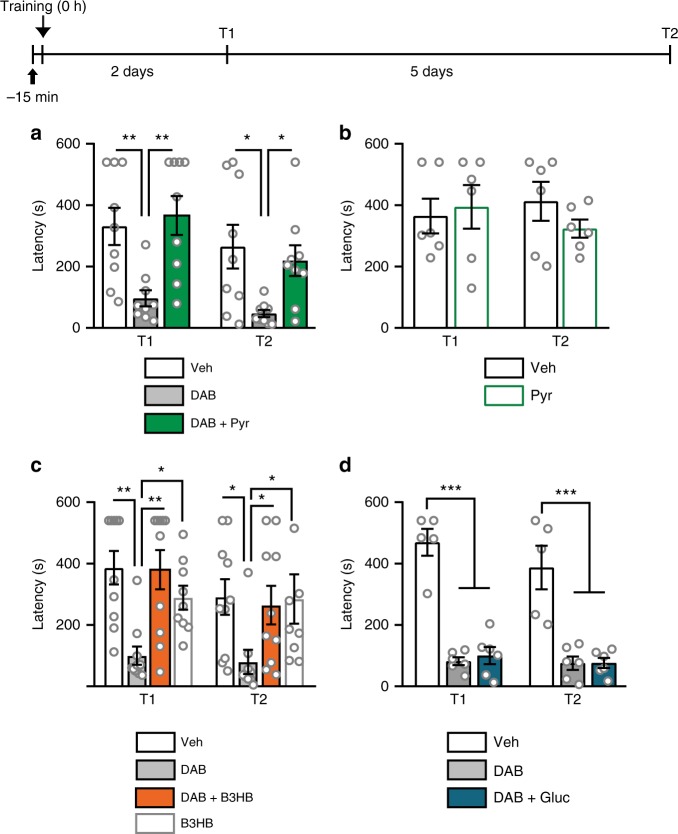
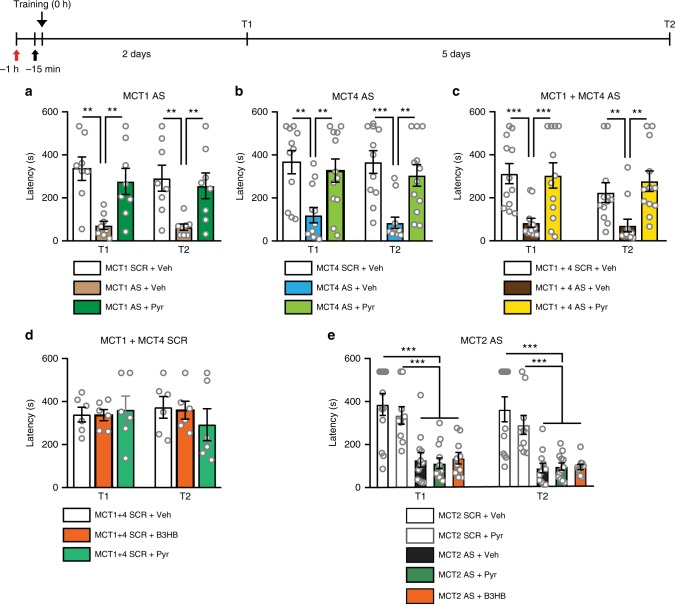
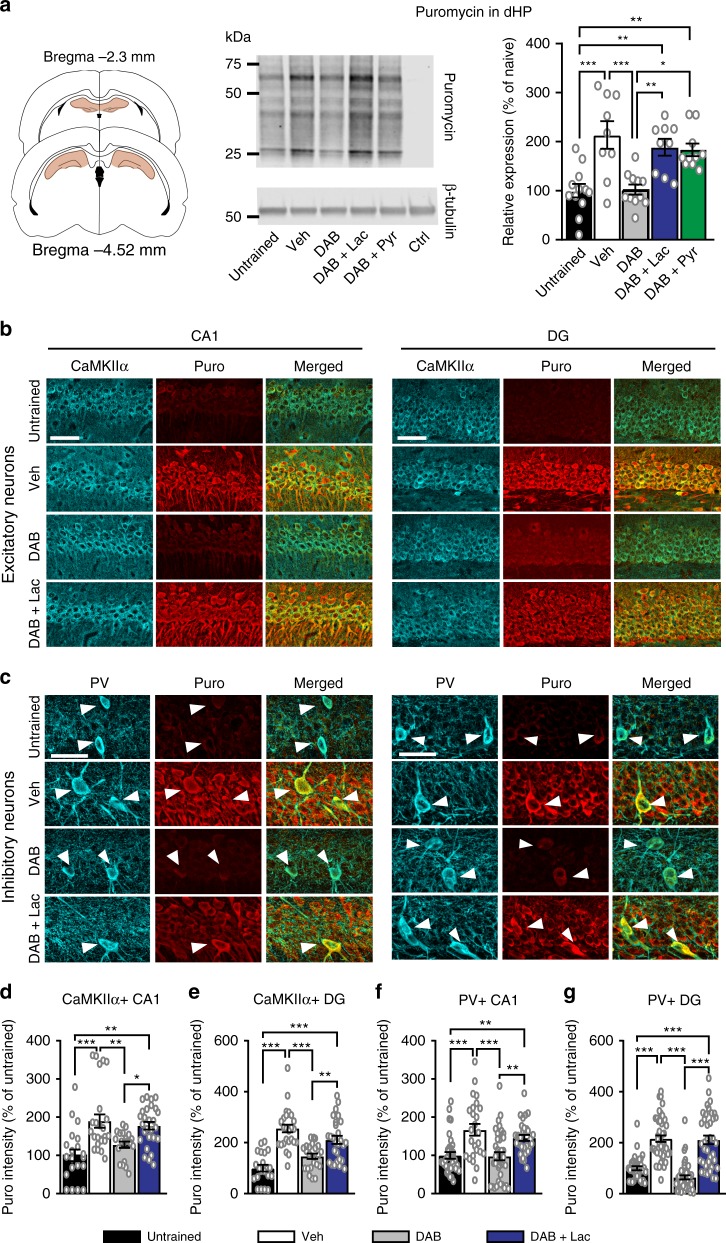
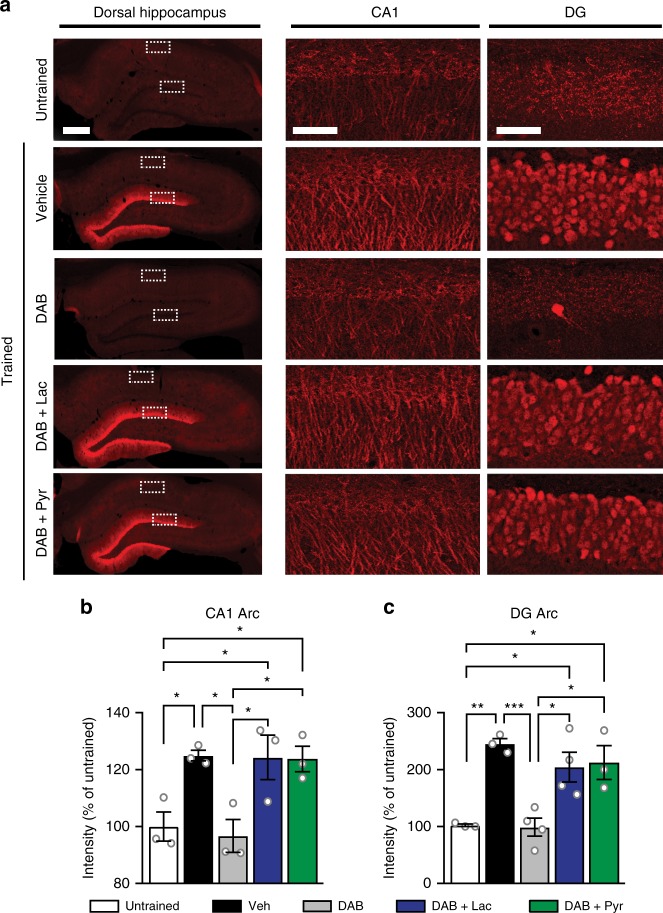
Verification
Claims the paper makes
The claims and statistics of this paper haven’t been checked yet.
Run the check — free, no account needed. It reads the open-access text and checks the sources it cites.
Claims other papers make about this one
Each is checked against this paper’s own text: does it say what the citing paper says it does?
The source backs part of the claim, not all of it — or backs it for a different population, condition or comparison.
In the citing paper
“As such, the metabolic responses to perceived, but not unperceived, sensory stimulation could be enabling factors for learning and memory”
From Perception is associated with the brain’s metabolic response to sensory stimulation (2022) · cites this paper as Descalzi et al., 2019
Experimental — accuracy not yet measured
Self-check
Percentages, sums and reported differences re-computed from the paper’s own numbers.
The self-check needs the paper’s full text.
Citations
Cites
The molecular biology of memory storage: a dialogue between genes and synapses
Kandel, E. R. (2001) · Science · doi:10.1126/science.1067020 · Cited by 3,917
Pellerin, L., & Magistretti, P. J. (1994) · Proceedings of the National Academy of Sciences · doi:10.1073/pnas.91.22.10625 · Cited by 2,927
Brain energy metabolism: focus on Astrocyte-neuron metabolic cooperation
Bélanger, M., Allaman, I., & Magistretti, P. J. (2011) · Cell Metabolism · doi:10.1016/j.cmet.2011.08.016 · Cited by 2,313
The molecular basis of CaMKII function in synaptic and behavioural memory
Lisman, J., Schulman, H., & Cline, H. (2002) · Nature Reviews Neuroscience · doi:10.1038/nrn753 · Cited by 1,860
Astrocyte-Neuron Lactate Transport Is Required for Long-Term Memory Formation
Suzuki, A., Stern, S. A., Bozdagi, O., Huntley, G. W., Walker, R. H., Magistretti, P. J., & Alberini, C. M. (2011) · Cell · doi:10.1016/j.cell.2011.02.018 · Cited by 1,711
Self-citationSUnSET, a nonradioactive method to monitor protein synthesis
Schmidt, E. K., Clavarino, G., Ceppi, M., & Pierre, P. (2009) · Nature Methods · doi:10.1038/nmeth.1314 · Cited by 1,706
Multi-dimensional Roles of Ketone Bodies in Fuel Metabolism, Signaling, and Therapeutics
Puchalska, P., & Crawford, P. A. (2017) · Cell Metabolism · doi:10.1016/j.cmet.2016.12.022 · Cited by 1,682
Lactate in the brain: from metabolic end-product to signalling molecule
Magistretti, P. J., & Allaman, I. (2018) · Nature Reviews Neuroscience · doi:10.1038/nrn.2018.19 · Cited by 1,298
mTOR signaling: At the crossroads of plasticity, memory and disease
Hoeffer, C. A., & Klann, E. (2010) · Trends in Neurosciences · doi:10.1016/j.tins.2009.11.003 · Cited by 1,128
Regulation of pyruvate metabolism and human disease
Gray, L. R., Tompkins, S. C., & Taylor, E. B. (2013) · Cellular and Molecular Life Sciences · doi:10.1007/s00018-013-1539-2 · Cited by 983
Research works printed but not linked: 1
- Okada, Y. & Lipton, P. in Handbook of Neurochemistry and Molecular Neurobiology: Brain Energetics. Integration of Molecular and Cellular Processes (eds Abel Lajtha, Gary E. Gibson, & Gerald A. Dienel) 17–39 (Springer US, 2007).
Cited by
Sorted by citations
Items 101–187 of 187
Cosentino, L., Urbinati, C., Lanzillotta, C., Rasmo, D. D., Valenti, D., Pellas, M., Quattrini, M. C., Piscitelli, F., Kostrzewa, M., Domenico, F. D., et al. (2024) · Molecular Autism · doi:10.1186/s13229-024-00617-1 · Cited by 11
TSPO contributes to neuropathology and cognitive deficits in Alzheimer’s disease
Ceyzériat, K., Badina, A. M., Abjean, L., Meyer, L., Bouteldja, F., Bałkota, M., Amossé, Q., Prudhomme, O., Middleton, R. J., Liu, G.-J., et al. (2025) · Journal of Neuroinflammation · doi:10.1186/s12974-025-03583-4 · Cited by 14
Aleshina, Y. A., & Aleshin, V. A. (2024) · International Journal of Molecular Sciences · doi:10.3390/ijms25084341 · Cited by 10
Persistent changes in extracellular lactate dynamics following synaptic potentiation
Bingul, D., Kalra, K., Murata, E. M., Belser, A., & Dash, M. B. (2020) · Neurobiology of Learning and Memory · doi:10.1016/j.nlm.2020.107314 · Cited by 13
Wu, Y., Gao, R., Huang, Q., Huang, C., Wang, L., Lin, L., He, G., Wu, K., Liu, X., Liu, X., et al. (2024) · Experimental Neurology · doi:10.1016/j.expneurol.2024.115037 · Cited by 9
Lei, H.-P., Yang, X., Hu, Y., Wu, L.-N., Wei, A., Yu, L., Liu, T., Ji, X., Liu, J., Jin, H. J., et al. (2025) · Journal of Ethnopharmacology · doi:10.1016/j.jep.2025.120548 · Cited by 9
Molecular Mechanisms of Astrocyte Involvement in Synaptogenesis and Brain Synaptic Plasticity
Хаспеков, Л. Г., & Frumkina, L. E. (2023) · Biochemistry (Moscow) · doi:10.1134/s0006297923040065 · Cited by 10
Mondal, R., Deb, S., Chowdhury, D., Sarkar, S., Roy, A. G., Shome, G., Sarkar, V., Lahiri, D., & Benito‐León, J. (2024) · Neuroscience Letters · doi:10.1016/j.neulet.2024.138028 · Cited by 10
Amin, A. H. (2021) · Environmental Science and Pollution Research · doi:10.1007/s11356-021-14843-0 · Cited by 9
Beltrán-Velasco, A. I. (2025) · Metabolites · doi:10.3390/metabo15020128 · Cited by 10
Low-Carbohydrate and High-Protein Diet Suppresses Working Memory Function in Healthy Mice
Shima, T., Yoshikawa, T., & Onishi, H. (2022) · Journal of Nutritional Science and Vitaminology · doi:10.3177/jnsv.68.527 · Cited by 8
Lactate inhibits naked mole-rat cardiac mitochondrial respiration
Huynh, K. W., & Pamenter, M. E. (2022) · Journal of Comparative Physiology B · doi:10.1007/s00360-022-01430-z · Cited by 8
Hagihara, H., Shoji, H., Hattori, S., Sala, G., Takamiya, Y., Tanaka, M., Ihara, M., Shibutani, M., Hatada, I., Hori, K., et al. (2021) · bioRxiv (Cold Spring Harbor Laboratory) · doi:10.1101/2021.02.02.428362 · Cited by 8
Shima, T., Onishi, H., & Terashima, C. (2025) · The FASEB Journal · doi:10.1096/fj.202500336r · Cited by 8
Zou, W., Zhang, Z., Cao, T., & Li, M. (2025) · Cytokine · doi:10.1016/j.cyto.2025.156960 · Cited by 7
Astrocytes and Memory: Implications for the Treatment of Memory-related Disorders
Wang, J., Cheng, P., Qu, Y., & Zhu, G. (2024) · Current Neuropharmacology · doi:10.2174/1570159x22666240128102039 · Cited by 7
Plaitakis, A., Sidiropoulou, K., Kotzamani, D., Litso, I., Zaganas, I. V., & Spanaki, C. (2024) · International Journal of Molecular Sciences · doi:10.3390/ijms25105297 · Cited by 8
Scavuzzo, C. J., Newman, L. A., Gold, P. E., & Korol, D. L. (2020) · Behavioural Brain Research · doi:10.1016/j.bbr.2021.113385 · Cited by 7
Kambe, Y. (2022) · Biochimica et Biophysica Acta (BBA) - General Subjects · doi:10.1016/j.bbagen.2022.130137 · Cited by 7
Glial metabolism versatility regulates mushroom body–driven behavioral output inDrosophilaPreprint
Basu, R., Préat, T., & Plaçais, P.-Y. (2024) · Learning & Memory · doi:10.1101/lm.053823.123 · Cited by 7
Raun, N., Jones, S. G., Kerr, O., Keung, C., Butler, E. F., Alka, K., Krupski, J. D., Reid-Taylor, R. A., Ibrahim, V., Williams, M., et al. (2025) · PLoS Biology · doi:10.1371/journal.pbio.3003004 · Cited by 13
The metabolic reprogramming of lactate in the nervous system
Gu, Y., Zhang, B., Lei, C., Guan, Y., Fan, B., Xu, W., Jin, A., Deng, Q., Xue, R., Yang, X., et al. (2026) · Experimental Neurology · doi:10.1016/j.expneurol.2026.115643 · Cited by 7
Lactate and lactylation: mechanisms, function, diseases, and therapeutic targets
Wang, X., Liu, C., Chen, Y., Fang, Y., Li, J. N., Liu, Y., Pan, Y., Bao, S., Wang, X., Liu, Y., et al. (2026) · Molecular Biomedicine · doi:10.1186/s43556-026-00472-x · Cited by 8
Activity-dependent protein synthesis in neurons requires microglial-metabolic coupling
Adler, D. I., Martín‐Ávila, A., Cheng, E., Oliveira, M. M., Zhang, M., Evans, H. T., Yuan, D., Sam, R., Zhang, N., Sellés, M. C., et al. (2026) · Cell Metabolism · doi:10.1016/j.cmet.2026.05.006 · Cited by 7
Mitroshina, Е. V., Kalinina, E. P., Kalyakulina, A., Teplyakova, A. V., & Vedunova, M. V. (2024) · International Journal of Molecular Sciences · doi:10.3390/ijms252212237 · Cited by 7
Yin, R., Jing, G., Tian, Y., Ma, M., & Zhang, M. (2025) · Biochimica et Biophysica Acta (BBA) - Molecular Basis of Disease · doi:10.1016/j.bbadis.2025.167749 · Cited by 7
Fueling the Mind: Brain Metabolism in Health and Neurodevelopmental Disorders
Marano, D., Mariano, V., & Novarino, G. (2025) · Annual Review of Genetics · doi:10.1146/annurev-genet-111523-102424 · Cited by 6
Reid, P., Scherer, K., Halasz, D., Simal, A. L., Tang, J. D., Zaheer, F., Tuling, J., Levine, G. J., Michaud, J., Clark, A. L., et al. (2024) · Brain Behavior and Immunity · doi:10.1016/j.bbi.2024.12.025 · Cited by 7
Self-citationBessières, B., Cruz, E., & Alberini, C. M. (2021) · eLife · doi:10.7554/elife.68590 · Cited by 5
Self-citationRaun, N., Jones, S. G., Kerr, O., Keung, C., Ibrahim, V., Williams, M., Top, D., & Kramer, J. M. (2023) · bioRxiv (Cold Spring Harbor Laboratory) · doi:10.1101/2023.08.08.549887 · Cited by 5
Functional impacts of lactylation in Hypoxia‒primed mesenchymal stromal cells
Zhao, F., Tang, Q., & Liu, J. (2025) · Frontiers in Cell and Developmental Biology · doi:10.3389/fcell.2025.1678282 · Cited by 4
Kustrimovic, N., Rabattoni, V., Riva, D., Motta, Z., Sacchi, S., & Pollegioni, L. (2025) · Molecular Aspects of Medicine · doi:10.1016/j.mam.2025.101438 · Cited by 6
Zong, B., Yu, F., Li, F., Sun, P., & Lin, L. (2025) · Biomolecules · doi:10.3390/biom16010043 · Cited by 4
Park, J., Kim, K. H., Jun, H. W., Choi, S., Park, S. B., & Lee, S. J. (2026) · Progress in Neurobiology · doi:10.1016/j.pneurobio.2026.102924 · Cited by 4
Kong, J., Yang, Z., Wang, Y., Liu, L., Liu, Y., & Chen, W. (2026) · Molecular Medicine · doi:10.1186/s10020-026-01551-z · Cited by 4
Brain mitochondria as key drivers of cognition and behaviour
Sandi, C., Lobo, M. K., Hollis, F., Hirabayashi, Y., de Juan‐Sanz, J., & Bolaños, J. P. (2026) · Nature reviews. Neuroscience · doi:10.1038/s41583-026-01061-1 · Cited by 5
McNay, E. C. (2023) · Journal of Neurochemistry · doi:10.1111/jnc.16001 · Cited by 4
Metabolites from the Gut Microbiota and the Role in the Gut-Brain Axis
Fukushima, K. (2022) · Science Insights · doi:10.15354/si.22.re037 · Cited by 4
Proteomics Analysis of R-Ras Deficiency in Oxygen Induced Retinopathy
Vähätupa, M., Nättinen, J. E., Aapola, U., Uusitalo‐Järvinen, H., Uusitalo, H. M. T., & Järvinen, T. A. H. (2023) · International Journal of Molecular Sciences · doi:10.3390/ijms24097914 · Cited by 4
Fueling Alzheimer’s Disease: Where Does Immunometabolism Stand?
Correia, S. C., Perry, G. L., & Moreira, P. I. (2024) · Journal of Alzheimer s Disease · doi:10.3233/jad-240787 · Cited by 3
Protein glycosylation and synaptic transmission: brain glycogen keeps them separated
Trentini, G. P., Cazzanelli, G., & Lolli, G. (2025) · Brain · doi:10.1093/brain/awaf396 · Cited by 3
Nieto, Á. A. V., Díaz, A. H., Millán, M. H., Sagredo, D., & Gacitúa, J. A. (2026) · European Archives of Psychiatry and Clinical Neuroscience · doi:10.1007/s00406-026-02231-z · Cited by 3
Kolotyeva, N. A., Gilmiyarova, F. N., Сергеевич, А. А., Baranich, T. I., Rozanova, N. A., Kukla, M. V., Tregub, P. P., & Salmina, A. B. (2023) · International Journal of Molecular Sciences · doi:10.3390/ijms241914709 · Cited by 3
Modern Methods and Materials for Modeling Brain Tissue and Blood-Brain Barrier In Vitro
Salmin, V. V. (2021) · Journal of Siberian Federal University Biology · doi:10.17516/1997-1389-0368 · Cited by 3
da Costa, E. R., Henrique, E. P., da Silva, J. B., Pereira, P. D. C., de Abreu, C. C., Fernandes, T. N., Magalhães, N. G. D. M., da Silva, A. D. J. F., Guerreiro, L. C. F., Diniz, C. G., et al. (2020) · Journal of Chemical Neuroanatomy · doi:10.1016/j.jchemneu.2020.101805 · Cited by 3
Ning, R., & Wright, B. A. (2023) · Learning & Memory · doi:10.1101/lm.053710.122 · Cited by 3
Bertocci, M. A., & Diler, R. S. (2025) · Frontiers in Neuroscience · doi:10.3389/fnins.2025.1587011 · Cited by 2
Kambali, M., Wang, M., Nagarajan, R., Lyu, J., & Rudolph, U. (2026) · Behavioural Brain Research · doi:10.1016/j.bbr.2026.116111 · Cited by 2
Parent, M. B. (2022) · Neuroscience · doi:10.1016/j.neuroscience.2021.12.040 · Cited by 2
Re-energising the brain: glucose metabolism, Tau protein and memory in ageing and dementia
Robbins, M. (2024) · Ageing and Neurodegenerative Diseases · doi:10.20517/and.2023.57 · Cited by 3
Astrocytes of the hippocampus and responses to periprandial neuroendocrine hormones
Loera‐Lopez, A. L., Lord, M. N., & Noble, E. E. (2025) · Physiology & Behavior · doi:10.1016/j.physbeh.2025.114913 · Cited by 2
Shima, T., Onishi, H., & Terashima, C. (2025) · The Journal of Nutritional Biochemistry · doi:10.1016/j.jnutbio.2025.109937 · Cited by 2
LACTATE: A BIOLOGICAL MARKER OF PHYSICAL ACTIVITY IN COLOMBIAN WEIGHTLIFTING ATHLETES
Ríos, D. C. Z., Matta, A. J., Mina-Paz, Y., & Padilla, I. C. R. (2021) · Revista Brasileira de Medicina do Esporte · doi:10.1590/1517-8692202127012019_0047 · Cited by 2
Astrocitos: acción e interacción en el Sistema Nervioso
Padilla-Gil, D. N. (2024) · Revista Med · doi:10.18359/rmed.6870 · Cited by 1
Dai, Y., Bi, M., Jiao, Q., Du, X., Chen, X., Yan, C., & Jiang, H. F. (2025) · Movement Disorders · doi:10.1002/mds.30294 · Cited by 2
Coppola, T., Poupon, G., Rangone, H., Martin, S., & Lebrun, P. (2025) · Cells · doi:10.3390/cells14211737 · Cited by 1
Garrahy, J. P. (2025) · Journal of Alzheimer s Disease · doi:10.1177/13872877251404970 · Cited by 1
García, N. R., Zarco, A. R., Ruiz-Pacheco, A., Mata, S. Ú., Milian, J. M., Monleón, B., Marín, N. S., Oddo, M., Bouzat, P., Resch, P., et al. (2026) · Critical Care · doi:10.1186/s13054-026-05973-3 · Cited by 1
Wang, X., Chen, L., Kim, T. A., Wang, Z., Peng, X., Syty, M. D., Wang, F., Zhang, Y., Wehrle, P. H., Nasu, Y., et al. (2026) · Neuron · doi:10.1016/j.neuron.2026.03.021 · Cited by 1
Kong, J. (2026) · Exploration of neuroscience · doi:10.37349/en.2026.1006142 · Cited by 1
Gu, X., Zhuang, A., Fan, J., Wen, X., Yang, L., Jia, R., Chai, P., & Fan, X. (2026) · Progress in Retinal and Eye Research · doi:10.1016/j.preteyeres.2026.101509 · Cited by 1
Fructose 1,6-Bisphosphatase 2-Camk2 Interaction Is an Integral Mechanism of Long-Term PotentiationPreprint
Duda, P., Wójtowicz, T., Janczara, J., Krowarsch, D., Czyrek, A. A., Gizak, A., & Rakus, D. (2020) · Preprints.org · doi:10.20944/preprints202005.0065.v1
Hagihara, H., Shoji, H., Hattori, S., Sala, G., Takamiya, Y., Tanaka, M., Ihara, M., Shibutani, M., Hatada, I., Hori, K., et al. (2023) · eLife · doi:10.7554/elife.89376.1
Neuro–glia communication and glycolysis
Cardoso, S., & Moreira, P. I. (2023) · Elsevier eBooks · doi:10.1016/b978-0-323-91704-9.00006-9
Hagihara, H., Shoji, H., Hattori, S., Sala, G., Takamiya, Y., Tanaka, M., Ihara, M., Shibutani, M., Hatada, I., Hori, K., et al. (2023) · eLife · doi:10.7554/elife.89376.2
Molecular mechanisms of astrocyte involvement in synaptogenesis and brain synaptic plasticity
Хаспеков, Л. Г., & Frumkina, L. E. (2023) · Biochemistry (Moscow) · doi:10.31857/s0320972523040061
TSPO contributes to neuropathology and cognitive deficits in Alzheimer’s diseasePreprint
Ceyzériat, K., Badina, A. M., Abjean, L., Meyer, L., Bouteldja, F., Bałkota, M., Amossé, Q., Prudhomme, O., Middleton, R. J., Liu, G.-J., et al. (2025) · Research Square · doi:10.21203/rs.3.rs-7008246/v1
Neuronal-Glial Interactions in Learning and Behavior under Normal Conditions and during Oncogenesis
Venerina, Y. A., Venerin, A. А., Gorkin, A. G., & Alexandrov, Y. I. (2025) · Neuroscience and Behavioral Physiology · doi:10.1007/s11055-025-01867-z · Cited by 2
Shima, T., & Soya, H. (2025) · Advances in neurobiology · doi:10.1007/978-981-95-0066-6_15
Philips, T., Thompson, E. G., Spead, O., Vijayakumar, B. G., Kent, E. R., Miller, S., Nwokeleme, T., Vidensky, S., Farah, M. H., & Rothstein, J. D. (2025) · Glia · doi:10.1002/glia.70113
Xu, H., Luo, Y., & Wu, X. X. (2026) · Comprehensive physiology · doi:10.1002/cph4.70098 · Cited by 1
Lactate and cognition: a dual modulator
Yang, W., Xu, Y., & Wang, K. (2026) · Frontiers in Molecular Neuroscience · doi:10.3389/fnmol.2026.1742681 · Cited by 1
Hamel, L., Pereira, S. X. E. R. L., Yang, Z., Garrido, A. N., Agarwal, S. M., Lam, T. K. T., & Hahn, M. K. (2026) · Reviews in Endocrine and Metabolic Disorders · doi:10.1007/s11154-026-10034-9 · Cited by 1
Murinda, K. P., Morgan, A. B., & Inman, D. M. (2026) · Frontiers in Cell and Developmental Biology · doi:10.3389/fcell.2026.1805959
Tani, A., Yagi, M., Horiuchi, N., Nagata, K., Tanaka, T., Kittaka, H., Igami, K., & Uchiumi, T. (2026) · Mitochondrion · doi:10.1016/j.mito.2026.102168
Rethinking Immovable Cultural Heritage Within One Health: An Ecophysical Perspective
Casazza, M. (2026) · Environments · doi:10.3390/environments13060329
Neuroglial P2Y1 receptor signalling differentially contributes to inflammatory neurodegeneration
Schubert, C., Fonseca, R. L., Hadjilaou, A., Vieira, V., Degenhardt, K., Seemann, A.-L., Hakimy, A., Sonner, J., Ludewig, P., Magnus, T., et al. (2026) · Journal of Neuroinflammation · doi:10.1186/s12974-026-03904-1 · Cited by 1
Neuroinflammation, Glia–Neuron Crosstalk, and Energy Metabolism in Alcohol Use Disorder
Skryabin, V. Y., Sokolova, S. I., & Masyakin, A. V. (2026) · Biochemistry (Moscow) · doi:10.1134/s0006297925604149
In silico dysbiosis-associated neuroprotective metabolite insufficiency in Alzheimer’s disease
Shaer, N. A., & Al-Abbas, N. S. (2026) · Open Medicine · doi:10.1515/med-2026-1484
Regulation of Translation by PKA Signaling Pathway
Yang, L., Hou, K., & Qi, H. (2026) · International Journal of Molecular Sciences · doi:10.3390/ijms27156789
Endothelial cell–pericyte interactions in ischemic stroke: From microvascular pathology to repair
Feng, S., Zhang, C., Zhao, Y., Wang, Y., 张柏民, Zhang, Q., Zheng, Y., Cheng, F., Li, C., Wang, X., et al. (2026) · Pharmacological Research · doi:10.1016/j.phrs.2026.108351
Liu, W., Zeng, Q., Cai, W., Shen, F., Chen, Y., Dai, H., Lei, D., Yang, J., Jin, S., Lu, Y., et al. (2026) · Experimental Neurology · doi:10.1016/j.expneurol.2026.115956
Marques, L. B., de Carvalho, A., Souza, R. L. L. D. S., Viero, F. T., Britto, L. R., & Ulrich, H. (2026) · Bioscience Reports · doi:10.1042/bsr20250349
Chen, M., Zuo, C., Li, R., Zhang, J., Yao, Z., Li, L., & Cheng, L. (2026) · Discover Neuroscience · doi:10.1186/s13064-026-00314-0
Li, M., Ye, M., Xie, H., Gao, T., Kan, W., Chen, Y., Xia, Y., Zhao, Y., & Yuan, A.-H. (2026) · Frontiers in Endocrinology · doi:10.3389/fendo.2026.1991245
Mitochondrial Lactate Signaling and Protein Lactylation in Neurological Diseases
Gu, Y., Zhang, P., Lei, C., Xu, W., & Cui, Y. (2026) · Molecular Neurobiology · doi:10.1007/s12035-026-06291-z
Metadata
- Authors
- Descalzi, G., Gao, V., Steinman, M. Q., Suzuki, A., & Alberini, C. M.
- Affiliations
- New York University (US)
- University of Toyama (JP)
- Corresponding author
- Alberini, Cristina M.
- Venue
- Communications Biology
- Published
- 2019-07-02
- Volume
- 2
- Issue
- 1
- Pages
- 247-247
- ISSN
- 2399-3642 (ISSN-L)
- PMC
- PMC6606643
- OpenAlex
- W2954464051
- Cited by
- 188
- References
- 69
- Citations by year
- 2026: 29 · 2025: 31 · 2024: 31 · 2023: 24 · 2022: 27 · 2021: 27 · 2020: 19
- FWCI
- 10.61
- Type
- journal article
- Language
- en
- Open access
- gold
- doi.org
- Locations
- Communications Biology (publishedVersion, cc-by)
- PubMed Central (publishedVersion, cc-by)
- PubMed (publishedVersion)
- DOAJ (DOAJ: Directory of Open Access Journals) (submittedVersion)
- Funders
- U.S. Department of Health & Human Services | NIH | National Institute of Mental Health (MH100822)
- Topics
- Life Sciences › Neuroscience › Cognitive Neuroscience › Memory and Neural Mechanisms
- Life Sciences › Neuroscience › Cellular and Molecular Neuroscience › Neuroscience and Neuropharmacology Research
- Life Sciences › Neuroscience › Developmental Neuroscience › Neurogenesis and neuroplasticity mechanisms
- Keywords
- astrocyte-neuron lactate shuttle, long-term memory, pyruvate, ketone bodies, glycogenolysis, monocarboxylate transporters, MCT1, MCT2, MCT4, hippocampus, Arc/Arg3.1, neuronal energy metabolism, excitatory neurons, inhibitory neurons
- MeSH terms
- Memory Consolidation, Animals, Astrocytes, Avoidance Learning, Brain, Citric Acid Cycle, Gangliosides, Hippocampus, Male, Memory Disorders, Neurons, RNA, Messenger, Pyruvic Acid, Lactic Acid, Rats, Long-Evans, Monocarboxylic Acid Transporters, Glycogenolysis, Rats, Memory, Episodic
About these checks
Registry, retraction, Cites and statistics results are computed, not judged, with one exception: a printed reference that no index lists is read once by a model before it counts as a citation error. Claims are extracted by a model and kept only when their quote appears verbatim in the text; each cited source is then checked, with a model’s help, for whether it says what the claim relies on. Those verdicts can be wrong — read the claim’s quote and the cited source before relying on one.
Statistics and arithmetic are recomputed, not judged.
Confidence bands are shown only for fields calibrated on our annotated test set. None is calibrated yet, so no band is shown.
What counts as a claim ›How we measure confidence ›How we check this ›
Are you an author, or do you see a problem with this page? Request a review
