

PD‐L2 suppresses T cell signaling via coinhibitory microcluster formation and SHP2 phosphatase recruitment
Open accessThe DOI matches its Crossref record; 36 of the 36 references it cites were found in a registry or an index.
Abstract
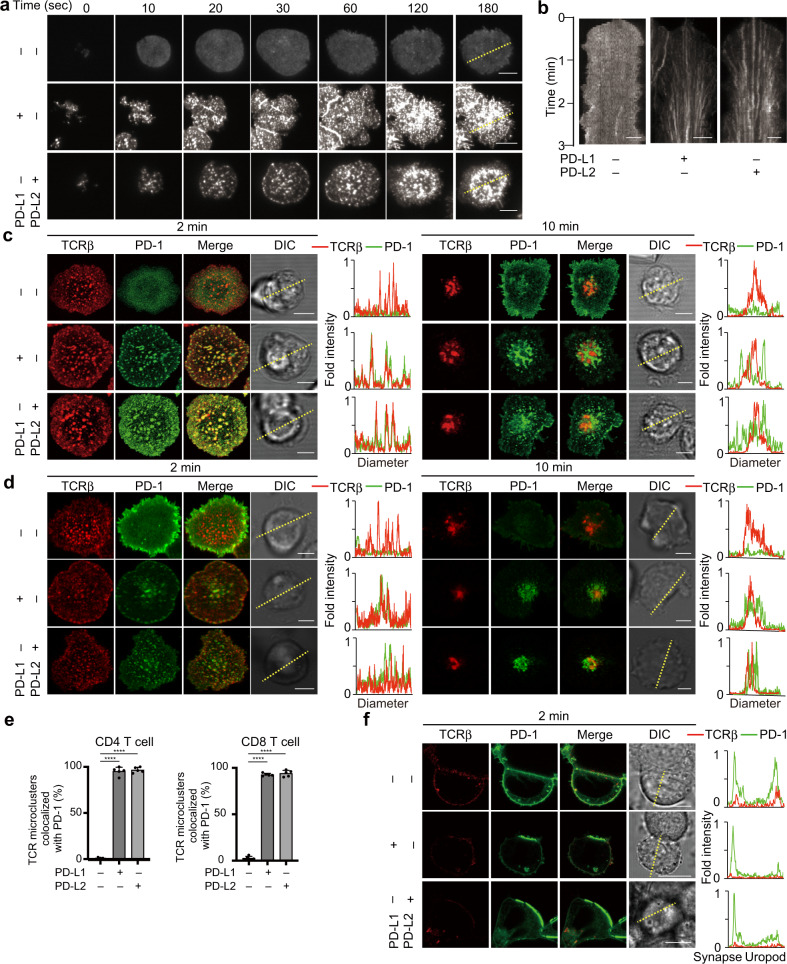
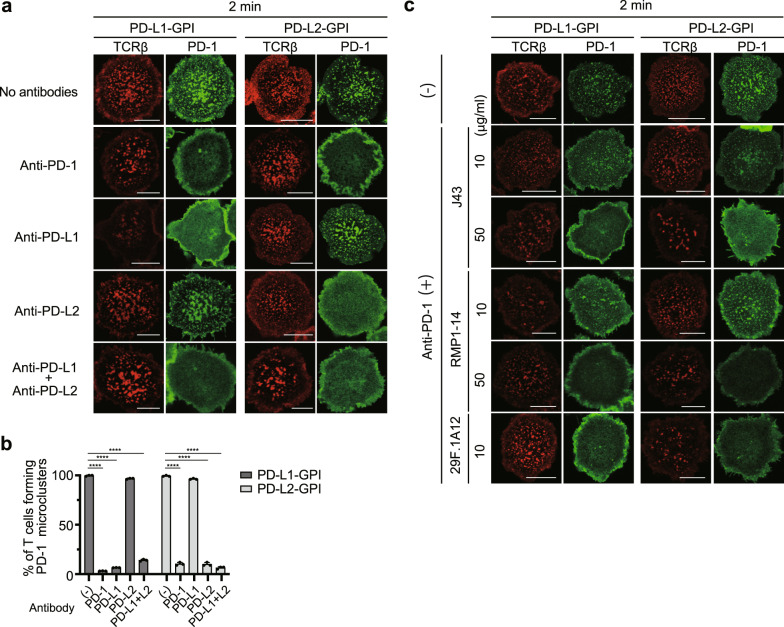
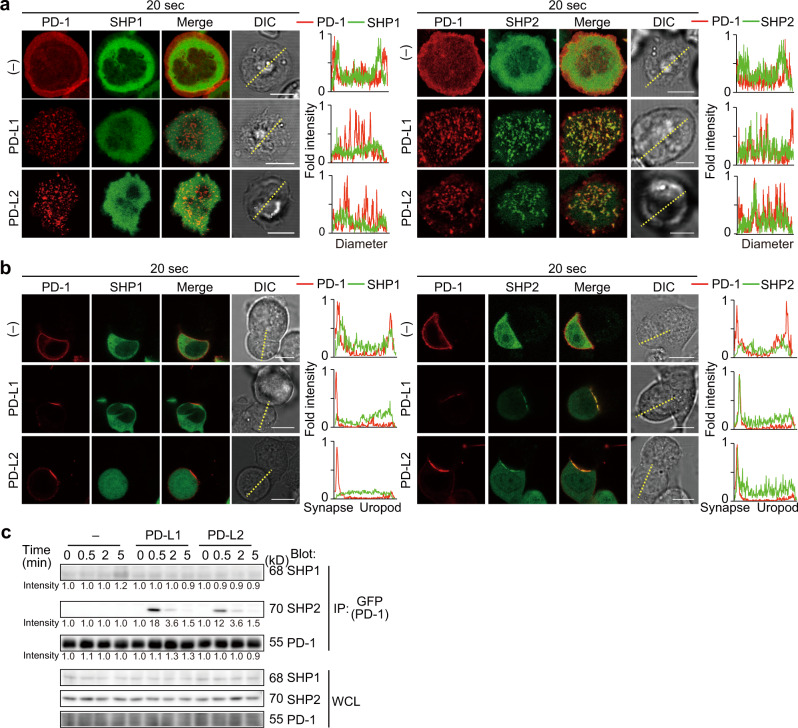
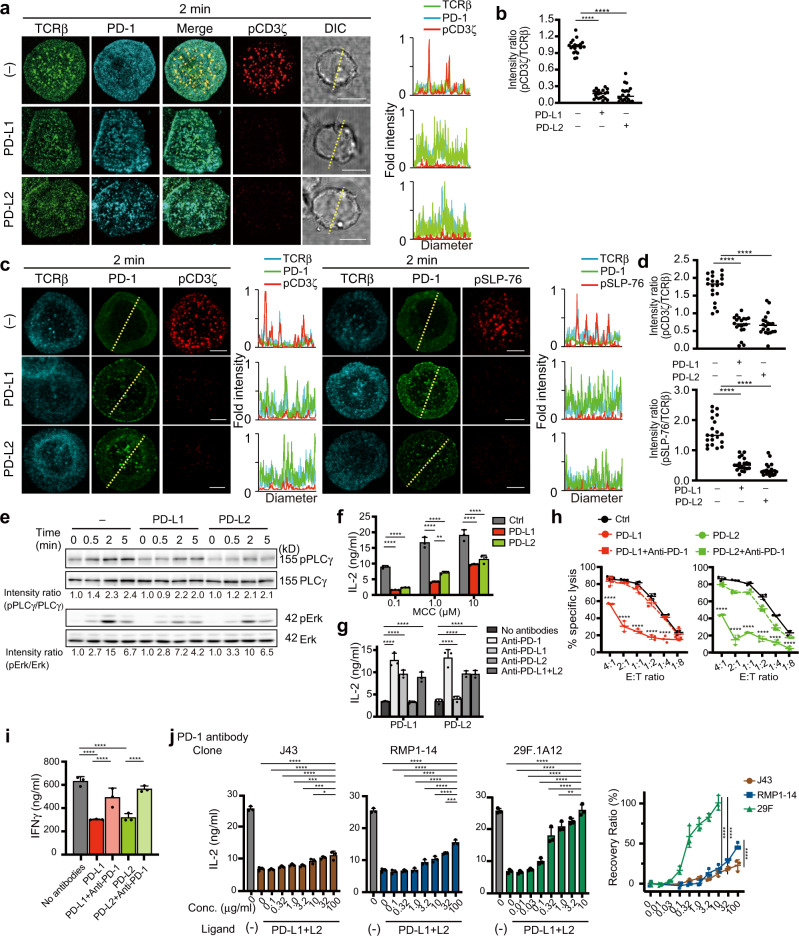
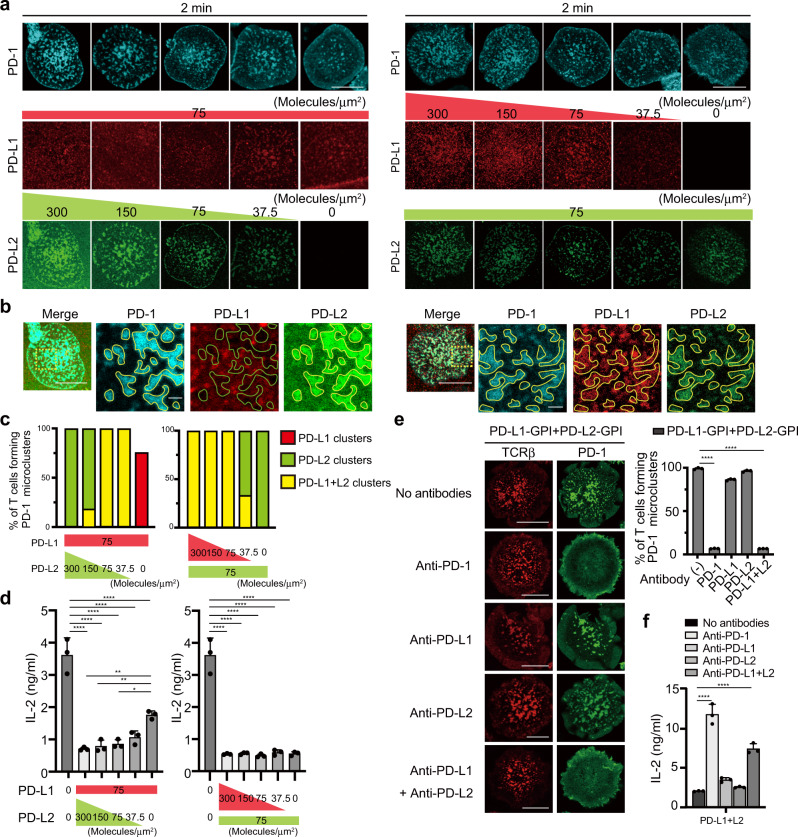
The coinhibitory receptor, PD-1, is of major importance for the suppression of T cell activation in various types of immune responses. A high-resolution imaging study showed that PD-1 forms a coinhibitory signalosome, "PD-1 microcluster", with the phosphatase, SHP2, to dephosphorylate the TCR/CD3 complex and its downstream signaling molecules. Such a consecutive reaction entirely depended on PD-1-PD-L1/2 binding. PD-L2 is expressed on professional antigen-presenting cells and also on some tumor cells, which possibly explains the discrepant efficacy of immune checkpoint therapy for PD-L1-negative tumors. Here, we performed precise imaging analysis of PD-L2 forming PD-1-PD-L2 clusters associating with SHP2. PD-L2 could compete with PD-L1 for binding to PD-1, occupying the same space at TCR microclusters. The PD-1 microcluster formation was inhibited by certain mAbs with functional consequences. Thus, PD-1 microcluster formation provides a visible index for the effectiveness of anti-PD-1- or anti-PD-L1/2-mediated T cell suppression. PD-L2 may exert immune suppressive responses cooperatively with PD-L1 on the microcluster scale.
Overview
The claims and statistics of this paper haven’t been checked yet.
Free: it reads the open-access text and checks the first 5 claims that cite a source we can check. Create a free account to check every claim.
Integrity signals
Registry
Cites
Statistics
Figures
Verification
Claims the paper makes
The claims and statistics of this paper haven’t been checked yet.
Free: it reads the open-access text and checks the first 5 claims that cite a source we can check. Create a free account to check every claim.
Claims other papers make about this one
Each is checked against this paper’s own text: does it say what the citing paper says it does?
The source backs part of the claim, not all of it — or backs it for a different population, condition or comparison.
In the citing paper
“Thus, anti‐PD‐1/PD‐L1 antibodies can promote T cell activation and enhance anti‐tumor immunity by blocking the interaction between PD‐1 and PD‐L1/PD‐L2 [270, 271].”
From Tumor microenvironment signaling and therapeutics in cancer progression (2023) · cites this paper as [270]
Experimental — accuracy not yet measuredThe cited source says what the claim attributes to it.
In the citing paper
“Some tumors express PD‐L1, which contributes to immune evasion by inhibiting cytotoxic responses.”
From Tumor microenvironment signaling and therapeutics in cancer progression (2023) · cites this paper as [270]
Self-check
Percentages, sums and reported differences re-computed from the paper’s own numbers.
The self-check needs the paper’s full text.
Citations
Cites
PD-1 and Its Ligands in Tolerance and Immunity
Keir, M. E., Butte, M. J., Freeman, G. J., & Sharpe, A. H. (2008) · Annual Review of Immunology · doi:10.1146/annurev.immunol.26.021607.090331 · Cited by 5,378
Freeman, G. J., Long, A. J., Iwai, Y., Bourque, K., Chernova, T., Nishimura, H., Fitz, L. J., Malenkovich, N., Okazaki, T., Byrne, M. C., et al. (2000) · The Journal of Experimental Medicine · doi:10.1084/jem.192.7.1027 · Cited by 5,294
Ishida, Y., Agata, Y., Shibahara, K., & Honjo, T. (1992) · The EMBO Journal · doi:10.1002/j.1460-2075.1992.tb05481.x · Cited by 3,256
The Immunological Synapse: A Molecular Machine Controlling T Cell Activation
Grakoui, A., Bromley, S. K., Sumen, C., Davis, M. M., Shaw, A. S., Allen, P. M., & Dustin, M. L. (1999) · Science · doi:10.1126/science.285.5425.221 · Cited by 3,102
Greenwald, R. J., Freeman, G. J., & Sharpe, A. H. (2005) · Annual Review of Immunology · doi:10.1146/annurev.immunol.23.021704.115611 · Cited by 2,318
PD-1 expression by tumour-associated macrophages inhibits phagocytosis and tumour immunity
Gordon, S. R., Maute, R. L., Dulken, B. W., Hutter, G., George, B. M., McCracken, M. N., Gupta, R., Tsai, J. M., Sinha, R., Corey, D., et al. (2017) · Nature · doi:10.1038/nature22396 · Cited by 2,247
The diverse functions of the PD1 inhibitory pathway
Sharpe, A. H., & Pauken, K. E. (2018) · Nature Reviews Immunology · doi:10.1038/nri.2017.108 · Cited by 1,971
Three-dimensional segregation of supramolecular activation clusters in T cells
Monks, C. R. F., Freiberg, B. A., Kupfer, H., Sciaky, N., & Kupfer, A. (1998) · Nature · doi:10.1038/25764 · Cited by 1,968
T cell costimulatory receptor CD28 is a primary target for PD-1–mediated inhibition
Hui, E., Cheung, J., Zhu, J., Su, X., Taylor, M. J., Wallweber, H. A., Sasmal, D. K., Huang, J., Kim, J. M., Mellman, I., et al. (2017) · Science · doi:10.1126/science.aaf1292 · Cited by 1,689
Expression of the PD-1 antigen on the surface of stimulated mouse T and B lymphocytes
Agata, Y., Kawasaki, A., Nishimura, H., Ishida, Y., Tsubat, T., Yagita, H., & Honjo, T. (1996) · International Immunology · doi:10.1093/intimm/8.5.765 · Cited by 1,589
Yokosuka, T., Takamatsu, M., Kobayashi-Imanishi, W., Hashimoto-Tane, A., Azuma, M., & Saito, T. (2012) · Journal of Experimental Medicine · doi:10.1084/jem.20112741 · Cited by 1,161
Self-citationAllosteric inhibition of SHP2 phosphatase inhibits cancers driven by receptor tyrosine kinases
Chen, Y.-N. P., LaMarche, M. J., Chan, H. M., Fekkes, P., Garcia-Fortanet, J., Acker, M. G., Antonakos, B., Chen, C. H.-T., Chen, Z., Cooke, V. G., et al. (2016) · Nature · doi:10.1038/nature18621 · Cited by 925
Coinhibitory Pathways in Immunotherapy for Cancer
Baumeister, S. H., Freeman, G. J., Dranoff, G., & Sharpe, A. H. (2016) · Annual Review of Immunology · doi:10.1146/annurev-immunol-032414-112049 · Cited by 910
B7-Dc, a New Dendritic Cell Molecule with Potent Costimulatory Properties for T Cells
Tseng, S.-Y., Otsuji, M., Gorski, K., Huang, X., Slansky, J. E., Pai, S. I., Shalabi, A., Shin, T., Pardoll, D. M., & Tsuchiya, H. (2001) · The Journal of Experimental Medicine · doi:10.1084/jem.193.7.839 · Cited by 872
Okazaki, T., Maeda, A., Nishimura, H., Kurosaki, T., & Honjo, T. (2001) · Proceedings of the National Academy of Sciences · doi:10.1073/pnas.231486598 · Cited by 848
Sheppard, K.-A., Fitz, L. J., Lee, J. M., Benander, C., George, J. A., Wooters, J., Qiu, Y., Jussif, J. M., Carter, L. L., Wood, C. R., et al. (2004) · FEBS Letters · doi:10.1016/j.febslet.2004.07.083 · Cited by 791
Yokosuka, T., Sakata-Sogawa, K., Kobayashi, W., Hiroshima, M., Hashimoto-Tane, A., Tokunaga, M., Dustin, M. L., & Saito, T. (2005) · Nature Immunology · doi:10.1038/ni1272 · Cited by 698
Self-citationCampi, G., Varma, R., & Dustin, M. L. (2005) · The Journal of Experimental Medicine · doi:10.1084/jem.20051182 · Cited by 637
T cell receptor ligation induces the formation of dynamically regulated signaling assemblies
Bunnell, S. C., Hong, D. I., Kardon, J. R., Yamazaki, T., McGlade, C. J., Barr, V. A., & Samelson, L. E. (2002) · The Journal of Cell Biology · doi:10.1083/jcb.200203043 · Cited by 632
PD-L2 Expression in Human Tumors: Relevance to Anti-PD-1 Therapy in Cancer
Yearley, J. H., Gibson, C., Yu, N., Moon, C., Murphy, E., Juco, J., Lunceford, J., Cheng, J., Chow, L. Q. M., Seiwert, T. Y., et al. (2017) · Clinical Cancer Research · doi:10.1158/1078-0432.ccr-16-1761 · Cited by 594
Moynihan, K. D., Opel, C. F., Szeto, G. L., Tzeng, A., Zhu, E. F., Engreitz, J. M., Williams, R. T., Rakhra, K., Zhang, M. H., Rothschilds, A. M., et al. (2016) · Nature Medicine · doi:10.1038/nm.4200 · Cited by 524
Nichols, R. J., Haderk, F., Stahlhut, C., Schulze, C. J., Hemmati, G., Wildes, D., Tzitzilonis, C., Mordec, K., Marquez, A., Romero, J., et al. (2018) · Nature Cell Biology · doi:10.1038/s41556-018-0169-1 · Cited by 415
Structural and Functional Analysis of the Costimulatory Receptor Programmed Death-1
Zhang, X., Schwartz, J.-C. D., Guo, X., Bhatia, S., Cao, E., Chen, L., Zhang, Z.-Y., Edidin, M. A., Nathenson, S. G., & Almo, S. C. (2004) · Immunity · doi:10.1016/s1074-7613(04)00051-2 · Cited by 410
Sugiura, D., Maruhashi, T., Okazaki, I.-M., Shimizu, K., Maeda, T. K., Takemoto, T., & Okazaki, T. (2019) · Science · doi:10.1126/science.aav7062 · Cited by 386
Zhao, Y., Lee, C. K., Lin, C.-H., Gassen, R. B., Xu, X., Huang, Z., Xiao, C., Bonorino, C., Lu, L.-F., Bui, J. D., et al. (2019) · Immunity · doi:10.1016/j.immuni.2019.11.003 · Cited by 383
Yokosuka, T., Kobayashi, W., Sakata-Sogawa, K., Takamatsu, M., Hashimoto-Tane, A., Dustin, M. L., Tokunaga, M., & Saito, T. (2008) · Immunity · doi:10.1016/j.immuni.2008.08.011 · Cited by 309
Self-citationDifferential binding properties of B7-H1 and B7-DC to programmed death-1
Youngnak, P., Kozono, Y., Kozono, H., Iwai, H., Otsuki, N., Jin, H., Omura, K., Yagita, H., Pardoll, D. M., Chen, L., et al. (2003) · Biochemical and Biophysical Research Communications · doi:10.1016/s0006-291x(03)01257-9 · Cited by 209
Self-citationGorchs, L., Fernández Moro, C., Bankhead, P., Kern, K. P., Sadeak, I., Meng, Q., Rangelova, E., & Kaipe, H. (2019) · Frontiers in Immunology · doi:10.3389/fimmu.2019.00847 · Cited by 193
Grakoui, A., Bromley, S. K., Sumen, C., Davis, M. M., Shaw, A. S., Allen, P. M., & Dustin, M. L. (2015) · The Journal of Immunology · doi:10.1093/jimmunol/194.9.4066 · Cited by 186
Danilova, L., Wang, H., Sunshine, J., Kaunitz, G. J., Cottrell, T. R., Xu, H., Esandrio, J., Anders, R. A., Cope, L., Pardoll, D. M., et al. (2016) · Proceedings of the National Academy of Sciences · doi:10.1073/pnas.1607836113 · Cited by 161
Expanded palette of Nano-lanterns for real-time multicolor luminescence imaging
Takai, A., Nakano, M., Saito, K., Haruno, R., Watanabe, T. M., Ohyanagi, T., Jin, T., Okada, Y., & Nagai, T. (2015) · Proceedings of the National Academy of Sciences · doi:10.1073/pnas.1418468112 · Cited by 134
Tsushima, F., Iwai, H., Otsuki, N., Abe, M., Hirose, S., Yamazaki, T., Akiba, H., Yagita, H., Takahashi, Y., Omura, K., et al. (2003) · European Journal of Immunology · doi:10.1002/eji.200324084 · Cited by 125
Self-citationImmune Suppression by PD-L2 against Spontaneous and Treatment-Related Antitumor Immunity
Tanegashima, T., Togashi, Y., Azuma, K., Kawahara, A., Ideguchi, K., Sugiyama, D., Kinoshita, F., Akiba, J., Kashiwagi, E., Takeuchi, A., et al. (2019) · Clinical Cancer Research · doi:10.1158/1078-0432.ccr-18-3991 · Cited by 93
Tang, S., & Kim, P. S. (2019) · Proceedings of the National Academy of Sciences · doi:10.1073/pnas.1916916116 · Cited by 70
Reviving Function in CD4+ T Cells Adapted to Persistent Systemic Antigen
Rivas, M. N., Weatherly, K., Hazzan, M., Vokaer, B., Dremier, S., Gaudray, F. R., Goldman, M., Salmon, I. J., & Braun, M. Y. (2009) · The Journal of Immunology · doi:10.4049/jimmunol.0901408 · Cited by 31
Antibodies Against B7-DC with Differential Binding Properties Exert Opposite Effects
Ritprajak, P., Hashiguchi, M., Akiba, H., Yagita∥, H., Okumura, K., & Azuma, M. (2012) · Hybridoma · doi:10.1089/hyb.2011.0087 · Cited by 9
Self-citation
Cited by
Tumor microenvironment signaling and therapeutics in cancer progression
Goenka, A., Khan, F., Verma, B., Sinha, P., Dmello, C. C., Jogalekar, M. P., Gangadaran, P., & Ahn, B. (2023) · Cancer Communications · doi:10.1002/cac2.12416 · Cited by 323
Cutaneous manifestations associated with immune checkpoint inhibitors
Watanabe, T., & Yamaguchi, Y. (2023) · Frontiers in Immunology · doi:10.3389/fimmu.2023.1071983 · Cited by 130
Inhibitory PD-1 axis maintains high-avidity stem-like CD8+ T cells
Hor, J. L., Schrom, E. C., Wong-Rolle, A., Vistain, L. F., Shang, W., Dong, Q., Zhao, C. N., Jin, C., & Germain, R. N. (2025) · Nature · doi:10.1038/s41586-025-09440-x · Cited by 70
“Similar findings were also obtained when mice were treated with an anti-PD-1 blocking antibody clone 36,37 (Fig.”
Revisiting PD-1/PD-L pathway in T and B cell response: Beyond immunosuppression
Lu, J., Wu, J., Mao, L., Xu, H., & Wang, S. (2022) · Cytokine & Growth Factor Reviews · doi:10.1016/j.cytogfr.2022.07.003 · Cited by 51
Tang, X., Qi, C., Zhou, H., & Liu, Y. (2022) · Frontiers in Oncology · doi:10.3389/fonc.2022.972906 · Cited by 42
Metadata
- Authors
- Takehara, T., Wakamatsu, E., Machiyama, H., Nishi, W., Emoto, K., Azuma, M., Soejima, K., Fukunaga, K., & Yokosuka, T.
- Affiliations
- Tokyo Medical University (JP)
- Kumamoto University (JP)
- Keio University (JP)
- Tokyo Medical and Dental University (JP)
- Corresponding author
- Yokosuka, Tadashi
- ORCID
- Venue
- Communications Biology
- Published
- 2021-05-14
- Volume
- 4
- Issue
- 1
- Pages
- 581-581
- ISSN
- 2399-3642 (ISSN-L)
- PMC
- PMC8121797
- OpenAlex
- W3161043767
- Cited by
- 31
- References
- 36
- Citations by year
- 2026: 9 · 2025: 3 · 2024: 8 · 2023: 7 · 2022: 3 · 2021: 1
- FWCI
- 1.73
- Type
- journal article
- Language
- en
- Open access
- gold
- doi.org
- Licence
- cc-by
- creativecommons.org/licenses/by/4.0 (tdm)
- creativecommons.org/licenses/by/4.0 (vor)
- Locations
- Communications Biology (publishedVersion, cc-by)
- PubMed Central (publishedVersion, cc-by)
- PubMed (publishedVersion)
- DOAJ (DOAJ: Directory of Open Access Journals) (submittedVersion, cc-by-sa)
- Funders
- MEXT | Japan Society for the Promotion of Science (JP20J10564, JP25113725, JP15H01194, JP16H06501, JP17H03600, JP19K22545, JP20H03536)
- MEXT | JST | Precursory Research for Embryonic Science and Technology (U1114011)
- Takeda Science Foundation
- Naito Foundation (4465-135)
- Topics
- Health Sciences › Medicine › Oncology › Cancer Immunotherapy and Biomarkers
- Life Sciences › Immunology and Microbiology › Immunology › T-cell and B-cell Immunology
- Life Sciences › Biochemistry, Genetics and Molecular Biology › Molecular Biology › Protein Tyrosine Phosphatases
- Keywords
- PD-L2, PD-1, SHP2, T cell signaling, immune checkpoint, PD-L1, T cell suppression, anti-PD-1 therapy, tumor immune evasion
- MeSH terms
- Animals, Cells, Cultured, Dendritic Cells, Lymphocyte Activation, Mice, Inbred C57BL, Signal Transduction, Mice, Knockout, CD8-Positive T-Lymphocytes, Mice, Protein Tyrosine Phosphatase, Non-Receptor Type 11, Programmed Cell Death 1 Receptor, Programmed Cell Death 1 Ligand 2 Protein
About these checks
Registry, retraction, Cites and statistics results are computed, not judged, with one exception: a printed reference that no index lists is read once by a model before it counts as a citation error. Claims are extracted by a model and kept only when their quote appears verbatim in the text; each cited source is then checked, with a model’s help, for whether it says what the claim relies on. Those verdicts can be wrong — read the claim’s quote and the cited source before relying on one.
Statistics and arithmetic are recomputed, not judged.
Confidence bands are shown only for fields calibrated on our annotated test set. None is calibrated yet, so no band is shown.
What counts as a claim ›How we measure confidence ›How we check this ›
Are you an author, or do you see a problem with this page? Request a review
Data sources
Bibliographic data: Semantic Scholar, OpenAlex, Crossref.
Contains information from the Semantic Scholar Academic Graph Datasets, made available under the ODC Attribution License (ODC-BY 1.0).
Semantic Scholar’s data is described in: Kinney, R., et al. (2023). The Semantic Scholar Open Data Platform. arXiv:2301.10140.
