

Aβ initiates brain hypometabolism, network dysfunction and behavioral abnormalities via NOX2-induced oxidative stress in mice
Open accessPublished version of a preprint
The DOI matches its Crossref record; 107 of the 107 references it cites were found in a registry or an index.
Abstract
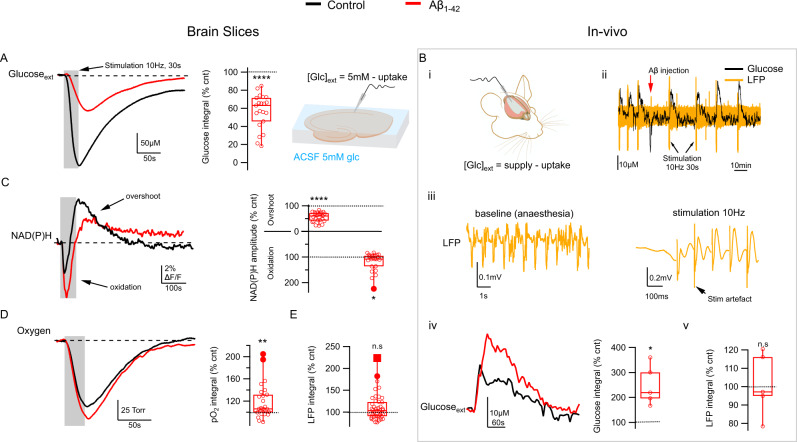
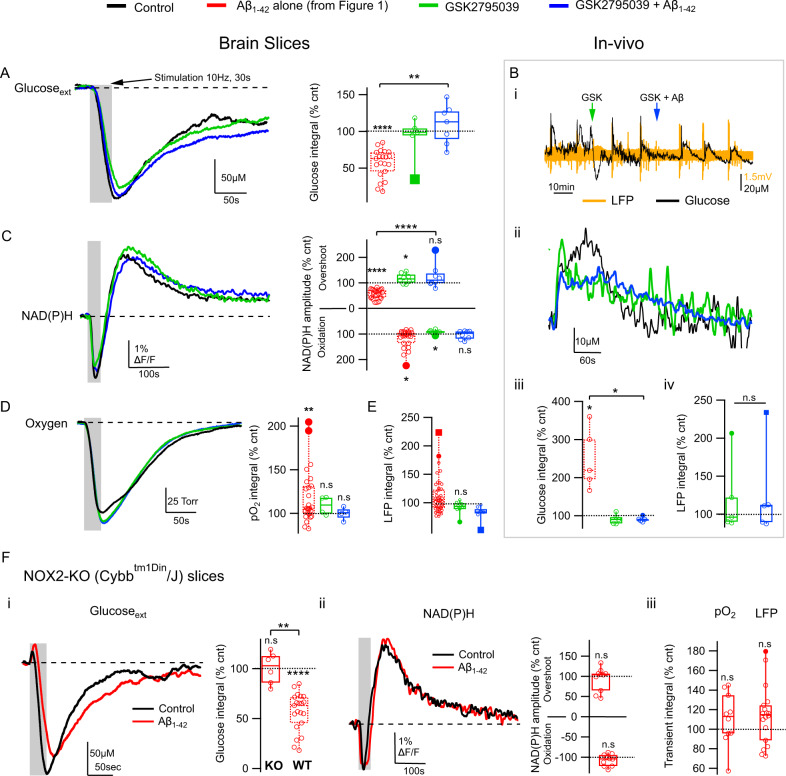
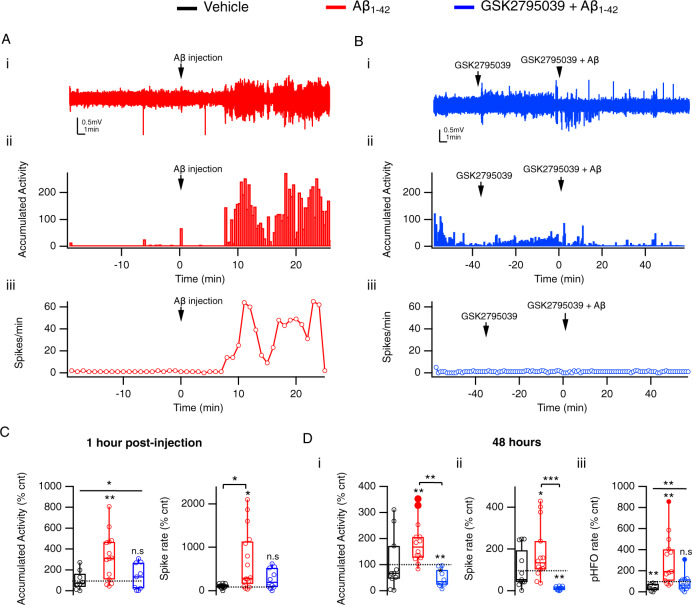
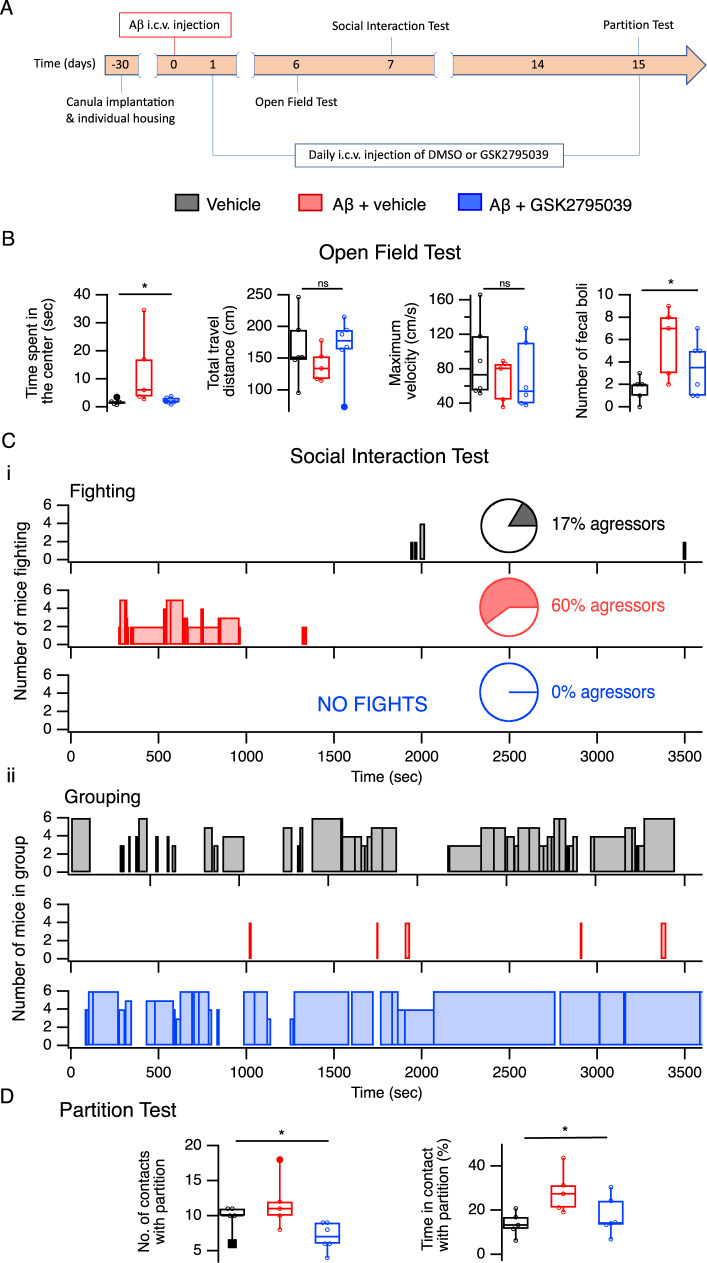
A predominant trigger and driver of sporadic Alzheimer’s disease (AD) is the synergy of brain oxidative stress and glucose hypometabolism starting at early preclinical stages. Oxidative stress damages macromolecules, while glucose hypometabolism impairs cellular energy supply and antioxidant defense. However, the exact cause of AD-associated glucose hypometabolism and its network consequences have remained unknown. Here we report NADPH oxidase 2 (NOX2) activation as the main initiating mechanism behind Aβ 1-42 -related glucose hypometabolism and network dysfunction. We utilize a combination of electrophysiology with real-time recordings of metabolic transients both ex- and in-vivo to show that Aβ 1-42 induces oxidative stress and acutely reduces cellular glucose consumption followed by long-lasting network hyperactivity and abnormalities in the animal behavioral profile. Critically, all of these pathological changes were prevented by the novel bioavailable NOX2 antagonist GSK2795039. Our data provide direct experimental evidence for causes and consequences of AD-related brain glucose hypometabolism, and suggest that targeting NOX2-mediated oxidative stress is a promising approach to both the prevention and treatment of AD.
Overview
The claims and statistics of this paper haven’t been checked yet.
Free: it reads the open-access text and checks the first 5 claims that cite a source we can check. Create a free account to check every claim.
Integrity signals
Registry
Cites
Statistics
Figures
Verification
Claims the paper makes
The claims and statistics of this paper haven’t been checked yet.
Free: it reads the open-access text and checks the first 5 claims that cite a source we can check. Create a free account to check every claim.
Claims other papers make about this one
Each is checked against this paper’s own text: does it say what the citing paper says it does?
The source backs part of the claim, not all of it — or backs it for a different population, condition or comparison.
In the citing paper
“Pathogenesis of AD has been linked to genetic alterations and the accumulation of two proteinaceous lesions in the brain, amyloid-beta plaques (Aβ) and abnormally phosphorylated tau tangles, that disrupt neural communication and impair synaptic transmission.”
From The Impact of Neurotoxin Proteins Trafficked by Primary Cilia and Extracellular Vesicles in Neurodegenerative Diseases (2025) · cites this paper as [68]
Experimental — accuracy not yet measured
Self-check
Percentages, sums and reported differences re-computed from the paper’s own numbers.
The self-check needs the paper’s full text.
Citations
Cites
The Rat Brain in Stereotaxic Coordinates
(1982) · Elsevier eBooks · doi:10.1016/c2009-0-63235-9 · Cited by 51,963
NIA‐AA Research Framework: Toward a biological definition of Alzheimer's disease
Jack, C. R., Bennett, D. A., Blennow, K., Carrillo, M. C., Dunn, B., Haeberlein, S. B., Holtzman, D. M., Jagust, W., Jessen, F., Karlawish, J., et al. (2018) · Alzheimer's & Dementia · doi:10.1016/j.jalz.2018.02.018 · Cited by 10,537
The NOX Family of ROS-Generating NADPH Oxidases: Physiology and Pathophysiology
Bedard, K., & Krause, K.-H. (2007) · Physiological Reviews · doi:10.1152/physrev.00044.2005 · Cited by 6,989
The open field as a paradigm to measure the effects of drugs on anxiety-like behaviors: a review
Prut, L., & Belzung, C. (2003) · European Journal of Pharmacology · doi:10.1016/s0014-2999(03)01272-x · Cited by 3,175
Oxidative Stress: A Key Modulator in Neurodegenerative Diseases
Singh, A., Kukreti, R., Saso, L., & Kukreti, S. (2019) · Molecules · doi:10.3390/molecules24081583 · Cited by 2,254
Oxidative stress and the amyloid beta peptide in Alzheimer’s disease
Cheignon, C., Tomas, M., Bonnefont-Rousselot, D., Faller, P., Hureau, C., & Collin, F. (2018) · Redox Biology · doi:10.1016/j.redox.2017.10.014 · Cited by 2,185
Oxidative stress, dysfunctional glucose metabolism and Alzheimer disease
Butterfield, D. A., & Halliwell, B. (2019) · Nature Reviews Neuroscience · doi:10.1038/s41583-019-0132-6 · Cited by 1,954
Preclinical Alzheimer’s Disease: Definition, Natural History, and Diagnostic Criteria
Dubois, B., Hampel, H., Feldman, H. H., Scheltens, P., Aisen, P., Andrieu, S., Bakardjian, H., Benali, H., Bertram, L., Blennow, K., et al. (2016) · Alzheimer's & Dementia · doi:10.1016/j.jalz.2016.02.002 · Cited by 1,925
Palop, J. J., Chin, J., Roberson, E. D., Wang, J., Thwin, M. T., Bien-Ly, N., Yoo, J., Ho, K. O., Yu, G.-Q., Kreitzer, A., et al. (2007) · Neuron · doi:10.1016/j.neuron.2007.07.025 · Cited by 1,653
Synaptic Activity Regulates Interstitial Fluid Amyloid-β Levels In Vivo
Cirrito, J. R., Yamada, K. A., Finn, M. B., Sloviter, R. S., Bales, K. R., May, P. C., Schoepp, D. D., Paul, S. M., Mennerick, S., & Holtzman, D. M. (2005) · Neuron · doi:10.1016/j.neuron.2005.10.028 · Cited by 1,265
Cited by
Amyloidosis in Alzheimer’s Disease: Pathogeny, Etiology, and Related Therapeutic Directions
Ma, C., Hong, F., & Yang, S. (2022) · Molecules · doi:10.3390/molecules27041210 · Cited by 243
NADPH Oxidases: From Molecular Mechanisms to Current Inhibitors
Cipriano, A., Viviano, M., Feoli, A., Milite, C., Sarno, G., Castellano, S., & Sbardella, G. (2023) · Journal of Medicinal Chemistry · doi:10.1021/acs.jmedchem.3c00770 · Cited by 177
Defining blood-induced microglia functions in neurodegeneration through multiomic profiling
Mendiola, A. S., Yan, Z., Dixit, K., Johnson, J. R., Bouhaddou, M., Meyer-Franke, A., Shin, M.-G., Yong, Y., Agrawal, A., MacDonald, E., et al. (2023) · Nature Immunology · doi:10.1038/s41590-023-01522-0 · Cited by 124
NADPH oxidases: redox regulation of cell homeostasis and disease
Kračun, D., Lopes, L. R., Cifuentes-Pagano, E., & Pagano, P. J. (2025) · Physiological Reviews · doi:10.1152/physrev.00034.2023 · Cited by 127
Blázquez, E., Hurtado-Carneiro, V., Ayuso, Y. L. B., Velázquez, E., García‐García, L., Gómez-Oliver, F., Ruiz‐Albusac, J. M., Ávila, J., & Pozo, M. A. (2022) · Frontiers in Endocrinology · doi:10.3389/fendo.2022.873301 · Cited by 126
Oxygen metabolism abnormality and Alzheimer's disease: An update
Liu, G., Yang, C., Wang, X., Chen, X., Wang, Y., & Le, W. (2023) · Redox Biology · doi:10.1016/j.redox.2023.102955 · Cited by 95
“NOX2-mediated oxidative stress is a significant mechanism of A β -induced glucose hypometabolism [118].”
BackgroundIron Dysregulation in Mitochondrial Dysfunction and Alzheimer’s Disease
Onukwufor, J. O., Dirksen, R. T., & Wojtovich, A. P. (2022) · Antioxidants · doi:10.3390/antiox11040692 · Cited by 93
Aberrant energy metabolism in Alzheimer’s disease
Yu, L., Jin, J., Xu, Y., & Zhu, X. (2022) · Journal of Translational Internal Medicine · doi:10.2478/jtim-2022-0024 · Cited by 71
Nocella, C., D’Amico, A., Cammisotto, V., Bartimoccia, S., Castellani, V., Loffredo, L., Marini, L., Ferrara, G., Testa, M., Motta, G., et al. (2023) · Antioxidants · doi:10.3390/antiox12020429 · Cited by 68
“Moreover, NOX2-derived ROS-mediated Aβ1–42-induced glucose hypometabolism, a symptomatic marker of AD implicated in the initiation of sporadic forms [78].”
BackgroundResultEnergy Metabolism and Brain Aging: Strategies to Delay Neuronal Degeneration
Na, D., Zhang, Z., Meng, M., Li, M., Gao, J., Kong, J., Zhang, G., & Guo, Y. (2025) · Cellular and Molecular Neurobiology · doi:10.1007/s10571-025-01555-z · Cited by 45
“This phenomenon can be attributed to multiple pathological mechanisms, particularly the inhibition of cerebral glucose utilization mediated by Aβ-induced NOX2-dependent oxidative stress (Malkov et al. 2021).”
Metabolic flexibility ensures proper neuronal network function in moderate neuroinflammation
Chausse, B., Malorny, N., Lewen, A., Poschet, G., Berndt, N., & Kann, O. (2024) · Scientific Reports · doi:10.1038/s41598-024-64872-1 · Cited by 40
“Furthermore, glucose hypometabolism has also been reported in distinct stages of neurodegenerative disorders and microglial transitions from a hyper-to hypometabolic state need to be further explored 21,60,61 .”
BackgroundNOX-induced oxidative stress is a primary trigger of major neurodegenerative disorders
Zilberter, Y., Tabuena, D. R., & Zilberter, M. Y. (2023) · Progress in Neurobiology · doi:10.1016/j.pneurobio.2023.102539 · Cited by 37
“network toxicity (Malkov et al., 2021), while others have shown neuronal NOX to drive neurodegeneration in mouse PD (Belarbi et al.”
InfluentialSelf-citationUnifying mechanism behind the onset of acquired epilepsy
Zilberter, Y., Popova, I. Y., & Zilberter, M. Y. (2021) · Trends in Pharmacological Sciences · doi:10.1016/j.tips.2021.11.009 · Cited by 34
Self-citationSayeed, N., & Sugaya, K. (2022) · PLoS ONE · doi:10.1371/journal.pone.0272511 · Cited by 37
“Aβ1−42 possesses the ability to induce cytotoxicity through oxidative stress [36].”
BackgroundAnterior-temporal network hyperconnectivity is key to Alzheimer’s disease: from ageing to dementia
Chauveau, L., Landeau, B., Dautricourt, S., Turpin, A., Delarue, M., Hébert, O., Sayette, V. D. L., Chételat, G., & de Florès, R. (2025) · Brain · doi:10.1093/brain/awaf008 · Cited by 32
Kim, J., & Moon, J. (2024) · International Journal of Molecular Sciences · doi:10.3390/ijms252212299 · Cited by 31
Singh, P. K., Maurya, S., Saadi, A., & Shekh‐Ahmad, T. (2025) · Free Radical Biology and Medicine · doi:10.1016/j.freeradbiomed.2025.05.386 · Cited by 27
Hendrickx, J. O., Martinet, W., Dam, D. V., & Meyer, G. R. Y. D. (2021) · Frontiers in Molecular Biosciences · doi:10.3389/fmolb.2021.651215 · Cited by 30
Glucose-Sparing Action of Ketones Boosts Functions Exclusive to Glucose in the Brain
Zilberter, Y., & Zilberter, T. (2020) · eNeuro · doi:10.1523/eneuro.0303-20.2020 · Cited by 25
Self-citationSingh, P. K., Maurya, S., Saadi, A., Zhang, T., Lieb, A., & Shekh‐Ahmad, T. (2025) · Redox Biology · doi:10.1016/j.redox.2025.103830 · Cited by 23
“These findings reinforce the link between oxidative stress, inflammation, and epileptogenesis, consistent with reports that NOX2-generated ROS amplifies excitability and promotes seizure progression [17,107].”
Yuan, X., Tang, R., Jia, Z., Chen, Y., Liu, J., & Liu, Y. (2023) · Chemical Engineering Journal · doi:10.1016/j.cej.2023.142679 · Cited by 22
Jia, K., Tian, J., Wang, T., Guo, L., Xuan, Z., Swerdlow, R. H., & Du, H. (2023) · JCI Insight · doi:10.1172/jci.insight.174290 · Cited by 21
Dey, A., Ghosh, S., Rajendran, R. L., Bhuniya, T., Das, P., Bhattacharjee, B., Das, S., Mahajan, A. A., Samant, A., Anand, K., et al. (2024) · International Journal of Molecular Sciences · doi:10.3390/ijms25179690 · Cited by 23
NOX2 in Alzheimer's and Parkinson's disease
Dustin, C. M., Shiva, S. S., Vazquez, A. L., Saeed, A., Pascoal, T. A., Cifuentes-Pagano, E., & Pagano, P. J. (2024) · Redox Biology · doi:10.1016/j.redox.2024.103433 · Cited by 20
Taylor, M., Sullivan, D. K., Keller, J. E., Burns, J. M., & Swerdlow, R. H. (2022) · Frontiers in Neuroscience · doi:10.3389/fnins.2022.899612 · Cited by 21
Nacre extract from pearl oyster attenuates amyloid beta-induced memory impairment
Yotsuya, Y., & Hasegawa, Y. (2022) · Journal of Natural Medicines · doi:10.1007/s11418-021-01598-8 · Cited by 14
Mitochondria-Mediated Mechanisms of Ferroptosis in Neurological Diseases
Zhong, R., Yang, H., Li, X., Wang, F., Zhai, L., & Gao, J. (2025) · Neurochemical Research · doi:10.1007/s11064-025-04605-6 · Cited by 12
“Liang et al. reported that impaired glucose utilization leads to downregulation of nuclear-encoded mitochondrial genes essential for energy production [72 ], and studies have confirmed that Aβ 1-42 acutely impairs cerebral glucose metabolism [73].”
Amyloid beta 42 alters cardiac metabolism and impairs cardiac function in male mice with obesity
Hall, L. G., Czeczor, J. K., Connor, T., Botella, J., Jong, K. A. D., Renton, M. C., Genders, A. J., Venardos, K. M., Martin, S. D., Bond, S. T., et al. (2024) · Nature Communications · doi:10.1038/s41467-023-44520-4 · Cited by 13
Savignac, C., Villeneuve, S., Badhwar, A., Saltoun, K., Shafighi, K., Zajner, C., Sharma, V., Taliun, S. A. G., Farhan, S. M. K., Poirier, J., et al. (2022) · PLoS Biology · doi:10.1371/journal.pbio.3001863 · Cited by 12
Wu, X. O., Ji, D., Wang, Z., Yu, W., Du, Q., Hu, W., Zheng, Y., Dong, X., & Chen, F. (2023) · Neuropsychiatric Disease and Treatment · doi:10.2147/ndt.s407907 · Cited by 12
“Up to now, data have been supportive of the notion that NOX2 may exacerbate brain injury via aggravating oxidative stress.(22,23) In an in vitro ischemic stroke model, NOX2 promoted the generation and accumulation of ROS in neurons, as well as the death of reoxidized neurons.”
BackgroundNorambuena, A., Sagar, V. K., Wang, Z., Raut, P., Feng, Z., Wallrabe, H., Pardo, E., Kim, T., Alam, S. R., Hu, S., et al. (2024) · Alzheimer s & Dementia · doi:10.1002/alz.14144 · Cited by 12
Sharmin, T., Chatterjee, P., Doecke, J. D., Ashton, N. J., Huynh, K., Pedrini, S., Sohrabi, H. R., Heng, B., Eslick, S., Zetterberg, H., et al. (2024) · Journal of Neurochemistry · doi:10.1111/jnc.16244 · Cited by 10
Short-Term Inhibition of NOX2 Prevents the Development of Aβ-Induced Pathology in Mice
Mukhina, K. A., Kechko, O. I., Osypov, A. A., Petrushanko, I. Y., Makarov, A. А., Mitkevich, V. A., & Popova, I. Y. (2025) · Antioxidants · doi:10.3390/antiox14060663 · Cited by 10
“Similarly, mice exhibit increased anxiety, aggression, and reduced prosocial behavior after 1–2 weeks of intracerebral A β injection [22].”
InfluentialSelf-citationCheng, W., Lee, X.-Z., Lai, M. S., Ho, J. Y. S., & Chang, R. C. (2025) · Frontiers in Immunology · doi:10.3389/fimmu.2025.1469737 · Cited by 9
Potapov, K. V., Platonov, D. N., Belyy, A. Y., Novikov, M. A., Tomilov, Y. V., Anashkina, A. A., Mukhina, K. A., Kechko, O. I., Solyev, P. N., Новиков, Р. А., et al. (2025) · International Journal of Molecular Sciences · doi:10.3390/ijms26083647 · Cited by 8
Targeting NOX inhibitors in neurodegeneration: a therapeutic perspective
Kaur, S., Verma, R., Sharma, V., & Singh, T. G. (2025) · Metabolic Brain Disease · doi:10.1007/s11011-025-01644-4 · Cited by 7
“It was found that Aβ primarily activates NOX to cause oxidative stress in the brain (Malkov et al. 2021 ).”
Zhang, Y., Zhang, D., & Xiao, H. (2026) · Journal of Alzheimer s Disease · doi:10.1177/13872877261430002 · Cited by 8
“19 In parallel, A β has been reported to reprogram astrocytic glucose metabolism and insulin signaling in experimental AD settings, further reinforcing a glia-mediated metabolic axis that converges with neuroin fl ammation and neuronal vulnerability.”
Isoform-Selective Nox Inhibitors: Advances and Future Perspectives
Dustin, C. M., Cifuentes-Pagano, E., & Pagano, P. J. (2023) · Springer eBooks · doi:10.1007/978-3-031-23752-2_21 · Cited by 6
Xie, J., Tandon, R., & Mitchell, C. S. (2025) · International Journal of Molecular Sciences · doi:10.3390/ijms26031062 · Cited by 5
Bian, Z., Yu, H., Hu, X., Bian, Y., Sun, H., Tadokoro, K., Takemoto, M., Yunoki, T., Nakano, Y., Fukui, Y., et al. (2022) · Journal of Alzheimer s Disease · doi:10.3233/jad-220761 · Cited by 4
Brunetti, L., Francavilla, F., Santo, A., Vitone, D., Leopoldo, M., & Lacivita, E. (2025) · Antioxidants · doi:10.3390/antiox15010017 · Cited by 3
Danna, R., Kondle, S., Amar, O., Mabourakh, M., Chen, G., Fadol, W. B., & Mohieldin, A. M. (2025) · Biology · doi:10.3390/biology14121787 · Cited by 2
“These changes interrupt neuronal processes and extend to their larger networks, impeding communication, metabolism, and repair [68].”
Alzheimer's disease model explains Alzheimer’s disease incidences
Chan, J. C.-Y. (2025) · Journal of Alzheimer s Disease Reports · doi:10.1177/25424823251395616 · Cited by 2
Tegnitsap, J. V. N., Manjunatha, K. K. H., Manjunatha, K. K. H., Zhao, M., D’Agata, F., Njitacke, Z. T., Fang, F., Valdes-Sosa, P. A., Ito, H., Boccaletti, S., et al. (2026) · Physical Review Research · doi:10.1103/16f3-t125 · Cited by 4
Galizzi, G. (2026) · Marine Drugs · doi:10.3390/md24070224 · Cited by 2
“…A β accumulations, although in recent years, other factors responsible for the disease have emerged, such as neuroinflammation [96], oxidative stress [97], mitochondrial dysfunction [2], brain iron accumulation [98,99], cerebral glucose hypometabolism [100,101], and insulin resistance (IR) [102].”
Alzheimer’s Disease: An Attempt of Total Recall
Bolshakov, A. P., Gerasimov, K., & Dobryakova, Y. V. (2024) · Journal of Alzheimer s Disease · doi:10.3233/jad-240620 · Cited by 3
Mechanisms of the Pathogenesis of Alzheimer’s Disease: The Role of the Basal Forebrain
Kitchigina, V. F., Popova, I. Y., & Shubina, L. (2025) · Neuroscience and Behavioral Physiology · doi:10.1007/s11055-025-01784-1 · Cited by 2
“A β 42o has also been shown to initiate cerebral hypometabolism and network dysfunction via NOX2-induced oxidative stress [Malkov et al., 2021].”
Self-citationMetabolic correction of neurodegenerative pathologies: the role of macronutrients and timing
Zilberter, Y., & Zilberter, T. (2023) · Exploration of neuroscience · doi:10.37349/en.2023.00013 · Cited by 1
Self-citationIs amyloid beta peptide a driver of inflammaging?
Kechko, O. I., Moskalev, A. A., Franceschi, C., Mitkevich, V. A., & Makarov, A. А. (2026) · Ageing Research Reviews · doi:10.1016/j.arr.2026.103280 · Cited by 1
The role of the basal forebrain in the pathogenesis of Alzheimer’s disease
Kitchigina, V. F., Popova, I. Y., & Shubina, L. (2024) · Журнал высшей нервной деятельности им И П Павлова · doi:10.31857/s0044467724050026 · Cited by 1
Self-citationChen, L., Yang, Y., Zhang, N., Sun, B., Che, H., Wang, Z., Han, J., & Wen, M. (2025) · Food Science and Human Wellness · doi:10.26599/fshw.2024.9250443 · Cited by 2
Perhoč, A. B., Kovač, D., Homolak, J., Virag, D., Knezović, A., Šalković‐Petrišić, M., & Barilar, J. O. (2025) · Journal of Neural Transmission · doi:10.1007/s00702-025-02969-1
“…insulin resistance brain state (BIR) and glucose metabolism imbalance occur in AD patients decades before any clinical presentation of the disease surface (Langella et al. 2023) and lead to inflammatory responses and amyloid plaque deposition downstream (Blázquez et al. 2022; Malkov et al. 2021).”
The Role of NOX2-Mediated Oxidative Stress in Initiation of Acute Amyloid Toxicity
Osypov, A. A., Mukhina, K. A., Lyubanskaya, A. D., Nikiforova, A. B., Korchagina, V. M., Mitkevich, V. A., & Popova, I. Y. (2025) · Molecular Biology · doi:10.1134/s0026893325700463
Self-citationBrandt, F. P. (2025) · LA Referencia (Red Federada de Repositorios Institucionales de Publicaciones Científicas)
Mechanisms of Cognitive Aging: Health and Pathology
Kitchigina, V. F. (2026) · Neuroscience and Behavioral Physiology · doi:10.1007/s11055-026-01967-4
Adhikary, S., Rajak, P., Bhattacharya, S., & Ganguly, A. (2026) · BENTHAM SCIENCE PUBLISHERS eBooks · doi:10.2174/9798898813062126060011
Tang, X., Martins, A. C., Tukker, A. M., Kim, H., Aschner, M., & Bowman, A. B. (2026) · Toxicological Sciences · doi:10.1093/toxsci/kfag040
“…that have been reported in neurodegenerative disease patients and entwine with molecular pathogenesis of neurological and neuropsychological disorders, including amyloid beta accumulation, oxidative stress, and neuroinflammation (Macauley et al. 2015; Malkov et al. 2021; Bl � azquez et al. 2022).”
Thakur, M., Mutyala, D., Amoliga, A., Ortega, M. C., & Batra, S. (2026) · Cellular and Molecular Immunology · doi:10.1038/s41423-026-01447-2 · Cited by 1
BindingDB Entry 50020295: NADPH Oxidases: From Molecular Mechanisms to Current Inhibitors.
BindingDB (2024) · UC San Diego · doi:10.7270/q2jm2g3p
Metadata
- Authors
- Malkov, A., Popova, I., Ivanov, A., Jang, S.-S., Yoon, S. Y., Osypov, A., Huang, Y., Zilberter, Y., & Zilberter, M.
- Affiliations
- Russian Academy of Sciences (RU)
- Inserm (FR)
- Gladstone Institutes (US)
- Corresponding author
- Zilberter, Misha
- ORCID
- Venue
- Communications Biology
- Published
- 2021-09-09
- Volume
- 4
- Issue
- 1
- Pages
- 1054-1054
- ISSN
- 2399-3642 (ISSN-L)
- PMC
- PMC8429759
- OpenAlex
- W3198004014
- Cited by
- 59
- References
- 107
- Citations by year
- 2026: 7 · 2025: 18 · 2024: 11 · 2023: 10 · 2022: 10 · 2021: 2
- FWCI
- 5.18
- Type
- journal article
- Language
- en
- Open access
- gold
- doi.org
- Licence
- cc-by
- creativecommons.org/licenses/by/4.0 (tdm)
- creativecommons.org/licenses/by/4.0 (vor)
- Locations
- Communications Biology (publishedVersion, cc-by)
- bioRxiv (Cold Spring Harbor Laboratory) (acceptedVersion)
- Europe PMC (PubMed Central) (publishedVersion, other-oa)
- PubMed Central (publishedVersion, cc-by)
- PubMed (publishedVersion)
- DOAJ (DOAJ: Directory of Open Access Journals) (submittedVersion, cc-by-sa)
- Funders
- U.S. Department of Health & Human Services | NIH | National Institute on Aging (R01AG061150)
- Topics
- Life Sciences › Neuroscience › Cellular and Molecular Neuroscience › Alzheimer's disease research and treatments
- Life Sciences › Neuroscience › Cellular and Molecular Neuroscience › Neuroscience and Neuropharmacology Research
- Life Sciences › Neuroscience › Neurology › Neurological Disease Mechanisms and Treatments
- Keywords
- Alzheimer's disease, amyloid-beta 42, NADPH oxidase 2, oxidative stress, brain glucose hypometabolism, preclinical Alzheimer's disease, behavioral abnormalities
- MeSH terms
- NADPH Oxidase 2, Aminopyridines, Animals, Brain, Glucose, Hyperkinesis, Male, Sulfonamides, Amyloid beta-Peptides, Oxidative Stress, Mice
About these checks
Registry, retraction, Cites and statistics results are computed, not judged, with one exception: a printed reference that no index lists is read once by a model before it counts as a citation error. Claims are extracted by a model and kept only when their quote appears verbatim in the text; each cited source is then checked, with a model’s help, for whether it says what the claim relies on. Those verdicts can be wrong — read the claim’s quote and the cited source before relying on one.
Statistics and arithmetic are recomputed, not judged.
Confidence bands are shown only for fields calibrated on our annotated test set. None is calibrated yet, so no band is shown.
What counts as a claim ›How we measure confidence ›How we check this ›
Are you an author, or do you see a problem with this page? Request a review
Data sources
Bibliographic data: Semantic Scholar, OpenAlex, Crossref.
Contains information from the Semantic Scholar Academic Graph Datasets, made available under the ODC Attribution License (ODC-BY 1.0).
Semantic Scholar’s data is described in: Kinney, R., et al. (2023). The Semantic Scholar Open Data Platform. arXiv:2301.10140.
