

Lateral line ablation by ototoxic compounds results in distinct rheotaxis profiles in larval zebrafish
Open accessPublished version of a preprint
The DOI matches its Crossref record; 56 of the 56 references it cites were found in a registry or an index.
Abstract
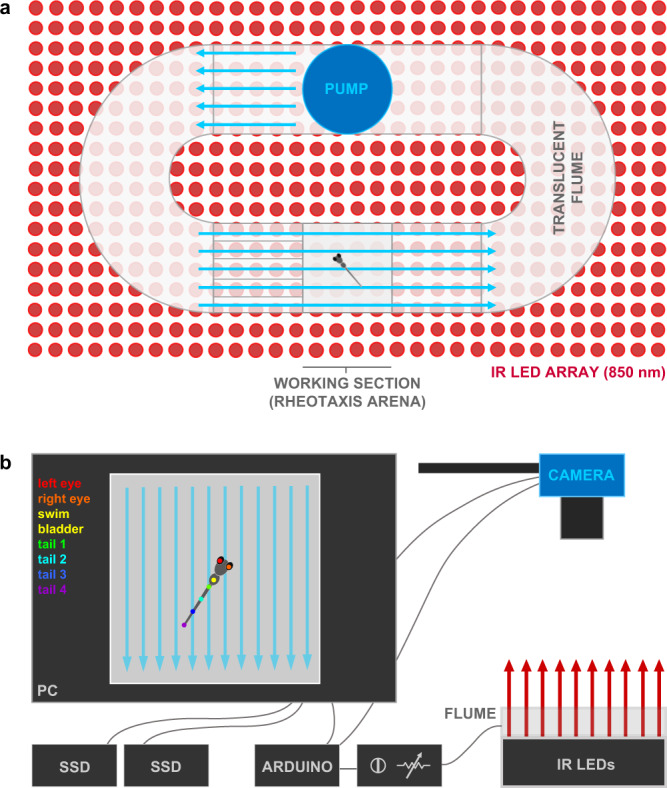
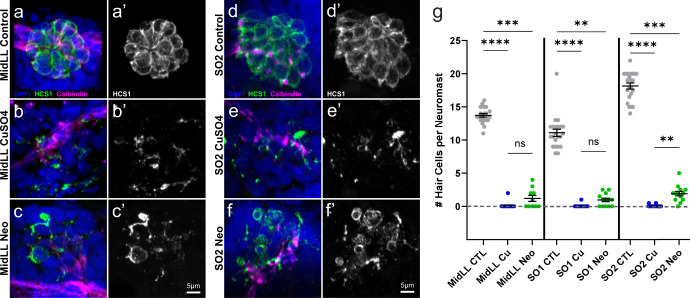
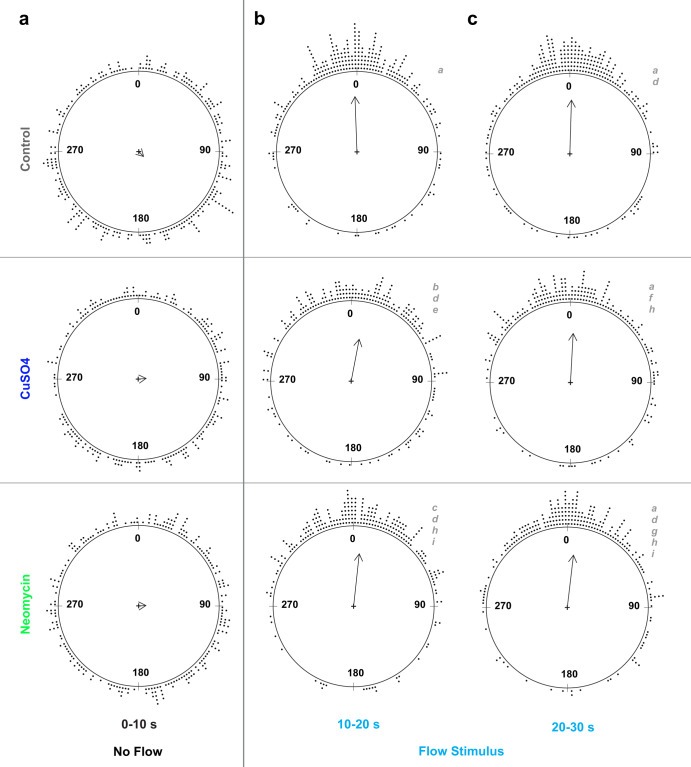
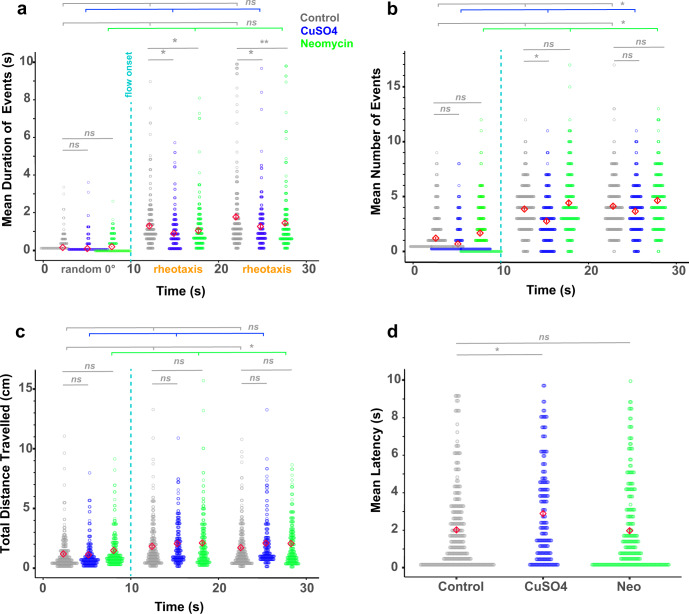
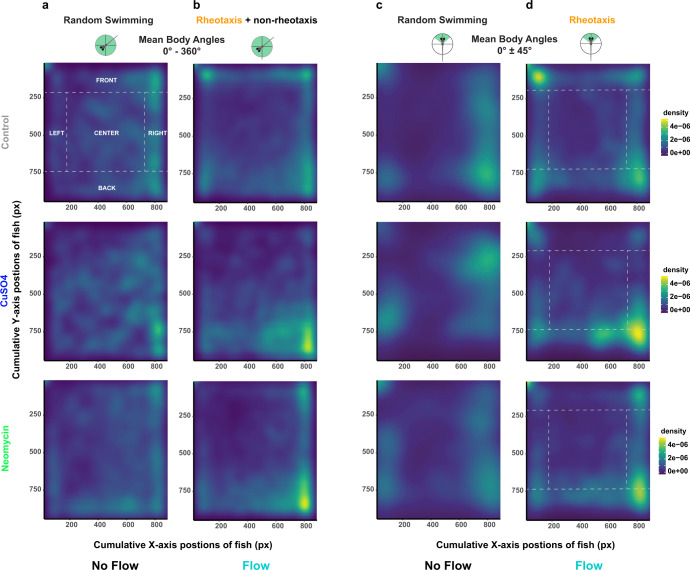
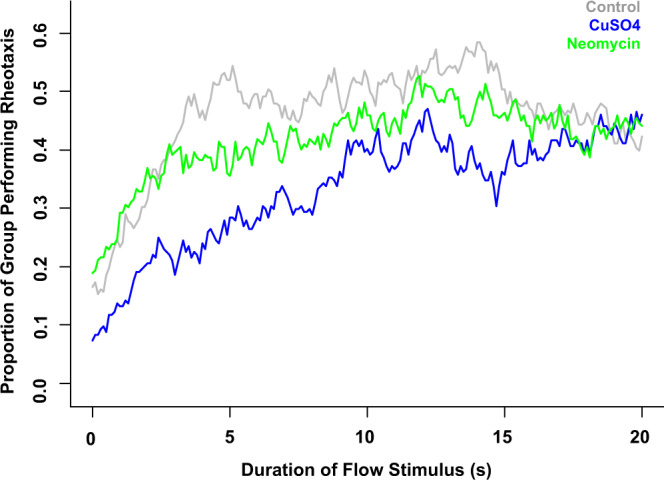
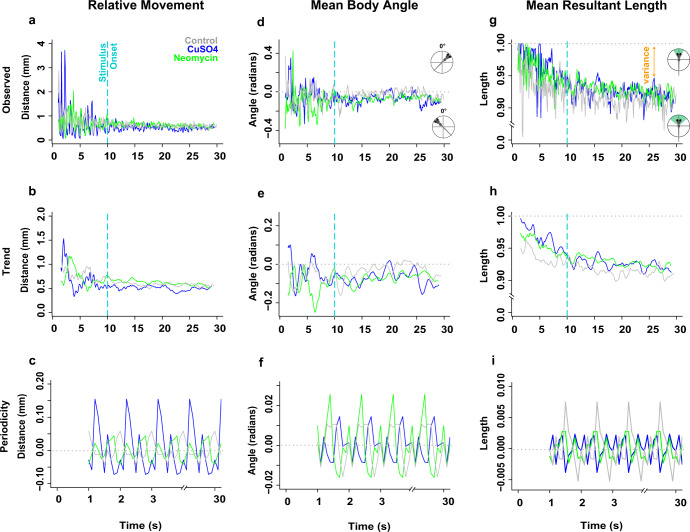
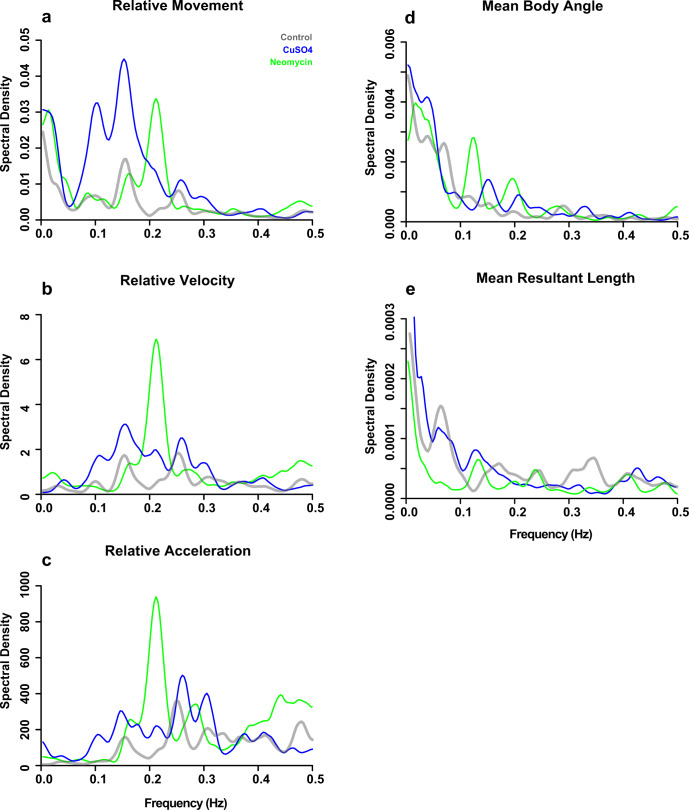
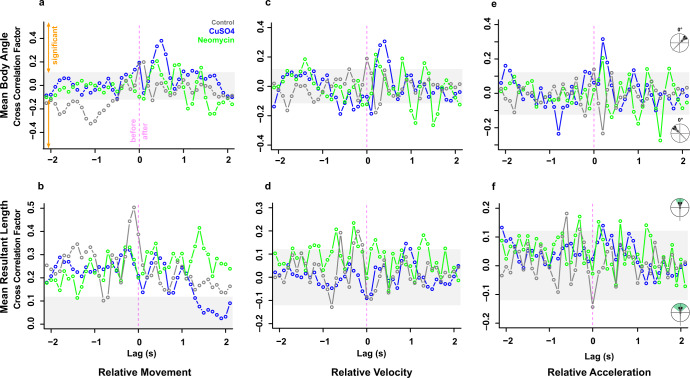
The zebrafish lateral line is an established model for hair cell organ damage, yet few studies link mechanistic disruptions to changes in biologically relevant behavior. We used larval zebrafish to determine how damage via ototoxic compounds impact rheotaxis. Larvae were treated with CuSO 4 or neomycin to disrupt lateral line function then exposed to water flow stimuli. Their swimming behavior was recorded on video then DeepLabCut and SimBA software were used to track movements and classify rheotaxis behavior, respectively. Lateral line-disrupted fish performed rheotaxis, but they swam greater distances, for shorter durations, and with greater angular variance than controls. Furthermore, spectral decomposition analyses confirmed that lesioned fish exhibited ototoxic compound-specific behavioral profiles with distinct changes in the magnitude, frequency, and cross-correlation between fluctuations in linear and angular movements. Our observations demonstrate that lateral line input is needed for fish to hold their station in flow efficiently and reveals that commonly used lesion methods have unique effects on rheotaxis behavior.
Overview
The claims and statistics of this paper haven’t been checked yet.
Free: it reads the open-access text and checks the first 5 claims that cite a source we can check. Create a free account to check every claim.
Integrity signals
Registry
Cites
Statistics
Figures
Verification
Claims the paper makes
The claims and statistics of this paper haven’t been checked yet.
Free: it reads the open-access text and checks the first 5 claims that cite a source we can check. Create a free account to check every claim.
Claims other papers make about this one
Each is checked against this paper’s own text: does it say what the citing paper says it does?
The source backs part of the claim, not all of it — or backs it for a different population, condition or comparison.
In the citing paper
“Although multiple sensory modalities, including mechanosensation and proprioception, influence rheotaxis (36, 71), simZFish circuits alone can effectively drive rheotaxis if visual information is available.”
From Artificial embodied circuits uncover neural architectures of vertebrate visuomotor behaviors (2025) · cites this paper as [71]
Experimental — accuracy not yet measured
Self-check
Percentages, sums and reported differences re-computed from the paper’s own numbers.
The self-check needs the paper’s full text.
Citations
Cites
R: A Language and Environment for Statistical Computing
R Core Team (2025) · doi:10.32614/r.manuals · Cited by 352,181
Fitting Linear Mixed-Effects Models Using lme4
Bates, D., Mächler, M., Bolker, B., & Walker, S. (2015) · Journal of Statistical Software · doi:10.18637/jss.v067.i01 · Cited by 86,835
Wickham, H. (2016) · Use R! · doi:10.1007/978-3-319-24277-4 · Cited by 33,115
lmerTest Package: Tests in Linear Mixed Effects Models
Kuznetsova, A., Brockhoff, P. B., & Christensen, R. H. B. (2017) · Journal of Statistical Software · doi:10.18637/jss.v082.i13 · Cited by 24,346
Wickham, H., Averick, M., Bryan, J., Chang, W., McGowan, L., François, R., Grolemund, G., Hayes, A., Henry, L., Hester, J., et al. (2019) · Journal of Open Source Software · doi:10.21105/joss.01686 · Cited by 22,138
DeepLabCut: markerless pose estimation of user-defined body parts with deep learning
Mathis, A., Mamidanna, P., Cury, K. M., Abe, T., Murthy, V. N., Mathis, M. W., & Bethge, M. (2018) · Nature Neuroscience · doi:10.1038/s41593-018-0209-y · Cited by 5,187
The Split-Apply-Combine Strategy for Data Analysis
Wickham, H. (2011) · Journal of Statistical Software · doi:10.18637/jss.v040.i01 · Cited by 2,705
Using DeepLabCut for 3D markerless pose estimation across species and behaviors
Nath, T., Mathis, A., Chen, A. C., Patel, A., Bethge, M., & Mathis, M. W. (2019) · Nature Protocols · doi:10.1038/s41596-019-0176-0 · Cited by 1,505
zoo : S3 Infrastructure for Regular and Irregular Time Series
Zeileis, A., & Grothendieck, G. (2005) · Journal of Statistical Software · doi:10.18637/jss.v014.i06 · Cited by 1,243
topicmodels : An R Package for Fitting Topic Models
Grün, B., & Hornik, K. (2011) · Journal of Statistical Software · doi:10.18637/jss.v040.i13 · Cited by 1,072
Research works printed but not linked: 1
- Pavlov D Tyuryukov S The role of lateral-line organs and equilibrium in the behavior and orientation of the dace, Leuciscus leuciscus, in a turbulent flow J. Ichthyol. 1993 33 71 77
Cited by
Goodwin, N. L., Choong, J. J., Hwang, S., Pitts, K., Bloom, L., Islam, A., Zhang, Y. Y., Szelenyi, E. R., Tong, X., Newman, E. L., et al. (2024) · Nature Neuroscience · doi:10.1038/s41593-024-01649-9 · Cited by 198
“…battery of runtime-optimized feature calculators covering frequentist and circular statistics, anomaly scores, temporal and spectral analyses, relationships between pose estimation and user-defined ROIs, bounding box methods and other machine learning distribution comparison techniques 18,30,39 .”
Self-citationUnderstanding (and appreciating) behavioral complexity of zebrafish novel tank assays
Golushko, N. I., Matrynov, D., Galstyan, D. S., Apukhtin, K. V., de Abreu, M. S., Yang, L., Stewart, A., & Kalueff, A. V. (2025) · Behavioural Processes · doi:10.1016/j.beproc.2025.105230 · Cited by 24
Liu, L.-Z., Zhong, Y., Zheng, T., Zhao, J., Ding, S., Lv, J., Xu, Q., & Zhang, Y. (2024) · Fish & Shellfish Immunology · doi:10.1016/j.fsi.2024.109657 · Cited by 20
SAMPL is a high-throughput solution to study unconstrained vertical behavior in small animals
Zhu, Y., Auer, F., Gelnaw, H., Davis, S. N., Hamling, K. R., May, C. E., Ahamed, H., Ringstad, N., Nagel, K. I., & Schoppik, D. (2023) · Cell Reports · doi:10.1016/j.celrep.2023.112573 · Cited by 20
Hair cell toxicology: With the help of a little fish
Barrallo‐Gimeno, A., & Llorens, J. (2022) · Frontiers in Cell and Developmental Biology · doi:10.3389/fcell.2022.1085225 · Cited by 16
“, 2022), even in an ototoxin-specific manner (Newton et al., 2022).”
BackgroundThe environment to the rescue: can physics help predict predator–prey interactions?
Cherif, M., Brose, U., Hirt, M. R., Ryser, R., Silve, V., Albert, G., Arnott, R. N., Berti, E., Cirtwill, A. R., Dyer, A., et al. (2024) · Biological reviews/Biological reviews of the Cambridge Philosophical Society · doi:10.1111/brv.13105 · Cited by 17
Evaluation of Cisplatin-Induced Pathology in the Larval Zebrafish Lateral Line
Lee, D. S., Schrader, A. D., Bell, E., Warchol, M. E., & Sheets, L. (2022) · International Journal of Molecular Sciences · doi:10.3390/ijms232214302 · Cited by 14
Self-citationLee, D. S., Schrader, A. D., Zou, J., Ang, W. H., Warchol, M. E., & Sheets, L. (2024) · iScience · doi:10.1016/j.isci.2024.110975 · Cited by 13
Self-citationDavid, S., Pinter, K. L., Nguyen, K., Lee, D. S., Lei, Z., Sokolova, Y., Sheets, L., & Kindt, K. S. (2024) · The Journal of Physiology · doi:10.1113/jp286263 · Cited by 11
Self-citationvmTracking enables highly accurate multi-animal pose tracking in crowded environments
Azechi, H., & TAKAHASHI, S. Y. (2025) · PLoS Biology · doi:10.1371/journal.pbio.3003002 · Cited by 10
Barnard, I. L., Onofrychuk, T. J., Toderash, A. D., Patel, V. N., Glass, A. E., Adrian, J. C., Laprairie, R. B., & Howland, J. G. (2023) · eNeuro · doi:10.1523/eneuro.0115-23.2023 · Cited by 12
“Recent advances in automated behavioral analysis have enabled researchers to obtain a detailed and objective record of a diversity of complex behaviors across species (Nilsson et al., 2020; Cui et al., 2021; C. Winters et al., 2022; Newton et al., 2023; Slivicki et al., 2023).”
BackgroundResultArtificial embodied circuits uncover neural architectures of vertebrate visuomotor behaviors
Liu, X., Loring, M. D., Zunino, L., Fouke, K. E., Longchamp, F. A., Bernardino, A., Ijspeert, A. J., & Naumann, E. A. (2025) · Science Robotics · doi:10.1126/scirobotics.adv4408 · Cited by 8
Lim, K. H., Park, S., Han, E., Yoon, H. S., Lee, Y., Hong, S., Hyun, K., Baek, S. H., Baek, H. W., Rah, Y. C., et al. (2024) · Food and Chemical Toxicology · doi:10.1016/j.fct.2024.114792 · Cited by 8
Larval zebrafish maintain elevation with multisensory control of posture and locomotion
Davis, S. N., Zhu, Y., & Schoppik, D. (2025) · Journal of Experimental Biology · doi:10.1242/jeb.250087 · Cited by 7
Mariano, M. V. T., Leandro, L. P., Gomes, K. K., dos Santos, A. B., de Rosso, V. O., Dafré, A. L., Farina, M., Posser, T., & Franco, J. L. (2023) · Journal of Toxicology and Environmental Health · doi:10.1080/15287394.2023.2290630 · Cited by 7
“…were not examined in this study, it is well established that Cu exerts ototoxic effects, specifically targeting neuromasts (Hardy et al. 2021; Newton et al. 2023) Disruption of these cells may exert adverse behavioral consequences, as noted in various fish and amphibian species (Brix et al.…”
BackgroundMarketaki, S., Berio, F., & Santo, V. D. (2025) · Comparative Biochemistry and Physiology Part A Molecular & Integrative Physiology · doi:10.1016/j.cbpa.2025.111863 · Cited by 5
Protective Effects of Fasudil Against Cisplatin-Induced Ototoxicity in Zebrafish: An In Vivo Study
Lim, K. H., Park, S., Han, E., Baek, H. W., Hyun, K., Hong, S., Kim, H.-J., Lee, Y., Rah, Y. C., & Choi, J. (2024) · International Journal of Molecular Sciences · doi:10.3390/ijms252413363 · Cited by 4
A zebrafish gephyrinb mutant distinguishes synaptic and enzymatic functions of Gephyrin
Brennan, E. J., Monk, K. R., & Li, J. (2024) · Neural Development · doi:10.1186/s13064-024-00191-5 · Cited by 4
“Rheotaxis relies on lateral line neurons to detect currents [35–37].”
BackgroundNewton, K. C., Donato, N. H., Henkel, S. K., & Chapple, T. K. (2024) · bioRxiv (Cold Spring Harbor Laboratory) · doi:10.1101/2024.04.23.590834 · Cited by 4
Self-citationEfferent axons in the zebrafish lateral line degenerate following sensory hair cell ablation
Tuz-Sasik, M. U., Manuel, R., & Boije, H. (2023) · Molecular and Cellular Neuroscience · doi:10.1016/j.mcn.2023.103900 · Cited by 3
Multisensory navigational strategies of hatchling fish for dispersal
Lin, A., Álvarez-Salvado, E., Milicic, N., Pujara, N., & Ehrlich, D. (2023) · Current Biology · doi:10.1016/j.cub.2023.09.070 · Cited by 3
Kapoor, H., Levin, J., Azevedo, A., Chhetri, S., Lassen, K., Zheng, J., & Schwalbe, M. A. B. (2025) · microPublication biology · doi:10.17912/micropub.biology.001798 · Cited by 2
Xu, M., Wu, Q., Gong, T., Yao, Y., Zhang, Q., Zhang, Q., Han, T., Gu, Y., & Zhang, Q. (2026) · Hearing Research · doi:10.1016/j.heares.2026.109528 · Cited by 3
Cuttlefish interact with multimodal “arm wave sign” displaysPreprint
Cohen-Bodénès, S., & Neri, P. (2025) · bioRxiv (Cold Spring Harbor Laboratory) · doi:10.1101/2025.04.13.648584 · Cited by 2
Djohan, D. (2025) · Toxicology Reports · doi:10.1016/j.toxrep.2025.102102 · Cited by 1
Impacts of an environmental ototoxic pollutant on fish fighting behaviors
Horng, J., Hu, Y.-H., Chen, H. L., & Chou, M. (2024) · Comparative Biochemistry and Physiology Part C Toxicology & Pharmacology · doi:10.1016/j.cbpc.2024.110103
Zheng, L., Shen, Q., Zhao, T., Liu, Q., Huang, Z., Zhao, F., Zhang, M., Song, Y., Zhang, D., Liu, D., et al. (2025) · Neuroscience Bulletin · doi:10.1007/s12264-025-01406-3
Station Holding During Rheotaxis: A Sensitive Assay of Lateral Line Function in Larval Zebrafish
Cohen-Bodénès, S., Malak, E., Trapani, J. G., Gaidica, M., Militchin, V., Newton, K. C., & Sheets, L. (2025) · BIO-PROTOCOL · doi:10.21769/bioprotoc.5540
“The apparatus was developed in-house [1] and has subsequently been adapted and optimized at the Neurotech Hub at WashU (https://neurotechhub.wustl.edu/).”
InfluentialSelf-citationMariano, M. V. T. (2024) · LA Referencia (Red Federada de Repositorios Institucionales de Publicaciones Científicas)
Zebrafish neuromast development: a target for endocrine disrupting chemicals?
Vandeputte, E., Stinckens, E., Verreth, J., Sørensen, S. F., Fransén, E., Holbech, H., Vergauwen, L., & Knapen, D. (2026) · Frontiers in Toxicology · doi:10.3389/ftox.2026.1733477
“The behavioral consequences of a reduction in number of HCs remain understudied though existing evidence indicates that, e.g., rheotaxis is altered, but not abolished after chemical insult (Newton et al., 2023).”
Sholes, R. K., McLean, T., Pederson, A., Schloss, S., Molano, O., Piovia‐Scott, J., & Coffin, A. B. (2026) · North American Journal of Fisheries Management · doi:10.1093/najfmt/vqag023
Dissolved-oxygen gradients and fish passage in large-river tailraces: a KITS framework
Zhang, S. T., Wang, C., & Liu, D. (2026) · Journal of Ecohydraulics · doi:10.1080/24705357.2026.2696559
Gong, C., Hu, K., Shan, C., Tong, D., Ge, X., Wang, M., Yu, Y., Han, Y., Liu, G., & Shi, W. M. (2026) · ACS Nano · doi:10.1021/acsnano.6c09166
Oliveira, N. A. S., Lima, L. P., Duque, M., Pinho, B. R., Bessa, J., & Oliveira, J. M. A. (2026) · bioRxiv (Cold Spring Harbor Laboratory) · doi:10.64898/2026.10.07.757328
Zhang, J., Bao, G., Guo, Z., Wang, B., Wang, J., Yao, W., Gao, T., & Zheng, R. (2026) · Toxics · doi:10.3390/toxics14110984
Metadata
- Authors
- Newton, K. C., Kacev, D., Nilsson, S. R. O., Saettele, A. L., Golden, S. A., & Sheets, L.
- Affiliations
- Oregon State University (US)
- Scripps Institution of Oceanography (US)
- University of Washington (US)
- Washington University in St. Louis (US)
- Corresponding author
- Newton, Kyle C.
- Sheets, Lavinia
- Venue
- Communications Biology
- Published
- 2023-01-21
- Volume
- 6
- Issue
- 1
- Pages
- 84-84
- ISSN
- 2399-3642 (ISSN-L)
- PMC
- PMC9867717
- OpenAlex
- W4317663954
- Cited by
- 36
- References
- 55
- Citations by year
- 2026: 6 · 2025: 9 · 2024: 11 · 2023: 8
- FWCI
- 4.92
- Type
- journal article
- Language
- en
- Open access
- gold
- doi.org
- Licence
- cc-by
- creativecommons.org/licenses/by/4.0 (tdm)
- creativecommons.org/licenses/by/4.0 (vor)
- Locations
- Communications Biology (publishedVersion, cc-by)
- bioRxiv (Cold Spring Harbor Laboratory) (acceptedVersion)
- PubMed Central (publishedVersion, cc-by)
- PubMed (publishedVersion)
- Digital Commons@Becker (Washington University School of Medicine) (submittedVersion, cc-by)
- DOAJ (DOAJ: Directory of Open Access Journals) (submittedVersion, cc-by-sa)
- Funders
- U.S. Department of Health & Human Services | NIH | National Institute on Deafness and Other Communication Disorders (R01DC016066)
- U.S. Department of Health & Human Services | NIH | National Institute on Drug Abuse (P30 DA048736, R00DA045662)
- Brain and Behavior Research Foundation (27082)
- Topics
- Life Sciences › Biochemistry, Genetics and Molecular Biology › Cell Biology › Zebrafish Biomedical Research Applications
- Physical Sciences › Environmental Science › Nature and Landscape Conservation › Fish biology, ecology, and behavior
- Life Sciences › Neuroscience › Neurology › Vestibular and auditory disorders
- Keywords
- lateral line, rheotaxis, zebrafish larvae, copper sulfate, neomycin, hair cell damage, swimming behavior, flow behavior, behavioral tracking, spectral decomposition
- MeSH terms
- Animals, Hair Cells, Auditory, Larva, Swimming, Zebrafish, Lateral Line System
About these checks
Registry, retraction, Cites and statistics results are computed, not judged, with one exception: a printed reference that no index lists is read once by a model before it counts as a citation error. Claims are extracted by a model and kept only when their quote appears verbatim in the text; each cited source is then checked, with a model’s help, for whether it says what the claim relies on. Those verdicts can be wrong — read the claim’s quote and the cited source before relying on one.
Statistics and arithmetic are recomputed, not judged.
Confidence bands are shown only for fields calibrated on our annotated test set. None is calibrated yet, so no band is shown.
What counts as a claim ›How we measure confidence ›How we check this ›
Are you an author, or do you see a problem with this page? Request a review
Data sources
Bibliographic data: Semantic Scholar, OpenAlex, Crossref.
Contains information from the Semantic Scholar Academic Graph Datasets, made available under the ODC Attribution License (ODC-BY 1.0).
Semantic Scholar’s data is described in: Kinney, R., et al. (2023). The Semantic Scholar Open Data Platform. arXiv:2301.10140.
